Updated on
September 11, 2026
The Importance of Outdoor Learning
Explore the advantages of outdoor learning for primary school kids, from enhancing engagement to fostering a love for nature and improving well-being.

Updated on
September 11, 2026
Explore the advantages of outdoor learning for primary school kids, from enhancing engagement to fostering a love for nature and improving well-being.
The Importance of Outdoor Learning describes how teachers use school grounds, parks, gardens, streets, fieldwork sites and residential centres as planned spaces for learning. These spaces support curriculum teaching, wellbeing and social development. Evidence is strongest when outdoor lessons have a clear learning aim, skilled adult guidance and follow-up in class. They should not be treated as a break from learning (Education Endowment Foundation, 2025).
For example, a Year 4 class might measure playground shadows at 9am, noon and 2pm, then use the data to graph the Sun's apparent movement and write a short science explanation. This gives learners movement, talk, observation and evidence in one task, while still meeting curriculum goals and giving teachers assessable work.
The quote by Brooke Hampton, "Children still need a childhood with dirt, mud, puddles, trees, sticks and tadpoles" is more apt than ever in today's digital age.
Many learners now grow up with screen-based leisure and fewer chances for independent outdoor play. Schools should not frame digital childhood as a moral failure; they should plan direct experience that some learners may not get elsewhere.
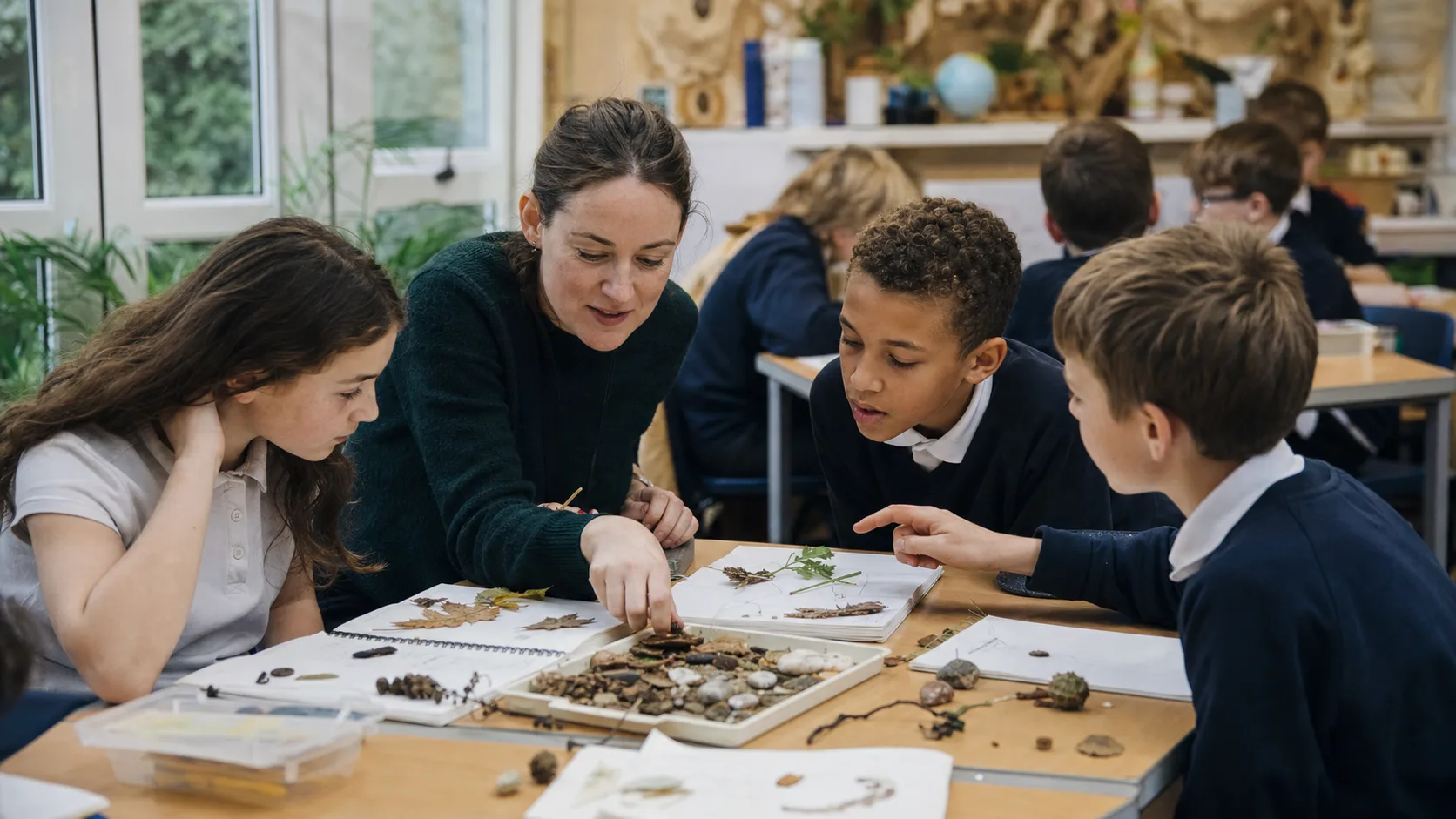
A useful outdoor lesson has a clear curriculum purpose. For example, Year 2 learners might sort leaves by observable properties. Year 5 learners might estimate perimeter on the playground, while Year 8 learners compare microclimates around the school site.
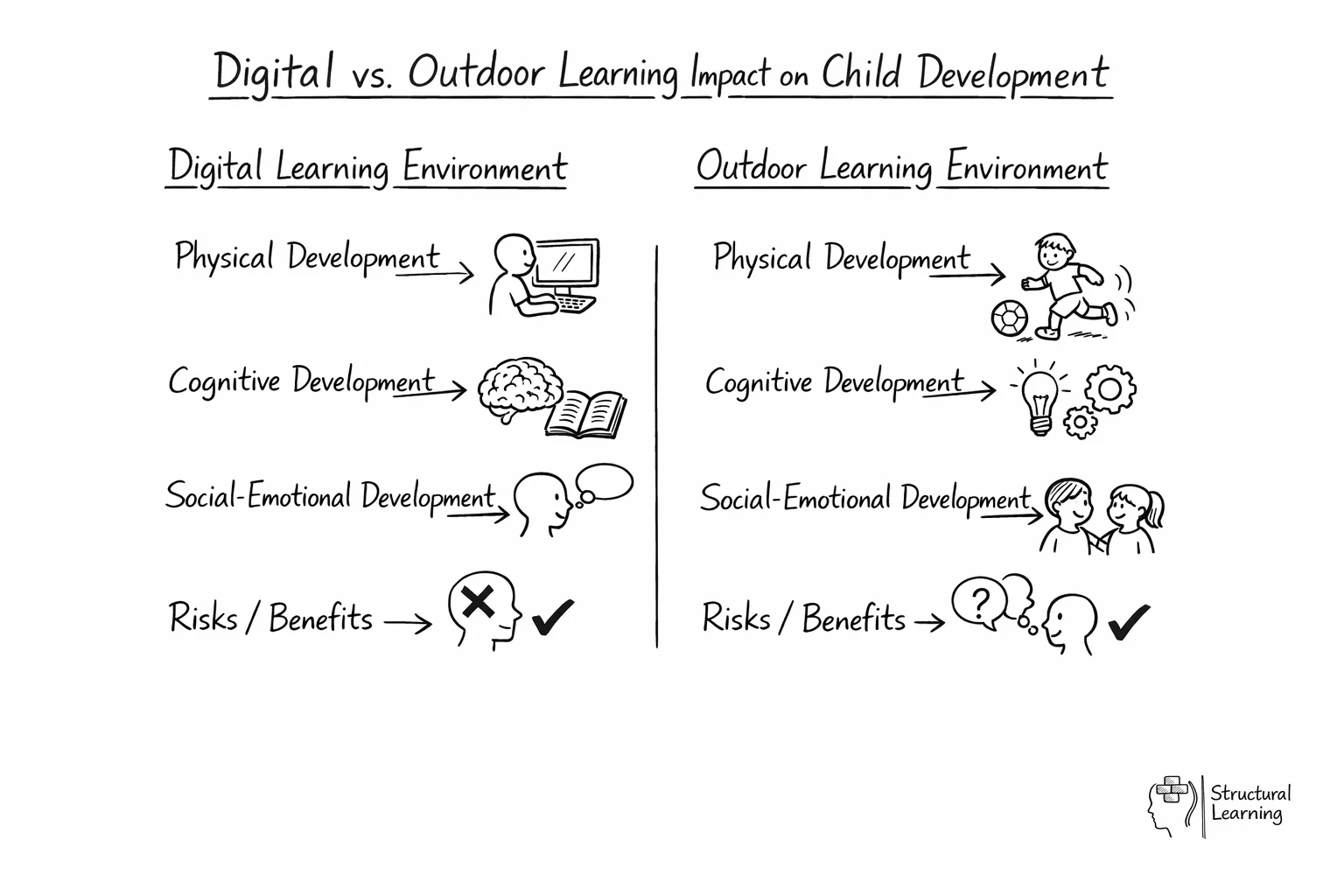
that the new age or information age that we live in has a multitude of exceptional benefits and having access to these digital resources is an advantage. However, as impressive as the advantages are, it has led to the detriment of children's complete development; outdoor learning supports children's complete development and benefits their physical, emotional and social learning. Friedman et al (2022), concur that outdoor play is essential for healthy development, especially in the early years. Being active outside gives children valuable experiences that can shape their physical and emotional development, social skills, creativity, and intelligences. Less contact with nature can harm children's physical health and attention and create a gap between children and their environment. Repeated exposure to high quality, varied outdoor play can support social and cognitive development.
Outdoor play is essential for children's development, especially in the early years, and it is becoming more common in schools. Forest School, a culturally situated form of outdoor education whose evidence base and UK translation need careful handling (Leather, 2018; Egan, Egan and Brophy, 2022), and other outdoor learning experiences, can enrich learning and offer many benefits for children. Outdoor learning on school grounds can lead to Natural Connections, which help schools see the outdoors as a positive part of curriculum delivery. Secondary schools that use outdoor learning ideas can benefit learners in many ways.
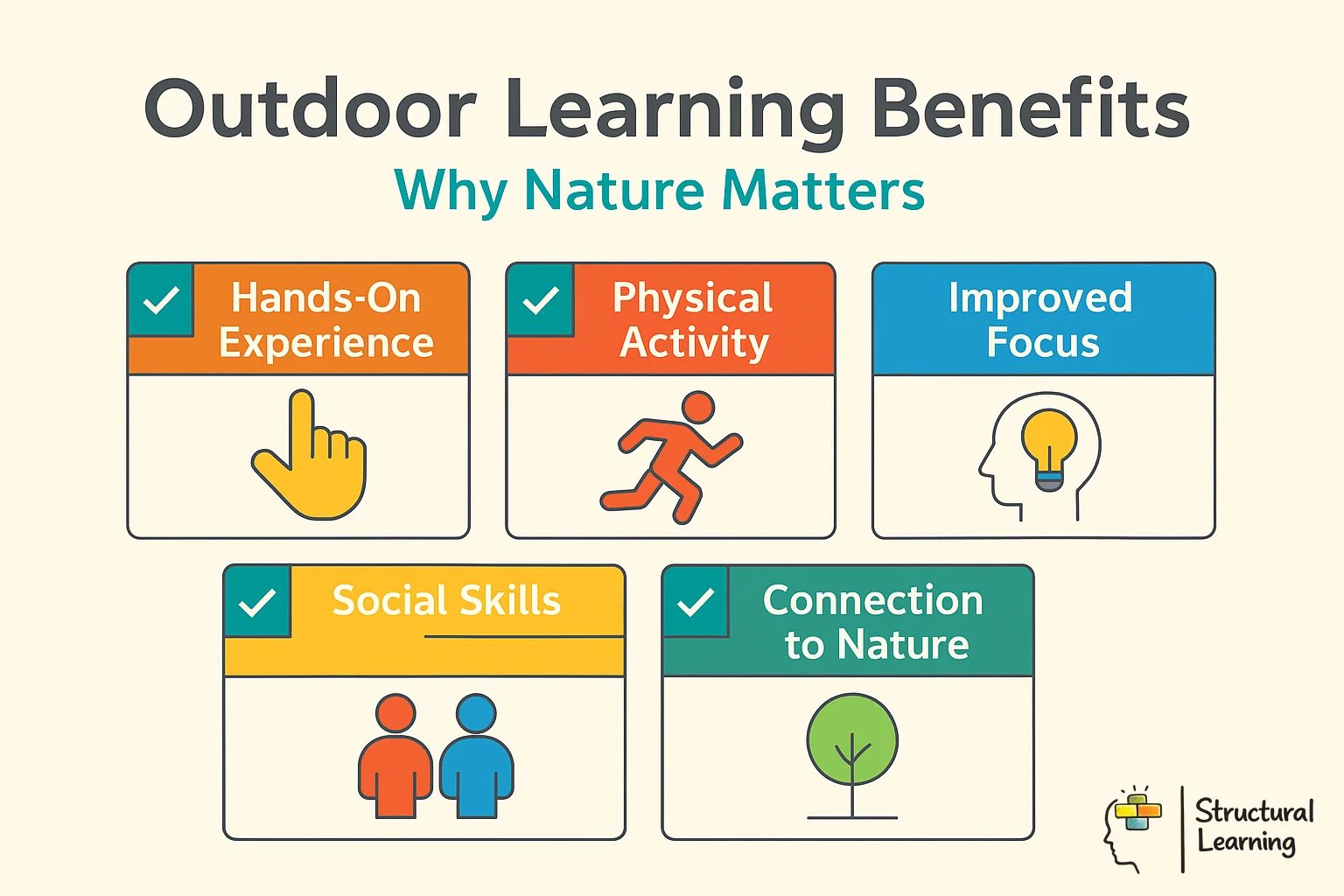
One key benefit of outdoor play is the wide range of sensory experiences children meet. Children spend time in nature and build a stronger connection with their environment. They also build physical skills in a natural setting, including balance, coordination, and dexterity. Outdoor play also gives children chances to take reasonable risks and challenge themselves, which supports healthy child development and builds critical thinking skills.
Outdoor play has a significant impact on children's development, and it should be emphasised in schools. For more on this topic, see Creative play. An environment that values and encourages outdoor play leads to a culture of educating the whole child, embracing the philosophy of Natural Connections, and providing children with essential skills needed to succeed in school and beyond through active learning experiences.
Technology can tip the balance towards screens. This can reduce children's time outdoors, their physical activity, and their connection with nature. Outdoor learning does not reject technology. Instead, planned outdoor tasks can support cognitive development, balance digital learning, ease screen time worries, and keep children engaged.
Generation Alpha is the generation after Generation Z. It includes all children born in or after 2010, the same year the iPad was released. These children will never know a time before social media. They are more technically aware than earlier generations, which can change society in many positive ways.
As technological devices become easier to access, children spend much less time playing actively outside. Modern-day children therefore spend far less time outdoors than children in preceding generations (Anderson-McNamee & Bailey, 2010). This reduction in outdoor time can affect children's memory development and overall cognitive growth.
COVID-19 restrictions limited children's access to outdoor play and natural environments. They were linked to uneven pressure on development and wellbeing, with bigger effects for children who had limited access to private gardens, safe public space, or adult time (Natural England, 2020; McDonagh, 2022). These restrictions had a particular impact on physical, social, and emotional development in early years learners. Schools now need targeted outdoor learning strategies to help children catch up on missed developmental milestones, including supporting those with special educational needs through inclusive outdoor programs.
Generation Alpha are among the first children to face major disruption to outdoor learning during critical developmental years. This disruption has affected their executive function development and natural motivation to explore outdoor environments. Teachers can address these gaps through structured inquiry-based outdoor activities and rebuild children's confidence in outdoor settings.
Controlled outdoor challenges help learners build self-assessment skills. These skills support academic and social success. Outdoor activities also allow managed risk-taking, so children can judge situations and make informed choices. Over time, these experiences build resilience and adaptability for future challenges.
Outdoor learning helps learners understand their limits while developing a growth mindset. When children safely test boundaries, they learn to cope with setbacks. This also builds confidence in their capabilities and can support improved academic performance and stronger social skills.
You can turn small outdoor spaces into rich places to learn, even without forests or large grounds. With creative activities and simple resources, teachers can create engaging outdoor experiences in any setting. You might add natural elements, such as plants and natural materials, to improve the learning environment.
Even small changes to a playground can have a strong effect on children's learning and wellbeing. Simple activities, such as nature walks, outdoor reading sessions, and creative play, can turn a tarmac playground into an outdoor learning centre. These easy-to-use strategies give children valuable learning opportunities. They also help schools manage the challenge of limited outdoor space.
Outdoor learning is not just an extra activity. It is an essential part of a child's full development. Nature-based experiences help children grow physically, emotionally, and cognitively in ways the classroom cannot always match. When schools prioritise outdoor learning, they can help create resilient, engaged, and well-rounded individuals.
Ultimately, the importance of outdoor learning lies in how it connects children with the natural world and supports lifelong learning. By using even simple outdoor spaces, educators can create meaningful experiences. These can improve learner engagement, support wellbeing, and build critical life skills. Using the outdoors is an investment in children's future, and the benefits are immeasurable.
Outdoor learning means any learning experience that takes place outside the usual classroom. This can include activities on the school grounds, visits to a local park, or forest school sessions. It gives learners direct experience of the natural world. It also helps them use theoretical knowledge in a practical setting.
Research suggests that regular exposure to nature improves physical health, social skills, and emotional development. It also gives children sensory experiences that are often missing from digital environments. As learners move through natural challenges and take managed risks, they develop better coordination and resilience.
Teachers can use tarmac playgrounds by introducing portable natural materials like wooden blocks, water trays, or planters. Even small areas can be used for science experiments, measuring activities, or observational drawing. Simple changes to the timetable can ensure all classes have regular access to the outdoors regardless of the school size.
Studies show that active outdoor play helps children build executive function, such as planning and self-control, as well as memory skills. It also balances screen time. This is especially important for Generation Alpha learners, who spend more time on digital devices. Evidence shows that links with nature can lead to better engagement and stronger focus in the classroom.
A frequent error is treating outdoor sessions as unstructured play rather than a structured extension of the curriculum. Another mistake is failing to prepare for different weather conditions or not having a clear set of safety boundaries. Schools should ensure that outdoor activities are integrated into the long term planning to make the impact sustainable.
Moving lessons outside often reduces conflict and improves the focus of learners who find classroom environments restrictive. It provides a natural outlet for energy and allows children to practise social skills in a less formal setting. Teachers often find that the change of environment helps learners recognise social cues and build better relationships with their peers.
The evidence for outdoor learning is weaker than many public claims suggest. The Education Endowment Foundation rates evidence for outdoor adventure learning and academic outcomes as extremely low. Recent Forest School reviews also note small samples, practitioner self-report and weak comparison groups (Education Endowment Foundation, 2025; Egan, Egan and Brophy, 2022). Schools should avoid promising direct attainment gains unless they evaluate their own provision.
A second critique is cultural. Leather argues that Forest School in the UK is not a neutral model brought in from Scandinavia, but a social practice that can be sold as a product and tied too closely to woodland ideals (Leather, 2018). Nxumalo and Cedillo also show that environmental education can overlook colonial, racial and urban histories of place (Nxumalo and Cedillo, 2017). This matters because many learners know nature through courtyards, street trees, parks, canals or estates, not only forests.
Third, access is uneven. COVID-19 restrictions showed that outdoor space was shaped by income, housing, ethnicity and disability, so claims about lost outdoor experience should not treat childhood as one shared story (McDonagh, 2022; Natural England, 2020). Costs, clothing, transport and staffing can also exclude SEND and disadvantaged learners if leaders do not plan for them.
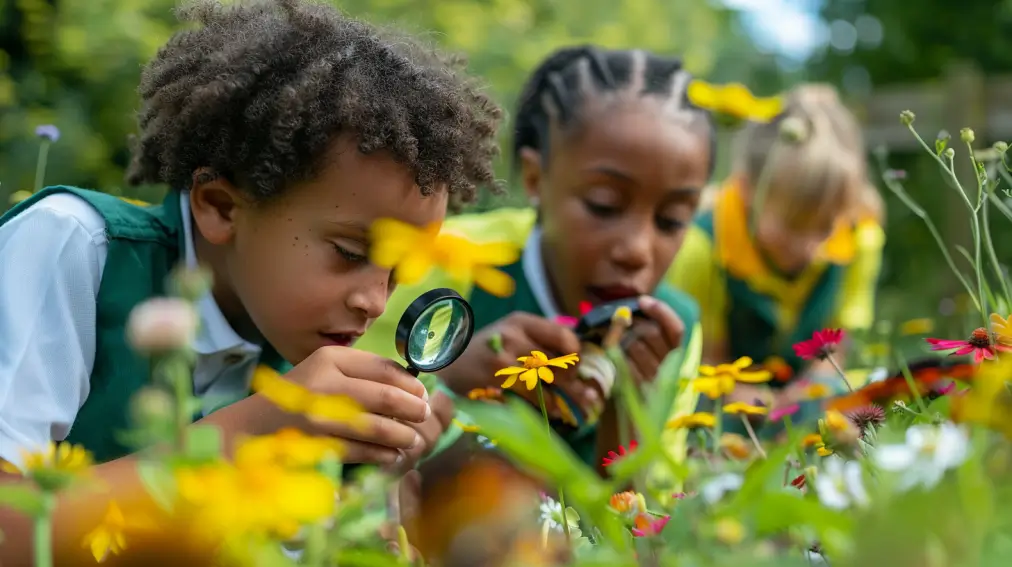
Finally, outdoor lessons carry a pedagogical risk. They can turn into free play with weak curriculum intent. They can also become over-managed visits that leave little room for exploration. Risk-benefit assessment should balance learning value and hazards, rather than remove all uncertainty (Gill, 2010; Brussoni et al., 2012). Outdoor learning keeps strong value when teachers connect place, curriculum, inclusion and assessment with care, while avoiding cure-all claims.
Leather (2018).
Louv (2005).
Nxumalo and Cedillo (2017).
Sandseter (2007).
For those seeking to deepen their understanding of the benefits and practical applications of outdoor learning, the following research papers offer valuable insights: