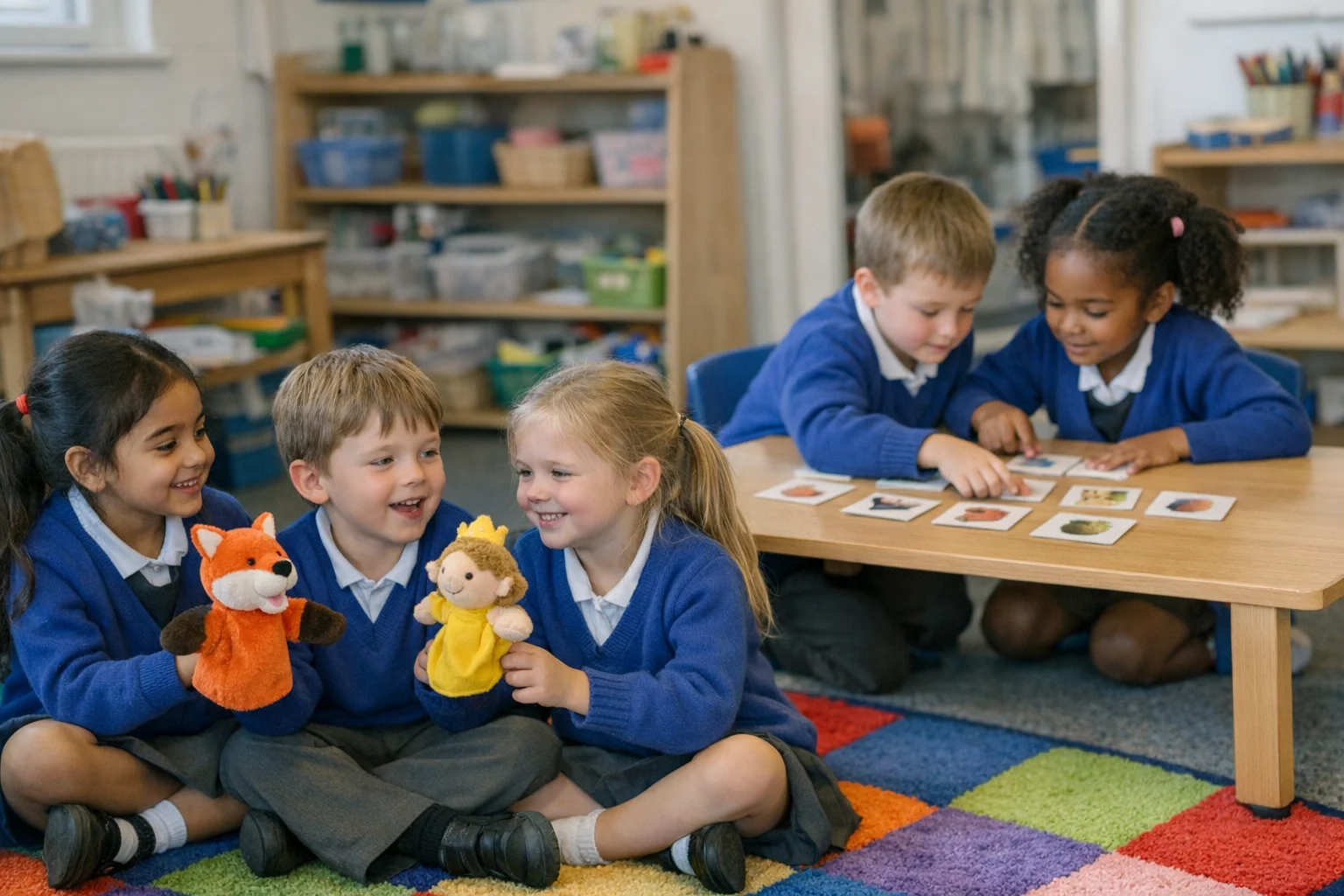
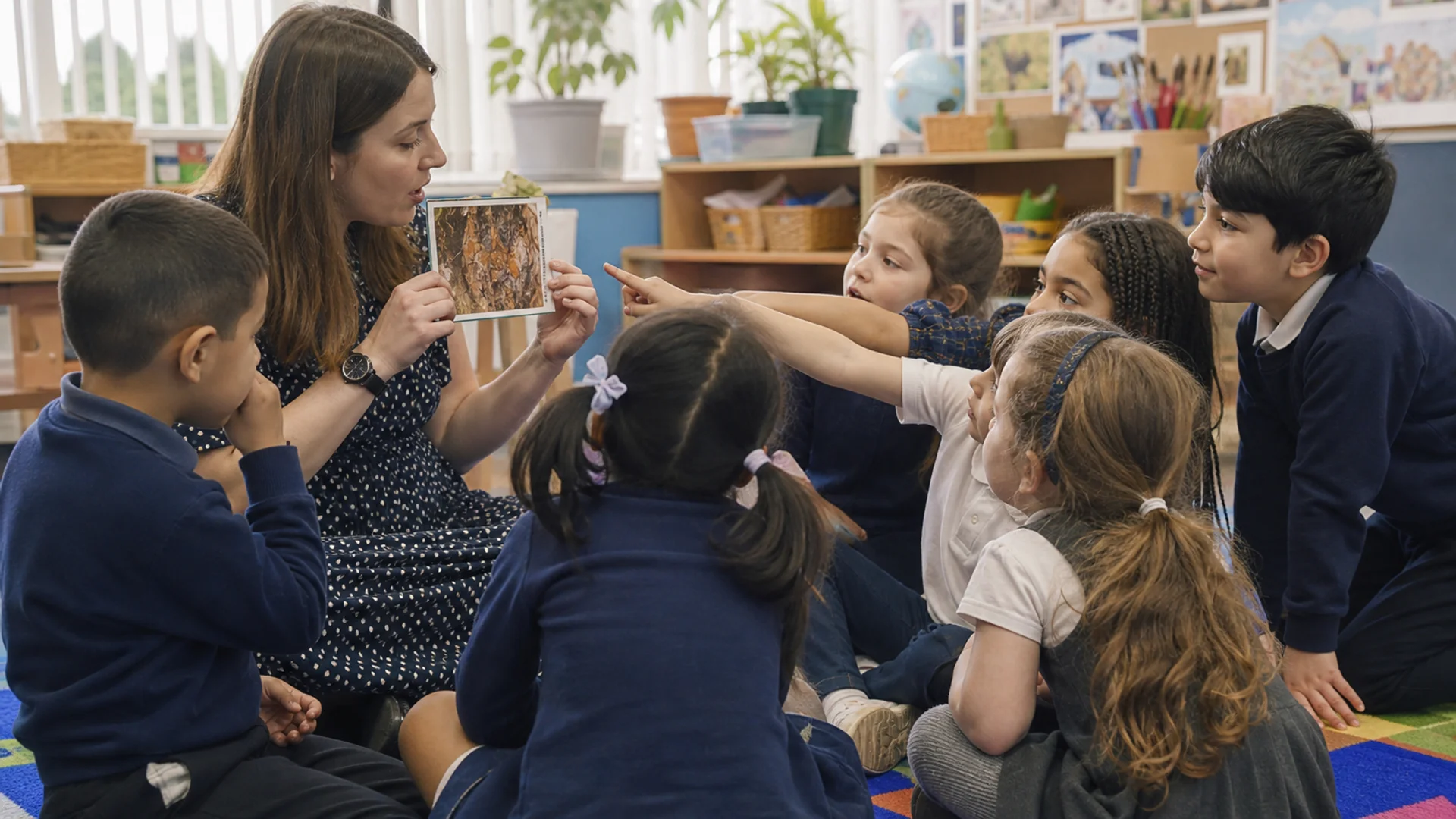
Language Acquisition in Early ChildhoodYoung children in royal blue jumpers engage in language learning at storytelling and picture card stations in classroom.

Updated on  

January 2, 2026

Language Acquisition in Early Childhood

Explore theories and practices of language acquisition in early years, fostering foundational communication skills through engaging, research-backed strategies.

Course Enquiry
Copy citation

Main, P. (2024, March 12). Language Acquisition in Early Childhood. Retrieved from www.structural-learning.com/post/language-acquisition-in-early-childhood

"Language is not a genetic gift, it is a social gift. Learning a new language is becoming a member of the club, the community of speakers of that language." Frank Smith (Inspirational Quotes for Language Learners, 2019)

When I reminisce on being an expectant first-time mum, I remember looking forward to reading stories to my baby every day whilst still the womb as I wanted to bond with him and for him to recognise my voice. I had also read articles which informed me that reading to my baby in the womb would promote brain activity, early language acquisition and language development. I also pondered at that time as to what effect it would have on my son if I spoke to him at intervals throughout the day. Would it promote language acquisition of his mother tongue as this is what he would be listening to in utero?

Key Takeaways

  1. The Prenatal Language Connection: Why reading to babies in the womb actually works: How prenatal exposure shapes brain pathways for your future readers
  2. Beyond Nature vs. Nurture: The critical window you can't miss: What Genie's case reveals about timing interventions for language-delayed children
  3. Your Classroom Language Environment: The three prerequisites for language learning that explain why some pupils thrive while others struggle to communicate
  4. Rethinking Behaviorist Approaches: Why drill and repetition might be limiting your pupils: How modern theories transform language teaching beyond LSRW skills

With this being said, it is interesting to note that May, Byers-Heinlein, Gervain and Werker (2011), tested how prenatal language experience might shape the brain’s response to language in newborn infants. The authors interpreted the results from their study as evidence that the prenatal experience with the native language gained in utero influences how the newborn brain responds to language across brain regions sensitive to speech processing.

Five stages of language acquisition from prenatal development through critical learning window
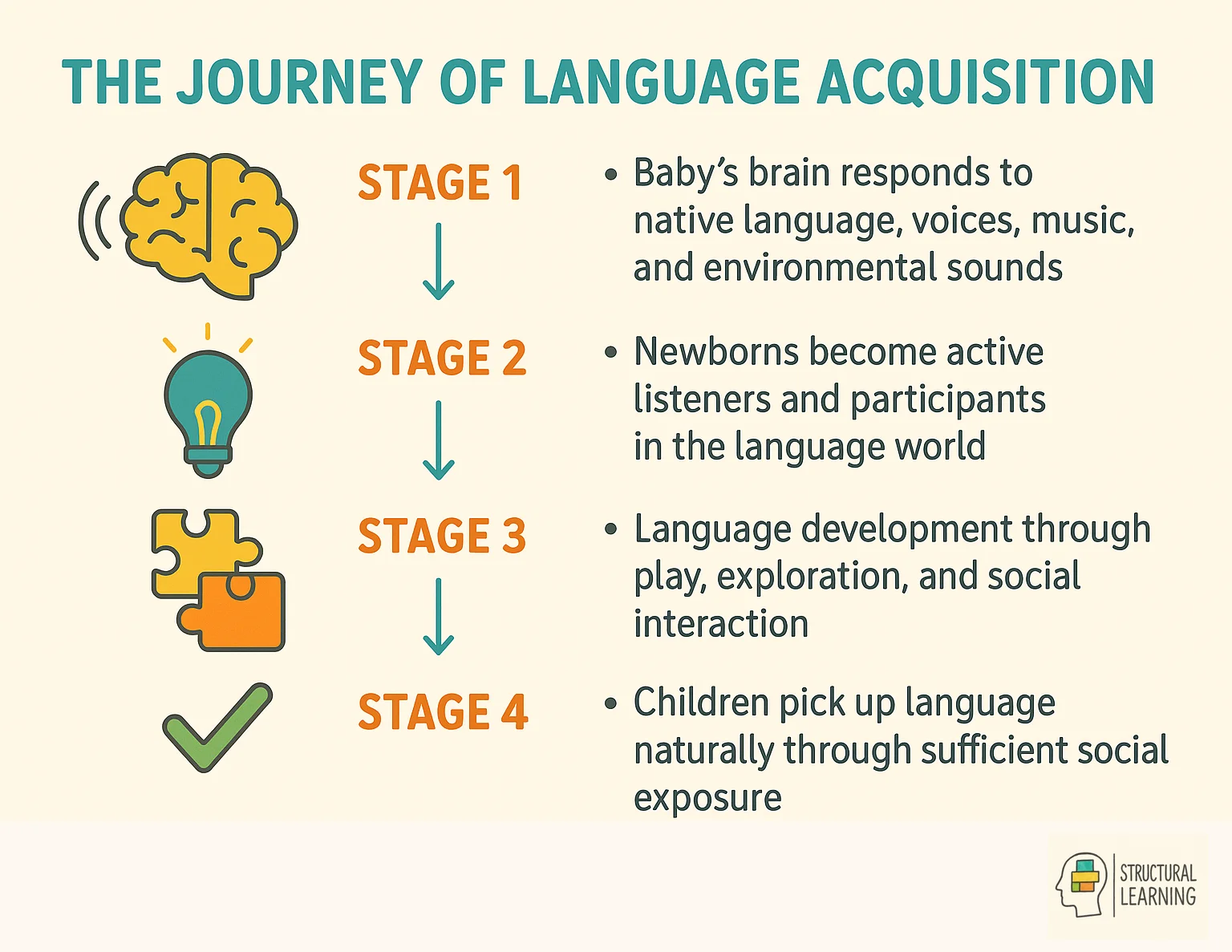
The Journey of Language Acquisition

As an educator and parent, it is worth mentioning that May’s et al (2011), results indicated that even prior to birth, the human brain is tuning to the language environment. Taking that into consideration, it provides some response to my question in the first paragraph. This then leads us to interrogate what language acquisition is, where the ability to use language is innate. Children communicate first by using different languages, such as body language, sign language and oral language. Research has shown that children are active listeners starting in the womb (Al-Harbi, 2019:70).

Consequently, voices, music and environmental stimuli all present as language stimuli for the baby whilst in the womb as they are receptive to all these sounds. Once they are born, they become active listeners and participants in the world of language by exploring and investigating through play.


What is Language Acquisition?

This then leads us to the question of what language acquisition is. It is glaringly obvious that children can pick up a language just as they would by playing a game with other children to extend their language abilities. What also has to be taken into account are specific environmental factors that make it possible for language acquisition to occur, but the primary element would appear to be merely sufficient exposure to language use in a social context (Hutauruk,2015:51). Therefore, it should be pointed out that the quote by Frank Smith (Inspirational Quotes for Language Learners,2019), is aligned with the latter as language is a social gift. Langacker (1973:12-13 in Hutauruk, 2015:51), further confirms that the child learns a language by exposure to it in society.

Four stages of language acquisition from prenatal development through early childhood
The Journey of Language Acquisition

Even though animals communicate, but they do not do it with 'language' as language is a uniquely human phenomenon. In 1970, a 13-year-old girl called Genie was rescued by social services in California where she had been kept locked in a room by her abusive father and neglected from an early age. Genie lacked lacked basic language skills and could only recognise her own name and the word 'sorry' at the time of being rescued. However, she had a strong desire to communicate and could communicate nonverbally [e.g. through hand gestures] (Language Acquisition, 2023).

Four stages of language acquisition from prenatal development through early childhood critical window
The Journey of Language Acquisition: From Womb to Childhood

Needless to say, this case fascinated psychologists and linguists, who took Genie's language deprivation as an opportunity to study child language acquisition. The lack of language in her home environment led to the age-old nature vs. nurture debate. Do we acquire language because it is innate, or does it develop because of our environment? (Language Acquisition. 2023). Genie’s case revealed that when a child is isolated from exposure to their first language until after puberty would result in extreme deficits in language structure resulting from this deprivation (Hutauruk, 2015:52).

It should be noted that language acquisition at age 1-3 years old occurs naturally, which leads us to then question whether language is inherent or is impacted by the environment. In view of this, to what extent is language hardwired into human brain (nature), and to what degree is it learned through interaction with the environment (nurture)? (Gleason 1998:376 in Hutauruk, 2015:53).

There is a critical or sensitive period that is deemed necessary for development. This is defined as a maturational time period during which some crucial experience will have its peak effect on development or learning, resulting in normal behaviour adapted to the particular environment to which the organism has been exposed. It is during this time that some crucial experience will have its peak effect on development and learning which results in behaviour adapted to the particular environment to which the child is exposed to.

If the child is not exposed to this experience until after this time period, the same experience will have only a reduced effect, or in extreme cases may have no effect at all (Newport, 2006:737). Undoubtedly, this can attribute to how children acquire language and aligns to the reasons for Genie’s lack of language acquisition.

For a child to acquire language the following has to be present:

  1. Predispositions, as well as physical capacities. People have capacities for communicating in a human way uniquely and capacities for acting such as breathing, grasping, and crying.
  2. A preexisting language system. We are not born with an instinct to learn English, Indonesian or Chinese language but we learn a language as members of the society, or we want to understand that society, or to be understood by that speech community.

(Bolinger 2002:3 in Hutauruk, 2015:52).


Developing linguistic knowledge

What Are the Main Theories of How Children Learn Language?

The main theories include behaviorist (language learned through imitation and reinforcement), nativist (innate language acquisition device), and social interactionist (language develops through social interaction) approaches. Modern research suggests language acquisition involves elements from all three theories, with critical periods for development occurring between birth and age 7. Each theory offers different implications for how educators and parents can support language development.

Not only do theories provide different frameworks that educators can use to adapt to students’ diverse learning styles and academic needs, but they also seek to comprehend and expound on the learning process so that educators can act accordingly, taking approaches to teaching that are fitting, effective, and efficient. Thereby, also providing guidance to parents.

It is important that educators are knowledgeable on the various theories of early language acquisition as this empowers educators to create an atmosphere that is more inclusive and beneficial to learning, a skill that is essential whether teaching online or in a traditional classroom setting.

(Learning Theories: Theories of Learning in Education, n.d). Thus, before branching out and discussing the theories of language acquisition, Behaviourism will be examined in terms of language learning.

The chief proponents of Behaviourism were psychologists such as Pavlov, Thorndike, and Skinner. The behaviourists unconditionally subscribe to the "tabula rasa" account put forth by John Locke, which maintains that the child is born with an empty slate-like mind which gets filled in by experiences from outside. Behaviourists claim that language development is the result of a set of habit formation. They believed that knowledge is the product of interaction with the environment (Sureshkumar, 2002:51) through stimulus-response conditioning (Sureshkumar, 2002:52).


Theories of Language Acquisition

1. Behaviourism

When it comes to language acquisition the theory proposes that the acquirer receives linguistic input from speakers in their environment and positive reinforcement from their correct repetitions and imitations. If the learner's positive responses are reinforced positively, they acquire language easily. Behaviourists are of the view that language is manifested through the performance of the four skills.

These are Listening, Speaking, Reading, and Writing [LSRW] (Sureshkumar, 2002:52). Additionally, according to behaviourism, children imitate adults. Skinner suggested that a child imitates the language of its parents or carers. Successful attempts are rewarded because an adult who recognises a word spoken by a child will praise the child and/or give it what it is asking for.

The linguistic input was key, a model for imitation to be either negatively or positively reinforced. Successful utterances are therefore reinforced while unsuccessful ones are forgotten (Unit 1 Language Acquisition, n.d. 11).


2. Innateness Theory

Noam Chomsky’s innatist theory (Nativist Theory), centred around theory that the child’s brain contains special language learning mechanisms at birth (Unit 1 Language Acquisition, n.d. 11) and can be attributed to human biology.

This contradicted behaviourism which postulated that the environment played a role in language acquisition. Chomsky put forth that children are born with an innate capacity for learning human language. Humans are destined to speak. Children discover the grammar of their language based on their own inborn grammar (Unit 1 Language Acquisition, n.d. 12). According to this theory, the process is biologically determined, the human species has evolved a brain whose neural circuits contain linguistic information at birth.

The child’s natural predisposition to learn language is triggered by hearing speech and the child’s brain is able to interpret what s/he hears according to the underlying principles or structures it already contains. This natural faculty has become known as the Language Acquisition Device (LAD) (Unit 1 Language Acquisition, n.d. 13).

Thus, the distinction between the innateness theory and behaviourism is clear as behaviourists argued that children learn language based on behaviourist reinforcement. They believed children learn language through operant conditioning. Hence, it is based on how a child learns how to talk through the use of positive reinforcement from adults who already speak a language fluently (Udoy, 2021:2).


3. Vygotsky's Zone of Proximal Development

According to Vygotsky, social interaction plays a vital role in the learning process. He emphasises the role of "shared language" in the development of thought and language which stands for social interaction. Vygotsky (1962) theorised that two levels determine the learning process, egocentricity, and social interaction (Sureshkumar, 2002:54).

However, Vygotsky's contention is that language is the key to all development and words play a significant role not only in the development of thought but in the growth of cognition as a whole. Therefore, child language acquisition is the result of social interaction (Sureshkumar 2002:55).


4. Piaget's View of Language Acquisition

Piaget was of the view that language acquisition is a case of general human learning. Piaget compartmentalised the course of human intellectual development into four stages:


Age

Stage

Development

0 to 2

the sensory motor stage

the child understands the environment

2 to 7

the pre-operation stage

the child is able to understand the symbols.

7 to 1 1

concrete operational stage

the child is able to conduct mental tasks and language use

Adolescence to adulthood

the formal operational stage

From his stage alone the child is able to deal with abstraction.


(Sureshkumar, 2002:55)


Unlike Vygotsky, Piaget believed that egocentric speech on its own serves no function in language development. However, Piaget maintains that the child is a "lone scientist". He disregarded social interaction in language development (Sureshkumar, 2002:56).


5. Cognitive Theory

Cognitive psychologists emphasised the importance of meaning in human learning and in terms of language acquisition, the procedure is selecting appropriate vocabulary, grammatical rules and pragmatic conventions governing language use (Sureshkumar, 2002:56).

<a href=Cognitive development and language skills" width="auto" height="auto" id="">
Cognitive development and language skills


6. Interaction Theory

Bruner's interaction theory emphasises the interaction between children and their caregivers (Unit 1 Language Acquisition, n.d. 11).


7. The Discourse Theory

Language use theory is the basis of discourse theory. This theory emphasises that the language development of a learner should be viewed based on how the learner discovers the meanings capacity of a language by taking part in communication (Sureshkumar, 2002:56).

Discourse theorists say that language is used by using it while taking part in actions. Therefore, children should be encouraged to deal with accomplishing actions so that it will help children acquire language. The communicative language teaching is the best example of discourse theory. In communicative classes, students are expected to learn by doing. They are expected to acquire language through presentation, practice, and production (Sureshkumar, 2002:56).

Native language
Native language

What Are the Five Stages of Language Development in Children?

The five stages are pre-linguistic (0-6 months with crying and cooing), babbling (6-8 months), one-word stage (9-18 months), two-word stage (18-24 months), and telegraphic speech (24-30 months) leading to complex sentences. Children typically progress through these stages predictably, though individual variation is normal. Understanding these stages helps educators identify typical development and potential delays requiring intervention.

There are six stages in children’s first language acquisition, namely: (Hutauruk, 2015:54).

1. Pre-talking stage / Cooing (0-6 months)

According to Bolinger (2002:283 in Hutauruk, 2015:54). pre-talking stage or cooing is the vowel-like sound responding to human sounds more definitely, turns head, eyes seem to search for speaker occasionally some chuckling sounds.

2. Babbling stage (6-8 months)

Babbling is the sounds which infants produce as consonant-vowel combinations, Steinberg (2003:147 in Hutauruk, 2015:54). The sounds which are produced by infants but not all the speech sounds are same in language of the world such as [ma-ma-ma] or [da-da-da].

3. Holophrastic stage (9-18 months)

Fromkin (1983:328 in Hutauruk, 2015:54) defined holophrastic from holo “complete” or “undivided” plus phrase “phrase” or “sentence”. So holophrastic is the childs first single word which represent to a sentence. Children using one word to express particular emotional state.

4. The two-word stage (18-24 months)

Two-word stage is the mini sentences with simple semantic relations. As Fromkin (1983:329 in Hutauruk, 2015:54) states that children begin to form actual two-word sentences, with the relations between the two words showing definite syntactic and semantic relations and the intonation contour of the two words extending over the whole utterance rather than being separated by a pause between the two words.

5. Telegraphic stage (24-30 months)

Telegraphic is merely a descriptive term because the child does not deliberately leave out the non-content words, as does an adult sending a telegram (Fromkin 1983:330 in Hutauruk, 2015:55).

6. Later multiword stage (30+months)

According to Bolinger (2002:283 in Hutauruk, 2015:55), this stage is fastest increase in vocabulary with many new additions every day; no babbling at all; utterances have communicative intent.

Stages of language acquisition

What Teaching Strategies Best Support Language Development in Young Children?

Effective strategies include interactive reading with open-ended questions, dramatic play that encourages verbal expression, and structured conversations during daily routines. Teachers should provide rich language models, expand on children's utterances, and create print-rich environments with labeled objects. Research shows combining explicit instruction with naturalistic language opportunities yields the best results.

There are various instructional strategies which can be used to promote language acquisition and educators use several strategies to encourage the latter. For children to learn a language, they need to be cognitively, socially, and emotionally involved and supported by more knowledgeable people who model and monitor language use (Swain, Kinnear, and Steinman 2010 in Kirsch 2021:336).

Early Childhood Education (ECE), institutions accomplish this, amongst exploring other avenues by acknowledging children’s diverse linguistic ranges and assisting them improves skills in institutional languages and home languages, where different (Kirsch 2021:336).

To promote language learning, educators need to create a stimulating linguistically and culturally sensitive learning environment that provides children with a gamut of opportunities to receive linguistic input and (Kirsch 2021:337) encourages them to talk.

As educators, our classrooms should be inviting and stimulating in order to provide a supportive environment for learners to acquire language. There are various strategies that educators can employ to promote language acquisition. Examples of some of these approaches are presented below:

  • Teaching English by using songs.
  • Teaching English by using games.
  • Reading books aloud: Reading books aloud to toddlers exposes them to novel words and sentence structures, improving their language learning skills. Scheduling book reading sessions with them and ask them to try reading the words to assess their language abilities.
  • Communicate regularly: Communicating with children is another useful tactic for improving their language skills. Even if they cannot respond, repeatedly hearing certain statements can make it easier for them to reproduce the words later. Many children, however, may not experience enough conversational interaction to maximise their language development. Parents should be encouraged to treat their young children as conversational partners from infancy. Educators and policy makers should realise that children’s language skills reflect not only their cognitive abilities but also the opportunities to hear and use language their environments have provided (Hoff, 2009:4). Parents should listen the child when he/she express the ideas such as talking about their experiences at school (Hutauruk, 2015:56).
  • Provide adequate support and encouragement: encouraging children throughout the language development process improves their confidence and helps them to learn at a faster pace. When they make mistakes, consider correcting them encouragingly and showing them the proper pronunciation or grammar.
  • Screen time: It can be a good idea to avoid permitting excess screen time, as it can interfere with language learning. This is because devices like television and smartphones lack interaction, which is a principal factor in language development. Parents should control the child from various media which is suitable to the child needs such as watching television that his/her understanding and behaviour will be suitable to his/her age (Hutauruk, 2015:56).
  • Give children control: During conversations with toddlers, let them control the flow or topic of discussions. Engaging them in such conversations can improve their ability to form their own sentences and ideas.


Developing language skills

The link below can be used to access:

  1. Educators explain what language awareness means for them and why they think it is important and
  2. Why it is important to scaffold language.

Link: https://www.cambridge-community.org.uk/professional-development/gswla/index.html)


The following link can be accessed for information regarding language acquisition for deaf learners:


Language acquisition process

Why Is Understanding Language Acquisition Important for Educators?

Understanding language acquisition helps teachers identify critical windows for intervention and create developmentally appropriate learning environments. Teachers who grasp these concepts can better support multilingual learners and children with language delays. This knowledge transforms classroom practice from basic skill drilling to fostering genuine communicative competence.

In conclusion, acquisition of language is an important part of development of children, and it begins in the womb. The type of family environment in which we raise our children is critical as it is in this environment where children first interact. It is for this reason that the environment must be secure, nurturing, loving, supportive as it has the greatest impact on their development and learning.

Adults in children’s lives lay the building blocks for learning in a secure environment where children can form bonds. A stimulating environment is one where children are encouraged to communicate, listen to conversations between family members where expressive language is used, songs, rhyme, sharing of stories will contribute to the child gaining an extensive vocabulary and develop a skill set where they are able to express themselves through the use of language.

Thereby, increasing their proficiency level. The idea is to promote language acquisition that does not result in language anxiety. Thus, as parents, care-givers, educators and adults it is our responsibility to nurture their intrinsic ability to acquire language whilst creating stimulating language environment at home and at school.

On this note, the link to the first video below provides context to the vital role that parents have as primary educators in the development of language. The second one is a heartwarming video of a parents love irrespective of specie.

  1. https://youtu.be/Yn8j4XRxSck
  2. https://www.youtube.com/shorts/pqwXQ9s8znw


What Books Should Teachers Read About Language Development?

Essential readings include works by Noam Chomsky on universal grammar, Vygotsky's research on social learning, and contemporary texts on bilingual language development. These foundational texts provide theoretical frameworks that inform evidence-based teaching practices. Teachers should prioritize readings that connect theory to practical classroom applications.

Here are five key papers exploring theories of language acquisition in early childhood. These studies examine the stages of language acquisition, the role of innate knowledge, cognitive development, and the idea of a language faculty in human infants. They also reflect on the acquisition of additional languages and how universal grammar and environmental input interact throughout the language acquisition process.

1. Language Acquisition in Childhood Stage: A Review
Budiharso (2019) provides a comprehensive overview of the stages of language acquisition, from pre-linguistic to compound sentence development. The paper discusses both first and additional language acquisition and integrates Krashen’s natural approach and Chomsky’s notion of innate knowledge and universal grammar. The study highlights the interaction between cultural context and content learning in early education settings.

2. Theories of First Language Acquisition
Mehrpour and Forutan (2015) review major theoretical approaches to the language acquisition process, including behaviorism, Piagetian constructivism, Vygotsky’s sociocultural theory, and Chomsky’s nativist theory. They explore how these models interpret the development of the language faculty, cognitive development, and knowledge of grammar in human infants. The paper underscores the complementary nature of these perspectives in understanding language acquisition levels.

3. Language Development and Acquisition in Early Childhood
Al-Harbi (2019) examines the acquisition of language during early childhood with a focus on second language learning and the critical period hypothesis. Drawing on the idea of innate capacity for language, the study explores how human infants may acquire additional languages with native-like fluency given sufficient exposure. It also addresses motivation and the social dimension of acquiring language through immersion.

4. Language Development, Child Language Acquisition
Susikaran (2013) offers a detailed discussion of early cognitive development and its relation to language acquisition theories. The paper debates whether language is primarily a result of environmental shaping or predetermined by innate mechanisms. It outlines how stages of development influence a child’s capacity for syntax, semantics, and language production.

Exploring theories of language development

Where Can I Find Research on Early Language Learning?

Key research appears in journals like Child Development, Journal of Speech and Hearing Research, and Applied Psycholinguistics. Academic databases including PubMed, ERIC, and Google Scholar provide access to peer-reviewed studies on language acquisition. Teachers can also find practical summaries through professional organizations like ASHA and NAEYC.

(2019) Inspirational Quotes for Language Learners’. BSC Education Ltd.  [Accessed on 23 July 2023].

Al-Harbi, S.S. (2019). Language development and acquisition in early childhood. Journal of Education and Learning (EduLearn). 14. 69. 10.11591/edulearn.v14i1.14209. 

Bolinger, D. (2002) Aspect of Language. Second Edition. America: Harcourt Brace Jovanovich, Inc.

Chomsky, N. 2006. Language and mind, 3rd ed., New York, NY, USA: Cambridge U-P.

Chomsky, N. (2009) Cartesian Linguistics: A Chapter in the History of Rationalist Thought. Third Edition. America: Cambridge University Press.

DeKeyse, R. and Larson-Hall, J. 2005."What does the critical period really mean?," In J. F. Kroll and A. M. B. de Groot, Handbook of bilingualism: Psycholinguistic approaches, Eds. New York, NY: Oxford University, pp. 88-108.

Fromkin, V. (1983) An Introduction to Language. Third Edition. New York. CBS College Publishing

Gleason, J. B. and Ratner, N.B. (1998) Psycholinguistics. Second Edition. United States of America. Harcourt Brace College Publisher.

Hoff, E. 2007. LANGUAGE DEVELOPMENT AND LITERACY. Language Development at an Early Age: Learning Mechanisms and Outcomes from Birth to Five Years. In Encyclopdeia on Early Childhood Development

Hutauruk, B. S. Children First Language Acquisition At Age 1-3 Years Old In Balata. IOSR Journal Of Humanities And Social Science (IOSR-JHSS) Volume 20, Issue 8, Ver. V (Aug. 2015), PP 51-57 e-ISSN: 2279-0837, p-ISSN: 2279-0845. www.iosrjournals.org [Accessed on 15 October 2023].

Kirsch, C. (2021) Practitioners’ language-supporting strategies in multilingual ECE institutions in Luxembourg, European Early Childhood Education Research Journal, 29:3, 336-350, DOI: 10.1080/1350293X.2021.1928721 https://www.tandfonline.com/doi/full/10.1080/1350293X.2021.1928721 [Accessed on 15 October 2023].

Langacker, Ronald W. (1973) Language and its Structure: Some Fundamental Linguistics Concepts. Second Edition. America: Harcourt Brace Jovanovich, Inc.

Language Acquisition. 2023. In Study Smarter. Available at: https://www.studysmarter.co.uk/explanations/english/language-acquisition/ [Accessed on 14 October 2023].

Learning Theories: Theories of Learning in Education. Not dated. In National Uninversity. [Accessed on 7 January 2024]

Lenneberg, E.H. 1967. Biological Foundations of Language. New York. NY: Wiley

Locke, J. 1690. An Essay Concerning the Human Understanding, Raleigh, NC, USA: Alex Catalogue. [Online]. Available: www.ub.gu.se/

May L, Byers-Heinlein K, Gervain J, Werker JF. Language and the newborn brain: does prenatal language experience shape the neonate neural response to speech? Front Psychol. 2011 Sep 21;2:222. doi: 10.3389/fpsyg.2011.00222. PMID: 21960980; PMCID: PMC3177294. [Accessed on 15 October 2023].

Newport, E. (2006). Language Development, Critical Periods in. In Encyclopedia of Cognitive Science, L. Nadel (Ed.). [online] https://doi.org/10.1002/0470018860.s00506 [Accessed on 15 October 2023].

Radhey V. L. (2003) An Introductory Textbook of Linguistics & Phonetic. India: Student Store.

Spada, N. and Lightbown, P. 2004. How languages are learned, Oxford, UK: Oxford U-P,

Udoy, R. (2021). Difference between Noam Chomsky and the Behaviorists. [Online]. Available at: https://www.researchgate.net/publication/353495935_Difference_between_Noam_Chomsky_and_the_Behaviorists. [Accessed on 21 December 2023]

Unit 1 Language Acquisition. Not dated. [Online]. Available at: https://egyankosh.ac.in/bitstream/123456789/20715/1/Unit-1.pdf [Accessed on 15 October 2023]

Frequently Asked Questions

What is the critical period for language acquisition, and why is it important for educators to understand this concept?

The critical period for language acquisition occurs between birth and age 7, during which crucial language experiences have their peak effect on development and learning. If children are not exposed to language during this time, the same experience will have only a reduced effect or may have no effect at all, as demonstrated by Genie's case. Understanding this helps educators recognise the urgency of early intervention for language-delayed children.

How can teachers create an effective classroom language environment based on the three prerequisites for language learning?

Teachers need to ensure students have physical capacities for communication (breathing, gesturing, vocalising), access to a preexisting language system within the classroom community, and sufficient exposure to language use in social contexts. This means creating opportunities for meaningful social interaction, establishing clear communication norms, and recognising that language learning is fundamentally a social activity rather than just individual skill development.

What does research tell us about prenatal language exposure, and how can this knowledge benefit early years practitioners?

Research by May et al. (2011) shows that prenatal language experience shapes how newborn brains respond to language, with babies becoming active listeners even in the womb. This knowledge helps early years practitioners understand that language development begins before birth and emphasises the importance of encouraging expectant parents to read and speak to their babies. It also validates the critical role of early language-rich environments from the moment of birth.

Why might traditional behaviorist approaches like drill and repetition be limiting for pupils' language development?

Modern theories suggest that language is a social gift learned through community membership rather than through mechanical repetition and imitation alone. While behaviorist approaches focus on isolated skills practice, language acquisition actually requires meaningful social interaction and exposure to authentic communication contexts. Educators should move beyond simple LSRW (listening, speaking, reading, writing) drills to create genuine communicative experiences.

How can understanding the nature versus nurture debate help teachers support children with varying language abilities?

The debate reveals that language acquisition involves both innate predispositions and environmental factors, meaning teachers must provide rich language environments while recognising individual differences in natural capacity. Genie's case demonstrates that environmental deprivation can severely impact language development, highlighting the crucial role teachers play in creating language-rich classrooms. This understanding helps educators adapt their approaches to support both children who thrive naturally and those who struggle with communication.

What practical implications do the main theories of language acquisition have for classroom teaching?

Modern research suggests that effective language teaching should incorporate elements from behaviorist (structured practice), nativist (recognising innate capacity), and social interactionist (emphasising communication) theories rather than relying on just one approach. This means teachers should provide both structured language activities and authentic social interaction opportunities whilst recognising that each child has natural language-learning capabilities. Understanding these theories empowers educators to create more inclusive learning environments that adapt to diverse learning styles and needs.

How can teachers identify and support children who may have missed critical language exposure during their early years?

Teachers should look for children who struggle with basic communication despite adequate hearing and cognitive abilities, as this may indicate limited early language exposure rather than learning difficulties. Early intervention is crucial since the effects of language deprivation become more difficult to remediate after the critical period, as shown in Genie's case. Schools should provide intensive, socially-rich language experiences and consider involving speech and language specialists for children showing significant delays.

Loading audit...
"Language is not a genetic gift, it is a social gift. Learning a new language is becoming a member of the club, the community of speakers of that language." Frank Smith (Inspirational Quotes for Language Learners, 2019)

When I reminisce on being an expectant first-time mum, I remember looking forward to reading stories to my baby every day whilst still the womb as I wanted to bond with him and for him to recognise my voice. I had also read articles which informed me that reading to my baby in the womb would promote brain activity, early language acquisition and language development. I also pondered at that time as to what effect it would have on my son if I spoke to him at intervals throughout the day. Would it promote language acquisition of his mother tongue as this is what he would be listening to in utero?

Key Takeaways

  1. The Prenatal Language Connection: Why reading to babies in the womb actually works: How prenatal exposure shapes brain pathways for your future readers
  2. Beyond Nature vs. Nurture: The critical window you can't miss: What Genie's case reveals about timing interventions for language-delayed children
  3. Your Classroom Language Environment: The three prerequisites for language learning that explain why some pupils thrive while others struggle to communicate
  4. Rethinking Behaviorist Approaches: Why drill and repetition might be limiting your pupils: How modern theories transform language teaching beyond LSRW skills

With this being said, it is interesting to note that May, Byers-Heinlein, Gervain and Werker (2011), tested how prenatal language experience might shape the brain’s response to language in newborn infants. The authors interpreted the results from their study as evidence that the prenatal experience with the native language gained in utero influences how the newborn brain responds to language across brain regions sensitive to speech processing.

Five stages of language acquisition from prenatal development through critical learning window
The Journey of Language Acquisition

As an educator and parent, it is worth mentioning that May’s et al (2011), results indicated that even prior to birth, the human brain is tuning to the language environment. Taking that into consideration, it provides some response to my question in the first paragraph. This then leads us to interrogate what language acquisition is, where the ability to use language is innate. Children communicate first by using different languages, such as body language, sign language and oral language. Research has shown that children are active listeners starting in the womb (Al-Harbi, 2019:70).

Consequently, voices, music and environmental stimuli all present as language stimuli for the baby whilst in the womb as they are receptive to all these sounds. Once they are born, they become active listeners and participants in the world of language by exploring and investigating through play.


What is Language Acquisition?

This then leads us to the question of what language acquisition is. It is glaringly obvious that children can pick up a language just as they would by playing a game with other children to extend their language abilities. What also has to be taken into account are specific environmental factors that make it possible for language acquisition to occur, but the primary element would appear to be merely sufficient exposure to language use in a social context (Hutauruk,2015:51). Therefore, it should be pointed out that the quote by Frank Smith (Inspirational Quotes for Language Learners,2019), is aligned with the latter as language is a social gift. Langacker (1973:12-13 in Hutauruk, 2015:51), further confirms that the child learns a language by exposure to it in society.

Four stages of language acquisition from prenatal development through early childhood
The Journey of Language Acquisition

Even though animals communicate, but they do not do it with 'language' as language is a uniquely human phenomenon. In 1970, a 13-year-old girl called Genie was rescued by social services in California where she had been kept locked in a room by her abusive father and neglected from an early age. Genie lacked lacked basic language skills and could only recognise her own name and the word 'sorry' at the time of being rescued. However, she had a strong desire to communicate and could communicate nonverbally [e.g. through hand gestures] (Language Acquisition, 2023).

Four stages of language acquisition from prenatal development through early childhood critical window
The Journey of Language Acquisition: From Womb to Childhood

Needless to say, this case fascinated psychologists and linguists, who took Genie's language deprivation as an opportunity to study child language acquisition. The lack of language in her home environment led to the age-old nature vs. nurture debate. Do we acquire language because it is innate, or does it develop because of our environment? (Language Acquisition. 2023). Genie’s case revealed that when a child is isolated from exposure to their first language until after puberty would result in extreme deficits in language structure resulting from this deprivation (Hutauruk, 2015:52).

It should be noted that language acquisition at age 1-3 years old occurs naturally, which leads us to then question whether language is inherent or is impacted by the environment. In view of this, to what extent is language hardwired into human brain (nature), and to what degree is it learned through interaction with the environment (nurture)? (Gleason 1998:376 in Hutauruk, 2015:53).

There is a critical or sensitive period that is deemed necessary for development. This is defined as a maturational time period during which some crucial experience will have its peak effect on development or learning, resulting in normal behaviour adapted to the particular environment to which the organism has been exposed. It is during this time that some crucial experience will have its peak effect on development and learning which results in behaviour adapted to the particular environment to which the child is exposed to.

If the child is not exposed to this experience until after this time period, the same experience will have only a reduced effect, or in extreme cases may have no effect at all (Newport, 2006:737). Undoubtedly, this can attribute to how children acquire language and aligns to the reasons for Genie’s lack of language acquisition.

For a child to acquire language the following has to be present:

  1. Predispositions, as well as physical capacities. People have capacities for communicating in a human way uniquely and capacities for acting such as breathing, grasping, and crying.
  2. A preexisting language system. We are not born with an instinct to learn English, Indonesian or Chinese language but we learn a language as members of the society, or we want to understand that society, or to be understood by that speech community.

(Bolinger 2002:3 in Hutauruk, 2015:52).


Developing linguistic knowledge

What Are the Main Theories of How Children Learn Language?

The main theories include behaviorist (language learned through imitation and reinforcement), nativist (innate language acquisition device), and social interactionist (language develops through social interaction) approaches. Modern research suggests language acquisition involves elements from all three theories, with critical periods for development occurring between birth and age 7. Each theory offers different implications for how educators and parents can support language development.

Not only do theories provide different frameworks that educators can use to adapt to students’ diverse learning styles and academic needs, but they also seek to comprehend and expound on the learning process so that educators can act accordingly, taking approaches to teaching that are fitting, effective, and efficient. Thereby, also providing guidance to parents.

It is important that educators are knowledgeable on the various theories of early language acquisition as this empowers educators to create an atmosphere that is more inclusive and beneficial to learning, a skill that is essential whether teaching online or in a traditional classroom setting.

(Learning Theories: Theories of Learning in Education, n.d). Thus, before branching out and discussing the theories of language acquisition, Behaviourism will be examined in terms of language learning.

The chief proponents of Behaviourism were psychologists such as Pavlov, Thorndike, and Skinner. The behaviourists unconditionally subscribe to the "tabula rasa" account put forth by John Locke, which maintains that the child is born with an empty slate-like mind which gets filled in by experiences from outside. Behaviourists claim that language development is the result of a set of habit formation. They believed that knowledge is the product of interaction with the environment (Sureshkumar, 2002:51) through stimulus-response conditioning (Sureshkumar, 2002:52).


Theories of Language Acquisition

1. Behaviourism

When it comes to language acquisition the theory proposes that the acquirer receives linguistic input from speakers in their environment and positive reinforcement from their correct repetitions and imitations. If the learner's positive responses are reinforced positively, they acquire language easily. Behaviourists are of the view that language is manifested through the performance of the four skills.

These are Listening, Speaking, Reading, and Writing [LSRW] (Sureshkumar, 2002:52). Additionally, according to behaviourism, children imitate adults. Skinner suggested that a child imitates the language of its parents or carers. Successful attempts are rewarded because an adult who recognises a word spoken by a child will praise the child and/or give it what it is asking for.

The linguistic input was key, a model for imitation to be either negatively or positively reinforced. Successful utterances are therefore reinforced while unsuccessful ones are forgotten (Unit 1 Language Acquisition, n.d. 11).


2. Innateness Theory

Noam Chomsky’s innatist theory (Nativist Theory), centred around theory that the child’s brain contains special language learning mechanisms at birth (Unit 1 Language Acquisition, n.d. 11) and can be attributed to human biology.

This contradicted behaviourism which postulated that the environment played a role in language acquisition. Chomsky put forth that children are born with an innate capacity for learning human language. Humans are destined to speak. Children discover the grammar of their language based on their own inborn grammar (Unit 1 Language Acquisition, n.d. 12). According to this theory, the process is biologically determined, the human species has evolved a brain whose neural circuits contain linguistic information at birth.

The child’s natural predisposition to learn language is triggered by hearing speech and the child’s brain is able to interpret what s/he hears according to the underlying principles or structures it already contains. This natural faculty has become known as the Language Acquisition Device (LAD) (Unit 1 Language Acquisition, n.d. 13).

Thus, the distinction between the innateness theory and behaviourism is clear as behaviourists argued that children learn language based on behaviourist reinforcement. They believed children learn language through operant conditioning. Hence, it is based on how a child learns how to talk through the use of positive reinforcement from adults who already speak a language fluently (Udoy, 2021:2).


3. Vygotsky's Zone of Proximal Development

According to Vygotsky, social interaction plays a vital role in the learning process. He emphasises the role of "shared language" in the development of thought and language which stands for social interaction. Vygotsky (1962) theorised that two levels determine the learning process, egocentricity, and social interaction (Sureshkumar, 2002:54).

However, Vygotsky's contention is that language is the key to all development and words play a significant role not only in the development of thought but in the growth of cognition as a whole. Therefore, child language acquisition is the result of social interaction (Sureshkumar 2002:55).


4. Piaget's View of Language Acquisition

Piaget was of the view that language acquisition is a case of general human learning. Piaget compartmentalised the course of human intellectual development into four stages:


Age

Stage

Development

0 to 2

the sensory motor stage

the child understands the environment

2 to 7

the pre-operation stage

the child is able to understand the symbols.

7 to 1 1

concrete operational stage

the child is able to conduct mental tasks and language use

Adolescence to adulthood

the formal operational stage

From his stage alone the child is able to deal with abstraction.


(Sureshkumar, 2002:55)


Unlike Vygotsky, Piaget believed that egocentric speech on its own serves no function in language development. However, Piaget maintains that the child is a "lone scientist". He disregarded social interaction in language development (Sureshkumar, 2002:56).


5. Cognitive Theory

Cognitive psychologists emphasised the importance of meaning in human learning and in terms of language acquisition, the procedure is selecting appropriate vocabulary, grammatical rules and pragmatic conventions governing language use (Sureshkumar, 2002:56).

<a href=Cognitive development and language skills" width="auto" height="auto" id="">
Cognitive development and language skills


6. Interaction Theory

Bruner's interaction theory emphasises the interaction between children and their caregivers (Unit 1 Language Acquisition, n.d. 11).


7. The Discourse Theory

Language use theory is the basis of discourse theory. This theory emphasises that the language development of a learner should be viewed based on how the learner discovers the meanings capacity of a language by taking part in communication (Sureshkumar, 2002:56).

Discourse theorists say that language is used by using it while taking part in actions. Therefore, children should be encouraged to deal with accomplishing actions so that it will help children acquire language. The communicative language teaching is the best example of discourse theory. In communicative classes, students are expected to learn by doing. They are expected to acquire language through presentation, practice, and production (Sureshkumar, 2002:56).

Native language
Native language

What Are the Five Stages of Language Development in Children?

The five stages are pre-linguistic (0-6 months with crying and cooing), babbling (6-8 months), one-word stage (9-18 months), two-word stage (18-24 months), and telegraphic speech (24-30 months) leading to complex sentences. Children typically progress through these stages predictably, though individual variation is normal. Understanding these stages helps educators identify typical development and potential delays requiring intervention.

There are six stages in children’s first language acquisition, namely: (Hutauruk, 2015:54).

1. Pre-talking stage / Cooing (0-6 months)

According to Bolinger (2002:283 in Hutauruk, 2015:54). pre-talking stage or cooing is the vowel-like sound responding to human sounds more definitely, turns head, eyes seem to search for speaker occasionally some chuckling sounds.

2. Babbling stage (6-8 months)

Babbling is the sounds which infants produce as consonant-vowel combinations, Steinberg (2003:147 in Hutauruk, 2015:54). The sounds which are produced by infants but not all the speech sounds are same in language of the world such as [ma-ma-ma] or [da-da-da].

3. Holophrastic stage (9-18 months)

Fromkin (1983:328 in Hutauruk, 2015:54) defined holophrastic from holo “complete” or “undivided” plus phrase “phrase” or “sentence”. So holophrastic is the childs first single word which represent to a sentence. Children using one word to express particular emotional state.

4. The two-word stage (18-24 months)

Two-word stage is the mini sentences with simple semantic relations. As Fromkin (1983:329 in Hutauruk, 2015:54) states that children begin to form actual two-word sentences, with the relations between the two words showing definite syntactic and semantic relations and the intonation contour of the two words extending over the whole utterance rather than being separated by a pause between the two words.

5. Telegraphic stage (24-30 months)

Telegraphic is merely a descriptive term because the child does not deliberately leave out the non-content words, as does an adult sending a telegram (Fromkin 1983:330 in Hutauruk, 2015:55).

6. Later multiword stage (30+months)

According to Bolinger (2002:283 in Hutauruk, 2015:55), this stage is fastest increase in vocabulary with many new additions every day; no babbling at all; utterances have communicative intent.

Stages of language acquisition

What Teaching Strategies Best Support Language Development in Young Children?

Effective strategies include interactive reading with open-ended questions, dramatic play that encourages verbal expression, and structured conversations during daily routines. Teachers should provide rich language models, expand on children's utterances, and create print-rich environments with labeled objects. Research shows combining explicit instruction with naturalistic language opportunities yields the best results.

There are various instructional strategies which can be used to promote language acquisition and educators use several strategies to encourage the latter. For children to learn a language, they need to be cognitively, socially, and emotionally involved and supported by more knowledgeable people who model and monitor language use (Swain, Kinnear, and Steinman 2010 in Kirsch 2021:336).

Early Childhood Education (ECE), institutions accomplish this, amongst exploring other avenues by acknowledging children’s diverse linguistic ranges and assisting them improves skills in institutional languages and home languages, where different (Kirsch 2021:336).

To promote language learning, educators need to create a stimulating linguistically and culturally sensitive learning environment that provides children with a gamut of opportunities to receive linguistic input and (Kirsch 2021:337) encourages them to talk.

As educators, our classrooms should be inviting and stimulating in order to provide a supportive environment for learners to acquire language. There are various strategies that educators can employ to promote language acquisition. Examples of some of these approaches are presented below:

  • Teaching English by using songs.
  • Teaching English by using games.
  • Reading books aloud: Reading books aloud to toddlers exposes them to novel words and sentence structures, improving their language learning skills. Scheduling book reading sessions with them and ask them to try reading the words to assess their language abilities.
  • Communicate regularly: Communicating with children is another useful tactic for improving their language skills. Even if they cannot respond, repeatedly hearing certain statements can make it easier for them to reproduce the words later. Many children, however, may not experience enough conversational interaction to maximise their language development. Parents should be encouraged to treat their young children as conversational partners from infancy. Educators and policy makers should realise that children’s language skills reflect not only their cognitive abilities but also the opportunities to hear and use language their environments have provided (Hoff, 2009:4). Parents should listen the child when he/she express the ideas such as talking about their experiences at school (Hutauruk, 2015:56).
  • Provide adequate support and encouragement: encouraging children throughout the language development process improves their confidence and helps them to learn at a faster pace. When they make mistakes, consider correcting them encouragingly and showing them the proper pronunciation or grammar.
  • Screen time: It can be a good idea to avoid permitting excess screen time, as it can interfere with language learning. This is because devices like television and smartphones lack interaction, which is a principal factor in language development. Parents should control the child from various media which is suitable to the child needs such as watching television that his/her understanding and behaviour will be suitable to his/her age (Hutauruk, 2015:56).
  • Give children control: During conversations with toddlers, let them control the flow or topic of discussions. Engaging them in such conversations can improve their ability to form their own sentences and ideas.


Developing language skills

The link below can be used to access:

  1. Educators explain what language awareness means for them and why they think it is important and
  2. Why it is important to scaffold language.

Link: https://www.cambridge-community.org.uk/professional-development/gswla/index.html)


The following link can be accessed for information regarding language acquisition for deaf learners:


Language acquisition process

Why Is Understanding Language Acquisition Important for Educators?

Understanding language acquisition helps teachers identify critical windows for intervention and create developmentally appropriate learning environments. Teachers who grasp these concepts can better support multilingual learners and children with language delays. This knowledge transforms classroom practice from basic skill drilling to fostering genuine communicative competence.

In conclusion, acquisition of language is an important part of development of children, and it begins in the womb. The type of family environment in which we raise our children is critical as it is in this environment where children first interact. It is for this reason that the environment must be secure, nurturing, loving, supportive as it has the greatest impact on their development and learning.

Adults in children’s lives lay the building blocks for learning in a secure environment where children can form bonds. A stimulating environment is one where children are encouraged to communicate, listen to conversations between family members where expressive language is used, songs, rhyme, sharing of stories will contribute to the child gaining an extensive vocabulary and develop a skill set where they are able to express themselves through the use of language.

Thereby, increasing their proficiency level. The idea is to promote language acquisition that does not result in language anxiety. Thus, as parents, care-givers, educators and adults it is our responsibility to nurture their intrinsic ability to acquire language whilst creating stimulating language environment at home and at school.

On this note, the link to the first video below provides context to the vital role that parents have as primary educators in the development of language. The second one is a heartwarming video of a parents love irrespective of specie.

  1. https://youtu.be/Yn8j4XRxSck
  2. https://www.youtube.com/shorts/pqwXQ9s8znw


What Books Should Teachers Read About Language Development?

Essential readings include works by Noam Chomsky on universal grammar, Vygotsky's research on social learning, and contemporary texts on bilingual language development. These foundational texts provide theoretical frameworks that inform evidence-based teaching practices. Teachers should prioritize readings that connect theory to practical classroom applications.

Here are five key papers exploring theories of language acquisition in early childhood. These studies examine the stages of language acquisition, the role of innate knowledge, cognitive development, and the idea of a language faculty in human infants. They also reflect on the acquisition of additional languages and how universal grammar and environmental input interact throughout the language acquisition process.

1. Language Acquisition in Childhood Stage: A Review
Budiharso (2019) provides a comprehensive overview of the stages of language acquisition, from pre-linguistic to compound sentence development. The paper discusses both first and additional language acquisition and integrates Krashen’s natural approach and Chomsky’s notion of innate knowledge and universal grammar. The study highlights the interaction between cultural context and content learning in early education settings.

2. Theories of First Language Acquisition
Mehrpour and Forutan (2015) review major theoretical approaches to the language acquisition process, including behaviorism, Piagetian constructivism, Vygotsky’s sociocultural theory, and Chomsky’s nativist theory. They explore how these models interpret the development of the language faculty, cognitive development, and knowledge of grammar in human infants. The paper underscores the complementary nature of these perspectives in understanding language acquisition levels.

3. Language Development and Acquisition in Early Childhood
Al-Harbi (2019) examines the acquisition of language during early childhood with a focus on second language learning and the critical period hypothesis. Drawing on the idea of innate capacity for language, the study explores how human infants may acquire additional languages with native-like fluency given sufficient exposure. It also addresses motivation and the social dimension of acquiring language through immersion.

4. Language Development, Child Language Acquisition
Susikaran (2013) offers a detailed discussion of early cognitive development and its relation to language acquisition theories. The paper debates whether language is primarily a result of environmental shaping or predetermined by innate mechanisms. It outlines how stages of development influence a child’s capacity for syntax, semantics, and language production.

Exploring theories of language development

Where Can I Find Research on Early Language Learning?

Key research appears in journals like Child Development, Journal of Speech and Hearing Research, and Applied Psycholinguistics. Academic databases including PubMed, ERIC, and Google Scholar provide access to peer-reviewed studies on language acquisition. Teachers can also find practical summaries through professional organizations like ASHA and NAEYC.

(2019) Inspirational Quotes for Language Learners’. BSC Education Ltd.  [Accessed on 23 July 2023].

Al-Harbi, S.S. (2019). Language development and acquisition in early childhood. Journal of Education and Learning (EduLearn). 14. 69. 10.11591/edulearn.v14i1.14209. 

Bolinger, D. (2002) Aspect of Language. Second Edition. America: Harcourt Brace Jovanovich, Inc.

Chomsky, N. 2006. Language and mind, 3rd ed., New York, NY, USA: Cambridge U-P.

Chomsky, N. (2009) Cartesian Linguistics: A Chapter in the History of Rationalist Thought. Third Edition. America: Cambridge University Press.

DeKeyse, R. and Larson-Hall, J. 2005."What does the critical period really mean?," In J. F. Kroll and A. M. B. de Groot, Handbook of bilingualism: Psycholinguistic approaches, Eds. New York, NY: Oxford University, pp. 88-108.

Fromkin, V. (1983) An Introduction to Language. Third Edition. New York. CBS College Publishing

Gleason, J. B. and Ratner, N.B. (1998) Psycholinguistics. Second Edition. United States of America. Harcourt Brace College Publisher.

Hoff, E. 2007. LANGUAGE DEVELOPMENT AND LITERACY. Language Development at an Early Age: Learning Mechanisms and Outcomes from Birth to Five Years. In Encyclopdeia on Early Childhood Development

Hutauruk, B. S. Children First Language Acquisition At Age 1-3 Years Old In Balata. IOSR Journal Of Humanities And Social Science (IOSR-JHSS) Volume 20, Issue 8, Ver. V (Aug. 2015), PP 51-57 e-ISSN: 2279-0837, p-ISSN: 2279-0845. www.iosrjournals.org [Accessed on 15 October 2023].

Kirsch, C. (2021) Practitioners’ language-supporting strategies in multilingual ECE institutions in Luxembourg, European Early Childhood Education Research Journal, 29:3, 336-350, DOI: 10.1080/1350293X.2021.1928721 https://www.tandfonline.com/doi/full/10.1080/1350293X.2021.1928721 [Accessed on 15 October 2023].

Langacker, Ronald W. (1973) Language and its Structure: Some Fundamental Linguistics Concepts. Second Edition. America: Harcourt Brace Jovanovich, Inc.

Language Acquisition. 2023. In Study Smarter. Available at: https://www.studysmarter.co.uk/explanations/english/language-acquisition/ [Accessed on 14 October 2023].

Learning Theories: Theories of Learning in Education. Not dated. In National Uninversity. [Accessed on 7 January 2024]

Lenneberg, E.H. 1967. Biological Foundations of Language. New York. NY: Wiley

Locke, J. 1690. An Essay Concerning the Human Understanding, Raleigh, NC, USA: Alex Catalogue. [Online]. Available: www.ub.gu.se/

May L, Byers-Heinlein K, Gervain J, Werker JF. Language and the newborn brain: does prenatal language experience shape the neonate neural response to speech? Front Psychol. 2011 Sep 21;2:222. doi: 10.3389/fpsyg.2011.00222. PMID: 21960980; PMCID: PMC3177294. [Accessed on 15 October 2023].

Newport, E. (2006). Language Development, Critical Periods in. In Encyclopedia of Cognitive Science, L. Nadel (Ed.). [online] https://doi.org/10.1002/0470018860.s00506 [Accessed on 15 October 2023].

Radhey V. L. (2003) An Introductory Textbook of Linguistics & Phonetic. India: Student Store.

Spada, N. and Lightbown, P. 2004. How languages are learned, Oxford, UK: Oxford U-P,

Udoy, R. (2021). Difference between Noam Chomsky and the Behaviorists. [Online]. Available at: https://www.researchgate.net/publication/353495935_Difference_between_Noam_Chomsky_and_the_Behaviorists. [Accessed on 21 December 2023]

Unit 1 Language Acquisition. Not dated. [Online]. Available at: https://egyankosh.ac.in/bitstream/123456789/20715/1/Unit-1.pdf [Accessed on 15 October 2023]

Frequently Asked Questions

What is the critical period for language acquisition, and why is it important for educators to understand this concept?

The critical period for language acquisition occurs between birth and age 7, during which crucial language experiences have their peak effect on development and learning. If children are not exposed to language during this time, the same experience will have only a reduced effect or may have no effect at all, as demonstrated by Genie's case. Understanding this helps educators recognise the urgency of early intervention for language-delayed children.

How can teachers create an effective classroom language environment based on the three prerequisites for language learning?

Teachers need to ensure students have physical capacities for communication (breathing, gesturing, vocalising), access to a preexisting language system within the classroom community, and sufficient exposure to language use in social contexts. This means creating opportunities for meaningful social interaction, establishing clear communication norms, and recognising that language learning is fundamentally a social activity rather than just individual skill development.

What does research tell us about prenatal language exposure, and how can this knowledge benefit early years practitioners?

Research by May et al. (2011) shows that prenatal language experience shapes how newborn brains respond to language, with babies becoming active listeners even in the womb. This knowledge helps early years practitioners understand that language development begins before birth and emphasises the importance of encouraging expectant parents to read and speak to their babies. It also validates the critical role of early language-rich environments from the moment of birth.

Why might traditional behaviorist approaches like drill and repetition be limiting for pupils' language development?

Modern theories suggest that language is a social gift learned through community membership rather than through mechanical repetition and imitation alone. While behaviorist approaches focus on isolated skills practice, language acquisition actually requires meaningful social interaction and exposure to authentic communication contexts. Educators should move beyond simple LSRW (listening, speaking, reading, writing) drills to create genuine communicative experiences.

How can understanding the nature versus nurture debate help teachers support children with varying language abilities?

The debate reveals that language acquisition involves both innate predispositions and environmental factors, meaning teachers must provide rich language environments while recognising individual differences in natural capacity. Genie's case demonstrates that environmental deprivation can severely impact language development, highlighting the crucial role teachers play in creating language-rich classrooms. This understanding helps educators adapt their approaches to support both children who thrive naturally and those who struggle with communication.

What practical implications do the main theories of language acquisition have for classroom teaching?

Modern research suggests that effective language teaching should incorporate elements from behaviorist (structured practice), nativist (recognising innate capacity), and social interactionist (emphasising communication) theories rather than relying on just one approach. This means teachers should provide both structured language activities and authentic social interaction opportunities whilst recognising that each child has natural language-learning capabilities. Understanding these theories empowers educators to create more inclusive learning environments that adapt to diverse learning styles and needs.

How can teachers identify and support children who may have missed critical language exposure during their early years?

Teachers should look for children who struggle with basic communication despite adequate hearing and cognitive abilities, as this may indicate limited early language exposure rather than learning difficulties. Early intervention is crucial since the effects of language deprivation become more difficult to remediate after the critical period, as shown in Genie's case. Schools should provide intensive, socially-rich language experiences and consider involving speech and language specialists for children showing significant delays.

Cognitive Development

Back to Blog