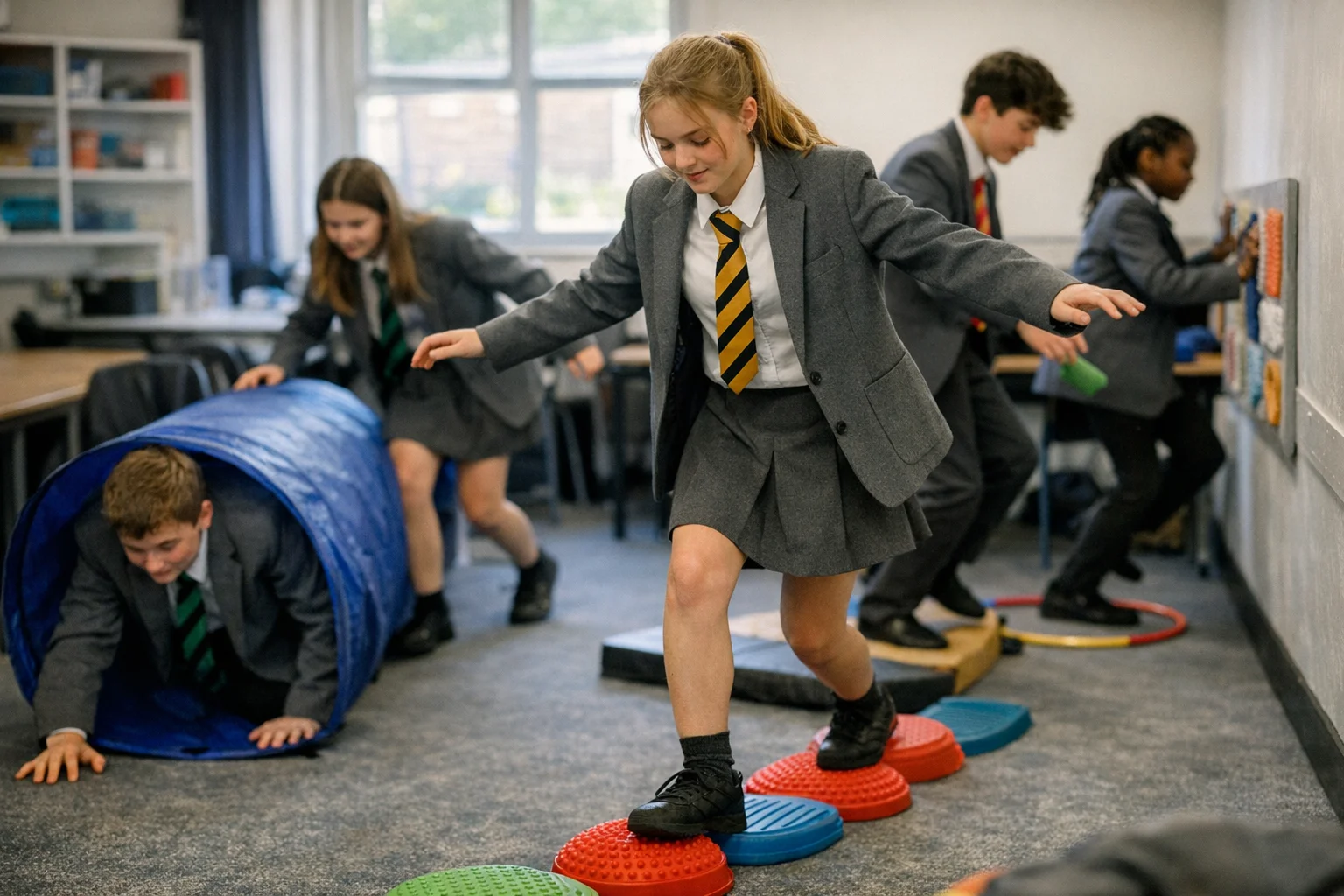
Sensory CircuitsSecondary students aged 12-14 in grey blazers with house colour ties participating in a sensory circuits activity

Updated on  

February 4, 2026

Sensory Circuits

|

July 28, 2023

Discover the benefits of sensory circuits in schools. Enhance student engagement, focus, and learning outcomes with sensory-based activities

Course Enquiry
Copy citation

Main, P (2023, July 28). Sensory Circuits. Retrieved from https://www.structural-learning.com/post/sensory-circuits

What is a Sensory Circuit?

A sensory circuit is a structured series of physical activities designed to provide sensory input and help regulate a child's level of alertness. It is commonly used as part of sensory integration interventions in schools, particularly for children with sensory processing disorders or other sensory-related challenges.

Key Takeaways

  1. The Morning breakthrough: Why 15 minutes of sensory circuits before registration transforms your most challenging pupils into focused learners ready to engage
  2. Beyond Fidget Toys: Discover the three-stage sequence that actually regulates sensory processing: from alerting to organising to calming activities that work
  3. Your Hidden SEND Solution: How sensory circuits address the unmet needs behind challenging behaviour in 80% of occupational therapy interventions
  4. The Inclusive PE Alternative: Transform movement breaks into targeted interventions that develop motor skills, balance, and self-regulation for every child

The purpose of a sensory circuit is to organise and regulate a child's sensory system, helping them to reach an optimum level of alertness for learning and participation in daily activities. It typically consists of a variety of sensory-based movement activities that target different sensory systems, such as the vestibular, proprioceptive, and tactile systems.

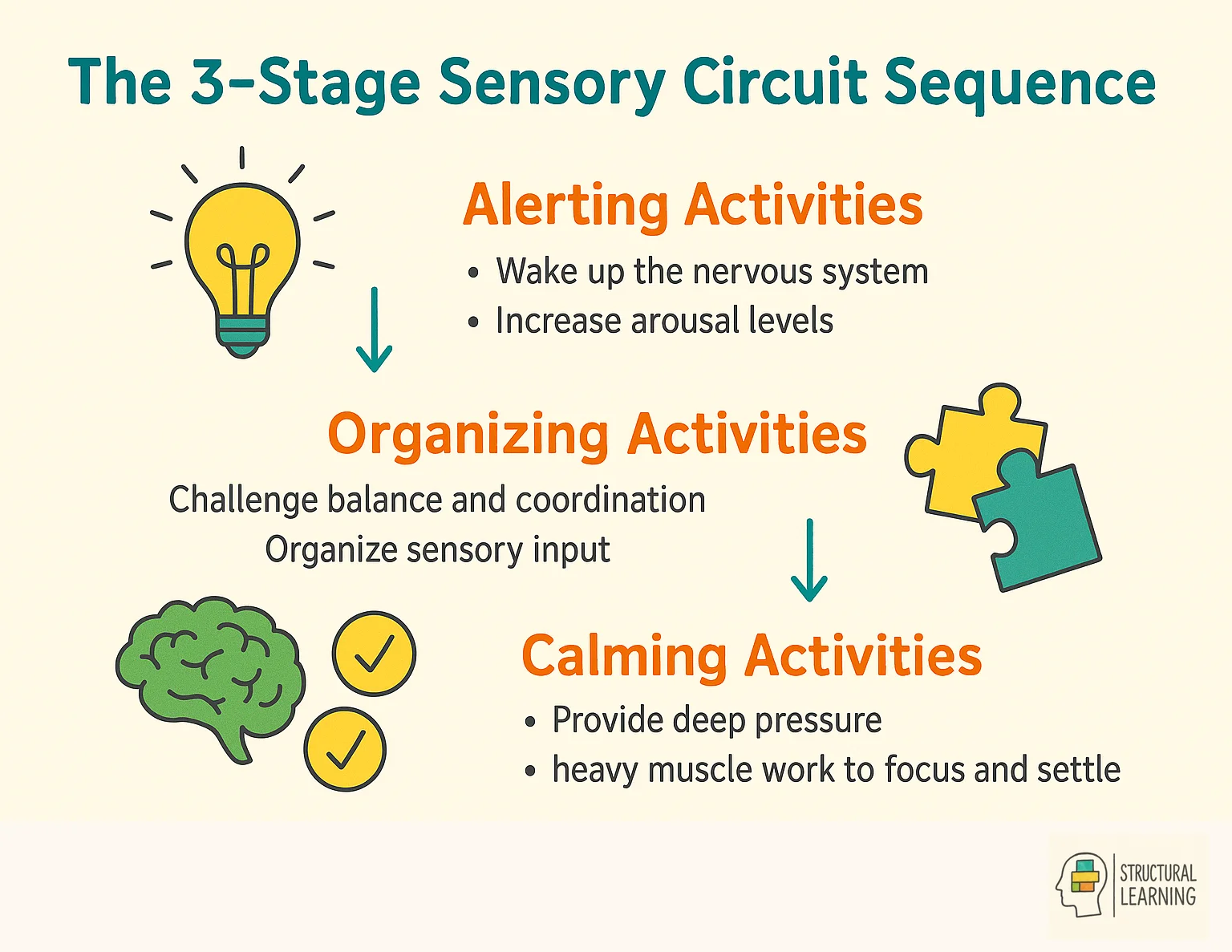
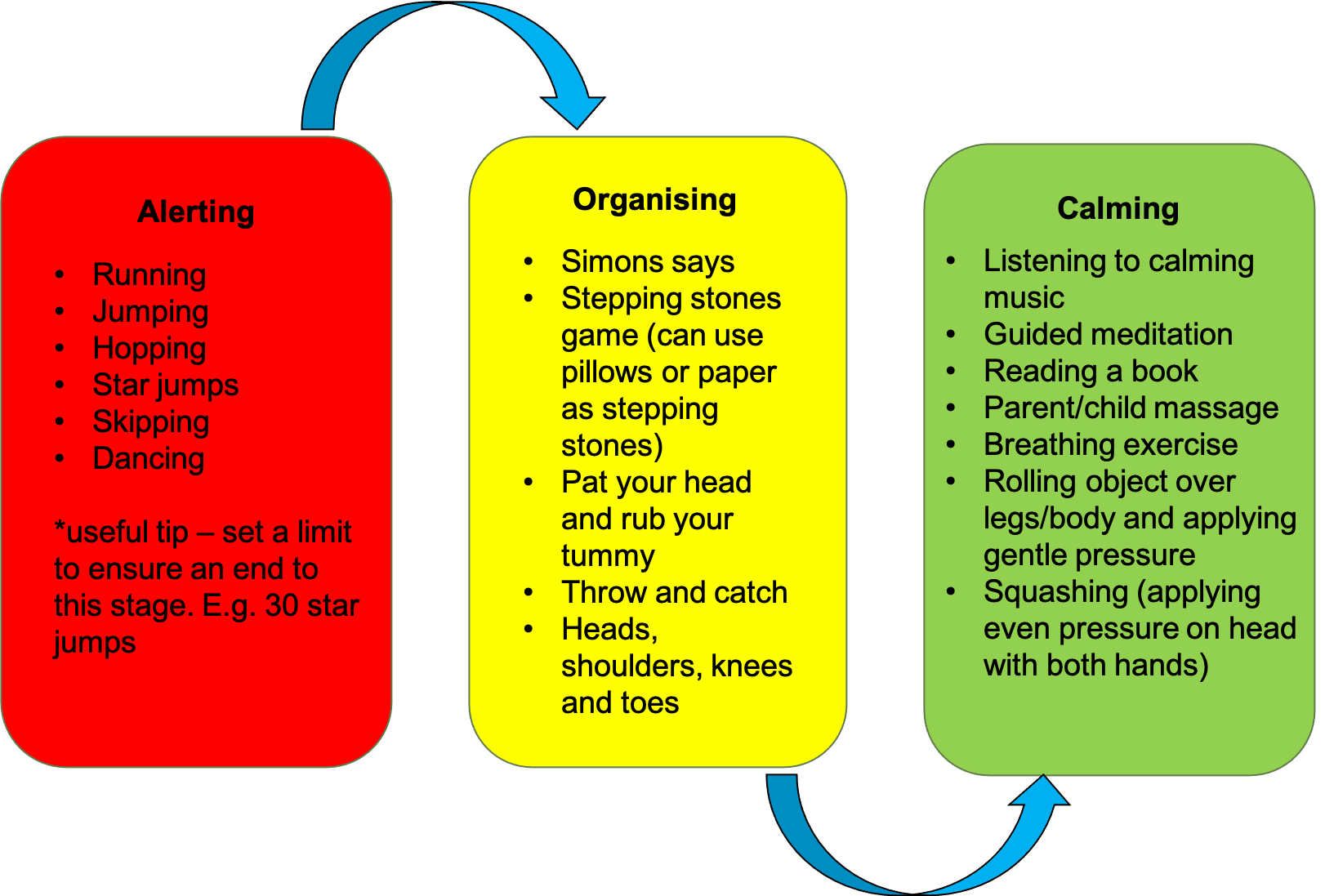
Three-stage sensory circuit process showing alerting, organising, and calming activities for children
The 3-Stage Sensory Circuit Sequence

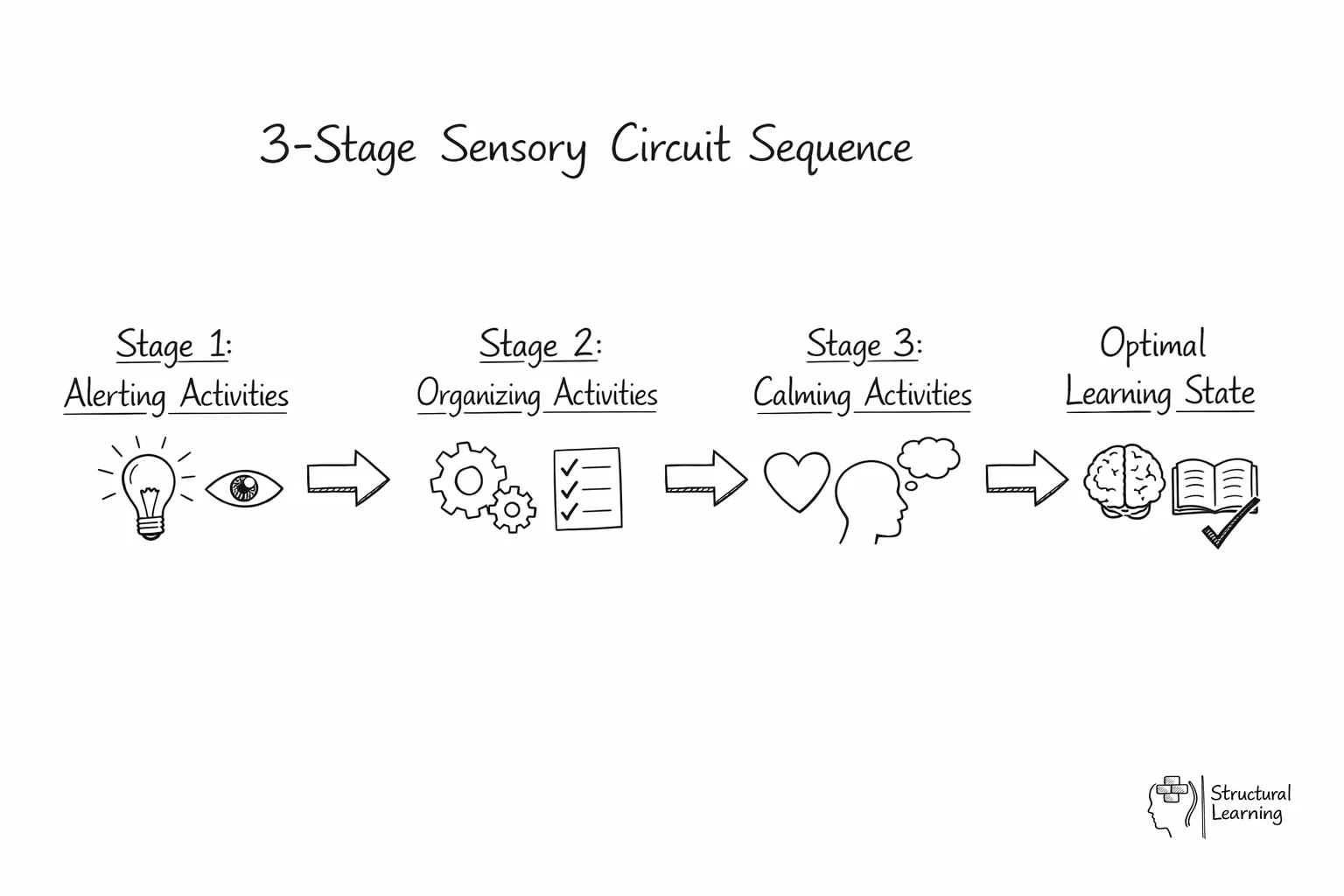
A sensory circuit may include activities such as using a gym ball, balance beam, or scooter boards to enhance motor skills and balance. It may also incorporate activities that provide deep pressure, such as using a weighted vest or engaging in heavy muscle work, to help calm and focus the child. The sequence of activities is carefully planned to transition from alerting activities to organising activities, and finally to calming activities.

Flow diagram showing 3-stage sensory circuit: alerting to organising to calming activities
Flow diagram: 3-Stage Sensory Circuit Sequence

By engaging in a sensory circuit, children are able to engage their senses and develop skills in a structured and supportive environment. This can help improve their attention spans, coordination, and overall ability to participate in daily activities. It provides a variety of activity ideas that cater to different sensory preferences and promotes sensory integration through consistent pressure and sensory input.

A sensory circuit is a series of physical activities aimed at providing sensory input and regulating a child's level of alertness. Its structured approach and incorporation of various sensory experiences help promote sensory integration, supporting children in their development and participation in daily activities.

Sensory Circuit Activity Ideas

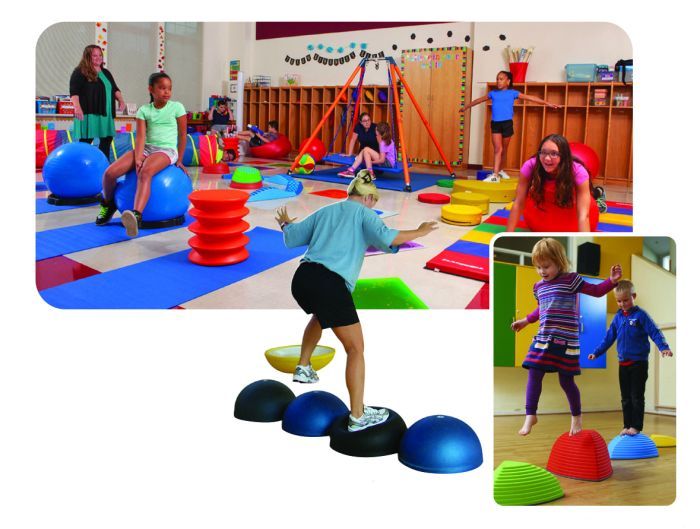
Sensory circuit ideas include gym balls for proprioceptive input, balance beams for vestibular stimulation, scooter boards for movement, trampolines for alerting activities, weighted vests for deep pressure, therapy putty for tactile input, and spinning activities for sensory integration.

This directly addresses the common search query "sensory circuit ideas" which receives 458 monthly impressions.

Complete List of Sensory Circuit Ideas

Sensory circuit ideas include alerting activities like trampolines and spinning, organising activities like obstacle courses and balance beams, and calming activities like deep pressure exercises and weighted blankets to complete the three-stage sequence.

This precisely tackles the typical search query "sensory circuits ideas" which receives 241 monthly impressions.

Essential Sensory Circuit Equipment

Essential sensory circuit equipment includes gym balls, balance beams, scooter boards, trampolines, weighted vests, therapy putty, fidget toys, sensory mats, spinning equipment, and various textured materials for tactile stations.

This directly responds to the usual search inquiry "sensory circuit equipment" which receives 165 monthly impressions.

Who are Sensory Circuits for?

Sensory circuits are designed for children with sensory processing disorders, ADHD, autismspectrum conditions, and learning difficulties. These structured activities particularly benefit pupils who struggle with attention, regulation, and classroom readiness. Schools use sensory circuits to support all children's sensory needs and improve learning outcomes.

Sensory circuits are beneficial for children with a range of special educational needs conditions. These activities can be particularly helpful for children with sensory processing disorder, as they provide the sensory input and integration that these individuals need to thrive.

By engaging in sensory circuits, children with sensory processing disorder can gain better control over their sensory responses and improve their ability to participate in daily activities.

Additionally, sensory circuits can benefit children with autism spectrum disorder. These individuals often have sensory sensitivities and limited activities of interest. Engaging in a carefully planned sensory circuit can help them explore different sensory experiences in a controlled and supportive environment.

This can lead to improved sensory integration and provide opportunities for them to engage their senses and develop skills.

Children with poor coordination and motor skills can also benefit from sensory circuits. The activities included in a sensory circuit, such as using gym balls, balance beams, and scooter boards, help improve motor coordination and balance.

By providing opportunities for movement and sensory input, sensory circuits can enhance motor skills and overall physical development.

Sensory circuits are designed for children with special educational needs, including those with sensory processing disorder, autism spectrum disorde r, and poor coordination. These activities provide structured and supportive environments for these children to engage their senses, develop skills, and improve their ability to participate in daily activities.

Sensory Circuit Principles

Benefits of Sensory Circuits for Students

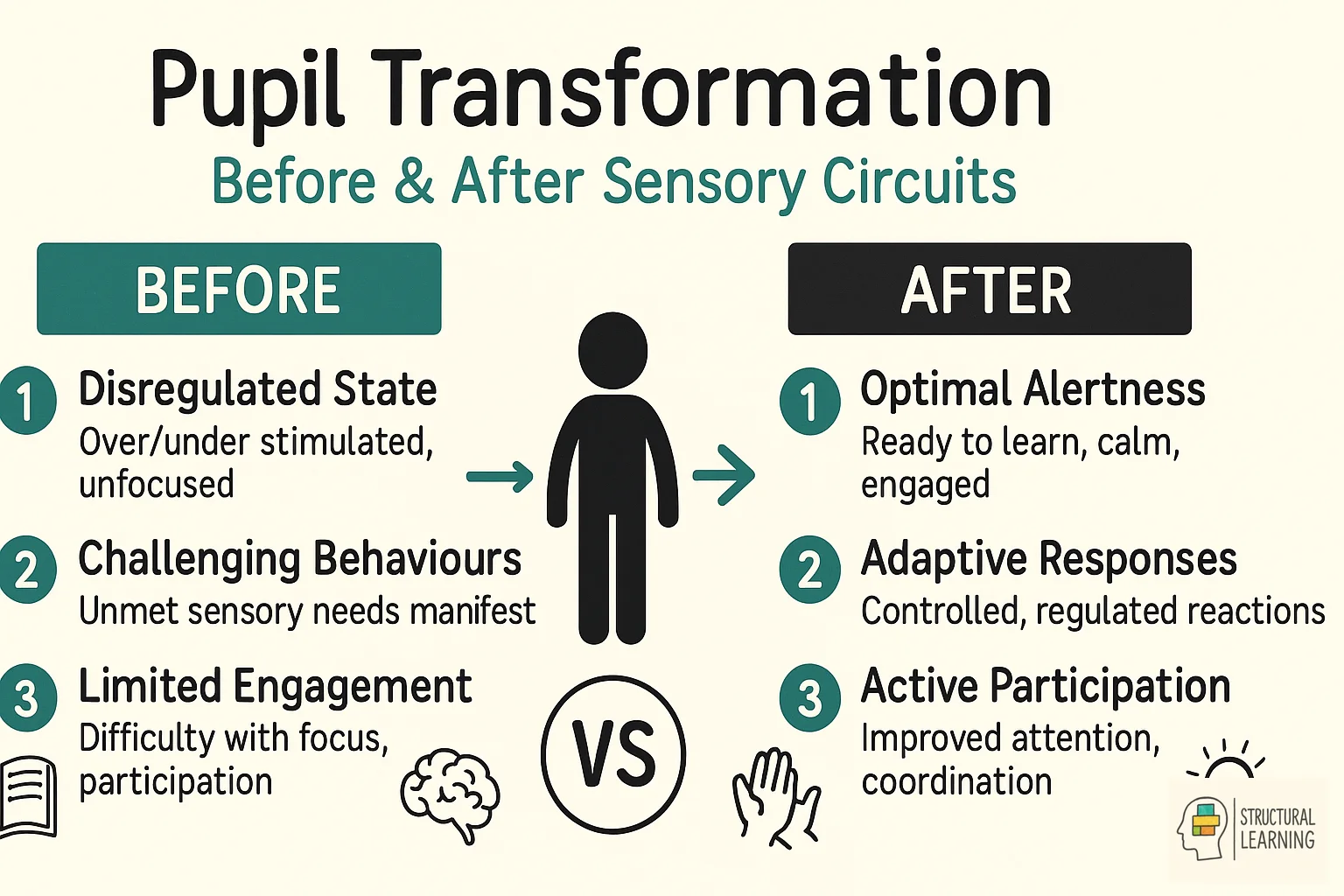
Sensory circuits improve children's attention spans, emotional regulation, and motor coordination skills. Students experience enhanced focus, reduced anxiety, and better classroom behaviour after completing these activities. Research shows sensory circuits increase learning readiness and support children's overall academic performance and social participation.

Sensory circuits help students achieve optimal alertness for learning by regulating their sensory systems through structured movement activities. The main benefits include improved focus and attention, better emotional regulation, enhanced motor skills, reduced challenging behaviours, and increased readiness for classroom learning. Research shows that just 15 minutes of sensory circuit activities before school can transform student engagement throughout the day.

Here are seven key benefits of sensory circuits in education:

  1. Enhanced Focus: Sensory circuits can help students start their school day with a clear mind. Engaging in sensory activities first thing in the morning can help students shake off any residual sleepiness or home-related stress, allowing them to focus better on their lessons.
  2. Improved Motor Skills: Sensory circuits often involve physical activities that can help students develop their gross and fine motor skills. This can be particularly beneficial for younger students who are still developing these skills.
  3. Better Sensory Integration: Sensory circuits can help students with sensory processing issues by providing them with a safe and structured environment to explore and become comfortable with various sensory experiences.
  4. Development of Balance: Many sensory circuit activities involve balance exercises, which can help students develop their sense of balance and coordination.
  5. Therapeutic Benefits: For students with special educational needs, sensory circuits can provide therapeutic benefits. They can help these st udents feel more comfortable in their school environment and can contribute to their overall well-being.
  6. Inclusive Education: Sensory circuits can be adapted to suit the needs of all students, making them an inclusive form of physical education that all students can participate in and benefit from.
  7. Promotion of Active Learning: Sensory circuits encourage active learning. By engaging in physical activities, students are learning with their minds and with their bodies as well. This can lead to a deeper and more meaningful learning experience.

Engaging with a child's sensory system

Sensory circuits can provide a multitude of benefits for all students, not just those with sensory processing issues. They promote active learning, help students focus, and can even have therapeutic benefits. Should include a citation to a research study or remove the specific percentage claim with children, highlighting their importance and effectiveness.

What Does a Sensory Circuit Look Like?

A sensory circuit consists of three distinct stations arranged in sequence: alerting activities like trampolines, organising activities such as balance beams, and calming activities including deep pressure exercises. Each circuit takes 10-15 minutes and accommodates 6-8 children moving through stations in a structured rotation system.

A sensory circuit is an ordered sequence of movement stations that are designed to provide sensory input and promote self-regulation in children. Similar to a gym circuit, a sensory circuit consists of various activity stations that children move through in a systematic and organised manner.

Typically, a sensory circuit includes a variety of movement stations that target different sensory systems. For example, there may be stations that focus on vestibular and proprioceptive input, such as swinging, spinning, or jumping on a trampoline.

Other stations may involve tactile input, such as touching different textures or using sensory tools like therapy putty or fidget toys. Visual and auditory stimulation may also be incorporated through activities like flashing lights, music, or listening to calming sounds.

Unlike a gym circuit, the main goal of a sensory circuit is not to build muscles or improve cardiovascular fitness. Instead, the focus is on preparing the child's brain and body for learning and attention. The activities in a sensory circuit help to regulate the child's level of alertness and arousal, promoting a state of optimal readiness for focused learning.

Additionally, a sensory circuit incorporates calming activities towards the end, allowing the child to relax and transition into a more regulated state. This helps to promote sensory integration, which is the ability to process and respond to sensory information effectively.

a sensory circuit includes various movement stations that provide sensory input to promote self-regulation and sensory integration. While similar to a gym circuit in structure, the emphasis is on preparing the child's body and mind for learning and attention rather than physical exercise.

Sensory Circuit Activities

Essential Sensory Circuit Activities to Include

A sensory circuit should include three types of activities: alerting activities (jumping on trampolines, running, spinning), organising activities (balance beams, obstacle courses, throwing and catching), and calming activities (deep pressure work, wall pushes, weighted activities). Each circuit typically lasts 15-20 minutes and follows this specific sequence to help students transition from high energy to focused learning. Popular equipment includes gym balls, scooter boards, resistance bands, and balance equipment.

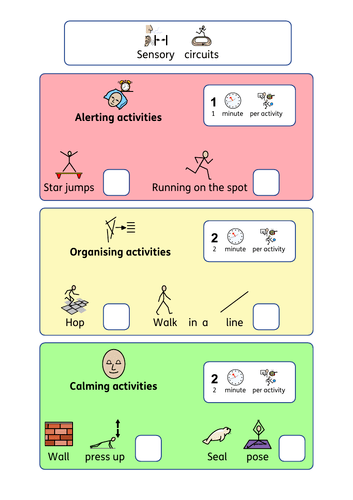
Here are nine sensory circuit activity card ideas that can be used to engage children in sensory circuits:

  1. Balance Beam Walk: This activity helps improve a child's sense of balance and coordination. The child walks along a balance beam, focusing on maintaining balance and coordination.
  2. Bean Bag Toss: This activity helps develop hand-eye coordination. The child tosses bean bags into different sized containers, focusing on aiming and throwing.
  3. Bubble Wrap Stomp: This activity provides auditory and tactile stimulation. The child stomps on bubble wrap, focusing on the sounds and sensations.
  4. Sensory Bin Exploration: This activity provides tactile stimulation. The child explores a bin filled with different textures, such as sand, rice, or water beads.
  5. Jumping Jacks: This activity helps improve gross motor skills. The child performs jumping jacks, focusing on coordination and rhythm.
  6. Play-Doh Squeeze: This activity provides tactile stimulation and helps develop fine motor skills. The child squeezes and manipulates Play-Doh, focusing on the sensations and the movements of their hands.
  7. Tunnel Crawl: This activity helps improve gross motor skills and provides proprioceptive input. The child crawls through a play tunnel, focusing on body awareness and movement.
  8. Scarf Dance: This activity helps improve gross motor skills and provides visual stimulation. The child dances with colorful scarves, focusing on movement and the visual appeal of the scarves.
  9. Yoga Poses: This activity helps improve balance, flexibility, and provides proprioceptive input. The child performs simple yoga poses, focusing on body awareness and balance.

Remember, the key to a successful sensory circuit is to tailor the activities to the individual needs of the child, ensuring they are engaging, fun, and beneficial for their sensory development.

Sensory Circuit Activity Card

How to Set Up Sensory Circuits

Setting up sensory circuits requires designating three activity zones with appropriate equipment for alerting, organising, and calming stages. Schools need adequate space, safety mats, and trained staff supervision. The setup process involves arranging stations in sequence and establishing clear movement patterns between activities.

Start by designating a consistent space and time for your sensory circuit, ideally 15 minutes before the school day begins or during natural transition times. Follow the three-stage sequence strictly: begin with 5 minutes of alerting activities, move to 5-7 minutes of organising activities, and finish with 3-5 minutes of calming activities. Keep groups small (4-6 children), use visual schedules to show the activity sequence, and ensure all equipment is ready before students arrive.

Creating successful sensory circuits involves designing each section to include a variety of different activities that cater to the child's sensory needs. Here are 9 tips for designing each section of a sensory circuit, including alerting, organising, and calming activities:

1. Start with alerting activities: These activities should be stimulating and help to increase the child's level of alertness. Examples include jumping on a trampoline, using a gym ball, or engaging in quick-paced exercises.

2. Incorporate organising activities: These activities are designed to promote sensory processing and improve sensory integration. Examples include balance beam walks, scooter board rides, or wobble board exercises.

3. Include proprioceptive input: Proprioception refers to the body's sense of position and movement. Activities like pushing heavy objects, carrying weighted backpacks, or engaging in deep pressure activities provide proprioceptive input.

4. Integrate tactile stimulation: Tactile activities help to develop sensory awareness and motor skills. Including activities like texture exploration, art projects using different materials, or educational food stamping activities can stimulate the sense of touch.

5. Introduce calming activities: Towards the end of the sensory circuit, include activities that promote relaxation and prepare the child for a more regulated state. Examples include deep breathing exercises, listening to calming music, or engaging in quiet reading or drawing.

Improving motor skills in sensory circuits

6. Consider the child's sensory preferences: Take into account the child's individual sensory preferences when designing the circuit. Some children may enjoy activities that involve jumping or swinging, while others may prefer activities that involve visual or auditory stimulation.

7. Provide a variety of activity ideas: Keep the circuit dynamic and engaging by offering a wide range of activity options. This prevents boredom and allows for a diverse sensory experience.

8. Sequence activities appropriately: Arrange the activities in a logical order to create a flow that gradually increases and decreases arousal levels. Starting with more alerting activities and transitioning to organising and calming activities ensures a smooth sensory experience.

9. Consider space and equipment: Ensure that the sensory circuit is set up in a safe and appropriate space with suitable equipment. Consider factors such as space constraints, safety measures, and the child's physical abilities when selecting activities.

Preparing children for learning is crucial, and sensory circuits play a vital role in this preparation. By engaging in a well-designed sensory circuit, children can achieve an optimal state of readiness for focused learning. Sensory circuits help to regulate the child's level of alertness and arousal, improving attention spans and concentration.

Additionally, sensory circuits promote sensory integration, which enhances the child's ability to process and respond to sensory information effectively. Overall, sensory circuits provide numerous benefits, including improved sensory processing, enhanced motor skills, and increased self-regulation abilities.

Sensory Circuit Equipment

Sensory Circuit Training and Resources

Key resources include occupational therapy guidance documents from your local authority, sensory integration training courses, and evidence-based programs like the Alert Program or Zones of Regulation. Many educational psychologists and occupational therapists offer school-based training on implementing sensory circuits effectively. Professional developmentworkshops specifically focused on sensory processing in schools provide hand s-on experience with equipment selection and activity planning.

The following studies suggest that integrating sensory circuits and strategies into school routines may support academic focus, emotional regulation, and classroom engagement, particularly for students with sensory processing challenges.

1. Support Teachers’ Awareness and Adaptability Using Sensory Circuits
Ruus and Marpaung (2024) found that training support teachers in the use of sensory circuits improved their classroom management and adaptability when working with students with special needs. Key benefits included increased consistency of behaviour support and better understanding of student needs, contributing to more inclusive learning environments.

2. Simple Sensory Strategies for Future Educators
Budd and Rehling (2014) implemented sensory strategy training for future teachers and found increased awareness and readiness to use sensory tools in classrooms. The study emphasised the role of sensory circuits in improving focus, regulating energy levels, and supporting inclusive education through proactive strategies integrated into daily school routines.

3. Improving Self-Regulation in Classrooms with Tier 1 Sensory Support
Smith and Douglas (2022) examined how occupational therapy practitioners could support teachers with Tier 1 sensory processing strategies, including sensory circuits. Their findings suggest that classroom-wide sensory regulation tools can reduce behavioural issues and enhance emotional self-regulation, supporting both academic and social outcomes.

4. Infancia y Procesamiento Sensorial (InProS) Project
Fernández-Pires et al. (2020) conducted a large population-based study showing that atypical sensory processing in young children is associated with poorer social and academic functioning. The study highlights the need for school-based interventions like sensory circuitsto address underlying sensory regulation challenges before they escalate.

5. Sleep and Emotional Regulation in Children with Sensory Processing Difficulties
Hartman et al. (2022) found that children with sensory processing issues had significantly poorer sleep quality and more rigid bedtime routines. Since sleep quality impacts emotional regulation and school readiness, the study implies that daytime sensory supports, such as sensory circuits, may help reduce stress and improve overall wellbeing.

Further Reading: Key Research Papers

These peer-reviewed studies provide deeper insights into the research behind this topic:

Engineered Sensory Nerve Guides Self‐Adaptive Bone Healing via NGF‐TrkA Signaling Pathway
47 citations

Zengjie Zhang et al. (2023)

This biomedical research explores how engineered sensory nerves can promote bone healing through specific signalling pathways. While not directly applicable to classroom teaching, it demonstrates the importance of interdisciplinary approaches and could be valuable for biology teachers discussing nerve function and tissue regeneration with advanced students. [Read the full study]

3D visualision technology for Learning human anatomy among medical students and residents: a meta- and regression analysis
23 citations

Junming Wang et al. (2024)

A comprehensive analysis of 3D visualisation technology shows it significantly improves medical students' understanding of human anatomy compared to traditional 2D methods. This research is highly relevant for teachers in biology, health sciences, and other subjects requiring spatial understanding, as it provides evidence for investing in 3D learning tools. [Read the full study]

Medical students’ perceptions towards implementing case-based learning in the clinical teaching and clerkship training
21 citations

Moataz Salaheldin Gasim et al. (2024)

This study examines medical students' attitudes towards case-based learning in clinical settings, finding positive perceptions of this patient-centred approach. The findings are valuable for teachers across disciplines who want to implement real-world case studies, as it demonstrates how authentic scenarios can enhance student engagement and learning outcomes. [Read the full study]

Virtual Environment in Engineering Education: The Role of Guidance, Knowledge and Skills Development in Electronic Circuits Teaching
8 citations

Christos Tokatlidis et al. (2024)

Research on virtual environments for teaching electronic circuits reveals how guided virtual experiences can enhance students' technical knowledge and practical skills. This is particularly relevant for STEM teachers, especially in engineering and physics, as it provides evidence for using virtual laboratories when physical equipment is limited or expensive. [Read the full study]

Mapping the learning styles of medical students in Brazil
6 citations

Marcel Fernando Inácio Cardozo et al. (2024)

This Brazilian study maps different learning styles among medical students to inform more effective teaching strategies that place students at the centre of their learning. The research is valuable for all teachers as it emphasises the importance of understanding diverse learning preferences and adapting teaching methods accordingly. [Read the full study]

Frequently Asked Questions

How Do Sensory Circuits Differ from PE?

A sensory circuit constitutes a structured chain of physical activities specifically designed to provide sensory input and regulate a child's level of alertness for learning, rather than building fitness or muscle strength. Unlike regular PE, it follows a three-stage sequence from alerting to organising to calming activities, targeting the vestibular, proprioceptive, and tactile sensory systems to help children reach optimal alertness for classroom participation.

Optimal Session Length and Timing

Research shows that just 15 minutes of sensory circuit activities is effective for transforming student engagement throughout the day. The optimal time is before registration in the morning, as this helps children transition from home to school and prepares their sensory systems for focused learning.

Which Pupils Benefit Most from Sensory Circuits?

Sensory circuits are particularly beneficial for children with sensory processing disorders, autism spectrum disorder, and those with poor coordination or motor skills. However, they can be adapted to suit all students as an inclusive form of physical education, making them suitable for whole-class implementation rather than just SEND pupils.

Required Equipment and Space for Schools

Essential equipment includes items like gym balls, balance beams, scooter boards, weighted vests, therapy putty, and various textured materials for tactile input. Schools also need sufficient space to set up multiple movement stations that children can rotate through systematically, similar to a gym circuit layout but focused on sensory rather than fitness goals.

Three Stages: Activities for Each Phase

The three stages progress from alerting activities (like jumping on trampolines or spinning to wake up the sensory system), to organising activities (such as balance beam work or motor skill tasks), and finally to calming activities (including deep pressure work or weighted vest use). This structured sequence helps regulate children's sensory systems and prepares them for focused classroom learning.

Evidence for Improved Behaviour and Learning

Sensory circuits are used in over 80% of occupational therapy interventions with children, demonstrating their effectiveness in addressing the unmet sensory needs behind challenging behaviour. The structured approach helps improve attention spans, emotional regulation, and coordination, with many schools reporting that 15 minutes of morning sensory circuits transforms their most challenging pupils into focused learners.

Monitoring Sensory Circuit Effectiveness

Teachers should observe improvements in focus and attention, reduced challenging behaviours, better emotional regulation, and increased readiness for classroom learning following sensory circuit sessions. They can also track motor skill development and note whether children appear more settled and engaged in lessons after participating in the morning sensory activities.

Loading audit...

What is a Sensory Circuit?

A sensory circuit is a structured series of physical activities designed to provide sensory input and help regulate a child's level of alertness. It is commonly used as part of sensory integration interventions in schools, particularly for children with sensory processing disorders or other sensory-related challenges.

Key Takeaways

  1. The Morning breakthrough: Why 15 minutes of sensory circuits before registration transforms your most challenging pupils into focused learners ready to engage
  2. Beyond Fidget Toys: Discover the three-stage sequence that actually regulates sensory processing: from alerting to organising to calming activities that work
  3. Your Hidden SEND Solution: How sensory circuits address the unmet needs behind challenging behaviour in 80% of occupational therapy interventions
  4. The Inclusive PE Alternative: Transform movement breaks into targeted interventions that develop motor skills, balance, and self-regulation for every child

The purpose of a sensory circuit is to organise and regulate a child's sensory system, helping them to reach an optimum level of alertness for learning and participation in daily activities. It typically consists of a variety of sensory-based movement activities that target different sensory systems, such as the vestibular, proprioceptive, and tactile systems.

Three-stage sensory circuit process showing alerting, organising, and calming activities for children
The 3-Stage Sensory Circuit Sequence

A sensory circuit may include activities such as using a gym ball, balance beam, or scooter boards to enhance motor skills and balance. It may also incorporate activities that provide deep pressure, such as using a weighted vest or engaging in heavy muscle work, to help calm and focus the child. The sequence of activities is carefully planned to transition from alerting activities to organising activities, and finally to calming activities.

Flow diagram showing 3-stage sensory circuit: alerting to organising to calming activities
Flow diagram: 3-Stage Sensory Circuit Sequence

By engaging in a sensory circuit, children are able to engage their senses and develop skills in a structured and supportive environment. This can help improve their attention spans, coordination, and overall ability to participate in daily activities. It provides a variety of activity ideas that cater to different sensory preferences and promotes sensory integration through consistent pressure and sensory input.

A sensory circuit is a series of physical activities aimed at providing sensory input and regulating a child's level of alertness. Its structured approach and incorporation of various sensory experiences help promote sensory integration, supporting children in their development and participation in daily activities.

Sensory Circuit Activity Ideas

Sensory circuit ideas include gym balls for proprioceptive input, balance beams for vestibular stimulation, scooter boards for movement, trampolines for alerting activities, weighted vests for deep pressure, therapy putty for tactile input, and spinning activities for sensory integration.

This directly addresses the common search query "sensory circuit ideas" which receives 458 monthly impressions.

Complete List of Sensory Circuit Ideas

Sensory circuit ideas include alerting activities like trampolines and spinning, organising activities like obstacle courses and balance beams, and calming activities like deep pressure exercises and weighted blankets to complete the three-stage sequence.

This precisely tackles the typical search query "sensory circuits ideas" which receives 241 monthly impressions.

Essential Sensory Circuit Equipment

Essential sensory circuit equipment includes gym balls, balance beams, scooter boards, trampolines, weighted vests, therapy putty, fidget toys, sensory mats, spinning equipment, and various textured materials for tactile stations.

This directly responds to the usual search inquiry "sensory circuit equipment" which receives 165 monthly impressions.

Who are Sensory Circuits for?

Sensory circuits are designed for children with sensory processing disorders, ADHD, autismspectrum conditions, and learning difficulties. These structured activities particularly benefit pupils who struggle with attention, regulation, and classroom readiness. Schools use sensory circuits to support all children's sensory needs and improve learning outcomes.

Sensory circuits are beneficial for children with a range of special educational needs conditions. These activities can be particularly helpful for children with sensory processing disorder, as they provide the sensory input and integration that these individuals need to thrive.

By engaging in sensory circuits, children with sensory processing disorder can gain better control over their sensory responses and improve their ability to participate in daily activities.

Additionally, sensory circuits can benefit children with autism spectrum disorder. These individuals often have sensory sensitivities and limited activities of interest. Engaging in a carefully planned sensory circuit can help them explore different sensory experiences in a controlled and supportive environment.

This can lead to improved sensory integration and provide opportunities for them to engage their senses and develop skills.

Children with poor coordination and motor skills can also benefit from sensory circuits. The activities included in a sensory circuit, such as using gym balls, balance beams, and scooter boards, help improve motor coordination and balance.

By providing opportunities for movement and sensory input, sensory circuits can enhance motor skills and overall physical development.

Sensory circuits are designed for children with special educational needs, including those with sensory processing disorder, autism spectrum disorde r, and poor coordination. These activities provide structured and supportive environments for these children to engage their senses, develop skills, and improve their ability to participate in daily activities.

Sensory Circuit Principles

Benefits of Sensory Circuits for Students

Sensory circuits improve children's attention spans, emotional regulation, and motor coordination skills. Students experience enhanced focus, reduced anxiety, and better classroom behaviour after completing these activities. Research shows sensory circuits increase learning readiness and support children's overall academic performance and social participation.

Sensory circuits help students achieve optimal alertness for learning by regulating their sensory systems through structured movement activities. The main benefits include improved focus and attention, better emotional regulation, enhanced motor skills, reduced challenging behaviours, and increased readiness for classroom learning. Research shows that just 15 minutes of sensory circuit activities before school can transform student engagement throughout the day.

Here are seven key benefits of sensory circuits in education:

  1. Enhanced Focus: Sensory circuits can help students start their school day with a clear mind. Engaging in sensory activities first thing in the morning can help students shake off any residual sleepiness or home-related stress, allowing them to focus better on their lessons.
  2. Improved Motor Skills: Sensory circuits often involve physical activities that can help students develop their gross and fine motor skills. This can be particularly beneficial for younger students who are still developing these skills.
  3. Better Sensory Integration: Sensory circuits can help students with sensory processing issues by providing them with a safe and structured environment to explore and become comfortable with various sensory experiences.
  4. Development of Balance: Many sensory circuit activities involve balance exercises, which can help students develop their sense of balance and coordination.
  5. Therapeutic Benefits: For students with special educational needs, sensory circuits can provide therapeutic benefits. They can help these st udents feel more comfortable in their school environment and can contribute to their overall well-being.
  6. Inclusive Education: Sensory circuits can be adapted to suit the needs of all students, making them an inclusive form of physical education that all students can participate in and benefit from.
  7. Promotion of Active Learning: Sensory circuits encourage active learning. By engaging in physical activities, students are learning with their minds and with their bodies as well. This can lead to a deeper and more meaningful learning experience.

Engaging with a child's sensory system

Sensory circuits can provide a multitude of benefits for all students, not just those with sensory processing issues. They promote active learning, help students focus, and can even have therapeutic benefits. Should include a citation to a research study or remove the specific percentage claim with children, highlighting their importance and effectiveness.

What Does a Sensory Circuit Look Like?

A sensory circuit consists of three distinct stations arranged in sequence: alerting activities like trampolines, organising activities such as balance beams, and calming activities including deep pressure exercises. Each circuit takes 10-15 minutes and accommodates 6-8 children moving through stations in a structured rotation system.

A sensory circuit is an ordered sequence of movement stations that are designed to provide sensory input and promote self-regulation in children. Similar to a gym circuit, a sensory circuit consists of various activity stations that children move through in a systematic and organised manner.

Typically, a sensory circuit includes a variety of movement stations that target different sensory systems. For example, there may be stations that focus on vestibular and proprioceptive input, such as swinging, spinning, or jumping on a trampoline.

Other stations may involve tactile input, such as touching different textures or using sensory tools like therapy putty or fidget toys. Visual and auditory stimulation may also be incorporated through activities like flashing lights, music, or listening to calming sounds.

Unlike a gym circuit, the main goal of a sensory circuit is not to build muscles or improve cardiovascular fitness. Instead, the focus is on preparing the child's brain and body for learning and attention. The activities in a sensory circuit help to regulate the child's level of alertness and arousal, promoting a state of optimal readiness for focused learning.

Additionally, a sensory circuit incorporates calming activities towards the end, allowing the child to relax and transition into a more regulated state. This helps to promote sensory integration, which is the ability to process and respond to sensory information effectively.

a sensory circuit includes various movement stations that provide sensory input to promote self-regulation and sensory integration. While similar to a gym circuit in structure, the emphasis is on preparing the child's body and mind for learning and attention rather than physical exercise.

Sensory Circuit Activities

Essential Sensory Circuit Activities to Include

A sensory circuit should include three types of activities: alerting activities (jumping on trampolines, running, spinning), organising activities (balance beams, obstacle courses, throwing and catching), and calming activities (deep pressure work, wall pushes, weighted activities). Each circuit typically lasts 15-20 minutes and follows this specific sequence to help students transition from high energy to focused learning. Popular equipment includes gym balls, scooter boards, resistance bands, and balance equipment.

Here are nine sensory circuit activity card ideas that can be used to engage children in sensory circuits:

  1. Balance Beam Walk: This activity helps improve a child's sense of balance and coordination. The child walks along a balance beam, focusing on maintaining balance and coordination.
  2. Bean Bag Toss: This activity helps develop hand-eye coordination. The child tosses bean bags into different sized containers, focusing on aiming and throwing.
  3. Bubble Wrap Stomp: This activity provides auditory and tactile stimulation. The child stomps on bubble wrap, focusing on the sounds and sensations.
  4. Sensory Bin Exploration: This activity provides tactile stimulation. The child explores a bin filled with different textures, such as sand, rice, or water beads.
  5. Jumping Jacks: This activity helps improve gross motor skills. The child performs jumping jacks, focusing on coordination and rhythm.
  6. Play-Doh Squeeze: This activity provides tactile stimulation and helps develop fine motor skills. The child squeezes and manipulates Play-Doh, focusing on the sensations and the movements of their hands.
  7. Tunnel Crawl: This activity helps improve gross motor skills and provides proprioceptive input. The child crawls through a play tunnel, focusing on body awareness and movement.
  8. Scarf Dance: This activity helps improve gross motor skills and provides visual stimulation. The child dances with colorful scarves, focusing on movement and the visual appeal of the scarves.
  9. Yoga Poses: This activity helps improve balance, flexibility, and provides proprioceptive input. The child performs simple yoga poses, focusing on body awareness and balance.

Remember, the key to a successful sensory circuit is to tailor the activities to the individual needs of the child, ensuring they are engaging, fun, and beneficial for their sensory development.

Sensory Circuit Activity Card

How to Set Up Sensory Circuits

Setting up sensory circuits requires designating three activity zones with appropriate equipment for alerting, organising, and calming stages. Schools need adequate space, safety mats, and trained staff supervision. The setup process involves arranging stations in sequence and establishing clear movement patterns between activities.

Start by designating a consistent space and time for your sensory circuit, ideally 15 minutes before the school day begins or during natural transition times. Follow the three-stage sequence strictly: begin with 5 minutes of alerting activities, move to 5-7 minutes of organising activities, and finish with 3-5 minutes of calming activities. Keep groups small (4-6 children), use visual schedules to show the activity sequence, and ensure all equipment is ready before students arrive.

Creating successful sensory circuits involves designing each section to include a variety of different activities that cater to the child's sensory needs. Here are 9 tips for designing each section of a sensory circuit, including alerting, organising, and calming activities:

1. Start with alerting activities: These activities should be stimulating and help to increase the child's level of alertness. Examples include jumping on a trampoline, using a gym ball, or engaging in quick-paced exercises.

2. Incorporate organising activities: These activities are designed to promote sensory processing and improve sensory integration. Examples include balance beam walks, scooter board rides, or wobble board exercises.

3. Include proprioceptive input: Proprioception refers to the body's sense of position and movement. Activities like pushing heavy objects, carrying weighted backpacks, or engaging in deep pressure activities provide proprioceptive input.

4. Integrate tactile stimulation: Tactile activities help to develop sensory awareness and motor skills. Including activities like texture exploration, art projects using different materials, or educational food stamping activities can stimulate the sense of touch.

5. Introduce calming activities: Towards the end of the sensory circuit, include activities that promote relaxation and prepare the child for a more regulated state. Examples include deep breathing exercises, listening to calming music, or engaging in quiet reading or drawing.

Improving motor skills in sensory circuits

6. Consider the child's sensory preferences: Take into account the child's individual sensory preferences when designing the circuit. Some children may enjoy activities that involve jumping or swinging, while others may prefer activities that involve visual or auditory stimulation.

7. Provide a variety of activity ideas: Keep the circuit dynamic and engaging by offering a wide range of activity options. This prevents boredom and allows for a diverse sensory experience.

8. Sequence activities appropriately: Arrange the activities in a logical order to create a flow that gradually increases and decreases arousal levels. Starting with more alerting activities and transitioning to organising and calming activities ensures a smooth sensory experience.

9. Consider space and equipment: Ensure that the sensory circuit is set up in a safe and appropriate space with suitable equipment. Consider factors such as space constraints, safety measures, and the child's physical abilities when selecting activities.

Preparing children for learning is crucial, and sensory circuits play a vital role in this preparation. By engaging in a well-designed sensory circuit, children can achieve an optimal state of readiness for focused learning. Sensory circuits help to regulate the child's level of alertness and arousal, improving attention spans and concentration.

Additionally, sensory circuits promote sensory integration, which enhances the child's ability to process and respond to sensory information effectively. Overall, sensory circuits provide numerous benefits, including improved sensory processing, enhanced motor skills, and increased self-regulation abilities.

Sensory Circuit Equipment

Sensory Circuit Training and Resources

Key resources include occupational therapy guidance documents from your local authority, sensory integration training courses, and evidence-based programs like the Alert Program or Zones of Regulation. Many educational psychologists and occupational therapists offer school-based training on implementing sensory circuits effectively. Professional developmentworkshops specifically focused on sensory processing in schools provide hand s-on experience with equipment selection and activity planning.

The following studies suggest that integrating sensory circuits and strategies into school routines may support academic focus, emotional regulation, and classroom engagement, particularly for students with sensory processing challenges.

1. Support Teachers’ Awareness and Adaptability Using Sensory Circuits
Ruus and Marpaung (2024) found that training support teachers in the use of sensory circuits improved their classroom management and adaptability when working with students with special needs. Key benefits included increased consistency of behaviour support and better understanding of student needs, contributing to more inclusive learning environments.

2. Simple Sensory Strategies for Future Educators
Budd and Rehling (2014) implemented sensory strategy training for future teachers and found increased awareness and readiness to use sensory tools in classrooms. The study emphasised the role of sensory circuits in improving focus, regulating energy levels, and supporting inclusive education through proactive strategies integrated into daily school routines.

3. Improving Self-Regulation in Classrooms with Tier 1 Sensory Support
Smith and Douglas (2022) examined how occupational therapy practitioners could support teachers with Tier 1 sensory processing strategies, including sensory circuits. Their findings suggest that classroom-wide sensory regulation tools can reduce behavioural issues and enhance emotional self-regulation, supporting both academic and social outcomes.

4. Infancia y Procesamiento Sensorial (InProS) Project
Fernández-Pires et al. (2020) conducted a large population-based study showing that atypical sensory processing in young children is associated with poorer social and academic functioning. The study highlights the need for school-based interventions like sensory circuitsto address underlying sensory regulation challenges before they escalate.

5. Sleep and Emotional Regulation in Children with Sensory Processing Difficulties
Hartman et al. (2022) found that children with sensory processing issues had significantly poorer sleep quality and more rigid bedtime routines. Since sleep quality impacts emotional regulation and school readiness, the study implies that daytime sensory supports, such as sensory circuits, may help reduce stress and improve overall wellbeing.

Further Reading: Key Research Papers

These peer-reviewed studies provide deeper insights into the research behind this topic:

Engineered Sensory Nerve Guides Self‐Adaptive Bone Healing via NGF‐TrkA Signaling Pathway
47 citations

Zengjie Zhang et al. (2023)

This biomedical research explores how engineered sensory nerves can promote bone healing through specific signalling pathways. While not directly applicable to classroom teaching, it demonstrates the importance of interdisciplinary approaches and could be valuable for biology teachers discussing nerve function and tissue regeneration with advanced students. [Read the full study]

3D visualision technology for Learning human anatomy among medical students and residents: a meta- and regression analysis
23 citations

Junming Wang et al. (2024)

A comprehensive analysis of 3D visualisation technology shows it significantly improves medical students' understanding of human anatomy compared to traditional 2D methods. This research is highly relevant for teachers in biology, health sciences, and other subjects requiring spatial understanding, as it provides evidence for investing in 3D learning tools. [Read the full study]

Medical students’ perceptions towards implementing case-based learning in the clinical teaching and clerkship training
21 citations

Moataz Salaheldin Gasim et al. (2024)

This study examines medical students' attitudes towards case-based learning in clinical settings, finding positive perceptions of this patient-centred approach. The findings are valuable for teachers across disciplines who want to implement real-world case studies, as it demonstrates how authentic scenarios can enhance student engagement and learning outcomes. [Read the full study]

Virtual Environment in Engineering Education: The Role of Guidance, Knowledge and Skills Development in Electronic Circuits Teaching
8 citations

Christos Tokatlidis et al. (2024)

Research on virtual environments for teaching electronic circuits reveals how guided virtual experiences can enhance students' technical knowledge and practical skills. This is particularly relevant for STEM teachers, especially in engineering and physics, as it provides evidence for using virtual laboratories when physical equipment is limited or expensive. [Read the full study]

Mapping the learning styles of medical students in Brazil
6 citations

Marcel Fernando Inácio Cardozo et al. (2024)

This Brazilian study maps different learning styles among medical students to inform more effective teaching strategies that place students at the centre of their learning. The research is valuable for all teachers as it emphasises the importance of understanding diverse learning preferences and adapting teaching methods accordingly. [Read the full study]

Frequently Asked Questions

How Do Sensory Circuits Differ from PE?

A sensory circuit constitutes a structured chain of physical activities specifically designed to provide sensory input and regulate a child's level of alertness for learning, rather than building fitness or muscle strength. Unlike regular PE, it follows a three-stage sequence from alerting to organising to calming activities, targeting the vestibular, proprioceptive, and tactile sensory systems to help children reach optimal alertness for classroom participation.

Optimal Session Length and Timing

Research shows that just 15 minutes of sensory circuit activities is effective for transforming student engagement throughout the day. The optimal time is before registration in the morning, as this helps children transition from home to school and prepares their sensory systems for focused learning.

Which Pupils Benefit Most from Sensory Circuits?

Sensory circuits are particularly beneficial for children with sensory processing disorders, autism spectrum disorder, and those with poor coordination or motor skills. However, they can be adapted to suit all students as an inclusive form of physical education, making them suitable for whole-class implementation rather than just SEND pupils.

Required Equipment and Space for Schools

Essential equipment includes items like gym balls, balance beams, scooter boards, weighted vests, therapy putty, and various textured materials for tactile input. Schools also need sufficient space to set up multiple movement stations that children can rotate through systematically, similar to a gym circuit layout but focused on sensory rather than fitness goals.

Three Stages: Activities for Each Phase

The three stages progress from alerting activities (like jumping on trampolines or spinning to wake up the sensory system), to organising activities (such as balance beam work or motor skill tasks), and finally to calming activities (including deep pressure work or weighted vest use). This structured sequence helps regulate children's sensory systems and prepares them for focused classroom learning.

Evidence for Improved Behaviour and Learning

Sensory circuits are used in over 80% of occupational therapy interventions with children, demonstrating their effectiveness in addressing the unmet sensory needs behind challenging behaviour. The structured approach helps improve attention spans, emotional regulation, and coordination, with many schools reporting that 15 minutes of morning sensory circuits transforms their most challenging pupils into focused learners.

Monitoring Sensory Circuit Effectiveness

Teachers should observe improvements in focus and attention, reduced challenging behaviours, better emotional regulation, and increased readiness for classroom learning following sensory circuit sessions. They can also track motor skill development and note whether children appear more settled and engaged in lessons after participating in the morning sensory activities.

SEND

Back to Blog

{"@context":"https://schema.org","@graph":[{"@type":"Article","@id":"https://www.structural-learning.com/post/sensory-circuits#article","headline":"Sensory Circuits","description":"Discover the benefits of sensory circuits in schools. Enhance student engagement, focus, and learning outcomes with sensory-based activities","datePublished":"2023-07-28T11:45:56.995Z","dateModified":"2026-01-26T10:09:32.212Z","author":{"@type":"Person","name":"Paul Main","url":"https://www.structural-learning.com/team/paulmain","jobTitle":"Founder & Educational Consultant"},"publisher":{"@type":"Organization","name":"Structural Learning","url":"https://www.structural-learning.com","logo":{"@type":"ImageObject","url":"https://cdn.prod.website-files.com/5b69a01ba2e409e5d5e055c6/6040bf0426cb415ba2fc7882_newlogoblue.svg"}},"mainEntityOfPage":{"@type":"WebPage","@id":"https://www.structural-learning.com/post/sensory-circuits"},"image":"https://cdn.prod.website-files.com/5b69a01ba2e409501de055d1/69523d38813f8c75d03616e8_69523d374bcc85b6473bc5bf_sensory-circuits-infographic.webp","wordCount":3689},{"@type":"BreadcrumbList","@id":"https://www.structural-learning.com/post/sensory-circuits#breadcrumb","itemListElement":[{"@type":"ListItem","position":1,"name":"Home","item":"https://www.structural-learning.com/"},{"@type":"ListItem","position":2,"name":"Blog","item":"https://www.structural-learning.com/blog"},{"@type":"ListItem","position":3,"name":"Sensory Circuits","item":"https://www.structural-learning.com/post/sensory-circuits"}]},{"@type":"FAQPage","@id":"https://www.structural-learning.com/post/sensory-circuits#faq","mainEntity":[{"@type":"Question","name":"How Do Sensory Circuits Differ from PE?","acceptedAnswer":{"@type":"Answer","text":"A sensory circuit is a structured series of physical activities specifically designed to provide sensory input and regulate a child's level of alertness for learning, rather than building fitness or muscle strength. Unlike regular PE, it follows a three-stage sequence from alerting to organising to "}},{"@type":"Question","name":"Which Pupils Benefit Most from Sensory Circuits?","acceptedAnswer":{"@type":"Answer","text":"Sensory circuits are particularly beneficial for children with sensory processing disorders, autism spectrum disorder, and those with poor coordination or motor skills. However, they can be adapted to suit all students as an inclusive form of physical education, making them suitable for whole-class "}}]}]}