Enhancing Critical Thinking Through Classroom Talk
Discover how Socratic questioning and the Thinking Framework transform classroom talk, fostering deeper thinking and critical discussions.


Discover how Socratic questioning and the Thinking Framework transform classroom talk, fostering deeper thinking and critical discussions.
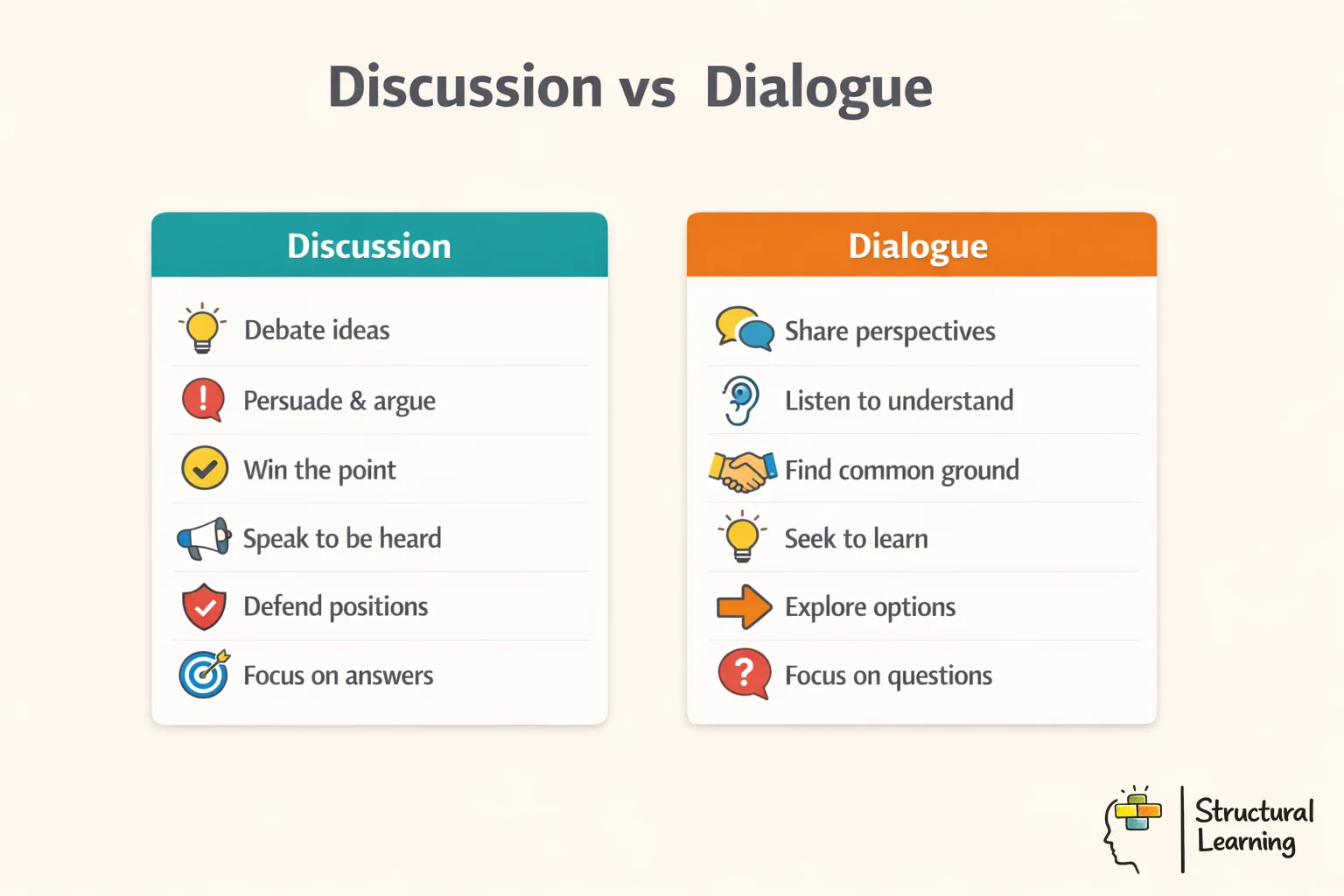
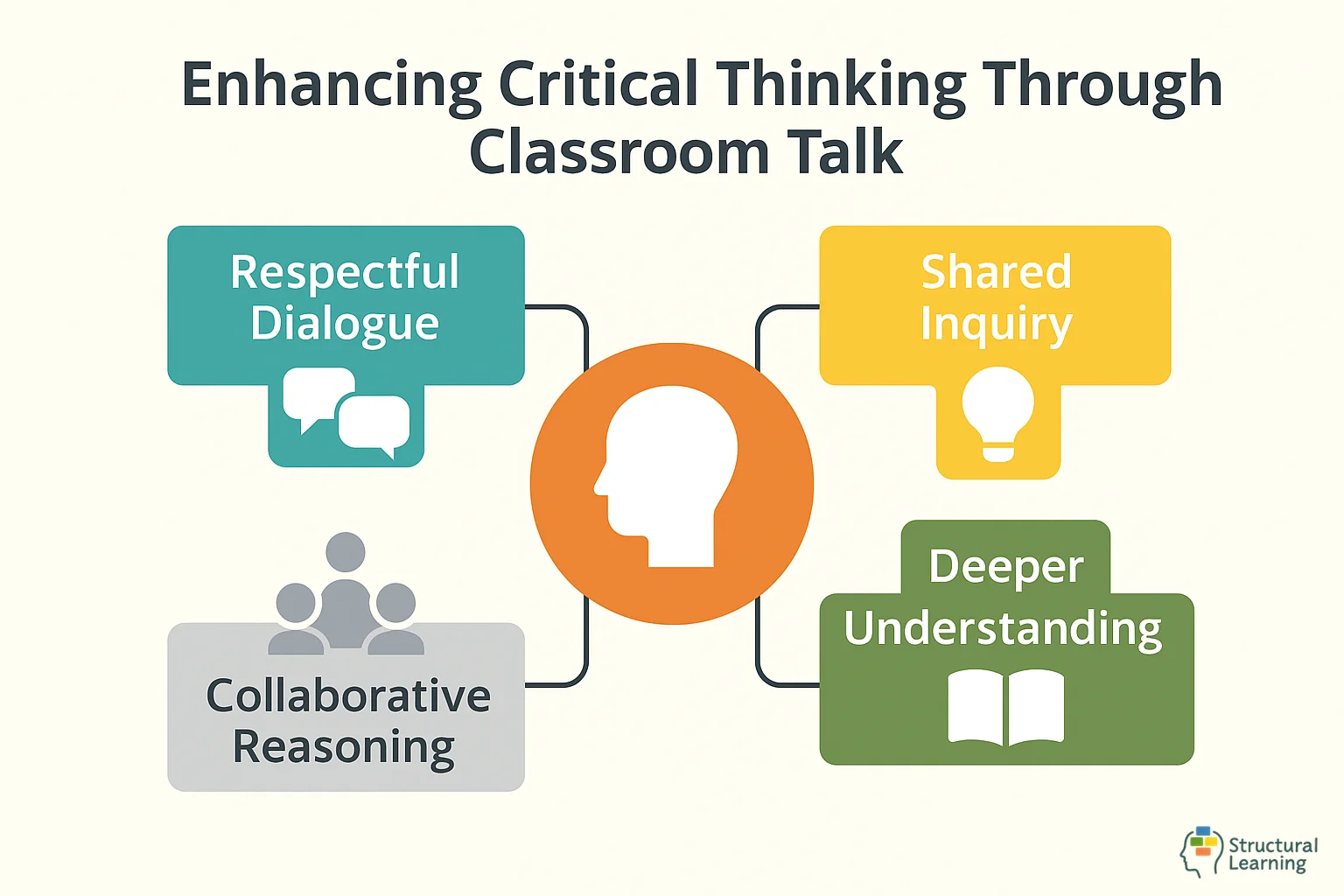
Enhancing critical thinking through classroom talk transforms ordinary lessons into dynamic learning experiences where students develop deeper analytical skills. When teachers strategically structure classroom conversations, they create opportunities for pupils to question assumptions, evaluate evidence, and construct well-reasoned arguments. This approach shifts the focus from passive listening to active learning, encouraging students to think aloud, challenge ideas respectfully, and build upon each other's contributions. The key lies in moving beyond simple question-and-answer sessions to facilitate meaningful dialogue that pushes students to examine their thinking processes and consider multiple perspectives.

Research evidence: The EEF dialogic teaching trial (2017) conducted by Cambridge Primary Review Trust and University of York found students were 2 months ahead in English and science after 20 weeks of dialogic teaching, with effect sizes of +0.20 to +0.29.
Various strategies to enhance critical thinking through classroom talk. From questioning techniques to reflective practices for educators, each section aims to equip educators with the tools to cultivate a rich environment. The process into encouraging a culture of inquiry begins now.
| Talk Type | Description | Teacher Moves | Student Outcomes |
|---|---|---|---|
| Exploratory Talk | Thinking aloud, tentative | Probe, challenge assumptions | Develop reasoning skills |
| Cumulative Talk | Building on others' ideas | Encourage adding, extending | Collaborative understanding |
| Disputational Talk | Competitive disagreement | Redirect to evidence | Learn to argue productively |
| Dialogic Talk | Genuine inquiry together | Open questions, follow-up | Deep critical thinking |
| Presentational Talk | Formal, rehearsed | Provide frameworks | Communication skills |
Critical thinking equips students with essential problem-solving skills and enables informed decision-making throughout their lives. Research shows that students with strong critical thinking abilities perform better academically and are better prepared for workplace challenges. These skills become the foundation for lifelong learning and adaptability in an ever-changing world.
Critical thinking opens doors in life, aiding students in problem-solving and informed decision-making. The 1983 report, A Nation At Risk, sparked educational reform, making thinking skills a key focal point. Since the 1990s, many school systems have embraced programmes lik e Tactics for Thinking. Yet, research shows that teaching critical thinking in isolation doesn't work; it's tied to domain-specific knowledge.

Consider how students engage with questions. Encouraging them to question everything creates an environment ripe for critical thought. This approach is especially powerful in today's tech-driven classrooms, where artificial intelligence plays a role. Here are some higher-order thinking skills and their educational impact:
| Skill | Impact on Education |
|---|---|
| Problem-Solving | Enhances students' abilities to find solutions |
| Informed Decision-Making | Leads to better choices in various situations |
| Analytical Thinking | Allows for deeper understanding of subjects |
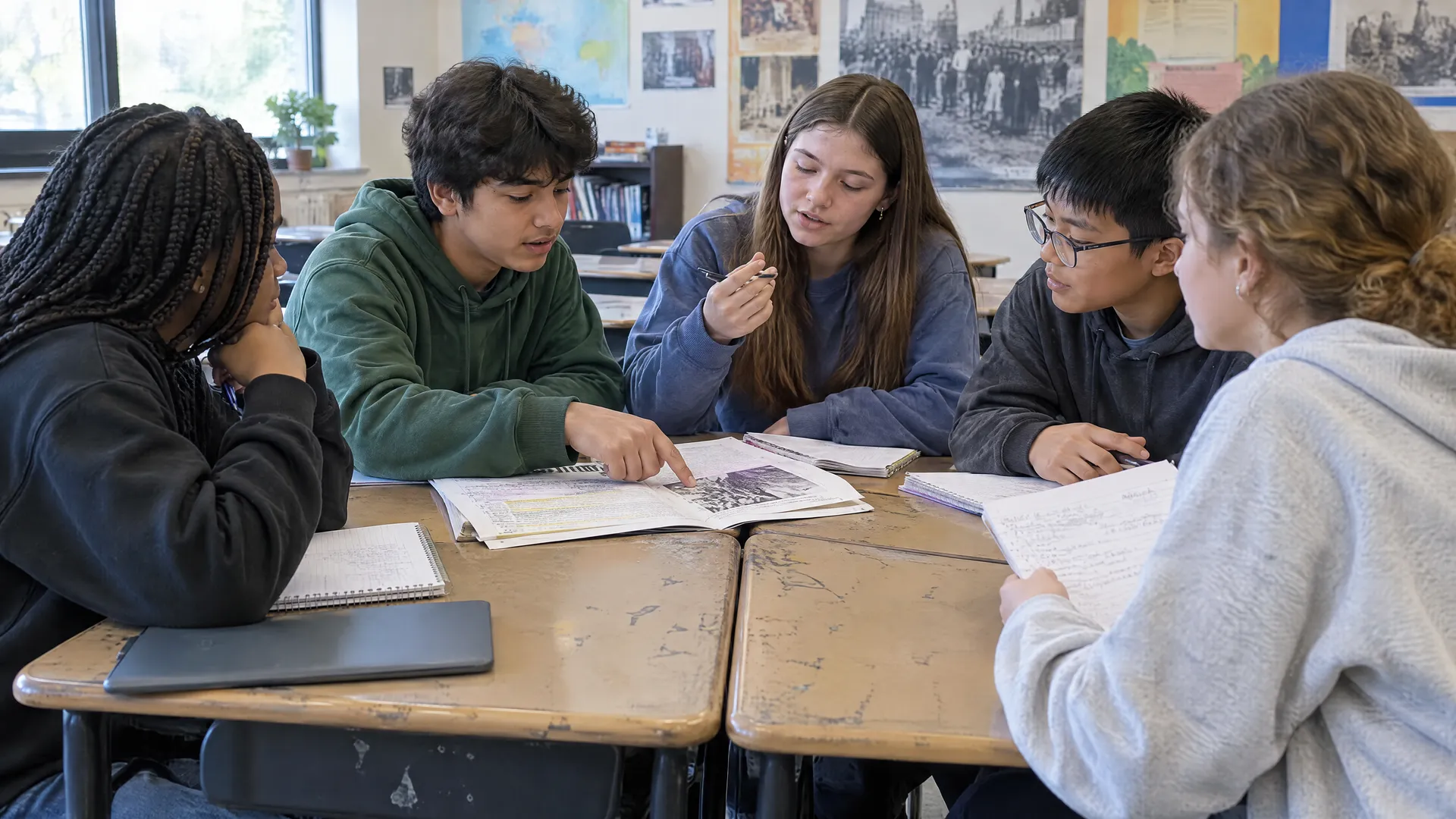
Creating a space for dialogue and questions in class helps critical thinking grow. Use a mix of open-ended and provocative questions to spark curiosity and critical analysis. When students feel safe to express their thoughts, they're more likely to engage deeply with the material and develop the confidence to challenge existing ideas.
The connection between classroom talk and critical thinking becomes even more apparent when we consider how dialogue shapes understanding. Students who participate in structured conversations learn to articulate their reasoning, defend their positions with evidence, and modify their thinking based on new information. This process mirrors the kind of intellectual rigour required in higher education and professional settings.
Effective dialogic teaching requires specific techniques that move beyond traditional question-and-answer sessions to create genuine intellectual exchange. The most powerful strategies focus on building collective inquiry, where students learn to think together rather than simply sharing individual opinions.
The foundation of dialogic teaching lies in establishing clear ground rules for conversation. Students need to understand that the goal is not to win arguments but to explore ideas together. Teachers can model this by demonstrating how to build on others' contributions, ask clarifying questions, and express disagreement respectfully.
One particularly effective strategy is the use of "thinking time" or wait time after posing questions. Research by Mary Budd Rowe shows that extending wait time from one second to three to five seconds dramatically improves the quality of student responses. This simple change allows students to formulate more thoughtful answers and encourages participation from those who need more processing time.
Another powerful technique involves teaching students to use sentence starters that promote deeper thinking. Phrases like "I'd like to build on what Sarah said." or "I see it differently because." help students engage constructively with their peers' ideas. These linguistic tools provide scaffolding for academic discourse and help create a culture of intellectual collaboration.
Teachers can also implement the "accountable talk" framework, which requires students to stay on topic, use accurate information, and listen carefully to others. This approach ensures that classroom conversations maintain academic rigour while remaining accessible to all students. When students know they'll be asked to explain their reasoning or connect their ideas to evidence, they naturally engage in more critical thinking.
While the benefits of dialogic teaching are clear, many educators face practical challenges when implementing these approaches. Common obstacles include time constraints, curriculum pressure, and managing diverse student personalities and abilities within classroom discussions.
One significant challenge is dealing with students who dominate conversations while others remain silent. Teachers can address this by implementing structured turn-taking systems, using small group discussions before whole-class sharing, and explicitly teaching students how to invite others into the conversation. Creating opportunities for written reflection before verbal discussion can also help quieter students prepare their contributions.
Another common concern is maintaining curriculum coverage while allowing time for extended dialogue. The key is recognising that quality conversations deepen understanding more effectively than rushing through content. When students engage in meaningful dialogue about fewer topics, they often retain information better and develop transferable thinking skills that benefit learning across subjects.
Teachers also need strategies for handling controversial topics or strong disagreements. Establishing clear protocols for respectful debate and teaching students to focus on ideas rather than personalities helps maintain a positive learning environment. Using evidence-based reasoning as the standard for all claims encourages students to move beyond personal opinions to more sophisticated analysis.
Managing classroom dynamics requires ongoing attention to equity and inclusion. Teachers must ensure that all students have opportunities to contribute and that diverse perspectives are valued. This might involve adapting discussion formats to accommodate different learning styles or providing alternative ways for students to participate in classroom dialogue.
Enhancing critical thinking through classroom talk represents a fundamental shift in how we approach education. Rather than viewing dialogue as time taken away from "real" learning, we must recognise it as one of the most powerful tools for developing students' intellectual capabilities. The evidence is clear: when students engage in structured, purposeful conversation, they develop not only subject knowledge but also the thinking skills essential for success in the 21st century.
The journey towards more dialogic teaching requires patience, practice, and persistence. Teachers must be willing to relinquish some control over classroom conversations while maintaining high expectations for intellectual rigour. This balance between structure and flexibility creates the conditions where critical thinking can flourish. As educators, our role becomes less about delivering information and more about facilitating the kind of thinking that will serve our students throughout their lives.
The investment in developing classroom dialogue skills pays dividends across all areas of education. Students who learn to think critically through conversation become more confident learners, more effective communicators, and more thoughtful citizens. In our increasingly complex world, these capabilities are not just educational luxuries but essential tools for navigating challenges and opportunities yet to come.
For educators interested in exploring the research foundation behind dialogic teaching and critical thinking development, these key studies provide valuable insights:
These resources offer both theoretical foundations and practical strategies for educators seeking to transform their classroom practice through the power of dialogue and critical thinking development.
Enhancing critical thinking through classroom talk transforms ordinary lessons into dynamic learning experiences where students develop deeper analytical skills. When teachers strategically structure classroom conversations, they create opportunities for pupils to question assumptions, evaluate evidence, and construct well-reasoned arguments. This approach shifts the focus from passive listening to active learning, encouraging students to think aloud, challenge ideas respectfully, and build upon each other's contributions. The key lies in moving beyond simple question-and-answer sessions to facilitate meaningful dialogue that pushes students to examine their thinking processes and consider multiple perspectives.

Research evidence: The EEF dialogic teaching trial (2017) conducted by Cambridge Primary Review Trust and University of York found students were 2 months ahead in English and science after 20 weeks of dialogic teaching, with effect sizes of +0.20 to +0.29.
Various strategies to enhance critical thinking through classroom talk. From questioning techniques to reflective practices for educators, each section aims to equip educators with the tools to cultivate a rich environment. The process into encouraging a culture of inquiry begins now.
| Talk Type | Description | Teacher Moves | Student Outcomes |
|---|---|---|---|
| Exploratory Talk | Thinking aloud, tentative | Probe, challenge assumptions | Develop reasoning skills |
| Cumulative Talk | Building on others' ideas | Encourage adding, extending | Collaborative understanding |
| Disputational Talk | Competitive disagreement | Redirect to evidence | Learn to argue productively |
| Dialogic Talk | Genuine inquiry together | Open questions, follow-up | Deep critical thinking |
| Presentational Talk | Formal, rehearsed | Provide frameworks | Communication skills |
Critical thinking equips students with essential problem-solving skills and enables informed decision-making throughout their lives. Research shows that students with strong critical thinking abilities perform better academically and are better prepared for workplace challenges. These skills become the foundation for lifelong learning and adaptability in an ever-changing world.
Critical thinking opens doors in life, aiding students in problem-solving and informed decision-making. The 1983 report, A Nation At Risk, sparked educational reform, making thinking skills a key focal point. Since the 1990s, many school systems have embraced programmes lik e Tactics for Thinking. Yet, research shows that teaching critical thinking in isolation doesn't work; it's tied to domain-specific knowledge.

Consider how students engage with questions. Encouraging them to question everything creates an environment ripe for critical thought. This approach is especially powerful in today's tech-driven classrooms, where artificial intelligence plays a role. Here are some higher-order thinking skills and their educational impact:
| Skill | Impact on Education |
|---|---|
| Problem-Solving | Enhances students' abilities to find solutions |
| Informed Decision-Making | Leads to better choices in various situations |
| Analytical Thinking | Allows for deeper understanding of subjects |
Creating a space for dialogue and questions in class helps critical thinking grow. Use a mix of open-ended and provocative questions to spark curiosity and critical analysis. When students feel safe to express their thoughts, they're more likely to engage deeply with the material and develop the confidence to challenge existing ideas.
The connection between classroom talk and critical thinking becomes even more apparent when we consider how dialogue shapes understanding. Students who participate in structured conversations learn to articulate their reasoning, defend their positions with evidence, and modify their thinking based on new information. This process mirrors the kind of intellectual rigour required in higher education and professional settings.
Effective dialogic teaching requires specific techniques that move beyond traditional question-and-answer sessions to create genuine intellectual exchange. The most powerful strategies focus on building collective inquiry, where students learn to think together rather than simply sharing individual opinions.
The foundation of dialogic teaching lies in establishing clear ground rules for conversation. Students need to understand that the goal is not to win arguments but to explore ideas together. Teachers can model this by demonstrating how to build on others' contributions, ask clarifying questions, and express disagreement respectfully.
One particularly effective strategy is the use of "thinking time" or wait time after posing questions. Research by Mary Budd Rowe shows that extending wait time from one second to three to five seconds dramatically improves the quality of student responses. This simple change allows students to formulate more thoughtful answers and encourages participation from those who need more processing time.
Another powerful technique involves teaching students to use sentence starters that promote deeper thinking. Phrases like "I'd like to build on what Sarah said." or "I see it differently because." help students engage constructively with their peers' ideas. These linguistic tools provide scaffolding for academic discourse and help create a culture of intellectual collaboration.
Teachers can also implement the "accountable talk" framework, which requires students to stay on topic, use accurate information, and listen carefully to others. This approach ensures that classroom conversations maintain academic rigour while remaining accessible to all students. When students know they'll be asked to explain their reasoning or connect their ideas to evidence, they naturally engage in more critical thinking.
While the benefits of dialogic teaching are clear, many educators face practical challenges when implementing these approaches. Common obstacles include time constraints, curriculum pressure, and managing diverse student personalities and abilities within classroom discussions.
One significant challenge is dealing with students who dominate conversations while others remain silent. Teachers can address this by implementing structured turn-taking systems, using small group discussions before whole-class sharing, and explicitly teaching students how to invite others into the conversation. Creating opportunities for written reflection before verbal discussion can also help quieter students prepare their contributions.
Another common concern is maintaining curriculum coverage while allowing time for extended dialogue. The key is recognising that quality conversations deepen understanding more effectively than rushing through content. When students engage in meaningful dialogue about fewer topics, they often retain information better and develop transferable thinking skills that benefit learning across subjects.
Teachers also need strategies for handling controversial topics or strong disagreements. Establishing clear protocols for respectful debate and teaching students to focus on ideas rather than personalities helps maintain a positive learning environment. Using evidence-based reasoning as the standard for all claims encourages students to move beyond personal opinions to more sophisticated analysis.
Managing classroom dynamics requires ongoing attention to equity and inclusion. Teachers must ensure that all students have opportunities to contribute and that diverse perspectives are valued. This might involve adapting discussion formats to accommodate different learning styles or providing alternative ways for students to participate in classroom dialogue.
Enhancing critical thinking through classroom talk represents a fundamental shift in how we approach education. Rather than viewing dialogue as time taken away from "real" learning, we must recognise it as one of the most powerful tools for developing students' intellectual capabilities. The evidence is clear: when students engage in structured, purposeful conversation, they develop not only subject knowledge but also the thinking skills essential for success in the 21st century.
The journey towards more dialogic teaching requires patience, practice, and persistence. Teachers must be willing to relinquish some control over classroom conversations while maintaining high expectations for intellectual rigour. This balance between structure and flexibility creates the conditions where critical thinking can flourish. As educators, our role becomes less about delivering information and more about facilitating the kind of thinking that will serve our students throughout their lives.
The investment in developing classroom dialogue skills pays dividends across all areas of education. Students who learn to think critically through conversation become more confident learners, more effective communicators, and more thoughtful citizens. In our increasingly complex world, these capabilities are not just educational luxuries but essential tools for navigating challenges and opportunities yet to come.
For educators interested in exploring the research foundation behind dialogic teaching and critical thinking development, these key studies provide valuable insights:
These resources offer both theoretical foundations and practical strategies for educators seeking to transform their classroom practice through the power of dialogue and critical thinking development.
{"@context":"https://schema.org","@graph":[{"@type":"Article","@id":"https://www.structural-learning.com/post/enhancing-critical-thinking-through-classroom-talk#article","headline":"Enhancing Critical Thinking Through Classroom Talk","description":"Discover how Socratic questioning and the Thinking Framework transform classroom talk, encouraging deeper thinking and critical discussions.","datePublished":"2025-01-10T11:47:24.927Z","dateModified":"2026-01-26T10:09:32.212Z","author":{"@type":"Person","name":"Paul Main","url":"https://www.structural-learning.com/team/paulmain","jobTitle":"Founder & Educational Consultant"},"publisher":{"@type":"Organization","name":"Structural Learning","url":"https://www.structural-learning.com","logo":{"@type":"ImageObject","url":"https://cdn.prod.website-files.com/5b69a01ba2e409e5d5e055c6/6040bf0426cb415ba2fc7882_newlogoblue.svg"}},"mainEntityOfPage":{"@type":"WebPage","@id":"https://www.structural-learning.com/post/enhancing-critical-thinking-through-classroom-talk"},"image":"https://cdn.prod.website-files.com/5b69a01ba2e409501de055d1/6967cdeaf95d40ee048f0fd0_6967cde8874fc83d0b346a3f_enhancing-critical-thinking-through-classroom-talk-diagram.webp","wordCount":4873},{"@type":"BreadcrumbList","@id":"https://www.structural-learning.com/post/enhancing-critical-thinking-through-classroom-talk#breadcrumb","itemListElement":[{"@type":"ListItem","position":1,"name":"Home","item":"https://www.structural-learning.com/"},{"@type":"ListItem","position":2,"name":"Blog","item":"https://www.structural-learning.com/blog"},{"@type":"ListItem","position":3,"name":"Enhancing Critical Thinking Through Classroom Talk","item":"https://www.structural-learning.com/post/enhancing-critical-thinking-through-classroom-talk"}]}]}