Map It · graphic organisers
Learning is learnable. Every way of thinking has a shape, and organising ideas is a skill learners can practise and carry through life. Sort foods into groups on a mind map, or rank them on a Diamond 9. Learners see how the ideas connect, and you can see what they understood.
Pick a thinking move and watch its organiser draw itself. The blue card is the Thinking Framework word for that move.
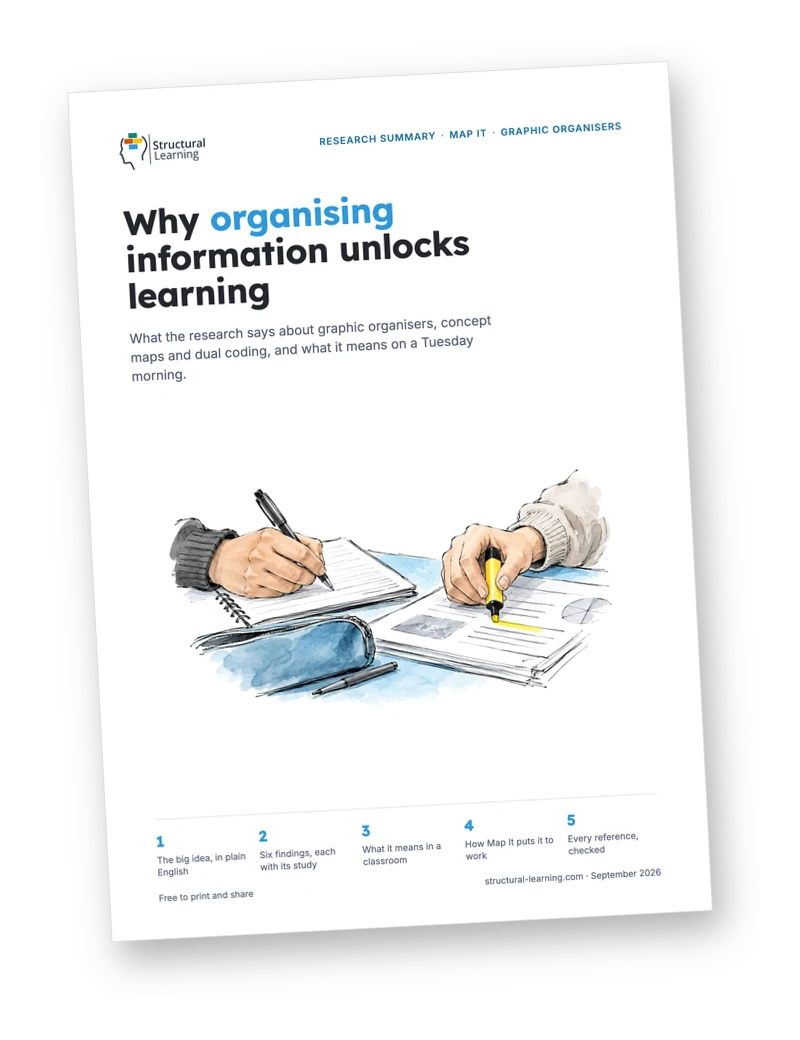
Free to start: two lessons a month, no card needed. Pro is £75 a year, or £7 a month. Download the free research summary (PDF)
Mind mapHealthy eating
Name the topic
The skill
Organise it. Remember it. Build on it. Say it.
Organising information is a skill for life, and a key that unlocks learning. In an age of digital information and AI, learners need to understand how we organise ideas in our minds. Once they do, learning becomes more manageable. If you can organise it, you can remember it, build on it and talk it through.

A repertoire of nine
Each organiser answers one question. Learners meet them one at a time and build a repertoire over the years, until they choose the right shape for themselves.
What is it?
Group it
Leads to descriptions and reports.
How is it similar or different?
Compare it
Leads to discussions and balanced arguments.
What happened?
Sequence it
Leads to recounts and instructions.
Why did it happen?
Explain it
Leads to explanations.
In a lesson
One Map It step in a lesson on healthy eating, for ages 8 to 9.
1Plan
You name the thinking. The planner picks the organiser and writes the items at three levels.
2Teach
The question, the organiser and the rule for pairs go on the board. Learners build it on paper.
3Check
Learners explain their choices to a partner. The finished organiser is the evidence.
A platform that weaves the skill of organised thinking into every part of learning. Teachers find natural places for it, learners build a repertoire over time, and it adapts with age and ability.
Every learner, one organiser
Two or three groups in one room? Everyone works on the same Venn diagram, so the whole class can talk about one picture.
Only the items change: more scaffolding for some, stretch and challenge for others.
The sheet a learner holds never says which set it is.
Every age
The organiser stays the same. The content grows up. Pick a thinking move to see one example for younger learners and one for older.
In real schools
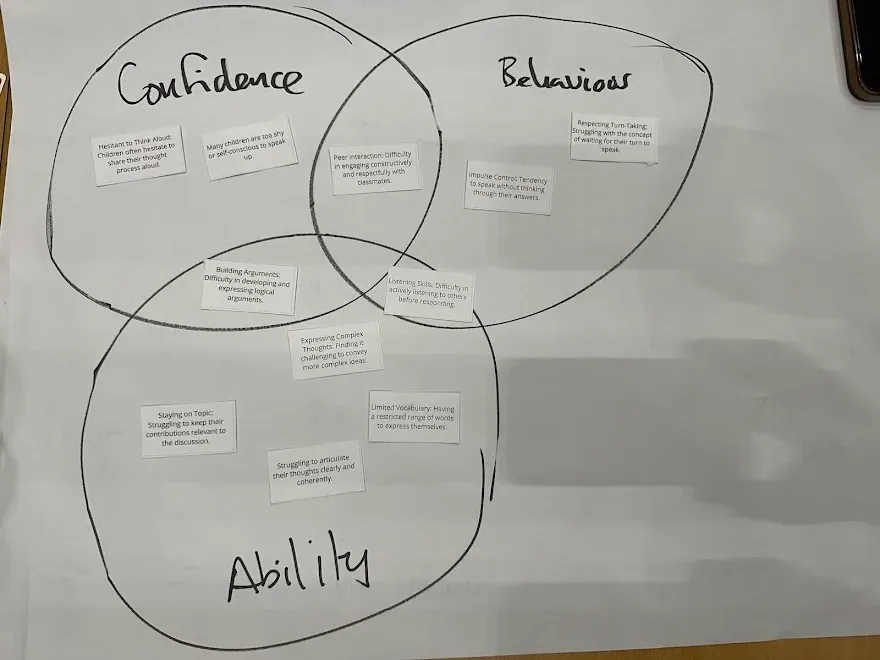
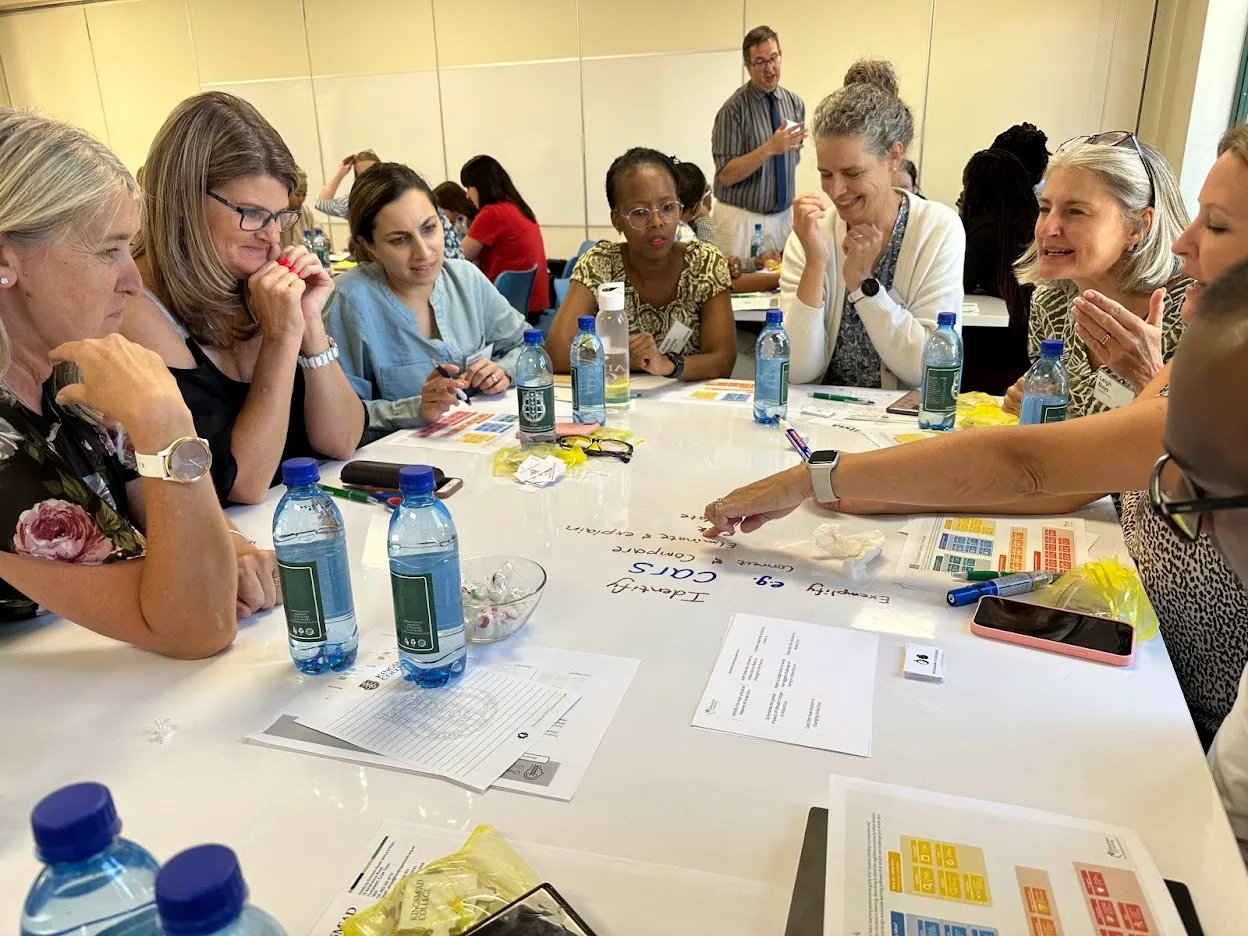
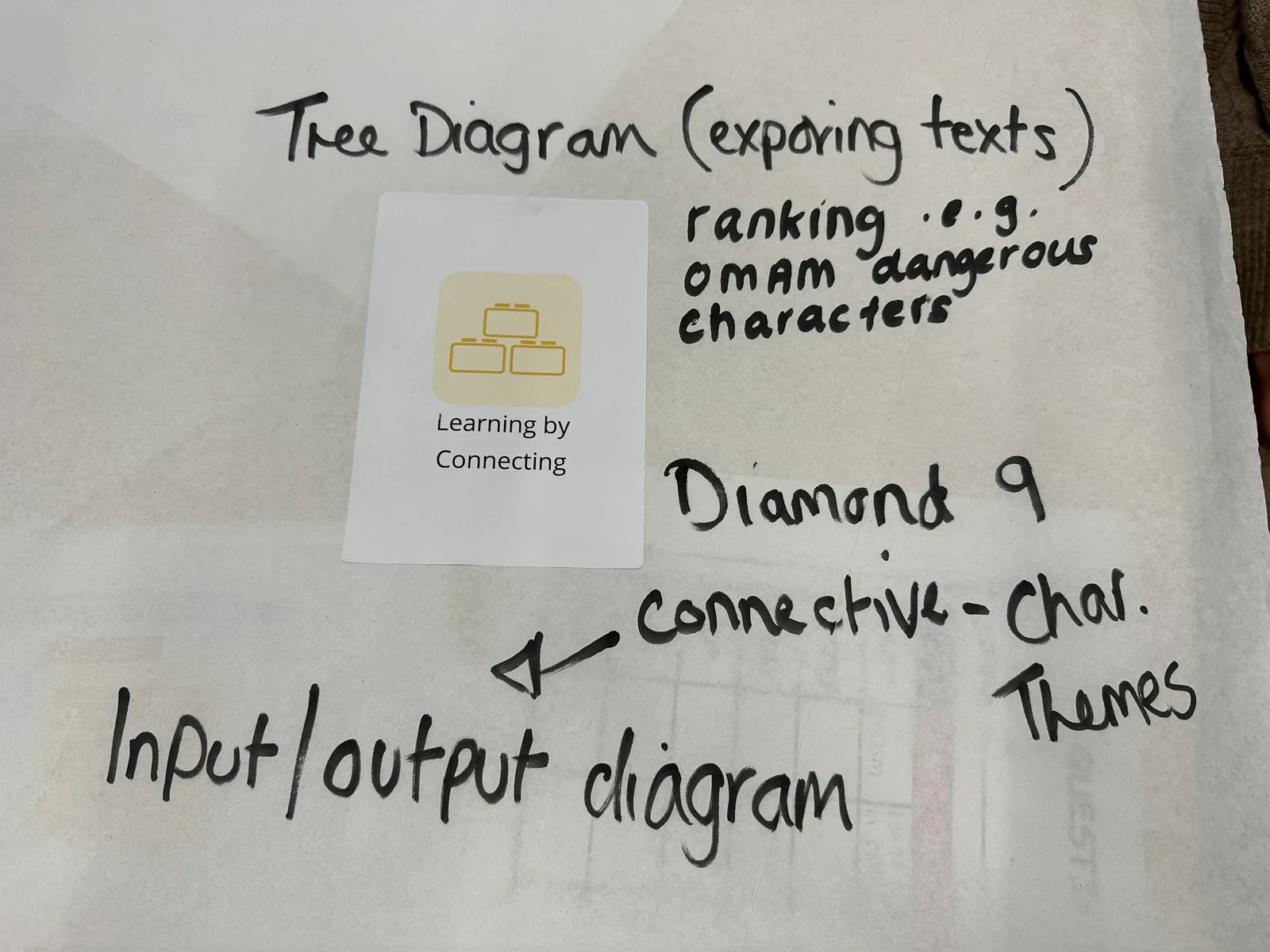
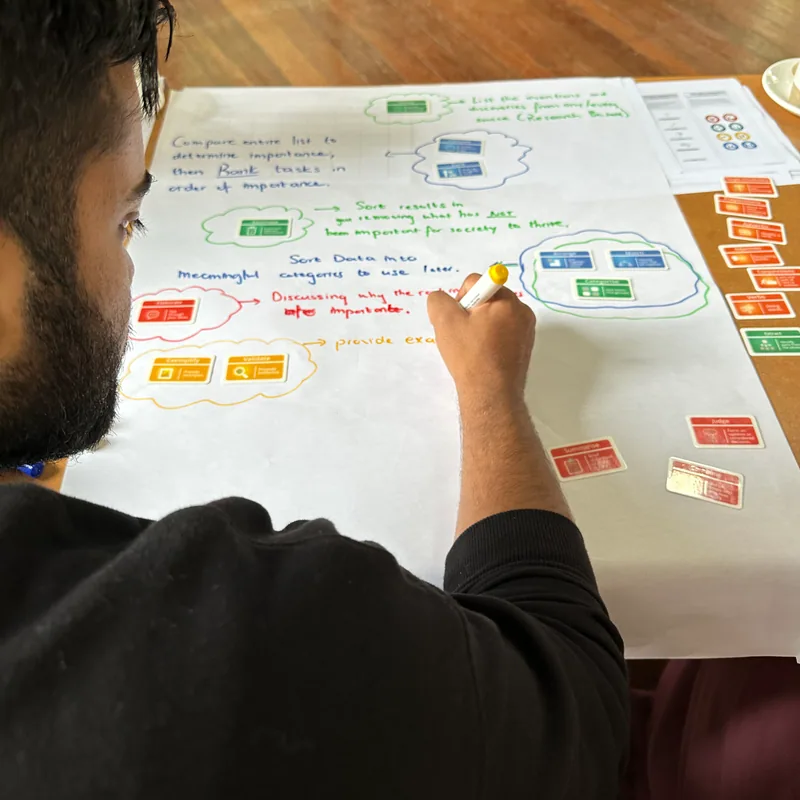
Understand it on your own terms, then teach it. In a staff session, teachers explore these ideas together and build the organisers they will ask learners to use.
Where it lives
On paper
Every organiser is on the platform. Make a free account to see how each one is laid out.
Make a free account →In the plan
The platform draws the graphic organiser for your subject and your learners’ age, fills it at three levels and gets it ready to print. Free to start; printing the pack is part of Pro.
Plan a lesson, free →In the staff room
Staff choose the organisers for a unit they already teach.
See the training →The research
Two large reviews link concept maps and graphic organisers to better retention and comprehension, from age 9 to university.
Map It is part of the Thinking Framework, the backbone of Make It Count, the University of East Anglia’s programme for learners aged 11 to 12. Across four schools, the share answering “I can” on the skills statements rose from 52% to 83% (23 learners, 2024/25). A University of Cambridge team (Cambridge Hub) also interviewed educators who use our tools.
The Structural Learning platform
Map It is built into the lesson planner. Name the thinking a step needs, and the app picks the organiser, writes the items at three levels and gets the sheets ready to print.
Free to start.
Your lesson
Professional learning
A hands-on session on the Thinking Framework’s graphic organisers. Your staff take a unit they already teach, decide which thinking each lesson asks for, and draw the organisers that go with it. Everyone leaves with sheets they can use next week.
A twilight, a half day or an INSET day, in school or online.
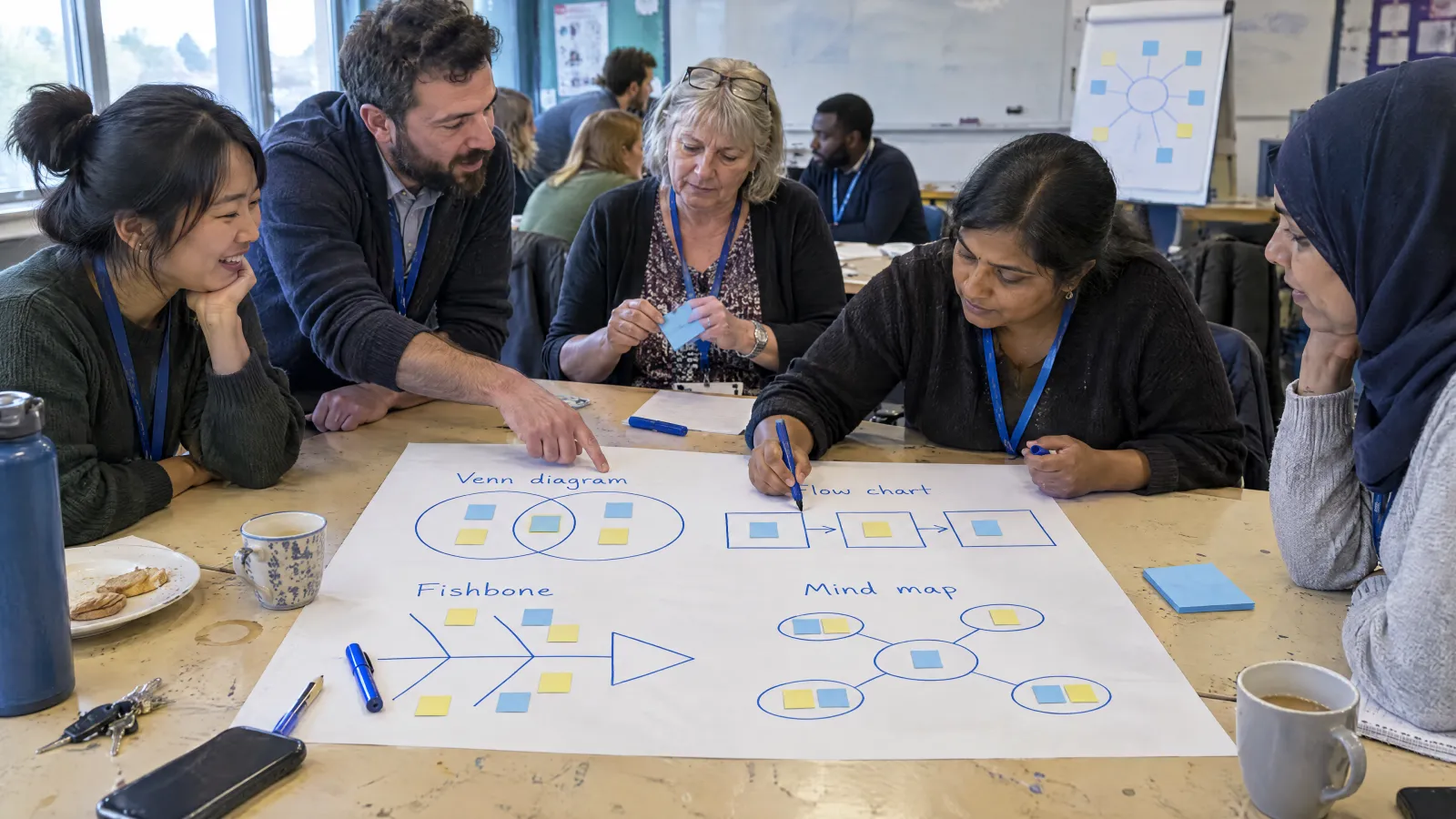
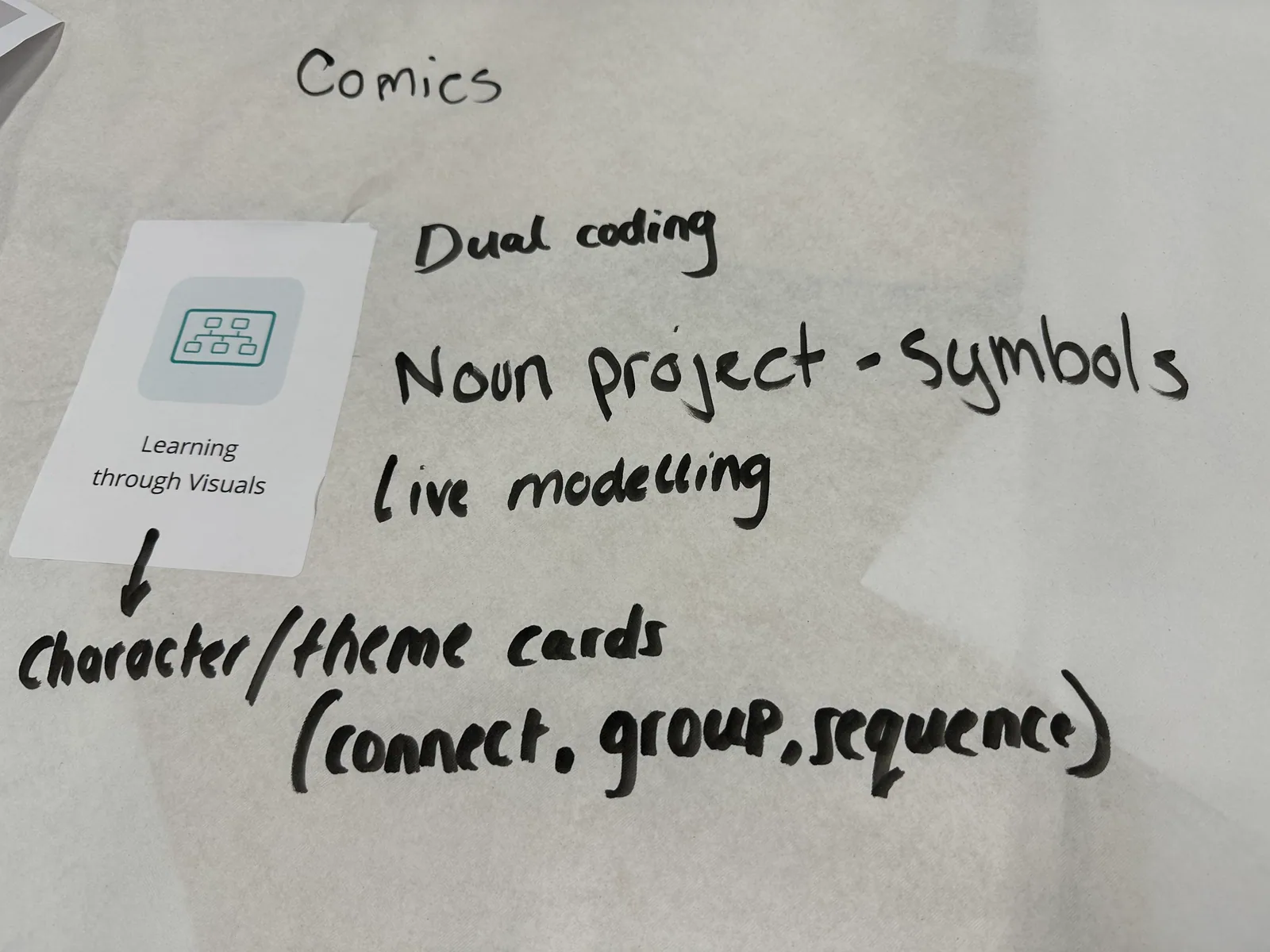
A training programme
Each focus stands on its own, so a school can start with the one it needs. Together they make a whole-school programme for primary and secondary, so you can add the others when you are ready.
The Thinking FrameworkThe Thinking Framework
A shared language for thinking, for every teacher in the room.
This focus
Map ItMap It
Graphic organisers that make learners' thinking visible on the page.
This focus
Say ItSay It
Oracy: talk routines that give every learner a voice.
This focus
Build ItBuild It
Learners build sentences and ideas with Writer's Block, then write them.
This focus
The next step
Twenty minutes on a Google Meet. Tell me what your school is working on this year and I will tell you where graphic organisers would help, and say so if I think you can do it without me. Every request comes to me, and I reply to each one myself.
Pick a time that suits you. Or send three quick questions first, and I reply by email with a time or a better next step.
Book a 20-minute conversation with Paul → Send three questions firstEmail me directly
paul@structural-learning.com
1 of 3