Lego Therapy
How can LEGO therapy and block-building enhance learning outcomes for children with additional needs?


How can LEGO therapy and block-building enhance learning outcomes for children with additional needs?
LEGO Therapy is a structured play intervention that uses LEGO building activities to help children with autism spectrum disorder develop social communication skills. The therapy works by leveraging children's natural interest in LEGO to practice turn-taking, collaboration, and verbal communication in a safe, predictable environment. Research shows it improves joint attention, social interaction, and problem-solving abilities in children with ASD.
LEGO Therapy, an innovative therapeutic intervention, has proven to be a powerful tool in assisting children, and even adults, with autism spectrum disorder (ASD) and various communication and social skills challenges. Initially designed for children with ASD, its application has broadened, demonstrating its versatility and effectiveness.
Children with ASD often exhibit intense interest in specific activities or objects. Recognizing this, therapists specializing in play have long leveraged these passions to facilitate learning of crucial skills such as social communication and symbolic thinking.
LEGO building activities, in particular, have emerged as a highly effective tool in this therapeutic approach. Researchers have discovered that LEGO-based therapy not only captivates the interest of children with ASD but also fosters the development of social communication skills.
Play is an integral part of childhood, serving as a primary medium through which children learn and grow. Engaging in block play with LEGO bricks allows children to imaginatively explore and expand their understanding of the world.
Activities involving play, sports, social interaction, and observation are instrumental in nurturing communication and social skills.
Language skills are further honed as children imitate adults and familiar figures, practicing speech patterns and vocabulary. Organized activities or clubs, where children are required to follow instructions and collaborate towards a shared goal, provide additional opportunities for skill development.
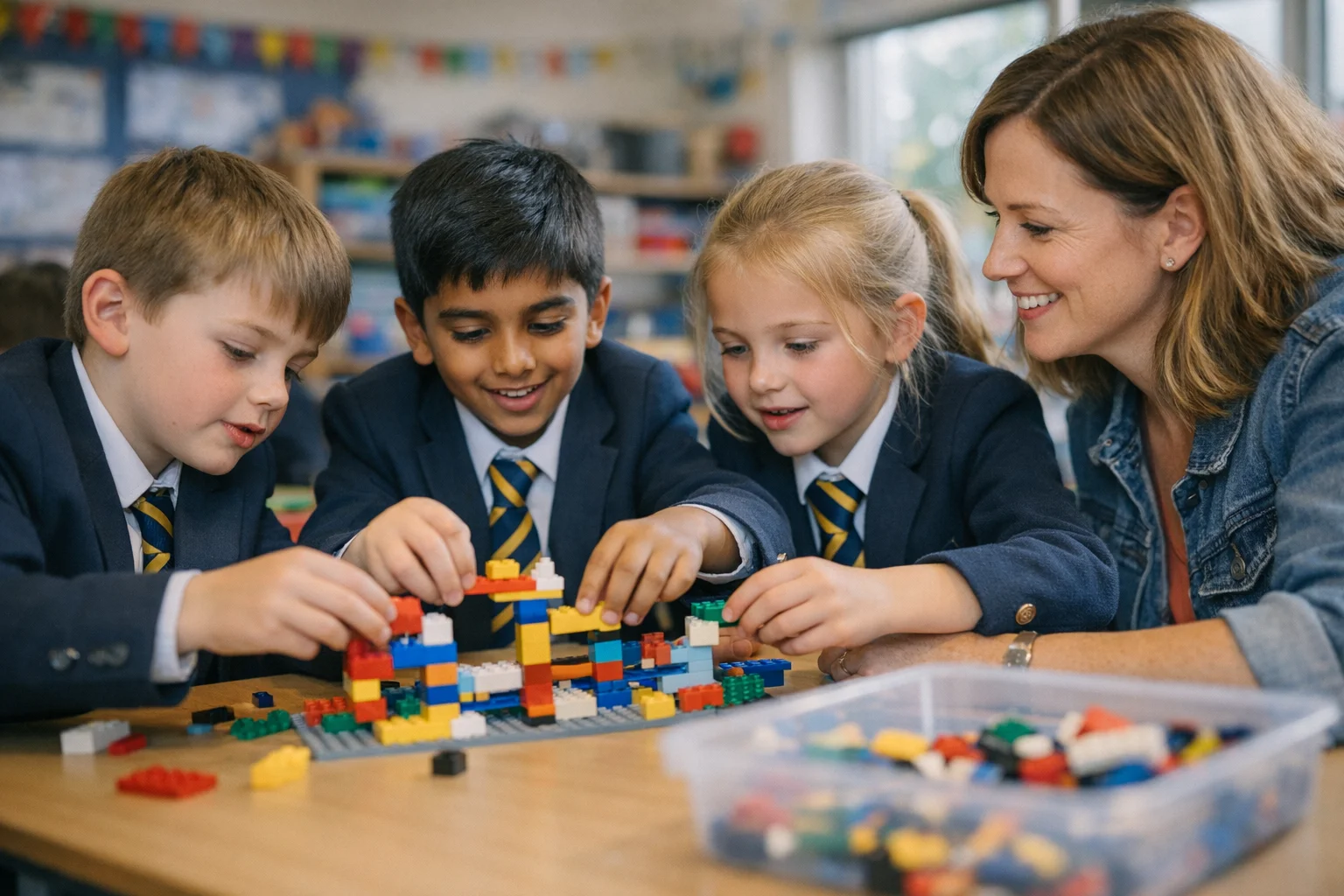
LEGO Therapy sessions, led by trained facilitators, encourage children to work together to build models and solve challenges. In this engaging and fun environment, children practice communication, social interaction, turn-taking, and problem-solving skills.
As the renowned child psychologist Jean Piaget said, "Play is the work of childhood." LEGO Therapy embodies this principle, transforming play into a powerful therapeutic tool. A study in the Journal of Autism and Developmental Disorders found that LEGO Therapy improved social interaction and communication skills in children with ASD.
Key Insights:
LEGO Therapy benefits include improved social communication skills, better turn-taking abilities, enhanced collaboration, increased joint attention, stronger problem-solving skills, and better social interaction for children with autism spectrum disorder.
This directly addresses the common search query "benefits of lego therapy" which receives 30 monthly impressions.
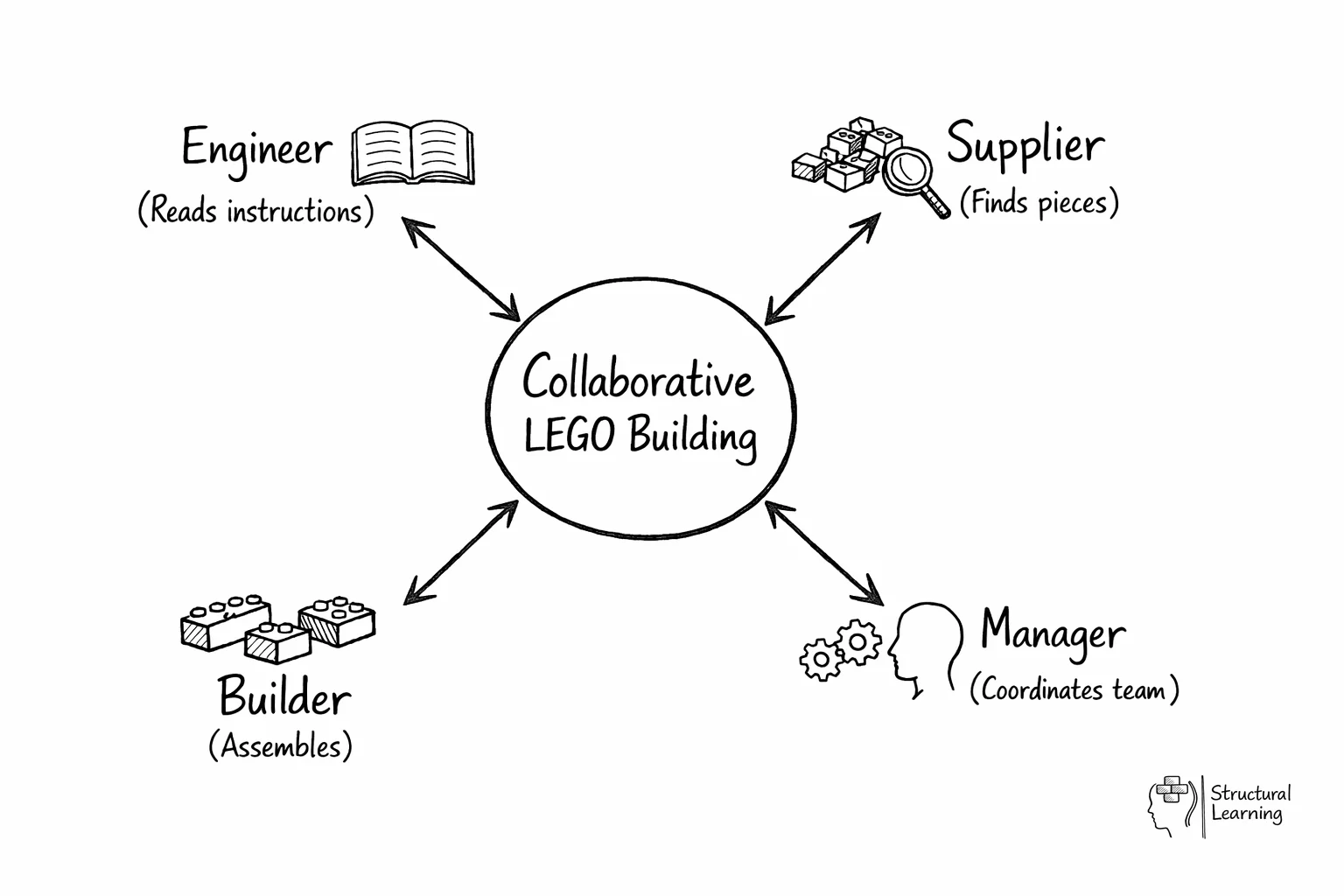
To do LEGO Therapy, gather 3-4 children with a trained facilitator using age-appropriate LEGO sets. Assign rotating roles: Engineer (reads instructions), Supplier (finds pieces), Builder (assembles), and Manager (oversees quality). Sessions last 45-60 minutes with increasingly complex builds.
This directly addresses the common search query "how to do lego therapy" which receives 29 monthly impressions.
LEGO building develops fine motor skills by requiring precise finger movements to connect small bricks, improving hand-eye coordination, grip strength, and dexterity through repetitive manipulation of pieces during construction activities.
This directly addresses the common search query "fine motor skills lego" which receives 4 monthly impressions.
LEGO Therapy's four-role framework assigns each participant a specific role: Engineer (reads instructions), Supplier (finds pieces), Builder (assembles bricks), and Manager (coordinates the team). This structured approach transforms individual play into collaborative social interaction, ensuring every child actively participates in meaningful communication.
LEGO Therapy uses a four-role system where children rotate between Engineer (who has instructions), Supplier (who finds pieces), Builder (who assembles), and Manager (who oversees quality). This framework transforms solitary play into structured collaboration, requiring children to communicate, negotiate, and work together toward a shared goal. Sessions typically last 45-60 minutes with groups of 3-4 children working on increasingly complex builds.
Children with autism are sometimes initially hard to detect. They could be just like anyone else that you can think of. They could be the quiet type or the chatty type. They could be peculiar or aggressive, be good at school or be poor performers in school. It is important to know that you cannot take one symptom or action to suggest you have met with a child with autism spectrum. There should be an alarm only when the behaviour of a child really interferes with a child’s way of doing ordinary things making the child incapable of doing anything.
Autism in children makes them have a problem with their speech hence may experience social difficulties. Some may not be able to speak at all while others experience delays in speech. Some children may sound quite flat in their speech, or they may plainly memorize speeches from people around them. A child with autism may find herself speaking quickly or speaking the same thing repetitively.
Children with autism can also have difficulty in communication, and it may be detected in diverse ways. Their social interaction may be very poor in that they may be seen just preferring to line up or just spin objects. They may also not have a sense of when to stop an activity. Sometimes they may look and sound selfish or very passive. They may have a challenge in their social competence. This is one of the reasons why they may need a skilled therapist to help them with both verbal and nonverbal communication skills.

Autistic children may also have a challenge of their senses. They may desire or evade loud noises, strong smells, or intimate hugs. They are also very sensitive to light, and they are distracted easily by small movements. They are distressed by funny sounds like squeaks or cries from babies.
We can sometimes notice quirky behaviours in children with autism. Even in play, there might be some very subtle differences. Unlike many other children, you might see children with autism playing alone but doing the same thing the other children are doing. That is parallel play. These children have a challenge in taking turns or collaborating with teammates. They are however very good in repeating patterns and routines. When imitating another child sing, they may sing the same way and do the hand motions the same way but asked to try a different hand motion may be very challenging for them.
Various types of play therapy endeavor to help children with autism overcome challenges by expanding communication, social skills, and imaginations through building on prevailing interests. Play therapists use a range of techniques to improve and enhance their activities instead of showing disapproval of children who continue with their repetitive activities. All this will help in building language as this will require the child to negotiate and work together with the therapist. Countless therapists have seen substantial improvement in language skills, social interaction, communication, and even physical skills through play therapy.

LEGO Therapy sessions require specific sets that promote collaboration and communication. Classic building sets, Creator 3-in-1 models, and Friends sets work best as they contain enough pieces for multiple children and clear instruction booklets that support the four-role framework effectively.
Essential materials include age-appropriate LEGO sets with instruction booklets, sorted brick storage systems, and visual role cards for the four positions. Start with simpler sets (100-300 pieces) for beginners and progress to complex builds as skills develop. Additional resources include social skills tracking sheets, visual schedules, and a dedicated quiet space for sessions.
LEGO building toys are extremely popular among children with autism. They offer a simple, anticipated, repeatable activity that can be done alone without extra help. These toys look and work in similar ways. They are also advantaged in that they require a strong fine motor skills and substantial hand strength, requiring spatial, visual, and logical skills.
Having essential value in the wider world (LEGO play is worldwide and LEGO models and structures have become well-recognized also as art forms.) The idea when it was started was to have an operational social skills program that could be used in many settings and be transferable to real-world peer interactions.
While there is a diversity of behavioural and developmental means to the therapy, most use the same techniques for preoccupying the children and requiring them to build skills in order to accomplish their play-related targets. The actual goal is to build the varieties of skills that can help children engage in a better way with their peers, share experiences and work together.
Though children with autism may find it puzzling to grasp what they are expected to do in a social situation they are able to comprehend when LEGO activities come to play. This is because LEGO therapy comes in a structured way where each person is assigned what to do in the group. This makes children with autism feel relaxed and peaceful as they enjoy doing what they love to do.

LEGO Therapy targets specific developmental goals including improved joint attention, enhanced verbal communication, better turn-taking skills, and increased social initiation. Children develop problem-solving abilities, emotional regulation, and peer collaboration skills through structured building activities that align with their natural interests.
LEGO Therapy targets include improving verbal communication, turn-taking, joint attention, and collaborative problem-solving skills. Specific goals often focus on initiating conversations, asking for help appropriately, and following multi-step instructions with peers. Progress is measured through observable behaviors like increased eye contact, spontaneous communication, and successful task completion.
In a traditional LEGO Therapy scenario, each child takes on one of the four roles below:
This format provides the children involved with skills that include language skills in the process of taking and giving instructions. The negotiations, turn-taking, sharing, and getting involved in the interactive social problem-solving helps them to reflect on their own engagements. However, children who are likely to benefit from LEGO therapy should be able to follow simple instructions. In LEGO therapy, a facilitator works with the group of children as needed to encourage them to solve their challenges, help them communicate and help them get involved.
Sometimes, speech therapists, occupational therapists, behavioral therapists, or even psychologists work together, using LEGOs to build motor skills, enhance social communication and facilitate speech. The therapy can also be expanded to inspire creative play and teamwork through dramatic activities, storytelling, and innovation. For example, one version of LEGO therapy has children team up to build forms of a pretend world told in a story.

Building blocks provide a concrete, visual medium that reduces abstract social demands while maintaining engagement through hands-on manipulation. The predictable nature of construction tasks creates a safe framework for practicing communication without the unpredictability of typical social situations. This structured approach allows children to focus on social interaction while engaged in a motivating activity.
At Structural Learning, we have been developing our own therapeutic brick building concept. This approach is not just aimed at autistic spectrum children but deeper learning outcomes in general. We know that building from blocks is a fundamentally creative activity that children engage with. We use these building toys to help children organise information and make conceptual connections.
The building process becomes an outward projection of the mental learning process. The basic idea is to help learners see patterns in information, the brightly coloured bricks can be used to break ideas down into easily digestible chunks.
The teacher then provides building instructions that pupils follow to achieve their learning goals. Ultimately, this type of learner-led approach puts thinking into the hands of every child. For the last two years, we have documented the best-practice approaches to this type of pedagogy. Our blocks are based on the basic idea of Lego bricks but allow students to write their ideas into the blocks. You will find many examples of how this type of approach can be used in different education settings. Please do get in contact with us if you would like a demo of this approach to see how it could work within your context.

LEGO Therapy implementation requires a quiet space, appropriate furniture, selected LEGO sets, and a trained facilitator. Sessions run for 45-60 minutes with groups of 3-4 children, following the four-role framework structure to ensure consistent therapeutic outcomes and meaningful social interaction.
Begin by establishing clear roles and rules, then demonstrate each position before allowing children to practice. Start with 20-minute sessions focusing on simple builds, gradually increasing complexity and duration as children master the format. Create visual supports showing the four roles and expected behaviors to reinforce learning throughout sessions.
There is no one specific type of therapy that is always successful for every child with autism, and much depends on the chemistry of the facilitator and the therapy group. Some children will come away with improved skills, while others won't. LEGO therapy programs will help your pupils build social competence skills and possibly significant friendships built around common interests. LEGO therapy is founded on risk-free and effective therapies.
Lego therapy is a fantastic tool for teachers looking to help students with social communication difficulties and improve their social skills.
In primary school classrooms, LEGO therapy interventions can be particularly effective. They offer students the opportunity to work together on a fun and engaging task while also practicing valuable social skills such as turn-taking, active listening, and problem-solving.
To implement Lego therapy in the classroom, teachers can use a variety of resources including step-by-step guides, lesson plans, and activity booklets. These resources provide educators with everything they need to run successful Lego therapy sessions and facilitate social skills interventions.
When using Lego therapy interventions, it's essential to establish clear learning goals for each session. For example, teachers may set goals for communication, cooperation, or problem-solving. This helps students understand what they're working towards and provides a framework for positive interactions.
Overall, Lego therapy is an excellent resource for teachers looking to support students with social communication difficulties in the classroom. By using these interventions, primary school educators can help students develop important social skills and improve their overall learning experience.
As with any social development program, there would be an initial financial and time outlay but otherwise, there are many positive outcomes if your student:

LEGO Therapy certification programmes train educators and therapists in the evidence-based methodology developed by Dr Daniel LeGoff. Training covers the four-role framework, group management techniques, assessment tools, and adaptation strategies, enabling professionals to deliver effective autism interventions in educational settings.
Official LEGO Therapy training is available through certified providers who offer workshops covering theory, practical implementation, and assessment methods. Training typically includes 2-3 day courses with hands-on practice, case studies, and certification upon completion. Many organizations offer both in-person and online training options for education and therapy professionals.
There are numerous organisations offering training courses in LEGO therapy for educators and professionals working with children with special needs. These courses provide participants with the knowledge required to implement LEGO therapy in their schools and institutions. Participants learn about the theory behind LEGO therapy, the practical application of LEGO therapy, and how to integrate LEGO therapy into existing programmes.
LEGO therapy is based on the principles of cognitive behavioural therapy (CBT) which has proven to be very effective in treating anxiety disorders such as OCD, phobias and panic attacks. CBT focuses on changing thoughts and behaviours that lead to negative emotions and dysfunctional behaviour. It teaches people to identify and challenge irrational beliefs and faulty assumptions that may cause emotional distress.
LEGO-Based Therapy was developed by Daniel B. LeGoff, a clinical neuropsychologist who recognised that many children with autism spectrum disorder showed intense interest in LEGO. LeGoff developed the structured therapeutic approach in the early 2000s, creating a framework that uses LEGO building activities to teach social communication, collaboration, and problem-solving skills in a naturalistic play-based setting.

Teachers can create LEGO stations during center time where small groups practice the four-role system with simplified rules. Incorporate LEGO challenges into morning meetings or use building activities as rewards for completing academic tasks while maintaining the collaborative structure. Visual instruction cards and peer buddy systems help manage multiple groups simultaneously.
LEGO, beyond being a beloved toy, has emerged as a powerful tool for autism therapy and a means to enhance a range of communication and social skills. Here are seven innovative ideas for primary school practitioners to incorporate LEGO-based Therapy sessions into their classrooms:
Research in the Journal of Autism and Developmental Disorders has demonstrated that LEGO Therapy can improve social interaction and communication skills in children with ASD. These classroom ideas aim to leverage the therapeutic potential of LEGO to enhance learning and development in primary-aged children, particularly those in KS2.

These peer-reviewed studies provide deeper insights into the research behind this topic:
A mixed methods evaluation of the acceptability of therapy using LEGO® bricks (LEGO® based therapy) in mainstream primary and secondary education
10 citations
A. Barr et al. (2022)
This study examined teachers' and students' acceptance of LEGO-based therapy for developing social skills in autistic children within mainstream primary and secondary schools. The research provides evidence for educators on the feasibility and acceptability of using structured LEGO activities as a classroom intervention to support social development.
When a Flower Does Not Bloom: Design a School Group Play Programme for Reducing Anxiety in Children Aged 4 to 6 Years with and without Autism Spectrum Disorder- A Scoping Review
0 citations
Stella Wai-Wan Choy et al. (2022)
Researchers designed a peer-mediated play programme specifically targeting anxiety reduction in children aged 4-6 years, including those with autism spectrum disorder. This work offers early years teachers and reception staff evidence-based strategies for using structured play interventions to support children's emotional wellbeing in school settings.
Implementation successes and lessons learnt from a randomised controlled trial of a complex school-based intervention
0 citations
E. Kingsley et al. (2024)
This study analysed the practical challenges and successes of implementing complex school-based mental health interventions, particularly those targeting autism and social skills support. The findings provide valuable insights for teachers and school leaders on how to effectively deliver and sustain therapeutic interventions within educational settings. [Read the full study]
Occupational Therapy Education Research Agenda.
0 citations
(2025)
This agenda outlines seven major research priorities for occupational therapy education, building upon previous research frameworks. Teachers working with students who have physical or developmental needs can use this framework to understand current evidence gaps and identify areas where occupational therapy support may be most beneficial.
Implementing Inclusive Pedagogy in Islamic Religious Education (PAI): Strategies for Classroom Management at SMPIT Al Uswah Bangil
0 citations
Siti Romlah & Minhah Makhzuniyah (2025)
This study explores how Islamic religious education can be delivered inclusively at SMPIT Al Uswah Bangil, using modified lesson plans and flexible teaching approaches to integrate students with special needs. The research offers teachers practical strategies for adapting religious education curricula to ensure accessibility for all learners. [Read the full study]
Children benefit from LEGO Therapy when they show difficulties with social communication, struggle with turn-taking, prefer solitary play, or have challenges with peer interaction. The intervention particularly helps children with autism spectrum disorder, social anxiety, or developmental communication delays who show interest in constructive play.
Children who struggle with peer interaction, parallel play without engagement, or difficulty following group instructions often benefit from LEGO Therapy's structured approach. Signs include special interests in construction toys, challenges with turn-taking, or anxiety in unstructured social situations. Both verbal and non-verbal children can participate successfully with appropriate adaptations.
You would like to give LEGO therapy a shot? First, it is advisable to have a conversation with a therapist/educational psychologist to clarify what their goals are, what the mix of children is like, and what their therapeutic approach consists of. Have the therapist evaluate your child to decide whether they are ready for this form of play therapy. You could request your child to participate for a trial period in case you are sure about the whole thing. If financial resources are scarce, you could always use other branded bricks with a little help from Google.
We know that children have been playing with blocks for centuries, and this fundamental play activity can be put to good purpose in educational contexts. There is a subtle difference between 'playing' and being '
LEGO Therapy is a structured play intervention that uses LEGO building activities to help children with autism spectrum disorder develop social communication skills. The therapy works by leveraging children's natural interest in LEGO to practice turn-taking, collaboration, and verbal communication in a safe, predictable environment. Research shows it improves joint attention, social interaction, and problem-solving abilities in children with ASD.
LEGO Therapy, an innovative therapeutic intervention, has proven to be a powerful tool in assisting children, and even adults, with autism spectrum disorder (ASD) and various communication and social skills challenges. Initially designed for children with ASD, its application has broadened, demonstrating its versatility and effectiveness.
Children with ASD often exhibit intense interest in specific activities or objects. Recognizing this, therapists specializing in play have long leveraged these passions to facilitate learning of crucial skills such as social communication and symbolic thinking.
LEGO building activities, in particular, have emerged as a highly effective tool in this therapeutic approach. Researchers have discovered that LEGO-based therapy not only captivates the interest of children with ASD but also fosters the development of social communication skills.
Play is an integral part of childhood, serving as a primary medium through which children learn and grow. Engaging in block play with LEGO bricks allows children to imaginatively explore and expand their understanding of the world.
Activities involving play, sports, social interaction, and observation are instrumental in nurturing communication and social skills.
Language skills are further honed as children imitate adults and familiar figures, practicing speech patterns and vocabulary. Organized activities or clubs, where children are required to follow instructions and collaborate towards a shared goal, provide additional opportunities for skill development.
LEGO Therapy sessions, led by trained facilitators, encourage children to work together to build models and solve challenges. In this engaging and fun environment, children practice communication, social interaction, turn-taking, and problem-solving skills.
As the renowned child psychologist Jean Piaget said, "Play is the work of childhood." LEGO Therapy embodies this principle, transforming play into a powerful therapeutic tool. A study in the Journal of Autism and Developmental Disorders found that LEGO Therapy improved social interaction and communication skills in children with ASD.
Key Insights:
LEGO Therapy benefits include improved social communication skills, better turn-taking abilities, enhanced collaboration, increased joint attention, stronger problem-solving skills, and better social interaction for children with autism spectrum disorder.
This directly addresses the common search query "benefits of lego therapy" which receives 30 monthly impressions.
To do LEGO Therapy, gather 3-4 children with a trained facilitator using age-appropriate LEGO sets. Assign rotating roles: Engineer (reads instructions), Supplier (finds pieces), Builder (assembles), and Manager (oversees quality). Sessions last 45-60 minutes with increasingly complex builds.
This directly addresses the common search query "how to do lego therapy" which receives 29 monthly impressions.
LEGO building develops fine motor skills by requiring precise finger movements to connect small bricks, improving hand-eye coordination, grip strength, and dexterity through repetitive manipulation of pieces during construction activities.
This directly addresses the common search query "fine motor skills lego" which receives 4 monthly impressions.
LEGO Therapy's four-role framework assigns each participant a specific role: Engineer (reads instructions), Supplier (finds pieces), Builder (assembles bricks), and Manager (coordinates the team). This structured approach transforms individual play into collaborative social interaction, ensuring every child actively participates in meaningful communication.
LEGO Therapy uses a four-role system where children rotate between Engineer (who has instructions), Supplier (who finds pieces), Builder (who assembles), and Manager (who oversees quality). This framework transforms solitary play into structured collaboration, requiring children to communicate, negotiate, and work together toward a shared goal. Sessions typically last 45-60 minutes with groups of 3-4 children working on increasingly complex builds.
Children with autism are sometimes initially hard to detect. They could be just like anyone else that you can think of. They could be the quiet type or the chatty type. They could be peculiar or aggressive, be good at school or be poor performers in school. It is important to know that you cannot take one symptom or action to suggest you have met with a child with autism spectrum. There should be an alarm only when the behaviour of a child really interferes with a child’s way of doing ordinary things making the child incapable of doing anything.
Autism in children makes them have a problem with their speech hence may experience social difficulties. Some may not be able to speak at all while others experience delays in speech. Some children may sound quite flat in their speech, or they may plainly memorize speeches from people around them. A child with autism may find herself speaking quickly or speaking the same thing repetitively.
Children with autism can also have difficulty in communication, and it may be detected in diverse ways. Their social interaction may be very poor in that they may be seen just preferring to line up or just spin objects. They may also not have a sense of when to stop an activity. Sometimes they may look and sound selfish or very passive. They may have a challenge in their social competence. This is one of the reasons why they may need a skilled therapist to help them with both verbal and nonverbal communication skills.

Autistic children may also have a challenge of their senses. They may desire or evade loud noises, strong smells, or intimate hugs. They are also very sensitive to light, and they are distracted easily by small movements. They are distressed by funny sounds like squeaks or cries from babies.
We can sometimes notice quirky behaviours in children with autism. Even in play, there might be some very subtle differences. Unlike many other children, you might see children with autism playing alone but doing the same thing the other children are doing. That is parallel play. These children have a challenge in taking turns or collaborating with teammates. They are however very good in repeating patterns and routines. When imitating another child sing, they may sing the same way and do the hand motions the same way but asked to try a different hand motion may be very challenging for them.
Various types of play therapy endeavor to help children with autism overcome challenges by expanding communication, social skills, and imaginations through building on prevailing interests. Play therapists use a range of techniques to improve and enhance their activities instead of showing disapproval of children who continue with their repetitive activities. All this will help in building language as this will require the child to negotiate and work together with the therapist. Countless therapists have seen substantial improvement in language skills, social interaction, communication, and even physical skills through play therapy.

LEGO Therapy sessions require specific sets that promote collaboration and communication. Classic building sets, Creator 3-in-1 models, and Friends sets work best as they contain enough pieces for multiple children and clear instruction booklets that support the four-role framework effectively.
Essential materials include age-appropriate LEGO sets with instruction booklets, sorted brick storage systems, and visual role cards for the four positions. Start with simpler sets (100-300 pieces) for beginners and progress to complex builds as skills develop. Additional resources include social skills tracking sheets, visual schedules, and a dedicated quiet space for sessions.
LEGO building toys are extremely popular among children with autism. They offer a simple, anticipated, repeatable activity that can be done alone without extra help. These toys look and work in similar ways. They are also advantaged in that they require a strong fine motor skills and substantial hand strength, requiring spatial, visual, and logical skills.
Having essential value in the wider world (LEGO play is worldwide and LEGO models and structures have become well-recognized also as art forms.) The idea when it was started was to have an operational social skills program that could be used in many settings and be transferable to real-world peer interactions.
While there is a diversity of behavioural and developmental means to the therapy, most use the same techniques for preoccupying the children and requiring them to build skills in order to accomplish their play-related targets. The actual goal is to build the varieties of skills that can help children engage in a better way with their peers, share experiences and work together.
Though children with autism may find it puzzling to grasp what they are expected to do in a social situation they are able to comprehend when LEGO activities come to play. This is because LEGO therapy comes in a structured way where each person is assigned what to do in the group. This makes children with autism feel relaxed and peaceful as they enjoy doing what they love to do.

LEGO Therapy targets specific developmental goals including improved joint attention, enhanced verbal communication, better turn-taking skills, and increased social initiation. Children develop problem-solving abilities, emotional regulation, and peer collaboration skills through structured building activities that align with their natural interests.
LEGO Therapy targets include improving verbal communication, turn-taking, joint attention, and collaborative problem-solving skills. Specific goals often focus on initiating conversations, asking for help appropriately, and following multi-step instructions with peers. Progress is measured through observable behaviors like increased eye contact, spontaneous communication, and successful task completion.
In a traditional LEGO Therapy scenario, each child takes on one of the four roles below:
This format provides the children involved with skills that include language skills in the process of taking and giving instructions. The negotiations, turn-taking, sharing, and getting involved in the interactive social problem-solving helps them to reflect on their own engagements. However, children who are likely to benefit from LEGO therapy should be able to follow simple instructions. In LEGO therapy, a facilitator works with the group of children as needed to encourage them to solve their challenges, help them communicate and help them get involved.
Sometimes, speech therapists, occupational therapists, behavioral therapists, or even psychologists work together, using LEGOs to build motor skills, enhance social communication and facilitate speech. The therapy can also be expanded to inspire creative play and teamwork through dramatic activities, storytelling, and innovation. For example, one version of LEGO therapy has children team up to build forms of a pretend world told in a story.

Building blocks provide a concrete, visual medium that reduces abstract social demands while maintaining engagement through hands-on manipulation. The predictable nature of construction tasks creates a safe framework for practicing communication without the unpredictability of typical social situations. This structured approach allows children to focus on social interaction while engaged in a motivating activity.
At Structural Learning, we have been developing our own therapeutic brick building concept. This approach is not just aimed at autistic spectrum children but deeper learning outcomes in general. We know that building from blocks is a fundamentally creative activity that children engage with. We use these building toys to help children organise information and make conceptual connections.
The building process becomes an outward projection of the mental learning process. The basic idea is to help learners see patterns in information, the brightly coloured bricks can be used to break ideas down into easily digestible chunks.
The teacher then provides building instructions that pupils follow to achieve their learning goals. Ultimately, this type of learner-led approach puts thinking into the hands of every child. For the last two years, we have documented the best-practice approaches to this type of pedagogy. Our blocks are based on the basic idea of Lego bricks but allow students to write their ideas into the blocks. You will find many examples of how this type of approach can be used in different education settings. Please do get in contact with us if you would like a demo of this approach to see how it could work within your context.

LEGO Therapy implementation requires a quiet space, appropriate furniture, selected LEGO sets, and a trained facilitator. Sessions run for 45-60 minutes with groups of 3-4 children, following the four-role framework structure to ensure consistent therapeutic outcomes and meaningful social interaction.
Begin by establishing clear roles and rules, then demonstrate each position before allowing children to practice. Start with 20-minute sessions focusing on simple builds, gradually increasing complexity and duration as children master the format. Create visual supports showing the four roles and expected behaviors to reinforce learning throughout sessions.
There is no one specific type of therapy that is always successful for every child with autism, and much depends on the chemistry of the facilitator and the therapy group. Some children will come away with improved skills, while others won't. LEGO therapy programs will help your pupils build social competence skills and possibly significant friendships built around common interests. LEGO therapy is founded on risk-free and effective therapies.
Lego therapy is a fantastic tool for teachers looking to help students with social communication difficulties and improve their social skills.
In primary school classrooms, LEGO therapy interventions can be particularly effective. They offer students the opportunity to work together on a fun and engaging task while also practicing valuable social skills such as turn-taking, active listening, and problem-solving.
To implement Lego therapy in the classroom, teachers can use a variety of resources including step-by-step guides, lesson plans, and activity booklets. These resources provide educators with everything they need to run successful Lego therapy sessions and facilitate social skills interventions.
When using Lego therapy interventions, it's essential to establish clear learning goals for each session. For example, teachers may set goals for communication, cooperation, or problem-solving. This helps students understand what they're working towards and provides a framework for positive interactions.
Overall, Lego therapy is an excellent resource for teachers looking to support students with social communication difficulties in the classroom. By using these interventions, primary school educators can help students develop important social skills and improve their overall learning experience.
As with any social development program, there would be an initial financial and time outlay but otherwise, there are many positive outcomes if your student:

LEGO Therapy certification programmes train educators and therapists in the evidence-based methodology developed by Dr Daniel LeGoff. Training covers the four-role framework, group management techniques, assessment tools, and adaptation strategies, enabling professionals to deliver effective autism interventions in educational settings.
Official LEGO Therapy training is available through certified providers who offer workshops covering theory, practical implementation, and assessment methods. Training typically includes 2-3 day courses with hands-on practice, case studies, and certification upon completion. Many organizations offer both in-person and online training options for education and therapy professionals.
There are numerous organisations offering training courses in LEGO therapy for educators and professionals working with children with special needs. These courses provide participants with the knowledge required to implement LEGO therapy in their schools and institutions. Participants learn about the theory behind LEGO therapy, the practical application of LEGO therapy, and how to integrate LEGO therapy into existing programmes.
LEGO therapy is based on the principles of cognitive behavioural therapy (CBT) which has proven to be very effective in treating anxiety disorders such as OCD, phobias and panic attacks. CBT focuses on changing thoughts and behaviours that lead to negative emotions and dysfunctional behaviour. It teaches people to identify and challenge irrational beliefs and faulty assumptions that may cause emotional distress.
LEGO-Based Therapy was developed by Daniel B. LeGoff, a clinical neuropsychologist who recognised that many children with autism spectrum disorder showed intense interest in LEGO. LeGoff developed the structured therapeutic approach in the early 2000s, creating a framework that uses LEGO building activities to teach social communication, collaboration, and problem-solving skills in a naturalistic play-based setting.

Teachers can create LEGO stations during center time where small groups practice the four-role system with simplified rules. Incorporate LEGO challenges into morning meetings or use building activities as rewards for completing academic tasks while maintaining the collaborative structure. Visual instruction cards and peer buddy systems help manage multiple groups simultaneously.
LEGO, beyond being a beloved toy, has emerged as a powerful tool for autism therapy and a means to enhance a range of communication and social skills. Here are seven innovative ideas for primary school practitioners to incorporate LEGO-based Therapy sessions into their classrooms:
Research in the Journal of Autism and Developmental Disorders has demonstrated that LEGO Therapy can improve social interaction and communication skills in children with ASD. These classroom ideas aim to leverage the therapeutic potential of LEGO to enhance learning and development in primary-aged children, particularly those in KS2.

These peer-reviewed studies provide deeper insights into the research behind this topic:
A mixed methods evaluation of the acceptability of therapy using LEGO® bricks (LEGO® based therapy) in mainstream primary and secondary education
10 citations
A. Barr et al. (2022)
This study examined teachers' and students' acceptance of LEGO-based therapy for developing social skills in autistic children within mainstream primary and secondary schools. The research provides evidence for educators on the feasibility and acceptability of using structured LEGO activities as a classroom intervention to support social development.
When a Flower Does Not Bloom: Design a School Group Play Programme for Reducing Anxiety in Children Aged 4 to 6 Years with and without Autism Spectrum Disorder- A Scoping Review
0 citations
Stella Wai-Wan Choy et al. (2022)
Researchers designed a peer-mediated play programme specifically targeting anxiety reduction in children aged 4-6 years, including those with autism spectrum disorder. This work offers early years teachers and reception staff evidence-based strategies for using structured play interventions to support children's emotional wellbeing in school settings.
Implementation successes and lessons learnt from a randomised controlled trial of a complex school-based intervention
0 citations
E. Kingsley et al. (2024)
This study analysed the practical challenges and successes of implementing complex school-based mental health interventions, particularly those targeting autism and social skills support. The findings provide valuable insights for teachers and school leaders on how to effectively deliver and sustain therapeutic interventions within educational settings. [Read the full study]
Occupational Therapy Education Research Agenda.
0 citations
(2025)
This agenda outlines seven major research priorities for occupational therapy education, building upon previous research frameworks. Teachers working with students who have physical or developmental needs can use this framework to understand current evidence gaps and identify areas where occupational therapy support may be most beneficial.
Implementing Inclusive Pedagogy in Islamic Religious Education (PAI): Strategies for Classroom Management at SMPIT Al Uswah Bangil
0 citations
Siti Romlah & Minhah Makhzuniyah (2025)
This study explores how Islamic religious education can be delivered inclusively at SMPIT Al Uswah Bangil, using modified lesson plans and flexible teaching approaches to integrate students with special needs. The research offers teachers practical strategies for adapting religious education curricula to ensure accessibility for all learners. [Read the full study]
Children benefit from LEGO Therapy when they show difficulties with social communication, struggle with turn-taking, prefer solitary play, or have challenges with peer interaction. The intervention particularly helps children with autism spectrum disorder, social anxiety, or developmental communication delays who show interest in constructive play.
Children who struggle with peer interaction, parallel play without engagement, or difficulty following group instructions often benefit from LEGO Therapy's structured approach. Signs include special interests in construction toys, challenges with turn-taking, or anxiety in unstructured social situations. Both verbal and non-verbal children can participate successfully with appropriate adaptations.
You would like to give LEGO therapy a shot? First, it is advisable to have a conversation with a therapist/educational psychologist to clarify what their goals are, what the mix of children is like, and what their therapeutic approach consists of. Have the therapist evaluate your child to decide whether they are ready for this form of play therapy. You could request your child to participate for a trial period in case you are sure about the whole thing. If financial resources are scarce, you could always use other branded bricks with a little help from Google.
We know that children have been playing with blocks for centuries, and this fundamental play activity can be put to good purpose in educational contexts. There is a subtle difference between 'playing' and being 'Primary Schools