Updated on
October 9, 2026
Teach Like a Champion: All 63 Techniques Explained
All 63 techniques in Teach Like a Champion 3.0, filterable by chapter and purpose, with the academic criticism the approach attracts and its sources.


Updated on
October 9, 2026
All 63 techniques in Teach Like a Champion 3.0, filterable by chapter and purpose, with the academic criticism the approach attracts and its sources.
How many techniques are in Teach Like a Champion?
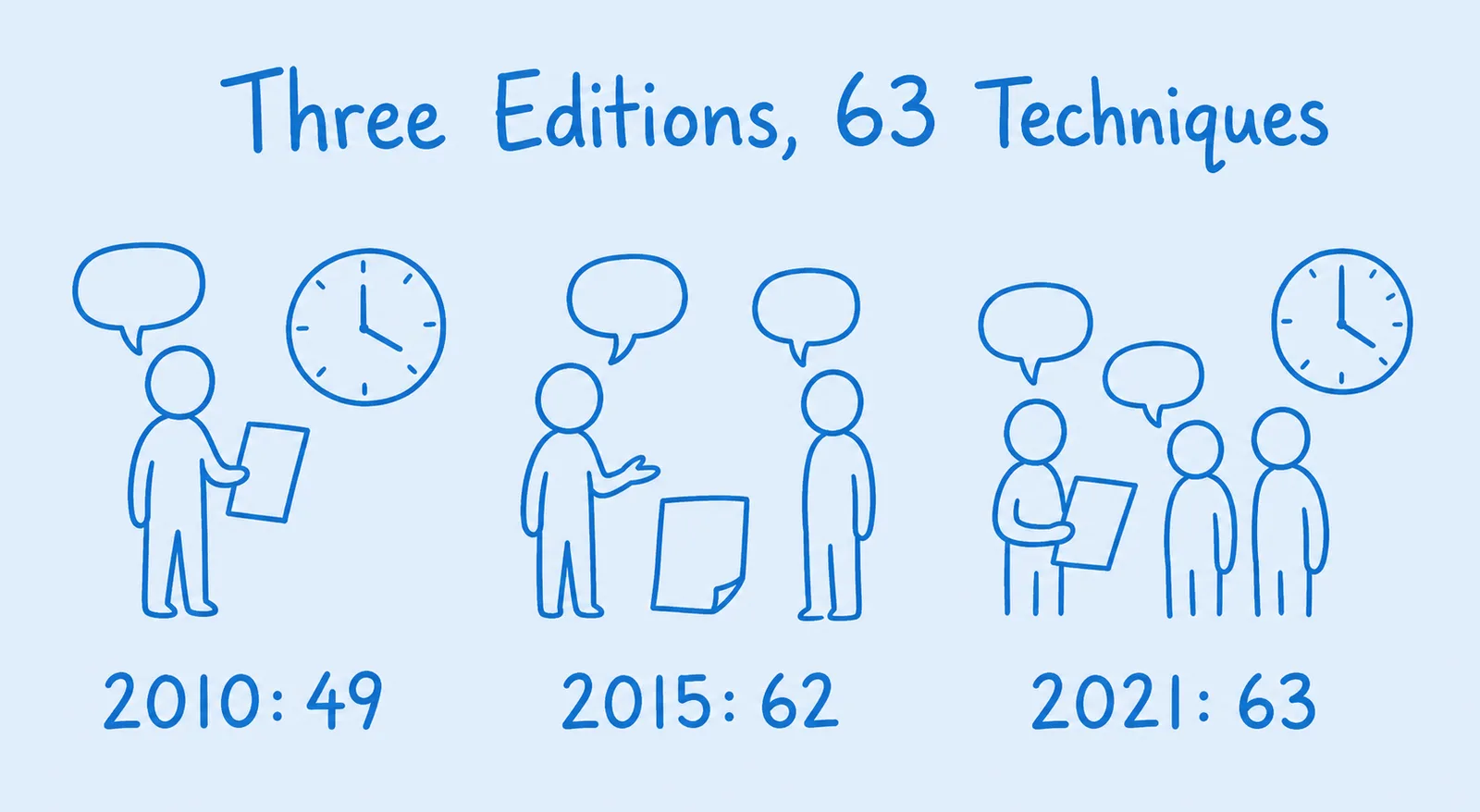
Teach Like a Champion 3.0, published by Jossey-Bass in 2021, contains 63 numbered techniques across eleven chapters. The 2015 second edition had 62 and the 2010 original had 49. Techniques were renamed and merged between editions, so the counts are not directly comparable.
Ask a room of teachers what Teach Like a Champion is and you will get three answers: a book, a training programme, and a shorthand for a style of schooling people either defend or dislike. All three are true, and none of them tells you what is actually in it.
Teach Like a Champion is a collection of named classroom techniques compiled by Doug Lemov from footage of teachers whose classes outperformed expectations. The current edition, Teach Like a Champion 3.0, published by Jossey-Bass in 2021, contains 63 numbered techniques across eleven chapters. This page lists all 63, explains how they are organised, and sets out the criticism the book attracts, with sources.
The criticism matters as much as the list. In 2020 Uncommon Schools, the charter network Lemov helped found, publicly retired SLANT, which is among the best-known techniques associated with the approach. A book whose own originating network drops one of its signature moves is a more interesting object than either its defenders or its critics usually allow. For example, a school that adopted SLANT as a lesson-observation criterion in 2019 was auditing a technique its originators had abandoned within the year.
The academic criticism is specific rather than rhetorical. Cushing (2021), in the British Educational Research Journal, argues from fieldwork in an English secondary school that the approach can position teachers as managers of a compliance system. Golann (2015) reached a related conclusion from 18 months inside an American no excuses school. Both are worth reading before a school adopts the book wholesale, and both are linked at the end of this page.
Doug Lemov was a teacher, principal and school leader who went looking for what separated classrooms where learners made unusual progress from classrooms where they did not. Rather than starting from theory, he filmed teachers, watched the footage repeatedly, and named the small repeatable moves he saw. The result was a taxonomy: not a philosophy of education, but a list of things effective teachers were observed doing.
| Edition | Techniques | Published |
|---|---|---|
| Teach Like a Champion | 49 | 2010, Jossey-Bass |
| Teach Like a Champion 2.0 | 62 | 2015, Jossey-Bass |
| Teach Like a Champion 3.0 | 63 | 2021, Jossey-Bass |
The technique count is not the interesting number. Between editions techniques were renamed, merged, split and dropped, so a teacher trained on 2.0 and a teacher trained on 3.0 can use different names for the same move. If you are comparing notes with a colleague, check the edition before you argue.
Teach Like a Champion 3.0 groups its techniques into eleven working chapters, after an opening chapter that sets out the mental models behind them. The grouping is by teaching problem rather than by subject or phase, which is what makes the book usable: you go to the chapter that matches what is going wrong.
The chapters run from lesson preparation, through checking for understanding, academic ethos, lesson structure and pacing, into three consecutive chapters on ratio, which is Lemov's term for how much of the cognitive work is being done by learners rather than by the teacher. The book then closes with procedures and routines, behavioural expectations, and motivation and trust.
The three ratio chapters are the heart of the current edition, and they are the part most often missed by people who know the book only by reputation. Ratio through questioning, ratio through writing and ratio through discussion are three different answers to the same question: who is doing the thinking?
Every technique in Teach Like a Champion 3.0 is listed below with its number, its chapter and a one-line summary in plain English. Filter by the problem you are trying to solve, or search by name. The summaries are ours rather than Lemov's wording, and technique names keep the book's American spelling because a technique name is a proper noun.
Mini app · Map It · Evidence-based pedagogy
Grouped the way the book groups them, three across. Twenty of the sixty-three link to a full guide. Filter by what you are trying to fix, and the grouping flattens to a plain list of matches.
Technique numbers, names and chapters are taken from the contents pages of Teach Like a Champion 3.0 by Doug Lemov (Jossey-Bass, 2021). The one-line summaries are ours, not the book's wording. Names keep the book's American spelling because a technique name is a proper noun.
Sixty-three is too many to adopt and the book does not ask you to. Four techniques carry most of the practical value for a teacher meeting the approach for the first time, and each is covered in more depth elsewhere on this site.
Cold Call means the teacher names who answers rather than taking hands, so that every learner prepares an answer rather than only the volunteers. It is the technique most often misunderstood as an interrogation device, and it works precisely when it is not one. Our guide to cold calling in the classroom covers the inclusive version.
Turn and Talk is a short structured paired discussion, called talk partners in most British schools. It is the cheapest way to raise the number of learners doing something with an idea. See our guide to turn and talk and talk partners.
Habits of Discussion teaches the conventions that let a class talk to each other rather than take turns talking at the teacher: be audible, name who you are building on, say whether you agree, and add rather than repeat. See our guide to habits of discussion.
Exit Ticket is a short written check in the last minutes of a lesson that tells you what to do tomorrow. Its value is entirely in what the teacher does with the responses. See exit tickets.

An adult teacher separates blank exit-ticket slips beside a planning notebook and ordinary stationery. The scene shows preparing a classroom check, without learner answers, names, results or a branded product claim.
Wait Time is pausing after a question rather than filling the silence. It predates Lemov by decades and has better evidence behind it than most of the list, which is worth knowing.
Three things are worth stating before the criticism, because they explain why the book has lasted through three editions and why teachers who dislike its politics still use its vocabulary. They are specificity, the treatment of classroom management as a learnable skill rather than a personality trait, and the idea of ratio.
The first is specificity. Most advice given to teachers operates at a level of abstraction that cannot be acted on: be clear, have high expectations, engage learners. Teach Like a Champion names the move, describes what the teacher says, and says when to use it. A trainee can do something with that on Monday.
The second is that it takes classroom management seriously as a skill rather than a personality trait. The implicit claim, that these are learnable behaviours rather than charisma, is a generous one and is borne out by how trainable most of the techniques are.
The third is ratio. Asking constantly who is doing the cognitive work is a genuinely useful habit of mind, and it is a better organising idea than most frameworks offer. It aligns with what we know about retrieval practice and with Rosenshine's principles of instruction, which arrive at overlapping conclusions from research rather than from observation.
Twenty of the sixty-three techniques link straight to a full guide from the table above. Several of the ideas teachers search for are not single numbered techniques and have guides of their own. Everything we have written on this book is listed here.
Teach Like a Champion attracts more criticism than most books of classroom advice, and a fair amount of it is serious, peer-reviewed and specific. A page that lists the techniques without the argument would be doing half a job. Four criticisms are worth understanding, along with what can be said in reply.
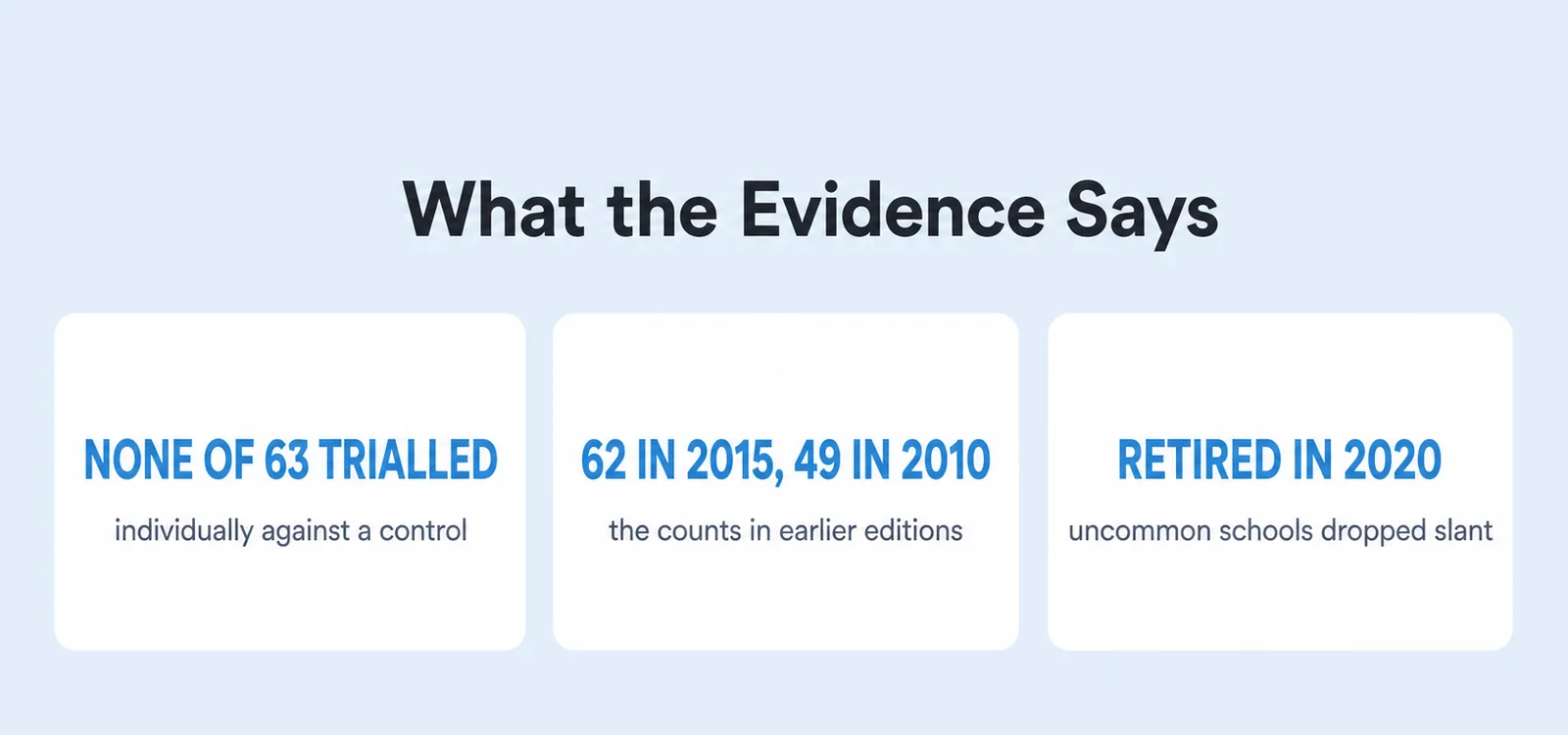
The techniques were derived by watching teachers whose classes did well. That is a reasonable way to generate hypotheses and it is not a way to establish that a technique causes anything. The teachers were selected because their results were good, so any move they happened to share will appear in the list whether or not it contributed. None of the 63 has been trialled individually against a control.
This is not a fatal objection, because the same is true of almost all practical teaching advice. It does mean that "Teach Like a Champion says so" is not an evidence claim, and it should not be offered as one in a staff meeting.
The strongest academic criticism is British. Cushing (2021), writing in the British Educational Research Journal, studied how language policy operates in an English secondary school and argued that teachers are positioned as language policy managers working within a system of surveillance, compliance, coercion and control, naming what he calls the Teach Like a Champion industry directly. Cushing (2025) develops the argument, examining how judgements about learners' speech become judgements about their behaviour.
The charge is not that the techniques do not work. It is that they can work on the wrong thing: producing visible compliance, correct posture and standardised speech, and mistaking those for learning. A technique with a cue word, a required posture and a timer is easy to audit and hard to argue with, which is exactly what makes it attractive to a school under pressure and exactly what makes the critique bite.
Golann (2015), in Sociology of Education, studied a high-performing no excuses school and described what she called the paradox of success: learners became compliant and well-drilled, and in the process practised deference rather than the initiative and self-direction that would serve them later. Her book-length treatment, Scripting the Moves (Princeton University Press, 2021), extends the argument. Golann, Debs and Weiss (2019) add an important complication by asking Black and Latinx parents what they actually thought of the discipline in these schools, and finding views considerably more mixed than either side of the debate usually reports.
Teach Like a Champion is not identical with no excuses schooling, and Lemov has distanced the techniques from the wider model. The two grew up together, though, and the culture around a technique changes what the technique does.
The single most useful fact in this debate is rarely mentioned. In 2020, Uncommon Schools, the charter network Lemov co-founded and where much of the original footage was gathered, publicly retired SLANT, the posture routine that became shorthand for the whole approach, along with other elements of its no excuses discipline model. The change was reported at the time by Forbes and by Tes, and Uncommon Schools has published its own account of it.
Read generously, this is a network taking its own critics seriously and revising. Read sceptically, it is an admission that a technique which was taught for a decade was not defensible. Either way, it settles the question of whether the list should be treated as fixed. It should not, and its own originators do not.
The techniques are worth knowing and the framework is worth arguing with. Use the list as a vocabulary for talking about practice, not as a standard to be measured against. Ask of any technique what it is producing: if the answer is compliance rather than thinking, the critique applies to your classroom and no amount of fidelity to the book will fix it.
Real public posts on X, quoted word for word. We have not edited or endorsed them.
Teachers who find it useful
@edtechmathteach When there’s a positive classroom ethos and the teacher knows and can follow the children’s cues then it’s all good. Effective cold calling has helped some of my most reserved and anxious students come on leaps and bounds. Speaking as a chronically anxious pupil and now teacher.
@C_Hendrick ‘Oracy… was important for keeping students engaged in the classroom’ and right there the engagement illusion for all to see. Oracy is important, but it should be empowering students to answer questions. Cold calling to me has done more on this than mock debates in my classes
One of TLAC’s greatest strengths is specificity. “Improve questioning” is vague. Cold Call, Wait Time and Everybody Writes give you something concrete to think about. Good professional learning should help teachers move from an idea to something they can actually do.
Teachers who push back
Pushback
@adamboxer1 @DEEMLOR I’m gonna say it. I really hate cold calling pupils. I’m not saying I never do it, but I remember paying no attention to the work and purely the worry about being picked by the teacher.
Sixty-three in the current edition, Teach Like a Champion 3.0, published in 2021. The 2015 second edition had 62 and the 2010 original had 49. Techniques were renamed and merged between editions, so the counts are not directly comparable.
Doug Lemov, a former teacher and school leader, who compiled the techniques from footage of classrooms where learners made unusually strong progress. It is published by Jossey-Bass, an imprint of Wiley.
Not in the sense that each technique has been trialled. The techniques were derived by observing effective teachers, which generates good hypotheses rather than causal evidence. Some individual techniques, wait time being the clearest example, have separate research support that predates the book.
Because critics argue it can produce visible compliance rather than thinking, and because it grew up alongside no excuses charter schooling in the United States. The academic criticism is specific and peer-reviewed rather than merely rhetorical, and it is worth reading directly.
Not by Uncommon Schools, the network where much of the original footage was gathered, which retired it in 2020 as part of a wider revision of its discipline model. Some schools elsewhere still use it.
Every source below was checked twice: once to confirm it exists, and again to confirm the record resolves to the work being cited. Links reach the original publisher rather than an aggregator. The technique list on this page was transcribed from the publisher's own contents pages for the 3.0 edition.