Updated on
September 30, 2026
Means of Participation: Every Question Already Has One
Say how learners will answer before you ask. The unchosen default is hands up, which samples the people who least need checking.


Updated on
September 30, 2026
Say how learners will answer before you ask. The unchosen default is hands up, which samples the people who least need checking.
What is Means of Participation?
Means of Participation is technique 36 in Teach Like a Champion 3.0. The teacher specifies how learners will respond, on whiteboards, in writing, in pairs, or by being named, before asking the question rather than after it. Every question has a means of participation whether the teacher chooses it or not, and the unchosen default is hands up.
Ask a question and say nothing else, and you have chosen a means of participation by accident: hands up, answered by whoever wants to answer. Every question has one whether you decide it or not.
Means of Participation is the practice of specifying how learners will answer before you ask the question: hands up, call and response, mini whiteboards, written, turn and talk, or a name you will choose. It is technique 36 in Teach Like a Champion 3.0 (Lemov, 2021), in the chapter on building ratio through questioning.
The evidence sits in the opportunities-to-respond literature, and it is consistent in direction. MacSuga-Gage and Simonsen (2015) systematically reviewed teacher-directed opportunities to respond and found the relationship with learner outcomes supported. Haydon and colleagues (2010) go further and compare three formats directly, which is what lets a teacher choose between them rather than simply doing more of everything.
Means of Participation is the instruction that tells learners how to respond, given before the question rather than after it. "On whiteboards, in ten seconds" and "I'll be picking someone" and "hands up" are three different lessons attached to the same question, and the teacher chooses which one is happening.
The reason it matters is that the default is not neutral. Hands up hands the decision to the learners most confident of the answer, which means your data comes from the people who least need checking.
The opportunities-to-respond literature supports getting more learners answering more often, and the studies that compare formats let you pick between them. The evidence is largely from American special education and general elementary settings, which is a real limit on how far it travels.
MacSuga-Gage and Simonsen's systematic review is the anchor for the general claim. Haydon and colleagues then compared individual questioning, choral responding and a mixed format directly, which is the more useful study for a teacher deciding what to do on Tuesday.
Lambert and colleagues (2006) compared response cards with hand-raising during maths lessons with fourth-grade urban learners and found more academic responding and less behaviour that interrupts the lesson. Response cards are the ancestor of the mini whiteboard, and they are the best-evidenced format in this area precisely because every answer becomes individually visible.
That is the practical hierarchy the evidence supports: a format where you can see every answer beats one where you can see some, which beats one where learners choose whether to be seen at all.
The obvious worry about naming learners is that it suppresses volunteering. Dallimore, Hertenstein and Platt (2013) found the opposite: cold calling increased subsequent voluntary participation, and learners reported greater comfort over time. That is a genuinely useful finding, and it is a business school, not a school, so label it when you use it.
The counter-finding is also from higher education. England, Brigati and Schussler (2017) surveyed introductory biology students and found active-learning practices, including being called on without volunteering, reported as a source of anxiety. Both studies are undergraduates.
A school-age randomised test of what cold calling does to anxiety does not exist. That absence is worth stating rather than filling with whichever of the two undergraduate findings suits the argument. Our guide to cold calling covers the inclusive version.
Four decisions, and they follow from what you want the question to do rather than from variety for its own sake. Match the format to the purpose, make answers visible when you need data, name the format before the question, and vary it so no learner can predict their way out.
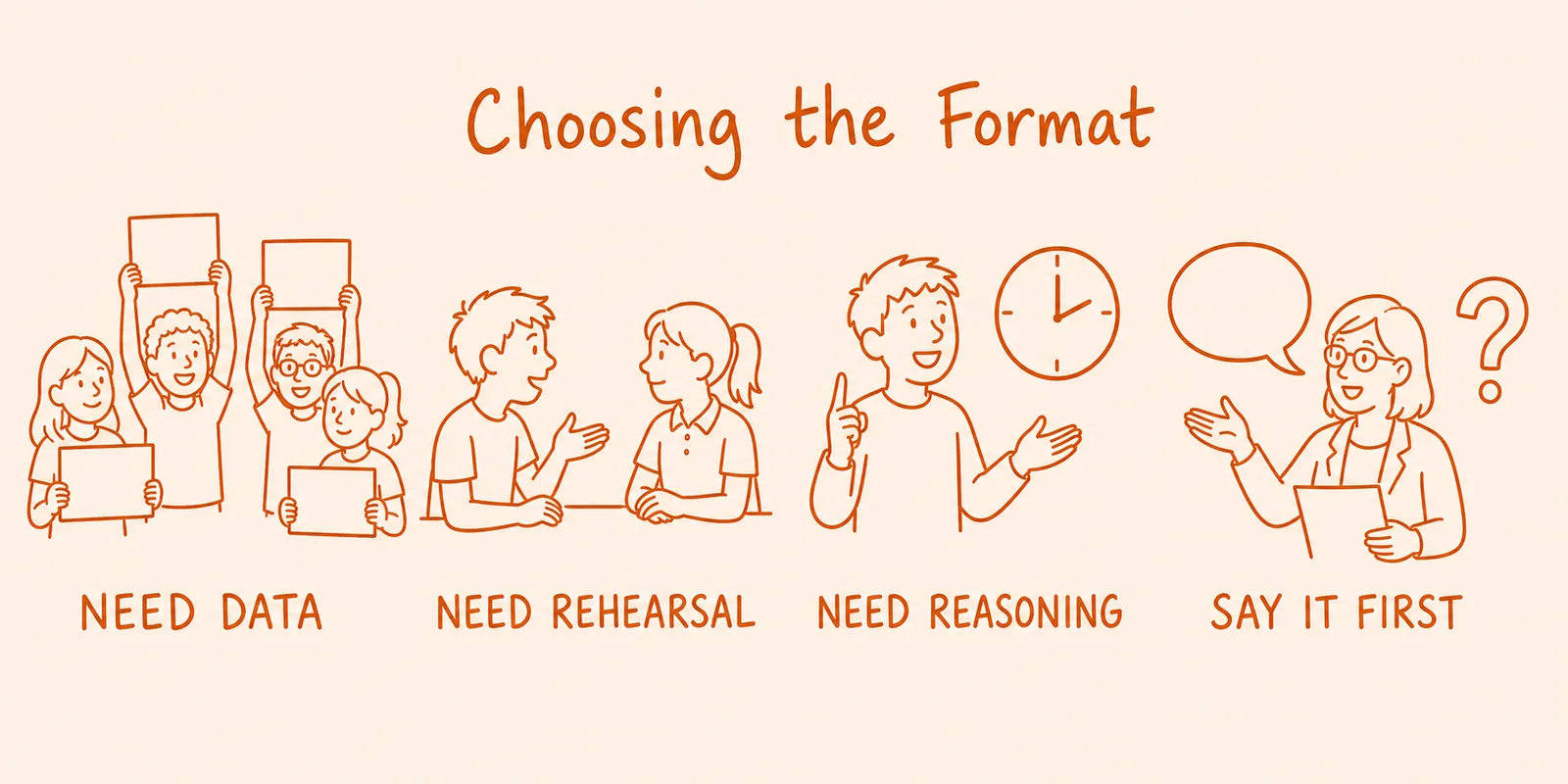
If you need to know what the class knows, use a visible format. Mini whiteboards, written responses, anything where thirty answers appear at once. Hands up cannot do this.
If you need everyone to rehearse, use a talk or writing format. Turn and talk or a written response gets every learner producing something.
If you need one learner to reason at length, name them, and leave the pause. This is the format where wait time matters most.
Say the format first, every time. "In a moment, on whiteboards" changes what learners do during your question. Saying it afterwards means they have already decided whether to engage.
The format is the variable that decides who can take part, which makes this technique the most consequential inclusion decision in a lesson and the one least often thought about.
For a learner with selective mutism, a no-opt-out spoken format is a clinical problem rather than a behaviour one. Muris and Ollendick (2015) review selective mutism as an anxiety disorder in DSM-5, and it is neither defiance nor shyness. Increasing the demand to speak makes speech less likely. A written or non-verbal format lets that learner participate fully, and it should be agreed in advance and not flagged to the class.
For a learner with low working memory, the pace of the format is the barrier. Alloway and colleagues (2009) characterise the roughly one child in ten affected. A ten-second whiteboard round samples processing speed as much as knowledge.
For a learner with a language disorder, spoken formats measure expression. Norbury and colleagues (2016) put prevalence at roughly two children in every class of thirty. Offering a written or multiple-choice route to the same question changes what is being measured.
The general principle is that varying the format is itself the adjustment. A lesson that only ever uses one means of participation will systematically exclude the same learners every time.
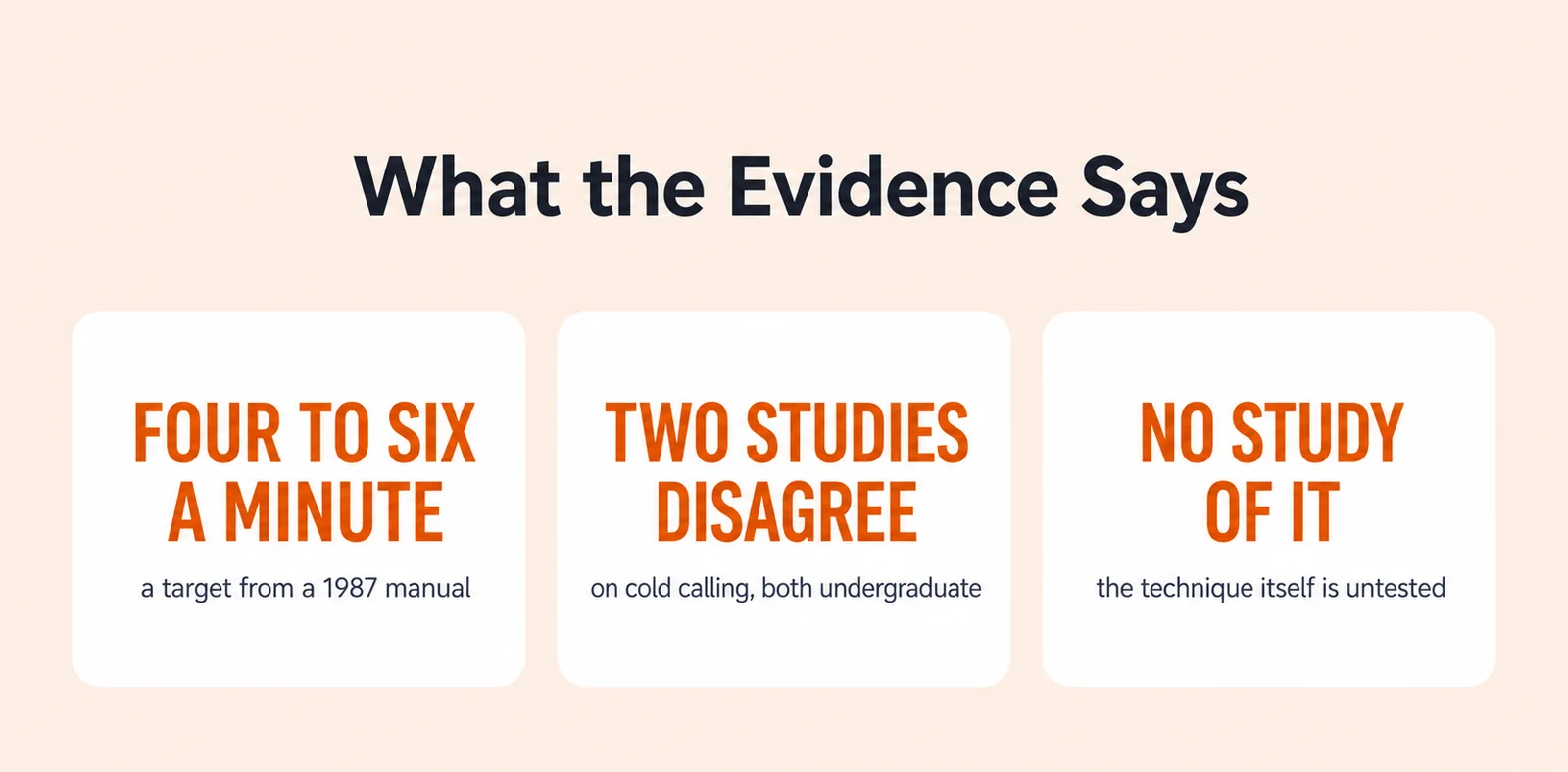
No study tests Means of Participation as a technique. The supporting literature is opportunities to respond, which is largely American, largely special education or elementary, and largely single-case in design. The two studies about being called on are both undergraduate and they disagree. And the widely quoted response-rate targets, four to six per minute for new material, come from a 1987 professional development manual rather than from research.
It is technique 36 in Teach Like a Champion 3.0. The teacher specifies how learners will respond, on whiteboards, in writing, in pairs, or by being named, before asking the question rather than after it. Every question has a means of participation whether the teacher chooses it or not, and the unchosen default is hands up.
It hands the decision to the learners most confident of the answer, so the information you get comes from the people who least need checking. It is a legitimate format for some purposes and a poor default.
There is no school-age study. One undergraduate study found cold calling increased voluntary participation and comfort over time; another found active-learning practices including being called on reported as a source of anxiety. Both are higher education.
Means of Participation is one of the 63 moves in our complete guide to Teach Like a Champion, and it decides which of the other questioning techniques you are actually running.
Two techniques sit closest to this one: call and response, one of the formats it chooses between; and everybody writes, another.