Updated on
September 9, 2026
MyMaths Review 2026: Features, Pricing and Verdict
Is MyMaths right for your school? Review its lessons, homework and assessment tools, current pricing, and practical strengths and limits for teachers.

Updated on
September 9, 2026
Is MyMaths right for your school? Review its lessons, homework and assessment tools, current pricing, and practical strengths and limits for teachers.
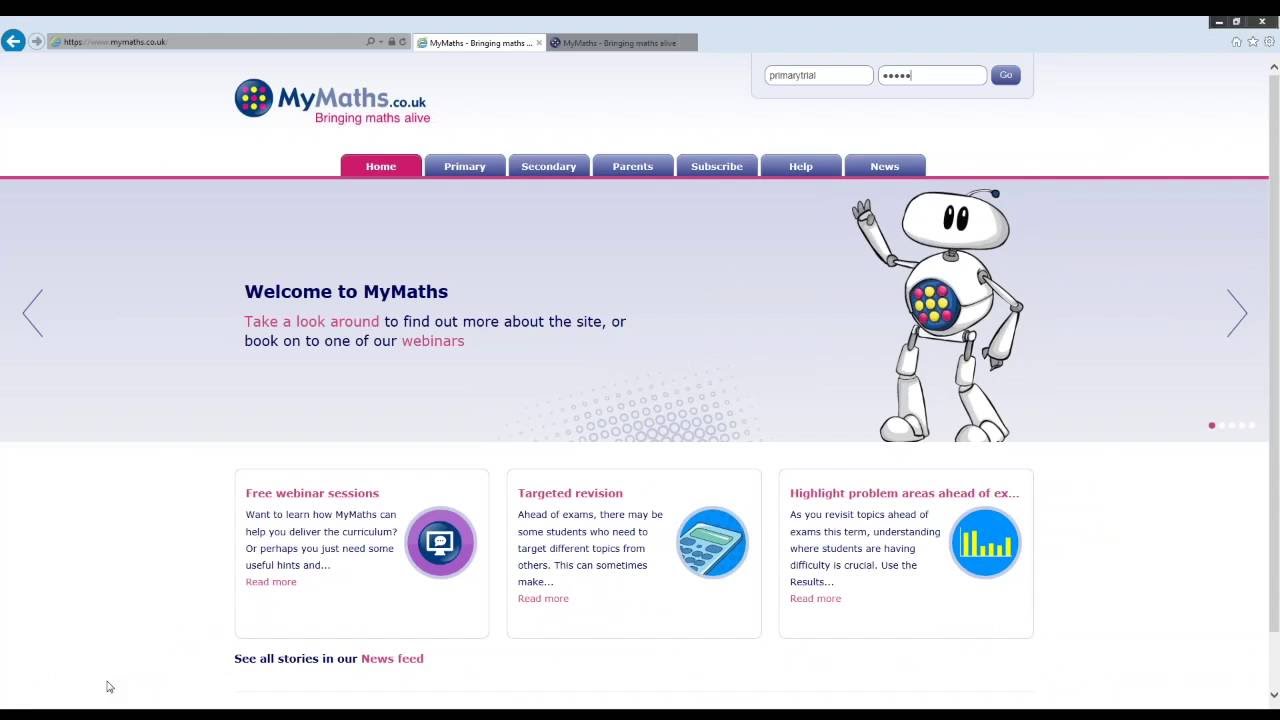
MyMaths offers online resources. Oxford University Press created it with lesson plans and homework. Primary and secondary learners can use it. This tool intends to improve maths skills and learner engagement.
MyMaths covers the maths curriculum for all key stages, from Key Stage 2 to A-Level. The resources save time and help teachers deliver curricula like the National Curriculum (Eng). Class MyMaths materials are also available.
MyMaths acts as a vital link between school and home, helping parents to keep an eye and support their child's progress, and improve their fluency in maths. It is a suitable for children of all abilities at school and home.
MyMaths has lesson plans and homework. Games, videos, and assessments are also included. Content covers algebra, geometry, and trigonometry. Statistics, probability, and calculus are there too. Learners also access linear algebra, number theory, and data analysis. Programming is additionally available .
MyMaths uses pedagogical principles to deliver its lessons. This means that each lesson is structured to teach students through a series of activities rather than just reading text. Students learn by doing, and teachers use MyMaths to guide students through the learning process. Teachers can also set up customised lessons using the MyMaths app.
Over four million students use it each year in over 70 countries. MyMaths found, based on interviews with teachers, that the resources saved between 15 minutes to 5 hours a week for teachers, with the average at 2 hours, reducing the teacher workload.
MyMaths saves teachers time with automated marking and ready-made National Curriculum lessons. Schools get curriculum coverage from KS2 to A-Level with interactive resources. Learners engage more, improving mathematical understanding. Parents track progress and support learning at home, bridging the home-school gap.
MyMaths operates a subscription-based model, where schools purchase subscriptions to access the service. Students can log into the website using their school account, and teachers can create student accounts to monitor progress and grades.
The current MyMaths subscription page lists school pricing at £449 +VAT per annum for primary schools and £699 +VAT per annum for secondary schools and post-16 settings. Check MyMaths directly before purchase, because subscription prices can change.
Remote teaching is becoming increasingly common in schools around the world. This means that teachers may teach classes on computers or tablets instead of sitting in front of a desk with a chalkboard.
MyMaths offers a range of tools to equip teachers in such a situation:
MyMaths helps UK teachers manage learners and communicate with them. Schools can use messaging apps through the platform.
The curriculum selector tool that allows you to select the topics that you would like to cover with your students. This way, teachers can assemble their lesson plans quickly.
Videos, articles, webinars, and technical support are available. Learners can access these resources 24/7.
MyMaths meets the list of remote expectations for schools in England, as set by DfE.
MyMaths builds learner confidence with short lessons and quick feedback. The platform supports every learner's ability via games and assessments. Learners can use booster packs and follow progress through traffic-light reports. Curriculum-linked tasks develop skills and boost understanding (MyMaths).
Mastery learning breaks down topics. Learners grasp concepts before moving on. Feedback corrects errors and strengthens understanding. Self-pacing lets learners work at their speed (Bloom, 1968; Carroll, 1963).
MyMaths operates on a subscription basis. The current MyMaths subscription page lists £449 +VAT per annum for primary schools and £699 +VAT per annum for secondary schools and post-16 settings. Contact MyMaths directly for the most current and tailored pricing information.
The subscription gives access to MyMaths lessons, homework activities, assessment resources and teacher support. Schools should judge value by usage, curriculum fit, workload reduction and the quality of follow-up teaching, rather than by subscription price alone.
MyMaths saves teachers time and covers the curriculum well. Learners engage more and attain higher, making it good value. The subscription gives access to many resources, saving you effort. It also bridges the home-school gap, involving parents.
Automated marking saves time for lesson planning and learner support. Ready-made lessons and aligned resources free teachers (Marzano, 2003). Progress tracking shows learner understanding, helping tailor teaching (Hattie, 2009). MyMaths leads to better outcomes and efficient departments (Wiliam, 2011).
These papers explore evidence-based approaches to mathematics education and technology-enhanced learning.
Maths teaching works best when it addresses every learner's needs. Boaler (2016) showed targeted training helps teachers improve. Darling-Hammond (2010) found this training boosts results and fairness. NCTM (2014) said this supports learners meeting maths expectations.
National Council of Teachers of Mathematics (2000)
NCTM published this framework to show mathematical competence. It encourages problem-solving, reasoning, and communication skills (NCTM Principles and Standards). These principles inform effective maths teaching for every learner.
Suppes & Morningstar (1969) showed computer instruction improves maths learning. Clark (1983) questioned this, mentioning novelty. Kulik and Kulik (1991) found small gains overall. Cheung and Slavin (2013) saw positive effects, mostly for struggling learners.
Cheung & Slavin (2013)
Computer-assisted maths helped learners modestly (Cheung & Slavin, 2013). Supplementing, not replacing, teachers worked best. This conclusion came from analysing 74 studies (Li & Ma, 2010; Slavin & Lake, 2008).
Effective Teaching of Mathematics: A Review of Research
EEF guidance
Education Endowment Foundation (2017)
The EEF guidance suggests eight ways to improve maths teaching in Key Stages 2 and 3. These include using resources and showing ideas clearly. Teachers should instruct learners in problem-solving, and build their maths vocabulary (EEF).
Practice and Homework: Principles of Instruction
2 citations
Rosenshine (2012)
Rosenshine's (2012) ten principles offer research-based teaching strategies. These include daily review and guided practice. MyMaths structures homework using these ideas, like independent practice (Rosenshine, 2012).
Cognitive Load Theory and Mathematics Education
900+ citations
Sweller (2010)
Sweller's cognitive load theory affects maths teaching. Scaffolding and examples help learners grasp new maths ideas. Lowering unneeded thinking demands improves learner results.
MyMaths helps UK teachers deliver maths lessons meeting curriculum goals. The platform's builder lets you create custom lessons (interactive demos, practice, assessments). Lessons have starters, teaching, and plenaries adaptable for diverse learners.
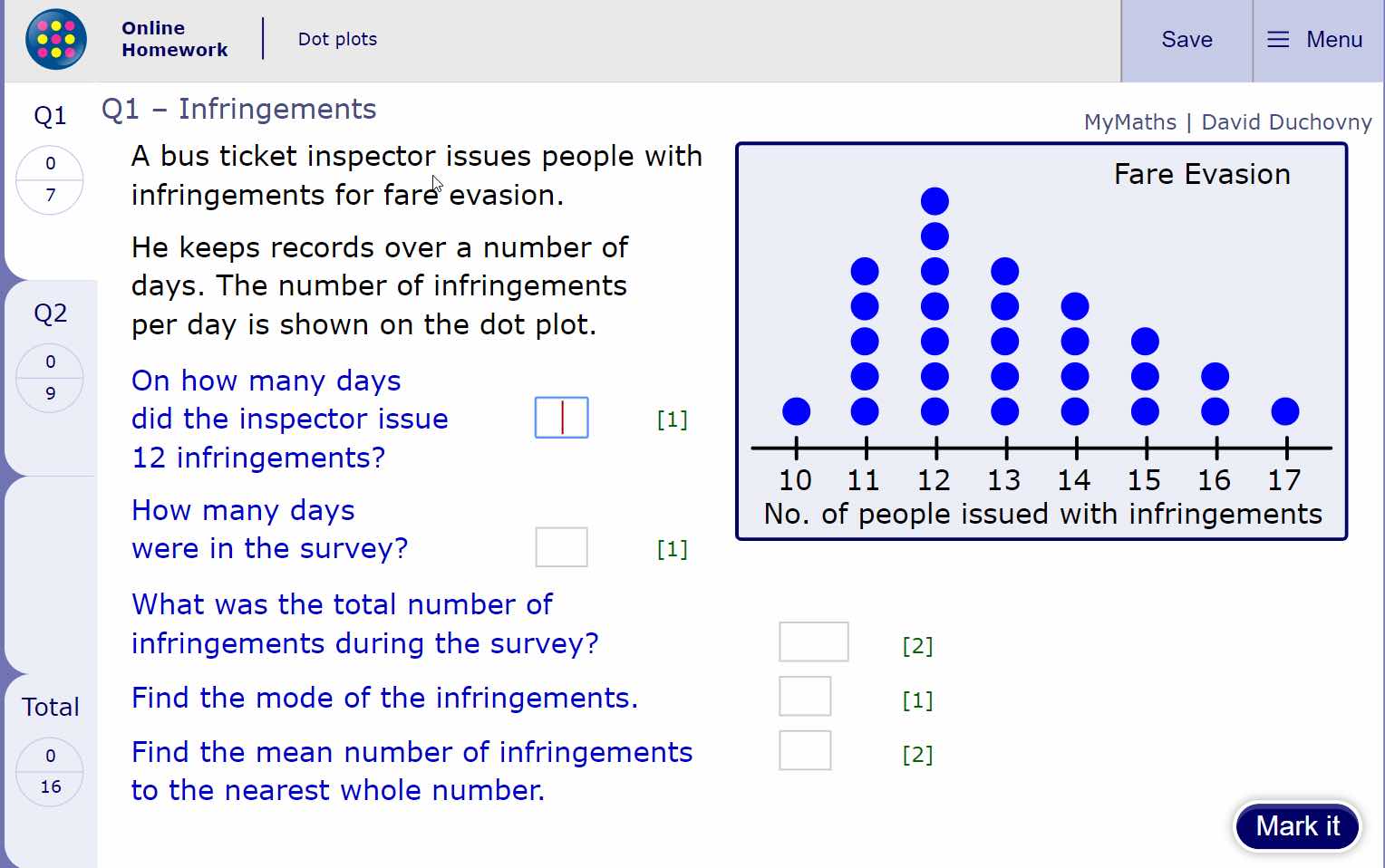
MyMaths saves time with homework management. Teachers assign homework which adapts to each learner. Struggling learners get support, while others get extensions. Traffic light tracking shows task completion, time spent and accuracy. A Year 8 teacher can spot learners needing help with expanding brackets and offer support.
Booster packs provide maths practice, good for exams and catching up. They cover numeracy and GCSE topics like trigonometry. Teachers use them for interventions or revision sessions. Automated marking gives learners fast feedback, saving teacher time.
MyMaths assessment tools fit the UK curriculum well. They offer formative and summative options. Teachers create Key Stage tests, track learner progress versus expectations, and make reports. Data analytics help teachers spot misconceptions and adjust lessons.
MyMaths is different to other UK maths platforms. Corbettmaths (Corbettmaths, n.d.) has good videos and GCSE practice. But, it does not have MyMaths' homework tools. MyMaths (MyMaths, n.d.) gives curriculum structure and analytics, so schools can plan maths.
MathsWatch and MyMaths offer interactive video. MathsWatch helps older learners with exam skills (Hodgen & Wiliam, 2006). MyMaths better supports primary maths and engages younger learners (Askew et al., 1997). Key Stage 2 learners enjoy MyMaths' games and characters, making maths easier. MathsWatch may feel too formal (Brown et al., 2008).
Hegarty Maths is popular because of its videos and questions. MyMaths stands out with good parental involvement and easy navigation. Hegarty Maths helps learners work alone, but MyMaths aids blended learning. MyMaths lets teachers plan lessons and map the curriculum effectively.
UK schools weigh costs when choosing platforms. MyMaths costs more upfront than Corbettmaths. It offers a comprehensive solution, improving value (MyMaths users reported time savings). Time saved in prep and homework (MyMaths) justifies costs. This reduces workload and improves learner results.
MyMaths gives teachers data on learner maths performance,. This helps inform teaching. The dashboard shows engagement and accuracy. Spot patterns and adapt your approach to support learners. If learners struggle with fractions, intervene fast.
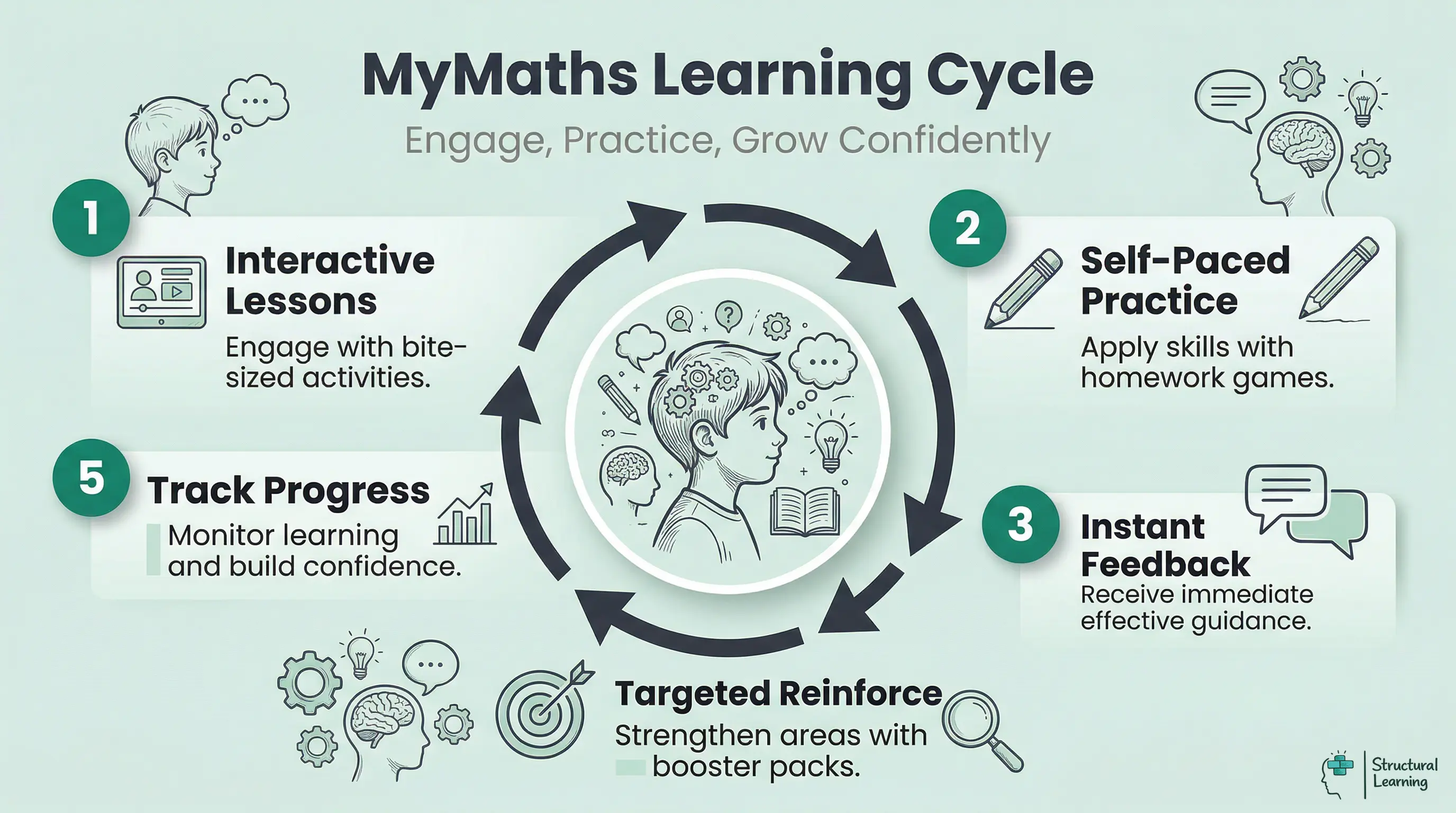
The traffic light system gives instant visual feedback. Green means learners understand, amber shows developing skills, and red flags needing help. Teachers quickly group learners for differentiated instruction using colours. A Year 6 teacher might use data for intervention groups. Learners with red get maths support before more complex topics.
MyMaths progress tools track learner growth. Data reveals maths skill patterns (Boaler, 2009). Teachers use data for meetings and reports (Hattie, 2008; Wiliam, 2011). Show learner gains with the concrete-pictorial-abstract method, evidencing MyMaths impact.
MyMaths identifies common learner errors, helping teachers plan lessons. When 70% make the same algebra mistakes, teachers can use focused explanations. This method improves learning and reduces mathematical misunderstandings (Laurillard, 2002; Hattie, 2008).
MyMaths supports maths learning for learners in the UK. Oxford University Press developed it. It fully covers Key Stage 2, GCSE, and A Level maths .
Teachers pick tasks from a prepped library and assign them via the portal. Learners complete these self-marking tasks at their speed. Teachers monitor results using a simple system to find learners needing help.
The platform saves teachers two hours weekly with lesson plans and automated marking. This helps staff focus on interventions and teaching instead of data entry.
Smith (2023) found that interactive maths activities build learner confidence quickly. Games and instant feedback encourage frequent practice. This especially helps learners experiencing maths anxiety, according to Jones (2024).
Teachers often forget booster packs for learners needing extra help. Schools should review progress data more; it helps support learners better. Regular data checks mean fewer missed chances to assist learners.
The current MyMaths subscription page lists £449 plus VAT per annum for primary schools and £699 plus VAT per annum for secondary schools and post-16 settings. Schools should confirm the live price with MyMaths before purchase or renewal.
MyMaths can support UK teachers when it is used as part of a wider maths teaching strategy. Its interactive lessons, homework tools and teacher dashboard can save time, but the strongest outcomes still depend on careful diagnosis, feedback and follow-up teaching.
MyMaths helps parents support their learner's maths (MyMaths, n.d.). Immediate feedback builds confidence for learners who find maths hard (MyMaths, n.d.). This tool develops understanding, improves outcomes and makes learning engaging (MyMaths, n.d.).