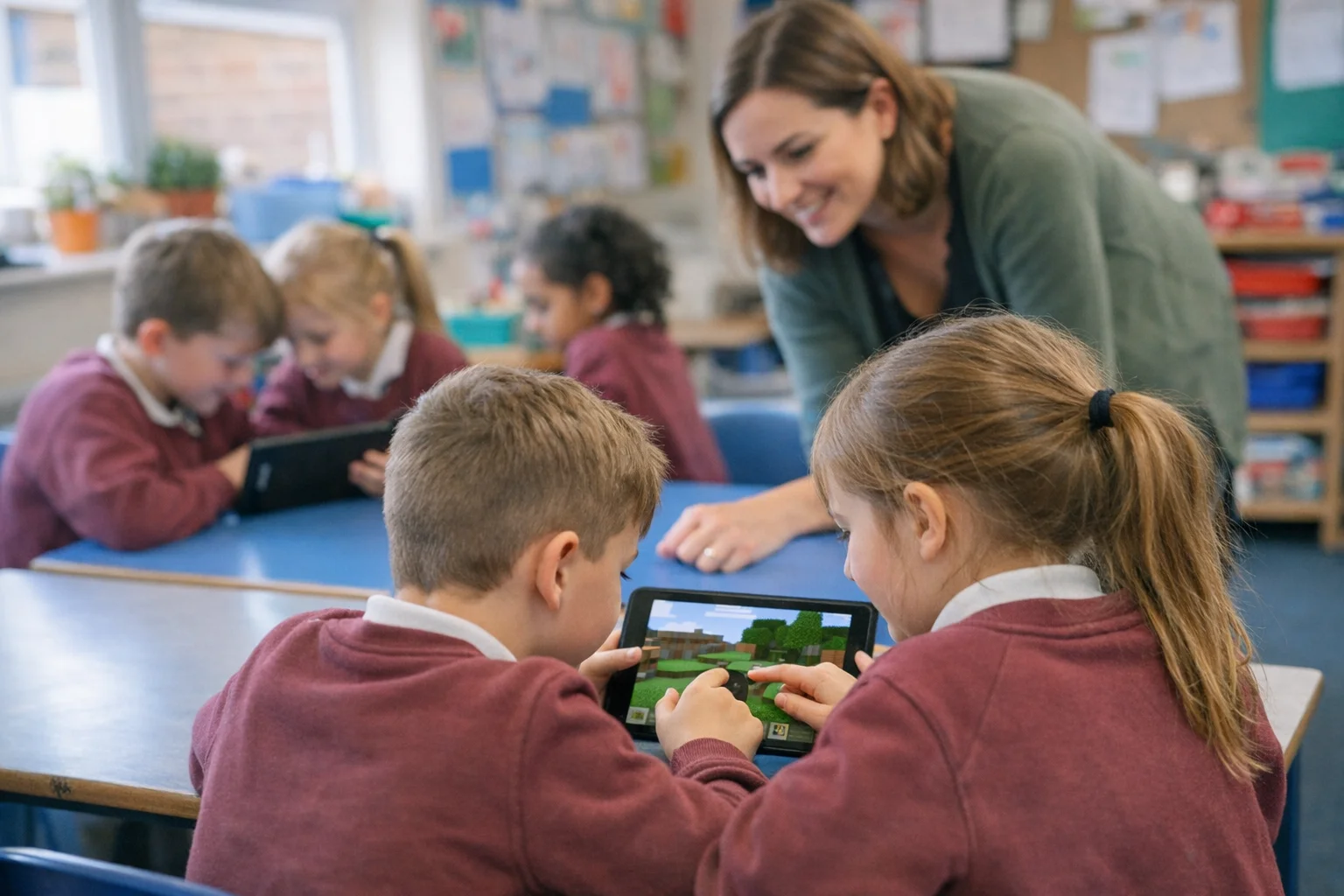
Minecraft Education Edition: Learning Through PlayPrimary students, aged 7-9, in maroon sweatshirts using tablets with Minecraft Education in a bright, colourful classroom.

Updated on  

February 12, 2026

Minecraft Education Edition: Learning Through Play

|

September 23, 2024

Complete 2025 guide to Minecraft Education for UK schools. Free with M365, coding integration, curriculum lessons, and implementation tips.

Course Enquiry
Copy citation

Main, P. (2024, September 23). Minecraft Education: A Comprehensive Guide for Teachers. Retrieved from www.structural-learning.com/post/minecraft-education

Imagine a world where students can learn math by building skyscrapers or enhance their storytelling skills through immersive games. This is the unique educational landscape that Minecraft offers. As educators seek new methods to engage their students, Minecraft has emerged as a powerful tool that transforms traditional learning into an interactive adventure.

Key Takeaways

  1. Beyond Gaming: Transform Learning: Discover how Minecraft Education turns reluctant learners into engaged problem-solvers, with 250+ ready-to-teach lessons requiring zero gaming experience through built-in scaffolding support.
  2. The Collaboration Revolution: Learn why 7,000 classrooms worldwide use Minecraft's multiplayer mode to build teamwork skills while mastering curriculum content across all subjects.
  3. Code Without Fear: Uncover how Code Builder transforms students from block-stackers to Python programmers, making coding accessible even for technophobic teachers.
  4. Stealth Maths Magic: See how students accidentally master volume, area, and economics while building virtual worlds, solving the engagement crisis in mathematical learning.

With its ability to encourage creativity, problem-solving, and collaboration, Minecraft holds immense potential in the classroom. Many teachers report that when students immerse themselves in this virtual environment, they not only grasp complex concepts but also develop critical thinking skills. Moreover, the game's engaging nature promotes literacy and creativity in a way that standard textbooks often cannot.

the many facets of Minecraft Education, including its educational benefits, key features of the Education Edition, and practical teaching strategies. By understanding how to effectively implement this tool in their classrooms, educators can create dynamic and successful learning experiences within complex learning environmentsfor their students.

Hub diagram showing Minecraft Education at centre connected to four learning areas
Hub-and-spoke diagram: Educational Benefits of Minecraft Education Edition

Enhancing Problem-Solving Skills

Minecraft Education Edition is uniquely designed to nurture problem-solving skills within its immersive gameplay. By presenting students with creative challenges and real-world scenarios, the platform cultivates their thinking skill abilities. More than 250 lessons are available, allowing students to strengthen their problem-solving skills in diverse subject areas, like coding and history.

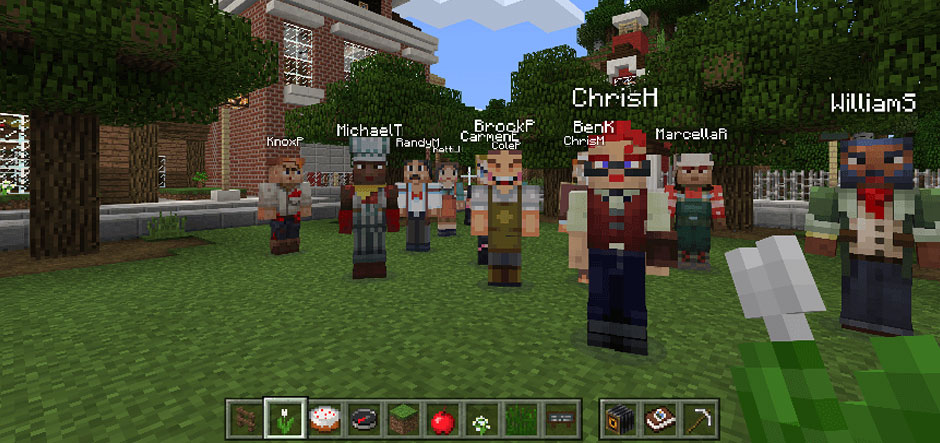
In multiplayer mode, students join forces, enhancing their teamwork capabilities as they problem-solve together in the game's blocky worlds. This collaborative approach is not limited by platforms or devices, making it a flexible option for various classroom or hybrid environments. Moreover, with the Code Builder feature, Minecraft Education pushes the boundaries of learning by introducing block-based coding, along with programming languages such as Python and JavaScript, further boosting students' analytical thinking and problem-solving prowess.

Minecraft classroom
Minecraft classroom

Encouraging Literacy and Storytelling

the field of Minecraft Education extends beyond just building and crafting; it's a fertile ground for developing literacy and storytelling skills. The standardized curriculum and tailored lessons offer an environment where students can actively engage with reading and storytelling, thanks to the game's interactive nature.

Awaiting educators is a treasure trove of ready-to-teach lessons that weave literacy activities smoothly into Minecraft. The platform's intuitive interface and immersive content encourage critical thinking and narrative abilities, which are essential elements of storytelling. Moreover, creative challenges within Minecraft Education invigorate students' reading comprehension and writing, promoting literacy in a context that's as enjoyable as it is educational.

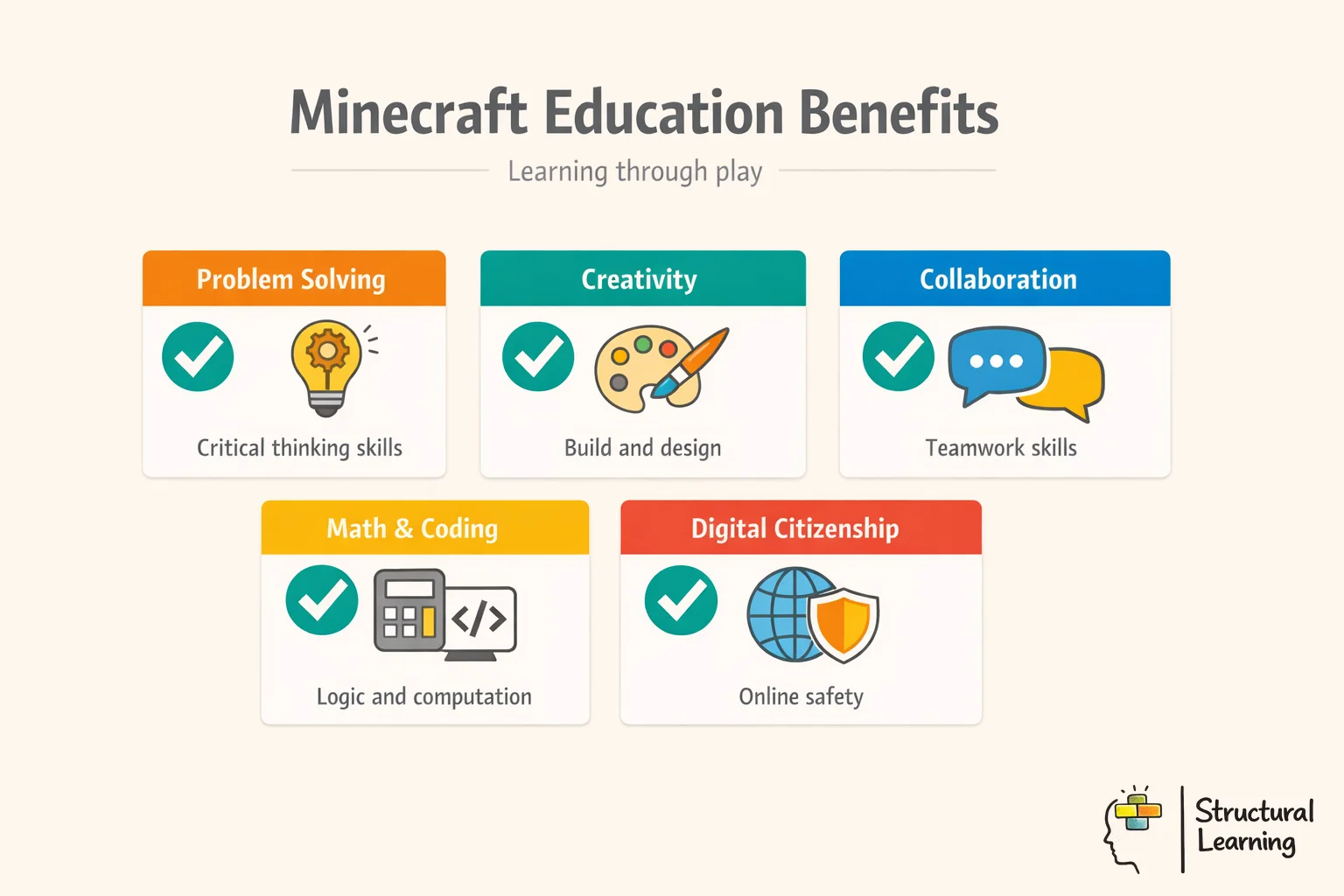
Infographic showing 5 key benefits of Minecraft Education Edition for classroom learning
Minecraft Education Benefits


Strengthening Mathematical Concepts

Mathematics in Minecraft isn't just about counting blocks, it's a practical application of essential concepts. As students build structures in this digital sandbox, they inadvertently engage in calculating volume and area, honing their geometric understanding. The need to create complex shapes and structures helps them in grasping spatial reasoning and geometric relationships, enriching their mathematical foundation.

Minecraft's gameplay mechanics, like dividing supplies and resource management, incorporate basic arithmetic operations, strengthening numerical fluency. The game also introduces players to economic principles through item trading and time management, applying math skills in scenarios that mirror real life, thereby solidifying their grasp of mathematical concepts through active learning.


Promoting Creativity and Innovation

Creativity thrives in the world of Minecraft Education. It's a platform where imagination reigns, and students can experiment with new approaches to learning. Across subjects like reading, math, history, and coding, children are inspired to think outside the block and personalise their learning process.

The game offers a multitude of creative challenges within blank canvas worlds, allowing students to express themselves and explore new ideas. As they work on collaborative projects within these unique, blocky environments, they not only encourage a sense of community but also develop practical problem-solving skills through social learning. Minecraft Education facilitates students in building complex worlds together, promoting a spirit of teamwork and innovation that transcends the digital landscape into their everyday lives while boosting engagement.

34316f_66f174d360737010550d3696_66f17361b50d0e2759e31a18_Minecraft%252520students%252520working.jpeg" loading="lazy" alt="Minecraft students working together" width="auto" height="auto" id="">
Students collaborating in Minecraft

Best Practices for Teachers Using Minecraft Education

Transitioning to Minecraft Education can seem daunting, but with the right strategies, educators can smoothly integrate it into their existing curriculum. These best practices are designed to maximise the learning potential of Minecraft while ensuring a smooth and effective teaching experience.

Curriculum Integration

Start by aligning Minecraft activities with specific learning objectives and curriculum standards. Choose lessons and challenges that reinforce key concepts you're already teaching in the classroom. Tailor assignments to student needs, differentiating instruction to provide support for struggling learners and extension activities for advanced students. Provide clear guidelines and expectations for each activity, including learning goals, assessment criteria, and expected outcomes. Regularly assess student progress and provide feedback, using observations, in-game assessments, and post-activity reflections to gauge understanding.

Classroom Management

Establish clear classroom rules and expectations for Minecraft use, addressing issues such as respectful communication, responsible behaviour, and time management. Use the game's built-in moderation tools to monitor student activity and ensure a safe and productive learning environment. Provide adequate technical support and training for both students and teachers, addressing common troubleshooting issues and offering guidance on using the platform's features. Encourage collaboration and teamwork among students, promoting positive interactions and shared problem-solving. Regularly review and adjust your classroom management strategies as needed, adapting to the changing needs of your students and the evolving capabilities of Minecraft Education.

Creative Assessment

Design assessment tasks that allow students to demonstrate their understanding in creative and engaging ways, moving beyond traditional quizzes and tests. Use in-game projects and builds as opportunities for formative assessment, observing student progress and providing feedback as they work. Encourage students to reflect on their learning experiences through journaling, presentations, or peer evaluations, promoting metacognitive awareness and self-assessment skills. Provide opportunities for students to showcase their Minecraft creations to a wider audience, such as parents, other classes, or online communities, developing a sense of pride and accomplishment. Align assessment criteria with learning objectives and curriculum standards, ensuring that assessments accurately measure student understanding and mastery of key concepts.

Conclusion

Minecraft Education Edition is more than just a game; it is a dynamic educational tool that can transform the way students learn. By harnessing the power of play, teachers can develop their students' potential, developing creativity, problem-solving skills, and a love of learning. From building virtual worlds to coding interactive experiences, Minecraft offers a unique and engaging platform for students to explore, experiment, and collaborate.

As educators continue to seek effective methods to engage and inspire their students, Minecraft Education Edition stands out as a valuable resource. Its versatility, accessibility, and proven track record make it a powerful tool for creating dynamic and successful learning experiences. By embracing this technology and integrating it thoughtfully into the curriculum, teachers can helps their students to become active, lifelong learners equipped for success in the 21st century.

Further Reading

For further academic research on this topic:

  • Game-based learning research
  • Minecraft in education

For educators interested in looking more closely into the research and pedagogy behind game-based learning and the use of Minecraft in education, the following resources offer valuable insights:

  1. "Minecraft in Education: A Synthesis of Research on Minecraft-Based Learning" by Neil Selwyn and Kate Highfield (2018): This paper provides a comprehensive overview of the existing research on Minecraft in educational settings, examining its impact on student engagement, learning outcomes, and the development of 21st-century skills.
  2. "The Effect of Minecraft on Students’ Learning Performance and Motivation" by H. Y. Chen and Y. L. Wang (2020): This study investigates the effects of incorporating Minecraft into classroom instruction on students' learning performance and motivation. It explores the potential benefits and challenges of using the game as a pedagogical tool.
  3. "Game-Based Learning: What It Is, Why It Works, and Where It’s Going" by Kurt Squire (2011): This article examines the principles and practices of game-based learning, highlighting the key factors that contribute to its effectiveness and exploring its future potential in education.
  4. "Computer Games and Learning: A Model of Psycho-Epistemological Gameplay" by David Williamson Shaffer (2006): Shaffer's work provides a theoretical framework for understanding how learning occurs within digital games, exploring the cognitive and epistemological processes involved in gameplay.
  5. "The Gamification of Learning and Instruction: Game-based Methods and Strategies for Training and Education" by Karl M. Kapp (2012): Kapp's book offers a practical guide to gamification in education, providing educators with strategies and techniques for incorporating game elements into their teaching practices.
Loading audit...

Imagine a world where students can learn math by building skyscrapers or enhance their storytelling skills through immersive games. This is the unique educational landscape that Minecraft offers. As educators seek new methods to engage their students, Minecraft has emerged as a powerful tool that transforms traditional learning into an interactive adventure.

Key Takeaways

  1. Beyond Gaming: Transform Learning: Discover how Minecraft Education turns reluctant learners into engaged problem-solvers, with 250+ ready-to-teach lessons requiring zero gaming experience through built-in scaffolding support.
  2. The Collaboration Revolution: Learn why 7,000 classrooms worldwide use Minecraft's multiplayer mode to build teamwork skills while mastering curriculum content across all subjects.
  3. Code Without Fear: Uncover how Code Builder transforms students from block-stackers to Python programmers, making coding accessible even for technophobic teachers.
  4. Stealth Maths Magic: See how students accidentally master volume, area, and economics while building virtual worlds, solving the engagement crisis in mathematical learning.

With its ability to encourage creativity, problem-solving, and collaboration, Minecraft holds immense potential in the classroom. Many teachers report that when students immerse themselves in this virtual environment, they not only grasp complex concepts but also develop critical thinking skills. Moreover, the game's engaging nature promotes literacy and creativity in a way that standard textbooks often cannot.

the many facets of Minecraft Education, including its educational benefits, key features of the Education Edition, and practical teaching strategies. By understanding how to effectively implement this tool in their classrooms, educators can create dynamic and successful learning experiences within complex learning environmentsfor their students.

Hub diagram showing Minecraft Education at centre connected to four learning areas
Hub-and-spoke diagram: Educational Benefits of Minecraft Education Edition

Enhancing Problem-Solving Skills

Minecraft Education Edition is uniquely designed to nurture problem-solving skills within its immersive gameplay. By presenting students with creative challenges and real-world scenarios, the platform cultivates their thinking skill abilities. More than 250 lessons are available, allowing students to strengthen their problem-solving skills in diverse subject areas, like coding and history.

In multiplayer mode, students join forces, enhancing their teamwork capabilities as they problem-solve together in the game's blocky worlds. This collaborative approach is not limited by platforms or devices, making it a flexible option for various classroom or hybrid environments. Moreover, with the Code Builder feature, Minecraft Education pushes the boundaries of learning by introducing block-based coding, along with programming languages such as Python and JavaScript, further boosting students' analytical thinking and problem-solving prowess.

Minecraft classroom
Minecraft classroom

Encouraging Literacy and Storytelling

the field of Minecraft Education extends beyond just building and crafting; it's a fertile ground for developing literacy and storytelling skills. The standardized curriculum and tailored lessons offer an environment where students can actively engage with reading and storytelling, thanks to the game's interactive nature.

Awaiting educators is a treasure trove of ready-to-teach lessons that weave literacy activities smoothly into Minecraft. The platform's intuitive interface and immersive content encourage critical thinking and narrative abilities, which are essential elements of storytelling. Moreover, creative challenges within Minecraft Education invigorate students' reading comprehension and writing, promoting literacy in a context that's as enjoyable as it is educational.

Infographic showing 5 key benefits of Minecraft Education Edition for classroom learning
Minecraft Education Benefits


Strengthening Mathematical Concepts

Mathematics in Minecraft isn't just about counting blocks, it's a practical application of essential concepts. As students build structures in this digital sandbox, they inadvertently engage in calculating volume and area, honing their geometric understanding. The need to create complex shapes and structures helps them in grasping spatial reasoning and geometric relationships, enriching their mathematical foundation.

Minecraft's gameplay mechanics, like dividing supplies and resource management, incorporate basic arithmetic operations, strengthening numerical fluency. The game also introduces players to economic principles through item trading and time management, applying math skills in scenarios that mirror real life, thereby solidifying their grasp of mathematical concepts through active learning.


Promoting Creativity and Innovation

Creativity thrives in the world of Minecraft Education. It's a platform where imagination reigns, and students can experiment with new approaches to learning. Across subjects like reading, math, history, and coding, children are inspired to think outside the block and personalise their learning process.

The game offers a multitude of creative challenges within blank canvas worlds, allowing students to express themselves and explore new ideas. As they work on collaborative projects within these unique, blocky environments, they not only encourage a sense of community but also develop practical problem-solving skills through social learning. Minecraft Education facilitates students in building complex worlds together, promoting a spirit of teamwork and innovation that transcends the digital landscape into their everyday lives while boosting engagement.

34316f_66f174d360737010550d3696_66f17361b50d0e2759e31a18_Minecraft%252520students%252520working.jpeg" loading="lazy" alt="Minecraft students working together" width="auto" height="auto" id="">
Students collaborating in Minecraft

Best Practices for Teachers Using Minecraft Education

Transitioning to Minecraft Education can seem daunting, but with the right strategies, educators can smoothly integrate it into their existing curriculum. These best practices are designed to maximise the learning potential of Minecraft while ensuring a smooth and effective teaching experience.

Curriculum Integration

Start by aligning Minecraft activities with specific learning objectives and curriculum standards. Choose lessons and challenges that reinforce key concepts you're already teaching in the classroom. Tailor assignments to student needs, differentiating instruction to provide support for struggling learners and extension activities for advanced students. Provide clear guidelines and expectations for each activity, including learning goals, assessment criteria, and expected outcomes. Regularly assess student progress and provide feedback, using observations, in-game assessments, and post-activity reflections to gauge understanding.

Classroom Management

Establish clear classroom rules and expectations for Minecraft use, addressing issues such as respectful communication, responsible behaviour, and time management. Use the game's built-in moderation tools to monitor student activity and ensure a safe and productive learning environment. Provide adequate technical support and training for both students and teachers, addressing common troubleshooting issues and offering guidance on using the platform's features. Encourage collaboration and teamwork among students, promoting positive interactions and shared problem-solving. Regularly review and adjust your classroom management strategies as needed, adapting to the changing needs of your students and the evolving capabilities of Minecraft Education.

Creative Assessment

Design assessment tasks that allow students to demonstrate their understanding in creative and engaging ways, moving beyond traditional quizzes and tests. Use in-game projects and builds as opportunities for formative assessment, observing student progress and providing feedback as they work. Encourage students to reflect on their learning experiences through journaling, presentations, or peer evaluations, promoting metacognitive awareness and self-assessment skills. Provide opportunities for students to showcase their Minecraft creations to a wider audience, such as parents, other classes, or online communities, developing a sense of pride and accomplishment. Align assessment criteria with learning objectives and curriculum standards, ensuring that assessments accurately measure student understanding and mastery of key concepts.

Conclusion

Minecraft Education Edition is more than just a game; it is a dynamic educational tool that can transform the way students learn. By harnessing the power of play, teachers can develop their students' potential, developing creativity, problem-solving skills, and a love of learning. From building virtual worlds to coding interactive experiences, Minecraft offers a unique and engaging platform for students to explore, experiment, and collaborate.

As educators continue to seek effective methods to engage and inspire their students, Minecraft Education Edition stands out as a valuable resource. Its versatility, accessibility, and proven track record make it a powerful tool for creating dynamic and successful learning experiences. By embracing this technology and integrating it thoughtfully into the curriculum, teachers can helps their students to become active, lifelong learners equipped for success in the 21st century.

Further Reading

For further academic research on this topic:

  • Game-based learning research
  • Minecraft in education

For educators interested in looking more closely into the research and pedagogy behind game-based learning and the use of Minecraft in education, the following resources offer valuable insights:

  1. "Minecraft in Education: A Synthesis of Research on Minecraft-Based Learning" by Neil Selwyn and Kate Highfield (2018): This paper provides a comprehensive overview of the existing research on Minecraft in educational settings, examining its impact on student engagement, learning outcomes, and the development of 21st-century skills.
  2. "The Effect of Minecraft on Students’ Learning Performance and Motivation" by H. Y. Chen and Y. L. Wang (2020): This study investigates the effects of incorporating Minecraft into classroom instruction on students' learning performance and motivation. It explores the potential benefits and challenges of using the game as a pedagogical tool.
  3. "Game-Based Learning: What It Is, Why It Works, and Where It’s Going" by Kurt Squire (2011): This article examines the principles and practices of game-based learning, highlighting the key factors that contribute to its effectiveness and exploring its future potential in education.
  4. "Computer Games and Learning: A Model of Psycho-Epistemological Gameplay" by David Williamson Shaffer (2006): Shaffer's work provides a theoretical framework for understanding how learning occurs within digital games, exploring the cognitive and epistemological processes involved in gameplay.
  5. "The Gamification of Learning and Instruction: Game-based Methods and Strategies for Training and Education" by Karl M. Kapp (2012): Kapp's book offers a practical guide to gamification in education, providing educators with strategies and techniques for incorporating game elements into their teaching practices.

Learning Tools

Back to Blog

{"@context":"https://schema.org","@graph":[{"@type":"Article","@id":"https://www.structural-learning.com/post/minecraft-education#article","headline":"Minecraft Education Edition: Learning Through Play","description":"Complete 2025 guide to Minecraft Education for UK schools. Free with M365 Education, coding integration, curriculum-aligned lessons, and practical implementa...","datePublished":"2024-09-23T13:59:32.761Z","dateModified":"2026-01-26T10:09:32.212Z","author":{"@type":"Person","name":"Paul Main","url":"https://www.structural-learning.com/team/paulmain","jobTitle":"Founder & Educational Consultant"},"publisher":{"@type":"Organization","name":"Structural Learning","url":"https://www.structural-learning.com","logo":{"@type":"ImageObject","url":"https://cdn.prod.website-files.com/5b69a01ba2e409e5d5e055c6/6040bf0426cb415ba2fc7882_newlogoblue.svg"}},"mainEntityOfPage":{"@type":"WebPage","@id":"https://www.structural-learning.com/post/minecraft-education"},"image":"https://cdn.prod.website-files.com/5b69a01ba2e409501de055d1/696a3b3a3a45c50be27fc37d_696a3b343fa1eb65bdbef29e_minecraft-education-illustration.webp","wordCount":3346},{"@type":"BreadcrumbList","@id":"https://www.structural-learning.com/post/minecraft-education#breadcrumb","itemListElement":[{"@type":"ListItem","position":1,"name":"Home","item":"https://www.structural-learning.com/"},{"@type":"ListItem","position":2,"name":"Blog","item":"https://www.structural-learning.com/blog"},{"@type":"ListItem","position":3,"name":"Minecraft Education Edition: Learning Through Play","item":"https://www.structural-learning.com/post/minecraft-education"}]}]}