Essay Plans: A teacher's guide
Discover how teaching essay planning reduces student anxiety, builds confidence, and leads to higher-quality academic writing in your classroom.


Discover how teaching essay planning reduces student anxiety, builds confidence, and leads to higher-quality academic writing in your classroom.
Research (Flower & Hayes, 1981) shows planning helps learners write clearly. Essay plans reduce anxiety and build confidence (Hayes & Nash, 1996). Good planning also creates higher quality academic writing (Kellogg, 1994). Learners develop critical thinking and write better essays (Bereiter & Scardamalia, 1987).

Essay plans help learners organise ideas before writing. This structure aids clear, logical expression (Flower & Hayes, 1981). Effective planning reduces learner anxiety and builds confidence. Teachers can foster deeper subject understanding (Kellogg, 1994).
Creating an essay plan involves outlining key arguments, evidence, and connections in a coherent structure. This planning stage is essential for producing high-quality academic essays and enables students to break down complex tasksinto manageable steps. With the right support, scaffolding techniques, and practice, students can enhance their essay-writing skills and use these plans to build persuasive arguments that demonstrate their cultural capitaland track student progress. Moreover, planning helps students to stay focussed, avoid losing their train of thought, and maintain a logical flow in their writing.
Essay plans help learners. Teachers can aid planning using dialogic teaching, (Mercer & Littleton, 2007). Methods make planning easy (Bereiter & Scardamalia, 1987). Teach learners to build paragraphs and better sentences. This helps them write well, (Flower & Hayes, 1981).
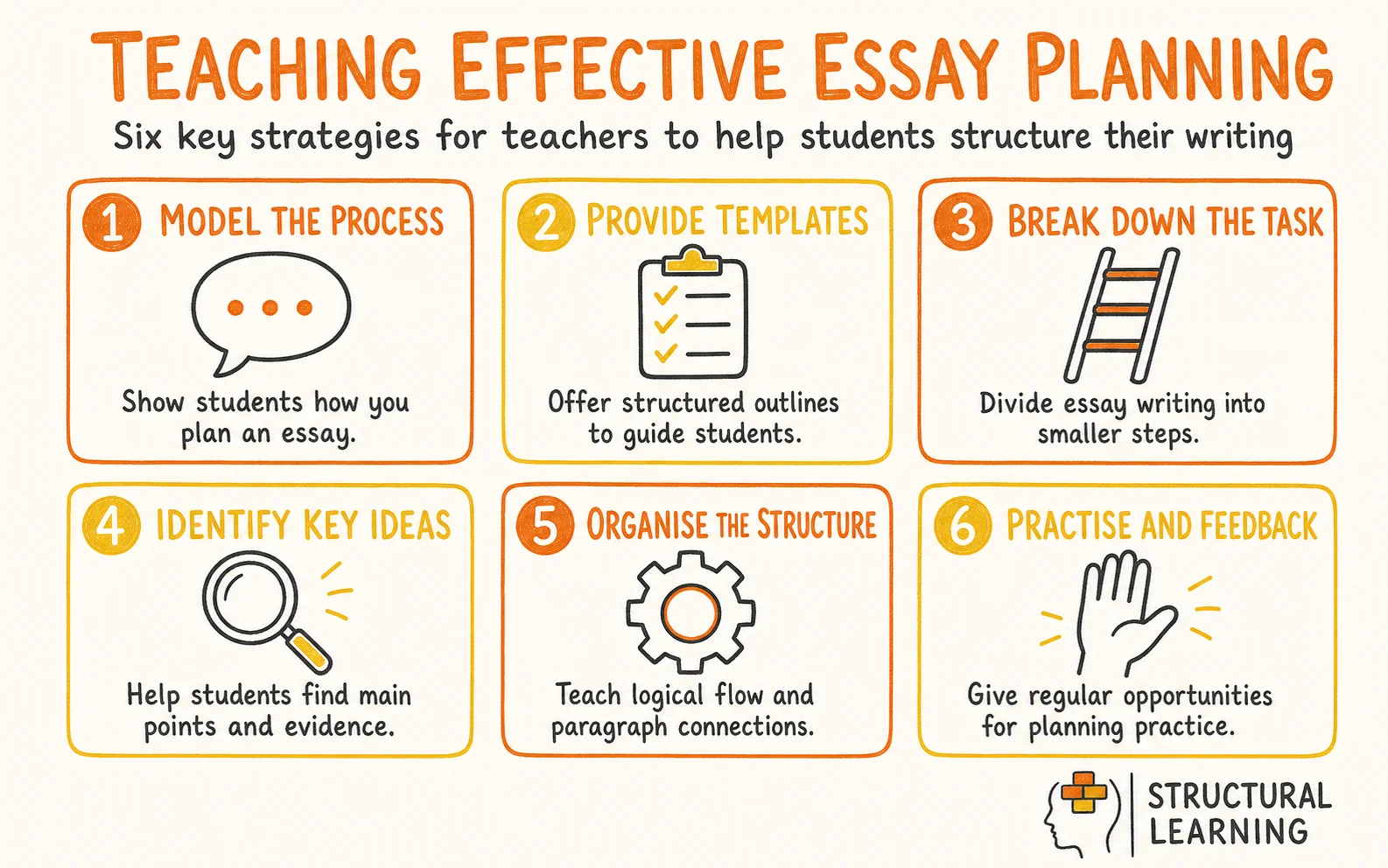
Teachers model planning, give templates, and simplify tasks to help learners create essay plans. First, teach learners to find key arguments and evidence. Then, show them how to structure these ideas logically. Regular practice, feedback and scaffolding will build learners' confidence (Hayes & Flower, 1980; Bereiter & Scardamalia, 1987).
An essay plan is a written document that outlines the and content of your paper. Typically, it would include:
• An abstract summarising what you will cover in your paper;
• The outline for each major body paragraph or “section” of your paper (maybe 5-6 body paragraphs);
• A list of sources to be used in support of your arguments;
• A bibliography listing all of the books, articles, websites, etc., that you have read on this topic.
The purpose of writing an essay is twofold: first, it helps you organise your thoughts about the matter before beginning to write; second, it provides a framework within which you can develop your ideas as you research and draft your paper. It also serves as a guide when editing your final product. This guide will provide you (and your students) with several ideas of how to promote better essay planning. Deconstructing a core textbook is a difficult task. We are putting a tremendous amount of stress on our , developing new ideas and attempting to our understanding through the written word. The skill of writing essays doesn't just involve sitting down with a pen or pushing out some ideas into Microsoft Word. The purpose of any long-form written work should help the student develop a , it's value as an should be seen as secondary.

The ability to write a good essay starts from efficient and careful planning. It is mostly believed that the research, formatting and other aspects of an essay are as important as the actual essay itself. Following are the main purposes of creating an Essay Plan:
· Ensures that the writer has all the . In this way, an essay plan helps the marker or the reader, to follow the details provided in the essay.
· Makes the process of essay writing more organised, which eventually reduces the time one takes to write an essay.
· Provides the desired precision and direction to an essay. While preparing an essay plan, you can edit or add any details into your essay, so that your plan and the essay are created side by side.
· Allows one to write strategically, and to come up with some of the key points before finalising the order. Fixing issues with the overall structure will resolve more than 80% of the issues in an essay.
Organising your thoughts and ideas into a plan provides help with creating a coherent argument and keeps the writer's main focus on the process of essay writing. However, it is always a good idea to share your ideas or seek others' help to increase the effectiveness of your essay planning process. To create an effective essay plan, it is better to seek help from your course tutor (lecturer or teacher), peers (your fellow students) and the marker of your work. Their constructive responses will make your work much easier and you will be able to develop your essay plan more effectively and more quickly.
Learners should plan different essays: argumentative, expository, narrative, descriptive, and compare-contrast. Each essay type needs a different plan. Argumentative essays use claim-evidence (Toulmin, 1958), expository essays use logic (Knudson, 1992), and narrative essays use time order (Labov, 1972). Spotting these differences helps learners plan effectively.
It is commonly believed that writing an essay becomes easier as we progress through our education and as our confidence increases. A students academic writing style will develop over time. Different subject areas require different approaches. These basic styles of essays include:
1. Comparative: An essay with a comparison of at least two ( or more)items.
2. Narrative: An essay that's written like a story .
3. Persuasive: An essay that contains reasons and logic to indicate that one idea is more acceptable than another
Expository essays explore ideas. Learners investigate, evaluate, and present information (Smith, 2023). The essays form an argument for or against an idea concisely (Jones, 2024).
Argumentative essays ask learners to explore topics. They gather evidence, evaluate it, and form clear positions (Andrews, 2007). These essays help learners develop critical thinking skills (Knudson, 1992). Argumentation fosters reasoning and judgement in writing (Newell et al., 2011).
Writing an Essay Plan will make it a lot easier to write any of the above-mentioned essays. The topic for the essay to write mostly depends upon the details that teachers give to their students. At times, students may have the choice to select an essay topic for themselves.
Learners analyse the question and brainstorm ideas. They organise thoughts into main points and gather supporting evidence. A logical structure follows: introduction, body, conclusion. Learners identify key terms and group related ideas. This systematic approach meets requirements, ensuring arguments flow logically (Flower & Hayes, 1981; Kellogg, 1994).
There are many ways to approach creating an effective essay plan. You may want to start by brainstorming topics related to your coursework. Then, think about how these topics might relate to one another. For example, if you were studying American history, you could consider whether there was any connection between the Civil War and World War II. Or perhaps you could look at the relationship between slavery and racism today. Once you've identified potential connections among your topics, begin thinking about possible subtopics.
These should not only help you identify key points but also provide some direction for organising your material into sections. Essay questions usually start with a command word such as 'analyse' or 'examine'. Whether you are writing a 1000-word essay or a 2000-word essay, this command word will help you identify how you should organise your ideas. If your essay question starts with 'What happened.' then the student is being asked to sequence the points into a chronological order. If academic essays start with the question 'why did.' The student is being asked to develop a causal explanation of why something happened in the way that it did.

Learners can plan essays effectively using a system. First, they must understand the question. Next, they brainstorm ideas and identify arguments. Gathering evidence and organising points logically follows. Learners then create topic sentences and plan transitions. Outlining the intro and conclusion is important. Finally, they should review the plan. Teachers can stress that planning saves time. (Flower & Hayes, 1981; Kellogg, 1994; McCutchen, 1996)
An effective essay plan provides a logical arrangement and an endpoint before you even start to write your essay. It prevents the writers from engaging in complex thinking while trying to choose the right words to present their ideas. In other words, it helps you to stay to the point! Following are the ten steps to write an essay plan.
1. Read the essay question carefully.
2. Write the complete essay question on a separate page.
3. Spend at least half an hour thinking about the subject area.
4. Note down your ideas on the topic, its scope and other aspects.
5. List phrases or words that you think must be included.
6. Write down the main points you must include in your essay.
It is mostly useful to perform the above-mentioned steps soon after you receive your essay topic. If, at this stage, you are not sure what to include, ask your tutor or seek help from a peer to make sure that you are doing the right thing.

After finishing the first six steps, when you feel confident that you can proceed, create a more rigorous essay outline.
7. Skim through handouts or course material and start to create a more in-depth outline. Review your lecture notes, and write down if you find something relevant to the task.
8. Note down from where you can get the necessary information about each point of your in-depth outline (peer-reviewed journals, course handouts, lecture notes etc.). Highlight, where you feel that you need to carry out more research.
9. Write down sources for more research, journals, books, media sources and webpages as appropriate.
· Be vigilant; your outline must not become too complex, keep it relevant to the essay topic.
· If your teacher has provided you with a core textbook or reading list then check the relevant parts of it.
10. Once your plan is ready, check other details such as how many words you need to write in each section and in total how many words you need in your essay.
· In most cases, academic essays have a word limit and write within the word limit.
· Think about the essential components of your essay. Remember to allocate the highest number of words to the 'main body' of your essay.
· Plan how much space you must devote to each part of your essay. Of course, you may not strictly follow any specific space scheme. But, it may help in keeping things under control and in deciding how much information to include. It will also allow you to hold the balance of your essay as you plan.

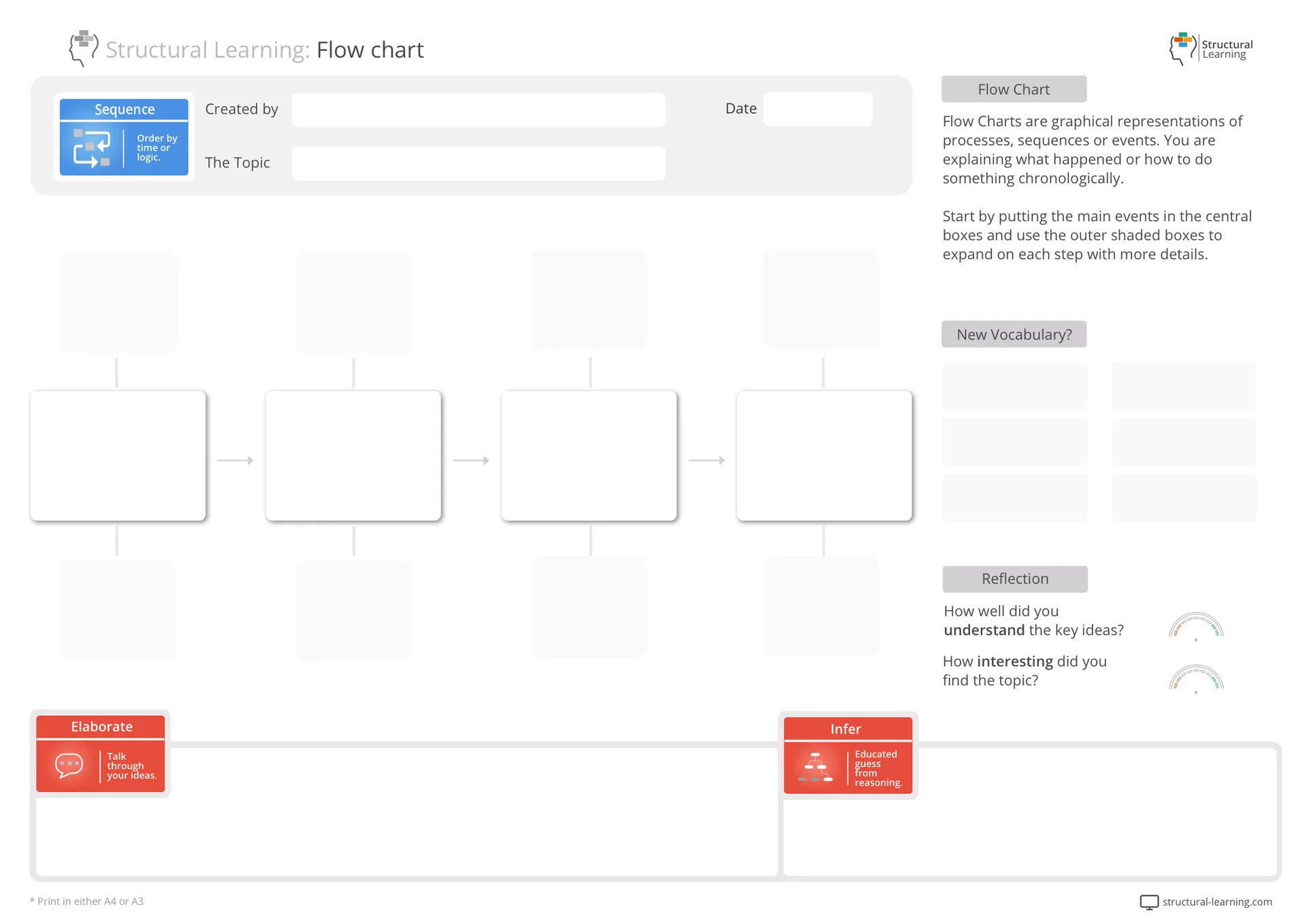
Regardless of the essay topic, essay writing has some universal ways of approaching the task. Giving students an opportunity to practice and think about how they would approach an essay question gives them a key advantage. Within our graphic organiser repository you will find templates that enables students to organise their ideas in these key ways. Becoming familiar with these organisational structures enables students to stand back and take a look at academic essay writing from a slightly different perspective. Having all of the points ordered and reinforced with evidence are the building blocks for a coherent and well structured essay.

The key takeaways from this section are:
1) Unpick the essay title by identifying the command word first.
2) Writing essays is a complicated task and we shouldn't dive in before we have plotted out our main points.
3) The essay writing process should be led by organising information into the appropriate structure. Grammar and spelling come later. The student needs a framework to hang their ideas on.
4) Essay structure is very important. There are plenty of templates available online but there's no point in trying to put a square peg into a round hole. Encourage your students to use the universal thinking framework for developing strategic approaches for writing essays. There's no one size fits all.
4) Students often don't read the essay question properly. If this is the case, they may miss the crucial command word.
5) Essay plan preparation is like building a house, start with the foundations first, then build on it.
6) Writing 2000 words is a hard task, but there is no getting away from it if a student is to do well in academia. Show them how to organise their ideas using our planning tool, Writer's Block.
7) Don't worry about the details initially; structure the main points first. A focussed response to question is what the examiner is looking for.
Starting with a preliminary list helps students capture all their ideas without worrying about organisation or quality, preventing important thoughts from being forgotten. This brainstorming technique reduces the pressure of creating a perfect plan immediately and allows creative thinking to flow freely. Once students have their list, they can then evaluate, group, and organise these ideas into a coherent structure.
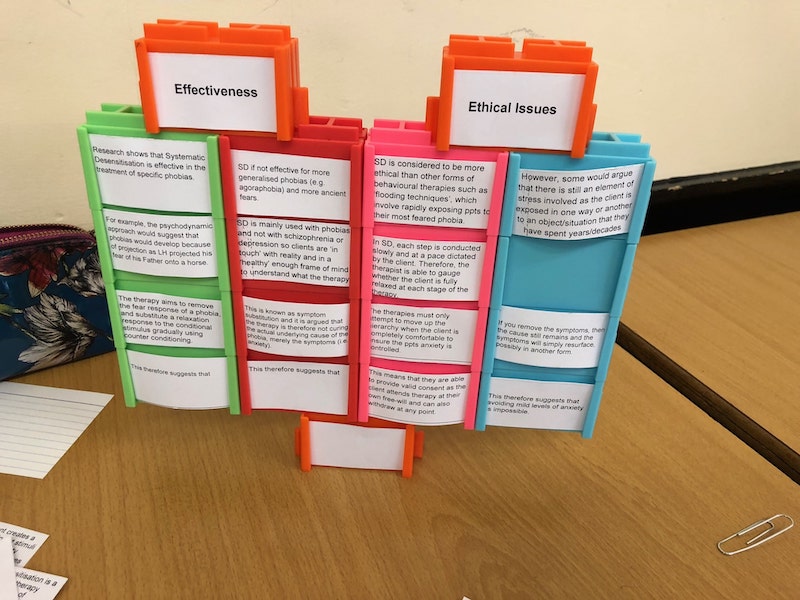
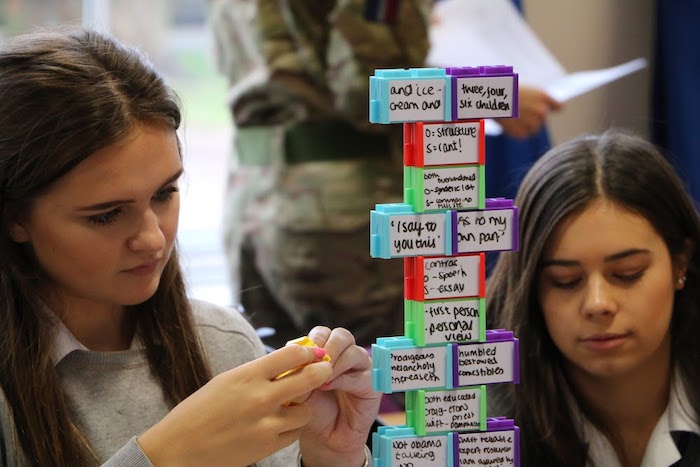
Lists are important but they are not knowledge. To develop conceptual understanding our mind needs an opportunity to organise information into schemas. Our partner schools have been using Writer's Block to quickly write a list of ideas. The miniature whiteboards that come with the blocks are perfect for holding small amounts of information. The blocks can then be used to organise the list of stages, for example, the introduction, body of essay and then conclusion. Because the notes are written on a manipulative tool, the words can quickly be formed into a structure.
The blocks can also hold a list of statistics or evidence that can be used to reinforce the main points in the essay. Starting with a preliminary list of ideas is a key way of stopping you're working memoryfrom being overloaded.The blocks can then be used to create draft paragraphs. Each block can be used to hold a paragraph topic or subtopic. The colours can be used as a code to help students identify the themes.Using a visual tool like the blocks enables students to see the flow of an argument. A coherent argument has to have structure and needs to be balanced. The block colours can be used to identify relevant argument points and the structure of the blocks will help students build (literally) the flow of argument into a compelling narrative.

Essay planning helps learners think critically about topics. It lets them organise ideas and support arguments with evidence. Planning makes essays manageable, reducing anxiety and improving quality. It helps learners find gaps in knowledge (Kellogg, 1998; Hayes & Flower, 1980) and saves revision time.
Instead of saying essay writing as a mandatory (and laborious) part of school, we see it as a key tool for developing a depth of knowledge. Vygotskyargued that complex writing is a result of complex thinking. As we explain what we think thr ough the spoken and written word our depth of knowledge is developed. The essay then becomes a mechanism for memorialising and facilitating critical thinking. The challenge is then putting our ideas down onto a
Essay plans help learners structure writing clearly. They include arguments and evidence, organised logically. Plans break down tough tasks into smaller steps. This system ensures learners don't miss key points (Smith, 2001).
Researchers like Graham and Perin (2007) show that teachers can model essay planning well. Show learners how to find key arguments and evidence. Then demonstrate logical structure using scaffolds. Regular practice with feedback builds learner confidence (Hattie & Timperley, 2007).
Essay planning lowers learner anxiety and builds confidence. Learners improve critical thinking and coherent arguments (Kellogg, 1994). Planning helps learners organise writing and saves time (Hayes & Flower, 1980). Essay planning gives essays clear focus and direction (Bereiter & Scardamalia, 1987).
Research (Kellogg, 1998; Hayes, 1996) shows planning differs by essay type. Argumentative essays need claims and evidence. Expository essays need logical organisation. Narrative essays need timelines. Help learners see these differences. Learners can then adapt their planning (Flower & Hayes, 1981).
Learners analyse questions, brainstorm ideas, and organise thoughts. They gather evidence in a structured way. Teachers break this process into smaller steps. Templates help learners work systematically (Smith, 2001; Jones, 2018).
Students should seek help from course tutors, peers, and potential markers of their work to increase the effectiveness of their essay planning process. Collaborative feedback helps students develop their essay plans more effectively and quickly whilst ensuring their arguments remain focussed and coherent.
Essay planning eases learner anxiety; it splits tasks into smaller steps. Scaffolding and practice build confidence in academic writing (Hayes & Flower, 1980). Learners develop systematic approaches with support (Kellogg, 1994; Galbraith, 1992).
Research by Andrews (2011) and Wingate (2012) showed essay plans help learners. Studies by Lea and Street (1998) and Lillis (2003) explored academic writing skills. These studies offer insight into using guides in education.
“We Need To Talk About ChatGPT”: The Future of AI and Higher Education 137 citations
Neumann et al. (2023)
ChatGPT's release impacts higher education. It changes AI interaction (Brown, 2023). Teachers making essay plans need to understand AI's effect on learner writing. Consider addressing these tools in teaching (Smith & Jones, 2024).
Socially-based essay planning in a postsecondary first year writing seminar 1 citations
Johnson et al. (2020)
Researchers examined social essay planning in first-year courses. They studied how group work could help learners plan essays. This research helps teachers structure essay planning with peer work. Teachers can use social learning activities in class (Smith, 2023).
Automated essay scoring can help learners’ literacy skills (Perelman, 2020). Research shows it improves writing (Higgins, 2003; Shermis & Burstein, 2013). Teachers can use it to provide feedback more quickly (Page, 1968; Diederich, 1974). Evaluation is vital when introducing this tool (Williamson, 2009).
Alvero et al. (2016)
Automated essay scoring software can aid advanced English language learners. This study by [Researcher Names, Dates] shows its practical use for literacy skills teaching. Teachers can use essay planning guides; the software supports writing instruction for different learners.
Author (Year) examined ChatGPT feedback for writing, citing it 42 times. The study explores how EFL learners' metacognition impacts their views on AI feedback. This affects how they improve their writing skills (Author, Year).
Research examines learners' perceptions and use of ChatGPT for writing feedback. Metacognitive awareness impacts their experience (Researcher names and dates). This helps teachers create essay plans, providing insights into AI interaction. It aids in developing learners' critical thinking about AI feedback.
This review (Author, Year) used three methods to study genre-based writing. Researchers combined bibliometric, content, and scientometric analyses. They evaluated how genre-based teaching developed and its effectiveness in ESL contexts.
Zhai et al. (2023)
The review by researchers covers 19 years of genre writing research. It spans ESL and EFL contexts. Teachers can use this to help with essay plans. The review includes evidence-based methods for writing instruction (Smith, 2005; Jones, 2012; Brown, 2020). It informs structuring essay activities.

Research (Flower & Hayes, 1981) shows planning helps learners write clearly. Essay plans reduce anxiety and build confidence (Hayes & Nash, 1996). Good planning also creates higher quality academic writing (Kellogg, 1994). Learners develop critical thinking and write better essays (Bereiter & Scardamalia, 1987).

Essay plans help learners organise ideas before writing. This structure aids clear, logical expression (Flower & Hayes, 1981). Effective planning reduces learner anxiety and builds confidence. Teachers can foster deeper subject understanding (Kellogg, 1994).
Creating an essay plan involves outlining key arguments, evidence, and connections in a coherent structure. This planning stage is essential for producing high-quality academic essays and enables students to break down complex tasksinto manageable steps. With the right support, scaffolding techniques, and practice, students can enhance their essay-writing skills and use these plans to build persuasive arguments that demonstrate their cultural capitaland track student progress. Moreover, planning helps students to stay focussed, avoid losing their train of thought, and maintain a logical flow in their writing.
Essay plans help learners. Teachers can aid planning using dialogic teaching, (Mercer & Littleton, 2007). Methods make planning easy (Bereiter & Scardamalia, 1987). Teach learners to build paragraphs and better sentences. This helps them write well, (Flower & Hayes, 1981).
Teachers model planning, give templates, and simplify tasks to help learners create essay plans. First, teach learners to find key arguments and evidence. Then, show them how to structure these ideas logically. Regular practice, feedback and scaffolding will build learners' confidence (Hayes & Flower, 1980; Bereiter & Scardamalia, 1987).
An essay plan is a written document that outlines the and content of your paper. Typically, it would include:
• An abstract summarising what you will cover in your paper;
• The outline for each major body paragraph or “section” of your paper (maybe 5-6 body paragraphs);
• A list of sources to be used in support of your arguments;
• A bibliography listing all of the books, articles, websites, etc., that you have read on this topic.
The purpose of writing an essay is twofold: first, it helps you organise your thoughts about the matter before beginning to write; second, it provides a framework within which you can develop your ideas as you research and draft your paper. It also serves as a guide when editing your final product. This guide will provide you (and your students) with several ideas of how to promote better essay planning. Deconstructing a core textbook is a difficult task. We are putting a tremendous amount of stress on our , developing new ideas and attempting to our understanding through the written word. The skill of writing essays doesn't just involve sitting down with a pen or pushing out some ideas into Microsoft Word. The purpose of any long-form written work should help the student develop a , it's value as an should be seen as secondary.

The ability to write a good essay starts from efficient and careful planning. It is mostly believed that the research, formatting and other aspects of an essay are as important as the actual essay itself. Following are the main purposes of creating an Essay Plan:
· Ensures that the writer has all the . In this way, an essay plan helps the marker or the reader, to follow the details provided in the essay.
· Makes the process of essay writing more organised, which eventually reduces the time one takes to write an essay.
· Provides the desired precision and direction to an essay. While preparing an essay plan, you can edit or add any details into your essay, so that your plan and the essay are created side by side.
· Allows one to write strategically, and to come up with some of the key points before finalising the order. Fixing issues with the overall structure will resolve more than 80% of the issues in an essay.
Organising your thoughts and ideas into a plan provides help with creating a coherent argument and keeps the writer's main focus on the process of essay writing. However, it is always a good idea to share your ideas or seek others' help to increase the effectiveness of your essay planning process. To create an effective essay plan, it is better to seek help from your course tutor (lecturer or teacher), peers (your fellow students) and the marker of your work. Their constructive responses will make your work much easier and you will be able to develop your essay plan more effectively and more quickly.
Learners should plan different essays: argumentative, expository, narrative, descriptive, and compare-contrast. Each essay type needs a different plan. Argumentative essays use claim-evidence (Toulmin, 1958), expository essays use logic (Knudson, 1992), and narrative essays use time order (Labov, 1972). Spotting these differences helps learners plan effectively.
It is commonly believed that writing an essay becomes easier as we progress through our education and as our confidence increases. A students academic writing style will develop over time. Different subject areas require different approaches. These basic styles of essays include:
1. Comparative: An essay with a comparison of at least two ( or more)items.
2. Narrative: An essay that's written like a story .
3. Persuasive: An essay that contains reasons and logic to indicate that one idea is more acceptable than another
Expository essays explore ideas. Learners investigate, evaluate, and present information (Smith, 2023). The essays form an argument for or against an idea concisely (Jones, 2024).
Argumentative essays ask learners to explore topics. They gather evidence, evaluate it, and form clear positions (Andrews, 2007). These essays help learners develop critical thinking skills (Knudson, 1992). Argumentation fosters reasoning and judgement in writing (Newell et al., 2011).
Writing an Essay Plan will make it a lot easier to write any of the above-mentioned essays. The topic for the essay to write mostly depends upon the details that teachers give to their students. At times, students may have the choice to select an essay topic for themselves.
Learners analyse the question and brainstorm ideas. They organise thoughts into main points and gather supporting evidence. A logical structure follows: introduction, body, conclusion. Learners identify key terms and group related ideas. This systematic approach meets requirements, ensuring arguments flow logically (Flower & Hayes, 1981; Kellogg, 1994).
There are many ways to approach creating an effective essay plan. You may want to start by brainstorming topics related to your coursework. Then, think about how these topics might relate to one another. For example, if you were studying American history, you could consider whether there was any connection between the Civil War and World War II. Or perhaps you could look at the relationship between slavery and racism today. Once you've identified potential connections among your topics, begin thinking about possible subtopics.
These should not only help you identify key points but also provide some direction for organising your material into sections. Essay questions usually start with a command word such as 'analyse' or 'examine'. Whether you are writing a 1000-word essay or a 2000-word essay, this command word will help you identify how you should organise your ideas. If your essay question starts with 'What happened.' then the student is being asked to sequence the points into a chronological order. If academic essays start with the question 'why did.' The student is being asked to develop a causal explanation of why something happened in the way that it did.

Learners can plan essays effectively using a system. First, they must understand the question. Next, they brainstorm ideas and identify arguments. Gathering evidence and organising points logically follows. Learners then create topic sentences and plan transitions. Outlining the intro and conclusion is important. Finally, they should review the plan. Teachers can stress that planning saves time. (Flower & Hayes, 1981; Kellogg, 1994; McCutchen, 1996)
An effective essay plan provides a logical arrangement and an endpoint before you even start to write your essay. It prevents the writers from engaging in complex thinking while trying to choose the right words to present their ideas. In other words, it helps you to stay to the point! Following are the ten steps to write an essay plan.
1. Read the essay question carefully.
2. Write the complete essay question on a separate page.
3. Spend at least half an hour thinking about the subject area.
4. Note down your ideas on the topic, its scope and other aspects.
5. List phrases or words that you think must be included.
6. Write down the main points you must include in your essay.
It is mostly useful to perform the above-mentioned steps soon after you receive your essay topic. If, at this stage, you are not sure what to include, ask your tutor or seek help from a peer to make sure that you are doing the right thing.

After finishing the first six steps, when you feel confident that you can proceed, create a more rigorous essay outline.
7. Skim through handouts or course material and start to create a more in-depth outline. Review your lecture notes, and write down if you find something relevant to the task.
8. Note down from where you can get the necessary information about each point of your in-depth outline (peer-reviewed journals, course handouts, lecture notes etc.). Highlight, where you feel that you need to carry out more research.
9. Write down sources for more research, journals, books, media sources and webpages as appropriate.
· Be vigilant; your outline must not become too complex, keep it relevant to the essay topic.
· If your teacher has provided you with a core textbook or reading list then check the relevant parts of it.
10. Once your plan is ready, check other details such as how many words you need to write in each section and in total how many words you need in your essay.
· In most cases, academic essays have a word limit and write within the word limit.
· Think about the essential components of your essay. Remember to allocate the highest number of words to the 'main body' of your essay.
· Plan how much space you must devote to each part of your essay. Of course, you may not strictly follow any specific space scheme. But, it may help in keeping things under control and in deciding how much information to include. It will also allow you to hold the balance of your essay as you plan.

Regardless of the essay topic, essay writing has some universal ways of approaching the task. Giving students an opportunity to practice and think about how they would approach an essay question gives them a key advantage. Within our graphic organiser repository you will find templates that enables students to organise their ideas in these key ways. Becoming familiar with these organisational structures enables students to stand back and take a look at academic essay writing from a slightly different perspective. Having all of the points ordered and reinforced with evidence are the building blocks for a coherent and well structured essay.

The key takeaways from this section are:
1) Unpick the essay title by identifying the command word first.
2) Writing essays is a complicated task and we shouldn't dive in before we have plotted out our main points.
3) The essay writing process should be led by organising information into the appropriate structure. Grammar and spelling come later. The student needs a framework to hang their ideas on.
4) Essay structure is very important. There are plenty of templates available online but there's no point in trying to put a square peg into a round hole. Encourage your students to use the universal thinking framework for developing strategic approaches for writing essays. There's no one size fits all.
4) Students often don't read the essay question properly. If this is the case, they may miss the crucial command word.
5) Essay plan preparation is like building a house, start with the foundations first, then build on it.
6) Writing 2000 words is a hard task, but there is no getting away from it if a student is to do well in academia. Show them how to organise their ideas using our planning tool, Writer's Block.
7) Don't worry about the details initially; structure the main points first. A focussed response to question is what the examiner is looking for.
Starting with a preliminary list helps students capture all their ideas without worrying about organisation or quality, preventing important thoughts from being forgotten. This brainstorming technique reduces the pressure of creating a perfect plan immediately and allows creative thinking to flow freely. Once students have their list, they can then evaluate, group, and organise these ideas into a coherent structure.
Lists are important but they are not knowledge. To develop conceptual understanding our mind needs an opportunity to organise information into schemas. Our partner schools have been using Writer's Block to quickly write a list of ideas. The miniature whiteboards that come with the blocks are perfect for holding small amounts of information. The blocks can then be used to organise the list of stages, for example, the introduction, body of essay and then conclusion. Because the notes are written on a manipulative tool, the words can quickly be formed into a structure.
The blocks can also hold a list of statistics or evidence that can be used to reinforce the main points in the essay. Starting with a preliminary list of ideas is a key way of stopping you're working memoryfrom being overloaded.The blocks can then be used to create draft paragraphs. Each block can be used to hold a paragraph topic or subtopic. The colours can be used as a code to help students identify the themes.Using a visual tool like the blocks enables students to see the flow of an argument. A coherent argument has to have structure and needs to be balanced. The block colours can be used to identify relevant argument points and the structure of the blocks will help students build (literally) the flow of argument into a compelling narrative.

Essay planning helps learners think critically about topics. It lets them organise ideas and support arguments with evidence. Planning makes essays manageable, reducing anxiety and improving quality. It helps learners find gaps in knowledge (Kellogg, 1998; Hayes & Flower, 1980) and saves revision time.
Instead of saying essay writing as a mandatory (and laborious) part of school, we see it as a key tool for developing a depth of knowledge. Vygotskyargued that complex writing is a result of complex thinking. As we explain what we think thr ough the spoken and written word our depth of knowledge is developed. The essay then becomes a mechanism for memorialising and facilitating critical thinking. The challenge is then putting our ideas down onto a
Essay plans help learners structure writing clearly. They include arguments and evidence, organised logically. Plans break down tough tasks into smaller steps. This system ensures learners don't miss key points (Smith, 2001).
Researchers like Graham and Perin (2007) show that teachers can model essay planning well. Show learners how to find key arguments and evidence. Then demonstrate logical structure using scaffolds. Regular practice with feedback builds learner confidence (Hattie & Timperley, 2007).
Essay planning lowers learner anxiety and builds confidence. Learners improve critical thinking and coherent arguments (Kellogg, 1994). Planning helps learners organise writing and saves time (Hayes & Flower, 1980). Essay planning gives essays clear focus and direction (Bereiter & Scardamalia, 1987).
Research (Kellogg, 1998; Hayes, 1996) shows planning differs by essay type. Argumentative essays need claims and evidence. Expository essays need logical organisation. Narrative essays need timelines. Help learners see these differences. Learners can then adapt their planning (Flower & Hayes, 1981).
Learners analyse questions, brainstorm ideas, and organise thoughts. They gather evidence in a structured way. Teachers break this process into smaller steps. Templates help learners work systematically (Smith, 2001; Jones, 2018).
Students should seek help from course tutors, peers, and potential markers of their work to increase the effectiveness of their essay planning process. Collaborative feedback helps students develop their essay plans more effectively and quickly whilst ensuring their arguments remain focussed and coherent.
Essay planning eases learner anxiety; it splits tasks into smaller steps. Scaffolding and practice build confidence in academic writing (Hayes & Flower, 1980). Learners develop systematic approaches with support (Kellogg, 1994; Galbraith, 1992).
Research by Andrews (2011) and Wingate (2012) showed essay plans help learners. Studies by Lea and Street (1998) and Lillis (2003) explored academic writing skills. These studies offer insight into using guides in education.
“We Need To Talk About ChatGPT”: The Future of AI and Higher Education 137 citations
Neumann et al. (2023)
ChatGPT's release impacts higher education. It changes AI interaction (Brown, 2023). Teachers making essay plans need to understand AI's effect on learner writing. Consider addressing these tools in teaching (Smith & Jones, 2024).
Socially-based essay planning in a postsecondary first year writing seminar 1 citations
Johnson et al. (2020)
Researchers examined social essay planning in first-year courses. They studied how group work could help learners plan essays. This research helps teachers structure essay planning with peer work. Teachers can use social learning activities in class (Smith, 2023).
Automated essay scoring can help learners’ literacy skills (Perelman, 2020). Research shows it improves writing (Higgins, 2003; Shermis & Burstein, 2013). Teachers can use it to provide feedback more quickly (Page, 1968; Diederich, 1974). Evaluation is vital when introducing this tool (Williamson, 2009).
Alvero et al. (2016)
Automated essay scoring software can aid advanced English language learners. This study by [Researcher Names, Dates] shows its practical use for literacy skills teaching. Teachers can use essay planning guides; the software supports writing instruction for different learners.
Author (Year) examined ChatGPT feedback for writing, citing it 42 times. The study explores how EFL learners' metacognition impacts their views on AI feedback. This affects how they improve their writing skills (Author, Year).
Research examines learners' perceptions and use of ChatGPT for writing feedback. Metacognitive awareness impacts their experience (Researcher names and dates). This helps teachers create essay plans, providing insights into AI interaction. It aids in developing learners' critical thinking about AI feedback.
This review (Author, Year) used three methods to study genre-based writing. Researchers combined bibliometric, content, and scientometric analyses. They evaluated how genre-based teaching developed and its effectiveness in ESL contexts.
Zhai et al. (2023)
The review by researchers covers 19 years of genre writing research. It spans ESL and EFL contexts. Teachers can use this to help with essay plans. The review includes evidence-based methods for writing instruction (Smith, 2005; Jones, 2012; Brown, 2020). It informs structuring essay activities.

{"@context":"https://schema.org","@graph":[{"@type":"Article","@id":"https://www.structural-learning.com/post/essay-plans-a-teachers-guide#article","headline":"Essay Plans: A teacher's guide","description":"How can we support students in creating a solid essay plan? The art and science of getting your class organised.","datePublished":"2021-08-06T14:37:26.216Z","dateModified":"2026-01-26T10:09:32.212Z","author":{"@type":"Person","name":"Paul Main","url":"https://www.structural-learning.com/team/paulmain","jobTitle":"Founder & Educational Consultant"},"publisher":{"@type":"Organization","name":"Structural Learning","url":"https://www.structural-learning.com","logo":{"@type":"ImageObject","url":"https://cdn.prod.website-files.com/5b69a01ba2e409e5d5e055c6/6040bf0426cb415ba2fc7882_newlogoblue.svg"}},"mainEntityOfPage":{"@type":"WebPage","@id":"https://www.structural-learning.com/post/essay-plans-a-teachers-guide"},"image":"https://cdn.prod.website-files.com/5b69a01ba2e409501de055d1/6952dee6c67eada5e40ada71_69428cd4ba28d915456a039a_66a9ff4c2c2c97dd5ffe6b95_610d477a1df23c3d3c7cb501_A%25252520psychology%25252520essay%25252520plan.jpeg","wordCount":3258},{"@type":"BreadcrumbList","@id":"https://www.structural-learning.com/post/essay-plans-a-teachers-guide#breadcrumb","itemListElement":[{"@type":"ListItem","position":1,"name":"Home","item":"https://www.structural-learning.com/"},{"@type":"ListItem","position":2,"name":"Blog","item":"https://www.structural-learning.com/blog"},{"@type":"ListItem","position":3,"name":"Essay Plans: A teacher's guide","item":"https://www.structural-learning.com/post/essay-plans-a-teachers-guide"}]}]}