Pearson Activelearn: A teacher's guide
Explore Pearson ActiveLearn, an online platform providing interactive resources for primary and secondary education, and learn how to effectively.


Explore Pearson ActiveLearn, an online platform providing interactive resources for primary and secondary education, and learn how to effectively.
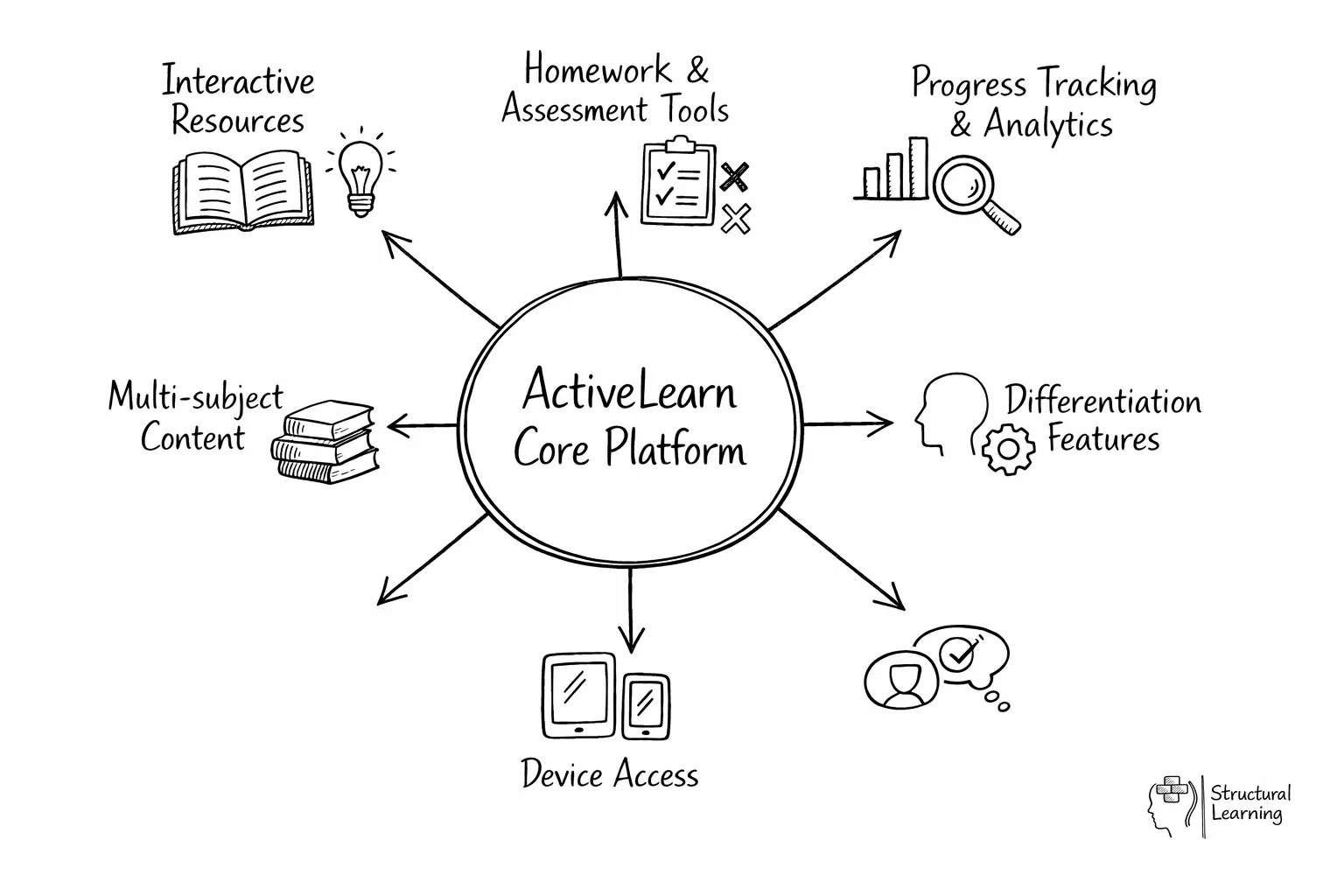
ActiveLearn is Pearson's digital learning platform designed specifically for UK secondary schools. It brings together interactive versions of popular Pearson textbooks, homework and assessment tools, revision resources, and progress tracking features. The platform supports learning across multiple subjects including Mathematics, Science, English, Languages, Humanities, and Business Studies.

Unlike simple digital textbook platforms, ActiveLearn provides an integrated learning environment where teachers can set homework, track completion, access automatic marking, and analyse student progress tracking data. Students can access resources on any device, making it suitable for both classroom use and home learning.
At its core, ActiveLearn embodies a blended learning approach that recognises the irreplaceable value of teacher expertise whilst harnessing technology to enhance educational outcomes. This philosophy aligns with current pedagogical research emphasising personalised learning pathways, where students can progress at their own pace whilst teachers maintain oversight and provide targeted support. The platform operates on the principle that technology should amplify good teaching practice rather than dictate it, allowing educators to retain their professional autonomy whilst accessing powerful tools for curriculum delivery and assessment.
In practical terms, this means teachers can smoothly integrate digital resources into their existing lesson plans, whether conducting whole-class activities on interactive whiteboards or setting individualised homework tasks. For example, a primary teacher might use ActiveLearn to introduce a mathematics concept to the entire class, then assign differentiated follow-up activities that automatically adapt to each pupil's ability level. Secondary educators can track student engagement with reading materials, identify struggling learners early, and intervene before small gaps become significant barriers to progress.
ActiveLearn transforms static textbook content into interactive learning experiences through active learning techniques. Students can access video explanations, animations, worked examples, and practice questions that provide immediate feedback. For subjects like Science and Mathematics, visual demonstrations of concepts support understanding in ways that printed materials cannot, complementing effective pedagogical approaches and teaching strategies.
Teachers can set homework directly through the platform, choosing from thousands of pre-made questions or creating their own assessments. Automatic marking saves considerable time, with results feeding into analytics dashboards that show individual and class-level performance. This data helps identify students who need additional support and topics that require revisiting, enabling teachers to provide targeted scaffolding experiences.
The platform allows teachers to set different tasks for different students, supporting differentiation without creating additional workload. Resources are often available at multiple difficulty levels, and teachers can assign specific content based on individual student needs, including those with special educational needs.
Pearson ActiveLearn uses school-wide subscription pricing tiered by school size, with options for subject-specific or whole-school packages. The flexible licensing model allows all staff members to access the platform under a single school subscription. Contact Pearson directly for specific 2025 pricing as costs vary based on school size and selected subjects.
| School Size | Pupil Numbers | Licence Type |
|---|---|---|
| Small | Fewer than 100 pupils | School-wide access for all staff |
| Medium | 101-300 pupils | School-wide access for all staff |
| Large | 301-500 pupils | School-wide access for all staff |
| Extra Large | 501-999 pupils | School-wide access for all staff |
| Super | 1000+ pupils | School-wide access for all staff |
ActiveLearn subscriptions are annual and priced according to school size. When you purchase a subscription, all staff members can access the resources. Schools can subscribe to individual subjects or purchase bundles. A 15% discount applies when purchasing two or more key stages together.
Additional features are available as add-ons. The Assessment Builder, which allows teachers to create custom assessments, costs approximately £150 per key stage, with the same 15% multi-key stage discount available.
For accurate quotes tailored to your school, contact Pearson directly or request pricing through the Pearson Schools and FE Colleges website. A free 30-day trial is available for UK schools.
ActiveLearn Maths covers KS3, GCSE (Edexcel 9-1), and A-Level. Resources include worked examples, practice questions with hints and solutions, and assessment materials aligned to exam board specifications. The front-of-class tools support engagement through interactive demonstrations, while built-in activities promote higher-order thinking through problem-solving exercises that require students to develop self-regulation skills. Teachers can track student progress and identify areas where pupils may need support for conditions like dyslexia, while also incorporating project-based learning approaches to maintain classroom attention and accommodate neurodiversity through varied learning opportunities.
ActiveLearn Science provides resources for KS3, GCSE, and A-Level, covering Biology, Chemistry, and Physics. Interactive simulations allow students to conduct virtual experiments, visualising complex concepts. Teachers can access ready-made lesson plans, practical worksheets, and assessment materials aligned to exam board specifications. Adaptive questioning identifies gaps in student knowledge, allowing for targeted interventions and personalised learning paths. The platform also supports students with gifted abilities, offering challenge questions, and helps manage common challenges in the classroom like misbehaviour through increased student motivation.
ActiveLearn English covers KS3, GCSE, and A-Level, providing resources for literature, language, and writing skills. The platform includes interactive texts, video explanations, and practice questions that develop students’ analytical abilities. Teachers can set writing tasks, provide feedback, and track student progress through detailed analytics dashboards. For those exploring teaching careers, this is an important tool to master. Resources also support students with exam preparation, including model answers and revision materials. ActiveLearn English further ensures inclusivity for those with ESL needs and those with auditory processing challenges.
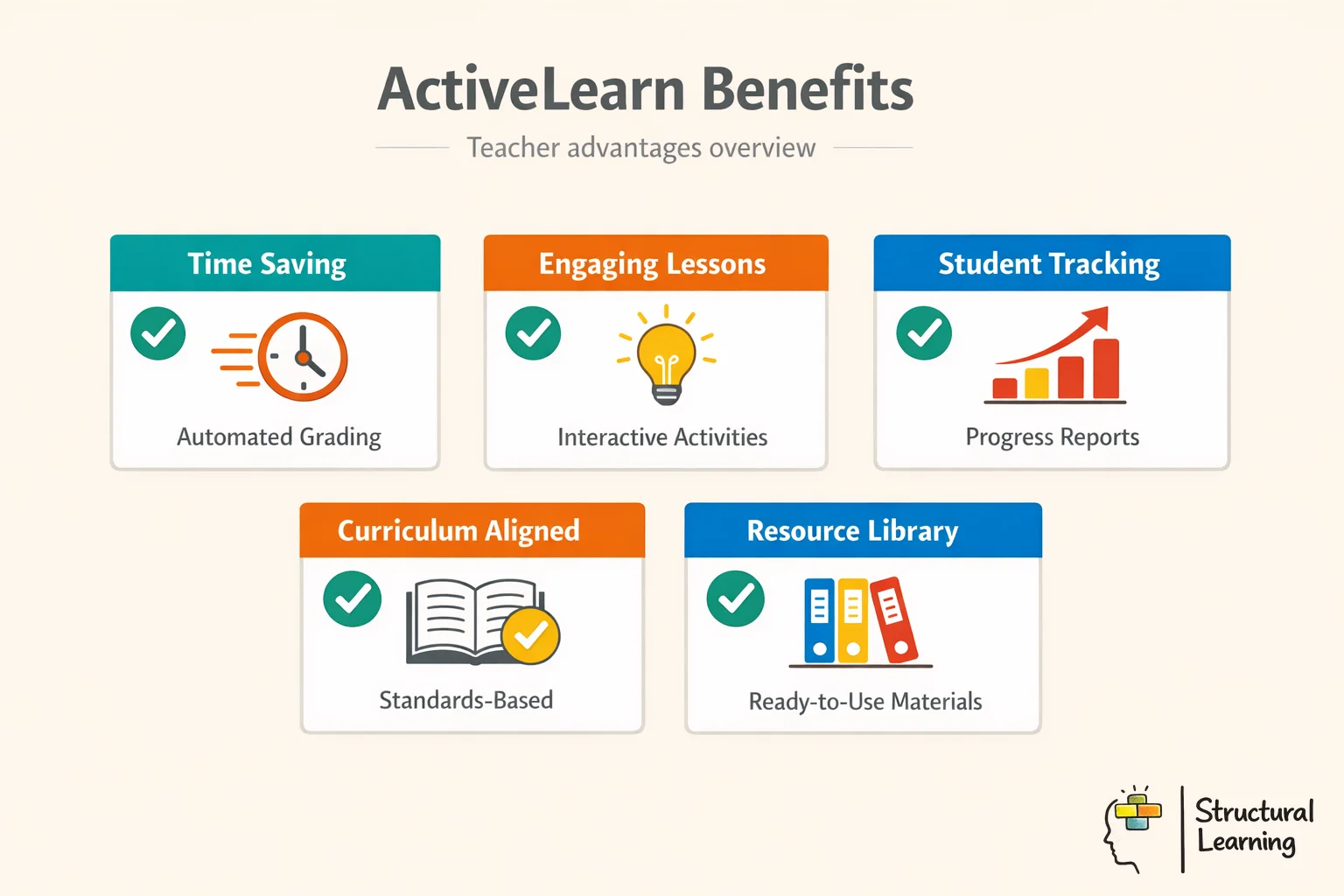
ActiveLearn provides numerous benefits for teachers, students, and schools, including:
Beginning your digital transformation journey requires careful planning and a phased approach that respects both your existing teaching practices and your students' learning needs. Start by identifying a single subject area or year group where you feel most confident, allowing you to develop familiarity with the platform's core features before expanding implementation. This targeted approach aligns with John Kotter's change management principles, which emphasise the importance of early wins in building momentum for broader organisational change.
During your first week, focus on three essential elements: setting up your class groups, exploring the available resources for your chosen topic, and running a simple diagnostic assessment to establish baseline data. Spend time navigating the teacher dashboard and familiarising yourself with progress tracking features, as these will become invaluable for identifying learning gaps and celebrating student achievements. Remember that cognitive load theory suggests both you and your students will benefit from gradual exposure to new digital tools rather than overwhelming implementation.
Schedule brief daily check-ins during your first fortnight to monitor how students are adapting to the new learning environment and to address any technical concerns promptly. Consider pairing digital activities with familiar teaching methods initially, creating a bridge between traditional and technology-enhanced learning that maintains classroom routine whilst building confidence in the new approach.
Successful digital learning environments thrive on purposeful interaction rather than passive consumption. Research by Richard Mayer on multimedia learning demonstrates that students engage most effectively when they can actively manipulate content, receive immediate feedback, and see clear connections between their efforts and learning outcomes. Teachers can maximise engagement by establishing clear expectations for digital participation, creating structured opportunities for peer collaboration, and regularly celebrating progress achievements that students can track themselves.
The key to sustaining motivation lies in balancing challenge with support, a principle rooted in Vygotsky's zone of proximal development. When students encounter appropriately scaffolded tasks that stretch their abilities without overwhelming them, engagement naturally increases. Teachers should monitor completion patterns and intervene early when participation drops, using data insights to identify students who may need additional encouragement or alternative approaches to access the material.
Practical engagement strategies include setting aside dedicated time for students to explore interactive features, incorporating digital achievements into classroom recognition systems, and creating opportunities for students to demonstrate their learning through varied multimedia formats. Regular check-ins about the digital learning experience help teachers understand what motivates individual learners and adjust their approach accordingly, ensuring that technology serves as a bridge to deeper learning rather than a barrier.
Effective assessment and progress tracking transforms teaching from intuition-based practice into evidence-driven instruction. Digital platforms now offer sophisticated analytics that capture granular data about student learning patterns, identifying knowledge gaps and misconceptions in real-time. This shift aligns with Dylan Wiliam's research on formative assessment, which demonstrates that regular, low-stakes feedback significantly accelerates learning gains when teachers can quickly identify and address individual student needs.
The most powerful assessment features provide both immediate feedback to students and practical findings for teachers. Look for systems that track completion rates, time spent on tasks, and accuracy patterns across different topic areas. These metrics reveal crucial information about student engagement and comprehension that traditional paper-based assessments often miss. Research by Paul Black and Dylan Wiliam shows that when teachers use assessment data to adapt their instruction, student achievement can improve by up to 70%.
In practice, successful implementation requires establishing clear routines for reviewing and acting upon assessment data. Weekly data reviews help teachers identify students requiring additional support and inform planning for subsequent lessons. Consider creating simple tracking spreadsheets that consolidate key metrics, enabling quick identification of trends and ensuring no student falls through the cracks in your classroom monitoring system.
The most frequent technical challenges teachers encounter involve connectivity issues and student access problems. When platforms fail to load or respond slowly, check your institution's internet bandwidth during peak usage times, as multiple classes accessing digital resources simultaneously can overwhelm network capacity. For student login difficulties, maintain a classroom troubleshooting checklist that includes verifying usernames, resetting passwords through your school's IT department, and ensuring browsers are updated. These proactive measures prevent minor technical hiccups from deriving valuable learning time.
Implementation challenges often stem from insufficient preparation rather than platform limitations. Gradual introduction proves more effective than wholesale adoption, as Everett Rogers' diffusion of innovation theory suggests that educational technologies require time for acceptance and integration. Begin with one subject area or specific learning objectives, allowing both you and your students to develop confidence before expanding usage. Common resistance from students typically diminishes when they understand how digital tools enhance rather than replace traditional learning methods.
Assessment and progress tracking concerns frequently arise when teachers struggle to interpret data meaningfully. Focus on practical findings rather than overwhelming statistics by identifying three key metrics that align with your curriculum goals. Regular weekly reviews of student engagement patterns and completion rates provide more valuable feedback than daily monitoring, enabling targeted interventions whilst maintaining manageable workload levels for sustainable long-term implementation.
Successful integration of digital platforms into existing curriculum requires a strategic approach that builds upon your current pedagogical strengths rather than replacing them entirely. Start by identifying specific learning objectives within your existing schemes of work where digital resources can genuinely enhance student understanding. This targeted approach prevents the common pitfall of using technology for its own sake, ensuring that every digital activity serves a clear educational purpose aligned with your curriculum goals.
The key to smooth integration lies in viewing digital tools as complementary resources that support your established teaching methods. For instance, if your current practice includes regular formative assessment through class discussions, digital platforms can extend this by providing immediate feedback and progress tracking between lessons. Research by Dylan Wiliam on formative assessment demonstrates that frequent, low-stakes feedback significantly improves learning outcomes, and digital platforms excel at providing this consistent monitoring without increasing teacher workload.
Begin implementation gradually by selecting one or two curriculum areas where you feel most confident, allowing both you and your students to become familiar with new workflows. This phased approach reduces cognitive load for all participants whilst building the technical competence needed for broader implementation. Remember that effective integration often means using digital resources for homework preparation or revision, whilst maintaining face-to-face interaction for complex concept introduction and collaborative learning activities.
Pearson ActiveLearn offers a comprehensive and integrated digital learning solution for UK secondary schools. By combining interactive resources, assessment tools, and progress tracking features, ActiveLearn helps teachers to deliver engaging and effective lessons, while also saving time and improving student outcomes. Its alignment with UK curricula and major exam boards makes it a valuable tool for schools seeking to enhance their teaching and learning provision.
As digital learning continues to evolve, platforms like ActiveLearn will play an increasingly important role in supporting teachers and students. By embracing these technologies and using their capabilities, educators can create more personalised, engaging, and effective learning experiences. The platform's commitment to providing resources that cater to diverse learning needs further solidifies its position as a valuable asset in promoting inclusive and equitable education.
The evidence from schools using this platform consistently shows that sustainable adoption occurs when implementation follows a phased approach. Begin with a single class or subject area, allowing teachers to develop confidence and familiarity before expanding usage. During this pilot phase, focus on one core feature such as automated marking or progress tracking rather than attempting to utilise every available tool simultaneously. This measured approach prevents overwhelm whilst enabling educators to discover which functionalities best serve their specific teaching contexts.
Professional development remains crucial for maximising the platform's educational impact. Schools that invest in ongoing training sessions, peer mentoring, and collaborative planning time see significantly higher engagement rates from both staff and students. Consider establishing a small group of digital champions who can provide internal support and share effective strategies across departments. Regular review meetings help identify what works well and what requires adjustment, ensuring the technology genuinely enhances learning outcomes rather than becoming an additional burden on already stretched resources.
ActiveLearn is Pearson's digital learning platform designed specifically for UK secondary schools. It brings together interactive versions of popular Pearson textbooks, homework and assessment tools, revision resources, and progress tracking features. The platform supports learning across multiple subjects including Mathematics, Science, English, Languages, Humanities, and Business Studies.

Unlike simple digital textbook platforms, ActiveLearn provides an integrated learning environment where teachers can set homework, track completion, access automatic marking, and analyse student progress tracking data. Students can access resources on any device, making it suitable for both classroom use and home learning.
At its core, ActiveLearn embodies a blended learning approach that recognises the irreplaceable value of teacher expertise whilst harnessing technology to enhance educational outcomes. This philosophy aligns with current pedagogical research emphasising personalised learning pathways, where students can progress at their own pace whilst teachers maintain oversight and provide targeted support. The platform operates on the principle that technology should amplify good teaching practice rather than dictate it, allowing educators to retain their professional autonomy whilst accessing powerful tools for curriculum delivery and assessment.
In practical terms, this means teachers can smoothly integrate digital resources into their existing lesson plans, whether conducting whole-class activities on interactive whiteboards or setting individualised homework tasks. For example, a primary teacher might use ActiveLearn to introduce a mathematics concept to the entire class, then assign differentiated follow-up activities that automatically adapt to each pupil's ability level. Secondary educators can track student engagement with reading materials, identify struggling learners early, and intervene before small gaps become significant barriers to progress.
ActiveLearn transforms static textbook content into interactive learning experiences through active learning techniques. Students can access video explanations, animations, worked examples, and practice questions that provide immediate feedback. For subjects like Science and Mathematics, visual demonstrations of concepts support understanding in ways that printed materials cannot, complementing effective pedagogical approaches and teaching strategies.
Teachers can set homework directly through the platform, choosing from thousands of pre-made questions or creating their own assessments. Automatic marking saves considerable time, with results feeding into analytics dashboards that show individual and class-level performance. This data helps identify students who need additional support and topics that require revisiting, enabling teachers to provide targeted scaffolding experiences.
The platform allows teachers to set different tasks for different students, supporting differentiation without creating additional workload. Resources are often available at multiple difficulty levels, and teachers can assign specific content based on individual student needs, including those with special educational needs.
Pearson ActiveLearn uses school-wide subscription pricing tiered by school size, with options for subject-specific or whole-school packages. The flexible licensing model allows all staff members to access the platform under a single school subscription. Contact Pearson directly for specific 2025 pricing as costs vary based on school size and selected subjects.
| School Size | Pupil Numbers | Licence Type |
|---|---|---|
| Small | Fewer than 100 pupils | School-wide access for all staff |
| Medium | 101-300 pupils | School-wide access for all staff |
| Large | 301-500 pupils | School-wide access for all staff |
| Extra Large | 501-999 pupils | School-wide access for all staff |
| Super | 1000+ pupils | School-wide access for all staff |
ActiveLearn subscriptions are annual and priced according to school size. When you purchase a subscription, all staff members can access the resources. Schools can subscribe to individual subjects or purchase bundles. A 15% discount applies when purchasing two or more key stages together.
Additional features are available as add-ons. The Assessment Builder, which allows teachers to create custom assessments, costs approximately £150 per key stage, with the same 15% multi-key stage discount available.
For accurate quotes tailored to your school, contact Pearson directly or request pricing through the Pearson Schools and FE Colleges website. A free 30-day trial is available for UK schools.
ActiveLearn Maths covers KS3, GCSE (Edexcel 9-1), and A-Level. Resources include worked examples, practice questions with hints and solutions, and assessment materials aligned to exam board specifications. The front-of-class tools support engagement through interactive demonstrations, while built-in activities promote higher-order thinking through problem-solving exercises that require students to develop self-regulation skills. Teachers can track student progress and identify areas where pupils may need support for conditions like dyslexia, while also incorporating project-based learning approaches to maintain classroom attention and accommodate neurodiversity through varied learning opportunities.
ActiveLearn Science provides resources for KS3, GCSE, and A-Level, covering Biology, Chemistry, and Physics. Interactive simulations allow students to conduct virtual experiments, visualising complex concepts. Teachers can access ready-made lesson plans, practical worksheets, and assessment materials aligned to exam board specifications. Adaptive questioning identifies gaps in student knowledge, allowing for targeted interventions and personalised learning paths. The platform also supports students with gifted abilities, offering challenge questions, and helps manage common challenges in the classroom like misbehaviour through increased student motivation.
ActiveLearn English covers KS3, GCSE, and A-Level, providing resources for literature, language, and writing skills. The platform includes interactive texts, video explanations, and practice questions that develop students’ analytical abilities. Teachers can set writing tasks, provide feedback, and track student progress through detailed analytics dashboards. For those exploring teaching careers, this is an important tool to master. Resources also support students with exam preparation, including model answers and revision materials. ActiveLearn English further ensures inclusivity for those with ESL needs and those with auditory processing challenges.
ActiveLearn provides numerous benefits for teachers, students, and schools, including:
Beginning your digital transformation journey requires careful planning and a phased approach that respects both your existing teaching practices and your students' learning needs. Start by identifying a single subject area or year group where you feel most confident, allowing you to develop familiarity with the platform's core features before expanding implementation. This targeted approach aligns with John Kotter's change management principles, which emphasise the importance of early wins in building momentum for broader organisational change.
During your first week, focus on three essential elements: setting up your class groups, exploring the available resources for your chosen topic, and running a simple diagnostic assessment to establish baseline data. Spend time navigating the teacher dashboard and familiarising yourself with progress tracking features, as these will become invaluable for identifying learning gaps and celebrating student achievements. Remember that cognitive load theory suggests both you and your students will benefit from gradual exposure to new digital tools rather than overwhelming implementation.
Schedule brief daily check-ins during your first fortnight to monitor how students are adapting to the new learning environment and to address any technical concerns promptly. Consider pairing digital activities with familiar teaching methods initially, creating a bridge between traditional and technology-enhanced learning that maintains classroom routine whilst building confidence in the new approach.
Successful digital learning environments thrive on purposeful interaction rather than passive consumption. Research by Richard Mayer on multimedia learning demonstrates that students engage most effectively when they can actively manipulate content, receive immediate feedback, and see clear connections between their efforts and learning outcomes. Teachers can maximise engagement by establishing clear expectations for digital participation, creating structured opportunities for peer collaboration, and regularly celebrating progress achievements that students can track themselves.
The key to sustaining motivation lies in balancing challenge with support, a principle rooted in Vygotsky's zone of proximal development. When students encounter appropriately scaffolded tasks that stretch their abilities without overwhelming them, engagement naturally increases. Teachers should monitor completion patterns and intervene early when participation drops, using data insights to identify students who may need additional encouragement or alternative approaches to access the material.
Practical engagement strategies include setting aside dedicated time for students to explore interactive features, incorporating digital achievements into classroom recognition systems, and creating opportunities for students to demonstrate their learning through varied multimedia formats. Regular check-ins about the digital learning experience help teachers understand what motivates individual learners and adjust their approach accordingly, ensuring that technology serves as a bridge to deeper learning rather than a barrier.
Effective assessment and progress tracking transforms teaching from intuition-based practice into evidence-driven instruction. Digital platforms now offer sophisticated analytics that capture granular data about student learning patterns, identifying knowledge gaps and misconceptions in real-time. This shift aligns with Dylan Wiliam's research on formative assessment, which demonstrates that regular, low-stakes feedback significantly accelerates learning gains when teachers can quickly identify and address individual student needs.
The most powerful assessment features provide both immediate feedback to students and practical findings for teachers. Look for systems that track completion rates, time spent on tasks, and accuracy patterns across different topic areas. These metrics reveal crucial information about student engagement and comprehension that traditional paper-based assessments often miss. Research by Paul Black and Dylan Wiliam shows that when teachers use assessment data to adapt their instruction, student achievement can improve by up to 70%.
In practice, successful implementation requires establishing clear routines for reviewing and acting upon assessment data. Weekly data reviews help teachers identify students requiring additional support and inform planning for subsequent lessons. Consider creating simple tracking spreadsheets that consolidate key metrics, enabling quick identification of trends and ensuring no student falls through the cracks in your classroom monitoring system.
The most frequent technical challenges teachers encounter involve connectivity issues and student access problems. When platforms fail to load or respond slowly, check your institution's internet bandwidth during peak usage times, as multiple classes accessing digital resources simultaneously can overwhelm network capacity. For student login difficulties, maintain a classroom troubleshooting checklist that includes verifying usernames, resetting passwords through your school's IT department, and ensuring browsers are updated. These proactive measures prevent minor technical hiccups from deriving valuable learning time.
Implementation challenges often stem from insufficient preparation rather than platform limitations. Gradual introduction proves more effective than wholesale adoption, as Everett Rogers' diffusion of innovation theory suggests that educational technologies require time for acceptance and integration. Begin with one subject area or specific learning objectives, allowing both you and your students to develop confidence before expanding usage. Common resistance from students typically diminishes when they understand how digital tools enhance rather than replace traditional learning methods.
Assessment and progress tracking concerns frequently arise when teachers struggle to interpret data meaningfully. Focus on practical findings rather than overwhelming statistics by identifying three key metrics that align with your curriculum goals. Regular weekly reviews of student engagement patterns and completion rates provide more valuable feedback than daily monitoring, enabling targeted interventions whilst maintaining manageable workload levels for sustainable long-term implementation.
Successful integration of digital platforms into existing curriculum requires a strategic approach that builds upon your current pedagogical strengths rather than replacing them entirely. Start by identifying specific learning objectives within your existing schemes of work where digital resources can genuinely enhance student understanding. This targeted approach prevents the common pitfall of using technology for its own sake, ensuring that every digital activity serves a clear educational purpose aligned with your curriculum goals.
The key to smooth integration lies in viewing digital tools as complementary resources that support your established teaching methods. For instance, if your current practice includes regular formative assessment through class discussions, digital platforms can extend this by providing immediate feedback and progress tracking between lessons. Research by Dylan Wiliam on formative assessment demonstrates that frequent, low-stakes feedback significantly improves learning outcomes, and digital platforms excel at providing this consistent monitoring without increasing teacher workload.
Begin implementation gradually by selecting one or two curriculum areas where you feel most confident, allowing both you and your students to become familiar with new workflows. This phased approach reduces cognitive load for all participants whilst building the technical competence needed for broader implementation. Remember that effective integration often means using digital resources for homework preparation or revision, whilst maintaining face-to-face interaction for complex concept introduction and collaborative learning activities.
Pearson ActiveLearn offers a comprehensive and integrated digital learning solution for UK secondary schools. By combining interactive resources, assessment tools, and progress tracking features, ActiveLearn helps teachers to deliver engaging and effective lessons, while also saving time and improving student outcomes. Its alignment with UK curricula and major exam boards makes it a valuable tool for schools seeking to enhance their teaching and learning provision.
As digital learning continues to evolve, platforms like ActiveLearn will play an increasingly important role in supporting teachers and students. By embracing these technologies and using their capabilities, educators can create more personalised, engaging, and effective learning experiences. The platform's commitment to providing resources that cater to diverse learning needs further solidifies its position as a valuable asset in promoting inclusive and equitable education.
The evidence from schools using this platform consistently shows that sustainable adoption occurs when implementation follows a phased approach. Begin with a single class or subject area, allowing teachers to develop confidence and familiarity before expanding usage. During this pilot phase, focus on one core feature such as automated marking or progress tracking rather than attempting to utilise every available tool simultaneously. This measured approach prevents overwhelm whilst enabling educators to discover which functionalities best serve their specific teaching contexts.
Professional development remains crucial for maximising the platform's educational impact. Schools that invest in ongoing training sessions, peer mentoring, and collaborative planning time see significantly higher engagement rates from both staff and students. Consider establishing a small group of digital champions who can provide internal support and share effective strategies across departments. Regular review meetings help identify what works well and what requires adjustment, ensuring the technology genuinely enhances learning outcomes rather than becoming an additional burden on already stretched resources.
{"@context":"https://schema.org","@graph":[{"@type":"Article","@id":"https://www.structural-learning.com/post/pearson-activelearn-a-teachers-guide#article","headline":"Pearson Activelearn: A teacher's guide","description":"Pearson ActiveLearn is an online learning platform offering interactive resources for primary and secondary schools. This guide covers its features,...","datePublished":"2021-07-21T13:27:51.673Z","dateModified":"2026-01-26T10:09:32.212Z","author":{"@type":"Person","name":"Paul Main","url":"https://www.structural-learning.com/team/paulmain","jobTitle":"Founder & Educational Consultant"},"publisher":{"@type":"Organization","name":"Structural Learning","url":"https://www.structural-learning.com","logo":{"@type":"ImageObject","url":"https://cdn.prod.website-files.com/5b69a01ba2e409e5d5e055c6/6040bf0426cb415ba2fc7882_newlogoblue.svg"}},"mainEntityOfPage":{"@type":"WebPage","@id":"https://www.structural-learning.com/post/pearson-activelearn-a-teachers-guide"},"image":"https://cdn.prod.website-files.com/5b69a01ba2e409501de055d1/6969055ee7b6cf63c008247c_69690558f868a865f78f7ea8_pearson-activelearn-a-teachers-guide-illustration.webp","wordCount":1601},{"@type":"BreadcrumbList","@id":"https://www.structural-learning.com/post/pearson-activelearn-a-teachers-guide#breadcrumb","itemListElement":[{"@type":"ListItem","position":1,"name":"Home","item":"https://www.structural-learning.com/"},{"@type":"ListItem","position":2,"name":"Blog","item":"https://www.structural-learning.com/blog"},{"@type":"ListItem","position":3,"name":"Pearson Activelearn: A teacher's guide","item":"https://www.structural-learning.com/post/pearson-activelearn-a-teachers-guide"}]},{"@type":"FAQPage","@id":"https://www.structural-learning.com/post/pearson-activelearn-a-teachers-guide#faq","mainEntity":[{"@type":"Question","name":"Can students access ActiveLearn at home?","acceptedAnswer":{"@type":"Answer","text":"Yes. Students receive login credentials that allow access from any device with internet connectivity. This makes the platform suitable for homework, revision, and independent study outside school hours."}},{"@type":"Question","name":"Does ActiveLearn replace physical textbooks?","acceptedAnswer":{"@type":"Answer","text":"This depends on your school's approach. Some schools use ActiveLearn alongside physical textbooks, while others have moved to fully digital provision. Consider student preferences, screen time concerns, and home access to devices when making this decision."}},{"@type":"Question","name":"How does automatic marking work?","acceptedAnswer":{"@type":"Answer","text":"Multiple choice and short answer questions are marked automatically with results available immediately. For longer response questions, teachers still need to mark manually, though the platform provides tools to streamline this process and record marks centrally."}},{"@type":"Question","name":"What support is available if we have technical issues?","acceptedAnswer":{"@type":"Answer","text":"Pearson provides technical support for schools using ActiveLearn. The platform also has a knowledge base and FAQ section that addresses common issues. Most schools designate a staff member as the ActiveLearn administrator who becomes the first point of contact for queries."}}]}]}