Navigating Non-Verbal Learning Disorders
Learn about nonverbal learning disorders, their signs, challenges, and strategies to support individuals in learning and daily life.

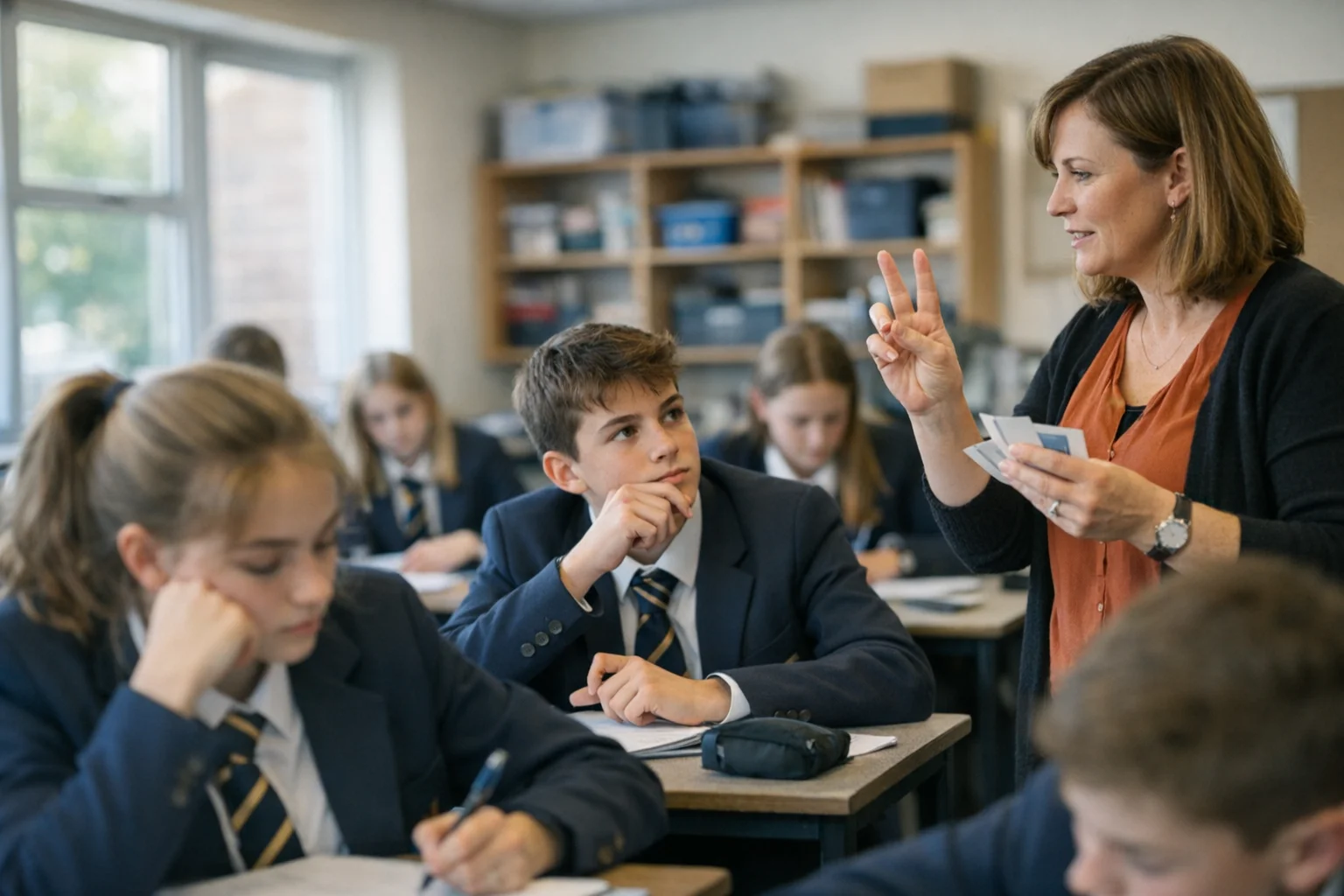
Non-Verbal Learning Disorder (NVLD) is a learning disability marked by significant struggles with visual-spatial tasks, social skills, and motor coordination. Students with NVLD typically show strong verbal abilities, which can mask their underlying difficulties. This contrast between verbal strength and non-verbal weakness often leads teachers and parents to misunderstand what these students actually need.
NVLD is not about language problems. The real challenge lies in interpreting facial expressions, body language, and spatial relationships. Students with NVLD can speak fluently but struggle to read the unspoken cues that most people process automatically. Teachers who understand this complexity can build learning environments that address both visible and hidden aspects of NVLD.
Early detection of Non-Verbal Learning Disorder gives teachers and parents a chance to provide targeted support. Certain patterns in behavior and learning signal that a student may have NVLD.
Difficulty with Spatial, Tactile, and Visual Organization
Students with NVLD struggle to organize and interpret spatial, tactile, and visual information. They may find puzzles confusing, maps difficult to read, or physical spaces hard to navigate. These tasks require processing visual information in ways that don't come naturally to them.
Trouble Interpreting Non-verbal Cues in Social Interaction
Social interactions depend on reading and responding to non-verbal cues. Students with NVLD often misinterpret facial expressions, body language, and tone of voice. A teacher's slight frown might go unnoticed, or a peer's sarcasm might be taken literally, leading to confusion and social missteps.
Challenges in Adapting to New or Unstructured Situations
Students with NVLD need predictability. New or unstructured situations can trigger anxiety or confusion. Without a clear routine, these students may become unsettled and struggle to engage with learning.

These challenges create a distinct learning profile. Students with NVLD may struggle with geometry but excel in reading comprehension. They might memorize facts easily but find it hard to see the big picture in a complex topic. Teachers need to adjust their approach to match these patterns.

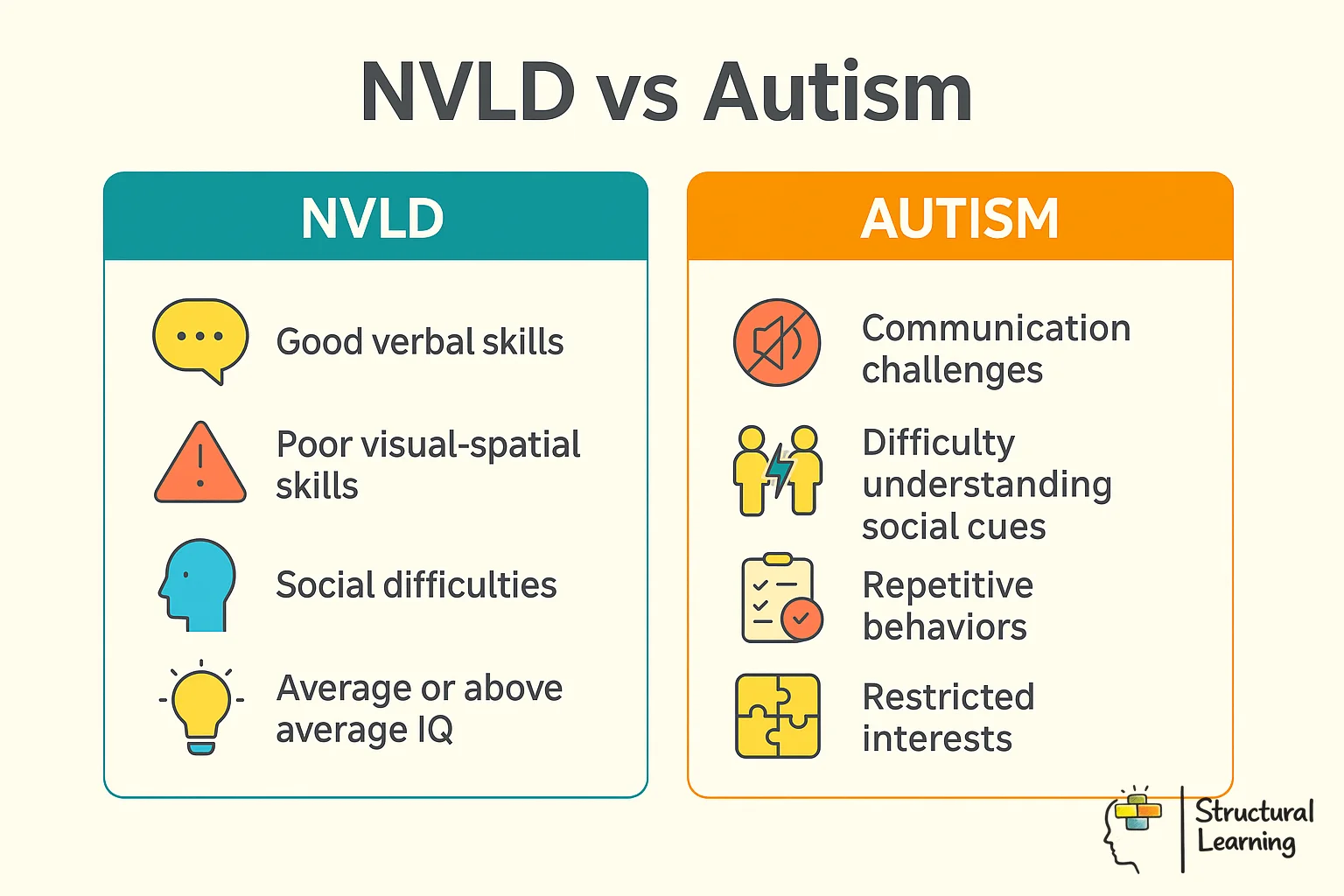
NVLD and Autism Spectrum Disorders (ASD) can look similar, particularly in social communication challenges. However, the differences matter for teaching and support. Students with NVLD can engage in conversation and typically don't show the repetitive behaviors common in ASD. Students with ASD face broader social communication issues and often demonstrate rigid, repetitive patterns.
The learning profiles differ significantly. Students with NVLD excel in verbal tasks but struggle with spatial, tactile, and visual-motor activities. Students with ASD may have uneven abilities across many domains, including language, motor skills, and spatial reasoning. Some show exceptional talents in specific areas.
Rigid behaviors appear differently in each condition. ASD involves a strong need for sameness and routine. While students with NVLD prefer familiar routines, they don't typically show the same intensity or rigidity around these preferences.
Students with NVLD understand literal language but miss non-verbal cues like facial expressions or body language. This leads to social misunderstandings. Students with ASD face challenges in both verbal and non-verbal communication, including sharing emotions, understanding social cues, and building relationships.
Students with NVLD perform well in reading and recalling facts but struggle with mathematics, especially tasks requiring visuospatial skills. A student on the autism spectrum might show varied performance across subjects and may have exceptional abilities or intense interests in specific areas.
Adaptive behaviors differ between NVLD and ASD. Strategies for NVLD students should build on verbal strengths while supporting visual-spatial deficits. Approaches for ASD need to address social communication and behavioral rigidity, potentially tailored to unique talents or challenges within the spectrum.

Students with Non-Verbal Learning Disorder show a striking contrast between cognitive strengths and weaknesses. Despite strong verbal abilities, they struggle with visual-spatial tasks. Navigating physical spaces or interpreting visual information poses real challenges. Consider a complex graph in a science lesson. While most students quickly grasp the concept by looking at the visual elements, a student with NVLD may need to rely heavily on the text description.
This reliance on verbal information creates a detail-focused learning style. Students with NVLD can memorize facts and recall verbal content well, but they struggle to synthesize details into a bigger picture. They might get lost in particulars, unable to extract main ideas from what they're learning.
These cognitive characteristics affect problem-solving and logical reasoning directly. When faced with a math word problem, a student with NVLD may understand the language perfectly but struggle to visualize the problem's spatial components or figure out the solution steps. The disconnect between strong language skills and weak visual-spatial abilities becomes obvious in tasks that require both.
Teachers can help by using contrasting methods that harness verbal proficiency while building the visual-spatial component. Strategies that break down complex concepts into sequential, verbally understandable parts facilitate comprehension and learning, enabling students with NVLD to navigate information more effectively.
Students with NVLD face a range of social and emotional hurdles. Life for these students involves constant work to understand social judgment and interpret social cues correctly. These challenges affect their ability to form meaningful connections with peers.
Misunderstanding body language, tone of voice, and facial expressions blocks effective social interaction. These misinterpretations lead to awkward encounters or miscommunication with peers. Students with NVLD might react inappropriately in social situations because they miss key non-verbal signals, which creates friction and misunderstandings.
Students with NVLD need explicit instruction in social skills that others learn implicitly. Teachers can create opportunities for these students to practice social interactions in a safe, structured environment. Building positive peer relationships reduces the risk of isolation and supports healthier emotional development.
Watch for shifts in behavior when the student faces social demands. This awareness helps teachers tailor their approach. Beyond the classroom, parents and professionals must recognize the emotional landscape these students navigate. Support networks protect the mental health of students with NVLD. Family therapy or social skills groups provide valuable support.
Students with NVLD benefit from regular feedback on their social interactions. While the social world can be confusing for these students, patient guidance and tailored support help them learn the unwritten rules of social engagement. Success in this area builds confidence and improves relationships.

Students with NVLD display unique learning profiles that require thoughtful support from teachers. Tailoring instructional strategies can significantly influence their success. A student with NVLD benefits from deeply structured tasks that clearly mark beginnings, middles, and ends. Visual aids that seem unnecessary for other students may provide essential scaffolding for a student with NVLD.
Stability and reliability within the school day help students manage expectations and reduce anxiety. When a teacher establishes a routine, the student can focus on learning rather than navigating unpredictability. A consistent routine alongside clear, concise instructions allows these students to participate confidently in classroom activities.
Effective support for students with NVLD extends beyond the classroom. Partnership between teachers and parents matters. Open communication creates a cohesive approach to addressing the students' challenges. Teachers sharing classroom observations provide parents with insight into their child's school experience, while parents offer a broader view of their child's behavior and progress outside school. This collaboration ensures strategies are consistently applied, reinforcing the student's learning path.
Questions that probe for deeper understanding can help students interact with material on a more meaningful level. Encouraging peers to work in small groups under guidance allows students with NVLD to practice social skills in a controlled, less daunting environment. Compassionate peer interactions, guided by a teacher's subtle direction, often lead to improved social experiences for these students.
Regularly incorporating diverse sentence structures and prompts for reflection during instruction can stimulate engagement. Varying teaching techniques keeps the classroom dynamic and adaptable to individual needs such as those presented by NVLD.
Diagnosing Non-Verbal Learning Disorder requires a comprehensive approach involving several evaluative components. Professionals typically use a battery of standardized tests to analyze the various cognitive, academic, and social difficulties associated with NVLD. Earlier diagnosis allows for prompt implementation of support strategies, increasing the chances for improved outcomes throughout life.
The diagnostic process begins with a comprehensive review of the child's developmental history, examining both milestones and any regression in skills. Structured observations in different settings, such as home and school, provide insight into how the child interacts in various environments. Formal assessment includes neuropsychological tests to evaluate the child's cognitive functions, academic abilities, and social competence. Tests measure spatial, tactile, and motor skills, as well as the child's capacity to interpret and respond to non-verbal cues.
Collaboration between teachers, healthcare providers, and families is key to setting diagnostic criteria for NVLD, ensuring a thorough and individualized assessment process. Teachers, aware of these criteria, can be vital observers in recognizing early signs and facilitating early assessment and intervention.

Students with Non-Verbal Learning Disorder benefit from intervention strategies designed to address their specific challenges. Schools can adopt academic accommodations to adjust learning environments and curriculum demands. Such accommodations might include offering extended time on tests, providing notes or outlines ahead of lessons, and creating a structured routine that gives these learners a predictable framework.
Developing organizational skills is fundamental in bridging the gap created by NVLD. Training can include methods for organizing material effectively, time management techniques, and strategies to plan tasks and projects. Work in this area often includes breaking down large assignments into manageable components and using checklists to track completion.
Technology offers students with NVLD ways to overcome obstacles they face in traditional learning settings. Speech-to-text software enables them to articulate ideas without being hindered by fine motor skill challenges. Graphic organizers and mind-mapping tools assist in visually structuring their thoughts, enabling clearer understanding of complex concepts. Digital calendars and planning apps facilitate mastery of time management and organizational skills.
Non-Verbal Learning Disorder often coexists with other conditions, posing challenges for diagnosis and management. Among these, Attention Deficit Hyperactivity Disorder (ADHD) and anxiety disorders are particularly common, requiring special consideration for those affected.
Students with NVLD may experience symptoms that overlap with ADHD, such as difficulty maintaining attention or exhibiting impulsive behaviors. This overlap can complicate the diagnostic process. When NVLD and ADHD occur together, they may worsen each other. The detail-oriented strengths of NVLD may clash with the impulsivity and inattentiveness found in ADHD, creating conflicting behavior and coping strategies.
Anxiety frequently appears alongside NVLD, given that social misunderstandings and academic challenges produce heightened stress. Recognizing signs of anxiety in combination with NVLD encourages a comprehensive treatment approach that addresses both the learning disorder and emotional distress.
Effective intervention requires a strategy that addresses each condition. If ADHD is present, stimulant medications along with behavior interventions are commonly prescribed, while cognitive-behavioral therapy (CBT) is a standard treatment for anxiety.
Autism spectrum disorders (ASD) also share commonalities with NVLD, particularly in social communication deficits. Although ASD includes a wider range of social and behavioral challenges, correctly distinguishing between the two can guide targeted interventions.
Each comorbid condition present with NVLD requires an adjustment in support strategies. Memory aids might benefit NVLD and ADHD, but consistent routines and social skills training can be more beneficial for NVLD with ASD. Understanding and tailoring approaches to fit the individual's unique profile of strengths and challenges is essential.
Teachers can play a critical part by adjusting teaching methods and classroom structures to better support students with NVLD. Accommodations like preferential seating, breaks for movement, or visual schedules can aid those with NVLD and ADHD. Similarly, implementing small group activities or social narratives can better serve students with NVLD and ASD to navigate social complexities.
Parents, teachers, and clinicians must work collaboratively to address the needs of students with NVLD and their comorbid conditions. This interdisciplinary approach ensures that each student receives the comprehensive support necessary to thrive academically, socially, and emotionally.

Parents and caregivers play a critical role in managing Non-Verbal Learning Disorder. Their knowledge of their child's behavior patterns, strengths, and challenges places them in a unique position to advocate for and support their development and educational journey.
School collaboration requires active involvement. Parents and caregivers facilitate conversations between diverse school professionals and external therapists. By doing so, they help create a cohesive support system that aligns with the child's individual needs. This approach ensures consistent strategies across different environments, which can lead to more substantial progress for students with NVLD.
The home setting plays a key role in emotional development. Parents and caregivers provide a primary source of emotional support for children with NVLD. Recognizing their child's emotional needs and reinforcing their strengths can significantly boost their child's self-esteem. A nurturing home environment can also be tailored to enhance the child's non-verbal skills through interactive activities and social opportunities.
Consistent, supportive strategies at home complement the child's educational and therapeutic efforts, creating a robust framework for managing NVLD.
Several therapeutic approaches offer meaningful benefits for students with Non-Verbal Learning Disorder. Initiating therapy can lead to the development of crucial skills that support everyday functioning and interpersonal success. With a focus on enhancing abilities, therapies often provide training, strategies, and support that cater to the unique needs of each individual.
Occupational therapy targets the improvement of coordination and spatial skills. This form of therapy involves structured activities aimed at refining motor skills, which might include hand-eye coordination and balance. Therapists craft personalized plans that address specific deficits, helping students navigate physical tasks with greater ease.
Technology creates new pathways for students with NVLD to overcome everyday challenges. A range of tools exists, each designed to streamline organization and time management tasks. Software that incorporates visual scheduling can clarify expectations and transition times, offering users a more concrete concept of their routines.
To address learning differences, several apps have emerged that prove beneficial. These applications target skill areas commonly affected by NVLD such as spatial recognition, mathematical concept visualization, and social cue interpretation. Through interactive and engaging interfaces, students with NVLD experience an alternative approach to learning these vital skills without the social pressure and anxiety that traditional environments may create.
Teachers witnessing the integration of these technologies into the classroom will observe improved executive function skills and often a corresponding rise in the self-esteem of students with NVLD. As students navigate their educational paths, the right technology can act as a significant enabler, supporting them to unlock their full potential. Reflect on which tools could best serve students with NVLD in your classroom, always tailoring selections to complement the unique constellation of strengths and challenges present.

Transitioning from high school to higher education or the workforce presents unique challenges for students with NVLD. Successfully navigating this phase requires strategic planning and access to supportive resources. With the right preparation, students with NVLD can forge a path that aligns with their strengths and accommodates their learning style.
By taking proactive steps, students are likely to experience smoother transitions into further education or employment. Such measures can lead to an empowering sense of independence and self-confidence.
Locating a postsecondary environment that embraces inclusivity and offers robust support to students with disabilities can determine success. When selecting a college or university, consider the following:
For those entering the workforce, seek employers who value diversity and inclusion, as they are more likely to provide an environment in which students with NVLD can thrive. On-the-job support or mentorship programs are significant assets to look for during the job search.
Whether the next step is academia or a professional career, students with NVLD have numerous resources and strategies available to support their transition. Committing to preparation, advocacy, and research into supportive environments builds a foundation for achievement and growth well beyond the educational phase.
Recognition and support enable students with Non-Verbal Learning Disorder to navigate life's complexities with greater ease. With each advance in understanding this condition, teachers, practitioners, and family members can more effectively tailor interventions. As we understand NVLD's influence on ability, social interaction, and knowledge acquisition, the potential to address its challenges grows.
Teachers play a key role in shaping the experiences of students with NVLD. They have the unique ability to create an environment where every child, regardless of disability, can learn and thrive. Through adaptation and innovation in the classroom, teachers can transform information into accessible knowledge for students with NVLD. A teacher's dedication to inclusive education profoundly affects their students' future accomplishments and self-esteem.
Advocacy remains a cornerstone in the pursuit of genuine understanding and societal acceptance of NVLD. Through continued education on this disorder, stakeholders can dismantle barriers.
These studies highlight the neurodevelopmental complexities of NVLD and related conditions, providing insights into nonverbal communication, educational challenges, and therapeutic interventions.
Non-Verbal Learning Disorder (NVLD) is a learning disability marked by significant struggles with visual-spatial tasks, social skills, and motor coordination. Students with NVLD typically show strong verbal abilities, which can mask their underlying difficulties. This contrast between verbal strength and non-verbal weakness often leads teachers and parents to misunderstand what these students actually need.
NVLD is not about language problems. The real challenge lies in interpreting facial expressions, body language, and spatial relationships. Students with NVLD can speak fluently but struggle to read the unspoken cues that most people process automatically. Teachers who understand this complexity can build learning environments that address both visible and hidden aspects of NVLD.
Early detection of Non-Verbal Learning Disorder gives teachers and parents a chance to provide targeted support. Certain patterns in behavior and learning signal that a student may have NVLD.
Difficulty with Spatial, Tactile, and Visual Organization
Students with NVLD struggle to organize and interpret spatial, tactile, and visual information. They may find puzzles confusing, maps difficult to read, or physical spaces hard to navigate. These tasks require processing visual information in ways that don't come naturally to them.
Trouble Interpreting Non-verbal Cues in Social Interaction
Social interactions depend on reading and responding to non-verbal cues. Students with NVLD often misinterpret facial expressions, body language, and tone of voice. A teacher's slight frown might go unnoticed, or a peer's sarcasm might be taken literally, leading to confusion and social missteps.
Challenges in Adapting to New or Unstructured Situations
Students with NVLD need predictability. New or unstructured situations can trigger anxiety or confusion. Without a clear routine, these students may become unsettled and struggle to engage with learning.

These challenges create a distinct learning profile. Students with NVLD may struggle with geometry but excel in reading comprehension. They might memorize facts easily but find it hard to see the big picture in a complex topic. Teachers need to adjust their approach to match these patterns.

NVLD and Autism Spectrum Disorders (ASD) can look similar, particularly in social communication challenges. However, the differences matter for teaching and support. Students with NVLD can engage in conversation and typically don't show the repetitive behaviors common in ASD. Students with ASD face broader social communication issues and often demonstrate rigid, repetitive patterns.
The learning profiles differ significantly. Students with NVLD excel in verbal tasks but struggle with spatial, tactile, and visual-motor activities. Students with ASD may have uneven abilities across many domains, including language, motor skills, and spatial reasoning. Some show exceptional talents in specific areas.
Rigid behaviors appear differently in each condition. ASD involves a strong need for sameness and routine. While students with NVLD prefer familiar routines, they don't typically show the same intensity or rigidity around these preferences.
Students with NVLD understand literal language but miss non-verbal cues like facial expressions or body language. This leads to social misunderstandings. Students with ASD face challenges in both verbal and non-verbal communication, including sharing emotions, understanding social cues, and building relationships.
Students with NVLD perform well in reading and recalling facts but struggle with mathematics, especially tasks requiring visuospatial skills. A student on the autism spectrum might show varied performance across subjects and may have exceptional abilities or intense interests in specific areas.
Adaptive behaviors differ between NVLD and ASD. Strategies for NVLD students should build on verbal strengths while supporting visual-spatial deficits. Approaches for ASD need to address social communication and behavioral rigidity, potentially tailored to unique talents or challenges within the spectrum.

Students with Non-Verbal Learning Disorder show a striking contrast between cognitive strengths and weaknesses. Despite strong verbal abilities, they struggle with visual-spatial tasks. Navigating physical spaces or interpreting visual information poses real challenges. Consider a complex graph in a science lesson. While most students quickly grasp the concept by looking at the visual elements, a student with NVLD may need to rely heavily on the text description.
This reliance on verbal information creates a detail-focused learning style. Students with NVLD can memorize facts and recall verbal content well, but they struggle to synthesize details into a bigger picture. They might get lost in particulars, unable to extract main ideas from what they're learning.
These cognitive characteristics affect problem-solving and logical reasoning directly. When faced with a math word problem, a student with NVLD may understand the language perfectly but struggle to visualize the problem's spatial components or figure out the solution steps. The disconnect between strong language skills and weak visual-spatial abilities becomes obvious in tasks that require both.
Teachers can help by using contrasting methods that harness verbal proficiency while building the visual-spatial component. Strategies that break down complex concepts into sequential, verbally understandable parts facilitate comprehension and learning, enabling students with NVLD to navigate information more effectively.
Students with NVLD face a range of social and emotional hurdles. Life for these students involves constant work to understand social judgment and interpret social cues correctly. These challenges affect their ability to form meaningful connections with peers.
Misunderstanding body language, tone of voice, and facial expressions blocks effective social interaction. These misinterpretations lead to awkward encounters or miscommunication with peers. Students with NVLD might react inappropriately in social situations because they miss key non-verbal signals, which creates friction and misunderstandings.
Students with NVLD need explicit instruction in social skills that others learn implicitly. Teachers can create opportunities for these students to practice social interactions in a safe, structured environment. Building positive peer relationships reduces the risk of isolation and supports healthier emotional development.
Watch for shifts in behavior when the student faces social demands. This awareness helps teachers tailor their approach. Beyond the classroom, parents and professionals must recognize the emotional landscape these students navigate. Support networks protect the mental health of students with NVLD. Family therapy or social skills groups provide valuable support.
Students with NVLD benefit from regular feedback on their social interactions. While the social world can be confusing for these students, patient guidance and tailored support help them learn the unwritten rules of social engagement. Success in this area builds confidence and improves relationships.

Students with NVLD display unique learning profiles that require thoughtful support from teachers. Tailoring instructional strategies can significantly influence their success. A student with NVLD benefits from deeply structured tasks that clearly mark beginnings, middles, and ends. Visual aids that seem unnecessary for other students may provide essential scaffolding for a student with NVLD.
Stability and reliability within the school day help students manage expectations and reduce anxiety. When a teacher establishes a routine, the student can focus on learning rather than navigating unpredictability. A consistent routine alongside clear, concise instructions allows these students to participate confidently in classroom activities.
Effective support for students with NVLD extends beyond the classroom. Partnership between teachers and parents matters. Open communication creates a cohesive approach to addressing the students' challenges. Teachers sharing classroom observations provide parents with insight into their child's school experience, while parents offer a broader view of their child's behavior and progress outside school. This collaboration ensures strategies are consistently applied, reinforcing the student's learning path.
Questions that probe for deeper understanding can help students interact with material on a more meaningful level. Encouraging peers to work in small groups under guidance allows students with NVLD to practice social skills in a controlled, less daunting environment. Compassionate peer interactions, guided by a teacher's subtle direction, often lead to improved social experiences for these students.
Regularly incorporating diverse sentence structures and prompts for reflection during instruction can stimulate engagement. Varying teaching techniques keeps the classroom dynamic and adaptable to individual needs such as those presented by NVLD.
Diagnosing Non-Verbal Learning Disorder requires a comprehensive approach involving several evaluative components. Professionals typically use a battery of standardized tests to analyze the various cognitive, academic, and social difficulties associated with NVLD. Earlier diagnosis allows for prompt implementation of support strategies, increasing the chances for improved outcomes throughout life.
The diagnostic process begins with a comprehensive review of the child's developmental history, examining both milestones and any regression in skills. Structured observations in different settings, such as home and school, provide insight into how the child interacts in various environments. Formal assessment includes neuropsychological tests to evaluate the child's cognitive functions, academic abilities, and social competence. Tests measure spatial, tactile, and motor skills, as well as the child's capacity to interpret and respond to non-verbal cues.
Collaboration between teachers, healthcare providers, and families is key to setting diagnostic criteria for NVLD, ensuring a thorough and individualized assessment process. Teachers, aware of these criteria, can be vital observers in recognizing early signs and facilitating early assessment and intervention.

Students with Non-Verbal Learning Disorder benefit from intervention strategies designed to address their specific challenges. Schools can adopt academic accommodations to adjust learning environments and curriculum demands. Such accommodations might include offering extended time on tests, providing notes or outlines ahead of lessons, and creating a structured routine that gives these learners a predictable framework.
Developing organizational skills is fundamental in bridging the gap created by NVLD. Training can include methods for organizing material effectively, time management techniques, and strategies to plan tasks and projects. Work in this area often includes breaking down large assignments into manageable components and using checklists to track completion.
Technology offers students with NVLD ways to overcome obstacles they face in traditional learning settings. Speech-to-text software enables them to articulate ideas without being hindered by fine motor skill challenges. Graphic organizers and mind-mapping tools assist in visually structuring their thoughts, enabling clearer understanding of complex concepts. Digital calendars and planning apps facilitate mastery of time management and organizational skills.
Non-Verbal Learning Disorder often coexists with other conditions, posing challenges for diagnosis and management. Among these, Attention Deficit Hyperactivity Disorder (ADHD) and anxiety disorders are particularly common, requiring special consideration for those affected.
Students with NVLD may experience symptoms that overlap with ADHD, such as difficulty maintaining attention or exhibiting impulsive behaviors. This overlap can complicate the diagnostic process. When NVLD and ADHD occur together, they may worsen each other. The detail-oriented strengths of NVLD may clash with the impulsivity and inattentiveness found in ADHD, creating conflicting behavior and coping strategies.
Anxiety frequently appears alongside NVLD, given that social misunderstandings and academic challenges produce heightened stress. Recognizing signs of anxiety in combination with NVLD encourages a comprehensive treatment approach that addresses both the learning disorder and emotional distress.
Effective intervention requires a strategy that addresses each condition. If ADHD is present, stimulant medications along with behavior interventions are commonly prescribed, while cognitive-behavioral therapy (CBT) is a standard treatment for anxiety.
Autism spectrum disorders (ASD) also share commonalities with NVLD, particularly in social communication deficits. Although ASD includes a wider range of social and behavioral challenges, correctly distinguishing between the two can guide targeted interventions.
Each comorbid condition present with NVLD requires an adjustment in support strategies. Memory aids might benefit NVLD and ADHD, but consistent routines and social skills training can be more beneficial for NVLD with ASD. Understanding and tailoring approaches to fit the individual's unique profile of strengths and challenges is essential.
Teachers can play a critical part by adjusting teaching methods and classroom structures to better support students with NVLD. Accommodations like preferential seating, breaks for movement, or visual schedules can aid those with NVLD and ADHD. Similarly, implementing small group activities or social narratives can better serve students with NVLD and ASD to navigate social complexities.
Parents, teachers, and clinicians must work collaboratively to address the needs of students with NVLD and their comorbid conditions. This interdisciplinary approach ensures that each student receives the comprehensive support necessary to thrive academically, socially, and emotionally.

Parents and caregivers play a critical role in managing Non-Verbal Learning Disorder. Their knowledge of their child's behavior patterns, strengths, and challenges places them in a unique position to advocate for and support their development and educational journey.
School collaboration requires active involvement. Parents and caregivers facilitate conversations between diverse school professionals and external therapists. By doing so, they help create a cohesive support system that aligns with the child's individual needs. This approach ensures consistent strategies across different environments, which can lead to more substantial progress for students with NVLD.
The home setting plays a key role in emotional development. Parents and caregivers provide a primary source of emotional support for children with NVLD. Recognizing their child's emotional needs and reinforcing their strengths can significantly boost their child's self-esteem. A nurturing home environment can also be tailored to enhance the child's non-verbal skills through interactive activities and social opportunities.
Consistent, supportive strategies at home complement the child's educational and therapeutic efforts, creating a robust framework for managing NVLD.
Several therapeutic approaches offer meaningful benefits for students with Non-Verbal Learning Disorder. Initiating therapy can lead to the development of crucial skills that support everyday functioning and interpersonal success. With a focus on enhancing abilities, therapies often provide training, strategies, and support that cater to the unique needs of each individual.
Occupational therapy targets the improvement of coordination and spatial skills. This form of therapy involves structured activities aimed at refining motor skills, which might include hand-eye coordination and balance. Therapists craft personalized plans that address specific deficits, helping students navigate physical tasks with greater ease.
Technology creates new pathways for students with NVLD to overcome everyday challenges. A range of tools exists, each designed to streamline organization and time management tasks. Software that incorporates visual scheduling can clarify expectations and transition times, offering users a more concrete concept of their routines.
To address learning differences, several apps have emerged that prove beneficial. These applications target skill areas commonly affected by NVLD such as spatial recognition, mathematical concept visualization, and social cue interpretation. Through interactive and engaging interfaces, students with NVLD experience an alternative approach to learning these vital skills without the social pressure and anxiety that traditional environments may create.
Teachers witnessing the integration of these technologies into the classroom will observe improved executive function skills and often a corresponding rise in the self-esteem of students with NVLD. As students navigate their educational paths, the right technology can act as a significant enabler, supporting them to unlock their full potential. Reflect on which tools could best serve students with NVLD in your classroom, always tailoring selections to complement the unique constellation of strengths and challenges present.

Transitioning from high school to higher education or the workforce presents unique challenges for students with NVLD. Successfully navigating this phase requires strategic planning and access to supportive resources. With the right preparation, students with NVLD can forge a path that aligns with their strengths and accommodates their learning style.
By taking proactive steps, students are likely to experience smoother transitions into further education or employment. Such measures can lead to an empowering sense of independence and self-confidence.
Locating a postsecondary environment that embraces inclusivity and offers robust support to students with disabilities can determine success. When selecting a college or university, consider the following:
For those entering the workforce, seek employers who value diversity and inclusion, as they are more likely to provide an environment in which students with NVLD can thrive. On-the-job support or mentorship programs are significant assets to look for during the job search.
Whether the next step is academia or a professional career, students with NVLD have numerous resources and strategies available to support their transition. Committing to preparation, advocacy, and research into supportive environments builds a foundation for achievement and growth well beyond the educational phase.
Recognition and support enable students with Non-Verbal Learning Disorder to navigate life's complexities with greater ease. With each advance in understanding this condition, teachers, practitioners, and family members can more effectively tailor interventions. As we understand NVLD's influence on ability, social interaction, and knowledge acquisition, the potential to address its challenges grows.
Teachers play a key role in shaping the experiences of students with NVLD. They have the unique ability to create an environment where every child, regardless of disability, can learn and thrive. Through adaptation and innovation in the classroom, teachers can transform information into accessible knowledge for students with NVLD. A teacher's dedication to inclusive education profoundly affects their students' future accomplishments and self-esteem.
Advocacy remains a cornerstone in the pursuit of genuine understanding and societal acceptance of NVLD. Through continued education on this disorder, stakeholders can dismantle barriers.
These studies highlight the neurodevelopmental complexities of NVLD and related conditions, providing insights into nonverbal communication, educational challenges, and therapeutic interventions.