Cognitive Behavior Therapy TechniquesPrimary students in royal blue jumpers engage in cognitive behavior therapy discussion, identifying emotions with cards in a colourful classroom.

Updated on  

February 3, 2026

Cognitive Behavior Therapy Techniques

|

April 28, 2023

Discover proven cognitive behavioural therapy techniques for classroom use. Learn evidence-based methods to support student mental health and wellbeing effectively.

Course Enquiry
Copy citation

Main, P (2023, April 28). Cognitive Behavior Therapy Techniques. Retrieved from https://www.structural-learning.com/post/cognitive-behavior-therapy-techniques

What are Cognitive Behavioral Therapy techniques?

(CBT) is a form of psychotherapy that has been found to be highly effective in the treatment of psychiatric disorders such as bipolar disorder, obsessive-compulsive disorder (OCD), borderline personality disorder, and social anxietydisorder, among others. CBT is based on the theories of Aaron Beck and draws from broader understanding of cognitive development to help patients identify and challenge negative thought patterns through critical thinking and behaviours that contribute to their difficulties.

Key Takeaways

  1. Beyond Talk Therapy: Discover why CBT's action-based techniques work where traditional counselling falls short for your most anxious and depressed students
  2. Spot the Spiral: Learn to recognise catastrophic thinking patterns in real-time and intervene before exam anxiety derails your students' performance
  3. The 5-Minute Intervention: Master quick thought-challenging questions that transform student meltdowns into learning opportunities without disrupting your whole class
  4. Your Hidden Therapeutic Power: Why your daily classroom interactions might already be using CBT principles and how to harness them intentionally

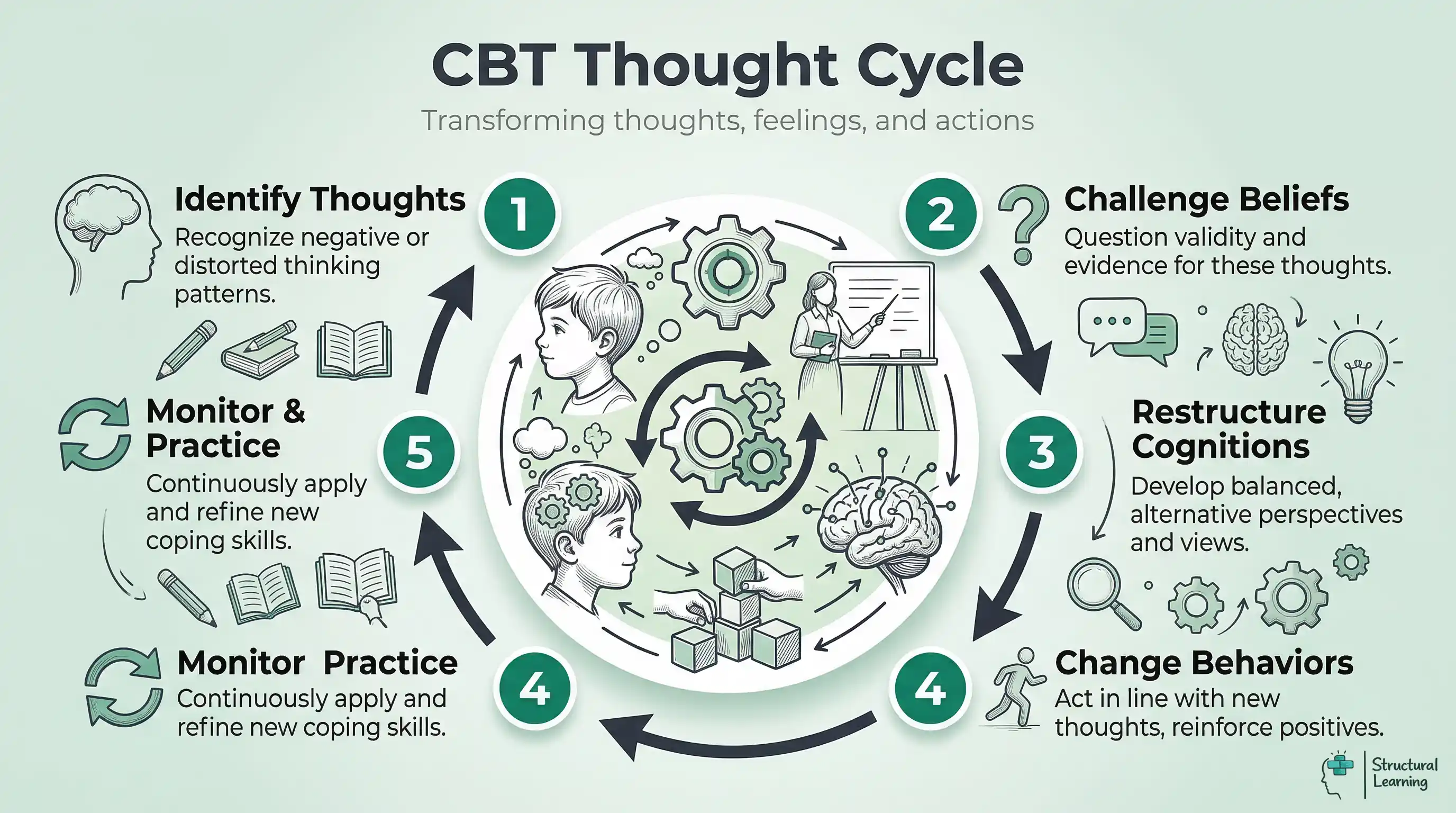
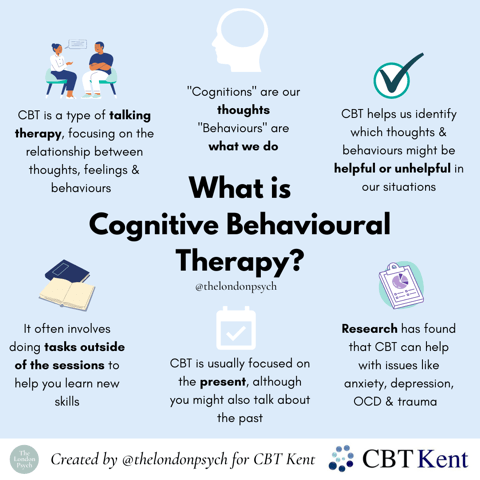
CBT framework infographic showing what CBT is, how it works through 4 key techniques, and why it's effective
How CBT Works: The Complete Framework

One of the main techniques used in CBT is behavioral therapy. This approach focuses on changing specific behaviors that are causing problems for the patient. For example, in the case of OCD, behavioral therapy may involve exposure and response prevention, where patients are gradually exposed to situations that trigger their obsessions and are taught strategies through scaffoldingtechniquesto resist the compulsions that follow.

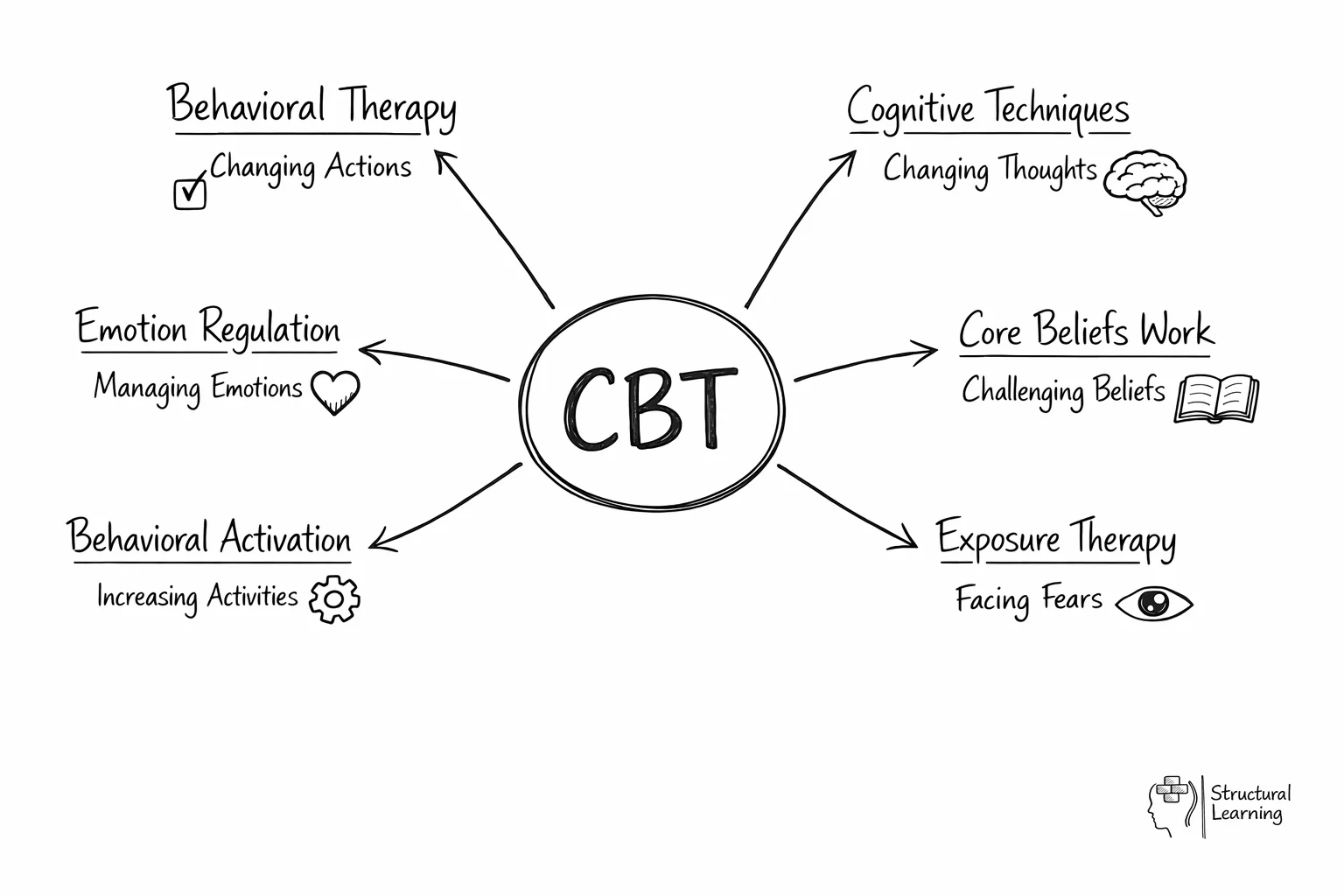
Hub-and-spoke diagram showing CBT at center connected to six main therapeutic techniques
Hub-and-spoke diagram: Core Components and Techniques of Cognitive Behavioral Therapy

Another key aspect of . This technique helps patients learn self-regulation and how to manage their emotions and manage difficult situations more effectively. Patients are taught specific cognitive skills such as mindfulness, distress tolerance, and interpersonal effectiveness to help them cope with .

Core beliefs are another important component of CBT. These are deeply held beliefs that shape the way patients view themselves, others, and the world around them. In CBT, patients are encouraged to identify and challenge their core beliefs, replacing negative, maladaptive beliefs with more positive, adaptive ones.

Behavioral activation is a that involves encouraging patients to engage in activities that they find rewarding or enjoyable, even if they don't feel like it. This can help to break the cycle of negative thinking and behaviors that often accompanies depression and other medical conditions.

CBT is a highly effective treatment approach for a wide variety of psychiatric disorders and medical conditions. It uses a range of techniques such as behavioral therapy, emotion regulation, core beliefs, and behavioral activation to help patients identify and change negative thinking patterns and behaviors. Teachers can play a vital role in supporting their students who may be by being aware of these techniques and referring them to appropriate professionals for support.


How Does CBT Work?

Cognitive-behavioral therapy is a goal-oriented and collaborative approach for treatment. CBT therapists work with clients to set specific goals for treatment and develop strategies to achieve those goals.

During therapy sessions, clients will learn how to identify and challenge their negative thoughts and develop more cognitive biases. Behavioral techniques, such as exposure therapy and relaxation training, are also used to help clients overcome specific fears or phobias.

CBT is a type of behavioral therapy, which means it focuses on changing behavior patterns to improve mental health. Behavioral therapy techniques can include a wide range of strategies, including exposure therapy, relaxation training, and social skills training.

Exposure therapy involves gradually exposing the client to a feared object or situation in a controlled and supportive environment. This can help the client overcome their fear and reduce symptoms of anxiety.

Relaxation training techniques, such as deep breathing and progressive muscle relaxation, can help clients manage their stress and reduce symptoms of anxiety and depression.

Social skills training can help clients develop social emotional learningand interpersonal skills, which can improve their relationships and reduce feelings of loneliness and social isolation.


Cognitive behavioural therapy

What Are the Core Cognitive Techniques Used in CBT?

The cognitive component of CBT centres on helping students identify and challenge unhelpful thought patterns that contribute to emotional distress and problematic behaviours. Cognitive restructuring involves teaching students to recognise automatic thoughts, examine the evidence for and against these thoughts, and develop more balanced perspectives. Aaron Beck, who pioneered cognitive therapy, emphasised that our thoughts directly influence our emotions and subsequent actions, making this triangle of cognition, emotion and behaviour fundamental to classroom interventions.

Common cognitive distortions frequently observed in educational settings include catastrophising (imagining the worst possible outcome), all-or-nothing thinking (viewing situations in black and white terms), and mind reading (assuming others' negative thoughts without evidence). For instance, a student might think "If I fail this test, I'm completely stupid and will never succeed" (catastrophising and all-or-nothing thinking). Teachers can help students identify these patterns through guided questioning and psychoeducation about how distorted thinking affects academic performance and wellbeing.

Practical cognitive techniques include thought records, where students document triggering situations, automatic thoughts, emotions and alternative perspectives. Evidence examination involves asking students to consider "What evidence supports this thought?" and "What evidence contradicts it?" These exercises help develop metacognitive awareness and critical thinking skills. In classroom contexts, teachers might use brief thought-challenging questions during moments of student distress, such as "Is there another way to look at this situation?" or "What would you tell a friend having this same thought?" This approach, supported by research from cognitive therapists like David Burns, helps students to become active participants in managing their own emotional responses to academic challenges.

What Are the Main Behavioral Techniques Used in CBT?

The primary behavioral techniques in CBT include exposure and response prevention for OCD, behavioral activation for depression, and systematic desensitization for phobias. These techniques focus on changing specific problematic behaviors through gradual exposure, activity scheduling, and breaking negative behavior patterns. Therapists often combine these with homework assignments to practice new behaviors between sessions.

These behavioral techniques are just a few examples of the range of tools and strategies used in CBT. They can be highly effective in helping individuals to manage and overcome a wide range of mental health problems.

Here are some of the most popular behavioral techniques used in Cognitive Behavioral Therapy (CBT):

1. Exposure therapy: This technique involves gradually exposing the individual to feared or anxiety-provoking situations or stimuli. The aim is to help the person overcome their fear or anxiety by learning to tolerate and manage the distress associated with the situation.

2. Behavioral activation: This technique involves encouraging the individual to engage in positive and rewarding activities, even when they do not feel like it. The aim is to help the person break the cycle of negative thinking and behaviors associated with depression or other mental health problems.

3. Thought challenging: This technique involves identifying and challenging negative or unhelpful thoughts that contribute to the person's distress. The aim is to help the individual develop more balanced and realistic ways of thinking through questioning their assumptions.

4. Relaxation training: This technique involves teaching the individual various relaxation techniques such as deep breathing, progressive muscle relaxation, and visualization. The aim is to help the person reduce their levels of anxiety and stress.

5. Behavioral rehearsal: This technique involves practicing andpracticing new skills in a safe and supportive environment. The aim is to help the person build confidence and competence in managing difficult situations.

How Can CBT Techniques Be Applied in Educational Settings?

CBT techniques can be powerfully adapted for educational settings by tailoring approaches to developmental stages and learning contexts. For younger students, concrete visual aids such as thought bubbles and feeling thermometers help identify negative thinking patterns, whilst adolescents benefit from more sophisticated techniques like thought records and behavioural experiments. Teachers can integrate mindfulness moments into daily routines, teaching students to recognise physiological signs of anxiety before they escalate into learning barriers.

Supporting students with academic stress requires creating structured opportunities for cognitive reframing. When perfectionist students avoid challenging tasks, educators can guide them through graded exposure exercises, breaking complex assignments into manageable steps whilst challenging all-or-nothing thinking. For classroom management, CBT principles suggest addressing behavioural issues by exploring the thoughts and feelings underlying transformative actions, rather than simply applying consequences. This approach, supported by research from Beck and colleagues, helps students develop self-regulation skills.

Effective implementation demands collaborative partnerships with parents and mental health professionals to ensure consistency across environments. Teachers should share observed patterns with school counsellors whilst maintaining appropriate boundaries about therapeutic interventions. Creating psychologically safe learning environments involves establishing clear expectations, normalising mistakes as learning opportunities, and modelling healthy coping strategies. Simple techniques like the "stop, think, act" sequence can be embedded into classroom culture, helping students pause before reacting impulsively. Regular check-ins using emotion scales allow early identification of struggling students, whilst peer support systems reinforce positive thinking patterns throughout the school community.

What Does Research Tell Us About CBT Effectiveness?

Extensive meta-analyses consistently demonstrate CBT's effectiveness across diverse populations and settings. Beck and colleagues' foundational research established effect sizes of 0.68 for anxiety disorders and 0.62 for depression in clinical trials, whilst educational adaptations show particular promise for behavioural interventions. Studies by Stallard and colleagues found that school-based CBT programmes reduced anxiety symptoms by 40-60% compared to control groups, with improvements maintained at six-month follow-up. Importantly, research indicates CBT techniques are most effective when integrated into existing classroom routines rather than delivered as standalone interventions.

Age-related effectiveness varies significantly, with optimal outcomes occurring in students aged 10-16 years who possess sufficient metacognitive awareness to engage with thought-challenging exercises. Younger children benefit more from behavioural components, such as relaxation techniques and activity scheduling, whilst adolescents can engage with complex cognitive restructuring. Educational research demonstrates particular effectiveness for academic anxiety, with students showing improved test performance and reduced school avoidance following CBT-informed interventions.

However, important limitations exist. Research indicates approximately 30% of students require additional support beyond classroom-based techniques, particularly those experiencing trauma, severe depression, or complex family difficulties. Durlak's comprehensive review emphasises that prevention-focused approaches yield stronger long-term outcomes than crisis intervention, suggesting CBT techniques work best when embedded proactively within social-emotional learning curricula. Educators should refer students to mental health professionals when techniques fail to improve functioning within 4-6 weeks or when students express self-harm idea generation, ensuring CBT remains a supportive tool rather than replacement for clinical intervention.

Benefits of Cognitive Behavioural Therapy

CBT has many benefits, including:

  1. It is a relatively short-term therapy, typically lasting between 12 and 20 sessions.
  2. It is a structured and goal-oriented therapy, which can help individuals to stay focused and motivated.
  3. It is a flexible therapy that can be adapted to meet the individual needs of each person.
  4. It is an evidence-based therapy that has been shown to be effective for a wide range of mental health problems.
  5. CBT skills are transferrable, meaning that individuals can use what they learn in therapy to manage their mental health in the long term.

Teachers can benefit from understanding CBT techniques as they may encounter students struggling with anxiety, depression, or other mental health challenges. By recognising the principles of CBT, educators can better support their students and guide them towards appropriate resources and professional help.

Conclusion

Cognitive Behavioural Therapy offers a robust framework for understanding and addressing mental health challenges. By focusing on the interplay between thoughts, feelings, and behaviours, CBT equips individuals with practical tools to manage their emotions and improve their overall well-being. Techniques like exposure therapy, behavioural activation, and thought challenging provide tangible strategies for overcoming difficulties.

For teachers, a basic understanding of CBT can be invaluable. Recognising how negative thought patterns influence student behaviour can inform more supportive and effective teaching strategies. While educators should not attempt to provide therapy, they can use their knowledge to create a more positive and understanding classroom environment, ultimately contributing to the mental and emotional well-being of their students and developing a better learning environment for all.

Further Reading

  1. Beck, J. S. (2011). *Cognitive behavior therapy: Basics and beyond* (2nd ed.). Guilford Press.
  2. Butler, A. C., Chapman, J. E., Forman, E. M., & Beck, A. T. (2006). The empirical status of cognitive behavioral therapy: A review of meta-analyses. *Clinical Psychology Review, 26*(1), 17-31.
  3. Hofmann, S. G., Asnaani, A., Vonk, I. J., Sawyer, A. T., & Fang, A. (2012). The efficacy of cognitive behavioral therapy: A review of meta-analyses. *Cognitive Therapy and Research, 36*(5), 427-440.
  4. казни , , & 졄. (2013). Acceptance and commitment therapy: Treating difficult problems with new psychological flexibility. *Behavior Therapy*, *35*, 1, 22.
  5. Öst, L. G. (2008). Efficacy of cognitive behavior therapy for anxiety disorders: A meta-analysis. *Behaviour Research and Therapy, 46*(7), 774-780.
Loading audit...

What are Cognitive Behavioral Therapy techniques?

(CBT) is a form of psychotherapy that has been found to be highly effective in the treatment of psychiatric disorders such as bipolar disorder, obsessive-compulsive disorder (OCD), borderline personality disorder, and social anxietydisorder, among others. CBT is based on the theories of Aaron Beck and draws from broader understanding of cognitive development to help patients identify and challenge negative thought patterns through critical thinking and behaviours that contribute to their difficulties.

Key Takeaways

  1. Beyond Talk Therapy: Discover why CBT's action-based techniques work where traditional counselling falls short for your most anxious and depressed students
  2. Spot the Spiral: Learn to recognise catastrophic thinking patterns in real-time and intervene before exam anxiety derails your students' performance
  3. The 5-Minute Intervention: Master quick thought-challenging questions that transform student meltdowns into learning opportunities without disrupting your whole class
  4. Your Hidden Therapeutic Power: Why your daily classroom interactions might already be using CBT principles and how to harness them intentionally

CBT framework infographic showing what CBT is, how it works through 4 key techniques, and why it's effective
How CBT Works: The Complete Framework

One of the main techniques used in CBT is behavioral therapy. This approach focuses on changing specific behaviors that are causing problems for the patient. For example, in the case of OCD, behavioral therapy may involve exposure and response prevention, where patients are gradually exposed to situations that trigger their obsessions and are taught strategies through scaffoldingtechniquesto resist the compulsions that follow.

Hub-and-spoke diagram showing CBT at center connected to six main therapeutic techniques
Hub-and-spoke diagram: Core Components and Techniques of Cognitive Behavioral Therapy

Another key aspect of . This technique helps patients learn self-regulation and how to manage their emotions and manage difficult situations more effectively. Patients are taught specific cognitive skills such as mindfulness, distress tolerance, and interpersonal effectiveness to help them cope with .

Core beliefs are another important component of CBT. These are deeply held beliefs that shape the way patients view themselves, others, and the world around them. In CBT, patients are encouraged to identify and challenge their core beliefs, replacing negative, maladaptive beliefs with more positive, adaptive ones.

Behavioral activation is a that involves encouraging patients to engage in activities that they find rewarding or enjoyable, even if they don't feel like it. This can help to break the cycle of negative thinking and behaviors that often accompanies depression and other medical conditions.

CBT is a highly effective treatment approach for a wide variety of psychiatric disorders and medical conditions. It uses a range of techniques such as behavioral therapy, emotion regulation, core beliefs, and behavioral activation to help patients identify and change negative thinking patterns and behaviors. Teachers can play a vital role in supporting their students who may be by being aware of these techniques and referring them to appropriate professionals for support.


How Does CBT Work?

Cognitive-behavioral therapy is a goal-oriented and collaborative approach for treatment. CBT therapists work with clients to set specific goals for treatment and develop strategies to achieve those goals.

During therapy sessions, clients will learn how to identify and challenge their negative thoughts and develop more cognitive biases. Behavioral techniques, such as exposure therapy and relaxation training, are also used to help clients overcome specific fears or phobias.

CBT is a type of behavioral therapy, which means it focuses on changing behavior patterns to improve mental health. Behavioral therapy techniques can include a wide range of strategies, including exposure therapy, relaxation training, and social skills training.

Exposure therapy involves gradually exposing the client to a feared object or situation in a controlled and supportive environment. This can help the client overcome their fear and reduce symptoms of anxiety.

Relaxation training techniques, such as deep breathing and progressive muscle relaxation, can help clients manage their stress and reduce symptoms of anxiety and depression.

Social skills training can help clients develop social emotional learningand interpersonal skills, which can improve their relationships and reduce feelings of loneliness and social isolation.


Cognitive behavioural therapy

What Are the Core Cognitive Techniques Used in CBT?

The cognitive component of CBT centres on helping students identify and challenge unhelpful thought patterns that contribute to emotional distress and problematic behaviours. Cognitive restructuring involves teaching students to recognise automatic thoughts, examine the evidence for and against these thoughts, and develop more balanced perspectives. Aaron Beck, who pioneered cognitive therapy, emphasised that our thoughts directly influence our emotions and subsequent actions, making this triangle of cognition, emotion and behaviour fundamental to classroom interventions.

Common cognitive distortions frequently observed in educational settings include catastrophising (imagining the worst possible outcome), all-or-nothing thinking (viewing situations in black and white terms), and mind reading (assuming others' negative thoughts without evidence). For instance, a student might think "If I fail this test, I'm completely stupid and will never succeed" (catastrophising and all-or-nothing thinking). Teachers can help students identify these patterns through guided questioning and psychoeducation about how distorted thinking affects academic performance and wellbeing.

Practical cognitive techniques include thought records, where students document triggering situations, automatic thoughts, emotions and alternative perspectives. Evidence examination involves asking students to consider "What evidence supports this thought?" and "What evidence contradicts it?" These exercises help develop metacognitive awareness and critical thinking skills. In classroom contexts, teachers might use brief thought-challenging questions during moments of student distress, such as "Is there another way to look at this situation?" or "What would you tell a friend having this same thought?" This approach, supported by research from cognitive therapists like David Burns, helps students to become active participants in managing their own emotional responses to academic challenges.

What Are the Main Behavioral Techniques Used in CBT?

The primary behavioral techniques in CBT include exposure and response prevention for OCD, behavioral activation for depression, and systematic desensitization for phobias. These techniques focus on changing specific problematic behaviors through gradual exposure, activity scheduling, and breaking negative behavior patterns. Therapists often combine these with homework assignments to practice new behaviors between sessions.

These behavioral techniques are just a few examples of the range of tools and strategies used in CBT. They can be highly effective in helping individuals to manage and overcome a wide range of mental health problems.

Here are some of the most popular behavioral techniques used in Cognitive Behavioral Therapy (CBT):

1. Exposure therapy: This technique involves gradually exposing the individual to feared or anxiety-provoking situations or stimuli. The aim is to help the person overcome their fear or anxiety by learning to tolerate and manage the distress associated with the situation.

2. Behavioral activation: This technique involves encouraging the individual to engage in positive and rewarding activities, even when they do not feel like it. The aim is to help the person break the cycle of negative thinking and behaviors associated with depression or other mental health problems.

3. Thought challenging: This technique involves identifying and challenging negative or unhelpful thoughts that contribute to the person's distress. The aim is to help the individual develop more balanced and realistic ways of thinking through questioning their assumptions.

4. Relaxation training: This technique involves teaching the individual various relaxation techniques such as deep breathing, progressive muscle relaxation, and visualization. The aim is to help the person reduce their levels of anxiety and stress.

5. Behavioral rehearsal: This technique involves practicing andpracticing new skills in a safe and supportive environment. The aim is to help the person build confidence and competence in managing difficult situations.

How Can CBT Techniques Be Applied in Educational Settings?

CBT techniques can be powerfully adapted for educational settings by tailoring approaches to developmental stages and learning contexts. For younger students, concrete visual aids such as thought bubbles and feeling thermometers help identify negative thinking patterns, whilst adolescents benefit from more sophisticated techniques like thought records and behavioural experiments. Teachers can integrate mindfulness moments into daily routines, teaching students to recognise physiological signs of anxiety before they escalate into learning barriers.

Supporting students with academic stress requires creating structured opportunities for cognitive reframing. When perfectionist students avoid challenging tasks, educators can guide them through graded exposure exercises, breaking complex assignments into manageable steps whilst challenging all-or-nothing thinking. For classroom management, CBT principles suggest addressing behavioural issues by exploring the thoughts and feelings underlying transformative actions, rather than simply applying consequences. This approach, supported by research from Beck and colleagues, helps students develop self-regulation skills.

Effective implementation demands collaborative partnerships with parents and mental health professionals to ensure consistency across environments. Teachers should share observed patterns with school counsellors whilst maintaining appropriate boundaries about therapeutic interventions. Creating psychologically safe learning environments involves establishing clear expectations, normalising mistakes as learning opportunities, and modelling healthy coping strategies. Simple techniques like the "stop, think, act" sequence can be embedded into classroom culture, helping students pause before reacting impulsively. Regular check-ins using emotion scales allow early identification of struggling students, whilst peer support systems reinforce positive thinking patterns throughout the school community.

What Does Research Tell Us About CBT Effectiveness?

Extensive meta-analyses consistently demonstrate CBT's effectiveness across diverse populations and settings. Beck and colleagues' foundational research established effect sizes of 0.68 for anxiety disorders and 0.62 for depression in clinical trials, whilst educational adaptations show particular promise for behavioural interventions. Studies by Stallard and colleagues found that school-based CBT programmes reduced anxiety symptoms by 40-60% compared to control groups, with improvements maintained at six-month follow-up. Importantly, research indicates CBT techniques are most effective when integrated into existing classroom routines rather than delivered as standalone interventions.

Age-related effectiveness varies significantly, with optimal outcomes occurring in students aged 10-16 years who possess sufficient metacognitive awareness to engage with thought-challenging exercises. Younger children benefit more from behavioural components, such as relaxation techniques and activity scheduling, whilst adolescents can engage with complex cognitive restructuring. Educational research demonstrates particular effectiveness for academic anxiety, with students showing improved test performance and reduced school avoidance following CBT-informed interventions.

However, important limitations exist. Research indicates approximately 30% of students require additional support beyond classroom-based techniques, particularly those experiencing trauma, severe depression, or complex family difficulties. Durlak's comprehensive review emphasises that prevention-focused approaches yield stronger long-term outcomes than crisis intervention, suggesting CBT techniques work best when embedded proactively within social-emotional learning curricula. Educators should refer students to mental health professionals when techniques fail to improve functioning within 4-6 weeks or when students express self-harm idea generation, ensuring CBT remains a supportive tool rather than replacement for clinical intervention.

Benefits of Cognitive Behavioural Therapy

CBT has many benefits, including:

  1. It is a relatively short-term therapy, typically lasting between 12 and 20 sessions.
  2. It is a structured and goal-oriented therapy, which can help individuals to stay focused and motivated.
  3. It is a flexible therapy that can be adapted to meet the individual needs of each person.
  4. It is an evidence-based therapy that has been shown to be effective for a wide range of mental health problems.
  5. CBT skills are transferrable, meaning that individuals can use what they learn in therapy to manage their mental health in the long term.

Teachers can benefit from understanding CBT techniques as they may encounter students struggling with anxiety, depression, or other mental health challenges. By recognising the principles of CBT, educators can better support their students and guide them towards appropriate resources and professional help.

Conclusion

Cognitive Behavioural Therapy offers a robust framework for understanding and addressing mental health challenges. By focusing on the interplay between thoughts, feelings, and behaviours, CBT equips individuals with practical tools to manage their emotions and improve their overall well-being. Techniques like exposure therapy, behavioural activation, and thought challenging provide tangible strategies for overcoming difficulties.

For teachers, a basic understanding of CBT can be invaluable. Recognising how negative thought patterns influence student behaviour can inform more supportive and effective teaching strategies. While educators should not attempt to provide therapy, they can use their knowledge to create a more positive and understanding classroom environment, ultimately contributing to the mental and emotional well-being of their students and developing a better learning environment for all.

Further Reading

  1. Beck, J. S. (2011). *Cognitive behavior therapy: Basics and beyond* (2nd ed.). Guilford Press.
  2. Butler, A. C., Chapman, J. E., Forman, E. M., & Beck, A. T. (2006). The empirical status of cognitive behavioral therapy: A review of meta-analyses. *Clinical Psychology Review, 26*(1), 17-31.
  3. Hofmann, S. G., Asnaani, A., Vonk, I. J., Sawyer, A. T., & Fang, A. (2012). The efficacy of cognitive behavioral therapy: A review of meta-analyses. *Cognitive Therapy and Research, 36*(5), 427-440.
  4. казни , , & 졄. (2013). Acceptance and commitment therapy: Treating difficult problems with new psychological flexibility. *Behavior Therapy*, *35*, 1, 22.
  5. Öst, L. G. (2008). Efficacy of cognitive behavior therapy for anxiety disorders: A meta-analysis. *Behaviour Research and Therapy, 46*(7), 774-780.

SEND

Back to Blog

{"@context":"https://schema.org","@graph":[{"@type":"Article","@id":"https://www.structural-learning.com/post/cognitive-behavior-therapy-techniques#article","headline":"Cognitive Behavior Therapy Techniques","description":"How does cognitive behavior therapy work and what are the fundamental techniques used in therapeutic environments?","datePublished":"2023-04-28T13:18:47.055Z","dateModified":"2026-01-26T10:09:32.212Z","author":{"@type":"Person","name":"Paul Main","url":"https://www.structural-learning.com/team/paulmain","jobTitle":"Founder & Educational Consultant"},"publisher":{"@type":"Organization","name":"Structural Learning","url":"https://www.structural-learning.com","logo":{"@type":"ImageObject","url":"https://cdn.prod.website-files.com/5b69a01ba2e409e5d5e055c6/6040bf0426cb415ba2fc7882_newlogoblue.svg"}},"mainEntityOfPage":{"@type":"WebPage","@id":"https://www.structural-learning.com/post/cognitive-behavior-therapy-techniques"},"image":"https://cdn.prod.website-files.com/5b69a01ba2e409501de055d1/695257f033187119872ba2b0_695257ee5a5a5bf6135b42e8_cognitive-behavior-therapy-techniques-infographic.webp","wordCount":2799},{"@type":"BreadcrumbList","@id":"https://www.structural-learning.com/post/cognitive-behavior-therapy-techniques#breadcrumb","itemListElement":[{"@type":"ListItem","position":1,"name":"Home","item":"https://www.structural-learning.com/"},{"@type":"ListItem","position":2,"name":"Blog","item":"https://www.structural-learning.com/blog"},{"@type":"ListItem","position":3,"name":"Cognitive Behavior Therapy Techniques","item":"https://www.structural-learning.com/post/cognitive-behavior-therapy-techniques"}]}]}