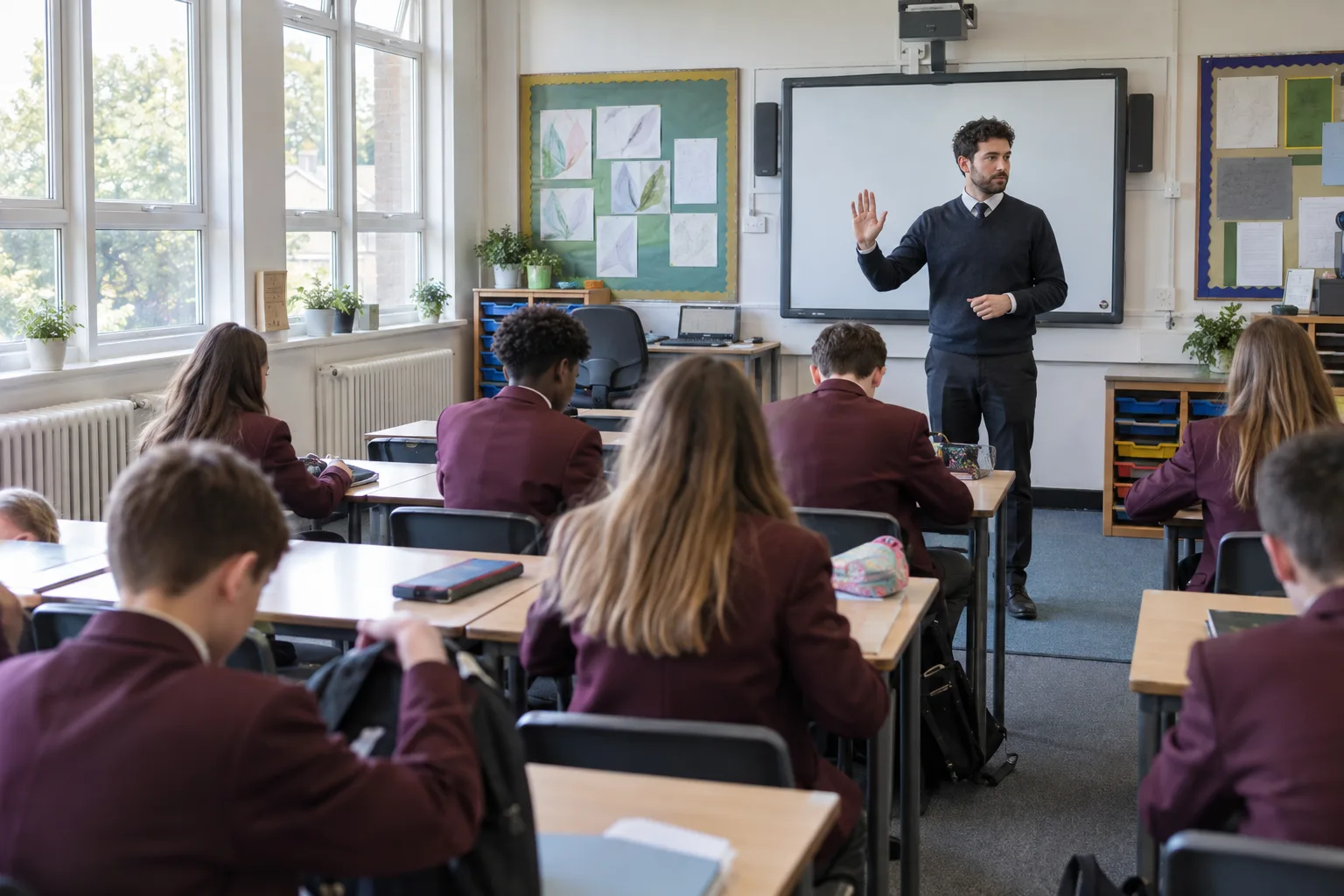
Developing a Social-Emotional Curriculum: A Step-by-Step GuideGCSE students aged 15-16 in royal blue jumpers participate in a social-emotional learning discussion at individual desks

Updated on  

January 30, 2026

Developing a Social-Emotional Curriculum: A Step-by-Step Guide

|

October 16, 2024

Discover key strategies for developing a social-emotional curriculum that boosts student well-being, emotional intelligence, and academic success in schools.


Course Enquiry
Copy citation

Main, P. (2024, October 16). Developing a Social-Emotional Curriculum: A Step-by-Step Guide. Retrieved from www.structural-learning.com/post/developing-a-social-emotional-curriculum

Creating a comprehensive social-emotional curriculum requires a structured approach that balances developmental theory with practical classroom implementation. Whether you're an educator, curriculum coordinator, or school leader, developing an effective Social-Emotional Learning programme involves careful planning, stakeholder engagement, and systematic rollout strategies. The process may seem daunting, but breaking it down into manageable steps makes it achievable for any educational setting. Ready to transform your school's approach to emotional intelligence and create lasting impact on student wellbeing?

Key Takeaways

  1. Beyond Academic Achievement: Discover why SEL competencies predict life outcomes better than exam results, and which specific skills transform your classroom culture
  2. The Five Pillars Framework: Master the CASEL competencies that underpin every successful SEL programme: from self-awareness to responsible decision-making in real classroom scenarios
  3. Navigate Programme Selection: Cut through marketing claims with evidence-based criteria for choosing between RULER, Second Step, and other leading SEL approaches
  4. Your Implementation Roadmap: Avoid common pitfalls with a modular toolkit approach that adapts to your school's unique context and existing frameworks

Understanding the foundational competencies of SEL is pivotal for educators looking to integrate these principles into their curricula. These competencies serve as the building blocks for student success, forming the basis for alignment with existing educational frameworks. By recognising and valuing these foundational elements, schools can create a culture that prioritises both academic excellence and emotional health.

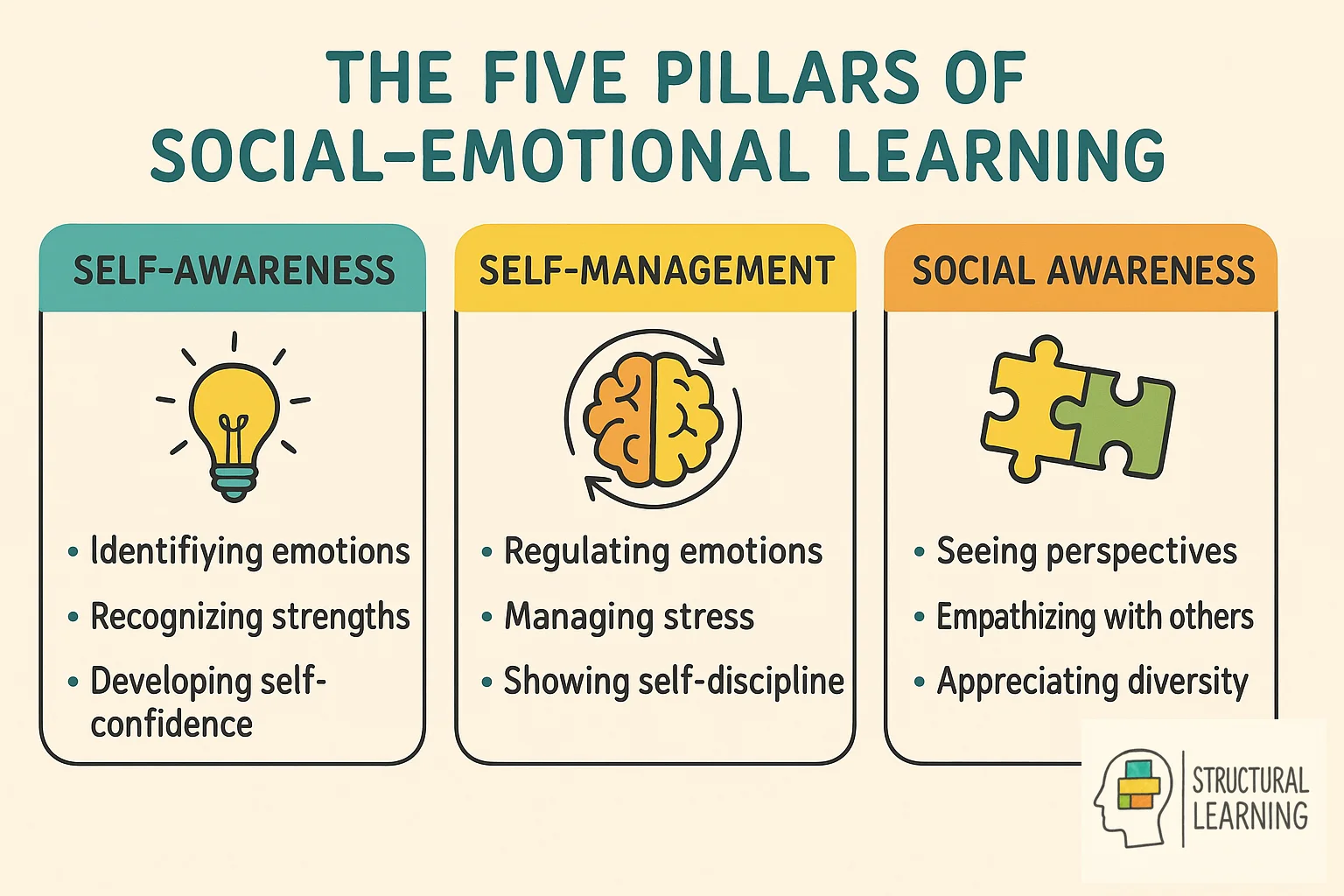
Five pillars of SEL framework showing CASEL competencies for student emotional andacademic success" loading="lazy">
The Five Pillars of Social-Emotional Learning

This article presents a comprehensive step-by-step guide to successfully implement an SEL curriculum. From evaluating leading programmes to encouraging collaboration among educators and the community, each step is designed to equip educators with the tools needed for effective SEL integration. Together, these strategies can transform the learning environment into one where every student thrives emotionally and academically.

Benefits of Social-Emotional Learning

CASEL Social-Emotional Learning Competencies

CompetencyDefinitionKey SkillsClassroom Integration
Self-AwarenessUnderstanding emotions and valuesEmotion identification, self-confidenceReflection journals, emotion check-ins
Self-ManagementRegulating emotions and behavioursImpulse control, goal-settingCalm corners, behaviour strategies
Social AwarenessUnderstanding others' perspectivesEmpathy, respecting diversityLiterature discussions, perspective-taking
Relationship SkillsBuilding healthy relationshipsCommunication, cooperationCollaborative projects, conflict resolution
Responsible Decision-MakingMaking ethical choicesProblem-solving, consequencesEthical dilemmas, decision frameworks

Social-Emotional Learning is crucial because SEL competencies predict life outcomes better than traditional exam results. Students who receive SEL instruction show improved academic performance, better emotional regulation, and stronger interpersonal relationships. SEL creates a foundation for lifelong success by developing essential skills like empathy, resilience, and effective communication.

Social-Emotional Learning serves a dual purpose by enriching personal growth and academic achievement. By facilitating the ability to recognise and regulate emotions, SEL cultivates self-awareness and empathy. Students equipped with strong social-emotional skills not only navigate social situations with ease but also tackle academic endeavors more effectively, equipping them for various social and professional scenarios.

Acknowledging the vital role of emotional well-being, research underscores SEL's impact on lowering substance abuse and crime rates, thereby contributing to a more cohesive community culture. SEL in schools creates an atmosphere of understanding and acceptance, catering to students from diverse backgrounds. This nurturing environment proves favourable to learning, where students engage more deeply and perform better academically.

Teachers benefit from SEL by employing teaching methods that resonate with students' cultural contexts, leading to a more inclusive and responsive educational system. The long-term advantages of integrating social-emotional learning into school curriculums extend beyond the school gates, supporting a cycle of continuous positive outcomes in both personal and community realms.

Five Core SEL Competencies

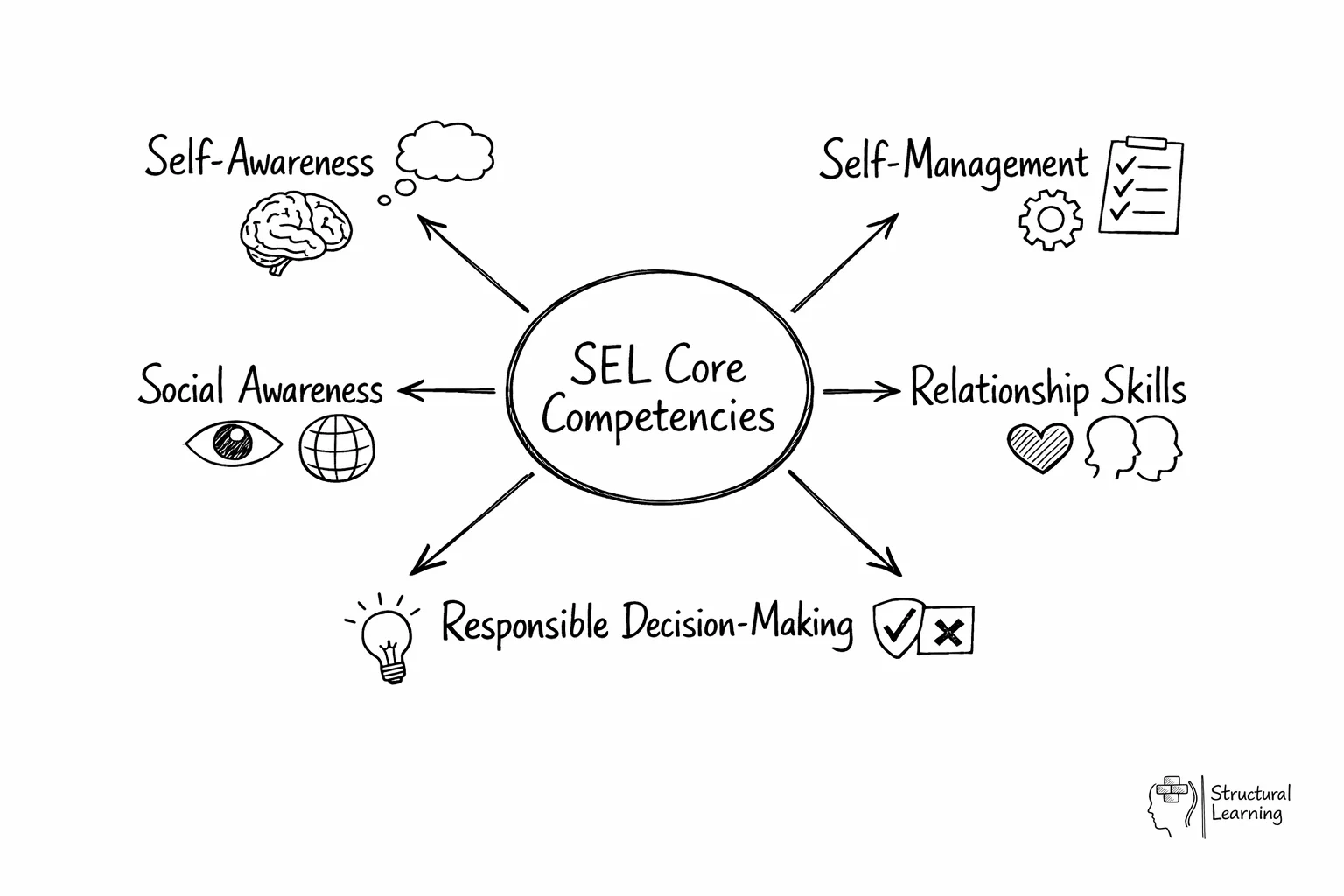
The five core SEL competencies are self-awareness, self-management, social awareness, relationship skills, and responsible decision-making. These competencies, established by CASEL, serve as the building blocks for all effective SEL programmes. Each competency includes specific skills that can be taught, practiced, and assessed in classroom settings.

Hub-and-spoke diagram showing five SEL competencies radiating from central core
Hub-and-spoke diagram: The Five Core Competencies of Social-Emotional Learning

Social-emotional learning stands on five foundational competencies that serve as pillars for developing strong social-emotional skills.

Self-awareness encompasses recognising one's emotions, thoughts, and values, and understanding how they influence behaviour. This competency includes an accurate self-assessment of strengths and limitations, encouraging a well-grounded sense of confidence and purpose.

Self-management entails managing one's emotions, thoughts, and behaviours in different situations effectively. Key aspects include regulating emotions, setting and achieving goals, and exhibiting self-discipline.

Social awareness involves understanding the perspectives of and empathizing with others from diverse backgrounds and cultures. It also requires recognising social norms for behaviour and an appreciation of diversity.

Relationship skills are central to forming and maintaining healthy and rewarding relationships. They include clear communication, active listening, cooperating, resisting inappropriate social pressure, negotiating conflict constructively, and seeking or offering help when needed.

Responsible decision-making involves making choices based on ethical standards, safety concerns, and social norms. It includes the realistic evaluation of consequences of various actions andconsidering the well-being of oneself, others, and the collective good.

These five competencies work synergistically to create a comprehensive framework for social-emotional development. When students master these skills, they demonstrate improved academic performance, better classroom behaviour, and enhanced peer relationships. Schools implementing programmes based on these competencies report significant improvements in school climate and reduced behavioural incidents.

Each competency can be developed through targeted activities and consistent practice. For example, self-awareness might be developed through reflective journaling or emotion identification exercises, while relationship skills can be strengthened through collaborative projects and conflict resolution training. The key is ensuring that SEL instruction is embedded throughout the school day rather than treated as an isolated subject.

15 Strategies for Embedding Social-Emotional Learning

  1. 1. Create explicit SEL lessons with dedicated curriculum time
  2. 2. Integrate SEL into academic subjects through literature and discussion
  3. 3. Model emotional regulation and name your own feelings
  4. 4. Establish classroom routines that build community and belonging
  5. 5. Use morning meetings or circle time for connection
  6. 6. Teach specific strategies for managing difficult emotions
  7. 7. Create safe spaces for students to regulate when needed
  8. 8. Use restorative practices instead of punitive discipline
  9. 9. Build student voice and agency into classroom decisions
  10. 10. Teach conflict resolution skills explicitly
  11. 11. Use role-play to practise social skills
  12. 12. Incorporate mindfulness and breathing exercises
  13. 13. Celebrate effort and growth rather than just achievement
  14. 14. Partner with families to reinforce SEL at home
  15. 15. Assess SEL progress through observation and self-report

Selecting an Evidence-Based SEL Programme

Choosing the right SEL programme requires careful evaluation of research evidence, alignment with school values, and practical implementation considerations. Leading programmes like RULER, Second Step, and Zones of Regulation each offer distinct approaches to developing social-emotional competencies. Schools should assess programme effectiveness data, training requirements, and compatibility with existing curricula before making their selection.

The marketplace offers numerous SEL programmes, each claiming effectiveness, making selection challenging for educators. Evidence-based programmes demonstrate measurable outcomes through rigorous research studies and peer-reviewed evaluations. When evaluating programmes, schools should examine longitudinal studies showing sustained impact on student outcomes rather than relying solely on marketing materials.

RULER, developed by Yale University, focuses on emotion regulation through recognising, understanding, labelling, expressing, and regulating emotions. This programme provides explicit instruction in emotional literacy and has shown significant improvements in classroom climate and academic performance across diverse school settings.

Second Step offers a comprehensive curriculum spanning early years through secondary education, emphasising empathy, emotion management, and problem-solving skills. The programme's structured lessons and extensive research base make it particularly suitable for schools seeking systematic implementation.

Zones of Regulation helps students identify their emotional and physiological states using a colour-coded system. This visual approach proves especially effective for younger learners and students with additional needs, providing concrete strategies for self-regulation.

When selecting programmes, consider factors such as staff training requirements, ongoing support availability, assessment tools, and alignment with your school's demographic needs. Successful implementation depends on choosing a programme that matches your staff's capacity for professional development and your school's commitment to long-term implementation.

Implementation Strategy and Timeline

Effective SEL implementation follows a phased approach beginning with leadership commitment, staff training, and pilot testing before full rollout. A successful timeline typically spans 12-18 months, allowing for adequate preparation, professional development, and programme adjustment. Schools should plan for ongoing evaluation, stakeholder feedback, and continuous improvement throughout the implementation process.

Phase one involves establishing leadership commitment and forming an SEL implementation team comprising administrators, teachers, support staff, and parent representatives. This team develops the implementation timeline, secures necessary resources, and creates communication strategies for all stakeholders. Clear leadership support proves essential for overcoming implementation challenges and maintaining momentum.

Phase two focuses on comprehensive staff training and professional development. Quality SEL implementation requires teachers to model social-emotional competencies whilst delivering explicit instruction. Professional development should include both initial training and ongoing coaching support to ensure fidelity of implementation.

Phase three involves pilot testing with a small group of classes or year groups. This controlled rollout allows schools to identify potential challenges, refine implementation procedures, and gather initial feedback from teachers and students. Pilot results inform adjustments before wider implementation.

Phase four encompasses full programme rollout with systematic monitoring and evaluation. Schools should establish data collection procedures to track student progress, teacher confidence, and programme fidelity. Regular review meetings ensure continuous improvement and sustained implementation quality.

Throughout implementation, schools must maintain focus on curriculum integration rather than treating SEL as an additional burden. Successful programmes embed social-emotional learning within existing subjects and school routines, creating a cohesive approach to student development.

Assessment and Evaluation Methods

Assessing SEL competencies requires multiple measurement approaches including observation tools, student self-assessments, peer evaluations, and behavioural data tracking. Unlike traditional academic assessment, SEL evaluation focuses on skill demonstration in authentic contexts rather than knowledge recall. Effective assessment systems provide ongoing feedback to students, teachers, and families whilst informing programme improvements.

Formative assessment strategies include daily check-ins, emotion regulation tracking, and collaborative reflection activities. These ongoing assessments help students develop self-awareness whilst providing teachers with immediate feedback about student progress. Digital platforms can streamline data collection and enable students to track their own social-emotional growth over time.

Summative assessment approaches utilise standardised tools such as the Social-Emotional Learning Assessment Measures or locally developed rubrics aligned with programme competencies. These assessments should occur at regular intervals to measure progress and inform instructional adjustments.

Behavioural indicators provide valuable data about SEL programme effectiveness. Schools should monitor metrics such as disciplinary incidents, attendance rates, peer conflicts, and academic engagement. Positive changes in these areas often indicate successful social-emotional skill development.

Student voice plays a crucial role in SEL evaluation. Regular surveys, focus groups, and reflection activities provide insights into student perceptions of programme effectiveness and areas for improvement. This feedback ensures programmes remain relevant and engaging for diverse learners.

Conclusion

Developing a comprehensive social-emotional curriculum represents a transformative investment in student success that extends far beyond academic achievement. The structured approach outlined in this guide provides educators with a clear pathway from initial planning through successful implementation and ongoing evaluation. By focusing on the five core competencies, selecting evidence-based programmes, and following systematic implementation strategies, schools can create learning environments where students develop essential life skills alongside academic knowledge.

The journey towards effective SEL implementation requires sustained commitment from leadership, comprehensive professional development for staff, and ongoing engagement with students and families. Whilst challenges inevitably arise, the long-term benefits of social-emotional learning create lasting positive impacts on school climate, student wellbeing, and academic outcomes. Schools that embrace this complete approach to education prepare students for examinations and for meaningful participation in their communities and success in their future endeavours.

Remember that SEL implementation is not a destination but an ongoing process of growth and refinement. As your school community develops stronger social-emotional competencies, continue to evaluate, adjust, and expand your approaches to meet evolving student needs. The investment in social-emotional learning creates a foundation for educational excellence that benefits students, teachers, and the broader school community for years to come.

Further Reading

For further academic research on this topic:

For educators seeking to deepen their understanding of social-emotional learning implementation, the following research provides valuable insights into effective practices and programme outcomes:

Durlak, J. A., Weissberg, R. P., Dymnicki, A. B., Taylor, R. D., & Schellinger, K. B. (2011). The impact of enhancing students' social and emotional learning: A meta-analysis of school-based universal interventions. Child Development, 82(1), 405-432. This comprehensive meta-analysis examines 213 school-based SEL programmes and demonstrates significant positive effects on attitudes, behaviour, and academic performance.

Jones, D. E., Greenberg, M., & Crowley, M. (2015). Early social-emotional functioning and public health: The relationship between kindergarten social competence and future wellness. American Journal of Public Health, 105(11), 2283-2290. This longitudinal study tracks students for 25 years, revealing how early social-emotional competencies predict adult outcomes including employment, education, and mental health.

Mahoney, J. L., Durlak, J. A., & Weissberg, R. P. (2018). An update on social and emotional learning outcome research. Phi Delta Kappan, 100(4), 18-23. This research update examines recent evidence for SEL effectiveness and provides guidance for implementation in diverse educational contexts.

Taylor, R. D., Oberle, E., Durlak, J. A., & Weissberg, R. P. (2017). Promoting positive youth development through school-based social and emotional learning interventions: A meta-analysis of follow-up effects. Child Development, 88(4), 1156-1171. This study examines the sustained impact of SEL programmes, demonstrating that benefits persist beyond initial implementation periods.

Brackett, M. A., Rivers, S. E., & Salovey, P. (2011). Emotional intelligence: Implications for personal, social, academic, and workplace success. Social and Personality Psychology Compass, 5(1), 88-103. This theoretical framework explores the connections between emotional intelligence and various life outcomes, providing foundation knowledge for SEL programme development.

Loading audit...

Creating a comprehensive social-emotional curriculum requires a structured approach that balances developmental theory with practical classroom implementation. Whether you're an educator, curriculum coordinator, or school leader, developing an effective Social-Emotional Learning programme involves careful planning, stakeholder engagement, and systematic rollout strategies. The process may seem daunting, but breaking it down into manageable steps makes it achievable for any educational setting. Ready to transform your school's approach to emotional intelligence and create lasting impact on student wellbeing?

Key Takeaways

  1. Beyond Academic Achievement: Discover why SEL competencies predict life outcomes better than exam results, and which specific skills transform your classroom culture
  2. The Five Pillars Framework: Master the CASEL competencies that underpin every successful SEL programme: from self-awareness to responsible decision-making in real classroom scenarios
  3. Navigate Programme Selection: Cut through marketing claims with evidence-based criteria for choosing between RULER, Second Step, and other leading SEL approaches
  4. Your Implementation Roadmap: Avoid common pitfalls with a modular toolkit approach that adapts to your school's unique context and existing frameworks

Understanding the foundational competencies of SEL is pivotal for educators looking to integrate these principles into their curricula. These competencies serve as the building blocks for student success, forming the basis for alignment with existing educational frameworks. By recognising and valuing these foundational elements, schools can create a culture that prioritises both academic excellence and emotional health.

Five pillars of SEL framework showing CASEL competencies for student emotional andacademic success" loading="lazy">
The Five Pillars of Social-Emotional Learning

This article presents a comprehensive step-by-step guide to successfully implement an SEL curriculum. From evaluating leading programmes to encouraging collaboration among educators and the community, each step is designed to equip educators with the tools needed for effective SEL integration. Together, these strategies can transform the learning environment into one where every student thrives emotionally and academically.

Benefits of Social-Emotional Learning

CASEL Social-Emotional Learning Competencies

CompetencyDefinitionKey SkillsClassroom Integration
Self-AwarenessUnderstanding emotions and valuesEmotion identification, self-confidenceReflection journals, emotion check-ins
Self-ManagementRegulating emotions and behavioursImpulse control, goal-settingCalm corners, behaviour strategies
Social AwarenessUnderstanding others' perspectivesEmpathy, respecting diversityLiterature discussions, perspective-taking
Relationship SkillsBuilding healthy relationshipsCommunication, cooperationCollaborative projects, conflict resolution
Responsible Decision-MakingMaking ethical choicesProblem-solving, consequencesEthical dilemmas, decision frameworks

Social-Emotional Learning is crucial because SEL competencies predict life outcomes better than traditional exam results. Students who receive SEL instruction show improved academic performance, better emotional regulation, and stronger interpersonal relationships. SEL creates a foundation for lifelong success by developing essential skills like empathy, resilience, and effective communication.

Social-Emotional Learning serves a dual purpose by enriching personal growth and academic achievement. By facilitating the ability to recognise and regulate emotions, SEL cultivates self-awareness and empathy. Students equipped with strong social-emotional skills not only navigate social situations with ease but also tackle academic endeavors more effectively, equipping them for various social and professional scenarios.

Acknowledging the vital role of emotional well-being, research underscores SEL's impact on lowering substance abuse and crime rates, thereby contributing to a more cohesive community culture. SEL in schools creates an atmosphere of understanding and acceptance, catering to students from diverse backgrounds. This nurturing environment proves favourable to learning, where students engage more deeply and perform better academically.

Teachers benefit from SEL by employing teaching methods that resonate with students' cultural contexts, leading to a more inclusive and responsive educational system. The long-term advantages of integrating social-emotional learning into school curriculums extend beyond the school gates, supporting a cycle of continuous positive outcomes in both personal and community realms.

Five Core SEL Competencies

The five core SEL competencies are self-awareness, self-management, social awareness, relationship skills, and responsible decision-making. These competencies, established by CASEL, serve as the building blocks for all effective SEL programmes. Each competency includes specific skills that can be taught, practiced, and assessed in classroom settings.

Hub-and-spoke diagram showing five SEL competencies radiating from central core
Hub-and-spoke diagram: The Five Core Competencies of Social-Emotional Learning

Social-emotional learning stands on five foundational competencies that serve as pillars for developing strong social-emotional skills.

Self-awareness encompasses recognising one's emotions, thoughts, and values, and understanding how they influence behaviour. This competency includes an accurate self-assessment of strengths and limitations, encouraging a well-grounded sense of confidence and purpose.

Self-management entails managing one's emotions, thoughts, and behaviours in different situations effectively. Key aspects include regulating emotions, setting and achieving goals, and exhibiting self-discipline.

Social awareness involves understanding the perspectives of and empathizing with others from diverse backgrounds and cultures. It also requires recognising social norms for behaviour and an appreciation of diversity.

Relationship skills are central to forming and maintaining healthy and rewarding relationships. They include clear communication, active listening, cooperating, resisting inappropriate social pressure, negotiating conflict constructively, and seeking or offering help when needed.

Responsible decision-making involves making choices based on ethical standards, safety concerns, and social norms. It includes the realistic evaluation of consequences of various actions andconsidering the well-being of oneself, others, and the collective good.

These five competencies work synergistically to create a comprehensive framework for social-emotional development. When students master these skills, they demonstrate improved academic performance, better classroom behaviour, and enhanced peer relationships. Schools implementing programmes based on these competencies report significant improvements in school climate and reduced behavioural incidents.

Each competency can be developed through targeted activities and consistent practice. For example, self-awareness might be developed through reflective journaling or emotion identification exercises, while relationship skills can be strengthened through collaborative projects and conflict resolution training. The key is ensuring that SEL instruction is embedded throughout the school day rather than treated as an isolated subject.

15 Strategies for Embedding Social-Emotional Learning

  1. 1. Create explicit SEL lessons with dedicated curriculum time
  2. 2. Integrate SEL into academic subjects through literature and discussion
  3. 3. Model emotional regulation and name your own feelings
  4. 4. Establish classroom routines that build community and belonging
  5. 5. Use morning meetings or circle time for connection
  6. 6. Teach specific strategies for managing difficult emotions
  7. 7. Create safe spaces for students to regulate when needed
  8. 8. Use restorative practices instead of punitive discipline
  9. 9. Build student voice and agency into classroom decisions
  10. 10. Teach conflict resolution skills explicitly
  11. 11. Use role-play to practise social skills
  12. 12. Incorporate mindfulness and breathing exercises
  13. 13. Celebrate effort and growth rather than just achievement
  14. 14. Partner with families to reinforce SEL at home
  15. 15. Assess SEL progress through observation and self-report

Selecting an Evidence-Based SEL Programme

Choosing the right SEL programme requires careful evaluation of research evidence, alignment with school values, and practical implementation considerations. Leading programmes like RULER, Second Step, and Zones of Regulation each offer distinct approaches to developing social-emotional competencies. Schools should assess programme effectiveness data, training requirements, and compatibility with existing curricula before making their selection.

The marketplace offers numerous SEL programmes, each claiming effectiveness, making selection challenging for educators. Evidence-based programmes demonstrate measurable outcomes through rigorous research studies and peer-reviewed evaluations. When evaluating programmes, schools should examine longitudinal studies showing sustained impact on student outcomes rather than relying solely on marketing materials.

RULER, developed by Yale University, focuses on emotion regulation through recognising, understanding, labelling, expressing, and regulating emotions. This programme provides explicit instruction in emotional literacy and has shown significant improvements in classroom climate and academic performance across diverse school settings.

Second Step offers a comprehensive curriculum spanning early years through secondary education, emphasising empathy, emotion management, and problem-solving skills. The programme's structured lessons and extensive research base make it particularly suitable for schools seeking systematic implementation.

Zones of Regulation helps students identify their emotional and physiological states using a colour-coded system. This visual approach proves especially effective for younger learners and students with additional needs, providing concrete strategies for self-regulation.

When selecting programmes, consider factors such as staff training requirements, ongoing support availability, assessment tools, and alignment with your school's demographic needs. Successful implementation depends on choosing a programme that matches your staff's capacity for professional development and your school's commitment to long-term implementation.

Implementation Strategy and Timeline

Effective SEL implementation follows a phased approach beginning with leadership commitment, staff training, and pilot testing before full rollout. A successful timeline typically spans 12-18 months, allowing for adequate preparation, professional development, and programme adjustment. Schools should plan for ongoing evaluation, stakeholder feedback, and continuous improvement throughout the implementation process.

Phase one involves establishing leadership commitment and forming an SEL implementation team comprising administrators, teachers, support staff, and parent representatives. This team develops the implementation timeline, secures necessary resources, and creates communication strategies for all stakeholders. Clear leadership support proves essential for overcoming implementation challenges and maintaining momentum.

Phase two focuses on comprehensive staff training and professional development. Quality SEL implementation requires teachers to model social-emotional competencies whilst delivering explicit instruction. Professional development should include both initial training and ongoing coaching support to ensure fidelity of implementation.

Phase three involves pilot testing with a small group of classes or year groups. This controlled rollout allows schools to identify potential challenges, refine implementation procedures, and gather initial feedback from teachers and students. Pilot results inform adjustments before wider implementation.

Phase four encompasses full programme rollout with systematic monitoring and evaluation. Schools should establish data collection procedures to track student progress, teacher confidence, and programme fidelity. Regular review meetings ensure continuous improvement and sustained implementation quality.

Throughout implementation, schools must maintain focus on curriculum integration rather than treating SEL as an additional burden. Successful programmes embed social-emotional learning within existing subjects and school routines, creating a cohesive approach to student development.

Assessment and Evaluation Methods

Assessing SEL competencies requires multiple measurement approaches including observation tools, student self-assessments, peer evaluations, and behavioural data tracking. Unlike traditional academic assessment, SEL evaluation focuses on skill demonstration in authentic contexts rather than knowledge recall. Effective assessment systems provide ongoing feedback to students, teachers, and families whilst informing programme improvements.

Formative assessment strategies include daily check-ins, emotion regulation tracking, and collaborative reflection activities. These ongoing assessments help students develop self-awareness whilst providing teachers with immediate feedback about student progress. Digital platforms can streamline data collection and enable students to track their own social-emotional growth over time.

Summative assessment approaches utilise standardised tools such as the Social-Emotional Learning Assessment Measures or locally developed rubrics aligned with programme competencies. These assessments should occur at regular intervals to measure progress and inform instructional adjustments.

Behavioural indicators provide valuable data about SEL programme effectiveness. Schools should monitor metrics such as disciplinary incidents, attendance rates, peer conflicts, and academic engagement. Positive changes in these areas often indicate successful social-emotional skill development.

Student voice plays a crucial role in SEL evaluation. Regular surveys, focus groups, and reflection activities provide insights into student perceptions of programme effectiveness and areas for improvement. This feedback ensures programmes remain relevant and engaging for diverse learners.

Conclusion

Developing a comprehensive social-emotional curriculum represents a transformative investment in student success that extends far beyond academic achievement. The structured approach outlined in this guide provides educators with a clear pathway from initial planning through successful implementation and ongoing evaluation. By focusing on the five core competencies, selecting evidence-based programmes, and following systematic implementation strategies, schools can create learning environments where students develop essential life skills alongside academic knowledge.

The journey towards effective SEL implementation requires sustained commitment from leadership, comprehensive professional development for staff, and ongoing engagement with students and families. Whilst challenges inevitably arise, the long-term benefits of social-emotional learning create lasting positive impacts on school climate, student wellbeing, and academic outcomes. Schools that embrace this complete approach to education prepare students for examinations and for meaningful participation in their communities and success in their future endeavours.

Remember that SEL implementation is not a destination but an ongoing process of growth and refinement. As your school community develops stronger social-emotional competencies, continue to evaluate, adjust, and expand your approaches to meet evolving student needs. The investment in social-emotional learning creates a foundation for educational excellence that benefits students, teachers, and the broader school community for years to come.

Further Reading

For further academic research on this topic:

For educators seeking to deepen their understanding of social-emotional learning implementation, the following research provides valuable insights into effective practices and programme outcomes:

Durlak, J. A., Weissberg, R. P., Dymnicki, A. B., Taylor, R. D., & Schellinger, K. B. (2011). The impact of enhancing students' social and emotional learning: A meta-analysis of school-based universal interventions. Child Development, 82(1), 405-432. This comprehensive meta-analysis examines 213 school-based SEL programmes and demonstrates significant positive effects on attitudes, behaviour, and academic performance.

Jones, D. E., Greenberg, M., & Crowley, M. (2015). Early social-emotional functioning and public health: The relationship between kindergarten social competence and future wellness. American Journal of Public Health, 105(11), 2283-2290. This longitudinal study tracks students for 25 years, revealing how early social-emotional competencies predict adult outcomes including employment, education, and mental health.

Mahoney, J. L., Durlak, J. A., & Weissberg, R. P. (2018). An update on social and emotional learning outcome research. Phi Delta Kappan, 100(4), 18-23. This research update examines recent evidence for SEL effectiveness and provides guidance for implementation in diverse educational contexts.

Taylor, R. D., Oberle, E., Durlak, J. A., & Weissberg, R. P. (2017). Promoting positive youth development through school-based social and emotional learning interventions: A meta-analysis of follow-up effects. Child Development, 88(4), 1156-1171. This study examines the sustained impact of SEL programmes, demonstrating that benefits persist beyond initial implementation periods.

Brackett, M. A., Rivers, S. E., & Salovey, P. (2011). Emotional intelligence: Implications for personal, social, academic, and workplace success. Social and Personality Psychology Compass, 5(1), 88-103. This theoretical framework explores the connections between emotional intelligence and various life outcomes, providing foundation knowledge for SEL programme development.

SEND

Back to Blog

{"@context":"https://schema.org","@graph":[{"@type":"Article","@id":"https://www.structural-learning.com/post/developing-a-social-emotional-curriculum#article","headline":"Developing a Social-Emotional Curriculum: A Step-by-Step Guide","description":"Discover key strategies for developing a social-emotional curriculum that boosts student well-being, emotional intelligence, and academic success in schools.","datePublished":"2024-10-16T10:35:45.374Z","dateModified":"2026-01-26T10:09:32.212Z","author":{"@type":"Person","name":"Paul Main","url":"https://www.structural-learning.com/team/paulmain","jobTitle":"Founder & Educational Consultant"},"publisher":{"@type":"Organization","name":"Structural Learning","url":"https://www.structural-learning.com","logo":{"@type":"ImageObject","url":"https://cdn.prod.website-files.com/5b69a01ba2e409e5d5e055c6/6040bf0426cb415ba2fc7882_newlogoblue.svg"}},"mainEntityOfPage":{"@type":"WebPage","@id":"https://www.structural-learning.com/post/developing-a-social-emotional-curriculum"},"image":"https://cdn.prod.website-files.com/5b69a01ba2e409501de055d1/6950267cfd91b6d3fdca7b87_39zu31.webp","wordCount":5018},{"@type":"BreadcrumbList","@id":"https://www.structural-learning.com/post/developing-a-social-emotional-curriculum#breadcrumb","itemListElement":[{"@type":"ListItem","position":1,"name":"Home","item":"https://www.structural-learning.com/"},{"@type":"ListItem","position":2,"name":"Blog","item":"https://www.structural-learning.com/blog"},{"@type":"ListItem","position":3,"name":"Developing a Social-Emotional Curriculum: A Step-by-Step Guide","item":"https://www.structural-learning.com/post/developing-a-social-emotional-curriculum"}]}]}