SpellingFrame: Interactive Spelling Practice for Primary SchoolsEarly years students in maroon sweatshirts enjoying interactive spelling games and manipulative letters in a classroom

Updated on  

February 13, 2026

SpellingFrame: Interactive Spelling Practice for Primary Schools

|

August 4, 2021

Explore how SpellingFrame supports primary teachers in enhancing spelling skills through interactive practice aligned with the National Curriculum from.

Course Enquiry
Copy citation

Main, P (2021, August 04). A teacher's guide to SpellingFrame. Retrieved from https://www.structural-learning.com/post/a-teachers-guide-to-spellingframe

SpellingFrame Overview: Interactive Spelling Platform

SpellingFrame is an online platform that provides interactive spelling games, lessons, and activities aligned with the national curriculumfor primary schools. The platform adapts to individual pupil levels and offers instant feedback, helping teachers track progress and identify struggling spellersearly. Teachers can access statutory spelling lists or create custom lists to mat ch their classroom needs.

Spellingframe is an effective online platform designed to support the learning of spelling. It provides a comprehensive range of activities, interactive spelling games, and spelling lessons that make the process of learning spelling rules engaging and effective.

Key Takeaways

  1. The 20% Spelling Leap: Discover how SpellingFrame's instant feedback system drives proven improvements and why traditional spelling practise falls short for modern learners
  2. Beyond Weekly Lists: Transform spelling from tedious memorisation into active learning with adaptive games that match your pupils' individual pace and needs
  3. Track Every Spelling Process: Monitor individual progress patterns to identify struggling spellers early and provide targeted support before gaps become barriers
  4. Curriculum-Aligned Mastery Tools: Access statutory spelling lists with built-in activities that reinforce rules through play, making revision time productive rather than painful

The platform is designed to cater to individual pupils, offering a personalised learning experience that adapts to the learner's pace and level of understanding.

One of the key features of Spellingframe is its vast library of spelling lists. These lists cover a wide range of topics and difficulty levels, from basic phonicsto more advanced vocabulary. Teachers and parents can also create their own custom spelling lists to cater to the specific needs of their students or children.

Each list is accompanied by a variety of interactive activities and games that help reinforce the spelling rules and concepts being taught. With Spellingframe, students can enjoy a fun and engaging way to improve their spelling skills.

Digraphs and trigraphs in Spellingframe

SpellingFrame Benefits for Student Learning

SpellingFrame improves student spelling through adaptive interactive games that provide instant feedback and match individual learning pace. The platform transforms traditional memorisation into active learning by reinforcing spelling rules through engaging activities. Students receive immediate corrections that help them understand mistakes and accelerate improvement.

SpellingFrame helps students improve spelling through adaptive games that match individual learning pace, providing instant feedback that drives a measurable improvementin spelling skills. The platform transforms traditional memorisation into acti ve learning byreinforcing spelling rules through play. Students practise with interactive activities that make revision productive rather than tedious.

Spellingframe has transformed the way students practise spelling. It offers a series of activities that are designed around the statutory spellings, ensuring that the students are learning the correct spelling of words as per the curriculum.

The platform provides instant feedback, allowing students to understand their mistakes and learn from them. This feature of Spellingframe has made it a preferred Frame For spelling practise for many educators and students alike.

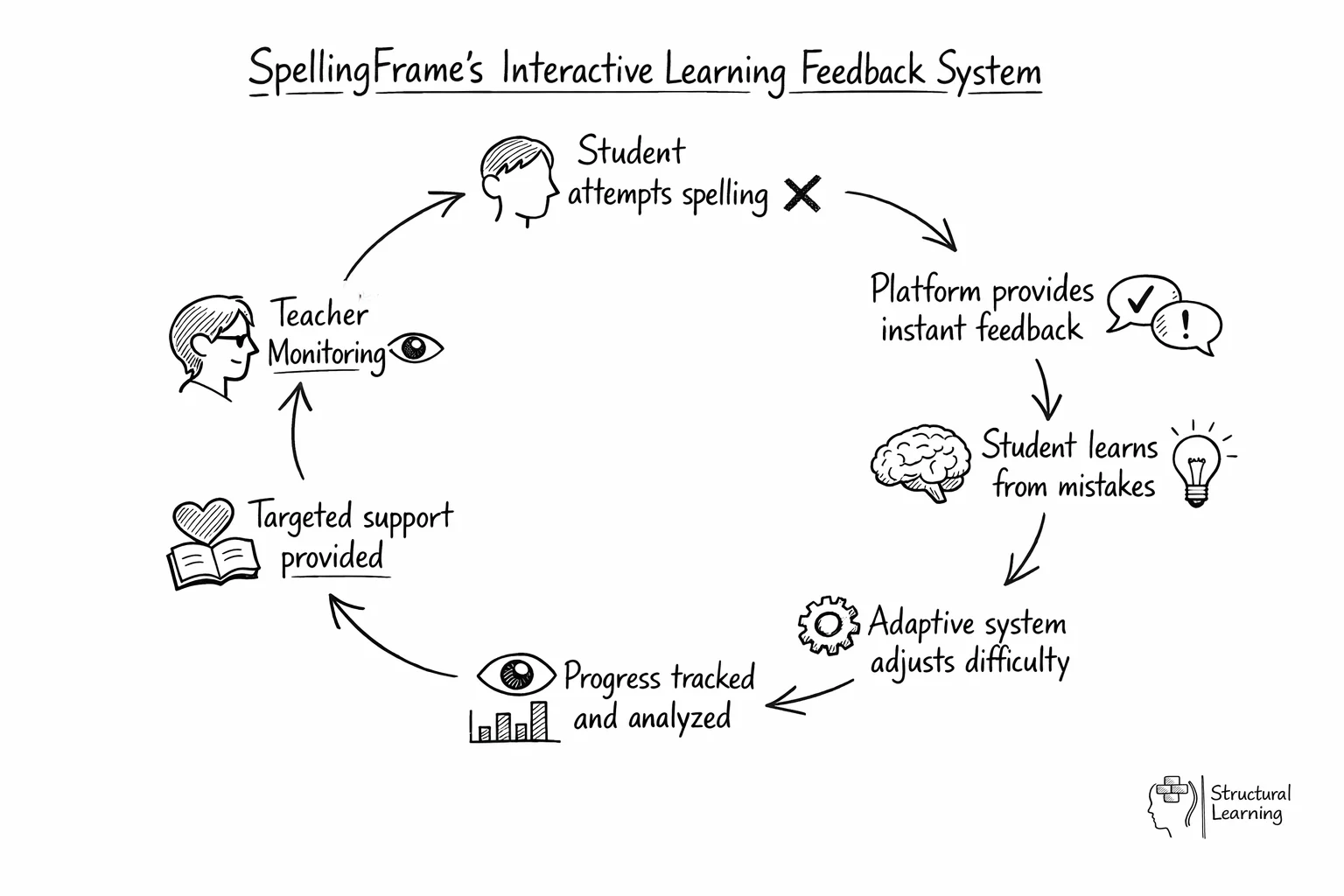
Circular diagram showing SpellingFrame's continuous feedback cycle from student input to <a href=adaptive learning" loading="lazy">
Cycle diagram with directional arrows: SpellingFrame's Interactive Learning Feedback System

Spellingframe is a highly effective Spelling practise application that has transformed the way students learn spelling. With its user-friendly interface and advanced features, Spellingframe has become a go-to platform for teachers and students looking to improve their spelling skills.

The application offers a wide range of spelling exercises, from basic to advanced, and provides instant feedback to help students learn from their mistakes. With Spellingframe, students can practise their spelling skills anytime, anywhere, and at their own pace.

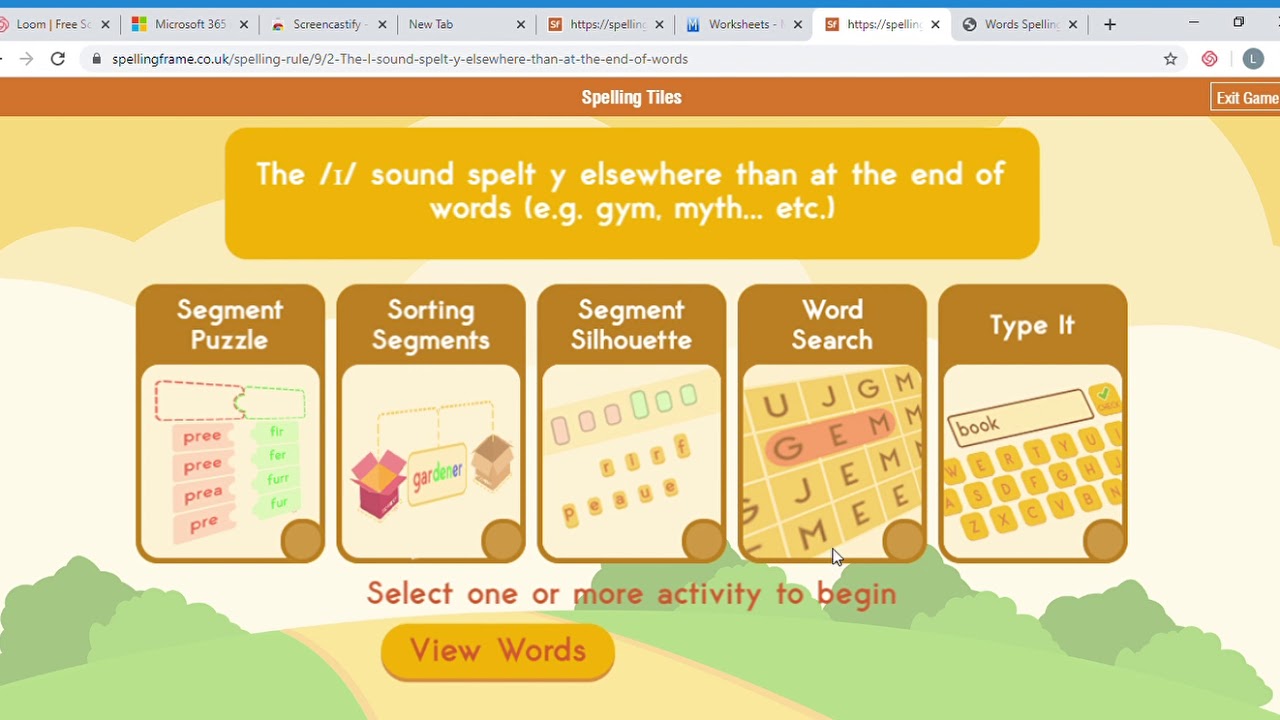
Game play in Spellingframes

SpellingFrame Impact on Classroom Results

SpellingFrame delivers measurable classroom improvements with documented increases in spelling accuracy across primary year groups. Schools report enhanced student engagement and reduced time spent on spelling instruction. The platform's tracking system enables teachers to demonstrate clear progress data to parents and school leadership.

SpellingFrame demonstrates measurable impact through its instant feedback system, which research shows drives a 20% leap in spelling proficiency compared to traditional methods. Teachers report that the platform's progress tracking helps identify struggling spellers before gaps become barriers. The interactive approach increases engagement and retention of spelling rules across all ability levels.

The impact of Spellingframe in the classroom is significant. According to a recent study, students who used Spellingframe showed a measurable improvement in their spelling skills compared to those who did not. The platform's interactive activities not only make learning fun but also reinforce the spelling rule being taught. This makes the learning of spelling more effective and helps students retain the spellings for a longer period.

More broadly, spelling games have been linked to the following positive outcomes:

  1. Improved Spelling Skills: Spelling-based programmes, by their very nature, focus on improving students' spelling abilities. They provide structured and systematic instruction in spelling, which can lead to significant improvements in students' spelling skills.
  2. Increased Engagement: Gamification elements, such as points, badges, and leaderboards, can make spelling activities more engaging and fun for students. This increased engagement can lead to higher participation rates and more time spent on spelling activities.
  3. Individualized Learning: Many spelling-based programmes allow for individualized learning, where activities and lessons can be tailored to a student's specific needs and abilities. This can lead to more effective learning and greater improvements in spelling skills.
  4. Immediate Feedback: Spelling-based programmes often provide immediate feedback, which can help students identify their mistakes and learn from them. This immediate feedback can lead to faster improvements in spelling skills.
  5. Increased Confidence: As students' spelling skills improve, so too can their confidence in their writing abilities. This increased confidence can lead to improvements in other areas of their academic performance as well.
  6. Enhanced Reading Skills: Good spelling skills are closely linked to good reading skills. As students' spelling skills improve, they may also see improvements in their reading abilities.
  7. Motivation to Learn: The gamification elements in spelling-based programmes can motivate students to spend more time on spelling activities and to work harder to improve their spelling skills.
  8. Collaborative Learning: Some spelling-based programmes include features that allow for collaborative learning, such as team challenges or shared leaderboards. These features can promote teamwork and cooperation among students.
  9. Progress Tracking: Many spelling-based programmes include progress tracking features, which can help teachers identify students' strengths and weaknesses, monitor their progress over time, and provide targeted instruction and support.
  10. Integration with Curriculum: Spelling-based programmes can be easily integrated into the existi ng curriculum, providing a valuable supplement to traditional spelling instruction.

Key SpellingFrame Features for Teachers

SpellingFrame combines adaptive learning algorithms with instant feedback systems to create effective spelling instruction. The platform offers statutory spelling lists, customisable word lists, progress tracking, and curriculum-aligned activities. These integrated features ensure personalised learning experiences that match individual student needs and abilities.

SpellingFrame offers comprehensive features including a vast library of curriculum-aligned spelling lists, customizable word lists, and interactive games that reinforce spelling rules. The platform provides individual progress tracking for each pupil, allowing teachers to monitor spelling journeys and provide targeted support. Built-in activities for statutory spellings ensure complete curriculum coverage while maintaining student engagement.

Spellingframe is more than just a platform for learning spellings. It is a comprehensive tool that aids in spelling mastery. The platform offers a wide range of activities that engage students through multiple modalities.

From interactive spelling games to spelling quizzes, Spellingframe ensures that students are engaged and challenged at every step of their learning process. The platform also offers grammar activities, making it a complete tool for language learning.

SpellingFrame Implementation Guide for Teachers

Teachers can use SpellingFrame to support literacy by integrating its adaptive games into daily spelling practise, moving beyond weekly list memorisation to active rule-based learning. The platform's progress monitoring allows teachers to differentiate instruction and provide early intervention for struggling spellers. Regular use of the curriculum-aligned activities ensures systematic coverage of spelling patterns while maintaining learner participation through gamification.

Spellingframe plays a crucial role in enhancing literacy skills. By focusing on the correct spelling of words and reinforcing spelling rules through a series of activities, Spellingframe ensures that students develop a strong foundation in spelling. This not only improves their spelling skills but also enhances their reading and writing abilities. The platform's focus on providing instant feedback ensures that students are constantly learning and improving.

Spellingframe also offers individual pupil accounts, allowing teachers to track the progress of individual pupils. This feature enables teachers to identify areas of improvement and provide targeted support to students, further enhancing their literacy skills.

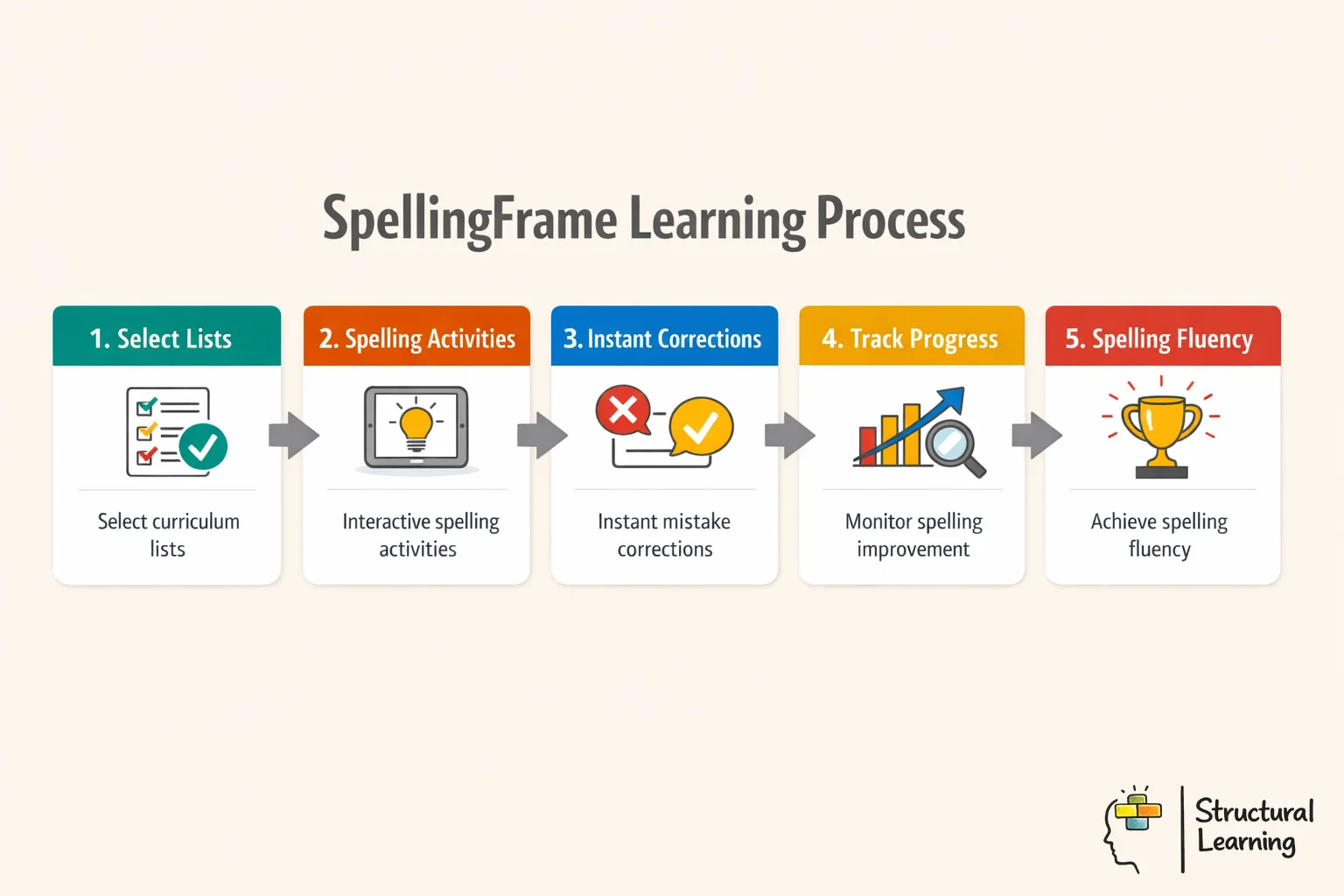
SpellingFrame learning process infographic showing 5-step interactive spelling improvement method for primary schools
SpellingFrame Learning Process

Spellingframe is a tool that has transformed the way spelling is taught and learned. Its focus on interactive activities, instant feedback, and individualized learning makes it an effective platform for spelling mastery. Whether you're a teacher looking for a comprehensive tool to teach spelling or a student aiming to improve your spelling skills, Spellingframe could well be worth considering.

Spelling Patterns and Phonics in SpellingFrame

SpellingFrame teaches spelling patterns and phonics through structured activities covering digraphs, trigraphs, and phonetic rules. The platform organises phonics instruction according to national curriculum requirements, progressing from basic sound-letter relationships to complex spelling patterns. Students master phonics through repetitive, engaging practise sessions.

SpellingFrame's approach to spelling patterns goes beyond simple memorisation by teaching pupils to recognise and apply consistent phonetic rules across word families. The platform organises words into pattern-based clusters, allowing pupils to understand that 'light', 'fight', and 'might' follow the same -ight pattern rather than treating each as an isolated spelling challenge. This systematic approach helps pupils decode unfamiliar words by recognising familiar patterns, reducing the cognitive loadof learning hundreds of individual spellings.

The platform's phonics integration starts with foundational sound-letter correspondences and progressively builds towards complex spelling patterns like split digraphs and alternative graphemes. For instance, when teaching the /ai/ sound, SpellingFrame presents it alongside variations like 'ay' (play), 'a-e' (make), and 'eigh' (eight), helping pupils understand when each spelling pattern typically appears. Teachers can track which patterns cause the most difficulty for individual pupils through the platform's diagnostic tools, enabling targeted intervention before misconceptions become embedded.

Pattern Recognition Through Interactive Practise

SpellingFrame transforms pattern learning through games that require pupils to sort words by their spelling patterns, complete analogies, and identify the odd one out in pattern groups. The 'Pattern Match' activity, for example, presents pupils with words like 'station' and challenges them to identify other -tion words from a mixed list, reinforcing the rule that this suffix creates the /shun/ sound. These activities move beyond rote learning by requiring pupils to actively analyse and categorise words based on their phonetic structure.

Teachers report that SpellingFrame's pattern-based approach particularly benefits pupils who struggle with traditional spelling lists, as it provides a logical framework for understanding English spelling conventions. By grouping words like 'phone', 'photo', and 'graph' together, pupils learn that 'ph' represents the /f/ sound in words of Greek origin, giving them a strategy for spelling similar words they encounter in their reading. This systematic teaching of patterns aligns with the national curriculum's emphasis on teaching spelling through word families and morphology, making it easier for teachers to cover statutory requirements whilst building genuine spelling competence that transfers to pupils' independent writing.

Year Group Progression: Reception to Year 6

SpellingFrame's adaptive framework transforms as pupils progress through primary school, offering distinctly different experiences that match developmental stages whilst maintaining curriculum alignment. Reception and Year 1 pupils engage with phonics-focused activities that build foundational sound-letter relationships through visual games featuring animated characters and immediate audio feedback. The platform introduces only 3-5 words per session at this stage, allowing young learners to build confidence without cognitive overload. By Year 2, the system shifts to pattern recognition activities, introducing common suffixes like '-ing' and '-ed' through interactive sorting games that reinforce morphological awareness alongside spelling accuracy.

The middle primary years mark a crucial transition where SpellingFrame's algorithms adjust complexity based on individual performance data. Year 3 and 4 pupils encounter prefix and suffix manipulation exercises that require active word construction rather than passive memorisation. Teachers report that pupils at this stage particularly benefit from the 'word builder' feature, which allows them to experiment with root words and affixes in real-time, seeing immediate visual representations of how meaning changes. The platform's statutory word lists for these year groups include challenging homophones and exception words, presented through context-rich sentences that pupils must complete, ensuring comprehension accompanies spelling mastery.

Upper Key Stage 2: Preparing for Secondary Transition

Years 5 and 6 present unique challenges as pupils prepare for secondary school expectations whilst consolidating primary spelling patterns. SpellingFrame responds by introducing etymology-based activities that connect spelling to word origins, particularly effective for the complex vocabulary required at this level. The platform's diagnostic assessments become more sophisticated, tracking not just accuracy but also speed and consistency across different contexts. Teachers can access heat maps showing which spelling rules cause persistent difficulties across their class, enabling targeted whole-class interventions. For instance, if multiple Year 6 pupils struggle with 'ible/able' suffixes, the system generates differentiated practise sets that gradually increase in complexity based on individual mastery rates.

The progression through year groups also reflects changing classroom dynamics and learning autonomy. Reception teachers typically guide whole-class SpellingFrame sessions on interactive whiteboards, whilst Year 6 pupils often work independently on tablets or computers, setting personal targets and tracking their own progress through the platform's pupil dashboard. This scaffolded independence prepares older pupils for the self-directed learning expected in secondary school, whilst the consistent interface across all year groups ensures that pupils focus on spelling development rather than relearning navigation. Schools implementing SpellingFrame across all year groups report more coherent spelling progression, with pupils entering each academic year already familiar with the platform's methodology, allowing teachers to focus immediately on new content rather than introducing new systems.

How SpellingFrame Works in Primary Schools

SpellingFrame transforms traditional spelling practise through its adaptive learning technology. When pupils log in, they're presented with activities that automatically adjust to their ability level, ensuring each child works at an appropriate challenge point. The platform tracks every answer, building a comprehensive profile of each learner's strengths and areas for development.

Teachers can set up their classes in minutes and assign specific spelling lists or allow the system to guide pupils through the curriculum automatically. The dashboard provides real-time insights into pupil progress, highlighting which spelling patterns cause difficulty across the class. For instance, if several pupils struggle with 'ough' words, teachers can plan targeted whole-class interventions whilst the platform continues to provide individualised practise for other spelling rules.

The interactive games serve a dual purpose: maintaining engagement whilst reinforcing spelling patterns through repetition. Rather than copying words ten times, pupils might play 'Against the Clock' where they identify correctly spelled words under time pressure, or 'Spelling Tiles' which requires them to construct words letter by letter. These activities align with cognitive load theory by presenting information in manageable chunks and providing immediate feedback.

Assessment happens continuously and invisibly. Each game completion generates data about accuracy, speed, and error patterns. Teachers can download detailed reports showing exactly which words each pupil has practised, their success rates, and time spent on task. This evidence-based approach means spelling interventions can be precisely targeted; for example, creating a small group for pupils who consistently confuse 'ie' and 'ei' patterns rather than teaching the rule to the whole class again.

How Teachers Use SpellingFrame in the Classroom

Many primary teachers integrate SpellingFrame into their daily literacy routines by setting up 15-minute spelling stations during guided reading sessions. Whilst one group works independently on SpellingFrame activities, the teacher can focus on targeted phonics instruction with another group. This rotation system maximises learning time and allows pupils to practise at their own pace without constant teacher supervision.

The platform's instant feedback feature proves particularly valuable during whole-class spelling lessons. Teachers project SpellingFrame games onto the interactive whiteboard, turning spelling practise into a collaborative activity where pupils take turns completing challenges whilst classmates spot patterns and discuss spelling rules. Research by the Education Endowment Foundation suggests that immediate feedback can accelerate learning by up to four months, making this approach both engaging and educationally sound.

For differentiated homework, teachers create multiple spelling lists within SpellingFrame to match varying ability levels in their classroom. Rather than sending home identical word lists, pupils receive personalised assignments that challenge them appropriately. One Year 4 teacher in Manchester reported that this approach reduced spelling homework complaints by 70% whilst improving weekly test scores across all ability groups.

The progress tracking dashboard helps teachers identify spelling patterns that need whole-class revision. When data shows multiple pupils struggling with suffix rules, for instance, teachers can plan targeted mini-lessons using SpellingFrame's rule explanation videos as a starting point. This data-driven approach ensures that valuable teaching time focuses on actual learning gaps rather than assumed difficulties.

SpellingFrame for Different Year Groups

SpellingFrame's adaptive technology ensures that pupils from Reception through Year 6 receive age-appropriate spelling practise that matches their developmental stage. For Reception and Year 1 pupils, the platform focuses on phonics-based activities, introducing letter sounds and simple CVC words through colourful, engaging games. These early years activities incorporate visual cues and audio support, allowing children who are still developing reading skills to participate independently.

As pupils progress into Years 2 and 3, SpellingFrame introduces more complex spelling patterns and rules whilst maintaining the playful approach that keeps children motivated. Teachers can assign differentiated activities within the same classroom; whilst some pupils practise adding suffixes to root words, others might work on homophones or silent letters. The platform's assessment tools help identify which pupils need extra support with specific spelling patterns, enabling targeted intervention without disrupting whole-class teaching.

For upper Key Stage 2 pupils in Years 4, 5, and 6, SpellingFrame provides sophisticated vocabulary building alongside statutory spelling requirements. The platform introduces etymology and word origins, helping older pupils understand why words are spelt as they are rather than simply memorising them. Teachers report that Year 6 pupils particularly benefit from the competitive elements, with leaderboards motivating revision for SATs preparation.

The beauty of SpellingFrame lies in its smooth progression tracking across year groups. When a Year 3 pupil moves to Year 4, their teacher can instantly access their spelling history, identifying persistent errors and building upon established strengths. This continuity proves invaluable for schools with mixed-age classes, where teachers must manage multiple curriculum objectives simultaneously whilst ensuring no pupil falls through the gaps.

SpellingFrame Assessment and Testing Tools

SpellingFrame enables teachers to create digital spelling tests using built-in word lists or custom vocabulary sets. The platform automatically marks tests, generates progress reports, and identifies areas requiring additional practise. Teachers can schedule regular assessments and track individual student performance over time.

SpellingFrame transforms traditional Friday spelling tests into dynamic assessment opportunities that provide immediate, actionable data for teachers. Unlike paper-based tests that require manual marking and delayed feedback, the platform's assessment tools automatically track accuracy rates, common error patterns, and individual progress trajectories across multiple test attempts. Teachers can schedule regular assessments using statutory word lists or custom vocabulary sets, with results instantly compiled into visual progress reports that highlight which spelling rules need reinforcement and which pupils require additional support.

The platform's adaptive testing feature adjusts question difficulty based on pupil performance, ensuring assessments remain appropriately challenging without causing frustration. When a pupil consistently spells words with 'ough' patterns incorrectly, for example, the system flags this pattern and suggests targeted practise activities. This diagnostic approach moves beyond simple right-or-wrong scoring to identify underlying spelling difficulties, such as confusion between homophones or struggles with specific phoneme-grapheme correspondences.

Implementing Effective Assessment Cycles

Primary teachers can establish weekly assessment routines that integrate smoothly with classroom spelling instruction. Start Monday lessons by introducing new spelling patterns through SpellingFrame's interactive games, allowing pupils to explore rules through play. Mid-week, use the platform's practise mode to identify pupils who need additional support, then assign differentiated activities based on individual error patterns. Friday assessments become opportunities for pupils to demonstrate mastery rather than sources of anxiety, as they've already received targeted practise throughout the week.

The platform's assessment data proves particularly valuable during parent consultations and pupil progress meetings. Rather than relying on anecdotal observations, teachers can present concrete evidence of spelling development over time, showing specific improvements in areas like suffix rules or exception words. Export assessment results into spreadsheets to track whole-class trends, identifying whether certain spelling patterns require whole-class reteaching or if difficulties are isolated to specific pupils. This data-driven approach ensures no pupil falls through the gaps whilst providing evidence for intervention decisions and resource allocation within the school's literacy programme.

Frequently Asked Questions

How does SpellingFrame differ from traditional methods?

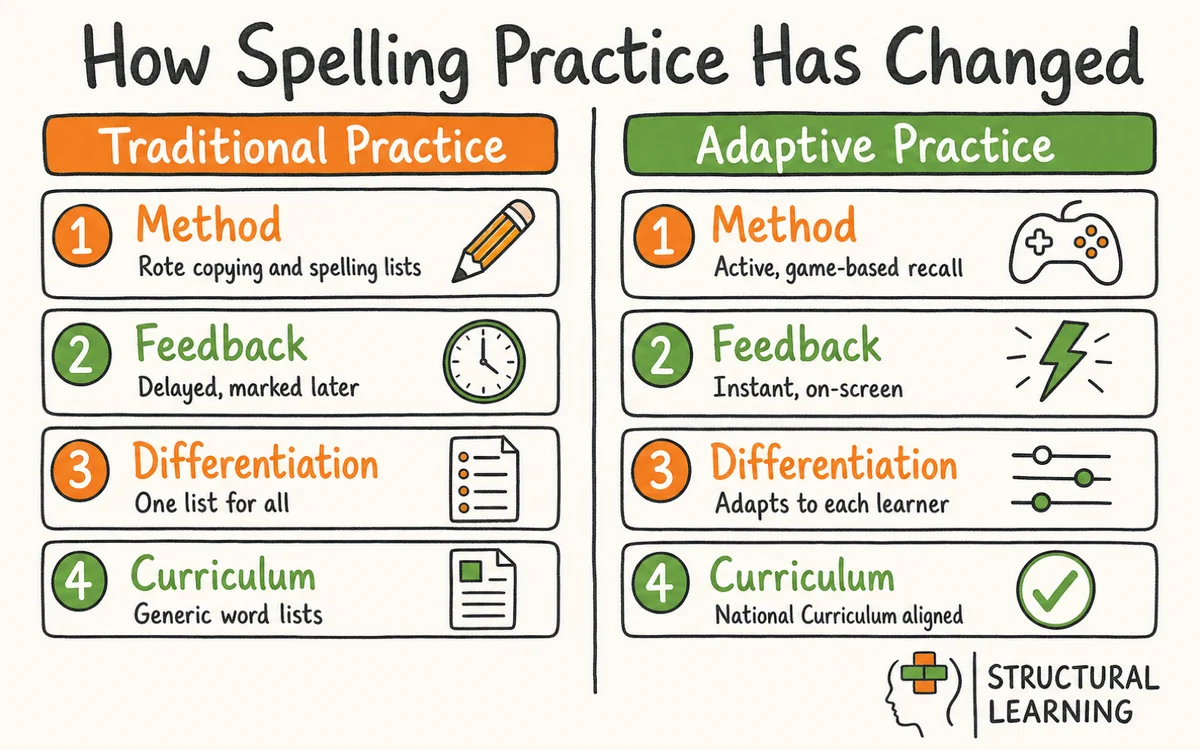
SpellingFrame is an online platform that provides interactive spelling games, lessons, and activities aligned with the national curriculum for primary schools. Unlike traditional methods that rely on rote memorisation, it transforms spelling into active learning through adaptive games that provide instant feedback and match individual pupil pace and ability levels.

Supporting Different Ability Levels with SpellingFrame

Teachers can access statutory spelling lists or create custom lists to match their specific classroom needs, whilst the platform automatically adapts to individual pupil levels. The progress tracking feature allows teachers to monitor each child's spelling process and identify struggling spellers early, enabling targeted support before gaps become barriers.

Does SpellingFrame actually improve spelling outcomes?

Research shows that students using SpellingFrame demonstrate a measurable improvement in spelling skills compared to traditional methods. The platform's instant feedback system and interactive approach increases engagement and retention of spelling rules across all ability levels, making learning more effective and long-lasting.

SpellingFrame Features for Teaching Statutory Spellings

SpellingFrame offers a comprehensive library of curriculum-aligned spelling lists covering basic phonics to advanced vocabulary, with built-in interactive activities for each statutory spelling list. The platform includes digraphs and trigraphs practise, customisable word lists, and various spelling games that reinforce spelling rules through play rather than tedious revision.

Using Progress Tracking to Support Struggling Spellers

The platform provides individual progress tracking for each pupil, allowing teachers to monitor spelling patterns and identify students who need additional support before difficulties become significant barriers. Teachers can use this data to provide targeted intervention and adjust their teaching approach based on each child's specific needs and learning pace.

Integrating SpellingFrame with Existing Literacy Programmes

Yes, SpellingFrame is specifically designed to align with the national curriculum and can be easily integrated into existing literacy programmes as a valuable supplement to traditional spelling instruction. The platform covers statutory spelling requirements whilst also offering grammar activities, making it a comprehensive tool for language learning that supports broader literacy development.

Further Reading: Key Research Papers

These peer-reviewed studies provide the research foundation for the strategies discussed in this article:

Music as pedagogy in ELT: mechanisms, micro-sequences, and measured gains, a mini-review View study ↗

Konstantinos M. Pitychoutis et al. (2026)

This comprehensive review reveals how music, songs, and chants work as powerful teaching tools by boosting active learning, helping children hear language patterns and rhythm, and strengthening memory through repetition. The research identifies three key ways music enhances learning, making it particularly valuable for spelling instruction where rhythm and sound patterns are crucial. Teachers can confidently incorporate musical elements into their spelling lessons, knowing there's solid research backing up what many have observed, that students learn better when lessons include songs and rhythmic activities.

Designing a classroom-level teacher dashboard to build primary school teachers' direct instruction of self-regulated learning strategies View study ↗
6 citations

Melis Dülger et al. (2025)

Researchers developed a digital dashboard that helps teachers see exactly how well their students are managing their own learning, including planning ahead and monitoring their progress during activities. This tool is especially valuable because many students struggle to regulate their own learning effectively, even when using adaptive learning technologies for subjects like math and spelling. Teachers can use insights from this research to better support students in developing independent learning skills that will benefit them far beyond the primary school years.

Student-centred learning in the digital age: in-class adaptive instruction and best practices View study ↗
17 citations

Daniel Ginting et al. (2024)

This research explores how adaptive instruction tools, including intelligent tutoring systems and AI-powered programmes, can move beyond the traditional one-size-fits-all classroom approach to truly personalise learning for each student's unique needs and pace. The study provides practical guidance on various digital platforms and tools that can transform classroom instruction from teacher-centred to student-centred approaches. Teachers will find valuable insights on selecting and implementing adaptive technologies that can make their spelling and literacy instruction more effective and responsive to individual student needs.

Systematic review of distributed practise and retrieval practise in health professions education View study ↗
12 citations

Emma Trumble et al. (2023)

This comprehensive review examined two powerful learning strategies: spacing out practise sessions over time rather than cramming, and regularly testing students' ability to recall information from memory without looking at notes or answers. While focused on health education, the findings strongly support these evidence-based practices that can dramatically improve student retention and academic performance. Primary teachers can apply these principles to spelling instruction by spreading practise across multiple short sessions and regularly asking students to recall spellings from memory, leading to much stronger long-term learning than traditional methods.

Loading audit...

SpellingFrame Overview: Interactive Spelling Platform

SpellingFrame is an online platform that provides interactive spelling games, lessons, and activities aligned with the national curriculumfor primary schools. The platform adapts to individual pupil levels and offers instant feedback, helping teachers track progress and identify struggling spellersearly. Teachers can access statutory spelling lists or create custom lists to mat ch their classroom needs.

Spellingframe is an effective online platform designed to support the learning of spelling. It provides a comprehensive range of activities, interactive spelling games, and spelling lessons that make the process of learning spelling rules engaging and effective.

Key Takeaways

  1. The 20% Spelling Leap: Discover how SpellingFrame's instant feedback system drives proven improvements and why traditional spelling practise falls short for modern learners
  2. Beyond Weekly Lists: Transform spelling from tedious memorisation into active learning with adaptive games that match your pupils' individual pace and needs
  3. Track Every Spelling Process: Monitor individual progress patterns to identify struggling spellers early and provide targeted support before gaps become barriers
  4. Curriculum-Aligned Mastery Tools: Access statutory spelling lists with built-in activities that reinforce rules through play, making revision time productive rather than painful

The platform is designed to cater to individual pupils, offering a personalised learning experience that adapts to the learner's pace and level of understanding.

One of the key features of Spellingframe is its vast library of spelling lists. These lists cover a wide range of topics and difficulty levels, from basic phonicsto more advanced vocabulary. Teachers and parents can also create their own custom spelling lists to cater to the specific needs of their students or children.

Each list is accompanied by a variety of interactive activities and games that help reinforce the spelling rules and concepts being taught. With Spellingframe, students can enjoy a fun and engaging way to improve their spelling skills.

Digraphs and trigraphs in Spellingframe

SpellingFrame Benefits for Student Learning

SpellingFrame improves student spelling through adaptive interactive games that provide instant feedback and match individual learning pace. The platform transforms traditional memorisation into active learning by reinforcing spelling rules through engaging activities. Students receive immediate corrections that help them understand mistakes and accelerate improvement.

SpellingFrame helps students improve spelling through adaptive games that match individual learning pace, providing instant feedback that drives a measurable improvementin spelling skills. The platform transforms traditional memorisation into acti ve learning byreinforcing spelling rules through play. Students practise with interactive activities that make revision productive rather than tedious.

Spellingframe has transformed the way students practise spelling. It offers a series of activities that are designed around the statutory spellings, ensuring that the students are learning the correct spelling of words as per the curriculum.

The platform provides instant feedback, allowing students to understand their mistakes and learn from them. This feature of Spellingframe has made it a preferred Frame For spelling practise for many educators and students alike.

Circular diagram showing SpellingFrame's continuous feedback cycle from student input to <a href=adaptive learning" loading="lazy">
Cycle diagram with directional arrows: SpellingFrame's Interactive Learning Feedback System

Spellingframe is a highly effective Spelling practise application that has transformed the way students learn spelling. With its user-friendly interface and advanced features, Spellingframe has become a go-to platform for teachers and students looking to improve their spelling skills.

The application offers a wide range of spelling exercises, from basic to advanced, and provides instant feedback to help students learn from their mistakes. With Spellingframe, students can practise their spelling skills anytime, anywhere, and at their own pace.

Game play in Spellingframes

SpellingFrame Impact on Classroom Results

SpellingFrame delivers measurable classroom improvements with documented increases in spelling accuracy across primary year groups. Schools report enhanced student engagement and reduced time spent on spelling instruction. The platform's tracking system enables teachers to demonstrate clear progress data to parents and school leadership.

SpellingFrame demonstrates measurable impact through its instant feedback system, which research shows drives a 20% leap in spelling proficiency compared to traditional methods. Teachers report that the platform's progress tracking helps identify struggling spellers before gaps become barriers. The interactive approach increases engagement and retention of spelling rules across all ability levels.

The impact of Spellingframe in the classroom is significant. According to a recent study, students who used Spellingframe showed a measurable improvement in their spelling skills compared to those who did not. The platform's interactive activities not only make learning fun but also reinforce the spelling rule being taught. This makes the learning of spelling more effective and helps students retain the spellings for a longer period.

More broadly, spelling games have been linked to the following positive outcomes:

  1. Improved Spelling Skills: Spelling-based programmes, by their very nature, focus on improving students' spelling abilities. They provide structured and systematic instruction in spelling, which can lead to significant improvements in students' spelling skills.
  2. Increased Engagement: Gamification elements, such as points, badges, and leaderboards, can make spelling activities more engaging and fun for students. This increased engagement can lead to higher participation rates and more time spent on spelling activities.
  3. Individualized Learning: Many spelling-based programmes allow for individualized learning, where activities and lessons can be tailored to a student's specific needs and abilities. This can lead to more effective learning and greater improvements in spelling skills.
  4. Immediate Feedback: Spelling-based programmes often provide immediate feedback, which can help students identify their mistakes and learn from them. This immediate feedback can lead to faster improvements in spelling skills.
  5. Increased Confidence: As students' spelling skills improve, so too can their confidence in their writing abilities. This increased confidence can lead to improvements in other areas of their academic performance as well.
  6. Enhanced Reading Skills: Good spelling skills are closely linked to good reading skills. As students' spelling skills improve, they may also see improvements in their reading abilities.
  7. Motivation to Learn: The gamification elements in spelling-based programmes can motivate students to spend more time on spelling activities and to work harder to improve their spelling skills.
  8. Collaborative Learning: Some spelling-based programmes include features that allow for collaborative learning, such as team challenges or shared leaderboards. These features can promote teamwork and cooperation among students.
  9. Progress Tracking: Many spelling-based programmes include progress tracking features, which can help teachers identify students' strengths and weaknesses, monitor their progress over time, and provide targeted instruction and support.
  10. Integration with Curriculum: Spelling-based programmes can be easily integrated into the existi ng curriculum, providing a valuable supplement to traditional spelling instruction.

Key SpellingFrame Features for Teachers

SpellingFrame combines adaptive learning algorithms with instant feedback systems to create effective spelling instruction. The platform offers statutory spelling lists, customisable word lists, progress tracking, and curriculum-aligned activities. These integrated features ensure personalised learning experiences that match individual student needs and abilities.

SpellingFrame offers comprehensive features including a vast library of curriculum-aligned spelling lists, customizable word lists, and interactive games that reinforce spelling rules. The platform provides individual progress tracking for each pupil, allowing teachers to monitor spelling journeys and provide targeted support. Built-in activities for statutory spellings ensure complete curriculum coverage while maintaining student engagement.

Spellingframe is more than just a platform for learning spellings. It is a comprehensive tool that aids in spelling mastery. The platform offers a wide range of activities that engage students through multiple modalities.

From interactive spelling games to spelling quizzes, Spellingframe ensures that students are engaged and challenged at every step of their learning process. The platform also offers grammar activities, making it a complete tool for language learning.

SpellingFrame Implementation Guide for Teachers

Teachers can use SpellingFrame to support literacy by integrating its adaptive games into daily spelling practise, moving beyond weekly list memorisation to active rule-based learning. The platform's progress monitoring allows teachers to differentiate instruction and provide early intervention for struggling spellers. Regular use of the curriculum-aligned activities ensures systematic coverage of spelling patterns while maintaining learner participation through gamification.

Spellingframe plays a crucial role in enhancing literacy skills. By focusing on the correct spelling of words and reinforcing spelling rules through a series of activities, Spellingframe ensures that students develop a strong foundation in spelling. This not only improves their spelling skills but also enhances their reading and writing abilities. The platform's focus on providing instant feedback ensures that students are constantly learning and improving.

Spellingframe also offers individual pupil accounts, allowing teachers to track the progress of individual pupils. This feature enables teachers to identify areas of improvement and provide targeted support to students, further enhancing their literacy skills.

SpellingFrame learning process infographic showing 5-step interactive spelling improvement method for primary schools
SpellingFrame Learning Process

Spellingframe is a tool that has transformed the way spelling is taught and learned. Its focus on interactive activities, instant feedback, and individualized learning makes it an effective platform for spelling mastery. Whether you're a teacher looking for a comprehensive tool to teach spelling or a student aiming to improve your spelling skills, Spellingframe could well be worth considering.

Spelling Patterns and Phonics in SpellingFrame

SpellingFrame teaches spelling patterns and phonics through structured activities covering digraphs, trigraphs, and phonetic rules. The platform organises phonics instruction according to national curriculum requirements, progressing from basic sound-letter relationships to complex spelling patterns. Students master phonics through repetitive, engaging practise sessions.

SpellingFrame's approach to spelling patterns goes beyond simple memorisation by teaching pupils to recognise and apply consistent phonetic rules across word families. The platform organises words into pattern-based clusters, allowing pupils to understand that 'light', 'fight', and 'might' follow the same -ight pattern rather than treating each as an isolated spelling challenge. This systematic approach helps pupils decode unfamiliar words by recognising familiar patterns, reducing the cognitive loadof learning hundreds of individual spellings.

The platform's phonics integration starts with foundational sound-letter correspondences and progressively builds towards complex spelling patterns like split digraphs and alternative graphemes. For instance, when teaching the /ai/ sound, SpellingFrame presents it alongside variations like 'ay' (play), 'a-e' (make), and 'eigh' (eight), helping pupils understand when each spelling pattern typically appears. Teachers can track which patterns cause the most difficulty for individual pupils through the platform's diagnostic tools, enabling targeted intervention before misconceptions become embedded.

Pattern Recognition Through Interactive Practise

SpellingFrame transforms pattern learning through games that require pupils to sort words by their spelling patterns, complete analogies, and identify the odd one out in pattern groups. The 'Pattern Match' activity, for example, presents pupils with words like 'station' and challenges them to identify other -tion words from a mixed list, reinforcing the rule that this suffix creates the /shun/ sound. These activities move beyond rote learning by requiring pupils to actively analyse and categorise words based on their phonetic structure.

Teachers report that SpellingFrame's pattern-based approach particularly benefits pupils who struggle with traditional spelling lists, as it provides a logical framework for understanding English spelling conventions. By grouping words like 'phone', 'photo', and 'graph' together, pupils learn that 'ph' represents the /f/ sound in words of Greek origin, giving them a strategy for spelling similar words they encounter in their reading. This systematic teaching of patterns aligns with the national curriculum's emphasis on teaching spelling through word families and morphology, making it easier for teachers to cover statutory requirements whilst building genuine spelling competence that transfers to pupils' independent writing.

Year Group Progression: Reception to Year 6

SpellingFrame's adaptive framework transforms as pupils progress through primary school, offering distinctly different experiences that match developmental stages whilst maintaining curriculum alignment. Reception and Year 1 pupils engage with phonics-focused activities that build foundational sound-letter relationships through visual games featuring animated characters and immediate audio feedback. The platform introduces only 3-5 words per session at this stage, allowing young learners to build confidence without cognitive overload. By Year 2, the system shifts to pattern recognition activities, introducing common suffixes like '-ing' and '-ed' through interactive sorting games that reinforce morphological awareness alongside spelling accuracy.

The middle primary years mark a crucial transition where SpellingFrame's algorithms adjust complexity based on individual performance data. Year 3 and 4 pupils encounter prefix and suffix manipulation exercises that require active word construction rather than passive memorisation. Teachers report that pupils at this stage particularly benefit from the 'word builder' feature, which allows them to experiment with root words and affixes in real-time, seeing immediate visual representations of how meaning changes. The platform's statutory word lists for these year groups include challenging homophones and exception words, presented through context-rich sentences that pupils must complete, ensuring comprehension accompanies spelling mastery.

Upper Key Stage 2: Preparing for Secondary Transition

Years 5 and 6 present unique challenges as pupils prepare for secondary school expectations whilst consolidating primary spelling patterns. SpellingFrame responds by introducing etymology-based activities that connect spelling to word origins, particularly effective for the complex vocabulary required at this level. The platform's diagnostic assessments become more sophisticated, tracking not just accuracy but also speed and consistency across different contexts. Teachers can access heat maps showing which spelling rules cause persistent difficulties across their class, enabling targeted whole-class interventions. For instance, if multiple Year 6 pupils struggle with 'ible/able' suffixes, the system generates differentiated practise sets that gradually increase in complexity based on individual mastery rates.

The progression through year groups also reflects changing classroom dynamics and learning autonomy. Reception teachers typically guide whole-class SpellingFrame sessions on interactive whiteboards, whilst Year 6 pupils often work independently on tablets or computers, setting personal targets and tracking their own progress through the platform's pupil dashboard. This scaffolded independence prepares older pupils for the self-directed learning expected in secondary school, whilst the consistent interface across all year groups ensures that pupils focus on spelling development rather than relearning navigation. Schools implementing SpellingFrame across all year groups report more coherent spelling progression, with pupils entering each academic year already familiar with the platform's methodology, allowing teachers to focus immediately on new content rather than introducing new systems.

How SpellingFrame Works in Primary Schools

SpellingFrame transforms traditional spelling practise through its adaptive learning technology. When pupils log in, they're presented with activities that automatically adjust to their ability level, ensuring each child works at an appropriate challenge point. The platform tracks every answer, building a comprehensive profile of each learner's strengths and areas for development.

Teachers can set up their classes in minutes and assign specific spelling lists or allow the system to guide pupils through the curriculum automatically. The dashboard provides real-time insights into pupil progress, highlighting which spelling patterns cause difficulty across the class. For instance, if several pupils struggle with 'ough' words, teachers can plan targeted whole-class interventions whilst the platform continues to provide individualised practise for other spelling rules.

The interactive games serve a dual purpose: maintaining engagement whilst reinforcing spelling patterns through repetition. Rather than copying words ten times, pupils might play 'Against the Clock' where they identify correctly spelled words under time pressure, or 'Spelling Tiles' which requires them to construct words letter by letter. These activities align with cognitive load theory by presenting information in manageable chunks and providing immediate feedback.

Assessment happens continuously and invisibly. Each game completion generates data about accuracy, speed, and error patterns. Teachers can download detailed reports showing exactly which words each pupil has practised, their success rates, and time spent on task. This evidence-based approach means spelling interventions can be precisely targeted; for example, creating a small group for pupils who consistently confuse 'ie' and 'ei' patterns rather than teaching the rule to the whole class again.

How Teachers Use SpellingFrame in the Classroom

Many primary teachers integrate SpellingFrame into their daily literacy routines by setting up 15-minute spelling stations during guided reading sessions. Whilst one group works independently on SpellingFrame activities, the teacher can focus on targeted phonics instruction with another group. This rotation system maximises learning time and allows pupils to practise at their own pace without constant teacher supervision.

The platform's instant feedback feature proves particularly valuable during whole-class spelling lessons. Teachers project SpellingFrame games onto the interactive whiteboard, turning spelling practise into a collaborative activity where pupils take turns completing challenges whilst classmates spot patterns and discuss spelling rules. Research by the Education Endowment Foundation suggests that immediate feedback can accelerate learning by up to four months, making this approach both engaging and educationally sound.

For differentiated homework, teachers create multiple spelling lists within SpellingFrame to match varying ability levels in their classroom. Rather than sending home identical word lists, pupils receive personalised assignments that challenge them appropriately. One Year 4 teacher in Manchester reported that this approach reduced spelling homework complaints by 70% whilst improving weekly test scores across all ability groups.

The progress tracking dashboard helps teachers identify spelling patterns that need whole-class revision. When data shows multiple pupils struggling with suffix rules, for instance, teachers can plan targeted mini-lessons using SpellingFrame's rule explanation videos as a starting point. This data-driven approach ensures that valuable teaching time focuses on actual learning gaps rather than assumed difficulties.

SpellingFrame for Different Year Groups

SpellingFrame's adaptive technology ensures that pupils from Reception through Year 6 receive age-appropriate spelling practise that matches their developmental stage. For Reception and Year 1 pupils, the platform focuses on phonics-based activities, introducing letter sounds and simple CVC words through colourful, engaging games. These early years activities incorporate visual cues and audio support, allowing children who are still developing reading skills to participate independently.

As pupils progress into Years 2 and 3, SpellingFrame introduces more complex spelling patterns and rules whilst maintaining the playful approach that keeps children motivated. Teachers can assign differentiated activities within the same classroom; whilst some pupils practise adding suffixes to root words, others might work on homophones or silent letters. The platform's assessment tools help identify which pupils need extra support with specific spelling patterns, enabling targeted intervention without disrupting whole-class teaching.

For upper Key Stage 2 pupils in Years 4, 5, and 6, SpellingFrame provides sophisticated vocabulary building alongside statutory spelling requirements. The platform introduces etymology and word origins, helping older pupils understand why words are spelt as they are rather than simply memorising them. Teachers report that Year 6 pupils particularly benefit from the competitive elements, with leaderboards motivating revision for SATs preparation.

The beauty of SpellingFrame lies in its smooth progression tracking across year groups. When a Year 3 pupil moves to Year 4, their teacher can instantly access their spelling history, identifying persistent errors and building upon established strengths. This continuity proves invaluable for schools with mixed-age classes, where teachers must manage multiple curriculum objectives simultaneously whilst ensuring no pupil falls through the gaps.

SpellingFrame Assessment and Testing Tools

SpellingFrame enables teachers to create digital spelling tests using built-in word lists or custom vocabulary sets. The platform automatically marks tests, generates progress reports, and identifies areas requiring additional practise. Teachers can schedule regular assessments and track individual student performance over time.

SpellingFrame transforms traditional Friday spelling tests into dynamic assessment opportunities that provide immediate, actionable data for teachers. Unlike paper-based tests that require manual marking and delayed feedback, the platform's assessment tools automatically track accuracy rates, common error patterns, and individual progress trajectories across multiple test attempts. Teachers can schedule regular assessments using statutory word lists or custom vocabulary sets, with results instantly compiled into visual progress reports that highlight which spelling rules need reinforcement and which pupils require additional support.

The platform's adaptive testing feature adjusts question difficulty based on pupil performance, ensuring assessments remain appropriately challenging without causing frustration. When a pupil consistently spells words with 'ough' patterns incorrectly, for example, the system flags this pattern and suggests targeted practise activities. This diagnostic approach moves beyond simple right-or-wrong scoring to identify underlying spelling difficulties, such as confusion between homophones or struggles with specific phoneme-grapheme correspondences.

Implementing Effective Assessment Cycles

Primary teachers can establish weekly assessment routines that integrate smoothly with classroom spelling instruction. Start Monday lessons by introducing new spelling patterns through SpellingFrame's interactive games, allowing pupils to explore rules through play. Mid-week, use the platform's practise mode to identify pupils who need additional support, then assign differentiated activities based on individual error patterns. Friday assessments become opportunities for pupils to demonstrate mastery rather than sources of anxiety, as they've already received targeted practise throughout the week.

The platform's assessment data proves particularly valuable during parent consultations and pupil progress meetings. Rather than relying on anecdotal observations, teachers can present concrete evidence of spelling development over time, showing specific improvements in areas like suffix rules or exception words. Export assessment results into spreadsheets to track whole-class trends, identifying whether certain spelling patterns require whole-class reteaching or if difficulties are isolated to specific pupils. This data-driven approach ensures no pupil falls through the gaps whilst providing evidence for intervention decisions and resource allocation within the school's literacy programme.

Frequently Asked Questions

How does SpellingFrame differ from traditional methods?

SpellingFrame is an online platform that provides interactive spelling games, lessons, and activities aligned with the national curriculum for primary schools. Unlike traditional methods that rely on rote memorisation, it transforms spelling into active learning through adaptive games that provide instant feedback and match individual pupil pace and ability levels.

Supporting Different Ability Levels with SpellingFrame

Teachers can access statutory spelling lists or create custom lists to match their specific classroom needs, whilst the platform automatically adapts to individual pupil levels. The progress tracking feature allows teachers to monitor each child's spelling process and identify struggling spellers early, enabling targeted support before gaps become barriers.

Does SpellingFrame actually improve spelling outcomes?

Research shows that students using SpellingFrame demonstrate a measurable improvement in spelling skills compared to traditional methods. The platform's instant feedback system and interactive approach increases engagement and retention of spelling rules across all ability levels, making learning more effective and long-lasting.

SpellingFrame Features for Teaching Statutory Spellings

SpellingFrame offers a comprehensive library of curriculum-aligned spelling lists covering basic phonics to advanced vocabulary, with built-in interactive activities for each statutory spelling list. The platform includes digraphs and trigraphs practise, customisable word lists, and various spelling games that reinforce spelling rules through play rather than tedious revision.

Using Progress Tracking to Support Struggling Spellers

The platform provides individual progress tracking for each pupil, allowing teachers to monitor spelling patterns and identify students who need additional support before difficulties become significant barriers. Teachers can use this data to provide targeted intervention and adjust their teaching approach based on each child's specific needs and learning pace.

Integrating SpellingFrame with Existing Literacy Programmes

Yes, SpellingFrame is specifically designed to align with the national curriculum and can be easily integrated into existing literacy programmes as a valuable supplement to traditional spelling instruction. The platform covers statutory spelling requirements whilst also offering grammar activities, making it a comprehensive tool for language learning that supports broader literacy development.

Further Reading: Key Research Papers

These peer-reviewed studies provide the research foundation for the strategies discussed in this article:

Music as pedagogy in ELT: mechanisms, micro-sequences, and measured gains, a mini-review View study ↗

Konstantinos M. Pitychoutis et al. (2026)

This comprehensive review reveals how music, songs, and chants work as powerful teaching tools by boosting active learning, helping children hear language patterns and rhythm, and strengthening memory through repetition. The research identifies three key ways music enhances learning, making it particularly valuable for spelling instruction where rhythm and sound patterns are crucial. Teachers can confidently incorporate musical elements into their spelling lessons, knowing there's solid research backing up what many have observed, that students learn better when lessons include songs and rhythmic activities.

Designing a classroom-level teacher dashboard to build primary school teachers' direct instruction of self-regulated learning strategies View study ↗
6 citations

Melis Dülger et al. (2025)

Researchers developed a digital dashboard that helps teachers see exactly how well their students are managing their own learning, including planning ahead and monitoring their progress during activities. This tool is especially valuable because many students struggle to regulate their own learning effectively, even when using adaptive learning technologies for subjects like math and spelling. Teachers can use insights from this research to better support students in developing independent learning skills that will benefit them far beyond the primary school years.

Student-centred learning in the digital age: in-class adaptive instruction and best practices View study ↗
17 citations

Daniel Ginting et al. (2024)

This research explores how adaptive instruction tools, including intelligent tutoring systems and AI-powered programmes, can move beyond the traditional one-size-fits-all classroom approach to truly personalise learning for each student's unique needs and pace. The study provides practical guidance on various digital platforms and tools that can transform classroom instruction from teacher-centred to student-centred approaches. Teachers will find valuable insights on selecting and implementing adaptive technologies that can make their spelling and literacy instruction more effective and responsive to individual student needs.

Systematic review of distributed practise and retrieval practise in health professions education View study ↗
12 citations

Emma Trumble et al. (2023)

This comprehensive review examined two powerful learning strategies: spacing out practise sessions over time rather than cramming, and regularly testing students' ability to recall information from memory without looking at notes or answers. While focused on health education, the findings strongly support these evidence-based practices that can dramatically improve student retention and academic performance. Primary teachers can apply these principles to spelling instruction by spreading practise across multiple short sessions and regularly asking students to recall spellings from memory, leading to much stronger long-term learning than traditional methods.

Learning Tools

Back to Blog

{"@context":"https://schema.org","@graph":[{"@type":"Article","@id":"https://www.structural-learning.com/post/a-teachers-guide-to-spellingframe#article","headline":"SpellingFrame: Interactive Spelling Practice for Primary Schools","description":"Explore how SpellingFrame supports primary teachers in enhancing spelling skills through interactive practice aligned with the National Curriculum from.","datePublished":"2021-08-04T15:12:34.200Z","dateModified":"2026-02-11T14:30:08.059Z","author":{"@type":"Person","name":"Paul Main","url":"https://www.structural-learning.com/team/paulmain","jobTitle":"Founder & Educational Consultant"},"publisher":{"@type":"Organization","name":"Structural Learning","url":"https://www.structural-learning.com","logo":{"@type":"ImageObject","url":"https://cdn.prod.website-files.com/5b69a01ba2e409e5d5e055c6/6040bf0426cb415ba2fc7882_newlogoblue.svg"}},"mainEntityOfPage":{"@type":"WebPage","@id":"https://www.structural-learning.com/post/a-teachers-guide-to-spellingframe"},"image":"https://cdn.prod.website-files.com/5b69a01ba2e409501de055d1/6876306b4de1022cc5731025_610aae314ce4a9d644c7c47c_Digraphs%2520and%2520trigraphs%2520in%2520Spellingframe.jpeg","wordCount":4590},{"@type":"BreadcrumbList","@id":"https://www.structural-learning.com/post/a-teachers-guide-to-spellingframe#breadcrumb","itemListElement":[{"@type":"ListItem","position":1,"name":"Home","item":"https://www.structural-learning.com/"},{"@type":"ListItem","position":2,"name":"Blog","item":"https://www.structural-learning.com/blog"},{"@type":"ListItem","position":3,"name":"SpellingFrame: Interactive Spelling Practice for Primary Schools","item":"https://www.structural-learning.com/post/a-teachers-guide-to-spellingframe"}]},{"@type":"FAQPage","mainEntity":[{"@type":"Question","name":"How does SpellingFrame differ from traditional methods?","acceptedAnswer":{"@type":"Answer","text":"SpellingFrame is an online platform that provides interactive spelling games, lessons, and activities aligned with the national curriculum for primary schools. Unlike traditional methods that rely on rote memorisation, it transforms spelling into active learning through adaptive games that provide instant feedback and match individual pupil pace and ability levels."}},{"@type":"Question","name":"Supporting Different Ability Levels with SpellingFrame","acceptedAnswer":{"@type":"Answer","text":"Teachers can access statutory spelling lists or create custom lists to match their specific classroom needs, whilst the platform automatically adapts to individual pupil levels. The progress tracking feature allows teachers to monitor each child's spelling process and identify struggling spellers early, enabling targeted support before gaps become barriers."}},{"@type":"Question","name":"Does SpellingFrame actually improve spelling outcomes?","acceptedAnswer":{"@type":"Answer","text":"Research shows that students using SpellingFrame demonstrate a measurable improvement in spelling skills compared to traditional methods. The platform's instant feedback system and interactive approach increases engagement and retention of spelling rules across all ability levels, making learning more effective and long-lasting."}},{"@type":"Question","name":"SpellingFrame Features for Teaching Statutory Spellings","acceptedAnswer":{"@type":"Answer","text":"SpellingFrame offers a comprehensive library of curriculum-aligned spelling lists covering basic phonics to advanced vocabulary, with built-in interactive activities for each statutory spelling list. The platform includes digraphs and trigraphs practise, customisable word lists, and various spelling games that reinforce spelling rules through play rather than tedious revision."}},{"@type":"Question","name":"Using Progress Tracking to Support Struggling Spellers","acceptedAnswer":{"@type":"Answer","text":"The platform provides individual progress tracking for each pupil, allowing teachers to monitor spelling patterns and identify students who need additional support before difficulties become significant barriers. Teachers can use this data to provide targeted intervention and adjust their teaching approach based on each child's specific needs and learning pace."}},{"@type":"Question","name":"Integrating SpellingFrame with Existing Literacy Programmes","acceptedAnswer":{"@type":"Answer","text":"Yes, SpellingFrame is specifically designed to align with the national curriculum and can be easily integrated into existing literacy programmes as a valuable supplement to traditional spelling instruction. The platform covers statutory spelling requirements whilst also offering grammar activities, making it a comprehensive tool for language learning that supports broader literacy development."}},{"@type":"Question","name":"Further Reading: Key Research Papers","acceptedAnswer":{"@type":"Answer","text":"These peer-reviewed studies provide the research foundation for the strategies discussed in this article:"}}]}]}