Unlocking Potential: Key Learning Skills for Academic Success
Explore essential learning skills children need for success in the classroom and beyond, focusing on practical strategies to foster these skills.

Explore essential learning skills children need for success in the classroom and beyond, focusing on practical strategies to foster these skills.
Key learning skills are the fundamental abilities that enable students to absorb, process, and structural-learning. com/post/change-theories'>apply knowledge effectively across all academic subjects. These essential skills include critical thinking, time management, note-taking, active reading, reading assessment, and self-regulation, which together form the foundation for academic excellence. While natural intelligence plays a role in student success, research consistently shows that students who develop strong learning skills significantly outperform their peers, regardless of their starting point. The most successful students aren't necessarily the smartest ones, but rather those who have mastered the art of learning itself.
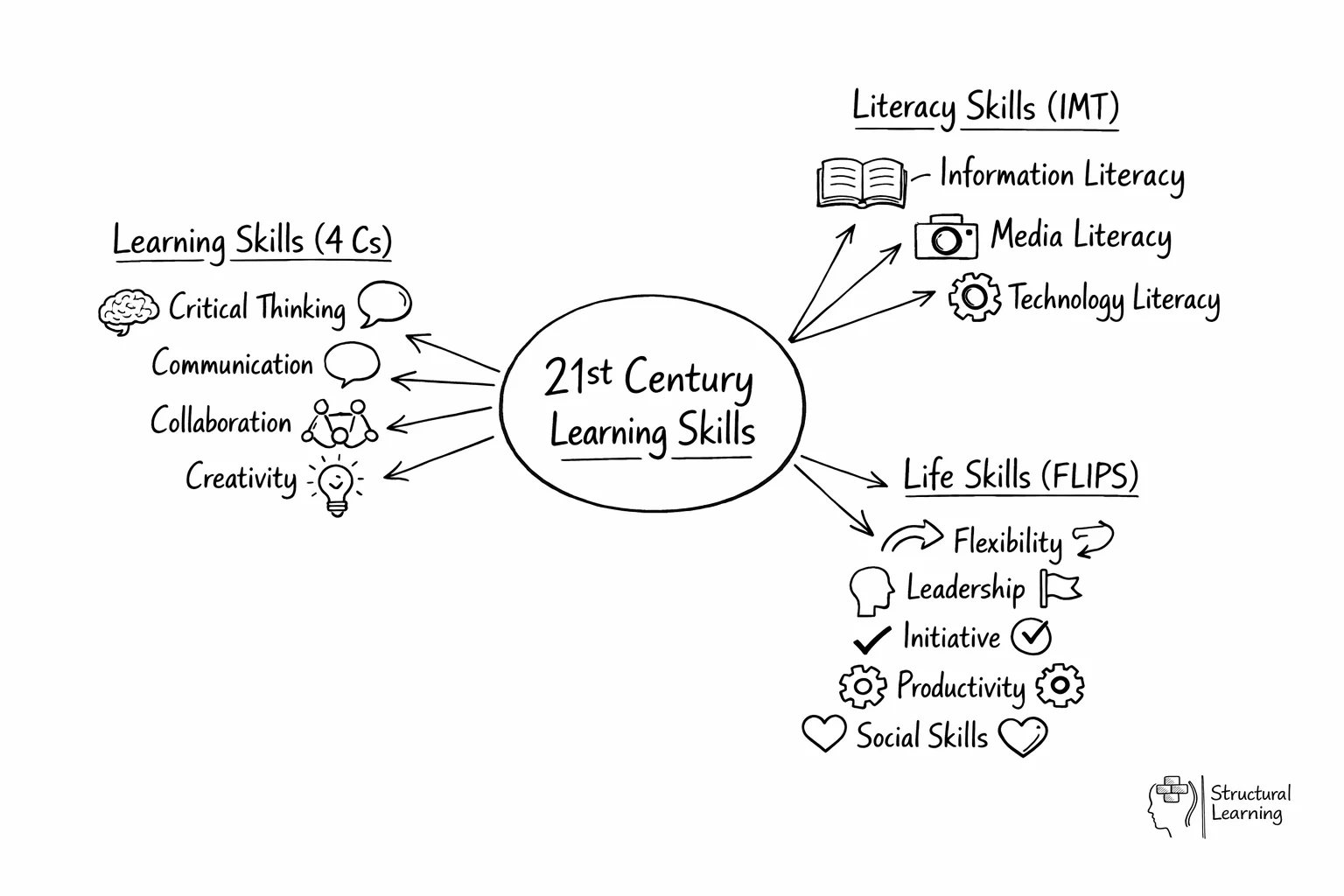
Understanding the three main categories of learning skills, learning skills, literacy skills, and life skills, provides a foundation for navigating this landscape. Each category plays a unique role in shaping an individual's academic process and overall readiness for challenges beyond the classroom, including independent research projects like expeditionary learning and the EPQ. Exploring the interconnectedness of these skills reveals how they contribute to personal and professional growth.
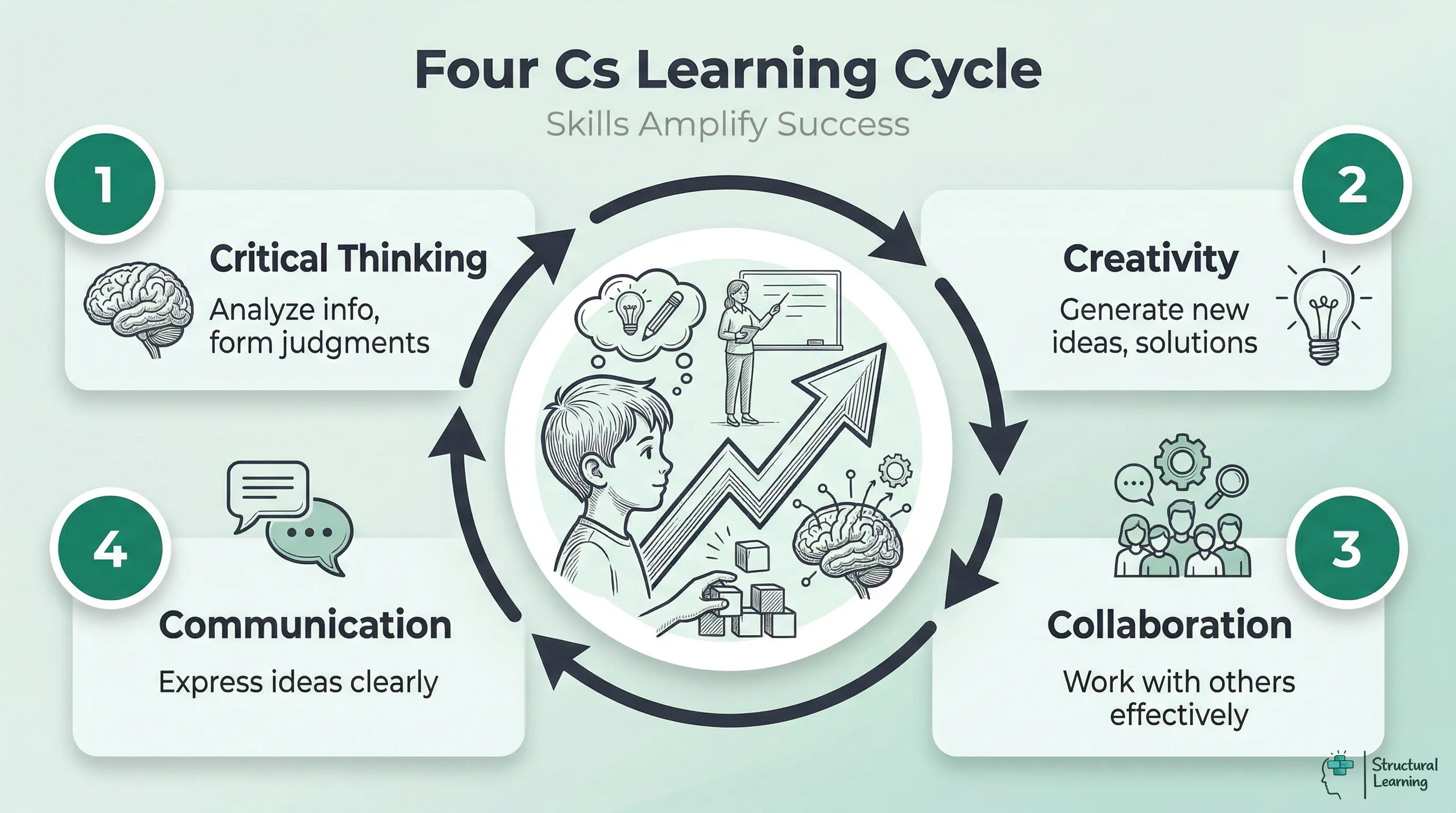
This article explores into the vital skills needed for academic success, highlighting the significance of the Four C's: critical thinking, creativity, collaboration, and communication. By examining effective strategies for teaching these skills, practical resources for educators, and methods to assess learning capabilities, the importance of developing a well-rounded skill set emerges as a pathway to enabling potential.

The landscape of both higher education and the workplace has shifted, with soft skills now taking centre stage as key drivers of success. Leaders in both academia and business recognise that mere knowledge of core subject content doesn't suffice. Instead, students also need the ability to apply this knowledge to tackle complex real-world problems.
As students prepare for careers, many of which haven't yet emerged, a diverse skill set becomes vital. This set includes critical thinking, which allows individuals to process and analyse the vast volumes of data available online effectively. Students also need to hone their communication skills, which are critical in almost every career.
Furthermore, as social media redefines human interaction, understanding social situations and managing the challenges they present becomes crucial. This requires strong social skills and an awareness of social responsibility. Educators must prepare students for this reality, focusing not only on digital literacybut also on life skills such as time management, which is an achievable objective within educational settings. Through these learning skills, individuals can progress towards goals, exhibiting social responsibility and creative thinking abilities essential for 21st-century challenges.
Understanding and mastering learning skills are pathways that enable individuals to assimilate and use new knowledge more effectively. Such skills are not isolated; they often intersect to support complex tasks and multifaceted learning processes. The P21 framework includes four main categories, not three as presented. These categories collectively contribute to an individual's ability to succeed in diverse and evolving environments.

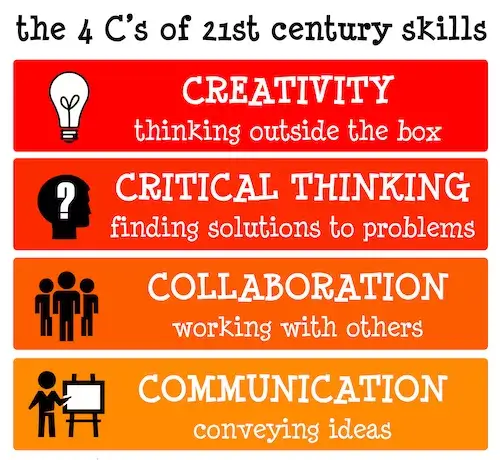
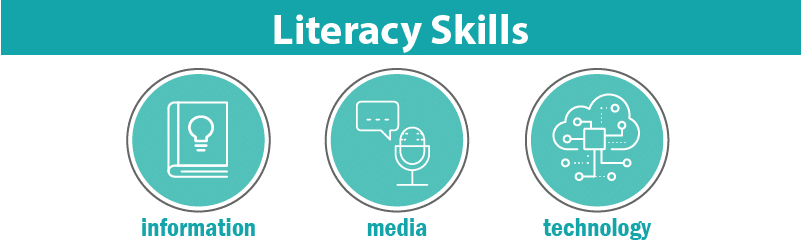
The learning skills group, also identified by the memorable label of the four Cs (critical thinking, communication, collaboration, and creativity), is particularly relevant to academic and workplace achievement in the 21st century. Positioned alongside these competencies are literacy skills, which consist of information, media, and technology literacies (IMT skills) that are indispensable for navigating the modern digital world.
Lastly, life skills offer a suite of abilities, sometimes referred to as FLIPS (flexibility, leadership, initiative, productivity, and social skills), which are instrumental in personal development and social interactions. Each of these categories plays a crucial role in setting the foundations for an individual to advance and thrive and workplace.
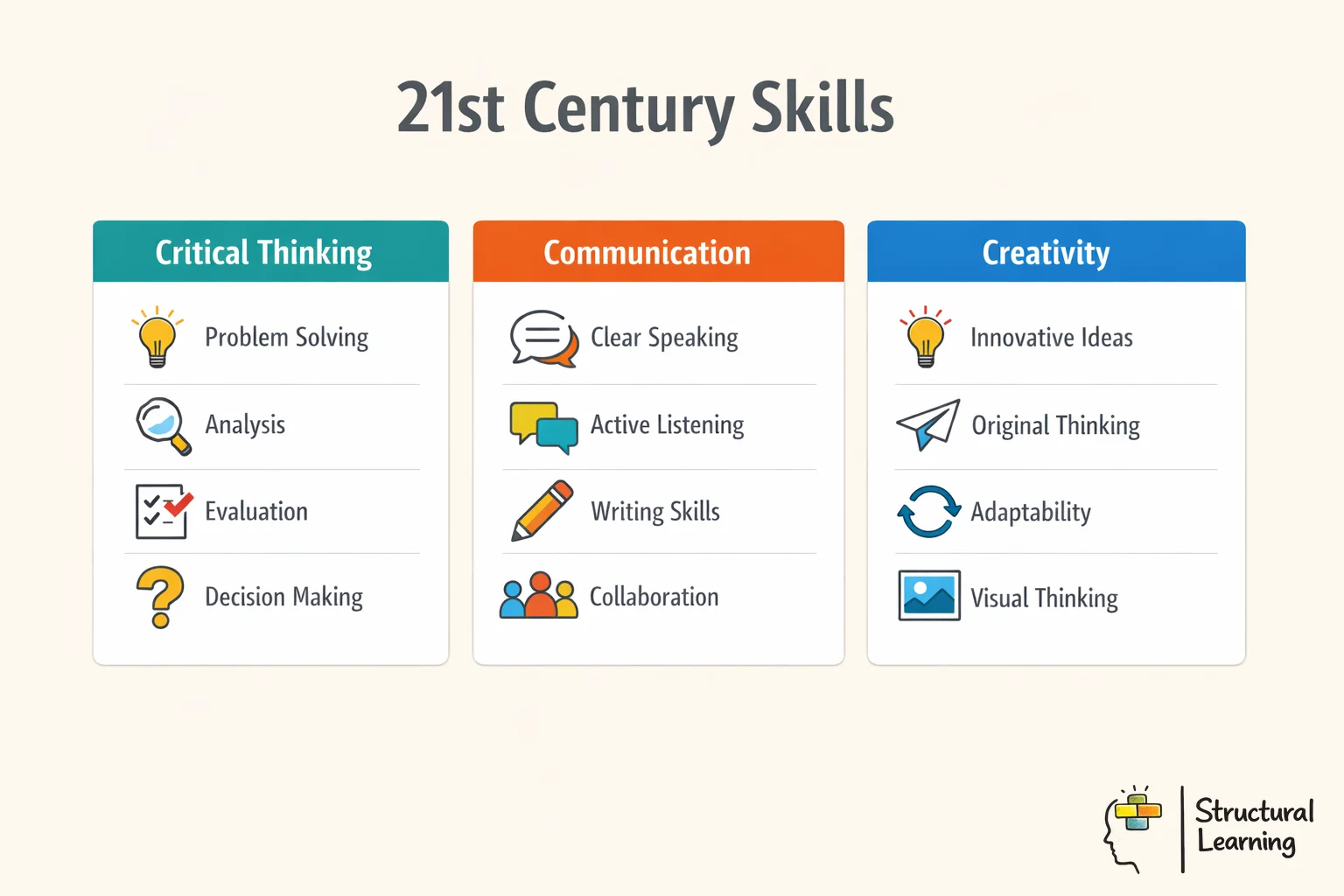
Learning skills are dynamic tools that guide one's ability to absorb, process, and apply knowledge. These skills cover a spectrum ranging from time management, which enables learners to allocate their hours wisely, to study skills that improve the understanding and retention of new information. Central to the concept of 21st-century learning are the four Cs:
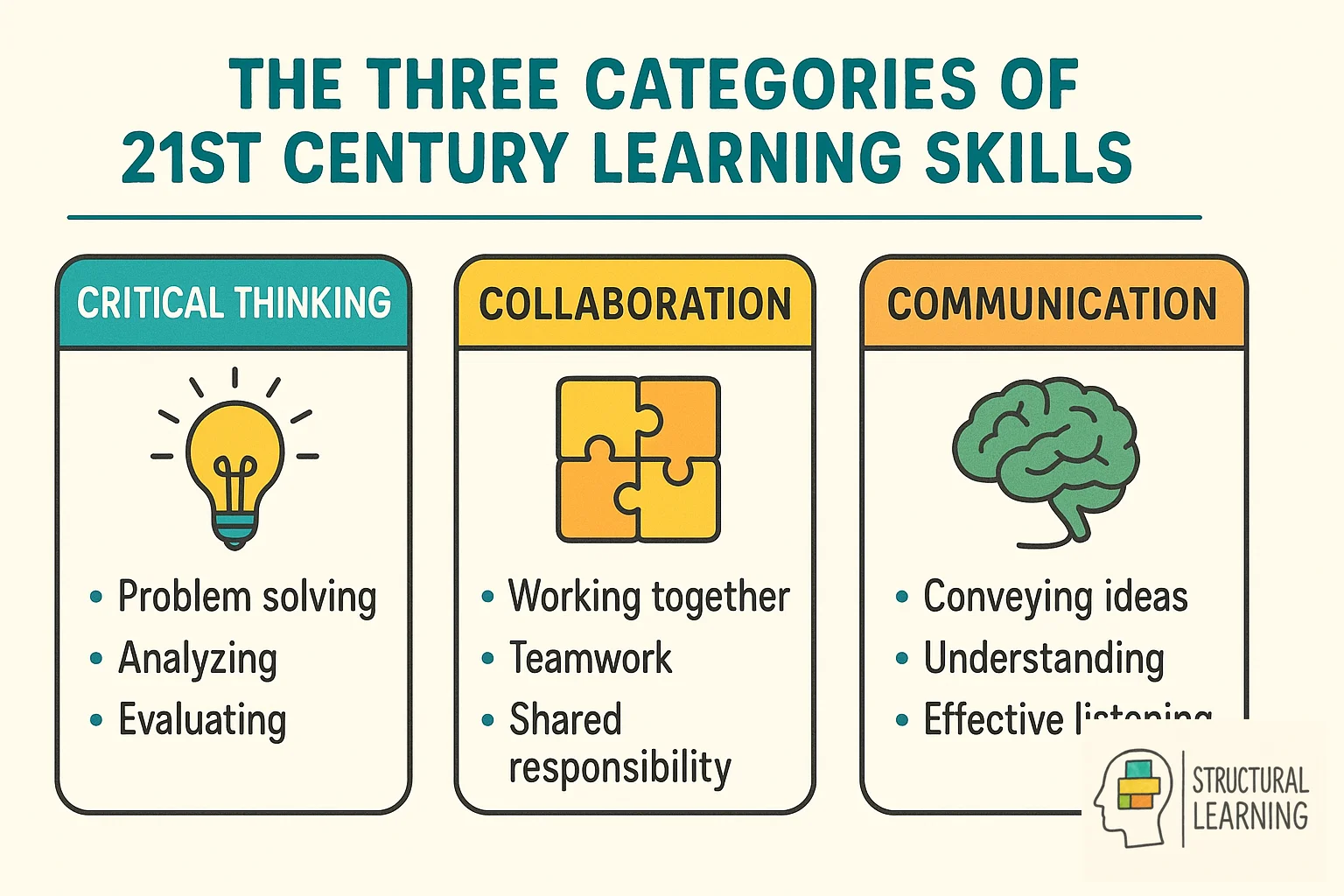
Developing these skills places individuals on a trajectory for not only academic triumph but also equips them for the nuanced demands of the workforce. Modern educational institutions are intent on nurturing these capabilities, recognising their role in preparing students to confront the challenges and complexities of contemporary professional landscapes and society at large.

In today's digitally-dominated age, literacy extends far beyond the traditional understanding of reading and writing. 21st-century literacy skills, collectively referred to as IMT skills, constitute three essential components:
Together, these literacy skills are crucial for individuals to adeptly manoeuvre within the digital terrain of the 21st century. They serve as the bedrock for engaging with the constant stream of information that characterises modern life, enabling users to decode and make the most of the technology that permeates everyday experiences.
metacognition-science-education-teachers">metacognition, self-regulation and study strategies" width="auto" height="auto" id="">
Life skills, encapsulated by the FLIPS acronym, represent five core competencies that contribute substantially to a person's effectiveness in both personal and professional realms. They comprise:
These life skills are components of a toolkit that enables individuals to interact effectively with others, manage personal and group endeavors, and display adaptability against the backdrop of life's evolving stages and scenarios.

Mastering the Four C's framework requires developing proficiency in critical thinking, creativity, collaboration, and communication through deliberate practise and structured application across academic disciplines. These interrelated skills form a strong framework for navigating complex problems and creating collective achievement.Students thrive in academic and professional realms when they master learning skills such as critical thinking, creativity, collaboration, and communication, often referred to as the Four Cs. These interrelated skills form a strong framework for navigating complex problems and creating collective achievement.
Critical thinking is a deliberate process where information is methodically analysed. This allows individuals to dissect subjects into simpler elements, and assess their interconnections. It involves skills like analysing, which dissects information, arguing, which debates points with evidence, and classifying, which groups similar items together. Through this methodical examination, people develop a keen awareness of their abilities and limitations, shedding unhelpful preconceptions.
Creativity goes beyond innate talent; it is a cultivable skill integral to innovation and problem-solving. Creative thinking involves exploring novel concepts and solutions, opening new avenues for learning and progress. Abilities like brainstorming, creating, and designing transform ideas into reality. Storytelling and performance are also aspects of creative thinking that enrich communication, inviting others to engage and connect.
Creating a secure work environment and efficient team operations hinges on collaboration. This skill enables mutual teaching and learning, boosting problem-solving within groups. Collaboration not only facilitates the sharing of ideas and inspiration but also underscores social skills' roles in various professional settings. Collaborative activities encourage recognition of diverse viewpoints and the ability to integrate insights into assorted scenarios.
At the heart of daily interaction lies communication, the essential skill for articulation and comprehension. For students, effective communication is crucial; it clarifies their ideas and accommodates different personalities, reducing workplace misunderstandings. Incorporating active listening, an element that promotes understanding and respect, communication skills are paramount for joint efforts and crisis management. Negotiating, presenting ideas, and exchanging views are all components that fortify communication prowess.

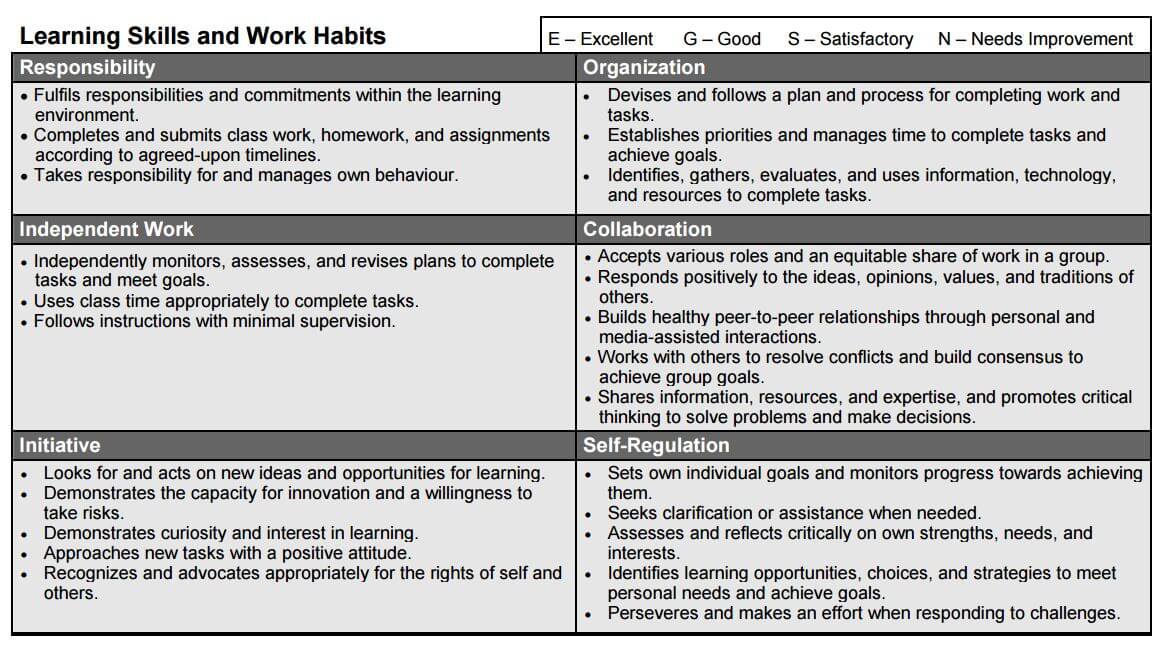
Learning skills greatly influence a student's process to academic success. These abilities streamline the process of absorbing and applying new information. For example, effective time management allows students to allocate their attention wisely across different subjects and responsibilities, leading to more balanced and in-depth learning.
Critical thinking sharpens a student's capacity to dissect complex concepts into manageable parts, encouraging a deeper understanding and equipping them with problem-solving strategies. This analytical approach directly impacts their performance across various educational settings.
Moreover, mastering literacy skills plays a pivotal role. Through effective reading and comprehension, students can quickly grasp the essence of a text, aiding in the retention of knowledge and facilitating progress towards goals.
Students who hone their creative thinking abilities can also navigate academic challenges more newly, bringing unique perspectives to common problems.
Communication skills are imperative not only for individual tasks but also for when a common goal necessitates joint efforts. Collaboration encourages the exchange of ideas and creates social responsibility.
All these skills collectively ensure that students are not just prepared for immediate academic challenges but are also on the path towards career readiness, poised to meet the demands of modern society.

Students need workplace skills including critical thinking, digital literacy, communication, problem-solving, collaboration, and adaptability to succeed in today's rapidly evolving job market. Skills in demand encompass a broad spectrum, from critical thinking to digital literacy, all contributing to an individual's ability to instigate and manage change across diverse industries.
The shift in educational settings reflects this need, as schools integrate 21st-century learning skills into their curricula. These skills extend beyond just knowing facts and figures; they entail mastering technology skills for efficient problem-solving and understanding social studies to navigate human interaction effectively.
To meet these expectations, future-ready schools design their programmes around 21st-century learning principles. This teaching method aims to arm students with skills that are not only relevant to achieving professional objectives but are also indispensable in daily life. Educational systems focus on creating classroom activities that encourage creative thinking abilities, social skills, and time management, abilities necessary for career readiness and personal growth.
The prevalence of technology in virtually all aspects of life underscores the significance of digital literacy. Consequently, students today are encouraged to develop technology skills, ensuring they can confidently handle various digital tools and platforms, a foundational aspect of most modern careers. This comprehensive skillset, integrating both cognitive prowess and effective communication in social situations, forms the cornerstone for progress towards goals and social responsibility.

When teachers weave learning skills into their lessons, students gain abilities crucial for handling future challenges. Strategies such as embedding problem-solving tasks, analytical exercises, and activities that enhance effective reading and time management can significantly boost a student's learning efficiency. As these skills are cultivated, not only do academic performances improve, but personal and professional capabilities are also strengthened, producing more capable communicators and thinkers.
Frameworks serve as blueprints in developing these learning skills, and educators tailor these models to suit their community's unique needs. By systematically integrating these skills throughout the curriculum, schools ensure that what students learn within their walls translates into higher competency outside of them.
To successfully integrate learning skills into the curriculum, educators can employ a variety of approaches. They might, for example, encourage critical thinking and communication by encouraging students to debate and discuss various topics and perspectives. Collaboration can be encouraged through group projects that require a common goal and team-based problem-solving. Creativity may be cultivated by allowing students the freedom to explore topics in depth and from diverse angles, nurturing their creative thinking abilities.
The use of project-based learning and inquiry-based activities smoothly brings 21st-century skills into teaching routines by engaging students actively in their learning process. Educators can offer assignments that encourage students to choose their path, reflecting on their decisions and outcomes along the way. However, incorporating these methodologies can confront educators with resource limitations and the need for specific training to apply these skills effectively. Moreover, assessing these competencies can be complex, demanding inventive approaches to gauge progress and comprehension.

Project-based learning is a dynamic instructional strategy where students actively explore real-world challenges to acquire knowledge and skills. In doing so, they develop the 4 Cs. By working through projects, students analyse and dissect information thoroughly, boosting critical thinking. Creativity flourishes as students approach problems uniquely, developing new solutions.
Through open discussions and presentations, communication skills are refined, allowing students to express their ideas clearly. Collaboration naturally occurs as students must work together, learning to bring together their strengths towards a shared outcome. These activities not only further academic success but also serve as essential life skills transferable to various social situations and professional settings.
In the current era of ongoing technological advances, encouraging technology skills is a fundamental aspect of education. The rapid pace of innovation drives the need for individuals adept in IT and digital tools, underlining the role of technology in skill development. Educational tools enhance learning by providing rich, interactive hands-on tasks. Digital literacy transcends common literacy skills, enabling students to sift through vast information smoothly.
By integrating technology into teaching, educators offer students the chance not only to consume digital content but also to create it, thus encouraging a two-way interaction with the digital world. Continuous learning is critical, and staying up-to-date with technological trends is non-negotiable for anyone looking to thrive in the modern workplace. Hence, technology skills are as much about understanding current systems as they are about being ready for whatever comes next, underscoring the value of adaptability in learning.

Educators can access varied frameworks and assessment tools to shape their teaching strategies and measure student progress. To ensure that the integration of these skills is effective, professional developmentopportunities aimed at educators play a pivotal role. These strategies assist teachers in embedding skills like collaborative problem-solving and creative thinking abilities into daily classroom activities.
Schools can use Structural Learning resources to smoothly integrate skill development with knowledge acquisition, ensuring that learning remains both dynamic and effective. The key is that developing skills is not done instead of developing knowledge, skills actually enhance and support the way students absorb and apply knowledge in the classroom.
Far from undermining a knowledge-based curriculum, skill development facilitates deeper understanding and encourages students to be more proactive learners. This dual approach strengthens both knowledge retention and the underlying cognitive skills essential for successful learning.
Here are five ways that Structural Learning tools support both knowledge acquisition and skill development using global warming as a topic:
This balanced approach ensures that students grow in both their content mastery of global warming and in essential skills that make knowledge acquisition more effective and applicable to real-world challenges.
Educators build student motivation for skill development by implementing project-based learning, gamification techniques, and providing clear connections between academic skills and real-world applications that students find personally relevant. Educators play a pivotal role in nurturing these skills by structuring classroom activities that focus on critical thinking, communication, collaboration, and creativity. One productive approach is through project-based learning where students tackle practical, real-world problems. This method not only engages them but also sharpens their critical thinking and problem-solving skills.Learning skills are the backbone of effective knowledge acquisition and application. Educators play a pivotal role in nurturing these skills by structuring classroom activities that focus on critical thinking, communication, collaboration, and creativity. One productive approach is through project-based learning where students tackle practical, real-world problems. This method not only engages them but also sharpens their critical thinking and problem-solving skills.
Inquiry-based activities are another avenue that promotes exploration and questioning, key components of learning. When students are given a chance to steer their learning process, with space for reflection and choice, they often show increased commitment and understanding.
Parents hold an influential position in this developmental process, too. By incorporating children in thoughtful discussions, creative endeavors, and social activities outside the school environment, parents encourage essential skills like problem-solving and social interaction. These hands-on tasks teach children to apply critical thinking and adaptability beyond the classroom walls, preparing them for varied situations in life and future careers.
Thus, when lessons in both educational settings and at home encourage participation and personal investment, students are more likely to develop strong learning skills conducive to personal and academic growth.
skills development across key stages" width="auto" height="auto" id="">
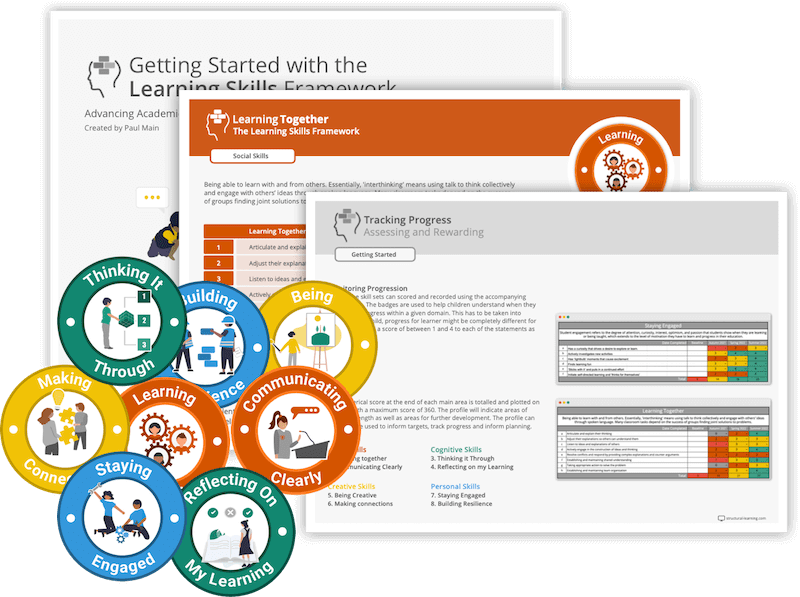
The Learning Skills Framework can be smoothly integrated into teaching routines to not only assess learning skills but also reward students' achievements in a highly visible and motivational way. By using the framework, teachers can highlight key skills such as critical thinking, resilience, and creative thinking, which play a vital
These peer-reviewed studies provide the research foundation for the strategies discussed in this article:
Developing Metacognitive Skills and Learning Motivation Through Hybrid Learning with effective Learning Strategies View study ↗
1 citations
Lina Listiana et al. (2025)
This research demonstrates how combining online and in-person learning can effectively help students develop stronger thinking skills and motivation to learn. The study provides teachers with practical lesson plans and digital tools that make complex concepts clearer and more engaging for students. For educators looking to blend technology with traditional teaching, this work offers a roadmap for creating more effective hybrid learning experiences.
Effects of Differentiated Instruction on Students' helped Learning Skills View study ↗
2 citations
A. Titus (2025)
This controlled study proves that tailoring instruction to meet individual student needs significantly improves their ability to take ownership of their learning. Rather than using one-size-fits-all teaching methods, educators who customise their approach see students become more confident, engaged, and capable learners. The research provides concrete evidence that differentiated instruction isn't just trendy educational theory, it genuinely helps students to succeed.
Using dialogic reading and direct instruction of emotion words to increase emotion vocabulary knowledge in the preschool classroom View study ↗
2 citations
Ann-Marie Kogan (2024)
This study shows that combining interactive storytelling with explicit teaching of emotion words helps young children better understand and express their feelings. Preschool teachers who used these techniques during book reading saw significant improvements in children's emotional vocabulary and self-regulation skills. The research offers early childhood educators practical strategiesfor building the emotional intelligence that underpins later academic and social success.
Shifting online during COVID-19: A systematic review of teaching and learning strategies and their outcomes View study ↗
78 citations
J. Koh & B. Daniel (2022)
This comprehensive review of pandemic teaching reveals eight key strategies that helped maintain student learning during the sudden shift to online education. While some approaches successfully kept students engaged, the research highlights persistent challenges around technology access and home learning environments that teachers must consider. The findings provide valuable insights for educators planning hybrid or online instruction, showing what worked and what barriers still need addressing.
Non-Cognitive Skills as Correlates to Academic Performance among Senior High School Students View study ↗
3 citations
Divina O. Rulida et al. (2024)
This research confirms that skills like persistence, self-control, and social awareness are just as important as academic knowledge for student success. High school students who developed stronger non-cognitive skills showed significantly better academic performance and overall well-being. The findings encourage teachers to intentionally creates these character strengths alongside traditional curriculum, as they play a crucial role in preparing students for both academic achievement and life success.
Key learning skills are the fundamental abilities that enable students to absorb, process, and structural-learning. com/post/change-theories'>apply knowledge effectively across all academic subjects. These essential skills include critical thinking, time management, note-taking, active reading, reading assessment, and self-regulation, which together form the foundation for academic excellence. While natural intelligence plays a role in student success, research consistently shows that students who develop strong learning skills significantly outperform their peers, regardless of their starting point. The most successful students aren't necessarily the smartest ones, but rather those who have mastered the art of learning itself.
Understanding the three main categories of learning skills, learning skills, literacy skills, and life skills, provides a foundation for navigating this landscape. Each category plays a unique role in shaping an individual's academic process and overall readiness for challenges beyond the classroom, including independent research projects like expeditionary learning and the EPQ. Exploring the interconnectedness of these skills reveals how they contribute to personal and professional growth.
This article explores into the vital skills needed for academic success, highlighting the significance of the Four C's: critical thinking, creativity, collaboration, and communication. By examining effective strategies for teaching these skills, practical resources for educators, and methods to assess learning capabilities, the importance of developing a well-rounded skill set emerges as a pathway to enabling potential.

The landscape of both higher education and the workplace has shifted, with soft skills now taking centre stage as key drivers of success. Leaders in both academia and business recognise that mere knowledge of core subject content doesn't suffice. Instead, students also need the ability to apply this knowledge to tackle complex real-world problems.
As students prepare for careers, many of which haven't yet emerged, a diverse skill set becomes vital. This set includes critical thinking, which allows individuals to process and analyse the vast volumes of data available online effectively. Students also need to hone their communication skills, which are critical in almost every career.
Furthermore, as social media redefines human interaction, understanding social situations and managing the challenges they present becomes crucial. This requires strong social skills and an awareness of social responsibility. Educators must prepare students for this reality, focusing not only on digital literacybut also on life skills such as time management, which is an achievable objective within educational settings. Through these learning skills, individuals can progress towards goals, exhibiting social responsibility and creative thinking abilities essential for 21st-century challenges.
Understanding and mastering learning skills are pathways that enable individuals to assimilate and use new knowledge more effectively. Such skills are not isolated; they often intersect to support complex tasks and multifaceted learning processes. The P21 framework includes four main categories, not three as presented. These categories collectively contribute to an individual's ability to succeed in diverse and evolving environments.

The learning skills group, also identified by the memorable label of the four Cs (critical thinking, communication, collaboration, and creativity), is particularly relevant to academic and workplace achievement in the 21st century. Positioned alongside these competencies are literacy skills, which consist of information, media, and technology literacies (IMT skills) that are indispensable for navigating the modern digital world.
Lastly, life skills offer a suite of abilities, sometimes referred to as FLIPS (flexibility, leadership, initiative, productivity, and social skills), which are instrumental in personal development and social interactions. Each of these categories plays a crucial role in setting the foundations for an individual to advance and thrive and workplace.
Learning skills are dynamic tools that guide one's ability to absorb, process, and apply knowledge. These skills cover a spectrum ranging from time management, which enables learners to allocate their hours wisely, to study skills that improve the understanding and retention of new information. Central to the concept of 21st-century learning are the four Cs:
Developing these skills places individuals on a trajectory for not only academic triumph but also equips them for the nuanced demands of the workforce. Modern educational institutions are intent on nurturing these capabilities, recognising their role in preparing students to confront the challenges and complexities of contemporary professional landscapes and society at large.

In today's digitally-dominated age, literacy extends far beyond the traditional understanding of reading and writing. 21st-century literacy skills, collectively referred to as IMT skills, constitute three essential components:
Together, these literacy skills are crucial for individuals to adeptly manoeuvre within the digital terrain of the 21st century. They serve as the bedrock for engaging with the constant stream of information that characterises modern life, enabling users to decode and make the most of the technology that permeates everyday experiences.
metacognition-science-education-teachers">metacognition, self-regulation and study strategies" width="auto" height="auto" id="">
Life skills, encapsulated by the FLIPS acronym, represent five core competencies that contribute substantially to a person's effectiveness in both personal and professional realms. They comprise:
These life skills are components of a toolkit that enables individuals to interact effectively with others, manage personal and group endeavors, and display adaptability against the backdrop of life's evolving stages and scenarios.

Mastering the Four C's framework requires developing proficiency in critical thinking, creativity, collaboration, and communication through deliberate practise and structured application across academic disciplines. These interrelated skills form a strong framework for navigating complex problems and creating collective achievement.Students thrive in academic and professional realms when they master learning skills such as critical thinking, creativity, collaboration, and communication, often referred to as the Four Cs. These interrelated skills form a strong framework for navigating complex problems and creating collective achievement.
Critical thinking is a deliberate process where information is methodically analysed. This allows individuals to dissect subjects into simpler elements, and assess their interconnections. It involves skills like analysing, which dissects information, arguing, which debates points with evidence, and classifying, which groups similar items together. Through this methodical examination, people develop a keen awareness of their abilities and limitations, shedding unhelpful preconceptions.
Creativity goes beyond innate talent; it is a cultivable skill integral to innovation and problem-solving. Creative thinking involves exploring novel concepts and solutions, opening new avenues for learning and progress. Abilities like brainstorming, creating, and designing transform ideas into reality. Storytelling and performance are also aspects of creative thinking that enrich communication, inviting others to engage and connect.
Creating a secure work environment and efficient team operations hinges on collaboration. This skill enables mutual teaching and learning, boosting problem-solving within groups. Collaboration not only facilitates the sharing of ideas and inspiration but also underscores social skills' roles in various professional settings. Collaborative activities encourage recognition of diverse viewpoints and the ability to integrate insights into assorted scenarios.
At the heart of daily interaction lies communication, the essential skill for articulation and comprehension. For students, effective communication is crucial; it clarifies their ideas and accommodates different personalities, reducing workplace misunderstandings. Incorporating active listening, an element that promotes understanding and respect, communication skills are paramount for joint efforts and crisis management. Negotiating, presenting ideas, and exchanging views are all components that fortify communication prowess.

Learning skills greatly influence a student's process to academic success. These abilities streamline the process of absorbing and applying new information. For example, effective time management allows students to allocate their attention wisely across different subjects and responsibilities, leading to more balanced and in-depth learning.
Critical thinking sharpens a student's capacity to dissect complex concepts into manageable parts, encouraging a deeper understanding and equipping them with problem-solving strategies. This analytical approach directly impacts their performance across various educational settings.
Moreover, mastering literacy skills plays a pivotal role. Through effective reading and comprehension, students can quickly grasp the essence of a text, aiding in the retention of knowledge and facilitating progress towards goals.
Students who hone their creative thinking abilities can also navigate academic challenges more newly, bringing unique perspectives to common problems.
Communication skills are imperative not only for individual tasks but also for when a common goal necessitates joint efforts. Collaboration encourages the exchange of ideas and creates social responsibility.
All these skills collectively ensure that students are not just prepared for immediate academic challenges but are also on the path towards career readiness, poised to meet the demands of modern society.

Students need workplace skills including critical thinking, digital literacy, communication, problem-solving, collaboration, and adaptability to succeed in today's rapidly evolving job market. Skills in demand encompass a broad spectrum, from critical thinking to digital literacy, all contributing to an individual's ability to instigate and manage change across diverse industries.
The shift in educational settings reflects this need, as schools integrate 21st-century learning skills into their curricula. These skills extend beyond just knowing facts and figures; they entail mastering technology skills for efficient problem-solving and understanding social studies to navigate human interaction effectively.
To meet these expectations, future-ready schools design their programmes around 21st-century learning principles. This teaching method aims to arm students with skills that are not only relevant to achieving professional objectives but are also indispensable in daily life. Educational systems focus on creating classroom activities that encourage creative thinking abilities, social skills, and time management, abilities necessary for career readiness and personal growth.
The prevalence of technology in virtually all aspects of life underscores the significance of digital literacy. Consequently, students today are encouraged to develop technology skills, ensuring they can confidently handle various digital tools and platforms, a foundational aspect of most modern careers. This comprehensive skillset, integrating both cognitive prowess and effective communication in social situations, forms the cornerstone for progress towards goals and social responsibility.

When teachers weave learning skills into their lessons, students gain abilities crucial for handling future challenges. Strategies such as embedding problem-solving tasks, analytical exercises, and activities that enhance effective reading and time management can significantly boost a student's learning efficiency. As these skills are cultivated, not only do academic performances improve, but personal and professional capabilities are also strengthened, producing more capable communicators and thinkers.
Frameworks serve as blueprints in developing these learning skills, and educators tailor these models to suit their community's unique needs. By systematically integrating these skills throughout the curriculum, schools ensure that what students learn within their walls translates into higher competency outside of them.
To successfully integrate learning skills into the curriculum, educators can employ a variety of approaches. They might, for example, encourage critical thinking and communication by encouraging students to debate and discuss various topics and perspectives. Collaboration can be encouraged through group projects that require a common goal and team-based problem-solving. Creativity may be cultivated by allowing students the freedom to explore topics in depth and from diverse angles, nurturing their creative thinking abilities.
The use of project-based learning and inquiry-based activities smoothly brings 21st-century skills into teaching routines by engaging students actively in their learning process. Educators can offer assignments that encourage students to choose their path, reflecting on their decisions and outcomes along the way. However, incorporating these methodologies can confront educators with resource limitations and the need for specific training to apply these skills effectively. Moreover, assessing these competencies can be complex, demanding inventive approaches to gauge progress and comprehension.

Project-based learning is a dynamic instructional strategy where students actively explore real-world challenges to acquire knowledge and skills. In doing so, they develop the 4 Cs. By working through projects, students analyse and dissect information thoroughly, boosting critical thinking. Creativity flourishes as students approach problems uniquely, developing new solutions.
Through open discussions and presentations, communication skills are refined, allowing students to express their ideas clearly. Collaboration naturally occurs as students must work together, learning to bring together their strengths towards a shared outcome. These activities not only further academic success but also serve as essential life skills transferable to various social situations and professional settings.
In the current era of ongoing technological advances, encouraging technology skills is a fundamental aspect of education. The rapid pace of innovation drives the need for individuals adept in IT and digital tools, underlining the role of technology in skill development. Educational tools enhance learning by providing rich, interactive hands-on tasks. Digital literacy transcends common literacy skills, enabling students to sift through vast information smoothly.
By integrating technology into teaching, educators offer students the chance not only to consume digital content but also to create it, thus encouraging a two-way interaction with the digital world. Continuous learning is critical, and staying up-to-date with technological trends is non-negotiable for anyone looking to thrive in the modern workplace. Hence, technology skills are as much about understanding current systems as they are about being ready for whatever comes next, underscoring the value of adaptability in learning.

Educators can access varied frameworks and assessment tools to shape their teaching strategies and measure student progress. To ensure that the integration of these skills is effective, professional developmentopportunities aimed at educators play a pivotal role. These strategies assist teachers in embedding skills like collaborative problem-solving and creative thinking abilities into daily classroom activities.
Schools can use Structural Learning resources to smoothly integrate skill development with knowledge acquisition, ensuring that learning remains both dynamic and effective. The key is that developing skills is not done instead of developing knowledge, skills actually enhance and support the way students absorb and apply knowledge in the classroom.
Far from undermining a knowledge-based curriculum, skill development facilitates deeper understanding and encourages students to be more proactive learners. This dual approach strengthens both knowledge retention and the underlying cognitive skills essential for successful learning.
Here are five ways that Structural Learning tools support both knowledge acquisition and skill development using global warming as a topic:
This balanced approach ensures that students grow in both their content mastery of global warming and in essential skills that make knowledge acquisition more effective and applicable to real-world challenges.
Educators build student motivation for skill development by implementing project-based learning, gamification techniques, and providing clear connections between academic skills and real-world applications that students find personally relevant. Educators play a pivotal role in nurturing these skills by structuring classroom activities that focus on critical thinking, communication, collaboration, and creativity. One productive approach is through project-based learning where students tackle practical, real-world problems. This method not only engages them but also sharpens their critical thinking and problem-solving skills.Learning skills are the backbone of effective knowledge acquisition and application. Educators play a pivotal role in nurturing these skills by structuring classroom activities that focus on critical thinking, communication, collaboration, and creativity. One productive approach is through project-based learning where students tackle practical, real-world problems. This method not only engages them but also sharpens their critical thinking and problem-solving skills.
Inquiry-based activities are another avenue that promotes exploration and questioning, key components of learning. When students are given a chance to steer their learning process, with space for reflection and choice, they often show increased commitment and understanding.
Parents hold an influential position in this developmental process, too. By incorporating children in thoughtful discussions, creative endeavors, and social activities outside the school environment, parents encourage essential skills like problem-solving and social interaction. These hands-on tasks teach children to apply critical thinking and adaptability beyond the classroom walls, preparing them for varied situations in life and future careers.
Thus, when lessons in both educational settings and at home encourage participation and personal investment, students are more likely to develop strong learning skills conducive to personal and academic growth.
skills development across key stages" width="auto" height="auto" id="">
The Learning Skills Framework can be smoothly integrated into teaching routines to not only assess learning skills but also reward students' achievements in a highly visible and motivational way. By using the framework, teachers can highlight key skills such as critical thinking, resilience, and creative thinking, which play a vital
These peer-reviewed studies provide the research foundation for the strategies discussed in this article:
Developing Metacognitive Skills and Learning Motivation Through Hybrid Learning with effective Learning Strategies View study ↗
1 citations
Lina Listiana et al. (2025)
This research demonstrates how combining online and in-person learning can effectively help students develop stronger thinking skills and motivation to learn. The study provides teachers with practical lesson plans and digital tools that make complex concepts clearer and more engaging for students. For educators looking to blend technology with traditional teaching, this work offers a roadmap for creating more effective hybrid learning experiences.
Effects of Differentiated Instruction on Students' helped Learning Skills View study ↗
2 citations
A. Titus (2025)
This controlled study proves that tailoring instruction to meet individual student needs significantly improves their ability to take ownership of their learning. Rather than using one-size-fits-all teaching methods, educators who customise their approach see students become more confident, engaged, and capable learners. The research provides concrete evidence that differentiated instruction isn't just trendy educational theory, it genuinely helps students to succeed.
Using dialogic reading and direct instruction of emotion words to increase emotion vocabulary knowledge in the preschool classroom View study ↗
2 citations
Ann-Marie Kogan (2024)
This study shows that combining interactive storytelling with explicit teaching of emotion words helps young children better understand and express their feelings. Preschool teachers who used these techniques during book reading saw significant improvements in children's emotional vocabulary and self-regulation skills. The research offers early childhood educators practical strategiesfor building the emotional intelligence that underpins later academic and social success.
Shifting online during COVID-19: A systematic review of teaching and learning strategies and their outcomes View study ↗
78 citations
J. Koh & B. Daniel (2022)
This comprehensive review of pandemic teaching reveals eight key strategies that helped maintain student learning during the sudden shift to online education. While some approaches successfully kept students engaged, the research highlights persistent challenges around technology access and home learning environments that teachers must consider. The findings provide valuable insights for educators planning hybrid or online instruction, showing what worked and what barriers still need addressing.
Non-Cognitive Skills as Correlates to Academic Performance among Senior High School Students View study ↗
3 citations
Divina O. Rulida et al. (2024)
This research confirms that skills like persistence, self-control, and social awareness are just as important as academic knowledge for student success. High school students who developed stronger non-cognitive skills showed significantly better academic performance and overall well-being. The findings encourage teachers to intentionally creates these character strengths alongside traditional curriculum, as they play a crucial role in preparing students for both academic achievement and life success.
{"@context":"https://schema.org","@graph":[{"@type":"Article","@id":"https://www.structural-learning.com/post/key-learning-skills-for-academic-success#article","headline":"Unlocking Potential: Key Learning Skills for Academic Success","description":"Explore essential learning skills children need for success in the classroom and beyond, focusing on practical strategies to foster these skills.","datePublished":"2024-10-17T18:48:16.127Z","dateModified":"2026-01-26T10:09:32.212Z","author":{"@type":"Person","name":"Paul Main","url":"https://www.structural-learning.com/team/paulmain","jobTitle":"Founder & Educational Consultant"},"publisher":{"@type":"Organization","name":"Structural Learning","url":"https://www.structural-learning.com","logo":{"@type":"ImageObject","url":"https://cdn.prod.website-files.com/5b69a01ba2e409e5d5e055c6/6040bf0426cb415ba2fc7882_newlogoblue.svg"}},"mainEntityOfPage":{"@type":"WebPage","@id":"https://www.structural-learning.com/post/key-learning-skills-for-academic-success"},"image":"https://cdn.prod.website-files.com/5b69a01ba2e409501de055d1/6950263e6445ceee46f9d47a_fz9w78.webp","wordCount":3789},{"@type":"BreadcrumbList","@id":"https://www.structural-learning.com/post/key-learning-skills-for-academic-success#breadcrumb","itemListElement":[{"@type":"ListItem","position":1,"name":"Home","item":"https://www.structural-learning.com/"},{"@type":"ListItem","position":2,"name":"Blog","item":"https://www.structural-learning.com/blog"},{"@type":"ListItem","position":3,"name":"Unlocking Potential: Key Learning Skills for Academic Success","item":"https://www.structural-learning.com/post/key-learning-skills-for-academic-success"}]}]}