Strategies for Assessing Student ProgressSecondary students aged 12-14 in royal blue jumpers during a peer-review session in a modern classroom.

Updated on  

February 14, 2026

Strategies for Assessing Student Progress

|

October 15, 2024

Explore innovative strategies to assess student progress and uncover how we can truly gauge what students have understood beyond surface-level knowledge.


Course Enquiry
Copy citation

Main, P. (2024, October 15). Strategies for Assessing Student Progress. Retrieved from www.structural-learning.com/post/strategies-for-assessing-student-progress

Effective student assessment strategies fall into three core categories: formative assessment during lessons, summative evaluation at key milestones, and peer-to-peer feedback systems that engage learners directly. These evidence-based approaches allow educators to track progress accurately whilst adapting their teaching methods to support every student's learning journey. When assessing student progress, the combination of multiple assessment types provides a comprehensive view of learning. From quick classroom polls and exit tickets to structured self-assessment rubrics, the right combination of tools can transform how you measure and respond to student understanding. The key lies in knowing which strategy works best for your specific classroom context and learning objectives.

Key Takeaways

  1. Beyond Test Scores: Discover how real-time engagement tracking reveals what standardised assessments miss about your students' actual understanding and progress
  2. The Thinking Framework Advantage: Transform exit tickets and peer questions into powerful tools that expose the depth of student thinking, not just surface knowledge
  3. Verbal Assessment Revolution: Enable hidden understanding through exploratory conversations that reveal how students really process concepts when writing isn't enough
  4. Data That Actually Helps: Move beyond collecting marks to using formative insights that show you exactly when and how to intervene for maximum impact

FeatureStandardized TestingFormative AssessmentObservational Methods
Best ForMeasuring performance against national benchmarks and predicting future outcomesReal-time tracking of student progress and adjusting teaching strategiesGauging student engagement and participation during lessons
Key StrengthProvides objective, comparable data across schools and regionsOffers immediate feedback to inform instructional decisionsCaptures authentic learning behaviours and verbal understanding
LimitationMay miss deeper understanding and real-time learning progressRequires consistent implementation and time investmentCan be subjective and difficult to standardise across educators
ExamplesSATs, GCSEs, MAP Growth, NAPLANExit tickets, quizzes, digital tools like EdpuzzleClassroom discussions, peer questions, exploratory conversations

The landscape of student assessment includes a variety of approaches, such as standardised tests, formative assessments, and observational methods. Each method serves a unique purpose, providing valuable insights that inform instructional decisions. Utilising digital platforms and data visualision tools may further amplify these insights, allowing for clearer communication of student growth.

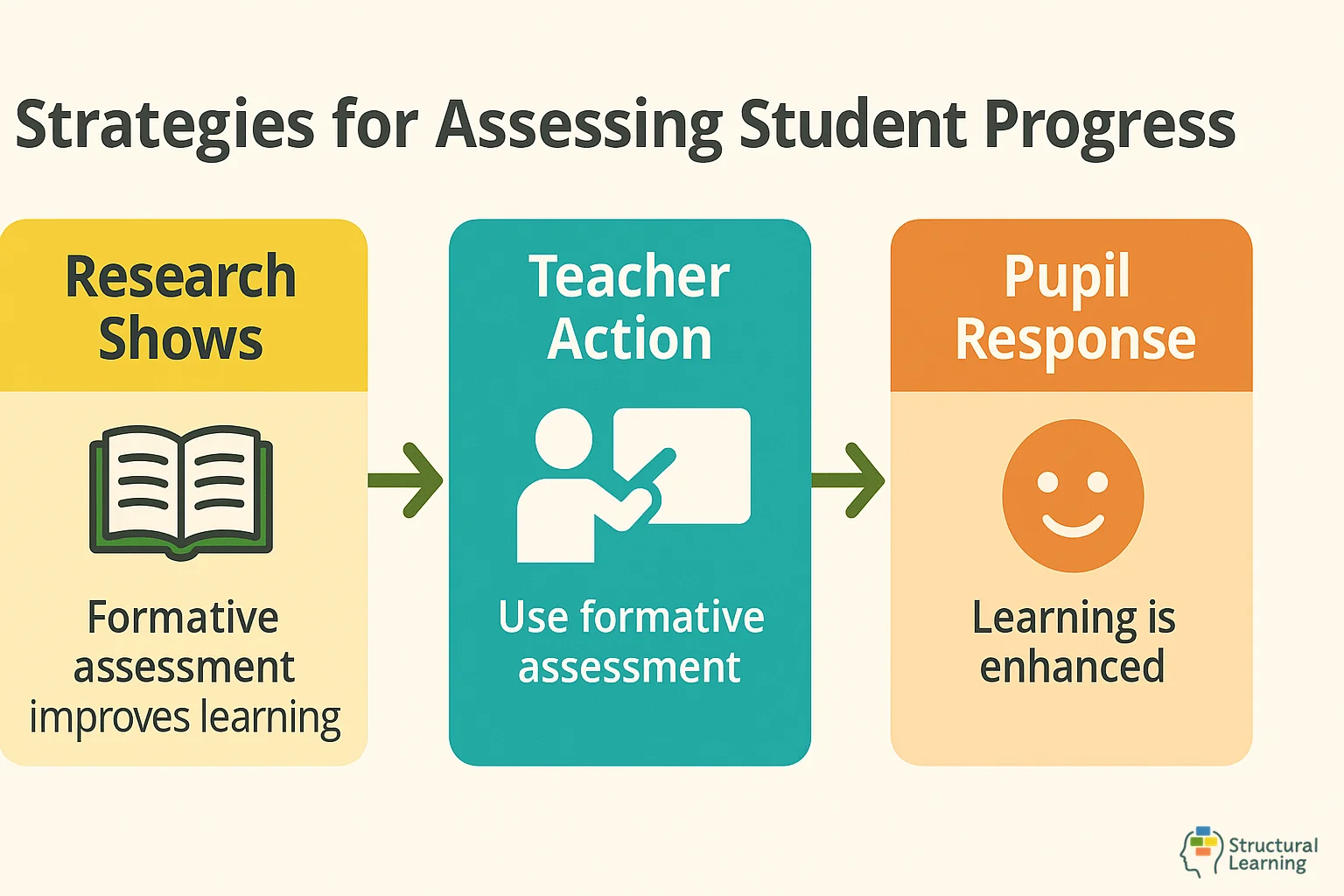
Diagram explaining Strategies for Assessing Student Progress
Strategies for Assessing Student Progress

This article explores effective strategies for assessing student progress. By exploring into the significance of assessment, methods, tools, and research insights, educators will gain practical guidance to support students' learning journeys and encourage meaningful engagement with stakeholders.

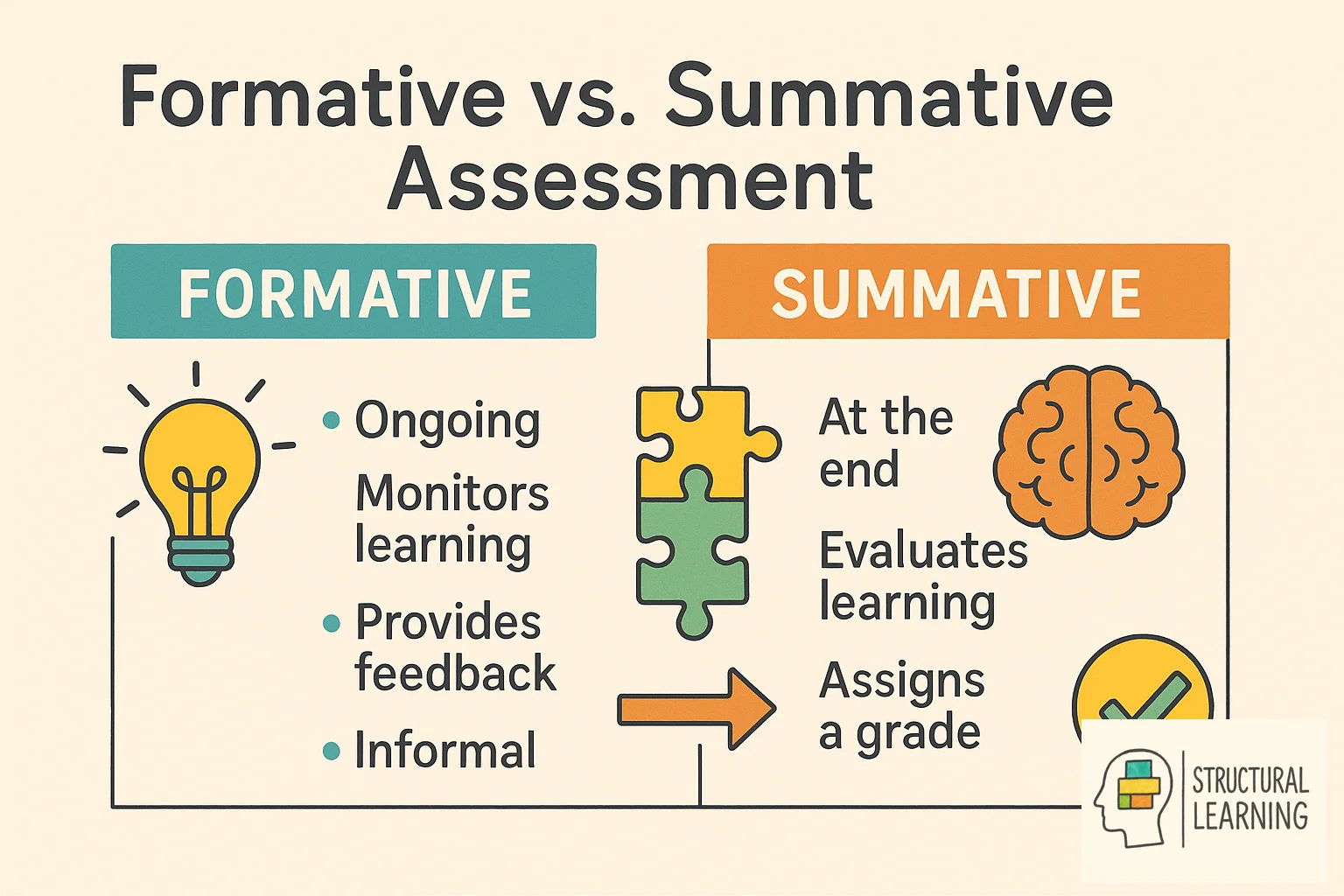
Infographic comparing formative and summative assessment methods for educators
Formative vs. Summative Assessment

Effective Student Assessment Methods

The most effective methods combine formative assessments like exit tickets and peer questioning with real-time engagement tracking during lessons. Teachers should use a mix of verbal assessments, observational data, and digital tools to capture both surface knowledge and deeper understanding. This multi-method approach reveals learning gaps that traditional tests often miss while promoting critical thinking and self-regulation.

There are several ways that teachers can assess student engagement during lessons, particularly through active learning strategies and concept mapping exercises. An inclusive approach ensures that students with special educational needs can demonstrate their understanding through various methods. Additionally, developing oracy skills allows students to express their thinking skills verbally, which can be especially valuable when written assessments don't fully capture their comprehension. Teachers who cultivate a growth mindset in their assessment practices create environments where students feel safe to take risks and learn from their mistakes.practices create environments where students feel safe to take risks and learn from their mistakes.

Assessment Tools and Digital Integration

Technology plays a crucial role in modern assessment strategies. Digital tools, such as online quizzes, interactive whiteboards, and educational apps, offer real-time feedback and data analysis. These tools allow teachers to monitor student progress efficiently and make informed decisions about instructional adjustments. Furthermore, data visualision tools can present complex assessment data in an accessible format, facilitating communication with students, parents, and other stakeholders.

Moreover, incorporating digital tools into assessment practices can promote personalised learning experiences. For instance, adaptive testing platforms adjust the difficulty level of questions based on student performance, providing targeted feedback and support. Using digital portfolios, students can showcase their work and reflect on their learning journey, promoting self-awareness and metacognitive skills.

When selecting digital assessment tools, teachers should consider their specific learning outcomes and student needs. Adaptive assessment platforms automatically adjust question difficulty based on student responses, providing personalised learning pathways that challenge learners appropriately. Video-based assessment tools allow students to demonstrate practical skills and verbal communication, particularly valuable for language learning and creative subjects. Meanwhile, collaborative assessment features enable peer feedback and group evaluation, developing critical thinking and communication skills.

Successful digital integration requires strategic implementation and ongoing professional development. Teachers should begin with familiar tools before gradually introducing more sophisticated platforms, ensuring both educators and students develop confidence with new technologies. Data analytics features within these systems provide valuable insights into learning patterns, helping teachers identify knowledge gaps and differentiate instruction effectively. Regular evaluation of digital assessment strategies ensures they align with curriculum objectives and enhance rather than complicate the teaching and learning process.

Research Insights on Assessment

Research consistently highlights the importance of formative assessment in improving student outcomes. Black and Wiliam's (1998) seminal work demonstrated that formative assessment can significantly enhance student achievement. Similarly, Hattie's (2012) meta-analysis of educational interventions identified feedback as one of the most powerful influences on learning. These studies underscore the value of incorporating regular, low-stakes assessments into teaching practices to monitor student progress and provide timely support.

Practical implementation of these research findings requires systematic integration into daily teaching practices. Teachers can apply Wiliam's formative assessment principles through techniques such as exit tickets, peer assessment activities, and regular learning checks that inform immediate instructional adjustments. For example, using traffic light systems where students self-assess their understanding enables teachers to identify learning gaps quickly and provide targeted support before misconceptions become entrenched.

The research consistently shows that assessment strategies work most effectively when combined with clear success criteria and regular opportunities for students to act on feedback. Studies by Black and Wiliam demonstrate that classrooms implementing comprehensive formative assessment approaches see learning gains equivalent to adding an extra term to the academic year. This involves creating assessment cultures where students view feedback as guidance for improvement rather than judgement, and where teachers use assessment data to adapt their teaching methods rather than simply recording grades.

Modern research also emphasises the importance of student agency in assessment processes. When learners actively participate in setting learning goals, monitoring their progress, and reflecting on their achievements, they develop stronger metacognitive skills that enhance long-term educational effectiveness and support continuous improvement throughout their academic journey.

Understanding Formative and Summative Assessment Approaches

The distinction between formative and summative assessment represents one of the most critical concepts in effective teaching practice. Formative assessment occurs during the learning process, providing real-time feedback that allows teachers to adjust instruction and students to modify their approach. In contrast, summative assessment takes place at predetermined intervals or course endpoints, measuring what students have learned against specific criteria. Dylan Wiliam's extensive research demonstrates that formative assessment practices can accelerate student progress by up to 40%, making this distinction far more than academic theory.

The timing and purpose of each assessment type fundamentally shape their educational impact. Formative strategies, such as exit tickets, peer discussions, or quick diagnostic checks, generate immediate data for instructional decisions. These low-stakes assessments reduce anxiety whilst maximising learning opportunities. Summative assessments, including unit tests, projects, or formal examinations, serve accountability purposes and provide comprehensive evaluation of student achievement over extended periods.

Effective classroom practice requires a balanced integration of both approaches. Teachers should embed brief formative checks throughout lessons, using techniques like thumb signals or mini-whiteboards to gauge understanding before misconceptions solidify. This continuous feedback loop, supported by well-designed summative assessments, creates a comprehensive picture of student progress that drives meaningful educational improvement.

Providing Meaningful Feedback That Drives Learning

Effective feedback transforms assessment data into actionable guidance that propels student learning forward. Research by John Hattie consistently demonstrates that feedback ranks among the most powerful influences on student achievement, yet its impact depends entirely on quality rather than quantity. Meaningful feedback must be timely, specific, and focused on the learning process rather than merely identifying what students got wrong. Teachers should aim to provide feedback within 24-48 hours of assessment, when the learning experience remains fresh in students' minds and corrections can be immediately applied.

The most impactful feedback follows a three-part structure: acknowledging what the student has done well, identifying specific areas for improvement, and providing clear next steps for progress. Dylan Wiliam's research on formative assessment emphasises that feedback should address three fundamental questions: Where am I going? How am I doing? Where to next? This approach helps students understand both their current position and the pathway forward, developing self-regulation and continuous improvement.

Practical implementation requires teachers to move beyond generic comments like "good work" or "needs improvement" towards precise, behaviour-focused observations. Instead of writing "unclear writing," specify "your argument would be stronger if you included evidence from the text in paragraph two." This specificity enables students to take immediate action, transforming feedback from judgement into instruction and ensuring assessment becomes a catalyst for enhanced learning outcomes.

Adapting Assessments for Diverse Learning Needs

Effective differentiated assessment requires educators to recognise that students demonstrate their learning in vastly different ways, necessitating multiple pathways for measuring educational effectiveness. Carol Ann Tomlinson's seminal work on differentiation emphasises that assessment methods must align with individual learning profiles rather than forcing all students through identical evaluation processes. This approach acknowledges that whilst learning outcomes remain consistent, the methods for demonstrating mastery can vary significantly based on students' cognitive strengths, cultural backgrounds, and processing preferences.

Practical implementation involves offering choice in assessment formats, such as allowing students to demonstrate mathematical understanding through visual representations, oral explanations, or written solutions. Howard Gardner's multiple intelligences theory supports this approach, suggesting that students possess different intellectual strengths that should be reflected in assessment strategies. Teachers can create assessment menus that include options like multimedia presentations, collaborative projects, traditional tests, or performance-based demonstrations, enabling students to showcase their knowledge through their preferred modalities.

Successful differentiated assessment also requires ongoing data collection through formative assessment techniques that inform continuous improvement in teaching practices. Teachers should establish clear success criteria whilst maintaining flexibility in how students meet those standards, ensuring that all learners can access meaningful opportunities to demonstrate their progress toward essential learning outcomes.

helping Students Through Self and Peer Assessment

Self and peer assessment techniques represent a fundamental change from traditional teacher-centred evaluation towards student-driven learning ownership. When students assess their own work and that of their peers, they develop crucial metacognitive skills that enhance their ability to monitor, evaluate, and regulate their learning processes. Research by John Flavell demonstrates that metacognitive awareness significantly improves learning outcomes across all subject areas, making these techniques invaluable for sustainable educational effectiveness.

Implementing structured peer assessment requires careful scaffolding to ensure productive feedback exchanges. Teachers should provide clear success criteria, model effective feedback techniques, and establish protocols for constructive criticism. Black and Wiliam's formative assessment research highlights that students who engage regularly in peer evaluation develop stronger analytical skills and demonstrate improved academic performance. The key lies in creating assessment strategies that balance honesty with encouragement, developing a classroom culture where students feel safe to give and receive meaningful feedback.

Practical implementation begins with simple self-reflection activities using traffic light systems or exit tickets, gradually progressing to more sophisticated peer review processes. Consider introducing structured feedback frameworks where students identify strengths, areas for improvement, and specific next steps. This approach not only supports continuous improvement in student progress but also reduces teacher workload whilst maintaining rigorous standards of assessment quality.

Turning Assessment Data into Actionable Teaching Strategies

Effective data analysis begins with identifying patterns and trends that illuminate student learning gaps rather than simply recording scores. Teachers must examine assessment results through multiple lenses: individual student progress over time, whole-class performance on specific learning objectives, and comparison between different assessment methods. Research by Dylan Wiliam emphasises that meaningful data analysis requires teachers to move beyond surface-level interpretation to understand why students struggle with particular concepts, not merely identifying that they do.

Transforming assessment findings into actionable teaching strategies demands systematic planning that connects specific data insights to targeted instructional adjustments. When analysis reveals that students consistently struggle with inferential reading comprehension, for example, responsive teaching might include explicit strategy instruction, scaffolded practice opportunities, and modified questioning techniques. John Hattie's research demonstrates that teachers who regularly adjust their methods based on assessment evidence achieve significantly higher learning outcomes than those who maintain static approaches.

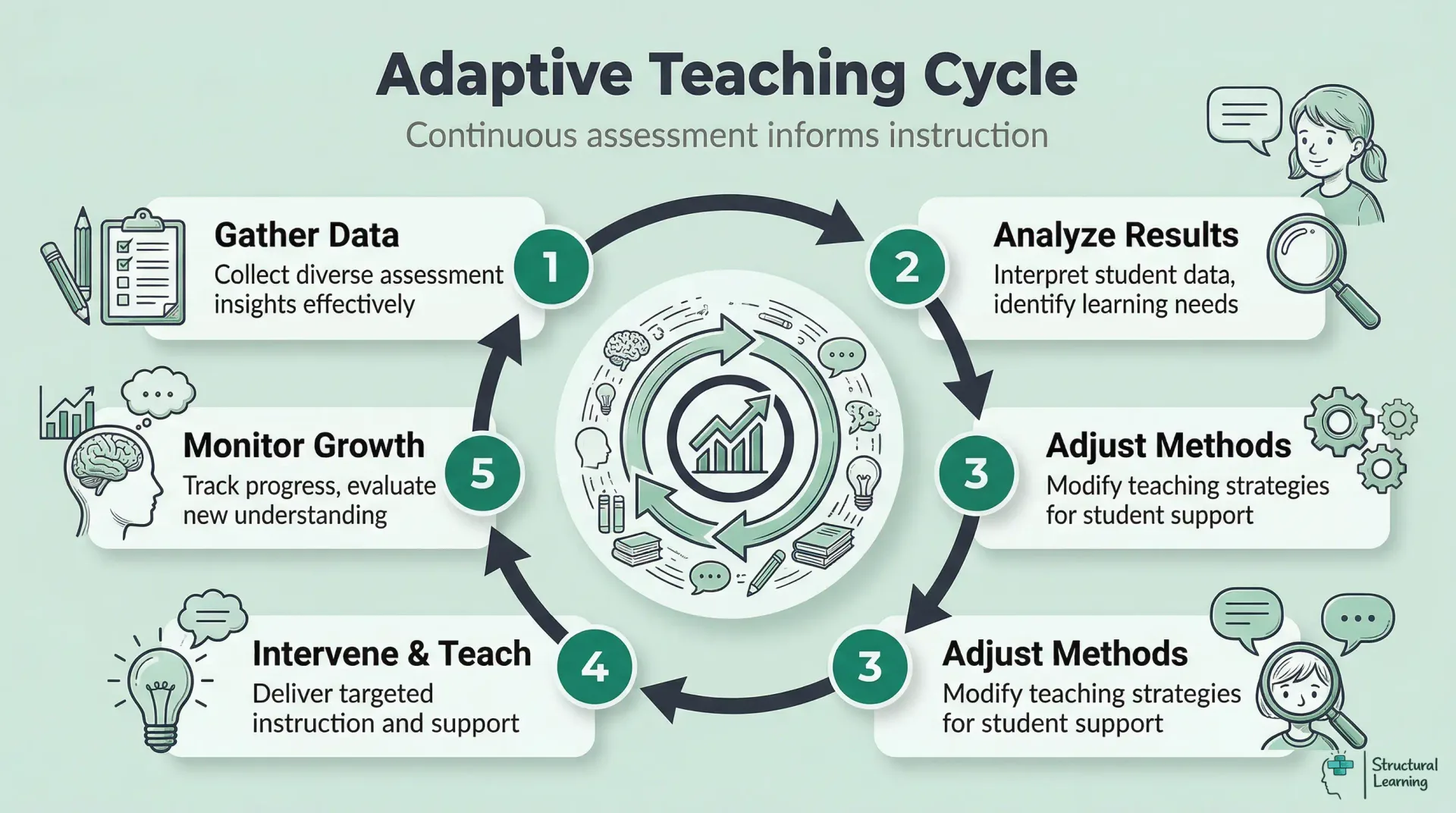
Successful action planning requires establishing clear timelines for implementing changes and measuring their effectiveness. Teachers should document which strategies address identified learning gaps, set realistic expectations for improvement, and plan follow-up assessments to evaluate progress. This cyclical approach ensures that data analysis becomes an ongoing process of continuous improvement rather than a one-off exercise, ultimately leading to more responsive and effective teaching practices.

Conclusion: Developing a Culture of Continuous Improvement

Assessing student progress effectively requires a multifaceted approach that combines various assessment methods, incorporates digital tools, and aligns with research-based practices. By moving beyond traditional testing methods and embracing formative assessment strategies, teachers can gain valuable insights into student learning and tailor their instruction to meet individual needs. This proactive approach not only enhances academic outcomes but also cultivates a culture of continuous improvement and lifelong learning.

Ultimately, the goal of assessment is not simply to measure student performance but to support their growth and development. When assessment is used as a tool for learning, students become active participants in their education, developing self-awareness, critical thinking skills, and a passion for lifelong learning. By embracing effective assessment strategies, educators can helps students to reach their full potential and succeed in a rapidly changing world.

Further Reading

  1. Black, P., & Wiliam, D. (1998). Assessment and classroom learning. Assessment in Education: Principles, Policy & Practice, 5(1), 7-74.
  2. Hattie, J. (2012). Visible learning for teachers: Maximizing impact on learning. Routledge.
  3. Leahy, S., Lyon, C., Thompson, M., & Wiliam, D. (2005). Classroom assessment: Minute by minute, day by day. Educational Leadership, 63(3), 18-24.
  4. Popham, W. J. (2008). Transformative assessment. Association for Supervision and Curriculum Development.
  5. Wiggins, G., & McTighe, J. (2005). Understanding by design. Association for Supervision and Curriculum Development.
Loading audit...

Effective student assessment strategies fall into three core categories: formative assessment during lessons, summative evaluation at key milestones, and peer-to-peer feedback systems that engage learners directly. These evidence-based approaches allow educators to track progress accurately whilst adapting their teaching methods to support every student's learning journey. When assessing student progress, the combination of multiple assessment types provides a comprehensive view of learning. From quick classroom polls and exit tickets to structured self-assessment rubrics, the right combination of tools can transform how you measure and respond to student understanding. The key lies in knowing which strategy works best for your specific classroom context and learning objectives.

Key Takeaways

  1. Beyond Test Scores: Discover how real-time engagement tracking reveals what standardised assessments miss about your students' actual understanding and progress
  2. The Thinking Framework Advantage: Transform exit tickets and peer questions into powerful tools that expose the depth of student thinking, not just surface knowledge
  3. Verbal Assessment Revolution: Enable hidden understanding through exploratory conversations that reveal how students really process concepts when writing isn't enough
  4. Data That Actually Helps: Move beyond collecting marks to using formative insights that show you exactly when and how to intervene for maximum impact

FeatureStandardized TestingFormative AssessmentObservational Methods
Best ForMeasuring performance against national benchmarks and predicting future outcomesReal-time tracking of student progress and adjusting teaching strategiesGauging student engagement and participation during lessons
Key StrengthProvides objective, comparable data across schools and regionsOffers immediate feedback to inform instructional decisionsCaptures authentic learning behaviours and verbal understanding
LimitationMay miss deeper understanding and real-time learning progressRequires consistent implementation and time investmentCan be subjective and difficult to standardise across educators
ExamplesSATs, GCSEs, MAP Growth, NAPLANExit tickets, quizzes, digital tools like EdpuzzleClassroom discussions, peer questions, exploratory conversations

The landscape of student assessment includes a variety of approaches, such as standardised tests, formative assessments, and observational methods. Each method serves a unique purpose, providing valuable insights that inform instructional decisions. Utilising digital platforms and data visualision tools may further amplify these insights, allowing for clearer communication of student growth.

Diagram explaining Strategies for Assessing Student Progress
Strategies for Assessing Student Progress

This article explores effective strategies for assessing student progress. By exploring into the significance of assessment, methods, tools, and research insights, educators will gain practical guidance to support students' learning journeys and encourage meaningful engagement with stakeholders.

Infographic comparing formative and summative assessment methods for educators
Formative vs. Summative Assessment

Effective Student Assessment Methods

The most effective methods combine formative assessments like exit tickets and peer questioning with real-time engagement tracking during lessons. Teachers should use a mix of verbal assessments, observational data, and digital tools to capture both surface knowledge and deeper understanding. This multi-method approach reveals learning gaps that traditional tests often miss while promoting critical thinking and self-regulation.

There are several ways that teachers can assess student engagement during lessons, particularly through active learning strategies and concept mapping exercises. An inclusive approach ensures that students with special educational needs can demonstrate their understanding through various methods. Additionally, developing oracy skills allows students to express their thinking skills verbally, which can be especially valuable when written assessments don't fully capture their comprehension. Teachers who cultivate a growth mindset in their assessment practices create environments where students feel safe to take risks and learn from their mistakes.practices create environments where students feel safe to take risks and learn from their mistakes.

Assessment Tools and Digital Integration

Technology plays a crucial role in modern assessment strategies. Digital tools, such as online quizzes, interactive whiteboards, and educational apps, offer real-time feedback and data analysis. These tools allow teachers to monitor student progress efficiently and make informed decisions about instructional adjustments. Furthermore, data visualision tools can present complex assessment data in an accessible format, facilitating communication with students, parents, and other stakeholders.

Moreover, incorporating digital tools into assessment practices can promote personalised learning experiences. For instance, adaptive testing platforms adjust the difficulty level of questions based on student performance, providing targeted feedback and support. Using digital portfolios, students can showcase their work and reflect on their learning journey, promoting self-awareness and metacognitive skills.

When selecting digital assessment tools, teachers should consider their specific learning outcomes and student needs. Adaptive assessment platforms automatically adjust question difficulty based on student responses, providing personalised learning pathways that challenge learners appropriately. Video-based assessment tools allow students to demonstrate practical skills and verbal communication, particularly valuable for language learning and creative subjects. Meanwhile, collaborative assessment features enable peer feedback and group evaluation, developing critical thinking and communication skills.

Successful digital integration requires strategic implementation and ongoing professional development. Teachers should begin with familiar tools before gradually introducing more sophisticated platforms, ensuring both educators and students develop confidence with new technologies. Data analytics features within these systems provide valuable insights into learning patterns, helping teachers identify knowledge gaps and differentiate instruction effectively. Regular evaluation of digital assessment strategies ensures they align with curriculum objectives and enhance rather than complicate the teaching and learning process.

Research Insights on Assessment

Research consistently highlights the importance of formative assessment in improving student outcomes. Black and Wiliam's (1998) seminal work demonstrated that formative assessment can significantly enhance student achievement. Similarly, Hattie's (2012) meta-analysis of educational interventions identified feedback as one of the most powerful influences on learning. These studies underscore the value of incorporating regular, low-stakes assessments into teaching practices to monitor student progress and provide timely support.

Practical implementation of these research findings requires systematic integration into daily teaching practices. Teachers can apply Wiliam's formative assessment principles through techniques such as exit tickets, peer assessment activities, and regular learning checks that inform immediate instructional adjustments. For example, using traffic light systems where students self-assess their understanding enables teachers to identify learning gaps quickly and provide targeted support before misconceptions become entrenched.

The research consistently shows that assessment strategies work most effectively when combined with clear success criteria and regular opportunities for students to act on feedback. Studies by Black and Wiliam demonstrate that classrooms implementing comprehensive formative assessment approaches see learning gains equivalent to adding an extra term to the academic year. This involves creating assessment cultures where students view feedback as guidance for improvement rather than judgement, and where teachers use assessment data to adapt their teaching methods rather than simply recording grades.

Modern research also emphasises the importance of student agency in assessment processes. When learners actively participate in setting learning goals, monitoring their progress, and reflecting on their achievements, they develop stronger metacognitive skills that enhance long-term educational effectiveness and support continuous improvement throughout their academic journey.

Understanding Formative and Summative Assessment Approaches

The distinction between formative and summative assessment represents one of the most critical concepts in effective teaching practice. Formative assessment occurs during the learning process, providing real-time feedback that allows teachers to adjust instruction and students to modify their approach. In contrast, summative assessment takes place at predetermined intervals or course endpoints, measuring what students have learned against specific criteria. Dylan Wiliam's extensive research demonstrates that formative assessment practices can accelerate student progress by up to 40%, making this distinction far more than academic theory.

The timing and purpose of each assessment type fundamentally shape their educational impact. Formative strategies, such as exit tickets, peer discussions, or quick diagnostic checks, generate immediate data for instructional decisions. These low-stakes assessments reduce anxiety whilst maximising learning opportunities. Summative assessments, including unit tests, projects, or formal examinations, serve accountability purposes and provide comprehensive evaluation of student achievement over extended periods.

Effective classroom practice requires a balanced integration of both approaches. Teachers should embed brief formative checks throughout lessons, using techniques like thumb signals or mini-whiteboards to gauge understanding before misconceptions solidify. This continuous feedback loop, supported by well-designed summative assessments, creates a comprehensive picture of student progress that drives meaningful educational improvement.

Providing Meaningful Feedback That Drives Learning

Effective feedback transforms assessment data into actionable guidance that propels student learning forward. Research by John Hattie consistently demonstrates that feedback ranks among the most powerful influences on student achievement, yet its impact depends entirely on quality rather than quantity. Meaningful feedback must be timely, specific, and focused on the learning process rather than merely identifying what students got wrong. Teachers should aim to provide feedback within 24-48 hours of assessment, when the learning experience remains fresh in students' minds and corrections can be immediately applied.

The most impactful feedback follows a three-part structure: acknowledging what the student has done well, identifying specific areas for improvement, and providing clear next steps for progress. Dylan Wiliam's research on formative assessment emphasises that feedback should address three fundamental questions: Where am I going? How am I doing? Where to next? This approach helps students understand both their current position and the pathway forward, developing self-regulation and continuous improvement.

Practical implementation requires teachers to move beyond generic comments like "good work" or "needs improvement" towards precise, behaviour-focused observations. Instead of writing "unclear writing," specify "your argument would be stronger if you included evidence from the text in paragraph two." This specificity enables students to take immediate action, transforming feedback from judgement into instruction and ensuring assessment becomes a catalyst for enhanced learning outcomes.

Adapting Assessments for Diverse Learning Needs

Effective differentiated assessment requires educators to recognise that students demonstrate their learning in vastly different ways, necessitating multiple pathways for measuring educational effectiveness. Carol Ann Tomlinson's seminal work on differentiation emphasises that assessment methods must align with individual learning profiles rather than forcing all students through identical evaluation processes. This approach acknowledges that whilst learning outcomes remain consistent, the methods for demonstrating mastery can vary significantly based on students' cognitive strengths, cultural backgrounds, and processing preferences.

Practical implementation involves offering choice in assessment formats, such as allowing students to demonstrate mathematical understanding through visual representations, oral explanations, or written solutions. Howard Gardner's multiple intelligences theory supports this approach, suggesting that students possess different intellectual strengths that should be reflected in assessment strategies. Teachers can create assessment menus that include options like multimedia presentations, collaborative projects, traditional tests, or performance-based demonstrations, enabling students to showcase their knowledge through their preferred modalities.

Successful differentiated assessment also requires ongoing data collection through formative assessment techniques that inform continuous improvement in teaching practices. Teachers should establish clear success criteria whilst maintaining flexibility in how students meet those standards, ensuring that all learners can access meaningful opportunities to demonstrate their progress toward essential learning outcomes.

helping Students Through Self and Peer Assessment

Self and peer assessment techniques represent a fundamental change from traditional teacher-centred evaluation towards student-driven learning ownership. When students assess their own work and that of their peers, they develop crucial metacognitive skills that enhance their ability to monitor, evaluate, and regulate their learning processes. Research by John Flavell demonstrates that metacognitive awareness significantly improves learning outcomes across all subject areas, making these techniques invaluable for sustainable educational effectiveness.

Implementing structured peer assessment requires careful scaffolding to ensure productive feedback exchanges. Teachers should provide clear success criteria, model effective feedback techniques, and establish protocols for constructive criticism. Black and Wiliam's formative assessment research highlights that students who engage regularly in peer evaluation develop stronger analytical skills and demonstrate improved academic performance. The key lies in creating assessment strategies that balance honesty with encouragement, developing a classroom culture where students feel safe to give and receive meaningful feedback.

Practical implementation begins with simple self-reflection activities using traffic light systems or exit tickets, gradually progressing to more sophisticated peer review processes. Consider introducing structured feedback frameworks where students identify strengths, areas for improvement, and specific next steps. This approach not only supports continuous improvement in student progress but also reduces teacher workload whilst maintaining rigorous standards of assessment quality.

Turning Assessment Data into Actionable Teaching Strategies

Effective data analysis begins with identifying patterns and trends that illuminate student learning gaps rather than simply recording scores. Teachers must examine assessment results through multiple lenses: individual student progress over time, whole-class performance on specific learning objectives, and comparison between different assessment methods. Research by Dylan Wiliam emphasises that meaningful data analysis requires teachers to move beyond surface-level interpretation to understand why students struggle with particular concepts, not merely identifying that they do.

Transforming assessment findings into actionable teaching strategies demands systematic planning that connects specific data insights to targeted instructional adjustments. When analysis reveals that students consistently struggle with inferential reading comprehension, for example, responsive teaching might include explicit strategy instruction, scaffolded practice opportunities, and modified questioning techniques. John Hattie's research demonstrates that teachers who regularly adjust their methods based on assessment evidence achieve significantly higher learning outcomes than those who maintain static approaches.

Successful action planning requires establishing clear timelines for implementing changes and measuring their effectiveness. Teachers should document which strategies address identified learning gaps, set realistic expectations for improvement, and plan follow-up assessments to evaluate progress. This cyclical approach ensures that data analysis becomes an ongoing process of continuous improvement rather than a one-off exercise, ultimately leading to more responsive and effective teaching practices.

Conclusion: Developing a Culture of Continuous Improvement

Assessing student progress effectively requires a multifaceted approach that combines various assessment methods, incorporates digital tools, and aligns with research-based practices. By moving beyond traditional testing methods and embracing formative assessment strategies, teachers can gain valuable insights into student learning and tailor their instruction to meet individual needs. This proactive approach not only enhances academic outcomes but also cultivates a culture of continuous improvement and lifelong learning.

Ultimately, the goal of assessment is not simply to measure student performance but to support their growth and development. When assessment is used as a tool for learning, students become active participants in their education, developing self-awareness, critical thinking skills, and a passion for lifelong learning. By embracing effective assessment strategies, educators can helps students to reach their full potential and succeed in a rapidly changing world.

Further Reading

  1. Black, P., & Wiliam, D. (1998). Assessment and classroom learning. Assessment in Education: Principles, Policy & Practice, 5(1), 7-74.
  2. Hattie, J. (2012). Visible learning for teachers: Maximizing impact on learning. Routledge.
  3. Leahy, S., Lyon, C., Thompson, M., & Wiliam, D. (2005). Classroom assessment: Minute by minute, day by day. Educational Leadership, 63(3), 18-24.
  4. Popham, W. J. (2008). Transformative assessment. Association for Supervision and Curriculum Development.
  5. Wiggins, G., & McTighe, J. (2005). Understanding by design. Association for Supervision and Curriculum Development.

Curriculum

Back to Blog

{"@context":"https://schema.org","@graph":[{"@type":"Article","@id":"https://www.structural-learning.com/post/strategies-for-assessing-student-progress#article","headline":"Strategies for Assessing Student Progress","description":"Explore innovative strategies to assess student progress and uncover how we can truly gauge what students have understood beyond surface-level knowledge.","datePublished":"2024-10-15T13:40:47.721Z","dateModified":"2026-01-26T10:09:32.212Z","author":{"@type":"Person","name":"Paul Main","url":"https://www.structural-learning.com/team/paulmain","jobTitle":"Founder & Educational Consultant"},"publisher":{"@type":"Organization","name":"Structural Learning","url":"https://www.structural-learning.com","logo":{"@type":"ImageObject","url":"https://cdn.prod.website-files.com/5b69a01ba2e409e5d5e055c6/6040bf0426cb415ba2fc7882_newlogoblue.svg"}},"mainEntityOfPage":{"@type":"WebPage","@id":"https://www.structural-learning.com/post/strategies-for-assessing-student-progress"},"image":"https://cdn.prod.website-files.com/5b69a01ba2e409501de055d1/6967d0c472d7648efd0a380a_6967d0c283c584ec51c5d0e5_strategies-for-assessing-student-progress-diagram.webp","wordCount":4236},{"@type":"BreadcrumbList","@id":"https://www.structural-learning.com/post/strategies-for-assessing-student-progress#breadcrumb","itemListElement":[{"@type":"ListItem","position":1,"name":"Home","item":"https://www.structural-learning.com/"},{"@type":"ListItem","position":2,"name":"Blog","item":"https://www.structural-learning.com/blog"},{"@type":"ListItem","position":3,"name":"Strategies for Assessing Student Progress","item":"https://www.structural-learning.com/post/strategies-for-assessing-student-progress"}]}]}