Deliberate Practice: Unlocking Student Potential
Master deliberate practice with key principles & classroom strategies to help students build expertise through focused, purposeful learning.


Master deliberate practice with key principles & classroom strategies to help students build expertise through focused, purposeful learning.
Deliberate practice transforms learning into a structured, purposeful activity that leads to expertise. By harnessing its principles, educators can develop untapped potential in students, paving the way for lifelong learning.
Understanding deliberate practice requires a dive into foundational concepts such as targeted engagement, structured methodologies, and the pivotal role of constructive feedback. Each element contributes to creating an effectivelearning environment that prioritises skill mastery over mere repetition. The interplay between types of practice, including distributed and retrieval techniques, further enhances understanding and retention of complex information.

This article explores how deliberate practice in learning can be smoothly integrated into educational settings, highlighting the essential role of educators in guiding students toward personalized learning objectives. From developing intrinsic motivation to employing specific classroom techniques, deliberate practice stands as a bea con for developing student potential in a active learning landscape.
The key principles of deliberate practice include focused attention on specific skills, immediate and specific feedback, and working at the edge of current ability. It requires structured activities with clear goals rather than mindless repetition. The practice must be challenging enough to stretch capabilities while remaining achievable with effort.
Deliberate practice is a method grounded in research that helps individuals achieve expert performance in various fields. It involves long-term engagement and focuses on critical, honest feedback to keep improvement activities on track. By continually assessing and adjusting exercises to align with a learner's current skill level, it ensures training remains challenging yet manageable. Unlike play, deliberate practice emphasises structured activities that transform novice actions into expert skills, developing intentional effort and thoughtful reflection.
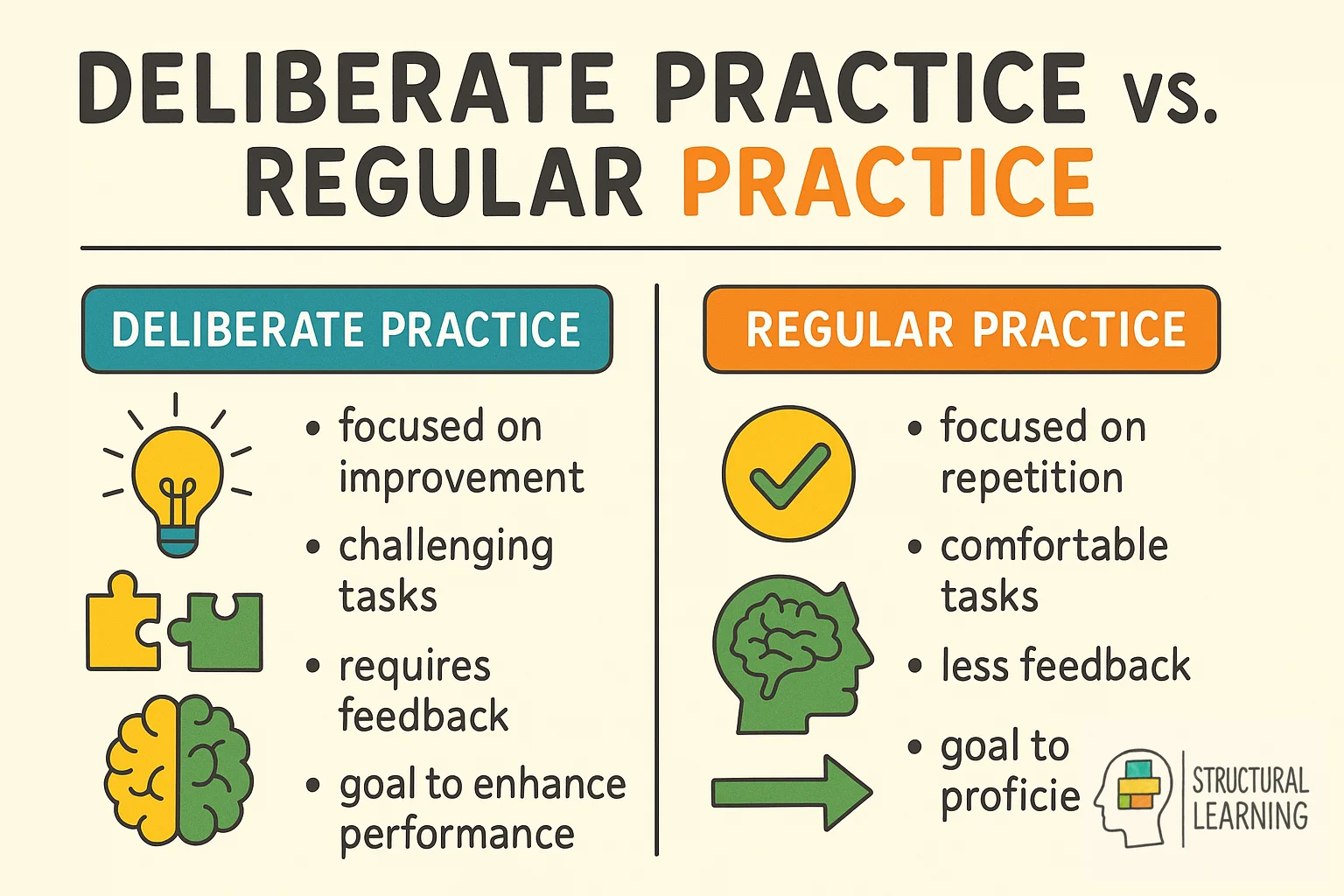
Deliberate practice involves a structured approach to enhance specific skills. It targets areas of weakness that impact overall performance, rather than reinforcing what is already known. Practitioners set precise, measurable goals to track progress, differentiating this method from regular practice. A coach or teacher often designs individualized training exercises, providing feedback to refine skills. This methodology relies on ongoing assessments, tailored goals, and expert guidance, ensuring every practice session is purposeful and systematic.

In deliberate practice, efforts focus specifically on addressing weaknesses and refining skills. This targeted method is ideal for mastering technical skills requiring precision, such as playing an instrument or perfecting a tennis serve. Complex skills get broken down into smaller components for focused practice, aiding the learning process. Studies highlight its effectiveness in fields like music, sports, education, and therapy, showing significant performance improvements through systematic repetition and thoughtful engagement.
Feedback is crucial in distinguishing effective practice from mere enjoyment. Immediate and specific feedback, such as comparing one's performance against experts, greatly enhances learning. It allows learners to identify clear steps for improvement before bad habits form, especially in procedural tasks. Brutal honesty in feedback shifts efforts away from unnecessary actions to those that genuinely creates growth. Performance feedback tools, like client assessments, are essential, guiding learners toward their goals and ensuring ongoing skill development.
Deliberate practice is more effective when practice sessions are spaced over time rather than clustered together, this is the essence of distributed practice. Engaging consistently in practice activities over long periods supports better retention and skill mastery. Intrinsic motivation plays a crucial role in sustaining this commitment, ensuring learners remain focused and engaged. Simply logging hours won't be effective; practice sessions need specific goals and ongoing feedback. Working with a coach or mentor often enhances this process by offering accurate assessments and guidance. Learners should aim to push beyond their current skill levels, striving for high performance.
This approach relies on building skills progressively. Deliberate practice, which emphasises focused engagement, has been shown to lead to better learning outcomes across various fields. Evidence supports the effectiveness of diligence, deliberate practice, which emphasises focused engagement, has been shown to lead to better learning outcomes across various fields. Evidence supports the effectiveness of diligent effort and focused attention. Cumulative practice should be combined with consistent feedback to ensure proper skill development and self-regulation. This method allows students to progressively build on established knowledge, enhanc ing both confidence and competence.
Deliberate practice is easily integrated into education by setting specific, achievable goals for students. This involves breaking down complex tasks into manageable components that can be practiced repeatedly. Encourage students to focus on their weaknesses and actively seek feedback to improve. Educators can also use formative assessments to adjust teaching strategies, ensuring students remain challenged and engaged. Regularly reflecting on practice sessions is crucial for refining skills and enhancing learning outcomes. By embedding these principles, teachers can creates a classroom environment that promotes deliberate practice.
Cultivating intrinsic motivation is vital in supporting deliberate practice. Educators can creates this by giving students autonomy in their learning choices, encouraging curiosity, and creating a sense of accomplishment. Providing opportunities for students to set their own goals and track their progress boosts engagement. Teachers can also highlight the relevance and importance of what is being learned, connecting it to real-world applications. By nurturing intrinsic motivation, educators can help students maintain the dedication required for deliberate practice.
Incorporating deliberate practice in the classroom involves various techniques that create a purposeful learning environment. Start by identifying specific skills students need to develop, then design tasks that allow for repetitive practice. Give immediate and specific feedback to guide improvement. Use formative assessments to monitor progress and adjust teaching strategies. Encourage students to reflect on their practice sessions, identifying areas for further growth. These techniques support a active and effective approach to learning, promoting skill mastery over rote memorization.
Effective skill decomposition forms the cornerstone of deliberate practice implementation in educational settings. Teachers must identify the core components of complex skills and sequence them strategically to enable focused improvement. In mathematics, for instance, algebraic problem-solving can be broken down into pattern recognition, equation manipulation, and verification steps. Rather than presenting students with complete algebraic equations immediately, teachers might first focus exclusively on identifying like terms, then progress to combining them, before introducing the concept of balancing equations. This systematic approach allows students to master each component thoroughly before integrating multiple skills.
The decomposition process requires teachers to think like cognitive task analysts, examining what experts do automatically and making these processes explicit for learners. In creative writing, rather than simply asking students to "write a persuasive essay," effective decomposition might involve separate practice sessions on crafting compelling opening sentences, developing evidence-based arguments, and creating smooth transitions between paragraphs. Each component receives dedicated attention with specific success criteria, allowing students to experience mastery at manageable levels of complexity.
Successful skill breakdown also involves identifying common error patterns and creating targeted interventions. In science education, understanding photosynthesis might be decomposed into distinguishing reactants from products, balancing chemical equations, and explaining energy transformations. By isolating these elements, teachers can provide precision feedback on specific aspects rather than offering vague comments about "needing improvement." This granular approach enables students to understand exactly where their learning gaps exist and how to address them systematically.
Deliberate feedback differs fundamentally from traditional praise or correction by focusing on specific, actionable improvements that target identified skill gaps. Unlike generic comments such as "good effort" or "needs work," deliberate feedback pinpoints precise aspects of performance and provides clear guidance for advancement. In language learning, instead of marking an essay with "improve your grammar," deliberate feedback might specify: "Focus on subject-verb agreement in sentences containing collective nouns - see lines 3, 7, and 12." This specificity enables students to direct their practice efforts efficiently rather than engaging in unfocused improvement attempts.
The timing and frequency of deliberate feedback prove equally crucial for skill development. Immediate feedback loops prevent the consolidation of incorrect techniques and accelerate the learning process. Modern classroom technology can support this through real-time assessment tools, but traditional methods remain equally effective when implemented strategically. During practical science experiments, teachers might provide immediate feedback on measurement techniques or safety procedures rather than waiting until written reports are submitted. This immediate intervention prevents the development of poor habits and reinforces correct procedures whilst students remain engaged in the learning process.
Effective deliberate feedback also incorporates forward-focused guidance that connects current performance to next learning steps. Rather than simply identifying what went wrong, teachers should illuminate the path toward improvement. In physical education, feedback on basketball shooting technique might include: "Your follow-through improved significantly - now focus on consistent foot positioning before each shot." This approach maintains student motivation whilst providing clear direction for continued practice. Additionally, teaching students to self-monitor and provide peer feedback develops their ability to recognise quality performance independently, creating sustainable improvement cycles beyond teacher-dependent feedback.
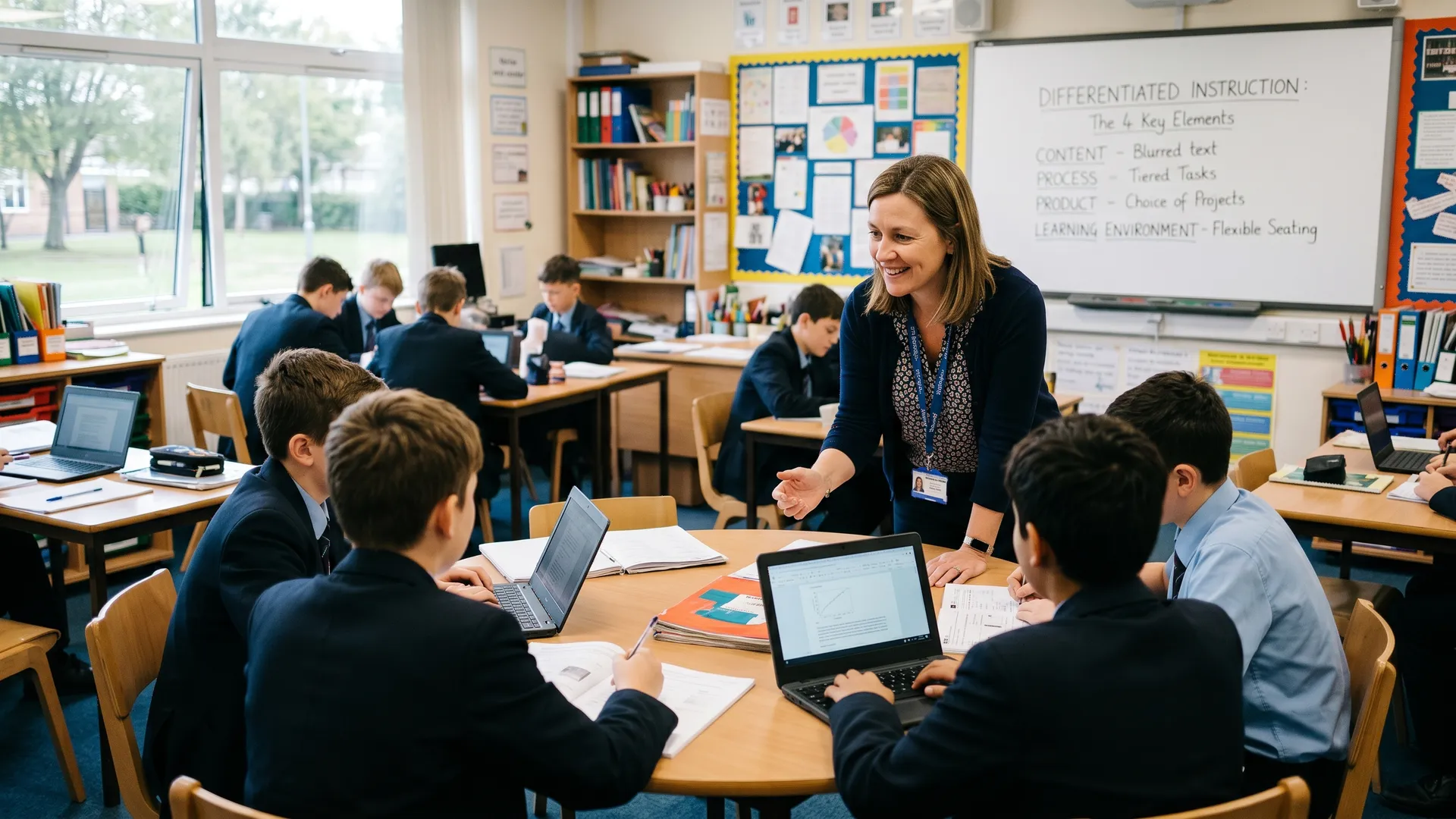
The classroom environment presents unique challenges that complicate the implementation of deliberate practice principles. Unlike individual coaching scenarios where practice can be precisely tailored, teachers must navigate diverse learning needs across multiple students simultaneously. Whilst deliberate practice thrives on personalised challenge levels, classroom realities often demand standardised activities that may leave some students under-challenged whilst overwhelming others. Time constraints further complicate matters, as deliberate practice requires sustained focus on specific skills, yet curriculum demands frequently push teachers toward content coverage rather than deep skill development. The pressure to progress through prescribed learning objectives can undermine the patient, iterative approach that characterises effective deliberate practice.
Traditional classroom structures often conflict with deliberate practice requirements for immediate, specific feedback. Teachers managing 25-30 students cannot provide the intensive, personalised guidance that deliberate practice demands for every individual. Additionally, many classroom activities involve blocked practice patterns where students repeat similar problems consecutively, rather than the mixed practice that research demonstrates as more effective for long-term retention. The tendency toward massed practice during intensive revision periods further contradicts deliberate practice principles, which favour distributed practice over concentrated effort. These structural limitations require creative solutions and strategic compromises that maintain deliberate practice benefits whilst acknowledging practical constraints.
Assessment pressures and administrative demands create additional barriers to deliberate practice implementation. The emphasis on summative evaluation often encourages teachers to focus on final performance rather than the iterative improvement process central to deliberate practice. Furthermore, many teachers lack training in skill decomposition techniques and feedback specificity, making implementation challenging even when motivation exists. Professional development rarely addresses how to adapt deliberate practice principles for group learning environments, leaving teachers to navigate these complexities independently. Despite these challenges, understanding these constraints enables educators to develop realistic strategies that harness deliberate practice benefits within existing educational frameworks.
Deliberate practice offers a transformative approach to education, shifting the focus from passive learning to active skill development. By embracing structured methodologies, targeted engagement, and constructive feedback, educators can develop the full potential of their students. The principles of deliberate practice extend beyond academic settings, promoting lifelong learning and personal growth.
As educators, integrating deliberate practice into our teaching strategies requires dedication and a commitment to developing a active learning environment. By helping students to take ownership of their learning, we equip them with the tools to achieve expertise and excel in an ever-evolving world. The process toward mastery is ongoing, but with deliberate practice, every student can embark on a path of continuous improvement and lasting success.
For further academic research on this topic:
Deliberate practice transforms learning into a structured, purposeful activity that leads to expertise. By harnessing its principles, educators can develop untapped potential in students, paving the way for lifelong learning.
Understanding deliberate practice requires a dive into foundational concepts such as targeted engagement, structured methodologies, and the pivotal role of constructive feedback. Each element contributes to creating an effectivelearning environment that prioritises skill mastery over mere repetition. The interplay between types of practice, including distributed and retrieval techniques, further enhances understanding and retention of complex information.

This article explores how deliberate practice in learning can be smoothly integrated into educational settings, highlighting the essential role of educators in guiding students toward personalized learning objectives. From developing intrinsic motivation to employing specific classroom techniques, deliberate practice stands as a bea con for developing student potential in a active learning landscape.
The key principles of deliberate practice include focused attention on specific skills, immediate and specific feedback, and working at the edge of current ability. It requires structured activities with clear goals rather than mindless repetition. The practice must be challenging enough to stretch capabilities while remaining achievable with effort.
Deliberate practice is a method grounded in research that helps individuals achieve expert performance in various fields. It involves long-term engagement and focuses on critical, honest feedback to keep improvement activities on track. By continually assessing and adjusting exercises to align with a learner's current skill level, it ensures training remains challenging yet manageable. Unlike play, deliberate practice emphasises structured activities that transform novice actions into expert skills, developing intentional effort and thoughtful reflection.
Deliberate practice involves a structured approach to enhance specific skills. It targets areas of weakness that impact overall performance, rather than reinforcing what is already known. Practitioners set precise, measurable goals to track progress, differentiating this method from regular practice. A coach or teacher often designs individualized training exercises, providing feedback to refine skills. This methodology relies on ongoing assessments, tailored goals, and expert guidance, ensuring every practice session is purposeful and systematic.

In deliberate practice, efforts focus specifically on addressing weaknesses and refining skills. This targeted method is ideal for mastering technical skills requiring precision, such as playing an instrument or perfecting a tennis serve. Complex skills get broken down into smaller components for focused practice, aiding the learning process. Studies highlight its effectiveness in fields like music, sports, education, and therapy, showing significant performance improvements through systematic repetition and thoughtful engagement.
Feedback is crucial in distinguishing effective practice from mere enjoyment. Immediate and specific feedback, such as comparing one's performance against experts, greatly enhances learning. It allows learners to identify clear steps for improvement before bad habits form, especially in procedural tasks. Brutal honesty in feedback shifts efforts away from unnecessary actions to those that genuinely creates growth. Performance feedback tools, like client assessments, are essential, guiding learners toward their goals and ensuring ongoing skill development.
Deliberate practice is more effective when practice sessions are spaced over time rather than clustered together, this is the essence of distributed practice. Engaging consistently in practice activities over long periods supports better retention and skill mastery. Intrinsic motivation plays a crucial role in sustaining this commitment, ensuring learners remain focused and engaged. Simply logging hours won't be effective; practice sessions need specific goals and ongoing feedback. Working with a coach or mentor often enhances this process by offering accurate assessments and guidance. Learners should aim to push beyond their current skill levels, striving for high performance.
This approach relies on building skills progressively. Deliberate practice, which emphasises focused engagement, has been shown to lead to better learning outcomes across various fields. Evidence supports the effectiveness of diligence, deliberate practice, which emphasises focused engagement, has been shown to lead to better learning outcomes across various fields. Evidence supports the effectiveness of diligent effort and focused attention. Cumulative practice should be combined with consistent feedback to ensure proper skill development and self-regulation. This method allows students to progressively build on established knowledge, enhanc ing both confidence and competence.
Deliberate practice is easily integrated into education by setting specific, achievable goals for students. This involves breaking down complex tasks into manageable components that can be practiced repeatedly. Encourage students to focus on their weaknesses and actively seek feedback to improve. Educators can also use formative assessments to adjust teaching strategies, ensuring students remain challenged and engaged. Regularly reflecting on practice sessions is crucial for refining skills and enhancing learning outcomes. By embedding these principles, teachers can creates a classroom environment that promotes deliberate practice.
Cultivating intrinsic motivation is vital in supporting deliberate practice. Educators can creates this by giving students autonomy in their learning choices, encouraging curiosity, and creating a sense of accomplishment. Providing opportunities for students to set their own goals and track their progress boosts engagement. Teachers can also highlight the relevance and importance of what is being learned, connecting it to real-world applications. By nurturing intrinsic motivation, educators can help students maintain the dedication required for deliberate practice.
Incorporating deliberate practice in the classroom involves various techniques that create a purposeful learning environment. Start by identifying specific skills students need to develop, then design tasks that allow for repetitive practice. Give immediate and specific feedback to guide improvement. Use formative assessments to monitor progress and adjust teaching strategies. Encourage students to reflect on their practice sessions, identifying areas for further growth. These techniques support a active and effective approach to learning, promoting skill mastery over rote memorization.
Effective skill decomposition forms the cornerstone of deliberate practice implementation in educational settings. Teachers must identify the core components of complex skills and sequence them strategically to enable focused improvement. In mathematics, for instance, algebraic problem-solving can be broken down into pattern recognition, equation manipulation, and verification steps. Rather than presenting students with complete algebraic equations immediately, teachers might first focus exclusively on identifying like terms, then progress to combining them, before introducing the concept of balancing equations. This systematic approach allows students to master each component thoroughly before integrating multiple skills.
The decomposition process requires teachers to think like cognitive task analysts, examining what experts do automatically and making these processes explicit for learners. In creative writing, rather than simply asking students to "write a persuasive essay," effective decomposition might involve separate practice sessions on crafting compelling opening sentences, developing evidence-based arguments, and creating smooth transitions between paragraphs. Each component receives dedicated attention with specific success criteria, allowing students to experience mastery at manageable levels of complexity.
Successful skill breakdown also involves identifying common error patterns and creating targeted interventions. In science education, understanding photosynthesis might be decomposed into distinguishing reactants from products, balancing chemical equations, and explaining energy transformations. By isolating these elements, teachers can provide precision feedback on specific aspects rather than offering vague comments about "needing improvement." This granular approach enables students to understand exactly where their learning gaps exist and how to address them systematically.
Deliberate feedback differs fundamentally from traditional praise or correction by focusing on specific, actionable improvements that target identified skill gaps. Unlike generic comments such as "good effort" or "needs work," deliberate feedback pinpoints precise aspects of performance and provides clear guidance for advancement. In language learning, instead of marking an essay with "improve your grammar," deliberate feedback might specify: "Focus on subject-verb agreement in sentences containing collective nouns - see lines 3, 7, and 12." This specificity enables students to direct their practice efforts efficiently rather than engaging in unfocused improvement attempts.
The timing and frequency of deliberate feedback prove equally crucial for skill development. Immediate feedback loops prevent the consolidation of incorrect techniques and accelerate the learning process. Modern classroom technology can support this through real-time assessment tools, but traditional methods remain equally effective when implemented strategically. During practical science experiments, teachers might provide immediate feedback on measurement techniques or safety procedures rather than waiting until written reports are submitted. This immediate intervention prevents the development of poor habits and reinforces correct procedures whilst students remain engaged in the learning process.
Effective deliberate feedback also incorporates forward-focused guidance that connects current performance to next learning steps. Rather than simply identifying what went wrong, teachers should illuminate the path toward improvement. In physical education, feedback on basketball shooting technique might include: "Your follow-through improved significantly - now focus on consistent foot positioning before each shot." This approach maintains student motivation whilst providing clear direction for continued practice. Additionally, teaching students to self-monitor and provide peer feedback develops their ability to recognise quality performance independently, creating sustainable improvement cycles beyond teacher-dependent feedback.
The classroom environment presents unique challenges that complicate the implementation of deliberate practice principles. Unlike individual coaching scenarios where practice can be precisely tailored, teachers must navigate diverse learning needs across multiple students simultaneously. Whilst deliberate practice thrives on personalised challenge levels, classroom realities often demand standardised activities that may leave some students under-challenged whilst overwhelming others. Time constraints further complicate matters, as deliberate practice requires sustained focus on specific skills, yet curriculum demands frequently push teachers toward content coverage rather than deep skill development. The pressure to progress through prescribed learning objectives can undermine the patient, iterative approach that characterises effective deliberate practice.
Traditional classroom structures often conflict with deliberate practice requirements for immediate, specific feedback. Teachers managing 25-30 students cannot provide the intensive, personalised guidance that deliberate practice demands for every individual. Additionally, many classroom activities involve blocked practice patterns where students repeat similar problems consecutively, rather than the mixed practice that research demonstrates as more effective for long-term retention. The tendency toward massed practice during intensive revision periods further contradicts deliberate practice principles, which favour distributed practice over concentrated effort. These structural limitations require creative solutions and strategic compromises that maintain deliberate practice benefits whilst acknowledging practical constraints.
Assessment pressures and administrative demands create additional barriers to deliberate practice implementation. The emphasis on summative evaluation often encourages teachers to focus on final performance rather than the iterative improvement process central to deliberate practice. Furthermore, many teachers lack training in skill decomposition techniques and feedback specificity, making implementation challenging even when motivation exists. Professional development rarely addresses how to adapt deliberate practice principles for group learning environments, leaving teachers to navigate these complexities independently. Despite these challenges, understanding these constraints enables educators to develop realistic strategies that harness deliberate practice benefits within existing educational frameworks.
Deliberate practice offers a transformative approach to education, shifting the focus from passive learning to active skill development. By embracing structured methodologies, targeted engagement, and constructive feedback, educators can develop the full potential of their students. The principles of deliberate practice extend beyond academic settings, promoting lifelong learning and personal growth.
As educators, integrating deliberate practice into our teaching strategies requires dedication and a commitment to developing a active learning environment. By helping students to take ownership of their learning, we equip them with the tools to achieve expertise and excel in an ever-evolving world. The process toward mastery is ongoing, but with deliberate practice, every student can embark on a path of continuous improvement and lasting success.
For further academic research on this topic:
{"@context":"https://schema.org","@graph":[{"@type":"Article","@id":"https://www.structural-learning.com/post/deliberate-practice#article","headline":"Deliberate Practice: Unlocking Student Potential","description":"Master deliberate practice with key principles & classroom strategies to help students build expertise through focused, purposeful learning.","datePublished":"2025-03-07T16:10:10.284Z","dateModified":"2026-01-26T10:09:32.212Z","author":{"@type":"Person","name":"Paul Main","url":"https://www.structural-learning.com/team/paulmain","jobTitle":"Founder & Educational Consultant"},"publisher":{"@type":"Organization","name":"Structural Learning","url":"https://www.structural-learning.com","logo":{"@type":"ImageObject","url":"https://cdn.prod.website-files.com/5b69a01ba2e409e5d5e055c6/6040bf0426cb415ba2fc7882_newlogoblue.svg"}},"mainEntityOfPage":{"@type":"WebPage","@id":"https://www.structural-learning.com/post/deliberate-practice"},"image":"https://cdn.prod.website-files.com/5b69a01ba2e409501de055d1/6950222bdfe345d23805598c_sycjql.webp","wordCount":4062},{"@type":"BreadcrumbList","@id":"https://www.structural-learning.com/post/deliberate-practice#breadcrumb","itemListElement":[{"@type":"ListItem","position":1,"name":"Home","item":"https://www.structural-learning.com/"},{"@type":"ListItem","position":2,"name":"Blog","item":"https://www.structural-learning.com/blog"},{"@type":"ListItem","position":3,"name":"Deliberate Practice: Unlocking Student Potential","item":"https://www.structural-learning.com/post/deliberate-practice"}]},{"@type":"FAQPage","mainEntity":[{"@type":"Question","name":"What Are the Key Principles of Deliberate Practice?","acceptedAnswer":{"@type":"Answer","text":"The key principles of deliberate practice include focused attention on specific skills, immediate and specific feedback, and working at the edge of current ability. It requires structured activities with clear goals rather than mindless repetition. The practice must be challenging enough to stretch capabilities while remaining achievable with effort."}},{"@type":"Question","name":"Targeted Engagement In deliberate practice, efforts focus specifically on addressing weaknesses and refining skills. This targeted method is ideal for mastering technical skills requiring precision, such as playing an instrument or perfecting a tennis serve. Complex skills get broken down into smaller components for focused practice, aiding the learning process. Studies highlight its effectiveness in fields like music, sports, education, and therapy, showing significant performance improvements through systematic repetition and thoughtful engagement. Importance of Feedback Feedback is crucial in distinguishing effective practice from mere enjoyment. Immediate and specific feedback, such as comparing one's performance against experts, greatly enhances learning. It allows learners to identify clear steps for improvement before bad habits form, especially in procedural tasks. Brutal honesty in feedback shifts efforts away from unnecessary actions to those that genuinely creates growth. Performance feedback tools, like client assessments, are essential, guiding learners toward their goals and ensuring ongoing skill development . Types of Practice Distributed or Spaced Practice Deliberate practice is more effective when practice sessions are spaced over time rather than clustered together, this is the essence of distributed practice . Engaging consistently in practice activities over long periods supports better retention and skill mastery. Intrinsic motivation plays a crucial role in sustaining this commitment, ensuring learners remain focused and engaged. Simply logging hours won't be effective; practice sessions need specific goals and ongoing feedback. Working with a coach or mentor often enhances this process by offering accurate assessments and guidance. Learners should aim to push beyond their current skill levels, striving for high performance. Cumulative Practice This approach relies on building skills progressively. Deliberate practice, which emphasises focused engagement, has been shown to lead to better learning outcomes across various fields. Evidence supports the effectiveness of diligence, deliberate practice, which emphasises focused engagement, has been shown to lead to better learning outcomes across various fields. Evidence supports the effectiveness of diligent effort and focused attention. Cumulative practice should be combined with consistent feedback to ensure proper skill development and self-regulation. This method allows students to progressively build on established knowledge, enhanc ing both confidence and competence. Integrating Deliberate Practice into Education Deliberate practice is easily integrated into education by setting specific, achievable goals for students. This involves breaking down complex tasks into manageable components that can be practiced repeatedly. Encourage students to focus on their weaknesses and actively seek feedback to improve. Educators can also use formative assessments to adjust teaching strategies, ensuring students remain challenged and engaged. Regularly reflecting on practice sessions is crucial for refining skills and enhancing learning outcomes. By embedding these principles, teachers can creates a classroom environment that promotes deliberate practice. Developing Intrinsic Motivation Cultivating intrinsic motivation is vital in supporting deliberate practice. Educators can creates this by giving students autonomy in their learning choices, encouraging curiosity, and creating a sense of accomplishment. Providing opportunities for students to set their own goals and track their progress boosts engagement. Teachers can also highlight the relevance and importance of what is being learned, connecting it to real-world applications. By nurturing intrinsic motivation, educators can help students maintain the dedication required for deliberate practice. Classroom Techniques Incorporating deliberate practice in the classroom involves various techniques that create a purposeful learning environment. Start by identifying specific skills students need to develop, then design tasks that allow for repetitive practice. Give immediate and specific feedback to guide improvement. Use formative assessments to monitor progress and adjust teaching strategies. Encourage students to reflect on their practice sessions, identifying areas for further growth. These techniques support a dynamic and effective approach to learning, promoting skill mastery over rote memorization. How Can Teachers Break Down Skills for Deliberate Practice?","acceptedAnswer":{"@type":"Answer","text":"Effective skill decomposition forms the cornerstone of deliberate practice implementation in educational settings. Teachers must identify the core components of complex skills and sequence them strategically to enable focused improvement. In mathematics, for instance, algebraic problem-solving can be broken down into pattern recognition, equation manipulation, and verification steps. Rather than presenting students with complete algebraic equations immediately, teachers might first focus exclusi"}},{"@type":"Question","name":"What Makes Feedback \"Deliberate\" in the Classroom?","acceptedAnswer":{"@type":"Answer","text":"Deliberate feedback differs fundamentally from traditional praise or correction by focusing on specific, actionable improvements that target identified skill gaps. Unlike generic comments such as \"good effort\" or \"needs work,\" deliberate feedback pinpoints precise aspects of performance and provides clear guidance for advancement. In language learning, instead of marking an essay with \"improve your grammar,\" deliberate feedback might specify: \"Focus on subject-verb agreement in sentences contain"}},{"@type":"Question","name":"Why Is Deliberate Practice Difficult in Teaching Environments?","acceptedAnswer":{"@type":"Answer","text":"The classroom environment presents unique challenges that complicate the implementation of deliberate practice principles. Unlike individual coaching scenarios where practice can be precisely tailored, teachers must navigate diverse learning needs across multiple students simultaneously. Whilst deliberate practice thrives on personalised challenge levels, classroom realities often demand standardised activities that may leave some students under-challenged whilst overwhelming others. Time constr"}}]}]}