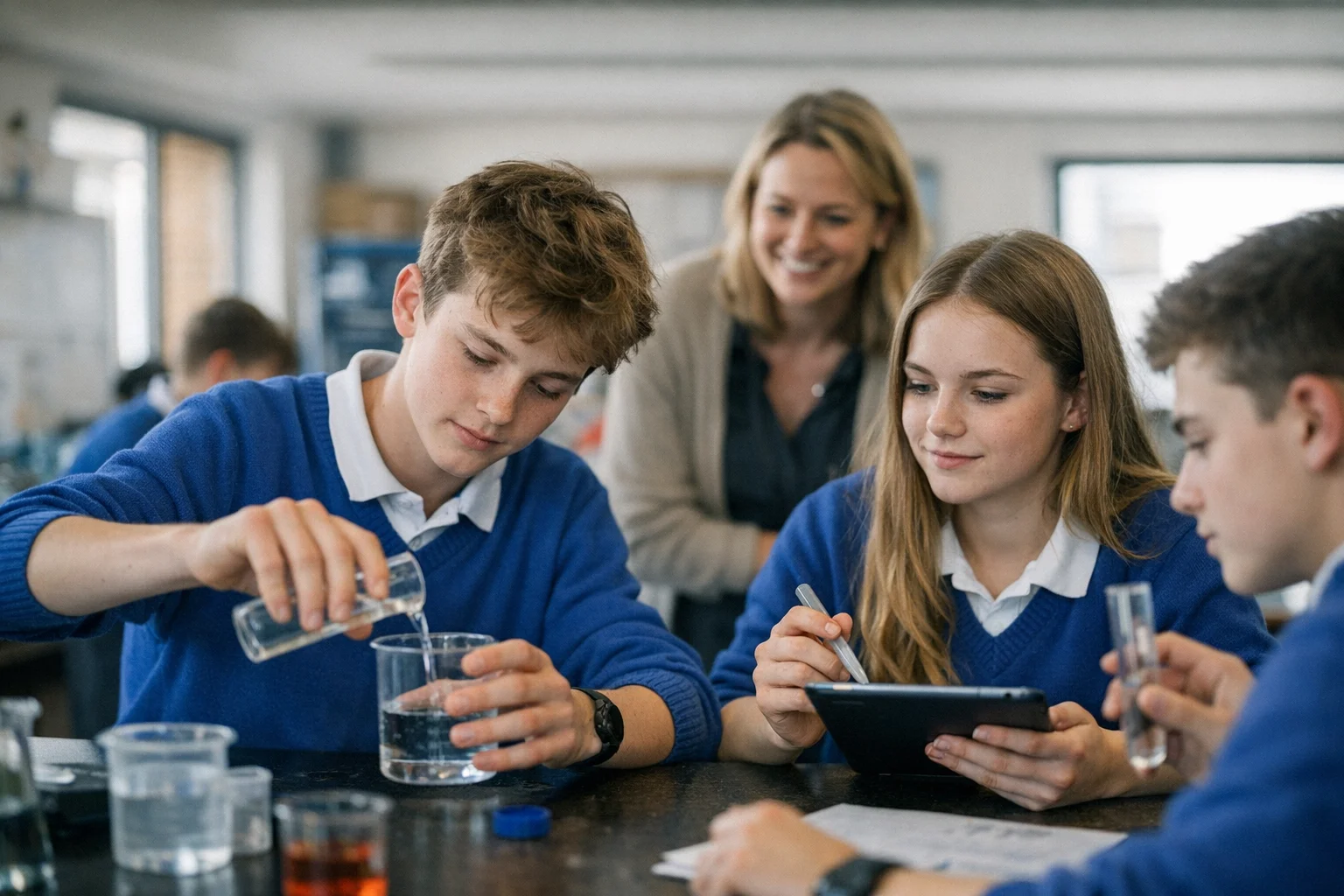
Engaging Students Through Active Learning TechniquesSecondary students aged 12-14 in royal blue jumpers engaged in collaborative science experiment with digital tablets.

Updated on  

January 30, 2026

Engaging Students Through Active Learning Techniques

|

February 10, 2025

Engage students with active learning - hands-on, discussion-based strategies that boost retention, critical thinking, and participation.

Course Enquiry
Copy citation

Main, P. (2025, February 10). Engaging Students Through Active Learning Techniques Retrieved from www.structural-learning.com/post/engaging-students-through-active-learning-techniques

What is Active Learning?

**Transforming your classroom from a sea of change theories can guide this shift from passive facesinto an environment buzzing with engaged learners is easier than you might think.** Active learning techniques offer educators practical, research-backed methods to captivate students and dramatically improve their academic outcomes, with studies showing that traditional lecture-based approaches lead to 50% higher failure rates. These strategies range from simple discussion prompts to hands-on activities including music and singing that get students thinking, talking, and actively processing information rather than simply absorbing it. The best part? You can start implementing these powerful engagement tools in your very next lesson.


Key Takeaways

Incorporating learning through participation strategies can transform the educational process. Educators can use these methods to inspire deeper engagement and motivation among students. This leads to richer and more rewarding learning experiences.

To illustrate the wide range of activities in active learning, consider the following:

These approaches nurture an environment conducive to active participation and conceptual understanding. For an immersive approach to this topic, explore Mantle of the Expert, a drama-based inquiry method.

Active Learning Theory and Research

Active learning shifts the focus from passive knowledge absorption to active participation. This approach stands in contrast to traditional instruction methods. In active learning environments, students engage directly, improving performance in areas like science, engineering, and mathematics. Research consistently shows that this engagement leads to better learning outcomes.

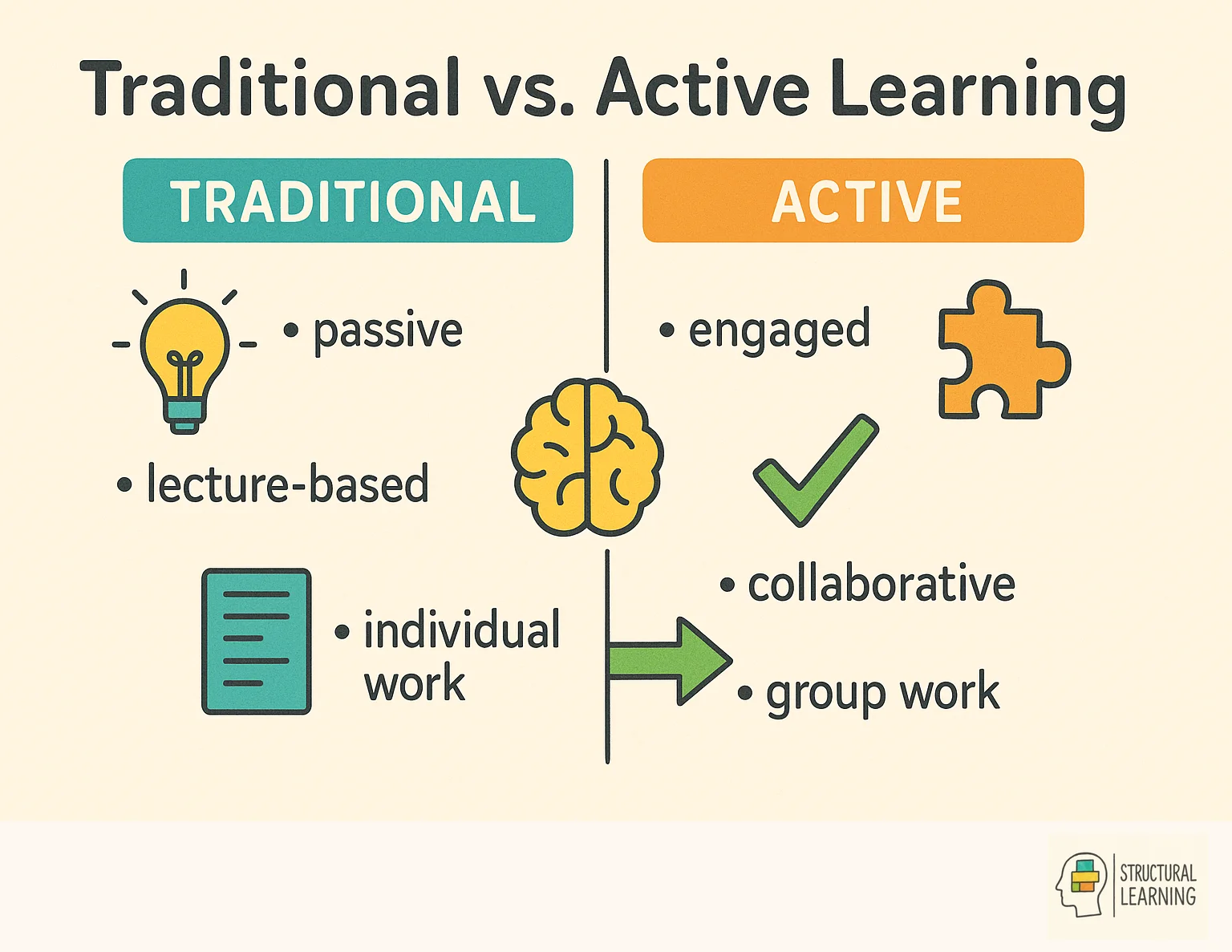
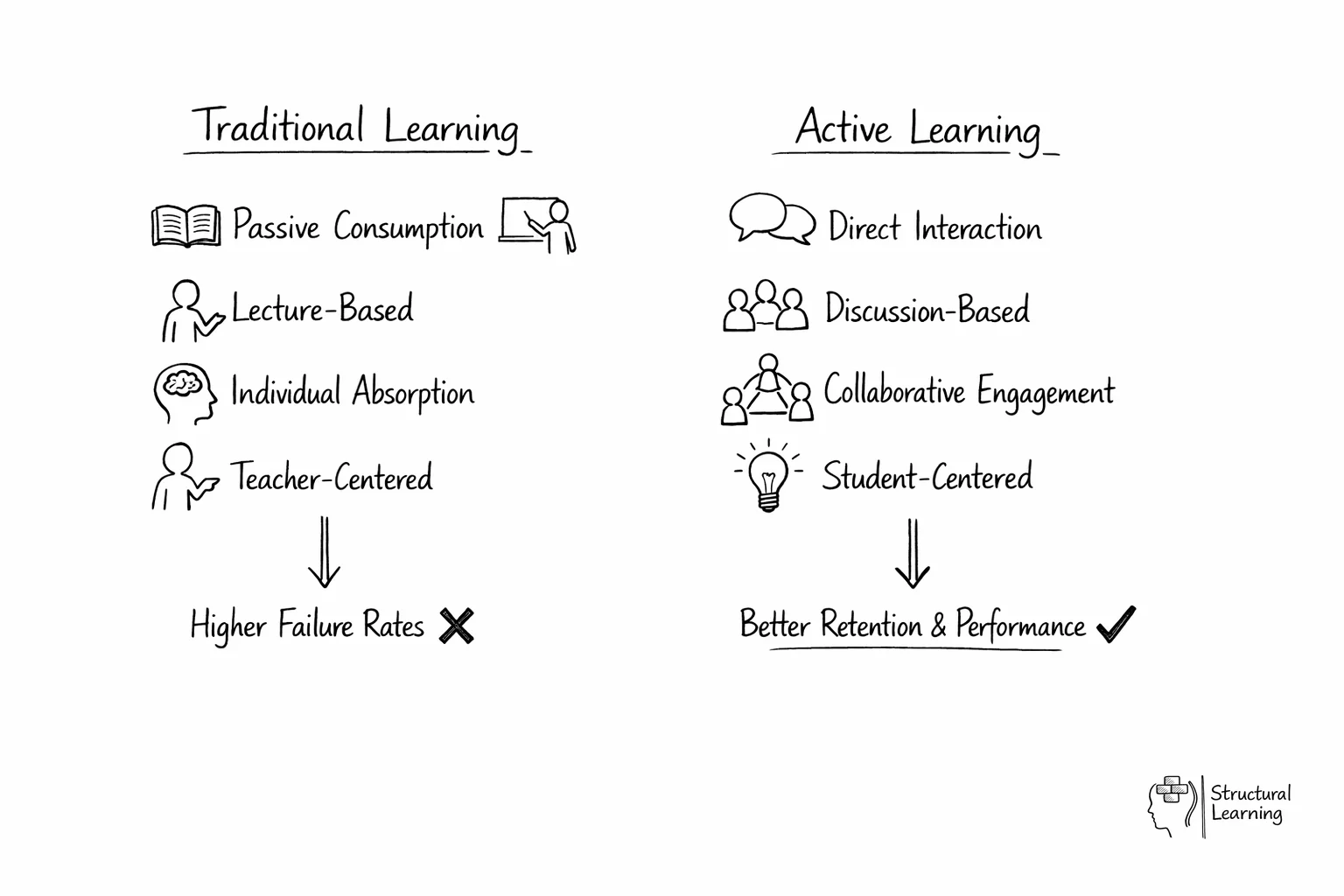
Infographic comparing traditional vs active learning methods and their educational outcomes
Traditional vs. Active Learning

Side-by-side comparison showing traditional versus active learning methods and outcomes
Side-by-side comparison: Traditional Learning vs Active Learning

Active learning as a general educational approach should not be confused with Lilli Nielsen's specialised 'Active Learning' intervention for children with visual impairments and multiple disabilities. Engaging learners in this manner creates environments that are suited to their developmental stages. By encouraging self-reliant learning, students decrease their dependency on others.

Active Learning Techniques Comparison

Technique Group Size Time Needed Best Used For
Think-Pair-Share Pairs 3-5 minutes Concept checks, reflection
Jigsaw Small groups 20-30 minutes Complex topics, collaboration
Gallery Walk Whole class 15-20 minutes Sharing work, peer feedback
Four Corners Individual/groups 10-15 minutes Opinion, discussion starters
Socratic Seminar Whole class 30-45 minutes Deep discussion, critical thinking


discovery learning. It should not be confused with Lilli Nielsen's "Active Learning" approach, which is a specialised intervention for children with visual impairments and multiple disabilities.

Active learning engages students in the learning process through activities and discussion rather than passive listening. Research, including Freeman et al.'s (2014) meta-analysis of 225 studies, suggests that active learning approaches can reduce failure rates and improve examination performance, though effects vary by implementation. And enhances information retention. Educators using active learning strategies cultivate a space where independent and effective learningthrives.

Constructivist Learning Theory

Active learning and constructivist learning theory share many principles. Constructivism emphasises the cognitive, meta-cognitive, evolving, and effective aspects of learning. Knowledge construction relies heavily on the learner's existing knowledge base. Learners must be self-aware to fully engage in cognition during learning.

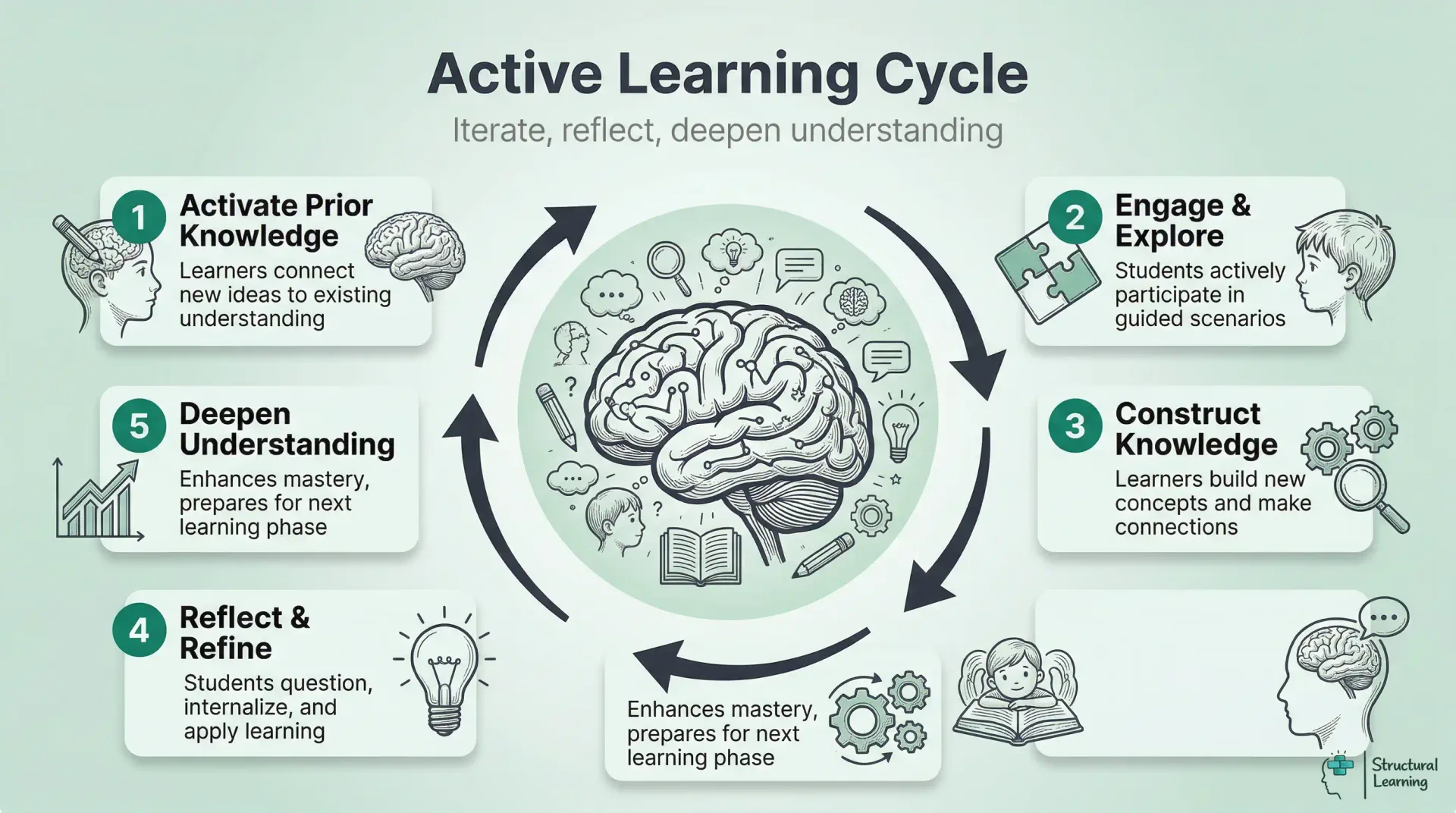
David Ausubel pointed out that prior knowledge plays a crucial role in meaningful reception learning. This aligns with Jerome Bruner's concept of learning through discovery, where guided exploration facilitates student involvement. Teachers provide scenarios that allow students to analyse and experiment.

Knowledge in active learning isn't immediately mastered. It requires time, reflection, and iteration. The ongoing process of constructing, recording, and absorbing knowledge enriches the educational process, encouraging deep understanding over time.

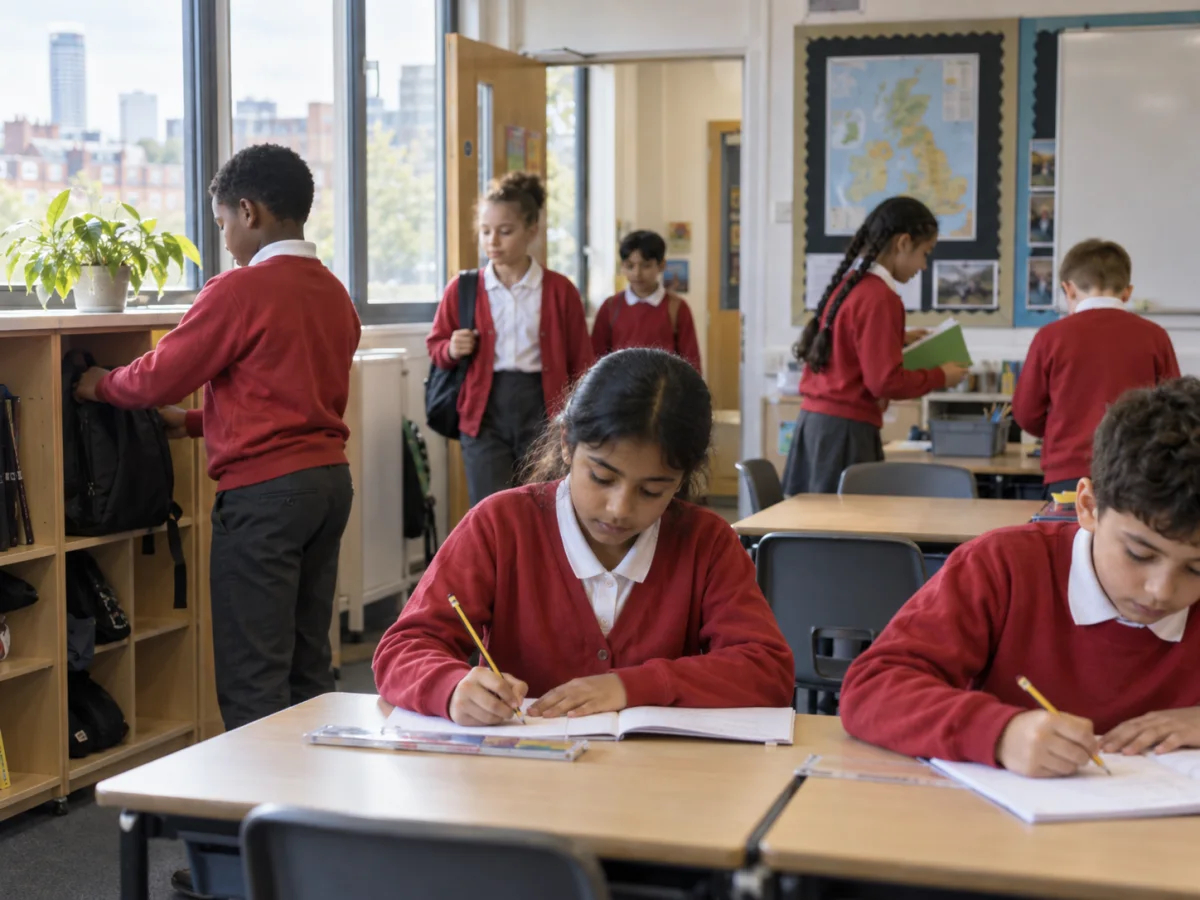
Primary pupils engaged in active learning group discussion around table
Effective strategies for engagement

Key Characteristics of Effective Teachers

Effective teachers exhibit social congruence by creating harmonious, open environments. Students feel comfortable expressing themselves, knowing that mistakes are part of learning. These educators skillfully integrate subject-matter expertise, inspiring students to engage more deeply with content.

Teachers with deep knowledge offer substantial support, enhancing student success in classroom settings. Their cognitive congruence allows them to simplify complex ideas. This skill builds student confidence in their learning abilities and promotes understanding through effective modelling.

Engaged teachers maintain vibrant classroom discussions by posing questions and encouraging dialogue. These interactions increase overall student participation and enthusiasm, making the learning process dynamic and inclusive. The guidance of effective teachers ensures students remain active, curious, and motivated.

p>

Benefits of Active Learning

Active learning offers myriad benefits to both students and educators. By shifting from passive absorption to active engagement, students develop critical thinking, problem-solving, and communication skills. These are crucial for success in higher education and professional settings.

Moreover, active learning creates a deeper understanding of the subject matter. When students actively manipulate, discuss, and apply concepts, they are more likely to internalise the information and retain it long-term. This contrasts sharply with the often superficial understanding gained through rote memorisation in traditional lecture-based settings.

Active learning can also boost student motivation and engagement. When students feel like active participants in their own learning, they are more likely to be invested in the process and to take ownership of their learning outcomes. This can lead to increased attendance, participation, and overall academic performance.

Practical Active Learning Strategies for the Classroom

Implementing active learning strategies doesn't require a complete overhaul of your teaching methods. Small, incremental changes can have a significant impact. Here are some practical strategies you can try in your classroom:
  • Think-Pair-Share: Pose a question to the class, give students a minute to think about their answer individually, then have them pair up with a classmate to discuss their ideas before sharing with the whole class.
  • Jigsaw: Divide students into groups and assign each group a different section of the material to become experts on. Then, have students from each group form new groups, where they teach each other their respective sections.
  • One-Minute Paper: At the end of a lesson, ask students to write for one minute about what they learned or what questions they still have. This provides valuable feedback for you and helps students consolidate their understanding.
  • Debates: Organise debates on controversial topics related to the subject matter. This encourages students to research, analyse arguments, and articulate their own viewpoints.
  • Case Studies: Present students with real-world case studies that require them to apply their knowledge and skills to solve problems.

Remember to adapt these strategies to your specific subject matter and the needs of your students. The key is to create a learning environment where students are actively involved in the process of constructing knowledge.

How Can Teachers Overcome Common Barriers to Active Learning Implementation?

Whilst the benefits of active learning are well-documented, many UK teachers face significant challenges when attempting to shift from traditional teaching methods. The most frequently cited barriers include time constraints, large class sizes, student resistance, and concerns about curriculum coverage. Research by Felder and Brent (2009) reveals that 73% of educators initially struggle with the transition to active learning, particularly when managing classrooms of 30 or more students. However, understanding these obstacles and having practical strategies to address them can make the implementation process considerably smoother. Teachers who successfully navigate these challenges report not only improved student outcomes but also increased job satisfaction and renewed enthusiasm for their practice.

Time management emerges as the primary concern for most educators considering active learning techniques. Many worry that interactive activities will consume valuable lesson time needed for content delivery. However, evidence suggests this fear is largely unfounded. Freeman et al. (2014) demonstrated that whilst active learning activities may initially require more preparation time, they actually enhance content retention and reduce the need for repetitive review sessions. Practical solutions include starting small with five-minute think-pair-share activities, gradually building a repertoire of reusable active learning resources, and recognising that quality of engagement trumps quantity of material covered. For instance, a Year 9 science teacher in Manchester reported covering the same curriculum content in 20% less time after implementing regular peer instruction sessions, as students required fewer clarifications and review periods.

Student resistance represents another significant hurdle, particularly in secondary schools where pupils have become accustomed to passive learning environments. Initial pushback often stems from students feeling uncomfortable with increased accountability and participation requirements. Research by Weimer (2013) indicates that approximately 40% of students initially resist active learning approaches, preferring the perceived safety of traditional lectures. Successful teachers address this by explicitly explaining the benefits of active learning, establishing clear participation guidelines, and creating psychologically safe environments where mistakes are viewed as learning opportunities. One effective approach involves gradually increasing the complexity of active learning tasks, beginning with low-stakes activities like anonymous polling before progressing to group presentations or peer teaching exercises.

Practical strategies for overcoming implementation barriers include using technology for efficient activity management, establishing consistent routines that reduce transition time, and building a supportive community of practice within your school. Digital tools like Padlet or Mentimeter can facilitate quick, engaging activities without extensive setup, whilst regular collaboration with colleagues provides opportunities to share resources and troubleshoot challenges. Additionally, communicating with parents about active learning benefits can help reinforce these approaches at home. Teachers who persist through initial challenges typically report breakthrough moments within 6-8 weeks, when both they and their students have adapted to the new dynamic. The key lies in maintaining realistic expectations, celebrating small victories, and remembering that transforming classroom culture is a gradual process requiring patience and persistence.

15 Active Learning Implementation Strategies

  1. Start small with one technique at a time
  2. Establish clear expectations and routines
  3. Use think time before discussions
  4. Provide scaffolds for student talk
  5. Monitor and redirect off-task behaviour
  6. Debrief after activities to consolidate
  7. Use random selection for accountability
  8. Incorporate movement when appropriate
  9. Balance active and direct instruction
  10. Provide sentence starters for discussions
  11. Use visible timers to manage pacing
  12. Create safe spaces for risk-taking
  13. Celebrate participation over correctness
  14. Build complexity gradually over time
  15. Gather feedback to refine approaches

Implementation Challenges and Solutions

Whilst active learning offers substantial benefits, educators often encounter significant obstacles when attempting to integrate these methods into their practice. One of the most prevalent challenges is resistance to change, both from instructors who are comfortable with traditional lecture-based approaches and from students who may initially feel uncomfortable with increased participation expectations. Many educators worry about covering curriculum content within time constraints, fearing that active learning activities will reduce the amount of material they can present. Additionally, larger class sizes can make implementing interactive strategies seem overwhelming, particularly when trying to manage group discussions or provide individual feedback.
Technical and logistical barriers also present considerable challenges in active learning implementation. Classroom layouts designed for passive learning, with fixed seating arrangements facing forward, can hinder collaborative activities and group work. Limited access to technology, unreliable internet connections, or insufficient training on digital tools can impede the use of interactive platforms and online collaboration tools. Furthermore, assessment practices may need substantial revision to align with active learning goals, requiring educators to develop new evaluation methods and rubrics that capture student engagement and learning processes rather than just final outcomes.

Effective solutions to these challenges require systematic planning and institutional support. To address resistance, educators can start with small, low-risk active learning techniques such as think-pair-share activities or brief polling questions, gradually building confidence and student comfort with participation. Professional development programmes that provide hands-on training and peer mentoring can help instructors develop the skills necessary for successful implementation. For large classes, techniques such as structured peer discussions, online polling systems, and rotating small group activities can make active learning manageable. Institutional investment in flexible furniture, reliable technology infrastructure, and technical support staff creates an environment conducive to effective teaching methods. Additionally, developing clear learning objectives and aligning assessment strategies with active learning goals helps ensure that curriculum coverage remains comprehensive whilst enhancing student engagement.

Assessment Strategies in Active Learning

Assessment in active learning environments requires a fundamental shift from traditional testing methods towards more dynamic, ongoing evaluation processes that capture both learning outcomes and learning processes. Formative assessment becomes particularly crucial, as it provides immediate feedback that can guide both instruction and student learning during active learning activities. Techniques such as exit tickets, one-minute papers, and digital polling allow educators to quickly gauge student understanding and adjust their teaching accordingly. Peer assessment activities, where students evaluate each other's work or provide feedback on group projects, not only reduce instructor workload but also develop critical thinking and communication skills. These ongoing assessment strategies help create a feedback-rich environment where learning is continuously monitored and supported.

Authentic assessment methods align particularly well with active learning principles, as they require students to apply knowledge in realistic contexts rather than simply recall information. Portfolio-based assessment allows students to demonstrate their learning journey through collections of work that show growth and reflection over time. Performance-based assessments, such as presentations, demonstrations, or problem-solving scenarios, enable students to showcase their abilities in ways that mirror real-world applications. Self-assessment tools and reflection activities encourage metacognitive development, helping students become more aware of their learning processes and take greater ownership of their educational journey. These methods provide richer, more comprehensive pictures of student achievement than traditional examinations alone.

Technology can significantly enhance assessment capabilities in active learning environments, providing tools for both immediate feedback and comprehensive evaluation. Learning management systems with integrated quiz and discussion features enable real-time assessment during class activities. Digital badges and gamification elements can motivate student participation whilst tracking progress across multiple competencies. Collaborative platforms allow for group project assessment that captures individual contributions within team contexts. However, successful implementation of these assessment strategies requires clear rubrics and transparent expectations, ensuring that students understand how their learning will be evaluated. Educators must also balance the increased assessment complexity with manageable workload, potentially using automated tools and peer assessment to maintain sustainability whilst preserving assessment quality.

Adapting for Different Learners and Subjects

Active learning strategies must be carefully adapted to accommodate diverse learning styles, abilities, and cultural backgrounds to ensure inclusive educational experiences. Visual learners benefit from graphic organisers, mind mapping activities, and multimedia presentations that incorporate images, charts, and videos. Auditory learners thrive in discussion-based activities, verbal problem-solving sessions, and peer teaching opportunities. Kinaesthetic learners require hands-on activities, movement-based learning, and manipulative materials that engage their need for physical interaction with content. For students with learning differences, active learning activities may need modifications such as extended time, alternative participation methods, or additional scaffolding. Creating multiple pathways for engagement and expression ensures that all students can participate meaningfully in active learning experiences whilst developing their preferred learning strategies.

Cultural considerations play a vital role in adapting active learning for diverse student populations. Students from cultures that emphasise collective harmony may feel uncomfortable with competitive activities or individual spotlight moments, requiring group-oriented collaborative structures that honour these values. Language learners may need additional support through visual aids, peer partnerships with native speakers, or opportunities to process information in their first language before participating in English-language discussions. Socioeconomic factors also influence adaptation needs, as some students may lack access to technology required for certain active learning activities or may have work obligations that limit their availability for extended group projects. Successful adaptation requires ongoing communication with students about their needs and preferences, creating flexible options that maintain learning objectives whilst respecting individual circumstances.

Subject-specific adaptations ensure that active learning techniques align with disciplinary goals and content requirements. In STEM subjects, active learning might emphasise problem-based learning, laboratory investigations, and mathematical modelling activities that mirror authentic scientific practices. Humanities subjects benefit from role-playing exercises, debate formats, and creative interpretation projects that develop critical thinking and communication skills. Language learning can incorporate immersive conversation practice, cultural simulation activities, and multimedia creation projects that develop both linguistic competence and cultural understanding. Vocational subjects require industry-realistic scenarios, hands-on skill practice, and workplace simulation activities that prepare students for professional contexts. Successful subject adaptation involves collaborating with discipline experts to identify core competencies and designing active learning experiences that authentically develop these skills whilst maintaining academic rigour and professional relevance.

Conclusion

Active learning techniques are not merely pedagogical trends; they represent a fundamental shift in how we approach education. By prioritising student engagement and active participation, we can create learning environments that are more effective, more enjoyable, and more conducive to deep understanding.

Embracing active learning requires a willingness to experiment, adapt, and reflect on our teaching practices. It also requires a belief in the power of students to take ownership of their own learning. By implementing active learning strategies in our classrooms, we can helps students to become critical thinkers, problem-solvers, and lifelong learners.

Further Reading

  • Freeman, S., Eddy, S. L., McDonough, M., Smith, M. K., Okoroafor, N., Jordt, H., & Wenderoth, M. P. (2014). Active learning increases student performance in science, engineering, and mathematics. *Proceedings of the National Academy of Sciences*, *111*(23), 8410-8415.
  • Prince, M. (2004). Does active learning work? A review of the research. *Journal of Engineering Education*, *93*(3), 223-231.
  • Michael, J. (2006). Where's the evidence that active learning works? *Advances in Physiology Education*, *30*(4), 159-167.
  • Bonwell, C. C., & Eison, J. A. (1991). *Active learning: Creating excitement in the classroom*. ASHE-ERIC Higher Education Report No. 1. Washington, DC: The George Washington University, School of Education and Human Development.
  • Chi, M. T. H., & Wylie, R. (2014). The ICAP framework: Linking cognitive engagement to active learning outcomes. *Educational Psychologist*, *49*(4), 219-243.
Loading audit...

What is Active Learning?

**Transforming your classroom from a sea of change theories can guide this shift from passive facesinto an environment buzzing with engaged learners is easier than you might think.** Active learning techniques offer educators practical, research-backed methods to captivate students and dramatically improve their academic outcomes, with studies showing that traditional lecture-based approaches lead to 50% higher failure rates. These strategies range from simple discussion prompts to hands-on activities including music and singing that get students thinking, talking, and actively processing information rather than simply absorbing it. The best part? You can start implementing these powerful engagement tools in your very next lesson.


Key Takeaways

Incorporating learning through participation strategies can transform the educational process. Educators can use these methods to inspire deeper engagement and motivation among students. This leads to richer and more rewarding learning experiences.

To illustrate the wide range of activities in active learning, consider the following:

These approaches nurture an environment conducive to active participation and conceptual understanding. For an immersive approach to this topic, explore Mantle of the Expert, a drama-based inquiry method.

Active Learning Theory and Research

Active learning shifts the focus from passive knowledge absorption to active participation. This approach stands in contrast to traditional instruction methods. In active learning environments, students engage directly, improving performance in areas like science, engineering, and mathematics. Research consistently shows that this engagement leads to better learning outcomes.

Infographic comparing traditional vs active learning methods and their educational outcomes
Traditional vs. Active Learning

Side-by-side comparison showing traditional versus active learning methods and outcomes
Side-by-side comparison: Traditional Learning vs Active Learning

Active learning as a general educational approach should not be confused with Lilli Nielsen's specialised 'Active Learning' intervention for children with visual impairments and multiple disabilities. Engaging learners in this manner creates environments that are suited to their developmental stages. By encouraging self-reliant learning, students decrease their dependency on others.

Active Learning Techniques Comparison

Technique Group Size Time Needed Best Used For
Think-Pair-Share Pairs 3-5 minutes Concept checks, reflection
Jigsaw Small groups 20-30 minutes Complex topics, collaboration
Gallery Walk Whole class 15-20 minutes Sharing work, peer feedback
Four Corners Individual/groups 10-15 minutes Opinion, discussion starters
Socratic Seminar Whole class 30-45 minutes Deep discussion, critical thinking


discovery learning. It should not be confused with Lilli Nielsen's "Active Learning" approach, which is a specialised intervention for children with visual impairments and multiple disabilities.

Active learning engages students in the learning process through activities and discussion rather than passive listening. Research, including Freeman et al.'s (2014) meta-analysis of 225 studies, suggests that active learning approaches can reduce failure rates and improve examination performance, though effects vary by implementation. And enhances information retention. Educators using active learning strategies cultivate a space where independent and effective learningthrives.

Constructivist Learning Theory

Active learning and constructivist learning theory share many principles. Constructivism emphasises the cognitive, meta-cognitive, evolving, and effective aspects of learning. Knowledge construction relies heavily on the learner's existing knowledge base. Learners must be self-aware to fully engage in cognition during learning.

David Ausubel pointed out that prior knowledge plays a crucial role in meaningful reception learning. This aligns with Jerome Bruner's concept of learning through discovery, where guided exploration facilitates student involvement. Teachers provide scenarios that allow students to analyse and experiment.

Knowledge in active learning isn't immediately mastered. It requires time, reflection, and iteration. The ongoing process of constructing, recording, and absorbing knowledge enriches the educational process, encouraging deep understanding over time.

Primary pupils engaged in active learning group discussion around table
Effective strategies for engagement

Key Characteristics of Effective Teachers

Effective teachers exhibit social congruence by creating harmonious, open environments. Students feel comfortable expressing themselves, knowing that mistakes are part of learning. These educators skillfully integrate subject-matter expertise, inspiring students to engage more deeply with content.

Teachers with deep knowledge offer substantial support, enhancing student success in classroom settings. Their cognitive congruence allows them to simplify complex ideas. This skill builds student confidence in their learning abilities and promotes understanding through effective modelling.

Engaged teachers maintain vibrant classroom discussions by posing questions and encouraging dialogue. These interactions increase overall student participation and enthusiasm, making the learning process dynamic and inclusive. The guidance of effective teachers ensures students remain active, curious, and motivated.

p>

Benefits of Active Learning

Active learning offers myriad benefits to both students and educators. By shifting from passive absorption to active engagement, students develop critical thinking, problem-solving, and communication skills. These are crucial for success in higher education and professional settings.

Moreover, active learning creates a deeper understanding of the subject matter. When students actively manipulate, discuss, and apply concepts, they are more likely to internalise the information and retain it long-term. This contrasts sharply with the often superficial understanding gained through rote memorisation in traditional lecture-based settings.

Active learning can also boost student motivation and engagement. When students feel like active participants in their own learning, they are more likely to be invested in the process and to take ownership of their learning outcomes. This can lead to increased attendance, participation, and overall academic performance.

Practical Active Learning Strategies for the Classroom

Implementing active learning strategies doesn't require a complete overhaul of your teaching methods. Small, incremental changes can have a significant impact. Here are some practical strategies you can try in your classroom:

  • Think-Pair-Share: Pose a question to the class, give students a minute to think about their answer individually, then have them pair up with a classmate to discuss their ideas before sharing with the whole class.
  • Jigsaw: Divide students into groups and assign each group a different section of the material to become experts on. Then, have students from each group form new groups, where they teach each other their respective sections.
  • One-Minute Paper: At the end of a lesson, ask students to write for one minute about what they learned or what questions they still have. This provides valuable feedback for you and helps students consolidate their understanding.
  • Debates: Organise debates on controversial topics related to the subject matter. This encourages students to research, analyse arguments, and articulate their own viewpoints.
  • Case Studies: Present students with real-world case studies that require them to apply their knowledge and skills to solve problems.

Remember to adapt these strategies to your specific subject matter and the needs of your students. The key is to create a learning environment where students are actively involved in the process of constructing knowledge.

How Can Teachers Overcome Common Barriers to Active Learning Implementation?

Whilst the benefits of active learning are well-documented, many UK teachers face significant challenges when attempting to shift from traditional teaching methods. The most frequently cited barriers include time constraints, large class sizes, student resistance, and concerns about curriculum coverage. Research by Felder and Brent (2009) reveals that 73% of educators initially struggle with the transition to active learning, particularly when managing classrooms of 30 or more students. However, understanding these obstacles and having practical strategies to address them can make the implementation process considerably smoother. Teachers who successfully navigate these challenges report not only improved student outcomes but also increased job satisfaction and renewed enthusiasm for their practice.

Time management emerges as the primary concern for most educators considering active learning techniques. Many worry that interactive activities will consume valuable lesson time needed for content delivery. However, evidence suggests this fear is largely unfounded. Freeman et al. (2014) demonstrated that whilst active learning activities may initially require more preparation time, they actually enhance content retention and reduce the need for repetitive review sessions. Practical solutions include starting small with five-minute think-pair-share activities, gradually building a repertoire of reusable active learning resources, and recognising that quality of engagement trumps quantity of material covered. For instance, a Year 9 science teacher in Manchester reported covering the same curriculum content in 20% less time after implementing regular peer instruction sessions, as students required fewer clarifications and review periods.

Student resistance represents another significant hurdle, particularly in secondary schools where pupils have become accustomed to passive learning environments. Initial pushback often stems from students feeling uncomfortable with increased accountability and participation requirements. Research by Weimer (2013) indicates that approximately 40% of students initially resist active learning approaches, preferring the perceived safety of traditional lectures. Successful teachers address this by explicitly explaining the benefits of active learning, establishing clear participation guidelines, and creating psychologically safe environments where mistakes are viewed as learning opportunities. One effective approach involves gradually increasing the complexity of active learning tasks, beginning with low-stakes activities like anonymous polling before progressing to group presentations or peer teaching exercises.

Practical strategies for overcoming implementation barriers include using technology for efficient activity management, establishing consistent routines that reduce transition time, and building a supportive community of practice within your school. Digital tools like Padlet or Mentimeter can facilitate quick, engaging activities without extensive setup, whilst regular collaboration with colleagues provides opportunities to share resources and troubleshoot challenges. Additionally, communicating with parents about active learning benefits can help reinforce these approaches at home. Teachers who persist through initial challenges typically report breakthrough moments within 6-8 weeks, when both they and their students have adapted to the new dynamic. The key lies in maintaining realistic expectations, celebrating small victories, and remembering that transforming classroom culture is a gradual process requiring patience and persistence.

15 Active Learning Implementation Strategies

  1. Start small with one technique at a time
  2. Establish clear expectations and routines
  3. Use think time before discussions
  4. Provide scaffolds for student talk
  5. Monitor and redirect off-task behaviour
  6. Debrief after activities to consolidate
  7. Use random selection for accountability
  8. Incorporate movement when appropriate
  9. Balance active and direct instruction
  10. Provide sentence starters for discussions
  11. Use visible timers to manage pacing
  12. Create safe spaces for risk-taking
  13. Celebrate participation over correctness
  14. Build complexity gradually over time
  15. Gather feedback to refine approaches

Implementation Challenges and Solutions

Whilst active learning offers substantial benefits, educators often encounter significant obstacles when attempting to integrate these methods into their practice. One of the most prevalent challenges is resistance to change, both from instructors who are comfortable with traditional lecture-based approaches and from students who may initially feel uncomfortable with increased participation expectations. Many educators worry about covering curriculum content within time constraints, fearing that active learning activities will reduce the amount of material they can present. Additionally, larger class sizes can make implementing interactive strategies seem overwhelming, particularly when trying to manage group discussions or provide individual feedback.

Technical and logistical barriers also present considerable challenges in active learning implementation. Classroom layouts designed for passive learning, with fixed seating arrangements facing forward, can hinder collaborative activities and group work. Limited access to technology, unreliable internet connections, or insufficient training on digital tools can impede the use of interactive platforms and online collaboration tools. Furthermore, assessment practices may need substantial revision to align with active learning goals, requiring educators to develop new evaluation methods and rubrics that capture student engagement and learning processes rather than just final outcomes.

Effective solutions to these challenges require systematic planning and institutional support. To address resistance, educators can start with small, low-risk active learning techniques such as think-pair-share activities or brief polling questions, gradually building confidence and student comfort with participation. Professional development programmes that provide hands-on training and peer mentoring can help instructors develop the skills necessary for successful implementation. For large classes, techniques such as structured peer discussions, online polling systems, and rotating small group activities can make active learning manageable. Institutional investment in flexible furniture, reliable technology infrastructure, and technical support staff creates an environment conducive to effective teaching methods. Additionally, developing clear learning objectives and aligning assessment strategies with active learning goals helps ensure that curriculum coverage remains comprehensive whilst enhancing student engagement.

Assessment Strategies in Active Learning

Assessment in active learning environments requires a fundamental shift from traditional testing methods towards more dynamic, ongoing evaluation processes that capture both learning outcomes and learning processes. Formative assessment becomes particularly crucial, as it provides immediate feedback that can guide both instruction and student learning during active learning activities. Techniques such as exit tickets, one-minute papers, and digital polling allow educators to quickly gauge student understanding and adjust their teaching accordingly. Peer assessment activities, where students evaluate each other's work or provide feedback on group projects, not only reduce instructor workload but also develop critical thinking and communication skills. These ongoing assessment strategies help create a feedback-rich environment where learning is continuously monitored and supported.

Authentic assessment methods align particularly well with active learning principles, as they require students to apply knowledge in realistic contexts rather than simply recall information. Portfolio-based assessment allows students to demonstrate their learning journey through collections of work that show growth and reflection over time. Performance-based assessments, such as presentations, demonstrations, or problem-solving scenarios, enable students to showcase their abilities in ways that mirror real-world applications. Self-assessment tools and reflection activities encourage metacognitive development, helping students become more aware of their learning processes and take greater ownership of their educational journey. These methods provide richer, more comprehensive pictures of student achievement than traditional examinations alone.

Technology can significantly enhance assessment capabilities in active learning environments, providing tools for both immediate feedback and comprehensive evaluation. Learning management systems with integrated quiz and discussion features enable real-time assessment during class activities. Digital badges and gamification elements can motivate student participation whilst tracking progress across multiple competencies. Collaborative platforms allow for group project assessment that captures individual contributions within team contexts. However, successful implementation of these assessment strategies requires clear rubrics and transparent expectations, ensuring that students understand how their learning will be evaluated. Educators must also balance the increased assessment complexity with manageable workload, potentially using automated tools and peer assessment to maintain sustainability whilst preserving assessment quality.

Adapting for Different Learners and Subjects

Active learning strategies must be carefully adapted to accommodate diverse learning styles, abilities, and cultural backgrounds to ensure inclusive educational experiences. Visual learners benefit from graphic organisers, mind mapping activities, and multimedia presentations that incorporate images, charts, and videos. Auditory learners thrive in discussion-based activities, verbal problem-solving sessions, and peer teaching opportunities. Kinaesthetic learners require hands-on activities, movement-based learning, and manipulative materials that engage their need for physical interaction with content. For students with learning differences, active learning activities may need modifications such as extended time, alternative participation methods, or additional scaffolding. Creating multiple pathways for engagement and expression ensures that all students can participate meaningfully in active learning experiences whilst developing their preferred learning strategies.

Cultural considerations play a vital role in adapting active learning for diverse student populations. Students from cultures that emphasise collective harmony may feel uncomfortable with competitive activities or individual spotlight moments, requiring group-oriented collaborative structures that honour these values. Language learners may need additional support through visual aids, peer partnerships with native speakers, or opportunities to process information in their first language before participating in English-language discussions. Socioeconomic factors also influence adaptation needs, as some students may lack access to technology required for certain active learning activities or may have work obligations that limit their availability for extended group projects. Successful adaptation requires ongoing communication with students about their needs and preferences, creating flexible options that maintain learning objectives whilst respecting individual circumstances.

Subject-specific adaptations ensure that active learning techniques align with disciplinary goals and content requirements. In STEM subjects, active learning might emphasise problem-based learning, laboratory investigations, and mathematical modelling activities that mirror authentic scientific practices. Humanities subjects benefit from role-playing exercises, debate formats, and creative interpretation projects that develop critical thinking and communication skills. Language learning can incorporate immersive conversation practice, cultural simulation activities, and multimedia creation projects that develop both linguistic competence and cultural understanding. Vocational subjects require industry-realistic scenarios, hands-on skill practice, and workplace simulation activities that prepare students for professional contexts. Successful subject adaptation involves collaborating with discipline experts to identify core competencies and designing active learning experiences that authentically develop these skills whilst maintaining academic rigour and professional relevance.

Conclusion

Active learning techniques are not merely pedagogical trends; they represent a fundamental shift in how we approach education. By prioritising student engagement and active participation, we can create learning environments that are more effective, more enjoyable, and more conducive to deep understanding.

Embracing active learning requires a willingness to experiment, adapt, and reflect on our teaching practices. It also requires a belief in the power of students to take ownership of their own learning. By implementing active learning strategies in our classrooms, we can helps students to become critical thinkers, problem-solvers, and lifelong learners.

Further Reading

  • Freeman, S., Eddy, S. L., McDonough, M., Smith, M. K., Okoroafor, N., Jordt, H., & Wenderoth, M. P. (2014). Active learning increases student performance in science, engineering, and mathematics. *Proceedings of the National Academy of Sciences*, *111*(23), 8410-8415.
  • Prince, M. (2004). Does active learning work? A review of the research. *Journal of Engineering Education*, *93*(3), 223-231.
  • Michael, J. (2006). Where's the evidence that active learning works? *Advances in Physiology Education*, *30*(4), 159-167.
  • Bonwell, C. C., & Eison, J. A. (1991). *Active learning: Creating excitement in the classroom*. ASHE-ERIC Higher Education Report No. 1. Washington, DC: The George Washington University, School of Education and Human Development.
  • Chi, M. T. H., & Wylie, R. (2014). The ICAP framework: Linking cognitive engagement to active learning outcomes. *Educational Psychologist*, *49*(4), 219-243.

Classroom Practice

Back to Blog

{"@context":"https://schema.org","@graph":[{"@type":"Article","@id":"https://www.structural-learning.com/post/engaging-students-through-active-learning-techniques#article","headline":"Engaging Students Through Active Learning Techniques","description":"Engage students with active learning - hands-on, discussion-based strategies that boost retention, critical thinking, and participation.","datePublished":"2025-02-10T09:26:30.632Z","dateModified":"2026-01-26T10:09:32.212Z","author":{"@type":"Person","name":"Paul Main","url":"https://www.structural-learning.com/team/paulmain","jobTitle":"Founder & Educational Consultant"},"publisher":{"@type":"Organization","name":"Structural Learning","url":"https://www.structural-learning.com","logo":{"@type":"ImageObject","url":"https://cdn.prod.website-files.com/5b69a01ba2e409e5d5e055c6/6040bf0426cb415ba2fc7882_newlogoblue.svg"}},"mainEntityOfPage":{"@type":"WebPage","@id":"https://www.structural-learning.com/post/engaging-students-through-active-learning-techniques"},"image":"https://cdn.prod.website-files.com/5b69a01ba2e409501de055d1/696643bcd0ada6fcf318f453_69510c55a925e98792e7ed86_d7wvvm.webp","wordCount":4667},{"@type":"BreadcrumbList","@id":"https://www.structural-learning.com/post/engaging-students-through-active-learning-techniques#breadcrumb","itemListElement":[{"@type":"ListItem","position":1,"name":"Home","item":"https://www.structural-learning.com/"},{"@type":"ListItem","position":2,"name":"Blog","item":"https://www.structural-learning.com/blog"},{"@type":"ListItem","position":3,"name":"Engaging Students Through Active Learning Techniques","item":"https://www.structural-learning.com/post/engaging-students-through-active-learning-techniques"}]},{"@type":"FAQPage","@id":"https://www.structural-learning.com/post/engaging-students-through-active-learning-techniques#faq","mainEntity":[{"@type":"Question","name":"What are some practical active learning techniques I can implement in my classroom immediately?","acceptedAnswer":{"@type":"Answer","text":"You can start with class discussions to encourage students to share and debate ideas, interactive quizzes for immediate feedback, and group projects that encourage collaboration. Other effective techniques include role-playing activities where students explore different perspectives, practise exerci"}},{"@type":"Question","name":"How does active learning actually improve student retention and memory?","acceptedAnswer":{"@type":"Answer","text":"Active learning enhances retention by moving information through sensory memory, short-term memory, and ultimately to long-term memory through the Information Processing Theory. When students engage actively with content through discussions, debates, and practical applications, the learning experien"}},{"@type":"Question","name":"What are the key characteristics that make teachers effective at implementing active learning?","acceptedAnswer":{"@type":"Answer","text":"Effective teachers exhibit social congruence by creating harmonious, open environments where students feel comfortable expressing themselves and making mistakes. They demonstrate cognitive congruence by simplifying complex ideas to build student confidence, whilst maintaining deep subject-matter exp"}},{"@type":"Question","name":"Beyond academic performance, what other benefits does active learning provide for students?","acceptedAnswer":{"@type":"Answer","text":"Active learning develops crucial interpersonal skills through collaboration and teamwork activities that prove beneficial in workplace settings. Students also cultivate critical thinking skills as they analyse, evaluate, and synthesise information rather than passively absorbing data, whilst experie"}},{"@type":"Question","name":"How does active learning support the development of critical thinking skills in students?","acceptedAnswer":{"@type":"Answer","text":"Active learning cultivates critical thinking by encouraging students to analyse, evaluate, and synthesise information rather than simply absorbing data passively. Through discussions, debates, and practical applications, learners engage deeply with material and develop the ability to think independe"}}]}]}