AI in Modern Education: Challenges and OpportunitiesSixth form students aged 17-18 in grey blazers with house ties discussing AI in education using tablets and computers

Updated on  

February 12, 2026

AI in Modern Education: Challenges and Opportunities

|

December 10, 2024

Explore the future of education with AI, focusing on its impact on teaching, learning, and leadership. Insights tailored for teachers and school leaders.

Course Enquiry
Copy citation

Main, P. (2024, December 10). AI in Modern Education: Challenges and Opportunities. Retrieved from www.structural-learning.com/post/ai-in-modern-education-challenges-and-opportunities

Artificial intelligence is revolutionising education by enabling personalised learning experiences, automating administrative tasks, and providing real-time assessment tools that adapt to individual student needs. While AI presents remarkable opportunities to enhance accessibility and engagement in classrooms worldwide, it also introduces significant challenges around data privacy, the digital divide, and concerns about replacing human educators. From intelligent tutoring systems that adjust to learning styles to AI-powered plagiarism detection, these technologies are reshaping how we teach and learn. Understanding both the promise and the pitfalls of educational AI is crucial for educators, policymakers, and students navigating this rapidly evolving landscape.

Key Takeaways

  1. Beyond Digital Worksheets: Discover how AI tutoring systems adapt to individual learningstyles, creating breakthrough moments for struggling students you've been trying to reach
  2. The Hidden Time Dividend: Enable 10+ hours weekly by automating routine tasks, and why the best teachers use this time for relationship-building, not more marking
  3. Navigate the Ethics Minefield: Master the critical questions about AI bias and data security that every school leader must address before implementation
  4. Your SEND breakthrough: How voice typing and real-time translation tools are dismantling barriers for students who've been left behind by traditional methods

However, AI in education is not without its challenges. Navigating ethical dilemmas, ensuring data security, and addressing inclusion requires careful consideration and effective solutions. Beyond the hurdles, the potential for AI to transform educational methodologies is immense, making it a hot topic among educators and policymakers alike.

This article examines into the multifaceted role of AI in education, exploring its benefits and applications, the challenges faced in its implementation, and the future trajectory of this technology. By examining these elements, educators and stakeholders can better understand how to harness AI's potential while mitigating its risks.

What Role Does AI Play in Education?

AI transforms education by analysing student data to create personalised learning experiences that adapt to individual learning styles and pace. This technology provides targeted assistance to students, helping bridge educational disparities and improve academic outcomes. AI serves as both a teaching assistant and analytical tool that enhances educational effectiveness.

AI transforms education by analysing student data to tailor lessons for personalised activities. By adjusting to individual learning styles, students receive targeted assistance that impacts their academic performance. This technology bridges educational disparities, offering equitable access to effective classroom activities.

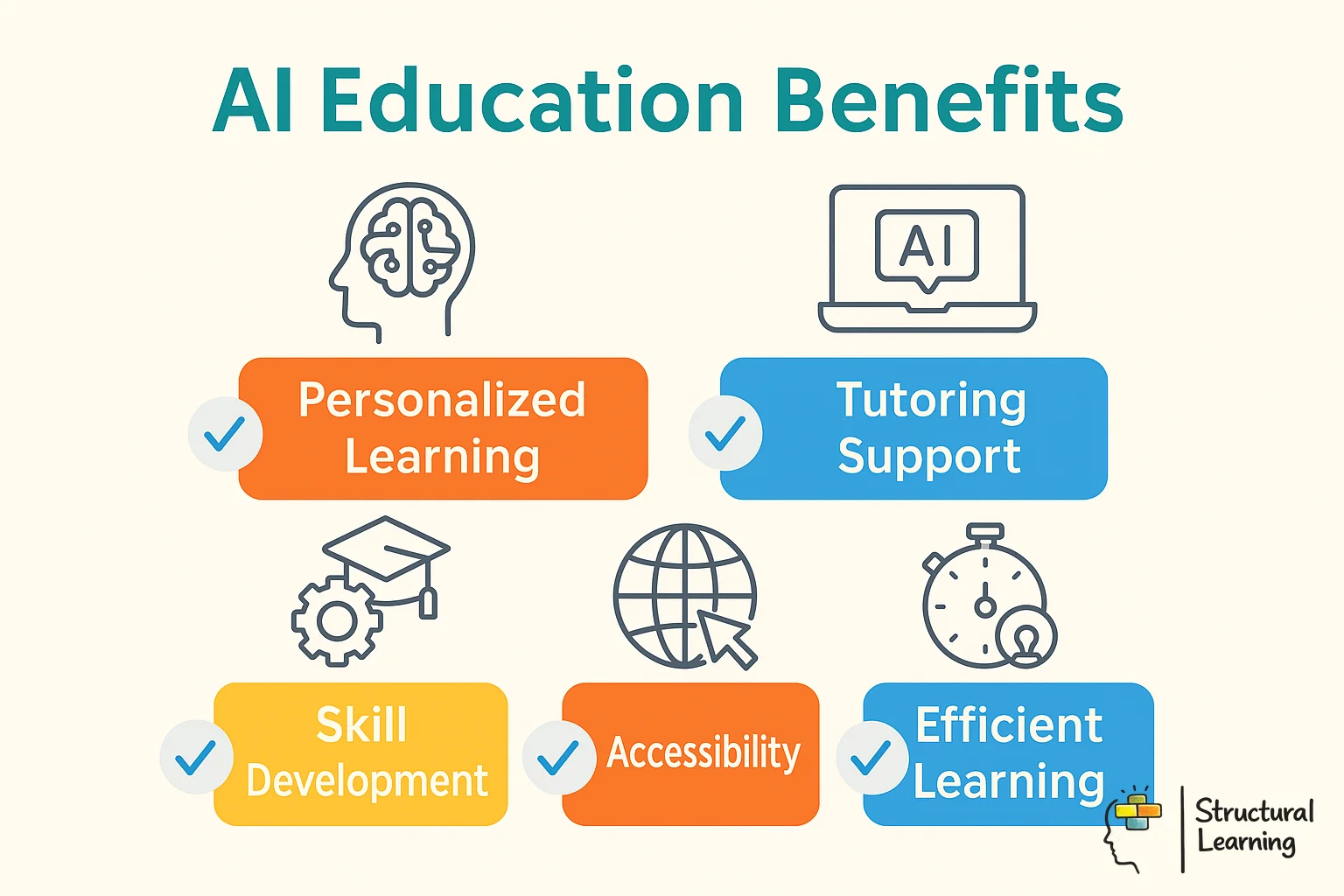
Five key benefits of AI in modern education displayed as infographic elements
5 Key Benefits of AI in Modern Education

AI enhances accessibility. It supports marginalized populations and students with disabilities through language translation and voice typing tools. This inclusive learning environment ensures a more comprehensive education for all.

By automating routine tasks, AI allows educators to focus on instruction. They can concentrate on building relationships with students, enriching the learning process. After-hours tutoring and resource support provided by AI create opportunities for students lacking help outside school.

Infographic showing 5 key benefits of AI in education with icons and brief descriptions
AI Education Benefits

Students and educators must critically assess AI tools. While these technologies offer benefits, they may also introduce biases or misinformation. Developing media literacy is a critical thinking skill for navigating the future of education in a technology-centric world.

AI's Role in Education
Personalised Learning
Increased Accessibility
Focus on Teaching
Equitable Opportunities
Critical Evaluation

Key Benefits of AI in Education

AI in education delivers personalised learning experiences, automates routine administrative tasks to save teachers 10+ hours weekly, and increases student engagement through adaptive content. The technology also improves accessibility for students with special educational needs through tools like voice typing and real-time translation. These benefits allow teachers to focus more time on relationship-building and individualized instruction.

AI technologies transform education by automating routine administrative tasks. This shift allows educators to focus more on teaching and developing personalised interactions with students. Adaptive algorithms provide tailored instruction to ensure students fully grasp the material before going forwards, reducing cognitive load and improving comprehension. AI-powered systems can also provide instant feedback to students, helping them identify areas for improvement. By tracking student progress, these systems help maintain attention and boost motivation through personalised learning paths. This approach supports active learning strategies while helping teachers manage their marking workload more effectively. Additionally, AI tools can adapt to students with special educational needs, ensuring all learners can access the curriculum at their own pace.more effectively. Additionally, AI tools can adapt to students with special educational needs, ensuring all learners can access the curriculum at their own pace.

Major AI Implementation Challenges in Schools

Integrating AI in education faces several significant challenges, including ensuring data privacy, addressing ethical concerns about bias, and the high costs of implementation. Educators also need training to effectively use AI tools, and there's a risk of over-reliance on technology, potentially diminishing crucial human interaction in learning. Careful planning and ethical guidelines are essential to navigate these issues.

One primary concern involves data privacy and security. Educational institutions must ensure that student data is protected and used ethically. Bias in AI algorithms is another significant challenge; algorithms trained on biased data can perpetuate inequalities in education. To mitigate this, algorithms should be regularly audited and refined to ensure fairness and inclusion. The costs associated with implementing AI can be substantial, requiring significant inves tment in both hardware and software. Furthermore, teachers require training to effectively use AI tools, highlighting the need for professional development.

Another hurdle is the potential for over-reliance on technology, which may reduce essential human interaction in the learning process. The role of teachers in providing emotional support, personalised guidance, and developing critical thinking skills cannot be completely replaced by AI. Therefore, strike a balance between technology and human interaction to create a well-rounded educational experience. Addressing these challenges requires a collaborative effort between educators, policymakers, and technology developers to ensure AI is implemented responsibly and ethically, promoting equitable educational opportunities for all students.

AI Success Stories in Schools

Schools across the UK are successfully integrating AI tools to enhance personalised learning experiences without replacing traditional teaching methods. At secondary level, mathematics departments are using adaptive learning platforms that adjust problem difficulty based on individual student responses, allowing teachers to focus on students requiring additional support whilst high achievers progress independently. Primary schools report significant improvements in reading comprehension when AI-powered assessment tools identify specific gaps in phonetic understanding, enabling targeted intervention strategies.

Language learning represents another area of remarkable success, where AI conversation partners provide students with unlimited speaking practise outside classroom hours. Remove this incomplete textggled with oral participation. Similarly, special educational needs coordinators utilise AI transcription tools to support students with dyslexia, converting spoken responses into written text and enabling more accurate assessment of conceptual understanding rather than writing ability.

The most effective implementations share common characteristics: gradual introduction with comprehensive teacher training, clear data privacy protocols, and regular evaluation of learning outcomes. Schools emphasise that AI serves as a teaching assistant rather than replacement, freeing educators to focus on creative lesson planning, emotional support, and complex problem-solving activities that require human insight and empathy.

AI Ethics in Education

The implementation of AI in modern education raises significant ethical questions that educators must address proactively. Student data privacy stands at the forefront of these concerns, as AI systems often require extensive personal information to deliver personalised learning experiences. Schools must ensure strong data protection measures whilst maintaining transparency with students and parents about how educational technology collects, stores, and utilises sensitive information.

Algorithmic bias presents another critical challenge for classroom implementation. AI systems can inadvertently perpetuate existing inequalities if they are trained on biased datasets or fail to account for diverse learning styles and backgrounds. Research by Cathy O'Neil in "Weapons of Math Destruction" highlights how automated systems can amplify discrimination, making it essential for educational leaders to regularly audit AI tools for fairness across all student populations.

To address these ethical considerations effectively, schools should establish clear AI governance frameworks that include regular bias assessments, transparent consent processes, and ongoing staff training. Teachers need practical guidelines for evaluating whether AI recommendations align with their professional judgement and educational values. This balanced approach ensures that technological advancement enhances rather than compromises the fundamental principles of equitable, student-centred teaching practise.

How to Implement AI in Schools

Schools embarking on AI implementation should begin with a strategic assessment of their current technological infrastructure and teaching objectives. Rather than pursuing wholesale transformation, successful adoption typically starts with pilot programmes in specific subject areas where AI tools can address clearly identified challenges. Educational leaders must first ensure adequate digital literacy amongst staff, as research by Koehler and Mishra on technological pedagogical content knowledge demonstrates that effective integration requires teachers to understand the technology and how it intersects with their pedagogical practise and subject expertise.

The most effective approach involves gradual introduction through existing classroom workflows, beginning with AI-powered tools for administrative tasks such as assessment feedback or lesson planning support. This allows educators to familiarise themselves with AI capabilities whilst maintaining focus on core teaching responsibilities. Professional development programmes should emphasise practical applications rather than technical specifications, enabling teachers to experiment with personalised learning platforms or intelligent tutoring systems in controlled environments before broader classroom implementation.

Successful schools typically establish collaborative learning communities where early adopters share experiences and troubleshoot challenges together. This peer-to-peer approach, supported by regular evaluation of student engagement and learning outcomes, ensures that AI implementation remains pedagogically sound rather than technology-driven, ultimately enhancing rather than replacing effective teaching practise.

What's the Future of Educational AI?

The trajectory of AI in modern education points towards increasingly sophisticated personalised learning systems that will fundamentally reshape teaching practise within the next decade. Emerging developments in adaptive learning algorithms suggest that AI tutors will soon provide real-time feedback tailored to individual cognitive patterns, whilst advanced natural language processing will enable more nuanced student-teacher interactions through intelligent chatbots and virtual teaching assistants.

Perhaps most significantly, predictive analytics will transform how educational leaders approach student support and intervention strategies. By analysing patterns in learning behaviour, attendance, and assessment performance, AI systems will identify at-risk students weeks or months before traditional methods might detect struggling learners. This shift towards proactive rather than reactive educational support represents a approach change in how schools address learner participation and student achievement.

For classroom implementation, teachers should prepare for AI tools that smoothly integrate assessment, curriculum delivery, and administrative tasks. Future platforms will likely automate routine marking whilst providing detailed insights into class-wide learning gaps, enabling educators to focus on high-impact pedagogical decisions. Educational administrators must therefore begin developing frameworks for AI literacy amongst staff, ensuring that technological advancement enhances rather than replaces the irreplaceable human elements of effective teaching practise.

Key Benefits and Advantages of AI in Education

The integration of AI into classroom practise offers transformative advantages that directly address long-standing educational challenges. Perhaps most significantly, AI enables genuine personalisation at scale, something that has remained elusive despite decades of pedagogical innovation. Where a teacher managing thirty pupils struggles to differentiate effectively for each learner, AI-powered platforms can track individual progress millisecond by millisecond, adjusting difficulty and content in real-time.

Consider the impact on formative assessment. Traditional marking provides feedback days or weeks after submission, when the learning moment has passed. AI assessment tools, however, offer immediate responses that guide students whilst concepts remain fresh. A Year 9 student practising algebra receives instant correction and explanation, preventing misconceptions from becoming embedded. Research from the Education Endowment Foundation suggests such immediate feedback can accelerate learning by up to four months.

Administrative efficiency represents another crucial benefit. Teachers currently spend approximately 11 hours weekly on marking and data entry, according to the Department for Education's workload survey. AI automation of routine tasks like attendance tracking, multiple-choice marking, and progress reporting returns precious hours to actual teaching. One Birmingham secondary school reported saving 15 hours weekly per department after implementing AI-powered marking assistance, time now redirected to lesson planning and pastoral care.

Accessibility improvements through AI prove particularly powerful for SEND provision. Speech-to-text technology enables dyslexic students to demonstrate knowledge without handwriting barriers, whilst AI-powered reading assistants help visually impaired learners access standard texts independently. These tools don't replace specialist support but amplify its effectiveness, ensuring inclusive education becomes practical reality rather than aspiration.

What Role Does AI Play in Modern Education?

Artificial intelligence has shifted from future possibility to classroom reality, fundamentally changing how teachers plan, deliver and assess learning. At its core, AI serves three primary functions in today's schools: personalising instruction, streamlining administrative tasks, and providing immediate feedback to both students and teachers.

In practical terms, AI acts as a teaching assistant that never tires. When Year 9 students work through maths problems on adaptive platforms like Century or Sparx, the software tracks their responses, identifies knowledge gaps, and adjusts difficulty levels in real time. This means whilst you're supporting one group, other students receive differentiated practise tailored to their exact needs. Research from University College London found that students using AI-powered adaptive learning platforms improved their maths scores by an average of 23% over traditional methods.

Beyond direct instruction, AI transforms time-consuming tasks that often overwhelm teachers. Automated marking systems can assess multiple-choice questions and even provide initial feedback on written work, freeing up hours for lesson planning or one-to-one support. Tools like Gradescope allow teachers to mark a class set of essays in half the usual time by learning from your marking patterns and suggesting grades for similar responses.

Perhaps most significantly, AI provides instant diagnostics that inform teaching decisions. When a student repeatedly struggles with subordinate clauses, the system flags this pattern immediately; you don't need to wait until the end-of-term assessment to identify and address the issue. This continuous assessment loop helps prevent students from falling behind whilst giving teachers actionable data to guide their practise.

Ethical Considerations and Student Privacy in AI Education

As AI tools become commonplace in UK classrooms, teachers face crucial decisions about protecting student data whilst maximising learning benefits. The collection and use of pupil information by AI systems raises significant questions about consent, data ownership, and long-term privacy implications that every educator must consider.

Understanding data protection in educational AI starts with transparency. When introducing AI-powered learning platforms, teachers should clearly communicate to students and parents what information is collected, how it's stored, and who has access. For instance, if using an adaptive maths programme that tracks problem-solving patterns, explain that this data helps personalise difficulty levels but won't be shared with third parties. Many schools now create simple data flow charts showing exactly where student information travels, making abstract concepts concrete for concerned parents.

Bias in AI algorithms presents another ethical challenge requiring vigilant oversight. Research from the University of Cambridge highlights how AI systems can perpetuate existing educational inequalities if trained on limited datasets. Teachers can counteract this by regularly reviewing AI recommendations against their professional judgement. For example, if an AI writing assistant consistently scores certain cultural expressions lower, educators should document these patterns and advocate for system improvements whilst ensuring fair assessment practices.

Practical safeguarding measures include establishing clear AI usage policies within schools. Create designated times for AI-assisted learning, ensuring human interaction remains central to the educational experience. Additionally, teach students about their digital rights; incorporate lessons on data privacy into computing curricula, enabling pupils to make informed decisions about their digital footprints. By maintaining ethical vigilance whilst embracing innovation, teachers can harness AI's potential without compromising the trust at the heart of education.

Case Studies: Successful AI Implementation in Schools

Real-world examples of AI integration demonstrate how schools across the UK are transforming their teaching practices whilst maintaining the human connection that defines excellent education. These success stories offer practical insights for educators considering similar implementations.

At Oakfield Secondary School in Manchester, teachers introduced AI-powered writing assistants to support Year 9 students struggling with essay structure. Rather than replacing traditional instruction, the tool provides instant feedback on paragraph organisation and topic sentences. English teacher Sarah Mitchell reports that students who previously submitted incomplete assignments now complete 85% of their written work, with marked improvements in coherence. The key to success was introducing the technology gradually, starting with one class and expanding based on student feedback.

St Catherine's Primary in Birmingham pioneered an innovative approach to mathematics support using adaptive learning platforms. The system identifies knowledge gaps in real-time, allowing teachers to intervene precisely when students need help. Year 4 teacher James Chen dedicates the first 15 minutes of each maths lesson to AI-guided practise, then uses the diagnostic data to form targeted small groups. This blend of technology and traditional teaching has reduced the attainment gap by 40% within one academic year.

Perhaps most inspiring is Riverside Academy's use of AI translation tools to support their growing EAL (English as an Additional Language) community. Teaching assistants use voice-to-text technology during science lessons, enabling newly arrived students to participate immediately whilst developing their English skills. The school's inclusive approach demonstrates that AI works best when it amplifies human expertise rather than attempting to replace it.

These implementations share common success factors: strong leadership support, adequate teacher training, and a clear focus on enhancing rather than replacing traditional pedagogy.

Step-by-Step AI Implementation Guide for Schools

Successfully integrating AI into your school requires a structured approach that prioritises teacher confidence and student outcomes. Rather than rushing to adopt every available tool, effective implementation follows a clear pathway that builds capacity whilst maintaining educational quality.

Begin with a pilot programme in one department or year group. For instance, the English department might trial AI-powered grammar checkers with Year 9 students, gathering feedback before wider rollout. This controlled approach allows you to identify technical issues, training needs, and unexpected benefits without overwhelming staff or budgets. Research from the Education Endowment Foundation suggests that successful EdTech adoption requires at least one term of pilot testing with regular teacher feedback sessions.

Next, establish clear data governance protocols before any student information enters AI systems. Create a simple traffic light system: green for tools using no personal data, amber for those requiring parental consent, and red for platforms your school won't use due to privacy concerns. Many schools have found success appointing a 'Digital Champion' in each department; a teacher who receives additional training time to support colleagues and troubleshoot common issues.

The final phase involves scaling successful practices across your school. Start with voluntary adoption, allowing enthusiastic early adopters to demonstrate benefits to more cautious colleagues. One primary school in Manchester began with five teachers using AI reading assistants; within six months, the entire Key Stage 2 team had adopted the technology after seeing struggling readers make remarkable progress. Remember to schedule termly reviews where teachers share what's working, what isn't, and how AI tools are genuinely impacting pupil learning.

This measured approach ensures AI enhances rather than disrupts your educational provision, keeping student wellbeing and learning at the centre of every decision.

Frequently Asked Questions

How much does AI educational software cost for schools?

AI educational software costs vary significantly, ranging from free basic tools like Khan Academy's AI features to premium platforms costing £10-50 per student annually. Many providers offer tiered pricing with free trials, and some local authorities negotiate bulk discounts. Schools should budget for additional training costs and technical support when implementing AI tools.

Do teachers need special training to use AI tools in their lessons?

Most AI educational tools are designed to be user-friendly, but teachers benefit greatly from structured training programmes. Basic proficiency can be achieved in 2-3 hours of focused training, whilst advanced features may require ongoing professional development. Many AI companies provide free webinars and certification courses specifically for educators.

Can AI tools work with existing school management systems?

Many modern AI educational platforms integrate smoothly with popular school management systems like SIMS, Bromcom, and Google Classroom through APIs. However, older systems may require manual data transfer or middleware solutions. Schools should verify compatibility during the procurement process and consider integration costs in their budgets.

How do parents feel about AI being used in their children's education?

Parent attitudes towards AI in education are mixed, with surveys showing roughly 60% support when benefits are clearly explained. Key concerns include data privacy, screen time, and reduced human interaction. Schools that communicate transparently about AI implementation and involve parents in the process typically see higher acceptance rates.

What safeguards prevent AI from making biased decisions about student assessment?

Effective AI systems include algorithmic auditing, diverse training datasets, and human oversight protocols to minimise bias. Schools should choose vendors that provide transparency reports and regularly test for demographic bias in their algorithms. Teachers must maintain final authority over significant assessment decisions rather than relying solely on AI recommendations.

Recent AI in Education Research

These peer-reviewed studies provide the research foundation for the strategies discussed in this article:

Transforming EDUCATION: HARNESSING THE POWER OF ARTIFICIAL INTELLIGENCE FOR Personalised LEARNING View study ↗
160 citations

Muh. Putra Pratama et al. (2023)

This research demonstrates how AI can move classrooms away from traditional one-size-fits-all teaching towards truly personalised learning experiences that adapt to each student's individual needs. The study shows that AI-powered personalization leads to higher student involvement and better educational results compared to conventional teaching methods. For teachers, this offers a roadmap for using AI tools to create more effective, individualized instruction without abandoning their essential role as educators.

Qualitative Study on Integrating Artificial Intelligence Technology into Language Teaching and Learning in Nigeria View study ↗

AKINSULIRE, Yewande Precious et al. (2026)

This study explores how AI is transforming language education through intelligent tutoring systems, adaptive learning platforms, and instant feedback mechanisms that help students become more independent learners. The research reveals that AI-driven language tools can provide highly customized instruction that keeps students engaged while building their communication skills. Language teachers will find valuable insights on how to integrate AI tutoring systems and automated assessment tools to enhance their classroom instruction and support diverse learning needs.

Effects of an automated corrective feedback-based peer assessment approach on students' learning achievement, motivation, and self-regulated learning conceptions in foreign language pronunciation View study ↗
11 citations

Chen-Chen Liu et al. (2025)

This research shows that combining AI-powered automated feedback with peer assessment significantly improves students' pronunciation skills, motivation, and ability to self-regulate their learning in foreign language courses. The study found that students who received immediate, automated corrections on their pronunciation errors showed greater improvement than those receiving traditional feedback methods. Foreign language teachers can use these findings to implement AI pronunciation tools that provide instant feedback while encouraging students to assess each other's progress, creating a more dynamic and effective learning environment.

ARTIFICIAL INTELLIGENCE AS AN EFFECTIVE TOOL FOR Personalised LEARNING IN MODERN EDUCATION View study ↗
5 citations

Vasyl Kovalchuk et al. (2025)

This study demonstrates how AI can enhance professional training in higher education by creating adaptive learning experiences that adjust to each student's knowledge level and learning pace. The research highlights the effectiveness of AI-powered virtual simulations and laboratory experiences in improving the quality of education for future professionals. Educators in higher education will discover practical ways to implement AI technologies that personalise learning pathways and improve student outcomes while maintaining rigorous academic standards.

Adaptive Learning Systems: Personalised Curriculum Design Using LLM-Powered Analytics View study ↗
3 citations

Yongjie Li et al. (2025)

This research introduces a framework for using large language models to analyse real-time student data and automatically adapt learning pathways and resource recommendations to match individual progress and needs. The study shows how advanced AI can continuously adjust curriculum delivery based on how students are actually learning, rather than following a predetermined path. Teachers and curriculum designers will find this research valuable for understanding how AI analytics can help them make data-driven decisions about pacing, content selection, and resource allocation to better serve each student's learning process.

Teaching with AI: A Systematic Review of Chatbots, Generative Tools, and Tutoring Systems in Programming Education View study ↗
1 citations

Said Elnaffar et al. (2025)

This comprehensive review of 58 recent studies reveals how AI tools like ChatGPT, intelligent tutoring systems, and educational chatbots are being used to teach programming skills. The research shows that generative AI tools are becoming the most popular choice among educators, though each type of AI assistant offers different benefits for student learning. Teachers considering AI integration will find valuable insights about which tools work best for different programming concepts and student needs.

Causal‐mechanical explanations in biology: Applying automated assessment for personalised learning in the science classroom View study ↗
15 citations

Moriah Ariely et al. (2024)

This study demonstrates how AI-powered assessment tools can automatically evaluate and provide feedback on students' scientific explanations in biology, a task that traditionally takes teachers enormous amounts of time. The automated system helps students improve their ability to construct proper scientific explanations while giving teachers real-time insights into student understanding. This technology could transform how science teachers assess complex reasoning skills and provide personalised support to each student.

Student-centred learning in the digital age: in-class adaptive instruction and best practices View study ↗
17 citations

Daniel Ginting et al. (2024)

This research explores how adaptive instruction technologies can personalise learning for each student's individual pace and learning style, moving beyond the traditional one-size-fits-all classroom approach. The study examines various tools including intelligent tutoring systems, AI chatbots, and adaptive learning platforms that adjust content difficulty based on student performance. Teachers will gain practical insights into implementing these personalised learning technologies to better meet diverse student needs in their classrooms.

Machine Learning Meets Language Learning: The Transformative Potential of Artificial Intelligence in English Language Instruction View study ↗
2 citations

Praveena T & Anupama K (2025)

This study examines how AI tutors and virtual assistants equipped with natural language processing can provide personalised English language instruction compared to traditional teaching methods. The research shows promise for AI tools that can adapt to individual student needs and provide customized language practise, though the authors note more classroom-based research is still needed. English teachers will find valuable insights about integrating AI assistants to supplement their instruction and provide additional speaking and writing practise opportunities.

ELF: Educational LLM Framework of Improving and Evaluating AI-generated Content for Classroom Teaching View study ↗
11 citations

Kehui Tan et al. (2025)

Researchers developed a framework that helps teachers use AI tools like ChatGPT more effectively in their classrooms by improving the accuracy and educational value of AI-generated content. The study addresses concerns about AI providing incorrect or inappropriate information by creating quality control measures specifically for educational contexts. This framework gives teachers confidence to integrate AI assistants into lesson planning and content creation while ensuring the material meets educational standards.

A Study on Predictive Models for University Classroom Teaching Reform Effectiveness Based on Artificial Intelligence View study ↗

Rustem Korabayev & Ling Peng (2025)

This study uses artificial intelligence to predict which classroom teaching reforms will be most successful before they are fully implemented. By analysing multiple data sources, the AI system helps educators and administrators make more informed decisions about which teaching innovations to adopt and how to allocate resources effectively. The research offers a data-driven approach that could save schools time and money by identifying promising educational reforms early in the planning process.

Cognitive Load Effects of AI Tutoring Systems Compared to Traditional Instructional Methods View study ↗

Yuxin Liu (2025)

This research examines how AI tutoring systems affect students' mental processing capacity compared to traditional classroom instruction, finding that well-designed AI tutors can reduce cognitive overload while maintaining learning effectiveness. The study reveals that adaptive AI systems can adjust to individual students' learning pace and capacity, potentially making complex subjects more manageable. Teachers can use these insights to understand when AI tutoring might complement their instruction and help students who struggle with information processing in traditional classroom settings.

Facilitating active learning through educational technology in higher education: A systematic review in the field of arts and humanities View study ↗
185 citations

S. Bedenlier et al. (2020)

This comprehensive review of 42 studies reveals how educational technology can boost student participation and interest in arts and humanities courses, with particularly strong evidence from language learning programmes. The research shows that interactive digital tools and multimedia resources help students connect more deeply with creative and cultural subjects that rely heavily on communication and expression. Arts and humanities teachers can draw practical insights about which technologies most effectively engage students in discussion-based and creative learning environments.

Loading audit...

Artificial intelligence is revolutionising education by enabling personalised learning experiences, automating administrative tasks, and providing real-time assessment tools that adapt to individual student needs. While AI presents remarkable opportunities to enhance accessibility and engagement in classrooms worldwide, it also introduces significant challenges around data privacy, the digital divide, and concerns about replacing human educators. From intelligent tutoring systems that adjust to learning styles to AI-powered plagiarism detection, these technologies are reshaping how we teach and learn. Understanding both the promise and the pitfalls of educational AI is crucial for educators, policymakers, and students navigating this rapidly evolving landscape.

Key Takeaways

  1. Beyond Digital Worksheets: Discover how AI tutoring systems adapt to individual learningstyles, creating breakthrough moments for struggling students you've been trying to reach
  2. The Hidden Time Dividend: Enable 10+ hours weekly by automating routine tasks, and why the best teachers use this time for relationship-building, not more marking
  3. Navigate the Ethics Minefield: Master the critical questions about AI bias and data security that every school leader must address before implementation
  4. Your SEND breakthrough: How voice typing and real-time translation tools are dismantling barriers for students who've been left behind by traditional methods

However, AI in education is not without its challenges. Navigating ethical dilemmas, ensuring data security, and addressing inclusion requires careful consideration and effective solutions. Beyond the hurdles, the potential for AI to transform educational methodologies is immense, making it a hot topic among educators and policymakers alike.

This article examines into the multifaceted role of AI in education, exploring its benefits and applications, the challenges faced in its implementation, and the future trajectory of this technology. By examining these elements, educators and stakeholders can better understand how to harness AI's potential while mitigating its risks.

What Role Does AI Play in Education?

AI transforms education by analysing student data to create personalised learning experiences that adapt to individual learning styles and pace. This technology provides targeted assistance to students, helping bridge educational disparities and improve academic outcomes. AI serves as both a teaching assistant and analytical tool that enhances educational effectiveness.

AI transforms education by analysing student data to tailor lessons for personalised activities. By adjusting to individual learning styles, students receive targeted assistance that impacts their academic performance. This technology bridges educational disparities, offering equitable access to effective classroom activities.

Five key benefits of AI in modern education displayed as infographic elements
5 Key Benefits of AI in Modern Education

AI enhances accessibility. It supports marginalized populations and students with disabilities through language translation and voice typing tools. This inclusive learning environment ensures a more comprehensive education for all.

By automating routine tasks, AI allows educators to focus on instruction. They can concentrate on building relationships with students, enriching the learning process. After-hours tutoring and resource support provided by AI create opportunities for students lacking help outside school.

Infographic showing 5 key benefits of AI in education with icons and brief descriptions
AI Education Benefits

Students and educators must critically assess AI tools. While these technologies offer benefits, they may also introduce biases or misinformation. Developing media literacy is a critical thinking skill for navigating the future of education in a technology-centric world.

AI's Role in Education
Personalised Learning
Increased Accessibility
Focus on Teaching
Equitable Opportunities
Critical Evaluation

Key Benefits of AI in Education

AI in education delivers personalised learning experiences, automates routine administrative tasks to save teachers 10+ hours weekly, and increases student engagement through adaptive content. The technology also improves accessibility for students with special educational needs through tools like voice typing and real-time translation. These benefits allow teachers to focus more time on relationship-building and individualized instruction.

AI technologies transform education by automating routine administrative tasks. This shift allows educators to focus more on teaching and developing personalised interactions with students. Adaptive algorithms provide tailored instruction to ensure students fully grasp the material before going forwards, reducing cognitive load and improving comprehension. AI-powered systems can also provide instant feedback to students, helping them identify areas for improvement. By tracking student progress, these systems help maintain attention and boost motivation through personalised learning paths. This approach supports active learning strategies while helping teachers manage their marking workload more effectively. Additionally, AI tools can adapt to students with special educational needs, ensuring all learners can access the curriculum at their own pace.more effectively. Additionally, AI tools can adapt to students with special educational needs, ensuring all learners can access the curriculum at their own pace.

Major AI Implementation Challenges in Schools

Integrating AI in education faces several significant challenges, including ensuring data privacy, addressing ethical concerns about bias, and the high costs of implementation. Educators also need training to effectively use AI tools, and there's a risk of over-reliance on technology, potentially diminishing crucial human interaction in learning. Careful planning and ethical guidelines are essential to navigate these issues.

One primary concern involves data privacy and security. Educational institutions must ensure that student data is protected and used ethically. Bias in AI algorithms is another significant challenge; algorithms trained on biased data can perpetuate inequalities in education. To mitigate this, algorithms should be regularly audited and refined to ensure fairness and inclusion. The costs associated with implementing AI can be substantial, requiring significant inves tment in both hardware and software. Furthermore, teachers require training to effectively use AI tools, highlighting the need for professional development.

Another hurdle is the potential for over-reliance on technology, which may reduce essential human interaction in the learning process. The role of teachers in providing emotional support, personalised guidance, and developing critical thinking skills cannot be completely replaced by AI. Therefore, strike a balance between technology and human interaction to create a well-rounded educational experience. Addressing these challenges requires a collaborative effort between educators, policymakers, and technology developers to ensure AI is implemented responsibly and ethically, promoting equitable educational opportunities for all students.

AI Success Stories in Schools

Schools across the UK are successfully integrating AI tools to enhance personalised learning experiences without replacing traditional teaching methods. At secondary level, mathematics departments are using adaptive learning platforms that adjust problem difficulty based on individual student responses, allowing teachers to focus on students requiring additional support whilst high achievers progress independently. Primary schools report significant improvements in reading comprehension when AI-powered assessment tools identify specific gaps in phonetic understanding, enabling targeted intervention strategies.

Language learning represents another area of remarkable success, where AI conversation partners provide students with unlimited speaking practise outside classroom hours. Remove this incomplete textggled with oral participation. Similarly, special educational needs coordinators utilise AI transcription tools to support students with dyslexia, converting spoken responses into written text and enabling more accurate assessment of conceptual understanding rather than writing ability.

The most effective implementations share common characteristics: gradual introduction with comprehensive teacher training, clear data privacy protocols, and regular evaluation of learning outcomes. Schools emphasise that AI serves as a teaching assistant rather than replacement, freeing educators to focus on creative lesson planning, emotional support, and complex problem-solving activities that require human insight and empathy.

AI Ethics in Education

The implementation of AI in modern education raises significant ethical questions that educators must address proactively. Student data privacy stands at the forefront of these concerns, as AI systems often require extensive personal information to deliver personalised learning experiences. Schools must ensure strong data protection measures whilst maintaining transparency with students and parents about how educational technology collects, stores, and utilises sensitive information.

Algorithmic bias presents another critical challenge for classroom implementation. AI systems can inadvertently perpetuate existing inequalities if they are trained on biased datasets or fail to account for diverse learning styles and backgrounds. Research by Cathy O'Neil in "Weapons of Math Destruction" highlights how automated systems can amplify discrimination, making it essential for educational leaders to regularly audit AI tools for fairness across all student populations.

To address these ethical considerations effectively, schools should establish clear AI governance frameworks that include regular bias assessments, transparent consent processes, and ongoing staff training. Teachers need practical guidelines for evaluating whether AI recommendations align with their professional judgement and educational values. This balanced approach ensures that technological advancement enhances rather than compromises the fundamental principles of equitable, student-centred teaching practise.

How to Implement AI in Schools

Schools embarking on AI implementation should begin with a strategic assessment of their current technological infrastructure and teaching objectives. Rather than pursuing wholesale transformation, successful adoption typically starts with pilot programmes in specific subject areas where AI tools can address clearly identified challenges. Educational leaders must first ensure adequate digital literacy amongst staff, as research by Koehler and Mishra on technological pedagogical content knowledge demonstrates that effective integration requires teachers to understand the technology and how it intersects with their pedagogical practise and subject expertise.

The most effective approach involves gradual introduction through existing classroom workflows, beginning with AI-powered tools for administrative tasks such as assessment feedback or lesson planning support. This allows educators to familiarise themselves with AI capabilities whilst maintaining focus on core teaching responsibilities. Professional development programmes should emphasise practical applications rather than technical specifications, enabling teachers to experiment with personalised learning platforms or intelligent tutoring systems in controlled environments before broader classroom implementation.

Successful schools typically establish collaborative learning communities where early adopters share experiences and troubleshoot challenges together. This peer-to-peer approach, supported by regular evaluation of student engagement and learning outcomes, ensures that AI implementation remains pedagogically sound rather than technology-driven, ultimately enhancing rather than replacing effective teaching practise.

What's the Future of Educational AI?

The trajectory of AI in modern education points towards increasingly sophisticated personalised learning systems that will fundamentally reshape teaching practise within the next decade. Emerging developments in adaptive learning algorithms suggest that AI tutors will soon provide real-time feedback tailored to individual cognitive patterns, whilst advanced natural language processing will enable more nuanced student-teacher interactions through intelligent chatbots and virtual teaching assistants.

Perhaps most significantly, predictive analytics will transform how educational leaders approach student support and intervention strategies. By analysing patterns in learning behaviour, attendance, and assessment performance, AI systems will identify at-risk students weeks or months before traditional methods might detect struggling learners. This shift towards proactive rather than reactive educational support represents a approach change in how schools address learner participation and student achievement.

For classroom implementation, teachers should prepare for AI tools that smoothly integrate assessment, curriculum delivery, and administrative tasks. Future platforms will likely automate routine marking whilst providing detailed insights into class-wide learning gaps, enabling educators to focus on high-impact pedagogical decisions. Educational administrators must therefore begin developing frameworks for AI literacy amongst staff, ensuring that technological advancement enhances rather than replaces the irreplaceable human elements of effective teaching practise.

Key Benefits and Advantages of AI in Education

The integration of AI into classroom practise offers transformative advantages that directly address long-standing educational challenges. Perhaps most significantly, AI enables genuine personalisation at scale, something that has remained elusive despite decades of pedagogical innovation. Where a teacher managing thirty pupils struggles to differentiate effectively for each learner, AI-powered platforms can track individual progress millisecond by millisecond, adjusting difficulty and content in real-time.

Consider the impact on formative assessment. Traditional marking provides feedback days or weeks after submission, when the learning moment has passed. AI assessment tools, however, offer immediate responses that guide students whilst concepts remain fresh. A Year 9 student practising algebra receives instant correction and explanation, preventing misconceptions from becoming embedded. Research from the Education Endowment Foundation suggests such immediate feedback can accelerate learning by up to four months.

Administrative efficiency represents another crucial benefit. Teachers currently spend approximately 11 hours weekly on marking and data entry, according to the Department for Education's workload survey. AI automation of routine tasks like attendance tracking, multiple-choice marking, and progress reporting returns precious hours to actual teaching. One Birmingham secondary school reported saving 15 hours weekly per department after implementing AI-powered marking assistance, time now redirected to lesson planning and pastoral care.

Accessibility improvements through AI prove particularly powerful for SEND provision. Speech-to-text technology enables dyslexic students to demonstrate knowledge without handwriting barriers, whilst AI-powered reading assistants help visually impaired learners access standard texts independently. These tools don't replace specialist support but amplify its effectiveness, ensuring inclusive education becomes practical reality rather than aspiration.

What Role Does AI Play in Modern Education?

Artificial intelligence has shifted from future possibility to classroom reality, fundamentally changing how teachers plan, deliver and assess learning. At its core, AI serves three primary functions in today's schools: personalising instruction, streamlining administrative tasks, and providing immediate feedback to both students and teachers.

In practical terms, AI acts as a teaching assistant that never tires. When Year 9 students work through maths problems on adaptive platforms like Century or Sparx, the software tracks their responses, identifies knowledge gaps, and adjusts difficulty levels in real time. This means whilst you're supporting one group, other students receive differentiated practise tailored to their exact needs. Research from University College London found that students using AI-powered adaptive learning platforms improved their maths scores by an average of 23% over traditional methods.

Beyond direct instruction, AI transforms time-consuming tasks that often overwhelm teachers. Automated marking systems can assess multiple-choice questions and even provide initial feedback on written work, freeing up hours for lesson planning or one-to-one support. Tools like Gradescope allow teachers to mark a class set of essays in half the usual time by learning from your marking patterns and suggesting grades for similar responses.

Perhaps most significantly, AI provides instant diagnostics that inform teaching decisions. When a student repeatedly struggles with subordinate clauses, the system flags this pattern immediately; you don't need to wait until the end-of-term assessment to identify and address the issue. This continuous assessment loop helps prevent students from falling behind whilst giving teachers actionable data to guide their practise.

Ethical Considerations and Student Privacy in AI Education

As AI tools become commonplace in UK classrooms, teachers face crucial decisions about protecting student data whilst maximising learning benefits. The collection and use of pupil information by AI systems raises significant questions about consent, data ownership, and long-term privacy implications that every educator must consider.

Understanding data protection in educational AI starts with transparency. When introducing AI-powered learning platforms, teachers should clearly communicate to students and parents what information is collected, how it's stored, and who has access. For instance, if using an adaptive maths programme that tracks problem-solving patterns, explain that this data helps personalise difficulty levels but won't be shared with third parties. Many schools now create simple data flow charts showing exactly where student information travels, making abstract concepts concrete for concerned parents.

Bias in AI algorithms presents another ethical challenge requiring vigilant oversight. Research from the University of Cambridge highlights how AI systems can perpetuate existing educational inequalities if trained on limited datasets. Teachers can counteract this by regularly reviewing AI recommendations against their professional judgement. For example, if an AI writing assistant consistently scores certain cultural expressions lower, educators should document these patterns and advocate for system improvements whilst ensuring fair assessment practices.

Practical safeguarding measures include establishing clear AI usage policies within schools. Create designated times for AI-assisted learning, ensuring human interaction remains central to the educational experience. Additionally, teach students about their digital rights; incorporate lessons on data privacy into computing curricula, enabling pupils to make informed decisions about their digital footprints. By maintaining ethical vigilance whilst embracing innovation, teachers can harness AI's potential without compromising the trust at the heart of education.

Case Studies: Successful AI Implementation in Schools

Real-world examples of AI integration demonstrate how schools across the UK are transforming their teaching practices whilst maintaining the human connection that defines excellent education. These success stories offer practical insights for educators considering similar implementations.

At Oakfield Secondary School in Manchester, teachers introduced AI-powered writing assistants to support Year 9 students struggling with essay structure. Rather than replacing traditional instruction, the tool provides instant feedback on paragraph organisation and topic sentences. English teacher Sarah Mitchell reports that students who previously submitted incomplete assignments now complete 85% of their written work, with marked improvements in coherence. The key to success was introducing the technology gradually, starting with one class and expanding based on student feedback.

St Catherine's Primary in Birmingham pioneered an innovative approach to mathematics support using adaptive learning platforms. The system identifies knowledge gaps in real-time, allowing teachers to intervene precisely when students need help. Year 4 teacher James Chen dedicates the first 15 minutes of each maths lesson to AI-guided practise, then uses the diagnostic data to form targeted small groups. This blend of technology and traditional teaching has reduced the attainment gap by 40% within one academic year.

Perhaps most inspiring is Riverside Academy's use of AI translation tools to support their growing EAL (English as an Additional Language) community. Teaching assistants use voice-to-text technology during science lessons, enabling newly arrived students to participate immediately whilst developing their English skills. The school's inclusive approach demonstrates that AI works best when it amplifies human expertise rather than attempting to replace it.

These implementations share common success factors: strong leadership support, adequate teacher training, and a clear focus on enhancing rather than replacing traditional pedagogy.

Step-by-Step AI Implementation Guide for Schools

Successfully integrating AI into your school requires a structured approach that prioritises teacher confidence and student outcomes. Rather than rushing to adopt every available tool, effective implementation follows a clear pathway that builds capacity whilst maintaining educational quality.

Begin with a pilot programme in one department or year group. For instance, the English department might trial AI-powered grammar checkers with Year 9 students, gathering feedback before wider rollout. This controlled approach allows you to identify technical issues, training needs, and unexpected benefits without overwhelming staff or budgets. Research from the Education Endowment Foundation suggests that successful EdTech adoption requires at least one term of pilot testing with regular teacher feedback sessions.

Next, establish clear data governance protocols before any student information enters AI systems. Create a simple traffic light system: green for tools using no personal data, amber for those requiring parental consent, and red for platforms your school won't use due to privacy concerns. Many schools have found success appointing a 'Digital Champion' in each department; a teacher who receives additional training time to support colleagues and troubleshoot common issues.

The final phase involves scaling successful practices across your school. Start with voluntary adoption, allowing enthusiastic early adopters to demonstrate benefits to more cautious colleagues. One primary school in Manchester began with five teachers using AI reading assistants; within six months, the entire Key Stage 2 team had adopted the technology after seeing struggling readers make remarkable progress. Remember to schedule termly reviews where teachers share what's working, what isn't, and how AI tools are genuinely impacting pupil learning.

This measured approach ensures AI enhances rather than disrupts your educational provision, keeping student wellbeing and learning at the centre of every decision.

Frequently Asked Questions

How much does AI educational software cost for schools?

AI educational software costs vary significantly, ranging from free basic tools like Khan Academy's AI features to premium platforms costing £10-50 per student annually. Many providers offer tiered pricing with free trials, and some local authorities negotiate bulk discounts. Schools should budget for additional training costs and technical support when implementing AI tools.

Do teachers need special training to use AI tools in their lessons?

Most AI educational tools are designed to be user-friendly, but teachers benefit greatly from structured training programmes. Basic proficiency can be achieved in 2-3 hours of focused training, whilst advanced features may require ongoing professional development. Many AI companies provide free webinars and certification courses specifically for educators.

Can AI tools work with existing school management systems?

Many modern AI educational platforms integrate smoothly with popular school management systems like SIMS, Bromcom, and Google Classroom through APIs. However, older systems may require manual data transfer or middleware solutions. Schools should verify compatibility during the procurement process and consider integration costs in their budgets.

How do parents feel about AI being used in their children's education?

Parent attitudes towards AI in education are mixed, with surveys showing roughly 60% support when benefits are clearly explained. Key concerns include data privacy, screen time, and reduced human interaction. Schools that communicate transparently about AI implementation and involve parents in the process typically see higher acceptance rates.

What safeguards prevent AI from making biased decisions about student assessment?

Effective AI systems include algorithmic auditing, diverse training datasets, and human oversight protocols to minimise bias. Schools should choose vendors that provide transparency reports and regularly test for demographic bias in their algorithms. Teachers must maintain final authority over significant assessment decisions rather than relying solely on AI recommendations.

Recent AI in Education Research

These peer-reviewed studies provide the research foundation for the strategies discussed in this article:

Transforming EDUCATION: HARNESSING THE POWER OF ARTIFICIAL INTELLIGENCE FOR Personalised LEARNING View study ↗
160 citations

Muh. Putra Pratama et al. (2023)

This research demonstrates how AI can move classrooms away from traditional one-size-fits-all teaching towards truly personalised learning experiences that adapt to each student's individual needs. The study shows that AI-powered personalization leads to higher student involvement and better educational results compared to conventional teaching methods. For teachers, this offers a roadmap for using AI tools to create more effective, individualized instruction without abandoning their essential role as educators.

Qualitative Study on Integrating Artificial Intelligence Technology into Language Teaching and Learning in Nigeria View study ↗

AKINSULIRE, Yewande Precious et al. (2026)

This study explores how AI is transforming language education through intelligent tutoring systems, adaptive learning platforms, and instant feedback mechanisms that help students become more independent learners. The research reveals that AI-driven language tools can provide highly customized instruction that keeps students engaged while building their communication skills. Language teachers will find valuable insights on how to integrate AI tutoring systems and automated assessment tools to enhance their classroom instruction and support diverse learning needs.

Effects of an automated corrective feedback-based peer assessment approach on students' learning achievement, motivation, and self-regulated learning conceptions in foreign language pronunciation View study ↗
11 citations

Chen-Chen Liu et al. (2025)

This research shows that combining AI-powered automated feedback with peer assessment significantly improves students' pronunciation skills, motivation, and ability to self-regulate their learning in foreign language courses. The study found that students who received immediate, automated corrections on their pronunciation errors showed greater improvement than those receiving traditional feedback methods. Foreign language teachers can use these findings to implement AI pronunciation tools that provide instant feedback while encouraging students to assess each other's progress, creating a more dynamic and effective learning environment.

ARTIFICIAL INTELLIGENCE AS AN EFFECTIVE TOOL FOR Personalised LEARNING IN MODERN EDUCATION View study ↗
5 citations

Vasyl Kovalchuk et al. (2025)

This study demonstrates how AI can enhance professional training in higher education by creating adaptive learning experiences that adjust to each student's knowledge level and learning pace. The research highlights the effectiveness of AI-powered virtual simulations and laboratory experiences in improving the quality of education for future professionals. Educators in higher education will discover practical ways to implement AI technologies that personalise learning pathways and improve student outcomes while maintaining rigorous academic standards.

Adaptive Learning Systems: Personalised Curriculum Design Using LLM-Powered Analytics View study ↗
3 citations

Yongjie Li et al. (2025)

This research introduces a framework for using large language models to analyse real-time student data and automatically adapt learning pathways and resource recommendations to match individual progress and needs. The study shows how advanced AI can continuously adjust curriculum delivery based on how students are actually learning, rather than following a predetermined path. Teachers and curriculum designers will find this research valuable for understanding how AI analytics can help them make data-driven decisions about pacing, content selection, and resource allocation to better serve each student's learning process.

Teaching with AI: A Systematic Review of Chatbots, Generative Tools, and Tutoring Systems in Programming Education View study ↗
1 citations

Said Elnaffar et al. (2025)

This comprehensive review of 58 recent studies reveals how AI tools like ChatGPT, intelligent tutoring systems, and educational chatbots are being used to teach programming skills. The research shows that generative AI tools are becoming the most popular choice among educators, though each type of AI assistant offers different benefits for student learning. Teachers considering AI integration will find valuable insights about which tools work best for different programming concepts and student needs.

Causal‐mechanical explanations in biology: Applying automated assessment for personalised learning in the science classroom View study ↗
15 citations

Moriah Ariely et al. (2024)

This study demonstrates how AI-powered assessment tools can automatically evaluate and provide feedback on students' scientific explanations in biology, a task that traditionally takes teachers enormous amounts of time. The automated system helps students improve their ability to construct proper scientific explanations while giving teachers real-time insights into student understanding. This technology could transform how science teachers assess complex reasoning skills and provide personalised support to each student.

Student-centred learning in the digital age: in-class adaptive instruction and best practices View study ↗
17 citations

Daniel Ginting et al. (2024)

This research explores how adaptive instruction technologies can personalise learning for each student's individual pace and learning style, moving beyond the traditional one-size-fits-all classroom approach. The study examines various tools including intelligent tutoring systems, AI chatbots, and adaptive learning platforms that adjust content difficulty based on student performance. Teachers will gain practical insights into implementing these personalised learning technologies to better meet diverse student needs in their classrooms.

Machine Learning Meets Language Learning: The Transformative Potential of Artificial Intelligence in English Language Instruction View study ↗
2 citations

Praveena T & Anupama K (2025)

This study examines how AI tutors and virtual assistants equipped with natural language processing can provide personalised English language instruction compared to traditional teaching methods. The research shows promise for AI tools that can adapt to individual student needs and provide customized language practise, though the authors note more classroom-based research is still needed. English teachers will find valuable insights about integrating AI assistants to supplement their instruction and provide additional speaking and writing practise opportunities.

ELF: Educational LLM Framework of Improving and Evaluating AI-generated Content for Classroom Teaching View study ↗
11 citations

Kehui Tan et al. (2025)

Researchers developed a framework that helps teachers use AI tools like ChatGPT more effectively in their classrooms by improving the accuracy and educational value of AI-generated content. The study addresses concerns about AI providing incorrect or inappropriate information by creating quality control measures specifically for educational contexts. This framework gives teachers confidence to integrate AI assistants into lesson planning and content creation while ensuring the material meets educational standards.

A Study on Predictive Models for University Classroom Teaching Reform Effectiveness Based on Artificial Intelligence View study ↗

Rustem Korabayev & Ling Peng (2025)

This study uses artificial intelligence to predict which classroom teaching reforms will be most successful before they are fully implemented. By analysing multiple data sources, the AI system helps educators and administrators make more informed decisions about which teaching innovations to adopt and how to allocate resources effectively. The research offers a data-driven approach that could save schools time and money by identifying promising educational reforms early in the planning process.

Cognitive Load Effects of AI Tutoring Systems Compared to Traditional Instructional Methods View study ↗

Yuxin Liu (2025)

This research examines how AI tutoring systems affect students' mental processing capacity compared to traditional classroom instruction, finding that well-designed AI tutors can reduce cognitive overload while maintaining learning effectiveness. The study reveals that adaptive AI systems can adjust to individual students' learning pace and capacity, potentially making complex subjects more manageable. Teachers can use these insights to understand when AI tutoring might complement their instruction and help students who struggle with information processing in traditional classroom settings.

Facilitating active learning through educational technology in higher education: A systematic review in the field of arts and humanities View study ↗
185 citations

S. Bedenlier et al. (2020)

This comprehensive review of 42 studies reveals how educational technology can boost student participation and interest in arts and humanities courses, with particularly strong evidence from language learning programmes. The research shows that interactive digital tools and multimedia resources help students connect more deeply with creative and cultural subjects that rely heavily on communication and expression. Arts and humanities teachers can draw practical insights about which technologies most effectively engage students in discussion-based and creative learning environments.

Classroom Practice

Back to Blog

{"@context":"https://schema.org","@graph":[{"@type":"Article","@id":"https://www.structural-learning.com/post/ai-in-modern-education-challenges-and-opportunities#article","headline":"AI in Modern Education: Challenges and Opportunities","description":"Explore the future of education with AI, focusing on its impact on teaching, learning, and leadership. Insights tailored for teachers and school leaders.","datePublished":"2024-12-10T16:56:00.231Z","dateModified":"2026-02-09T16:45:57.646Z","author":{"@type":"Person","name":"Paul Main","url":"https://www.structural-learning.com/team/paulmain","jobTitle":"Founder & Educational Consultant"},"publisher":{"@type":"Organization","name":"Structural Learning","url":"https://www.structural-learning.com","logo":{"@type":"ImageObject","url":"https://cdn.prod.website-files.com/5b69a01ba2e409e5d5e055c6/6040bf0426cb415ba2fc7882_newlogoblue.svg"}},"mainEntityOfPage":{"@type":"WebPage","@id":"https://www.structural-learning.com/post/ai-in-modern-education-challenges-and-opportunities"},"image":"https://cdn.prod.website-files.com/5b69a01ba2e409501de055d1/695024bc503afcaac9a797cd_gwsx0c.webp","wordCount":5907},{"@type":"BreadcrumbList","@id":"https://www.structural-learning.com/post/ai-in-modern-education-challenges-and-opportunities#breadcrumb","itemListElement":[{"@type":"ListItem","position":1,"name":"Home","item":"https://www.structural-learning.com/"},{"@type":"ListItem","position":2,"name":"Blog","item":"https://www.structural-learning.com/blog"},{"@type":"ListItem","position":3,"name":"AI in Modern Education: Challenges and Opportunities","item":"https://www.structural-learning.com/post/ai-in-modern-education-challenges-and-opportunities"}]}]}