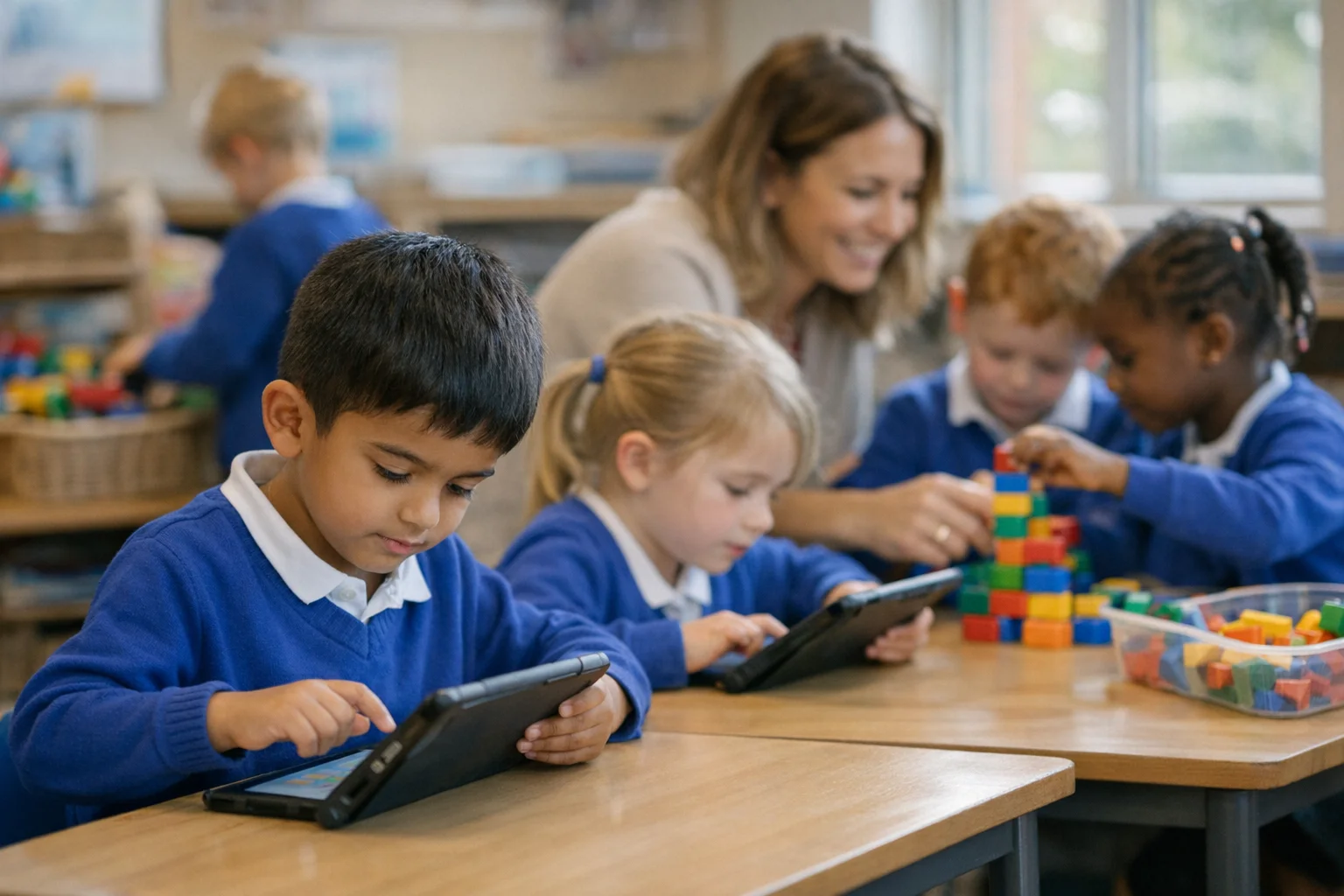
Adaptive Learning in Education: A Guide to Personalized TeachingEarly years children in royal blue jumpers exploring various hands-on and digital learning stations, focusing on personalized education.

Updated on  

January 2, 2026

Adaptive Learning in Education: A Guide to Personalized Teaching

|

March 17, 2025

Discover how adaptive learning personalizes education, supports teachers, and enhances student outcomes with data-driven strategies.

Course Enquiry
Copy citation

Main, P. (2025, March 17). Adaptive Learning in Education: A Guide to Personalized Teaching. Retrieved from www.structural-learning.com/post/adaptive-learning

Adaptive learning transforms traditional education into a personalized journey, meeting individual needs in real-time. By leveraging advanced technology, this innovative approach is revolutionizing how we view teaching and learning.

Key Takeaways

  1. Beyond One-Size-Fits-All Teaching: Discover how adaptive learning technology identifies individual knowledge gaps your whole-class teaching might miss, transforming struggling students into confident learners
  2. The 70% Forgetting Crisis: Learn why students lose most new knowledge within 24 hours and how adaptive systems create continuous reinforcement loops that actually stick
  3. Real-Time Teaching Intelligence: Uncover how data analytics reveal exactly when each student struggles, enabling targeted interventions before misconceptions become embedded learning barriers
  4. Managing Mixed-Ability Classrooms: Master the approach that lets advanced students accelerate while struggling learners get support, all without sacrificing your sanity or planning time

Adaptive learning utilizes data-driven algorithms to tailor educational content, ensuring students grasp concepts at their own pace. Studies show that personalized teaching boosts academic performance by addressing knowledge gaps and accommodating diverse learning abilities. With a focus on engagement, adaptive technologies empower learners to take charge of their education, fostering a more inclusive environment.

In this article, we will explore the intricacies of adaptive learning, from its fundamental principles to the various technologies that enhance the educational experience. Discover how adaptive learning not only bridges learning gaps but also paves the way for future trends in education. Join us as we delve into the transformative power of personalized teaching.

What Is Adaptive Learning and How Does It Work?

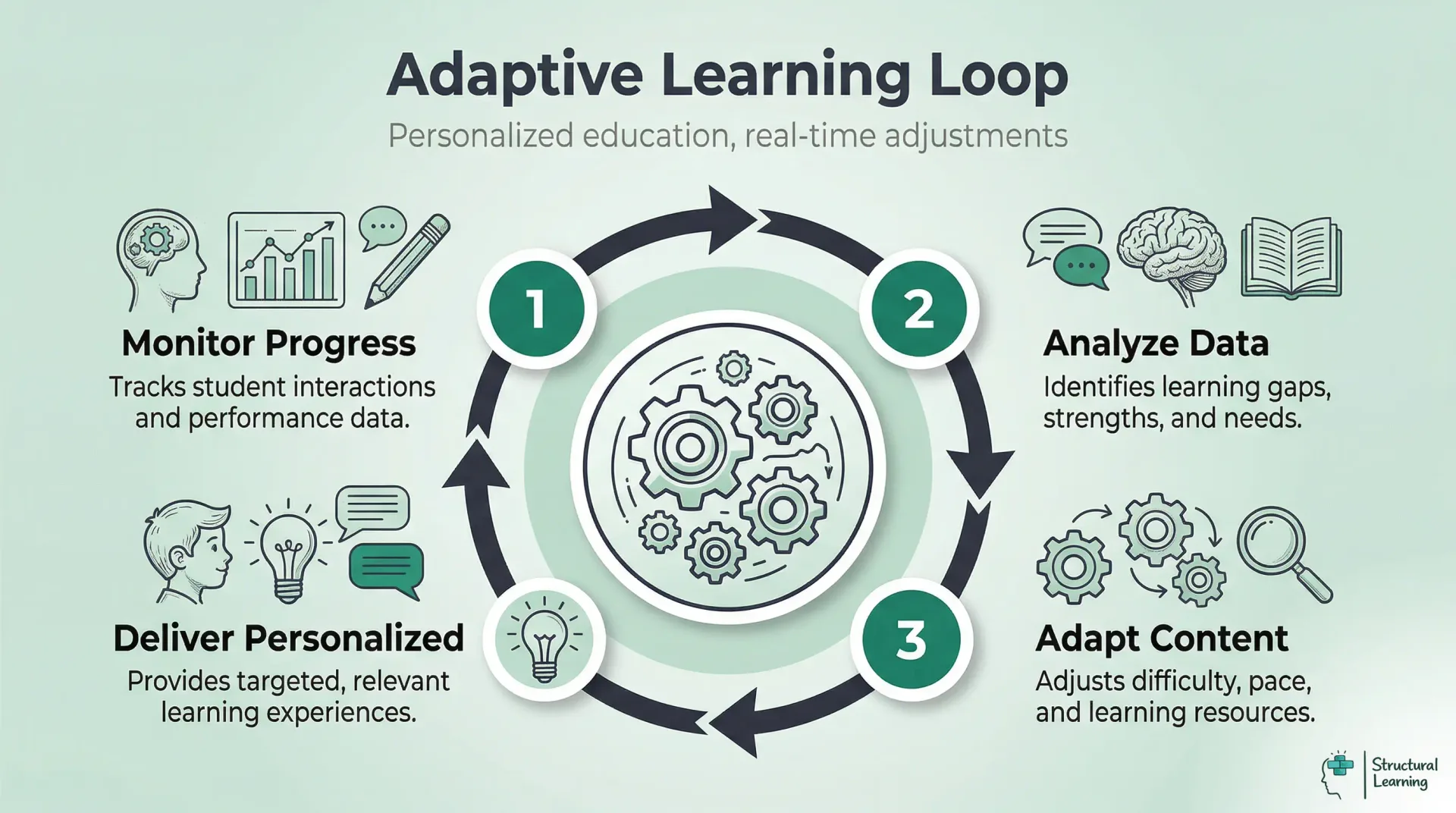
Adaptive learning tailors educational lessons to each student's abilities and performance. By utilizing artificial intelligence and machine learning, adaptive learning technologies modify learning paths in real-time, catering to individual needs. Through data analytics, these systems assess strengths, weaknesses, and preferences, allowing for optimized content delivery and higher engagement.

Key Features of Adaptive Learning:

  • Personalized Content: Lessons and activities adjust based on student skills.
  • Real-Time Adjustments: Learning paths evolve with ongoing performance analysis.
  • Enhanced Outcomes: Customization leads to better learning outcomes.

Adaptive teaching aids in managing larger class sizes, particularly in higher education. By addressing individual needs, students experience improved learning processes. Typically, adaptive learning environments use tools to create personalized classroom activities, offering insight into each learner's progress.

Feature Benefit
Personalized Content Tailors learning to individual needs
Real-Time Adjustments Ensures current and relevant material
Continuous Improvement Adapts based on immediate performance

These learning approaches transform the conventional classroom, supporting both instructors and learners with adaptive assessment and sequencing.

How Does Adaptive Learning Technology Work in Education?

Adaptive learning technology uses artificial intelligence and machine learning algorithms to analyze student performance data in real-time. The system continuously adjusts content difficulty, pacing, and learning paths based on individual student responses and progress patterns. This creates a personalized educational experience that adapts to each learner's strengths, weaknesses, and preferred learning style.

Adaptive learning transforms education by using data analytics and Artificial Intelligence. This innovative approach assesses each student's performance, tailoring a personalized learning experience. Such systems dynamically adjust content, difficulty levels, and learning paths in real-time, ensuring mastery of specific skills.

To achieve this, adaptive learning technologies rely on continuous data collection and analysis. They evaluate student strengths and weaknesses, enabling the creation of custom hands-on tasks. Instructional design plays a crucial role, ensuring that the learning process is both equitable and supportive of diverse needs.

Effective adaptive learning environments engage students by allowing them to progress at their own pace. This approach promotes equitable learning outcomes and supports individual learning paths. However, implementing these systems requires investment in research and development. Transforming existing courses into adaptive formats presents a significant challenge.

Here's a concise breakdown of adaptive learning's core components:

Component Function
Data Analytics Assesses student performance
Artificial Intelligence Personalizes the learning experience
Continuous Improvement Adjusts content and pathways in real-time
Instructional Design Ensures equitable and supportive learning

Adaptive learning fosters an engaging and personalized educational journey, transforming how students interact with subject matter and achieve success.

Types of adaptive learning infographic showing real-time adaptation, predictive analytics and AI
Types of Adaptive Learning

What Are the Main Benefits of Adaptive Learning for Students?

Adaptive learning increases student engagement by providing content at the optimal difficulty level, preventing both boredom and frustration. Students experience improved academic performance through personalized pacing that allows them to master concepts before moving forward. The technology also builds confidence by providing immediate feedback and celebrating progress at each student's individual level.

Adaptive learning personalizes education, aligning lessons with individual student needs for more meaningful classroom activities. By targeting knowledge gaps and avoiding unnecessary repetition, students remain engaged while progressing at their own pace. Real-time data analytics empower teachers to provide timely support, reinforcing confidence and skill mastery.

Student Engagement and Retention

Adaptive learning dynamically adjusts the content, pace, and difficulty level to match each learner's progress, increasing motivation and reducing frustration. With self-paced study, students move forward at their own speed, allowing for deeper understanding without the pressure of keeping up with peers.

  • Self-paced learning reduces anxiety and improves retention by allowing students to master concepts before advancing.
  • Personalized learning paths encourage deeper engagement by adapting to individual strengths and challenges.
  • Adaptive assessments continuously adjust based on responses, reinforcing comprehension and tracking student progress.

Bridging Learning Gaps

By identifying individual learning gaps, adaptive learning platforms offer targeted interventions to ensure students fully grasp concepts before moving forward. This is particularly effective in preventing the "forgetting curve," where students lose 70% of new knowledge within 24 hours without reinforcement.

  • Continuous feedback loops help students revisit and solidify weaker areas before gaps widen.
  • AI-driven insights ensure instruction adapts to individual learning patterns, making lessons more effective.
  • Equity-focused interventions personalize instruction for students with different learning needs, fostering inclusion.
Adaptive learning benefits diagram for learners, teachers and institutions
Benefits of Adaptive Learning in Schools

Adaptive Learning and Inclusion

Adaptive learning supports diverse learning needs by tailoring educational lessons to student strengths, weaknesses, and preferences. Real-time data tracking enables teachers to refine instruction before advancing, ensuring no student is left behind.

  • Immediate feedback allows students to monitor progress and take ownership of their learning.
  • Customizable pathways enable students to focus on challenging topics while bypassing mastered content.
  • Accessibility features make learning more inclusive for students with disabilities or varied learning styles.

This approach empowers students with autonomy, helping them develop lifelong learning habits while ensuring they receive the support they need.

How Does Data Drive Adaptive Learning Systems?

Data analytics in adaptive learning systems track every student interaction, including response times, error patterns, and learning preferences. This information creates detailed learner profiles that algorithms use to predict optimal content delivery and identify knowledge gaps before they become barriers. Real-time data processing enables immediate adjustments to learning paths, ensuring each student receives targeted support when needed most.

Data plays a pivotal role in adaptive learning by continually refining the educational experience for each individual learner. Through data analytics and Artificial Intelligence, adaptive learning systems assess a student's strengths, weaknesses, and preferences in real-time. This ongoing evaluation enables the system to tailor content that aligns with the learner's unique needs.

Adaptive learning algorithms gather diverse data from user interactions with eLearning platforms. This information supports personalized learning paths and enhances the overall learning process. With insights gained from data, instructors can revise lessons to better suit their class. On the other hand, students gain the ability to track their progress, empowering them to take charge of their learning journey.

Here's how data is utilized in adaptive learning:

  • Performance Analysis: Examines strengths and weaknesses.
  • Learning Preference Detection: Recognizes individual styles of learning.
  • Progress Tracking: Provides learners with insights into their achievements.
  • Instructional Improvement: Offers educators data to refine teaching strategies.

The design of successful adaptive learning systems hinges on this comprehensive data collection. By leveraging this data, learning technologies can ensure a personalized and effective learning experience for each student.

Primary pupils using adaptive learning software on tablets in classroom
Adaptive learning in the classroom

What Types of Adaptive Learning Technologies Are Available?

Adaptive learning technologies include intelligent tutoring systems that provide personalized instruction, adaptive assessment platforms that adjust question difficulty in real-time, and learning management systems with built-in personalization features. Game-based adaptive platforms use educational games to engage students while collecting performance data. Content recommendation engines suggest resources based on individual learning patterns and preferences.

Adaptive learning technologies reshape education by personalizing the learning experience based on student needs and performance. Using AI-driven insights and real-time data analytics, these tools adjust content delivery, provide immediate feedback, and track progress. The most effective adaptive systems focus on:

  • Adaptive content that tailors materials to a learner's skill level.
  • Personalized learning paths that adjust based on student progress.
  • Adaptive assessments that refine instruction based on real-time performance data.

These technologies seamlessly integrate with learning management systems (LMS), making them widely accessible across digital education platforms.

Intelligent Tutoring Systems

These AI-powered tools mimic human tutoring, providing personalized instruction that evolves based on student responses.

  • Real-time adjustments: Lessons adapt instantly based on student progress.
  • Data-driven feedback: AI evaluates concept mastery and tailors instruction.
  • Enhanced engagement: Keeps learners actively involved in problem-solving and critical thinking.

Learning Management Systems

Modern LMS platforms now include adaptive learning models to improve engagement and learning retention.

  • Custom learning pathways: Adjust course structure based on individual performance.
  • Self-paced study: Enables students to work through material at their own speed.
  • Automated feedback: Provides instant evaluation and progress tracking.

Analytics Tools

Analytics tools provide data-driven insights that refine the adaptive learning experience and improve academic outcomes.

  • Performance tracking: Identifies learning gaps and suggests interventions.
  • Predictive analytics: Uses AI to anticipate student struggles before they arise.
  • Personalized recommendations: Adjusts lesson difficulty based on real-time data analysis.

By leveraging these adaptive learning tools, educators can create individualized activities that maximize student success while maintaining flexibility and accessibility.

Adaptive learning platform features infographic showing personalisation and progress tracking
Adaptive Learning Benefits

Why Is Self-Paced Learning Important in Adaptive Education?

Self-paced learning allows students to spend adequate time mastering difficult concepts while accelerating through material they grasp quickly. This approach reduces the stress and anxiety associated with fixed-pace instruction that may leave some students behind. Students develop better metacognitive skills and take ownership of their learning when they can control their educational journey.

Self-paced learning lets students move through materials at their own speed. This flexibility helps accommodate unique schedules and learning preferences, reducing stress and enhancing retention. In a modern workforce, 90% of millennials see a good work-life balance as essential. The adaptability of self-paced learning supports this demand.

Adaptive learning systems make self-paced learning even more personalized. They provide targeted instructions based on individual student needs. This approach considers each learner's progress, promoting better engagement and satisfaction. By focusing on self-paced opportunities, adaptive learning encourages mastery of content.

Key Benefits of Self-Paced Learning:

  • Reduced stress and enhanced retention
  • Flexible scheduling for varied lifestyles
  • Improved engagement and satisfaction
  • Mastery of content through tailored experiences

The incorporation of self-paced learning within adaptive systems can improve learning outcomes. These activities adapt to each student, ensuring that lessons align with their current understanding. By embracing self-paced learning, educational platforms foster an enriched learning journey tailored to the needs of the modern learner.

Students engaged with adaptive learning technology on laptops collaboratively
Improving learning outcomes with adaptive learning platforms

How Does Adaptive Learning Increase Student Engagement?

Adaptive learning increases engagement by maintaining optimal challenge levels that keep students in their zone of proximal development. The technology provides immediate feedback and recognition, creating positive reinforcement loops that motivate continued learning. Interactive elements and gamification features make learning more enjoyable while collecting valuable data about student preferences and performance.

Adaptive learning enhances student engagement by tailoring activities to individual needs. This personalized approach allows learners to progress at their own pace, improving their motivation and involvement. Adaptive learning technologies use immediate feedback, helping students assess their understanding and focus on areas requiring improvement.

Data analytics and Artificial Intelligence play vital roles in this process. They help create customized learning paths, boosting efficiency and effectiveness. By bypassing concepts already mastered, students can concentrate solely on skill mastery, leading to better learning outcomes.

A table showcasing the benefits of adaptive learning:

Benefit Description
Personalized Pacing Students learn at a pace that suits them individually.
Immediate Feedback Students receive instant insights into their progress.
Data-Driven Paths AI and analytics craft efficient learning paths.

The use of adaptive learning tools supports evidence-based practices by setting clear objectives and conducting targeted assessments. Such techniques enhance the learning experience significantly.

What Is the Teacher's Role in Adaptive Learning Environments?

Teachers shift from content deliverers to learning facilitators and data interpreters in adaptive learning environments. They use system-generated insights to provide targeted interventions, emotional support, and higher-order thinking opportunities that technology cannot deliver. Teachers remain essential for fostering creativity, critical thinking, and social-emotional learning while the technology handles personalized content delivery.

In adaptive learning environments, teachers play a crucial role. They maintain control of the learning process, allowing students to engage with content at their own pace. Teachers are encouraged to adjust instructional strategies, leveraging adaptive systems through trial and error to adopt these new capabilities effectively.

Adaptive learning programs fit into various classroom settings, such as homework, formative assessments, and after-school programs. This flexibility allows teachers to integrate technology into their practices seamlessly. Implementation requires teachers to become proficient in data-driven methods to personalize instruction, creating individualized learning paths.

Effective adaptive systems offer options for teachers to intervene based on real-time feedback. Through adaptive tools, teachers can support students, ensuring guidance while utilizing technology's programmative adaptivity. This balance results in improved learning outcomes tailored to each student's needs.

Teacher's Role in Adaptive Learning:

  • Control and guide the learning process.
  • Customize strategies through trial and error.
  • Integrate programs into various settings.
  • Use data for personalized instruction.
  • Intervene and support using real-time feedback.

Teachers become vital in shaping a dynamic, adaptive learning experience for every individual learner, ultimately leading to a more personalized education.

Secondary student using adaptive learning app on tablet for independent study
Artificial intelligence for creating adaptive learning systems

What Are the Best Adaptive Learning Platforms for Schools?

Popular adaptive learning platforms include Khan Academy for personalized math and science instruction, DreamBox for elementary mathematics, and McGraw-Hill's ALEKS for college-level courses. Other effective platforms are Pearson MyLab for higher education, IXL for K-12 comprehensive learning, and Duolingo for language learning. Each platform uses different algorithms and approaches to personalize the learning experience for students.

Adaptive learning platforms offer personalized educational lessons that align with each student's needs. Here are seven examples:

  1. DreamBox Learning: Focuses on K-8 math, adjusting the difficulty and feedback based on individual student responses.
  2. McGraw-Hill's ALEKS: Uses machine learning to assess a learner's understanding, offering topics that match their skill level for continuous improvement.
  3. Knewton: Delivers content across various subjects, adapting lessons to optimize individual learning paths.
  4. Smart Sparrow: Specializes in adaptive teaching, allowing educators to tailor lessons with real-time analytics.
  5. Carnegie Learning: Provides adaptive technology for high school math, combining AI and instructional strategies to support educators.
  6. KnowRe: Engages students with adaptive math content, designed to build concept mastery through customized practice.
  7. Socrative: Utilizes adaptive assessment tools to gather insights on student performance, guiding educators to adjust their instructional strategies accordingly.

These platforms use adaptive learning technologies, such as artificial intelligence and machine learning, to enhance learning outcomes by tailoring educational content to the needs of individual learners.

What Are the Main Challenges of Implementing Adaptive Learning?

The primary challenges include high initial costs for technology infrastructure and software licensing, along with the need for comprehensive teacher training on new platforms. Data privacy concerns and ensuring equitable access for all students present additional obstacles. Technical issues, integration with existing systems, and resistance to change from traditional teaching methods can also slow successful implementation.

While adaptive learning holds immense potential, successful implementation requires overcoming several obstacles. Ensuring teacher and student buy-in, selecting the right system, and integrating data-driven insights into teaching practices all require strategic planning. Adaptive learning is most effective when carefully aligned with learning objectives and thoughtfully integrated into existing curricula.

Technological Access and Equity

Adaptive learning can help bridge educational gaps, but accessibility challenges may prevent some students from benefiting equally. Without proper integration, these technologies can unintentionally reinforce existing disparities rather than closing them.

  • Limited access to technology in underserved communities creates barriers to implementation.
  • Bias in adaptive algorithms may disadvantage certain student groups if not carefully designed and monitored.
  • Culturally relevant teaching resources are essential to ensure inclusive and equitable lessons.

Data Privacy Concerns

Adaptive learning platforms rely on large-scale data collection to personalize instruction, raising important privacy and security concerns. Institutions must ensure ethical handling of student data to maintain trust and compliance with regulations.

  • Transparency in data use is critical for maintaining student and faculty confidence in the system.
  • Clear consent protocols should be established to safeguard personal information.
  • Strong cybersecurity measures must be in place to prevent unauthorized access and misuse of data.

Teacher Training Needs

For adaptive learning to be successful, teachers need training on both the technology and the pedagogical shifts required for effective integration. Shifting from traditional, one-size-fits-all instruction to personalized, data-driven learning requires a change in mindset and practice.

  • Comprehensive training programs help educators navigate adaptive learning tools effectively.
  • Support systems and coaching ease the transition from traditional to adaptive teaching methods.
  • Ongoing professional development ensures that teachers stay informed about advancements in adaptive learning.

By addressing these challenges proactively, adaptive learning can become a powerful tool for fostering student success, equity, and long-term engagement.

Adaptive learning effectiveness research summary showing evidence from academic studies
Integrating adaptive learning technologies

How Can Schools Successfully Adopt Adaptive Learning Technologies?

Successful adoption requires starting with a clear implementation plan that includes teacher training, technical support, and gradual rollout phases. Schools should prioritize platforms that integrate well with existing systems and provide comprehensive data analytics for educators. Strong leadership support, ongoing professional development, and regular assessment of student outcomes ensure long-term success.

Integrating adaptive learning tools into a school's educational framework requires strategic planning to ensure successful adoption and improved outcomes for students. Unlike traditional learning, where instruction follows a uniform pace, adaptive learning models dynamically adjust to each student's needs, offering personalized learning programs that promote individualized student learning paths.

Schools and colleges must carefully consider key stakeholders, infrastructure, and learning science to make the most of AI-enabled learning interventions. Below are five essential considerations for institutions looking to implement adaptive content and digital education effectively.

Key Considerations

1. Define Clear Educational Goals and Performance Benchmarks

Before selecting an adaptive learning software product, schools should establish learning standards and measurable academic outcomes. Data-driven approaches help institutions track progress and ensure that adaptive classroom activities align with their curriculum.

  • Set measurable success criteria based on student progress and engagement.
  • Align adaptive solutions with existing teaching frameworks and subject requirements.
  • Use performance benchmarks to assess impact and refine implementation strategies.

2. Prioritize Equity and Accessibility

Adaptive content should be designed to bridge equity gaps rather than widen them. Ensuring access to individualized learning opportunities for all students, regardless of background, is critical.

  • Choose platforms that support diverse learning needs, including multilingual and special education students.
  • Ensure device accessibility and digital infrastructure for all learners.
  • Implement teacher training to help educators support students equitably.

3. Invest in Teacher Training and Support

Educators play a central role in facilitating an adaptive learning experience, so ongoing professional development is essential.

  • Provide hands-on training in using adaptive learning tools and interpreting student data.
  • Encourage collaborative learning among teachers to share best practices.
  • Offer continuous support through coaching and digital resources.

4. Leverage Data for Continual Improvement

Effective adaptive learning models rely on AI-driven insights to tailor individualized student learning paths. Schools should use learning science and analytics to refine instruction.

  • Analyze student progress regularly to adjust teaching strategies.
  • Use adaptive learning interventions to address skill gaps proactively.
  • Ensure data security and compliance with student privacy regulations.

5. Engage Key Stakeholders in the Adoption Process

Successful integration of adaptive learning technologies requires collaboration between educators, administrators, and IT teams.

  • Involve teachers, parents, and students in discussions about adaptive activities.
  • Develop a pilot program before full-scale implementation.
  • Evaluate the effectiveness of adaptive content through student feedback and classroom observations.

By considering these factors, educational institutions can successfully implement adaptive learning software to enhance digital education, improve engagement, and foster continual improvement in student outcomes.

Primary children discussing adaptive learning activities around shared devices
Is adaptive learning an effective educational strategy

Where Can Educators Find More Resources About Adaptive Learning?

Educators can find valuable resources through professional organizations like ISTE and EDUCAUSE, which publish research and best practices on educational technology. Academic journals such as Computers & Education and Educational Technology Research provide peer-reviewed studies on adaptive learning effectiveness. Online platforms like EdTech Hub and Getting Smart offer practical guides and case studies for classroom implementation.

The following studies explore the efficacy of adaptive learning, its impact on teacher training and curriculum development, and the challenges of implementing sophisticated systems in education.

1. When adaptive learning is effective learning: Comparison of an adaptive learning system to teacher-led instruction
Wang, S., Christensen, C., Cui, W., Tong, R., Yarnall, L., Shear, L., & Feng, M. (2020). Interactive Learning Environments, 31, 793-803.
This study compared individualized adaptive learning courseware to traditional teacher-led instruction in China. Findings showed that students using adaptive learning systems, such as Squirrel AI, demonstrated greater learning gains in mathematics than those in large-group or small-group settings, indicating that AI-enabled learning systems can enhance student performance and individualized student learning paths.

2. Efficacy of an Adaptive Learning System on Course Scores
Lim, L., Lim, S., & Lim, W.-Y. (2023). Syst., 11, 31.
This quasi-experimental study examined the effect of an in-house adaptive learning system on course scores. While results suggested that adaptive learning courseware can improve educational outcomes, the impact did not reach statistical significance, highlighting the need for further research into sophisticated systems and the role of adaptive sequencing in learning outcomes.

3. Assessing the Effectiveness of Adaptive Learning Systems in K-12 Education
Jose, B. C., Kumar, M. A., UdayaBanu, T., & Nagalakshmi, M. (2024). International Journal of Advanced IT Research and Development.
This study evaluated adaptive learning systems in K-12 settings, finding that personalized learning paths improved student engagement, motivation, and academic achievement. Teachers reported that AI-enabled learning systems allowed for better differentiation, though challenges such as implementation costs and the need for teacher training in digital learning technologies were identified.

4. Closing the Gap? The Ability of Adaptive Learning Courseware to Close Outcome Gaps in Principles of Microeconomics
Gebhardt, K., & Blake, C. D. (2024). Education Sciences.
This study analyzed the effect of adaptive learning courseware on reducing achievement gaps in a university economics course. Results indicated that students completing adaptive learning assignments answered more questions correctly, with a disproportionately strong effect for underrepresented student groups, demonstrating the potential for adaptive capabilities to support equity in education.

5. Adaptive Learning Model and Analysis of Existing Systems
Bekaulova, Z., Duzbayev, N., Mamatova, G., Bersugir, M., & Bekaulov, N. (2023).
This paper reviewed adaptive learning technologies, including AI-driven tools such as Knewton and Smart Sparrow, which use adaptive sequencing to tailor instruction. The study highlights how adaptive learning courseware can identify skills gaps and support individualized student learning paths, contributing to improved alignment with learning standards across various disciplines.

Frequently Asked Questions

What exactly is adaptive learning and how does it differ from traditional teaching methods?

Adaptive learning uses artificial intelligence and machine learning algorithms to tailor educational content to each student's individual abilities, performance, and learning pace in real-time. Unlike traditional one-size-fits-all teaching, it continuously adjusts content difficulty, pacing, and learning paths based on student responses, ensuring personalised instruction that addresses individual knowledge gaps.

How can teachers implement adaptive learning technology in mixed-ability classrooms without increasing their workload?

Adaptive learning systems automatically analyse student performance data and adjust content delivery, allowing advanced students to accelerate whilst struggling learners receive targeted support without requiring additional planning time from teachers. The technology provides real-time teaching intelligence that reveals exactly when each student struggles, enabling targeted interventions before misconceptions become embedded learning barriers.

What specific benefits do students experience with adaptive learning compared to traditional methods?

Students experience improved academic performance through personalised pacing that prevents both boredom and frustration by providing content at optimal difficulty levels. The technology builds confidence through immediate feedback, allows students to master concepts before advancing, and reduces anxiety by enabling self-paced learning without peer pressure.

How does adaptive learning address the problem of students forgetting what they've learned?

Adaptive learning tackles the 'forgetting curve' where students lose 70% of new knowledge within 24 hours by creating continuous reinforcement loops and targeted interventions. The system identifies individual learning gaps and provides ongoing feedback loops that help students revisit and solidify weaker areas before gaps widen, ensuring knowledge retention.

What are the main challenges teachers face when trying to transform existing courses into adaptive learning formats?

Implementing adaptive learning systems requires significant investment in research and development, along with the technical challenge of converting traditional course materials into data-driven, personalised formats. Teachers must also adapt their instructional design approaches to ensure the learning process remains equitable and supportive of diverse student needs whilst managing the transition from conventional teaching methods.

How does adaptive learning technology support students with different learning needs and disabilities?

Adaptive learning platforms include accessibility features and customisable pathways that make education more inclusive for students with disabilities or varied learning styles. The technology provides equity-focused interventions that personalise instruction based on individual strengths, weaknesses, and preferences, ensuring no student is left behind regardless of their learning challenges.

What role does data analytics play in adaptive learning, and how does it help teachers make better instructional decisions?

Data analytics continuously assess student performance, strengths, and weaknesses in real-time, providing teachers with actionable insights about when and where each student struggles. This real-time teaching intelligence enables educators to provide timely, targeted support and refine instruction before advancing, ensuring students fully grasp concepts before moving forward.

Loading audit...

Adaptive learning transforms traditional education into a personalized journey, meeting individual needs in real-time. By leveraging advanced technology, this innovative approach is revolutionizing how we view teaching and learning.

Key Takeaways

  1. Beyond One-Size-Fits-All Teaching: Discover how adaptive learning technology identifies individual knowledge gaps your whole-class teaching might miss, transforming struggling students into confident learners
  2. The 70% Forgetting Crisis: Learn why students lose most new knowledge within 24 hours and how adaptive systems create continuous reinforcement loops that actually stick
  3. Real-Time Teaching Intelligence: Uncover how data analytics reveal exactly when each student struggles, enabling targeted interventions before misconceptions become embedded learning barriers
  4. Managing Mixed-Ability Classrooms: Master the approach that lets advanced students accelerate while struggling learners get support, all without sacrificing your sanity or planning time

Adaptive learning utilizes data-driven algorithms to tailor educational content, ensuring students grasp concepts at their own pace. Studies show that personalized teaching boosts academic performance by addressing knowledge gaps and accommodating diverse learning abilities. With a focus on engagement, adaptive technologies empower learners to take charge of their education, fostering a more inclusive environment.

In this article, we will explore the intricacies of adaptive learning, from its fundamental principles to the various technologies that enhance the educational experience. Discover how adaptive learning not only bridges learning gaps but also paves the way for future trends in education. Join us as we delve into the transformative power of personalized teaching.

What Is Adaptive Learning and How Does It Work?

Adaptive learning tailors educational lessons to each student's abilities and performance. By utilizing artificial intelligence and machine learning, adaptive learning technologies modify learning paths in real-time, catering to individual needs. Through data analytics, these systems assess strengths, weaknesses, and preferences, allowing for optimized content delivery and higher engagement.

Key Features of Adaptive Learning:

  • Personalized Content: Lessons and activities adjust based on student skills.
  • Real-Time Adjustments: Learning paths evolve with ongoing performance analysis.
  • Enhanced Outcomes: Customization leads to better learning outcomes.

Adaptive teaching aids in managing larger class sizes, particularly in higher education. By addressing individual needs, students experience improved learning processes. Typically, adaptive learning environments use tools to create personalized classroom activities, offering insight into each learner's progress.

Feature Benefit
Personalized Content Tailors learning to individual needs
Real-Time Adjustments Ensures current and relevant material
Continuous Improvement Adapts based on immediate performance

These learning approaches transform the conventional classroom, supporting both instructors and learners with adaptive assessment and sequencing.

How Does Adaptive Learning Technology Work in Education?

Adaptive learning technology uses artificial intelligence and machine learning algorithms to analyze student performance data in real-time. The system continuously adjusts content difficulty, pacing, and learning paths based on individual student responses and progress patterns. This creates a personalized educational experience that adapts to each learner's strengths, weaknesses, and preferred learning style.

Adaptive learning transforms education by using data analytics and Artificial Intelligence. This innovative approach assesses each student's performance, tailoring a personalized learning experience. Such systems dynamically adjust content, difficulty levels, and learning paths in real-time, ensuring mastery of specific skills.

To achieve this, adaptive learning technologies rely on continuous data collection and analysis. They evaluate student strengths and weaknesses, enabling the creation of custom hands-on tasks. Instructional design plays a crucial role, ensuring that the learning process is both equitable and supportive of diverse needs.

Effective adaptive learning environments engage students by allowing them to progress at their own pace. This approach promotes equitable learning outcomes and supports individual learning paths. However, implementing these systems requires investment in research and development. Transforming existing courses into adaptive formats presents a significant challenge.

Here's a concise breakdown of adaptive learning's core components:

Component Function
Data Analytics Assesses student performance
Artificial Intelligence Personalizes the learning experience
Continuous Improvement Adjusts content and pathways in real-time
Instructional Design Ensures equitable and supportive learning

Adaptive learning fosters an engaging and personalized educational journey, transforming how students interact with subject matter and achieve success.

Types of adaptive learning infographic showing real-time adaptation, predictive analytics and AI
Types of Adaptive Learning

What Are the Main Benefits of Adaptive Learning for Students?

Adaptive learning increases student engagement by providing content at the optimal difficulty level, preventing both boredom and frustration. Students experience improved academic performance through personalized pacing that allows them to master concepts before moving forward. The technology also builds confidence by providing immediate feedback and celebrating progress at each student's individual level.

Adaptive learning personalizes education, aligning lessons with individual student needs for more meaningful classroom activities. By targeting knowledge gaps and avoiding unnecessary repetition, students remain engaged while progressing at their own pace. Real-time data analytics empower teachers to provide timely support, reinforcing confidence and skill mastery.

Student Engagement and Retention

Adaptive learning dynamically adjusts the content, pace, and difficulty level to match each learner's progress, increasing motivation and reducing frustration. With self-paced study, students move forward at their own speed, allowing for deeper understanding without the pressure of keeping up with peers.

  • Self-paced learning reduces anxiety and improves retention by allowing students to master concepts before advancing.
  • Personalized learning paths encourage deeper engagement by adapting to individual strengths and challenges.
  • Adaptive assessments continuously adjust based on responses, reinforcing comprehension and tracking student progress.

Bridging Learning Gaps

By identifying individual learning gaps, adaptive learning platforms offer targeted interventions to ensure students fully grasp concepts before moving forward. This is particularly effective in preventing the "forgetting curve," where students lose 70% of new knowledge within 24 hours without reinforcement.

  • Continuous feedback loops help students revisit and solidify weaker areas before gaps widen.
  • AI-driven insights ensure instruction adapts to individual learning patterns, making lessons more effective.
  • Equity-focused interventions personalize instruction for students with different learning needs, fostering inclusion.
Adaptive learning benefits diagram for learners, teachers and institutions
Benefits of Adaptive Learning in Schools

Adaptive Learning and Inclusion

Adaptive learning supports diverse learning needs by tailoring educational lessons to student strengths, weaknesses, and preferences. Real-time data tracking enables teachers to refine instruction before advancing, ensuring no student is left behind.

  • Immediate feedback allows students to monitor progress and take ownership of their learning.
  • Customizable pathways enable students to focus on challenging topics while bypassing mastered content.
  • Accessibility features make learning more inclusive for students with disabilities or varied learning styles.

This approach empowers students with autonomy, helping them develop lifelong learning habits while ensuring they receive the support they need.

How Does Data Drive Adaptive Learning Systems?

Data analytics in adaptive learning systems track every student interaction, including response times, error patterns, and learning preferences. This information creates detailed learner profiles that algorithms use to predict optimal content delivery and identify knowledge gaps before they become barriers. Real-time data processing enables immediate adjustments to learning paths, ensuring each student receives targeted support when needed most.

Data plays a pivotal role in adaptive learning by continually refining the educational experience for each individual learner. Through data analytics and Artificial Intelligence, adaptive learning systems assess a student's strengths, weaknesses, and preferences in real-time. This ongoing evaluation enables the system to tailor content that aligns with the learner's unique needs.

Adaptive learning algorithms gather diverse data from user interactions with eLearning platforms. This information supports personalized learning paths and enhances the overall learning process. With insights gained from data, instructors can revise lessons to better suit their class. On the other hand, students gain the ability to track their progress, empowering them to take charge of their learning journey.

Here's how data is utilized in adaptive learning:

  • Performance Analysis: Examines strengths and weaknesses.
  • Learning Preference Detection: Recognizes individual styles of learning.
  • Progress Tracking: Provides learners with insights into their achievements.
  • Instructional Improvement: Offers educators data to refine teaching strategies.

The design of successful adaptive learning systems hinges on this comprehensive data collection. By leveraging this data, learning technologies can ensure a personalized and effective learning experience for each student.

Primary pupils using adaptive learning software on tablets in classroom
Adaptive learning in the classroom

What Types of Adaptive Learning Technologies Are Available?

Adaptive learning technologies include intelligent tutoring systems that provide personalized instruction, adaptive assessment platforms that adjust question difficulty in real-time, and learning management systems with built-in personalization features. Game-based adaptive platforms use educational games to engage students while collecting performance data. Content recommendation engines suggest resources based on individual learning patterns and preferences.

Adaptive learning technologies reshape education by personalizing the learning experience based on student needs and performance. Using AI-driven insights and real-time data analytics, these tools adjust content delivery, provide immediate feedback, and track progress. The most effective adaptive systems focus on:

  • Adaptive content that tailors materials to a learner's skill level.
  • Personalized learning paths that adjust based on student progress.
  • Adaptive assessments that refine instruction based on real-time performance data.

These technologies seamlessly integrate with learning management systems (LMS), making them widely accessible across digital education platforms.

Intelligent Tutoring Systems

These AI-powered tools mimic human tutoring, providing personalized instruction that evolves based on student responses.

  • Real-time adjustments: Lessons adapt instantly based on student progress.
  • Data-driven feedback: AI evaluates concept mastery and tailors instruction.
  • Enhanced engagement: Keeps learners actively involved in problem-solving and critical thinking.

Learning Management Systems

Modern LMS platforms now include adaptive learning models to improve engagement and learning retention.

  • Custom learning pathways: Adjust course structure based on individual performance.
  • Self-paced study: Enables students to work through material at their own speed.
  • Automated feedback: Provides instant evaluation and progress tracking.

Analytics Tools

Analytics tools provide data-driven insights that refine the adaptive learning experience and improve academic outcomes.

  • Performance tracking: Identifies learning gaps and suggests interventions.
  • Predictive analytics: Uses AI to anticipate student struggles before they arise.
  • Personalized recommendations: Adjusts lesson difficulty based on real-time data analysis.

By leveraging these adaptive learning tools, educators can create individualized activities that maximize student success while maintaining flexibility and accessibility.

Adaptive learning platform features infographic showing personalisation and progress tracking
Adaptive Learning Benefits

Why Is Self-Paced Learning Important in Adaptive Education?

Self-paced learning allows students to spend adequate time mastering difficult concepts while accelerating through material they grasp quickly. This approach reduces the stress and anxiety associated with fixed-pace instruction that may leave some students behind. Students develop better metacognitive skills and take ownership of their learning when they can control their educational journey.

Self-paced learning lets students move through materials at their own speed. This flexibility helps accommodate unique schedules and learning preferences, reducing stress and enhancing retention. In a modern workforce, 90% of millennials see a good work-life balance as essential. The adaptability of self-paced learning supports this demand.

Adaptive learning systems make self-paced learning even more personalized. They provide targeted instructions based on individual student needs. This approach considers each learner's progress, promoting better engagement and satisfaction. By focusing on self-paced opportunities, adaptive learning encourages mastery of content.

Key Benefits of Self-Paced Learning:

  • Reduced stress and enhanced retention
  • Flexible scheduling for varied lifestyles
  • Improved engagement and satisfaction
  • Mastery of content through tailored experiences

The incorporation of self-paced learning within adaptive systems can improve learning outcomes. These activities adapt to each student, ensuring that lessons align with their current understanding. By embracing self-paced learning, educational platforms foster an enriched learning journey tailored to the needs of the modern learner.

Students engaged with adaptive learning technology on laptops collaboratively
Improving learning outcomes with adaptive learning platforms

How Does Adaptive Learning Increase Student Engagement?

Adaptive learning increases engagement by maintaining optimal challenge levels that keep students in their zone of proximal development. The technology provides immediate feedback and recognition, creating positive reinforcement loops that motivate continued learning. Interactive elements and gamification features make learning more enjoyable while collecting valuable data about student preferences and performance.

Adaptive learning enhances student engagement by tailoring activities to individual needs. This personalized approach allows learners to progress at their own pace, improving their motivation and involvement. Adaptive learning technologies use immediate feedback, helping students assess their understanding and focus on areas requiring improvement.

Data analytics and Artificial Intelligence play vital roles in this process. They help create customized learning paths, boosting efficiency and effectiveness. By bypassing concepts already mastered, students can concentrate solely on skill mastery, leading to better learning outcomes.

A table showcasing the benefits of adaptive learning:

Benefit Description
Personalized Pacing Students learn at a pace that suits them individually.
Immediate Feedback Students receive instant insights into their progress.
Data-Driven Paths AI and analytics craft efficient learning paths.

The use of adaptive learning tools supports evidence-based practices by setting clear objectives and conducting targeted assessments. Such techniques enhance the learning experience significantly.

What Is the Teacher's Role in Adaptive Learning Environments?

Teachers shift from content deliverers to learning facilitators and data interpreters in adaptive learning environments. They use system-generated insights to provide targeted interventions, emotional support, and higher-order thinking opportunities that technology cannot deliver. Teachers remain essential for fostering creativity, critical thinking, and social-emotional learning while the technology handles personalized content delivery.

In adaptive learning environments, teachers play a crucial role. They maintain control of the learning process, allowing students to engage with content at their own pace. Teachers are encouraged to adjust instructional strategies, leveraging adaptive systems through trial and error to adopt these new capabilities effectively.

Adaptive learning programs fit into various classroom settings, such as homework, formative assessments, and after-school programs. This flexibility allows teachers to integrate technology into their practices seamlessly. Implementation requires teachers to become proficient in data-driven methods to personalize instruction, creating individualized learning paths.

Effective adaptive systems offer options for teachers to intervene based on real-time feedback. Through adaptive tools, teachers can support students, ensuring guidance while utilizing technology's programmative adaptivity. This balance results in improved learning outcomes tailored to each student's needs.

Teacher's Role in Adaptive Learning:

  • Control and guide the learning process.
  • Customize strategies through trial and error.
  • Integrate programs into various settings.
  • Use data for personalized instruction.
  • Intervene and support using real-time feedback.

Teachers become vital in shaping a dynamic, adaptive learning experience for every individual learner, ultimately leading to a more personalized education.

Secondary student using adaptive learning app on tablet for independent study
Artificial intelligence for creating adaptive learning systems

What Are the Best Adaptive Learning Platforms for Schools?

Popular adaptive learning platforms include Khan Academy for personalized math and science instruction, DreamBox for elementary mathematics, and McGraw-Hill's ALEKS for college-level courses. Other effective platforms are Pearson MyLab for higher education, IXL for K-12 comprehensive learning, and Duolingo for language learning. Each platform uses different algorithms and approaches to personalize the learning experience for students.

Adaptive learning platforms offer personalized educational lessons that align with each student's needs. Here are seven examples:

  1. DreamBox Learning: Focuses on K-8 math, adjusting the difficulty and feedback based on individual student responses.
  2. McGraw-Hill's ALEKS: Uses machine learning to assess a learner's understanding, offering topics that match their skill level for continuous improvement.
  3. Knewton: Delivers content across various subjects, adapting lessons to optimize individual learning paths.
  4. Smart Sparrow: Specializes in adaptive teaching, allowing educators to tailor lessons with real-time analytics.
  5. Carnegie Learning: Provides adaptive technology for high school math, combining AI and instructional strategies to support educators.
  6. KnowRe: Engages students with adaptive math content, designed to build concept mastery through customized practice.
  7. Socrative: Utilizes adaptive assessment tools to gather insights on student performance, guiding educators to adjust their instructional strategies accordingly.

These platforms use adaptive learning technologies, such as artificial intelligence and machine learning, to enhance learning outcomes by tailoring educational content to the needs of individual learners.

What Are the Main Challenges of Implementing Adaptive Learning?

The primary challenges include high initial costs for technology infrastructure and software licensing, along with the need for comprehensive teacher training on new platforms. Data privacy concerns and ensuring equitable access for all students present additional obstacles. Technical issues, integration with existing systems, and resistance to change from traditional teaching methods can also slow successful implementation.

While adaptive learning holds immense potential, successful implementation requires overcoming several obstacles. Ensuring teacher and student buy-in, selecting the right system, and integrating data-driven insights into teaching practices all require strategic planning. Adaptive learning is most effective when carefully aligned with learning objectives and thoughtfully integrated into existing curricula.

Technological Access and Equity

Adaptive learning can help bridge educational gaps, but accessibility challenges may prevent some students from benefiting equally. Without proper integration, these technologies can unintentionally reinforce existing disparities rather than closing them.

  • Limited access to technology in underserved communities creates barriers to implementation.
  • Bias in adaptive algorithms may disadvantage certain student groups if not carefully designed and monitored.
  • Culturally relevant teaching resources are essential to ensure inclusive and equitable lessons.

Data Privacy Concerns

Adaptive learning platforms rely on large-scale data collection to personalize instruction, raising important privacy and security concerns. Institutions must ensure ethical handling of student data to maintain trust and compliance with regulations.

  • Transparency in data use is critical for maintaining student and faculty confidence in the system.
  • Clear consent protocols should be established to safeguard personal information.
  • Strong cybersecurity measures must be in place to prevent unauthorized access and misuse of data.

Teacher Training Needs

For adaptive learning to be successful, teachers need training on both the technology and the pedagogical shifts required for effective integration. Shifting from traditional, one-size-fits-all instruction to personalized, data-driven learning requires a change in mindset and practice.

  • Comprehensive training programs help educators navigate adaptive learning tools effectively.
  • Support systems and coaching ease the transition from traditional to adaptive teaching methods.
  • Ongoing professional development ensures that teachers stay informed about advancements in adaptive learning.

By addressing these challenges proactively, adaptive learning can become a powerful tool for fostering student success, equity, and long-term engagement.

Adaptive learning effectiveness research summary showing evidence from academic studies
Integrating adaptive learning technologies

How Can Schools Successfully Adopt Adaptive Learning Technologies?

Successful adoption requires starting with a clear implementation plan that includes teacher training, technical support, and gradual rollout phases. Schools should prioritize platforms that integrate well with existing systems and provide comprehensive data analytics for educators. Strong leadership support, ongoing professional development, and regular assessment of student outcomes ensure long-term success.

Integrating adaptive learning tools into a school's educational framework requires strategic planning to ensure successful adoption and improved outcomes for students. Unlike traditional learning, where instruction follows a uniform pace, adaptive learning models dynamically adjust to each student's needs, offering personalized learning programs that promote individualized student learning paths.

Schools and colleges must carefully consider key stakeholders, infrastructure, and learning science to make the most of AI-enabled learning interventions. Below are five essential considerations for institutions looking to implement adaptive content and digital education effectively.

Key Considerations

1. Define Clear Educational Goals and Performance Benchmarks

Before selecting an adaptive learning software product, schools should establish learning standards and measurable academic outcomes. Data-driven approaches help institutions track progress and ensure that adaptive classroom activities align with their curriculum.

  • Set measurable success criteria based on student progress and engagement.
  • Align adaptive solutions with existing teaching frameworks and subject requirements.
  • Use performance benchmarks to assess impact and refine implementation strategies.

2. Prioritize Equity and Accessibility

Adaptive content should be designed to bridge equity gaps rather than widen them. Ensuring access to individualized learning opportunities for all students, regardless of background, is critical.

  • Choose platforms that support diverse learning needs, including multilingual and special education students.
  • Ensure device accessibility and digital infrastructure for all learners.
  • Implement teacher training to help educators support students equitably.

3. Invest in Teacher Training and Support

Educators play a central role in facilitating an adaptive learning experience, so ongoing professional development is essential.

  • Provide hands-on training in using adaptive learning tools and interpreting student data.
  • Encourage collaborative learning among teachers to share best practices.
  • Offer continuous support through coaching and digital resources.

4. Leverage Data for Continual Improvement

Effective adaptive learning models rely on AI-driven insights to tailor individualized student learning paths. Schools should use learning science and analytics to refine instruction.

  • Analyze student progress regularly to adjust teaching strategies.
  • Use adaptive learning interventions to address skill gaps proactively.
  • Ensure data security and compliance with student privacy regulations.

5. Engage Key Stakeholders in the Adoption Process

Successful integration of adaptive learning technologies requires collaboration between educators, administrators, and IT teams.

  • Involve teachers, parents, and students in discussions about adaptive activities.
  • Develop a pilot program before full-scale implementation.
  • Evaluate the effectiveness of adaptive content through student feedback and classroom observations.

By considering these factors, educational institutions can successfully implement adaptive learning software to enhance digital education, improve engagement, and foster continual improvement in student outcomes.

Primary children discussing adaptive learning activities around shared devices
Is adaptive learning an effective educational strategy

Where Can Educators Find More Resources About Adaptive Learning?

Educators can find valuable resources through professional organizations like ISTE and EDUCAUSE, which publish research and best practices on educational technology. Academic journals such as Computers & Education and Educational Technology Research provide peer-reviewed studies on adaptive learning effectiveness. Online platforms like EdTech Hub and Getting Smart offer practical guides and case studies for classroom implementation.

The following studies explore the efficacy of adaptive learning, its impact on teacher training and curriculum development, and the challenges of implementing sophisticated systems in education.

1. When adaptive learning is effective learning: Comparison of an adaptive learning system to teacher-led instruction
Wang, S., Christensen, C., Cui, W., Tong, R., Yarnall, L., Shear, L., & Feng, M. (2020). Interactive Learning Environments, 31, 793-803.
This study compared individualized adaptive learning courseware to traditional teacher-led instruction in China. Findings showed that students using adaptive learning systems, such as Squirrel AI, demonstrated greater learning gains in mathematics than those in large-group or small-group settings, indicating that AI-enabled learning systems can enhance student performance and individualized student learning paths.

2. Efficacy of an Adaptive Learning System on Course Scores
Lim, L., Lim, S., & Lim, W.-Y. (2023). Syst., 11, 31.
This quasi-experimental study examined the effect of an in-house adaptive learning system on course scores. While results suggested that adaptive learning courseware can improve educational outcomes, the impact did not reach statistical significance, highlighting the need for further research into sophisticated systems and the role of adaptive sequencing in learning outcomes.

3. Assessing the Effectiveness of Adaptive Learning Systems in K-12 Education
Jose, B. C., Kumar, M. A., UdayaBanu, T., & Nagalakshmi, M. (2024). International Journal of Advanced IT Research and Development.
This study evaluated adaptive learning systems in K-12 settings, finding that personalized learning paths improved student engagement, motivation, and academic achievement. Teachers reported that AI-enabled learning systems allowed for better differentiation, though challenges such as implementation costs and the need for teacher training in digital learning technologies were identified.

4. Closing the Gap? The Ability of Adaptive Learning Courseware to Close Outcome Gaps in Principles of Microeconomics
Gebhardt, K., & Blake, C. D. (2024). Education Sciences.
This study analyzed the effect of adaptive learning courseware on reducing achievement gaps in a university economics course. Results indicated that students completing adaptive learning assignments answered more questions correctly, with a disproportionately strong effect for underrepresented student groups, demonstrating the potential for adaptive capabilities to support equity in education.

5. Adaptive Learning Model and Analysis of Existing Systems
Bekaulova, Z., Duzbayev, N., Mamatova, G., Bersugir, M., & Bekaulov, N. (2023).
This paper reviewed adaptive learning technologies, including AI-driven tools such as Knewton and Smart Sparrow, which use adaptive sequencing to tailor instruction. The study highlights how adaptive learning courseware can identify skills gaps and support individualized student learning paths, contributing to improved alignment with learning standards across various disciplines.

Frequently Asked Questions

What exactly is adaptive learning and how does it differ from traditional teaching methods?

Adaptive learning uses artificial intelligence and machine learning algorithms to tailor educational content to each student's individual abilities, performance, and learning pace in real-time. Unlike traditional one-size-fits-all teaching, it continuously adjusts content difficulty, pacing, and learning paths based on student responses, ensuring personalised instruction that addresses individual knowledge gaps.

How can teachers implement adaptive learning technology in mixed-ability classrooms without increasing their workload?

Adaptive learning systems automatically analyse student performance data and adjust content delivery, allowing advanced students to accelerate whilst struggling learners receive targeted support without requiring additional planning time from teachers. The technology provides real-time teaching intelligence that reveals exactly when each student struggles, enabling targeted interventions before misconceptions become embedded learning barriers.

What specific benefits do students experience with adaptive learning compared to traditional methods?

Students experience improved academic performance through personalised pacing that prevents both boredom and frustration by providing content at optimal difficulty levels. The technology builds confidence through immediate feedback, allows students to master concepts before advancing, and reduces anxiety by enabling self-paced learning without peer pressure.

How does adaptive learning address the problem of students forgetting what they've learned?

Adaptive learning tackles the 'forgetting curve' where students lose 70% of new knowledge within 24 hours by creating continuous reinforcement loops and targeted interventions. The system identifies individual learning gaps and provides ongoing feedback loops that help students revisit and solidify weaker areas before gaps widen, ensuring knowledge retention.

What are the main challenges teachers face when trying to transform existing courses into adaptive learning formats?

Implementing adaptive learning systems requires significant investment in research and development, along with the technical challenge of converting traditional course materials into data-driven, personalised formats. Teachers must also adapt their instructional design approaches to ensure the learning process remains equitable and supportive of diverse student needs whilst managing the transition from conventional teaching methods.

How does adaptive learning technology support students with different learning needs and disabilities?

Adaptive learning platforms include accessibility features and customisable pathways that make education more inclusive for students with disabilities or varied learning styles. The technology provides equity-focused interventions that personalise instruction based on individual strengths, weaknesses, and preferences, ensuring no student is left behind regardless of their learning challenges.

What role does data analytics play in adaptive learning, and how does it help teachers make better instructional decisions?

Data analytics continuously assess student performance, strengths, and weaknesses in real-time, providing teachers with actionable insights about when and where each student struggles. This real-time teaching intelligence enables educators to provide timely, targeted support and refine instruction before advancing, ensuring students fully grasp concepts before moving forward.

Curriculum

Back to Blog