Updated on
September 24, 2026
Characteristics of Effective Learning: EYFS Guide
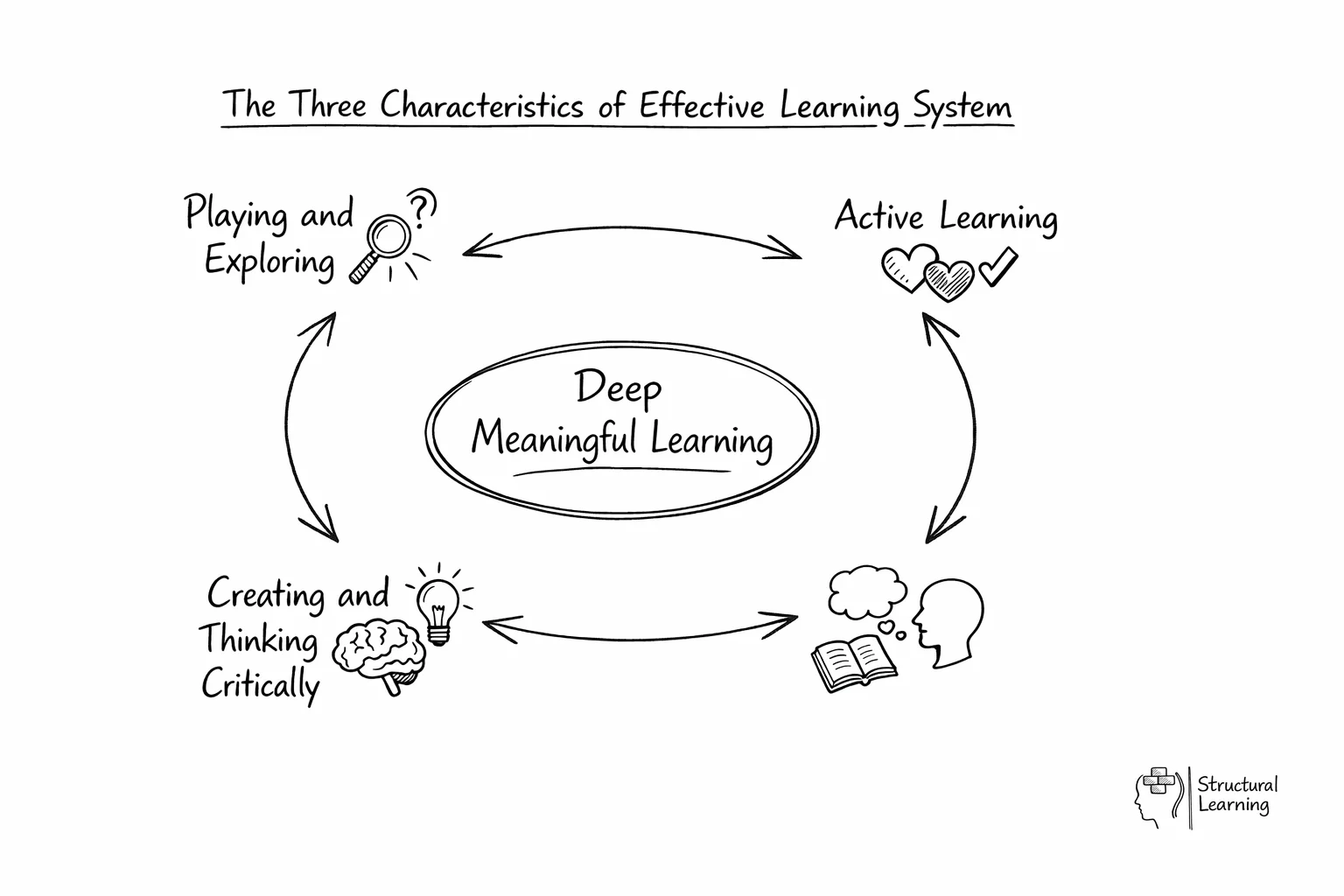
EYFS Characteristics of Effective Learning explain how children learn through playing and exploring, active learning, and creating and thinking critically.

Updated on
September 24, 2026
EYFS Characteristics of Effective Learning explain how children learn through playing and exploring, active learning, and creating and thinking critically.
Researchers (EYFS) found that effective learning has three parts. These parts show how learners engage and behave while learning. They also support success across all development areas.
The framework helps teachers understand *how* learners learn, not only *what* they learn. The term means a clear process for turning evidence into a classroom decision, not just a label.
Learning characteristics shape how learners think throughout education. When teachers nurture these traits, they often see clear changes. Learners become more willing to take risks and ask questions.
They also persevere, even when topics are tough. This shift helps them become active learners; Dweck (2006) links persistence to beliefs about learning, while Claxton (2002) and Hattie (2008) connect it to wider learner habits.
Teachers can build these traits into lesson plans. Instead of only teaching content, they can consider how each learner learns best. Open resources support exploration.
Guided dialogue keeps tasks within the learner's zone of proximal development, meaning the right level of support, as proposed by Vygotsky (1978). Learners test theories and reflect on thinking (Piaget, 1936). These methods shift classroom roles and make learners partners.
Targeted professional development helps teachers spot learning approaches. This understanding helps educators support learners better (Vygotsky, 1978). They can value different styles and make inclusive spaces where every learner can thrive (Bandura, 1977; Dweck, 2006).
The Characteristics of Effective Learning were added to the revised EYFS in 2012. The 2021 reforms kept the three characteristics but placed them under the statutory wording characteristics of effective teaching and learning. Reporting on them became an optional short comment in the EYFS Profile, rather than a required judgement (Department for Education, 2021). Downing (2021) argues that this rewording risked turning a rich learning-disposition framework into a narrower tick list, so teachers should keep the focus on how learners respond to challenge.
This characteristic captures children's natural drive to investigate and experience the world around them. Children who are playing and exploring show willingness to have a go, engage with new experiences, and use their senses to learn about materials and objects.
Three key aspects define this characteristic:
Children actively explore their environment and use their senses (Gopnik et al., 2001). Learners ask questions and show interests (Chouinard, 2007). They respond to new things with curiosity, not fear (Bowlby, 1969).
Playing with what they know: Children bring their existing knowledge and experiences into their play, representing their understanding through various media. They recreate experiences, take on roles, and make connections between things they have experienced.
Being willing to have a go: Children approach new activities and experiences with confidence. They are willing to try things without fear of failure. They start activities, look for challenge, and show resilience when things do not work at first.
Play-based learning links to effective learning. Research shows that learners learn best when they use materials actively, rather than passively (Wood & Attfield, 2005; Moyles, 2015). This active engagement builds knowledge (Piaget, 1967; Vygotsky, 1978).
Researchers have observed learners deeply engaged when actively learning. These learners show involvement, keep going, and feel pleased with success (Laevers, 1997; Pascal & Bertram, 2012). Engagement is key for active learning to occur (Katz & Chard, 2000).
Three aspects characterise active learning:
Being involved and concentrating: Children notice details and keep focus, even when there are distractions. They show deep involvement in activities. They become absorbed in what they are doing, return to activities over time, and show sustained thinking.
Researchers suggest supporting learners' persistence (Ericsson et al., 1993). When learners struggle, they use varied strategies (Dweck, 2006). They build resilience, handle frustration, and aim to reach goals (Duckworth et al., 2007).
They feel successful (Eccles et al., 1983). Learners show satisfaction when they reach goals and celebrate success. These accomplishments build confidence and positive learning identities (Bandura, 1977). Learners then see themselves as capable (Dweck, 2006).
This research shows that motivation matters. Intrinsic engagement means learners want to take part for their own reasons. This helps them understand subjects better, as they use both thinking and feelings to put effort into learning.
This characteristic encompasses the thinking processes that enable children to make connections, develop ideas, and solve problems. Children who are creating and thinking critically develop their own ideas, make links between concepts, and choose how to approach tasks.
Three aspects define this characteristic:
Having their own ideas: Children generate new ideas, find effective ways to do things, and think of possibilities beyond the obvious. They engage in imaginative play, create novel solutions, and express original thoughts.
Making links: Children notice patterns, connect new experiences to previous learning, and predict outcomes based on what they know. They categorise, sequence, and understand cause and effect relationships.
Choosing ways to do things: Children plan approaches, make decisions about methods, and review their strategies. They show Metacognitive awareness, adjusting their approaches based on Feedback.
Critical thinking helps learners judge information carefully (Ennis, 1993). Research shows that it supports reasoned judgements (Lipman, 2003). These independent thinking skills also support learner development (Paul & Elder, 2008).
Understanding these behaviours helps teachers see how each learner approaches their work. It shows where learners may need extra support (Pianta et al., 2012; Rimm-Kaufman et al., 2015). This recognition lets you plan effectively and address learner needs (Hamre, 2014; Jennings & Greenberg, 2009).
This deeper understanding allows teachers to provide more targeted and effective support (Pianta et al., 2008). By observing learning processes, teachers understand how learners tackle problems (Vygotsky, 1978). They can also see how learners react to difficulty and use knowledge in new situations (Rogoff, 2003).

Document key moments when learners show their strengths. A learner trying different maths strategies shows resilience (Carr, 2001). Brief observation notes record context, actions, and learning traits. Photo annotations and learning stories build detailed learning accounts (Clark, 2004; Moss, 2006).
Observation schedules help teachers focus on each learner in different settings. Many teachers use rotating focus groups for targeted observation. This makes the process easier to manage.
Playgrounds and group work show real learning behaviours (Elias & Haynes, 2008). Learners feel less restricted in these areas (Sylva et al, 2004). This allows natural learning styles to emerge, according to Moyles (2010).
To support these characteristics well, teachers need to plan with care. This means thinking about the learning space, the resources and the adult interactions.
Physical spaces can invite or restrict learning. Resources should be accessible, varied and open so learners can investigate, build and represent ideas. Watch for false ceilings: a writing area with only worksheets, or a construction area with too few loose parts, can make children look less capable than they are.
Consider:
Adult interaction shapes how learners engage (Siraj-Blatchford et al, 2002). Think about how your responses can encourage thinking (Sylva et al, 2004). Shared thinking is a powerful part of learning (Pramling Samuelsson & Fleer, 2009).
Effective interactions:
These characteristics need time to grow. Learners need time for unhurried investigation through play (Bruce, 2021). Active learning needs learners to stay engaged (Carr, 2017). Critical thinking needs time for ideas to develop (James & Pollard, 2011).
Busy timetables and sudden changes can make it harder for learners to stay involved. Where possible, plan longer activities without interruption (Hughes, 2011). Let learners finish meaningful tasks before moving on, especially during problem-solving or imaginative play.
The EYFS framework names these characteristics for early years, but the learning behaviours continue into Key Stage 1 and Key Stage 2. The risk is a Year 1 cliff edge: continuous provision stops, adult-led tasks expand, and learners who still need talk, movement and choice can look inattentive rather than under-supported.
Leaders can plan a transition curriculum that keeps the same learning behaviours while increasing subject precision. In phonics, for example, Year 1 learners can practise a taught grapheme, choose objects that contain the sound, sort them, and explain the rule. The teacher still uses explicit modelling, but the task keeps playing and exploring, active learning, and creating and thinking critically in view.
The Education Endowment Foundation (2023) reports that early years self-regulation strategies show promise, but the evidence base is still limited. Use short routines, visual plans and paired talk first. These supports help learners hold their attention before you ask them to work alone for longer.
Teachers can use developmental knowledge to target learning more closely. Active Learning looks different at different ages. Reception learners handle objects to grasp maths.
Year 5 learners may show Active Learning through research (Piaget, 1936; Vygotsky, 1978). The underlying drive stays the same (Bruner, 1966), though the way learners show it changes.
Scaffolding learning suits different ages. Early years teachers can use open questions in play to boost critical thinking. Primary teachers can help learners reflect, consider ideas, and explain their thoughts (Vygotsky, 1978; Wood et al, 1976).
Professional development helps teachers spot different learner traits. Training in observation also helps them see why learners may lose interest. Important behaviour can show that a learner needs movement, exploration or a clearer challenge. Teachers can then guide exploration instead of stopping it.
Assess learning through repeated observation, not final products alone. Carr (2001) showed that learning stories can capture learner attitudes, collaboration and persistence. Use photos, short notes and work samples that show the process, such as a learner changing a bridge design after it collapses. For related guidance, see early years creative play.
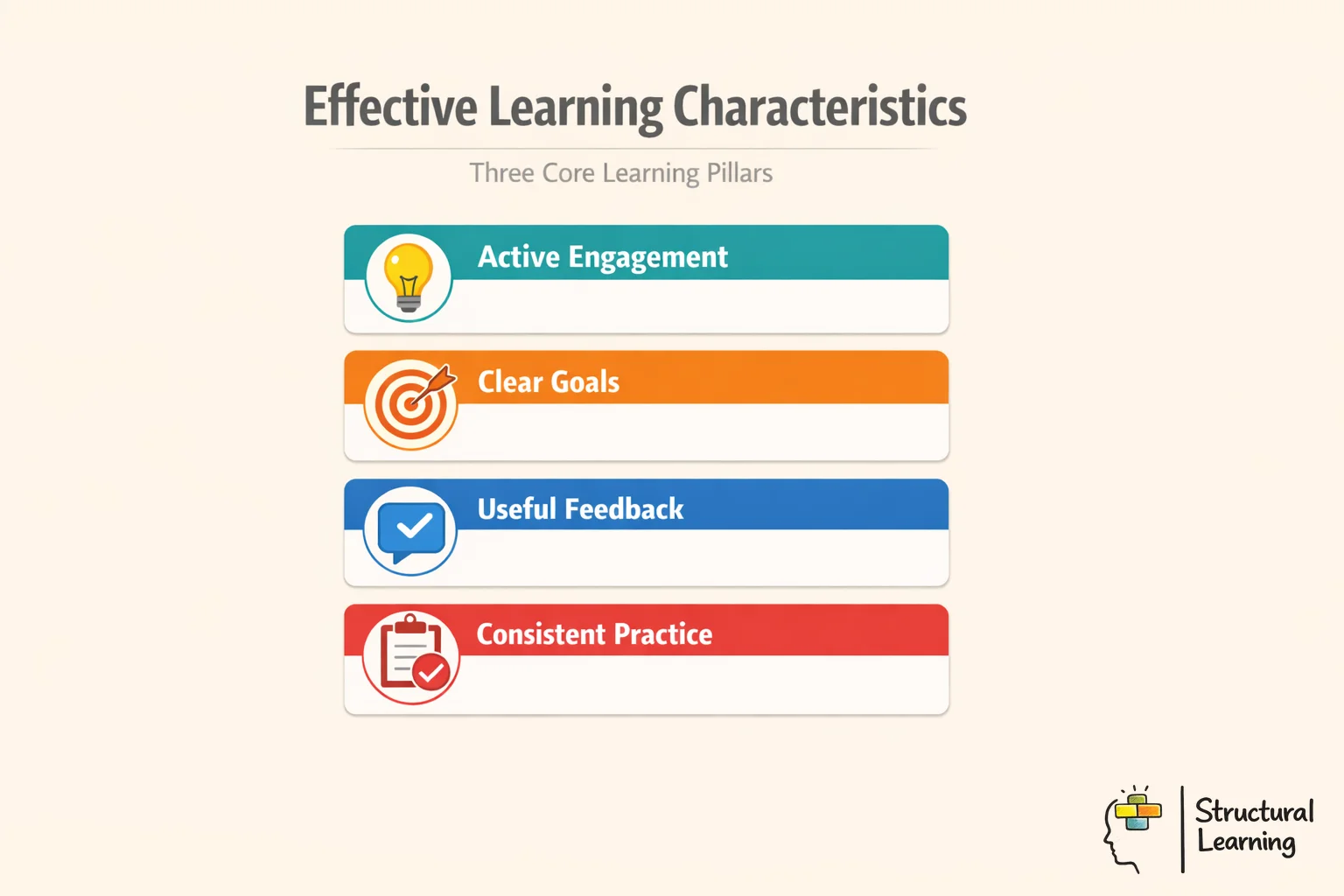
Observation is useful, but it is never fully neutral. A quiet autistic learner who sorts shells again and again may be testing pattern, order and predictability. They may not be disengaged. Milton's (2012) double empathy account warns us not to read all play through a neurotypical lens.
Moderation matters because rubrics can reward what is easy to see. This might be confidence, compliance or talk, rather than cognitive engagement, which means real thinking. Staff should agree examples of playing and exploring, active learning, and creating and thinking critically. They should then compare notes across adults before using evidence for reports (Black & Wiliam, 1998).
School change works best when it is narrow and observable. Start by focusing on one or two learning characteristics, such as active learning or creating and thinking critically. Give teachers and learners time to adapt before adding more, so classroom routines stay stable.
Action plans work best in six-week cycles. First, teachers observe current practice and assess what is happening. This gives a clear starting point.
Next, staff plan professional development and work together on lessons. In week one, they observe learner behaviours. In weeks two and three, they try formative assessment routines drawn from Wiliam (2011), so evidence, rather than assumptions, guides choices.
Researchers like Vygotsky (1978) see documentation and reflection as key. Weekly reviews let teachers tweak their approaches using learner results. Track what works and what needs changes to build resources. Regular teamwork with colleagues boosts success and helps problem-solving.
Teachers face barriers to building strong learner habits, such as time and workload. Wiliam's formative assessment work helps teachers see these habits as part of responsive teaching, not an extra programme. Building learner habits should save time by making attention, persistence and reflection more visible.
Dweck's mindset work helps explain learner and colleague resistance. Critical thinking can be hard if learners expect passive lessons. Start small: use a two-minute reflection, then ask learners to explain the strategy they used during problem-solving.
Teachers must collaborate and plan professional development for lasting impact. Learning communities allow colleagues to share successes and challenges in your school. Use observation and learner feedback to evidence better results (Wiliam, 2011). This shows leaders that focusing on learning skills boosts progress (Hattie, 2009).
The characteristics of effective teaching and learning help teachers see how learners approach tasks. They cover playing and exploring, active learning, and creating and thinking critically. Use them when you design spaces where learners build knowledge, practise skills and develop the attitudes they need to succeed.
We must shift focus to *how* learners learn, not just *what* they know. Celebrate learning alongside results; let learners reflect on their thinking. Value mistakes as learning chances, creating a positive classroom. "Learning journals" can document thinking; "investigation areas" encourage exploration. Reflection circles let learners share problem-solving (Johnston, 2012).
Develop confident, resilient, and creative learners, (Craft, 2002). This groundwork bolsters future learning and later success, (Dweck, 2006). Teachers build those traits, improving both grades and life skills, (Claxton, 2002). Nurturing them provides tools learners need to shape their world.
Understanding learning needs means studying theory and research (Bransford et al., 2000). Networks, like social media, help teachers share ideas. Action research lets teachers improve their practice (Cochran-Smith & Lytle, 1993). Documenting these projects builds knowledge (Kemmis & McTaggart, 1988).
Use observation tools to monitor how learners show learning traits (Claxton, 2002). Discuss videos with colleagues; see interactions boosting learning (Hattie, 2009). Peer coaching provides secure opportunities to test new methods. Keep practice informed by reading journals and research (Coe et al., 2014).
Working with theory helps teachers grow, as research shows (Kennedy, 2014). Conferences and research projects help teachers understand learners. Further qualifications also deepen understanding of learning across age groups (Cordingley et al., 2015).
For effective teaching, plan lessons that meet learners' needs. Notice each learner's style (Piaget, 1936). Practitioners can then create engaging learning environments that connect learners with the curriculum (Vygotsky, 1978).
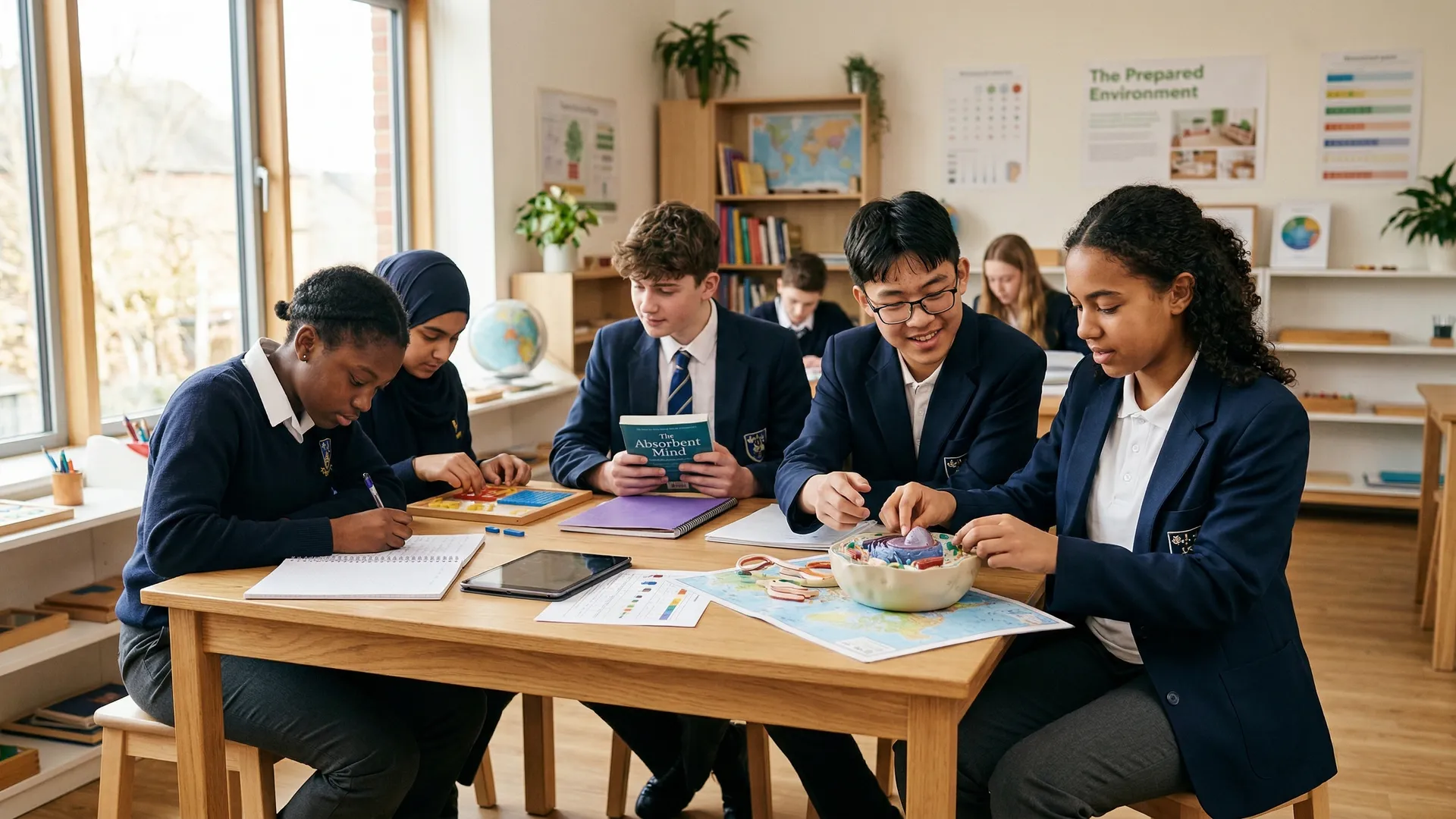
Create a classroom that invites learners to explore. Offer resources they can reach and use, so they can choose independently. A creative area with materials helps learners develop skills, echoing Montessori's (1912) emphasis on prepared environments and purposeful choice.
Rotate resources often to keep interest high. (Fisher, 2014; Dweck, 2006).
Observation helps teachers support learners well. Note what learners achieve and how they approach tasks.
For example, a learner may return to a puzzle, showing persistence (Piaget, 1936). You may also record how a learner changes a block structure after it falls, showing critical thinking (Vygotsky, 1978). These observations guide your support (Bruner, 1966; Wood, 1988).
Your interactions with children directly influence their learning characteristics. Instead of immediately solving problems for children, use open-ended questions that encourage thinking: "What might happen if...?" or "How could we find out?" When a child struggles with a task, acknowledge their effort before offering minimal support, perhaps suggesting they observe a peer's approach or providing a subtle hint that maintains the challenge.
Planning should give children chances to make choices, take risks, and learn from mistakes. Set up investigations where the answer is not fixed, such as testing which materials float or sink. These tasks support all three characteristics as children try ideas, keep going when surprised, and build their own theories about why things happen.
The EYFS statutory framework asks practitioners to look at how children learn, as well as what they learn. In current Development Matters guidance, the three characteristics are playing and exploring, active learning, and creating and thinking critically (Department for Education, 2021). Birth To 5 Matters, West Sussex County Council and Ambition Institute use the same broad pattern of engagement, motivation and thinking.
Do not confuse this framework with generic lists such as the 5 C's of effective teaching or the 5 principles of effective learning. Those lists describe wider teaching qualities. CoEL is narrower: it helps teachers observe how a learner investigates, persists, links ideas and chooses strategies during real classroom activity.
Use learning observations in daily assessment, for example, noting persistence when a learner balances blocks or changes a bridge after it collapses. If learners avoid challenge, break the task down and provide a prompt, model or worked example. Record what changed after your support, not just whether the learner completed the task.
The EYFS Profile supports transition into Year 1. Teachers may choose to add a short commentary on the three characteristics so the Year 1 teacher can see how the learner approaches new tasks, not just which early learning goals are secure.
Playing and exploring is the foundation for how young children engage with their world. It includes finding out, exploring, and being willing to 'have a go'. This characteristic builds on children's natural curiosity and their wish to investigate through all their senses. It also lays important groundwork for Deeper learning.
Play shows three key actions: learners find out, use what they know and try new things. This does not mean leaving novices to discover everything alone. Cognitive load research warns that minimal guidance can overload learners who do not yet have secure knowledge (Kirschner et al., 2006). In the water tray, model the words float, sink and predict first, then let learners test funnels, lids and tubes so exploration has enough structure to produce thinking.
Supporting risk-taking and resilience requires thoughtful adult responses. When a child hesitates at a new activity, rather than immediately showing them how, try commenting on what you notice: "I can see you're looking at the balancing beam. Some children like to hold my hand first." This acknowledges their uncertainty whilst keeping the decision in their hands, building confidence alongside skill.
Open-ended resources play a very important role. Research by Nicholson et al. (2018) shows that loose parts play increases creative thinking and problem-solving.
Stock your setting with materials that have many uses. Cardboard tubes, fabric pieces and natural materials invite richer exploration than single-purpose toys. Record these explorations through photographs and observations, with a focus on the process rather than the end product. This evidence helps you plan next steps that build on children's current interests whilst gently extending their thinking.
Characteristics of Effective Learning can be misused when teachers treat observation as a neutral measure of inner engagement. Young children show thinking through movement, silence, repetition and talk, so a rubric may reward confident speech or compliance rather than cognition. Assessment research warns that early childhood measures need validity and reliability evidence before they are used for decisions about children (National Research Council, 2008).
A second critique concerns guidance. The framework is often presented as child-led, but Kirschner, Sweller and Clark (2006) argue that minimal guidance can overload novices. Chaiklin (2003) also warns that Vygotsky's ZPD is often reduced to any supported task, when it was a developmental concept.
There are cultural and neurodiversity limits. Montessori (1912) wrote from a specific historical context, so modern settings need to adapt materials for culture, disability and language. Rogoff (2003) showed that learning routines vary across communities, so independence, questioning and risk-taking should not be read through one cultural script. Milton's (2012) double empathy account also cautions against interpreting autistic play, such as sorting or repetition, as weak engagement.
Finally, mindset and resilience claims need restraint. Dweck's theory is useful, but meta-analytic work finds that growth mindset interventions have small and context-dependent effects (Sisk et al., 2018). The framework remains valuable when teachers use it as a reflective planning tool, not a label for children.
Dweck, C. (2006). Mindset: The new psychology of success.
Montessori, M. (1912). The Montessori method.
Vygotsky, L. (1978). Mind in society: The development of higher psychological processes.
Wiliam, D. (2011). Embedded formative assessment.
These studies provide deeper insights into the characteristics of effective learning and how they shape early years and primary practice.
Effective Pedagogy in the Early Years 661 citations
Siraj-Blatchford, I. et al. (2002)
The EPPE project (Effective Provision of Pre-School Education) showed how young learners learn best. Researchers found shared thinking is key (Sylva et al., 2004). High-quality settings mix play and adult guidance, they stated. This research informed the EYFS (Siraj-Blatchford et al., 2002; Pascal et al., 1998).
Intrinsic Motivation and Self-Determination in Human Behaviour 24,000+ citations
Deci, E. L. and Ryan, R. M. (1985)
Deci and Ryan show autonomy, competence, and relatedness boost learner motivation. These factors underpin active learning (Deci & Ryan). Learners with genuine choice and suitable challenges work harder (Deci & Ryan). This persistence builds stronger understanding (Deci & Ryan).
Mindset: The New Psychology of Success 6,082 citations
Dweck, C. S. (2006)
Dweck's research on fixed versus
These peer-reviewed studies provide the evidence base for the approaches discussed in this article.
Effective self-regulated learning interventions require key features. Research by Dignath and Büttner (2008) and Dignath et al. (2008) highlights this. Veenman et al. (2006) stress the importance of metacognitive skills for the learner. These studies help teachers improve maths learning, as Zimmerman's (2000) work confirms.
Ying Wang & R. Sperling (2020)
Research on self-regulated learning interventions in maths shows key features help learners manage their studies and improve results. Teachers can use these features to support independent, resilient learners, as per the framework (Pellegrino et al, 2012). This aligns with encouraging active learner engagement and motivation.
A Review of the Literature on Social and Emotional Learning for Students Ages 3-8: Characteristics of Effective Social and Emotional Learning Programs (Part 1 of 4). REL 2017-245. View study ↗ 39 citations
Rosemarie O'Conner et al. (2017)
This review looks at effective social and emotional learning (SEL) for young learners. Teachers can use these characteristics to help personal, social, and emotional growth. This supports the 'Characteristics of Effective Learning' framework. This includes playing, exploring, creating, and critical thinking.
Makerspaces and the Characteristics of Effective Learning in the early years 5 citations
L. Kay & Alison Buxton (2023)
Makerspaces support early years 'Characteristics of Effective Learning'. Hands-on learning helps learners be creative, think critically, and collaborate (Bruce & Chiu, 2020). This boosts active engagement and exploration (Bevan, Ryoo & Shea, 2014).
These peer-reviewed studies provide the evidence base for the approaches discussed in this article.
School effectiveness research identifies key traits (Creemers & Kyriakides, 2008). Structures help learners succeed (Reynolds et al., 2014). Leadership focuses on learning gains. Teachers collaborate to improve practice (Stoll et al., 2006). They use data to shape instruction (Black & Wiliam, 1998).
P. Sammons (1997)
Sammons' review identifies key traits of effective schools. UK teachers can use this framework to understand school environments. The research helps teachers see how school factors help learning.
Parent Involvement in the Getting Ready for School Intervention Is Associated With Changes in School Readiness Skills 61 citations
M. Marti et al. (2018)
Marti et al. highlight parents' key role in school readiness programmes. Teachers and parents must work together to build literacy, maths, and self-regulation skills. These skills, says Marti et al., form the basis for effective learning.
Effective self-regulated learning interventions help learners in maths. Winne and Hadwin (1998) showed their importance. Research by Dignath and Büttner (2008) confirms this. Stoeger and Ziegler (2008) found similar benefits.
Ying Wang & R. Sperling (2020)
Wang and Sperling's (date) review shows what helps learners self-regulate in maths. Teachers can use this for Characteristics of Effective Learning. This helps them support learners to regulate themselves, improving grades and independent study.
Assessment watches and records learner behaviour, not just outcomes. Teachers use journals, photos and stories to show how learners tackle tasks (Vygotsky, 1978). This shows persistence and thinking. Evidence helps teachers plan and find learner strengths and needs (Black & Wiliam, 1998).
Open-ended materials, like blocks, fabric, tubes and natural objects, work well because learners can use them in many ways. Digital tools can also support active learning when they make thinking visible, such as photographing a tower sequence, recording an explanation or using a tablet timer for a self-chosen investigation. AI tools should stay adult-mediated in early years: use them for teacher planning, image prompts or vocabulary ideas, not as a substitute for talk, play and feedback.
Parents build learner skills by asking open questions. They should allow exploration and mistakes, praising effort above success. Cooking, gardening, or building offer chances to play and learn. Follow the learner's interests and avoid quick answers (Gottman, 1997; Dweck, 2006; Hattie, 2008).
Teachers benefit from professional development focussed on observation skills,
Persistence lets learners tackle hard sums (Claxton, 2002). Creative thinking aids story writing and understanding (Craft, 2000). These traits boost learning; they help learners engage with all subjects (Dweck, 2006). Learners then approach problems across the curriculum with better skills.