Teaching Assistant Training: Essential Courses and Professional DevelopmentSixth form students in bottle green cardigans engaging in group work with a teaching assistant in a modern study area

Updated on  

January 30, 2026

Teaching Assistant Training: Essential Courses and Professional Development

|

April 17, 2023

Discover essential training courses for teaching assistants to enhance skills in supporting student learning and managing classroom behaviour effectively.


Course Enquiry
Copy citation

Main, P (2023, April 17). Teaching Assistant Courses. Retrieved from https://www.structural-learning.com/post/teaching-assistant-courses

What are the best teaching assistant courses?

Teaching assistants play a vital role in supporting student learning through effective teaching strategies, yet research suggests their effectiveness depends heavily on training and deployment. Well-trained TAs who work strategically can have significant positive impact, particularly when supporting students with additional needs including dyspraxia assessments including autism support through strategies like peer-supported inclusion. This guide explores the training options available for teaching assistants, from initial qualifications to specialist SEND training, and considers how professional development can maximise TA impact in schools.

Key Takeaways

  1. Beyond Basic Support: Discover why strategic TA deployment beats traditional support models and how proper training transforms classroom impact for SEND pupils
  2. The Qualification Maze: Navigate Level 2 vs Level 3 qualifications and uncover which specialist SEND courses actually boost TA effectiveness in your school
  3. Online vs Traditional Training: Learn why flexibility matters less than accreditation when choosing TA courses and which providers deliver real classroom-ready skills
  4. From Helper to Professional: Transform TAs from classroom assistants into strategic learning partners through targeted CPD that addresses your school's specific needs

If you're looking to become a teaching assistant but don't know where to start, you're in the right place. In this article, we'll explore the best teaching assistant courses that can help you gain the necessary skills and knowledge to succeed in this field.

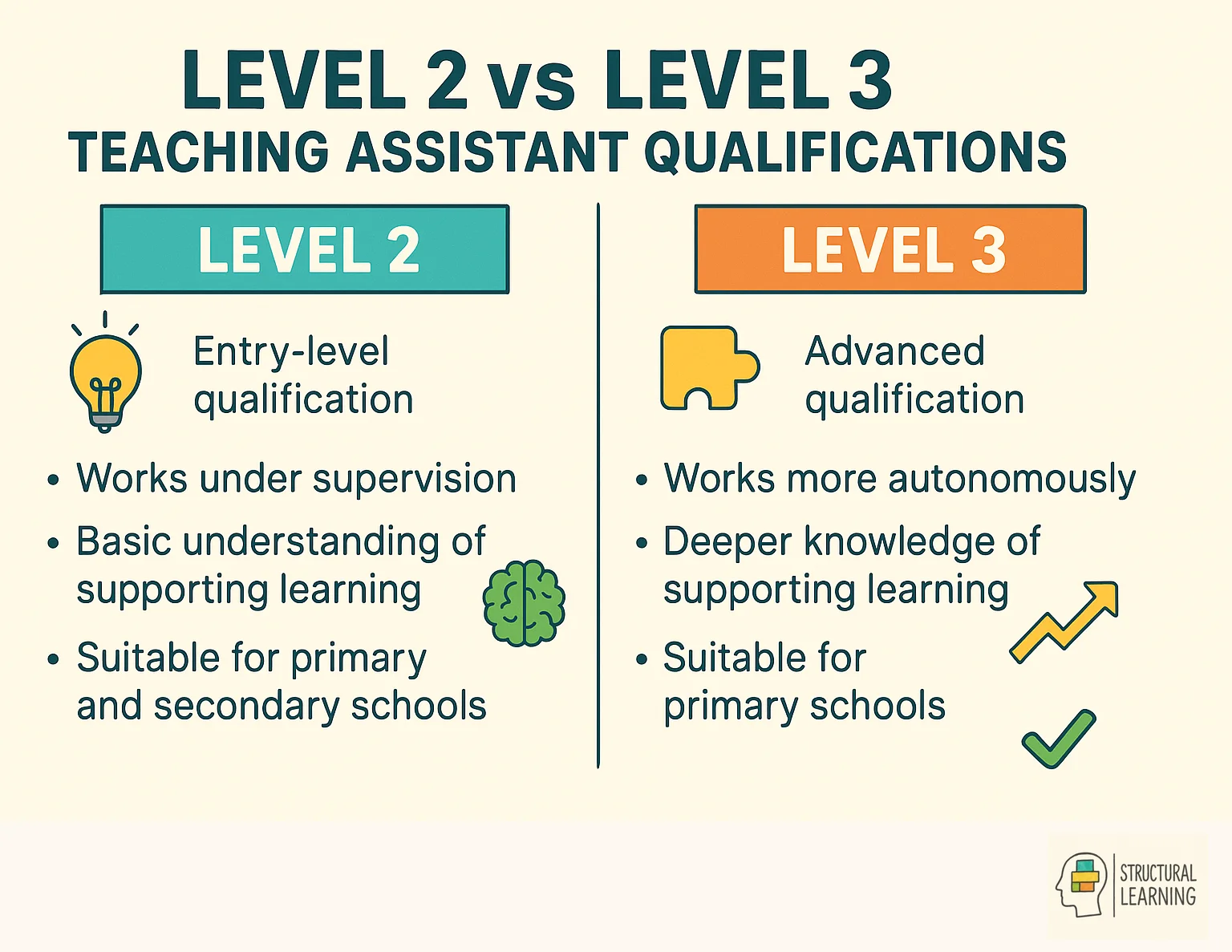
Comparison chart showing Level 2 vs Level 3 teaching assistant qualifications and their key differences
Level 2 vs Level 3 Teaching Assistant Qualifications

Whether you're a beginner or an experienced professional, these courses will help you enhance your teaching skills, improve your communication abilities, and prepare you for a successful career as a teaching assistant.

To become a qualified teaching assistant, choose courses that are recognised and accredited by relevant organisations. Look for courses that cover topics such as child development, classroom management, and special education. The best teaching assistant courses should also provide opportunities for practical experience, such as internships or placements in schools. By completing these courses, you'll gain the knowledge and skills needed to become a confident and competent teaching assistant.

If you're looking for flexibility in your studies, online teaching assistant courses may be a good option for you. Many reputable institutions offer online courses that cover the same topics as traditional in-person courses. Online teaching assistant courses can provide you with the opportunity to study at your own pace and on your own schedule, which can be particularly helpful for those who have other commitments. However, ensure that the online courses you choose are accredited and recognised by relevant organisations to ensure that you receive a quality education.

Why are teaching assistants so important?

Teaching assistants play a crucial role in the school setting, providing support to teachers and helping to ensure that students receive the best possible education. In addition to their knowledge and skills, teaching assistants bring a level of dedication and enthusiasm to their work that can inspire students to learn and grow.

They work closely with teachers to develop lesson planning, provide one-on-one support to students, and help to create a positive and inclusive classroom environment. By completing recognised and accredited teaching assistant courses, you'll gain the skills and experience needed to excel in this important role and make a real difference in the lives of students in the school setting.

In addition to their day-to-day responsibilities, teaching assistants also play an important role in adhering to school policies and procedures. They may be responsible for ensuring that students are following school rules, reporting any concerns or issues to their supervising teacher or school administration, and helping to maintain a safe and positive learning environment.

By taking courses that cover school policies and procedures, teaching assistants can better understand their role in upholding these important guidelines and contribute to a successful and effective school community.

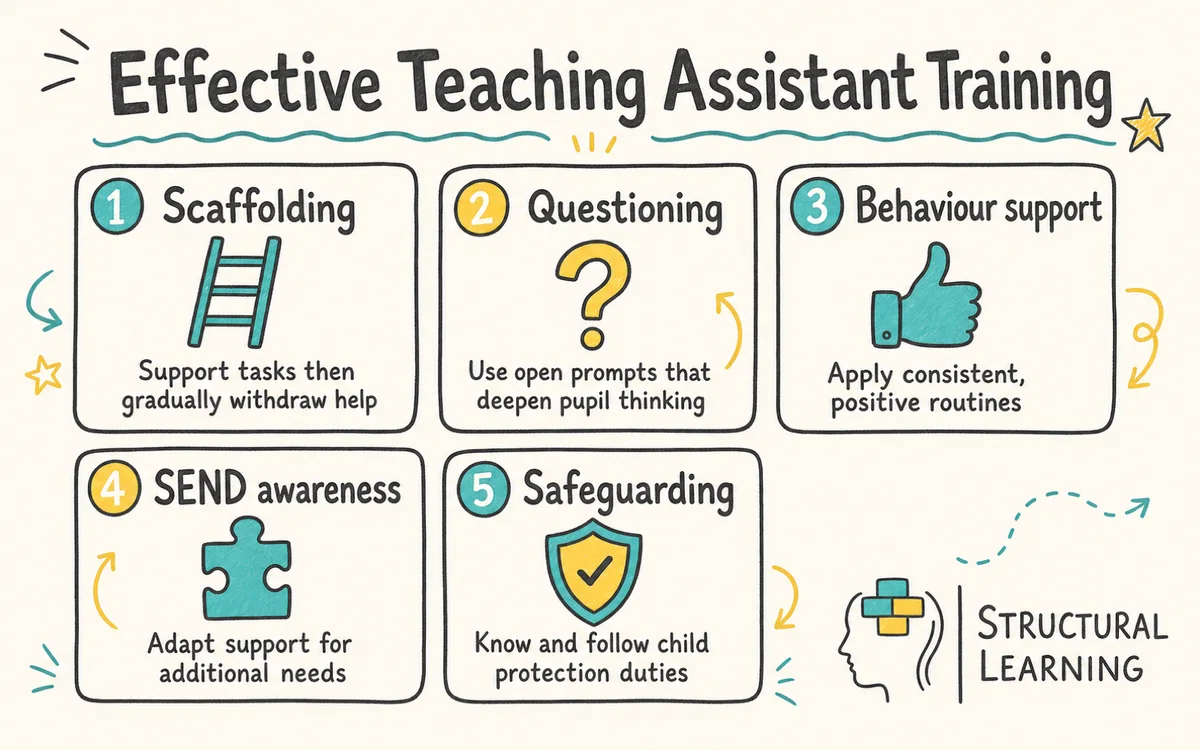
In addition to understanding school policies and procedures, teaching assistants also play a crucial role in facilitating learning activities in the classroom. They work closely with teachers to support students in their academic and personal growth, and can even lead small group activities or one-on-one instruction.

That's why for teaching assistants to take courses that cover effective teaching methods and strategies, as well as topics like behaviour management and student engagement. By honing their skills and knowledge through these courses, teaching assistants can become even more valuable members of the school community.

To become a teaching assistant in the United Kingdom, there are various qualifications available including vocational qualifications such as CACHE qualifications or QLS Level teaching assistant courses.

A regular teaching assistant may need a broader understanding of the role and job description, and transferable skills such as communication and patience. In addition, completion of a teaching assistant diploma course or voluntary placement can also provide valuable experience and training. Qualifications are important to ensure that teaching assistants have the necessary skills to support the teacher in the classroom, and provide effective support to students.

Teaching assistant training

Do teaching assistants need qualifications?

It depends on the school or institution they are working for. Some schools may require teaching assistants to have certain qualifications or certifications, while others may provide on-the-job training. However, having relevant qualifications can certainly increase a teaching assistant's chances of getting hired and can also help them to perform their duties more effectively.

Relevant qualifications for teaching assistants may include a Level 2 or Level 3 Certificate in Supporting Teaching and Learning in Schools, a CACHE Level 3 Diploma in Childcare and Education (Early Years Educator), or a degree in education or a related field. These qualifications can provide teaching assistants with the knowledge and skills they need to support students' learning and development, manage classroom behaviour, and work effectively as part of a team.

What skills do I need to be a teaching assistant?

Being a teaching assistant requires a unique set of skills that go beyond simply helping out in the classroom. It's about creating an environment where every child can thrive, and it demands a blend of technical knowledge and interpersonal abilities. Here are some essential skills every successful teaching assistant should possess:

  1. Communication Skills: Clear and effective communication is key. This includes verbal and written communication, as well as the ability to actively listen to students, teachers, and parents.
  2. Patience and Empathy: Every student learns at their own pace. Patience and empathy are vital for supporting students who may be struggling or have special educational needs.
  3. Organisational Skills: Managing resources, assisting with lesson preparation, and keeping track of student progress all require strong organisational skills.
  4. Adaptability: The ability to adapt to different classroom environments, teaching styles, and student needs is crucial. Flexibility is key in this role.
  5. Teamwork: Teaching assistants work closely with teachers and other staff members. Being a team player and collaborating effectively are essential.
  6. Knowledge of Child Development: Understanding the different stages of child development can help teaching assistants provide appropriate support to students of different ages and abilities.
  7. Behaviour Management: Assisting with maintaining a positive and safe classroom environment requires skills in behaviour management.

Maximising the Impact of Teaching Assistants Through Professional Development

The journey of a teaching assistant doesn't end with initial qualifications. Continuous professional development (CPD) is essential for TAs to stay updated with the latest teaching strategies, understand evolving educational policies, and refine their skills to meet the diverse needs of students. Targeted CPD can transform a good TA into an exceptional one, significantly enhancing their impact in the classroom.

Effective CPD for teaching assistants should be tailored to the specific needs of the school and the students they support. This might include training on specific learning difficulties like dyslexia or autism, behaviour management techniques, or strategies for supporting students with English as an Additional Language (EAL). Schools should also encourage TAs to pursue further qualifications, such as higher-level diplomas or specialist courses, to deepen their expertise and broaden their career opportunities.

Conclusion

Investing in the training and professional development of teaching assistants is a strategic move that can yield significant benefits for students, teachers, and the school as a whole. Well-trained TAs are better equipped to provide effective support to students, freeing up teachers to focus on planning and delivering high-quality instruction. By embracing a culture of continuous learning and development, schools can helps TAs to become valuable learning partners who play a key role in helping all students achieve their full potential.

Ultimately, the best teaching assistant courses and professional development opportunities are those that equip TAs with the knowledge, skills, and confidence to make a real difference in the lives of students. By prioritising training and ongoing support, schools can unlock the full potential of their teaching assistants and create a more inclusive and effective learning environment for all.

Further Reading

For those interested in delving deeper into the research and best practices surrounding teaching assistant training and effectiveness, here are some recommended resources:

  1. Alborz, A., Farrell, P., Dyson, A., & Howes, A. (2009). The impact of adult support staff on pupils and mainstream schools. *Institute of Education, University of London*. This report examines the impact of teaching assistants on pupil outcomes and school functioning.
  2. Sharples, J., Webster, R., & Blatchford, P. (2015). Making Best Use of Teaching Assistants: Guidance Report. *Education Endowment Foundation*. This guidance report provides practical recommendations for schools on how to effectively deploy and train teaching assistants.
  3. Webster, R., Blatchford, P., Bassett, P., Brown, P., Martin, C., & Russell, A. (2010). Double standards and unmet needs: The employment experiences and deployment of teaching assistants in English schools. *British Educational Research Journal, 36*(4), 649-671.
  4. Education Endowment Foundation (EEF). (n.d.). *Teaching Assistant Interventions*. Retrieved from https://educationendowmentfoundation.org.uk/education-evidence/teaching-learning-toolkit/teaching-assistant-interventions. A summary of research findings on the impact of teaching assistant interventions.
Loading audit...

What are the best teaching assistant courses?

Teaching assistants play a vital role in supporting student learning through effective teaching strategies, yet research suggests their effectiveness depends heavily on training and deployment. Well-trained TAs who work strategically can have significant positive impact, particularly when supporting students with additional needs including dyspraxia assessments including autism support through strategies like peer-supported inclusion. This guide explores the training options available for teaching assistants, from initial qualifications to specialist SEND training, and considers how professional development can maximise TA impact in schools.

Key Takeaways

  1. Beyond Basic Support: Discover why strategic TA deployment beats traditional support models and how proper training transforms classroom impact for SEND pupils
  2. The Qualification Maze: Navigate Level 2 vs Level 3 qualifications and uncover which specialist SEND courses actually boost TA effectiveness in your school
  3. Online vs Traditional Training: Learn why flexibility matters less than accreditation when choosing TA courses and which providers deliver real classroom-ready skills
  4. From Helper to Professional: Transform TAs from classroom assistants into strategic learning partners through targeted CPD that addresses your school's specific needs

If you're looking to become a teaching assistant but don't know where to start, you're in the right place. In this article, we'll explore the best teaching assistant courses that can help you gain the necessary skills and knowledge to succeed in this field.

Comparison chart showing Level 2 vs Level 3 teaching assistant qualifications and their key differences
Level 2 vs Level 3 Teaching Assistant Qualifications

Whether you're a beginner or an experienced professional, these courses will help you enhance your teaching skills, improve your communication abilities, and prepare you for a successful career as a teaching assistant.

To become a qualified teaching assistant, choose courses that are recognised and accredited by relevant organisations. Look for courses that cover topics such as child development, classroom management, and special education. The best teaching assistant courses should also provide opportunities for practical experience, such as internships or placements in schools. By completing these courses, you'll gain the knowledge and skills needed to become a confident and competent teaching assistant.

If you're looking for flexibility in your studies, online teaching assistant courses may be a good option for you. Many reputable institutions offer online courses that cover the same topics as traditional in-person courses. Online teaching assistant courses can provide you with the opportunity to study at your own pace and on your own schedule, which can be particularly helpful for those who have other commitments. However, ensure that the online courses you choose are accredited and recognised by relevant organisations to ensure that you receive a quality education.

Why are teaching assistants so important?

Teaching assistants play a crucial role in the school setting, providing support to teachers and helping to ensure that students receive the best possible education. In addition to their knowledge and skills, teaching assistants bring a level of dedication and enthusiasm to their work that can inspire students to learn and grow.

They work closely with teachers to develop lesson planning, provide one-on-one support to students, and help to create a positive and inclusive classroom environment. By completing recognised and accredited teaching assistant courses, you'll gain the skills and experience needed to excel in this important role and make a real difference in the lives of students in the school setting.

In addition to their day-to-day responsibilities, teaching assistants also play an important role in adhering to school policies and procedures. They may be responsible for ensuring that students are following school rules, reporting any concerns or issues to their supervising teacher or school administration, and helping to maintain a safe and positive learning environment.

By taking courses that cover school policies and procedures, teaching assistants can better understand their role in upholding these important guidelines and contribute to a successful and effective school community.

In addition to understanding school policies and procedures, teaching assistants also play a crucial role in facilitating learning activities in the classroom. They work closely with teachers to support students in their academic and personal growth, and can even lead small group activities or one-on-one instruction.

That's why for teaching assistants to take courses that cover effective teaching methods and strategies, as well as topics like behaviour management and student engagement. By honing their skills and knowledge through these courses, teaching assistants can become even more valuable members of the school community.

To become a teaching assistant in the United Kingdom, there are various qualifications available including vocational qualifications such as CACHE qualifications or QLS Level teaching assistant courses.

A regular teaching assistant may need a broader understanding of the role and job description, and transferable skills such as communication and patience. In addition, completion of a teaching assistant diploma course or voluntary placement can also provide valuable experience and training. Qualifications are important to ensure that teaching assistants have the necessary skills to support the teacher in the classroom, and provide effective support to students.

Teaching assistant training

Do teaching assistants need qualifications?

It depends on the school or institution they are working for. Some schools may require teaching assistants to have certain qualifications or certifications, while others may provide on-the-job training. However, having relevant qualifications can certainly increase a teaching assistant's chances of getting hired and can also help them to perform their duties more effectively.

Relevant qualifications for teaching assistants may include a Level 2 or Level 3 Certificate in Supporting Teaching and Learning in Schools, a CACHE Level 3 Diploma in Childcare and Education (Early Years Educator), or a degree in education or a related field. These qualifications can provide teaching assistants with the knowledge and skills they need to support students' learning and development, manage classroom behaviour, and work effectively as part of a team.

What skills do I need to be a teaching assistant?

Being a teaching assistant requires a unique set of skills that go beyond simply helping out in the classroom. It's about creating an environment where every child can thrive, and it demands a blend of technical knowledge and interpersonal abilities. Here are some essential skills every successful teaching assistant should possess:

  1. Communication Skills: Clear and effective communication is key. This includes verbal and written communication, as well as the ability to actively listen to students, teachers, and parents.
  2. Patience and Empathy: Every student learns at their own pace. Patience and empathy are vital for supporting students who may be struggling or have special educational needs.
  3. Organisational Skills: Managing resources, assisting with lesson preparation, and keeping track of student progress all require strong organisational skills.
  4. Adaptability: The ability to adapt to different classroom environments, teaching styles, and student needs is crucial. Flexibility is key in this role.
  5. Teamwork: Teaching assistants work closely with teachers and other staff members. Being a team player and collaborating effectively are essential.
  6. Knowledge of Child Development: Understanding the different stages of child development can help teaching assistants provide appropriate support to students of different ages and abilities.
  7. Behaviour Management: Assisting with maintaining a positive and safe classroom environment requires skills in behaviour management.

Maximising the Impact of Teaching Assistants Through Professional Development

The journey of a teaching assistant doesn't end with initial qualifications. Continuous professional development (CPD) is essential for TAs to stay updated with the latest teaching strategies, understand evolving educational policies, and refine their skills to meet the diverse needs of students. Targeted CPD can transform a good TA into an exceptional one, significantly enhancing their impact in the classroom.

Effective CPD for teaching assistants should be tailored to the specific needs of the school and the students they support. This might include training on specific learning difficulties like dyslexia or autism, behaviour management techniques, or strategies for supporting students with English as an Additional Language (EAL). Schools should also encourage TAs to pursue further qualifications, such as higher-level diplomas or specialist courses, to deepen their expertise and broaden their career opportunities.

Conclusion

Investing in the training and professional development of teaching assistants is a strategic move that can yield significant benefits for students, teachers, and the school as a whole. Well-trained TAs are better equipped to provide effective support to students, freeing up teachers to focus on planning and delivering high-quality instruction. By embracing a culture of continuous learning and development, schools can helps TAs to become valuable learning partners who play a key role in helping all students achieve their full potential.

Ultimately, the best teaching assistant courses and professional development opportunities are those that equip TAs with the knowledge, skills, and confidence to make a real difference in the lives of students. By prioritising training and ongoing support, schools can unlock the full potential of their teaching assistants and create a more inclusive and effective learning environment for all.

Further Reading

For those interested in delving deeper into the research and best practices surrounding teaching assistant training and effectiveness, here are some recommended resources:

  1. Alborz, A., Farrell, P., Dyson, A., & Howes, A. (2009). The impact of adult support staff on pupils and mainstream schools. *Institute of Education, University of London*. This report examines the impact of teaching assistants on pupil outcomes and school functioning.
  2. Sharples, J., Webster, R., & Blatchford, P. (2015). Making Best Use of Teaching Assistants: Guidance Report. *Education Endowment Foundation*. This guidance report provides practical recommendations for schools on how to effectively deploy and train teaching assistants.
  3. Webster, R., Blatchford, P., Bassett, P., Brown, P., Martin, C., & Russell, A. (2010). Double standards and unmet needs: The employment experiences and deployment of teaching assistants in English schools. *British Educational Research Journal, 36*(4), 649-671.
  4. Education Endowment Foundation (EEF). (n.d.). *Teaching Assistant Interventions*. Retrieved from https://educationendowmentfoundation.org.uk/education-evidence/teaching-learning-toolkit/teaching-assistant-interventions. A summary of research findings on the impact of teaching assistant interventions.

Classroom Practice

Back to Blog

{"@context":"https://schema.org","@graph":[{"@type":"Article","@id":"https://www.structural-learning.com/post/teaching-assistant-courses#article","headline":"Teaching Assistant Training: Essential Courses and Professional Development","description":"Explore training options and professional development for teaching assistants. Find courses that develop skills in supporting learning, managing behaviour,...","datePublished":"2023-04-17T15:55:17.564Z","dateModified":"2026-01-26T10:09:32.212Z","author":{"@type":"Person","name":"Paul Main","url":"https://www.structural-learning.com/team/paulmain","jobTitle":"Founder & Educational Consultant"},"publisher":{"@type":"Organization","name":"Structural Learning","url":"https://www.structural-learning.com","logo":{"@type":"ImageObject","url":"https://cdn.prod.website-files.com/5b69a01ba2e409e5d5e055c6/6040bf0426cb415ba2fc7882_newlogoblue.svg"}},"mainEntityOfPage":{"@type":"WebPage","@id":"https://www.structural-learning.com/post/teaching-assistant-courses"},"image":"https://cdn.prod.website-files.com/5b69a01ba2e409501de055d1/695258a1abaa4ab92240e837_695258a033187119872beb99_teaching-assistant-courses-infographic.webp","wordCount":2179},{"@type":"BreadcrumbList","@id":"https://www.structural-learning.com/post/teaching-assistant-courses#breadcrumb","itemListElement":[{"@type":"ListItem","position":1,"name":"Home","item":"https://www.structural-learning.com/"},{"@type":"ListItem","position":2,"name":"Blog","item":"https://www.structural-learning.com/blog"},{"@type":"ListItem","position":3,"name":"Teaching Assistant Training: Essential Courses and Professional Development","item":"https://www.structural-learning.com/post/teaching-assistant-courses"}]},{"@type":"FAQPage","@id":"https://www.structural-learning.com/post/teaching-assistant-courses#faq","mainEntity":[{"@type":"Question","name":"What is the difference between Level 2 and Level 3 teaching assistant qualifications?","acceptedAnswer":{"@type":"Answer","text":"Level 2 and Level 3 teaching assistant qualifications represent different depths of training and responsibility, with Level 3 typically providing more comprehensive coverage of topics like SEND support and classroom management. Both levels are offered by recognised providers such as CACHE, City & Gu"}},{"@type":"Question","name":"Do teaching assistants legally need formal qualifications to work in UK schools?","acceptedAnswer":{"@type":"Answer","text":"Formal qualifications are not legally required for all teaching assistant positions, as requirements vary between schools and institutions. However, completing recognised and accredited courses significantly improves a TA's effectiveness and employability, particularly when supporting students with"}},{"@type":"Question","name":"How can schools ensure their teaching assistants are deployed strategically rather than just providing basic support?","acceptedAnswer":{"@type":"Answer","text":"Schools should focus on targeted professional development that transforms TAs from classroom helpers into strategic learning partners through specialist training in areas like SEND support and evidence-based intervention strategies. Research shows that well-trained TAs who work strategically have si"}},{"@type":"Question","name":"What are the key topics that effective teaching assistant courses should cover?","acceptedAnswer":{"@type":"Answer","text":"Essential teaching assistant courses should cover child development, classroom management,"}},{"@type":"Question","name":"Are online teaching assistant courses as effective as traditional face-to-face training?","acceptedAnswer":{"@type":"Answer","text":"Online teaching assistant courses can be just as effective as traditional training, provided they are accredited by recognised organisations and cover the same comprehensive curriculum. The key factor is ensuring the course provider delivers classroom-ready skills and practical experience opportunit"}}]}]}