Sociology of Education: Key Theories and Their Classroom ImplicationsSecondary students aged 12-14 in maroon sweatshirts engaged in a sociology discussion about education's societal role.

Updated on  

February 13, 2026

Sociology of Education: Key Theories and Their Classroom Implications

|

July 17, 2023

Explore key sociological theories like functionalism and Marxism, and their impact on social class, gender, and ethnicity in educational settings.

Course Enquiry
Copy citation

Main, P (2023, July 17). Sociology Theories. Retrieved from https://www.structural-learning.com/post/sociology-theories

Key Sociological Theories in Education

The sociology of education examines how social structures, institutions, and processes affect educational experiences and outcomes. Different sociological perspectives offer contrasting explanations for why educational inequality persists. Functionalists view schools as serving es sen tial social functions, while Marxists argue education reproduces class inequality. Interactionists focus on micro-level processes like labelling that affect individual students. Understanding these perspectives helps teachers recognise how factors beyond individual ability, including social class, gender, and ethnicity, shape educational achievement.

Key Takeaways

  1. The Hidden Curriculum Exposed: Why functionalist theory reveals your classroom rules shape society more than your lesson content, and how to harness this power
  2. Beyond Individual Ability: Marxist insights show why your brightest working-class pupils underachieve: the classroom practices that accidentally reinforce inequality
  3. The Labelling Trap: How symbolic interactionismexplains why your 'struggling' label becomes self-fulfiling prophecy, and strategies to reverse negative spirals
  4. Power Dynamics Decoded: Conflict theory reveals why behaviour management fails: understanding classroom power struggles transforms your approach to challenging pupils

Sociologists, akin to detectives, observe and study social behaviour, patterns, and relationships, employing a variety of research designs and methodologies to gather data. This data is then meticulously analysed to identify patterns and trends, forming the basis for hypotheses and theories that shed light on the social world around us.
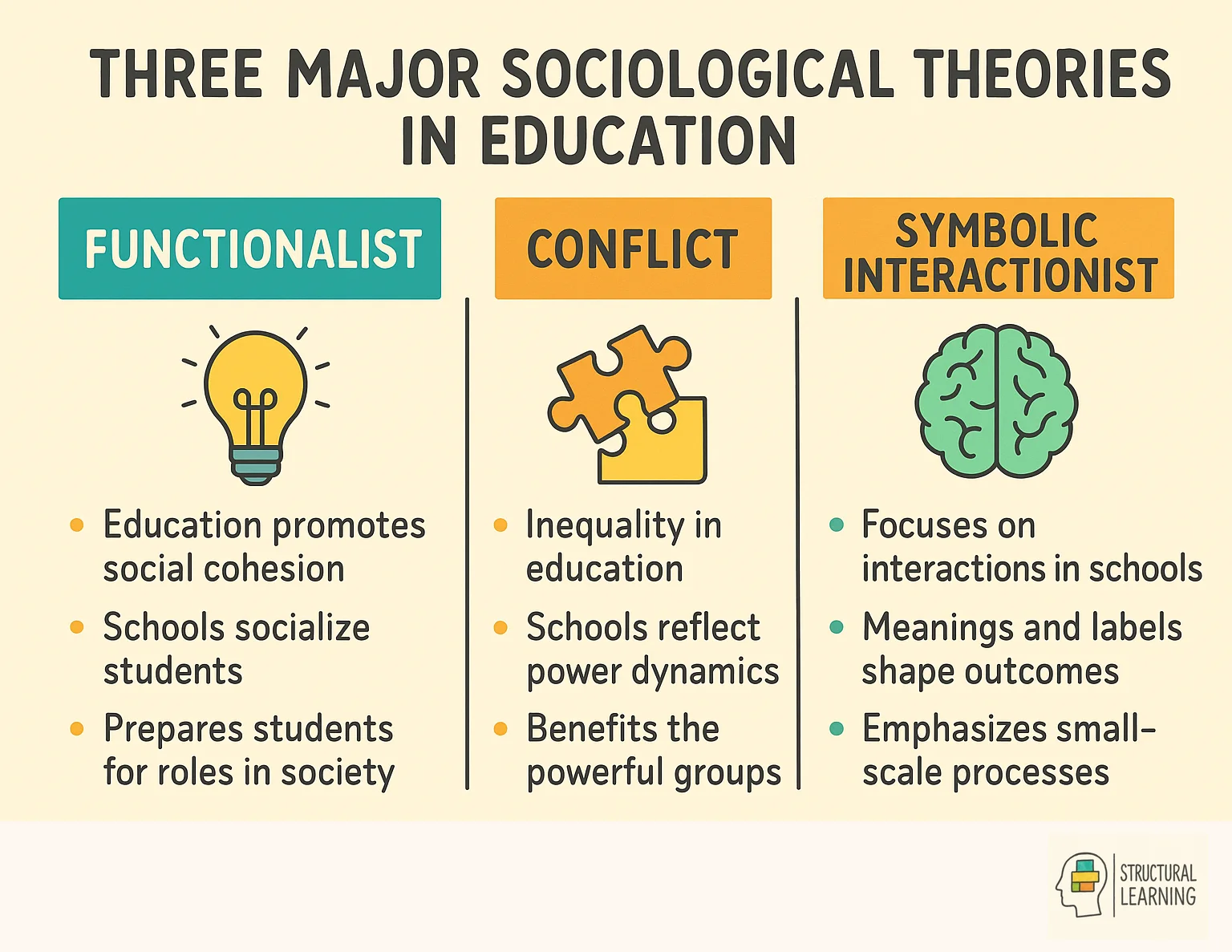
Comparison chart showing three sociological theories in education with classroom implications
Three Major Sociological Theories in Education

The purpose of sociological theories is manifold. They offer insights into the nature of society, social relationships, and the factors that influence human behaviour. They elucidate the mechanisms of social cohesion, deviant behaviour, social exchange, and the dynamics of power and inequality within society.

Consider, for instance, the structural-functional approach, symbolic interactionism, and conflict theory. Each of these theories provides a unique lens through which we can examine social phenomena, contributing to our broader understanding of human behaviour and society as a whole.

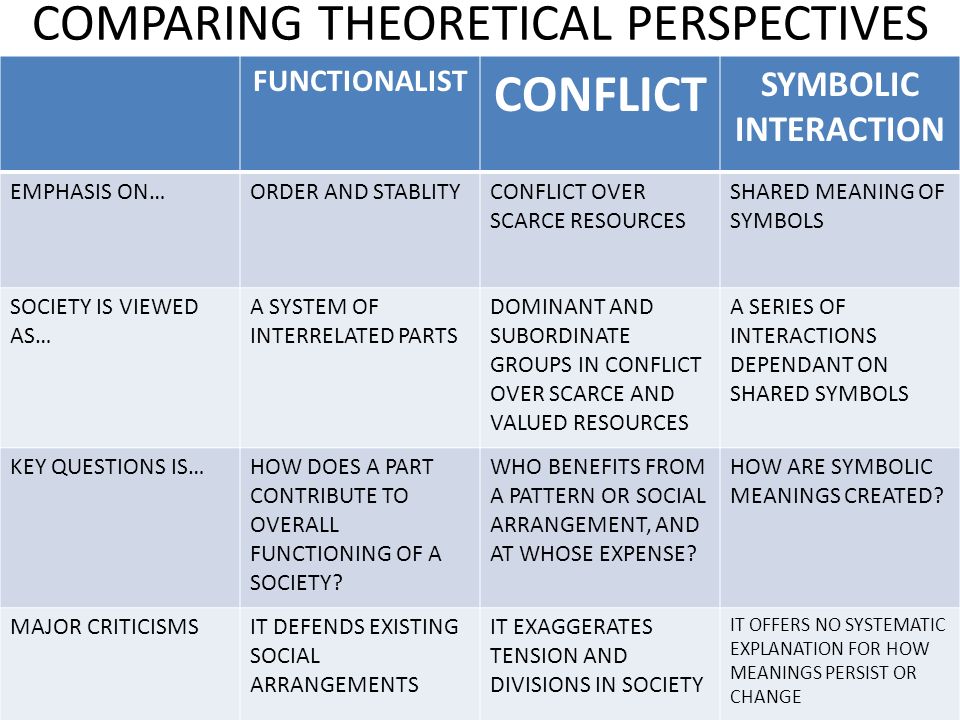
Comparison table showing three education theories and their contrasting viewpoints
Side-by-side comparison table: Three Major Sociological Theories in Education

To illustrate, let's take the example of the COVID-19 pandemic. It has been observed that rumours and conspiracy theories thrive in environments of low confidence and low trust. In the context of the pandemic, a lack of scientific consensus on the virus's spread and containment, or on the long-term social and economic ramifications, has led to a proliferation of such theories.

This example underscores the importance of sociological theories in understanding and analysing human behaviour in response to societal events.

In essence, sociological theories are the compass that guides us through the labyrinth of the social world. They are the product of rigorous research and analysis, enabling us to understand and analyse various aspects of human society, social structures, and social interactions.

Key insights include:

  • Sociological theories are based on careful research, data collection, and analysis.
  • They help us understand the nature of society, social relationships, and the factors that influence human behaviour.
  • They aid in explaining social cohesion, deviant behaviour, social exchange, and the dynamics of power and inequality within society.
  • Examples of key sociological theories include the structural-functional approach, symbolic interactionism, and conflict theory.
  • As the renowned sociologist C. Wright Mills once said, "The sociological imagination enables us to grasp history and biography and the relations between the two within society. That is its task and its promise."

    Functionalist Theory in Modern Education

    Functionalist theory views schools as institutions that serve essential social functions including socialization, skill allocation, and social integration. Schools prepare students for their future roles in society by teaching both academic knowledge and social norms through the formal curriculum and hidden curriculum. This perspective emphasises how education maintains social order by transmitting shared values and sorting students based on merit.

    , a sociological perspective, perceives society as a complex system composed of interconnected parts. These parts, akin to the organs of a living organism, work in harmony to maintain social order and cater to the biological and social needs of individuals.

    This perspective, which has its roots in the writing s of Herbert Spencer, was further developed by sociologists like Émile Durkheim and Alfred Radcliffe-Brown.

    The structural functionalist perspective likens society to a living organism where each part performs a specific function for the organism's survival. In this context, social institutions such as family, education, religion, and government are seen as crucial elements that maintain stability and cohesion in society.

    They provide clear roles and expectations for individuals, help socialize new members, and regulate social behaviour. Furthermore, they ensure the fulfilment of essential needs, such as protection, education, and healthcare.

    A key insight from this perspective is the emphasis on the interconnectedness of various social institutions and their contribution to the overall functioning of society. It suggests that when each part fulfils its function effectively, society can maintain stability and thrive.

    For instance, a study by Ciobanu, Androniceanu, and Lazaroiu (2019) highlights the role of human resource policies and practices in building a positive work environment that encourages communication, innovation, and proactive attitudes and behaviours.

    Here are some key insights and important facts about structural functionalism:

    • It views society as a complex system with interrelated parts.
    • It emphasises the role of social institutions in maintaining societal stability and cohesion.
    • It suggests that effective functioning of each part of society contributes to overall societal stability and growth.
    • It highlights the importance of human resource policies in creating a positive work environment.
    • Structural functionalism provides a lens through which we can examine how various parts of society contribute to the whole, helping us understand the importance of each part in maintaining social order.

      A relevant statistic to consider is that in a study of public institutions, it was found that a supportive work environment positively impacts public employees' performance, self-efficacy, and job satisfaction 1.

      structural functionalism offers a unique perspective on society, emphasising the importance of social institutions and their roles in maintaining societal stability and cohesion. It provides a framework for understanding how different parts of society work together to meet the biological and social needs of individuals.

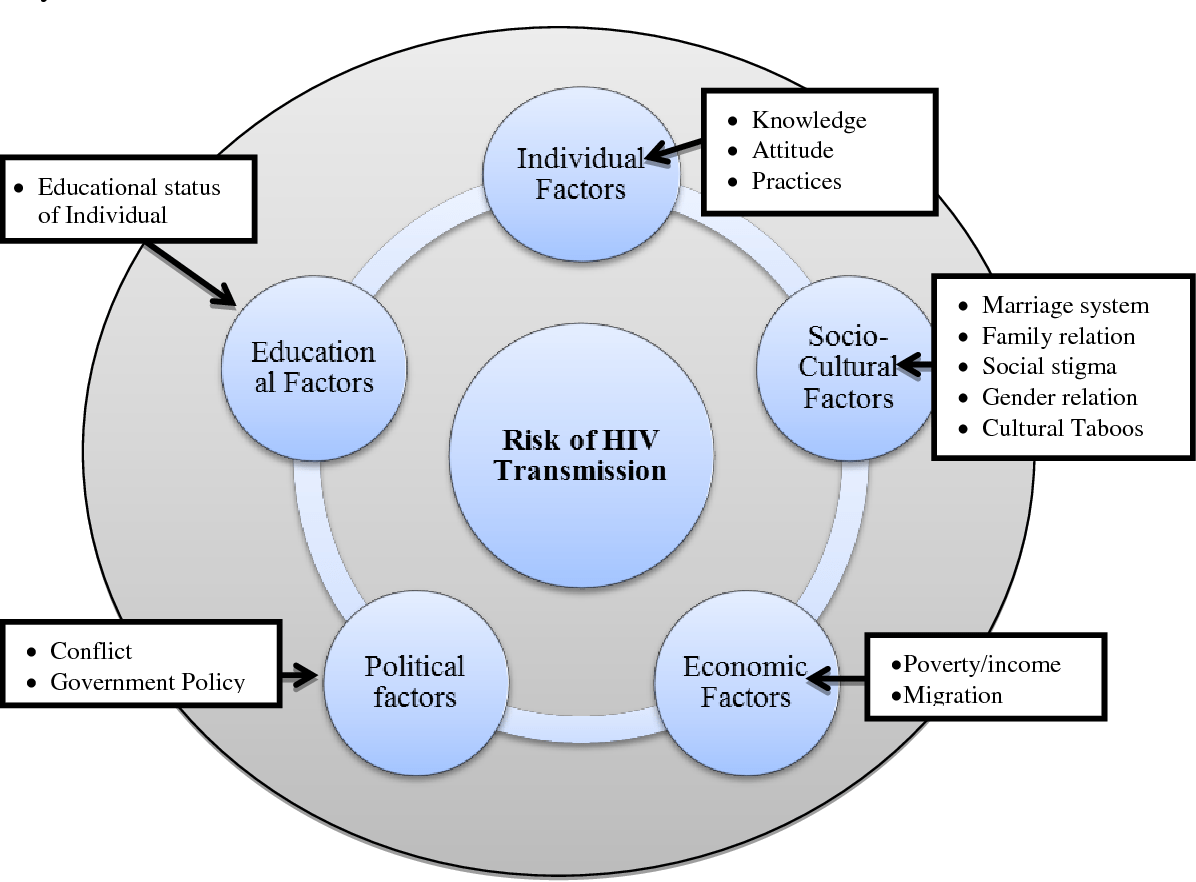
      Structural Functionalism Social Theory
      Structural Functionalism Social Theory

      How Does Conflict Theory Explain Educational Inequality?

      Conflict theory argues that schools reproduce existing social inequalities by favouring dominant groups and their cultural capital. The education system maintains class divisions through tracking, standardised testing, and curriculum that reflects middle-class values. Teachers can address this by recognising how school practices may disadvantage working-class students and implementing more inclusive pedagogical approaches.

      Conflict theory, rooted in the works of Karl Marx, provides a critical perspective on sociology. Marx emphasised the importance of class conflict in shaping society.

      According to conflict theory, society is divided into two primary classes: the bourgeoisie (the capitalist class who own the means of production) and the proletariat (the working class who sell their labour for wages). The conflict between these classes is driven by the exploitation of th e proletariat by the bourgeoisie.

      Conflict theorists argue that social order and stability are maintained through unequal power relationships and the control of resources. Society is seen as a competition for limited resources, resulting in inequalities and the perpetuation of oppression. The bourgeoisie uses their economic power to maintain their dominance and control over the proletariat, resulting in economic and social inequalities.

      In addition to Karl Marx, other sociologists have contributed to the development of conflict theory. Harriet Martineau, a feminist theorist, expanded on Marx's ideas and applied conflict theory to social issues related to gender inequality.

      Jane Addams focused on social and economic inequality and advocated for social reforms to address these issues. W.E.B. Du Bois explored the intersections of race, class, and power, highlighting the impact of racial inequality within the framework of class conflict.

      Conflict theory provides a framework for understanding the dynamics of power, inequality, and social change within societies. It reminds us of the ongoing struggles for resources and the need for social transformations to challenge dominant power structures and create a more equitable society.
      Conflict theory theoretical perspective
      Conflict theory theoretical perspective

      What Is Labelling Theory in the Classroom?

      Labelling theory demonstrates how teacher expectations and labels assigned to students can become self-fulfiling prophecies that shape academic achievement. When teachers label students as 'bright' or 'struggling,' these labels influence both teacher behaviour and student self-concept. Research shows that positive teacher expectations can improve student performance, while negative labels can limit academic potential.

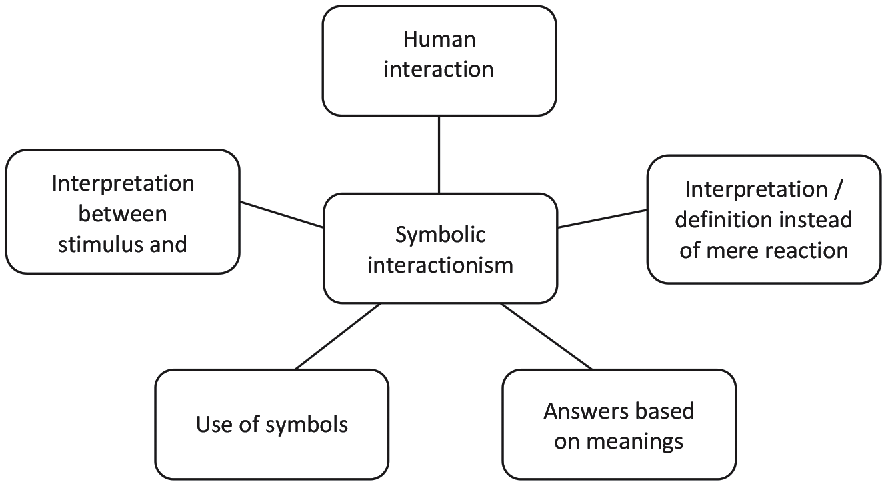
      Symbolic Interactionism is a sociological theory that focuses on how people create meaning and interpret symbols through their social interactions. It emphasises the importance of subjective meanings and the role of communication in shaping individuals' understanding of the social world.

      According to symbolic interactionists, individuals actively construct and interpret the meanings of symbols, such as language, gestures, and objects, within the context of their social interactions.

      Key features of symbolic interactionism include the idea that meaning is not inherent in objects or events but is rather assigned through social interaction. It recognises that individuals have different interpretations of symbols based on their ownexperiences, values, and social backgrounds. This theory highlights the dynamic nature of meaning-making, as interpretations can change over time and vary across different social contexts.

      Symbolic interactionists also emphasise the social construction of reality. They argue that individuals and groups collectively create and maintain the shared meanings and expectations that shape social life. Through everyday interactions, people negotiate and validate these meanings, contributing to the formation of social norms, identities, and roles.

      Symbolic interactionists analyse social processes by focusing on the micro-level interactions between individuals. They examine how these interactions shape behaviour, identities, and social structures. Rather than studying society as a whole, symbolic interactionists view society as the product of individual interactions, with social structures emerging from these interactions.

      symbolic interactionism highlights the significance of subjective meanings, communication, and the social construction of reality in shaping individuals' understanding of society. It emphasises the importance of studying social processes and how society emerges from individual interactions.

      Symbolic Interactionism
      Symbolic Interactionism

      Feminist Theory in Educational Settings

      Feminist theory examines how gender shapes educational experiences, from curriculum content to classroom interactions and career guidance. It reveals how schools can perpetuate gender stereotypes through textbook representations, subject choices, and differential treatment of boys and girls. Teachers can challenge these patterns by using gender-inclusive materials and encouraging all students to pursue their interests regardless of traditional gender associations.

      Feminist theory is a significant contribution to sociology, aiming to understand and challenge gender inequalities and power dynamics within society. It recognises the social, economic, and political disadvantages experienced by women and seeks to dismantle patriarchal structures that perpetuate these inequities.

      Women scholars have played a crucial role in feminist theory, challenging existing sociological practices that often overlook or marginalize women's experiences. They have provided insights into the social construction of gender, highlighting how societal norms and expectations shape individuals' perceptions and behaviours based on their gender identity. This perspective emphasises that gender is not an inherent characteristic but rather a social construct.

      Intersectionality is another key concept in feminist theory, recognising that gender cannot be studied in isolation from other forms of identity, such as race, ethnicity, class, and sexuality. Women scholars have highlighted how these interconnected social categories intersect and interact, influencing individuals' experiences and opportunities within society.

      Feminist theorists also shed light on the subjective nature of scientific work. They argue that scientific knowledge is not neutral or objective but is shaped by the biases and assumptions of researchers embedded within patriarchal systems. By highlighting these biases, feminist theory aims to promote a more inclusive and diverse scientific inquiry.

      Overall, feminist theory is committed to promoting social justice by challenging gender inequalities, advocating for women's rights, and expanding scientific knowledge to include marginalized perspectives and experiences.

      What Is Critical Pedagogy in Teaching?

      Critical pedagogy encourages teachers and students to question power structures, dominant narratives, and sources of oppression within education and society. It transforms classrooms into spaces where students develop critical consciousness by analysing social issues and their own experiences. Teachers implement this through problem-posing education, dialogue-based learning, and connecting curriculum to students' lived realities.

      Critical Theory is a contemporary sociological theory that aims to critique society, social structures, and systems of power, with the goal of promoting egalitarian social change. Rooted in the works of scholars like Karl Marx, Max Horkheimer, and Theodor Adorno, Critical Theory challenges the status quo and seeks to uncover the hidden power dynamics and social inequalities that exist within society.

      At its core, Critical Theory questions the established norms and structures that maintain social hierarchies and oppression. It examines how social, political, and economic systems contribute to the marginalization and subjugation of certain groups while benefiting others.

      By highlighting the ways in which power operates and is maintained, Critical Theory seeks to helps marginalized individuals and promote social justice.

      Critical theorists often analyse various dimensions of social life, such as politics, economics, culture, and identity, to understand how they intersect and contribute to power imbalances. Their aim is not only to critique existing systems but also to propose alternative ways of organising society that are more egalitarian and just.

      Critical Theory is a sociological approach that engages in a critical examination of society, social structures, and systems of power. By challenging the established order and advocating for egalitarian social change, it offers insights and potential solutions for creating a fairer and more inclusive society.

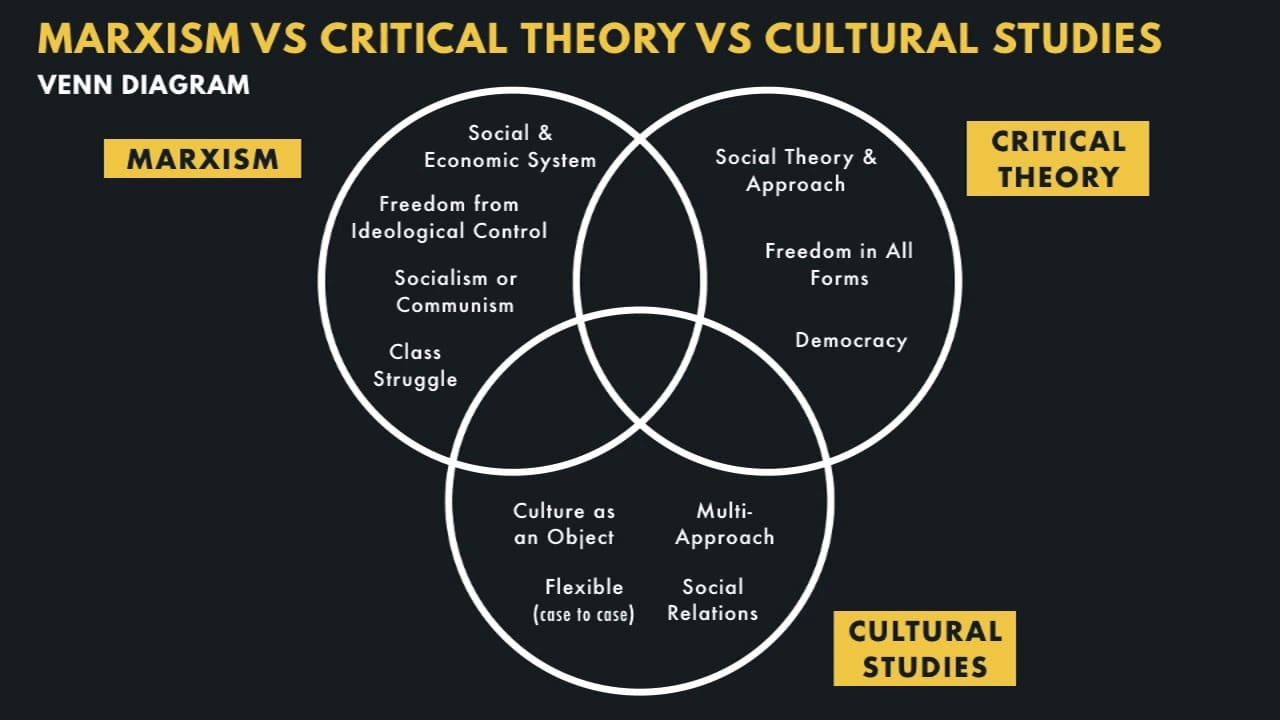
      Critical theory
      Critical theory

      Postmodern Theory Challenges Traditional Teaching

      Postmodern theory questions universal truths and grand narratives in education, emphasising multiple perspectives and the social construction of knowledge. It challenges standardised curricula and assessment methods that claim objectivity while marginalizing diverse voices and ways of knowing. Teachers can embrace postmodern insights by incorporating multiple viewpoints, questioning textbook authority, and validating different cultural knowledge systems.

      Postmodern Theory is a sociological theory and intellectual movement that emerged in the late 20th century, challenging traditional theories and ideologies. It reflects a shift away from the grand narratives and absolute truths of modernity towards a more fragmented and subjective understanding of reality.

      At the heart of postmodernism is the idea that knowledge is socially constructed and influenced by power dynamics, language, and cultural contexts. Postmodern theorists argue that there is no objective truth or universal meaning, but rather multiple interpretations and perspectives.

      Postmodern culture is characterised by several key features. Globalization has intensified interconnectedness and cultural exchange, blurring the boundaries between different societies and challenging traditional notions of identity and nationality.

      Secularization has led to the decline of religion as a dominant source of meaning and morality, developing individualism and pluralism. Population growth and migration have also contributed to the diversification of cultures and the formation of hybrid identities.

      Furthermore, the advent of media and technology has had a profound cultural impact, shaping our understanding of reality and challenging traditional forms of communication. Postmodern theorists emphasise the role of language, symbols, and discourses in constructing social reality and influencing power dynamics.

      Postmodern Theory is an important sociological theory and intellectual movement that challenges traditional theories and ideologies. It recognises the social construction of knowledge and the influence of power, language, and culture on our understanding of reality.

      Postmodern culture is characterised by features such as globalization, secularization, population growth, and the cultural impacts of media and technology.

      Social Stratification and Educational Achievement

      Rational choice theory explains student decisions about effort, subject selection, and educational pathways as cost-benefit calculations based on perceived rewards and resources. Students weigh factors like difficulty, future earnings, and family expectations when choosing courses or deciding how much to study. Understanding this helps teachers design interventions that alter students' perceived costs and benefits of academic engagement.

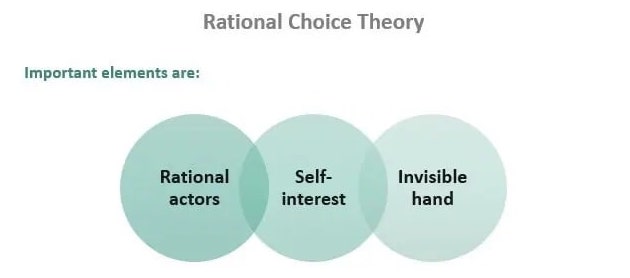
      Rational choice theory is a sociological perspective that interprets human behaviour as being driven by individuals' calculations of costs and benefits, particularly in relation to economic incentives. This theory suggests that people make rational decisions by carefully weighing the potential gains and losses associated with different courses of action.

      At the core of rational choice theory is the understanding that individuals are motivated primarily by their own self-interest, with economic considerations playing a central role. Money, profitability, and material resources are seen as powerful motivation s that influence human behaviour. According to this perspective, individuals are constantly evaluating the costs and benefits of their actions, with the aim of maximising their personal welfare.

      Rational choice theory assumes that individuals are capable of making rational decisions based on logical calculations. It emphasises the importance of the individual's ability to gather and process information, assess potential outcomes, and make decisions that will lead to the greatest personal gain.

      This theory suggests that individuals are goal-oriented and strive to make choices that are in their own self-interest, taking into account factors such as potential rewards, risks, and trade-offs.

      rational choice theory offers a framework for understanding human behaviour by focusing on individuals' calculations of costs and benefits, particularly in relation to economic incentives.

      By emphasising the role of motivations such as money and profitability, this theory suggests that individuals make rational decisions based on careful calculations in order to maximise their personal welfare.

      Rational Choice Theory
      Rational Choice Theory

      How Does Social Exchange Theory Explain Classroom Dynamics?

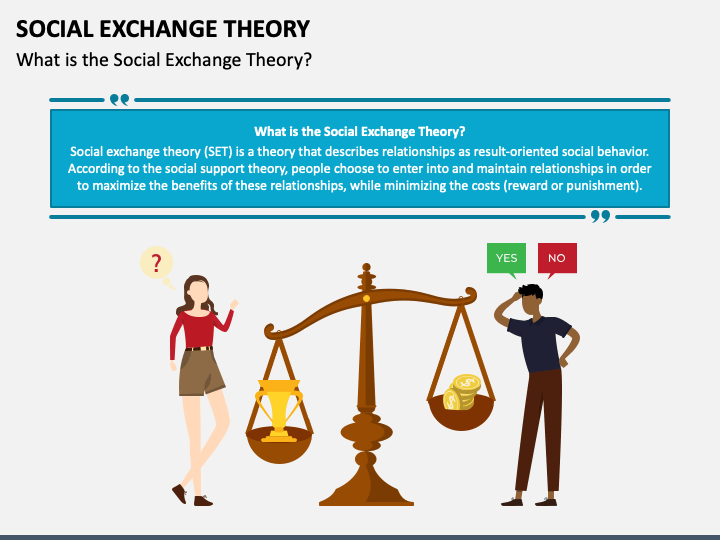
      Social exchange theory views classroom interactions as exchanges where teachers and students seek to maximise rewards while minimising costs. Students participate when they perceive benefits like grades, praise, or peer approval outweigh costs like effort or potential embarrassment. Teachers can improve engagement by ensuring the perceived rewards of participation clearly exceed the costs for all students.

      Exchange theory is a sociological perspective that focuses on the interactions between individuals based on estimates of rewards and punishments. According to this theory, all human relationships are formed through a subjective cost-benefit analysis.

      At the heart of exchange theory is the idea that individuals engage in social interactions because they anticipate receiving rewards or benefits from them. These rewards can take various forms, such as material resources, emotional support, or social status.

      On the other hand, individuals also consider the potential punishments or costs they may face in these interactions, such as time and effort expended, emotional stress, or the loss of other opportunities.

      The key concept in exchange theory is that individuals seek to maximise their rewards and minimise their costs in their social exchanges. They weigh the potential gains against the potential losses and make decisions accordingly.

      For instance, in a friendship, individuals may offer emotional support and loyalty to each other in the expectation of receiving the same in return. If the rewards outweigh the costs, they are more likely to continue the relationship.

      Exchange theory provides insights into various aspects of human relationships, including social networks, romantic partnerships, and professional collabourations.

      By emphasising the importance of rewards and punishments, it offers a framework for understanding how individuals make choices and engage in social interactions based on their subjective perceptions of the costs and benefits involved.
      Social exchange theory
      Social exchange theory

      What Is the Phenomenological Approach to Understanding Students?

      Phenomenology focuses on understanding education through students' lived experiences and subjective meanings rather than external observations. It emphasises how each student's unique background, perceptions, and consciousness shape their educational process. Teachers using this approach prioritise understanding individual student perspectives through dialogue and reflection rather than imposing predetermined interpretations.

      Phenomenology is an approach within sociology that places a significant emphasis on the role of human awareness in the creation and interpretation of social action and situations. Rather than viewing society as an objective reality with predetermined structures and meanings, phenomenology recognises that society is a human construction and that our subjective experiences shape our understanding of social interactions.

      At its core, phenomenology considers how individuals perceive and interpret the world around them, and how these interpretations influence their actions and the meanings they assign to those actions. It emphasises that humans are active agents in constructing their social reality, and that social situations are not inherently meaningful but gain significance through the interpretations and meanings assigned to them by individuals.

      In the context of phenomenology, social phenomenology specifically focuses on the collective understanding of social phenomena by examining how human awareness shapes social action and shapes the development of social situations. It acknowledges that individuals bring their own biases, values, and perspectives into their interactions, which in turn influence the meaning and dynamics of those interactions.

      By considering the meaningfulness of human behaviour, phenomenology provides a valuable perspective in understanding how individuals make sense of and give significance to their social world. It underscores the importance of subjective experiences and perceptions in shaping social interactions, ultimately contributing to a more comprehensive understanding of human behaviour and social dynamics.

      How Does Ethnomethodology Reveal Hidden Classroom Rules?

      Ethnomethodology examines the unspoken rules and taken-for-granted practices that students and teachers use to create order in everyday classroom life. It reveals how seemingly simple activities like taking turns or forming lines involve complex social competencies that must be learned. Teachers can use this awareness to explicitly teach classroom norms that might be unclear to students from different cultural backgrounds.

      Ethnomethodology, a sociological perspective, invites us to reconsider the concept of a static, preordained social structure. It posits that social order isn't an external imposition but an emergent property of everyday interactions and practices of individuals.

      This perspective underscores the subjective reality constructed by societal members through their definitions and categorizations.

      Ethnomethodologists strive to comprehend how individuals interpret and assign meaning to social interactions and behaviours. They aim to unearth the underlying rules and assumptions guiding these interpretations. By examining how people make sense of their social world, ethnomethodologists bring to light the routine and often unspoken methods individuals employ to construct and sustain their social reality.

      This approach zeroes in on the micro-level interactions between individuals and the shared understandings that shape these interactions. Ethnomethodologists scrutinize the ways in which people navigate social situations, create order, and interpret their experiences.

      They explore how individuals utilise various strategies, such as conversation analysis and observation, to interpret and describe social interactions. By rejecting the existence of a predetermined social structure, ethnomethodology underscores the active role individuals play in shaping their social reality.

      It highlights the significance of subjective meanings and interpretations in understanding social interactions.

      This approach challenges conventional perspectives on social order and encourages a deeper exploration of the interactive processes through which individuals create and maintain social order in their everyday lives.

      Key Insights:

      • Ethnomethodology challenges the notion of a fixed, predetermined social structure.
      • Social order emerges through the everyday interactions and practices of individuals.
      • Ethnomethodologists seek to understand how individuals interpret and give meaning to social interactions and behaviours.
      • This approach focuses on the micro-level interactions between individuals.
      • Ethnomethodology emphasises the importance of subjective meanings and interpretations in understanding social interactions.

      Meritocracy in Education Systems

      Functionalist theory views education as society's engine room, where young people acquire the skills, values, and qualifications needed for adult life. Developed by sociologists like Émile Durkheim and Talcott Parsons, this perspective sees schools as vital institutions that perform essential functions: socialising children into shared norms, sorting students based on merit, and preparing them for workplace roles. Rather than questioning these functions, functionalists argue schools help maintain social order and economic productivity.

      In practise, functionalist ideas permeate everyday classroom activities, often without teachers realising it. When you enforce uniform policies, you're teaching conformity to institutional rules; when you reward punctuality, you're preparing students for workplace expectations. The school bell system mirrors factory shifts, whilst assessment practices sort students into different ability streams. Even seemingly neutral activities like group projects teach cooperation and role specialisation, reflecting functionalist beliefs about preparing children for their future place in society's division of labour.

      Understanding functionalist theory can transform your teaching approach. Consider explicitly discussing why certain rules exist, helping students see connections between classroom expectations and adult responsibilities. When teaching career education, acknowledge how your subject contributes specific skills for different occupational paths. However, balance this functional approach with critical thinking; whilst teaching workplace skills, also encourage students to question whether current social arrangements are the only or best options.

      Research by Davis and Moore (1945) on role allocation suggests schools identify talent and channel students accordingly, yet this can inadvertently limit aspirations. Combat this by exposing all students to diverse career possibilities and avoiding early labelling based on perceived ability. Remember that whilst functionalist theory offers valuable insights into education's social purposes, it shouldn't constrain your students' potential or reinforce inequality through low expectations.

      Contemporary Challenges in Education Sociology

      Labelling theory, developed by Howard Becker, suggests that teachers' perceptions and expectations of pupils significantly influence academic outcomes. When educators categorise students as 'bright', 'troublemaker', or 'slow learner', these labels often become self-fulfilling prophecies. Research by Rosenthal and Jacobson (1968) demonstrated that pupils randomly identified as 'academic bloomers' to their teachers showed greater improvement than their peers, purely because of altered teacher expectations.

      In classroom settings, labelling manifests through seemingly innocent practices: ability grouping, seating arrangements, and the language used in feedback. A teacher who consistently seats 'disruptive' pupils at the back inadvertently reinforces negative behaviour patterns. Similarly, praising intelligence rather than effort can create fixed mindsets; pupils labelled 'naturally clever' may avoid challenges to protect this identity, whilst those deemed 'less able' may stop trying altogether.

      Teachers can counteract negative labelling through specific strategies. First, implement flexible grouping that changes regularly, preventing pupils from becoming stuck in ability-based identities. Second, focus feedback on process rather than person: replace 'You're so smart' with 'Your method for solving that problem was effective'. Third, use positive reframing; instead of labelling a pupil as 'disruptive', identify them as 'energetic' and channel that energy constructively.

      Evidence from UK comprehensive schools shows that teachers who actively challenge their own labelling assumptions see marked improvements in pupil achievement, particularly amongst working-class students. By recognising how our perceptions shape pupil outcomes, educators can break the cycle of educational inequality that labelling theory exposes.

      Functionalist Theory: Schools Maintaining Social Order

      Functionalist sociologists view education as society's key mechanism for maintaining stability and preparing young people for adult roles. According to Durkheim, schools serve as 'society in miniature', where children learn to follow rules, cooperate with others, and understand their place within larger social structures. This perspective suggests that seemingly routine classroom practices, from morning registration to uniform policies, serve crucial functions in socialising students into shared values and expectations.

      Talcott Parsons expanded this view by identifying schools as bridges between family life and wider society. In the classroom, students transition from being judged by particularistic standards (where parents value them simply for who they are) to universalistic standards (where achievement is measured against common criteria). When teachers mark work using consistent rubrics or implement behaviour systems that apply equally to all students, they're unconsciously reinforcing meritocratic principles that functionalists believe underpin modern society.

      For classroom practise, functionalist insights suggest several approaches. First, establishing clear routines and expectations helps students internalise social norms; a well-structured morning routine teaches punctuality and organisation skills valued by employers. Second, group projects and team activities prepare students for collaborative workplaces whilst teaching them to subordinate individual desires for collective goals. Third, celebrating diverse achievements through awards assemblies or display boards reinforces the idea that different talents contribute to society's functioning.

      However, teachers should critically examine whether their 'neutral' standards genuinely offer equal opportunities. Research by Ball (1981) on banding and streaming shows how school practices can inadvertently sort students along class lines, suggesting that meritocracy may be more ideal than reality. Understanding functionalist theory helps teachers recognise their role in social reproduction whilst encouraging reflection on whether current practices truly serve all students equally.

      Conflict Theory: How Education Perpetuates Inequality

      Conflict theory, developed from Marxist thought, reveals how educational systems maintain and reproduce social hierarchies through unequal power distribution. This perspective argues that schools, rather than being neutral institutions, actively favour middle-class values, language patterns, and cultural capital, placing working-class students at a systematic disadvantage. Teachers who understand this theory can identify how seemingly neutral classroom practices might inadvertently reinforce existing inequalities.

      Research by Bourdieu and Passeron (1977) demonstrated how schools reward the cultural capital that middle-class children acquire at home, such as formal language codes, familiarity with abstract concepts, and confidence in academic settings. For instance, when teachers praise 'articulate' contributions, they may unconsciously favour students whose home environments mirror academic discourse. Similarly, homework expectations often assume parental support and resources that working-class families may lack, creating what Willis (1977) termed 'learning to labour', where working-class students resist academic culture and reproduce their parents' class position.

      Teachers can counteract these inequalities through specific strategies. First, explicitly teach academic language and cultural codes rather than assuming prior knowledge; for example, spend time explaining how to structure arguments or decode exam questions. Second, vary assessment methods to value different types of knowledge and skills, perhaps including practical demonstrations alongside traditional essays. Third, create inclusive classroom environments that validate diverse cultural backgrounds whilst providing all students with tools for academic success.

      Understanding conflict theory transforms classroom management too. When students resist authority or disengage, consider whether they're rejecting a system they perceive as stacked against them. Building genuine relationships and acknowledging students' lived experiences can break down barriers that traditional disciplinary approaches often reinforce.

      Labelling Theory: Teacher Expectations Shape Outcomes

      Labelling theory, developed by Howard Becker in the 1960s, demonstrates how teacher expectations create self-fulfilling prophecies in the classroom. When teachers categorise students as 'bright', 'troublesome', or 'average', these labels influence both teacher behaviour and student performance. Research by Rosenthal and Jacobson's famous 'Pygmalion in the Classroom' study revealed that students randomly identified as 'academic bloomers' made significant gains simply because teachers expected more from them.

      In practise, labelling operates through subtle classroom interactions. Teachers unconsciously give 'high ability' students more time to answer questions, offer more detailed feedback, and provide more challenging tasks. Conversely, students labelled as 'low ability' receive simpler questions, less wait time, and more behaviour management interventions. These differential treatments reinforce initial expectations, creating a cycle where labels become reality.

      Breaking negative labelling cycles requires conscious strategies. First, implement flexible grouping rather than fixed ability sets; rotate students through different working groups based on specific skills rather than general ability. Second, use growth mindset language that focuses on effort and progress: replace 'you're not good at maths' with 'you haven't mastered this concept yet'. Third, maintain equally high expectations for all students by using techniques like random name selection for questioning and providing scaffolded support rather than simplified tasks.

      Evidence from UK schools shows remarkable outcomes when teachers actively challenge labels. One Birmingham secondary school eliminated ability streaming in Year 7 maths and saw bottom set students achieve grades previously thought impossible. The key was treating all students as capable learners whilst providing appropriate support, proving that teacher expectations powerfully shape educational destinies.

      Frequently Asked Questions

      Hidden Curriculum Impact on Student Development

      The hidden curriculum refers to the unspoken rules, values, and social norms that students learn through classr oom routines and school practices, beyond the formal lesson content. According to functionalist theory, these implicit messages about behaviour, expectations, and social roles often shape students more powerfully than academic subjects, helping to maintain social order and prepare students for their future roles in society.

      Recognising Teaching Practices That Reinforce Inequality

      Marxist theory suggests that schools often favour middle-class cultural capital through practices like standardised testing, tracking systems, and curriculum that reflects dominant group values. Teachers should examine whether their classroom practices, assessment methods, and expectations may disadvantage working-class students, and consider implementing more inclusive pedagogical approaches that recognise diverse forms of knowledge and learning styles.

      Avoiding Labelling Traps and Self-Fulfilling Prophecies

      The labelling trap occurs when teachers' expectations and labels for students (such as 'struggling' or 'low ability') become internalised by students, leading them to perform according to these expectations rather than their actual potential. Symbolic interactionism shows that these micro-level interactions can significantly impact student achievement, so teachers should focus on positive labelling, high expectations for all students, and strategies that help reverse negative spirals.

      Managing Challenging Behaviour Through Conflict Theory

      Conflict theory reveals that challenging behaviour often stems from underlying power struggles and social inequalities rather than individual defiance. Understanding these classroom power dynamics helps teachers recognise that traditional behaviour managementapproaches may fail because they don't address the root causes of conflict, leading to more effective strategies that acknowledge and work with these social tensions.

      Working-Class Student Underachievement Patterns

      Marxist insights explain that educational inequality persists because schools unconsciously reproduce class divisions through practices that favour students with middle-class cultural capital. Working-class students may struggle not due to lack of ability, but because the education system rewards particular ways of speaking, thinking, and behaving that align with dominant social groups, creating barriers to achievement for equally capable students from different backgrounds.

      Applying Sociological Theories for Teaching Effectiveness

      Sociological theories provide teachers with a framework to recognise how factors beyond individual ability, including social class, gender, and ethnicity, shape educational achievement. This understanding helps educators move beyond individual explanations for student performance to consider structural factors, enabling them to develop more effective, inclusive teaching strategies that address systemic barriers to learning.

      Further Reading: Key Research Papers

      These peer-reviewed studies provide deeper insights into sociology of education: key theories and their classroom implications and its application in educational settings.

      Reproduction in education, society and culture 10379 citations

      Bourdieu et al. (1970)

      This foundational work by Bourdieu and Passeron examines how schools unconsciously reproduce social class inequalities through cultural transmission, introducing key concepts like cultural capital and habitus. The theory helps teachers understand how their classroom practices and curriculum choices may inadvertently favour students from certain social backgrounds while disadvantaging others, making it essential reading for educators seeking to create more equitable learning environments.

      Research on WhatsApp use in language learning 51 citations (Author, Year) demonstrates that integrating this popular messaging platform into language education significantly enhances students' self-motivation and achievement whilst reducing learning anxiety, supporting self-determination theory principles in educational technology contexts.

      Alamer et al. (2022)

      This study investigates how using WhatsApp messaging applications enhances language learningby increasing student motivation and reducing anxiety through the lens of self-determination theory. It demonstrates how modern communication technologies can be used in educational settings to improve student outcomes, providing teachers with evidence-based insights into integrating social media tools to support learning while addressing psychological factors that affect academic performance.

      Research on teaching styles and student engagement 76 citations (Author, Year) in Chinese EFL contexts demonstrates how university teachers' instructional approaches significantly influence students' agentic engagement, integrating self-determination theory and achievement goal theory to reveal the psychological mechanisms underlying effective language learning environments.

      Jiang et al. (2021)

      This research explores how university teachers' instructional approaches influence student engagement in English language learning, drawing on self-determination theory and achievement goal theory. The study provides educators with valuable insights into how different teaching styles can promote or hinder student agencyand motivation, helping teachers understand the relationship between their pedagogical choices and student learning outcomes.

      Research on hidden curriculum dynamics in classrooms438 citations (Author, Year) examines the implicit social learning that occurs beyond formal instruction, revealing how unspoken rules, values, and behaviours are transmitted through everyday classroom interactions and institutional practices.

      Giroux et al. (1979)

      Giroux and Penna analyse the hidden curriculum, the unintended lessons and values transmitted through school routines, structures, and social interactions beyond formal academic content. This work is crucial for teachers to understand how their classroom management, interactions, and institutional practices shape students' social learningand worldviews, often reinforcing existing power structures and social norms without explicit intention.

      Research on self-control and delinquency among adolescents 174 citations (Author, Year) tested the General Theory of Crime in Hong Kong, examining how social factors interact with individual self-control to influence delinquent behaviour in young people.

      Cheung et al. (2008)

      This study tests criminological theory in an educational context by examining how self-control and social factors influence adolescent delinquency in Hong Kong schools. While primarily criminological, it offers teachers insights into how school social environments and student self-regulat ion skills interact to influence behaviour, helping educators understand the broader social dynamics that affect student conduct and academic engagement.

Loading audit...

Key Sociological Theories in Education

The sociology of education examines how social structures, institutions, and processes affect educational experiences and outcomes. Different sociological perspectives offer contrasting explanations for why educational inequality persists. Functionalists view schools as serving es sen tial social functions, while Marxists argue education reproduces class inequality. Interactionists focus on micro-level processes like labelling that affect individual students. Understanding these perspectives helps teachers recognise how factors beyond individual ability, including social class, gender, and ethnicity, shape educational achievement.

Key Takeaways

  1. The Hidden Curriculum Exposed: Why functionalist theory reveals your classroom rules shape society more than your lesson content, and how to harness this power
  2. Beyond Individual Ability: Marxist insights show why your brightest working-class pupils underachieve: the classroom practices that accidentally reinforce inequality
  3. The Labelling Trap: How symbolic interactionismexplains why your 'struggling' label becomes self-fulfiling prophecy, and strategies to reverse negative spirals
  4. Power Dynamics Decoded: Conflict theory reveals why behaviour management fails: understanding classroom power struggles transforms your approach to challenging pupils

Sociologists, akin to detectives, observe and study social behaviour, patterns, and relationships, employing a variety of research designs and methodologies to gather data. This data is then meticulously analysed to identify patterns and trends, forming the basis for hypotheses and theories that shed light on the social world around us.

Comparison chart showing three sociological theories in education with classroom implications
Three Major Sociological Theories in Education

The purpose of sociological theories is manifold. They offer insights into the nature of society, social relationships, and the factors that influence human behaviour. They elucidate the mechanisms of social cohesion, deviant behaviour, social exchange, and the dynamics of power and inequality within society.

Consider, for instance, the structural-functional approach, symbolic interactionism, and conflict theory. Each of these theories provides a unique lens through which we can examine social phenomena, contributing to our broader understanding of human behaviour and society as a whole.

Comparison table showing three education theories and their contrasting viewpoints
Side-by-side comparison table: Three Major Sociological Theories in Education

To illustrate, let's take the example of the COVID-19 pandemic. It has been observed that rumours and conspiracy theories thrive in environments of low confidence and low trust. In the context of the pandemic, a lack of scientific consensus on the virus's spread and containment, or on the long-term social and economic ramifications, has led to a proliferation of such theories.

This example underscores the importance of sociological theories in understanding and analysing human behaviour in response to societal events.

In essence, sociological theories are the compass that guides us through the labyrinth of the social world. They are the product of rigorous research and analysis, enabling us to understand and analyse various aspects of human society, social structures, and social interactions.

Key insights include:

  • Sociological theories are based on careful research, data collection, and analysis.
  • They help us understand the nature of society, social relationships, and the factors that influence human behaviour.
  • They aid in explaining social cohesion, deviant behaviour, social exchange, and the dynamics of power and inequality within society.
  • Examples of key sociological theories include the structural-functional approach, symbolic interactionism, and conflict theory.
  • As the renowned sociologist C. Wright Mills once said, "The sociological imagination enables us to grasp history and biography and the relations between the two within society. That is its task and its promise."

    Functionalist Theory in Modern Education

    Functionalist theory views schools as institutions that serve essential social functions including socialization, skill allocation, and social integration. Schools prepare students for their future roles in society by teaching both academic knowledge and social norms through the formal curriculum and hidden curriculum. This perspective emphasises how education maintains social order by transmitting shared values and sorting students based on merit.

    , a sociological perspective, perceives society as a complex system composed of interconnected parts. These parts, akin to the organs of a living organism, work in harmony to maintain social order and cater to the biological and social needs of individuals.

    This perspective, which has its roots in the writing s of Herbert Spencer, was further developed by sociologists like Émile Durkheim and Alfred Radcliffe-Brown.

    The structural functionalist perspective likens society to a living organism where each part performs a specific function for the organism's survival. In this context, social institutions such as family, education, religion, and government are seen as crucial elements that maintain stability and cohesion in society.

    They provide clear roles and expectations for individuals, help socialize new members, and regulate social behaviour. Furthermore, they ensure the fulfilment of essential needs, such as protection, education, and healthcare.

    A key insight from this perspective is the emphasis on the interconnectedness of various social institutions and their contribution to the overall functioning of society. It suggests that when each part fulfils its function effectively, society can maintain stability and thrive.

    For instance, a study by Ciobanu, Androniceanu, and Lazaroiu (2019) highlights the role of human resource policies and practices in building a positive work environment that encourages communication, innovation, and proactive attitudes and behaviours.

    Here are some key insights and important facts about structural functionalism:

    • It views society as a complex system with interrelated parts.
    • It emphasises the role of social institutions in maintaining societal stability and cohesion.
    • It suggests that effective functioning of each part of society contributes to overall societal stability and growth.
    • It highlights the importance of human resource policies in creating a positive work environment.
    • Structural functionalism provides a lens through which we can examine how various parts of society contribute to the whole, helping us understand the importance of each part in maintaining social order.

      A relevant statistic to consider is that in a study of public institutions, it was found that a supportive work environment positively impacts public employees' performance, self-efficacy, and job satisfaction 1.

      structural functionalism offers a unique perspective on society, emphasising the importance of social institutions and their roles in maintaining societal stability and cohesion. It provides a framework for understanding how different parts of society work together to meet the biological and social needs of individuals.

      Structural Functionalism Social Theory
      Structural Functionalism Social Theory

      How Does Conflict Theory Explain Educational Inequality?

      Conflict theory argues that schools reproduce existing social inequalities by favouring dominant groups and their cultural capital. The education system maintains class divisions through tracking, standardised testing, and curriculum that reflects middle-class values. Teachers can address this by recognising how school practices may disadvantage working-class students and implementing more inclusive pedagogical approaches.

      Conflict theory, rooted in the works of Karl Marx, provides a critical perspective on sociology. Marx emphasised the importance of class conflict in shaping society.

      According to conflict theory, society is divided into two primary classes: the bourgeoisie (the capitalist class who own the means of production) and the proletariat (the working class who sell their labour for wages). The conflict between these classes is driven by the exploitation of th e proletariat by the bourgeoisie.

      Conflict theorists argue that social order and stability are maintained through unequal power relationships and the control of resources. Society is seen as a competition for limited resources, resulting in inequalities and the perpetuation of oppression. The bourgeoisie uses their economic power to maintain their dominance and control over the proletariat, resulting in economic and social inequalities.

      In addition to Karl Marx, other sociologists have contributed to the development of conflict theory. Harriet Martineau, a feminist theorist, expanded on Marx's ideas and applied conflict theory to social issues related to gender inequality.

      Jane Addams focused on social and economic inequality and advocated for social reforms to address these issues. W.E.B. Du Bois explored the intersections of race, class, and power, highlighting the impact of racial inequality within the framework of class conflict.

      Conflict theory provides a framework for understanding the dynamics of power, inequality, and social change within societies. It reminds us of the ongoing struggles for resources and the need for social transformations to challenge dominant power structures and create a more equitable society.

      Conflict theory theoretical perspective
      Conflict theory theoretical perspective

      What Is Labelling Theory in the Classroom?

      Labelling theory demonstrates how teacher expectations and labels assigned to students can become self-fulfiling prophecies that shape academic achievement. When teachers label students as 'bright' or 'struggling,' these labels influence both teacher behaviour and student self-concept. Research shows that positive teacher expectations can improve student performance, while negative labels can limit academic potential.

      Symbolic Interactionism is a sociological theory that focuses on how people create meaning and interpret symbols through their social interactions. It emphasises the importance of subjective meanings and the role of communication in shaping individuals' understanding of the social world.

      According to symbolic interactionists, individuals actively construct and interpret the meanings of symbols, such as language, gestures, and objects, within the context of their social interactions.

      Key features of symbolic interactionism include the idea that meaning is not inherent in objects or events but is rather assigned through social interaction. It recognises that individuals have different interpretations of symbols based on their ownexperiences, values, and social backgrounds. This theory highlights the dynamic nature of meaning-making, as interpretations can change over time and vary across different social contexts.

      Symbolic interactionists also emphasise the social construction of reality. They argue that individuals and groups collectively create and maintain the shared meanings and expectations that shape social life. Through everyday interactions, people negotiate and validate these meanings, contributing to the formation of social norms, identities, and roles.

      Symbolic interactionists analyse social processes by focusing on the micro-level interactions between individuals. They examine how these interactions shape behaviour, identities, and social structures. Rather than studying society as a whole, symbolic interactionists view society as the product of individual interactions, with social structures emerging from these interactions.

      symbolic interactionism highlights the significance of subjective meanings, communication, and the social construction of reality in shaping individuals' understanding of society. It emphasises the importance of studying social processes and how society emerges from individual interactions.

      Symbolic Interactionism
      Symbolic Interactionism

      Feminist Theory in Educational Settings

      Feminist theory examines how gender shapes educational experiences, from curriculum content to classroom interactions and career guidance. It reveals how schools can perpetuate gender stereotypes through textbook representations, subject choices, and differential treatment of boys and girls. Teachers can challenge these patterns by using gender-inclusive materials and encouraging all students to pursue their interests regardless of traditional gender associations.

      Feminist theory is a significant contribution to sociology, aiming to understand and challenge gender inequalities and power dynamics within society. It recognises the social, economic, and political disadvantages experienced by women and seeks to dismantle patriarchal structures that perpetuate these inequities.

      Women scholars have played a crucial role in feminist theory, challenging existing sociological practices that often overlook or marginalize women's experiences. They have provided insights into the social construction of gender, highlighting how societal norms and expectations shape individuals' perceptions and behaviours based on their gender identity. This perspective emphasises that gender is not an inherent characteristic but rather a social construct.

      Intersectionality is another key concept in feminist theory, recognising that gender cannot be studied in isolation from other forms of identity, such as race, ethnicity, class, and sexuality. Women scholars have highlighted how these interconnected social categories intersect and interact, influencing individuals' experiences and opportunities within society.

      Feminist theorists also shed light on the subjective nature of scientific work. They argue that scientific knowledge is not neutral or objective but is shaped by the biases and assumptions of researchers embedded within patriarchal systems. By highlighting these biases, feminist theory aims to promote a more inclusive and diverse scientific inquiry.

      Overall, feminist theory is committed to promoting social justice by challenging gender inequalities, advocating for women's rights, and expanding scientific knowledge to include marginalized perspectives and experiences.

      What Is Critical Pedagogy in Teaching?

      Critical pedagogy encourages teachers and students to question power structures, dominant narratives, and sources of oppression within education and society. It transforms classrooms into spaces where students develop critical consciousness by analysing social issues and their own experiences. Teachers implement this through problem-posing education, dialogue-based learning, and connecting curriculum to students' lived realities.

      Critical Theory is a contemporary sociological theory that aims to critique society, social structures, and systems of power, with the goal of promoting egalitarian social change. Rooted in the works of scholars like Karl Marx, Max Horkheimer, and Theodor Adorno, Critical Theory challenges the status quo and seeks to uncover the hidden power dynamics and social inequalities that exist within society.

      At its core, Critical Theory questions the established norms and structures that maintain social hierarchies and oppression. It examines how social, political, and economic systems contribute to the marginalization and subjugation of certain groups while benefiting others.

      By highlighting the ways in which power operates and is maintained, Critical Theory seeks to helps marginalized individuals and promote social justice.

      Critical theorists often analyse various dimensions of social life, such as politics, economics, culture, and identity, to understand how they intersect and contribute to power imbalances. Their aim is not only to critique existing systems but also to propose alternative ways of organising society that are more egalitarian and just.

      Critical Theory is a sociological approach that engages in a critical examination of society, social structures, and systems of power. By challenging the established order and advocating for egalitarian social change, it offers insights and potential solutions for creating a fairer and more inclusive society.

      Critical theory
      Critical theory

      Postmodern Theory Challenges Traditional Teaching

      Postmodern theory questions universal truths and grand narratives in education, emphasising multiple perspectives and the social construction of knowledge. It challenges standardised curricula and assessment methods that claim objectivity while marginalizing diverse voices and ways of knowing. Teachers can embrace postmodern insights by incorporating multiple viewpoints, questioning textbook authority, and validating different cultural knowledge systems.

      Postmodern Theory is a sociological theory and intellectual movement that emerged in the late 20th century, challenging traditional theories and ideologies. It reflects a shift away from the grand narratives and absolute truths of modernity towards a more fragmented and subjective understanding of reality.

      At the heart of postmodernism is the idea that knowledge is socially constructed and influenced by power dynamics, language, and cultural contexts. Postmodern theorists argue that there is no objective truth or universal meaning, but rather multiple interpretations and perspectives.

      Postmodern culture is characterised by several key features. Globalization has intensified interconnectedness and cultural exchange, blurring the boundaries between different societies and challenging traditional notions of identity and nationality.

      Secularization has led to the decline of religion as a dominant source of meaning and morality, developing individualism and pluralism. Population growth and migration have also contributed to the diversification of cultures and the formation of hybrid identities.

      Furthermore, the advent of media and technology has had a profound cultural impact, shaping our understanding of reality and challenging traditional forms of communication. Postmodern theorists emphasise the role of language, symbols, and discourses in constructing social reality and influencing power dynamics.

      Postmodern Theory is an important sociological theory and intellectual movement that challenges traditional theories and ideologies. It recognises the social construction of knowledge and the influence of power, language, and culture on our understanding of reality.

      Postmodern culture is characterised by features such as globalization, secularization, population growth, and the cultural impacts of media and technology.

      Social Stratification and Educational Achievement

      Rational choice theory explains student decisions about effort, subject selection, and educational pathways as cost-benefit calculations based on perceived rewards and resources. Students weigh factors like difficulty, future earnings, and family expectations when choosing courses or deciding how much to study. Understanding this helps teachers design interventions that alter students' perceived costs and benefits of academic engagement.

      Rational choice theory is a sociological perspective that interprets human behaviour as being driven by individuals' calculations of costs and benefits, particularly in relation to economic incentives. This theory suggests that people make rational decisions by carefully weighing the potential gains and losses associated with different courses of action.

      At the core of rational choice theory is the understanding that individuals are motivated primarily by their own self-interest, with economic considerations playing a central role. Money, profitability, and material resources are seen as powerful motivation s that influence human behaviour. According to this perspective, individuals are constantly evaluating the costs and benefits of their actions, with the aim of maximising their personal welfare.

      Rational choice theory assumes that individuals are capable of making rational decisions based on logical calculations. It emphasises the importance of the individual's ability to gather and process information, assess potential outcomes, and make decisions that will lead to the greatest personal gain.

      This theory suggests that individuals are goal-oriented and strive to make choices that are in their own self-interest, taking into account factors such as potential rewards, risks, and trade-offs.

      rational choice theory offers a framework for understanding human behaviour by focusing on individuals' calculations of costs and benefits, particularly in relation to economic incentives.

      By emphasising the role of motivations such as money and profitability, this theory suggests that individuals make rational decisions based on careful calculations in order to maximise their personal welfare.

      Rational Choice Theory
      Rational Choice Theory

      How Does Social Exchange Theory Explain Classroom Dynamics?

      Social exchange theory views classroom interactions as exchanges where teachers and students seek to maximise rewards while minimising costs. Students participate when they perceive benefits like grades, praise, or peer approval outweigh costs like effort or potential embarrassment. Teachers can improve engagement by ensuring the perceived rewards of participation clearly exceed the costs for all students.

      Exchange theory is a sociological perspective that focuses on the interactions between individuals based on estimates of rewards and punishments. According to this theory, all human relationships are formed through a subjective cost-benefit analysis.

      At the heart of exchange theory is the idea that individuals engage in social interactions because they anticipate receiving rewards or benefits from them. These rewards can take various forms, such as material resources, emotional support, or social status.

      On the other hand, individuals also consider the potential punishments or costs they may face in these interactions, such as time and effort expended, emotional stress, or the loss of other opportunities.

      The key concept in exchange theory is that individuals seek to maximise their rewards and minimise their costs in their social exchanges. They weigh the potential gains against the potential losses and make decisions accordingly.

      For instance, in a friendship, individuals may offer emotional support and loyalty to each other in the expectation of receiving the same in return. If the rewards outweigh the costs, they are more likely to continue the relationship.

      Exchange theory provides insights into various aspects of human relationships, including social networks, romantic partnerships, and professional collabourations.

      By emphasising the importance of rewards and punishments, it offers a framework for understanding how individuals make choices and engage in social interactions based on their subjective perceptions of the costs and benefits involved.

      Social exchange theory
      Social exchange theory

      What Is the Phenomenological Approach to Understanding Students?

      Phenomenology focuses on understanding education through students' lived experiences and subjective meanings rather than external observations. It emphasises how each student's unique background, perceptions, and consciousness shape their educational process. Teachers using this approach prioritise understanding individual student perspectives through dialogue and reflection rather than imposing predetermined interpretations.

      Phenomenology is an approach within sociology that places a significant emphasis on the role of human awareness in the creation and interpretation of social action and situations. Rather than viewing society as an objective reality with predetermined structures and meanings, phenomenology recognises that society is a human construction and that our subjective experiences shape our understanding of social interactions.

      At its core, phenomenology considers how individuals perceive and interpret the world around them, and how these interpretations influence their actions and the meanings they assign to those actions. It emphasises that humans are active agents in constructing their social reality, and that social situations are not inherently meaningful but gain significance through the interpretations and meanings assigned to them by individuals.

      In the context of phenomenology, social phenomenology specifically focuses on the collective understanding of social phenomena by examining how human awareness shapes social action and shapes the development of social situations. It acknowledges that individuals bring their own biases, values, and perspectives into their interactions, which in turn influence the meaning and dynamics of those interactions.

      By considering the meaningfulness of human behaviour, phenomenology provides a valuable perspective in understanding how individuals make sense of and give significance to their social world. It underscores the importance of subjective experiences and perceptions in shaping social interactions, ultimately contributing to a more comprehensive understanding of human behaviour and social dynamics.

      How Does Ethnomethodology Reveal Hidden Classroom Rules?

      Ethnomethodology examines the unspoken rules and taken-for-granted practices that students and teachers use to create order in everyday classroom life. It reveals how seemingly simple activities like taking turns or forming lines involve complex social competencies that must be learned. Teachers can use this awareness to explicitly teach classroom norms that might be unclear to students from different cultural backgrounds.

      Ethnomethodology, a sociological perspective, invites us to reconsider the concept of a static, preordained social structure. It posits that social order isn't an external imposition but an emergent property of everyday interactions and practices of individuals.

      This perspective underscores the subjective reality constructed by societal members through their definitions and categorizations.

      Ethnomethodologists strive to comprehend how individuals interpret and assign meaning to social interactions and behaviours. They aim to unearth the underlying rules and assumptions guiding these interpretations. By examining how people make sense of their social world, ethnomethodologists bring to light the routine and often unspoken methods individuals employ to construct and sustain their social reality.

      This approach zeroes in on the micro-level interactions between individuals and the shared understandings that shape these interactions. Ethnomethodologists scrutinize the ways in which people navigate social situations, create order, and interpret their experiences.

      They explore how individuals utilise various strategies, such as conversation analysis and observation, to interpret and describe social interactions. By rejecting the existence of a predetermined social structure, ethnomethodology underscores the active role individuals play in shaping their social reality.

      It highlights the significance of subjective meanings and interpretations in understanding social interactions.

      This approach challenges conventional perspectives on social order and encourages a deeper exploration of the interactive processes through which individuals create and maintain social order in their everyday lives.

      Key Insights:

      • Ethnomethodology challenges the notion of a fixed, predetermined social structure.
      • Social order emerges through the everyday interactions and practices of individuals.
      • Ethnomethodologists seek to understand how individuals interpret and give meaning to social interactions and behaviours.
      • This approach focuses on the micro-level interactions between individuals.
      • Ethnomethodology emphasises the importance of subjective meanings and interpretations in understanding social interactions.

      Meritocracy in Education Systems

      Functionalist theory views education as society's engine room, where young people acquire the skills, values, and qualifications needed for adult life. Developed by sociologists like Émile Durkheim and Talcott Parsons, this perspective sees schools as vital institutions that perform essential functions: socialising children into shared norms, sorting students based on merit, and preparing them for workplace roles. Rather than questioning these functions, functionalists argue schools help maintain social order and economic productivity.

      In practise, functionalist ideas permeate everyday classroom activities, often without teachers realising it. When you enforce uniform policies, you're teaching conformity to institutional rules; when you reward punctuality, you're preparing students for workplace expectations. The school bell system mirrors factory shifts, whilst assessment practices sort students into different ability streams. Even seemingly neutral activities like group projects teach cooperation and role specialisation, reflecting functionalist beliefs about preparing children for their future place in society's division of labour.

      Understanding functionalist theory can transform your teaching approach. Consider explicitly discussing why certain rules exist, helping students see connections between classroom expectations and adult responsibilities. When teaching career education, acknowledge how your subject contributes specific skills for different occupational paths. However, balance this functional approach with critical thinking; whilst teaching workplace skills, also encourage students to question whether current social arrangements are the only or best options.

      Research by Davis and Moore (1945) on role allocation suggests schools identify talent and channel students accordingly, yet this can inadvertently limit aspirations. Combat this by exposing all students to diverse career possibilities and avoiding early labelling based on perceived ability. Remember that whilst functionalist theory offers valuable insights into education's social purposes, it shouldn't constrain your students' potential or reinforce inequality through low expectations.

      Contemporary Challenges in Education Sociology

      Labelling theory, developed by Howard Becker, suggests that teachers' perceptions and expectations of pupils significantly influence academic outcomes. When educators categorise students as 'bright', 'troublemaker', or 'slow learner', these labels often become self-fulfilling prophecies. Research by Rosenthal and Jacobson (1968) demonstrated that pupils randomly identified as 'academic bloomers' to their teachers showed greater improvement than their peers, purely because of altered teacher expectations.

      In classroom settings, labelling manifests through seemingly innocent practices: ability grouping, seating arrangements, and the language used in feedback. A teacher who consistently seats 'disruptive' pupils at the back inadvertently reinforces negative behaviour patterns. Similarly, praising intelligence rather than effort can create fixed mindsets; pupils labelled 'naturally clever' may avoid challenges to protect this identity, whilst those deemed 'less able' may stop trying altogether.

      Teachers can counteract negative labelling through specific strategies. First, implement flexible grouping that changes regularly, preventing pupils from becoming stuck in ability-based identities. Second, focus feedback on process rather than person: replace 'You're so smart' with 'Your method for solving that problem was effective'. Third, use positive reframing; instead of labelling a pupil as 'disruptive', identify them as 'energetic' and channel that energy constructively.

      Evidence from UK comprehensive schools shows that teachers who actively challenge their own labelling assumptions see marked improvements in pupil achievement, particularly amongst working-class students. By recognising how our perceptions shape pupil outcomes, educators can break the cycle of educational inequality that labelling theory exposes.

      Functionalist Theory: Schools Maintaining Social Order

      Functionalist sociologists view education as society's key mechanism for maintaining stability and preparing young people for adult roles. According to Durkheim, schools serve as 'society in miniature', where children learn to follow rules, cooperate with others, and understand their place within larger social structures. This perspective suggests that seemingly routine classroom practices, from morning registration to uniform policies, serve crucial functions in socialising students into shared values and expectations.

      Talcott Parsons expanded this view by identifying schools as bridges between family life and wider society. In the classroom, students transition from being judged by particularistic standards (where parents value them simply for who they are) to universalistic standards (where achievement is measured against common criteria). When teachers mark work using consistent rubrics or implement behaviour systems that apply equally to all students, they're unconsciously reinforcing meritocratic principles that functionalists believe underpin modern society.

      For classroom practise, functionalist insights suggest several approaches. First, establishing clear routines and expectations helps students internalise social norms; a well-structured morning routine teaches punctuality and organisation skills valued by employers. Second, group projects and team activities prepare students for collaborative workplaces whilst teaching them to subordinate individual desires for collective goals. Third, celebrating diverse achievements through awards assemblies or display boards reinforces the idea that different talents contribute to society's functioning.

      However, teachers should critically examine whether their 'neutral' standards genuinely offer equal opportunities. Research by Ball (1981) on banding and streaming shows how school practices can inadvertently sort students along class lines, suggesting that meritocracy may be more ideal than reality. Understanding functionalist theory helps teachers recognise their role in social reproduction whilst encouraging reflection on whether current practices truly serve all students equally.

      Conflict Theory: How Education Perpetuates Inequality

      Conflict theory, developed from Marxist thought, reveals how educational systems maintain and reproduce social hierarchies through unequal power distribution. This perspective argues that schools, rather than being neutral institutions, actively favour middle-class values, language patterns, and cultural capital, placing working-class students at a systematic disadvantage. Teachers who understand this theory can identify how seemingly neutral classroom practices might inadvertently reinforce existing inequalities.

      Research by Bourdieu and Passeron (1977) demonstrated how schools reward the cultural capital that middle-class children acquire at home, such as formal language codes, familiarity with abstract concepts, and confidence in academic settings. For instance, when teachers praise 'articulate' contributions, they may unconsciously favour students whose home environments mirror academic discourse. Similarly, homework expectations often assume parental support and resources that working-class families may lack, creating what Willis (1977) termed 'learning to labour', where working-class students resist academic culture and reproduce their parents' class position.

      Teachers can counteract these inequalities through specific strategies. First, explicitly teach academic language and cultural codes rather than assuming prior knowledge; for example, spend time explaining how to structure arguments or decode exam questions. Second, vary assessment methods to value different types of knowledge and skills, perhaps including practical demonstrations alongside traditional essays. Third, create inclusive classroom environments that validate diverse cultural backgrounds whilst providing all students with tools for academic success.

      Understanding conflict theory transforms classroom management too. When students resist authority or disengage, consider whether they're rejecting a system they perceive as stacked against them. Building genuine relationships and acknowledging students' lived experiences can break down barriers that traditional disciplinary approaches often reinforce.

      Labelling Theory: Teacher Expectations Shape Outcomes

      Labelling theory, developed by Howard Becker in the 1960s, demonstrates how teacher expectations create self-fulfilling prophecies in the classroom. When teachers categorise students as 'bright', 'troublesome', or 'average', these labels influence both teacher behaviour and student performance. Research by Rosenthal and Jacobson's famous 'Pygmalion in the Classroom' study revealed that students randomly identified as 'academic bloomers' made significant gains simply because teachers expected more from them.

      In practise, labelling operates through subtle classroom interactions. Teachers unconsciously give 'high ability' students more time to answer questions, offer more detailed feedback, and provide more challenging tasks. Conversely, students labelled as 'low ability' receive simpler questions, less wait time, and more behaviour management interventions. These differential treatments reinforce initial expectations, creating a cycle where labels become reality.

      Breaking negative labelling cycles requires conscious strategies. First, implement flexible grouping rather than fixed ability sets; rotate students through different working groups based on specific skills rather than general ability. Second, use growth mindset language that focuses on effort and progress: replace 'you're not good at maths' with 'you haven't mastered this concept yet'. Third, maintain equally high expectations for all students by using techniques like random name selection for questioning and providing scaffolded support rather than simplified tasks.

      Evidence from UK schools shows remarkable outcomes when teachers actively challenge labels. One Birmingham secondary school eliminated ability streaming in Year 7 maths and saw bottom set students achieve grades previously thought impossible. The key was treating all students as capable learners whilst providing appropriate support, proving that teacher expectations powerfully shape educational destinies.

      Frequently Asked Questions

      Hidden Curriculum Impact on Student Development

      The hidden curriculum refers to the unspoken rules, values, and social norms that students learn through classr oom routines and school practices, beyond the formal lesson content. According to functionalist theory, these implicit messages about behaviour, expectations, and social roles often shape students more powerfully than academic subjects, helping to maintain social order and prepare students for their future roles in society.

      Recognising Teaching Practices That Reinforce Inequality

      Marxist theory suggests that schools often favour middle-class cultural capital through practices like standardised testing, tracking systems, and curriculum that reflects dominant group values. Teachers should examine whether their classroom practices, assessment methods, and expectations may disadvantage working-class students, and consider implementing more inclusive pedagogical approaches that recognise diverse forms of knowledge and learning styles.

      Avoiding Labelling Traps and Self-Fulfilling Prophecies

      The labelling trap occurs when teachers' expectations and labels for students (such as 'struggling' or 'low ability') become internalised by students, leading them to perform according to these expectations rather than their actual potential. Symbolic interactionism shows that these micro-level interactions can significantly impact student achievement, so teachers should focus on positive labelling, high expectations for all students, and strategies that help reverse negative spirals.

      Managing Challenging Behaviour Through Conflict Theory

      Conflict theory reveals that challenging behaviour often stems from underlying power struggles and social inequalities rather than individual defiance. Understanding these classroom power dynamics helps teachers recognise that traditional behaviour managementapproaches may fail because they don't address the root causes of conflict, leading to more effective strategies that acknowledge and work with these social tensions.

      Working-Class Student Underachievement Patterns

      Marxist insights explain that educational inequality persists because schools unconsciously reproduce class divisions through practices that favour students with middle-class cultural capital. Working-class students may struggle not due to lack of ability, but because the education system rewards particular ways of speaking, thinking, and behaving that align with dominant social groups, creating barriers to achievement for equally capable students from different backgrounds.

      Applying Sociological Theories for Teaching Effectiveness

      Sociological theories provide teachers with a framework to recognise how factors beyond individual ability, including social class, gender, and ethnicity, shape educational achievement. This understanding helps educators move beyond individual explanations for student performance to consider structural factors, enabling them to develop more effective, inclusive teaching strategies that address systemic barriers to learning.

      Further Reading: Key Research Papers

      These peer-reviewed studies provide deeper insights into sociology of education: key theories and their classroom implications and its application in educational settings.

      Reproduction in education, society and culture 10379 citations

      Bourdieu et al. (1970)

      This foundational work by Bourdieu and Passeron examines how schools unconsciously reproduce social class inequalities through cultural transmission, introducing key concepts like cultural capital and habitus. The theory helps teachers understand how their classroom practices and curriculum choices may inadvertently favour students from certain social backgrounds while disadvantaging others, making it essential reading for educators seeking to create more equitable learning environments.

      Research on WhatsApp use in language learning 51 citations (Author, Year) demonstrates that integrating this popular messaging platform into language education significantly enhances students' self-motivation and achievement whilst reducing learning anxiety, supporting self-determination theory principles in educational technology contexts.

      Alamer et al. (2022)

      This study investigates how using WhatsApp messaging applications enhances language learningby increasing student motivation and reducing anxiety through the lens of self-determination theory. It demonstrates how modern communication technologies can be used in educational settings to improve student outcomes, providing teachers with evidence-based insights into integrating social media tools to support learning while addressing psychological factors that affect academic performance.

      Research on teaching styles and student engagement 76 citations (Author, Year) in Chinese EFL contexts demonstrates how university teachers' instructional approaches significantly influence students' agentic engagement, integrating self-determination theory and achievement goal theory to reveal the psychological mechanisms underlying effective language learning environments.

      Jiang et al. (2021)

      This research explores how university teachers' instructional approaches influence student engagement in English language learning, drawing on self-determination theory and achievement goal theory. The study provides educators with valuable insights into how different teaching styles can promote or hinder student agencyand motivation, helping teachers understand the relationship between their pedagogical choices and student learning outcomes.

      Research on hidden curriculum dynamics in classrooms438 citations (Author, Year) examines the implicit social learning that occurs beyond formal instruction, revealing how unspoken rules, values, and behaviours are transmitted through everyday classroom interactions and institutional practices.

      Giroux et al. (1979)

      Giroux and Penna analyse the hidden curriculum, the unintended lessons and values transmitted through school routines, structures, and social interactions beyond formal academic content. This work is crucial for teachers to understand how their classroom management, interactions, and institutional practices shape students' social learningand worldviews, often reinforcing existing power structures and social norms without explicit intention.

      Research on self-control and delinquency among adolescents 174 citations (Author, Year) tested the General Theory of Crime in Hong Kong, examining how social factors interact with individual self-control to influence delinquent behaviour in young people.

      Cheung et al. (2008)

      This study tests criminological theory in an educational context by examining how self-control and social factors influence adolescent delinquency in Hong Kong schools. While primarily criminological, it offers teachers insights into how school social environments and student self-regulat ion skills interact to influence behaviour, helping educators understand the broader social dynamics that affect student conduct and academic engagement.

Big Ideas

Back to Blog

{"@context":"https://schema.org","@graph":[{"@type":"Article","@id":"https://www.structural-learning.com/post/sociology-theories#article","headline":"Sociology of Education: Key Theories and Their Classroom Implications","description":"Explore key sociological theories like functionalism and Marxism, and their impact on social class, gender, and ethnicity in educational settings.","datePublished":"2023-07-17T17:10:18.338Z","dateModified":"2026-02-13T11:20:25.195Z","author":{"@type":"Person","name":"Paul Main","url":"https://www.structural-learning.com/team/paulmain","jobTitle":"Founder & Educational Consultant"},"publisher":{"@type":"Organization","name":"Structural Learning","url":"https://www.structural-learning.com","logo":{"@type":"ImageObject","url":"https://cdn.prod.website-files.com/5b69a01ba2e409e5d5e055c6/6040bf0426cb415ba2fc7882_newlogoblue.svg"}},"mainEntityOfPage":{"@type":"WebPage","@id":"https://www.structural-learning.com/post/sociology-theories"},"image":"https://cdn.prod.website-files.com/5b69a01ba2e409501de055d1/69523fdbabaa4ab92238183b_69523fd94bcc85b6473c74f1_sociology-theories-infographic.webp","wordCount":6004},{"@type":"BreadcrumbList","@id":"https://www.structural-learning.com/post/sociology-theories#breadcrumb","itemListElement":[{"@type":"ListItem","position":1,"name":"Home","item":"https://www.structural-learning.com/"},{"@type":"ListItem","position":2,"name":"Blog","item":"https://www.structural-learning.com/blog"},{"@type":"ListItem","position":3,"name":"Sociology of Education: Key Theories and Their Classroom Implications","item":"https://www.structural-learning.com/post/sociology-theories"}]}]}