Learner Journey
Discover how the Thinking Framework helps teachers create visual learning journey maps that build deep understanding and develop independent learners ready for GCSEs.


Discover how the Thinking Framework helps teachers create visual learning journey maps that build deep understanding and develop independent learners ready for GCSEs.
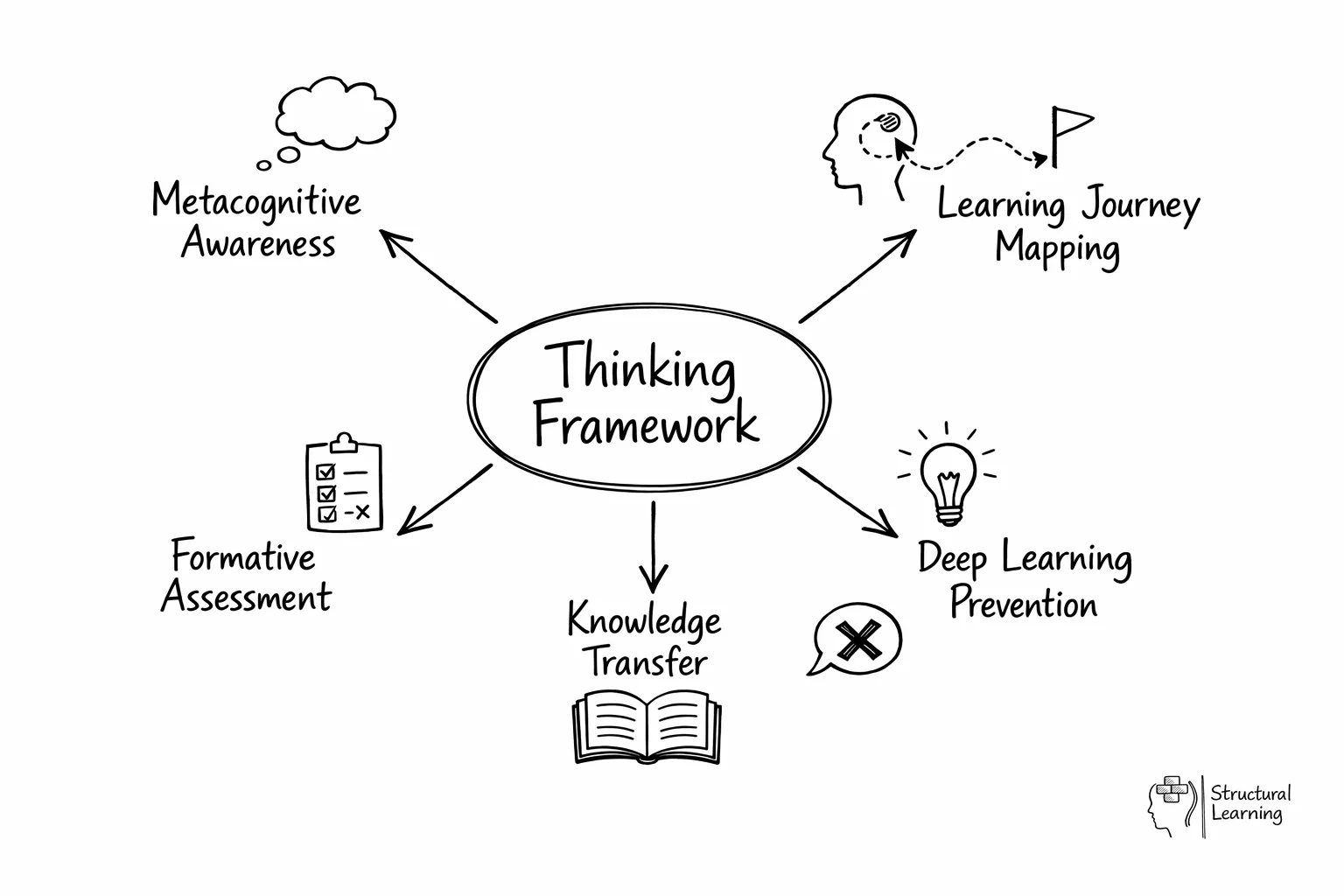
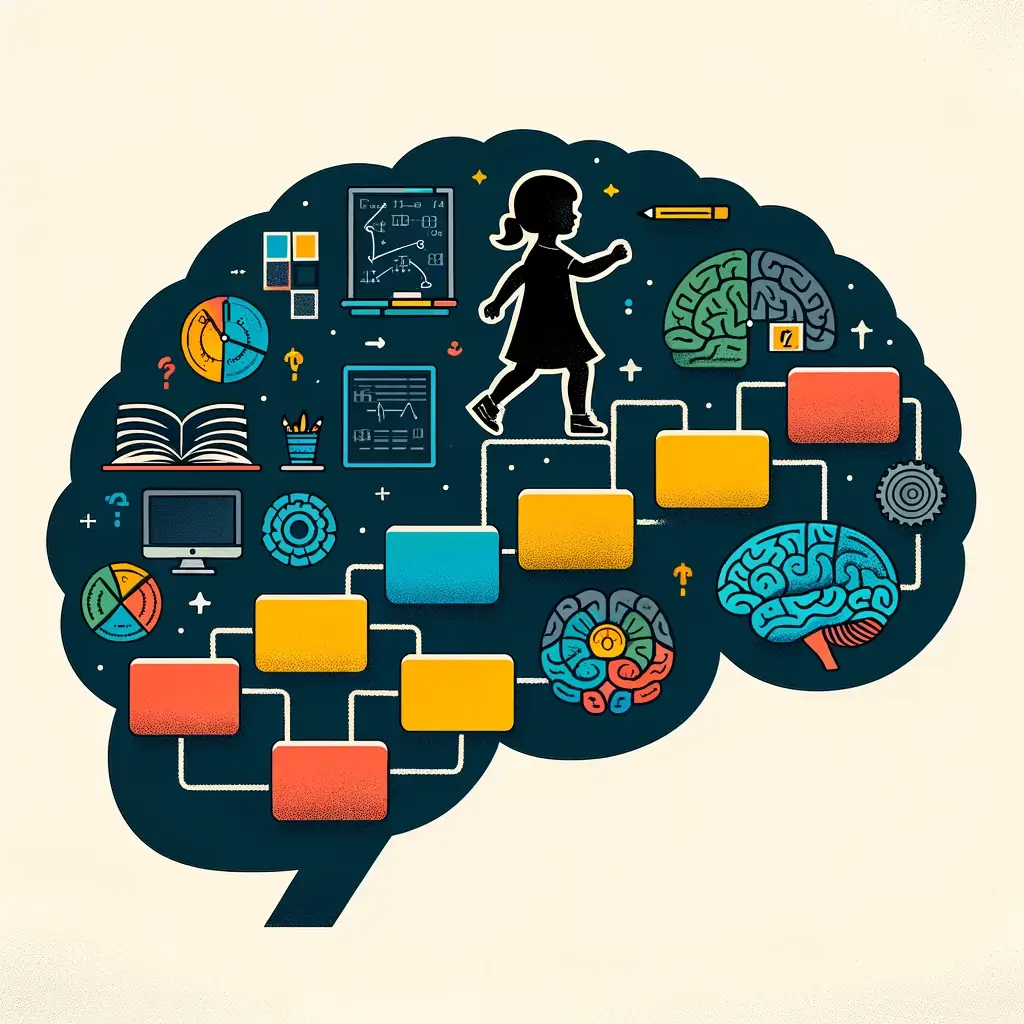
The Thinking Framework is a structured approach designed to enhance the learning process by integrating metacognition into every stage of the educational journey. At its core, it serves as an instructional design toolkit that enables teachers to develop more effective learning experiences tailored to the needs of individual learners.
This framework helps educators clearly define learning goals, craft relevant learning materials, and orchestrate activities that promote active learning. By developing a learning environment that prioritises understanding and the application of knowledge, the Thinking Framework ensures that students not only acquire information but also develop an in-depth, intuitive understanding of the material.
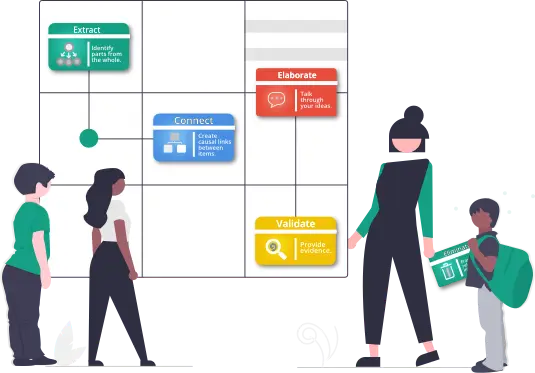
Essential to this framework is its emphasis on metacognitive awareness, which encourages students to think about their own thinking. This awareness is crucial for both educators and students as it leads to more effective knowledge acquisition strategies and a more personalized learning experience.

Schools adopting the Thinking Framework are equipped with a variety of instructional strategies that support basic activities as well as complex knowledge application. This approach not only enhances the academic performance but also prepares students to manage their learning independently, making it a pivotal component of modern educational practices.
In essence, the Thinking Framework shifts the focus from traditional, passive reception of information to a more dynamic, interactive process. It challenges both teachers and students to engage deeply with the content, thereby transforming the typical learning experience into an active exploration of knowledge. This transformation is vital for schools that aim to cultivate learners and thinkers who are capable of navigating the increasingly complex demands of contemporary life and work.
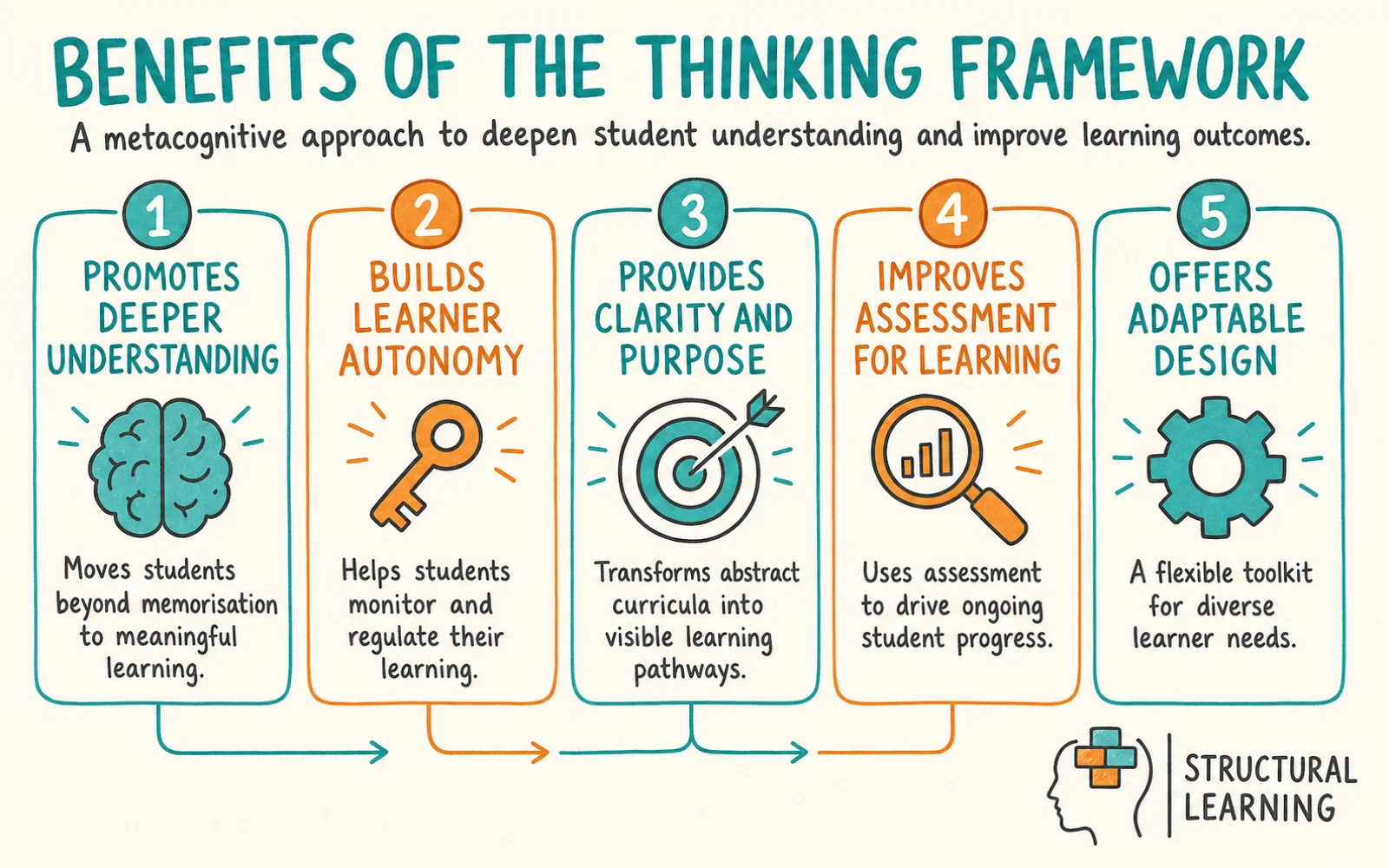
Understanding and activating deep, meaningful thinking in children is crucial for their development and success in the classroom. This activation not only enriches the learning opportunity but also enhances the overall quality of their educational experience. By engaging in profound cognitive processes, students can navigate complex concepts more effectively and embark on successful learning journeys that are rich in discovery and insight.
Note: These are theoretical benefits based on the framework's design and educational research. Individual outcomes may vary depending on implementation quality, student characteristics, and classroom context.
By focusing on these reasons, educators can create a learning environment that values and cultivates deep thinking, preparing students not just for academic success but for lifelong intellectual engagement.

The Thinking Framework serves as a robust tool for measuring learner outcomes, providing educators with essential insights into student understanding and engagement. This framework incorporates formative assessment techniques that are integral to the educational process, offering a dynamic method to evaluate and enhance learning as it happens.
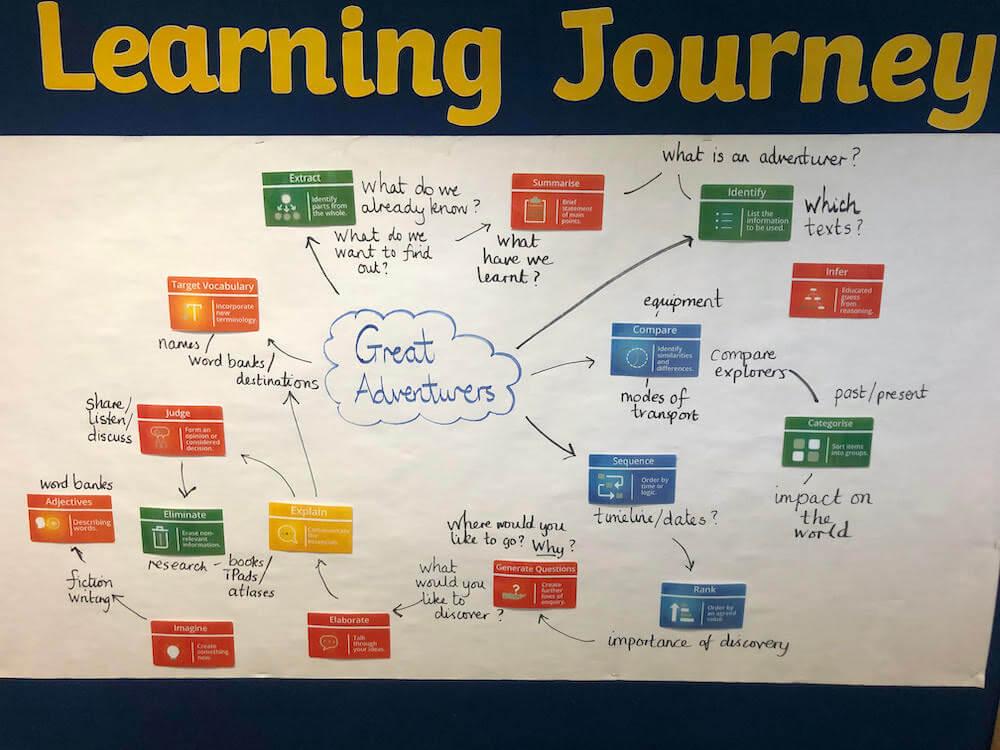
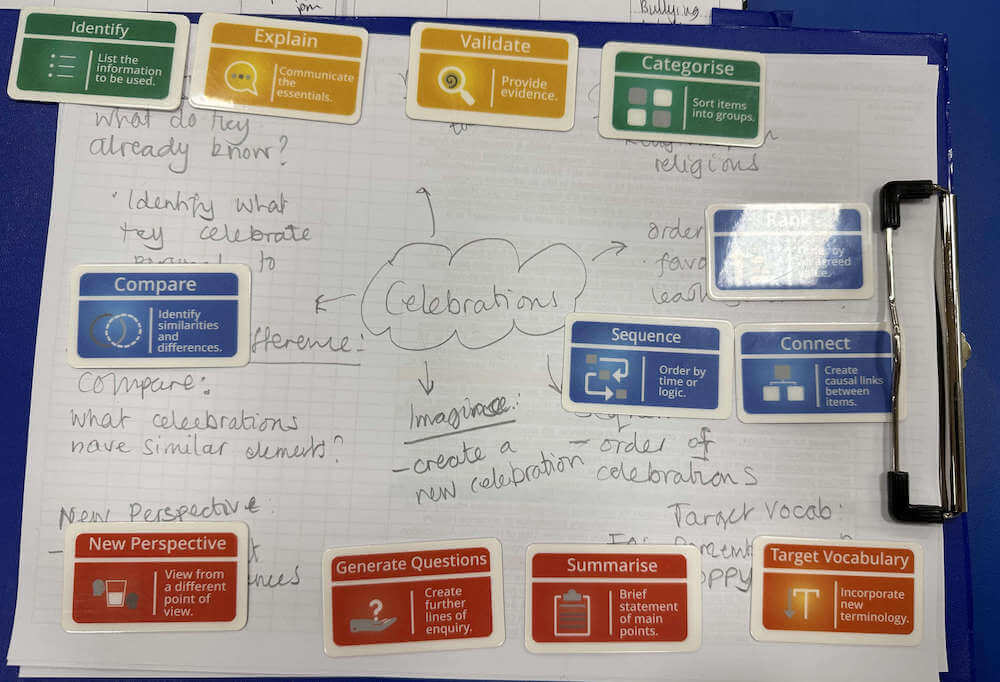
By utilising "I can" statements associated with each learning action, teachers can clearly articulate expectations and objectives. These statements act as milestones within the learner journey mapping, guiding both instruction and assessment. This method not only tracks progress but also identifies areas of incomplete understanding, allowing for timely interventions that cater specifically to the needs of early-stage learners and more advanced students alike.
The chaining together of these learning actions within the framework is not just procedural but an art form that enhances deep cognitive engagement. This structured yet flexible arrangement of actions ensures that instructional strategies are not only aligned with educational goals but are also sufficiently adaptable to meet diverse learner needs and styles.
Visual learner journey" width="auto" height="auto" id="">Moreover, these learning actions serve as checkpoints throughout the educational journey. They function as 'health checks' that provide continuous feedback on learner experiences and involved activities. This ongoing assessment helps educators adjust their teaching strategies in real-time, ensuring that each student's learning path is improved for success.
In practice, the Thinking Framework's approach to formative assessment exemplifies an effective model for educational measurement. It underscores the importance of alignment strategies that ensure the curriculum is delivered in a way that all students can access and benefit from. Consequently, this framework not only measures educational outcomes but also enhances the overall quality of learner engagement, making it an indispensable tool for creating effective learners in today’s classrooms.

These practical ideas aim to helps teachers to use the Thinking Framework effectively, ensuring that each learning journey is thoughtfully structured to enhance learner engagement and success.
The Thinking Framework and accompanying tools like Writer's Block and graphic organisers offer versatile strategies for supporting children with diverse educational needs, including those who may be reluctant to participate in traditional verbal activities. Here are six practical ways these tools can be used to make learning more inclusive:
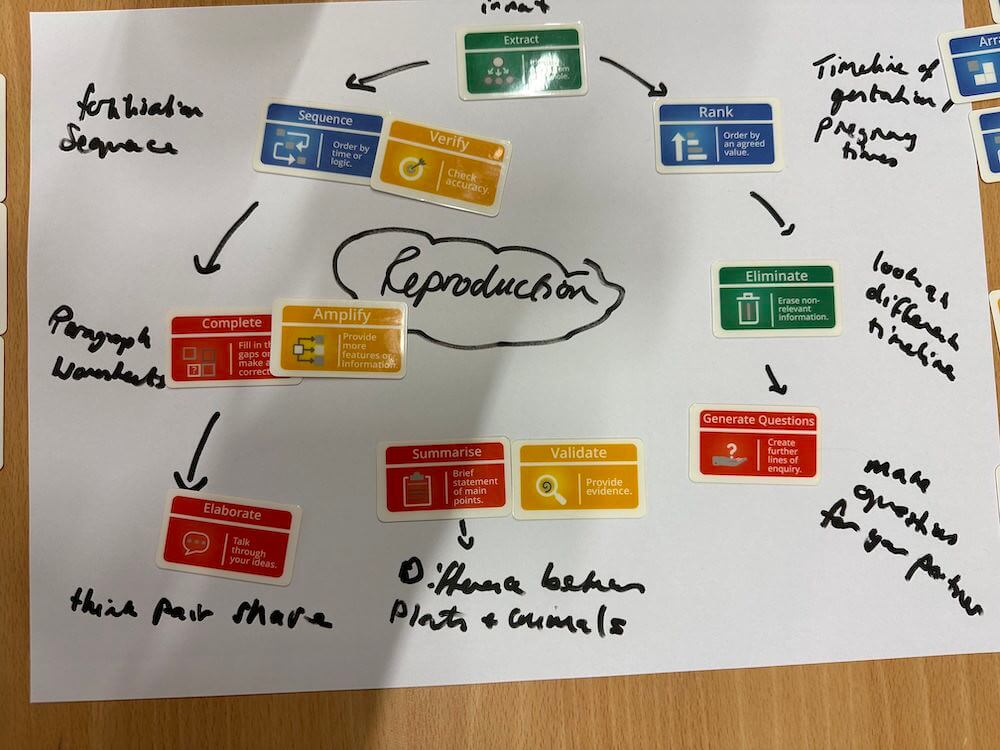
By incorporating these practical strategies into the classroom, teachers can ensure that all students, regardless of their initial comfort with traditional learning modalities, have the opportunity to engage meaningfully and effectively in their education. This inclusive approach not only enhances academic outcomes but also builds confidence and encourages lifelong learning.


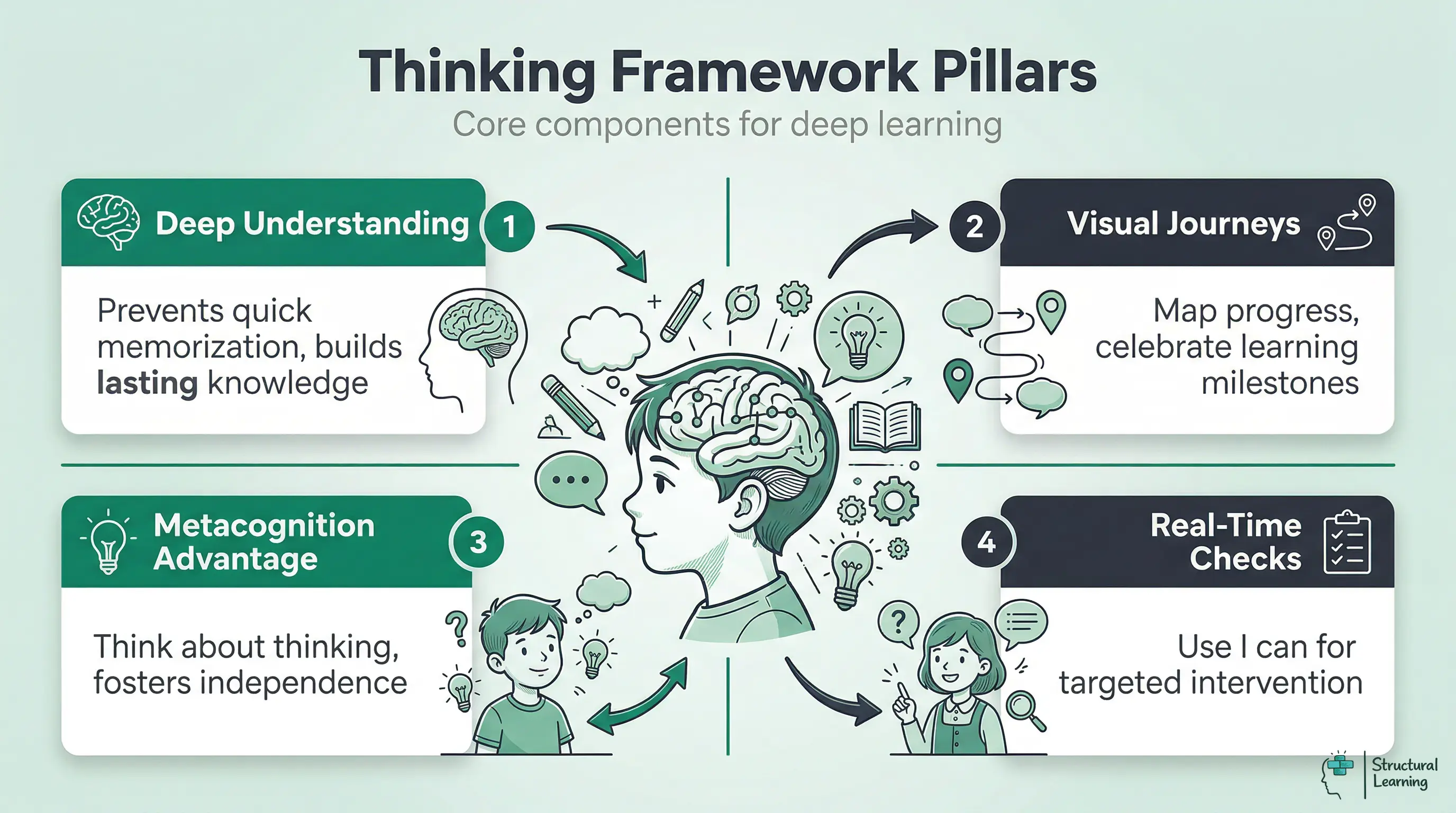
The Thinking Framework is a structured approach that integrates metacognition into every stage of learning, shifting focus from passive information reception to act ive knowledge exploration. Unlike traditional methods that often lead to surface learning and quick-forget memorisation, it builds deep understanding by encouraging students to think about their own thinking processes.
Teachers can create visual learning pathways on flipchart paper or large bulletin boards, involving students in mapping their learning journey collaboratively. These maps should include clear milestones and 'I can' statements that show pupils exactly where they're going and celebrate progress along the way.
'I can' statements are clear articulations of learning expectations and objectives associated with each learning action within the framework. They function as instant formative assessment tools that reveal exactly where each pupil struggles, allowing teachers to provide immediate, targeted intervention and track progress effectively.
By developing critical thinking skills and metacognitive awareness, the framework helps students accurately assess their own knowledge and abilities. This self-awareness prevents the overestimation of understanding and skills that characterises the Dunning-Kruger effect, leading to more realistic self-evaluation.
The framework helps students develop stronger reasoning and problem-solving abilities, enabling them to tackle new challenges independently, making them more adaptable in the classroom. This cognitive flexibility helps students tackle novel problems without constant teacher support, reducing dependency and promoting independent learning.
The learning actions serve as continuous checkpoints that provide real-time feedback on student understanding and engagement throughout the educational journey. Teachers can use this ongoing assessment to adjust their teaching strategies immediately, ensuring each student's learning path is improved for success and addressing gaps before they become problematic.
Schools may need to shift from traditional teaching methods to more dynamic, interactive processes, which requires staff training and cultural change. The framework demands that both teachers and students engage deeply with content, so schools should prepare by providing professional development and allowing time for educators to master the metacognitive approach.
These peer-reviewed studies provide deeper insights into learner journey and its application in educational settings.
An Instructional Design for Online Learning in Vocational Education according to a Self- Regulated LearningFramework for Problem Solving during the CoViD-19 Crisis View study ↗68 citations
Sangsawang et al. (2020)
This study examines how multimedia games and self-regulated learning frameworks can be used to teach problem-solving skills in vocational education during the COVID-19 pandemic. The research demonstrates that combining interactive digital tools with structured self-regulation strategies effectively improves student learning outcomes in online environments. This is relevant for teachers designing learner journeys as it shows how to maintain engagement and learning effectiveness when students must take more responsibility for their own learning progress.
Classroom Applications of Research on Self-Regulated Learning 1357 citations
Paris et al. (2001)
This paper provides practical classroom strategies for implementing self-regulated learning techniques, focusing on how teachers can help students develop skills in planning, monitoring, and evaluating their own learning. The research translates theoretical self-regulation concepts into actionable teaching practices that educators can use in their daily instruction. This is essential reading for teachers designing learner journeys because it offers concrete methods for helping students become more independent and reflective learners throughout their educational experience.
Teaching Plan Generation and Evaluation With GPT-4: Unleashing the Potential of LLM in Instructional Design View study ↗70 citations
Hu et al. (2024)
This study investigates how large language models like GPT-4 can assist teachers in creating and evaluating lesson plans and instructional materials. The research explores both the potential benefits and limitations of using artificial intelligence tools for educational design and planning. This is relevant for teachers considering learner journeys as it demonstrates how emerging AI technologies might support personalized instruction and help educators develop more effective, tailored learning experiences for their students.
Identifying Teachers’ Supports of Metacognition Through Classroom Talk and Its Relation to Growth in Conceptual Learning 68 citations
Zepeda et al. (2019)
This research analyses how teachers use classroom conversations to support students' metacognitive thinking and examines the relationship between these teaching practices and student learning growth. The study identifies specific types of teacher talk that help students reflect on their own thinking processes and learning strategies. This is valuable for teachers designing learner journeys because it shows how everyday classroom interactions can be used to develop students' self-awareness and ability to monitor their own learning progress.
A Systematic Review of Meta-Analyses on the Impact of Formative Assessment on K-12 Students’ Learning: Toward Sustainable Quality Education View study ↗30 citations
Sortwell et al. (2024)
This comprehensive review synthesizes research on formative assessment practices in K-12 education, examining the evidence for how ongoing assessment supports student learning and educational sustainability. The study analyses multiple research studies to identify the most effective formative assessment strategies and their impact on student outcomes. This is crucial for teachers implementing learner journeys as it provides evidence-based guidance on how to use continuous assessment to track student progress, provide feedback, and adjust instruction to meet individual learning needs.
The Thinking Framework is a structured approach designed to enhance the learning process by integrating metacognition into every stage of the educational journey. At its core, it serves as an instructional design toolkit that enables teachers to develop more effective learning experiences tailored to the needs of individual learners.
This framework helps educators clearly define learning goals, craft relevant learning materials, and orchestrate activities that promote active learning. By developing a learning environment that prioritises understanding and the application of knowledge, the Thinking Framework ensures that students not only acquire information but also develop an in-depth, intuitive understanding of the material.
Essential to this framework is its emphasis on metacognitive awareness, which encourages students to think about their own thinking. This awareness is crucial for both educators and students as it leads to more effective knowledge acquisition strategies and a more personalized learning experience.

Schools adopting the Thinking Framework are equipped with a variety of instructional strategies that support basic activities as well as complex knowledge application. This approach not only enhances the academic performance but also prepares students to manage their learning independently, making it a pivotal component of modern educational practices.
In essence, the Thinking Framework shifts the focus from traditional, passive reception of information to a more dynamic, interactive process. It challenges both teachers and students to engage deeply with the content, thereby transforming the typical learning experience into an active exploration of knowledge. This transformation is vital for schools that aim to cultivate learners and thinkers who are capable of navigating the increasingly complex demands of contemporary life and work.
Understanding and activating deep, meaningful thinking in children is crucial for their development and success in the classroom. This activation not only enriches the learning opportunity but also enhances the overall quality of their educational experience. By engaging in profound cognitive processes, students can navigate complex concepts more effectively and embark on successful learning journeys that are rich in discovery and insight.
Note: These are theoretical benefits based on the framework's design and educational research. Individual outcomes may vary depending on implementation quality, student characteristics, and classroom context.
By focusing on these reasons, educators can create a learning environment that values and cultivates deep thinking, preparing students not just for academic success but for lifelong intellectual engagement.

The Thinking Framework serves as a robust tool for measuring learner outcomes, providing educators with essential insights into student understanding and engagement. This framework incorporates formative assessment techniques that are integral to the educational process, offering a dynamic method to evaluate and enhance learning as it happens.

By utilising "I can" statements associated with each learning action, teachers can clearly articulate expectations and objectives. These statements act as milestones within the learner journey mapping, guiding both instruction and assessment. This method not only tracks progress but also identifies areas of incomplete understanding, allowing for timely interventions that cater specifically to the needs of early-stage learners and more advanced students alike.
The chaining together of these learning actions within the framework is not just procedural but an art form that enhances deep cognitive engagement. This structured yet flexible arrangement of actions ensures that instructional strategies are not only aligned with educational goals but are also sufficiently adaptable to meet diverse learner needs and styles.
Visual learner journey" width="auto" height="auto" id="">Moreover, these learning actions serve as checkpoints throughout the educational journey. They function as 'health checks' that provide continuous feedback on learner experiences and involved activities. This ongoing assessment helps educators adjust their teaching strategies in real-time, ensuring that each student's learning path is improved for success.
In practice, the Thinking Framework's approach to formative assessment exemplifies an effective model for educational measurement. It underscores the importance of alignment strategies that ensure the curriculum is delivered in a way that all students can access and benefit from. Consequently, this framework not only measures educational outcomes but also enhances the overall quality of learner engagement, making it an indispensable tool for creating effective learners in today’s classrooms.

These practical ideas aim to helps teachers to use the Thinking Framework effectively, ensuring that each learning journey is thoughtfully structured to enhance learner engagement and success.
The Thinking Framework and accompanying tools like Writer's Block and graphic organisers offer versatile strategies for supporting children with diverse educational needs, including those who may be reluctant to participate in traditional verbal activities. Here are six practical ways these tools can be used to make learning more inclusive:
By incorporating these practical strategies into the classroom, teachers can ensure that all students, regardless of their initial comfort with traditional learning modalities, have the opportunity to engage meaningfully and effectively in their education. This inclusive approach not only enhances academic outcomes but also builds confidence and encourages lifelong learning.


The Thinking Framework is a structured approach that integrates metacognition into every stage of learning, shifting focus from passive information reception to act ive knowledge exploration. Unlike traditional methods that often lead to surface learning and quick-forget memorisation, it builds deep understanding by encouraging students to think about their own thinking processes.
Teachers can create visual learning pathways on flipchart paper or large bulletin boards, involving students in mapping their learning journey collaboratively. These maps should include clear milestones and 'I can' statements that show pupils exactly where they're going and celebrate progress along the way.
'I can' statements are clear articulations of learning expectations and objectives associated with each learning action within the framework. They function as instant formative assessment tools that reveal exactly where each pupil struggles, allowing teachers to provide immediate, targeted intervention and track progress effectively.
By developing critical thinking skills and metacognitive awareness, the framework helps students accurately assess their own knowledge and abilities. This self-awareness prevents the overestimation of understanding and skills that characterises the Dunning-Kruger effect, leading to more realistic self-evaluation.
The framework helps students develop stronger reasoning and problem-solving abilities, enabling them to tackle new challenges independently, making them more adaptable in the classroom. This cognitive flexibility helps students tackle novel problems without constant teacher support, reducing dependency and promoting independent learning.
The learning actions serve as continuous checkpoints that provide real-time feedback on student understanding and engagement throughout the educational journey. Teachers can use this ongoing assessment to adjust their teaching strategies immediately, ensuring each student's learning path is improved for success and addressing gaps before they become problematic.
Schools may need to shift from traditional teaching methods to more dynamic, interactive processes, which requires staff training and cultural change. The framework demands that both teachers and students engage deeply with content, so schools should prepare by providing professional development and allowing time for educators to master the metacognitive approach.
These peer-reviewed studies provide deeper insights into learner journey and its application in educational settings.
An Instructional Design for Online Learning in Vocational Education according to a Self- Regulated LearningFramework for Problem Solving during the CoViD-19 Crisis View study ↗68 citations
Sangsawang et al. (2020)
This study examines how multimedia games and self-regulated learning frameworks can be used to teach problem-solving skills in vocational education during the COVID-19 pandemic. The research demonstrates that combining interactive digital tools with structured self-regulation strategies effectively improves student learning outcomes in online environments. This is relevant for teachers designing learner journeys as it shows how to maintain engagement and learning effectiveness when students must take more responsibility for their own learning progress.
Classroom Applications of Research on Self-Regulated Learning 1357 citations
Paris et al. (2001)
This paper provides practical classroom strategies for implementing self-regulated learning techniques, focusing on how teachers can help students develop skills in planning, monitoring, and evaluating their own learning. The research translates theoretical self-regulation concepts into actionable teaching practices that educators can use in their daily instruction. This is essential reading for teachers designing learner journeys because it offers concrete methods for helping students become more independent and reflective learners throughout their educational experience.
Teaching Plan Generation and Evaluation With GPT-4: Unleashing the Potential of LLM in Instructional Design View study ↗70 citations
Hu et al. (2024)
This study investigates how large language models like GPT-4 can assist teachers in creating and evaluating lesson plans and instructional materials. The research explores both the potential benefits and limitations of using artificial intelligence tools for educational design and planning. This is relevant for teachers considering learner journeys as it demonstrates how emerging AI technologies might support personalized instruction and help educators develop more effective, tailored learning experiences for their students.
Identifying Teachers’ Supports of Metacognition Through Classroom Talk and Its Relation to Growth in Conceptual Learning 68 citations
Zepeda et al. (2019)
This research analyses how teachers use classroom conversations to support students' metacognitive thinking and examines the relationship between these teaching practices and student learning growth. The study identifies specific types of teacher talk that help students reflect on their own thinking processes and learning strategies. This is valuable for teachers designing learner journeys because it shows how everyday classroom interactions can be used to develop students' self-awareness and ability to monitor their own learning progress.
A Systematic Review of Meta-Analyses on the Impact of Formative Assessment on K-12 Students’ Learning: Toward Sustainable Quality Education View study ↗30 citations
Sortwell et al. (2024)
This comprehensive review synthesizes research on formative assessment practices in K-12 education, examining the evidence for how ongoing assessment supports student learning and educational sustainability. The study analyses multiple research studies to identify the most effective formative assessment strategies and their impact on student outcomes. This is crucial for teachers implementing learner journeys as it provides evidence-based guidance on how to use continuous assessment to track student progress, provide feedback, and adjust instruction to meet individual learning needs.
{"@context":"https://schema.org","@graph":[{"@type":"Article","@id":"https://www.structural-learning.com/post/learner-journey#article","headline":"Learner Journey","description":"Explore how teachers can craft effective learning journey maps to enhance classroom engagement and understanding.","datePublished":"2024-05-03T09:55:12.278Z","dateModified":"2026-01-26T10:09:32.212Z","author":{"@type":"Person","name":"Paul Main","url":"https://www.structural-learning.com/team/paulmain","jobTitle":"Founder & Educational Consultant"},"publisher":{"@type":"Organization","name":"Structural Learning","url":"https://www.structural-learning.com","logo":{"@type":"ImageObject","url":"https://cdn.prod.website-files.com/5b69a01ba2e409e5d5e055c6/6040bf0426cb415ba2fc7882_newlogoblue.svg"}},"mainEntityOfPage":{"@type":"WebPage","@id":"https://www.structural-learning.com/post/learner-journey"},"image":"https://cdn.prod.website-files.com/5b69a01ba2e409501de055d1/69466764260f695dbf28ba52_66e810e8ea3a5299028c5a2b_6634b35d84553c9eae810e08_Building%252520Learner%252520Journeys.webp","wordCount":2213},{"@type":"BreadcrumbList","@id":"https://www.structural-learning.com/post/learner-journey#breadcrumb","itemListElement":[{"@type":"ListItem","position":1,"name":"Home","item":"https://www.structural-learning.com/"},{"@type":"ListItem","position":2,"name":"Blog","item":"https://www.structural-learning.com/blog"},{"@type":"ListItem","position":3,"name":"Learner Journey","item":"https://www.structural-learning.com/post/learner-journey"}]},{"@type":"FAQPage","@id":"https://www.structural-learning.com/post/learner-journey#faq","mainEntity":[{"@type":"Question","name":"What is the Thinking Framework and how does it differ from traditional teaching methods?","acceptedAnswer":{"@type":"Answer","text":"The Thinking Framework is a structured approach that integrates metacognition into every stage of learning, shifting focus from passive information reception to active knowledge exploration. Unlike traditional methods that often lead to surface learning and quick-forget memorisation, it builds deep "}},{"@type":"Question","name":"How can teachers practically implement learner journey mapping in their classrooms?","acceptedAnswer":{"@type":"Answer","text":"Teachers can create visual learning pathways on flipchart paper or large bulletin boards, involving students in mapping their learning journey collaboratively. These maps should include clear milestones and 'I can' statements that show pupils exactly where they're going and celebrate progress along "}},{"@type":"Question","name":"What are 'I can' statements and how do they help with assessment?","acceptedAnswer":{"@type":"Answer","text":"'I can' statements are clear articulations of learning expectations and objectives associated with each learning action within the framework. They function as instant formative assessment tools that reveal exactly where each pupil struggles, allowing teachers to provide immediate, targeted intervent"}},{"@type":"Question","name":"How does the Thinking Framework help prevent the Dunning-Kruger effect in students?","acceptedAnswer":{"@type":"Answer","text":"By encouraging critical thinking skills and metacognitive awareness, the framework helps students accurately assess their own knowledge and abilities. This self-awareness prevents the overestimation of understanding and skills that characterises the Dunning-Kruger effect, leading to more realistic sel"}},{"@type":"Question","name":"How does the framework support students' cognitive development and problem-solving abilities?","acceptedAnswer":{"@type":"Answer","text":"The framework helps students develop stronger reasoning and problem-solving abilities, enabling them to tackle new challenges independently, making them more adaptable in the classroom. This cognitive flexibility helps students tackle novel problems without constant teacher support, reducing depende"}}]}]}