Explicit Instruction: A Complete Guide to Direct Teaching MethodsGCSE students aged 15-16 in bottle green cardigans attentively listening to a direct instruction lesson in science class.

Updated on  

February 7, 2026

Explicit Instruction: A Complete Guide to Direct Teaching Methods

|

March 24, 2025

Explore explicit instruction and its principles. Understand research evidence and learn to implement direct teaching methods effectively in your classroom.

Course Enquiry
Copy citation

Main, P. (2025, March 24). Effective Explicit Instruction Strategies. Retrieved from www.structural-learning.com/post/explicit-instruction

What is Explicit Instruction?

Explicit instruction is a structured, systematic teaching approach where teachers provide clear explanations, demonstrate skills through modelling, guide student practise, and support independent application. It follows a research-based sequence of 'I do, We do, You do' that reduces cognitive overload and helps all learners access complex content. This method is particularly effective for teaching foundational skills in reading, writing, and mathematics.

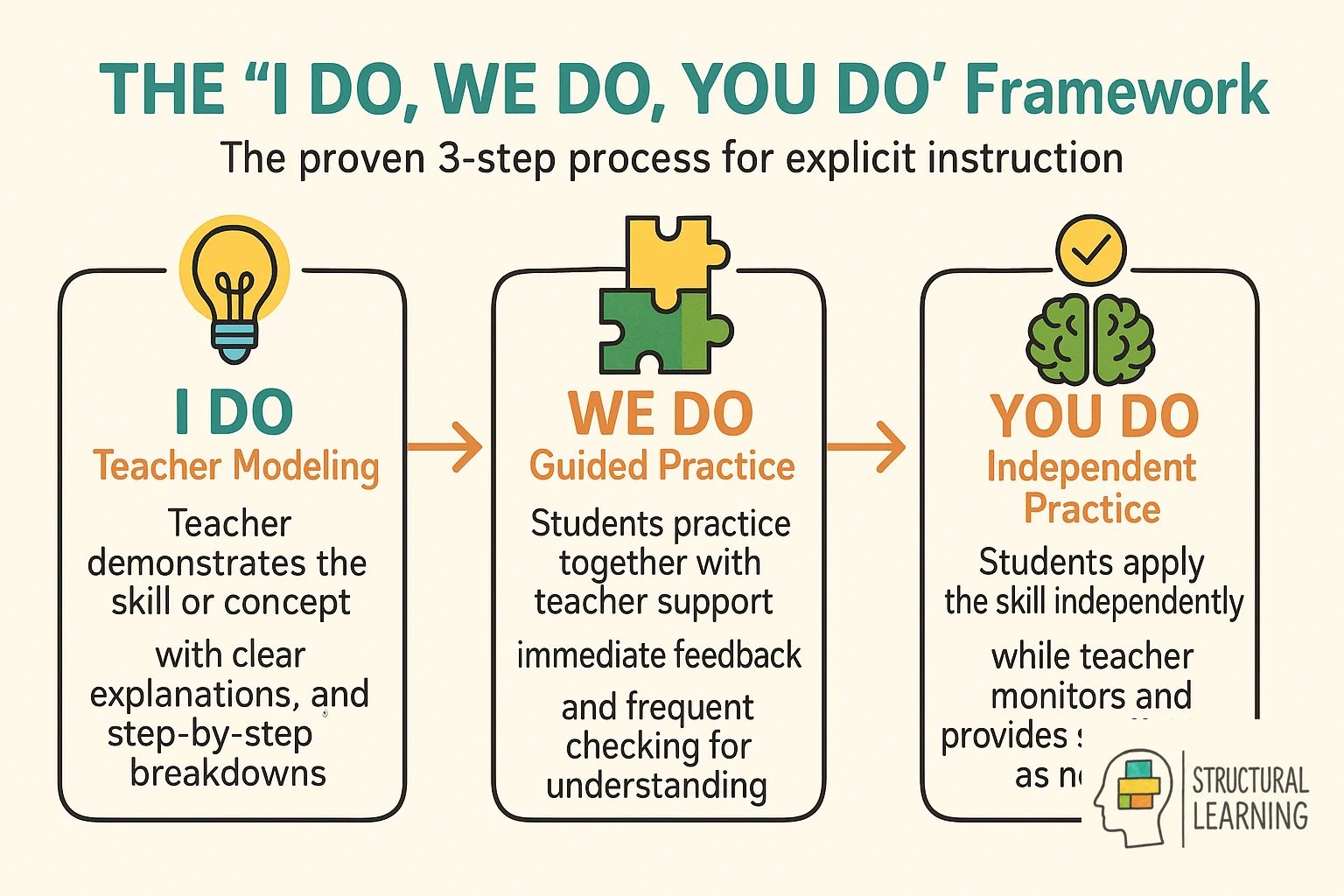
Three-step explicit instruction process: I Do, We Do, You Do framework for effective teaching
The 'I Do, We Do, You Do' Framework

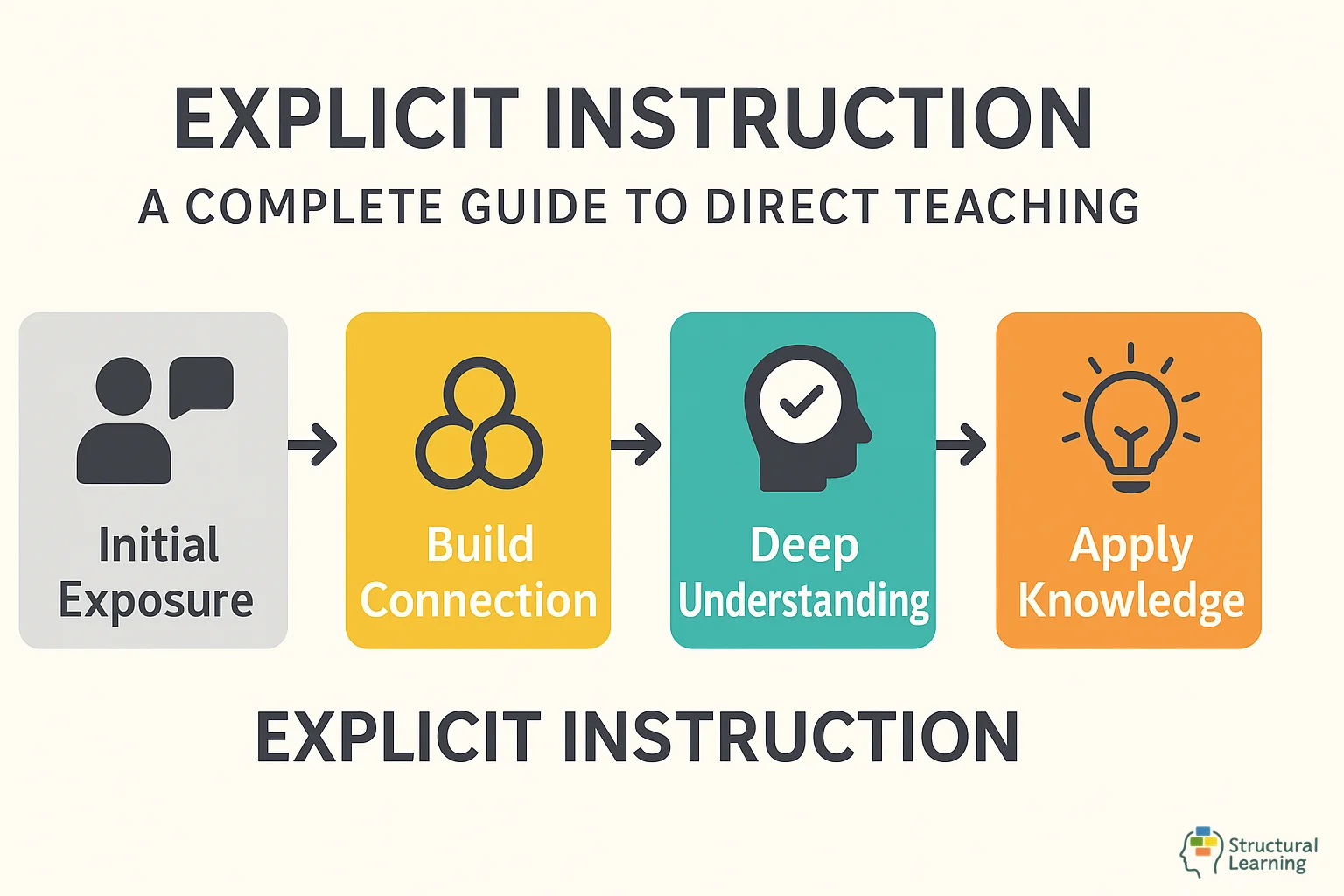
Explicit instruction is a structured, systematic approach to teaching that has strong evidence of effectiveness, particularly for teaching new concepts and skills. These explicit instruction approaches are grounded in decades of research. Based on decades of research including Rosenshine's Principles of Instruction, explicit teaching involves clear explanations, modelling, guided practise, and independent practise. While sometimes criticised as teacher-centred, explicit instruction when done well is highly interactive and responsive to student understanding through the inquiry cycle. This guide explains the key principles and how to implement them.

Diagram explaining Explicit Instruction: AComplete Guide to Direct Teaching Methods" loading="lazy">
Explicit Instruction: A Complete Guide to Direct Teaching Methods

Evidence summary: The EEF Teaching and Learning Toolkit rates direct instruction as having +5 months progress on average. The SEND in Mainstream guidance identifies explicit instruction as one of five key strategies, supported by four systematic reviews incorporating 116 studies. Rosenshine's principles are most effective for well-structured knowledge and skills; effectiveness varies for ill-defined problems or creative tasks.

Key Takeaways

  1. Beyond 'I Do, We Do, You Do': Discover why explicit instruction works for struggling learners and how cognitive science transforms this familiar approach into a powerful teaching tool
  2. The Cognitive Overload Solution: Master task breakdown techniques that help SEND pupils access complex content without overwhelming their working memory
  3. Real-Time Response Teaching: Transform your AI-enhanced feedback from end-of-lesson comments into active, in-the-moment adjustments that prevent misconceptions from taking root
  4. Structure Without Rigidity: Learn how systematic instruction creates the predictable routines anxious learners crave while maintaining the flexibility to respond to individual needs

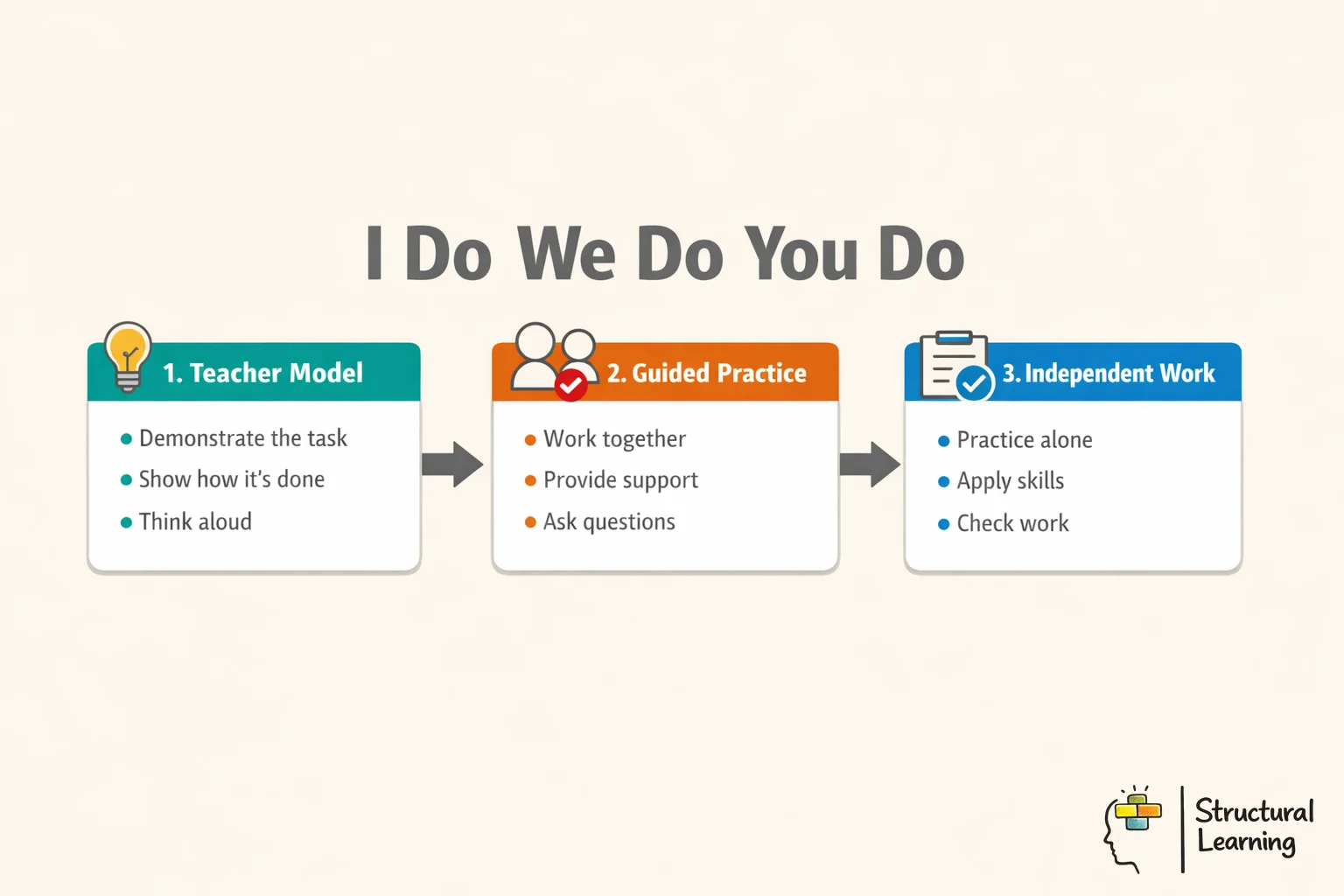
Unlike more general direct instruction, explicit instruction is carefully planned, sequenced, and scaffolded to reduce cognitive overload and ensure all students, regardless of background or ability, can access the content. Lessons typically follow a clear progression: teachers first model the skill or concept (“I do”), then support students in practising it together (“We do”), before finally allowing learners to apply it independently (“You do”).

Three-step explicit instruction process showing I Do We Do You Do framework
I Do We Do You Do

This approach is rooted in cognitive science and has strong evidence to support its use, particularly in reading, writing, and mathematics. It is especially effective for learners who benefit from routine, structure, and clearly defined success criteria.

Key Features of Explicit Instruction:

  • Clear and Purposeful Teaching, Teachers explicitly state learning objectives, success criteria, and expected outcomes.
  • Step-by-Step Modelling and Practise, Concepts are broken down into smaller parts, modelled by the teacher, and reinforced through guided and independent practise.
  • Ongoing Feedback and Checking for Understanding, Frequent questioning, assessment, and adjustment help ensure all learners stay on track.

Key Components of Explicit Instruction

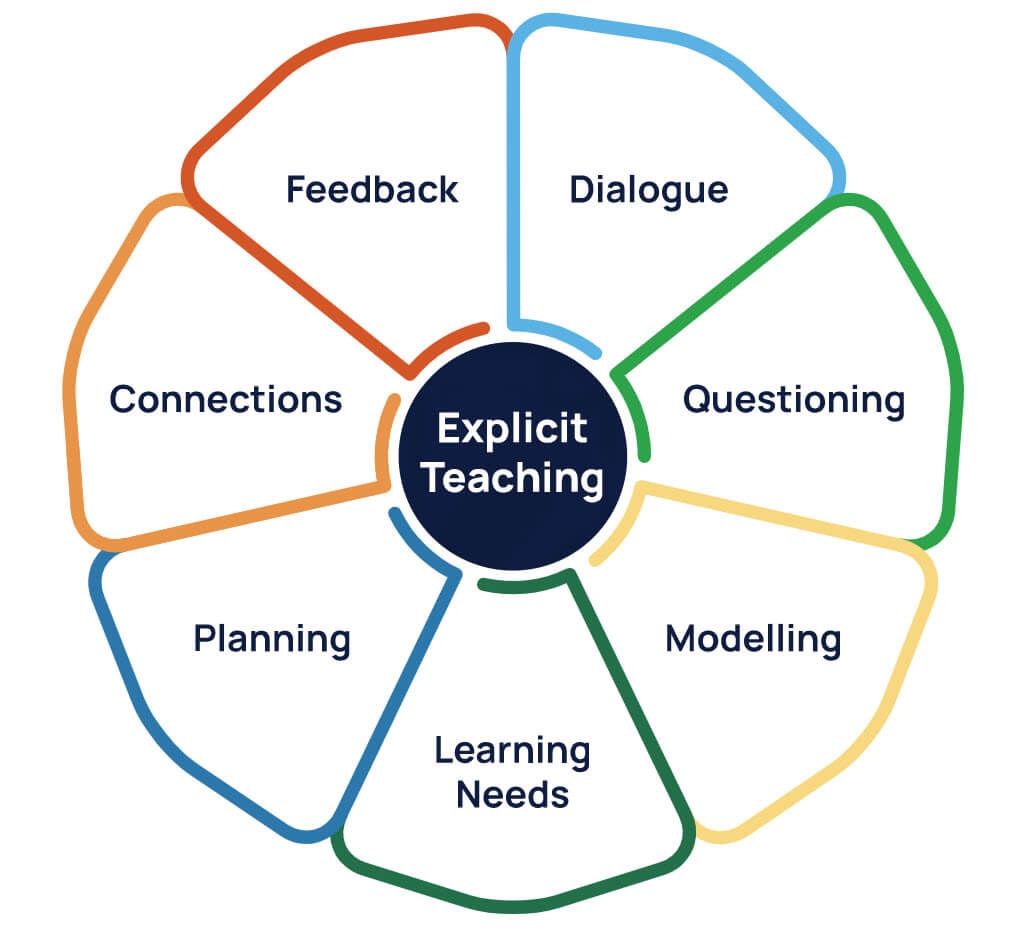
The core components include clear learning objectives, direct modelling by the teacher, guided practise with immediate feedback, and systematic progression to independent practise. Teachers break down complex tasks into smaller steps, check for understanding frequently, and provide scaffolding that gradually decreases as students gain mastery. Each component builds on the previous one to ensure students develop both understanding and skill proficiency.

Explicit Instruction Lesson Phases

Phase Teacher Actions Student Role Key Principles
I Do (Modelling) Demonstrate with think-aloud Watch and listen actively Clear, step-by-step
We Do (Guided) Scaffold with prompts Practice with support Gradual release
You Do (Independent) Monitor and provide feedback Apply skills independently Mastery focus
Review Check understanding Demonstrate learning Consolidation

Explicit instruction represents a highly effective teaching approach characterised by clear, direct communication of concepts and skills. It involves breaking down complex tasks into understandable segments, ensuring students can grasp and apply each part with confidence. This type of instruction gives students the skills they need in a logical and strategic manner.

Among the key features are direct explanations, modelling, guided practise, and purposeful practise opportunities. Educators ensure that students receive the fundamental knowledge required and provide feedback regularly to correct misunderstandings. Charles A. Hughes and other researchers have underscored the importance of explicit instruction in effectively teaching students, especially those with learning disabilities. Such a structured approach accommodates student progression and independence, aligning well with varied grade levels and learning needs.

Explicit Instruction
Explicit instruction

Systematic Instruction

Systematic instruction refers to a carefully designed teaching sequence likened to a well-detailed plan. This structured approach ensures students build knowledge logically, starting from simple ideas and moving to complex skills. For example, systematic instruction might begin by teaching basic sounds in reading, allowing students to connect these sounds into words.

Through this method, new knowledge is consistently linked to what students have already mastered. This ensures concepts are relevant and easily applicable. By weaving together phonemic awareness, phonics, fluency, vocabulary, and comprehension, systematic instruction supports a strategic development of reading skills. Ensuring students possess the necessary background knowledge before introducing new concepts maximises learning efficiency.

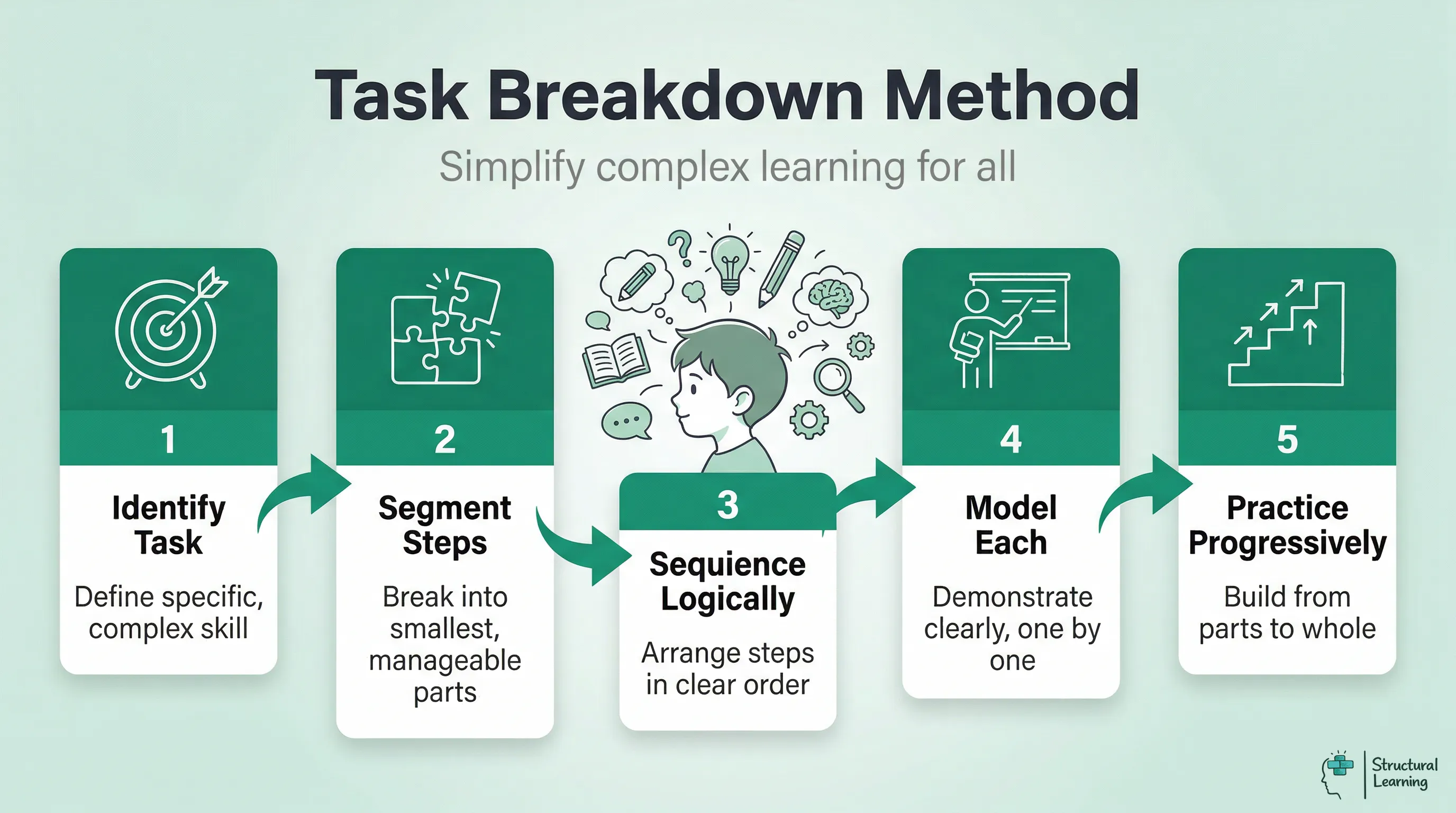
Task Breakdown and Simplification

In explicit instruction, task breakdown and simplification are key strategies to facilitate effective learning, especially for students who may face challenges. This method involves dissecting complex tasks into smaller, more manageable units. By focusing on smaller steps, learners can easily acquire fundamental skills that contribute to mastering more advanced tasks.

This strategy, called task analysis, ensures clear instruction by explicitly teaching each unit of knowledge in a step-by-step manner, rather than assuming prior understanding. Educators often provide scaffolding support, which becomes gradually less necessary as students grow more proficient. Such a method enables a systematic progression, aiding students in developing the capacity to handle more complex thinking tasks over time.

Modelling and Demonstration

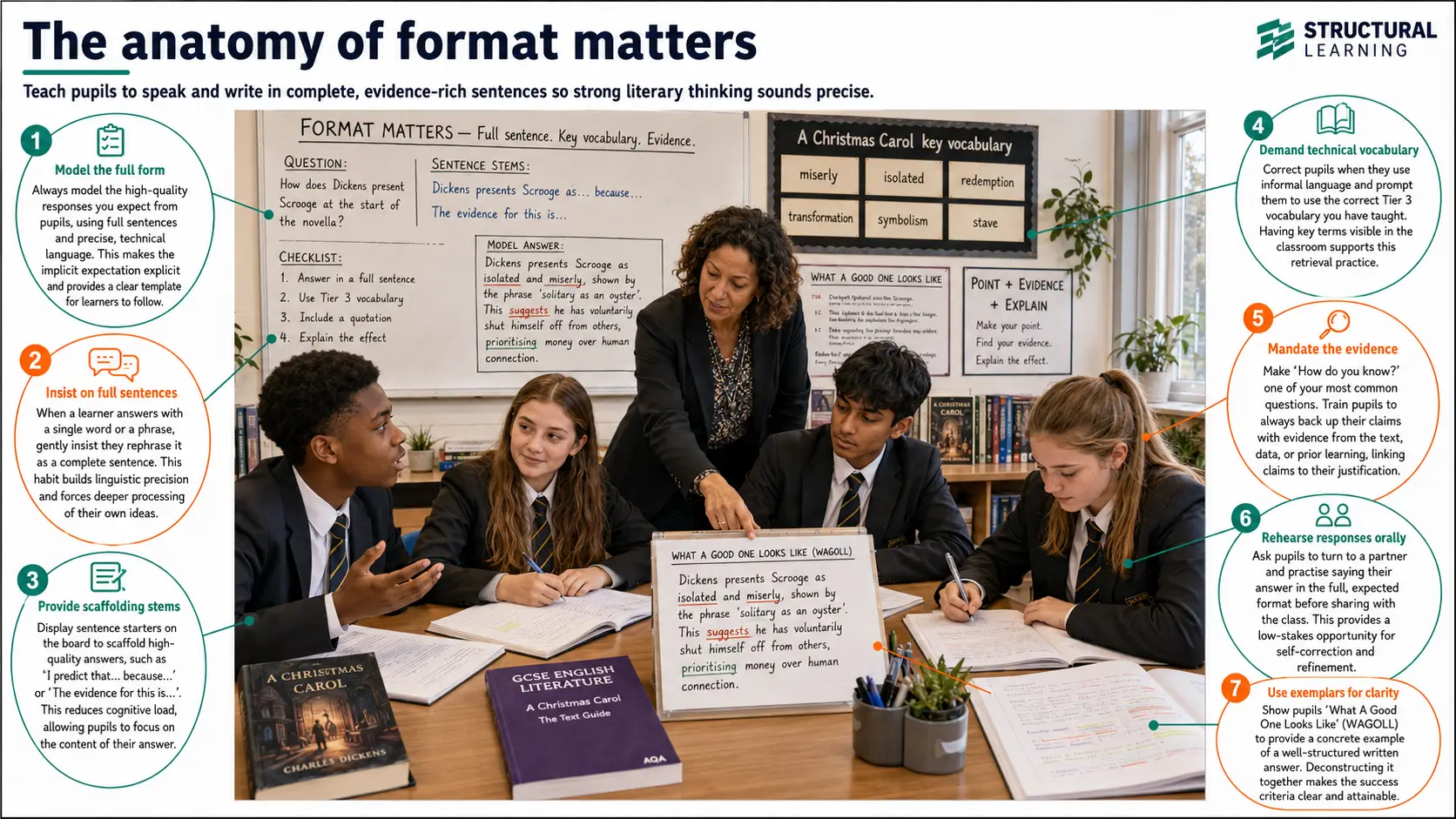
Modelling and demonstration stand as vital components of explicit instruction. These tools involve teachers clearly presenting concepts to ensure students understand how to apply skills effectively. A teacher may use think-aloud strategies, vocalizing the decision-making process during problem-solving. This provides students insight into applying strategies in their learning.

During modelling, addressing misunderstandings with corrective strategies solidifies comprehension. Teachers demonstrate problem-solving techniques, encouraging students' critical-thinking skills. Utilizing consistent language ensures students grasp concepts and replicate learned skills. Thus, modelling offers students an opportunity to watch, understand, and then independently apply new knowledge with increased confidence.

Guided Practise

Guided practise is a crucial phase in explicit instruction, providing a bridge from modelling to independent work. Here, teachers and students tackle problems together, with teachers offering guidance through cues and hints. This interaction allows students to connect new knowledge with previous learning. Feedback, both affirmative and corrective, is given promptly to help students refine their understanding.

Guidance ensures misconceptions are detected early, allowing for reteaching as needed. Such a collaborative environment promotes frequent student responses, enhancing engagement and comprehension. This step strengthens the readiness of students to eventually practise skills on their own effectively.

Independent Practise

Once students accurately demonstrate mastery during guided practise, they transition to independent practise. This phase provides opportunities for students to build fluency without relying on teacher prompts. It marks a crucial time for students to demonstrate understanding and consolidate their skills. Teachers monitor students' progress by assessing their ability to use these skills independently.

Any difficulties detected during this stage highlight areas that may require reteaching. Continuous feedback remains necessary, ensuring reinforcement of skills or adjustments where needed. Independent practise, therefore, creates an environment where students can confidently apply and enhance their knowledge autonomously.

Explicit instruction in the Classroom

Continuous Feedback and Assessment

Providing immediate and continuous feedback is essential during both instruction and practise. Engaging studentswith affirmative and corrective feedback enhances their learning outcomes. For instance, recognising student effort encourages engagement, while corrective feedback addresses misconceptions promptly. Research by Archer & Hughes has shown that timely feedback prevents the practise of errors, thereby increasing lesson success rates.

Continuous assessment allows teachers to identify struggling students and adjust instruction accordingly. Such feedback loops ensure no student ends with unresolved misunderstandings, allowing content to be revisited or modelled again if necessary. Engaging in this changing assessment process creates opportunities for students to successfully master the instructional content.

Explicit Instruction for Reading Skills

In reading instruction, teachers explicitly model decoding strategies, demonstrate comprehension techniques, and systematically teach phonics patterns and vocabulary. This involves thinking aloud while reading, breaking down word recognition processes, and providing structured practise with immediate corrective feedback. Students progress from teacher-led reading to guided practise with support, then to independent reading with learned strategies.

Explicit instruction in reading employs a systematic and structured method to teach new skills. It involves modelling skills, providing ample practise opportunities, and delivering feedback to students. This approach proves particularly effective for students who face challenges in learning to read. Unlike other methods, it treats phonics components as central, integrating them purposefully. Teachers give clear, direct explanations, guiding students to understand each step without ambiguity. By engaging students actively, this approach ensures comprehension and effective learning engagement.

Role of Graphemes and Phonics

Explicit instruction plays a key role in teaching phonics, focusing on organised, intentional techniques that enhance learning outcomes. The National Reading Panel underscores the need for explicit, teacher-driven methods for phonics instruction. Systematic and explicit phonics instruction outshines incidental methods, offering more consistent results. Studies affirm that whether scripted or flexible, explicit approaches remain effective. For students with disabilities, explicit instruction provides a structured path to grasp essential phonics skills, underpinning systematic, intentional teaching that caters to diverse learning needs.

Enhancing Reading Comprehension

Direct, explicit instruction enhances reading comprehension by offering clear guidance and ample practise. Teachers model and explain skills, boosting performance on reading quizzes and tests. Through structured approaches, students engage more actively, receiving feedback that refines their skills. By reducing cognitive load and encouraging frequent student responses, this method aids comprehension. Research highlights how explicit instruction clarifies language and purpose, ensuring students understand complex texts. This systematic approach also secures the necessary prior knowledge to tackle new reading challenges, improving retention and understanding.

Designing Explicit Instruction Lessons

Lesson design begins with identifying specific, measurable learning objectives and breaking complex skills into manageable chunks that align with students' working memory capacity. Teachers sequence content from simple to complex, plan clear examples and n on-examples, and build in multiple opportunities for guided practise with feedback. Each lesson includes review of prior learning, explicit teaching of new content, guided practise, and independent application with built-in assessment checkpoints.

Explicit instruction is a systematic approach aimed at improving studentachievement. It involves breaking down complex skills into smaller, manageable parts, providing clear explanations and modelling for students. This method ensures that learning follows a logical sequence, where each step builds on the previous one.

By focusing on modelling and providing opportunities for guided and independent practise, this approach ensures frequent understanding checks. Engaging students actively drives successful student achievement. As a success-oriented methodology, it supports academic growth by outlining clear objectives and offering practise until students master topics independently.

Structuring Lessons

Incorporating explicit instruction within a lesson structure hinges on connecting new content to prior knowledge. Lessons should provide chances for practise and review and include various ways to demonstrate understanding. Feedback and reflection are crucial here.

Carefully planned and sequenced lessons guide students from simple to complex skills and high-frequency to low-frequency tasks. Immediate and corrective feedback is essential during lessons. Teachers might need to reteach or clarify instructions. Chunking, or dividing lessons into smaller parts, helps manage cognitive load. Through direct explanations and modelling, teachers maintain clarity of skill and concept teaching.

Integrating the "I Do-We Do-You Do" Model

The "I Do-We Do-You Do" model structures learning by guiding students through new content. Teachers first model a concept or skill ("I Do"), then students practise together with guidance ("We Do"), followed by independent practise ("You Do"). This method is especially beneficial for students who struggle, as it builds a strong foundation in areas like reading comprehension. Students progress through learning progressively, with teachers providing scaffolding. This approach emphasises using clear, concise language adjusted to students' levels. Sequential learning helps ensure skills are built on prior knowledge, leading to mastery.

Implementing the "I Do-We Do-You Do" model effectively means offering plenty of practise opportunities. Immediate feedback helps correct misunderstandings and supports student learning. This encourages confidence and ensures misconceptions are addressed quickly. Providing plenty of practise and feedback creates a supportive atmosphere where students can achieve their learning goals.

Benefits of Explicit Instruction

Explicit instruction significantly improves educational results because it reduces cognitive load, provides clear structure that anxious learners need, and ensures no student falls through gaps in understanding. Research shows it particularly benefits struggling learners, SEND pupils, and students from disadvantaged backgrounds by providing the scaffolding needed to access complex content. The method's systematic approach prevents misconceptions from forming and builds strong foundational skills through repeated practise and feedback.

Explicit instruction offers a structured and evidence-informed approach to teaching that supports clarity, mastery, and engagement. By breaking learning into clear steps, it helps students build understanding with confidence, particularly those who benefit from scaffolded support. Here are five of the most widely recognised benefits:

  1. Clear, Step-by-Step Learning
    • Tasks are broken into manageable parts.
    • Reduces cognitive overload and builds confidence.
    • Ensures all learners understand what’s expected at each stage.
    • Boosts Engagement and Retention
      • Active participation keeps students focused and involved.
      • Frequent opportunities for response and interaction.
      • Guided practise helps embed knowledge in long-term memory.
      • Supports Diverse and SEND Learners
        • Clear instructions and gradual progression help all learners access the curriculum.
        • Especially effective for those with learning difficulties.
        • Emphasises small steps and repeated practise to build fluency.
        • Strengthens Foundational Skills
          • Skills are sequenced logically to build towards mastery.
          • Direct modelling and examples clarify complex ideas.
          • Helps students progress confidently to higher-level tasks.
          • Promotes Independent Learning
            • Gradual release of responsibility encourages autonomy.
  • Scaffolding is reduced over time, allowing learners to self-manage.
  • Purposeful practise prepares students for independent problem-solving.
  • Common Explicit Instruction Misconceptions

    The biggest misconception is that explicit instruction means passive, lecture-style teaching, when it actually involves highly interactive lessons with frequent student responses and real-time adjustments. Another challenge is the belief that it stifles creativity, but effective explicit instruction provides the foundational skills students need to eventually engage in creative and independent work. Teachers often struggle with pacing and knowing when to release responsibility to students, which requires careful observation and responsive teaching.

    Explicit instruction is often misunderstood due to its straightforward, teacher-led nature. Some believe it oversimplifies complex tasks. However, this approach breaks down these tasks into smaller, manageable units, which eases understanding. Pieces of the puzzle come together to form a bigger picture, encouraging advanced learning. Critics argue that it limits students' ability to engage in higher-order thinking.

    In reality, explicit instruction builds essential skills needed for such cognitive activities. Although teacher-directed, this method creates a student-centred environment. Students participate actively, which enhances their learning experiences. Some misconceptions arise from the idea that explicit instruction only benefits students with basic needs. Yet, it is effective in teaching higher-order skills.

    Through structured and scaffolded methods, students, especially those facing learning challenges, benefit from continuous feedback. Repeated practise opportunities lead to improved learning gains.

    Addressing Compliance-Oriented Criticisms

    Some educators mistakenly view explicit instruction as mere compliance training, fearing it dehumanizes the learning experience. Critics suggest it stifles engagement in inquiry-based learning and project-based activities due to its teacher-directed approach. However, this perception misses the mark.

    Despite the direction provided by the teacher, explicit instruction creates verification and correction of misunderstandings through active student participation. It doesn't limit creativity or critical thinking. Instead, this approach establishes a foundation. Students are better equipped to navigate complex tasks and projects because of this grounding. Explicit instruction embraces a methodically structured approach, allowing for interactive and meaningful educational experiences.

    Balancing with Inquiry-Based Learning

    Combining explicit instruction with inquiry-based learning can enrich students' educational journeys. By teaching foundational knowledge through explicit methods, students gain a base upon which they can build. This solid background allows them to apply knowledge in real-world scenarios. Inquiry-based learning provides opportunities for students to collaborate, test, and reflect on their learning.

    This process aids the transition of information from working memory to long-term retention. It is a misunderstanding that explicit instruction excludes engagement with inquiry-based learning. On the contrary, essential components such as modelling, practise, and feedback, present in explicit instruction, also support inquiry methods. This duality means explicit instruction plays a role in developing both basic and higher-order skills, hence complementing inquiry-based environments.

    AI Tools and Scaffolding

    In explicit instruction, adaptive scaffolding customises support to students' learning needs. This method involves structuring the learning environment to offer greater or lesser support based on how students respond. Feedback and constructive prompts guide learners through challenging tasks, easing them towards success.

    As students develop their skills and confidence, this extra support will be gradually reduced. Adaptive scaffolding adapts to each student's proficiency level with the curriculum's target skill. Various prompts, be they physical, visual, or verbal, can be used during guided practise. Teacher discretion plays an important role, even within a highly scripted framework. Adjustments ensure an effective learning experience tailored to each student's needs, helping to build competent, independent learners.

    Implementing Explicit Instruction Daily

    Start by establishing consistent lesson routines that include a clear opening, modelling phase, guided practise, and closure with summary. Use techniques like choral response, mini-whiteboards, and think-pair-share to maintain high engagement and check understanding frequently. Build in time for reteaching based on student responses and plan your examples and questions in advance to ensure clarity and appropriate challenge level.

    Explicit instruction works because it provides clarity. By breaking complex skills into smaller, manageable steps, teachers create a clear path forwards for all learners. At the heart of this approach is modelling: showing students exactly how to approach a task before asking them to try it themselves.

    Practise is central. Lessons must offer opportunities for both guided and independent practise, ensuring students have time to consolidate what they’ve learned. Throughout, targeted feedback plays a vital role, affirming success and correcting misconceptions before they take root.

    Using clear, direct language and structured sequencing helps reduce cognitive load, freeing up students' working memory to focus on the content rather than the process. This makes explicit instruction particularly valuable in busy, mixed-ability classrooms.

    A well-structured lesson begins with clearly stated learning intentions and ends with learners confidently applying their skills. The familiar “I Do, We Do, You Do” format offers a reliable roadmap, but its success depends on thoughtful planning and deliberate scaffolding.

    To support this process, many schools now use the Thinking Framework from Structural Learning. This visual taxonomy breaks learning into discrete thinking skills, helping teachers design lessons that progress logically and ensuring that every student can see their next step forwards. Whether organising information, making connections, or explaining ideas, the framework supports structured, purposeful instruction.

    Three Key Ideas to Consider:

    1. Break down before you build up
      Use planning tools like the Thinking Framework to sequence skills logically, from simple to complex.
  • Model everything before handing it over
    Students need to see how a process works before they can do it themselves with confidence.
  • Plan practise with purpose
    Vary guided and independent practise, and ensure feedback is timely, specific, and supportive.
  • Best Explicit Instruction Resources

    Essential resources include Rosenshine's Principles of Instruction, which provides the research foundation, and Anita Archer's work on explicit instruction implementation in classrooms. The Education Endowment Foundation offers evidence-based guidance on structured teaching approaches with UK-specific research. Additional practical resources include Direct Instruction texts by Engelmann and Carnine, and cognitive load theory research by Sweller for understanding the science behind the method.

    The following studies highlight how explicit teaching enhances student achievement by structuring instruction around clear goals, prerequisite skills, and strategic practise, making it a powerful tool for efficient and impactful teaching.

    1. Accelerated Learning through Explicit Strategy Instruction
    Chi and VanLehn (2007) found that students taught with explicit instruction in a problem-solving strategy using an Intelligent Tutoring System outperformed peers in both targeted and untaught domains. The instruction led to better understanding of domain principles and improved task efficiency, showing that cumulative practise under explicit guidance supports transfer of learning and instructional time is well utilised.

    2. Explicit Instruction in Fitness Education
    Velez (2023) demonstrated that explicit teaching of fitness exercises significantly improved student performance in muscular strength, endurance, flexibility, and cardiovascular fitness. This study emphasised the value of structured, clear instruction in developing prerequisite skills and making physical education more efficient, highlighting high-use practices in action.

    3. Improving Programming Self-Efficacy with Explicit Instruction
    Govender et al. (2014) showed that teaching problem-solving explicitly in programming classes improved both student and teacher self-efficacy. The findings suggest that explicit instruction helpsmanage task difficulty and boosts learner confidence, providing a foundation for more effective professional learning in STEM education.

    4. Explicit Reading Instruction in Primary Classrooms
    Lucero and Vargas (2021) conducted a study with Grade 1 pupils and found significant gains in reading comprehension using an explicit instruction model. The results support explicit teaching as a reliable strategy for early literacy, emphasising the importance of clear modelling and guided practise during limited instructional time.

    5. Higher-Order Thinking via Explicit Strategy Teaching
    Saw (2012) investigated how explicit instruction in reading strategies enhanced critical thinking among primary ESL students. Using structured lessons aligned with curriculum goals, the study showed that explicit teaching not only improves comprehension but also creates analytical thinking through cumulative practise and scaffolded learning.

    15 Explicit Instruction Best Practices

    1. Begin with clear learning objectives
    2. Activate and connect to prior knowledge
    3. Break complex skills into smaller steps
    4. Use clear, concise language
    5. Model thinking processes aloud
    6. Provide multiple worked examples
    7. Check understanding frequently
    8. Give immediate corrective feedback
    9. Use guided practice before independence
    10. Scaffold with gradually fading support
    11. Ensure high success rates (80%+)
    12. Provide adequate practice opportunities
    13. Review and summarise key points
    14. Distribute practice over time
    15. Reteach when mastery not achieved

    Frequently Asked Questions

    How Does Explicit Instruction Differ?

    Explicit instruction is a structured, systematic teaching approach that follows the 'I do, We do, You do' framework, where teachers provide clear explanations, model skills, guide practise, and support independent application. Unlike more general direct instruction, it is carefully planned and sequenced to reduce cognitive overload, making it particularly effective for teaching foundational skills in reading, writing, and mathematics to all learners regardless of background or ability.

    Effective I Do-We Do-You Do Implementation

    Teachers begin with clear modelling where they demonstrate the skill or concept using think-aloud strategies to vocalise their decision-making process. They then move to guided practise, working collaboratively with students whilst providing immediate feedback and corrective strategies, before finally allowing students to apply skills independently once they demonstrate mastery.

    Benefits for SEND Students

    Explicit instruction reduces cognitive overload by breaking complex tasks into smaller, manageable steps, making content accessible to pupils who benefit from routine and structure. It provides the predictable routines that anxious learners need whilst offering systematic scaffolding that gradually decreases as students gain confidence and mastery.

    Breaking Down Complex Tasks

    Teachers should use task analysis to dissect complex tasks into smaller, sequential units, teaching each step explicitly rather than assuming prior understanding. This systematic progression involves linking new knowledge to what students have already mastered, with scaffolding support that becomes gradually less necessary as students develop proficiency.

    Feedback Timing and Role

    Feedback in explicit instruction should be immediate and ongoing, provided during the guided practise phase to help students refine their understanding and detect misconceptions early. This real-time response approach involves frequent questioning and assessment, allowing teachers to make evolving, in-the-moment adjustments rather than waiting until the end of lessons.

    Maintaining Student Engagement

    When implemented effectively, explicit instruction is highly interactive and responsive to student understanding, not simply teacher-dominated. The guided practise phase promotes frequent student responses and collaborative problem-solving, creating an engaging environment where students actively participate whilst receiving the structure and clarity they need.

    Subject-Specific Applications and Examples

    Explicit instruction is particularly effective in reading, writing, and mathematics, with strong research evidence supporting its use in these foundational areas. For example, in reading it might involve systematically teaching phonemic awareness, phonics, and fluency in a logical sequence, or in mathematics breaking down problem-solving strategies into clear, sequential steps that students can follow and practise.

    Further Reading: Key Research Papers

    These peer-reviewed studies provide the research foundation for the strategies discussed here:

    Building Comprehension: A Step-by-Step Approach for High School EFL Students in Indonesia View study ↗

    Zaldi Harfal & Somayye Ariyanfar (2024)

    This research demonstrates how a five-step teaching framework successfully helps English language learners develop independent reading comprehension skills through explicit instruction, guided practise, and gradual release of responsibility. The study shows that breaking down complex comprehension strategieslike summarising into clear, structured steps allows teachers to systematically build students' literacy skills. This approach is especially valuable for teachers working with English learners who need explicit scaffolding to master reading strategies.

    Kindness in the Classroom: Evaluating the Impact of Direct Kindness Instruction on School and Emotional Outcomes in Second-Grade Students View study ↗
    1 citations

    Braelyn Verba & Phu Vu (2024)

    Researchers found that directly teaching kindness skills to second graders using structured lessons significantly improved students' social and emotional well-being in the classroom. The study reveals that kindness, like academic skills, can be effectively taught through explicit instruction rather than hoping students will naturally develop these behaviours. This research provides evidence that teachers can use direct teaching methods to build positive classroom culture and improve student relationships through systematic social-emotional learning.

    A Comparative Study of the Effect of Two Methods of Online Education Based on Sweller'S Cognitive Load Theory and Online Education in A Common Way on the Academic Engagement of Medical Students in Anatomy View study ↗
    2 citations

    Z. Sohrabi et al. (2023)

    This study found that online lessons designed using cognitive load theory principles significantly increased student engagement compared to traditional online teaching methods. By managing how much information students process at once and structuring content to reduce mental overload, teachers can create more effective digital learning experiences. The research offers practical insights for educators designing online or hybrid lessons, showing that thoughtful instructional design based on how the brain learns leads to better student outcomes.

    Integration of Cognitive Load Theory and Its Principles: Reshaping 21st Century Teacher Education View study ↗

    This research argues that teacher preparation programmes must incorporate cognitive load theory to help new educators design instruction that works with, rather than against, how students' brains process information. The study emphasises that understanding working memory limitations and applying research-based instructional principles should be core components of modern teacher training. For practising teachers, this work highlights the importance of professional development that focuses on evidence-based teaching methods rooted in cognitive science.

    "More than just a medical student": a mixed methods exploration of a structured volunteering programme for undergraduate medical students View study ↗
    47 citations

    K. Badger et al. (2022)

    Researchers examined how a well-organised volunteer programme during COVID-19 provided meaningful learning experiences for medical students while meeting community needs. The study found that structured, supervised real-world experiences enhanced students' professional development and sense of purpose beyond traditional classroom learning. This research demonstrates the value of connecting classroom instruction with authentic, purposeful activities that benefit both student learning and community service.

    Loading audit...

    What is Explicit Instruction?

    Explicit instruction is a structured, systematic teaching approach where teachers provide clear explanations, demonstrate skills through modelling, guide student practise, and support independent application. It follows a research-based sequence of 'I do, We do, You do' that reduces cognitive overload and helps all learners access complex content. This method is particularly effective for teaching foundational skills in reading, writing, and mathematics.

    Three-step explicit instruction process: I Do, We Do, You Do framework for effective teaching
    The 'I Do, We Do, You Do' Framework

    Explicit instruction is a structured, systematic approach to teaching that has strong evidence of effectiveness, particularly for teaching new concepts and skills. These explicit instruction approaches are grounded in decades of research. Based on decades of research including Rosenshine's Principles of Instruction, explicit teaching involves clear explanations, modelling, guided practise, and independent practise. While sometimes criticised as teacher-centred, explicit instruction when done well is highly interactive and responsive to student understanding through the inquiry cycle. This guide explains the key principles and how to implement them.

    Diagram explaining Explicit Instruction: AComplete Guide to Direct Teaching Methods" loading="lazy">
    Explicit Instruction: A Complete Guide to Direct Teaching Methods

    Evidence summary: The EEF Teaching and Learning Toolkit rates direct instruction as having +5 months progress on average. The SEND in Mainstream guidance identifies explicit instruction as one of five key strategies, supported by four systematic reviews incorporating 116 studies. Rosenshine's principles are most effective for well-structured knowledge and skills; effectiveness varies for ill-defined problems or creative tasks.

    Key Takeaways

    1. Beyond 'I Do, We Do, You Do': Discover why explicit instruction works for struggling learners and how cognitive science transforms this familiar approach into a powerful teaching tool
    2. The Cognitive Overload Solution: Master task breakdown techniques that help SEND pupils access complex content without overwhelming their working memory
    3. Real-Time Response Teaching: Transform your AI-enhanced feedback from end-of-lesson comments into active, in-the-moment adjustments that prevent misconceptions from taking root
    4. Structure Without Rigidity: Learn how systematic instruction creates the predictable routines anxious learners crave while maintaining the flexibility to respond to individual needs

    Unlike more general direct instruction, explicit instruction is carefully planned, sequenced, and scaffolded to reduce cognitive overload and ensure all students, regardless of background or ability, can access the content. Lessons typically follow a clear progression: teachers first model the skill or concept (“I do”), then support students in practising it together (“We do”), before finally allowing learners to apply it independently (“You do”).

    Three-step explicit instruction process showing I Do We Do You Do framework
    I Do We Do You Do

    This approach is rooted in cognitive science and has strong evidence to support its use, particularly in reading, writing, and mathematics. It is especially effective for learners who benefit from routine, structure, and clearly defined success criteria.

    Key Features of Explicit Instruction:

    • Clear and Purposeful Teaching, Teachers explicitly state learning objectives, success criteria, and expected outcomes.
    • Step-by-Step Modelling and Practise, Concepts are broken down into smaller parts, modelled by the teacher, and reinforced through guided and independent practise.
    • Ongoing Feedback and Checking for Understanding, Frequent questioning, assessment, and adjustment help ensure all learners stay on track.

    Key Components of Explicit Instruction

    The core components include clear learning objectives, direct modelling by the teacher, guided practise with immediate feedback, and systematic progression to independent practise. Teachers break down complex tasks into smaller steps, check for understanding frequently, and provide scaffolding that gradually decreases as students gain mastery. Each component builds on the previous one to ensure students develop both understanding and skill proficiency.

    Explicit Instruction Lesson Phases

    Phase Teacher Actions Student Role Key Principles
    I Do (Modelling) Demonstrate with think-aloud Watch and listen actively Clear, step-by-step
    We Do (Guided) Scaffold with prompts Practice with support Gradual release
    You Do (Independent) Monitor and provide feedback Apply skills independently Mastery focus
    Review Check understanding Demonstrate learning Consolidation

    Explicit instruction represents a highly effective teaching approach characterised by clear, direct communication of concepts and skills. It involves breaking down complex tasks into understandable segments, ensuring students can grasp and apply each part with confidence. This type of instruction gives students the skills they need in a logical and strategic manner.

    Among the key features are direct explanations, modelling, guided practise, and purposeful practise opportunities. Educators ensure that students receive the fundamental knowledge required and provide feedback regularly to correct misunderstandings. Charles A. Hughes and other researchers have underscored the importance of explicit instruction in effectively teaching students, especially those with learning disabilities. Such a structured approach accommodates student progression and independence, aligning well with varied grade levels and learning needs.

    Explicit Instruction
    Explicit instruction

    Systematic Instruction

    Systematic instruction refers to a carefully designed teaching sequence likened to a well-detailed plan. This structured approach ensures students build knowledge logically, starting from simple ideas and moving to complex skills. For example, systematic instruction might begin by teaching basic sounds in reading, allowing students to connect these sounds into words.

    Through this method, new knowledge is consistently linked to what students have already mastered. This ensures concepts are relevant and easily applicable. By weaving together phonemic awareness, phonics, fluency, vocabulary, and comprehension, systematic instruction supports a strategic development of reading skills. Ensuring students possess the necessary background knowledge before introducing new concepts maximises learning efficiency.

    Task Breakdown and Simplification

    In explicit instruction, task breakdown and simplification are key strategies to facilitate effective learning, especially for students who may face challenges. This method involves dissecting complex tasks into smaller, more manageable units. By focusing on smaller steps, learners can easily acquire fundamental skills that contribute to mastering more advanced tasks.

    This strategy, called task analysis, ensures clear instruction by explicitly teaching each unit of knowledge in a step-by-step manner, rather than assuming prior understanding. Educators often provide scaffolding support, which becomes gradually less necessary as students grow more proficient. Such a method enables a systematic progression, aiding students in developing the capacity to handle more complex thinking tasks over time.

    Modelling and Demonstration

    Modelling and demonstration stand as vital components of explicit instruction. These tools involve teachers clearly presenting concepts to ensure students understand how to apply skills effectively. A teacher may use think-aloud strategies, vocalizing the decision-making process during problem-solving. This provides students insight into applying strategies in their learning.

    During modelling, addressing misunderstandings with corrective strategies solidifies comprehension. Teachers demonstrate problem-solving techniques, encouraging students' critical-thinking skills. Utilizing consistent language ensures students grasp concepts and replicate learned skills. Thus, modelling offers students an opportunity to watch, understand, and then independently apply new knowledge with increased confidence.

    Guided Practise

    Guided practise is a crucial phase in explicit instruction, providing a bridge from modelling to independent work. Here, teachers and students tackle problems together, with teachers offering guidance through cues and hints. This interaction allows students to connect new knowledge with previous learning. Feedback, both affirmative and corrective, is given promptly to help students refine their understanding.

    Guidance ensures misconceptions are detected early, allowing for reteaching as needed. Such a collaborative environment promotes frequent student responses, enhancing engagement and comprehension. This step strengthens the readiness of students to eventually practise skills on their own effectively.

    Independent Practise

    Once students accurately demonstrate mastery during guided practise, they transition to independent practise. This phase provides opportunities for students to build fluency without relying on teacher prompts. It marks a crucial time for students to demonstrate understanding and consolidate their skills. Teachers monitor students' progress by assessing their ability to use these skills independently.

    Any difficulties detected during this stage highlight areas that may require reteaching. Continuous feedback remains necessary, ensuring reinforcement of skills or adjustments where needed. Independent practise, therefore, creates an environment where students can confidently apply and enhance their knowledge autonomously.

    Explicit instruction in the Classroom
    Explicit instruction in the Classroom

    Continuous Feedback and Assessment

    Providing immediate and continuous feedback is essential during both instruction and practise. Engaging studentswith affirmative and corrective feedback enhances their learning outcomes. For instance, recognising student effort encourages engagement, while corrective feedback addresses misconceptions promptly. Research by Archer & Hughes has shown that timely feedback prevents the practise of errors, thereby increasing lesson success rates.

    Continuous assessment allows teachers to identify struggling students and adjust instruction accordingly. Such feedback loops ensure no student ends with unresolved misunderstandings, allowing content to be revisited or modelled again if necessary. Engaging in this changing assessment process creates opportunities for students to successfully master the instructional content.

    Explicit Instruction for Reading Skills

    In reading instruction, teachers explicitly model decoding strategies, demonstrate comprehension techniques, and systematically teach phonics patterns and vocabulary. This involves thinking aloud while reading, breaking down word recognition processes, and providing structured practise with immediate corrective feedback. Students progress from teacher-led reading to guided practise with support, then to independent reading with learned strategies.

    Explicit instruction in reading employs a systematic and structured method to teach new skills. It involves modelling skills, providing ample practise opportunities, and delivering feedback to students. This approach proves particularly effective for students who face challenges in learning to read. Unlike other methods, it treats phonics components as central, integrating them purposefully. Teachers give clear, direct explanations, guiding students to understand each step without ambiguity. By engaging students actively, this approach ensures comprehension and effective learning engagement.

    Role of Graphemes and Phonics

    Explicit instruction plays a key role in teaching phonics, focusing on organised, intentional techniques that enhance learning outcomes. The National Reading Panel underscores the need for explicit, teacher-driven methods for phonics instruction. Systematic and explicit phonics instruction outshines incidental methods, offering more consistent results. Studies affirm that whether scripted or flexible, explicit approaches remain effective. For students with disabilities, explicit instruction provides a structured path to grasp essential phonics skills, underpinning systematic, intentional teaching that caters to diverse learning needs.

    Enhancing Reading Comprehension

    Direct, explicit instruction enhances reading comprehension by offering clear guidance and ample practise. Teachers model and explain skills, boosting performance on reading quizzes and tests. Through structured approaches, students engage more actively, receiving feedback that refines their skills. By reducing cognitive load and encouraging frequent student responses, this method aids comprehension. Research highlights how explicit instruction clarifies language and purpose, ensuring students understand complex texts. This systematic approach also secures the necessary prior knowledge to tackle new reading challenges, improving retention and understanding.

    Designing Explicit Instruction Lessons

    Lesson design begins with identifying specific, measurable learning objectives and breaking complex skills into manageable chunks that align with students' working memory capacity. Teachers sequence content from simple to complex, plan clear examples and n on-examples, and build in multiple opportunities for guided practise with feedback. Each lesson includes review of prior learning, explicit teaching of new content, guided practise, and independent application with built-in assessment checkpoints.

    Explicit instruction is a systematic approach aimed at improving studentachievement. It involves breaking down complex skills into smaller, manageable parts, providing clear explanations and modelling for students. This method ensures that learning follows a logical sequence, where each step builds on the previous one.

    By focusing on modelling and providing opportunities for guided and independent practise, this approach ensures frequent understanding checks. Engaging students actively drives successful student achievement. As a success-oriented methodology, it supports academic growth by outlining clear objectives and offering practise until students master topics independently.

    Structuring Lessons

    Incorporating explicit instruction within a lesson structure hinges on connecting new content to prior knowledge. Lessons should provide chances for practise and review and include various ways to demonstrate understanding. Feedback and reflection are crucial here.

    Carefully planned and sequenced lessons guide students from simple to complex skills and high-frequency to low-frequency tasks. Immediate and corrective feedback is essential during lessons. Teachers might need to reteach or clarify instructions. Chunking, or dividing lessons into smaller parts, helps manage cognitive load. Through direct explanations and modelling, teachers maintain clarity of skill and concept teaching.

    Integrating the "I Do-We Do-You Do" Model

    The "I Do-We Do-You Do" model structures learning by guiding students through new content. Teachers first model a concept or skill ("I Do"), then students practise together with guidance ("We Do"), followed by independent practise ("You Do"). This method is especially beneficial for students who struggle, as it builds a strong foundation in areas like reading comprehension. Students progress through learning progressively, with teachers providing scaffolding. This approach emphasises using clear, concise language adjusted to students' levels. Sequential learning helps ensure skills are built on prior knowledge, leading to mastery.

    Implementing the "I Do-We Do-You Do" model effectively means offering plenty of practise opportunities. Immediate feedback helps correct misunderstandings and supports student learning. This encourages confidence and ensures misconceptions are addressed quickly. Providing plenty of practise and feedback creates a supportive atmosphere where students can achieve their learning goals.

    Benefits of Explicit Instruction

    Explicit instruction significantly improves educational results because it reduces cognitive load, provides clear structure that anxious learners need, and ensures no student falls through gaps in understanding. Research shows it particularly benefits struggling learners, SEND pupils, and students from disadvantaged backgrounds by providing the scaffolding needed to access complex content. The method's systematic approach prevents misconceptions from forming and builds strong foundational skills through repeated practise and feedback.

    Explicit instruction offers a structured and evidence-informed approach to teaching that supports clarity, mastery, and engagement. By breaking learning into clear steps, it helps students build understanding with confidence, particularly those who benefit from scaffolded support. Here are five of the most widely recognised benefits:

    1. Clear, Step-by-Step Learning
      • Tasks are broken into manageable parts.
      • Reduces cognitive overload and builds confidence.
      • Ensures all learners understand what’s expected at each stage.
      • Boosts Engagement and Retention
        • Active participation keeps students focused and involved.
        • Frequent opportunities for response and interaction.
        • Guided practise helps embed knowledge in long-term memory.
        • Supports Diverse and SEND Learners
          • Clear instructions and gradual progression help all learners access the curriculum.
          • Especially effective for those with learning difficulties.
          • Emphasises small steps and repeated practise to build fluency.
          • Strengthens Foundational Skills
            • Skills are sequenced logically to build towards mastery.
            • Direct modelling and examples clarify complex ideas.
            • Helps students progress confidently to higher-level tasks.
            • Promotes Independent Learning
              • Gradual release of responsibility encourages autonomy.
  • Scaffolding is reduced over time, allowing learners to self-manage.
  • Purposeful practise prepares students for independent problem-solving.
  • Common Explicit Instruction Misconceptions

    The biggest misconception is that explicit instruction means passive, lecture-style teaching, when it actually involves highly interactive lessons with frequent student responses and real-time adjustments. Another challenge is the belief that it stifles creativity, but effective explicit instruction provides the foundational skills students need to eventually engage in creative and independent work. Teachers often struggle with pacing and knowing when to release responsibility to students, which requires careful observation and responsive teaching.

    Explicit instruction is often misunderstood due to its straightforward, teacher-led nature. Some believe it oversimplifies complex tasks. However, this approach breaks down these tasks into smaller, manageable units, which eases understanding. Pieces of the puzzle come together to form a bigger picture, encouraging advanced learning. Critics argue that it limits students' ability to engage in higher-order thinking.

    In reality, explicit instruction builds essential skills needed for such cognitive activities. Although teacher-directed, this method creates a student-centred environment. Students participate actively, which enhances their learning experiences. Some misconceptions arise from the idea that explicit instruction only benefits students with basic needs. Yet, it is effective in teaching higher-order skills.

    Through structured and scaffolded methods, students, especially those facing learning challenges, benefit from continuous feedback. Repeated practise opportunities lead to improved learning gains.

    Addressing Compliance-Oriented Criticisms

    Some educators mistakenly view explicit instruction as mere compliance training, fearing it dehumanizes the learning experience. Critics suggest it stifles engagement in inquiry-based learning and project-based activities due to its teacher-directed approach. However, this perception misses the mark.

    Despite the direction provided by the teacher, explicit instruction creates verification and correction of misunderstandings through active student participation. It doesn't limit creativity or critical thinking. Instead, this approach establishes a foundation. Students are better equipped to navigate complex tasks and projects because of this grounding. Explicit instruction embraces a methodically structured approach, allowing for interactive and meaningful educational experiences.

    Balancing with Inquiry-Based Learning

    Combining explicit instruction with inquiry-based learning can enrich students' educational journeys. By teaching foundational knowledge through explicit methods, students gain a base upon which they can build. This solid background allows them to apply knowledge in real-world scenarios. Inquiry-based learning provides opportunities for students to collaborate, test, and reflect on their learning.

    This process aids the transition of information from working memory to long-term retention. It is a misunderstanding that explicit instruction excludes engagement with inquiry-based learning. On the contrary, essential components such as modelling, practise, and feedback, present in explicit instruction, also support inquiry methods. This duality means explicit instruction plays a role in developing both basic and higher-order skills, hence complementing inquiry-based environments.

    AI Tools and Scaffolding

    In explicit instruction, adaptive scaffolding customises support to students' learning needs. This method involves structuring the learning environment to offer greater or lesser support based on how students respond. Feedback and constructive prompts guide learners through challenging tasks, easing them towards success.

    As students develop their skills and confidence, this extra support will be gradually reduced. Adaptive scaffolding adapts to each student's proficiency level with the curriculum's target skill. Various prompts, be they physical, visual, or verbal, can be used during guided practise. Teacher discretion plays an important role, even within a highly scripted framework. Adjustments ensure an effective learning experience tailored to each student's needs, helping to build competent, independent learners.

    Implementing Explicit Instruction Daily

    Start by establishing consistent lesson routines that include a clear opening, modelling phase, guided practise, and closure with summary. Use techniques like choral response, mini-whiteboards, and think-pair-share to maintain high engagement and check understanding frequently. Build in time for reteaching based on student responses and plan your examples and questions in advance to ensure clarity and appropriate challenge level.

    Explicit instruction works because it provides clarity. By breaking complex skills into smaller, manageable steps, teachers create a clear path forwards for all learners. At the heart of this approach is modelling: showing students exactly how to approach a task before asking them to try it themselves.

    Practise is central. Lessons must offer opportunities for both guided and independent practise, ensuring students have time to consolidate what they’ve learned. Throughout, targeted feedback plays a vital role, affirming success and correcting misconceptions before they take root.

    Using clear, direct language and structured sequencing helps reduce cognitive load, freeing up students' working memory to focus on the content rather than the process. This makes explicit instruction particularly valuable in busy, mixed-ability classrooms.

    A well-structured lesson begins with clearly stated learning intentions and ends with learners confidently applying their skills. The familiar “I Do, We Do, You Do” format offers a reliable roadmap, but its success depends on thoughtful planning and deliberate scaffolding.

    To support this process, many schools now use the Thinking Framework from Structural Learning. This visual taxonomy breaks learning into discrete thinking skills, helping teachers design lessons that progress logically and ensuring that every student can see their next step forwards. Whether organising information, making connections, or explaining ideas, the framework supports structured, purposeful instruction.

    Three Key Ideas to Consider:

    1. Break down before you build up
      Use planning tools like the Thinking Framework to sequence skills logically, from simple to complex.
  • Model everything before handing it over
    Students need to see how a process works before they can do it themselves with confidence.
  • Plan practise with purpose
    Vary guided and independent practise, and ensure feedback is timely, specific, and supportive.
  • Best Explicit Instruction Resources

    Essential resources include Rosenshine's Principles of Instruction, which provides the research foundation, and Anita Archer's work on explicit instruction implementation in classrooms. The Education Endowment Foundation offers evidence-based guidance on structured teaching approaches with UK-specific research. Additional practical resources include Direct Instruction texts by Engelmann and Carnine, and cognitive load theory research by Sweller for understanding the science behind the method.

    The following studies highlight how explicit teaching enhances student achievement by structuring instruction around clear goals, prerequisite skills, and strategic practise, making it a powerful tool for efficient and impactful teaching.

    1. Accelerated Learning through Explicit Strategy Instruction
    Chi and VanLehn (2007) found that students taught with explicit instruction in a problem-solving strategy using an Intelligent Tutoring System outperformed peers in both targeted and untaught domains. The instruction led to better understanding of domain principles and improved task efficiency, showing that cumulative practise under explicit guidance supports transfer of learning and instructional time is well utilised.

    2. Explicit Instruction in Fitness Education
    Velez (2023) demonstrated that explicit teaching of fitness exercises significantly improved student performance in muscular strength, endurance, flexibility, and cardiovascular fitness. This study emphasised the value of structured, clear instruction in developing prerequisite skills and making physical education more efficient, highlighting high-use practices in action.

    3. Improving Programming Self-Efficacy with Explicit Instruction
    Govender et al. (2014) showed that teaching problem-solving explicitly in programming classes improved both student and teacher self-efficacy. The findings suggest that explicit instruction helpsmanage task difficulty and boosts learner confidence, providing a foundation for more effective professional learning in STEM education.

    4. Explicit Reading Instruction in Primary Classrooms
    Lucero and Vargas (2021) conducted a study with Grade 1 pupils and found significant gains in reading comprehension using an explicit instruction model. The results support explicit teaching as a reliable strategy for early literacy, emphasising the importance of clear modelling and guided practise during limited instructional time.

    5. Higher-Order Thinking via Explicit Strategy Teaching
    Saw (2012) investigated how explicit instruction in reading strategies enhanced critical thinking among primary ESL students. Using structured lessons aligned with curriculum goals, the study showed that explicit teaching not only improves comprehension but also creates analytical thinking through cumulative practise and scaffolded learning.

    15 Explicit Instruction Best Practices

    1. Begin with clear learning objectives
    2. Activate and connect to prior knowledge
    3. Break complex skills into smaller steps
    4. Use clear, concise language
    5. Model thinking processes aloud
    6. Provide multiple worked examples
    7. Check understanding frequently
    8. Give immediate corrective feedback
    9. Use guided practice before independence
    10. Scaffold with gradually fading support
    11. Ensure high success rates (80%+)
    12. Provide adequate practice opportunities
    13. Review and summarise key points
    14. Distribute practice over time
    15. Reteach when mastery not achieved

    Frequently Asked Questions

    How Does Explicit Instruction Differ?

    Explicit instruction is a structured, systematic teaching approach that follows the 'I do, We do, You do' framework, where teachers provide clear explanations, model skills, guide practise, and support independent application. Unlike more general direct instruction, it is carefully planned and sequenced to reduce cognitive overload, making it particularly effective for teaching foundational skills in reading, writing, and mathematics to all learners regardless of background or ability.

    Effective I Do-We Do-You Do Implementation

    Teachers begin with clear modelling where they demonstrate the skill or concept using think-aloud strategies to vocalise their decision-making process. They then move to guided practise, working collaboratively with students whilst providing immediate feedback and corrective strategies, before finally allowing students to apply skills independently once they demonstrate mastery.

    Benefits for SEND Students

    Explicit instruction reduces cognitive overload by breaking complex tasks into smaller, manageable steps, making content accessible to pupils who benefit from routine and structure. It provides the predictable routines that anxious learners need whilst offering systematic scaffolding that gradually decreases as students gain confidence and mastery.

    Breaking Down Complex Tasks

    Teachers should use task analysis to dissect complex tasks into smaller, sequential units, teaching each step explicitly rather than assuming prior understanding. This systematic progression involves linking new knowledge to what students have already mastered, with scaffolding support that becomes gradually less necessary as students develop proficiency.

    Feedback Timing and Role

    Feedback in explicit instruction should be immediate and ongoing, provided during the guided practise phase to help students refine their understanding and detect misconceptions early. This real-time response approach involves frequent questioning and assessment, allowing teachers to make evolving, in-the-moment adjustments rather than waiting until the end of lessons.

    Maintaining Student Engagement

    When implemented effectively, explicit instruction is highly interactive and responsive to student understanding, not simply teacher-dominated. The guided practise phase promotes frequent student responses and collaborative problem-solving, creating an engaging environment where students actively participate whilst receiving the structure and clarity they need.

    Subject-Specific Applications and Examples

    Explicit instruction is particularly effective in reading, writing, and mathematics, with strong research evidence supporting its use in these foundational areas. For example, in reading it might involve systematically teaching phonemic awareness, phonics, and fluency in a logical sequence, or in mathematics breaking down problem-solving strategies into clear, sequential steps that students can follow and practise.

    Further Reading: Key Research Papers

    These peer-reviewed studies provide the research foundation for the strategies discussed here:

    Building Comprehension: A Step-by-Step Approach for High School EFL Students in Indonesia View study ↗

    Zaldi Harfal & Somayye Ariyanfar (2024)

    This research demonstrates how a five-step teaching framework successfully helps English language learners develop independent reading comprehension skills through explicit instruction, guided practise, and gradual release of responsibility. The study shows that breaking down complex comprehension strategieslike summarising into clear, structured steps allows teachers to systematically build students' literacy skills. This approach is especially valuable for teachers working with English learners who need explicit scaffolding to master reading strategies.

    Kindness in the Classroom: Evaluating the Impact of Direct Kindness Instruction on School and Emotional Outcomes in Second-Grade Students View study ↗
    1 citations

    Braelyn Verba & Phu Vu (2024)

    Researchers found that directly teaching kindness skills to second graders using structured lessons significantly improved students' social and emotional well-being in the classroom. The study reveals that kindness, like academic skills, can be effectively taught through explicit instruction rather than hoping students will naturally develop these behaviours. This research provides evidence that teachers can use direct teaching methods to build positive classroom culture and improve student relationships through systematic social-emotional learning.

    A Comparative Study of the Effect of Two Methods of Online Education Based on Sweller'S Cognitive Load Theory and Online Education in A Common Way on the Academic Engagement of Medical Students in Anatomy View study ↗
    2 citations

    Z. Sohrabi et al. (2023)

    This study found that online lessons designed using cognitive load theory principles significantly increased student engagement compared to traditional online teaching methods. By managing how much information students process at once and structuring content to reduce mental overload, teachers can create more effective digital learning experiences. The research offers practical insights for educators designing online or hybrid lessons, showing that thoughtful instructional design based on how the brain learns leads to better student outcomes.

    Integration of Cognitive Load Theory and Its Principles: Reshaping 21st Century Teacher Education View study ↗

    This research argues that teacher preparation programmes must incorporate cognitive load theory to help new educators design instruction that works with, rather than against, how students' brains process information. The study emphasises that understanding working memory limitations and applying research-based instructional principles should be core components of modern teacher training. For practising teachers, this work highlights the importance of professional development that focuses on evidence-based teaching methods rooted in cognitive science.

    "More than just a medical student": a mixed methods exploration of a structured volunteering programme for undergraduate medical students View study ↗
    47 citations

    K. Badger et al. (2022)

    Researchers examined how a well-organised volunteer programme during COVID-19 provided meaningful learning experiences for medical students while meeting community needs. The study found that structured, supervised real-world experiences enhanced students' professional development and sense of purpose beyond traditional classroom learning. This research demonstrates the value of connecting classroom instruction with authentic, purposeful activities that benefit both student learning and community service.

    Curriculum

    Back to Blog

    {"@context":"https://schema.org","@graph":[{"@type":"Article","@id":"https://www.structural-learning.com/post/explicit-instruction#article","headline":"Explicit Instruction: A Complete Guide to Direct Teaching Methods","description":"Master explicit instruction with this comprehensive guide. Learn the principles of direct teaching, see the research evidence, and discover how to implement ...","datePublished":"2025-03-24T14:53:41.838Z","dateModified":"2026-01-26T10:09:32.212Z","author":{"@type":"Person","name":"Paul Main","url":"https://www.structural-learning.com/team/paulmain","jobTitle":"Founder & Educational Consultant"},"publisher":{"@type":"Organization","name":"Structural Learning","url":"https://www.structural-learning.com","logo":{"@type":"ImageObject","url":"https://cdn.prod.website-files.com/5b69a01ba2e409e5d5e055c6/6040bf0426cb415ba2fc7882_newlogoblue.svg"}},"mainEntityOfPage":{"@type":"WebPage","@id":"https://www.structural-learning.com/post/explicit-instruction"},"image":"https://cdn.prod.website-files.com/5b69a01ba2e409501de055d1/6950216994c045d7527ffdcb_4e69gt.webp","wordCount":4475},{"@type":"BreadcrumbList","@id":"https://www.structural-learning.com/post/explicit-instruction#breadcrumb","itemListElement":[{"@type":"ListItem","position":1,"name":"Home","item":"https://www.structural-learning.com/"},{"@type":"ListItem","position":2,"name":"Blog","item":"https://www.structural-learning.com/blog"},{"@type":"ListItem","position":3,"name":"Explicit Instruction: A Complete Guide to Direct Teaching Methods","item":"https://www.structural-learning.com/post/explicit-instruction"}]},{"@type":"FAQPage","mainEntity":[{"@type":"Question","name":"How Does Explicit Instruction Differ?","acceptedAnswer":{"@type":"Answer","text":"Explicit instruction is a structured, systematic teaching approach that follows the 'I do, We do, You do' framework, where teachers provide clear explanations, model skills, guide practise, and support independent application. Unlike more general direct instruction, it is carefully planned and sequenced to reduce cognitive overload, making it particularly effective for teaching foundational skills in reading, writing, and mathematics to all learners regardless of background or ability."}},{"@type":"Question","name":"Effective I Do-We Do-You Do Implementation","acceptedAnswer":{"@type":"Answer","text":"Teachers begin with clear modelling where they demonstrate the skill or concept using think-aloud strategies to vocalise their decision-making process. They then move to guided practise, working collaboratively with students whilst providing immediate feedback and corrective strategies, before finally allowing students to apply skills independently once they demonstrate mastery."}},{"@type":"Question","name":"Benefits for SEND Students","acceptedAnswer":{"@type":"Answer","text":"Explicit instruction reduces cognitive overload by breaking complex tasks into smaller, manageable steps, making content accessible to pupils who benefit from routine and structure. It provides the predictable routines that anxious learners need whilst offering systematic scaffolding that gradually decreases as students gain confidence and mastery."}},{"@type":"Question","name":"Breaking Down Complex Tasks","acceptedAnswer":{"@type":"Answer","text":"Teachers should use task analysis to dissect complex tasks into smaller, sequential units, teaching each step explicitly rather than assuming prior understanding. This systematic progression involves linking new knowledge to what students have already mastered, with scaffolding support that becomes gradually less necessary as students develop proficiency."}},{"@type":"Question","name":"Feedback Timing and Role","acceptedAnswer":{"@type":"Answer","text":"Feedback in explicit instruction should be immediate and ongoing, provided during the guided practise phase to help students refine their understanding and detect misconceptions early. This real-time response approach involves frequent questioning and assessment, allowing teachers to make evolving, in-the-moment adjustments rather than waiting until the end of lessons."}},{"@type":"Question","name":"Maintaining Student Engagement","acceptedAnswer":{"@type":"Answer","text":"When implemented effectively, explicit instruction is highly interactive and responsive to student understanding, not simply teacher-dominated. The guided practise phase promotes frequent student responses and collaborative problem-solving, creating an engaging environment where students actively participate whilst receiving the structure and clarity they need."}},{"@type":"Question","name":"Subject-Specific Applications and Examples","acceptedAnswer":{"@type":"Answer","text":"Explicit instruction is particularly effective in reading, writing, and mathematics, with strong research evidence supporting its use in these foundational areas. For example, in reading it might involve systematically teaching phonemic awareness, phonics, and fluency in a logical sequence, or in mathematics breaking down problem-solving strategies into clear, sequential steps that students can follow and practise."}},{"@type":"Question","name":"Further Reading: Key Research Papers","acceptedAnswer":{"@type":"Answer","text":"These peer-reviewed studies provide the research foundation for the strategies discussed here:"}}]}]}