Friedrich Froebel: The Inventor of Kindergarten and Play-Based Learning
|
March 5, 2026
A guide to Friedrich Froebel and the kindergarten movement for UK teachers. Covers Froebel's Gifts and Occupations, play as learning, the EYFS connection, nature-based education, and practical strategies for early years settings.
When we walk into an early years classroom and see children building with blocks, exploring a nature table, or engaged in freely chosen activities, we are witnessing the legacy of a single educator: Friedrich Froebel. Two centuries ago, this German pedagogue coined the term "kindergarten," literally meaning "children's garden," and in doing so, fundamentally changed how we think about learning in the early years. Yet despite his profound influence on modern education, Froebel remains less discussed in UK staff rooms than Montessori or Piaget. This article aims to change that.
Froebel's ideas went far beyond simply letting children play. He created a deliberate, structured approach to early learning built on the conviction that play was not a reward for finishing work, but the most serious, most important activity of childhood. His philosophy shaped the foundations of EYFS (Early Years Foundation Stage), influenced pedagogical giants including Montessori and Steiner, and continues to inform best practice in early years education worldwide.
Who Was Friedrich Froebel?
Friedrich Wilhelm August Fröbel was born in 1782 in Oberweissbach, a small village in Thuringia, Germany. Unlike many educationalists, Froebel did not grow up in privilege. His childhood was marked by loss: his mother died when he was an infant, and he was raised by his father and stepmother in a strict, emotionally distant household. This experience of emotional deprivation, paradoxically, would lead him to believe that children deserved warmth, care, and a nurturing learning environment.
As a young man, Froebel studied philosophy, mathematics, and natural sciences at the University of Jena. He was influenced by the idealist philosophers Fichte and Schelling, whose ideas about the relationship between individual development and universal harmony would later shape his educational philosophy. However, his path to teaching was not straightforward. He worked as a forester and architect before taking a teaching post in 1805, where his life's purpose crystallised.
After observing Johann Pestalozzi's work in Switzerland, Froebel became convinced that education could be a powerful social force. He spent two years at Pestalozzi's institute in Yverdon, learning methods of sensory education and object lessons that would later become foundational to his own system. By 1817, Froebel had opened his own progressive school, and it was here that his ideas matured. In 1837, at the age of 55, he opened the first "kindergarten" in Blankenburg, Germany. Within years, the model had spread across Europe and the United States.
Froebel died in 1852, but his legacy proved durable. The Froebel Trust, established in London in 1892 by disciples of his work, continues today to champion play-based learning and conduct research on early childhood development. In many ways, Froebel's ideas were so far ahead of their time that we are still catching up with them.
The Invention of Kindergarten
Before Froebel, there was no distinct educational provision for children under six. Early education, if it existed at all, was either custodial care provided by nannies and nursemaids, or formal academic instruction that treated young children as miniature schoolchildren. Froebel rejected both approaches. He imagined a "children's garden" where learning would be organic, self-directed, and grounded in play, imagination, and contact with nature.
The term "kindergarten" itself was carefully chosen. Froebel saw children not as blank slates to be filled with knowledge, but as seeds planted in a carefully cultivated garden, with a teacher as the gardener. Just as a gardener understands the nature of each plant and creates conditions for healthy growth, so too must educators understand the developmental nature of each child and provide appropriate conditions for learning. This horticultural metaphor was not merely poetic; it expressed Froebel's core belief that education must be consonant with natural human development.
The first kindergartens were run by trained teachers, not simply carers. These educators were taught specific methods for observing children, asking questions, and facilitating discovery learning. Children spent time in outdoor spaces, cultivated gardens, and engaged in structured activities with specially designed materials. The atmosphere was one of freedom within framework, play within purpose. This balance between spontaneity and structure remains central to quality early years provision today.
Froebel's kindergarten system quickly gained international recognition. By the 1850s, kindergartens had opened in London, Paris, and Boston. Reformers and social progressives embraced the idea as offering an alternative to both harsh traditional schooling and the neglect many poor children experienced. In the US, the kindergarten movement became intertwined with progressive education, social reform, and the emerging child study movement led by G. Stanley Hall.
Froebel's Gifts and Occupations
The most tangible expression of Froebel's philosophy lay in what he called the "Gifts" and "Occupations." These were specially designed materials and activities intended to support children's learning across different developmental areas. Understanding these materials is key to understanding how Froebel translated philosophy into practice.
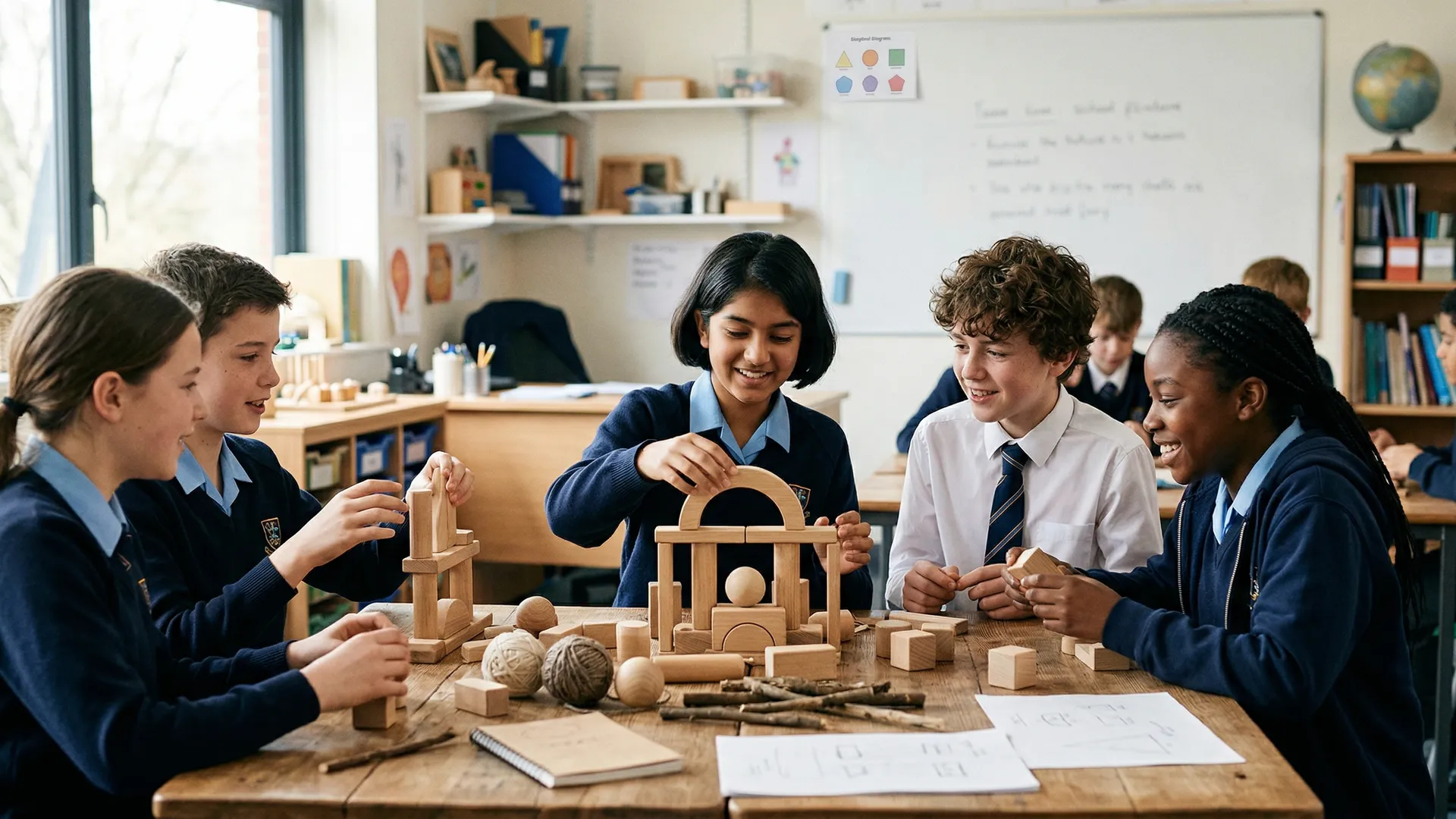
The Gifts were a sequence of geometric forms made from wood. Froebel believed that through handling and exploring these materials, children would intuitively grasp abstract mathematical and spatial concepts. The sequence began with soft balls, progressed through wooden blocks of various shapes, and included cylinders, arches, and other geometric solids. Each Gift was introduced in a structured way, with specific vocabulary and guiding questions, but children were free to use them creatively.
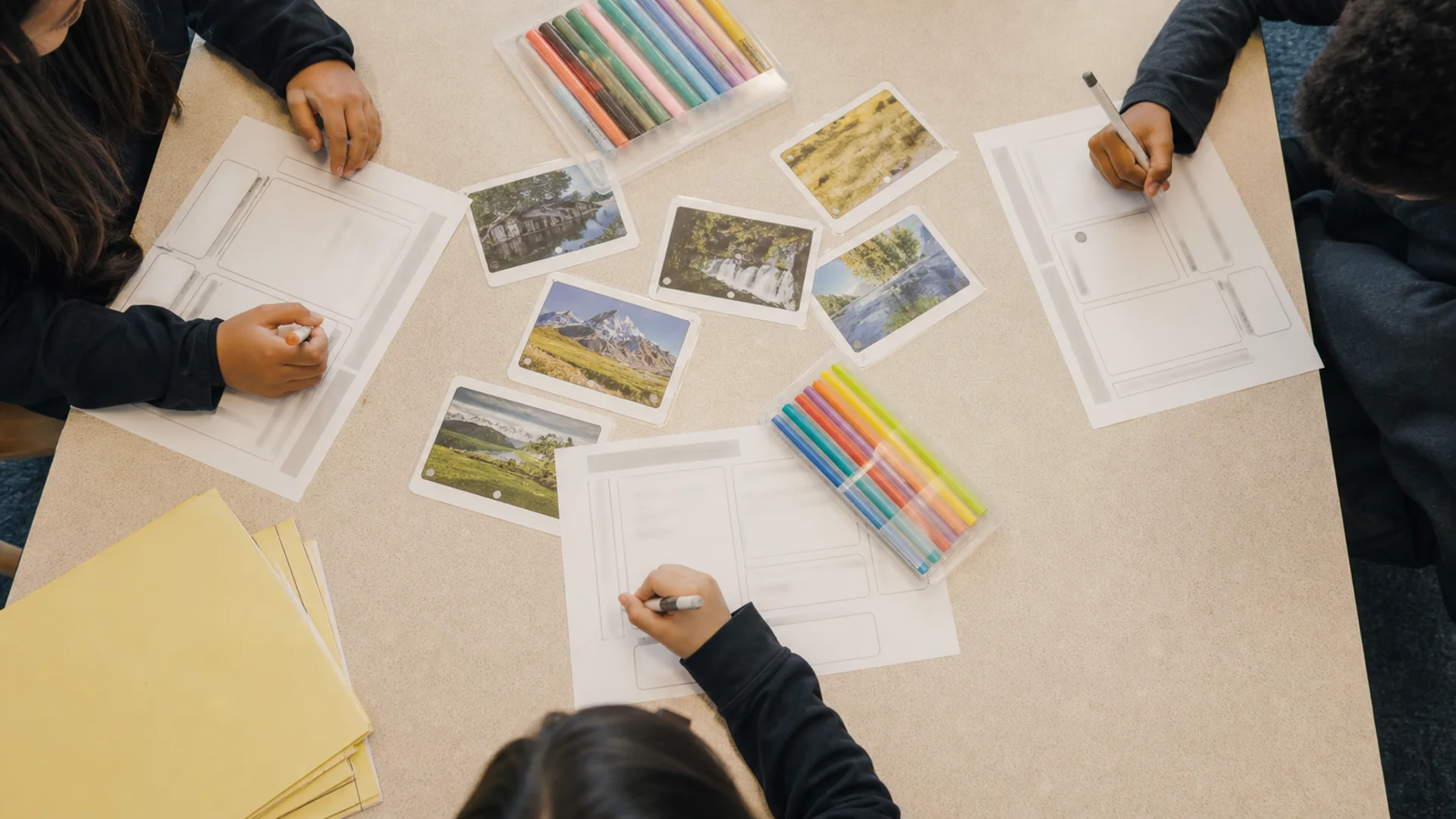
Beyond the Gifts lay the Occupations: structured creative activities including weaving, folding paper, modelling with clay, threading, drawing, and working with sand and sticks. Unlike the Gifts, which had their own inherent logic, the Occupations required children to create something. Through weaving, a child discovered patterns and rhythm. Through modelling, they developed fine motor control and three-dimensional thinking. Through drawing and painting, they expressed imagination and learned representation.
Froebel's genius lay in recognising that these materials and activities were not arbitrary. Each was chosen to align with children's natural developmental trajectory. He observed that young children moved from sensory exploration to manipulative play, from imitating adult actions to creating their own designs. The Gifts and Occupations supported this natural progression without forcing it.
Modern early years settings continue to echo these principles. When we provide unit blocks, we are providing a contemporary equivalent of Froebel's Gifts. When we set up creative activities with loose parts, clay, and natural materials, we are offering modern Occupations. The principle remains: children learn through handling, exploring, and creating with thoughtfully selected materials.
Play as the Highest Form of Learning
If one idea encapsulates Froebel's educational philosophy, it is this: "Play is the highest expression of human development in childhood, for play alone is the free expression of what is in the child's soul." This sentence, variations of which appear throughout his writings, stands in stark contrast to the educational climate of his time, and indeed remains radical today.
In nineteenth-century Germany and Britain, play was widely regarded as frivolous, a waste of time that distracted from serious learning. Children were expected to sit still, memorise facts, and recite lessons. Progressive thinkers like Pestalozzi had moved away from rote learning, but even they often saw play as a reward for good behaviour or a light relief from instruction. Froebel rejected this hierarchy entirely. For him, play was not a break from learning; play was the primary vehicle for learning.
What Froebel meant by "play" was not undirected chaos, but purposeful, self-directed activity. When a child builds with blocks, decides to add a tower, observes it topple, and rebuilds it stronger, they are engaged in play that contains physics, engineering, persistence, and creative problem-solving. When a child creates a scenario with toys, negotiates roles with peers, and adapts the plot as peers contribute ideas, they are learning about narrative, social cooperation, and emotional expression.
Play, for Froebel, was also deeply connected to imagination and the inner life of the child. He believed that children had an innate drive toward self-expression and that play allowed them to externalise their thoughts, feelings, and understandings in a safe, joyful way. In play, children could rehearse adult roles, explore emotions, work through fears, and express creativity. A teacher's role was not to prevent or constrain this play, but to observe it carefully, understand what the child was learning, and when necessary, gently extend it with a question or a new material.
This view of play has profound implications. It means that a child painting freely is engaged in serious learning, not wasting time. It means that a group of children building together with blocks is developing mathematics, social skills, and resilience. It means that dramatic play in a home corner is teaching literacy, cooperation, and emotional development. When we, as teachers, view play through a Froebelian lens, we see a child's entire day as learning, not just the structured literacy and numeracy slots.
Froebel's Philosophy: Unity, Self-Activity, and Connectedness
Beneath Froebel's specific methods lay a coherent philosophy. Three concepts stand out as central: unity, self-activity, and connectedness.
Unity, for Froebel, expressed the idea that all knowledge, all phenomena, all aspects of the universe are interconnected. This was partly a reflection of the idealist philosophy he had studied, but it was also a practical educational principle. It meant that education should not fragment knowledge into separate subjects. Instead, learning should reveal the underlying unity and connections between things. A lesson about seeds might simultaneously address science (growth, life cycles), mathematics (measuring plant growth), art (drawing plants), and poetry (verses about spring). The child would grasp these as expressions of a single natural process, not as isolated topics.
Self-activity was Froebel's term for what we might now call agency or intrinsic motivation. He believed that humans have an innate drive to act, to explore, to make sense of the world, placing him firmly on the nurture side of the nature vs nurture debate. The child's natural inclination is not to sit passively receiving instruction, but to engage actively with their environment. A teacher's job was not to override this inclination with forced instruction, but to work with it. By providing the right materials, asking the right questions, and stepping back to allow children to lead their own investigations, teachers could align with the child's natural drive for self-activity.
Connectedness referred to the fundamental link between the child and nature, between the child and community, between the child and the wider world. Froebel believed that children had a natural affinity with the natural world and that education should deliberately foster this connection. Time outdoors was not a luxury but a necessity. Children should cultivate gardens, observe animals, collect natural materials, and learn through direct experience of the living world. In an era of rapid industrialisation, Froebel saw education as a way to maintain this vital human-nature relationship.
These three principles, unity, self-activity, and connectedness, form a coherent whole. A child is most motivated to act when they see meaningful connections and when their actions are self-directed. Education that fragments knowledge, enforces passivity, and severs the child from nature works against human development. By contrast, education that reveals unity, respects self-activity, and maintains connection with nature works with the grain of human nature.
The Role of the Teacher in Froebel's Model
The Froebelian teacher is a particular kind of educator, very different from the traditional schoolmaster who dispensed knowledge from a podium. In Froebel's system, the teacher was a trained professional with a specific role: to observe, to facilitate, to nurture.
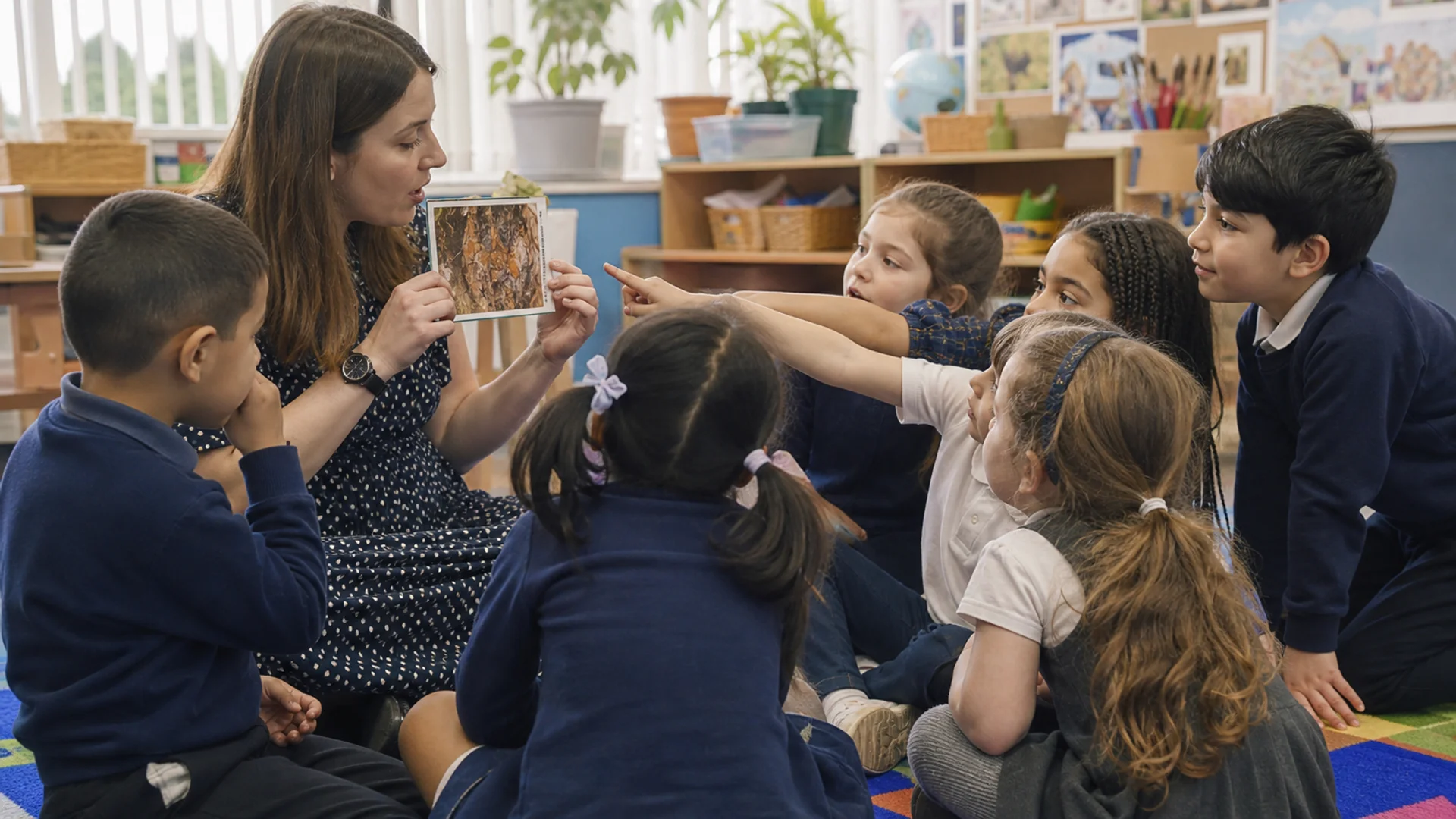
First and foremost, the teacher was an observer. Before intervening in a child's learning, the teacher needed to understand what the child was doing, what they were trying to achieve, and what they already understood. This detailed observation was not optional or incidental; it was central to good practice. Teachers kept records of children's progress, noting their interests, strengths, and areas where they seemed to need support. This practice of observation-based planning remains central to EYFS practice today, where practitioners use observation to plan provision and track children's development against the Early Learning Goals.
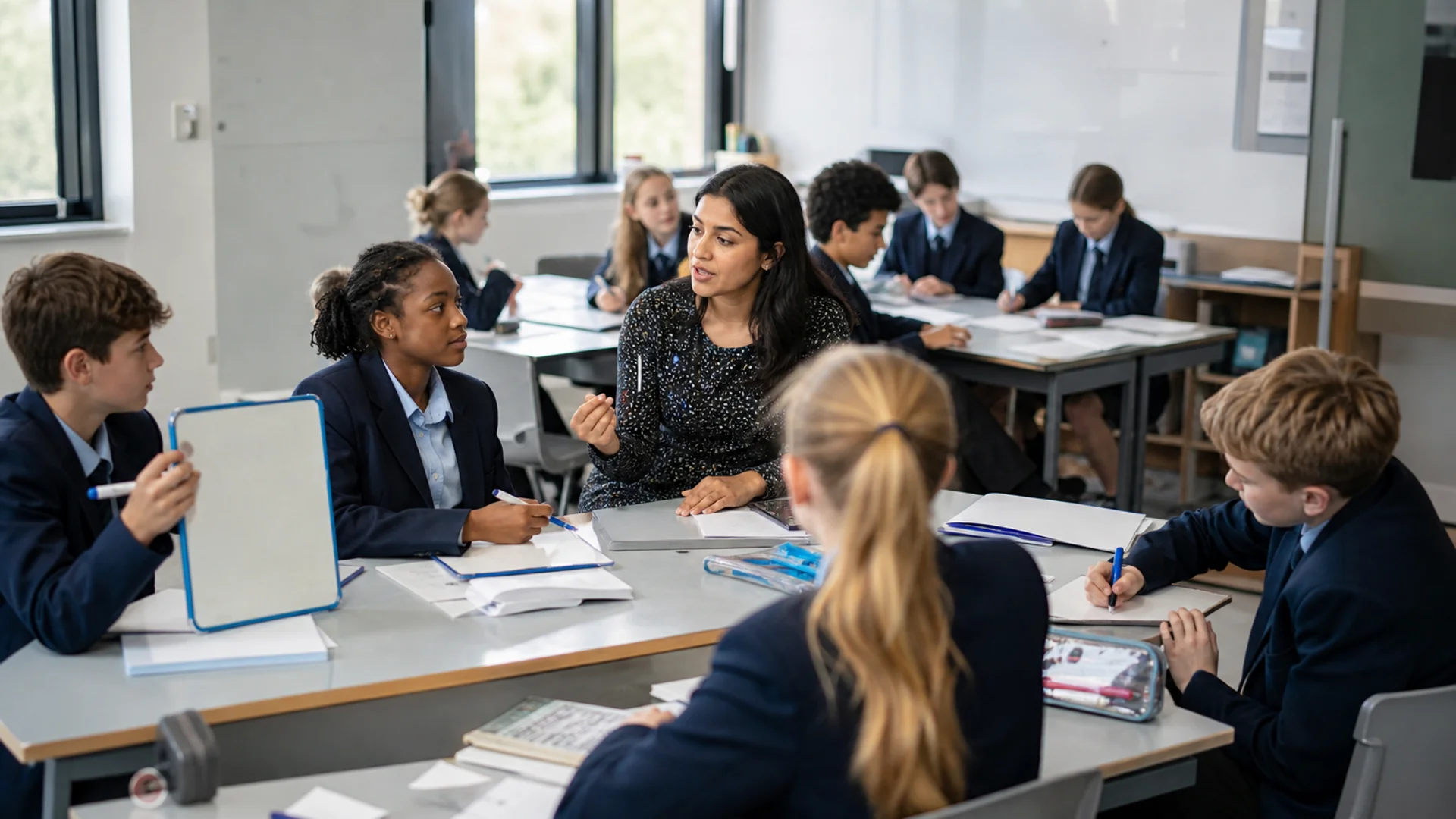
Secondly, the teacher was a facilitator who created conditions for learning. This meant carefully selecting materials, arranging spaces, and posing questions that would engage children's curiosity and extend their thinking. The teacher was not passive. Rather, the teacher made deliberate choices about the learning environment. But the teacher also knew when to step back, when to remain quiet, when to let children struggle productively with a problem. This balance between structure and freedom, guidance and autonomy, remains a hallmark of good early years teaching.
Finally, the teacher was a nurturer. Froebel emphasised the emotional warmth and care that should characterise the teacher-child relationship. Unlike the strict, formal relationships that often existed in schools of his era, the Froebelian classroom was a place where children felt safe, valued, and loved. The teacher knew each child individually, understood their personality and temperament, and responded with gentleness and respect. This emphasis on the emotional warmth of the learning environment is now supported by decades of research showing the importance of secure, warm relationships for children's learning and wellbeing, a finding echoed in Bronfenbrenner's ecological model of development.
One striking feature of Froebel's approach was the insistence on teacher training. He believed that kindergarten teaching required specific knowledge and skills. Teachers needed to understand child development, know how to use the Gifts and Occupations, and be able to observe children carefully and respond appropriately. This led to the establishment of teacher training colleges for kindergarten educators, a model that influenced teacher education across Europe and America. The principle remains: early years teaching is a skilled profession requiring proper training and qualifications.
Froebel and the EYFS: A Direct Line
The English Early Years Foundation Stage, implemented from 2008, is widely recognised as one of the highest-quality early years frameworks in the world. Its emphasis on play-based learning, child-initiated activity, and learning through relationships and exploration owes a direct debt to Froebel.
The EYFS identifies seven Areas of Learning: communication and language, physical development, personal, social and emotional development, literacy, mathematics, understanding the world, and expressive arts and design. To a Froebelian educator, this list would feel natural. These are not narrow academic subjects, but domains of human experience and development. They reflect Froebel's conviction that learning should be holistic and integrated.
More specifically, the EYFS emphasises three characteristics of effective learning: playing and exploring, active learning, and thinking creatively and critically. These characteristics could have been written by Froebel himself. Playing and exploring directly reflects Froebel's belief in play as the primary vehicle for learning. Active learning echoes Froebel's emphasis on self-activity. Thinking creatively and critically resonates with Froebel's view that children should develop their own understanding rather than simply absorb received knowledge.
The EYFS commitment to child-initiated activity, continuous provision, and learning through play rather than formal instruction all stem from Froebel's model. When a practitioner sets up an inviting environment and follows the child's lead rather than directing every activity, they are enacting Froebel's philosophy. When a setting allocates time for unstructured outdoor play, manages provision to maximise child choice, and values children's contributions and ideas, they are putting Froebel into practice.
This alignment is not coincidental. The experts who developed the EYFS framework were well versed in the history of early years education and drew deliberately on established, evidence-based approaches. Froebel, whose ideas had been tested, refined, and validated over nearly two centuries, was a key influence.
Froebel's conviction that play is the highest form of learning is central to modern play-based learning approaches, which draw on his ideas alongside Piaget and Vygotsky.
How Froebel Influenced Montessori, Steiner, and Dewey
Froebel's ideas did not exist in isolation. They shaped, and were shaped by, the broader progressive education movement that characterised late nineteenth and early twentieth-century educational reform. Three figures in particular built on Froebel's foundations whilst developing their own distinctive approaches.
Maria Montessori, the Italian educator who developed the Montessori method, was deeply influenced by Froebel. Like Froebel, Montessori believed in child-led learning, the importance of specially prepared materials, and the teacher as observer and facilitator. The Montessori materials, particularly the golden beads and the sensorial materials, have clear antecedents in Froebel's Gifts and Occupations. However, Montessori moved toward a more prescriptive, step-by-step approach to using materials, with less emphasis on free creative play. Where Froebel saw building with blocks as valuable in itself, Montessori saw materials as steps toward increasingly abstract mathematical understanding. Both approaches have merit; they represent different points on a spectrum from freedom to structure.
Rudolf Steiner, founder of the Waldorf education movement, also drew on Froebel's work. Steiner shared Froebel's belief in the importance of play, imagination, and creativity in early childhood. The Waldorf curriculum emphasizes artistic expression, imaginative play, and learning through movement and storytelling, all of which align with Froebelian principles. Steiner, however, added his own spiritual and anthroposophical dimension, seeing education as fostering the development of the whole human being in harmony with cosmic rhythms.
John Dewey, the American philosopher and educationalist, was informed by Froebel's ideas, particularly regarding the importance of experience, activity, and the child's own interests in learning. Dewey's insistence that education should be rooted in the child's experience and integrated with the wider world echoes Froebel's emphasis on connectedness and self-activity. All three of these influential educators, whilst developing distinctive approaches, built on the foundation that Froebel had established.
For a deeper exploration of how different developmental theories inform early years practice, see our article on child development theories, which contextualises Froebel within the broader landscape of developmental psychology and educational philosophy.
Froebel's Approach to Nature and Outdoor Learning
Walk into any contemporary Forest School session or early years setting that prioritises outdoor learning, and you will encounter Froebel's legacy. His conviction that children should spend significant time in natural environments, that they should encounter living things, soil, water, and weather, was radical in the nineteenth century and remains vital today.
For Froebel, nature was not a subject to be studied, but a primary teacher. Children learned through direct observation of natural processes: watching seeds germinate, observing how water flows, noticing patterns in leaves and shells, experiencing the seasons. This learning was often wordless, pre-conceptual. A child watching a caterpillar did not need to know the word "metamorphosis" to be learning about transformation and growth. By immersing children in nature and allowing time for observation and play, teachers supported children's intuitive grasp of natural processes.
Froebel also advocated for gardening as a core activity. Children should cultivate plants, tend a garden, and experience the cycle of seed, growth, harvest, and decay. Gardening taught patience, responsibility, and observation. It connected children to food and to the seasons. It provided opportunities for scientific learning embedded in purposeful activity. Modern early years settings that have vegetable gardens are, often unknowingly, following Froebel's model.
The outdoor environment, for Froebel, was not a space for running about and burning energy (though that was valuable too), but a rich learning environment. Natural materials, loose parts, digging, water, sand, mud, and growing things all offered learning opportunities. A child building a dam in a stream was learning about engineering, water, gravity, and problem-solving. A child collecting leaves and arranging them by colour was learning about botany, aesthetics, and mathematics. The teacher's role was to notice these learning moments, perhaps offer materials or questions that extended them, and record them as evidence of development.
In our current era of increasing screen time and "nature deficit" in childhood, Froebel's insistence on time outdoors feels more important than ever. Research on Forest Schools, outdoor learning, and nature connection suggests that regular contact with nature supports children's physical health, mental wellbeing, and cognitive development. Froebel intuited this nearly two centuries ago.
Froebel in Practice: What Teachers Can Use Today
Understanding Froebel's historical importance is one thing; translating his ideas into contemporary practice is another. What does a Froebelian approach look like in a modern UK early years setting? Here are concrete strategies that reflect his principles.
Provide blocks and loose parts in abundance. Froebel's Gifts have direct parallels in unit blocks and open-ended materials. Children building with blocks are developing spatial reasoning, problem-solving, and creativity. Loose parts, natural materials, and objects of different textures, weights, and shapes invite open-ended exploration and construction. Rather than prescribing what children should make, provide the materials and space, then observe and document what children create.
Plan around child interests and observations. Froebel advocated planning based on careful observation of children's interests and schemas. When you notice children fascinated by vehicles, water, patterns, or sorting, use that interest as a springboard for extended learning. Provide materials that allow them to pursue their interest in depth. Ask questions that extend their thinking. This interest-led approach is motivating for children and aligns with their intrinsic drive to learn.
Allocate time for unstructured, child-initiated play. Not every moment of the day should be teacher-directed. Children need uninterrupted time to follow their own pursuits, develop their own play themes, and exercise choice. This might mean allowing two-thirds of the day to be child-initiated, with the remaining third for focused group times, outdoor exploration, and snack. The balance will vary, but the principle is that children have real agency in their day.
Prioritise outdoor time and nature contact. Ensure that outdoor play is not an afterthought but a core part of the curriculum. Children should spend significant time outdoors in all weathers. Provide digging spaces, water play, natural materials, and access to growing things. Observe and document learning that happens outdoors with the same rigour as indoor learning.
Use learning journals to document children's thinking. Froebel kept careful records of children's learning. Today, this might take the form of learning journals, observation notes, or photographic records. Rather than assessing children against predetermined criteria, document their interests, ideas, and developing understanding. These observations inform planning and help you see learning that might not be visible in formal assessments.
Create a warm, relationship-centred classroom community. Froebel emphasised emotional warmth and care. Know your children well. Be genuinely interested in their lives, ideas, and feelings. Respond to their communication in ways that show you value what they are saying. Use a calm, gentle tone. Maintain eye contact. Show affection. Research consistently shows that children learn better in emotionally warm, secure environments. Froebel knew this intuitively.
Ask open-ended questions rather than providing answers. When a child is puzzling over something, resist the urge to immediately explain. Instead, ask questions: "What do you notice? What could you try next? What might happen if you...?" This approach respects the child's drive toward self-activity and helps them develop thinking skills rather than dependency on the teacher.
Criticisms and Limitations of Froebel's Approach
Froebel's work was influential precisely because it challenged the educational orthodoxy of his time. However, like all influential thinkers, Froebel's ideas are not beyond criticism, and it is worth considering limitations of his approach.
One criticism concerns the romanticisation of childhood and nature. Froebel had an idealistic view of children as inherently good, curious, and driven toward positive development if given appropriate conditions. While this view rightly rejected the harsh discipline and rigid instruction of nineteenth-century schooling, it somewhat underestimates the complexity of learning and development. Children can be wilful, destructive, and sometimes uninterested in the learning opportunities provided. Not all children respond equally well to discovery-based approaches; some thrive with more explicit instruction. Modern evidence-based practice recognises that different children learn in different ways and that a range of approaches, including direct instruction, is valuable.
Similarly, Froebel's emphasis on nature and outdoor learning, whilst valuable, was partly contingent on his particular historical moment. In nineteenth-century Germany, children's access to nature was different from today's reality in dense urban areas. Modern early years settings in city centres face real constraints regarding outdoor space and nature access. While Froebel's principles can be adapted to these contexts, purist adherence to his model is not always realistic.
Another limitation concerns cultural context. Froebel developed his approach in nineteenth-century Germany within a specific cultural and religious tradition. Some of his writing reflects assumptions about childhood, gender, and society that we would not share today. His philosophy, whilst sophisticated, was rooted in European idealism and may not fully accommodate perspectives from other cultural traditions where learning, development, and childhood are understood differently.
Additionally, Froebel's approach, whilst influential in early years, has limited application to formal schooling of older children. Once children reach primary school, the emphasis on child-initiated play, freedom of choice, and outdoor learning becomes more complicated. Schools must balance individual interest with curriculum coverage and accountability. The extent to which Froebelian principles can be extended beyond early years education remains debatable.
Finally, Froebel's emphasis on observation and documentation is invaluable, but it is labour-intensive. Modern early years settings, particularly in the private and voluntary sector, often operate with limited staffing. Detailed observation, note-taking, and reflective planning take time. It is a criticism of many contemporary settings not that they reject Froebel's ideas, but that they have insufficient staff capacity to enact them fully.
Froebel's Legacy in Modern Early Years Education
Despite these limitations, Froebel's influence on contemporary early years education is substantial and enduring. The Froebel Trust, founded in 1892 and still active, continues to promote play-based learning, fund research, and provide training to early years professionals. Many universities offering early years courses include Froebel in their curricula. The Forest Schools movement, which has grown significantly in recent years, explicitly acknowledges Froebel's influence.
The EYFS framework, mentioned earlier, is perhaps the most direct institutional expression of Froebelian principles in the UK. However, Froebel's ideas permeate good practice more broadly. When early years practitioners use observation to inform planning, when they value play as learning, when they foster warm relationships, when they provide materials and space for children to explore and create, they are putting Froebel's philosophy into action, whether or not they consciously invoke his name.
Internationally, Froebel's legacy is similarly evident. In Scandinavian countries, with their strong tradition of outdoor learning and play-based early education, Froebel's influence is explicit. In New Zealand, the Te Whariki curriculum, which emphasises holistic learning and child agency, reflects Froebelian principles. Even in countries with more formal, academically focused early years curricula, educators increasingly recognise the value of play and child-initiated learning, drawing on ideas that trace back to Froebel.
Contemporary research in developmental psychology and neuroscience increasingly validates Froebel's intuitions. Studies of play-based learning show cognitive, social, and emotional benefits. Research on outdoor learning and nature connection demonstrates improvements in wellbeing and development. Neuroscientific studies of how young children learn confirm the importance of hands-on exploration, sensory engagement, and intrinsic motivation. Froebel, working without the tools of modern science, arrived at insights that contemporary science is only now confirming.
Key Takeaways for Teachers
So what does a Froebelian approach look like in practice, and why does it matter for your classroom?
Play is learning, not a break from learning. When you observe a child engaged in play with blocks, water, or natural materials, you are watching genuine learning happen. Allocate time for sustained, uninterrupted play without pressure to produce outputs or meet narrow objectives.
Observation and documentation guide planning. Watch what children do, what captures their interest, what challenges them. Record your observations. Use these observations to plan provision that responds to children's actual interests and developmental needs, not just a pre-planned curriculum.
The materials and environment matter. Provide blocks, loose parts, natural materials, and open-ended resources. These invite exploration, problem-solving, and creativity in ways that many commercially produced toys do not. The Gifts were carefully designed; modern alternatives include quality wooden blocks, natural items, and recycled materials.
Outdoor learning is not a luxury. Children should spend significant time outdoors in all weathers. Provide digging, water play, access to growing things, and space for movement. Treat outdoor provision with the same intentionality as indoor learning environments.
Relationships are foundational. Children learn best when they feel safe, valued, and cared for. Know your children well. Be warm, interested, and responsive. Use a calm tone and show genuine interest in their ideas and feelings.
Ask questions rather than give answers. When children are puzzling, wondering, or trying things out, resist the urge to immediately explain. Instead, ask open-ended questions that help them think more deeply and discover solutions themselves.
Integration matters more than fragmentation. Rather than teaching isolated subjects, look for connections. A project about water can touch on science, mathematics, art, and language. This integrated approach aligns with how children naturally make sense of the world.
Respect children's self-activity and agency. Children have an innate drive to explore, act, and make sense of the world. Rather than imposing external rewards or punishments, align your classroom with this drive by offering genuine choices, respecting interests, and allowing children ownership of their learning.
Friedrich Froebel died in 1852, nearly 175 years ago. Yet his ideas remain remarkably vital. In an age of increasing academic pressure in schools, concerns about childhood mental health, and growing awareness of the importance of play, Froebel's vision of education feels timely and necessary.
What Froebel grasped, and what we are still learning, is that education is not primarily about transferring knowledge from adult to child. It is about creating conditions in which children can develop, flourish, and exercise their capacities. A child building with blocks is not doing something frivolous or preparatory; they are engaging in the most important work of childhood. A child exploring nature is not having a break from learning; they are learning in its fullest sense.
Froebel's insistence that we observe children carefully, that we respect their interests and self-activity, that we provide a warm and nurturing environment, and that we see play as the highest form of learning, remains a standard for good practice. The methods may evolve, the materials may change, but the principles endure.
As you design your classroom, consider: Are children spending time on freely chosen, playful activity? Do you know each child well enough to plan from their interests? Is your outdoor area treated as a learning environment or an afterthought? Are relationships warm and secure? Are children developing agency and the confidence to pursue their own ideas? These questions, rooted in Froebel's philosophy, are questions every early years educator should be asking.
In honouring Froebel's legacy, we do not simply preserve history. We affirm a vision of early education that, despite all our modern pedagogical knowledge, remains profoundly wise.
When we walk into an early years classroom and see children building with blocks, exploring a nature table, or engaged in freely chosen activities, we are witnessing the legacy of a single educator: Friedrich Froebel. Two centuries ago, this German pedagogue coined the term "kindergarten," literally meaning "children's garden," and in doing so, fundamentally changed how we think about learning in the early years. Yet despite his profound influence on modern education, Froebel remains less discussed in UK staff rooms than Montessori or Piaget. This article aims to change that.
Froebel's ideas went far beyond simply letting children play. He created a deliberate, structured approach to early learning built on the conviction that play was not a reward for finishing work, but the most serious, most important activity of childhood. His philosophy shaped the foundations of EYFS (Early Years Foundation Stage), influenced pedagogical giants including Montessori and Steiner, and continues to inform best practice in early years education worldwide.
Who Was Friedrich Froebel?
Friedrich Wilhelm August Fröbel was born in 1782 in Oberweissbach, a small village in Thuringia, Germany. Unlike many educationalists, Froebel did not grow up in privilege. His childhood was marked by loss: his mother died when he was an infant, and he was raised by his father and stepmother in a strict, emotionally distant household. This experience of emotional deprivation, paradoxically, would lead him to believe that children deserved warmth, care, and a nurturing learning environment.
As a young man, Froebel studied philosophy, mathematics, and natural sciences at the University of Jena. He was influenced by the idealist philosophers Fichte and Schelling, whose ideas about the relationship between individual development and universal harmony would later shape his educational philosophy. However, his path to teaching was not straightforward. He worked as a forester and architect before taking a teaching post in 1805, where his life's purpose crystallised.
After observing Johann Pestalozzi's work in Switzerland, Froebel became convinced that education could be a powerful social force. He spent two years at Pestalozzi's institute in Yverdon, learning methods of sensory education and object lessons that would later become foundational to his own system. By 1817, Froebel had opened his own progressive school, and it was here that his ideas matured. In 1837, at the age of 55, he opened the first "kindergarten" in Blankenburg, Germany. Within years, the model had spread across Europe and the United States.
Froebel died in 1852, but his legacy proved durable. The Froebel Trust, established in London in 1892 by disciples of his work, continues today to champion play-based learning and conduct research on early childhood development. In many ways, Froebel's ideas were so far ahead of their time that we are still catching up with them.
The Invention of Kindergarten
Before Froebel, there was no distinct educational provision for children under six. Early education, if it existed at all, was either custodial care provided by nannies and nursemaids, or formal academic instruction that treated young children as miniature schoolchildren. Froebel rejected both approaches. He imagined a "children's garden" where learning would be organic, self-directed, and grounded in play, imagination, and contact with nature.
The term "kindergarten" itself was carefully chosen. Froebel saw children not as blank slates to be filled with knowledge, but as seeds planted in a carefully cultivated garden, with a teacher as the gardener. Just as a gardener understands the nature of each plant and creates conditions for healthy growth, so too must educators understand the developmental nature of each child and provide appropriate conditions for learning. This horticultural metaphor was not merely poetic; it expressed Froebel's core belief that education must be consonant with natural human development.
The first kindergartens were run by trained teachers, not simply carers. These educators were taught specific methods for observing children, asking questions, and facilitating discovery learning. Children spent time in outdoor spaces, cultivated gardens, and engaged in structured activities with specially designed materials. The atmosphere was one of freedom within framework, play within purpose. This balance between spontaneity and structure remains central to quality early years provision today.
Froebel's kindergarten system quickly gained international recognition. By the 1850s, kindergartens had opened in London, Paris, and Boston. Reformers and social progressives embraced the idea as offering an alternative to both harsh traditional schooling and the neglect many poor children experienced. In the US, the kindergarten movement became intertwined with progressive education, social reform, and the emerging child study movement led by G. Stanley Hall.
Froebel's Gifts and Occupations
The most tangible expression of Froebel's philosophy lay in what he called the "Gifts" and "Occupations." These were specially designed materials and activities intended to support children's learning across different developmental areas. Understanding these materials is key to understanding how Froebel translated philosophy into practice.
The Gifts were a sequence of geometric forms made from wood. Froebel believed that through handling and exploring these materials, children would intuitively grasp abstract mathematical and spatial concepts. The sequence began with soft balls, progressed through wooden blocks of various shapes, and included cylinders, arches, and other geometric solids. Each Gift was introduced in a structured way, with specific vocabulary and guiding questions, but children were free to use them creatively.
Beyond the Gifts lay the Occupations: structured creative activities including weaving, folding paper, modelling with clay, threading, drawing, and working with sand and sticks. Unlike the Gifts, which had their own inherent logic, the Occupations required children to create something. Through weaving, a child discovered patterns and rhythm. Through modelling, they developed fine motor control and three-dimensional thinking. Through drawing and painting, they expressed imagination and learned representation.
Froebel's genius lay in recognising that these materials and activities were not arbitrary. Each was chosen to align with children's natural developmental trajectory. He observed that young children moved from sensory exploration to manipulative play, from imitating adult actions to creating their own designs. The Gifts and Occupations supported this natural progression without forcing it.
Modern early years settings continue to echo these principles. When we provide unit blocks, we are providing a contemporary equivalent of Froebel's Gifts. When we set up creative activities with loose parts, clay, and natural materials, we are offering modern Occupations. The principle remains: children learn through handling, exploring, and creating with thoughtfully selected materials.
Play as the Highest Form of Learning
If one idea encapsulates Froebel's educational philosophy, it is this: "Play is the highest expression of human development in childhood, for play alone is the free expression of what is in the child's soul." This sentence, variations of which appear throughout his writings, stands in stark contrast to the educational climate of his time, and indeed remains radical today.
In nineteenth-century Germany and Britain, play was widely regarded as frivolous, a waste of time that distracted from serious learning. Children were expected to sit still, memorise facts, and recite lessons. Progressive thinkers like Pestalozzi had moved away from rote learning, but even they often saw play as a reward for good behaviour or a light relief from instruction. Froebel rejected this hierarchy entirely. For him, play was not a break from learning; play was the primary vehicle for learning.
What Froebel meant by "play" was not undirected chaos, but purposeful, self-directed activity. When a child builds with blocks, decides to add a tower, observes it topple, and rebuilds it stronger, they are engaged in play that contains physics, engineering, persistence, and creative problem-solving. When a child creates a scenario with toys, negotiates roles with peers, and adapts the plot as peers contribute ideas, they are learning about narrative, social cooperation, and emotional expression.
Play, for Froebel, was also deeply connected to imagination and the inner life of the child. He believed that children had an innate drive toward self-expression and that play allowed them to externalise their thoughts, feelings, and understandings in a safe, joyful way. In play, children could rehearse adult roles, explore emotions, work through fears, and express creativity. A teacher's role was not to prevent or constrain this play, but to observe it carefully, understand what the child was learning, and when necessary, gently extend it with a question or a new material.
This view of play has profound implications. It means that a child painting freely is engaged in serious learning, not wasting time. It means that a group of children building together with blocks is developing mathematics, social skills, and resilience. It means that dramatic play in a home corner is teaching literacy, cooperation, and emotional development. When we, as teachers, view play through a Froebelian lens, we see a child's entire day as learning, not just the structured literacy and numeracy slots.
Froebel's Philosophy: Unity, Self-Activity, and Connectedness
Beneath Froebel's specific methods lay a coherent philosophy. Three concepts stand out as central: unity, self-activity, and connectedness.
Unity, for Froebel, expressed the idea that all knowledge, all phenomena, all aspects of the universe are interconnected. This was partly a reflection of the idealist philosophy he had studied, but it was also a practical educational principle. It meant that education should not fragment knowledge into separate subjects. Instead, learning should reveal the underlying unity and connections between things. A lesson about seeds might simultaneously address science (growth, life cycles), mathematics (measuring plant growth), art (drawing plants), and poetry (verses about spring). The child would grasp these as expressions of a single natural process, not as isolated topics.
Self-activity was Froebel's term for what we might now call agency or intrinsic motivation. He believed that humans have an innate drive to act, to explore, to make sense of the world, placing him firmly on the nurture side of the nature vs nurture debate. The child's natural inclination is not to sit passively receiving instruction, but to engage actively with their environment. A teacher's job was not to override this inclination with forced instruction, but to work with it. By providing the right materials, asking the right questions, and stepping back to allow children to lead their own investigations, teachers could align with the child's natural drive for self-activity.
Connectedness referred to the fundamental link between the child and nature, between the child and community, between the child and the wider world. Froebel believed that children had a natural affinity with the natural world and that education should deliberately foster this connection. Time outdoors was not a luxury but a necessity. Children should cultivate gardens, observe animals, collect natural materials, and learn through direct experience of the living world. In an era of rapid industrialisation, Froebel saw education as a way to maintain this vital human-nature relationship.
These three principles, unity, self-activity, and connectedness, form a coherent whole. A child is most motivated to act when they see meaningful connections and when their actions are self-directed. Education that fragments knowledge, enforces passivity, and severs the child from nature works against human development. By contrast, education that reveals unity, respects self-activity, and maintains connection with nature works with the grain of human nature.
The Role of the Teacher in Froebel's Model
The Froebelian teacher is a particular kind of educator, very different from the traditional schoolmaster who dispensed knowledge from a podium. In Froebel's system, the teacher was a trained professional with a specific role: to observe, to facilitate, to nurture.
First and foremost, the teacher was an observer. Before intervening in a child's learning, the teacher needed to understand what the child was doing, what they were trying to achieve, and what they already understood. This detailed observation was not optional or incidental; it was central to good practice. Teachers kept records of children's progress, noting their interests, strengths, and areas where they seemed to need support. This practice of observation-based planning remains central to EYFS practice today, where practitioners use observation to plan provision and track children's development against the Early Learning Goals.
Secondly, the teacher was a facilitator who created conditions for learning. This meant carefully selecting materials, arranging spaces, and posing questions that would engage children's curiosity and extend their thinking. The teacher was not passive. Rather, the teacher made deliberate choices about the learning environment. But the teacher also knew when to step back, when to remain quiet, when to let children struggle productively with a problem. This balance between structure and freedom, guidance and autonomy, remains a hallmark of good early years teaching.
Finally, the teacher was a nurturer. Froebel emphasised the emotional warmth and care that should characterise the teacher-child relationship. Unlike the strict, formal relationships that often existed in schools of his era, the Froebelian classroom was a place where children felt safe, valued, and loved. The teacher knew each child individually, understood their personality and temperament, and responded with gentleness and respect. This emphasis on the emotional warmth of the learning environment is now supported by decades of research showing the importance of secure, warm relationships for children's learning and wellbeing, a finding echoed in Bronfenbrenner's ecological model of development.
One striking feature of Froebel's approach was the insistence on teacher training. He believed that kindergarten teaching required specific knowledge and skills. Teachers needed to understand child development, know how to use the Gifts and Occupations, and be able to observe children carefully and respond appropriately. This led to the establishment of teacher training colleges for kindergarten educators, a model that influenced teacher education across Europe and America. The principle remains: early years teaching is a skilled profession requiring proper training and qualifications.
Froebel and the EYFS: A Direct Line
The English Early Years Foundation Stage, implemented from 2008, is widely recognised as one of the highest-quality early years frameworks in the world. Its emphasis on play-based learning, child-initiated activity, and learning through relationships and exploration owes a direct debt to Froebel.
The EYFS identifies seven Areas of Learning: communication and language, physical development, personal, social and emotional development, literacy, mathematics, understanding the world, and expressive arts and design. To a Froebelian educator, this list would feel natural. These are not narrow academic subjects, but domains of human experience and development. They reflect Froebel's conviction that learning should be holistic and integrated.
More specifically, the EYFS emphasises three characteristics of effective learning: playing and exploring, active learning, and thinking creatively and critically. These characteristics could have been written by Froebel himself. Playing and exploring directly reflects Froebel's belief in play as the primary vehicle for learning. Active learning echoes Froebel's emphasis on self-activity. Thinking creatively and critically resonates with Froebel's view that children should develop their own understanding rather than simply absorb received knowledge.
The EYFS commitment to child-initiated activity, continuous provision, and learning through play rather than formal instruction all stem from Froebel's model. When a practitioner sets up an inviting environment and follows the child's lead rather than directing every activity, they are enacting Froebel's philosophy. When a setting allocates time for unstructured outdoor play, manages provision to maximise child choice, and values children's contributions and ideas, they are putting Froebel into practice.
This alignment is not coincidental. The experts who developed the EYFS framework were well versed in the history of early years education and drew deliberately on established, evidence-based approaches. Froebel, whose ideas had been tested, refined, and validated over nearly two centuries, was a key influence.
Froebel's conviction that play is the highest form of learning is central to modern play-based learning approaches, which draw on his ideas alongside Piaget and Vygotsky.
How Froebel Influenced Montessori, Steiner, and Dewey
Froebel's ideas did not exist in isolation. They shaped, and were shaped by, the broader progressive education movement that characterised late nineteenth and early twentieth-century educational reform. Three figures in particular built on Froebel's foundations whilst developing their own distinctive approaches.
Maria Montessori, the Italian educator who developed the Montessori method, was deeply influenced by Froebel. Like Froebel, Montessori believed in child-led learning, the importance of specially prepared materials, and the teacher as observer and facilitator. The Montessori materials, particularly the golden beads and the sensorial materials, have clear antecedents in Froebel's Gifts and Occupations. However, Montessori moved toward a more prescriptive, step-by-step approach to using materials, with less emphasis on free creative play. Where Froebel saw building with blocks as valuable in itself, Montessori saw materials as steps toward increasingly abstract mathematical understanding. Both approaches have merit; they represent different points on a spectrum from freedom to structure.
Rudolf Steiner, founder of the Waldorf education movement, also drew on Froebel's work. Steiner shared Froebel's belief in the importance of play, imagination, and creativity in early childhood. The Waldorf curriculum emphasizes artistic expression, imaginative play, and learning through movement and storytelling, all of which align with Froebelian principles. Steiner, however, added his own spiritual and anthroposophical dimension, seeing education as fostering the development of the whole human being in harmony with cosmic rhythms.
John Dewey, the American philosopher and educationalist, was informed by Froebel's ideas, particularly regarding the importance of experience, activity, and the child's own interests in learning. Dewey's insistence that education should be rooted in the child's experience and integrated with the wider world echoes Froebel's emphasis on connectedness and self-activity. All three of these influential educators, whilst developing distinctive approaches, built on the foundation that Froebel had established.
For a deeper exploration of how different developmental theories inform early years practice, see our article on child development theories, which contextualises Froebel within the broader landscape of developmental psychology and educational philosophy.
Froebel's Approach to Nature and Outdoor Learning
Walk into any contemporary Forest School session or early years setting that prioritises outdoor learning, and you will encounter Froebel's legacy. His conviction that children should spend significant time in natural environments, that they should encounter living things, soil, water, and weather, was radical in the nineteenth century and remains vital today.
For Froebel, nature was not a subject to be studied, but a primary teacher. Children learned through direct observation of natural processes: watching seeds germinate, observing how water flows, noticing patterns in leaves and shells, experiencing the seasons. This learning was often wordless, pre-conceptual. A child watching a caterpillar did not need to know the word "metamorphosis" to be learning about transformation and growth. By immersing children in nature and allowing time for observation and play, teachers supported children's intuitive grasp of natural processes.
Froebel also advocated for gardening as a core activity. Children should cultivate plants, tend a garden, and experience the cycle of seed, growth, harvest, and decay. Gardening taught patience, responsibility, and observation. It connected children to food and to the seasons. It provided opportunities for scientific learning embedded in purposeful activity. Modern early years settings that have vegetable gardens are, often unknowingly, following Froebel's model.
The outdoor environment, for Froebel, was not a space for running about and burning energy (though that was valuable too), but a rich learning environment. Natural materials, loose parts, digging, water, sand, mud, and growing things all offered learning opportunities. A child building a dam in a stream was learning about engineering, water, gravity, and problem-solving. A child collecting leaves and arranging them by colour was learning about botany, aesthetics, and mathematics. The teacher's role was to notice these learning moments, perhaps offer materials or questions that extended them, and record them as evidence of development.
In our current era of increasing screen time and "nature deficit" in childhood, Froebel's insistence on time outdoors feels more important than ever. Research on Forest Schools, outdoor learning, and nature connection suggests that regular contact with nature supports children's physical health, mental wellbeing, and cognitive development. Froebel intuited this nearly two centuries ago.
Froebel in Practice: What Teachers Can Use Today
Understanding Froebel's historical importance is one thing; translating his ideas into contemporary practice is another. What does a Froebelian approach look like in a modern UK early years setting? Here are concrete strategies that reflect his principles.
Provide blocks and loose parts in abundance. Froebel's Gifts have direct parallels in unit blocks and open-ended materials. Children building with blocks are developing spatial reasoning, problem-solving, and creativity. Loose parts, natural materials, and objects of different textures, weights, and shapes invite open-ended exploration and construction. Rather than prescribing what children should make, provide the materials and space, then observe and document what children create.
Plan around child interests and observations. Froebel advocated planning based on careful observation of children's interests and schemas. When you notice children fascinated by vehicles, water, patterns, or sorting, use that interest as a springboard for extended learning. Provide materials that allow them to pursue their interest in depth. Ask questions that extend their thinking. This interest-led approach is motivating for children and aligns with their intrinsic drive to learn.
Allocate time for unstructured, child-initiated play. Not every moment of the day should be teacher-directed. Children need uninterrupted time to follow their own pursuits, develop their own play themes, and exercise choice. This might mean allowing two-thirds of the day to be child-initiated, with the remaining third for focused group times, outdoor exploration, and snack. The balance will vary, but the principle is that children have real agency in their day.
Prioritise outdoor time and nature contact. Ensure that outdoor play is not an afterthought but a core part of the curriculum. Children should spend significant time outdoors in all weathers. Provide digging spaces, water play, natural materials, and access to growing things. Observe and document learning that happens outdoors with the same rigour as indoor learning.
Use learning journals to document children's thinking. Froebel kept careful records of children's learning. Today, this might take the form of learning journals, observation notes, or photographic records. Rather than assessing children against predetermined criteria, document their interests, ideas, and developing understanding. These observations inform planning and help you see learning that might not be visible in formal assessments.
Create a warm, relationship-centred classroom community. Froebel emphasised emotional warmth and care. Know your children well. Be genuinely interested in their lives, ideas, and feelings. Respond to their communication in ways that show you value what they are saying. Use a calm, gentle tone. Maintain eye contact. Show affection. Research consistently shows that children learn better in emotionally warm, secure environments. Froebel knew this intuitively.
Ask open-ended questions rather than providing answers. When a child is puzzling over something, resist the urge to immediately explain. Instead, ask questions: "What do you notice? What could you try next? What might happen if you...?" This approach respects the child's drive toward self-activity and helps them develop thinking skills rather than dependency on the teacher.
Criticisms and Limitations of Froebel's Approach
Froebel's work was influential precisely because it challenged the educational orthodoxy of his time. However, like all influential thinkers, Froebel's ideas are not beyond criticism, and it is worth considering limitations of his approach.
One criticism concerns the romanticisation of childhood and nature. Froebel had an idealistic view of children as inherently good, curious, and driven toward positive development if given appropriate conditions. While this view rightly rejected the harsh discipline and rigid instruction of nineteenth-century schooling, it somewhat underestimates the complexity of learning and development. Children can be wilful, destructive, and sometimes uninterested in the learning opportunities provided. Not all children respond equally well to discovery-based approaches; some thrive with more explicit instruction. Modern evidence-based practice recognises that different children learn in different ways and that a range of approaches, including direct instruction, is valuable.
Similarly, Froebel's emphasis on nature and outdoor learning, whilst valuable, was partly contingent on his particular historical moment. In nineteenth-century Germany, children's access to nature was different from today's reality in dense urban areas. Modern early years settings in city centres face real constraints regarding outdoor space and nature access. While Froebel's principles can be adapted to these contexts, purist adherence to his model is not always realistic.
Another limitation concerns cultural context. Froebel developed his approach in nineteenth-century Germany within a specific cultural and religious tradition. Some of his writing reflects assumptions about childhood, gender, and society that we would not share today. His philosophy, whilst sophisticated, was rooted in European idealism and may not fully accommodate perspectives from other cultural traditions where learning, development, and childhood are understood differently.
Additionally, Froebel's approach, whilst influential in early years, has limited application to formal schooling of older children. Once children reach primary school, the emphasis on child-initiated play, freedom of choice, and outdoor learning becomes more complicated. Schools must balance individual interest with curriculum coverage and accountability. The extent to which Froebelian principles can be extended beyond early years education remains debatable.
Finally, Froebel's emphasis on observation and documentation is invaluable, but it is labour-intensive. Modern early years settings, particularly in the private and voluntary sector, often operate with limited staffing. Detailed observation, note-taking, and reflective planning take time. It is a criticism of many contemporary settings not that they reject Froebel's ideas, but that they have insufficient staff capacity to enact them fully.
Froebel's Legacy in Modern Early Years Education
Despite these limitations, Froebel's influence on contemporary early years education is substantial and enduring. The Froebel Trust, founded in 1892 and still active, continues to promote play-based learning, fund research, and provide training to early years professionals. Many universities offering early years courses include Froebel in their curricula. The Forest Schools movement, which has grown significantly in recent years, explicitly acknowledges Froebel's influence.
The EYFS framework, mentioned earlier, is perhaps the most direct institutional expression of Froebelian principles in the UK. However, Froebel's ideas permeate good practice more broadly. When early years practitioners use observation to inform planning, when they value play as learning, when they foster warm relationships, when they provide materials and space for children to explore and create, they are putting Froebel's philosophy into action, whether or not they consciously invoke his name.
Internationally, Froebel's legacy is similarly evident. In Scandinavian countries, with their strong tradition of outdoor learning and play-based early education, Froebel's influence is explicit. In New Zealand, the Te Whariki curriculum, which emphasises holistic learning and child agency, reflects Froebelian principles. Even in countries with more formal, academically focused early years curricula, educators increasingly recognise the value of play and child-initiated learning, drawing on ideas that trace back to Froebel.
Contemporary research in developmental psychology and neuroscience increasingly validates Froebel's intuitions. Studies of play-based learning show cognitive, social, and emotional benefits. Research on outdoor learning and nature connection demonstrates improvements in wellbeing and development. Neuroscientific studies of how young children learn confirm the importance of hands-on exploration, sensory engagement, and intrinsic motivation. Froebel, working without the tools of modern science, arrived at insights that contemporary science is only now confirming.
Key Takeaways for Teachers
So what does a Froebelian approach look like in practice, and why does it matter for your classroom?
Play is learning, not a break from learning. When you observe a child engaged in play with blocks, water, or natural materials, you are watching genuine learning happen. Allocate time for sustained, uninterrupted play without pressure to produce outputs or meet narrow objectives.
Observation and documentation guide planning. Watch what children do, what captures their interest, what challenges them. Record your observations. Use these observations to plan provision that responds to children's actual interests and developmental needs, not just a pre-planned curriculum.
The materials and environment matter. Provide blocks, loose parts, natural materials, and open-ended resources. These invite exploration, problem-solving, and creativity in ways that many commercially produced toys do not. The Gifts were carefully designed; modern alternatives include quality wooden blocks, natural items, and recycled materials.
Outdoor learning is not a luxury. Children should spend significant time outdoors in all weathers. Provide digging, water play, access to growing things, and space for movement. Treat outdoor provision with the same intentionality as indoor learning environments.
Relationships are foundational. Children learn best when they feel safe, valued, and cared for. Know your children well. Be warm, interested, and responsive. Use a calm tone and show genuine interest in their ideas and feelings.
Ask questions rather than give answers. When children are puzzling, wondering, or trying things out, resist the urge to immediately explain. Instead, ask open-ended questions that help them think more deeply and discover solutions themselves.
Integration matters more than fragmentation. Rather than teaching isolated subjects, look for connections. A project about water can touch on science, mathematics, art, and language. This integrated approach aligns with how children naturally make sense of the world.
Respect children's self-activity and agency. Children have an innate drive to explore, act, and make sense of the world. Rather than imposing external rewards or punishments, align your classroom with this drive by offering genuine choices, respecting interests, and allowing children ownership of their learning.
Friedrich Froebel died in 1852, nearly 175 years ago. Yet his ideas remain remarkably vital. In an age of increasing academic pressure in schools, concerns about childhood mental health, and growing awareness of the importance of play, Froebel's vision of education feels timely and necessary.
What Froebel grasped, and what we are still learning, is that education is not primarily about transferring knowledge from adult to child. It is about creating conditions in which children can develop, flourish, and exercise their capacities. A child building with blocks is not doing something frivolous or preparatory; they are engaging in the most important work of childhood. A child exploring nature is not having a break from learning; they are learning in its fullest sense.
Froebel's insistence that we observe children carefully, that we respect their interests and self-activity, that we provide a warm and nurturing environment, and that we see play as the highest form of learning, remains a standard for good practice. The methods may evolve, the materials may change, but the principles endure.
As you design your classroom, consider: Are children spending time on freely chosen, playful activity? Do you know each child well enough to plan from their interests? Is your outdoor area treated as a learning environment or an afterthought? Are relationships warm and secure? Are children developing agency and the confidence to pursue their own ideas? These questions, rooted in Froebel's philosophy, are questions every early years educator should be asking.
In honouring Froebel's legacy, we do not simply preserve history. We affirm a vision of early education that, despite all our modern pedagogical knowledge, remains profoundly wise.