Updated on
September 24, 2026
Teaching MFL: A Research-Informed Guide
Teaching modern foreign languages well means learners hold new vocabulary in memory and retrieve it under pressure. Use spaced retrieval, not restudy.


Updated on
September 24, 2026
Teaching modern foreign languages well means learners hold new vocabulary in memory and retrieve it under pressure. Use spaced retrieval, not restudy.
Teaching MFL well comes down to one stubborn problem: learners have to hold a large amount of new vocabulary and grammar in memory and retrieve it under pressure. The evidence points to a clear answer. Vocabulary taught with spaced retrieval practice rather than restudy produces much larger and more durable gains, with one classroom study finding an 18 percentage-point improvement against 8 for typical study (Karatas et al., 2021). This guide turns that finding, and the rest of the research, into practical modern foreign language teaching.
It is written for MFL teachers across French, Spanish, German and beyond, and for non-specialists asked to cover languages. It covers why MFL is hard, how to build vocabulary that lasts, the four skills, grammar, sentence building for beginners, and supporting EAL and SEND learners.
A beginner has almost no prior knowledge to attach new language to, so working memory does the heavy lifting. When you introduce too much vocabulary or grammar at once, learners overload and retain little (Samavi Aghdam et al., 2025).
This is a cognitive load problem before it is a motivation problem. A learner who looks disengaged is often simply swamped.
The practical response is to control the flow of new language. Teach fewer words more thoroughly, revisit them often, and give learners something concrete to map each word onto.
Vocabulary is the foundation of MFL, and the strongest lever you have is how you schedule practice. Replace "learn these words for Friday" with spaced retrieval practice: quiz learners on words across expanding intervals, with feedback, rather than restudying a list.
The gains are large and favour high-frequency words (Karatas et al., 2021), so prioritise the words learners will meet most. Spacing encounters across lessons and texts, not just within one lesson, improves recall of word meanings (Nakata et al., 2020).
In a French class, that means a two-minute retrieval quiz on last week's verbs at the start of today's lesson, then meeting those verbs again in this week's reading, rather than a single vocabulary test before moving on.
Listening, speaking, reading and writing need deliberate, separate attention, though they reinforce each other. For listening and vocabulary, pair spoken target language with images and captions: across 41 studies, audio with animation and captions was the most effective input for vocabulary and grammar (Zhang et al., 2021).
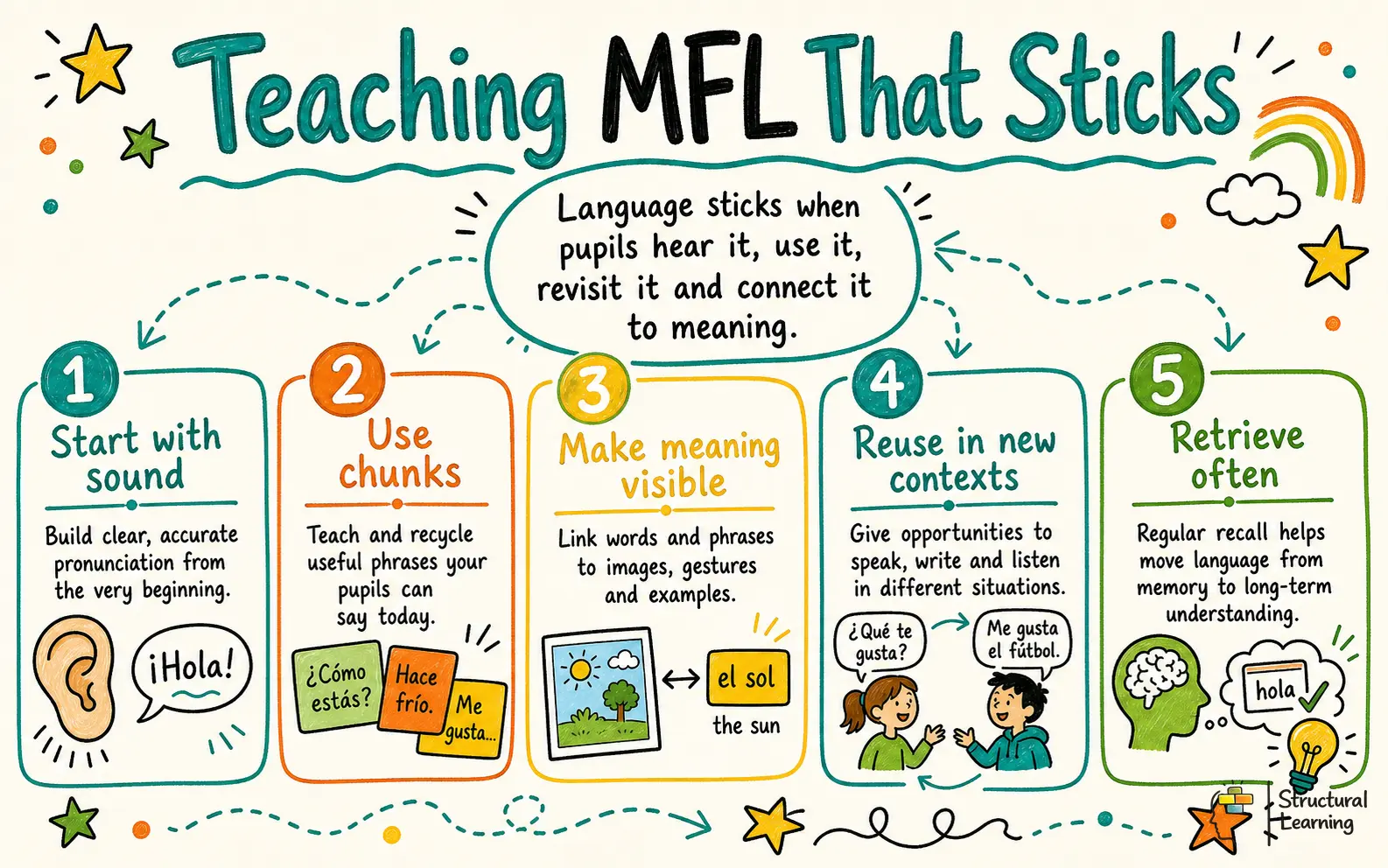
For speaking, give learners a rehearsed structure before spontaneous production. A sentence builder, where learners choose from columns of vocabulary to construct a sentence, lets them speak in full sentences before they can generate them unaided.
For reading and writing, recycle taught vocabulary in new contexts so words are met again and used, which is where spacing pays off (Nakata et al., 2020).
Comprehensible input, the idea that learners acquire language they can understand, is influential and associated with Krashen (1985), but the wider evidence favours combining it with explicit teaching rather than relying on input alone (Ye, 2024). Use the target language as much as is comprehensible, and scaffold it heavily.
Make input understandable with gesture, images, cognates and predictable routines. A German teacher narrating a classroom routine in German, with actions and pictures, gives comprehensible input without losing learners.
Balance is the point. Rich target-language input plus explicit vocabulary and grammar teaching beats either on its own.
Grammar sticks when it is taught explicitly and then practiced across varied examples. Introduce one pattern at a time, such as the present-tense verb ending, model it, then have learners apply it to many examples rather than memorise a paradigm.
Use scaffolding and fade it. Start with the rule visible and supported, then withdraw the support as learners apply the pattern independently.

Keep grammar tied to meaning. A learner who can already say "I play" is ready to learn how the verb changes for "she plays", because the meaning is secure and only the form is new.
Beginners need a way to produce a full sentence before they can generate one freely. A colour-coded approach to sentence structure helps here: marking who, what doing, what and where lets a learner assemble a correct sentence from known parts.
This is the same principle behind colour-coded sentence structure used in language support, and it transfers usefully to MFL beginners and to learners with weaker literacy.
Pair it with dual-coded vocabulary, where each word is met with an image (Zhang et al., 2021), and the learner has both the words and the frame to build a sentence aloud.
Many MFL classes include learners with English as an additional language and learners with SEND, and the same evidence-based moves help them. Explicit vocabulary teaching, spacing and dual-coded input reduce the memory load that makes language learning hard.
For deliberate vocabulary depth, the principles of explicit vocabulary teaching for EAL learners apply directly to MFL: choose the words worth teaching, teach them in depth, and revisit them.
Pair new words with dual coding images, keep instructions predictable, and reduce the volume of new language so working memory is not overwhelmed (Samavi Aghdam et al., 2025).
A strong MFL lesson has a predictable shape. Open with spaced retrieval of prior vocabulary, introduce a small amount of new language with images and modelling, give structured speaking and writing practice using a sentence builder, then plan when that language will be revisited.
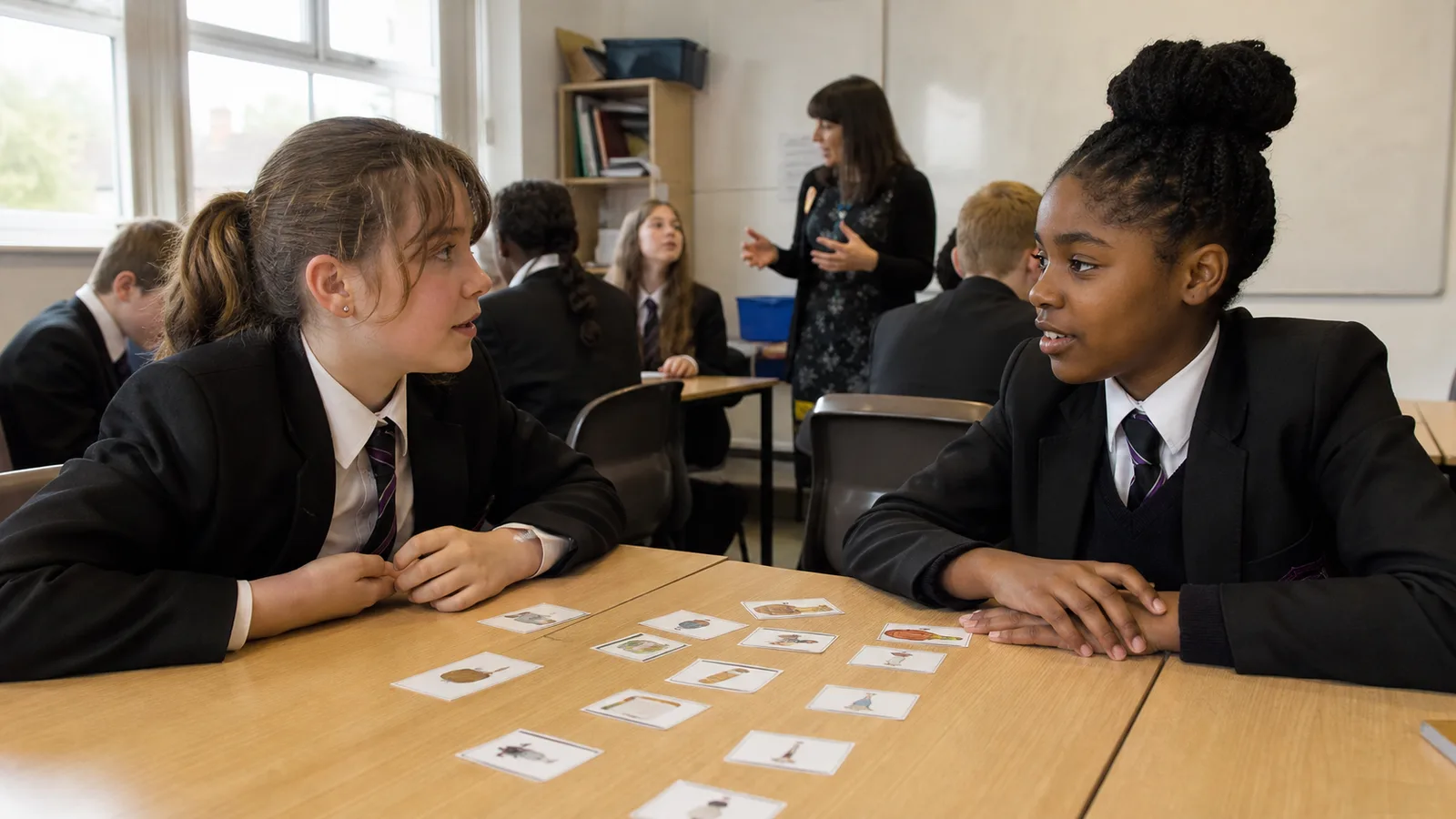
Decide in advance where each new word will reappear. The spacing effect only works if you schedule the next encounter (Nakata et al., 2020), so build the revisit into next week's starter rather than hoping it comes up.
Keep the new-language load small. Five well-practiced, high-frequency words that learners can retrieve next week beat twenty they forget by Friday.
Spaced retrieval practice, where learners are quizzed on words across expanding intervals with feedback, outperforms restudy and cramming, with one study showing more than double the gain (Karatas et al., 2021). Focus that practice on high-frequency words.
Use the target language as much as learners can understand, supported by gesture, images and routines. The evidence favours combining comprehensible input with explicit vocabulary and grammar teaching rather than relying on input alone (Ye, 2024).
Schedule when words will be met again rather than teaching a list once. Spacing encounters across lessons and revisiting words in new reading contexts improves long-term recall (Nakata et al., 2020).
Give them a sentence frame or colour-coded structure so they can assemble a correct sentence from known parts before they can generate one freely. Pair each word with an image so meaning and form are learned together.
Use the same evidence-based moves more deliberately: explicit vocabulary teaching, spaced retrieval, dual-coded input, and a controlled volume of new language to avoid cognitive overload (Samavi Aghdam et al., 2025).
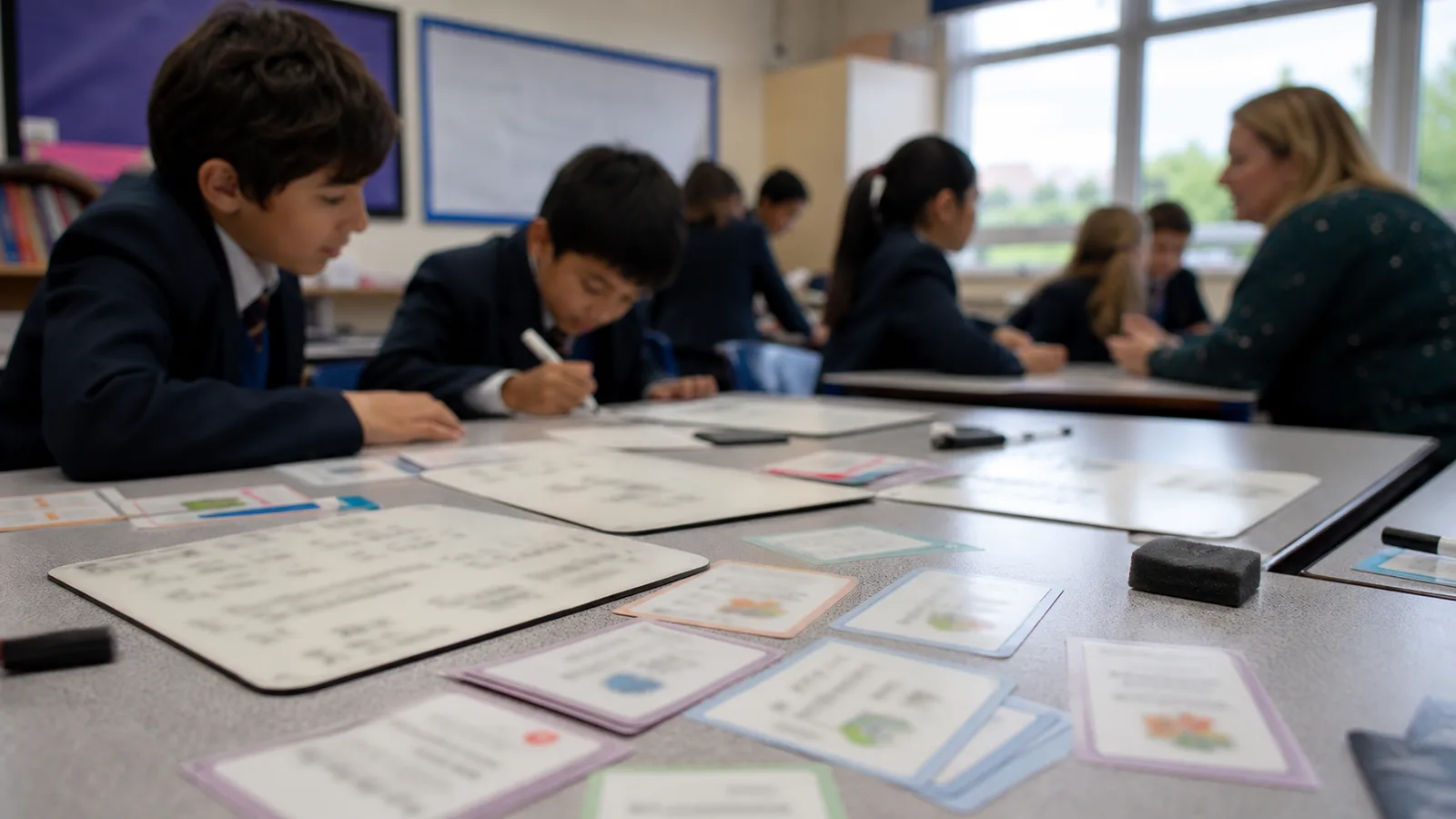
Plan your next unit around five high-frequency words, and write the spaced retrieval quiz for them into the starter of the following three lessons before you teach anything else.
These peer-reviewed studies provide the evidence base for the strategies discussed above.
Effects of spacing on contextual vocabulary learning: Spacing facilitates the acquisition of explicit, but not tacit, vocabulary knowledge
51 citations
Nakata, T., & Elgort, I. (2020)
This study demonstrates that spaced practice significantly enhances explicit vocabulary recall compared to crammed sessions. Teachers should design tasks that revisit key words over optimised intervals. This ensures language is firmly memorised rather than quickly forgotten.
Innovative Pedagogical Strategies in Second Language Acquisition
Ye, L. (2024)
This review highlights vital strategies for boosting language proficiency, including structured learner interaction and timely feedback. Teachers can apply this by designing active, technology-aided communicative tasks. This approach successfully scaffolds language acquisition in the classroom.
A state-of-the-art review of the modes and effectiveness of multimedia input for second and foreign language learning
75 citations
Zhang, R., et al. (2021)
This review shows that combining audio, animation, and captions is highly effective for grammar and vocabulary acquisition. Teachers should select multimedia resources that pair spoken words with visual and textual support. This multi-sensory method greatly improves reading comprehension.
Improving second language vocabulary learning and retention by leveraging memory enhancement techniques: A multidomain pedagogical approach
Karatas, N., et al. (2021)
This research proves that combining spaced retrieval with immediate feedback yields massive vocabulary gains. Teachers should replace traditional cramming with regular, low-stakes retrieval quizzes. Providing prompt feedback during these activities will significantly optimise long-term vocabulary retention.
Enhancing Second Language Vocabulary Acquisition through Self-Regulation, Spaced Repetition, and Cognitive Load Management Strategies
Samavi Aghdam, S., et al. (2025)
This study indicates that integrating self-regulation with spaced repetition promotes deep vocabulary learning. However, teachers must manage cognitive load to prevent overwhelming working memory. It is best to introduce new language in small, digestible chunks.

![Restorative Justice in Schools: A Complete Guide [2026]](https://cdn.prod.website-files.com/5b69a01ba2e409501de055d1/69d10d1b8439e584054873c1_69d10d186a5477665840c608_restorative-justice-in-schools-classroom-teaching.webp)