Updated on
March 8, 2026
Individual Support Plans: A Teacher's Guide to the New SEND System
|
March 8, 2026


Updated on
March 8, 2026
|
March 8, 2026
Individual Support Plans (ISPs) will replace Education, Health and Care Plans (EHCPs) as the primary statutory document for pupils with special educational needs in England from 2030. Announced in the SEND White Paper "Every Child Achieving and Thriving" (February 2026), ISPs are designed to be faster to produce, easier to review, and more responsive to changing pupil needs than the current EHCP system. For class teachers and SENCOs, this represents a fundamental shift in how SEND support is documented, delivered, and monitored.

An Individual Support Plan is a statutory document that identifies a pupil's special educational needs, sets measurable outcomes, specifies the provision required to meet those outcomes, and names the professionals responsible for delivery. The ISP operates within the graduated approach framework of assess, plan, do, review, replacing the current EHCP at the point where SEN Support alone is insufficient.
The key distinction from an EHCP is brevity and focus. Where an EHCP might run to 20 pages detailing every aspect of a child's difficulties, an ISP is capped at five pages and organised around three to five priority outcomes. The underlying philosophy is that a shorter, sharper document reviewed every term will produce better results than a lengthy document reviewed annually.
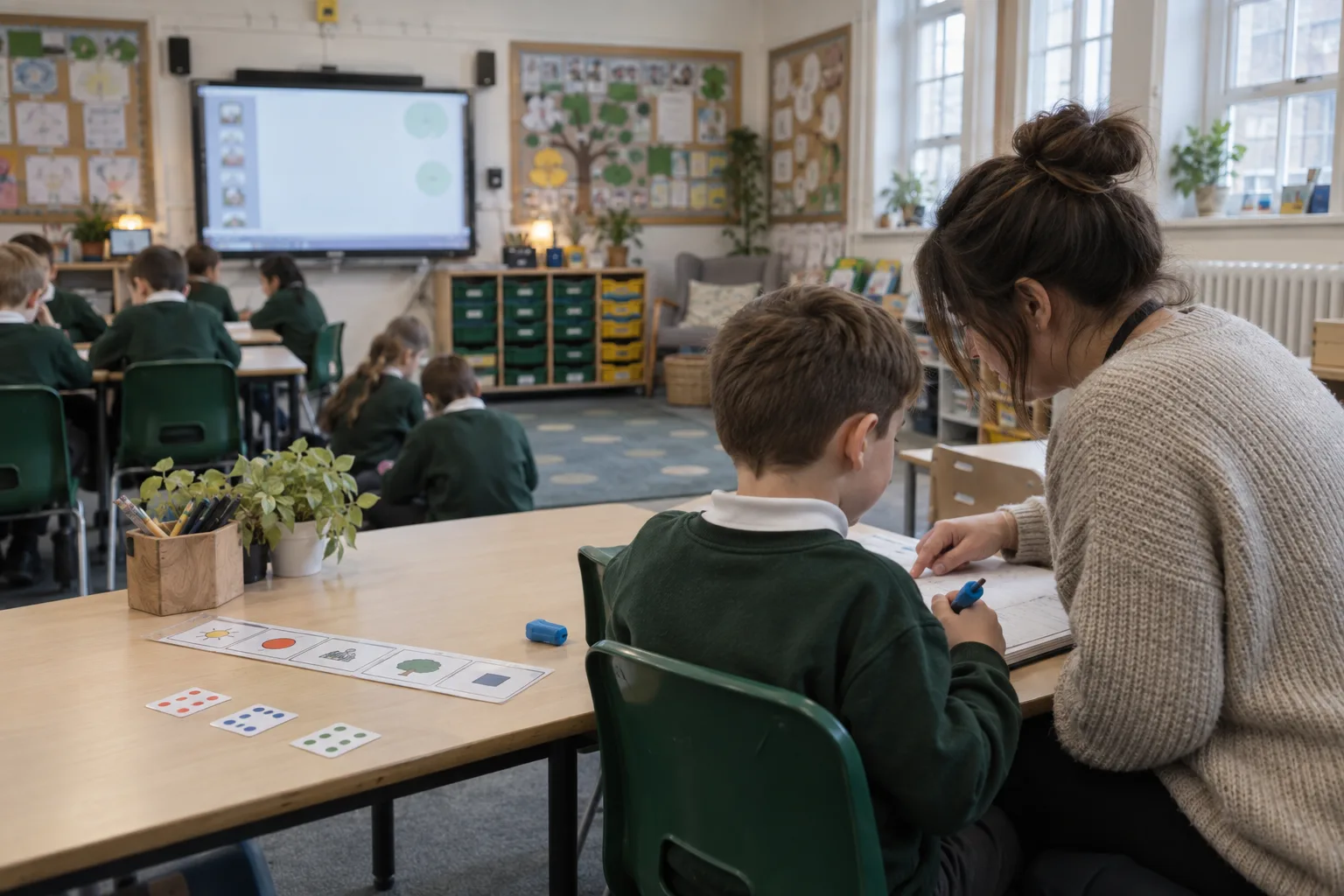
A Year 4 teacher contributing to an ISP for a pupil with ADHD would write two or three specific outcomes such as: "By the end of the autumn term, Amir will independently begin a writing task within two minutes of instruction, using his visual checklist, on four out of five occasions." This is measurably different from an EHCP outcome like: "Amir will improve his attention and concentration in lessons."
The EHCP system introduced by the Children and Families Act 2014 was intended to create holistic, person-centred plans spanning education, health, and social care. In practice, the system has become adversarial and bureaucratic. Over 90% of SEND Tribunal appeals are decided in favour of parents (Ministry of Justice, 2025), suggesting that local authorities routinely underestimate need. Average processing times exceed the 20-week statutory limit in most areas.
SENCOs report spending 60-70% of their time on EHCP-related paperwork rather than supporting classroom practice (NASEN Survey, 2024). The annual review process creates a "set and forget" cycle where provision described in Section F of the EHCP may not reflect what is actually happening in the classroom by the time the review arrives.
ISPs address these problems through three structural changes.
Speed. The 8-week timeline from request to finalised plan forces the system to prioritise. The process begins with a school-led request (replacing the current parental or school application to the local authority). The SENCO compiles existing evidence from the assess-plan-do-review cycle, requests any additional specialist input through the Experts at Hand programme, and drafts the plan in consultation with parents.
Ownership. The SENCO leads the ISP process rather than a local authority caseworker. This puts the person who knows the child best in charge of the document. Local authorities retain an oversight and quality assurance role but no longer control the timeline.
Responsiveness. Termly reviews replace annual reviews. Each review takes approximately 30 minutes and involves the class teacher, SENCO, parents, and any involved specialists. The review uses a simple structure: What has worked this term? What needs to change? What are the priorities for next term?
The White Paper proposes a standardised ISP template with five sections.
A brief description of the child's strengths, interests, and needs. This section is written collaboratively with the child and family, using person-centred language. Unlike the EHCP, which often leads with deficits, the ISP begins with what the child does well.
A pupil profile might read: "Sana is a creative thinker who loves storytelling and drama. She has strong verbal comprehension and contributes enthusiastically to class discussions. Sana finds working memory tasks challenging, particularly when instructions involve more than two steps, and she needs additional time to process written information."
Three to five measurable outcomes the pupil will work towards over the coming term. Outcomes must be SMART (Specific, Measurable, Achievable, Relevant, Time-bound) and linked to the pupil's areas of difficulty.
Effective ISP outcomes look different from typical EHCP outcomes:
| EHCP-Style Outcome | ISP-Style Outcome |
|---|---|
| Improve reading comprehension | By December, Sana will answer three inference questions correctly from a Year 4 text, using her prompt card, in four out of five sessions |
| Develop social skills | By December, Sana will initiate a conversation with a peer during unstructured time on three out of five days, tracked by lunchtime staff |
| Access the curriculum with adult support | By December, Sana will complete a scaffolded maths task independently within 15 minutes, using her number line and worked example, on four out of five occasions |
The specificity of ISP outcomes makes them directly usable by class teachers. A teacher reading Sana's ISP knows exactly what success looks like and can plan accordingly.
A concise description of the support the pupil will receive, organised by who delivers it and when. Provision is described in terms of frequency and duration rather than vague statements about "access to" support.
For example: "20-minute daily reading comprehension intervention with TA (phonics-based decoding focus). Weekly 30-minute speech and language session via Experts at Hand. Visual timetable and task checklist on desk. Pre-teaching of key vocabulary before new topics (class teacher, 10 minutes Monday mornings)."
A section completed at each termly review, recording progress towards outcomes, evidence used to assess progress, and recommendations for the next term. This creates a rolling record that replaces the single snapshot of an annual review.
The review evidence section connects directly to the provision mapping that most schools already maintain, making it straightforward to demonstrate the impact of interventions over time.
Records of any assessments, recommendations, or direct involvement from external specialists accessed through the Experts at Hand programme. This section replaces the health and social care elements of Sections G, H1, and H2 in the current EHCP.
The quality of ISP outcomes determines whether the plan drives meaningful classroom action or becomes another administrative exercise. Warnock (1978) identified the risk that statutory frameworks can become bureaucratic compliance exercises rather than tools for improving children's lives, and this concern remains relevant.
Specific: Name the skill, the context, and the level of support.
"Amir will write three connected sentences about a given topic" is specific. "Amir will improve his writing" is not.
Measurable: Include a frequency or accuracy criterion.
"On four out of five occasions" or "scoring 75% or above on the class assessment" gives clear measurement criteria.
Achievable: Base targets on the pupil's current performance plus reasonable progress.
If a pupil currently writes one sentence independently, targeting three sentences in a term is achievable. Targeting ten is not.
Relevant: Link outcomes to the pupil's primary areas of need, not to general curriculum objectives.
An outcome about handwriting fluency is relevant for a pupil with dyspraxia. An outcome about historical knowledge is a curriculum target, not an ISP outcome.
Time-bound: Specify the term or date by which the outcome should be achieved.
"By the end of the spring term" is time-bound. "Over time" is not.
Teachers new to writing ISP outcomes often default to vague, aspirational language. Avoid outcomes that describe adult actions ("Staff will provide visual prompts") rather than pupil achievements. Avoid outcomes so ambitious they are unachievable within a term, which demoralises both the pupil and the team. Avoid outcomes that duplicate curriculum targets rather than addressing underlying SEND needs.

The transition follows a phased approach:
Parents of children with current EHCPs can choose to retain their EHCP until 2034. Conversion to an ISP will happen at the point of annual review, with parental consent required. No provision specified in an existing EHCP will be removed during conversion unless the review evidence shows it is no longer needed.
The SEND Tribunal retains jurisdiction over ISP disputes, using the same appeal routes currently available for EHCPs. This was a critical point of reassurance following concerns raised by IPSEA and the National Autistic Society about potential loss of legal protections.
Start writing outcomes-focused targets. Even before ISPs are formally introduced, practise writing SMART outcomes for pupils on SEN Support. Use the termly review cycle to test whether your outcomes are measurable and achievable.
Strengthen your assess-plan-do-review records. The evidence trail from the graduated approach cycle will form the basis of ISP requests. Ensure your records clearly show what has been tried, what impact it had, and why additional support is needed.
Build relationships with families. ISPs are collaborative documents. Regular communication with parents about their child's progress, using accessible language rather than professional jargon, will make the ISP process more efficient when it arrives.
Develop your SEND knowledge. Familiarise yourself with the most common areas of need you encounter: autism, ADHD, dyslexia, and speech, language and communication needs. Understanding these conditions at a practical level makes writing meaningful outcomes significantly easier.
Review your provision mapping. Ensure your school's provision map accurately reflects what support is actually being delivered, not what was planned at the start of the year. Accurate provision mapping will be essential evidence for ISP requests.
The ISP model raises legitimate questions. Condensing complex needs into a five-page document risks oversimplification for pupils with the most significant difficulties. Children with profound and multiple learning difficulties, or those requiring specialist placement, may not be well served by a document designed for mainstream streamlining.
The 8-week turnaround, while welcome, assumes that specialist assessments through Experts at Hand will be available quickly. If demand outstrips supply, as happened with educational psychology services under the current system, the bottleneck simply moves rather than disappearing.
There is also a workforce concern. Shifting ISP leadership to SENCOs assumes that SENCOs have the capacity, training, and allocated time to manage this additional responsibility. Without the protected time that NASEN has campaigned for, ISPs risk adding to SENCO workload rather than reducing it.
Norwich (2014) warned against assuming that any single administrative reform can solve the fundamental tensions in SEND provision. The dilemma of difference, providing distinctive support without creating stigma, persists regardless of whether the document is called an EHCP or an ISP. What matters is the quality of teaching, the expertise of practitioners, and the adequacy of resources.

ISPs are one component of a broader reform package that includes £4 billion in new funding, mandatory SEND teacher training, and a restructured specialist support system. The success of ISPs will depend not on the template itself but on whether the surrounding infrastructure, including the Inclusive Mainstream Fund and Experts at Hand, delivers the resources and expertise that mainstream schools need.
For classroom teachers, the practical implication is clear: SEND support is becoming everyone's responsibility, documented through concise, outcomes-focused plans reviewed every term. Building the skills to identify needs, write measurable targets, and evaluate the impact of your teaching on pupils with SEND will be central to professional practice from 2030 onwards.
Start now. Review the graduated approach guidance, practice writing SMART outcomes for your current pupils with additional needs, and respond to the DfE consultation before 18 May 2026.
These peer-reviewed studies provide the evidence base for the strategies discussed above.
How do the digital competences of students in vocational schools differ from those of students in cooperative higher education institutions in Germany? View study ↗
44 citations
Wild et al. (2020)
This study examines digital competences across different educational pathways in Germany. For teachers working with SEND pupils, it highlights the importance of assessing students' digital skills when creating Individual Support Plans, particularly when considering post-16 transitions to vocational or higher education routes.
Decolonising the curriculum: A survey of current practice in a modern UK university View study ↗
27 citations
Winter et al. (2022)
This research explores decolonising university curricula to address Eurocentric perspectives. Teachers developing Individual Support Plans should consider how diverse cultural backgrounds and experiences can be valued and represented in personalised learning approaches, ensuring inclusive educational practices for all SEND pupils.
When theory beats practice: the implementation of competency-based education at healthcare workplaces View study ↗
21 citations
Janssens et al. (2023)
This healthcare education study reveals gaps between competency-based theory and workplace practice. Teachers creating Individual Support Plans can apply these findings by ensuring that planned interventions and support strategies are practically implementable rather than purely theoretical, bridging the theory-practice divide.
Teaching and interconnecting research and evidence-based practice in midwifery and nursing education: A mixed methods systematic review. View study ↗
Leiviska et al. (2025)
This systematic review examines research and evidence-based practice integration in healthcare education. Teachers developing Individual Support Plans can benefit from understanding how to incorporate current research evidence into their planning processes, ensuring interventions are based on proven effective practices.
Sociomaterial perspective as applied in interprofessional education and collaborative practice: a scoping review View study ↗
12 citations
Sy et al. (2023)
This review applies sociomaterial perspectives to interprofessional education and collaboration. For teachers creating Individual Support Plans, it emphasises the importance of considering both social relationships and material resources when planning multi-agency support approaches for SEND pupils.
Individual Support Plans (ISPs) will replace Education, Health and Care Plans (EHCPs) as the primary statutory document for pupils with special educational needs in England from 2030. Announced in the SEND White Paper "Every Child Achieving and Thriving" (February 2026), ISPs are designed to be faster to produce, easier to review, and more responsive to changing pupil needs than the current EHCP system. For class teachers and SENCOs, this represents a fundamental shift in how SEND support is documented, delivered, and monitored.

An Individual Support Plan is a statutory document that identifies a pupil's special educational needs, sets measurable outcomes, specifies the provision required to meet those outcomes, and names the professionals responsible for delivery. The ISP operates within the graduated approach framework of assess, plan, do, review, replacing the current EHCP at the point where SEN Support alone is insufficient.
The key distinction from an EHCP is brevity and focus. Where an EHCP might run to 20 pages detailing every aspect of a child's difficulties, an ISP is capped at five pages and organised around three to five priority outcomes. The underlying philosophy is that a shorter, sharper document reviewed every term will produce better results than a lengthy document reviewed annually.
A Year 4 teacher contributing to an ISP for a pupil with ADHD would write two or three specific outcomes such as: "By the end of the autumn term, Amir will independently begin a writing task within two minutes of instruction, using his visual checklist, on four out of five occasions." This is measurably different from an EHCP outcome like: "Amir will improve his attention and concentration in lessons."
The EHCP system introduced by the Children and Families Act 2014 was intended to create holistic, person-centred plans spanning education, health, and social care. In practice, the system has become adversarial and bureaucratic. Over 90% of SEND Tribunal appeals are decided in favour of parents (Ministry of Justice, 2025), suggesting that local authorities routinely underestimate need. Average processing times exceed the 20-week statutory limit in most areas.
SENCOs report spending 60-70% of their time on EHCP-related paperwork rather than supporting classroom practice (NASEN Survey, 2024). The annual review process creates a "set and forget" cycle where provision described in Section F of the EHCP may not reflect what is actually happening in the classroom by the time the review arrives.
ISPs address these problems through three structural changes.
Speed. The 8-week timeline from request to finalised plan forces the system to prioritise. The process begins with a school-led request (replacing the current parental or school application to the local authority). The SENCO compiles existing evidence from the assess-plan-do-review cycle, requests any additional specialist input through the Experts at Hand programme, and drafts the plan in consultation with parents.
Ownership. The SENCO leads the ISP process rather than a local authority caseworker. This puts the person who knows the child best in charge of the document. Local authorities retain an oversight and quality assurance role but no longer control the timeline.
Responsiveness. Termly reviews replace annual reviews. Each review takes approximately 30 minutes and involves the class teacher, SENCO, parents, and any involved specialists. The review uses a simple structure: What has worked this term? What needs to change? What are the priorities for next term?
The White Paper proposes a standardised ISP template with five sections.
A brief description of the child's strengths, interests, and needs. This section is written collaboratively with the child and family, using person-centred language. Unlike the EHCP, which often leads with deficits, the ISP begins with what the child does well.
A pupil profile might read: "Sana is a creative thinker who loves storytelling and drama. She has strong verbal comprehension and contributes enthusiastically to class discussions. Sana finds working memory tasks challenging, particularly when instructions involve more than two steps, and she needs additional time to process written information."
Three to five measurable outcomes the pupil will work towards over the coming term. Outcomes must be SMART (Specific, Measurable, Achievable, Relevant, Time-bound) and linked to the pupil's areas of difficulty.
Effective ISP outcomes look different from typical EHCP outcomes:
| EHCP-Style Outcome | ISP-Style Outcome |
|---|---|
| Improve reading comprehension | By December, Sana will answer three inference questions correctly from a Year 4 text, using her prompt card, in four out of five sessions |
| Develop social skills | By December, Sana will initiate a conversation with a peer during unstructured time on three out of five days, tracked by lunchtime staff |
| Access the curriculum with adult support | By December, Sana will complete a scaffolded maths task independently within 15 minutes, using her number line and worked example, on four out of five occasions |
The specificity of ISP outcomes makes them directly usable by class teachers. A teacher reading Sana's ISP knows exactly what success looks like and can plan accordingly.
A concise description of the support the pupil will receive, organised by who delivers it and when. Provision is described in terms of frequency and duration rather than vague statements about "access to" support.
For example: "20-minute daily reading comprehension intervention with TA (phonics-based decoding focus). Weekly 30-minute speech and language session via Experts at Hand. Visual timetable and task checklist on desk. Pre-teaching of key vocabulary before new topics (class teacher, 10 minutes Monday mornings)."
A section completed at each termly review, recording progress towards outcomes, evidence used to assess progress, and recommendations for the next term. This creates a rolling record that replaces the single snapshot of an annual review.
The review evidence section connects directly to the provision mapping that most schools already maintain, making it straightforward to demonstrate the impact of interventions over time.
Records of any assessments, recommendations, or direct involvement from external specialists accessed through the Experts at Hand programme. This section replaces the health and social care elements of Sections G, H1, and H2 in the current EHCP.
The quality of ISP outcomes determines whether the plan drives meaningful classroom action or becomes another administrative exercise. Warnock (1978) identified the risk that statutory frameworks can become bureaucratic compliance exercises rather than tools for improving children's lives, and this concern remains relevant.
Specific: Name the skill, the context, and the level of support.
"Amir will write three connected sentences about a given topic" is specific. "Amir will improve his writing" is not.
Measurable: Include a frequency or accuracy criterion.
"On four out of five occasions" or "scoring 75% or above on the class assessment" gives clear measurement criteria.
Achievable: Base targets on the pupil's current performance plus reasonable progress.
If a pupil currently writes one sentence independently, targeting three sentences in a term is achievable. Targeting ten is not.
Relevant: Link outcomes to the pupil's primary areas of need, not to general curriculum objectives.
An outcome about handwriting fluency is relevant for a pupil with dyspraxia. An outcome about historical knowledge is a curriculum target, not an ISP outcome.
Time-bound: Specify the term or date by which the outcome should be achieved.
"By the end of the spring term" is time-bound. "Over time" is not.
Teachers new to writing ISP outcomes often default to vague, aspirational language. Avoid outcomes that describe adult actions ("Staff will provide visual prompts") rather than pupil achievements. Avoid outcomes so ambitious they are unachievable within a term, which demoralises both the pupil and the team. Avoid outcomes that duplicate curriculum targets rather than addressing underlying SEND needs.

The transition follows a phased approach:
Parents of children with current EHCPs can choose to retain their EHCP until 2034. Conversion to an ISP will happen at the point of annual review, with parental consent required. No provision specified in an existing EHCP will be removed during conversion unless the review evidence shows it is no longer needed.
The SEND Tribunal retains jurisdiction over ISP disputes, using the same appeal routes currently available for EHCPs. This was a critical point of reassurance following concerns raised by IPSEA and the National Autistic Society about potential loss of legal protections.
Start writing outcomes-focused targets. Even before ISPs are formally introduced, practise writing SMART outcomes for pupils on SEN Support. Use the termly review cycle to test whether your outcomes are measurable and achievable.
Strengthen your assess-plan-do-review records. The evidence trail from the graduated approach cycle will form the basis of ISP requests. Ensure your records clearly show what has been tried, what impact it had, and why additional support is needed.
Build relationships with families. ISPs are collaborative documents. Regular communication with parents about their child's progress, using accessible language rather than professional jargon, will make the ISP process more efficient when it arrives.
Develop your SEND knowledge. Familiarise yourself with the most common areas of need you encounter: autism, ADHD, dyslexia, and speech, language and communication needs. Understanding these conditions at a practical level makes writing meaningful outcomes significantly easier.
Review your provision mapping. Ensure your school's provision map accurately reflects what support is actually being delivered, not what was planned at the start of the year. Accurate provision mapping will be essential evidence for ISP requests.
The ISP model raises legitimate questions. Condensing complex needs into a five-page document risks oversimplification for pupils with the most significant difficulties. Children with profound and multiple learning difficulties, or those requiring specialist placement, may not be well served by a document designed for mainstream streamlining.
The 8-week turnaround, while welcome, assumes that specialist assessments through Experts at Hand will be available quickly. If demand outstrips supply, as happened with educational psychology services under the current system, the bottleneck simply moves rather than disappearing.
There is also a workforce concern. Shifting ISP leadership to SENCOs assumes that SENCOs have the capacity, training, and allocated time to manage this additional responsibility. Without the protected time that NASEN has campaigned for, ISPs risk adding to SENCO workload rather than reducing it.
Norwich (2014) warned against assuming that any single administrative reform can solve the fundamental tensions in SEND provision. The dilemma of difference, providing distinctive support without creating stigma, persists regardless of whether the document is called an EHCP or an ISP. What matters is the quality of teaching, the expertise of practitioners, and the adequacy of resources.

ISPs are one component of a broader reform package that includes £4 billion in new funding, mandatory SEND teacher training, and a restructured specialist support system. The success of ISPs will depend not on the template itself but on whether the surrounding infrastructure, including the Inclusive Mainstream Fund and Experts at Hand, delivers the resources and expertise that mainstream schools need.
For classroom teachers, the practical implication is clear: SEND support is becoming everyone's responsibility, documented through concise, outcomes-focused plans reviewed every term. Building the skills to identify needs, write measurable targets, and evaluate the impact of your teaching on pupils with SEND will be central to professional practice from 2030 onwards.
Start now. Review the graduated approach guidance, practice writing SMART outcomes for your current pupils with additional needs, and respond to the DfE consultation before 18 May 2026.
These peer-reviewed studies provide the evidence base for the strategies discussed above.
How do the digital competences of students in vocational schools differ from those of students in cooperative higher education institutions in Germany? View study ↗
44 citations
Wild et al. (2020)
This study examines digital competences across different educational pathways in Germany. For teachers working with SEND pupils, it highlights the importance of assessing students' digital skills when creating Individual Support Plans, particularly when considering post-16 transitions to vocational or higher education routes.
Decolonising the curriculum: A survey of current practice in a modern UK university View study ↗
27 citations
Winter et al. (2022)
This research explores decolonising university curricula to address Eurocentric perspectives. Teachers developing Individual Support Plans should consider how diverse cultural backgrounds and experiences can be valued and represented in personalised learning approaches, ensuring inclusive educational practices for all SEND pupils.
When theory beats practice: the implementation of competency-based education at healthcare workplaces View study ↗
21 citations
Janssens et al. (2023)
This healthcare education study reveals gaps between competency-based theory and workplace practice. Teachers creating Individual Support Plans can apply these findings by ensuring that planned interventions and support strategies are practically implementable rather than purely theoretical, bridging the theory-practice divide.
Teaching and interconnecting research and evidence-based practice in midwifery and nursing education: A mixed methods systematic review. View study ↗
Leiviska et al. (2025)
This systematic review examines research and evidence-based practice integration in healthcare education. Teachers developing Individual Support Plans can benefit from understanding how to incorporate current research evidence into their planning processes, ensuring interventions are based on proven effective practices.
Sociomaterial perspective as applied in interprofessional education and collaborative practice: a scoping review View study ↗
12 citations
Sy et al. (2023)
This review applies sociomaterial perspectives to interprofessional education and collaboration. For teachers creating Individual Support Plans, it emphasises the importance of considering both social relationships and material resources when planning multi-agency support approaches for SEND pupils.
{"@context":"https://schema.org","@graph":[{"@type":"Organization","@id":"https://www.structural-learning.com/#org","name":"Structural Learning","url":"https://www.structural-learning.com/","logo":{"@type":"ImageObject","url":"https://cdn.prod.website-files.com/5b69a01ba2e409501de055d1/5b69a01ba2e40996a5e055f4_structural-learning-logo.png"}},{"@type":"Person","@id":"https://www.structural-learning.com/team/paul-main/#person","name":"Paul Main","url":"https://www.structural-learning.com/team/paul-main","jobTitle":"Founder","affiliation":{"@id":"https://www.structural-learning.com/#org"}},{"@type":"BreadcrumbList","@id":"https://www.structural-learning.com/post/individual-support-plans-teachers-guide-new#breadcrumb","itemListElement":[{"@type":"ListItem","position":1,"name":"Home","item":"https://www.structural-learning.com/"},{"@type":"ListItem","position":2,"name":"Blog","item":"https://www.structural-learning.com/blog"},{"@type":"ListItem","position":3,"name":"Individual Support Plans: A Teacher's Guide to the New SEND System","item":"https://www.structural-learning.com/post/individual-support-plans-teachers-guide-new"}]},{"@type":"BlogPosting","@id":"https://www.structural-learning.com/post/individual-support-plans-teachers-guide-new#article","headline":"Individual Support Plans: A Teacher's Guide to the New SEND System","description":"","author":{"@id":"https://www.structural-learning.com/team/paul-main/#person"},"publisher":{"@id":"https://www.structural-learning.com/#org"},"datePublished":"2026-03-08","dateModified":"2026-03-08","inLanguage":"en-GB"}]}