Interoception in the Classroom: The Hidden Eighth SenseInteroception in the Classroom: The Hidden Eighth Sense: practical strategies for teachers

Updated on  

March 9, 2026

Interoception in the Classroom: The Hidden Eighth Sense

|

March 8, 2026

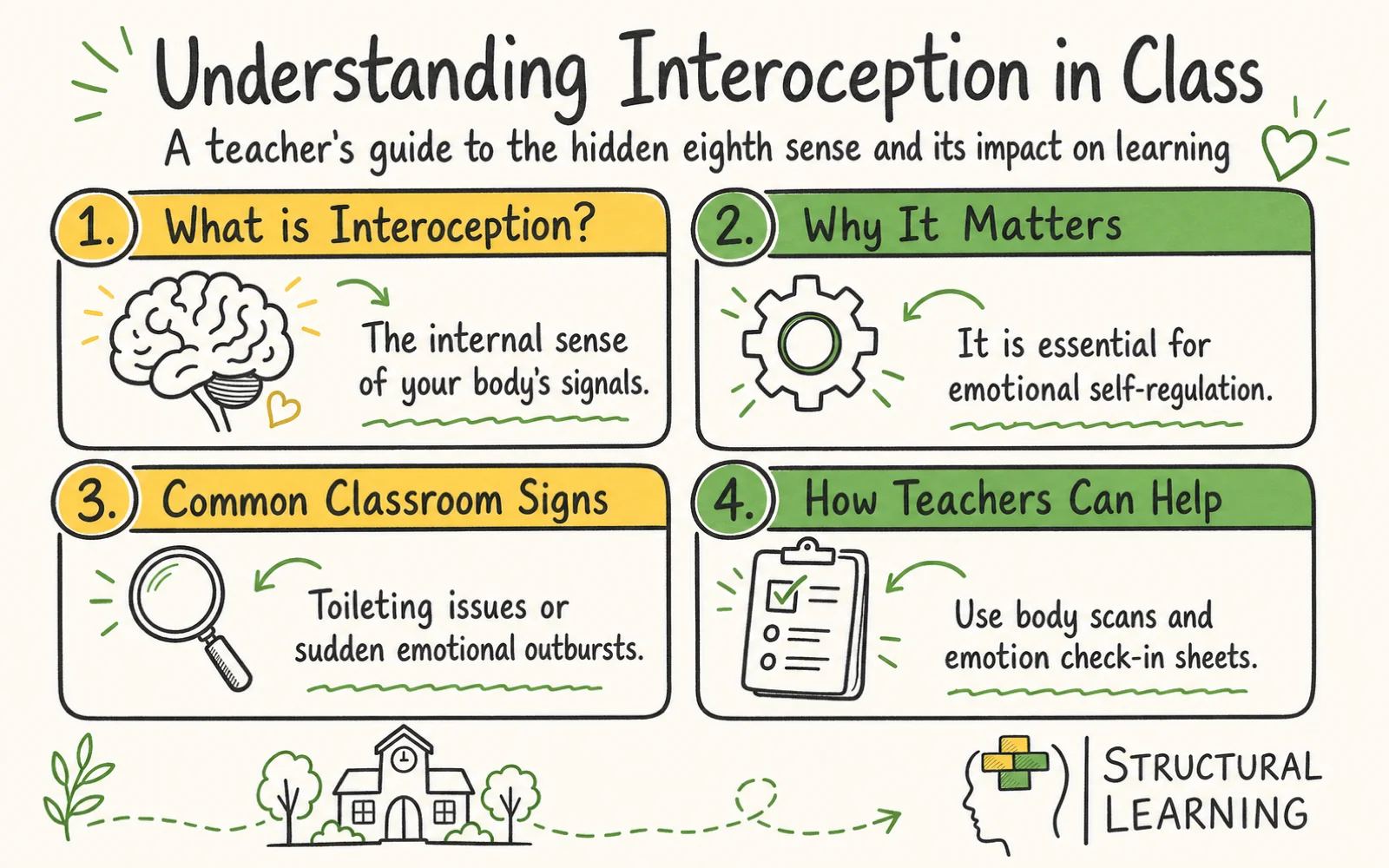
Interoception is the ability to perceive and interpret internal body signals such as hunger, thirst, heart rate, temperature, bladder fullness, and emotional arousal. Sometimes called the "hidden eighth sense," interoception sits alongside the more familiar five senses plus proprioception and the vestibular system. For teachers working with pupils who struggle to regulate their emotions, recognise when they need the toilet, or identify that they are anxious rather than angry, understanding interoception provides a practical framework for intervention. Kelly Mahler's (2016) research on interoceptive awareness has transformed how schools approach emotion regulation and sensory processing difficulties, particularly for pupils with autism and ADHD. Where interoceptive difficulties are significant, teachers should consult the SENCO for sensory profiling referrals to occupational therapy.

Key Takeaways

    • Interoception underpins self-regulation: A pupil who cannot detect their own rising heart rate or muscle tension cannot use calming strategies effectively, because they do not recognise the signal that tells them to act.
    • Interoceptive difficulties are common in SEND: Research consistently links reduced interoceptive awareness with autism, ADHD, anxiety, eating difficulties, and toileting challenges (Mahler, 2016).
    • Classroom activities build awareness: Simple, daily body-noticing exercises take less than five minutes and measurably improve pupils' ability to identify and respond to internal signals.

Interoception vs. The Seven Other Senses: Where Does It Fit? infographic for teachers
Interoception vs. The Seven Other Senses: Where Does It Fit?

What Is Interoception?

Interoception refers to the sensory system responsible for detecting internal bodily states. Where vision detects light and proprioception detects body position, interoception detects signals from inside the body: heart rate, breathing rate, muscle tension, stomach fullness, bladder pressure, body temperature, pain, and itch.

Craig (2002) identified interoception as a distinct neurological pathway, mapping how signals travel from internal organs through the lamina I spinothalamocortical pathway to the insular cortex. The insular cortex, particularly the anterior insula, integrates these signals into conscious awareness, producing what we experience as feelings. When a pupil says "I feel funny in my tummy," they are reporting an interoceptive signal. Whether they interpret that signal as hunger, anxiety, excitement, or nausea depends on their interoceptive accuracy and the contextual cues available.

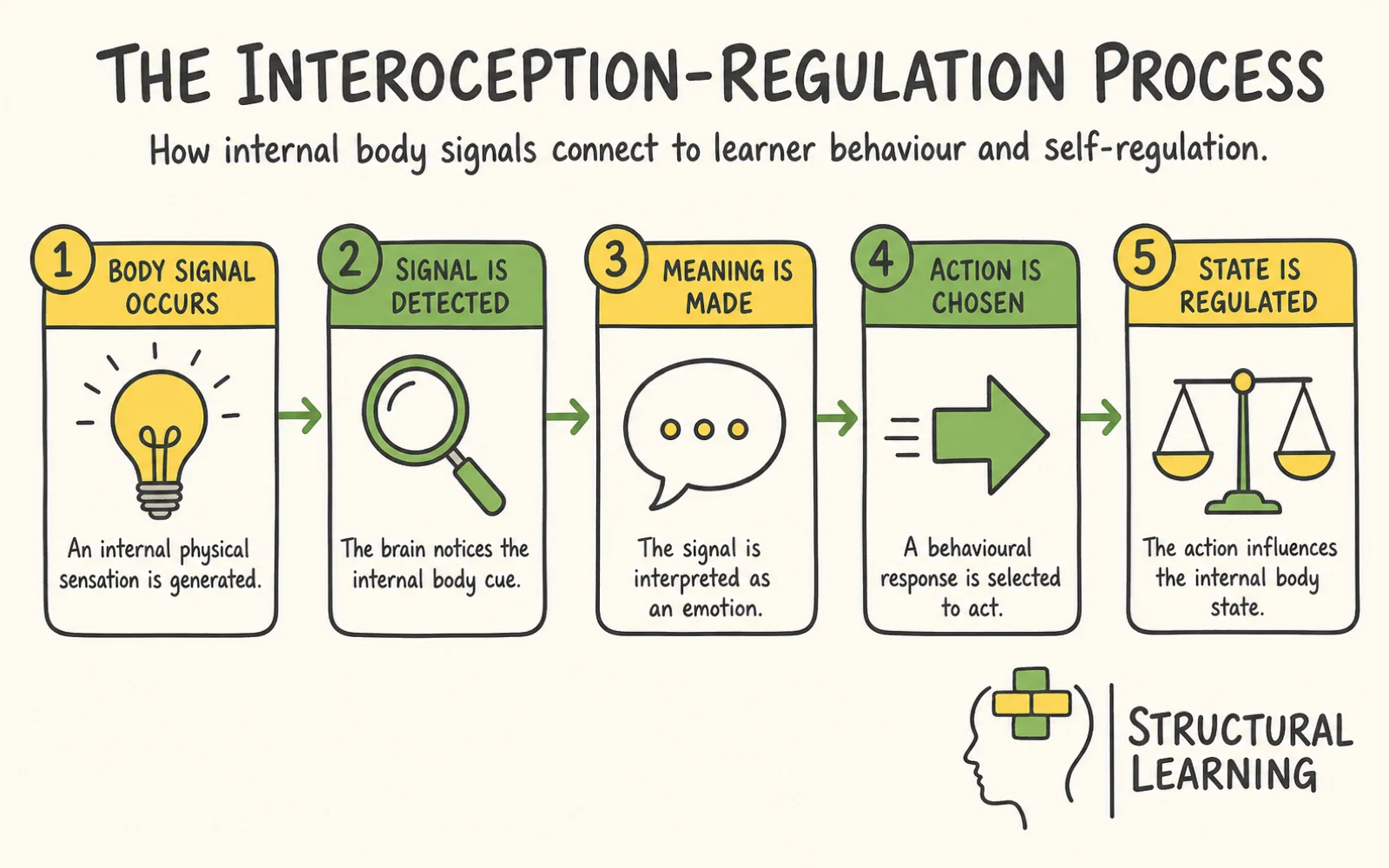
This matters for teachers because interoception is foundational to emotional awareness. Damasio's (1994) somatic marker hypothesis proposes that emotions are experienced through body sensations. You do not think your way to feeling angry; your body produces physiological changes (increased heart rate, flushed skin, clenched muscles) that your brain interprets as anger. A pupil with poor interoceptive awareness may experience these physiological changes without being able to identify or label them, leading to seemingly "explosive" behaviour that appears to come from nowhere.

Why Teachers Need to Know About It

The Connection to Emotional Regulation

The Zones of Regulation framework, widely used in UK schools, assumes that pupils can identify which "zone" they are in. A pupil in the Yellow Zone (heightened alertness, anxiety, silliness) needs to recognise internal cues such as a racing heart, fast breathing, or restless legs before they can select an appropriate regulation strategy. For pupils with reduced interoceptive awareness, the question "What zone are you in?" is genuinely unanswerable because they cannot detect the body signals that would tell them.

Mahler (2016) described this as an "interoception-regulation connection": self-regulation requires self-awareness, and self-awareness requires accurate interoception. A teacher asking a distressed child to "take some deep breaths and calm down" is assuming a level of body awareness that the child may not possess. The instruction fails not because the child is defiant but because they lack the sensory foundation the strategy depends on.

The Connection to Co-Regulation

Co-regulation, where an adult uses their own calm presence, tone, and physical proximity to regulate a dysregulated child, becomes particularly important when a pupil's interoceptive awareness is limited. Stuart Shanker's (2016) self-regulation model emphasises that children develop self-regulation through repeated experiences of being co-regulated by attuned adults. For pupils with interoceptive difficulties, the co-regulation phase may need to be extended and made more explicit, with the adult narrating body sensations: "I can see your shoulders are up near your ears. That might mean your body feels tight. Let's try dropping them down."

Common Presentations in the Classroom

Pupils with interoceptive difficulties may present as:

  • Not recognising hunger or thirst: Skipping meals, not drinking water, or becoming irritable without understanding why
  • Toileting difficulties: Not noticing bladder or bowel signals until urgent, leading to accidents
  • Emotional "explosions": Moving from calm to crisis rapidly because they did not detect early warning signs
  • Difficulty identifying emotions: Saying "I don't know" when asked how they feel, not because they are being evasive but because they genuinely cannot match body signals to emotion labels
  • Over- or under-reporting pain: Either not noticing injuries or reporting severe distress from minor bumps
  • Temperature regulation issues: Wearing a winter coat in summer or refusing to wear one in freezing weather

A Year 2 teacher might notice that Kai regularly wets himself during afternoon lessons despite being reminded to use the toilet at break time. Rather than a behaviour issue, this may indicate that Kai has difficulty detecting his bladder fullness signals. The intervention is not more reminders (which address the behaviour) but interoceptive awareness activities (which address the underlying cause).

Interoception and SEND

Autism

Research consistently demonstrates that autistic individuals show differences in interoceptive processing. DuBois, Ameis, and Bhatt (2016) found that autistic adults reported significantly lower interoceptive accuracy compared to neurotypical controls. Crucially, the difficulty was not in having body sensations but in accurately interpreting them.

In the classroom, an autistic pupil might experience a physiological anxiety response (sweaty palms, increased heart rate, shallow breathing) before a change to the timetable but be unable to label the experience as anxiety. Instead, the feeling may be experienced as general discomfort, leading to avoidance behaviour or meltdown. Teaching this pupil to notice and name specific body signals ("My hands feel wet, my heart is going fast, this might be my body telling me I'm worried about what's happening next") provides a concrete pathway from sensation to strategy.

ADHD

Pupils with ADHD often show both interoceptive hypo-sensitivity (not noticing signals) and hyper-sensitivity (being overwhelmed by them). The restlessness characteristic of ADHD may partly reflect a difficulty in processing proprioceptive and interoceptive signals, leading the child to seek constant movement as a way of generating sensory input they can perceive.

A practical classroom response involves structured movement breaks that draw attention to body signals. Rather than saying "Sit still," a teacher might say: "Stand up, stretch your arms above your head, and notice where you feel tight. Now sit back down and see if your body feels different." This approach combines the physical movement the pupil needs with explicit interoceptive practice.

Anxiety

Anxious pupils often experience heightened interoceptive sensitivity, detecting body signals at a lower threshold than their peers. A slightly increased heart rate that most children would not notice becomes, for an anxious pupil, a source of alarm. This can create a feedback loop: the pupil notices their heart beating faster, becomes anxious about the sensation, which increases their heart rate further.

For these pupils, interoception work focuses on normalisation rather than heightened awareness. Activities help pupils understand that body signals fluctuate naturally throughout the day and that a fast heartbeat does not always mean danger. "Your heart beats faster after running, after laughing, and when you're nervous. Let's notice what your heart does after we do some star jumps compared to when we sit quietly."

Practical Classroom Activities

Daily Body Check-In (5 Minutes)

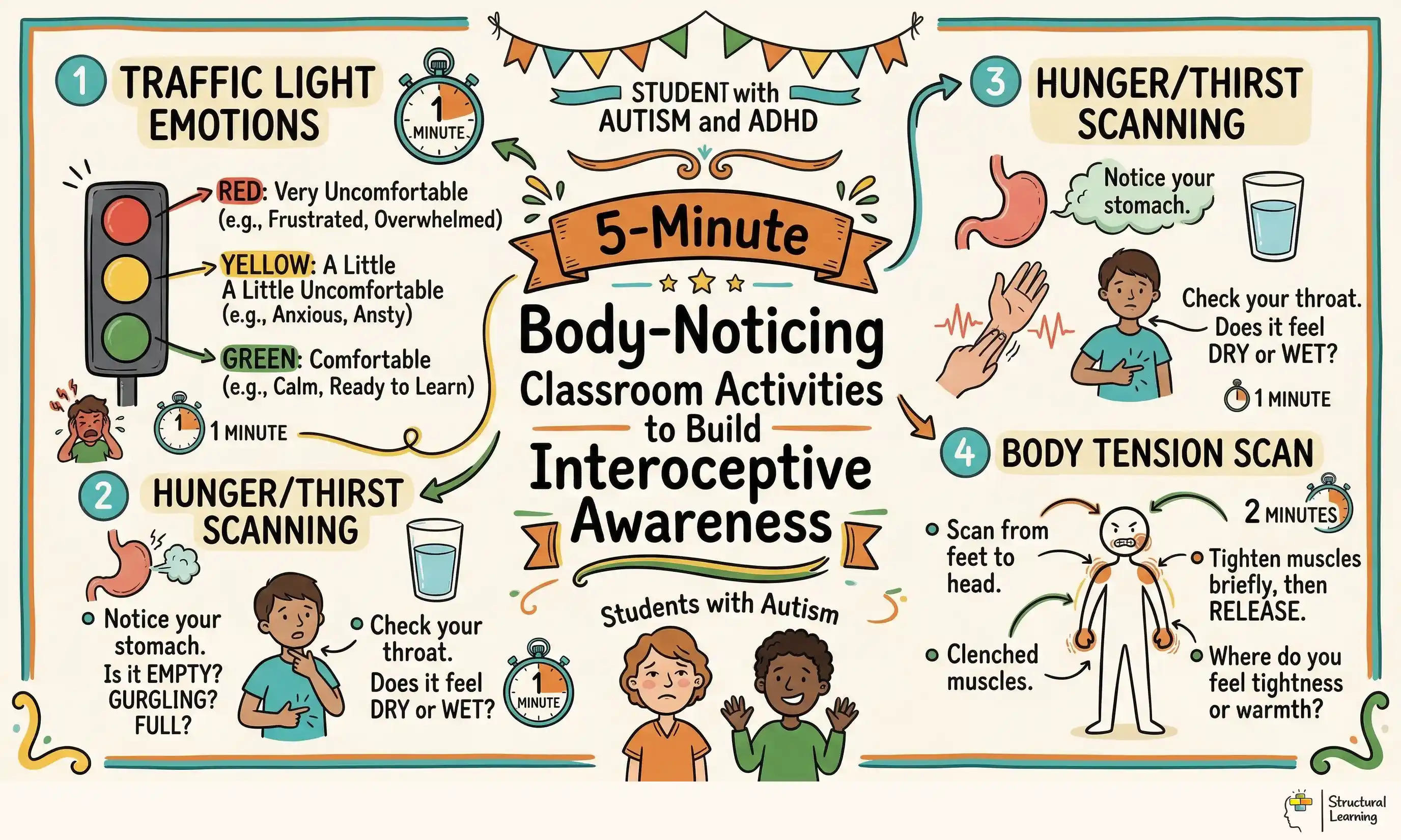
At the start of the morning or after lunch, guide the class through a brief body scan:

"Close your eyes or look at a spot on the floor. Notice your feet on the ground. Can you feel them inside your shoes? Now notice your legs. Are they still or fidgety? Move up to your tummy. Does it feel full, empty, or in between? Now notice your breathing. Is it fast or slow? Deep or shallow? Finally, notice your face. Is your jaw tight or relaxed? Are your eyebrows pulled together or smooth?"

The teacher then asks pupils to rate their body state using a simple scale. This is not a feelings check (which assumes interoceptive awareness); it is a body-noticing exercise that builds the foundation for identifying feelings later. Over time, pupils develop a vocabulary for internal states that they can use independently.

Heart Rate Detective (10 Minutes)

Pupils find their pulse (wrist or neck) and count beats for 15 seconds. They record this number. Then they do 30 seconds of star jumps and immediately count again. They sit quietly for two minutes and count a third time.

The teacher leads a discussion: "What happened to your heart rate? Why did it change? Has anyone noticed their heart going fast at other times, like before a test or when you're excited about something?" This activity makes interoceptive signals concrete and measurable, and connects body sensations to everyday experiences.

Temperature Hands (5 Minutes)

Pupils hold a warm cup of water and notice the sensation in their hands. Then they hold a cold cup. The teacher asks: "Can you describe the difference? Where do you notice it most? Does one feel more comfortable than the other?"

This simple activity practises noticing and describing internal sensations. For pupils who struggle with emotional vocabulary, the physical experience of warm and cold provides a low-stakes entry point to noticing body signals.

The Muscle Squeeze (3 Minutes)

Pupils squeeze their fists as tightly as possible for 10 seconds, then release. The teacher guides attention: "Notice what tight feels like. Now notice what relaxed feels like. Can you feel the difference? When do your muscles feel tight during the day?"

This activity builds awareness of muscle tension, a key interoceptive signal associated with stress and anxiety. Pupils who can identify tension in their body can then use strategies such as progressive muscle relaxation, which relies on the ability to distinguish between tense and relaxed states.

The Interoception-Regulation Cycle: From Signal to Action infographic for teachers
The Interoception-Regulation Cycle: From Signal to Action

Building an Interoception Programme

Whole-Class Approach

Interoception activities work best as a whole-class routine rather than a targeted intervention for specific pupils. This avoids singling out children with difficulties and normalises body awareness for everyone. A daily five-minute body check-in costs minimal teaching time and benefits all pupils, including those who are already skilled at recognising body signals.

Embed interoception language into everyday classroom talk. Instead of "Are you OK?" try "What is your body telling you right now?" Instead of "You look angry" try "I notice your fists are clenched and your face looks hot. What do you notice?" This models the process of attending to body signals and interpreting them.

Targeted Support

For pupils with identified interoceptive difficulties, a more intensive programme might include:

  • Individual interoception sessions (10-15 minutes, twice weekly) working through Mahler's Interoception Curriculum activities
  • Visual body maps where pupils colour areas where they feel sensations during different emotional states
  • Interoception diaries with simple tick-box formats (heart rate: fast/normal/slow; muscles: tight/relaxed; tummy: full/empty/uncomfortable)
  • Collaboration with occupational therapists through the school's access to specialist support

A teaching assistant working with a small group might use a body map exercise where pupils lie on large paper while a partner traces their outline. The group then uses coloured stickers to mark where they feel different emotions: red for anger, blue for sadness, yellow for excitement. The discussion that follows helps pupils connect emotions to specific body locations.

Progression Over Time

Interoceptive awareness develops with practice. Early activities focus on noticing strong, obvious signals (heart rate after exercise, hunger before lunch). As pupils build confidence, activities progress to subtler signals (the slight tension in your shoulders when you're concentrating, the flutter in your stomach when you're unsure about an answer).

The goal is not perfect interoceptive accuracy but functional awareness: enough sensitivity to internal signals to inform self-regulation decisions. A pupil who learns to notice "my body feels fizzy" before they reach meltdown point has a window in which to apply a calming strategy, seek co-regulation from an adult, or remove themselves to a quiet space.

Assessment and Monitoring

Measuring Interoceptive Awareness

Formal assessment of interoception typically involves heartbeat detection tasks, where participants judge whether an external signal is synchronous with their heartbeat. These are primarily research tools and impractical for classroom use.

For teachers, observational assessment is more useful. Note patterns such as:

  • Does the pupil recognise hunger/thirst cues independently?
  • Can they identify when they need the toilet before it becomes urgent?
  • Do they notice early signs of emotional arousal (heart rate, muscle tension)?
  • Can they describe body sensations using specific vocabulary?
  • Do they respond to body-based regulation strategies (deep breathing, muscle relaxation)?

Track progress over a term using a simple rating scale (1-5) for each area. Improvement in these practical indicators matters more than scores on formal assessments.

Connecting to Provision Planning

Interoceptive awareness data feeds directly into provision mapping and Individual Support Plans. For pupils receiving targeted interoception support, include specific outcomes: "By the end of the autumn term, Kai will independently request a toilet break based on body signals on four out of five days." This makes interoception a measurable component of the graduated approach.

The Evidence Base

Interoception research has grown rapidly since Craig's (2002) landmark paper mapping the neural pathways. Murphy, Catmur, and Bird (2019) published a comprehensive meta-analysis of interoceptive accuracy research, finding consistent links between interoceptive awareness and emotional regulation across clinical and non-clinical populations.

Mahler's (2016) work is the most directly applicable to education. Her Interoception Curriculum provides structured activities with clear progression, and her training programmes have been adopted by school districts internationally. The curriculum builds from body awareness (noticing signals) through body literacy (naming signals) to body connection (linking signals to emotions and actions).

Critiques of the interoception literature note that much of the research uses adult populations, and that the heartbeat detection tasks used in most studies may not accurately reflect real-world interoceptive functioning (Brewer, Murphy, & Bird, 2021). The educational applications remain ahead of the evidence base in some areas, though classroom practitioners consistently report observable improvements in pupils' self-regulation following interoception programmes.

Garfinkel, Seth, Barrett, Suzuki, and Critchley (2015) distinguished between three dimensions of interoception: accuracy (detecting signals), sensibility (self-reported awareness), and metacognitive awareness (knowing how accurate your own interoception is). This distinction matters for teachers because a pupil may report high body awareness (sensibility) while actually having poor signal detection (accuracy). Observation-based assessment captures this gap more effectively than self-report questionnaires.

5-Minute Body-Noticing <a href=Classroom Activities to Build Interoceptive Awareness infographic for teachers" loading="lazy">
5-Minute Body-Noticing Classroom Activities to Build Interoceptive Awareness

Practical Next Steps

Choose one interoception activity from this article and run it daily for two weeks with your class. The body check-in is the simplest starting point: it takes five minutes, requires no resources, and builds vocabulary that supports emotion coaching conversations throughout the day. Notice which pupils find it easy to describe body sensations and which struggle. That information alone will sharpen your understanding of individual needs and inform your next provision mapping review.

Further Reading: Key Research Papers

These peer-reviewed studies provide the evidence base for the strategies discussed above.

Learning Is Visual: Why Teachers Need to Know about Vision View study ↗

Wilhelmsen et al. (2020)

This paper provides teachers with essential knowledge about visual development and impairments that affect learning. It emphasises how understanding students' vision can help teachers better support their educational and social growth through appropriate classroom strategies and interventions.

Changing the strategy and culture of stroke awareness education in China: implementing Stroke 1-2-0 View study ↗
32 citations

Zhao et al. (2020)

This paper documents a large-scale public health education campaign in China, demonstrating how systematic educational programmes can effectively raise awareness about critical health issues. It offers teachers insights into implementing community-based educational initiatives and measuring their impact.

What Teachers Need to Know About Language View study ↗
521 citations

Fillmore et al. (2002)

This foundational paper argues that teachers require comprehensive training in educational linguistics to effectively support all learners. It highlights how understanding language development, acquisition, and variation is crucial for creating inclusive classrooms and supporting student success.

The Need for Implementing Digital Instruction in the Al-Syariah Dini Subject: A Concept Paper View study ↗

Hadri et al. (2025)

This paper explores integrating digital tools into Islamic education within Malaysian schools. It provides teachers with insights into modernising traditional religious instruction through technology whilst maintaining cultural authenticity and educational effectiveness.

What do film teachers need to know about cognitivism? Revisiting the work of David Bordwell and other cognitivists View study ↗

Connolly (2018)

This paper examines how cognitive film theory can inform film education practices. It offers film teachers practical frameworks for understanding how students process visual media, helping them design more effective lessons that align with cognitive learning principles.

Free Resource Pack

Interoception in the Classroom Essentials

3 ready-to-use resources to help your students understand their inner body signals and support self-regulation.

Interoception in the Classroom Essentials — 3 resources
Interoception Self-Regulation Emotional Literacy SEND Support Classroom Display CPD Visual Teacher Strategies Well-being Neurodiversity

Download your free bundle

Fill in your details below and we'll send the resource pack straight to your inbox.

Quick survey (helps us create better resources)

How confident do you feel in identifying and supporting students' interoceptive needs?

Not at all confident
Slightly confident
Moderately confident
Very confident
Extremely confident

To what extent does your school currently provide training or resources on interoception for staff?

Not at all
Minimally
Moderately
Significantly
Extensively

How often do you intentionally incorporate interoception-aware strategies into your classroom practice?

Never
Rarely
Sometimes
Often
Always

Your resource pack is ready

We've also sent a copy to your email. Check your inbox.

Loading audit...

Interoception is the ability to perceive and interpret internal body signals such as hunger, thirst, heart rate, temperature, bladder fullness, and emotional arousal. Sometimes called the "hidden eighth sense," interoception sits alongside the more familiar five senses plus proprioception and the vestibular system. For teachers working with pupils who struggle to regulate their emotions, recognise when they need the toilet, or identify that they are anxious rather than angry, understanding interoception provides a practical framework for intervention. Kelly Mahler's (2016) research on interoceptive awareness has transformed how schools approach emotion regulation and sensory processing difficulties, particularly for pupils with autism and ADHD. Where interoceptive difficulties are significant, teachers should consult the SENCO for sensory profiling referrals to occupational therapy.

Key Takeaways

    • Interoception underpins self-regulation: A pupil who cannot detect their own rising heart rate or muscle tension cannot use calming strategies effectively, because they do not recognise the signal that tells them to act.
    • Interoceptive difficulties are common in SEND: Research consistently links reduced interoceptive awareness with autism, ADHD, anxiety, eating difficulties, and toileting challenges (Mahler, 2016).
    • Classroom activities build awareness: Simple, daily body-noticing exercises take less than five minutes and measurably improve pupils' ability to identify and respond to internal signals.

Interoception vs. The Seven Other Senses: Where Does It Fit? infographic for teachers
Interoception vs. The Seven Other Senses: Where Does It Fit?

What Is Interoception?

Interoception refers to the sensory system responsible for detecting internal bodily states. Where vision detects light and proprioception detects body position, interoception detects signals from inside the body: heart rate, breathing rate, muscle tension, stomach fullness, bladder pressure, body temperature, pain, and itch.

Craig (2002) identified interoception as a distinct neurological pathway, mapping how signals travel from internal organs through the lamina I spinothalamocortical pathway to the insular cortex. The insular cortex, particularly the anterior insula, integrates these signals into conscious awareness, producing what we experience as feelings. When a pupil says "I feel funny in my tummy," they are reporting an interoceptive signal. Whether they interpret that signal as hunger, anxiety, excitement, or nausea depends on their interoceptive accuracy and the contextual cues available.

This matters for teachers because interoception is foundational to emotional awareness. Damasio's (1994) somatic marker hypothesis proposes that emotions are experienced through body sensations. You do not think your way to feeling angry; your body produces physiological changes (increased heart rate, flushed skin, clenched muscles) that your brain interprets as anger. A pupil with poor interoceptive awareness may experience these physiological changes without being able to identify or label them, leading to seemingly "explosive" behaviour that appears to come from nowhere.

Why Teachers Need to Know About It

The Connection to Emotional Regulation

The Zones of Regulation framework, widely used in UK schools, assumes that pupils can identify which "zone" they are in. A pupil in the Yellow Zone (heightened alertness, anxiety, silliness) needs to recognise internal cues such as a racing heart, fast breathing, or restless legs before they can select an appropriate regulation strategy. For pupils with reduced interoceptive awareness, the question "What zone are you in?" is genuinely unanswerable because they cannot detect the body signals that would tell them.

Mahler (2016) described this as an "interoception-regulation connection": self-regulation requires self-awareness, and self-awareness requires accurate interoception. A teacher asking a distressed child to "take some deep breaths and calm down" is assuming a level of body awareness that the child may not possess. The instruction fails not because the child is defiant but because they lack the sensory foundation the strategy depends on.

The Connection to Co-Regulation

Co-regulation, where an adult uses their own calm presence, tone, and physical proximity to regulate a dysregulated child, becomes particularly important when a pupil's interoceptive awareness is limited. Stuart Shanker's (2016) self-regulation model emphasises that children develop self-regulation through repeated experiences of being co-regulated by attuned adults. For pupils with interoceptive difficulties, the co-regulation phase may need to be extended and made more explicit, with the adult narrating body sensations: "I can see your shoulders are up near your ears. That might mean your body feels tight. Let's try dropping them down."

Common Presentations in the Classroom

Pupils with interoceptive difficulties may present as:

  • Not recognising hunger or thirst: Skipping meals, not drinking water, or becoming irritable without understanding why
  • Toileting difficulties: Not noticing bladder or bowel signals until urgent, leading to accidents
  • Emotional "explosions": Moving from calm to crisis rapidly because they did not detect early warning signs
  • Difficulty identifying emotions: Saying "I don't know" when asked how they feel, not because they are being evasive but because they genuinely cannot match body signals to emotion labels
  • Over- or under-reporting pain: Either not noticing injuries or reporting severe distress from minor bumps
  • Temperature regulation issues: Wearing a winter coat in summer or refusing to wear one in freezing weather

A Year 2 teacher might notice that Kai regularly wets himself during afternoon lessons despite being reminded to use the toilet at break time. Rather than a behaviour issue, this may indicate that Kai has difficulty detecting his bladder fullness signals. The intervention is not more reminders (which address the behaviour) but interoceptive awareness activities (which address the underlying cause).

Interoception and SEND

Autism

Research consistently demonstrates that autistic individuals show differences in interoceptive processing. DuBois, Ameis, and Bhatt (2016) found that autistic adults reported significantly lower interoceptive accuracy compared to neurotypical controls. Crucially, the difficulty was not in having body sensations but in accurately interpreting them.

In the classroom, an autistic pupil might experience a physiological anxiety response (sweaty palms, increased heart rate, shallow breathing) before a change to the timetable but be unable to label the experience as anxiety. Instead, the feeling may be experienced as general discomfort, leading to avoidance behaviour or meltdown. Teaching this pupil to notice and name specific body signals ("My hands feel wet, my heart is going fast, this might be my body telling me I'm worried about what's happening next") provides a concrete pathway from sensation to strategy.

ADHD

Pupils with ADHD often show both interoceptive hypo-sensitivity (not noticing signals) and hyper-sensitivity (being overwhelmed by them). The restlessness characteristic of ADHD may partly reflect a difficulty in processing proprioceptive and interoceptive signals, leading the child to seek constant movement as a way of generating sensory input they can perceive.

A practical classroom response involves structured movement breaks that draw attention to body signals. Rather than saying "Sit still," a teacher might say: "Stand up, stretch your arms above your head, and notice where you feel tight. Now sit back down and see if your body feels different." This approach combines the physical movement the pupil needs with explicit interoceptive practice.

Anxiety

Anxious pupils often experience heightened interoceptive sensitivity, detecting body signals at a lower threshold than their peers. A slightly increased heart rate that most children would not notice becomes, for an anxious pupil, a source of alarm. This can create a feedback loop: the pupil notices their heart beating faster, becomes anxious about the sensation, which increases their heart rate further.

For these pupils, interoception work focuses on normalisation rather than heightened awareness. Activities help pupils understand that body signals fluctuate naturally throughout the day and that a fast heartbeat does not always mean danger. "Your heart beats faster after running, after laughing, and when you're nervous. Let's notice what your heart does after we do some star jumps compared to when we sit quietly."

Practical Classroom Activities

Daily Body Check-In (5 Minutes)

At the start of the morning or after lunch, guide the class through a brief body scan:

"Close your eyes or look at a spot on the floor. Notice your feet on the ground. Can you feel them inside your shoes? Now notice your legs. Are they still or fidgety? Move up to your tummy. Does it feel full, empty, or in between? Now notice your breathing. Is it fast or slow? Deep or shallow? Finally, notice your face. Is your jaw tight or relaxed? Are your eyebrows pulled together or smooth?"

The teacher then asks pupils to rate their body state using a simple scale. This is not a feelings check (which assumes interoceptive awareness); it is a body-noticing exercise that builds the foundation for identifying feelings later. Over time, pupils develop a vocabulary for internal states that they can use independently.

Heart Rate Detective (10 Minutes)

Pupils find their pulse (wrist or neck) and count beats for 15 seconds. They record this number. Then they do 30 seconds of star jumps and immediately count again. They sit quietly for two minutes and count a third time.

The teacher leads a discussion: "What happened to your heart rate? Why did it change? Has anyone noticed their heart going fast at other times, like before a test or when you're excited about something?" This activity makes interoceptive signals concrete and measurable, and connects body sensations to everyday experiences.

Temperature Hands (5 Minutes)

Pupils hold a warm cup of water and notice the sensation in their hands. Then they hold a cold cup. The teacher asks: "Can you describe the difference? Where do you notice it most? Does one feel more comfortable than the other?"

This simple activity practises noticing and describing internal sensations. For pupils who struggle with emotional vocabulary, the physical experience of warm and cold provides a low-stakes entry point to noticing body signals.

The Muscle Squeeze (3 Minutes)

Pupils squeeze their fists as tightly as possible for 10 seconds, then release. The teacher guides attention: "Notice what tight feels like. Now notice what relaxed feels like. Can you feel the difference? When do your muscles feel tight during the day?"

This activity builds awareness of muscle tension, a key interoceptive signal associated with stress and anxiety. Pupils who can identify tension in their body can then use strategies such as progressive muscle relaxation, which relies on the ability to distinguish between tense and relaxed states.

The Interoception-Regulation Cycle: From Signal to Action infographic for teachers
The Interoception-Regulation Cycle: From Signal to Action

Building an Interoception Programme

Whole-Class Approach

Interoception activities work best as a whole-class routine rather than a targeted intervention for specific pupils. This avoids singling out children with difficulties and normalises body awareness for everyone. A daily five-minute body check-in costs minimal teaching time and benefits all pupils, including those who are already skilled at recognising body signals.

Embed interoception language into everyday classroom talk. Instead of "Are you OK?" try "What is your body telling you right now?" Instead of "You look angry" try "I notice your fists are clenched and your face looks hot. What do you notice?" This models the process of attending to body signals and interpreting them.

Targeted Support

For pupils with identified interoceptive difficulties, a more intensive programme might include:

  • Individual interoception sessions (10-15 minutes, twice weekly) working through Mahler's Interoception Curriculum activities
  • Visual body maps where pupils colour areas where they feel sensations during different emotional states
  • Interoception diaries with simple tick-box formats (heart rate: fast/normal/slow; muscles: tight/relaxed; tummy: full/empty/uncomfortable)
  • Collaboration with occupational therapists through the school's access to specialist support

A teaching assistant working with a small group might use a body map exercise where pupils lie on large paper while a partner traces their outline. The group then uses coloured stickers to mark where they feel different emotions: red for anger, blue for sadness, yellow for excitement. The discussion that follows helps pupils connect emotions to specific body locations.

Progression Over Time

Interoceptive awareness develops with practice. Early activities focus on noticing strong, obvious signals (heart rate after exercise, hunger before lunch). As pupils build confidence, activities progress to subtler signals (the slight tension in your shoulders when you're concentrating, the flutter in your stomach when you're unsure about an answer).

The goal is not perfect interoceptive accuracy but functional awareness: enough sensitivity to internal signals to inform self-regulation decisions. A pupil who learns to notice "my body feels fizzy" before they reach meltdown point has a window in which to apply a calming strategy, seek co-regulation from an adult, or remove themselves to a quiet space.

Assessment and Monitoring

Measuring Interoceptive Awareness

Formal assessment of interoception typically involves heartbeat detection tasks, where participants judge whether an external signal is synchronous with their heartbeat. These are primarily research tools and impractical for classroom use.

For teachers, observational assessment is more useful. Note patterns such as:

  • Does the pupil recognise hunger/thirst cues independently?
  • Can they identify when they need the toilet before it becomes urgent?
  • Do they notice early signs of emotional arousal (heart rate, muscle tension)?
  • Can they describe body sensations using specific vocabulary?
  • Do they respond to body-based regulation strategies (deep breathing, muscle relaxation)?

Track progress over a term using a simple rating scale (1-5) for each area. Improvement in these practical indicators matters more than scores on formal assessments.

Connecting to Provision Planning

Interoceptive awareness data feeds directly into provision mapping and Individual Support Plans. For pupils receiving targeted interoception support, include specific outcomes: "By the end of the autumn term, Kai will independently request a toilet break based on body signals on four out of five days." This makes interoception a measurable component of the graduated approach.

The Evidence Base

Interoception research has grown rapidly since Craig's (2002) landmark paper mapping the neural pathways. Murphy, Catmur, and Bird (2019) published a comprehensive meta-analysis of interoceptive accuracy research, finding consistent links between interoceptive awareness and emotional regulation across clinical and non-clinical populations.

Mahler's (2016) work is the most directly applicable to education. Her Interoception Curriculum provides structured activities with clear progression, and her training programmes have been adopted by school districts internationally. The curriculum builds from body awareness (noticing signals) through body literacy (naming signals) to body connection (linking signals to emotions and actions).

Critiques of the interoception literature note that much of the research uses adult populations, and that the heartbeat detection tasks used in most studies may not accurately reflect real-world interoceptive functioning (Brewer, Murphy, & Bird, 2021). The educational applications remain ahead of the evidence base in some areas, though classroom practitioners consistently report observable improvements in pupils' self-regulation following interoception programmes.

Garfinkel, Seth, Barrett, Suzuki, and Critchley (2015) distinguished between three dimensions of interoception: accuracy (detecting signals), sensibility (self-reported awareness), and metacognitive awareness (knowing how accurate your own interoception is). This distinction matters for teachers because a pupil may report high body awareness (sensibility) while actually having poor signal detection (accuracy). Observation-based assessment captures this gap more effectively than self-report questionnaires.

5-Minute Body-Noticing <a href=Classroom Activities to Build Interoceptive Awareness infographic for teachers" loading="lazy">
5-Minute Body-Noticing Classroom Activities to Build Interoceptive Awareness

Practical Next Steps

Choose one interoception activity from this article and run it daily for two weeks with your class. The body check-in is the simplest starting point: it takes five minutes, requires no resources, and builds vocabulary that supports emotion coaching conversations throughout the day. Notice which pupils find it easy to describe body sensations and which struggle. That information alone will sharpen your understanding of individual needs and inform your next provision mapping review.

Further Reading: Key Research Papers

These peer-reviewed studies provide the evidence base for the strategies discussed above.

Learning Is Visual: Why Teachers Need to Know about Vision View study ↗

Wilhelmsen et al. (2020)

This paper provides teachers with essential knowledge about visual development and impairments that affect learning. It emphasises how understanding students' vision can help teachers better support their educational and social growth through appropriate classroom strategies and interventions.

Changing the strategy and culture of stroke awareness education in China: implementing Stroke 1-2-0 View study ↗
32 citations

Zhao et al. (2020)

This paper documents a large-scale public health education campaign in China, demonstrating how systematic educational programmes can effectively raise awareness about critical health issues. It offers teachers insights into implementing community-based educational initiatives and measuring their impact.

What Teachers Need to Know About Language View study ↗
521 citations

Fillmore et al. (2002)

This foundational paper argues that teachers require comprehensive training in educational linguistics to effectively support all learners. It highlights how understanding language development, acquisition, and variation is crucial for creating inclusive classrooms and supporting student success.

The Need for Implementing Digital Instruction in the Al-Syariah Dini Subject: A Concept Paper View study ↗

Hadri et al. (2025)

This paper explores integrating digital tools into Islamic education within Malaysian schools. It provides teachers with insights into modernising traditional religious instruction through technology whilst maintaining cultural authenticity and educational effectiveness.

What do film teachers need to know about cognitivism? Revisiting the work of David Bordwell and other cognitivists View study ↗

Connolly (2018)

This paper examines how cognitive film theory can inform film education practices. It offers film teachers practical frameworks for understanding how students process visual media, helping them design more effective lessons that align with cognitive learning principles.

Free Resource Pack

Interoception in the Classroom Essentials

3 ready-to-use resources to help your students understand their inner body signals and support self-regulation.

Interoception in the Classroom Essentials — 3 resources
Interoception Self-Regulation Emotional Literacy SEND Support Classroom Display CPD Visual Teacher Strategies Well-being Neurodiversity

Download your free bundle

Fill in your details below and we'll send the resource pack straight to your inbox.

Quick survey (helps us create better resources)

How confident do you feel in identifying and supporting students' interoceptive needs?

Not at all confident
Slightly confident
Moderately confident
Very confident
Extremely confident

To what extent does your school currently provide training or resources on interoception for staff?

Not at all
Minimally
Moderately
Significantly
Extensively

How often do you intentionally incorporate interoception-aware strategies into your classroom practice?

Never
Rarely
Sometimes
Often
Always

Your resource pack is ready

We've also sent a copy to your email. Check your inbox.

Educational Technology

Back to Blog

{"@context":"https://schema.org","@graph":[{"@type":"Organization","@id":"https://www.structural-learning.com/#org","name":"Structural Learning","url":"https://www.structural-learning.com/","logo":{"@type":"ImageObject","url":"https://cdn.prod.website-files.com/5b69a01ba2e409501de055d1/5b69a01ba2e40996a5e055f4_structural-learning-logo.png"}},{"@type":"Person","@id":"https://www.structural-learning.com/team/paul-main/#person","name":"Paul Main","url":"https://www.structural-learning.com/team/paul-main","jobTitle":"Founder","affiliation":{"@id":"https://www.structural-learning.com/#org"}},{"@type":"BreadcrumbList","@id":"https://www.structural-learning.com/post/interoception-classroom-hidden-eighth-sense#breadcrumb","itemListElement":[{"@type":"ListItem","position":1,"name":"Home","item":"https://www.structural-learning.com/"},{"@type":"ListItem","position":2,"name":"Blog","item":"https://www.structural-learning.com/blog"},{"@type":"ListItem","position":3,"name":"Interoception in the Classroom: The Hidden Eighth Sense","item":"https://www.structural-learning.com/post/interoception-classroom-hidden-eighth-sense"}]},{"@type":"BlogPosting","@id":"https://www.structural-learning.com/post/interoception-classroom-hidden-eighth-sense#article","headline":"Interoception in the Classroom: The Hidden Eighth Sense","description":"","author":{"@id":"https://www.structural-learning.com/team/paul-main/#person"},"publisher":{"@id":"https://www.structural-learning.com/#org"},"datePublished":"2026-03-08","dateModified":"2026-03-08","inLanguage":"en-GB"}]}