Reducing Cognitive Overload with AI for SEND Learners: A Scaffolded Approach
|
March 23, 2026
Discover practical strategies for reducing cognitive overload with AI for SEND learners, using artificial intelligence as a targeted cognitive scaffold in lessons.
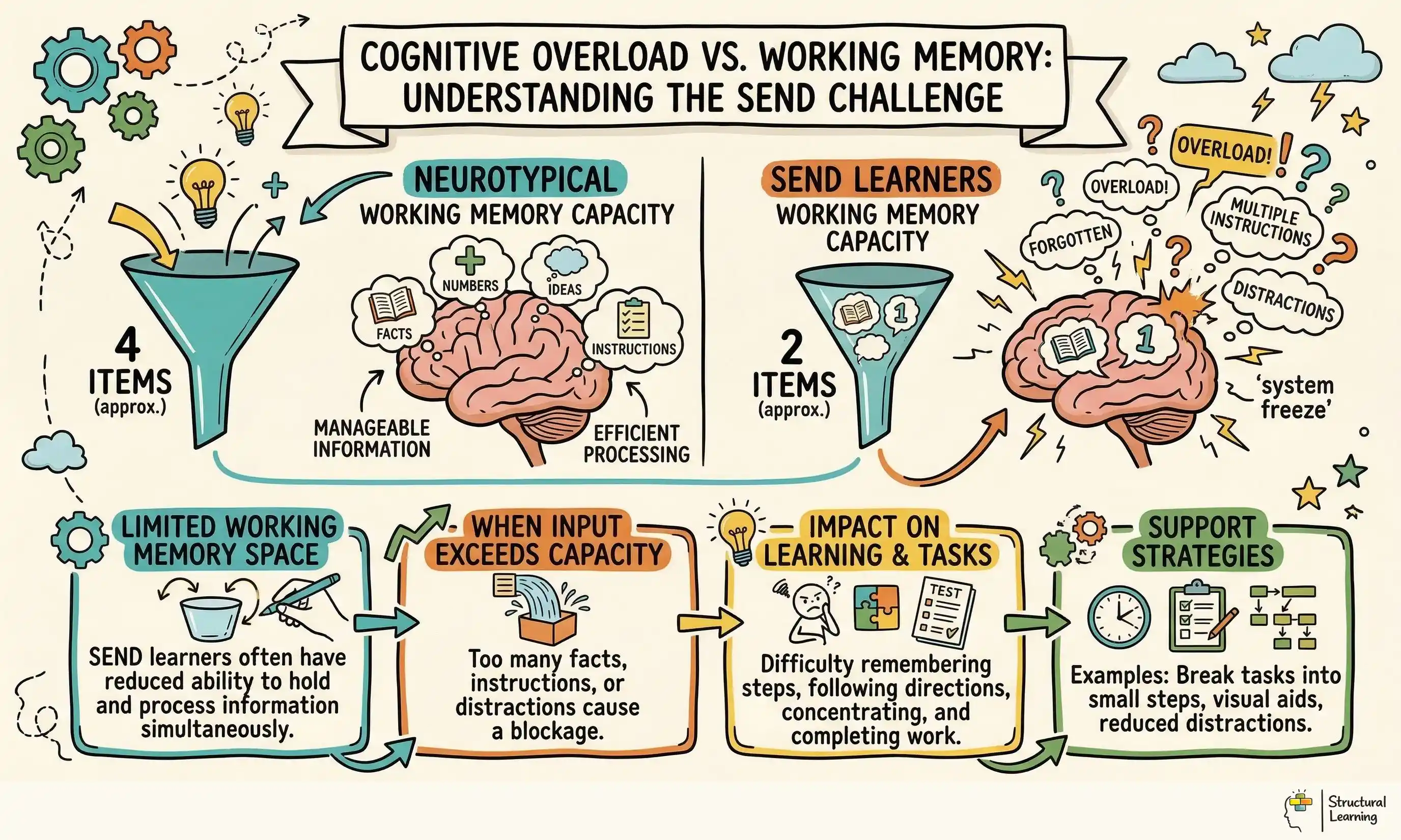
Cognitive Overload vs. Working Memory: Understanding the SEND Challenge
Key Takeaways
Artificial intelligence acts as a direct cognitive aid for working memory and executive function limitations.
Teachers can use prompt engineering to simplify complex texts for pupils with dyslexia.
AI allows for the rapid generation of faded worked examples to support autistic learners in maths and science.
Custom AI prompts can act as an executive function assistant by revealing complex tasks one step at a time for students with ADHD.
Transforming dense academic paragraphs into structured graphic organisers removes decoding barriers without lowering academic rigour.
Targeted AI scaffolding moves SEND learners beyond simple recall and towards higher strategic thinking.
What Is Cognitive Overload in SEND?
Cognitive overload occurs when the demands placed on a pupil's working memory exceed its capacity. This originates from Cognitive Load Theory (CLT). Working memory can only hold a small amount of new information at any one time before it must be processed into long-term memory. When a task requires a pupil to hold too many elements simultaneously, learning stops (Sweller, 2020).
For pupils with Special Educational Needs and Disabilities (SEND), working memory limits are often tighter. A neurotypical pupil might hold four items of information in mind; a pupil with ADHD or dyslexia might only hold two. Standard classroom instructions can easily overwhelm them. They are not failing to understand the concept; they are simply dropping information because their cognitive capacity is exceeded.
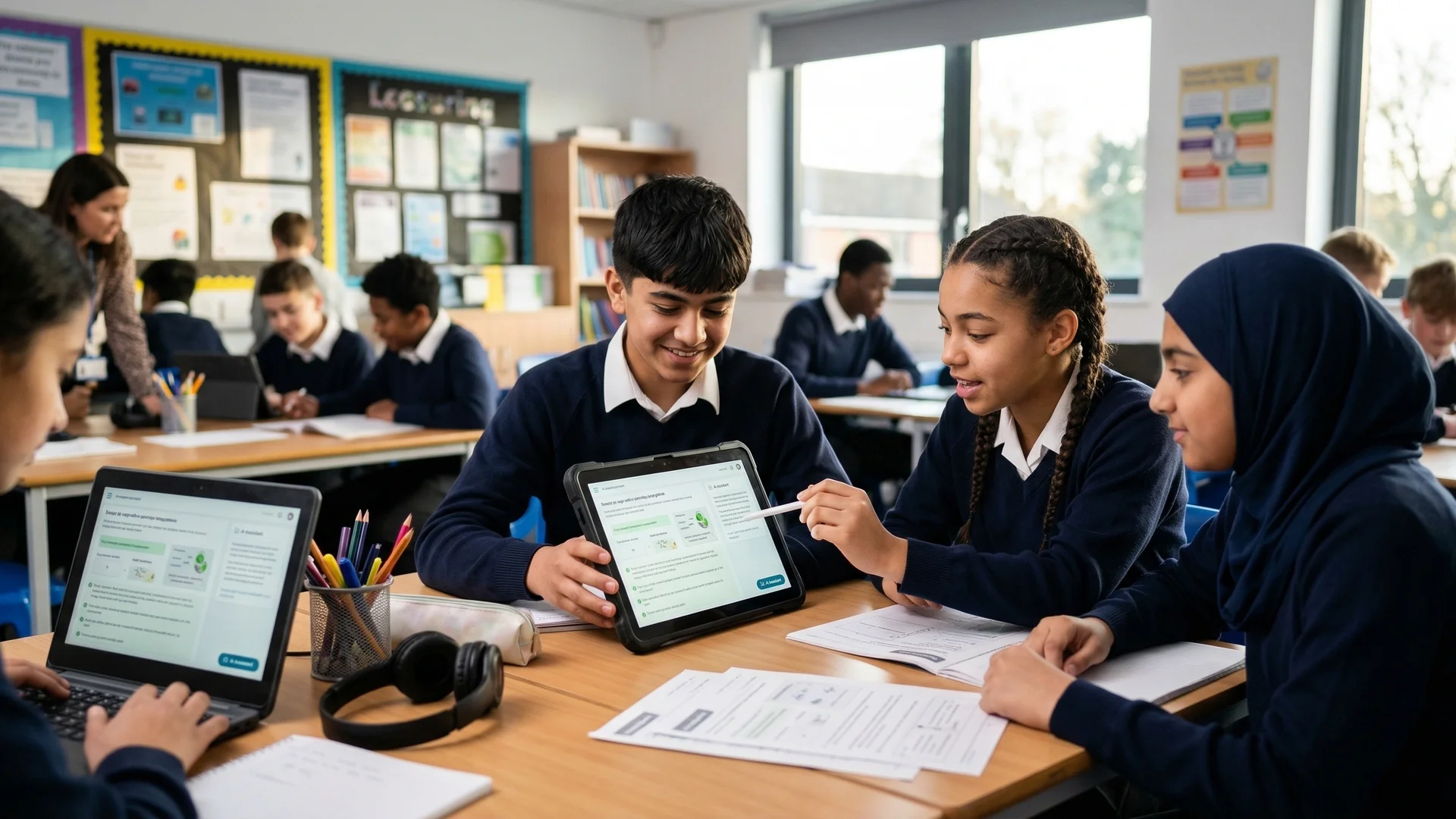
Artificial intelligence offers a solution. Teachers can position AI as a direct cognitive scaffold for the pupil, not just a planning shortcut. AI can manipulate the presentation of information to fit the working memory capacity of the individual, acting as an aid for executive function.
What the teacher does: A teacher introduces a complex historical source. A dyslexic pupil experiences cognitive overload from decoding the dense text.
What pupils produce: The teacher uses AI to reformat the historical facts into a bulleted list with clear subheadings. The pupil reads the reformatted text, grasps the concept, and completes the analytical task successfully.
The Research Behind AI Scaffolding
Cognitive Load Theory identifies three types of cognitive load: intrinsic, extraneous, and germane (Sweller, 2020). Intrinsic load relates to the inherent difficulty of the material. Extraneous load comes from how the material is presented. Germane load is the productive mental effort required to build schemas in long-term memory.
SEND learners often expend their mental energy fighting extraneous load. A pupil with autism might focus on the confusing layout of a worksheet. A pupil with dyslexia exhausts their working memory decoding complex syntax. When technology removes these barriers, pupils with specific learning difficulties can engage with higher-level academic content (Kennedy & Romig, 2024).
Recent developments in large language models offer control over extraneous load. Prompt engineering allows teachers to create differentiated scaffolding on demand (Liao, 2025). Teachers can instruct AI to maintain the intrinsic difficulty of a concept while removing reading barriers. This shifts the pupil's mental effort away from decoding and into germane schema building.
What the teacher does: A teacher presents a science lesson on the digestive system using a standard textbook paragraph. Pupils with ADHD lose focus.
What pupils produce: The teacher uses AI to rewrite the text into three chronological steps. The pupils read the sequenced steps and successfully label a diagram.
AI in the Classroom
Managing Extraneous Load Through Text Simplification
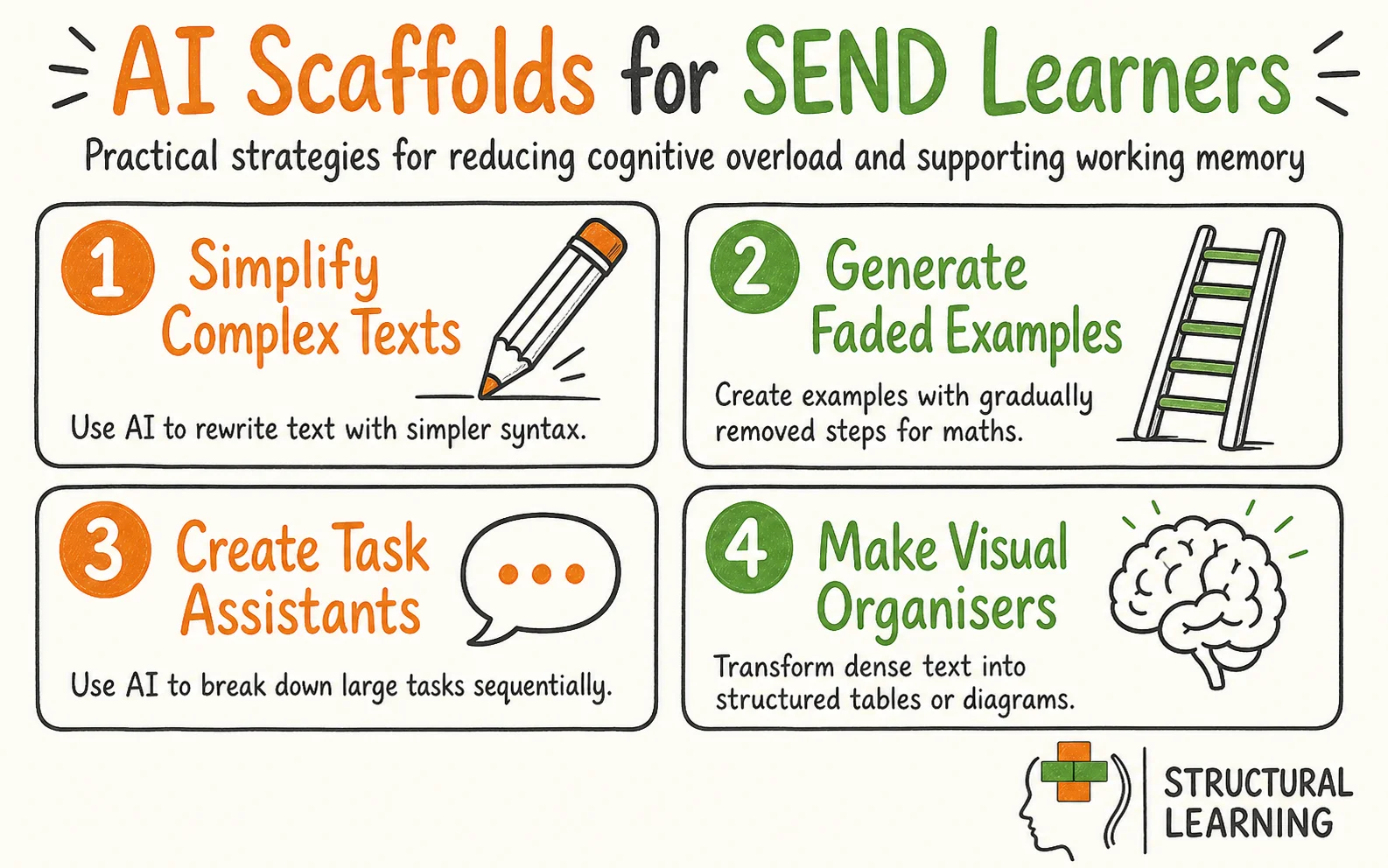
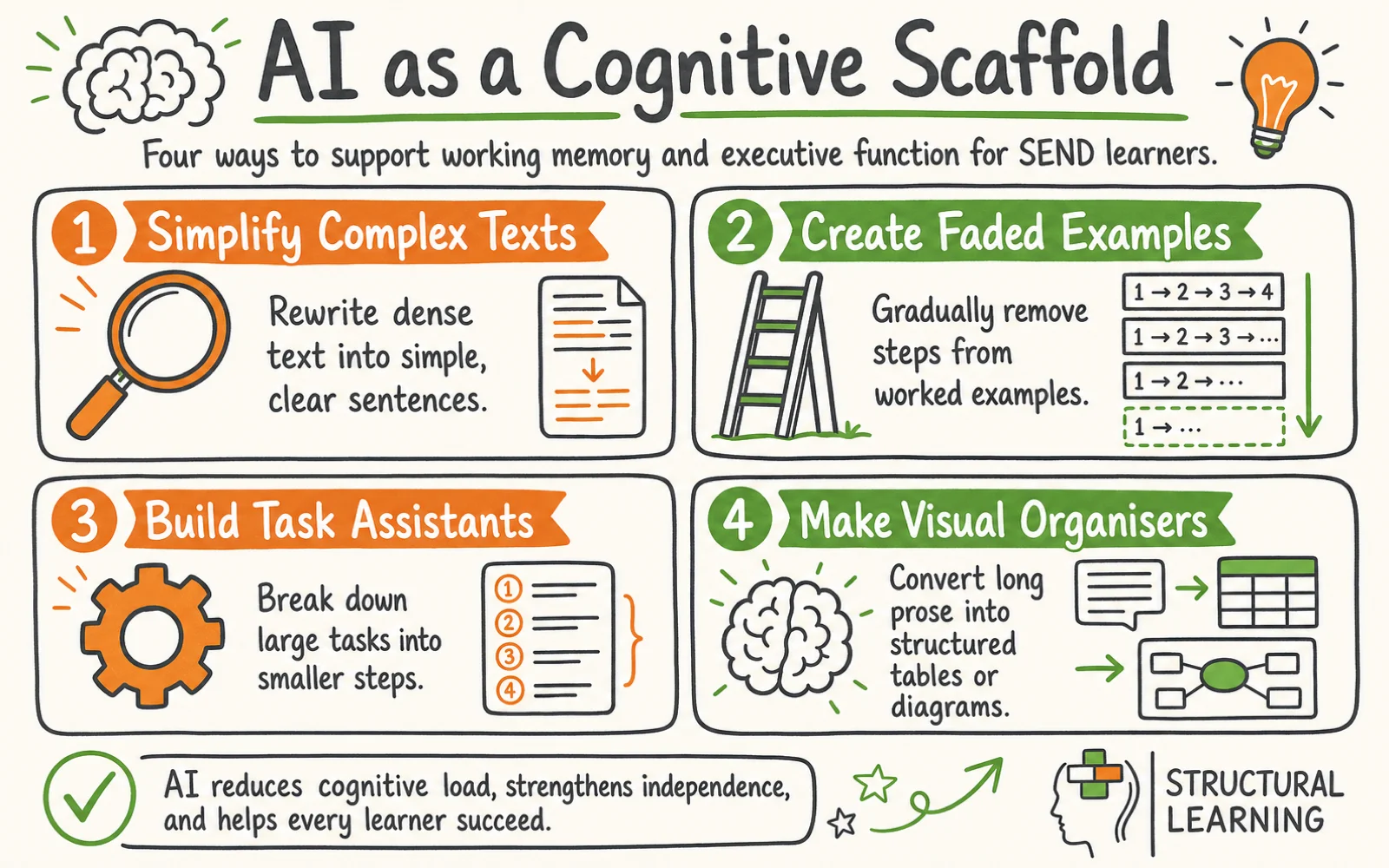
Complex texts are a source of extraneous load for pupils with reading difficulties. Long sentences with subordinate clauses force the working memory to hold too much grammatical structure. AI excels at syntactic simplification. Teachers can instruct AI to rewrite text using simple sentences while retaining subject-specific terminology.
What the teacher does: The teacher takes a dense geographical case study about tectonic plates and pastes it into an AI tool with the prompt "Rewrite this text using sentences of no more than twelve words. Keep all geographical terms like subduction and mantle."
What pupils produce: The AI generates a clean version of the text. The dyslexic pupil receives the AI-generated version, reads it without mental fatigue, highlights the definition of subduction, and answers comprehension questions.
Generating Faded Worked Examples
Autistic learners and pupils with high anxiety often experience working memory failure when faced with a blank page. They require a clear model. Faded worked examples provide a complete solution first, then gradually remove steps. AI can generate a sequence of faded examples quickly.
What the teacher does: A maths teacher is teaching algebraic expansion. They prompt an AI tool to create five identical algebra problems. The first problem has all steps completed. The second problem has the final step missing, and so on.
What pupils produce: The pupil studies the fully completed first example, moves to the second problem and only has to perform one calculation, and so on. The pupil builds confidence and schema incrementally.
Creating an Executive Function Assistant
Pupils with ADHD often struggle with executive function. They cannot break a large task into smaller parts. Teachers can use custom AI chatbots as executive function assistants. The AI acts as a digital pacing mechanism.
What the teacher does: The teacher sets up an AI prompt specifically for a pupil with ADHD. The prompt instructs the AI to "Act as a task manager. I will provide a five-paragraph essay structure. You must only show the pupil paragraph one. When the pupil types 'done', praise them and show paragraph two."
What pupils produce: The pupil sees only the instructions for the introduction, writes it, and types 'done'. The AI congratulates them and reveals the instructions for the first main body paragraph. The pupil completes the essay without feeling overwhelmed.
Transforming Text to Visual Organisers
Multimodal presentation distributes cognitive load across visual and verbal processing channels. When information is presented purely as text, the verbal channel overloads. AI can analyse a text and structure it into a format ready for a graphic organiser. This is effective for visual learners.
What the teacher does: A history teacher wants pupils to compare the causes of World War One. The textbook provides three pages of prose. The teacher asks the AI to "Extract the main causes of World War One from this text and format them into a two-column table comparing short-term and long-term causes."
What pupils produce: The pupils receive the structured table instead of the text. They use this table to populate a graphic organiser. The SEND pupils categorise the causes because the AI has extracted the information.
AI as Cognitive Scaffold: 4-Layer Support System for SEND Learners
Common Misconceptions
There is a misconception that using AI to simplify text dumbs down the curriculum. Effective AI prompting changes the syntax and grammatical complexity, not the subject-specific terminology. The AI removes complex verbs and adjectives but leaves the tier three vocabulary. This increases the pupil's exposure to the target vocabulary because they can access the text.
Another myth is that AI does the thinking for the pupil. Cognitive overload prevents learning. By using AI to scaffold the task, the teacher allows the pupil to practice the skill. The scaffolding can then be removed as the pupil builds fluency.
Teachers often believe that AI is only useful for reducing their planning time. While AI is a productivity tool, its most powerful application is as a direct intervention for the pupil. The most effective AI interventions happen live in the classroom, adjusting the load of a task at the moment a pupil struggles.
Some educators fear that providing AI scaffolding to SEND pupils creates an unfair advantage. AI scaffolding simply ensures we are assessing the pupil's knowledge rather than their working memory capacity.
Worked Examples by Subject
History: Managing Source Analysis
Historical sources are difficult for SEND pupils. The archaic language and dense sentence structures create extraneous load.
What the teacher does: The teacher identifies a complex primary source about the industrial revolution and uses the following prompt with their AI tool: "Act as an expert history teacher. Take this Victorian source text and rewrite it for a pupil with a reading age of nine. You must keep all historical facts, names, and dates exactly the same. Break the text into three bullet points."
What pupils produce: The teacher gives the original source to the class but provides the AI-generated bullet points to the dyslexic pupil. The pupil reads the bullet points quickly, identifies the bias in the source, and provides an analytical answer.
Science: Faded Guidance for Equations
Balancing chemical equations causes intrinsic cognitive load.
What the teacher does: The science teacher uses AI to generate a worksheet. They prompt the AI: "Create a sequence of four practice problems for balancing the equation of respiration. Problem one must be completely solved. Problem two must have only the final number missing. Problem three must have the right side of the equation missing. Problem four must be completely blank."
What pupils produce: The autistic pupil receives the worksheet, looks at the first completed equation, and understands the goal. They move to the second equation and calculate the final missing number. By the time they reach the blank equation, they have built the necessary schema to solve it independently.
English: The ADHD Essay Scaffolding
Writing a persuasive essay requires executive function.
What the teacher does: The English teacher sets up a tablet on the pupil's desk. The teacher has pre-loaded an AI chat interface with a specific system prompt: "You are an essay-writing assistant. You will guide the pupil through writing a paragraph about Macbeth. Ask the pupil for their main point. Wait for their answer. Then ask them for a quote. Wait for their answer. Then ask them to explain the quote. Wait for their answer. Finally, combine their answers into a complete paragraph for them to copy."
What pupils produce: The pupil with ADHD interacts with the AI. They are only ever faced with one question at a time. The pupil provides the intellectual content. The AI assembles it. The pupil produces a high-quality paragraph that reflects their understanding of Macbeth.
Maths: Decoding Word Problems
Maths word problems frequently assess reading comprehension rather than mathematical ability.
What the teacher does: The maths teacher finds a complex word problem about train timetables and ratios. They use AI to strip away the narrative. The prompt is simple: "Extract the raw mathematical data from this word problem. Present the numbers and the required operation as a simple list."
What pupils produce: The pupil with language processing difficulties looks at the AI output. They immediately see that they need to divide 400 by 50 and perform the calculation perfectly.
Links to Other Theories
Webb's Depth of Knowledge
Webb's Depth of Knowledge framework categorises tasks by cognitive complexity. SEND learners are often trapped at Level 1 (Recall) because their working memory cannot handle the processing required for Level 3 (Strategic Thinking). AI scaffolding provides the bridge.
Dual Coding Theory
Paivio's Dual Coding Theory states that humans process visual and verbal information through separate channels. AI is a tool for rapid dual coding. Teachers can use text-to-image AI generators to create visual representations of abstract concepts.
Vygotsky's Zone of Proximal Development
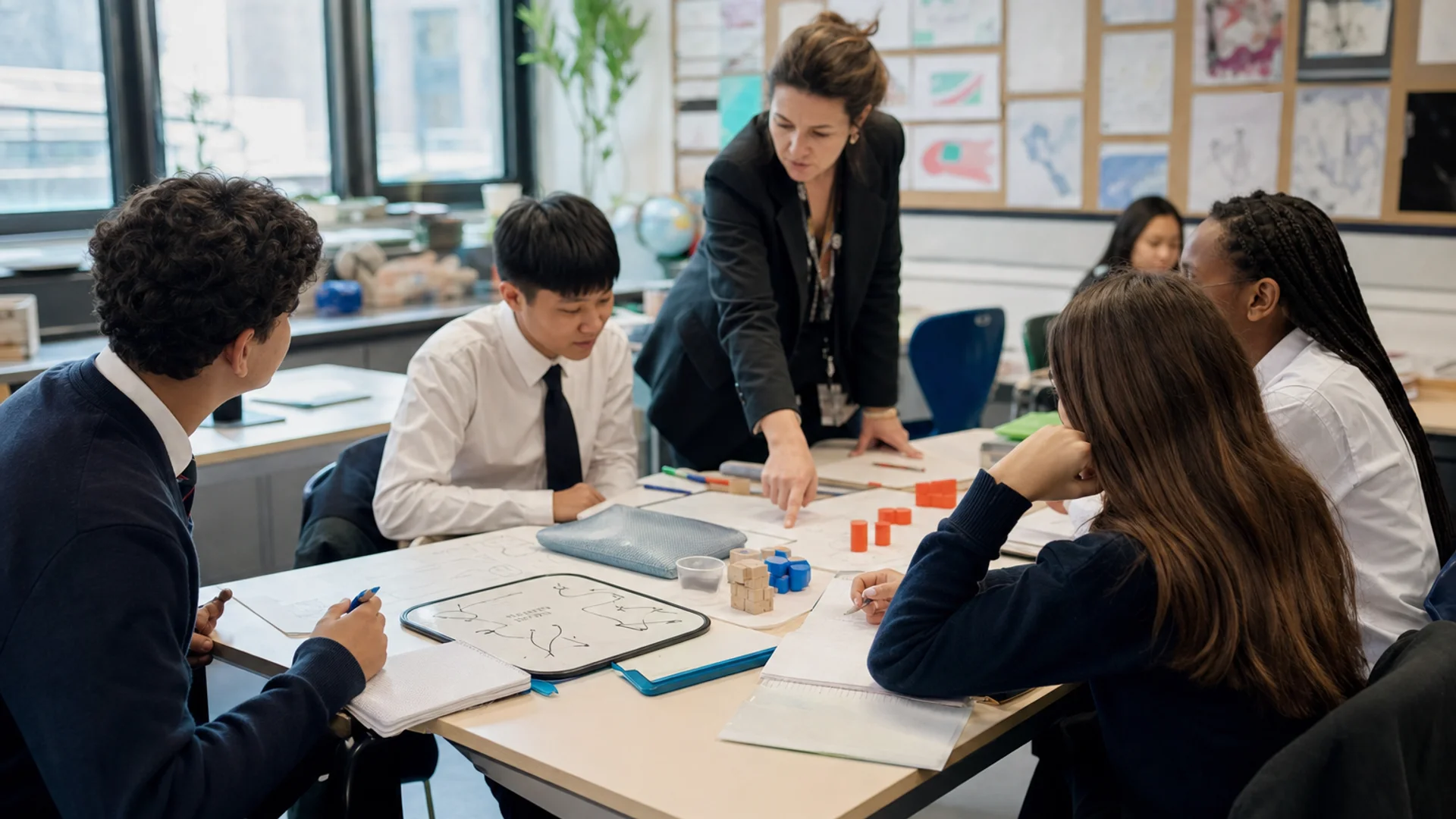
Vygotsky argued that learning occurs in the zone between what a pupil can do independently and what they cannot do at all. AI functions as a scaffold.
Universal Design for Learning
Universal Design for Learning insists that barriers should be removed from the environment, not the pupil. AI makes Universal Design for Learning practical.
From Overload to Understanding: The AI-Assisted Learning Journey
Common Questions About AI and SEND
Will pupils become dependent on AI to do their work?
Pupils only become dependent if the teacher fails to fade the scaffolding.
Does AI hallucinate incorrect facts for SEND pupils?
Large language models can generate incorrect information. AI must be used as a teacher-directed tool.
How do I write a good prompt for a pupil with autism?
Prompts for autistic learners should focus on predictability and clarity.
Is AI better than a Teaching Assistant?
AI does not replace the relational support provided by a human Teaching Assistant.
Can AI help non-verbal learners?
Yes. AI can generate visual communication boards or convert complex concepts into pictorial sequences.
Use an AI tool tomorrow morning to rewrite your most complex textbook paragraph into three simple bullet points for your lowest-attaining reader.
Cognitive Load Analyser
Paste AI-generated text and this tool scores it for readability, working memory demand, and cognitive load. Get specific suggestions for simplifying content for your pupils, including SEND learners.
Step 1: Paste AI-generated text
Further Reading: Key Research Papers
These peer-reviewed studies provide the evidence base for the strategies discussed above.
Why Did All the Residents Resign? Key Takeaways From the Junior Physicians' Mass Walkout in South Korea.View study ↗ 23 citations
Park et al. (2024)
This paper examines a mass resignation of junior doctors in South Korea. For teachers, it highlights the importance of understanding workplace stress and burnout, particularly relevant when supporting staff wellbeing and creating sustainable working conditions in educational settings.
Cultivating connectedness and elevating educational experiences for international students in blended learning: reflections from the pandemic era and key takeawaysView study ↗
He et al. (2024)
This study explores how videoconferencing enhances blended learning for international students during the pandemic. Teachers can apply these findings to improve online engagement strategies and create more inclusive digital learning environments for diverse student populations.
Who Benefits and under What Conditions from Developmental Education Reform? Key Takeaways from Florida’s Statewide InitiativeView study ↗
Mokher et al. (2023)
This research analyses Florida's developmental education reforms to identify which students benefit most. Teachers can use these insights to better understand how educational interventions work differently for various student groups, particularly those needing additional academic support.
Why are some students “not into” computational thinking activities embedded within high school science units? Key takeaways from a microethnographic discourse analysis studyView study ↗
Aslan et al. (2024)
This study examines why some students resist computational thinking activities in science lessons through detailed classroom analysis. It provides teachers with valuable insights into student engagement barriers and strategies for making STEM subjects more accessible and appealing.
Establishing a distance PharmD program: An overview and key takeaways.View study ↗
Rao et al. (2025)
This paper outlines the establishment of a distance pharmacy programme, accelerated by COVID-19. Teachers can learn from the practical considerations of transitioning to online delivery, including curriculum adaptation and maintaining educational quality in remote learning environments.
Free Resource Pack
AI & SEND: Reducing Cognitive Overload
4 practical resources for teachers and students to leverage AI with scaffolded support for SEND learners.
AI in EducationSEND SupportCognitive Load TheoryScaffolding StrategiesTeacher CPDLesson PlanningStudent ResourceTechnology Integration
Download your free bundle
Fill in your details below and we'll send the resource pack straight to your inbox.
✅
Your resource pack is ready
We've also sent a copy to your email. Check your inbox.
Cognitive Overload vs. Working Memory: Understanding the SEND Challenge
Key Takeaways
Artificial intelligence acts as a direct cognitive aid for working memory and executive function limitations.
Teachers can use prompt engineering to simplify complex texts for pupils with dyslexia.
AI allows for the rapid generation of faded worked examples to support autistic learners in maths and science.
Custom AI prompts can act as an executive function assistant by revealing complex tasks one step at a time for students with ADHD.
Transforming dense academic paragraphs into structured graphic organisers removes decoding barriers without lowering academic rigour.
Targeted AI scaffolding moves SEND learners beyond simple recall and towards higher strategic thinking.
What Is Cognitive Overload in SEND?
Cognitive overload occurs when the demands placed on a pupil's working memory exceed its capacity. This originates from Cognitive Load Theory (CLT). Working memory can only hold a small amount of new information at any one time before it must be processed into long-term memory. When a task requires a pupil to hold too many elements simultaneously, learning stops (Sweller, 2020).
For pupils with Special Educational Needs and Disabilities (SEND), working memory limits are often tighter. A neurotypical pupil might hold four items of information in mind; a pupil with ADHD or dyslexia might only hold two. Standard classroom instructions can easily overwhelm them. They are not failing to understand the concept; they are simply dropping information because their cognitive capacity is exceeded.
Artificial intelligence offers a solution. Teachers can position AI as a direct cognitive scaffold for the pupil, not just a planning shortcut. AI can manipulate the presentation of information to fit the working memory capacity of the individual, acting as an aid for executive function.
What the teacher does: A teacher introduces a complex historical source. A dyslexic pupil experiences cognitive overload from decoding the dense text.
What pupils produce: The teacher uses AI to reformat the historical facts into a bulleted list with clear subheadings. The pupil reads the reformatted text, grasps the concept, and completes the analytical task successfully.
The Research Behind AI Scaffolding
Cognitive Load Theory identifies three types of cognitive load: intrinsic, extraneous, and germane (Sweller, 2020). Intrinsic load relates to the inherent difficulty of the material. Extraneous load comes from how the material is presented. Germane load is the productive mental effort required to build schemas in long-term memory.
SEND learners often expend their mental energy fighting extraneous load. A pupil with autism might focus on the confusing layout of a worksheet. A pupil with dyslexia exhausts their working memory decoding complex syntax. When technology removes these barriers, pupils with specific learning difficulties can engage with higher-level academic content (Kennedy & Romig, 2024).
Recent developments in large language models offer control over extraneous load. Prompt engineering allows teachers to create differentiated scaffolding on demand (Liao, 2025). Teachers can instruct AI to maintain the intrinsic difficulty of a concept while removing reading barriers. This shifts the pupil's mental effort away from decoding and into germane schema building.
What the teacher does: A teacher presents a science lesson on the digestive system using a standard textbook paragraph. Pupils with ADHD lose focus.
What pupils produce: The teacher uses AI to rewrite the text into three chronological steps. The pupils read the sequenced steps and successfully label a diagram.
AI in the Classroom
Managing Extraneous Load Through Text Simplification
Complex texts are a source of extraneous load for pupils with reading difficulties. Long sentences with subordinate clauses force the working memory to hold too much grammatical structure. AI excels at syntactic simplification. Teachers can instruct AI to rewrite text using simple sentences while retaining subject-specific terminology.
What the teacher does: The teacher takes a dense geographical case study about tectonic plates and pastes it into an AI tool with the prompt "Rewrite this text using sentences of no more than twelve words. Keep all geographical terms like subduction and mantle."
What pupils produce: The AI generates a clean version of the text. The dyslexic pupil receives the AI-generated version, reads it without mental fatigue, highlights the definition of subduction, and answers comprehension questions.
Generating Faded Worked Examples
Autistic learners and pupils with high anxiety often experience working memory failure when faced with a blank page. They require a clear model. Faded worked examples provide a complete solution first, then gradually remove steps. AI can generate a sequence of faded examples quickly.
What the teacher does: A maths teacher is teaching algebraic expansion. They prompt an AI tool to create five identical algebra problems. The first problem has all steps completed. The second problem has the final step missing, and so on.
What pupils produce: The pupil studies the fully completed first example, moves to the second problem and only has to perform one calculation, and so on. The pupil builds confidence and schema incrementally.
Creating an Executive Function Assistant
Pupils with ADHD often struggle with executive function. They cannot break a large task into smaller parts. Teachers can use custom AI chatbots as executive function assistants. The AI acts as a digital pacing mechanism.
What the teacher does: The teacher sets up an AI prompt specifically for a pupil with ADHD. The prompt instructs the AI to "Act as a task manager. I will provide a five-paragraph essay structure. You must only show the pupil paragraph one. When the pupil types 'done', praise them and show paragraph two."
What pupils produce: The pupil sees only the instructions for the introduction, writes it, and types 'done'. The AI congratulates them and reveals the instructions for the first main body paragraph. The pupil completes the essay without feeling overwhelmed.
Transforming Text to Visual Organisers
Multimodal presentation distributes cognitive load across visual and verbal processing channels. When information is presented purely as text, the verbal channel overloads. AI can analyse a text and structure it into a format ready for a graphic organiser. This is effective for visual learners.
What the teacher does: A history teacher wants pupils to compare the causes of World War One. The textbook provides three pages of prose. The teacher asks the AI to "Extract the main causes of World War One from this text and format them into a two-column table comparing short-term and long-term causes."
What pupils produce: The pupils receive the structured table instead of the text. They use this table to populate a graphic organiser. The SEND pupils categorise the causes because the AI has extracted the information.
AI as Cognitive Scaffold: 4-Layer Support System for SEND Learners
Common Misconceptions
There is a misconception that using AI to simplify text dumbs down the curriculum. Effective AI prompting changes the syntax and grammatical complexity, not the subject-specific terminology. The AI removes complex verbs and adjectives but leaves the tier three vocabulary. This increases the pupil's exposure to the target vocabulary because they can access the text.
Another myth is that AI does the thinking for the pupil. Cognitive overload prevents learning. By using AI to scaffold the task, the teacher allows the pupil to practice the skill. The scaffolding can then be removed as the pupil builds fluency.
Teachers often believe that AI is only useful for reducing their planning time. While AI is a productivity tool, its most powerful application is as a direct intervention for the pupil. The most effective AI interventions happen live in the classroom, adjusting the load of a task at the moment a pupil struggles.
Some educators fear that providing AI scaffolding to SEND pupils creates an unfair advantage. AI scaffolding simply ensures we are assessing the pupil's knowledge rather than their working memory capacity.
Worked Examples by Subject
History: Managing Source Analysis
Historical sources are difficult for SEND pupils. The archaic language and dense sentence structures create extraneous load.
What the teacher does: The teacher identifies a complex primary source about the industrial revolution and uses the following prompt with their AI tool: "Act as an expert history teacher. Take this Victorian source text and rewrite it for a pupil with a reading age of nine. You must keep all historical facts, names, and dates exactly the same. Break the text into three bullet points."
What pupils produce: The teacher gives the original source to the class but provides the AI-generated bullet points to the dyslexic pupil. The pupil reads the bullet points quickly, identifies the bias in the source, and provides an analytical answer.
Science: Faded Guidance for Equations
Balancing chemical equations causes intrinsic cognitive load.
What the teacher does: The science teacher uses AI to generate a worksheet. They prompt the AI: "Create a sequence of four practice problems for balancing the equation of respiration. Problem one must be completely solved. Problem two must have only the final number missing. Problem three must have the right side of the equation missing. Problem four must be completely blank."
What pupils produce: The autistic pupil receives the worksheet, looks at the first completed equation, and understands the goal. They move to the second equation and calculate the final missing number. By the time they reach the blank equation, they have built the necessary schema to solve it independently.
English: The ADHD Essay Scaffolding
Writing a persuasive essay requires executive function.
What the teacher does: The English teacher sets up a tablet on the pupil's desk. The teacher has pre-loaded an AI chat interface with a specific system prompt: "You are an essay-writing assistant. You will guide the pupil through writing a paragraph about Macbeth. Ask the pupil for their main point. Wait for their answer. Then ask them for a quote. Wait for their answer. Then ask them to explain the quote. Wait for their answer. Finally, combine their answers into a complete paragraph for them to copy."
What pupils produce: The pupil with ADHD interacts with the AI. They are only ever faced with one question at a time. The pupil provides the intellectual content. The AI assembles it. The pupil produces a high-quality paragraph that reflects their understanding of Macbeth.
Maths: Decoding Word Problems
Maths word problems frequently assess reading comprehension rather than mathematical ability.
What the teacher does: The maths teacher finds a complex word problem about train timetables and ratios. They use AI to strip away the narrative. The prompt is simple: "Extract the raw mathematical data from this word problem. Present the numbers and the required operation as a simple list."
What pupils produce: The pupil with language processing difficulties looks at the AI output. They immediately see that they need to divide 400 by 50 and perform the calculation perfectly.
Links to Other Theories
Webb's Depth of Knowledge
Webb's Depth of Knowledge framework categorises tasks by cognitive complexity. SEND learners are often trapped at Level 1 (Recall) because their working memory cannot handle the processing required for Level 3 (Strategic Thinking). AI scaffolding provides the bridge.
Dual Coding Theory
Paivio's Dual Coding Theory states that humans process visual and verbal information through separate channels. AI is a tool for rapid dual coding. Teachers can use text-to-image AI generators to create visual representations of abstract concepts.
Vygotsky's Zone of Proximal Development
Vygotsky argued that learning occurs in the zone between what a pupil can do independently and what they cannot do at all. AI functions as a scaffold.
Universal Design for Learning
Universal Design for Learning insists that barriers should be removed from the environment, not the pupil. AI makes Universal Design for Learning practical.
From Overload to Understanding: The AI-Assisted Learning Journey
Common Questions About AI and SEND
Will pupils become dependent on AI to do their work?
Pupils only become dependent if the teacher fails to fade the scaffolding.
Does AI hallucinate incorrect facts for SEND pupils?
Large language models can generate incorrect information. AI must be used as a teacher-directed tool.
How do I write a good prompt for a pupil with autism?
Prompts for autistic learners should focus on predictability and clarity.
Is AI better than a Teaching Assistant?
AI does not replace the relational support provided by a human Teaching Assistant.
Can AI help non-verbal learners?
Yes. AI can generate visual communication boards or convert complex concepts into pictorial sequences.
Use an AI tool tomorrow morning to rewrite your most complex textbook paragraph into three simple bullet points for your lowest-attaining reader.
Cognitive Load Analyser
Paste AI-generated text and this tool scores it for readability, working memory demand, and cognitive load. Get specific suggestions for simplifying content for your pupils, including SEND learners.
Step 1: Paste AI-generated text
Further Reading: Key Research Papers
These peer-reviewed studies provide the evidence base for the strategies discussed above.
Why Did All the Residents Resign? Key Takeaways From the Junior Physicians' Mass Walkout in South Korea.View study ↗ 23 citations
Park et al. (2024)
This paper examines a mass resignation of junior doctors in South Korea. For teachers, it highlights the importance of understanding workplace stress and burnout, particularly relevant when supporting staff wellbeing and creating sustainable working conditions in educational settings.
Cultivating connectedness and elevating educational experiences for international students in blended learning: reflections from the pandemic era and key takeawaysView study ↗
He et al. (2024)
This study explores how videoconferencing enhances blended learning for international students during the pandemic. Teachers can apply these findings to improve online engagement strategies and create more inclusive digital learning environments for diverse student populations.
Who Benefits and under What Conditions from Developmental Education Reform? Key Takeaways from Florida’s Statewide InitiativeView study ↗
Mokher et al. (2023)
This research analyses Florida's developmental education reforms to identify which students benefit most. Teachers can use these insights to better understand how educational interventions work differently for various student groups, particularly those needing additional academic support.
Why are some students “not into” computational thinking activities embedded within high school science units? Key takeaways from a microethnographic discourse analysis studyView study ↗
Aslan et al. (2024)
This study examines why some students resist computational thinking activities in science lessons through detailed classroom analysis. It provides teachers with valuable insights into student engagement barriers and strategies for making STEM subjects more accessible and appealing.
Establishing a distance PharmD program: An overview and key takeaways.View study ↗
Rao et al. (2025)
This paper outlines the establishment of a distance pharmacy programme, accelerated by COVID-19. Teachers can learn from the practical considerations of transitioning to online delivery, including curriculum adaptation and maintaining educational quality in remote learning environments.
Free Resource Pack
AI & SEND: Reducing Cognitive Overload
4 practical resources for teachers and students to leverage AI with scaffolded support for SEND learners.
AI in EducationSEND SupportCognitive Load TheoryScaffolding StrategiesTeacher CPDLesson PlanningStudent ResourceTechnology Integration
Download your free bundle
Fill in your details below and we'll send the resource pack straight to your inbox.
✅
Your resource pack is ready
We've also sent a copy to your email. Check your inbox.
{"@context":"https://schema.org","@graph":[{"@type":"Organization","@id":"https://www.structural-learning.com/#org","name":"Structural Learning","url":"https://www.structural-learning.com/","logo":{"@type":"ImageObject","url":"https://cdn.prod.website-files.com/5b69a01ba2e409501de055d1/5b69a01ba2e40996a5e055f4_structural-learning-logo.png"}},{"@type":"Person","@id":"https://www.structural-learning.com/team/paul-main/#person","name":"Paul Main","url":"https://www.structural-learning.com/team/paul-main","jobTitle":"Founder","affiliation":{"@id":"https://www.structural-learning.com/#org"}},{"@type":"BreadcrumbList","@id":"https://www.structural-learning.com/post/reducing-cognitive-overload-ai-send-learners#breadcrumb","itemListElement":[{"@type":"ListItem","position":1,"name":"Home","item":"https://www.structural-learning.com/"},{"@type":"ListItem","position":2,"name":"Blog","item":"https://www.structural-learning.com/blog"},{"@type":"ListItem","position":3,"name":"Reducing Cognitive Overload with AI for SEND Learners: A Scaffolded Approach","item":"https://www.structural-learning.com/post/reducing-cognitive-overload-ai-send-learners"}]},{"@type":"BlogPosting","@id":"https://www.structural-learning.com/post/reducing-cognitive-overload-ai-send-learners#article","headline":"Reducing Cognitive Overload with AI for SEND Learners: A Scaffolded Approach","description":"Discover practical strategies for reducing cognitive overload with AI for SEND learners, using artificial intelligence as a targeted cognitive scaffold in lessons.","author":{"@id":"https://www.structural-learning.com/team/paul-main/#person"},"publisher":{"@id":"https://www.structural-learning.com/#org"},"datePublished":"2026-03-23","dateModified":"2026-03-23","inLanguage":"en-GB"}]}