Updated on
September 24, 2026
Reading Records: Purpose and a Free, Low-Workload Template
A low-workload reading records template for tracking home reading, parent comments and useful next steps without creating extra marking.


Updated on
September 24, 2026
A low-workload reading records template for tracking home reading, parent comments and useful next steps without creating extra marking.
Reading records are low-workload logs that connect home reading, classroom teaching and the next support step. The Department for Education (2023) Reading Framework stresses regular practice, fluency and talk about books; a good reading record helps teachers and families notice those things without adding a new marking queue.
In practice, the record should answer three quick questions: what was read, how it went and what needs to happen next. If the template cannot answer those questions in under a minute, it is probably creating work rather than improving reading.
A reading record is a simple log of reading. It usually records the date, book title, pages read and a short adult note. In the best schools, it also shows patterns: book choice, fluency, confidence, vocabulary, comprehension and how often reading happens at home.
The DfE Reading Framework stresses the importance of fluent reading, rich discussion and regular practice. A reading record can support that work, but only if the format is simple enough for families and staff to use.
The aim is not to collect neat handwriting from adults. The aim is to notice what the learner needs next.

A record can show whether the book is too easy, too hard or just right. It can show whether the learner reads often, avoids reading, guesses unfamiliar words, reads without expression or struggles to explain what happened in the text.
These details link to wider models of reading. The Simple View of Reading helps staff separate word reading from language comprehension. Scarborough's Reading Rope reminds us that fluency, vocabulary, background knowledge and comprehension work together.
Used well, the reading record becomes a small formative assessment tool. Used badly, it becomes a weekly admin task. The difference is the design of the template.
The template should ask for less writing and better information. Replace open comment boxes with prompts. A busy parent is more likely to tick a box and finish one sentence than write a paragraph every night.
Useful sections include: book title, pages read, reading minutes, ease rating, one parent prompt, one learner reflection and one teacher next step. Keep the weekly review short. A single next step is enough.
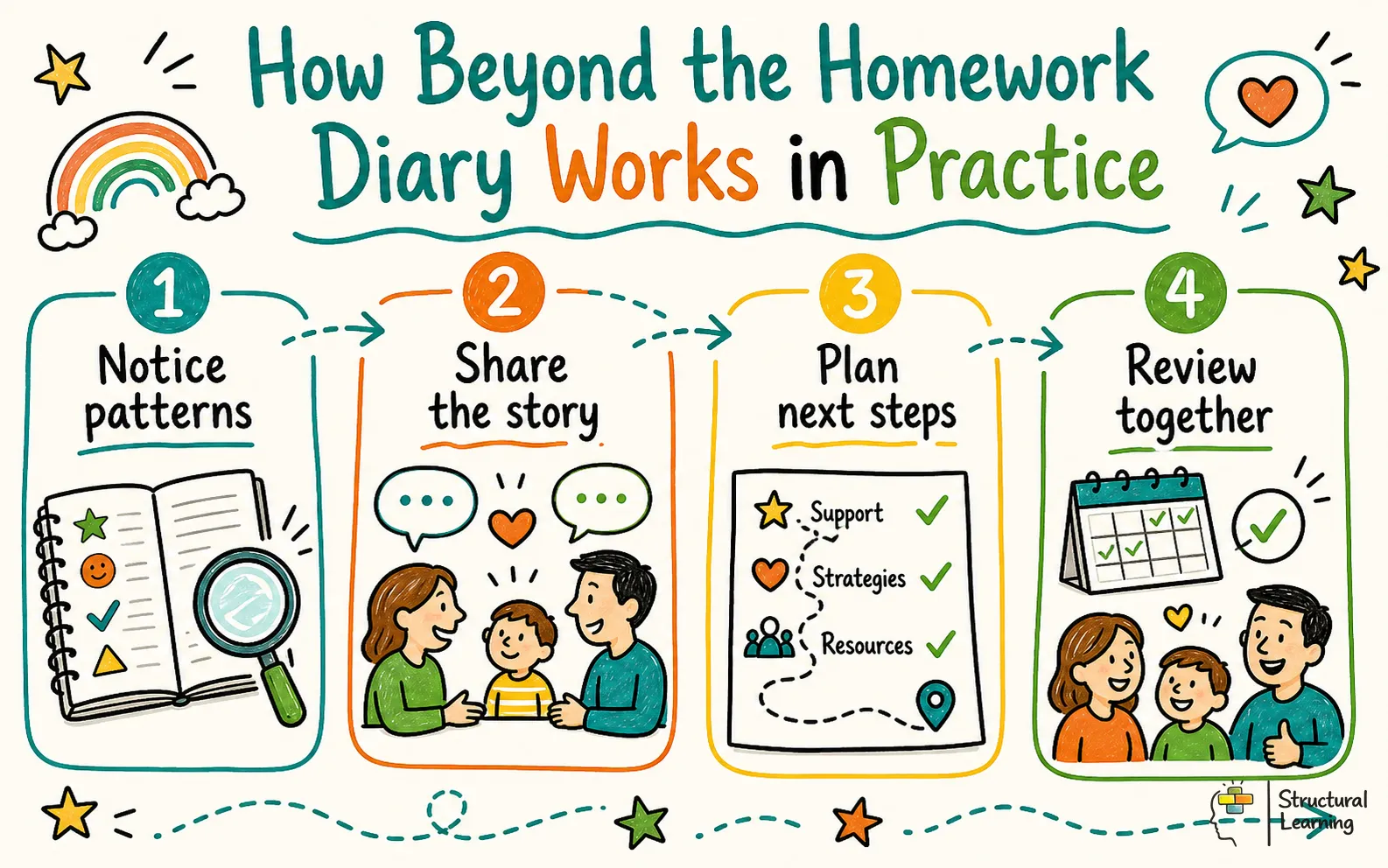
Parent comments often become vague because the prompt is vague. Instead of "comment", give sentence starters. For example: "My child read smoothly when...", "We talked about...", "This word was tricky...", or "This book seemed too easy because...".
Tell families that short notes are fine. A useful five-word comment is better than a long comment that does not guide teaching.
Teachers do not need to mark every entry. Set a quick weekly routine. Scan for missing reading, repeated rereading, frequent book changes, very hard texts or comments that mention decoding, fluency or understanding.
Link the record to classroom practice. If several learners are reading accurately but cannot explain the text, plan a short whole class reading focus on retrieval or inference. If a learner is stuck on decoding, connect the next step to phonics or a programme such as Read Write Inc.
Do not use the reading record as a compliance book. If the main message to families is "you forgot to sign", the record will not improve reading. Keep the focus on what the learner read and what help they need.
Do not ask teachers to write long replies. That creates marking load without much value. A tick, a short target or a book-change note is often enough.
Do not ignore older or confident readers. Their record can track genre range, stamina, vocabulary, independent recommendations and discussion about challenging texts.
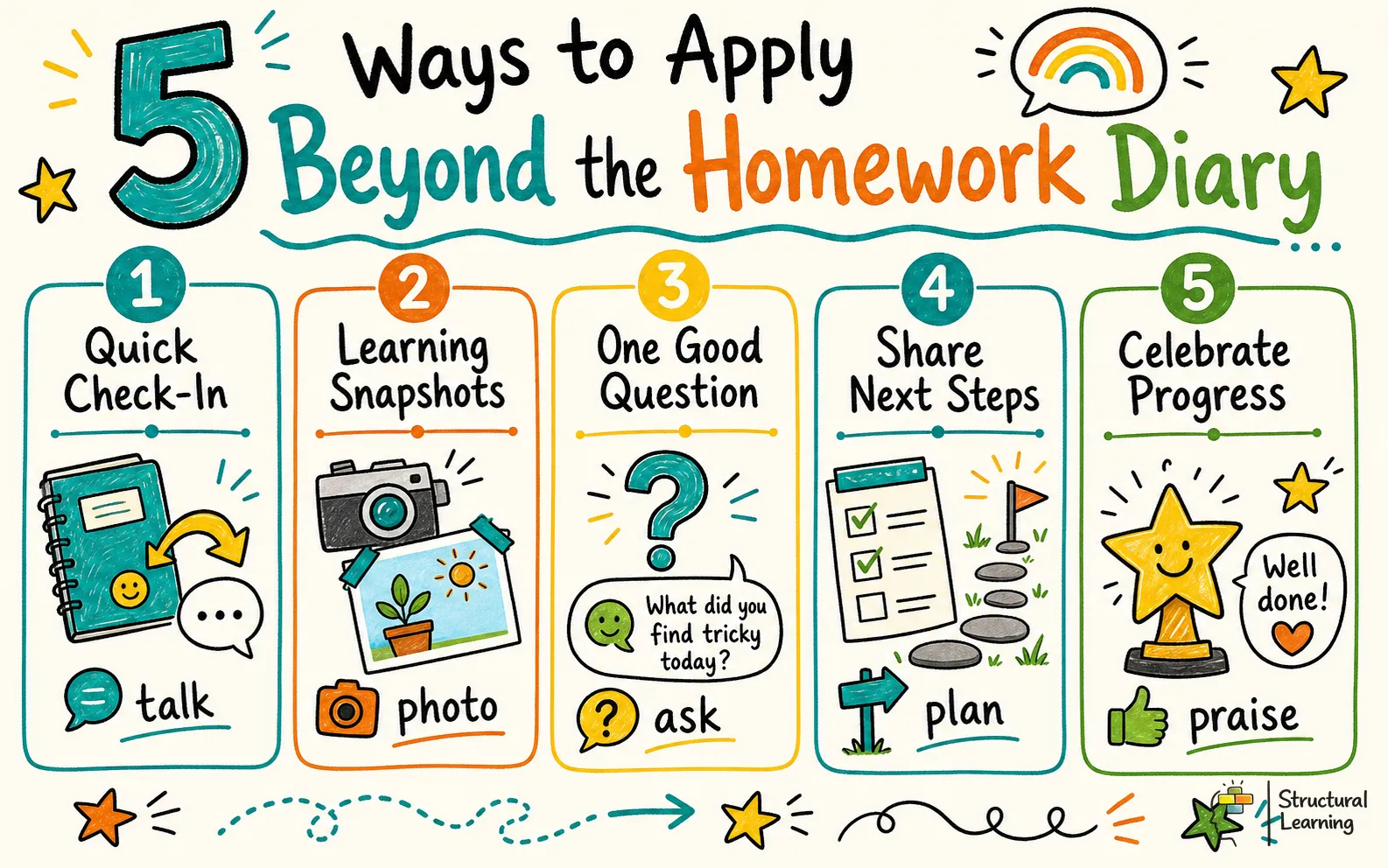
Download the template directly. No form needed.
The template includes a weekly reading log, parent and carer prompts, simple fluency notes, a teacher review box and a next-step section.
A reading record is a short log that tracks what a learner reads, how often they read and what adults notice about fluency, book choice, confidence and understanding.
Parents can write one short note about what went well, where the learner paused, which word was tricky, what they talked about, or whether the book was too easy, just right or too hard.
Use tick boxes, short prompts and a weekly review slot. Teachers do not need to mark every entry. The record should help staff spot patterns and choose the next support step.
A log by itself does not improve reading. It helps when it leads to better book choice, more regular reading, useful adult feedback and targeted work on fluency, vocabulary or comprehension.
The template includes a weekly reading log, parent comment prompts, a teacher review box, simple fluency notes and a low-workload next-step section.