SEMH: A teacher's guide: A Teacher's Guide
Explore effective strategies for supporting students with Social, Emotional, and Mental Health needs, including identification and collaboration with.


Explore effective strategies for supporting students with Social, Emotional, and Mental Health needs, including identification and collaboration with.
Social, Emotional and Mental Health (SEMH) is a category of Special Educational Needs and Disabilities (SEND) identified in the SEND Code of Practice. Children with SEMH needs experience difficulties that affect their social relationships, emotional wellbeing, and/or mental health, requiring comprehensive SEMH provision and student wellbeing strategies, which in turn impact their learning and development. This means adapting learning objectivesto meet their specific needs.

SEMH replaced the earlier term BESD (Behavioural, Emotional and Social Difficulties) in 2014. It's worth noting that some children with SEMH needs may also have co-occurring conditions such as high functioning autism requiring specialised autism support resources. This change reflected a shif t in understanding: from seeing behaviour as the problem to recognising that behaviour often signals underlying emotional and mental health needs. Some children may also require additional support such as dyslexia supportalongside their SEMH provision.
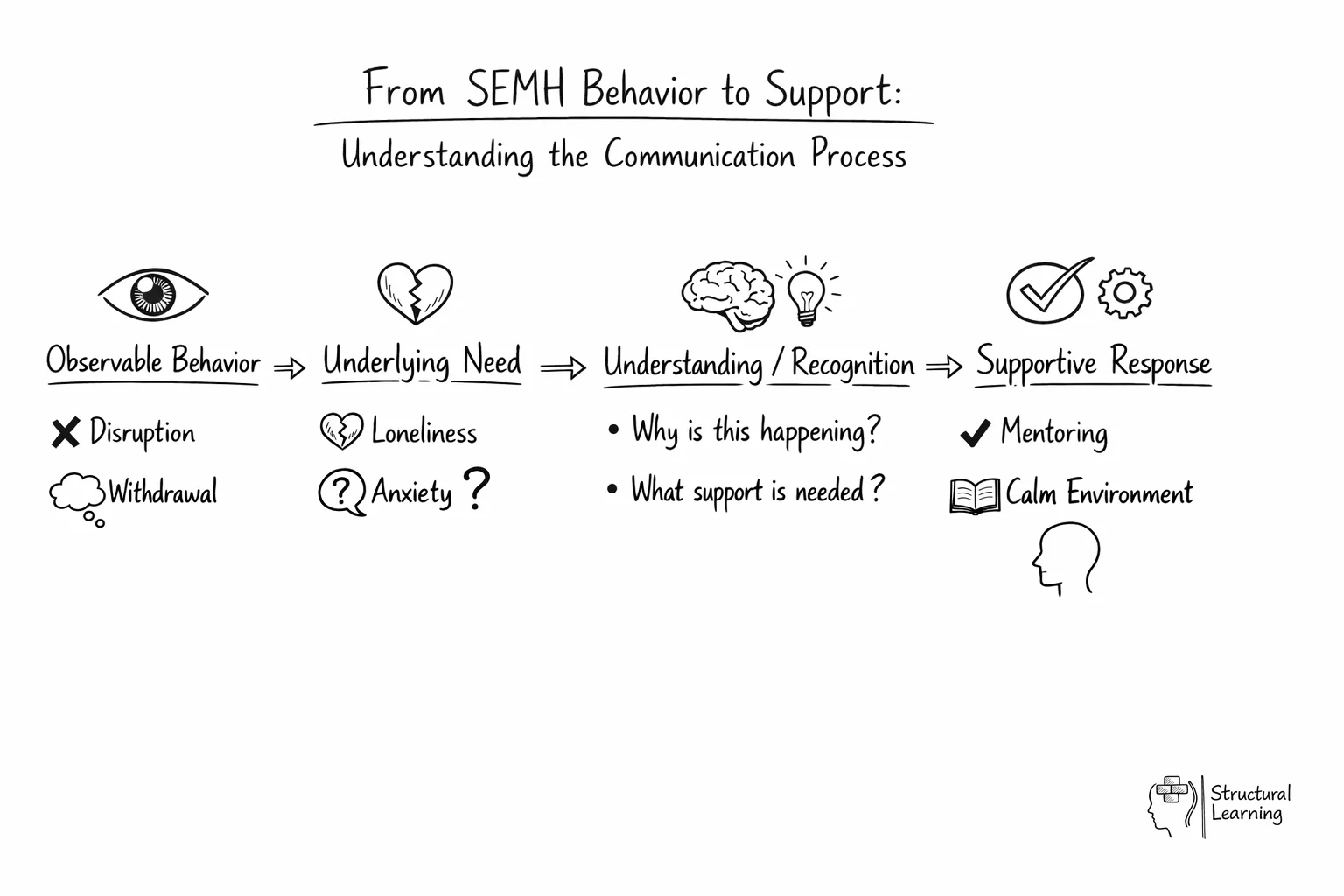
Some children with SEMH needs turn difficulties inward. They may be withdrawn, anxious, excessively quiet, or appear disconnected. They might struggle to form friendships, avoid participation, or show physical symptoms of stress. These children are easily overlooked because they do not disrupt, but their needs are just as significant.
Other children express difficulties outwardly through challenging behaviour. This might include aggression, defiance, disruption, difficulty following instructions, or emotional outbursts. These behaviours attract attention but are often addressed through sanctions rather than support, missing the underlying need. In some cases, these behaviours may indicate conditions such as ADHD, which requires proper ADHD assessments for accurate identification.
Changes from baseline behaviour are significant. Tools like the Boxall Profilecan help assess these changes systematically. A previously engaged child becoming withdrawn, or a calm child becoming volatile, may indicate emerging SEMH difficulties. Other signs include persistent difficulty with relationships, low self-esteem, extreme reactions to setbacks, difficulty managing emotions, and patterns of concerning behaviour across contexts.
SEMH behaviours often communicate unmet needs such as feeling unsafe, overwhelmed, or unable to cope with academic or social demands. Children may be expressing anxiety, trauma, sensory overload, or difficulties with emotional regulation through their behaviour. Understanding behaviour as communication helps teacher s respond with support rather than punishment.
align: left;">Lack of connection, unmet attachment needs
Observed BehaviourPossible Underlying NeedSupportive Response
Aggression when challengedFear of failure, threat responseReduce perceived threat, scaffold success
Withdrawal from activitiesAnxiety, low self-efficacyBuild confidence through achievable tasks
Difficulty with transitionsNeed for predictability, anxietyPrepare for changes, visual timetables
Emotional outburstsOverwhelm, poor emotional regulationTeach regulation strategies, co-regulate
Seeking adult attention constantlyProvide reassurance, build positive relationships
Creating a supportive classroom environment is paramount. Quality first teaching forms the foundation of all effective SEMH support.. This involves building positive relationships, implementing consistent routines, and providing opportunities for emotional expression. Specific strategies include:
Under the Equality Act 2010 (and following the graduated approach), schools have a duty to make reasonable adjustments for students with SEND, including SEMH. These adjustments might include:
Early identification and intervention are crucial for preventing SEMH difficulties from escalating. Training all staff in recognising warning signs and implementing early intervention strategies can make a significant difference in a child's trajectory. This proactive approach not only benefits individual students but also contributes to a more positive and inclusive school climate.
Building effective partnerships with parents and carers is fundamental to supporting SEMH learners, yet these conversations can feel daunting for teachers. John Bowlby's attachment theory reminds us that family relationships profoundly shape a child's emotional development, making home-school collaboration essential rather than optional. When approaching parents about SEMH concerns, focus on strengths first and frame discussions around the child's underlying needs rather than listing problematic behaviours.
Successful communication begins with creating a non-judgemental space where families feel heard and valued as partners. Use specific, observable examples when discussing behavioural indicators, and invite parents to share their perspectives and strategies that work at home. Remember that many families may be experiencing their own challenges or may have had negative school experiences themselves. Diane Baumrind's research on parenting styles shows that supportive, collaborative approaches are most effective for promoting positive outcomes.
Establish regular, brief check-ins rather than only meeting during crises. Share positive developments alongside concerns, and work together to create consistent approaches to emotional regulation strategies across home and school environments. Consider offering flexible meeting times and formats, including phone calls or brief informal chats, to accommodate different family circumstances and build genuine teacher-learner relationships that extend to the whole family unit.
Effective support for SEMH learners requires a coordinated approach that extends beyond the classroom. Your SENCO serves as the crucial bridge between teaching staff and external specialists, helping to identify when additional support is needed and coordinating referral processes. Research by Frederickson and Cline emphasises that early identification and multi-agency collaboration significantly improve outcomes for learners with SEMH needs, making your observations and concerns vital to this process.
When preparing for referrals to educational psychologists or external agencies, document specific behavioural indicators, triggers, and the impact of strategies you've already implemented. This evidence-based approach, supported by your regular observations of emotional regulation patterns and social interactions, provides specialists with essential context. Remember that external agencies such as CAMHS, social services, or specialist SEMH teams each have different referral criteria and waiting times, so early discussions with your SENCO are crucial.
Collaborative working means maintaining regular communication with all parties involved in supporting each learner. Share successful classroom strategies with specialists and be open to adapting their recommendations to fit your teaching context. This reciprocal relationship ensures that interventions remain consistent across all settings, reinforcing positive teacher-learner relationships while addressing underlying needs through a comprehensive support network.
Creating a classroom environment that supports SEMH learners begins with recognising that physical space directly impacts emotional regulation. Research by environmental psychologist Roger Barker demonstrates how physical settings influence behaviour patterns, making thoughtful classroom design essential. Consider establishing calm zones with soft furnishings, reducing visual clutter on walls, and ensuring clear pathways that prevent overcrowding. Predictable routines and visual timetables help learners anticipate transitions, reducing anxiety and supporting those who struggle with unexpected changes.
The emotional climate of your classroom proves equally crucial. Relationship theorist John Bowlby's attachment research highlights how secure relationships provide the foundation for learning and emotional development. Creates this through consistent, warm interactions and by explicitly teaching emotional vocabulary. Create opportunities for learners to express feelings safely, whether through check-in systems, emotion charts, or designated talk time. Remember that SEMH learners often experience heightened stress responses, so maintaining a calm, non-judgmental tone during difficult moments helps model emotional regulation.
Practical strategies include implementing clear, consistent boundaries alongside high levels of support. Use positive reinforcement to highlight desired behaviours rather than focusing solely on corrections. Consider flexible seating arrangements that accommodate different sensory needs, and establish signals for learners who need brief breaks to self-regulate. These environmental adaptations benefit all learners whilst specifically addressing the underlying needs of SEMH learners.
Effective documentation of SEMH needs requires a systematic approach that captures both observable behaviours and their underlying patterns. Rather than simply recording incidents, focus on gathering evidence that tells a story: what happened before the behaviour occurred, the specific actions taken by the learner, and the immediate consequences. Context is crucial, a child who struggles during transition times may have different underlying needs to one who becomes dysregulated during collaborative tasks. Keep records factual and objective, avoiding interpretative language that might inadvertently stigmatise the learner.
Assessment should be ongoing rather than reactive, incorporating both formal observations and informal classroom interactions. Track emotional regulation patterns across different subjects, times of day, and social situations to identify triggers and successful interventions. Document positive responses alongside challenges, noting when a learner successfully uses a coping strategy or demonstrates improved emotional regulation provides valuable insight into their developing skills and preferred support methods.
When preparing documentation (including provision maps) for referrals or multi-agency meetings, organise your evidence chronologically and include specific examples of interventions attempted. Always maintain learner dignity by focusing on needs rather than deficits, and ensure any documentation could be read by the learner or their family without causing distress. This approach not only supports effective intervention planning but also models the respectful, strengths-based perspective essential for supporting SEMH learners effectively.
Choosing the right SEMH assessment tool depends on the learner's presentation, your purpose, and your budget. Use this interactive selector to find the most appropriate tool for your situation.
SEMH stands for Social, Emotional and Mental Health. It is a category of special educational needs defined in the UK SEND Code of Practice. These needs can significantly impact the ability of a learner to engage with school and build social relationships.
Teachers can support learners by treating behaviour as a signal of underlying emotional needs. Establishing consistent routines and building strong relationships are essential first steps. Teachers should also make reasonable adjustments to learning objectives to ensure the curriculum remains accessible.
The shift from BESD to SEMH in 2014 was intended to help educators focus on the mental health causes of difficult behaviour. This change prioritises understanding and support over purely reactive discipline. It acknowledges that the emotional wellbeing of a learner is fundamental to their academic progress.
Academic research indicates that internalising behaviours such as withdrawal or anxiety are often overlooked in busy schools. Evidence shows that these quiet signals of distress are just as significant as outward disruption. Recognising these needs early is vital to ensure that every learner receives the support they require to succeed.
A frequent error is focusing on the outward behaviour while ignoring the underlying emotional or mental health needs. Another common mistake is relying on reactive punishments that do not address why a learner is struggling. Schools should instead practise collaborative planning that includes the SENCO, parents, and the learner.
Early intervention helps prevent emotional difficulties from escalating and improves the long term trajectory of a learner. Proactive support contributes to a more positive and inclusive school climate for everyone. It ensures that the root causes of distress are addressed before they impact the wellbeing or educational progress of the learner.
Supporting students with SEMH needs is a complex but vital aspect of teaching. By understanding behaviour as communication, creating supportive environments, and implementing targeted strategies, teachers can make a profound difference in the lives of these children. Remember that consistency, collaboration, and a focus on building positive relationships are key to developing their social, emotional, and academic growth.
Ultimately, creating an inclusive classroom where all students feel safe, valued, and understood is at the heart of effective SEMH support. This requires ongoing professional development, a commitment to reflective practice, and a willingness to adapt approaches based on the unique needs of each child. By embracing these principles, we can helps students with SEMH needs to thrive and reach their full potential.
The complexity of SEMH work means that what works for one learner may not work for another, requiring you to develop a flexible toolkit of classroom strategies. A learner who responds well to quiet, one-to-one check-ins might be overwhelmed by public praise, whilst another may thrive on visible recognition but struggle with private conversations. This individualised approach takes time to develop, but observing behavioural indicators and adjusting your responses accordingly will gradually build your expertise in reading and responding to different emotional needs.
Remember that challenging days are inevitable in SEMH work, and they do not reflect your competence as an educator. When a carefully planned intervention doesn't work or when a learner's emotional regulation deteriorates despite your best efforts, view these moments as learning opportunities rather than failures. The cumulative effect of your consistent, empathetic approach matters more than any single interaction, and even experienced teachers working with SEMH learners continue to encounter situations that test their skills and resilience.
Social, Emotional and Mental Health (SEMH) is a category of Special Educational Needs and Disabilities (SEND) identified in the SEND Code of Practice. Children with SEMH needs experience difficulties that affect their social relationships, emotional wellbeing, and/or mental health, requiring comprehensive SEMH provision and student wellbeing strategies, which in turn impact their learning and development. This means adapting learning objectivesto meet their specific needs.
SEMH replaced the earlier term BESD (Behavioural, Emotional and Social Difficulties) in 2014. It's worth noting that some children with SEMH needs may also have co-occurring conditions such as high functioning autism requiring specialised autism support resources. This change reflected a shif t in understanding: from seeing behaviour as the problem to recognising that behaviour often signals underlying emotional and mental health needs. Some children may also require additional support such as dyslexia supportalongside their SEMH provision.
Some children with SEMH needs turn difficulties inward. They may be withdrawn, anxious, excessively quiet, or appear disconnected. They might struggle to form friendships, avoid participation, or show physical symptoms of stress. These children are easily overlooked because they do not disrupt, but their needs are just as significant.
Other children express difficulties outwardly through challenging behaviour. This might include aggression, defiance, disruption, difficulty following instructions, or emotional outbursts. These behaviours attract attention but are often addressed through sanctions rather than support, missing the underlying need. In some cases, these behaviours may indicate conditions such as ADHD, which requires proper ADHD assessments for accurate identification.
Changes from baseline behaviour are significant. Tools like the Boxall Profilecan help assess these changes systematically. A previously engaged child becoming withdrawn, or a calm child becoming volatile, may indicate emerging SEMH difficulties. Other signs include persistent difficulty with relationships, low self-esteem, extreme reactions to setbacks, difficulty managing emotions, and patterns of concerning behaviour across contexts.
SEMH behaviours often communicate unmet needs such as feeling unsafe, overwhelmed, or unable to cope with academic or social demands. Children may be expressing anxiety, trauma, sensory overload, or difficulties with emotional regulation through their behaviour. Understanding behaviour as communication helps teacher s respond with support rather than punishment.
align: left;">Lack of connection, unmet attachment needs
Observed BehaviourPossible Underlying NeedSupportive Response
Aggression when challengedFear of failure, threat responseReduce perceived threat, scaffold success
Withdrawal from activitiesAnxiety, low self-efficacyBuild confidence through achievable tasks
Difficulty with transitionsNeed for predictability, anxietyPrepare for changes, visual timetables
Emotional outburstsOverwhelm, poor emotional regulationTeach regulation strategies, co-regulate
Seeking adult attention constantlyProvide reassurance, build positive relationships
Creating a supportive classroom environment is paramount. Quality first teaching forms the foundation of all effective SEMH support.. This involves building positive relationships, implementing consistent routines, and providing opportunities for emotional expression. Specific strategies include:
Under the Equality Act 2010 (and following the graduated approach), schools have a duty to make reasonable adjustments for students with SEND, including SEMH. These adjustments might include:
Early identification and intervention are crucial for preventing SEMH difficulties from escalating. Training all staff in recognising warning signs and implementing early intervention strategies can make a significant difference in a child's trajectory. This proactive approach not only benefits individual students but also contributes to a more positive and inclusive school climate.
Building effective partnerships with parents and carers is fundamental to supporting SEMH learners, yet these conversations can feel daunting for teachers. John Bowlby's attachment theory reminds us that family relationships profoundly shape a child's emotional development, making home-school collaboration essential rather than optional. When approaching parents about SEMH concerns, focus on strengths first and frame discussions around the child's underlying needs rather than listing problematic behaviours.
Successful communication begins with creating a non-judgemental space where families feel heard and valued as partners. Use specific, observable examples when discussing behavioural indicators, and invite parents to share their perspectives and strategies that work at home. Remember that many families may be experiencing their own challenges or may have had negative school experiences themselves. Diane Baumrind's research on parenting styles shows that supportive, collaborative approaches are most effective for promoting positive outcomes.
Establish regular, brief check-ins rather than only meeting during crises. Share positive developments alongside concerns, and work together to create consistent approaches to emotional regulation strategies across home and school environments. Consider offering flexible meeting times and formats, including phone calls or brief informal chats, to accommodate different family circumstances and build genuine teacher-learner relationships that extend to the whole family unit.
Effective support for SEMH learners requires a coordinated approach that extends beyond the classroom. Your SENCO serves as the crucial bridge between teaching staff and external specialists, helping to identify when additional support is needed and coordinating referral processes. Research by Frederickson and Cline emphasises that early identification and multi-agency collaboration significantly improve outcomes for learners with SEMH needs, making your observations and concerns vital to this process.
When preparing for referrals to educational psychologists or external agencies, document specific behavioural indicators, triggers, and the impact of strategies you've already implemented. This evidence-based approach, supported by your regular observations of emotional regulation patterns and social interactions, provides specialists with essential context. Remember that external agencies such as CAMHS, social services, or specialist SEMH teams each have different referral criteria and waiting times, so early discussions with your SENCO are crucial.
Collaborative working means maintaining regular communication with all parties involved in supporting each learner. Share successful classroom strategies with specialists and be open to adapting their recommendations to fit your teaching context. This reciprocal relationship ensures that interventions remain consistent across all settings, reinforcing positive teacher-learner relationships while addressing underlying needs through a comprehensive support network.
Creating a classroom environment that supports SEMH learners begins with recognising that physical space directly impacts emotional regulation. Research by environmental psychologist Roger Barker demonstrates how physical settings influence behaviour patterns, making thoughtful classroom design essential. Consider establishing calm zones with soft furnishings, reducing visual clutter on walls, and ensuring clear pathways that prevent overcrowding. Predictable routines and visual timetables help learners anticipate transitions, reducing anxiety and supporting those who struggle with unexpected changes.
The emotional climate of your classroom proves equally crucial. Relationship theorist John Bowlby's attachment research highlights how secure relationships provide the foundation for learning and emotional development. Creates this through consistent, warm interactions and by explicitly teaching emotional vocabulary. Create opportunities for learners to express feelings safely, whether through check-in systems, emotion charts, or designated talk time. Remember that SEMH learners often experience heightened stress responses, so maintaining a calm, non-judgmental tone during difficult moments helps model emotional regulation.
Practical strategies include implementing clear, consistent boundaries alongside high levels of support. Use positive reinforcement to highlight desired behaviours rather than focusing solely on corrections. Consider flexible seating arrangements that accommodate different sensory needs, and establish signals for learners who need brief breaks to self-regulate. These environmental adaptations benefit all learners whilst specifically addressing the underlying needs of SEMH learners.
Effective documentation of SEMH needs requires a systematic approach that captures both observable behaviours and their underlying patterns. Rather than simply recording incidents, focus on gathering evidence that tells a story: what happened before the behaviour occurred, the specific actions taken by the learner, and the immediate consequences. Context is crucial, a child who struggles during transition times may have different underlying needs to one who becomes dysregulated during collaborative tasks. Keep records factual and objective, avoiding interpretative language that might inadvertently stigmatise the learner.
Assessment should be ongoing rather than reactive, incorporating both formal observations and informal classroom interactions. Track emotional regulation patterns across different subjects, times of day, and social situations to identify triggers and successful interventions. Document positive responses alongside challenges, noting when a learner successfully uses a coping strategy or demonstrates improved emotional regulation provides valuable insight into their developing skills and preferred support methods.
When preparing documentation (including provision maps) for referrals or multi-agency meetings, organise your evidence chronologically and include specific examples of interventions attempted. Always maintain learner dignity by focusing on needs rather than deficits, and ensure any documentation could be read by the learner or their family without causing distress. This approach not only supports effective intervention planning but also models the respectful, strengths-based perspective essential for supporting SEMH learners effectively.
Choosing the right SEMH assessment tool depends on the learner's presentation, your purpose, and your budget. Use this interactive selector to find the most appropriate tool for your situation.
SEMH stands for Social, Emotional and Mental Health. It is a category of special educational needs defined in the UK SEND Code of Practice. These needs can significantly impact the ability of a learner to engage with school and build social relationships.
Teachers can support learners by treating behaviour as a signal of underlying emotional needs. Establishing consistent routines and building strong relationships are essential first steps. Teachers should also make reasonable adjustments to learning objectives to ensure the curriculum remains accessible.
The shift from BESD to SEMH in 2014 was intended to help educators focus on the mental health causes of difficult behaviour. This change prioritises understanding and support over purely reactive discipline. It acknowledges that the emotional wellbeing of a learner is fundamental to their academic progress.
Academic research indicates that internalising behaviours such as withdrawal or anxiety are often overlooked in busy schools. Evidence shows that these quiet signals of distress are just as significant as outward disruption. Recognising these needs early is vital to ensure that every learner receives the support they require to succeed.
A frequent error is focusing on the outward behaviour while ignoring the underlying emotional or mental health needs. Another common mistake is relying on reactive punishments that do not address why a learner is struggling. Schools should instead practise collaborative planning that includes the SENCO, parents, and the learner.
Early intervention helps prevent emotional difficulties from escalating and improves the long term trajectory of a learner. Proactive support contributes to a more positive and inclusive school climate for everyone. It ensures that the root causes of distress are addressed before they impact the wellbeing or educational progress of the learner.
Supporting students with SEMH needs is a complex but vital aspect of teaching. By understanding behaviour as communication, creating supportive environments, and implementing targeted strategies, teachers can make a profound difference in the lives of these children. Remember that consistency, collaboration, and a focus on building positive relationships are key to developing their social, emotional, and academic growth.
Ultimately, creating an inclusive classroom where all students feel safe, valued, and understood is at the heart of effective SEMH support. This requires ongoing professional development, a commitment to reflective practice, and a willingness to adapt approaches based on the unique needs of each child. By embracing these principles, we can helps students with SEMH needs to thrive and reach their full potential.
The complexity of SEMH work means that what works for one learner may not work for another, requiring you to develop a flexible toolkit of classroom strategies. A learner who responds well to quiet, one-to-one check-ins might be overwhelmed by public praise, whilst another may thrive on visible recognition but struggle with private conversations. This individualised approach takes time to develop, but observing behavioural indicators and adjusting your responses accordingly will gradually build your expertise in reading and responding to different emotional needs.
Remember that challenging days are inevitable in SEMH work, and they do not reflect your competence as an educator. When a carefully planned intervention doesn't work or when a learner's emotional regulation deteriorates despite your best efforts, view these moments as learning opportunities rather than failures. The cumulative effect of your consistent, empathetic approach matters more than any single interaction, and even experienced teachers working with SEMH learners continue to encounter situations that test their skills and resilience.
{"@context":"https://schema.org","@graph":[{"@type":"Article","@id":"https://www.structural-learning.com/post/semh-a-teachers-guide#article","headline":"SEMH: A teacher's guide: A Teacher's Guide","description":"Explore effective strategies for supporting students with Social, Emotional, and Mental Health needs, including identification and collaboration with.","datePublished":"2022-02-18T16:36:20.504Z","dateModified":"2026-03-02T11:01:30.989Z","author":{"@type":"Person","name":"Paul Main","url":"https://www.structural-learning.com/team/paulmain","jobTitle":"Founder & Educational Consultant"},"publisher":{"@type":"Organization","name":"Structural Learning","url":"https://www.structural-learning.com","logo":{"@type":"ImageObject","url":"https://cdn.prod.website-files.com/5b69a01ba2e409e5d5e055c6/6040bf0426cb415ba2fc7882_newlogoblue.svg"}},"mainEntityOfPage":{"@type":"WebPage","@id":"https://www.structural-learning.com/post/semh-a-teachers-guide"},"image":"https://cdn.prod.website-files.com/5b69a01ba2e409501de055d1/697c97b4d51fc1b2d44aa5d5_696a153def5ac7ba777a9ad8_696a1539a10fe60267fdcad4_semh-a-teachers-guide-infographic.webp","wordCount":2065},{"@type":"BreadcrumbList","@id":"https://www.structural-learning.com/post/semh-a-teachers-guide#breadcrumb","itemListElement":[{"@type":"ListItem","position":1,"name":"Home","item":"https://www.structural-learning.com/"},{"@type":"ListItem","position":2,"name":"Blog","item":"https://www.structural-learning.com/blog"},{"@type":"ListItem","position":3,"name":"SEMH: A teacher's guide: A Teacher's Guide","item":"https://www.structural-learning.com/post/semh-a-teachers-guide"}]}]}