Read Write Inc: a teacher's guide
A practical guide to Read Write Inc for primary teachers. Covers RWI phonics, speed sounds, storybooks, and implementation strategies for teaching.

A practical guide to Read Write Inc for primary teachers. Covers RWI phonics, speed sounds, storybooks, and implementation strategies for teaching.
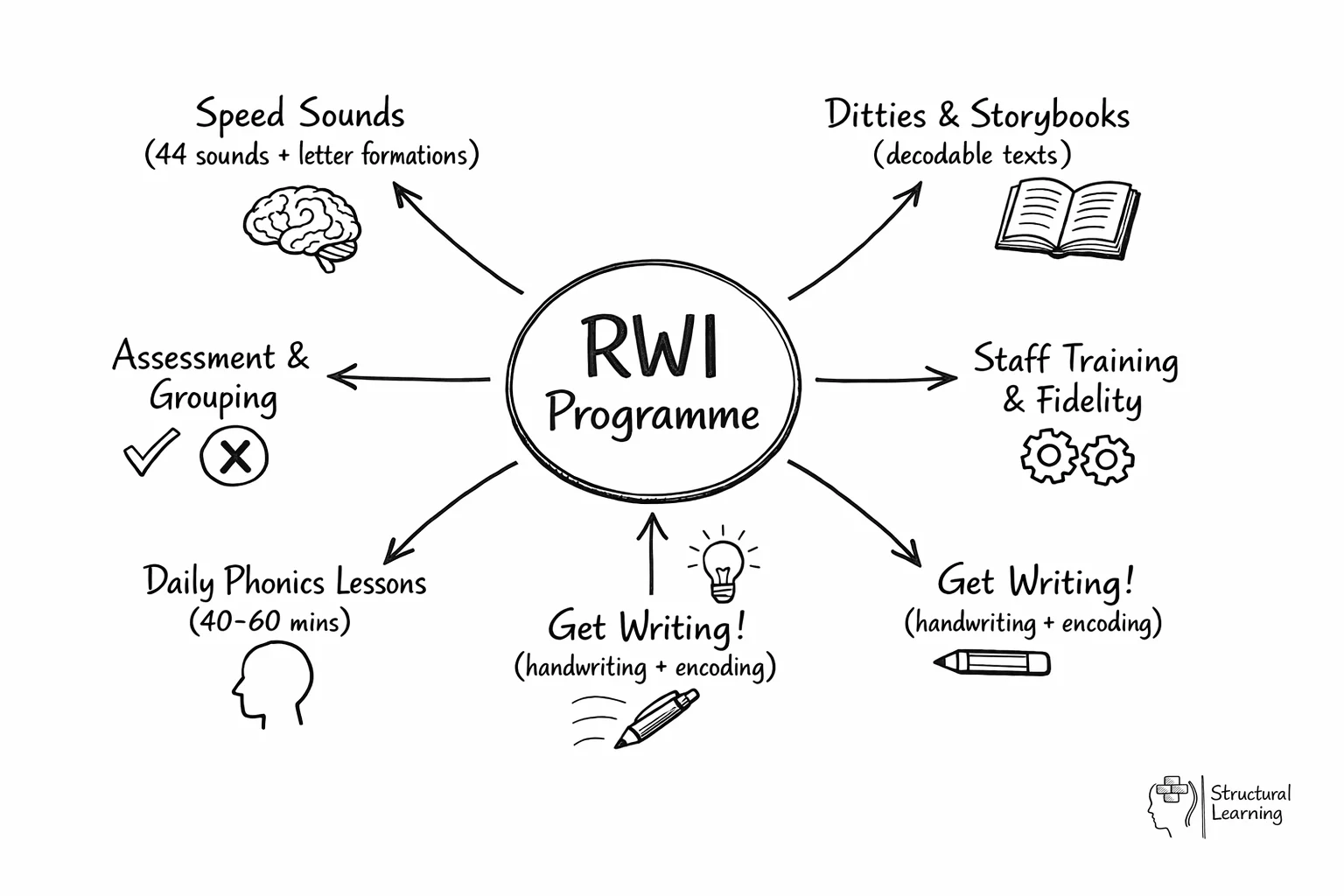
Read Write Inc (RWI) is a comprehensive literacy programme developed by Ruth Miskin that teaches children to read, write, and spell. It is one of the most widely used phonics programmes in England, used in over 8,000 primary schools. The programme is validated by the Department for Education as meeting the core criteria for an effective systematic synthetic phonics (SSP) programme.

RWI is designed primarily for children from Reception to Year 4, though it also includes Fresh Start for older struggling readers and interventions for children with SEND, supporting diverse learners. The programme integrates phonics teaching with reading practice, spelling, and wri ting, ensuring that skills develop together rather than in isolation through a spiral curriculumapproach through integrated teaching strategies.
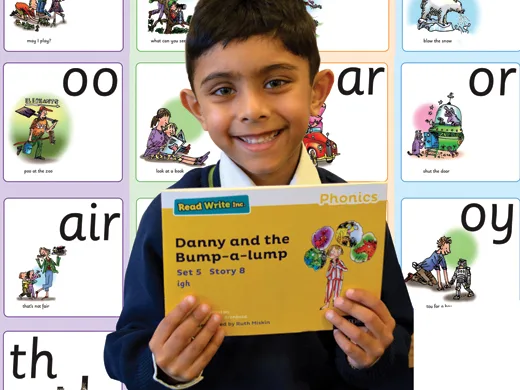
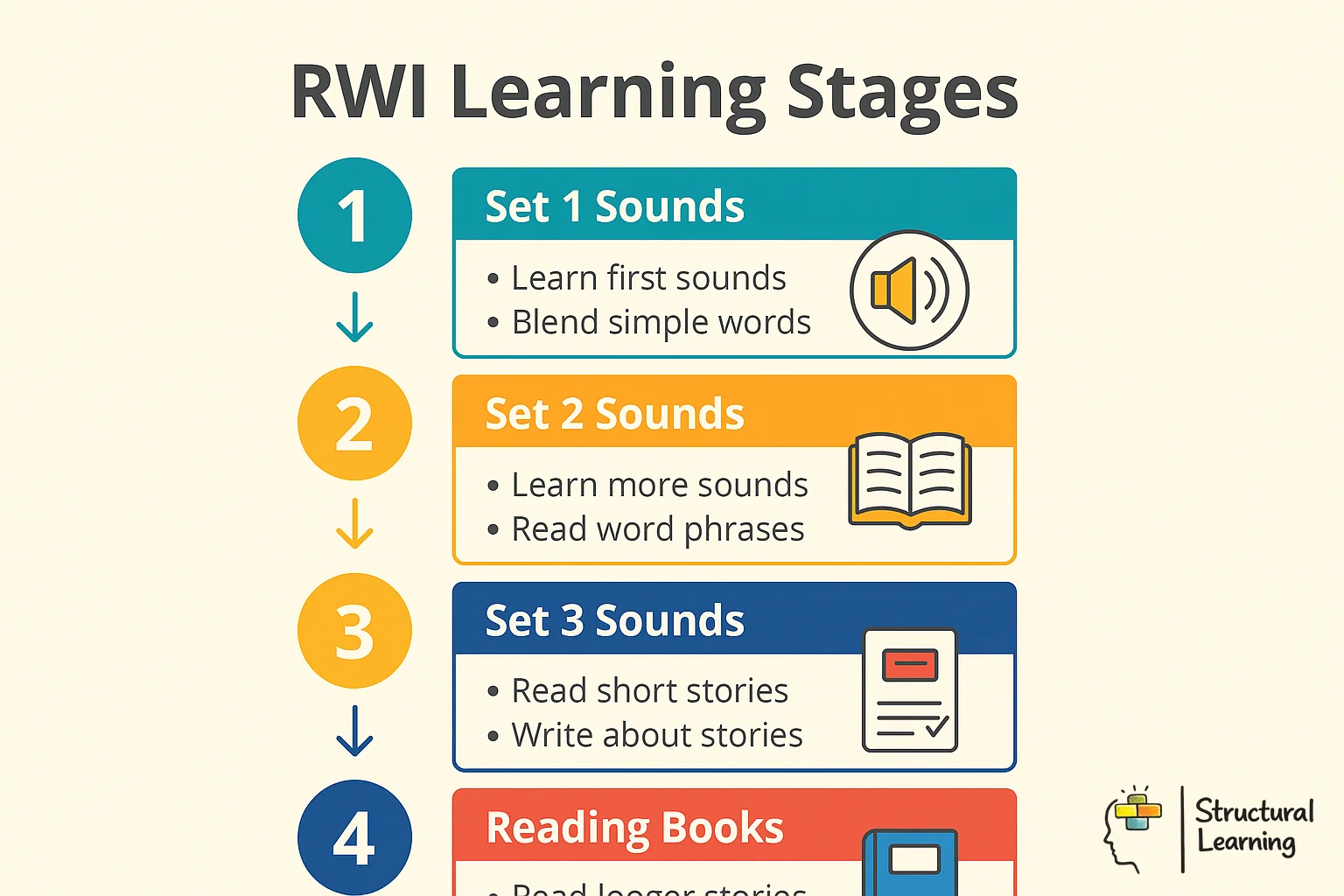
Children learn 44 sounds and the corresponding letter formations in a carefully sequenced order. Each sound is taught with a picture prompt and phrase to support memory, using a scaffolding approach. Set 1 sounds cover single letters, while Sets 2 and 3 introduce digraphs and trigraphs. Children practise reading and writing sounds until they become automatic.
Once children know sufficient sounds, they begin reading Ditties (short decodable texts) before progressing to colour-banded Storybooks. These books are specifically written to contain only sounds children have been taught, ensuring successful reading experiences that build cultural capital. Each book includes comprehension activities and vocabulary discussion that promote understanding and develop effective pedagogical approaches to literacy learning. support pupil progress active learning.
Writing is taught alongside reading from the earliest stages. Children practise handwriting as they learn each sound and progress to writing words, sentences, and longer texts. The Hold a Sentence strategy helps children develop working memory for writing while maintaining encoding accuracy.
Read Write Inc initial training costs range from £3,180 to £3,980 plus VAT depending on school size. This investment includes comprehensive staff training and materials needed to implement the programme across the whole school. Schools should also budget for ongoing Development Days to maintain implementation quality.
| Component | Cost | Notes |
|---|---|---|
| Training Package (Year 1) | £3,180, £3,980 + VAT | Varies by school size |
| Leadership Training | Included | For headteachers and reading leaders |
| In-School Training | Included | For up to 45 staff members |
| Development Days | Included | Personalised coaching and data analysis |
| Online Assessment | Included | Termly assessment tool |
| Online Subscription | Included | Training films and Virtual Classroom |
The training package provides comprehensive support in the first year, including leadership training for senior staff, in-school training for all staff involved in phonics teaching, and ongoing Development Days where trainers work with teams to analyse assessment data and coach practice.
Resource costs (books, cards, materials) are additional to the training package. Schools should budget for complete sets of Storybooks, Speed Sounds cards, and other teaching materials. Oxford University Press, which publishes RWI resources, can provide resource quotes based on school size and requirements.
RWI requires dedicated daily phonics lessons, typically 40-60 minutes depending on age and stage. These sessions follow a consistent structure that maximises practice time. Schools need to timetable phonics so that it takes priority and is protected from interruption.

Children are grouped by phonics stage rather than age, meaning Year 1 and Year 2 children might learn together if they are at similar points. This requires flexible timetabling and sufficient staff to run multiple groups simultaneously. Regular assessment (typically half-termly) ensures children are in the right groups.
RWI is most effective when implemented with fidelity to the programme design. All staff teaching phonics need training, and schools should avoid mixing RWI with other phonics approaches, as this can confuse children. Leadership commitment to monitoring implementation quality is essential.
Read Write Inc is used in over 8,000 UK primary schools and is validated by the Department for Education as an effective systematic synthetic phonics programme. The programme has a strong evidence base showing it helps children from Reception to Year 4 learn to read, write, and spell. It includes proven interventions like Fresh Start for older struggling readers and support for children with SEND.
RWI has a substantial evidence base. Multiple studies have shown positive effects on reading outcomes, and the programme is endorsed by the Education Endowment Foundation's Phonics Guidance. The structured approach particularly benefits disadvantaged pupils and those at risk of reading difficulties.
However, no programme works without quality implementation. Schools that invest in training, maintain fidelity to the programme, and use assessment data to inform teaching see the strongest outcomes. Schools that implement partially or inconsistently may not see the expected gains.
RWI uses a comprehensive assessment system that includes one-to-one assessments every half term, daily formative assessment during lessons, and online tracking tools. Teachers use this data to ensure children are in the right groups and making expected progress. The programme provides clear benchmarks for where children should be at each point in the year.
The formal assessment process involves testing children individually on their sound knowledge, blending skills, and reading fluency. Teachers use the RWI Sound and Word Entry Assessment to establish starting points, then conduct regular Sound Assessments to check which sounds children can read and write automatically. The assessment sheets are straightforward to administer and typically take 5-10 minutes per child. Results are recorded on the online portal, which generates helpful reports showing individual and cohort progress over time.
Daily assessment happens through careful observation during lessons. Teachers watch for children who hesitate when reading sounds, struggle with blending, or cannot keep up with the pace. The programme's Partner Work structure makes it easy to spot difficulties, teachers circulate whilst children practise with partners, noting who needs extra support. This ongoing assessment informs same-day interventions and helps teachers decide when children are ready to move groups. The key is responding quickly to assessment data rather than waiting for formal testing points.
Schools often face challenges with timetabling, maintaining programme fidelity, and managing children who join mid-year. The most successful schools anticipate these issues and put systems in place from the start. Leadership support and whole-school commitment are essential for overcoming implementation hurdles.
Timetabling presents the biggest logistical challenge, particularly in smaller schools with limited staff. RWI requires all groups to run simultaneously, which means deploying teaching assistants, HLTAs, and sometimes senior leaders to teach phonics. Schools need to protect the phonics hour from assemblies, PE lessons, and other activities. Some schools solve this by scheduling phonics first thing in the morning when all staff are available. Others train additional staff, including lunch supervisors or sports coaches, to increase capacity. The investment in training more staff pays dividends in implementation quality.
Maintaining programme fidelity requires ongoing vigilance. When staff feel confident, they may be tempted to add their own activities or skip elements they consider less important. However, every component of RWI serves a purpose, and missing parts reduces effectiveness. Regular coaching observations help maintain standards, as does celebrating staff who deliver lessons with energy and precision. Schools should designate a Reading Leader who monitors implementation quality through learning walksand provides supportive feedback.
Children joining the school mid-year, particularly those from schools using different phonics programmes, need careful assessment and often intensive catch-up support. Schools typically run additional afternoon interventions for new arrivals, using the same RWI resources but providing extra practice time. Some schools assign reading mentors from Year 5 or 6 who have completed RWI successfully to provide additional practice sessions. The key is quickly identifying gaps and providing targeted support rather than placing children in groups where they will struggle.
Yes. RWI includes specific guidance for supporting children with SEND, and the systematic, multisensory approach benefits many learners with additional needs. Fresh Start provides catch-up intervention for older struggling readers. Some children may need additional time and repetition, but the programme's structure supports this.
Most children complete the programme by the end of Year 2, though this varies. Children who start with weaker pre-reading skills may take longer. The key is that children progress when they have secured each stage, not according to a fixed timetable.
During the phonics learning phase, children should read only fully decodable books aligned to their phonics knowledge. Once children complete RWI, they can access wider reading materials. Using non-decodable books alongside phonics teaching can undermine progress.
After the initial training year, schools typically purchase ongoing Development Days to maintain quality (costs vary). Resources need replacing as they wear out, and new staff need training. Some schools subscribe to Ruth Miskin Training's online portal for continued access to training materials.
These peer-reviewed studies provide deeper insights into read write inc: a teacher's guide and its application in educational settings.
Handbook of Research on Teaching the English Language Arts 446 citations
Lapp et al. (1991)
Explore this research to deepen your understanding of the topic.
Training teachers for phonics and early reading: developing research‐informed practice View study ↗9 citations
Flynn et al. (2021)
This comprehensive handbook provides historical and theoretical perspectives on English language arts teaching and learning, covering the profession's development and international approaches to literacy instruction. It offers teachers using Read Write Inc a broader context for understanding how phonics-based reading programs fit within the wider landscape of literacy education and evidence-based teaching practices.
The incongruities of ‘teaching phonics’ with two-year olds
Boardman et al. (2019)
This recent study examines the training needs of teachers implementing systematic synthetic phonics in England, identifying gaps in teacher subject knowledge and exploring what makes phonics training effective. The research is directly relevant to Read Write Inc teachers as it highlights the importance of proper professional development and provides insights into best practices for phonics instruction training.
Research on synthetic phonics and decodable texts 10 citations (Author, Year) examines how these structured reading materials support struggling readers in developing foundational literacy skills.
Price-Mohr et al. (2018)
This paper critically examines the challenges of implementing systematic synthetic phonics with very young children (two-year olds), exploring the tensions between policy directives and developmentally appropriate practice. It provides valuable perspective for Read Write Inc teachers working with early yearslearners about the complexities of phonics instruction with the youngest children.
Research on science-based early reading instruction 112 citations (Author, Year) provides evidence-based guidance on effective teaching methods, challenging common misconceptions about reading pedagogy and offering practical strategies grounded in cognitive science and educational research.
Mcguinness et al. (2004)
This study investigates how synthetic phonics approaches and decodable reading texts support struggling readers, examining the effectiveness of these core components of structured literacy programs. The findings are highly relevant to Read Write Inc teachers as they provide evidence about how well phonics-based instruction serves children who find reading challenging.
Read Write Inc (RWI) is a comprehensive literacy programme developed by Ruth Miskin that teaches children to read, write, and spell. It is one of the most widely used phonics programmes in England, used in over 8,000 primary schools. The programme is validated by the Department for Education as meeting the core criteria for an effective systematic synthetic phonics (SSP) programme.

RWI is designed primarily for children from Reception to Year 4, though it also includes Fresh Start for older struggling readers and interventions for children with SEND, supporting diverse learners. The programme integrates phonics teaching with reading practice, spelling, and wri ting, ensuring that skills develop together rather than in isolation through a spiral curriculumapproach through integrated teaching strategies.
Children learn 44 sounds and the corresponding letter formations in a carefully sequenced order. Each sound is taught with a picture prompt and phrase to support memory, using a scaffolding approach. Set 1 sounds cover single letters, while Sets 2 and 3 introduce digraphs and trigraphs. Children practise reading and writing sounds until they become automatic.
Once children know sufficient sounds, they begin reading Ditties (short decodable texts) before progressing to colour-banded Storybooks. These books are specifically written to contain only sounds children have been taught, ensuring successful reading experiences that build cultural capital. Each book includes comprehension activities and vocabulary discussion that promote understanding and develop effective pedagogical approaches to literacy learning. support pupil progress active learning.
Writing is taught alongside reading from the earliest stages. Children practise handwriting as they learn each sound and progress to writing words, sentences, and longer texts. The Hold a Sentence strategy helps children develop working memory for writing while maintaining encoding accuracy.
Read Write Inc initial training costs range from £3,180 to £3,980 plus VAT depending on school size. This investment includes comprehensive staff training and materials needed to implement the programme across the whole school. Schools should also budget for ongoing Development Days to maintain implementation quality.
| Component | Cost | Notes |
|---|---|---|
| Training Package (Year 1) | £3,180, £3,980 + VAT | Varies by school size |
| Leadership Training | Included | For headteachers and reading leaders |
| In-School Training | Included | For up to 45 staff members |
| Development Days | Included | Personalised coaching and data analysis |
| Online Assessment | Included | Termly assessment tool |
| Online Subscription | Included | Training films and Virtual Classroom |
The training package provides comprehensive support in the first year, including leadership training for senior staff, in-school training for all staff involved in phonics teaching, and ongoing Development Days where trainers work with teams to analyse assessment data and coach practice.
Resource costs (books, cards, materials) are additional to the training package. Schools should budget for complete sets of Storybooks, Speed Sounds cards, and other teaching materials. Oxford University Press, which publishes RWI resources, can provide resource quotes based on school size and requirements.
RWI requires dedicated daily phonics lessons, typically 40-60 minutes depending on age and stage. These sessions follow a consistent structure that maximises practice time. Schools need to timetable phonics so that it takes priority and is protected from interruption.

Children are grouped by phonics stage rather than age, meaning Year 1 and Year 2 children might learn together if they are at similar points. This requires flexible timetabling and sufficient staff to run multiple groups simultaneously. Regular assessment (typically half-termly) ensures children are in the right groups.
RWI is most effective when implemented with fidelity to the programme design. All staff teaching phonics need training, and schools should avoid mixing RWI with other phonics approaches, as this can confuse children. Leadership commitment to monitoring implementation quality is essential.
Read Write Inc is used in over 8,000 UK primary schools and is validated by the Department for Education as an effective systematic synthetic phonics programme. The programme has a strong evidence base showing it helps children from Reception to Year 4 learn to read, write, and spell. It includes proven interventions like Fresh Start for older struggling readers and support for children with SEND.
RWI has a substantial evidence base. Multiple studies have shown positive effects on reading outcomes, and the programme is endorsed by the Education Endowment Foundation's Phonics Guidance. The structured approach particularly benefits disadvantaged pupils and those at risk of reading difficulties.
However, no programme works without quality implementation. Schools that invest in training, maintain fidelity to the programme, and use assessment data to inform teaching see the strongest outcomes. Schools that implement partially or inconsistently may not see the expected gains.
RWI uses a comprehensive assessment system that includes one-to-one assessments every half term, daily formative assessment during lessons, and online tracking tools. Teachers use this data to ensure children are in the right groups and making expected progress. The programme provides clear benchmarks for where children should be at each point in the year.
The formal assessment process involves testing children individually on their sound knowledge, blending skills, and reading fluency. Teachers use the RWI Sound and Word Entry Assessment to establish starting points, then conduct regular Sound Assessments to check which sounds children can read and write automatically. The assessment sheets are straightforward to administer and typically take 5-10 minutes per child. Results are recorded on the online portal, which generates helpful reports showing individual and cohort progress over time.
Daily assessment happens through careful observation during lessons. Teachers watch for children who hesitate when reading sounds, struggle with blending, or cannot keep up with the pace. The programme's Partner Work structure makes it easy to spot difficulties, teachers circulate whilst children practise with partners, noting who needs extra support. This ongoing assessment informs same-day interventions and helps teachers decide when children are ready to move groups. The key is responding quickly to assessment data rather than waiting for formal testing points.
Schools often face challenges with timetabling, maintaining programme fidelity, and managing children who join mid-year. The most successful schools anticipate these issues and put systems in place from the start. Leadership support and whole-school commitment are essential for overcoming implementation hurdles.
Timetabling presents the biggest logistical challenge, particularly in smaller schools with limited staff. RWI requires all groups to run simultaneously, which means deploying teaching assistants, HLTAs, and sometimes senior leaders to teach phonics. Schools need to protect the phonics hour from assemblies, PE lessons, and other activities. Some schools solve this by scheduling phonics first thing in the morning when all staff are available. Others train additional staff, including lunch supervisors or sports coaches, to increase capacity. The investment in training more staff pays dividends in implementation quality.
Maintaining programme fidelity requires ongoing vigilance. When staff feel confident, they may be tempted to add their own activities or skip elements they consider less important. However, every component of RWI serves a purpose, and missing parts reduces effectiveness. Regular coaching observations help maintain standards, as does celebrating staff who deliver lessons with energy and precision. Schools should designate a Reading Leader who monitors implementation quality through learning walksand provides supportive feedback.
Children joining the school mid-year, particularly those from schools using different phonics programmes, need careful assessment and often intensive catch-up support. Schools typically run additional afternoon interventions for new arrivals, using the same RWI resources but providing extra practice time. Some schools assign reading mentors from Year 5 or 6 who have completed RWI successfully to provide additional practice sessions. The key is quickly identifying gaps and providing targeted support rather than placing children in groups where they will struggle.
Yes. RWI includes specific guidance for supporting children with SEND, and the systematic, multisensory approach benefits many learners with additional needs. Fresh Start provides catch-up intervention for older struggling readers. Some children may need additional time and repetition, but the programme's structure supports this.
Most children complete the programme by the end of Year 2, though this varies. Children who start with weaker pre-reading skills may take longer. The key is that children progress when they have secured each stage, not according to a fixed timetable.
During the phonics learning phase, children should read only fully decodable books aligned to their phonics knowledge. Once children complete RWI, they can access wider reading materials. Using non-decodable books alongside phonics teaching can undermine progress.
After the initial training year, schools typically purchase ongoing Development Days to maintain quality (costs vary). Resources need replacing as they wear out, and new staff need training. Some schools subscribe to Ruth Miskin Training's online portal for continued access to training materials.
These peer-reviewed studies provide deeper insights into read write inc: a teacher's guide and its application in educational settings.
Handbook of Research on Teaching the English Language Arts 446 citations
Lapp et al. (1991)
Explore this research to deepen your understanding of the topic.
Training teachers for phonics and early reading: developing research‐informed practice View study ↗9 citations
Flynn et al. (2021)
This comprehensive handbook provides historical and theoretical perspectives on English language arts teaching and learning, covering the profession's development and international approaches to literacy instruction. It offers teachers using Read Write Inc a broader context for understanding how phonics-based reading programs fit within the wider landscape of literacy education and evidence-based teaching practices.
The incongruities of ‘teaching phonics’ with two-year olds
Boardman et al. (2019)
This recent study examines the training needs of teachers implementing systematic synthetic phonics in England, identifying gaps in teacher subject knowledge and exploring what makes phonics training effective. The research is directly relevant to Read Write Inc teachers as it highlights the importance of proper professional development and provides insights into best practices for phonics instruction training.
Research on synthetic phonics and decodable texts 10 citations (Author, Year) examines how these structured reading materials support struggling readers in developing foundational literacy skills.
Price-Mohr et al. (2018)
This paper critically examines the challenges of implementing systematic synthetic phonics with very young children (two-year olds), exploring the tensions between policy directives and developmentally appropriate practice. It provides valuable perspective for Read Write Inc teachers working with early yearslearners about the complexities of phonics instruction with the youngest children.
Research on science-based early reading instruction 112 citations (Author, Year) provides evidence-based guidance on effective teaching methods, challenging common misconceptions about reading pedagogy and offering practical strategies grounded in cognitive science and educational research.
Mcguinness et al. (2004)
This study investigates how synthetic phonics approaches and decodable reading texts support struggling readers, examining the effectiveness of these core components of structured literacy programs. The findings are highly relevant to Read Write Inc teachers as they provide evidence about how well phonics-based instruction serves children who find reading challenging.
{"@context":"https://schema.org","@graph":[{"@type":"Article","@id":"https://www.structural-learning.com/post/read-write-inc-a-teachers-guide#article","headline":"Read Write Inc: a teacher's guide","description":"Discover the secrets of Read Write Inc's success in primary education with our comprehensive teacher's guide to this popular literacy program.","datePublished":"2021-10-01T13:46:00.173Z","dateModified":"2026-01-26T10:09:32.212Z","author":{"@type":"Person","name":"Paul Main","url":"https://www.structural-learning.com/team/paulmain","jobTitle":"Founder & Educational Consultant"},"publisher":{"@type":"Organization","name":"Structural Learning","url":"https://www.structural-learning.com","logo":{"@type":"ImageObject","url":"https://cdn.prod.website-files.com/5b69a01ba2e409e5d5e055c6/6040bf0426cb415ba2fc7882_newlogoblue.svg"}},"mainEntityOfPage":{"@type":"WebPage","@id":"https://www.structural-learning.com/post/read-write-inc-a-teachers-guide"},"image":"https://cdn.prod.website-files.com/5b69a01ba2e409501de055d1/696a1631e4701aee904b7033_696a163078c10255cc0e645d_read-write-inc-a-teachers-guide-infographic.webp","wordCount":1615},{"@type":"BreadcrumbList","@id":"https://www.structural-learning.com/post/read-write-inc-a-teachers-guide#breadcrumb","itemListElement":[{"@type":"ListItem","position":1,"name":"Home","item":"https://www.structural-learning.com/"},{"@type":"ListItem","position":2,"name":"Blog","item":"https://www.structural-learning.com/blog"},{"@type":"ListItem","position":3,"name":"Read Write Inc: a teacher's guide","item":"https://www.structural-learning.com/post/read-write-inc-a-teachers-guide"}]},{"@type":"FAQPage","@id":"https://www.structural-learning.com/post/read-write-inc-a-teachers-guide#faq","mainEntity":[{"@type":"Question","name":"Is RWI suitable for children with SEND?","acceptedAnswer":{"@type":"Answer","text":"Yes. RWI includes specific guidance for supporting children with SEND, and the systematic, multisensory approach benefits many learners with additional needs. Fresh Start provides catch-up intervention for older struggling readers. Some children may need additional time and repetition, but the progr"}},{"@type":"Question","name":"How long does it take children to complete RWI?","acceptedAnswer":{"@type":"Answer","text":"Most children complete the programme by the end of Year 2, though this varies. Children who start with weaker pre-reading skills may take longer. The key is that children progress when they have secured each stage, not according to a fixed timetable."}},{"@type":"Question","name":"Can we use RWI alongside our existing reading scheme?","acceptedAnswer":{"@type":"Answer","text":"During the phonics learning phase, children should read only fully decodable books aligned to their phonics knowledge. Once children complete RWI, they can access wider reading materials. Using non-decodable books alongside phonics teaching can undermine progress."}},{"@type":"Question","name":"What ongoing costs should we expect?","acceptedAnswer":{"@type":"Answer","text":"After the initial training year, schools typically purchase ongoing Development Days to maintain quality (costs vary). Resources need replacing as they wear out, and new staff need training. Some schools subscribe to Ruth Miskin Training's online portal for continued access to training materials."}}]}]}