Updated on
October 8, 2026
Text Sets: 5 Steps, a Worked Example and Planner
Plan curriculum-linked text sets with five steps, a fictional worked example and a printable planner. Choose texts that contribute to one shared question.


Updated on
October 8, 2026
Plan curriculum-linked text sets with five steps, a fictional worked example and a printable planner. Choose texts that contribute to one shared question.
What is a curriculum-linked text set?
A text set is a connected group of texts chosen around a curriculum question. Each text contributes knowledge, vocabulary or a perspective the others need. Plan the connection, reading order and final response together. The example and planner below help you explain why each text belongs.
Begin with the question learners need to answer. Then choose texts whose contributions connect. A notice may establish a change, a report explain it, and an account reveal a consequence. Give each text a reason to be there.
Year 5 English: explain a change. Read the three fictional library texts below. Ask pairs to explain why the timetable changed, using a detail from the notice and the coordinator’s account.
Look for: a reason linked to evidence, followed by a clear account of whom the change affects.
A shared topic is a starting point. The stronger planning question is what learners can explain after reading the texts together. Each text should contribute something the final response needs: a definition, an event, a cause, evidence or a different perspective.
Write the question above your proposed texts. Beside each one, complete: “This text helps learners understand…” A repeated fact may deserve another encounter. A text that adds little can give way to a more useful source. Choose deliberately, rather than treating every related page as essential.
This differs from planning a multi-year reading spine. A spine organises a core of shared books across years. A text set serves a particular question or concept. It can sit inside the wider programme, alongside reading for pleasure and explicit vocabulary teaching.
| Plan | Main question | What is selected |
|---|---|---|
| Text set | What do these texts help explain together? | Connected passages for one curriculum question. |
| Reading spine | Which shared texts belong across years? | A reviewable core of books, with other choices alongside. |
This comparison clarifies the planning purpose. It gives neither plan a fixed book count.
For the subject-specific reasoning learners will use, see our guide to disciplinary literacy across the curriculum. It explains how reading a history account differs from reading a science report.
Choose a question that asks learners to connect information. “Why did the library timetable change?” gives the example below a clear purpose. The final response might be a short explanation, a discussion or a labelled diagram. Decide what evidence a successful answer would use before selecting the texts.
A Know, Want to know, Learnt (KWL chart with revised questions) can help you capture what the class already thinks and what it still needs to find out.
Read each candidate text yourself. Check its author, date, source and relevant claims. Identify the new knowledge or perspective it brings. In a real history unit, preserve provenance. In a science unit, check the explanation against an appropriate subject source. Record uncertainties before teaching the passage.
Use a knowledge organiser for the core ideas learners need to keep available. A set adds passages through which those ideas can be used.
Choose an order that makes the next text understandable. Sometimes learners need the main event before its explanation. Sometimes a puzzling account gives them a reason to read the background. Name the connection aloud: “The notice tells us what changed. This report explains why.”
Try the sequence with the planner below. Removing a text exposes which part of the answer would need another source.
Identify words that carry the explanation. Teach their meanings in the passage and give learners a chance to use them. Decide which text will be read aloud, read together or read independently. Those choices can vary within a set.
Our guide to Tier 2 vocabulary gives a separate route into word selection. Keep explicit word teaching alongside connected reading.
For planning how a passage is heard and rehearsed, see reading fluency routines. Keep that reading-access decision separate from the knowledge the text contributes.
Ask learners to explain a connection across texts. Ask which passage supports each part of their answer. Then change the question slightly: “Who can use the new timetable easily, and what remains uncertain?” A response can reveal a gap worth revisiting.
For a wider log of texts, dates and responses, the reading record template offers another format. Keep a brief note of which passage a learner used when you discuss the explanation.
A concept map with labelled relationships can make those links visible. Check each linking phrase against the passages.
These are the five authored planning steps above, with a route back for review. They are a planning proposal, rather than a tested instructional dose.
Authored fictional example. Alder School, its timetable, coordinator and learners are invented for this reading exercise. The passages are supplied here for classroom adaptation. They are separate from the research studies described later.
Read across the texts to explain the change. The three roles are choices for this example, rather than a required number or universal sequence.
From next half-term, Alder School library will open at lunchtime on Monday, Wednesday and Friday. On Tuesday and Thursday, it will open before lessons instead. Learners can borrow books at any of these sessions. A morning place can be booked the day before. The school will review the timetable at the end of term.
A staff rota is a plan showing when adults are available. Our Tuesday and Thursday library volunteers can now come before lessons, but they cannot stay at lunchtime. We changed those two sessions so that the library still has an adult present. The three other lunchtime sessions will continue. We will ask learners how the new times work for them.
Sam: I arrive before lessons, so I can use a morning session. I used to miss the Tuesday lunchtime session because of choir. Noor: My bus arrives just before lessons begin. A morning session gives me little time to browse. I can still visit on Wednesday, but I would like the school to check how the timetable works for bus users.
| Texts used | Supported answer | Still open |
|---|---|---|
| A only | Which library sessions changed. | Why they changed and how the change affects learners. |
| A + B | The new sessions and the staff-availability reason. | How different arrivals affect use of morning sessions. |
| A + B + C | The change, its reason and two different experiences. | How widely those experiences apply and what the review will find. |
The rows use only the fictional library passages. Adding a text changes the evidence available, rather than guaranteeing understanding.
A response joining A and B could say: “The school moved Tuesday and Thursday sessions to the morning because the volunteers are available then. The other lunchtime sessions continue.” Text C adds a consequence: morning sessions suit Sam, while Noor has less time to browse.
Ask learners to point to the words supporting each link. Someone who repeats the new days has found a fact. Someone who links the change to the rota has explained a reason. Someone who also uses the two accounts has considered a consequence. These are response observations for this exercise, rather than a reading grade.
This is an authored inference from A and B. Text C adds experiences; it leaves the end-of-term review unresolved.
The passages leave the end-of-term review open. Learners can identify what the school would need to ask or observe before judging the timetable. Keep that question open until another source provides evidence.
Fictional journey records. Two route cards each show a six-kilometre journey. Route A takes 20 minutes; Route B takes 30 minutes. An operator’s note suggests extra stops may explain B’s longer time. These records and the note are invented for the task.
| Source | What it establishes | What remains open |
|---|---|---|
| Route cards | A: 6 km in 20 minutes. B: 6 km in 30 minutes. | Why the times differ. |
| Rate calculation | Average journey speed: A 18 km/h; B 12 km/h. | Which part of either journey caused delay. |
| Operator’s note | A possible explanation involving extra stops. | Evidence checking that explanation. |
The data support the time and average-speed comparison. The invented note offers an explanation to check, rather than proof of its cause.
Ask pairs: “Which journey is quicker, and which source supports that answer?” Then ask what evidence would test the operator’s explanation. The two averages include the whole journey time, including any stops. This is an authored reading-and-reasoning task, not a report of a class or a tested intervention.
The planner begins with the fictional example. Edit the question, titles and contributions, select the texts to keep, and change the reading order. Its result records your decisions and flags missing roles to consider. It leaves source checking and curriculum judgement with you.
Choose what each text contributes.
The one-page PDF shows the fictional library plan and space for your source checks. For your own entries, use Print plan in the mini app above.
The evidence gives reasons to attend to knowledge and text selection. It also sets limits on what a text-set lesson can claim.
Prior knowledge and one passage. Effect of Prior Knowledge on Good and Poor Readers’ Memory of Text (Recht and Leslie, 1988) studied 64 seventh- and eighth-grade learners. The groups reflected pre-existing reading comprehension and baseball knowledge. Higher knowledge was associated with stronger recall and importance judgements for a baseball passage.
Review and preliminary findings. Building Content Knowledge to Boost Comprehension in the Primary Grades (Cabell and Hwang, 2020) reviews theory and research, particularly trials from kindergarten to Grade 2 (K–2). Its abstract also reports preliminary findings from one content-rich curriculum version. The authors call for further rigorous trials. The claims here use the original abstract only.
Official guidance. The Department for Education’s guidance for England, The reading framework (July 2023), pages 103–105, advises selecting texts for subject purpose, prior knowledge and vocabulary. It discusses preparation for accurate reading and passage meanings. That is guidance for planning, rather than evidence for our fictional example or planner.
| Source kind | What was inspected | Boundary for this guide |
|---|---|---|
| Recht and Leslie: study | 64 learners; pre-existing knowledge/reading groups; one baseball passage. | Association in that task. Word help and selection restrictions matter; no durable text-set effect. |
| Cabell and Hwang: review + preliminary findings | Original abstract; review focuses on K–2 trials and calls for further rigorous trials. | The new study’s methods, number of participants and measured effects remain uninspected. No programme endorsement. |
| Department for Education: guidance | Reading Framework pages 103–105 on selection and preparation. | Planning guidance. Cited working-paper outcomes and this planner’s efficacy are not established here. |
Use each source for the claim it supports. The authored library exercise and planner remain separate from the research evidence.
The 1988 study compared groups with different knowledge and reading scores at the start. Researchers selected learners at random from those groups. They did not randomly teach knowledge to one group. Learners could ask for help with unfamiliar words. A vocabulary-test rule also limited who joined. Later recall tasks followed another activity. The procedure gives no days-or-weeks follow-up. It cannot show lasting gains from a text-set programme or make decoding unimportant.
For Cabell and Hwang, we read the abstract, the publisher’s short summary. The full study methods, participant details and results were outside that check. The review’s focus on kindergarten to Grade 2 leaves the new study’s exact sample open. The authors ask for further rigorous trials. Their article gives no basis here for recommending a programme or promising understanding for every learner. Results from the Reading Framework’s cited working paper were also outside our check.
A text set complements word teaching, decoding, fluency and comprehension instruction. Named vocabulary programmes, including Word Aware, should be described through their actual guidance. Our authored sequence is a planning example. A completed planner cannot establish what a learner understands or which support a particular learner needs.
Will a connected set narrow reading? Keep its purpose bounded. Use these passages to investigate one question, then leave room for wider reading. The set earns its place through the connections learners can explain, rather than through a claim to cover every reading need.
The reading-for-pleasure guide discusses choice and book talk beyond this focused question. Keep a wider reading offer alongside the set.
Will preparing several texts increase workload? Start with accurate materials already used in the unit. Give each a contribution before looking for more. A shorter set can be sufficient for the intended question. The three texts in this example are an authored choice, rather than a prescribed dose.
What if learners know the words but miss the connection? Return to the relevant passages. Model the link and ask for the evidence behind it. The guide to reading comprehension strategies offers a separate route into modelling clarification and summarising. A Cornell cue-and-recall routine can support a later check of the ideas.
Use enough texts to answer the question with useful connections. Check what each adds. Three is the choice in this fictional example, rather than an evidence-based minimum or maximum.
Yes. A notice, report and personal account have different jobs in this example. For real subject texts, check provenance, accuracy, reading access and whether the format contributes to the question.
Prepare the words learners need for the passages, then revisit their meanings in explanations. Definitions, explicit word teaching and retrieval can work alongside connected reading.
Ask for an explanation using evidence from more than one passage. Check the reason linking those details and ask what remains uncertain. Completion and recall alone provide a narrower picture.
Yes. Replace the titles, question and contributions, then choose the order and texts to include. Check each real source before teaching. Print the resulting plan for your preparation.
Verbatim excerpts from all verified posts supplied for this topic, limited to 25 words per source. These are opinions and reported experiences, not research evidence. Themes are editorial labels.
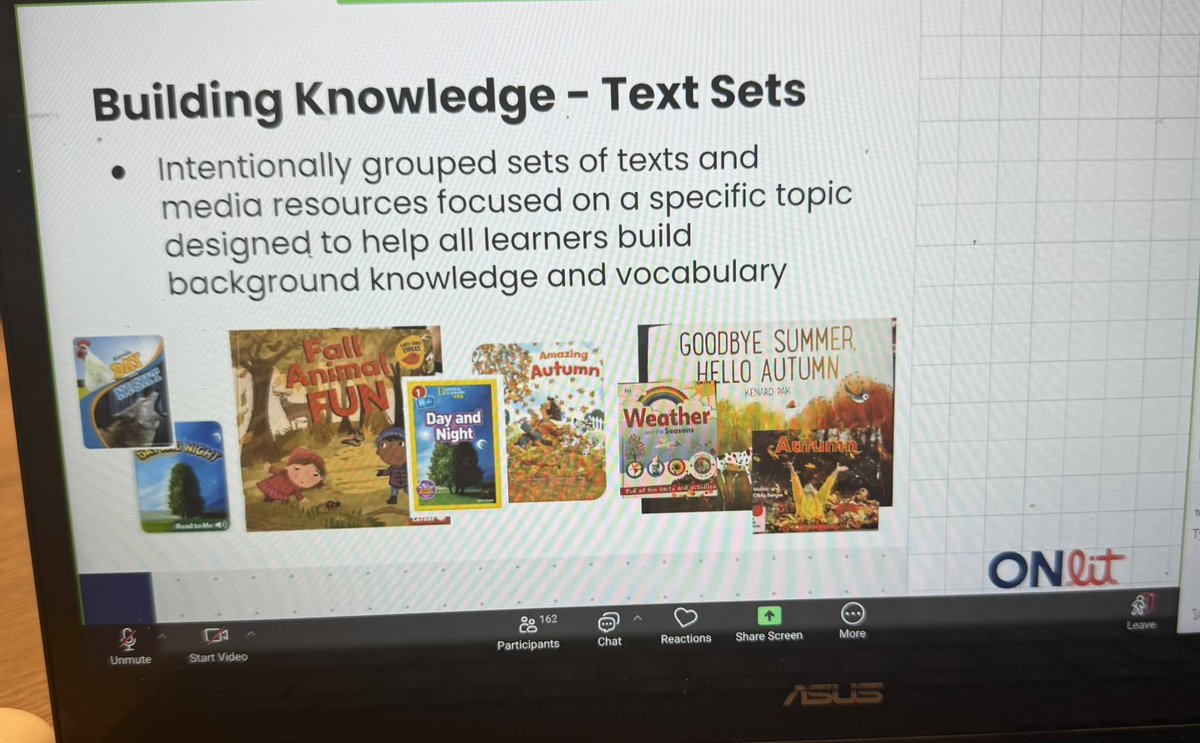
the essential role our Library Learning Commons and teacher-librarians play in curating rich, curriculum-aligned resources for all learners.
Themes are our labels.
| Theme | What teachers said | Who and when |
|---|---|---|
| Using knowledge and building concepts | students need to generate and practice the information, and the concepts need to be built up carefully. | @oliviajune82Public opinion excerpt17 January 2026 (UTC)Post by @oliviajune82, 17 January 2026 (UTC) |
| Leveled libraries still have a place | My opinion, there’s still a place for leveled libraries. But I would start putting together content related text sets too. | @ChaninJeffPublic opinion excerpt15 August 2026 (UTC)Post by @ChaninJeff, 15 August 2026 (UTC) |
| Volume through vocabulary-controlled text sets | My philosophy is to incorporate 3 components for primary reading. | @ChaninJeffPublic opinion excerpt24 November 2025 (UTC)Post by @ChaninJeff, 24 November 2025 (UTC) |
| Leveled texts can still scaffold a set | Choosing sensible books for independent reading and using leveled texts as scaffolds or part of text sets may still be useful. | @JeffChaninPublic opinion excerpt30 August 2026 (UTC)Post by @JeffChanin, 30 August 2026 (UTC) |
| Connected texts, not isolated skills | Quad text sets help students build knowledge, vocabulary, comprehension, & critical thinking through connected texts. | @LiteracyLoveEdSPublic opinion excerpt14 August 2026 (UTC)Post by @LiteracyLoveEdS, 14 August 2026 (UTC) |
| Plays in a text set got them reading | The students have been wanting to act out their parts and it has been a blast to see their enthusiasm! | @BethmannDuelloPublic opinion excerpt24 October 2025 (UTC)Post by @BethmannDuello, 24 October 2025 (UTC) |