Objects of Reference: The Complete Teacher's Guide to Tactile CommunicationObjects of Reference: The Complete Teacher's Guide to Tactile Communication - educational concept illustration

Updated on  

January 23, 2026

Objects of Reference: The Complete Teacher's Guide to Tactile Communication

|

January 16, 2026

Use Objects of Reference effectively with this complete guide for PMLD and sensory impairment. Learn how to choose, introduce, and use tactile symbols for communication.

Course Enquiry
Copy citation

Main, P. (2026, January 20). Objects of Reference: The Complete Teacher's Guide to Tactile Communication. Retrieved from https://www.structural-learning.com/post/objects-reference-complete-teachers-guide

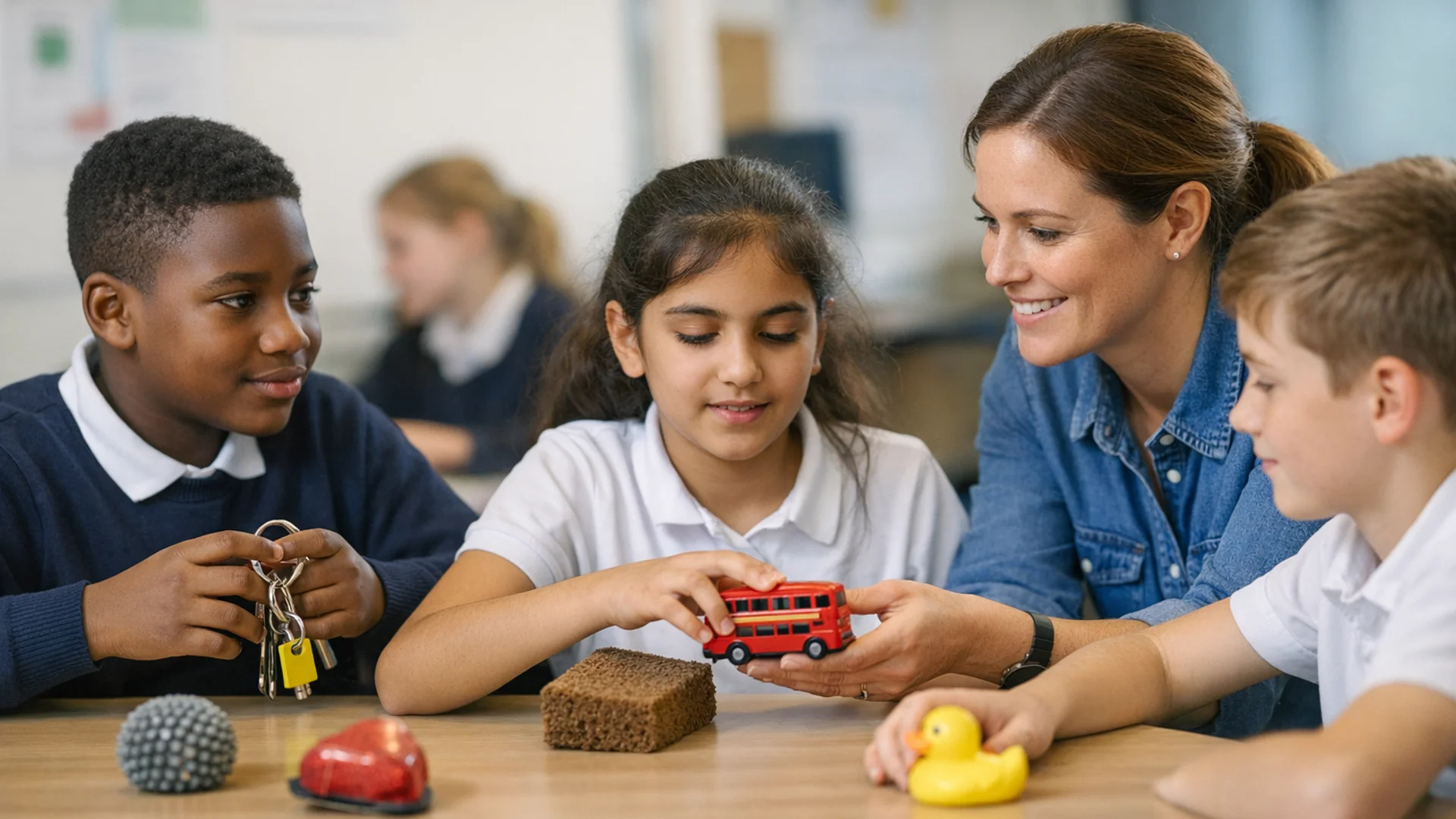
Objects of Reference are tangible items used alongside spoken language to represent activities, people, places, or events. For children with profound and multiple learning difficulties, sensory impairments, or significant communication needs, these physical objects provide a concrete way to understand what is happening, what is about to happen, and to communicate their own choices. This approach bridges the gap between the abstract world of words and the concrete world that these learners can touch, hold, and explore.

Key Takeaways

  1. Concrete Before Abstract: Understanding real objects is the first stage of symbolic development. For learners who cannot process pictures, symbols, or words, objects provide the most accessible form of communication support
  2. Consistency is Everything: The same object must represent the same thing, every time, with everyone. A cup that signals "drink time" must be that specific cup, used in the same way, by all adults working with the child
  3. Part of the Activity, Not Separate From It: The best objects of reference are items actually used in the activity. The cup used for drinking signals drink time. The swimming costume signals swimming. This natural connection supports understanding
  4. Active Exploration Required: Simply showing an object is not enough. The learner needs time to hold, feel, and explore the object while hearing the associated words. Rushing this exploration undermines the approach
Objects of Reference: From Concrete to Communication infographic for teachers
Objects of Reference: From Concrete to Communication

Key Takeaways

  • Concrete Before Abstract: Understanding real objects is the first stage of symbolic development. For learners who cannot process pictures, symbols, or words, objects provide the most accessible form of communication support
  • Consistency is Everything: The same object must represent the same thing, every time, with everyone. A cup that signals "drink time" must be that specific cup, used in the same way, by all adults working with the child
  • Part of the Activity, Not Separate From It: The best objects of reference are items actually used in the activity. The cup used for drinking signals drink time. The swimming costume signals swimming. This natural connection supports understanding
  • Active Exploration Required: Simply showing an object is not enough. The learner needs time to hold, feel, and explore the object while hearing the associated words. Rushing this exploration undermines the approach
  • What Are Objects of Reference?

    Objects of Reference are physical items that represent activities, people, places, or events for individuals with communication difficulties. These tangible objects provide concrete communication support for learners with profound learning difficulties, autism, or sensory impairments. They reduce anxiety and enable choice-making through tactile exploration.

    Infographic showing 4 essential principles for using Objects of Reference in tactile communication
    4 Essential Principles for Using Objects of Reference

    Objects of Reference (OOR) are physical objects that represent something else: an activity, a person, a place, or an event. They are used as a communication system with individuals who have not yet developed, or cannot access, more abstract forms of communication like speech, signs, or symbols.

    At their simplest level, Objects of Reference help individuals understand what is about to happen. A spoon presented before lunch signals "it is time to eat." A towel before bathtime signals "we are going to have a bath." The object becomes a predictable cue that reduces anxiety and builds anticipation.

    At more developed levels, Objects of Reference can support:

    • Choice-making: Offering two objects allows the individual to indicate a preference
    • Requesting: The individual can fetch or touch an object to ask for something
    • Recall: Objects can help individuals remember and think about past events
    • Schedules: A sequence of objects can show what will happen during the day
    • The approach has its roots in work with deafblind children and adults, where tactile communication is essential. It is now widely used with anyone who needs concrete support to understand the world, including learners with:

      How Do Objects of Reference Work?

      Objects of Reference work by creating concrete links between physical items and their meanings through consistent use and tactile exploration. The learner handles the object whilst hearing associated words, building understanding through repeated exposure. This process develops from simple recognition to active communication and choice-making.

      The Link Between Object and Meaning

      For most people, words are arbitrary symbols. There is nothing about the word "cup" that tells you what it means. You learned this association through repeated experience.

      Objects of Reference create a more direct connection. The cup is not an arbitrary symbol for drinking; it is the actual thing used for drinking. This concrete link is much easier to learn than an arbitrary symbol.

      Over time, with consistent use, learners can begin to understand that the object represents the activity, not just that the object and activity go together. This is the beginning of symbolic understanding, which may eventually support the use of more abstract communication systems.

      Representation Hierarchy: Concrete to Abstract

      Objects of Reference sit within a hierarchy from most concrete to most abstract:

      | Level | Example | Abstraction |

      |-------|---------|-------------|

      | Real object used in activity | The actual cup used for drinking | Most concrete |

      | Real object associated with activity | A cup (not the one used for drinking) | Concrete |

      | Part of real object | Piece of cup material | More abstract |

      | Miniature object | Tiny toy cup | More abstract |

      | Photograph | Picture of cup | Abstract |

      | Symbol | Communication symbol for drink | Most abstract |

      Most learners using Objects of Reference will work at the most concrete level. Moving up the hierarchy happens gradually and only when the individual shows consistent understanding at the current level.

      Choosing Objects of Reference

      Effective Objects of Reference should be distinctive to touch, safe for exploration, and directly connected to the activity they represent. Choose items actually used in the activity rather than miniature versions. Objects must be consistent, durable, and accessible to the individual's physical abilities and sensory preferences.

      Principles for Selection

      Use objects from the activity itself:

      The most effective Objects of Reference are items actually used in the activity. If the object is genuinely part of what happens, the connection is natural and meaningful.

      | Activity | Good Object Choice | Reason |

      |----------|-------------------|--------|

      | Swimming | Swimming costume or goggle strap | Actually worn during swimming |

      | Dinner | The child's own plate | Used every day for eating |

      | Going outside | The child's coat | Put on before going out |

      | Music session | A shaker or tambourine | Played during music |

      | Physiotherapy | The ball used in sessions | Part of the actual activity |

      Consider sensory properties:

      Choose objects that the individual can perceive effectively:

      • For learners with visual impairments: focus on texture, weight, temperature, smell
      • For learners with hearing impairments: avoid sound-based cues alone
      • For learners with tactile sensitivities: consider what textures they tolerate

      Make objects distinctive:

      Each object should be clearly different from others in the system. If two objects feel similar, the learner may confuse them.

      Keep objects consistent:

      Once an object is chosen, it must stay the same. Do not substitute a different cup or a different coat. Consistency is essential for learning.

      Start Small: First Object Selection

      Begin with just a few objects for the most important daily activities:

      • Eating/drinking
      • Personal care (nappy change, toileting)
      • Going outside
      • A favourite activity

      Add new objects gradually as the individual demonstrates understanding of existing ones.

      Introducing Objects of Reference

      Objects of Reference introduction begins with presenting one object consistently before its associated activity, allowing thorough tactile exploration. The same object must be used by all team members in identical ways. Start with highly motivating activities and gradually expand the system once initial understanding develops.

      Basic Introduction Routine Steps

      Every time an activity occurs, follow this sequence:

    • Get the learner's attention: Say their name, touch them gently, wait for them to focus
    • Present the object: Hold it where they can perceive it, let them explore it
    • Name what will happen: Use simple, consistent language ("drink time", "going swimming")
    • Give time: Do not rush. Let the learner process the object and the words
    • Begin the activity: Move directly from the object presentation to the activity itself
    • Keep the object accessible: During the activity, the object remains available
    • Signal the end: When finished, the object is put away. This shows "finished"
    • Example: Introducing a Drink Object

      Activity: Morning drink of milk

      Object: The specific cup used for milk

      Routine:

      • Adult approaches child: "Maya, it is drink time"
      • Adult presents cup, lets Maya feel it, explores it with her
      • Adult says: "Drink. Milk."
      • Adult waits for any response (looking, reaching, vocalising)
      • Adult helps Maya to kitchen, cup comes too
      • Drink happens with the cup
      • Afterwards, cup is washed and put in its specific place
      • Adult says: "Finished. Drink finished."

      This exact routine happens every single time, with every adult who gives Maya a drink.

      Building Understanding Through Repetition

      Signs that understanding is developing:

      • The learner shows anticipation when the object is presented (excitement, stillness, change in body language)
      • The learner reaches for or touches the object
      • The learner looks towards where the activity happens
      • The learner becomes calmer (because they now know what is happening)
      • The learner resists if they do not want the activity (showing they understand what is being offered)

      These responses may be subtle and require careful observation.

      4 Levels of Objects of Reference Development infographic for teachers
      4 Levels of Objects of Reference Development

      Using Objects for Transitions and Choices

      Signal Transitions with Objects

      Objects of Reference are powerful for helping learners manage transitions between activities:

    • Warning: Show the object for what is ending ("nearly finished play")
    • Transition object: Give the object for what is next
    • Moving: The learner carries or holds the object as they move to the new activity
    • Arrival: The object is used in, or placed at, the new activity location
    • This sequence gives the learner information, time to process, and a physical connection between locations.

      Support Choice-Making with Objects

      Once learners understand that objects represent activities, two objects can be offered to allow choice:

      • Present two objects (e.g., swimming costume and paintbrush)
      • Wait for a response: reaching, looking, vocalising
      • Accept the choice and follow through immediately
      • If no clear choice is made, make the choice for them (but keep offering opportunities)

      Start with choices between a highly preferred and less preferred activity. This makes the purpose of choosing clearer.

      Create Daily Object Schedules

      A series of objects can show the sequence of events:

      • Objects arranged in a box, left to right or top to bottom
      • Learner takes first object, does that activity
      • Object is then placed in "finished" box/location
      • Return to schedule, take next object
      • Repeat through the day

      This requires significant understanding and should only be attempted after success with single objects.

      Represent People with Personal Objects

      Objects can represent specific people:

      | Person | Object | Reason |

      |--------|--------|--------|

      | Mum | Mum's scarf | Smells of mum, tactile |

      | Physiotherapist | Ball used in sessions | Associated with that person |

      | Teacher | Specific lanyard or keyring | Always worn by teacher |

      | Swimming instructor | Goggles | Associated with swimming and person |

      This helps learners understand who they will see and when.

      School Implementation and Team Coordination

      Team Approach: Consistent Object Use

      Everyone working with the learner must:

      • Know which objects are used
      • Use objects consistently
      • Follow the same routine
      • Document any responses
      • Communicate with colleagues and family

      Objects of Reference fail when adults forget to use them, use them inconsistently, or use different objects for the same activity.

      Organise Objects: Storage and Access

      Storage: Keep objects in a consistent, accessible place. Many settings use:

      • An object bag or box that travels with the learner
      • A dedicated shelf with object slots
      • Objects attached to velcro boards

      Documentation: Create a record showing:

      • Each object and what it represents
      • The exact words used with each object
      • Any special considerations (how to present, what responses to expect)
      • Photos for training new staff

      Communication with families: Ensure the same objects (or identical ones) are used at home. Provide training and support to families.

      Link Objects to Communication Methods

      Objects of Reference can work alongside:

      • On-body signing (TASSELS): Sign on the learner's body while presenting the object
      • Intensive Interaction: Use objects within responsive, playful interactions
      • Sensory stories: Objects become props that represent story elements
      • PECS: For learners ready for more abstraction, objects can transition to photographs then symbols

      Common Challenges and Solutions

      Common Objects of Reference challenges include inconsistent use between staff members, rushing exploration time, and choosing inappropriate objects. Solutions involve establishing clear protocols, ensuring adequate handling time, selecting distinctive tactile items, and maintaining consistent approaches across all environments and team members.

      No Response: Troubleshooting Tips

      Possible causes:

      • Object is not meaningful to the learner
      • Presentation is too fast
      • Learner cannot perceive the object effectively
      • Learner is not yet ready for object-based communication

      Solutions:

      • Choose a more motivating activity/object
      • Slow down, give more time
      • Check sensory access (can they see/feel/hear it?)
      • Focus on building engagement through Intensive Interaction first

      Object Confusion: Solutions and Prevention

      Possible causes:

      • Objects are too similar
      • Too many objects introduced too quickly
      • Inconsistent use by adults

      Solutions:

      • Choose more distinctive objects
      • Reduce to fewer objects
      • Audit consistency across team

      Inconsistent Objects: Team Solutions

      Possible causes:

      • Poor communication between staff
      • Lack of documentation
      • Staff turnover

      Solutions:

      • Create clear Object of Reference record
      • Include in induction training
      • Regular team reviews
      • Object stays with learner, not in classroom

      PMLD Curriculum Integration Strategies

      For learners with profound and multiple learning difficulties, Objects of Reference form a key part of the communication curriculum:

      Early stages:

      • Tolerating objects being presented
      • Beginning to respond to familiar objects
      • Associating objects with activities

      Developing stages:

      • Anticipating activities from objects
      • Using objects during activities
      • Accepting objects during transitions

      More developed stages:

      • Reaching for/choosing objects
      • Carrying objects to activity locations
      • Protesting using objects (refusing object they do not want)

      Assessment frameworks like Routes for Learning and Quest for Learning include specific indicators related to object-based communication.

      What are Objects of Reference? A Complete Definition

      Objects of Reference are physical items used as communication tools to represent activities, people, places, routines, or concepts for learners who struggle with abstract forms of communication. Unlike pictures or symbols, these concrete objects can be touched, held, and explored, making them accessible to pupils with severe learning difficulties, sensory impairments, or complex communication needs.

      At their core, Objects of Reference work because they connect directly to the learner's sensory experience. A child who cannot understand the spoken word "lunch" or recognise a picture of food can still understand that holding their special plate means it's time to eat. The object becomes a bridge between their concrete, sensory world and the abstract concepts we want to communicate.

      In practise, Objects of Reference take many forms. A piece of towelling might signal bath time; not just any fabric, but the specific texture and feel of that particular towel. A set of car keys could represent going home, whilst a small section of a swimming costume indicates swimming lessons. The crucial element is that these objects have clear, consistent meaning for the individual learner.

      This approach builds on Piaget's stages of cognitive development, recognising that understanding concrete objects precedes symbolic thinking. For many learners with profound disabilities, this concrete stage may extend well beyond typical developmental timelines. Objects of Reference respect this developmental reality whilst still enabling meaningful communication. They provide a way for pupils to anticipate what comes next, make choices about their day, and begin to communicate their own needs and preferences through selecting or rejecting specific objects.

      Objects of Reference Examples for Different Activities

      Selecting the right object of reference requires careful thought about what will be most meaningful to each learner. The most effective objects have a clear, logical connection to the activity they represent, making them easier for children to understand and remember.

      For daily routines, consider these practical examples. A spoon can signal mealtimes, particularly effective when it's the actual spoon the child will use. For toileting routines, a small piece of toilet paper or a miniature toilet seat works well; these items directly relate to the activity without being too abstract. When signalling outdoor play, a piece of artificial grass or a small ball provides tactile information about where the child is going and what they'll be doing.

      Curriculum activities benefit from equally thoughtful object choices. For music sessions, a bell or maraca that the child will actually use during the activity creates a natural link. Swimming can be represented by goggles or a piece of swimming costume fabric, whilst cooking activities might use a wooden spoon or a chef's hat. The key is ensuring the object is something the child will encounter during the actual activity.

      Transition times often prove challenging for learners with communication difficulties, but objects of reference can provide crucial support. A car key or piece of seatbelt webbing can signal home time, whilst a small backpack or lunch box indicates break time. For assembly, consider using a piece of carpet square if children sit on the floor, or a hymn book if that's part of the routine. These objects help children anticipate changes and feel more secure about what comes next, reducing anxiety and supporting smoother transitions throughout the school day.

      Step-by-Step Guide: How to Use Objects of Reference in the Classroom

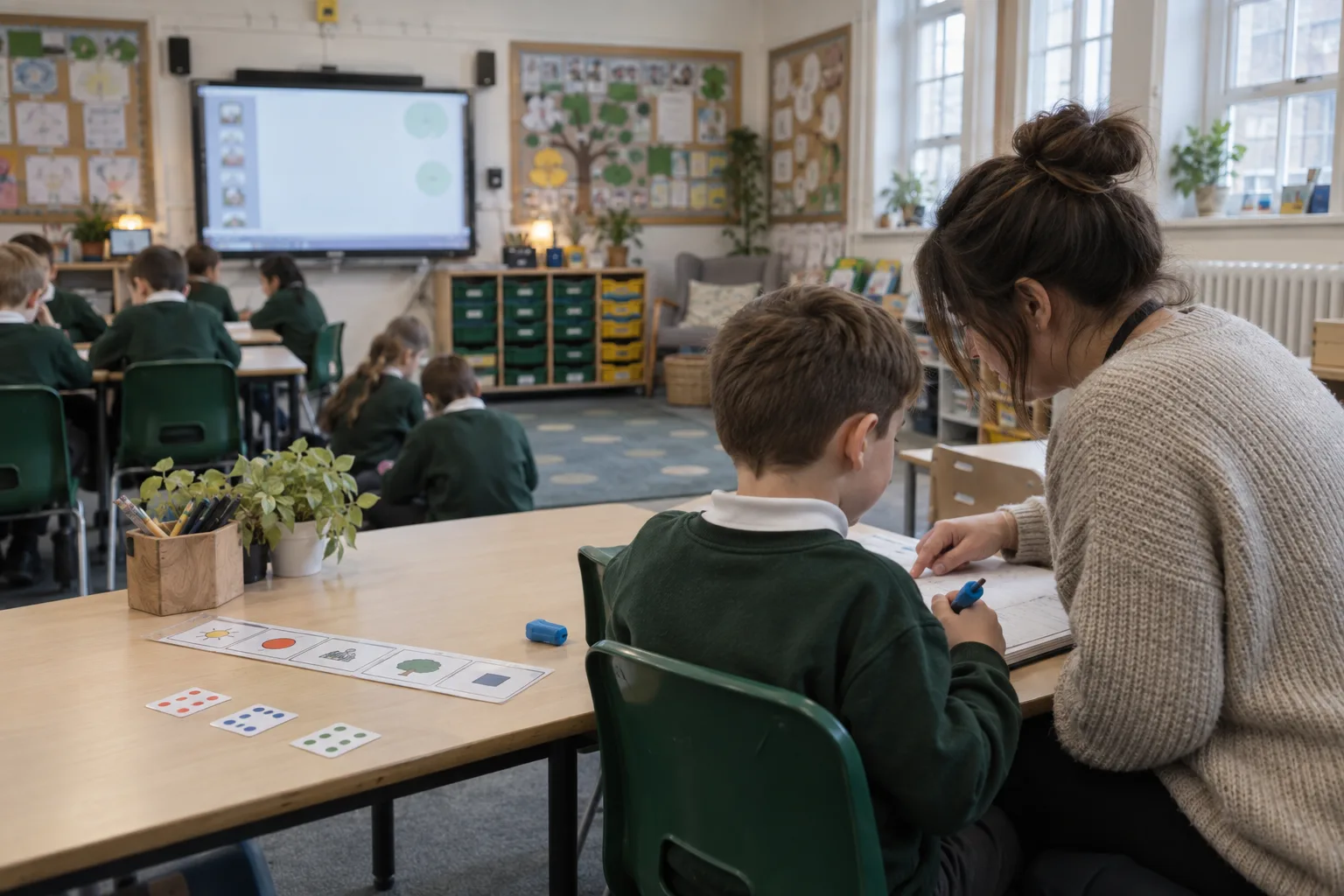
      Introducing objects of reference requires careful planning and consistent implementation across your classroom team. Success depends on following a structured approach that gives learners time to form meaningful connections between objects and their associated activities.

      Step 1: Choose Your First Object
      Start with one object for an activity the child enjoys and participates in daily. For example, if snack time is motivating, select a specific spoon or plate used only during this routine. The object should be distinctive; avoid items that appear elsewhere in the classroom for different purposes.

      Step 2: Introduce Through Natural Use
      Present the object immediately before the activity begins. Hold the spoon near the child, allowing them to touch and explore it whilst you say "snack time". Give at least 10-15 seconds for tactile exploration. Some children benefit from hand-under-hand support, where your hand guides theirs to feel the object's features.

      Step 3: Build Understanding Through Repetition
      Use the same routine every time: present object, allow exploration, name the activity, then immediately begin that activity. Research by Park (2019) suggests children need between 50-100 repetitions before showing clear recognition. Track responses such as reaching for the object, changes in alertness, or vocalisations.

      Step 4: Test for Understanding
      After several weeks of consistent use, present the object at an unexpected time. If the child shows anticipation of the associated activity through body language, facial expression, or movement towards the usual location, they're beginning to understand the connection.

      Remember to brief all staff, including supply teachers and support assistants, about which objects represent which activities. Create a visual reference chart for adults showing photographs of each object alongside its meaning, ensuring consistency across your team.

      Frequently Asked Questions

      How long does it take for learners to understand Objects of Reference?

      This varies enormously. Some learners show recognition after weeks of consistent use; others may take years. The key is consistency over time, not speed of progress.

      Can we use symbols if the learner does not understand Objects of Reference?

      No. If a learner does not understand concrete objects, they will not understand more abstract symbols. Work at the object level until consistent understanding is demonstrated.

      What if we cannot find an object for an activity?

      Be creative. Most activities have associated objects even if they are not obvious. For "time with mum," use something that smells of mum. For "quiet time," use a piece of blanket from the quiet area.

      Should we buy special Objects of Reference?

      Generally, no. The most effective objects come from the activity itself. Commercially available object sets are rarely as meaningful as items from the learner's actual life.

      How do we know when to add more objects?

      Add new objects when the learner shows consistent anticipation responses to existing objects. One sign of readiness is the learner protesting when shown an object for an activity they do not want.

      5 Essential Rules for Effective Object Use infographic for teachers
      5 Essential Rules for Effective Object Use

      Further Reading: Key Research Papers

      These peer-reviewed studies provide deeper insights into the research behind this topic:

      Lecture-Based and Project-Based Approaches to Instruction, Classroom Learning Environment, and Deep Learning
      6 citations

      Inthira Paleenud et al. (2024)

      This study compares lecture-based and project-based instruction to determine which classroom environments promote deep versus surface learning approaches in higher education. The research provides valuable insights for teachers seeking to create learning environments that encourage students to engage more meaningfully with content rather than simply memorising information. [Read the full study]

      How Effective is Differentiated Instruction Model for Special Needs Students? Perspectives of Inclusive Teachers
      4 citations

      Muksalmina Muksalmina et al. (2024)

      Research examining Indonesian inclusive teachers' perspectives reveals the effectiveness of differentiated instruction models for supporting special needs students in mainstream classrooms. This study offers practical guidance for teachers working in inclusive settings who need evidence-based strategies to meet diverse learning needs. [Read the full study]

      Exploring the Augmented and Alternative Communication (AAC) for Promoting Independence in Daily Skills of Students with Learning Disabilities
      2 citations

      Rozniza Zaharudin et al. (2023)

      This research explores how augmented and alternative communication (AAC) mobile apps can help students with learning disabilities develop both communication skills and independence in daily activities. The findings demonstrate the practical benefits of portable, customisable AAC tools for teachers supporting students with communication challenges. [Read the full study]

      The Impact of Digitalization on Improving Vocational Skills Mastery for Learning Disabilities Special Education Needs Students (SENs): A Literature Review Analysis
      2 citations

      Dhevendren Ayaoo et al. (2024)

      A comprehensive literature review analysing digital tools in vocational training programmes for students with learning disabilities shows promising potential for improving skills mastery. This research provides teachers and vocational educators with evidence about how digitalisation can address specific learning challenges in practical skill development. [Read the full study]

      Teachers’ Narratives on Implementing AI-Based Learning Tools for Students with Severe Disabilities
      2 citations

      Mehdi Rostami & Veronica Longo (2024)

      Teachers share their experiences implementing AI-based learning tools with students who have severe disabilities, revealing both challenges and positive impacts on student outcomes. This qualitative research offers valuable insights for special education teachers considering the integration of artificial intelligence technologies in their practise. [Read the full study]

      Summary

      Objects of Reference provide a concrete, tactile communication system for learners who cannot access more abstract forms of communication. By using real objects from real activities, presented consistently before, during, and at the end of events, adults help learners understand and predict their world.

      Success depends entirely on consistency. Every adult must use the same objects, the same routine, and the same language, every single time. When this happens, learners can develop genuine understanding that reduces anxiety, supports transitions, and may eventually lead to choice-making and requesting.

      For learners with profound and multiple learning difficulties, Objects of Reference are not a supplement to other communication but may be the foundation of all communication. Getting this right transforms the learner's experience of the world from unpredictable chaos to manageable, understandable routine.

    Loading audit...

    Objects of Reference are tangible items used alongside spoken language to represent activities, people, places, or events. For children with profound and multiple learning difficulties, sensory impairments, or significant communication needs, these physical objects provide a concrete way to understand what is happening, what is about to happen, and to communicate their own choices. This approach bridges the gap between the abstract world of words and the concrete world that these learners can touch, hold, and explore.

    Key Takeaways

    1. Concrete Before Abstract: Understanding real objects is the first stage of symbolic development. For learners who cannot process pictures, symbols, or words, objects provide the most accessible form of communication support
    2. Consistency is Everything: The same object must represent the same thing, every time, with everyone. A cup that signals "drink time" must be that specific cup, used in the same way, by all adults working with the child
    3. Part of the Activity, Not Separate From It: The best objects of reference are items actually used in the activity. The cup used for drinking signals drink time. The swimming costume signals swimming. This natural connection supports understanding
    4. Active Exploration Required: Simply showing an object is not enough. The learner needs time to hold, feel, and explore the object while hearing the associated words. Rushing this exploration undermines the approach
    Objects of Reference: From Concrete to Communication infographic for teachers
    Objects of Reference: From Concrete to Communication

    Key Takeaways

  • Concrete Before Abstract: Understanding real objects is the first stage of symbolic development. For learners who cannot process pictures, symbols, or words, objects provide the most accessible form of communication support
  • Consistency is Everything: The same object must represent the same thing, every time, with everyone. A cup that signals "drink time" must be that specific cup, used in the same way, by all adults working with the child
  • Part of the Activity, Not Separate From It: The best objects of reference are items actually used in the activity. The cup used for drinking signals drink time. The swimming costume signals swimming. This natural connection supports understanding
  • Active Exploration Required: Simply showing an object is not enough. The learner needs time to hold, feel, and explore the object while hearing the associated words. Rushing this exploration undermines the approach
  • What Are Objects of Reference?

    Objects of Reference are physical items that represent activities, people, places, or events for individuals with communication difficulties. These tangible objects provide concrete communication support for learners with profound learning difficulties, autism, or sensory impairments. They reduce anxiety and enable choice-making through tactile exploration.

    Infographic showing 4 essential principles for using Objects of Reference in tactile communication
    4 Essential Principles for Using Objects of Reference

    Objects of Reference (OOR) are physical objects that represent something else: an activity, a person, a place, or an event. They are used as a communication system with individuals who have not yet developed, or cannot access, more abstract forms of communication like speech, signs, or symbols.

    At their simplest level, Objects of Reference help individuals understand what is about to happen. A spoon presented before lunch signals "it is time to eat." A towel before bathtime signals "we are going to have a bath." The object becomes a predictable cue that reduces anxiety and builds anticipation.

    At more developed levels, Objects of Reference can support:

    • Choice-making: Offering two objects allows the individual to indicate a preference
    • Requesting: The individual can fetch or touch an object to ask for something
    • Recall: Objects can help individuals remember and think about past events
    • Schedules: A sequence of objects can show what will happen during the day
    • The approach has its roots in work with deafblind children and adults, where tactile communication is essential. It is now widely used with anyone who needs concrete support to understand the world, including learners with:

      How Do Objects of Reference Work?

      Objects of Reference work by creating concrete links between physical items and their meanings through consistent use and tactile exploration. The learner handles the object whilst hearing associated words, building understanding through repeated exposure. This process develops from simple recognition to active communication and choice-making.

      The Link Between Object and Meaning

      For most people, words are arbitrary symbols. There is nothing about the word "cup" that tells you what it means. You learned this association through repeated experience.

      Objects of Reference create a more direct connection. The cup is not an arbitrary symbol for drinking; it is the actual thing used for drinking. This concrete link is much easier to learn than an arbitrary symbol.

      Over time, with consistent use, learners can begin to understand that the object represents the activity, not just that the object and activity go together. This is the beginning of symbolic understanding, which may eventually support the use of more abstract communication systems.

      Representation Hierarchy: Concrete to Abstract

      Objects of Reference sit within a hierarchy from most concrete to most abstract:

      | Level | Example | Abstraction |

      |-------|---------|-------------|

      | Real object used in activity | The actual cup used for drinking | Most concrete |

      | Real object associated with activity | A cup (not the one used for drinking) | Concrete |

      | Part of real object | Piece of cup material | More abstract |

      | Miniature object | Tiny toy cup | More abstract |

      | Photograph | Picture of cup | Abstract |

      | Symbol | Communication symbol for drink | Most abstract |

      Most learners using Objects of Reference will work at the most concrete level. Moving up the hierarchy happens gradually and only when the individual shows consistent understanding at the current level.

      Choosing Objects of Reference

      Effective Objects of Reference should be distinctive to touch, safe for exploration, and directly connected to the activity they represent. Choose items actually used in the activity rather than miniature versions. Objects must be consistent, durable, and accessible to the individual's physical abilities and sensory preferences.

      Principles for Selection

      Use objects from the activity itself:

      The most effective Objects of Reference are items actually used in the activity. If the object is genuinely part of what happens, the connection is natural and meaningful.

      | Activity | Good Object Choice | Reason |

      |----------|-------------------|--------|

      | Swimming | Swimming costume or goggle strap | Actually worn during swimming |

      | Dinner | The child's own plate | Used every day for eating |

      | Going outside | The child's coat | Put on before going out |

      | Music session | A shaker or tambourine | Played during music |

      | Physiotherapy | The ball used in sessions | Part of the actual activity |

      Consider sensory properties:

      Choose objects that the individual can perceive effectively:

      • For learners with visual impairments: focus on texture, weight, temperature, smell
      • For learners with hearing impairments: avoid sound-based cues alone
      • For learners with tactile sensitivities: consider what textures they tolerate

      Make objects distinctive:

      Each object should be clearly different from others in the system. If two objects feel similar, the learner may confuse them.

      Keep objects consistent:

      Once an object is chosen, it must stay the same. Do not substitute a different cup or a different coat. Consistency is essential for learning.

      Start Small: First Object Selection

      Begin with just a few objects for the most important daily activities:

      • Eating/drinking
      • Personal care (nappy change, toileting)
      • Going outside
      • A favourite activity

      Add new objects gradually as the individual demonstrates understanding of existing ones.

      Introducing Objects of Reference

      Objects of Reference introduction begins with presenting one object consistently before its associated activity, allowing thorough tactile exploration. The same object must be used by all team members in identical ways. Start with highly motivating activities and gradually expand the system once initial understanding develops.

      Basic Introduction Routine Steps

      Every time an activity occurs, follow this sequence:

    • Get the learner's attention: Say their name, touch them gently, wait for them to focus
    • Present the object: Hold it where they can perceive it, let them explore it
    • Name what will happen: Use simple, consistent language ("drink time", "going swimming")
    • Give time: Do not rush. Let the learner process the object and the words
    • Begin the activity: Move directly from the object presentation to the activity itself
    • Keep the object accessible: During the activity, the object remains available
    • Signal the end: When finished, the object is put away. This shows "finished"
    • Example: Introducing a Drink Object

      Activity: Morning drink of milk

      Object: The specific cup used for milk

      Routine:

      • Adult approaches child: "Maya, it is drink time"
      • Adult presents cup, lets Maya feel it, explores it with her
      • Adult says: "Drink. Milk."
      • Adult waits for any response (looking, reaching, vocalising)
      • Adult helps Maya to kitchen, cup comes too
      • Drink happens with the cup
      • Afterwards, cup is washed and put in its specific place
      • Adult says: "Finished. Drink finished."

      This exact routine happens every single time, with every adult who gives Maya a drink.

      Building Understanding Through Repetition

      Signs that understanding is developing:

      • The learner shows anticipation when the object is presented (excitement, stillness, change in body language)
      • The learner reaches for or touches the object
      • The learner looks towards where the activity happens
      • The learner becomes calmer (because they now know what is happening)
      • The learner resists if they do not want the activity (showing they understand what is being offered)

      These responses may be subtle and require careful observation.

      4 Levels of Objects of Reference Development infographic for teachers
      4 Levels of Objects of Reference Development

      Using Objects for Transitions and Choices

      Signal Transitions with Objects

      Objects of Reference are powerful for helping learners manage transitions between activities:

    • Warning: Show the object for what is ending ("nearly finished play")
    • Transition object: Give the object for what is next
    • Moving: The learner carries or holds the object as they move to the new activity
    • Arrival: The object is used in, or placed at, the new activity location
    • This sequence gives the learner information, time to process, and a physical connection between locations.

      Support Choice-Making with Objects

      Once learners understand that objects represent activities, two objects can be offered to allow choice:

      • Present two objects (e.g., swimming costume and paintbrush)
      • Wait for a response: reaching, looking, vocalising
      • Accept the choice and follow through immediately
      • If no clear choice is made, make the choice for them (but keep offering opportunities)

      Start with choices between a highly preferred and less preferred activity. This makes the purpose of choosing clearer.

      Create Daily Object Schedules

      A series of objects can show the sequence of events:

      • Objects arranged in a box, left to right or top to bottom
      • Learner takes first object, does that activity
      • Object is then placed in "finished" box/location
      • Return to schedule, take next object
      • Repeat through the day

      This requires significant understanding and should only be attempted after success with single objects.

      Represent People with Personal Objects

      Objects can represent specific people:

      | Person | Object | Reason |

      |--------|--------|--------|

      | Mum | Mum's scarf | Smells of mum, tactile |

      | Physiotherapist | Ball used in sessions | Associated with that person |

      | Teacher | Specific lanyard or keyring | Always worn by teacher |

      | Swimming instructor | Goggles | Associated with swimming and person |

      This helps learners understand who they will see and when.

      School Implementation and Team Coordination

      Team Approach: Consistent Object Use

      Everyone working with the learner must:

      • Know which objects are used
      • Use objects consistently
      • Follow the same routine
      • Document any responses
      • Communicate with colleagues and family

      Objects of Reference fail when adults forget to use them, use them inconsistently, or use different objects for the same activity.

      Organise Objects: Storage and Access

      Storage: Keep objects in a consistent, accessible place. Many settings use:

      • An object bag or box that travels with the learner
      • A dedicated shelf with object slots
      • Objects attached to velcro boards

      Documentation: Create a record showing:

      • Each object and what it represents
      • The exact words used with each object
      • Any special considerations (how to present, what responses to expect)
      • Photos for training new staff

      Communication with families: Ensure the same objects (or identical ones) are used at home. Provide training and support to families.

      Link Objects to Communication Methods

      Objects of Reference can work alongside:

      • On-body signing (TASSELS): Sign on the learner's body while presenting the object
      • Intensive Interaction: Use objects within responsive, playful interactions
      • Sensory stories: Objects become props that represent story elements
      • PECS: For learners ready for more abstraction, objects can transition to photographs then symbols

      Common Challenges and Solutions

      Common Objects of Reference challenges include inconsistent use between staff members, rushing exploration time, and choosing inappropriate objects. Solutions involve establishing clear protocols, ensuring adequate handling time, selecting distinctive tactile items, and maintaining consistent approaches across all environments and team members.

      No Response: Troubleshooting Tips

      Possible causes:

      • Object is not meaningful to the learner
      • Presentation is too fast
      • Learner cannot perceive the object effectively
      • Learner is not yet ready for object-based communication

      Solutions:

      • Choose a more motivating activity/object
      • Slow down, give more time
      • Check sensory access (can they see/feel/hear it?)
      • Focus on building engagement through Intensive Interaction first

      Object Confusion: Solutions and Prevention

      Possible causes:

      • Objects are too similar
      • Too many objects introduced too quickly
      • Inconsistent use by adults

      Solutions:

      • Choose more distinctive objects
      • Reduce to fewer objects
      • Audit consistency across team

      Inconsistent Objects: Team Solutions

      Possible causes:

      • Poor communication between staff
      • Lack of documentation
      • Staff turnover

      Solutions:

      • Create clear Object of Reference record
      • Include in induction training
      • Regular team reviews
      • Object stays with learner, not in classroom

      PMLD Curriculum Integration Strategies

      For learners with profound and multiple learning difficulties, Objects of Reference form a key part of the communication curriculum:

      Early stages:

      • Tolerating objects being presented
      • Beginning to respond to familiar objects
      • Associating objects with activities

      Developing stages:

      • Anticipating activities from objects
      • Using objects during activities
      • Accepting objects during transitions

      More developed stages:

      • Reaching for/choosing objects
      • Carrying objects to activity locations
      • Protesting using objects (refusing object they do not want)

      Assessment frameworks like Routes for Learning and Quest for Learning include specific indicators related to object-based communication.

      What are Objects of Reference? A Complete Definition

      Objects of Reference are physical items used as communication tools to represent activities, people, places, routines, or concepts for learners who struggle with abstract forms of communication. Unlike pictures or symbols, these concrete objects can be touched, held, and explored, making them accessible to pupils with severe learning difficulties, sensory impairments, or complex communication needs.

      At their core, Objects of Reference work because they connect directly to the learner's sensory experience. A child who cannot understand the spoken word "lunch" or recognise a picture of food can still understand that holding their special plate means it's time to eat. The object becomes a bridge between their concrete, sensory world and the abstract concepts we want to communicate.

      In practise, Objects of Reference take many forms. A piece of towelling might signal bath time; not just any fabric, but the specific texture and feel of that particular towel. A set of car keys could represent going home, whilst a small section of a swimming costume indicates swimming lessons. The crucial element is that these objects have clear, consistent meaning for the individual learner.

      This approach builds on Piaget's stages of cognitive development, recognising that understanding concrete objects precedes symbolic thinking. For many learners with profound disabilities, this concrete stage may extend well beyond typical developmental timelines. Objects of Reference respect this developmental reality whilst still enabling meaningful communication. They provide a way for pupils to anticipate what comes next, make choices about their day, and begin to communicate their own needs and preferences through selecting or rejecting specific objects.

      Objects of Reference Examples for Different Activities

      Selecting the right object of reference requires careful thought about what will be most meaningful to each learner. The most effective objects have a clear, logical connection to the activity they represent, making them easier for children to understand and remember.

      For daily routines, consider these practical examples. A spoon can signal mealtimes, particularly effective when it's the actual spoon the child will use. For toileting routines, a small piece of toilet paper or a miniature toilet seat works well; these items directly relate to the activity without being too abstract. When signalling outdoor play, a piece of artificial grass or a small ball provides tactile information about where the child is going and what they'll be doing.

      Curriculum activities benefit from equally thoughtful object choices. For music sessions, a bell or maraca that the child will actually use during the activity creates a natural link. Swimming can be represented by goggles or a piece of swimming costume fabric, whilst cooking activities might use a wooden spoon or a chef's hat. The key is ensuring the object is something the child will encounter during the actual activity.

      Transition times often prove challenging for learners with communication difficulties, but objects of reference can provide crucial support. A car key or piece of seatbelt webbing can signal home time, whilst a small backpack or lunch box indicates break time. For assembly, consider using a piece of carpet square if children sit on the floor, or a hymn book if that's part of the routine. These objects help children anticipate changes and feel more secure about what comes next, reducing anxiety and supporting smoother transitions throughout the school day.

      Step-by-Step Guide: How to Use Objects of Reference in the Classroom

      Introducing objects of reference requires careful planning and consistent implementation across your classroom team. Success depends on following a structured approach that gives learners time to form meaningful connections between objects and their associated activities.

      Step 1: Choose Your First Object
      Start with one object for an activity the child enjoys and participates in daily. For example, if snack time is motivating, select a specific spoon or plate used only during this routine. The object should be distinctive; avoid items that appear elsewhere in the classroom for different purposes.

      Step 2: Introduce Through Natural Use
      Present the object immediately before the activity begins. Hold the spoon near the child, allowing them to touch and explore it whilst you say "snack time". Give at least 10-15 seconds for tactile exploration. Some children benefit from hand-under-hand support, where your hand guides theirs to feel the object's features.

      Step 3: Build Understanding Through Repetition
      Use the same routine every time: present object, allow exploration, name the activity, then immediately begin that activity. Research by Park (2019) suggests children need between 50-100 repetitions before showing clear recognition. Track responses such as reaching for the object, changes in alertness, or vocalisations.

      Step 4: Test for Understanding
      After several weeks of consistent use, present the object at an unexpected time. If the child shows anticipation of the associated activity through body language, facial expression, or movement towards the usual location, they're beginning to understand the connection.

      Remember to brief all staff, including supply teachers and support assistants, about which objects represent which activities. Create a visual reference chart for adults showing photographs of each object alongside its meaning, ensuring consistency across your team.

      Frequently Asked Questions

      How long does it take for learners to understand Objects of Reference?

      This varies enormously. Some learners show recognition after weeks of consistent use; others may take years. The key is consistency over time, not speed of progress.

      Can we use symbols if the learner does not understand Objects of Reference?

      No. If a learner does not understand concrete objects, they will not understand more abstract symbols. Work at the object level until consistent understanding is demonstrated.

      What if we cannot find an object for an activity?

      Be creative. Most activities have associated objects even if they are not obvious. For "time with mum," use something that smells of mum. For "quiet time," use a piece of blanket from the quiet area.

      Should we buy special Objects of Reference?

      Generally, no. The most effective objects come from the activity itself. Commercially available object sets are rarely as meaningful as items from the learner's actual life.

      How do we know when to add more objects?

      Add new objects when the learner shows consistent anticipation responses to existing objects. One sign of readiness is the learner protesting when shown an object for an activity they do not want.

      5 Essential Rules for Effective Object Use infographic for teachers
      5 Essential Rules for Effective Object Use

      Further Reading: Key Research Papers

      These peer-reviewed studies provide deeper insights into the research behind this topic:

      Lecture-Based and Project-Based Approaches to Instruction, Classroom Learning Environment, and Deep Learning
      6 citations

      Inthira Paleenud et al. (2024)

      This study compares lecture-based and project-based instruction to determine which classroom environments promote deep versus surface learning approaches in higher education. The research provides valuable insights for teachers seeking to create learning environments that encourage students to engage more meaningfully with content rather than simply memorising information. [Read the full study]

      How Effective is Differentiated Instruction Model for Special Needs Students? Perspectives of Inclusive Teachers
      4 citations

      Muksalmina Muksalmina et al. (2024)

      Research examining Indonesian inclusive teachers' perspectives reveals the effectiveness of differentiated instruction models for supporting special needs students in mainstream classrooms. This study offers practical guidance for teachers working in inclusive settings who need evidence-based strategies to meet diverse learning needs. [Read the full study]

      Exploring the Augmented and Alternative Communication (AAC) for Promoting Independence in Daily Skills of Students with Learning Disabilities
      2 citations

      Rozniza Zaharudin et al. (2023)

      This research explores how augmented and alternative communication (AAC) mobile apps can help students with learning disabilities develop both communication skills and independence in daily activities. The findings demonstrate the practical benefits of portable, customisable AAC tools for teachers supporting students with communication challenges. [Read the full study]

      The Impact of Digitalization on Improving Vocational Skills Mastery for Learning Disabilities Special Education Needs Students (SENs): A Literature Review Analysis
      2 citations

      Dhevendren Ayaoo et al. (2024)

      A comprehensive literature review analysing digital tools in vocational training programmes for students with learning disabilities shows promising potential for improving skills mastery. This research provides teachers and vocational educators with evidence about how digitalisation can address specific learning challenges in practical skill development. [Read the full study]

      Teachers’ Narratives on Implementing AI-Based Learning Tools for Students with Severe Disabilities
      2 citations

      Mehdi Rostami & Veronica Longo (2024)

      Teachers share their experiences implementing AI-based learning tools with students who have severe disabilities, revealing both challenges and positive impacts on student outcomes. This qualitative research offers valuable insights for special education teachers considering the integration of artificial intelligence technologies in their practise. [Read the full study]

      Summary

      Objects of Reference provide a concrete, tactile communication system for learners who cannot access more abstract forms of communication. By using real objects from real activities, presented consistently before, during, and at the end of events, adults help learners understand and predict their world.

      Success depends entirely on consistency. Every adult must use the same objects, the same routine, and the same language, every single time. When this happens, learners can develop genuine understanding that reduces anxiety, supports transitions, and may eventually lead to choice-making and requesting.

      For learners with profound and multiple learning difficulties, Objects of Reference are not a supplement to other communication but may be the foundation of all communication. Getting this right transforms the learner's experience of the world from unpredictable chaos to manageable, understandable routine.

    SEND

    Back to Blog