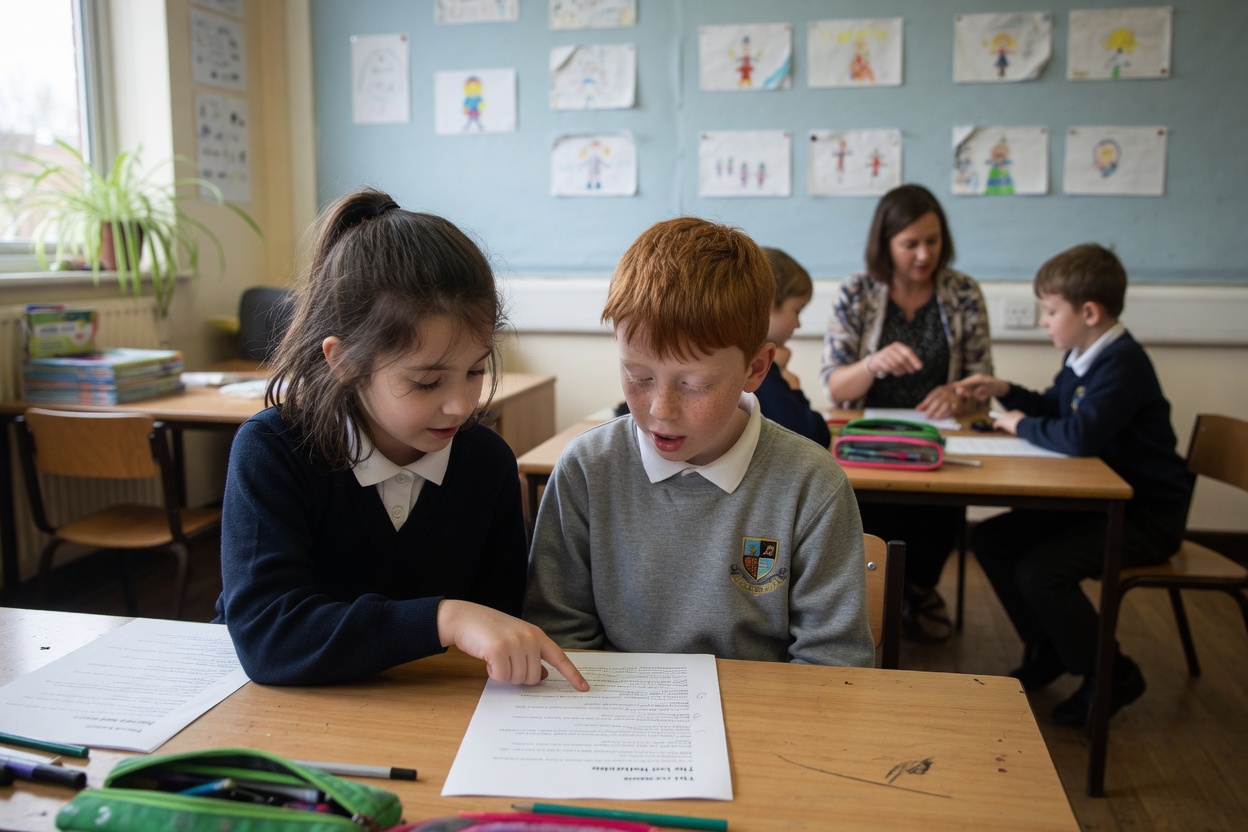
Top-Down Processing and Bottom-Up ProcessingPrimary students aged 7-9 in navy blazers using magnifying glasses for a sensory activity on top-down and bottom-up processing.

Updated on  

February 5, 2026

Top-Down Processing and Bottom-Up Processing

|

November 30, 2023

Explore the essentials of Top-Down and Bottom-Up Processing: how our brain interprets stimuli, from perception to cognition. Unveil the cognitive journey.

Course Enquiry
Copy citation

Main, P. (2023, November 30). Top-Down Processing and Bottom-Up Processing. Retrieved from https://www.structural-learning.com/post/top-down-processing-and-bottom-up-processing

What is Top-Down Processing?

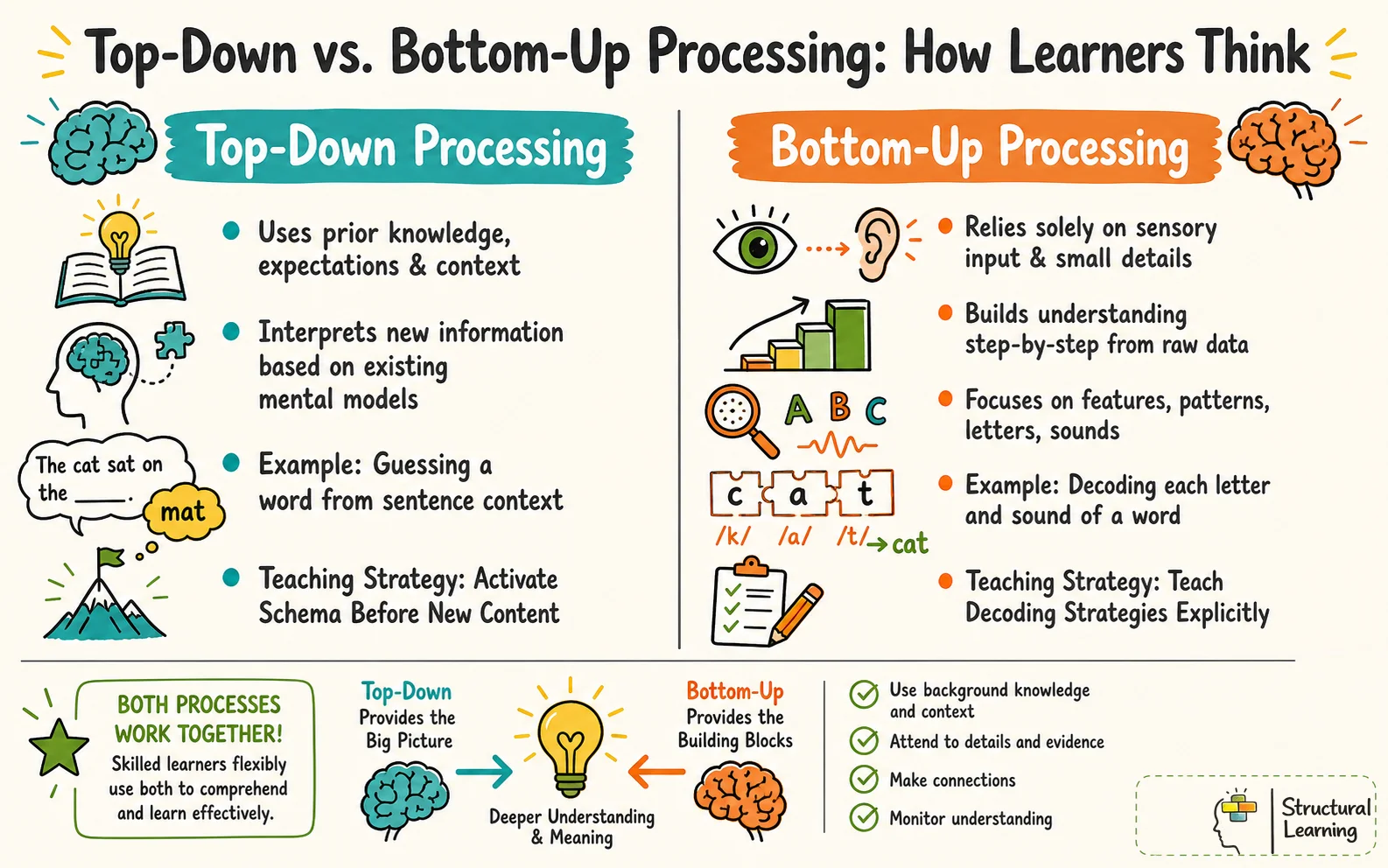
Top-down processing is a fundamental concept in cognitive psychology that describes how perception is influenced by our prior knowledge and expectations. It begins with the brain's existing knowledge, experiences, and expectations, which guide the interpretation of sensory information. Unlike bottom-up processing, which starts with raw sensory data and builds toward higher-level understanding, top-down processing flows in the opposite direction, starting with mental processes and influencing lower-level sensory functions.

Key Takeaways

  1. Top-down processing begins with higher-level cognitive functions and influences how we perceive sensory information
  2. Prior knowledge, experiences, and expectations shape our interpretation of the world, particularly in ambiguous situations
  3. Both top-down and bottom-up processes work together continuously, with neither operating in isolation during complex cognitive tasks
Side-by-side comparison of top-down vs bottom-up processing in cognitive psychology
Top-Down vs Bottom-Up Processing

At its core, top-down processing emphasises that perception isn't a passive reception of environmental stimuli. Instead, the brain actively interprets and organises sensory input based on what we already know. This predictive and interpretive mechanism plays a pivotal role in ambiguous or uncertain situations where sensory information is incomplete or unclear, allowing the brain to "fill in the gaps" and construct a coherent perception.

Top-down processes are integral to many cognitive tasks. For instance, when reading, comprehension relies on more than just decoding symbols. Context, prior knowledge, and expectations shape how we interpret words and sentences. Similarly, in attention tasks, top-down processing enables us to selectively focus on relevant stimuli, such as tuning out background noise to concentrate on a conversation or identifying key details in a complex visual scene. This goal-directed behaviour is central to navigating and making sense of our environments.

Comparison diagram showing top-down processing flowing from brain to senses versus bottom-up from senses to brain
Side-by-side comparison with directional arrows: Top-Down vs Bottom-Up Processing

In the broader context of neural systems, top-down processing helps prioritise and in alignment with our intentions and objectives. This control mechanism enables us to react purposefully rather than simply responding reflexively to sensory input. For example, a chess player uses top-down processing to predict an opponent's moves based on strategic patterns and experience, while someone navigating a noisy room uses it to concentrate on a specific conversation.

This article will further explore the mechanisms, examples, and applications of top-down processing in everyday life, highlighting its importance in understanding human perception and cognition. By examining the interplay between cognition and sensory input, we aim to uncover the sophisticated processes that shape how we perceive and interpret the world around us.

What Is Bottom-Up Processing in Psychology?

Bottom-up processing is a perceptual process that begins with sensory input and builds upward to form a complete perception. It starts when sensory receptors detect environmental stimuli and send this raw data to the brain for interpretation. This data-driven approach relies on the actual physical characteristics of stimuli rather than prior knowledge or expectations.

Bottom-up processing is a fundamental approach in cognitive psychology that characterises how sensory information is initially interpreted. This process begins at the sensory level, with the perception of stimuli leading to higher-level cognitive analysis. It's a pathway in which the brain makes sense of information as it comes in, from the bottom up to the higher processing centres in the cerebral cortex.

Comparison infographic showing top-down processing starting from brain vs bottom-up from senses
Processing Types

This method of perceptual processing is data-driven and relies heavily on the details coming in through our senses. When information hits our sensory receptors, such as the eyes or ears, it's sent directly to the relevant areas, like the auditory cortex for sound, where it's processed further. Bottom-up processing allows us to understand and interact with the environment without preconceived notions influencing our perception.

The neural mechanisms involved in bottom-up processing are intricate and precise. They provide the neural basis for basic perceptual tasks and are essential for responding to new and unexpected stimuli. When we encounter something novel, it's the bottom-up control that ensures we can notice and react to it without the influence of prior knowledge or beliefs.

In emotional processing, for instance, the immediate, unfiltered emotional response we feel is often a result of bottom-up processes. It's only later that top-down processes might step in to modulate that response based on context or social norms.

Bottom-up and top-down processes aren't mutually exclusive; they often work in tandem to create a complete picture of our environment. Bottom-up processing is the foundation upon which top-down processes can apply thei r interpretive context, making the interplay between them a cornerstone of cognitive function.

To encapsulate, here are three pivotal points:

  • Bottom-up processing is initiated by the stimulus itself and progresses towards higher-level cognitive functions, with the cerebral cortex playing a crucial role in interpretation.
  • It's the primary system engaged in perceptual processing, laying the groundwork before top-down processes contribute with context and expectations.
  • The neural mechanisms of bottom-up processing ensure a direct, unbiased approach to sensory information, providing bottom-up control that's essential for responding to new stimuli.
Top-Down Processing and Bottom-Up Processing

Comparison: Top-Down vs Bottom-Up Processing

Aspect Top-Down Processing Bottom-Up Processing
Starting Point Begins with prior knowledge, expectations, and mental models Begins with raw sensory data from the environment
Direction of Flow Flows from brain to sensory interpretation Flows from senses to higher brain areas
Influenced By Context, experience, motivation, beliefs, and expectations Physical properties of stimuli and sensory receptors
Primary Function Interprets ambiguous information; fills in gaps; guides attention Detects and processes new or unexpected stimuli
Example Reading degraded text by using context to predict missing letters Identifying individual letters based on their visual features
Role in Learning Connects new information to existing schemas and knowledge Provides detailed sensory input for accurate perception
Strength Efficient for familiar situations; allows quick interpretation Unbiased; accurate for novel or unexpected information
Limitation Can lead to errors, biases, or visual illusions Slower; may miss contextual meaning without top-down input

How Does the Brain Process Visual Information?

The brain processes visual information through a complex network involving the eyes, optic nerves, and multiple brain regions including the visual cortex. Visual data travels from the retina through the optic nerve to the thalamus, then to the primary visual cortex where features like edges, colors, and motion are analysed. Higher brain areas then integrate this information with memory and context to create our conscious visual experience.

The human brain and visual perception are complex and fascinating topics that explore the intricate relationship between the brain and how it processes and interprets visual information. As one of the most sophisticated organs in the human body, the brain plays a crucial role in visual perception, influencing our ability to see, recognise, and understand the world around us.

Understanding the mechanisms behind visual perception can provide valuable insights into how the brain processes visual stimuli, perceives depth and distance, recognises patterns and shapes, and even how it can be affected by optical illusions and visual biases.

These topics are essential to understanding the complexities of human vision and how the brain processes and interprets visual information, offering valuable implications in fields such as psychology, neuroscience, and even technology development.

Electrical Impulses in the Brain

Electrical impulses in the brain play a crucial role in transmitting information between neurons, which allows for various brain functions such as movement, sensation, thoughts, and emotions. These impulses are generated when a neuron receives a chemical signal from another neuron, causing a change in the neuron's electrical charge.

This change in electrical charge then triggers an electrical impulse that travels down the neuron's axon and releases neurotransmitters at the synapse, which then bind to the receptors of the next neuron, continuing the transmission of the signal.

Neurotransmitters, such as dopamine, serotonin, and acetylcholine, play a significant role in generating and transmitting these electrical impulses. They act as chemical messengers that facilitate communication between neurons, influencing mood, behaviour, and cognition.

Abnormal electrical activity in the brain, such as seizures or epilepsy, can have a significant impact on brain function and overall health. It can lead to disruptions in normal brain processes, causing symptoms such as loss of consciousness, muscle spasms, and changes in behaviour. Understanding the role of electrical impulses and neurotransmitters in neuron communication is crucial for developing treatments for neurological disorders and maintaining brain health.

Visual Cortex and Sensory Receptors

Experimental design is essential in manipulating attentional and grouping processes to influence competition within the visual cortex. Visual stimuli are carefully selected and presented in a controlled manner to evoke specific responses from the sensory receptors in the visual cortex.

The manipulation of attentional processes through instructions or cues directs the focus of participants towards certain visual stimuli, influencing the degree of competition within the visual cortex.

Additionally, grouping visual stimuli into strong, weak, or no grouping conditions can also impact the level of competition within the visual cortex. In sequential presentation conditions, the manipulation of attentional processes and grouping effects can have a different impact compared to simultaneous presentation conditions.

Stronger grouping and focused attention can reduce competition, while weaker grouping and divided attention can increase competition within the visual cortex. Overall, the experimental design, visual stimuli, attentional processes, and grouping effects collectively influence competition within the visual cortex.

Previous Knowledge Influences on Perception

Previous knowledge influences perception in several ways. Our existing knowledge, beliefs, and experiences shape how we interpret and make sense of sensory information. For example, our predisposition to perceive faces impacts our ability to recognise ambiguous shapes, as our brains often try to fit incoming stimuli into familiar patterns.

Additionally, our expectations influenced by previous knowledge can lead us to perceive things that aren't actually present, a phenomenon known as top-down processing.

Context, motivation, and emotional state also play a significant role in top-down processing. The context in which we encounter stimuli can heavily influence how we perceive them, as well as our motivation and emotional state at the time. These factors can bias our perceptions and shape our overall perceptual experiences.

Understanding the interplay between top-down and bottom-up processing is also crucial in understanding sensory processing disorders, such as dyslexia. Dyslexia involves a disruption in the processing of visual and auditory information, which can be influenced by both top-down factors (such as prior knowledge and expectations) and bottom-up factors (sensory cues).

By understanding this interplay, we can gain insights into how to effectively support individuals with such conditions.


Role of Top-down Processing in Visual Attention

Top-down processing significantly influences in visual attention by influencing perception and allocating attentional resources. Expectations and prior knowledge guide top-down processing, allowing individuals to quickly interpret sensory input through the lens of their existing beliefs and expectations.

For example, if someone expects to see a friend at a crowded party, they're more likely to effortlessly spot their friend in the crowd because their expectations have influenced their attention.

This process allows for efficient allocation of attentional resources, as individuals can quickly focus on relevant information based on their expectations and prior knowledge. Motivation and bias can also influence top-down processing, shaping perception and attention.

For example, a person motivated to find their keys may quickly spot them on a cluttered table, while someone biased against a certain idea may pay less attention to information that contradicts their beliefs.

top-down processing in visual attention allows for quick interpretation of sensory input through the influence of expectations, prior knowledge, motivation, and bias. These factors play a significant role in shaping perception and guiding attentional resources.

How Do Top-Down and Bottom-Up Processing Work Together?

Top-down and bottom-up processing work simultaneously to create our perceptual experience, with sensory data meeting expectations and knowledge in a continuous feedback loop. For example, when reading degraded text, bottom-up processing identifies letter shapes while top-down processing uses context to predict missing letters. This interaction allows us to perceive accurately even with incomplete or ambiguous sensory information.

When it comes to problem-solving and decision-making, there are two main approaches that are often used: top-down and bottom-up processes. These two methods can work together to provide a more comprehensive and effective solution to various challenges.

While top-down processes involve starting with a broad overview and then narrowing down to the specifics, bottom-up processes begin with the specifics and then build up to a broader understanding.

By combining these approaches, organisations and individuals can take advantage of both the big-picture perspective and the detailed insights, resulting in more informed and successful outcomes. This collaboration of top-down and bottom-up processes is especially beneficial in strategic planning, project management, and complex problem-solving scenarios, as it allows for a comprehensive understanding of the situation and a more well-rounded approach to finding solutions.

The following examples demonstrate the continuous interaction between top-down and bottom-up processes, emphasising how our expectations, knowledge, and experience shape the way we perceive the world through our sensory systems.

1. Language Comprehension:

A person reads a sentence with ambiguous meaning. The bottom-up process of decoding the words (sensory processing) works in conjunction with the top-down influence of context and prior knowledge to derive the intended meaning.

2. Object Recognition:

When identifying a partially obscured object, the bottom-up control from the visual information available interacts with the top-down effects of memory and experience to recognise the object as a whole.

3. Listening in a Noisy Environment:

At a loud party, the ability to focus on a single conversation is a top-down process guided by attention, while the bottom-up process involves the auditory cortex filtering and processing the sound waves.

4. Driving in Fog:

Navigating a car in foggy conditions involves sensory processing (bottom-up) of the limited visual cues available, with the top-down control of expectations and driving experience filling in the gaps of the obscured environment.

5. Emotional Reaction to Music:

The immediate emotional response to a piece of music is a bottom-up process, while the top-down influence can alter perception based on one's cultural background or familiarity with the genre.

6. Learning a New Skill:

As someone learns to play an instrument, initial bottom-up and top-down processing work together, with bottom-up control from reading notes and the top-down way of understanding musical theory.

7. Perceptual Set in Visual Illusions:

Visual illusions often play on expectation (top-down) versus actual sensory input (bottom-up), where the neural systems integrate both to form a perception that may be at odds with reality.

8. Search and Find Puzzles:

Looking for a hidden object in a complex image requires top-down processes of what the object looks like while scanning the picture in a bottom-up process.

9. Expertise in Chess:

An expert chess player uses a top-down process of strategy and anticipation while also processing the current positions of pieces in a bottom-up fashion.

10. Stargazing:

Identifying constellations in the night sky involves top-down and bottom-up processes working together; knowledge of star patterns (top-down) and the visual identification of stars (bottom-up).

Bottom-Up Processing

Complex Tasks Requiring Both Processes

Complex tasks often require both bottom-up and top-down processing to be successfully completed. Bottom-up processing involves taking in sensory information and processing it to form a coherent understanding of the task at hand. Top-down processing, on the other hand, involves using pre-existing knowledge and context to guide understanding and execution of the task.

For example, driving a car is a complex task that requires both processes. Bottom-up processing involves processing the visual information from the road, other cars, and traffic signals. Top-down processing involves using prior knowledge and experience to make decisions, such as knowing to brake when approaching a red light.

The interplay between these two processes occurs in a continuous loop. As new sensory information is processed bottom-up, it can influence and update the top-down understanding of the task, and vice versa.

Strategies for influencing perception in learning complex tasks can use both bottom-up and top-down processing. For instance, providing clear and organised instructions (top-down) can help structure the learning process, while hands-on experience and practice (bottom-up) can solidify understanding and improve skill acquisition.

complex tasks require the dynamic interplay between bottom-up and top-down processing, and using both processes can lead to effective learning and execution of these tasks.

Top Down and Bottom Up in Reading

Selective Attention Driven by Both Processes

Selective attention, a key concept in cognitive psychology, is driven by both top-down and bottom-up processes. Top-down processes are influenced by an individual's internal goals, beliefs, and expectations. For example, if someone is searching for their friend in a crowded room, their internal goal of finding their friend will drive their attention towards faces and clothing similar to what their friend typically wears.

On the other hand, bottom-up processes are driven by external stimuli and sensory information. For instance, a sudden loud noise or a bright flash of light will automatically capture attention regardless of internal goals.

Both top-down and bottom-up processes work together to determine what information is selected for further processing. The individual's internal goals and expectations shape their attentional focus, but external stimuli can also unexpectedly grab their attention.

As a result, selective attention is a dynamic interplay between top-down and bottom-up processes, with both playing a role in determining what information is prioritised for further cognitive processing.

Initial Impressions Influenced by Top-Down Factors

Initial impressions can be strongly influenced by top-down factors such as context, motivation, and prior knowledge. Context plays a significant role in shaping our perceptions, as the environment and situation in which we encounter new sensory information can heavily influence how we interpret it. For example, seeing someone in a white coat may lead us to assume they're a doctor in a hospital setting, but if we saw the same person at a fashion show, we might interpret them as a designer.

Motivation also is fundamental to in shaping initial impressions. If we're motivated to perceive a particular outcome, we may interpret sensory information in a way that aligns with that motivation. Our prior knowledge also significantly shapes our perceptions. We tend to interpret new sensory information based on our past experiences and existing beliefs, which leads to a tendency to fill in gaps in information with our pre-existing knowledge and assumptions.

Overall, top-down processing heavily influences our initial impressions, as context, motivation, and prior knowledge all play a significant role in shaping how we perceive and interpret new sensory information.

Concept map showing top-down vs bottom-up processing in cognitive psychology with visual comparison of perception pathways
Top-Down Processing and Bottom-Up Processing - Visual Overview

Why Do Visual Illusions Occur Due to Top-Down Processing?

Visual illusions occur when our brain's expectations and prior knowledge override or misinterpret actual sensory input. The brain uses past experiences and contextual cues to make predictions about what we're seeing, which can lead to systematic errors in perception. Classic examples include seeing faces in clouds or misreading ambiguous figures based on surrounding context.

Visual illusions are fascinating phenomena that occur when our brains interpret sensory information in an unexpected way. One of the key factors in creating visual illusions is the role of top-down effects, which refers to the influence of our prior knowledge, expectations, and beliefs on how we perceive visual stimuli.

By understanding the mechanisms behind these illusions, we can gain insights into the complexities of human perception and the ways in which our minds can play tricks on us.

Examples of Illusions Caused by Top-Down Attention

Illusions are often caused by top-down attention, where our existing knowledge and expectations shape how we perceive sensory input. For example, the Müller-Lyer illusion, where two lines of the same length appear to be of different lengths due to the addition of inward or outward facing arrows, is influenced by our learned perception of depth cues.

Another example is the Ponzo illusion, where two identical lines appear to be of different lengths due to the addition of converging lines, which triggers our expectation of distance and size.

Top-down attention plays a significant role in creating these illusions as our brain relies on past experiences and expectations to interpret sensory input. In the case of the Müller-Lyer illusion, our knowledge of depth cues and perspective influences our perception of the lines.

In the Ponzo illusion, our expectation of distance and size based on the converging lines affects our perception of the length of the lines. Overall, top-down processing greatly influences our perception of illusions by shaping how we interpret and make sense of sensory information based on our existing knowledge and expectations.

Top-Down Processing
Top-Down Processing

What Are the Most Important Research Papers on Top-Down and Bottom-Up Processing?

Key foundational papers include Gregory's (1970) work on perceptual hypotheses, Neisser's (1967) cognitive psychology text establishing these concepts, and Gibson's (1979) ecological approach to perception. More recent influential works include Bar's (2003) research on visual predictions and Summerfield and Egner's (2009) review of expectation in perceptual decision-making. These papers provide comprehensive frameworks for understanding how cognitive and sensory processes interact.

These foundational studies have shaped our understanding of how top-down and bottom-up processes interact in sensory and perceptual processing. Each offers evidence that educators and psychologists can apply to understanding learning and perception.

  1. Pre-Stimulus Activity Predicts the Winner of Top-Down vs. Bottom-Up Attentional Selection (Mazaheri et al., 2011)
    This study highlights that top-down processing is characterised by high frontal alpha activity before a stimulus is presented, with transient posterior-parietal alpha activity during the initial response. The findings help explain how attentional selection is influenced by pre-stimulus neural activity, with implications for understanding how students prepare to learn.
  2. Brain States: Top-Down Influences in Sensory Processing (Gilbert & Sigman, 2007)
    This
    paper describes how top-down influences in sensory and perceptual processing shape lower-level processes by affecting attention, expectation, and perceptual tasks. It emphasises the role of cortical areas as adaptive processors, demonstrating how prior knowledge fundamentally changes how we perceive information.
  3. A Cortical Mechanism for Triggering Top-Down Facilitation in Visual Object Recognition (Bar, 2003)
    This research discusses how top-down processing during visual object recognition involves a rapid projection of a partially analysed image from early visual areas to the prefrontal cortex. This process aids in recognition by narrowing the number of object representations considered, explaining why expertise speeds up recognition.
  4. Sensory Integration in Interoception: Interplay between Top-Down and Bottom-Up Processing (Dobrushina et al., 2021)
    This study identifies neural networks for bottom-up and top-down processing of interoceptive information, highlighting a left thalamus-dependent network for bottom-up processing and a left amygdala-dependent network for top-down processing. The findings have implications for understanding emotional regulation in educational settings.
  5. Top-Down Beta Oscillatory Signaling Conveys behavioural Context in Early Visual Cortex (Richter et al., 2018)
    This paper discusses how top-down beta-frequency oscillatory processes coordinate the processing of sensory information by conveying global knowledge states to early levels of the sensory cortical hierarchy, independently of bottom-up stimulus-driven processing. Teachers can use this understanding to appreciate how context-setting improves learning.
  6. Frequently Asked Questions

    What is the difference between top-down and bottom-up processing, and why should educators understand both?

    Top-down processing starts with existing knowledge and expectations to interpret sensory information, whilst bottom-up processing begins with raw sensory data and builds upward to form perception. Understanding both processes helps educators recognise that students use prior knowledge to make sense of new information (top-down) whilst also needing clear, detailed sensory input (bottom-up) for effective learning.

    How can teachers use top-down processing to improve reading comprehension in their students?

    Teachers can activate students' prior knowledge before reading by discussing the topic, introducing key vocabulary, and helping students make predictions about the text. This approach allows students to use their existing knowledge and expectations to better interpret and understand new reading material, particularly when the text contains ambiguous or complex information.

    What practical classroom examples demonstrate top-down processing in action?

    Common examples include students using context clues to understand unfamiliar words, recognising patterns in mathematics based on previous learning, and interpreting scientific diagrams using background knowledge. In noisy classroom environments, students also use top-down processing to focus on the teacher's voice whilst filtering out distracting background sounds.

    How do top-down and bottom-up processes work together during learning, and what does this mean for lesson planning?

    Both processes work simultaneously rather than in isolation, with bottom-up processing providing detailed sensory information whilst top-down processing applies context and prior knowledge. Teachers should plan lessons that provide clear, detailed information (supporting bottom-up processing) whilst also connecting new content to students' existing knowledge and experiences (supporting top-down processing).

    What challenges might arise when students rely too heavily on top-down processing?

    Students may make incorrect assumptions or miss important details when they rely too much on prior knowledge and expectations rather than carefully examining new information. This can lead to misreading text, overlooking key facts, or applying inappropriate strategies based on superficial similarities to previous learning experiences.

    How can understanding top-down processing help teachers support students with different learning backgrounds?

    Recognising that students use their prior knowledge and cultural experiences to interpret new information helps teachers understand why students from different backgrounds may perceive the same lesson differently. Teachers can explicitly build relevant background knowledge and help students make appropriate connections between their existing knowledge and new learning content.

    What role does top-down processing play in student attention and focus during lessons?

    Top-down processing enables students to selectively focus on relevant information based on their goals and expectations, such as concentrating on key points during instruction whilst ignoring distractions. Teachers can support this by clearly stating learning objectives, highlighting important information, and helping students develop strategies for maintaining goal-directed attention during complex tasks.

    Further Reading: Key Research Papers

    These peer-reviewed studies provide the research foundation for the strategies discussed in this article:

    A review of AI-driven pedagogical strategies for equitable access to science education
    16 citations

    Idowu Sulaimon Adeniyi et al. (2024)

    This paper examines how artificial intelligence tools can help close gaps in science education access for marginalized students. Teachers working with diverse populations can learn about AI-powered strategies that adapt instruction to meet different students' needs, making quality science education more accessible to underserved learners.

    Top-down and bottom-up oscillatory dynamics regulate implicit visuomotor sequence learning
    4 citations

    J. Lum et al. (2024)

    This neuroscience study investigates how the brain processes automatic movement patterns during learning. While highly technical, it provides insight into how students develop motor skills and automated behaviours, which may help teachers understand the neurological basis for practice and repetition in skill development.

    SYSTEMATIC REVIEW OF EFFECTIVE TEACHING LISTENING PRACTICES IN ESL/EFL SETTINGS
    2 citations

    This review identifies effective strategies for teaching listening comprehension to English language learners, organising activities into pre-listening, while-listening, and post-listening phases. ESL and EFL teachers can apply these evidence-based practices to help students develop one of the most challenging language skills through structured, scaffolded instruction.

    using Prior Experience: An Expandable Auxiliary Knowledge Base for Text-to-SQL
    2 citations

    Zhibo Chu et al. (2024)

    This technical paper explores how AI systems can better convert natural language into database queries. While primarily focused on computer science applications, it has limited direct relevance to most classroom teachers unless they are teaching database programming or advanced computer science concepts.

    Explicitly versus implicitly driven temporal expectations: No evidence for altered perceptual processing due to top-down modulations
    6 citations

    Felix Ball et al. (2019)

    This research examines whether conscious versus unconscious time-based expectations change how we perceive information. Teachers might find this relevant when considering how explicit instructions versus implicit patterns affect student attention and processing, though the study's findings suggest top-down expectations may have less impact than previously thought.

Loading audit...

What is Top-Down Processing?

Top-down processing is a fundamental concept in cognitive psychology that describes how perception is influenced by our prior knowledge and expectations. It begins with the brain's existing knowledge, experiences, and expectations, which guide the interpretation of sensory information. Unlike bottom-up processing, which starts with raw sensory data and builds toward higher-level understanding, top-down processing flows in the opposite direction, starting with mental processes and influencing lower-level sensory functions.

Key Takeaways

  1. Top-down processing begins with higher-level cognitive functions and influences how we perceive sensory information
  2. Prior knowledge, experiences, and expectations shape our interpretation of the world, particularly in ambiguous situations
  3. Both top-down and bottom-up processes work together continuously, with neither operating in isolation during complex cognitive tasks
Side-by-side comparison of top-down vs bottom-up processing in cognitive psychology
Top-Down vs Bottom-Up Processing

At its core, top-down processing emphasises that perception isn't a passive reception of environmental stimuli. Instead, the brain actively interprets and organises sensory input based on what we already know. This predictive and interpretive mechanism plays a pivotal role in ambiguous or uncertain situations where sensory information is incomplete or unclear, allowing the brain to "fill in the gaps" and construct a coherent perception.

Top-down processes are integral to many cognitive tasks. For instance, when reading, comprehension relies on more than just decoding symbols. Context, prior knowledge, and expectations shape how we interpret words and sentences. Similarly, in attention tasks, top-down processing enables us to selectively focus on relevant stimuli, such as tuning out background noise to concentrate on a conversation or identifying key details in a complex visual scene. This goal-directed behaviour is central to navigating and making sense of our environments.

Comparison diagram showing top-down processing flowing from brain to senses versus bottom-up from senses to brain
Side-by-side comparison with directional arrows: Top-Down vs Bottom-Up Processing

In the broader context of neural systems, top-down processing helps prioritise and in alignment with our intentions and objectives. This control mechanism enables us to react purposefully rather than simply responding reflexively to sensory input. For example, a chess player uses top-down processing to predict an opponent's moves based on strategic patterns and experience, while someone navigating a noisy room uses it to concentrate on a specific conversation.

This article will further explore the mechanisms, examples, and applications of top-down processing in everyday life, highlighting its importance in understanding human perception and cognition. By examining the interplay between cognition and sensory input, we aim to uncover the sophisticated processes that shape how we perceive and interpret the world around us.

What Is Bottom-Up Processing in Psychology?

Bottom-up processing is a perceptual process that begins with sensory input and builds upward to form a complete perception. It starts when sensory receptors detect environmental stimuli and send this raw data to the brain for interpretation. This data-driven approach relies on the actual physical characteristics of stimuli rather than prior knowledge or expectations.

Bottom-up processing is a fundamental approach in cognitive psychology that characterises how sensory information is initially interpreted. This process begins at the sensory level, with the perception of stimuli leading to higher-level cognitive analysis. It's a pathway in which the brain makes sense of information as it comes in, from the bottom up to the higher processing centres in the cerebral cortex.

Comparison infographic showing top-down processing starting from brain vs bottom-up from senses
Processing Types

This method of perceptual processing is data-driven and relies heavily on the details coming in through our senses. When information hits our sensory receptors, such as the eyes or ears, it's sent directly to the relevant areas, like the auditory cortex for sound, where it's processed further. Bottom-up processing allows us to understand and interact with the environment without preconceived notions influencing our perception.

The neural mechanisms involved in bottom-up processing are intricate and precise. They provide the neural basis for basic perceptual tasks and are essential for responding to new and unexpected stimuli. When we encounter something novel, it's the bottom-up control that ensures we can notice and react to it without the influence of prior knowledge or beliefs.

In emotional processing, for instance, the immediate, unfiltered emotional response we feel is often a result of bottom-up processes. It's only later that top-down processes might step in to modulate that response based on context or social norms.

Bottom-up and top-down processes aren't mutually exclusive; they often work in tandem to create a complete picture of our environment. Bottom-up processing is the foundation upon which top-down processes can apply thei r interpretive context, making the interplay between them a cornerstone of cognitive function.

To encapsulate, here are three pivotal points:

  • Bottom-up processing is initiated by the stimulus itself and progresses towards higher-level cognitive functions, with the cerebral cortex playing a crucial role in interpretation.
  • It's the primary system engaged in perceptual processing, laying the groundwork before top-down processes contribute with context and expectations.
  • The neural mechanisms of bottom-up processing ensure a direct, unbiased approach to sensory information, providing bottom-up control that's essential for responding to new stimuli.
Top-Down Processing and Bottom-Up Processing

Comparison: Top-Down vs Bottom-Up Processing

Aspect Top-Down Processing Bottom-Up Processing
Starting Point Begins with prior knowledge, expectations, and mental models Begins with raw sensory data from the environment
Direction of Flow Flows from brain to sensory interpretation Flows from senses to higher brain areas
Influenced By Context, experience, motivation, beliefs, and expectations Physical properties of stimuli and sensory receptors
Primary Function Interprets ambiguous information; fills in gaps; guides attention Detects and processes new or unexpected stimuli
Example Reading degraded text by using context to predict missing letters Identifying individual letters based on their visual features
Role in Learning Connects new information to existing schemas and knowledge Provides detailed sensory input for accurate perception
Strength Efficient for familiar situations; allows quick interpretation Unbiased; accurate for novel or unexpected information
Limitation Can lead to errors, biases, or visual illusions Slower; may miss contextual meaning without top-down input

How Does the Brain Process Visual Information?

The brain processes visual information through a complex network involving the eyes, optic nerves, and multiple brain regions including the visual cortex. Visual data travels from the retina through the optic nerve to the thalamus, then to the primary visual cortex where features like edges, colors, and motion are analysed. Higher brain areas then integrate this information with memory and context to create our conscious visual experience.

The human brain and visual perception are complex and fascinating topics that explore the intricate relationship between the brain and how it processes and interprets visual information. As one of the most sophisticated organs in the human body, the brain plays a crucial role in visual perception, influencing our ability to see, recognise, and understand the world around us.

Understanding the mechanisms behind visual perception can provide valuable insights into how the brain processes visual stimuli, perceives depth and distance, recognises patterns and shapes, and even how it can be affected by optical illusions and visual biases.

These topics are essential to understanding the complexities of human vision and how the brain processes and interprets visual information, offering valuable implications in fields such as psychology, neuroscience, and even technology development.

Electrical Impulses in the Brain

Electrical impulses in the brain play a crucial role in transmitting information between neurons, which allows for various brain functions such as movement, sensation, thoughts, and emotions. These impulses are generated when a neuron receives a chemical signal from another neuron, causing a change in the neuron's electrical charge.

This change in electrical charge then triggers an electrical impulse that travels down the neuron's axon and releases neurotransmitters at the synapse, which then bind to the receptors of the next neuron, continuing the transmission of the signal.

Neurotransmitters, such as dopamine, serotonin, and acetylcholine, play a significant role in generating and transmitting these electrical impulses. They act as chemical messengers that facilitate communication between neurons, influencing mood, behaviour, and cognition.

Abnormal electrical activity in the brain, such as seizures or epilepsy, can have a significant impact on brain function and overall health. It can lead to disruptions in normal brain processes, causing symptoms such as loss of consciousness, muscle spasms, and changes in behaviour. Understanding the role of electrical impulses and neurotransmitters in neuron communication is crucial for developing treatments for neurological disorders and maintaining brain health.

Visual Cortex and Sensory Receptors

Experimental design is essential in manipulating attentional and grouping processes to influence competition within the visual cortex. Visual stimuli are carefully selected and presented in a controlled manner to evoke specific responses from the sensory receptors in the visual cortex.

The manipulation of attentional processes through instructions or cues directs the focus of participants towards certain visual stimuli, influencing the degree of competition within the visual cortex.

Additionally, grouping visual stimuli into strong, weak, or no grouping conditions can also impact the level of competition within the visual cortex. In sequential presentation conditions, the manipulation of attentional processes and grouping effects can have a different impact compared to simultaneous presentation conditions.

Stronger grouping and focused attention can reduce competition, while weaker grouping and divided attention can increase competition within the visual cortex. Overall, the experimental design, visual stimuli, attentional processes, and grouping effects collectively influence competition within the visual cortex.

Previous Knowledge Influences on Perception

Previous knowledge influences perception in several ways. Our existing knowledge, beliefs, and experiences shape how we interpret and make sense of sensory information. For example, our predisposition to perceive faces impacts our ability to recognise ambiguous shapes, as our brains often try to fit incoming stimuli into familiar patterns.

Additionally, our expectations influenced by previous knowledge can lead us to perceive things that aren't actually present, a phenomenon known as top-down processing.

Context, motivation, and emotional state also play a significant role in top-down processing. The context in which we encounter stimuli can heavily influence how we perceive them, as well as our motivation and emotional state at the time. These factors can bias our perceptions and shape our overall perceptual experiences.

Understanding the interplay between top-down and bottom-up processing is also crucial in understanding sensory processing disorders, such as dyslexia. Dyslexia involves a disruption in the processing of visual and auditory information, which can be influenced by both top-down factors (such as prior knowledge and expectations) and bottom-up factors (sensory cues).

By understanding this interplay, we can gain insights into how to effectively support individuals with such conditions.


Role of Top-down Processing in Visual Attention

Top-down processing significantly influences in visual attention by influencing perception and allocating attentional resources. Expectations and prior knowledge guide top-down processing, allowing individuals to quickly interpret sensory input through the lens of their existing beliefs and expectations.

For example, if someone expects to see a friend at a crowded party, they're more likely to effortlessly spot their friend in the crowd because their expectations have influenced their attention.

This process allows for efficient allocation of attentional resources, as individuals can quickly focus on relevant information based on their expectations and prior knowledge. Motivation and bias can also influence top-down processing, shaping perception and attention.

For example, a person motivated to find their keys may quickly spot them on a cluttered table, while someone biased against a certain idea may pay less attention to information that contradicts their beliefs.

top-down processing in visual attention allows for quick interpretation of sensory input through the influence of expectations, prior knowledge, motivation, and bias. These factors play a significant role in shaping perception and guiding attentional resources.

How Do Top-Down and Bottom-Up Processing Work Together?

Top-down and bottom-up processing work simultaneously to create our perceptual experience, with sensory data meeting expectations and knowledge in a continuous feedback loop. For example, when reading degraded text, bottom-up processing identifies letter shapes while top-down processing uses context to predict missing letters. This interaction allows us to perceive accurately even with incomplete or ambiguous sensory information.

When it comes to problem-solving and decision-making, there are two main approaches that are often used: top-down and bottom-up processes. These two methods can work together to provide a more comprehensive and effective solution to various challenges.

While top-down processes involve starting with a broad overview and then narrowing down to the specifics, bottom-up processes begin with the specifics and then build up to a broader understanding.

By combining these approaches, organisations and individuals can take advantage of both the big-picture perspective and the detailed insights, resulting in more informed and successful outcomes. This collaboration of top-down and bottom-up processes is especially beneficial in strategic planning, project management, and complex problem-solving scenarios, as it allows for a comprehensive understanding of the situation and a more well-rounded approach to finding solutions.

The following examples demonstrate the continuous interaction between top-down and bottom-up processes, emphasising how our expectations, knowledge, and experience shape the way we perceive the world through our sensory systems.

1. Language Comprehension:

A person reads a sentence with ambiguous meaning. The bottom-up process of decoding the words (sensory processing) works in conjunction with the top-down influence of context and prior knowledge to derive the intended meaning.

2. Object Recognition:

When identifying a partially obscured object, the bottom-up control from the visual information available interacts with the top-down effects of memory and experience to recognise the object as a whole.

3. Listening in a Noisy Environment:

At a loud party, the ability to focus on a single conversation is a top-down process guided by attention, while the bottom-up process involves the auditory cortex filtering and processing the sound waves.

4. Driving in Fog:

Navigating a car in foggy conditions involves sensory processing (bottom-up) of the limited visual cues available, with the top-down control of expectations and driving experience filling in the gaps of the obscured environment.

5. Emotional Reaction to Music:

The immediate emotional response to a piece of music is a bottom-up process, while the top-down influence can alter perception based on one's cultural background or familiarity with the genre.

6. Learning a New Skill:

As someone learns to play an instrument, initial bottom-up and top-down processing work together, with bottom-up control from reading notes and the top-down way of understanding musical theory.

7. Perceptual Set in Visual Illusions:

Visual illusions often play on expectation (top-down) versus actual sensory input (bottom-up), where the neural systems integrate both to form a perception that may be at odds with reality.

8. Search and Find Puzzles:

Looking for a hidden object in a complex image requires top-down processes of what the object looks like while scanning the picture in a bottom-up process.

9. Expertise in Chess:

An expert chess player uses a top-down process of strategy and anticipation while also processing the current positions of pieces in a bottom-up fashion.

10. Stargazing:

Identifying constellations in the night sky involves top-down and bottom-up processes working together; knowledge of star patterns (top-down) and the visual identification of stars (bottom-up).

Bottom-Up Processing

Complex Tasks Requiring Both Processes

Complex tasks often require both bottom-up and top-down processing to be successfully completed. Bottom-up processing involves taking in sensory information and processing it to form a coherent understanding of the task at hand. Top-down processing, on the other hand, involves using pre-existing knowledge and context to guide understanding and execution of the task.

For example, driving a car is a complex task that requires both processes. Bottom-up processing involves processing the visual information from the road, other cars, and traffic signals. Top-down processing involves using prior knowledge and experience to make decisions, such as knowing to brake when approaching a red light.

The interplay between these two processes occurs in a continuous loop. As new sensory information is processed bottom-up, it can influence and update the top-down understanding of the task, and vice versa.

Strategies for influencing perception in learning complex tasks can use both bottom-up and top-down processing. For instance, providing clear and organised instructions (top-down) can help structure the learning process, while hands-on experience and practice (bottom-up) can solidify understanding and improve skill acquisition.

complex tasks require the dynamic interplay between bottom-up and top-down processing, and using both processes can lead to effective learning and execution of these tasks.

Top Down and Bottom Up in Reading

Selective Attention Driven by Both Processes

Selective attention, a key concept in cognitive psychology, is driven by both top-down and bottom-up processes. Top-down processes are influenced by an individual's internal goals, beliefs, and expectations. For example, if someone is searching for their friend in a crowded room, their internal goal of finding their friend will drive their attention towards faces and clothing similar to what their friend typically wears.

On the other hand, bottom-up processes are driven by external stimuli and sensory information. For instance, a sudden loud noise or a bright flash of light will automatically capture attention regardless of internal goals.

Both top-down and bottom-up processes work together to determine what information is selected for further processing. The individual's internal goals and expectations shape their attentional focus, but external stimuli can also unexpectedly grab their attention.

As a result, selective attention is a dynamic interplay between top-down and bottom-up processes, with both playing a role in determining what information is prioritised for further cognitive processing.

Initial Impressions Influenced by Top-Down Factors

Initial impressions can be strongly influenced by top-down factors such as context, motivation, and prior knowledge. Context plays a significant role in shaping our perceptions, as the environment and situation in which we encounter new sensory information can heavily influence how we interpret it. For example, seeing someone in a white coat may lead us to assume they're a doctor in a hospital setting, but if we saw the same person at a fashion show, we might interpret them as a designer.

Motivation also is fundamental to in shaping initial impressions. If we're motivated to perceive a particular outcome, we may interpret sensory information in a way that aligns with that motivation. Our prior knowledge also significantly shapes our perceptions. We tend to interpret new sensory information based on our past experiences and existing beliefs, which leads to a tendency to fill in gaps in information with our pre-existing knowledge and assumptions.

Overall, top-down processing heavily influences our initial impressions, as context, motivation, and prior knowledge all play a significant role in shaping how we perceive and interpret new sensory information.

Concept map showing top-down vs bottom-up processing in cognitive psychology with visual comparison of perception pathways
Top-Down Processing and Bottom-Up Processing - Visual Overview

Why Do Visual Illusions Occur Due to Top-Down Processing?

Visual illusions occur when our brain's expectations and prior knowledge override or misinterpret actual sensory input. The brain uses past experiences and contextual cues to make predictions about what we're seeing, which can lead to systematic errors in perception. Classic examples include seeing faces in clouds or misreading ambiguous figures based on surrounding context.

Visual illusions are fascinating phenomena that occur when our brains interpret sensory information in an unexpected way. One of the key factors in creating visual illusions is the role of top-down effects, which refers to the influence of our prior knowledge, expectations, and beliefs on how we perceive visual stimuli.

By understanding the mechanisms behind these illusions, we can gain insights into the complexities of human perception and the ways in which our minds can play tricks on us.

Examples of Illusions Caused by Top-Down Attention

Illusions are often caused by top-down attention, where our existing knowledge and expectations shape how we perceive sensory input. For example, the Müller-Lyer illusion, where two lines of the same length appear to be of different lengths due to the addition of inward or outward facing arrows, is influenced by our learned perception of depth cues.

Another example is the Ponzo illusion, where two identical lines appear to be of different lengths due to the addition of converging lines, which triggers our expectation of distance and size.

Top-down attention plays a significant role in creating these illusions as our brain relies on past experiences and expectations to interpret sensory input. In the case of the Müller-Lyer illusion, our knowledge of depth cues and perspective influences our perception of the lines.

In the Ponzo illusion, our expectation of distance and size based on the converging lines affects our perception of the length of the lines. Overall, top-down processing greatly influences our perception of illusions by shaping how we interpret and make sense of sensory information based on our existing knowledge and expectations.

Top-Down Processing
Top-Down Processing

What Are the Most Important Research Papers on Top-Down and Bottom-Up Processing?

Key foundational papers include Gregory's (1970) work on perceptual hypotheses, Neisser's (1967) cognitive psychology text establishing these concepts, and Gibson's (1979) ecological approach to perception. More recent influential works include Bar's (2003) research on visual predictions and Summerfield and Egner's (2009) review of expectation in perceptual decision-making. These papers provide comprehensive frameworks for understanding how cognitive and sensory processes interact.

These foundational studies have shaped our understanding of how top-down and bottom-up processes interact in sensory and perceptual processing. Each offers evidence that educators and psychologists can apply to understanding learning and perception.

  1. Pre-Stimulus Activity Predicts the Winner of Top-Down vs. Bottom-Up Attentional Selection (Mazaheri et al., 2011)
    This study highlights that top-down processing is characterised by high frontal alpha activity before a stimulus is presented, with transient posterior-parietal alpha activity during the initial response. The findings help explain how attentional selection is influenced by pre-stimulus neural activity, with implications for understanding how students prepare to learn.
  2. Brain States: Top-Down Influences in Sensory Processing (Gilbert & Sigman, 2007)
    This
    paper describes how top-down influences in sensory and perceptual processing shape lower-level processes by affecting attention, expectation, and perceptual tasks. It emphasises the role of cortical areas as adaptive processors, demonstrating how prior knowledge fundamentally changes how we perceive information.
  3. A Cortical Mechanism for Triggering Top-Down Facilitation in Visual Object Recognition (Bar, 2003)
    This research discusses how top-down processing during visual object recognition involves a rapid projection of a partially analysed image from early visual areas to the prefrontal cortex. This process aids in recognition by narrowing the number of object representations considered, explaining why expertise speeds up recognition.
  4. Sensory Integration in Interoception: Interplay between Top-Down and Bottom-Up Processing (Dobrushina et al., 2021)
    This study identifies neural networks for bottom-up and top-down processing of interoceptive information, highlighting a left thalamus-dependent network for bottom-up processing and a left amygdala-dependent network for top-down processing. The findings have implications for understanding emotional regulation in educational settings.
  5. Top-Down Beta Oscillatory Signaling Conveys behavioural Context in Early Visual Cortex (Richter et al., 2018)
    This paper discusses how top-down beta-frequency oscillatory processes coordinate the processing of sensory information by conveying global knowledge states to early levels of the sensory cortical hierarchy, independently of bottom-up stimulus-driven processing. Teachers can use this understanding to appreciate how context-setting improves learning.
  6. Frequently Asked Questions

    What is the difference between top-down and bottom-up processing, and why should educators understand both?

    Top-down processing starts with existing knowledge and expectations to interpret sensory information, whilst bottom-up processing begins with raw sensory data and builds upward to form perception. Understanding both processes helps educators recognise that students use prior knowledge to make sense of new information (top-down) whilst also needing clear, detailed sensory input (bottom-up) for effective learning.

    How can teachers use top-down processing to improve reading comprehension in their students?

    Teachers can activate students' prior knowledge before reading by discussing the topic, introducing key vocabulary, and helping students make predictions about the text. This approach allows students to use their existing knowledge and expectations to better interpret and understand new reading material, particularly when the text contains ambiguous or complex information.

    What practical classroom examples demonstrate top-down processing in action?

    Common examples include students using context clues to understand unfamiliar words, recognising patterns in mathematics based on previous learning, and interpreting scientific diagrams using background knowledge. In noisy classroom environments, students also use top-down processing to focus on the teacher's voice whilst filtering out distracting background sounds.

    How do top-down and bottom-up processes work together during learning, and what does this mean for lesson planning?

    Both processes work simultaneously rather than in isolation, with bottom-up processing providing detailed sensory information whilst top-down processing applies context and prior knowledge. Teachers should plan lessons that provide clear, detailed information (supporting bottom-up processing) whilst also connecting new content to students' existing knowledge and experiences (supporting top-down processing).

    What challenges might arise when students rely too heavily on top-down processing?

    Students may make incorrect assumptions or miss important details when they rely too much on prior knowledge and expectations rather than carefully examining new information. This can lead to misreading text, overlooking key facts, or applying inappropriate strategies based on superficial similarities to previous learning experiences.

    How can understanding top-down processing help teachers support students with different learning backgrounds?

    Recognising that students use their prior knowledge and cultural experiences to interpret new information helps teachers understand why students from different backgrounds may perceive the same lesson differently. Teachers can explicitly build relevant background knowledge and help students make appropriate connections between their existing knowledge and new learning content.

    What role does top-down processing play in student attention and focus during lessons?

    Top-down processing enables students to selectively focus on relevant information based on their goals and expectations, such as concentrating on key points during instruction whilst ignoring distractions. Teachers can support this by clearly stating learning objectives, highlighting important information, and helping students develop strategies for maintaining goal-directed attention during complex tasks.

    Further Reading: Key Research Papers

    These peer-reviewed studies provide the research foundation for the strategies discussed in this article:

    A review of AI-driven pedagogical strategies for equitable access to science education
    16 citations

    Idowu Sulaimon Adeniyi et al. (2024)

    This paper examines how artificial intelligence tools can help close gaps in science education access for marginalized students. Teachers working with diverse populations can learn about AI-powered strategies that adapt instruction to meet different students' needs, making quality science education more accessible to underserved learners.

    Top-down and bottom-up oscillatory dynamics regulate implicit visuomotor sequence learning
    4 citations

    J. Lum et al. (2024)

    This neuroscience study investigates how the brain processes automatic movement patterns during learning. While highly technical, it provides insight into how students develop motor skills and automated behaviours, which may help teachers understand the neurological basis for practice and repetition in skill development.

    SYSTEMATIC REVIEW OF EFFECTIVE TEACHING LISTENING PRACTICES IN ESL/EFL SETTINGS
    2 citations

    This review identifies effective strategies for teaching listening comprehension to English language learners, organising activities into pre-listening, while-listening, and post-listening phases. ESL and EFL teachers can apply these evidence-based practices to help students develop one of the most challenging language skills through structured, scaffolded instruction.

    using Prior Experience: An Expandable Auxiliary Knowledge Base for Text-to-SQL
    2 citations

    Zhibo Chu et al. (2024)

    This technical paper explores how AI systems can better convert natural language into database queries. While primarily focused on computer science applications, it has limited direct relevance to most classroom teachers unless they are teaching database programming or advanced computer science concepts.

    Explicitly versus implicitly driven temporal expectations: No evidence for altered perceptual processing due to top-down modulations
    6 citations

    Felix Ball et al. (2019)

    This research examines whether conscious versus unconscious time-based expectations change how we perceive information. Teachers might find this relevant when considering how explicit instructions versus implicit patterns affect student attention and processing, though the study's findings suggest top-down expectations may have less impact than previously thought.

Psychology

Back to Blog

{"@context":"https://schema.org","@graph":[{"@type":"Article","@id":"https://www.structural-learning.com/post/top-down-processing-and-bottom-up-processing#article","headline":"Top-Down Processing and Bottom-Up Processing","description":"Explore the essentials of Top-Down and Bottom-Up Processing: how our brain interprets stimuli, from perception to cognition. Unveil the cognitive journey.","datePublished":"2023-11-30T16:45:11.856Z","dateModified":"2026-01-26T10:09:32.212Z","author":{"@type":"Person","name":"Paul Main","url":"https://www.structural-learning.com/team/paulmain","jobTitle":"Founder & Educational Consultant"},"publisher":{"@type":"Organization","name":"Structural Learning","url":"https://www.structural-learning.com","logo":{"@type":"ImageObject","url":"https://cdn.prod.website-files.com/5b69a01ba2e409e5d5e055c6/6040bf0426cb415ba2fc7882_newlogoblue.svg"}},"mainEntityOfPage":{"@type":"WebPage","@id":"https://www.structural-learning.com/post/top-down-processing-and-bottom-up-processing"},"image":"https://cdn.prod.website-files.com/5b69a01ba2e409501de055d1/695035af0139b5f389d2351e_af5v3w.webp","wordCount":4386},{"@type":"BreadcrumbList","@id":"https://www.structural-learning.com/post/top-down-processing-and-bottom-up-processing#breadcrumb","itemListElement":[{"@type":"ListItem","position":1,"name":"Home","item":"https://www.structural-learning.com/"},{"@type":"ListItem","position":2,"name":"Blog","item":"https://www.structural-learning.com/blog"},{"@type":"ListItem","position":3,"name":"Top-Down Processing and Bottom-Up Processing","item":"https://www.structural-learning.com/post/top-down-processing-and-bottom-up-processing"}]},{"@type":"FAQPage","@id":"https://www.structural-learning.com/post/top-down-processing-and-bottom-up-processing#faq","mainEntity":[{"@type":"Question","name":"What is the difference between top-down and bottom-up processing, and why should educators understand both?","acceptedAnswer":{"@type":"Answer","text":"Top-down processing starts with existing knowledge and expectations to interpret sensory information, whilst bottom-up processing begins with raw sensory data and builds upward to form perception. Understanding both processes helps educators recognise that students use prior knowledge to make sense "}},{"@type":"Question","name":"How can teachers use top-down processing to improve reading comprehension in their students?","acceptedAnswer":{"@type":"Answer","text":"Teachers can activate students' prior knowledge before reading by discussing the topic, introducing key vocabulary, and helping students make predictions about the text. This approach allows students to use their existing knowledge and expectations to better interpret and understand new reading mate"}},{"@type":"Question","name":"What practical classroom examples demonstrate top-down processing in action?","acceptedAnswer":{"@type":"Answer","text":"Common examples include students using context clues to understand unfamiliar words, recognising patterns in mathematics based on previous learning, and interpreting scientific diagrams using background knowledge. In noisy classroom environments, students also use top-down processing to focus on the"}},{"@type":"Question","name":"How do top-down and bottom-up processes work together during learning, and what does this mean for lesson planning?","acceptedAnswer":{"@type":"Answer","text":"Both processes work simultaneously rather than in isolation, with bottom-up processing providing detailed sensory information whilst top-down processing applies context and prior knowledge. Teachers should plan lessons that provide clear, detailed information (supporting bottom-up processing) whilst"}},{"@type":"Question","name":"What challenges might arise when students rely too heavily on top-down processing?","acceptedAnswer":{"@type":"Answer","text":"Students may make incorrect assumptions or miss important details when they rely too much on prior knowledge and expectations rather than carefully examining new information. This can lead to misreading text, overlooking key facts, or applying inappropriate strategies based on superficial similariti"}}]}]}