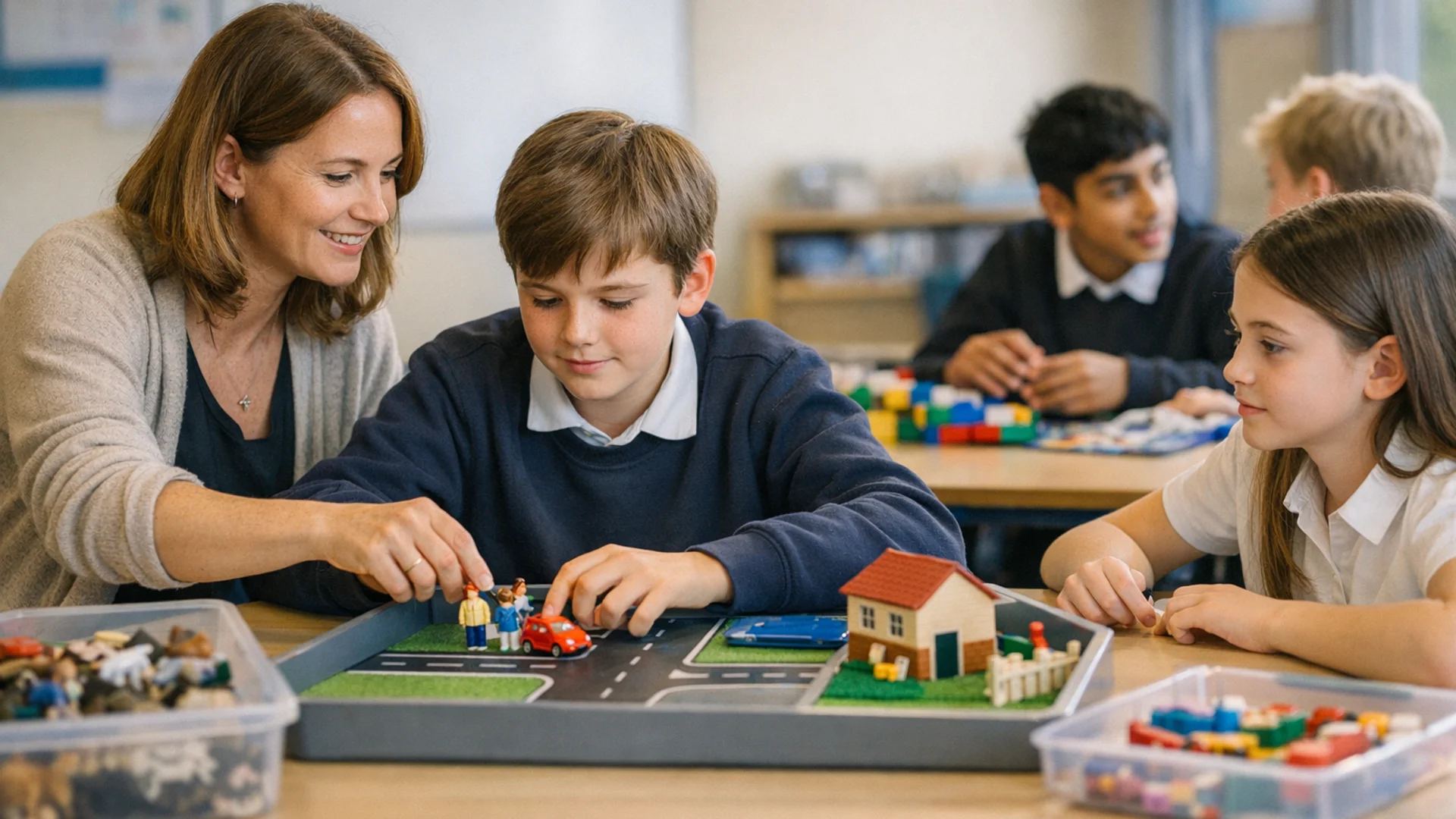
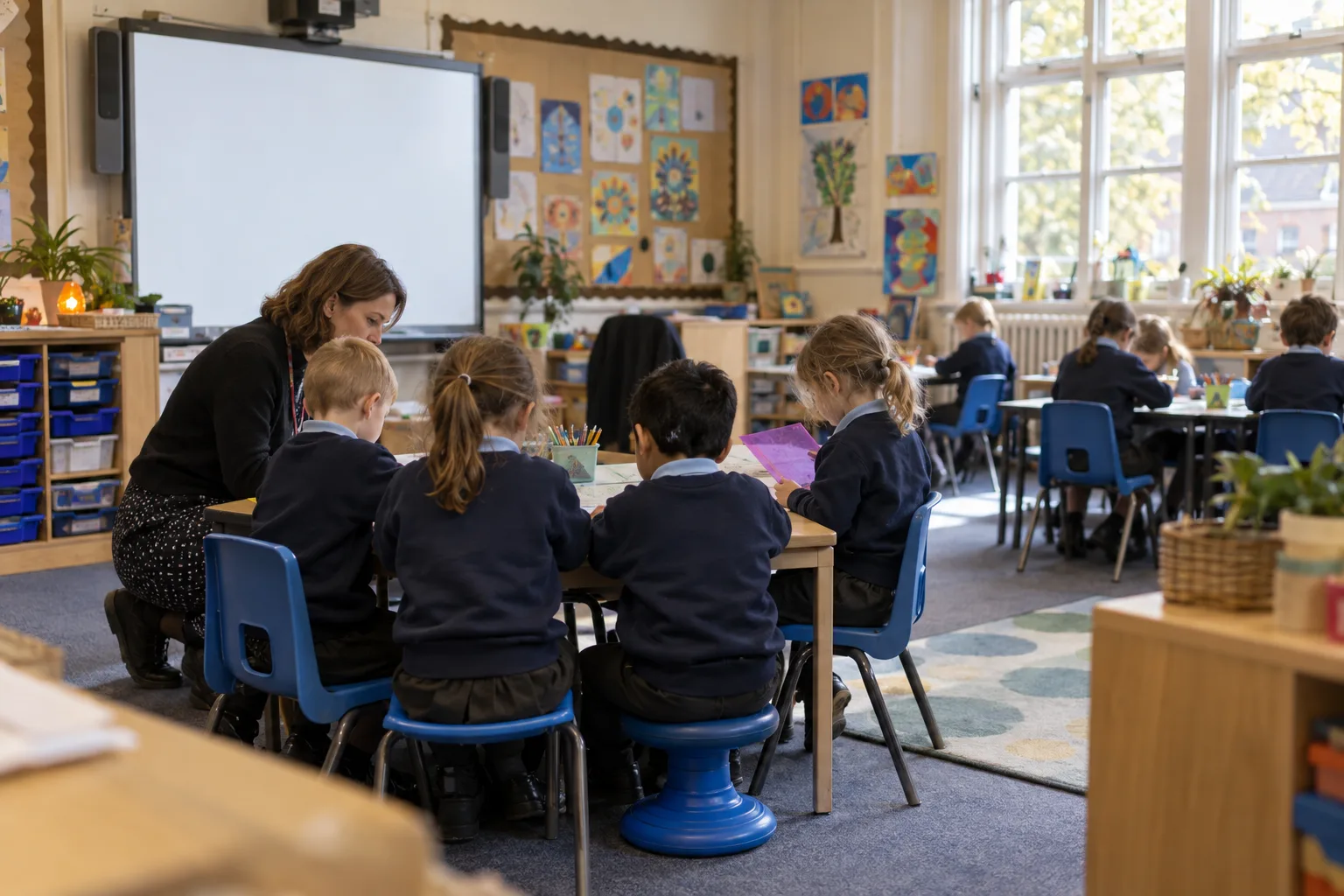
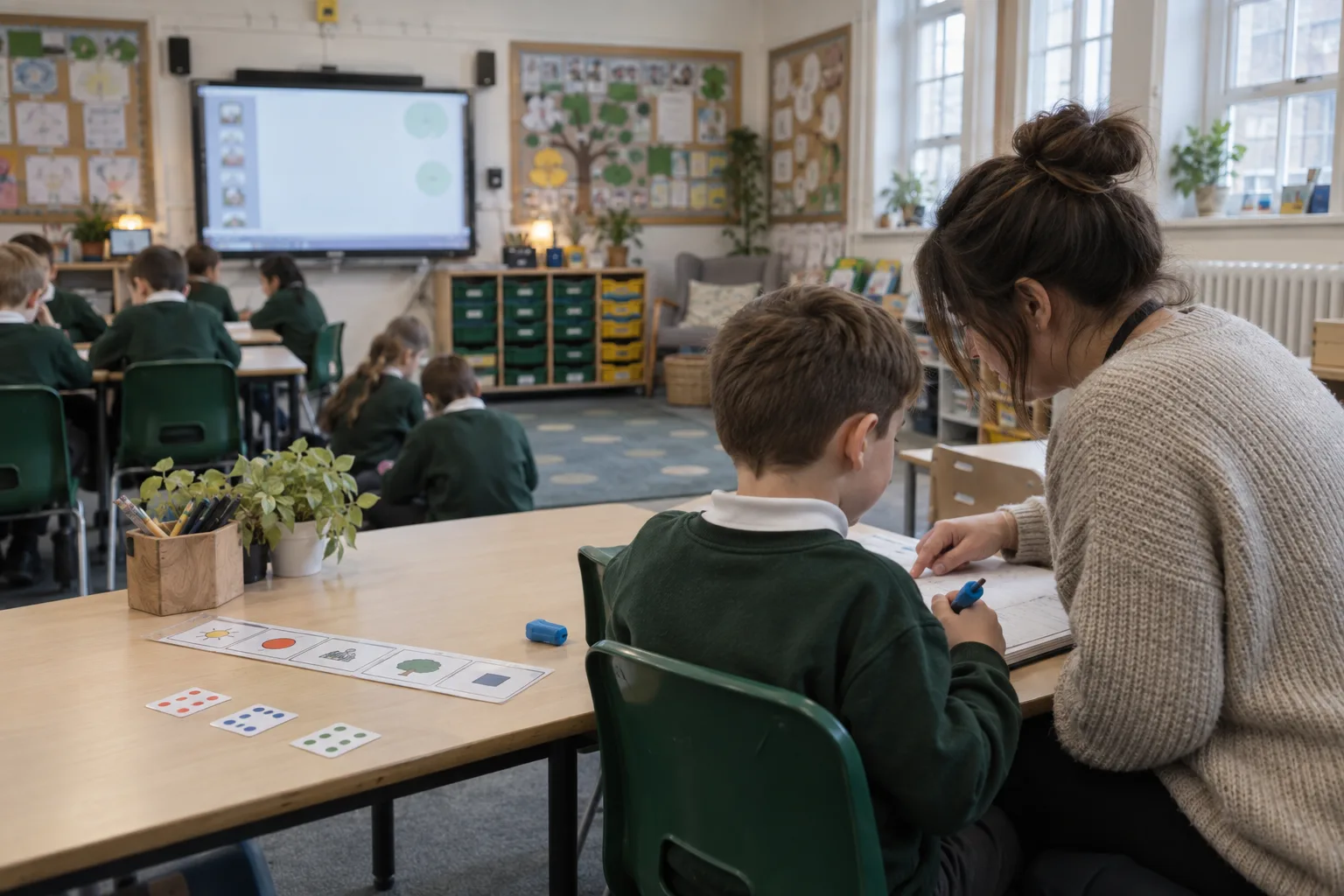
Identiplay: The Complete Teacher's Guide to Teaching Play Skills in Autism
|
January 16, 2026
Teach play skills to children with autism using Identiplay. This guide covers the copy-first approach, play scripts, and how to develop social play through identical toy sets.
Main, P. (2026, January 20). Identiplay: The Complete Teacher's Guide to Teaching Play Skills in Autism. Retrieved from https://www.structural-learning.com/post/identiplay-complete-teachers-guide-teaching
Teaching play skills to children with autism through Identiplay transforms challenging classroom moments into breakthrough learning opportunities. This complete guide walks you through every step of implementing this proven intervention, from setting up your first session with identical toy sets to gradually building your students' social play abilities and imagination. You'll discover exactly how to join your child's play world through strategic copying, when to introduce new play ideas, and how to create the reciprocal interactions that lead to meaningful peer connections. By the end of this guide, you'll have a practical toolkit that turns structured play into your most powerful teaching method.
Key Takeaways
What is Identiplay? Breaking Down the Basics
Key Takeaways
Two Identical Sets: The defining feature of Identiplay is using duplicate toy sets. Child and adult each have their ownidentical materials, allowing parallel play, imitation, and turn-taking without physical conflict over toys
Copy First, Model Second: Adults begin by copying whatever the child does with the toys. This validates the child's actions and creates connection. Only later does the adult introduce new play actions for the child to imitate
Play Scripts Provide Structure: Written scripts guide adults through play sequences, ensuring consistency and reducing anxiety about "what to do." Scripts include suggested actions and language, making the approach accessible to all staff
Beyond the Tabletop: While Identiplay begins with structured tabletop activities, the same principles can extend to water play, outdoor activities, role play, and leisure pursuits as skills develop
What Is Identiplay for Autism?
Identiplay is a structured play intervention that uses two identical toy sets to teach children with autism play skills through copying and modelling. Adults first mirror the child's actions, then introduce new play ideas for imitation, developing social play skills and imagination.
Identiplay is a play intervention designed specifically for children who have difficulty learning to play, particularly those with autism spectrum disorder and social communication difficulties. The approach addresses a core challenge: many children with autism do not naturally develop play skills through observation and participation in the way typically developing children do.
For these children, play often remains repetitive, solitary, and focused on sensory properties of objects rather than their symbolic or social possibilities. They may line up cars rather than race them, spin wheels rather than drive them, or ignore toys entirely in favour of more predictable sensory activities.
Identiplay provides explicit, structured teaching of play. Rather than hoping children will "pick up" play skills through exposure, practitioners systematically teach play sequences through modelling, imitation, and scripted interactions.
The approach was developed by Nicky Phillips, an Educational Psychologist, and Liz Beavan, a retired Headteacher, drawing on the theoretical and practical work of Danish practitioners Jannik Beyer and Lone Gammeltoft. Their book "Teaching Play to Children with Autism: Practical Interventions Using Identiplay" provides comprehensive guidance and resources.
Building Communication Through Autism Play Skills
Play skills development in autistic children increases social communication, builds imagination, and creates opportunities for peer interaction. These foundational skills support emotional regulation, language development, and prepare children for successful social relationships throughout their lives.
Play is not a frivolous extra but a fundamental developmental activity. Through play, children develop:
Children with autism often miss these developmental benefits because their play remains limited. Identiplay provides a route into the world of play that builds these skills systematically.
Core Identiplay Teaching Principles
Identiplay's four core principles are: using two identical toy sets for parallel play, copying the child's actions before introducing new ideas, following structured play scripts for consistency, and maintaining predictable session routines to reduce anxiety.
Principle 1: Identical Materials
Both child and adult have exactly the same toys or materials. This might be:
Having identical sets allows:
Principle 2: Copy Before You Lead
The golden rule of Identiplay: copy the child first. Whatever the child does with their toys, the adult does the same with their set.
Why copying first?
Only after establishing this copying relationship does the adult begin to introduce new actions for the child to imitate.
Principle 3: Structured Sessions
Identiplay sessions follow a predictable format:
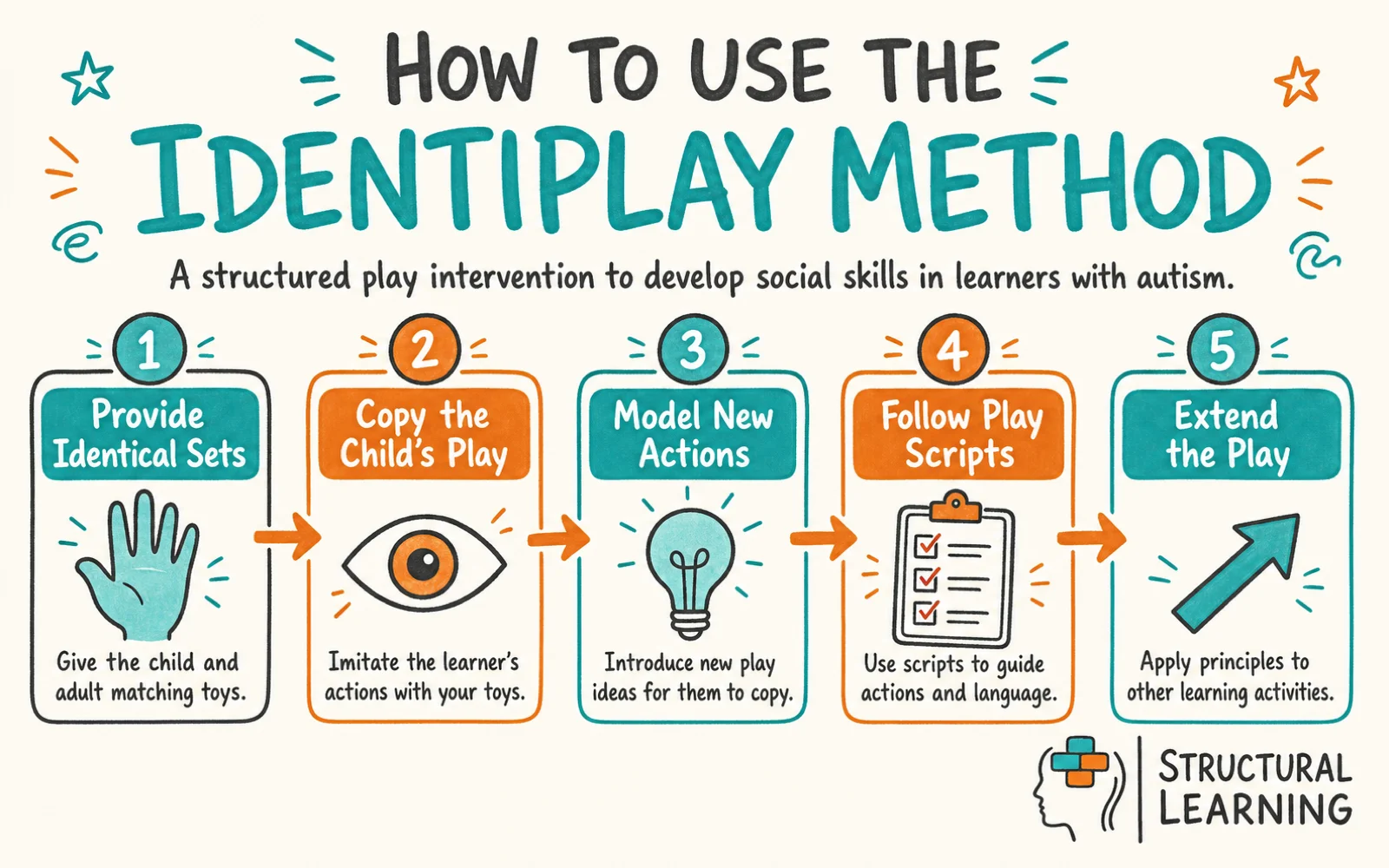
This predictability reduces anxiety and allows the child to focus on the play itself rather than managing uncertainty.
Principle 4: Play Scripts
Written scripts guide practitioners through sessions. A script includes:
Scripts ensure consistency between practitioners and sessions. They also make Identiplay accessible to staff who may feel uncertain about how to play.
Identiplay Steps
Setting Up Effective Identiplay Sessions
Materials Needed
Effective Identiplay sessions require structured toy selection, consistent timing, and a distraction-free environment to maximise learning outcomes for children with autism.
Commonly used Identiplay kits:
| Kit Type | Contents | Play Opportunities |
|----------|----------|-------------------|
| Farm set | Animals, fences, buildings, farmer | Animal play, feeding, building enclosures |
| Car set | Cars, people, garage | Driving, parking, car wash, racing |
| Train set | Track, trains, station | Building track, train processs, passengers |
| Doll/figure set | Figures, furniture, house | Daily routines, family play, scenarios |
| Animal set | Various animals | Sorting, habitats, animal actions, sounds |
Physical Setup
The Table:
The Space:
Session Structure
A typical Identiplay session:
| Phase | Duration | Activity |
|-------|----------|----------|
| Setup | 2 min | Bring out materials, establish seating |
| Copying | 5-10 min | Adult copies everything child does |
| Modelling | 5-10 min | Adult introduces new actions, child imitates |
| Free play | 5 min | Less structured play with the materials |
| Ending | 2 min | Clear signal, pack away together |
Adjust timing based on the child's attention span and stage of learning.
The Copying Phase
The copying phase involves adults mirroring exactly what the child does with their toys, including movements and sounds. This phase builds trust, validates the child's play, and establishes connection before introducing new play ideas.
Which Actions Should You Copy?
Copy the child's:
Effective Copying Techniques for Teachers
Expected Outcomes During Copying Phase
The child may:
This last response signals readiness for the modelling phase.
The Modelling Phase
The modelling phase begins after successful copying, where adults introduce new play actions using their identical toy set. Children observe and imitate these new actions, gradually expanding their play repertoire through structured demonstration and practise.
Introducing New Actions
Once the child is attending to your play:
Keeping Modelling Actions Simple
New actions should be:
Building Sequences
Over time, build longer play sequences:
The Identiplay Method: From Copy to Create
Identiplay Scripts and Activities
Example 1: Car Play Script
Identiplay scripts and activities provide structured templates that guide children with autism through specific play scenarios using identical materials and step-by-step verbal prompts.Materials: Two identical car sets (3-4 small cars each, simple road mat or tape)
Script:
Language: Keep to single words or short phrases: "Go!" "Stop!" "Fast!" "Bump!" "In the garage!"
Flow diagram: Identiplay Teaching Process Steps
Example 2: Farm Animal Script
Materials: Two identical farm sets (animals, fences, barn)
Script:
Example 3: Train Play Script
Materials: Two identical simple train sets
Script:
Specialised Identiplay Activities and Examples
Advanced Identiplay applications include extending play skills from structured table-based activities to naturalistic environments, peer interactions, and complex social scenarios once children master foundational techniques.
Water Play
Two identical sets of:
Same principles: copy first, then model new actions.
Outdoor Play
Duplicate equipment for:
Role Play
As skills develop:
Peer Play
Eventually, another child can take the adult's role:
Identiplay for Different Development Stages
Identiplay adapts to different developmental stages by adjusting toy complexity, session length, and play expectations. Younger children begin with simple cause-and-effect toys, whilst older children progress to complex role-play scenarios and peer interactions.
Early Stage: Pre-Intentional Play
For children who do not yet play with toys purposefully:
Developing Stage: Functional Play
For children who use toys functionally but repetitively:
Later Stage: Symbolic Play
For children beginning pretend play:
Common Challenges and Solutions
When Children Ignore Adults Completely
Solutions:
When Children Take Your Toys
Solutions:
Addressing Repetitive Play Patterns
Solutions:
Overcoming Staff Awkwardness During Play
Solutions:
Identiplay Training Resources and Evidence
Identiplay draws on established theoretical foundations:
The published case studies and video clips demonstrate positive outcomes in:
Identiplay Parallel Play Foundation Skills
The parallel play model sits at the heart of Identiplay, transforming how we teach play skills to children with autism. Rather than imposing adult-led activities or expecting immediate social interaction, this approach creates a bridge between solitary and interactive play through carefully structured side-by-side experiences.
In practise, parallel play using Identiplay means positioning yourself alongside the child with your matching toy set, creating what researchers call a 'play mirror'. You're not face-to-face, which can feel confrontational; instead, you're shoulder-to-shoulder, both focused on your respective toys. This arrangement reduces social pressure whilst maintaining connection through shared activity.
Consider Sarah, a Year 1 pupil who typically lines up toy cars repeatedly. Her teaching assistant sits beside her with an identical set of vehicles, copying Sarah's precise arrangements. After several minutes, Sarah glances at the adult's cars. The assistant then slowly rolls one car forwards, just a few centimetres. Sarah watches, then moves her own car. This subtle exchange marks the beginning of reciprocal play, achieved without verbal demands or physical prompting.
The parallel model works because it respects the child's autonomy whilst providing gentle scaffolding. Research by Wolfberg and Schuler (1993) demonstrates that children with autism often struggle with the unpredictability of peer play. Identiplay's parallel structure removes this uncertainty by establishing clear, visible patterns that children can choose to follow or ignore.
When implementing this model, remember that true parallel play requires patience. Some children may need weeks of copying before they show interest in your toy set. Document small changes: a sideways glance, a pause in repetitive actions, or mimicking a single movement. These micro-progressions indicate the parallel play model is building foundations for future interactive play.
Complete Step-by-Step Implementation Guide
This complete step-by-step implementation guide walks teachers through five essential phases: assessment, environment setup, skill introduction, practise sessions, and progress monitoring. This framework ensures you build the necessary foundation before introducing play skills, helping children with autism feel secure and ready to engage.your classroom requires careful planning and a systematic approach. This framework ensures you build the necessary foundation before introducing play skills, helping children with autism feel secure and ready to engage.
Begin by creating a dedicated play space free from distractions. Use visual boundaries like coloured tape or a small rug to define the area. Gather your duplicate toy sets; simple options include farm animals, vehicles, or building blocks. Store these in clearly labelled boxes that children can see but not access between sessions. Schedule 20-minute sessions at consistent times, ideally when the child is alert but not overstimulated.
Start each session by sitting opposite the child with your matching toy set. Mirror their actions precisely, including vocalisations and movements. If they line up cars, you line up cars. If they spin a wheel repeatedly, you do the same. Research by Nadel (2014) demonstrates that synchronous imitation activates neural pathways associated with social connection. Maintain this copying phase for at least 10 minutes initially, gradually reducing as the child begins watching your toys with interest.
Once the child consistently notices your toy manipulation, introduce simple variations. For instance, if they're rolling a car back and forth, add a gentle 'beep beep' sound or create a small ramp with a book. Keep new actions closely related to their current play interests. Document which variations the child copies; this becomes your baseline for measuring progress.
Gradually link individual play actions into short sequences. Transform isolated car rolling into parking, refuelling, and washing activities. Use visual supports like sequence cards showing each step. Celebrate small victories; even partial imitation indicates progress towards more complex play skills.
Tracking Autism Play Skills Progress
Teachers can effectively assess play skills development in autistic children through structured observation tools, developmental checklists, and systematic documentation that tracks both incremental progress and major developmental milestones. Unlike academic assessments, play development often shows itself through small, incremental changes that might otherwise go unnoticed without careful monitoring.
Start by establishing baseline observations before beginning Identiplay sessions. Document the child's current play behaviours, including how long they engage with toys, whether they use objects functionally or repetitively, and any spontaneous vocalisations or gestures during play. Video recordings prove invaluable here; a simple five-minute clip every fortnight provides concrete evidence of progress that written notes alone cannot capture.
Create a simple tracking sheet that monitors specific play behaviours. For instance, note when a child first watches your toy whilst you copy them, when they begin imitating your actions, or when they spontaneously combine two toys in pretend play. Track duration of engagement too; a child who initially played for two minutes but now sustains attention for eight minutes has made significant progress, even if their play remains simple.
The Play Assessment Scale (Beyer & Gammeltoft, 2000) offers a structured framework for measuring developmental progression through play stages. This tool helps identify whether children are moving from sensory-motor play towards functional play, and eventually into symbolic play sequences. Regular assessment using this scale, perhaps monthly, provides objective data to share with parents and other professionals.
Remember that progress isn't always linear. Some children might show advanced skills one day, then revert to earlier play patterns when tired or overwhelmed. Document these variations rather than viewing them as setbacks; they often indicate that new skills are emerging but not yet consolidated. This understanding helps maintain realistic expectations and celebrate genuine achievements in each child's play process.
Understanding the Identiplay Parallel Play Model
The parallel play model sits at the heart of Identiplay, offering a bridge between solitary and interactive play for children with autism. Unlike traditional teaching methods that push for immediate social interaction, this approach honours the child's developmental stage whilst building crucial foundations for future social play.
In parallel play, children engage with identical materials alongside each other without direct interaction. For children with autism, this arrangement removes the pressure of social demands whilst still providing opportunities for observation and learning. Research by Wolfberg and Schuler (2003) demonstrates that parallel play serves as a critical stepping stone towards cooperative play, particularly for children who find direct social interaction overwhelming.
To implement the parallel play model effectively, position yourself beside rather than opposite the child. This side-by-side arrangement reduces eye contact demands and creates a more comfortable learning environment. For instance, when working with building blocks, sit next to your student with your own identical set. Begin by simply building your own tower, allowing the child to observe without pressure. Many children will naturally begin to copy your actions or glance between their construction and yours.
The power of this model lies in its flexibility. During a train track activity, you might notice a child repeatedly lining up carriages. Rather than correcting this behaviour, create your own line of carriages nearby. Once the child shows awareness of your play, gradually introduce variations; perhaps adding a bridge or making train sounds. This gentle progression respects the child's pace whilst expanding their play repertoire.
Teachers often find that parallel play reduces anxiety-driven behaviours and increases engagement time. By removing the social demands of turn-taking or sharing, children can focus on the activity itself, building confidence that later supports more interactive play forms.
How to Implement Identiplay in Educational Settings
Successful Identiplay implementation begins with thoughtful preparation of your classroom environment. Start by creating a dedicated play space away from distractions, using visual boundaries like coloured tape or a small rug to define the area. Store your duplicate toy sets in clearly labelled boxes, making them easily accessible for quick transitions between activities.
Begin implementation with one-to-one sessions lasting 10-15 minutes, gradually increasing duration as the child's engagement improves. Schedule these sessions during times when the child is typically alert and regulated, often mid-morning works well. For example, if working with a child who enjoys vehicles, start with two identical sets of cars and a simple ramp. Copy their actions first; if they roll the car down the ramp, you do the same with your matching car. After several successful copying exchanges, introduce a new action like parking the car in a designated spot.
Staff training is crucial for consistent implementation across your educational team. Create simple observation sheets where support staff can record which toy sets engage specific children and note successful play sequences. This documentation helps build a repertoire of effective activities. Consider pairing experienced staff with newcomers during initial sessions, allowing real-time coaching and confidence building.
Integration with curriculum goals strengthens the educational value of Identiplay. If your class is learning about community helpers, use duplicate sets of figurines and vehicles to practise related vocabulary and concepts. For mathematics, incorporate counting and sorting activities within the play sequences. Remember to celebrate small victories; a child who previously played alone beginning to glance at your matching toys represents significant progress worth documenting and sharing with parents.
Essential Visual Materials for Identiplay Success
Visual supports form the backbone of effective Identiplay implementation, providing structure and clarity that helps children with autism navigate play sequences independently. Creating the right visual materials transforms abstract play concepts into concrete, manageable steps that both staff and students can follow with confidence.
Start with visual choice boards displaying photographs of available toy sets. Mount clear images of each Identiplay kit on a portable board, allowing children to point or remove their selection. This simple tool reduces verbal demands whilst giving students control over their play experience. For non-verbal children, these boards become essential communication bridges, enabling them to express preferences without frustration.
Play sequence cards serve as your session roadmap. Create laminated cards showing each step of a play routine through photographs or simple drawings. For instance, a farm animal sequence might include: 1) Take animals from box, 2) Line up animals, 3) Make animal walk, 4) Animal eats from bowl, 5) Put animals in barn. Display these cards vertically on a strip or horizontally across the table, moving a marker as you progress through activities. Research by Mesibov and Shea (2010) demonstrates that visual schedules significantly reduce anxiety and increase engagement in structured activities.
Consider developing 'finished' boxes with clear visual labels. When children complete a play sequence, they place materials in the designated box, creating a satisfying sense of completion. Some teachers add timer cards showing how long activities will last, using sand timers or visual countdown strips. These materials work particularly well for children who struggle with transitions or become fixated on specific toys.
Remember to photograph successful play moments for social stories. These personalised visual narratives, showing the child engaging successfully in Identiplay, build confidence for future sessions and can be shared with parents to support generalisation at home.
Frequently Asked Questions
What Ages Work Best for Identiplay?
Teachers frequently ask about age ranges, implementation methods, and effectiveness when considering Identiplay for their autism classroom programmes. It is developmental stage rather than chronological age that matters. Some older children with significant learning difficulties benefit from Identiplay.Identiplay works with children from early years through primary age. It is developmental stage rather than chronological age that matters. Some older children with significant learning difficulties benefit from Identiplay.
Optimal Frequency for Identiplay Sessions
Regular, frequent sessions (daily or several times weekly) maintain momentum. Short, frequent sessions are better than occasional long ones.
Can Parents Use Identiplay at Home?
Yes. The structured format and scripts make Identiplay accessible to parents. Consistency between home and school strengthens learning.
Required Training for Identiplay Implementation
The book provides comprehensive guidance. Some settings offer training sessions. Video observation of skilled practitioners helps. Peer coaching within teams works well.
Is Eye Contact Required for Success?
No. Identiplay does not require eye contact. Children may look at toys rather than the adult's face. This is fine; the goal is shared play, not eye contact.
The 4 Pillars of Successful Identiplay Implementation
Further Reading: Key Research Papers
These peer-reviewed studies provide deeper insights into the research behind this topic:
K. Kerns et al. (2017)
This feasibility study examined whether attention and working memory training programmes can be effectively implemented for children with neurodevelopmental disorders in educational settings. The research provides teachers with evidence-based strategies for supporting students who struggle with focus and memory tasks in the classroom.
C. O’Keeffe & Sinead McNally (2021)
This systematic review demonstrates that play-based interventions can effectively improve social communication skills in children with autism spectrum disorder within school environments. Teachers can use structured play activities as a natural and engaging method to support social development for students with ASD.
Neha U. Keshav et al. (2018)
This study explored teachers' experiences using smartglasses technology to deliver socio-emotional learning interventions for students with autism in both mainstream and special education classrooms. The research highlights practical considerations for implementing assistive technology whilst addressing common barriers teachers face when adopting new educational tools.
M. Morrier & Sonja M. T. Ziegler (2018)
This research examined how implementing a structured outdoor play curriculum affected social behaviour changes in children both with and without autism spectrum disorder. Teachers can use these findings to design inclusive playground activities that promote positive social interactions for all students.
B. Bailey & J. Arciuli (2020)
This systematic review analysed the quality and effectiveness of reading instruction methods specifically designed for children with autism spectrum disorders. The research provides teachers with evidence-based approaches for adapting literacy instruction to meet the unique learning needs of students with ASD.
Summary
Identiplay provides teachers with a complete, evidence-based framework for systematically teaching play skills to children with autism through structured imitation and modelling techniques. By using identical toy sets, copying the child first, and gradually modelling new play actions, practitioners can help children develop skills they might not acquire through natural exposure.Identiplay offers a practical, structured approach to teaching play skills to children with autism and communication difficulties. By using identical toy sets, copying the child first, and gradually modelling new play actions, practitioners can help children develop skills they might not acquire through natural exposure.
The approach is accessible because it uses scripts, does not require expensive resources, and can be delivered by a range of practitioners including teachers, teaching assistants, and parents. The principles extend beyond tabletop play to support social play development across contexts.
For children whose isolation during play has prevented them from accessing the social, cognitive, and emotional benefits of play, Identiplay provides a structured pathway into the play world. The goal is always reciprocal, enjoyable play with others, whether adults or peers.
Teaching play skills to children with autism through Identiplay transforms challenging classroom moments into breakthrough learning opportunities. This complete guide walks you through every step of implementing this proven intervention, from setting up your first session with identical toy sets to gradually building your students' social play abilities and imagination. You'll discover exactly how to join your child's play world through strategic copying, when to introduce new play ideas, and how to create the reciprocal interactions that lead to meaningful peer connections. By the end of this guide, you'll have a practical toolkit that turns structured play into your most powerful teaching method.
Key Takeaways
What is Identiplay? Breaking Down the Basics
Key Takeaways
Two Identical Sets: The defining feature of Identiplay is using duplicate toy sets. Child and adult each have their ownidentical materials, allowing parallel play, imitation, and turn-taking without physical conflict over toys
Copy First, Model Second: Adults begin by copying whatever the child does with the toys. This validates the child's actions and creates connection. Only later does the adult introduce new play actions for the child to imitate
Play Scripts Provide Structure: Written scripts guide adults through play sequences, ensuring consistency and reducing anxiety about "what to do." Scripts include suggested actions and language, making the approach accessible to all staff
Beyond the Tabletop: While Identiplay begins with structured tabletop activities, the same principles can extend to water play, outdoor activities, role play, and leisure pursuits as skills develop
What Is Identiplay for Autism?
Identiplay is a structured play intervention that uses two identical toy sets to teach children with autism play skills through copying and modelling. Adults first mirror the child's actions, then introduce new play ideas for imitation, developing social play skills and imagination.
Identiplay is a play intervention designed specifically for children who have difficulty learning to play, particularly those with autism spectrum disorder and social communication difficulties. The approach addresses a core challenge: many children with autism do not naturally develop play skills through observation and participation in the way typically developing children do.
For these children, play often remains repetitive, solitary, and focused on sensory properties of objects rather than their symbolic or social possibilities. They may line up cars rather than race them, spin wheels rather than drive them, or ignore toys entirely in favour of more predictable sensory activities.
Identiplay provides explicit, structured teaching of play. Rather than hoping children will "pick up" play skills through exposure, practitioners systematically teach play sequences through modelling, imitation, and scripted interactions.
The approach was developed by Nicky Phillips, an Educational Psychologist, and Liz Beavan, a retired Headteacher, drawing on the theoretical and practical work of Danish practitioners Jannik Beyer and Lone Gammeltoft. Their book "Teaching Play to Children with Autism: Practical Interventions Using Identiplay" provides comprehensive guidance and resources.
Building Communication Through Autism Play Skills
Play skills development in autistic children increases social communication, builds imagination, and creates opportunities for peer interaction. These foundational skills support emotional regulation, language development, and prepare children for successful social relationships throughout their lives.
Play is not a frivolous extra but a fundamental developmental activity. Through play, children develop:
Children with autism often miss these developmental benefits because their play remains limited. Identiplay provides a route into the world of play that builds these skills systematically.
Core Identiplay Teaching Principles
Identiplay's four core principles are: using two identical toy sets for parallel play, copying the child's actions before introducing new ideas, following structured play scripts for consistency, and maintaining predictable session routines to reduce anxiety.
Principle 1: Identical Materials
Both child and adult have exactly the same toys or materials. This might be:
Having identical sets allows:
Principle 2: Copy Before You Lead
The golden rule of Identiplay: copy the child first. Whatever the child does with their toys, the adult does the same with their set.
Why copying first?
Only after establishing this copying relationship does the adult begin to introduce new actions for the child to imitate.
Principle 3: Structured Sessions
Identiplay sessions follow a predictable format:
This predictability reduces anxiety and allows the child to focus on the play itself rather than managing uncertainty.
Principle 4: Play Scripts
Written scripts guide practitioners through sessions. A script includes:
Scripts ensure consistency between practitioners and sessions. They also make Identiplay accessible to staff who may feel uncertain about how to play.
Identiplay Steps
Setting Up Effective Identiplay Sessions
Materials Needed
Effective Identiplay sessions require structured toy selection, consistent timing, and a distraction-free environment to maximise learning outcomes for children with autism.
Commonly used Identiplay kits:
| Kit Type | Contents | Play Opportunities |
|----------|----------|-------------------|
| Farm set | Animals, fences, buildings, farmer | Animal play, feeding, building enclosures |
| Car set | Cars, people, garage | Driving, parking, car wash, racing |
| Train set | Track, trains, station | Building track, train processs, passengers |
| Doll/figure set | Figures, furniture, house | Daily routines, family play, scenarios |
| Animal set | Various animals | Sorting, habitats, animal actions, sounds |
Physical Setup
The Table:
The Space:
Session Structure
A typical Identiplay session:
| Phase | Duration | Activity |
|-------|----------|----------|
| Setup | 2 min | Bring out materials, establish seating |
| Copying | 5-10 min | Adult copies everything child does |
| Modelling | 5-10 min | Adult introduces new actions, child imitates |
| Free play | 5 min | Less structured play with the materials |
| Ending | 2 min | Clear signal, pack away together |
Adjust timing based on the child's attention span and stage of learning.
The Copying Phase
The copying phase involves adults mirroring exactly what the child does with their toys, including movements and sounds. This phase builds trust, validates the child's play, and establishes connection before introducing new play ideas.
Which Actions Should You Copy?
Copy the child's:
Effective Copying Techniques for Teachers
Expected Outcomes During Copying Phase
The child may:
This last response signals readiness for the modelling phase.
The Modelling Phase
The modelling phase begins after successful copying, where adults introduce new play actions using their identical toy set. Children observe and imitate these new actions, gradually expanding their play repertoire through structured demonstration and practise.
Introducing New Actions
Once the child is attending to your play:
Keeping Modelling Actions Simple
New actions should be:
Building Sequences
Over time, build longer play sequences:
The Identiplay Method: From Copy to Create
Identiplay Scripts and Activities
Example 1: Car Play Script
Identiplay scripts and activities provide structured templates that guide children with autism through specific play scenarios using identical materials and step-by-step verbal prompts.Materials: Two identical car sets (3-4 small cars each, simple road mat or tape)
Script:
Language: Keep to single words or short phrases: "Go!" "Stop!" "Fast!" "Bump!" "In the garage!"
Flow diagram: Identiplay Teaching Process Steps
Example 2: Farm Animal Script
Materials: Two identical farm sets (animals, fences, barn)
Script:
Example 3: Train Play Script
Materials: Two identical simple train sets
Script:
Specialised Identiplay Activities and Examples
Advanced Identiplay applications include extending play skills from structured table-based activities to naturalistic environments, peer interactions, and complex social scenarios once children master foundational techniques.
Water Play
Two identical sets of:
Same principles: copy first, then model new actions.
Outdoor Play
Duplicate equipment for:
Role Play
As skills develop:
Peer Play
Eventually, another child can take the adult's role:
Identiplay for Different Development Stages
Identiplay adapts to different developmental stages by adjusting toy complexity, session length, and play expectations. Younger children begin with simple cause-and-effect toys, whilst older children progress to complex role-play scenarios and peer interactions.
Early Stage: Pre-Intentional Play
For children who do not yet play with toys purposefully:
Developing Stage: Functional Play
For children who use toys functionally but repetitively:
Later Stage: Symbolic Play
For children beginning pretend play:
Common Challenges and Solutions
When Children Ignore Adults Completely
Solutions:
When Children Take Your Toys
Solutions:
Addressing Repetitive Play Patterns
Solutions:
Overcoming Staff Awkwardness During Play
Solutions:
Identiplay Training Resources and Evidence
Identiplay draws on established theoretical foundations:
The published case studies and video clips demonstrate positive outcomes in:
Identiplay Parallel Play Foundation Skills
The parallel play model sits at the heart of Identiplay, transforming how we teach play skills to children with autism. Rather than imposing adult-led activities or expecting immediate social interaction, this approach creates a bridge between solitary and interactive play through carefully structured side-by-side experiences.
In practise, parallel play using Identiplay means positioning yourself alongside the child with your matching toy set, creating what researchers call a 'play mirror'. You're not face-to-face, which can feel confrontational; instead, you're shoulder-to-shoulder, both focused on your respective toys. This arrangement reduces social pressure whilst maintaining connection through shared activity.
Consider Sarah, a Year 1 pupil who typically lines up toy cars repeatedly. Her teaching assistant sits beside her with an identical set of vehicles, copying Sarah's precise arrangements. After several minutes, Sarah glances at the adult's cars. The assistant then slowly rolls one car forwards, just a few centimetres. Sarah watches, then moves her own car. This subtle exchange marks the beginning of reciprocal play, achieved without verbal demands or physical prompting.
The parallel model works because it respects the child's autonomy whilst providing gentle scaffolding. Research by Wolfberg and Schuler (1993) demonstrates that children with autism often struggle with the unpredictability of peer play. Identiplay's parallel structure removes this uncertainty by establishing clear, visible patterns that children can choose to follow or ignore.
When implementing this model, remember that true parallel play requires patience. Some children may need weeks of copying before they show interest in your toy set. Document small changes: a sideways glance, a pause in repetitive actions, or mimicking a single movement. These micro-progressions indicate the parallel play model is building foundations for future interactive play.
Complete Step-by-Step Implementation Guide
This complete step-by-step implementation guide walks teachers through five essential phases: assessment, environment setup, skill introduction, practise sessions, and progress monitoring. This framework ensures you build the necessary foundation before introducing play skills, helping children with autism feel secure and ready to engage.your classroom requires careful planning and a systematic approach. This framework ensures you build the necessary foundation before introducing play skills, helping children with autism feel secure and ready to engage.
Begin by creating a dedicated play space free from distractions. Use visual boundaries like coloured tape or a small rug to define the area. Gather your duplicate toy sets; simple options include farm animals, vehicles, or building blocks. Store these in clearly labelled boxes that children can see but not access between sessions. Schedule 20-minute sessions at consistent times, ideally when the child is alert but not overstimulated.
Start each session by sitting opposite the child with your matching toy set. Mirror their actions precisely, including vocalisations and movements. If they line up cars, you line up cars. If they spin a wheel repeatedly, you do the same. Research by Nadel (2014) demonstrates that synchronous imitation activates neural pathways associated with social connection. Maintain this copying phase for at least 10 minutes initially, gradually reducing as the child begins watching your toys with interest.
Once the child consistently notices your toy manipulation, introduce simple variations. For instance, if they're rolling a car back and forth, add a gentle 'beep beep' sound or create a small ramp with a book. Keep new actions closely related to their current play interests. Document which variations the child copies; this becomes your baseline for measuring progress.
Gradually link individual play actions into short sequences. Transform isolated car rolling into parking, refuelling, and washing activities. Use visual supports like sequence cards showing each step. Celebrate small victories; even partial imitation indicates progress towards more complex play skills.
Tracking Autism Play Skills Progress
Teachers can effectively assess play skills development in autistic children through structured observation tools, developmental checklists, and systematic documentation that tracks both incremental progress and major developmental milestones. Unlike academic assessments, play development often shows itself through small, incremental changes that might otherwise go unnoticed without careful monitoring.
Start by establishing baseline observations before beginning Identiplay sessions. Document the child's current play behaviours, including how long they engage with toys, whether they use objects functionally or repetitively, and any spontaneous vocalisations or gestures during play. Video recordings prove invaluable here; a simple five-minute clip every fortnight provides concrete evidence of progress that written notes alone cannot capture.
Create a simple tracking sheet that monitors specific play behaviours. For instance, note when a child first watches your toy whilst you copy them, when they begin imitating your actions, or when they spontaneously combine two toys in pretend play. Track duration of engagement too; a child who initially played for two minutes but now sustains attention for eight minutes has made significant progress, even if their play remains simple.
The Play Assessment Scale (Beyer & Gammeltoft, 2000) offers a structured framework for measuring developmental progression through play stages. This tool helps identify whether children are moving from sensory-motor play towards functional play, and eventually into symbolic play sequences. Regular assessment using this scale, perhaps monthly, provides objective data to share with parents and other professionals.
Remember that progress isn't always linear. Some children might show advanced skills one day, then revert to earlier play patterns when tired or overwhelmed. Document these variations rather than viewing them as setbacks; they often indicate that new skills are emerging but not yet consolidated. This understanding helps maintain realistic expectations and celebrate genuine achievements in each child's play process.
Understanding the Identiplay Parallel Play Model
The parallel play model sits at the heart of Identiplay, offering a bridge between solitary and interactive play for children with autism. Unlike traditional teaching methods that push for immediate social interaction, this approach honours the child's developmental stage whilst building crucial foundations for future social play.
In parallel play, children engage with identical materials alongside each other without direct interaction. For children with autism, this arrangement removes the pressure of social demands whilst still providing opportunities for observation and learning. Research by Wolfberg and Schuler (2003) demonstrates that parallel play serves as a critical stepping stone towards cooperative play, particularly for children who find direct social interaction overwhelming.
To implement the parallel play model effectively, position yourself beside rather than opposite the child. This side-by-side arrangement reduces eye contact demands and creates a more comfortable learning environment. For instance, when working with building blocks, sit next to your student with your own identical set. Begin by simply building your own tower, allowing the child to observe without pressure. Many children will naturally begin to copy your actions or glance between their construction and yours.
The power of this model lies in its flexibility. During a train track activity, you might notice a child repeatedly lining up carriages. Rather than correcting this behaviour, create your own line of carriages nearby. Once the child shows awareness of your play, gradually introduce variations; perhaps adding a bridge or making train sounds. This gentle progression respects the child's pace whilst expanding their play repertoire.
Teachers often find that parallel play reduces anxiety-driven behaviours and increases engagement time. By removing the social demands of turn-taking or sharing, children can focus on the activity itself, building confidence that later supports more interactive play forms.
How to Implement Identiplay in Educational Settings
Successful Identiplay implementation begins with thoughtful preparation of your classroom environment. Start by creating a dedicated play space away from distractions, using visual boundaries like coloured tape or a small rug to define the area. Store your duplicate toy sets in clearly labelled boxes, making them easily accessible for quick transitions between activities.
Begin implementation with one-to-one sessions lasting 10-15 minutes, gradually increasing duration as the child's engagement improves. Schedule these sessions during times when the child is typically alert and regulated, often mid-morning works well. For example, if working with a child who enjoys vehicles, start with two identical sets of cars and a simple ramp. Copy their actions first; if they roll the car down the ramp, you do the same with your matching car. After several successful copying exchanges, introduce a new action like parking the car in a designated spot.
Staff training is crucial for consistent implementation across your educational team. Create simple observation sheets where support staff can record which toy sets engage specific children and note successful play sequences. This documentation helps build a repertoire of effective activities. Consider pairing experienced staff with newcomers during initial sessions, allowing real-time coaching and confidence building.
Integration with curriculum goals strengthens the educational value of Identiplay. If your class is learning about community helpers, use duplicate sets of figurines and vehicles to practise related vocabulary and concepts. For mathematics, incorporate counting and sorting activities within the play sequences. Remember to celebrate small victories; a child who previously played alone beginning to glance at your matching toys represents significant progress worth documenting and sharing with parents.
Essential Visual Materials for Identiplay Success
Visual supports form the backbone of effective Identiplay implementation, providing structure and clarity that helps children with autism navigate play sequences independently. Creating the right visual materials transforms abstract play concepts into concrete, manageable steps that both staff and students can follow with confidence.
Start with visual choice boards displaying photographs of available toy sets. Mount clear images of each Identiplay kit on a portable board, allowing children to point or remove their selection. This simple tool reduces verbal demands whilst giving students control over their play experience. For non-verbal children, these boards become essential communication bridges, enabling them to express preferences without frustration.
Play sequence cards serve as your session roadmap. Create laminated cards showing each step of a play routine through photographs or simple drawings. For instance, a farm animal sequence might include: 1) Take animals from box, 2) Line up animals, 3) Make animal walk, 4) Animal eats from bowl, 5) Put animals in barn. Display these cards vertically on a strip or horizontally across the table, moving a marker as you progress through activities. Research by Mesibov and Shea (2010) demonstrates that visual schedules significantly reduce anxiety and increase engagement in structured activities.
Consider developing 'finished' boxes with clear visual labels. When children complete a play sequence, they place materials in the designated box, creating a satisfying sense of completion. Some teachers add timer cards showing how long activities will last, using sand timers or visual countdown strips. These materials work particularly well for children who struggle with transitions or become fixated on specific toys.
Remember to photograph successful play moments for social stories. These personalised visual narratives, showing the child engaging successfully in Identiplay, build confidence for future sessions and can be shared with parents to support generalisation at home.
Frequently Asked Questions
What Ages Work Best for Identiplay?
Teachers frequently ask about age ranges, implementation methods, and effectiveness when considering Identiplay for their autism classroom programmes. It is developmental stage rather than chronological age that matters. Some older children with significant learning difficulties benefit from Identiplay.Identiplay works with children from early years through primary age. It is developmental stage rather than chronological age that matters. Some older children with significant learning difficulties benefit from Identiplay.
Optimal Frequency for Identiplay Sessions
Regular, frequent sessions (daily or several times weekly) maintain momentum. Short, frequent sessions are better than occasional long ones.
Can Parents Use Identiplay at Home?
Yes. The structured format and scripts make Identiplay accessible to parents. Consistency between home and school strengthens learning.
Required Training for Identiplay Implementation
The book provides comprehensive guidance. Some settings offer training sessions. Video observation of skilled practitioners helps. Peer coaching within teams works well.
Is Eye Contact Required for Success?
No. Identiplay does not require eye contact. Children may look at toys rather than the adult's face. This is fine; the goal is shared play, not eye contact.
The 4 Pillars of Successful Identiplay Implementation
Further Reading: Key Research Papers
These peer-reviewed studies provide deeper insights into the research behind this topic:
K. Kerns et al. (2017)
This feasibility study examined whether attention and working memory training programmes can be effectively implemented for children with neurodevelopmental disorders in educational settings. The research provides teachers with evidence-based strategies for supporting students who struggle with focus and memory tasks in the classroom.
C. O’Keeffe & Sinead McNally (2021)
This systematic review demonstrates that play-based interventions can effectively improve social communication skills in children with autism spectrum disorder within school environments. Teachers can use structured play activities as a natural and engaging method to support social development for students with ASD.
Neha U. Keshav et al. (2018)
This study explored teachers' experiences using smartglasses technology to deliver socio-emotional learning interventions for students with autism in both mainstream and special education classrooms. The research highlights practical considerations for implementing assistive technology whilst addressing common barriers teachers face when adopting new educational tools.
M. Morrier & Sonja M. T. Ziegler (2018)
This research examined how implementing a structured outdoor play curriculum affected social behaviour changes in children both with and without autism spectrum disorder. Teachers can use these findings to design inclusive playground activities that promote positive social interactions for all students.
B. Bailey & J. Arciuli (2020)
This systematic review analysed the quality and effectiveness of reading instruction methods specifically designed for children with autism spectrum disorders. The research provides teachers with evidence-based approaches for adapting literacy instruction to meet the unique learning needs of students with ASD.
Summary
Identiplay provides teachers with a complete, evidence-based framework for systematically teaching play skills to children with autism through structured imitation and modelling techniques. By using identical toy sets, copying the child first, and gradually modelling new play actions, practitioners can help children develop skills they might not acquire through natural exposure.Identiplay offers a practical, structured approach to teaching play skills to children with autism and communication difficulties. By using identical toy sets, copying the child first, and gradually modelling new play actions, practitioners can help children develop skills they might not acquire through natural exposure.
The approach is accessible because it uses scripts, does not require expensive resources, and can be delivered by a range of practitioners including teachers, teaching assistants, and parents. The principles extend beyond tabletop play to support social play development across contexts.
For children whose isolation during play has prevented them from accessing the social, cognitive, and emotional benefits of play, Identiplay provides a structured pathway into the play world. The goal is always reciprocal, enjoyable play with others, whether adults or peers.