8 research-backed memorisation techniques ranked by effectiveness. Retrieval practice and spaced repetition lead the evidence base, while highlighting and rereading rank lowest. Each technique explained with classroom examples and implementation guidance.
Main, P. (2024, April 30). 8 Effective Memorization Techniques. Retrieved from www.structural-learning.com/post/8-effective-memorization-techniques
What is the Difference Between Short-Term and Long-Term Memory?
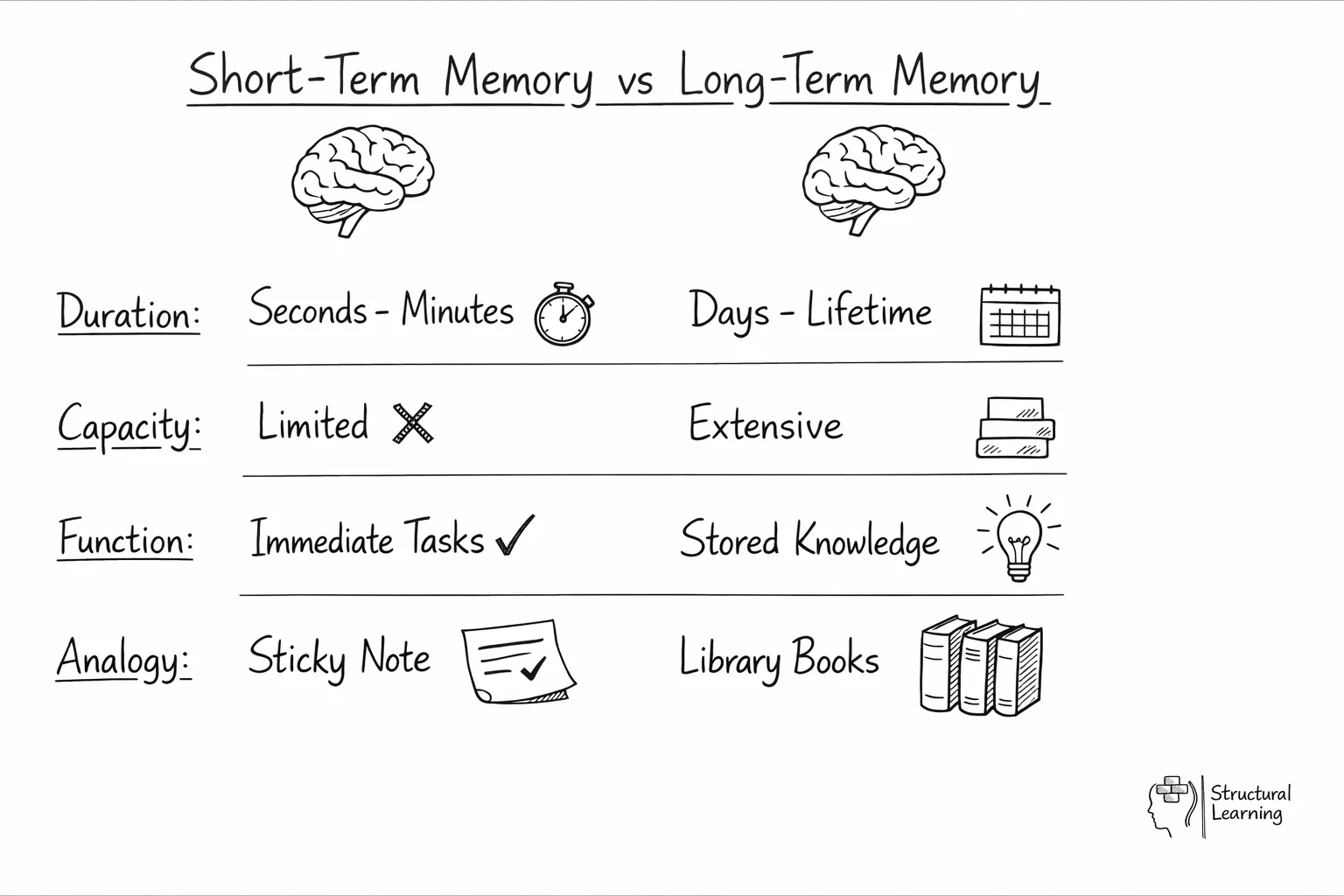
Short-term memory holds information briefly like a sticky note, lasting only seconds to minutes for immediate tasks. Long-term memory stores information for extended periods, from days to a lifetime, like books in a library ready to be retrieved when needed. The transition from short-term to long-term memory happens through encoding, consolidation, and retrieval processes.
Side-by-side comparison: Short-Term Memory vs Long-Term Memory
Think of the human brain as an incredibly intricate library, with long-term memory serving as the expansive stacks where volumes of information are stored for years, even lifetimes. Like a treasured book resting on a shelf, ready to be retrieved when needed, long-term memory keeps our knowledge, experiences, and skills accessible. Contrastingly, short-term memory is akin to a small sticky note fluttering on the edge of your desk, it holds information just long enough for you to jot down a phone number or a grocery list item.
Key Takeaways
Beyond Flashcards: Discover why the Memory Palace technique transforms dry lists into vivid journeys your students actually remember
The Testing Trap: Why active recall beats rereading every time, and how to make retrieval practice feel less like testing
Sleep's Secret Role: Uncover how memory consolidationduring sleep shapes your lesson timing for maximum long-term retention
Your 30-Second Window: Master the critical moment when short-term memory decides what stays: practical encoding strategies that stick
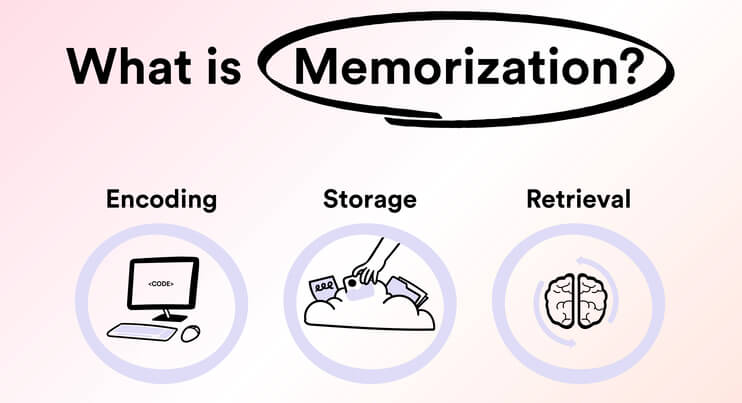
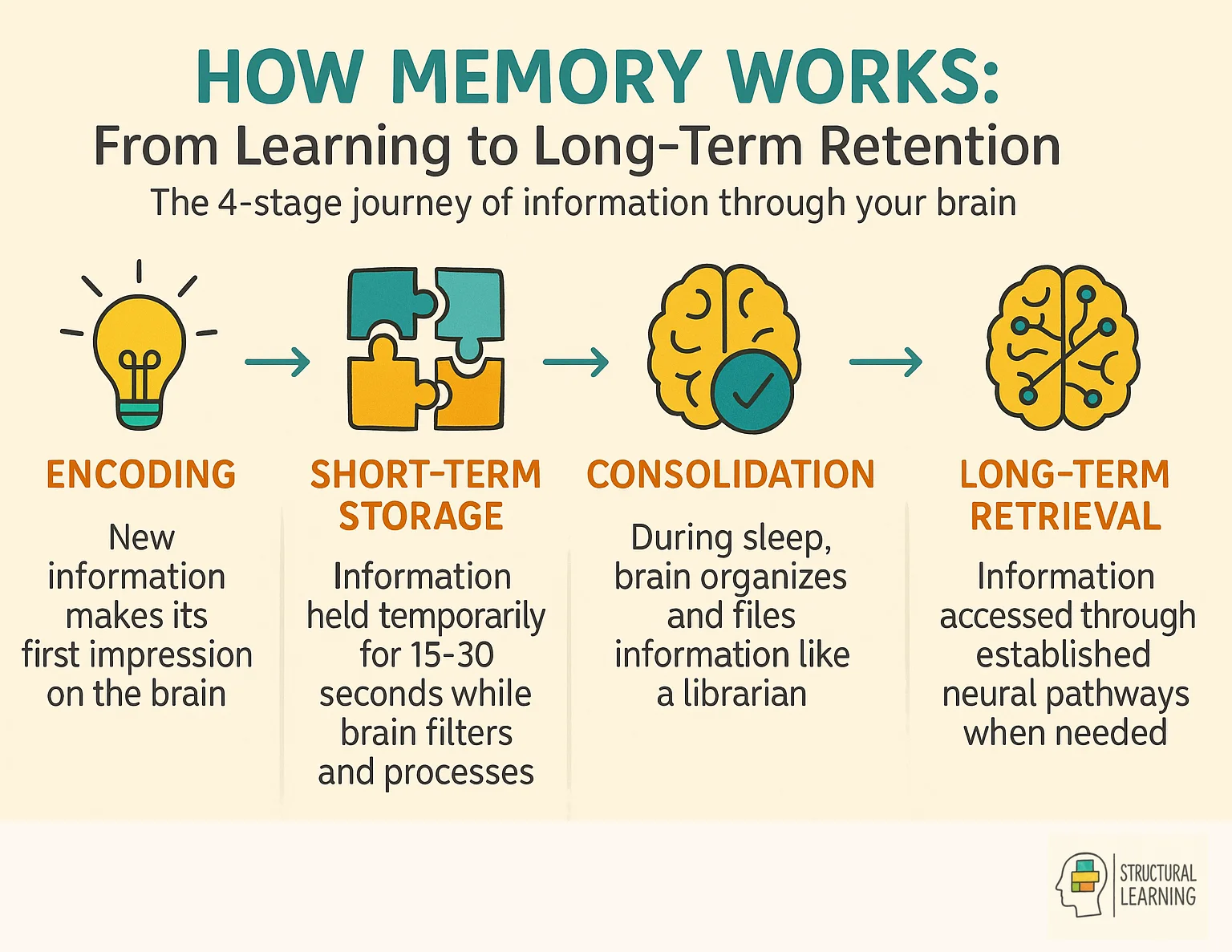
The art of memorization isn't a single action; it's a dynamic process consisting of encoding, where new information makes its first impression, followed by working memory to long-term transfer into permanent storage. Retrieval, or the ability to access sto red information, involves following the neural pathways your brain has established. Memory consolidation, often happening as we sleep, acts like a librarian organising these pathways, ensuring the information is filed correctly for later use and protected against memory decay.
In the classroom, understanding this process helps to structure lessons that transition knowledge from short-term to long-term storage, crafting an educational experience designed for lasting impact.
The Role of Long-Term Memory in Effective Learning
For educators, the goal is less about the brief retention of facts and more about developing durable, long-term memories that students can call upon throughout their academic journey and beyond. Techniques like active recall transform passive learners into active participants. Imagine students using flashcards to self-test, or grappling with practice quizzes that replicate exam conditions, these activities compel the brain to reinforce connections in long-term memory, making information retrieval more fluid and natural.
Employ spaced repetition in your review sessions, where the intervals between these reviews gradually incre ase. This approach helps to embed knowledge securely over time, tackling the natural decline of memory retention known as the forgetting curve. Moreover, when faced with multifaceted subjects, break them down into digestible parts. Whether it's historical dates or complex scientific theories, simplifying and structuring information into chunks makes it more approachable for students.
How Memory Works: From Learning to Long-Term Retention
Lastly, don't shy away from mnemonic devices or visual aids. A silly sentence that knits together the elements of a chemical compound or a vivid mind map linking historical events can be the memorization hook a student needs. By engaging with th is multiplicity of techniques, you weave a richer tapestry of cues and connections, enhancing memory recall and retention in your students.
Memory model
Understanding the Role of Short-Term Memory
As educators, recognise the temporary, yet pivotal role short-term memory plays in learning. Picturing it as the brain's scratchpad or workbench illuminates its importance. During the fleeting 15 to 30 seconds that information resides in short-term memory, the brain is actively engaged in filtering, processing, and comprehending the material presented.
This very moment, when information is still malleable and ephemeral, is where the magic of teaching can shine, guiding students in assigning meaning and importance to new concepts. Why should an event in history matter to them? How does a mathematical formula apply to real-world problem-solving? Your teaching method shapes their encoding phase, casting the deciding vote on whether new information is noteworthy enough to join the long-term ranks.
Remember, short-term memory isn't just about holding onto information; it's about the initial organisation and categorisation that primes the pump for smooth integration into long-term archives. As you plan activities, in-class discussions, and engaging visuals, you're nurturing short-term memory's capability to deploy this processing power efficiently, ultimately building a foundation for enduring memories.
erm memory">Short term and long term memory
8 Effective Memorization Techniques
Now, let's examine into eight powerful memorization techniques you can implement in your classroom to help students bridge the gap between short-term and long-term memory:
Chunking: Break down large pieces of information into smaller, manageable chunks. This reduces cognitive load and makes the material easier to digest. For example, instead of presenting a long list of historical dates, group them by era or event.
Mnemonics: Use memory aids like acronyms, rhymes, or visualisations to help students remember information. The classic example is "ROY G. BIV" for the colours of the rainbow.
Spaced Repetition: Review material at increasing intervals. This reinforces learning over time and combats the forgetting curve. Software and apps can help automate this process.
Active Recall: Encourage students to actively retrieve information from memory, rather than passively rereading notes. Quizzes, flashcards, and self-testing are excellent tools for active recall.
Elaboration: Have students connect new information to what they already know. This creates meaningful connections and makes the material more memorable. Encourage them to explain concepts in their own words.
Interleaving: Mix up different subjects or topics during study sessions. This forces the brain to work harder to retrieve information, which strengthens memory.
Dual Coding: Combine visual and verbal information. Use images, diagrams, and videos to supp lement your lectures and readings. Encourage students to create their own visual aids.
The Method of Loci (Memory Palace): This technique involves associating information with specific locations in a familiar place. Imagine walking through your house and placing each concept you need to remember in a different room.
By incorporating these techniques into your teaching, you can helps students to become more effective learners and improve their long-term retention of knowledge.
What Memory Challenges Do Teachers Face Daily?
Every teacher knows the frustration of teaching a brilliant lesson on Monday, only to be met with blank stares when revisiting the topic on Wednesday. You're not alone if you've wondered whether your students were actually present during that carefully crafted explanation of photosynthesis or the Battle of Hastings. The reality is that memory challenges in the classroom are as varied as they are persistent, and understanding them is the first step towards effective solutions.
Perhaps the most common hurdle is cognitive overload, where students simply can't process the volume of information thrown at them in a typical school day. Picture Year 9 students navigating from French verb conjugations to quadratic equations, then onto the causes of World War I, all before lunch. Their working memory is stretched thin, making it nearly impossible to encode information effectively. This becomes particularly challenging when teaching abstract concepts that don't easily connect to students' existing knowledge or experiences.
Another significant challenge emerges from the varied learning preferences and memory strengths within a single classroom. While Sophie might excel at remembering information presented visually through diagrams and mind maps, James could struggle unless he hears explanations repeated aloud. Add to this the increasing prevalence of attention difficulties, anxiety about assessments, and the digital distractions that compete for students' focus, and it's clear why helping students develop strong memorisation skills has never been more crucial.
How Can Teachers Build Memory-Friendly Lessons?
The secret to memory-friendly teaching lies in structuring your lessons to work with, rather than against, how the brain naturally processes information. Start each lesson with a brief retrieval practice activity that takes no more than five minutes. This could be as simple as asking students to write down three things they remember from last lesson on mini whiteboards, or having them explain a key concept to their partner. Not only does this activate prior knowledge, but it also strengthens those neural pathways through active recall.
When introducing new material, resist the urge to present everything at once. Instead, adopt what's known as the chunk-pause-process approach. Teach for roughly 10-12 minutes (less for younger students), then pause for a processing activity. This might involve students creating a quick sketch to represent what they've learned, writing a one-sentence summary, or generating a question about the material. These processing breaks give the brain time to begin encoding information before the next chunk arrives.
Consider how you're spacing your curriculum throughout the term. Rather than teaching topics in isolated blocks, weave in regular reviews of previous content. A Year 7 maths teacher might spend the first five minutes of Tuesday's lesson revisiting fractions taught three weeks ago, even though the current topic is algebra. This interleaving approach, whilst initially feeling less organised, significantly improves long-term retention. You'll find students making connections between topics more readily and developing a more integrated understanding of your subject.
Which Techniques Work Best for Different Ages?
Primary school children respond brilliantly to memorisation techniques that involve movement and storytelling. When teaching Year 3 students their times tables, try creating physical actions for each multiplication fact. The 7 times table might involve seven jumping jacks, whilst 7x8=56 could be remembered through a silly story about 56 penguins. These multi-sensory approaches tap into children's natural love of play whilst creating multiple memory pathways. Songs and rhymes remain powerful tools at this age, particularly when paired with visual cues or hand gestures.
Secondary students, particularly those preparing for GCSEs, benefit from more sophisticated techniques that they can apply independently. Teach them to create their own memory palaces for subjects like history or geography. A student studying the causes of the English Civil War might mentally walk through their own home, placing each cause in a different room with vivid, often absurd imagery. The throne in the living room represents Charles I's belief in divine right, whilst Parliament meets in the kitchen where family decisions are made.
For A-level students tackling dense, theoretical content, the emphasis shifts towards making abstract concepts concrete. Encourage them to teach concepts to others, even if it's just explaining photosynthesis to their pet cat. This forces them to organise information logically and identify gaps in their understanding. Additionally, these older students often find success with the Feynman Technique: writing explanations in simple language as if teaching a Year 7 student. This process reveals which aspects they've truly memorised versus those they're merely recognising from notes.
Conclusion
Understanding the intricacies of short-term and long-term memory is crucial for educators aiming to creates lasting learning. By employing strategies that facilitate the transfer of information from the temporary holding space of short-term memory to the durable storage of long-term memory, teachers can significantly enhance student outcomes. Techniques like active recall, spaced repetition, and chunking transform passive learning into an active, engaging process that solidifies knowledge.
Ultimately, effective memorisation is not about rote learning; it's about creating meaningful connections and pathways in the brain that allow for effortless retrieval. As educators, our role is to guide students in building these connections, equipping them with the tools and strategies they need to become lifelong learners. By thoughtfully integrating memory-enhancing techniques into our teaching practices, we can helps students to develop their full potential and achieve academic success.
For educators seeking to deepen their understanding of memory and learning, the following research papers offer valuable insights:
Baddeley, A. (2003). Working memory: looking back and looking forward. *Nature Reviews Neuroscience, 4*(10), 829-839.
Brown, P. C., Roediger III, H. L., & McDaniel, M. A. (2014). *Make it stick: The science of successful learning*. Harvard University Press.
Dunlosky, J., Rawson, K. A., Marsh, E. J., Nathan, M. J., & Willingham, D. T. (2013). Improving Students’ Learning With Effective Learning Techniques: Promising Directions From Cognitive and Educational Psychology. *Psychological Science in the Public Interest, 14*(1), 4-58.
Roediger III, H. L., & Karpicke, J. D. (2006). Test-enhanced learning: Taking memory tests improves long-term retention. *Psychological Science, 17*(3), 249-255.
Medina, J. (2014). *Brain rules: 12 principles for surviving and thriving at work, home, and school*. Pear Press.
What is the Difference Between Short-Term and Long-Term Memory?
Short-term memory holds information briefly like a sticky note, lasting only seconds to minutes for immediate tasks. Long-term memory stores information for extended periods, from days to a lifetime, like books in a library ready to be retrieved when needed. The transition from short-term to long-term memory happens through encoding, consolidation, and retrieval processes.
Side-by-side comparison: Short-Term Memory vs Long-Term Memory
Think of the human brain as an incredibly intricate library, with long-term memory serving as the expansive stacks where volumes of information are stored for years, even lifetimes. Like a treasured book resting on a shelf, ready to be retrieved when needed, long-term memory keeps our knowledge, experiences, and skills accessible. Contrastingly, short-term memory is akin to a small sticky note fluttering on the edge of your desk, it holds information just long enough for you to jot down a phone number or a grocery list item.
Key Takeaways
Beyond Flashcards: Discover why the Memory Palace technique transforms dry lists into vivid journeys your students actually remember
The Testing Trap: Why active recall beats rereading every time, and how to make retrieval practice feel less like testing
Sleep's Secret Role: Uncover how memory consolidationduring sleep shapes your lesson timing for maximum long-term retention
Your 30-Second Window: Master the critical moment when short-term memory decides what stays: practical encoding strategies that stick
The art of memorization isn't a single action; it's a dynamic process consisting of encoding, where new information makes its first impression, followed by working memory to long-term transfer into permanent storage. Retrieval, or the ability to access sto red information, involves following the neural pathways your brain has established. Memory consolidation, often happening as we sleep, acts like a librarian organising these pathways, ensuring the information is filed correctly for later use and protected against memory decay.
In the classroom, understanding this process helps to structure lessons that transition knowledge from short-term to long-term storage, crafting an educational experience designed for lasting impact.
The Role of Long-Term Memory in Effective Learning
For educators, the goal is less about the brief retention of facts and more about developing durable, long-term memories that students can call upon throughout their academic journey and beyond. Techniques like active recall transform passive learners into active participants. Imagine students using flashcards to self-test, or grappling with practice quizzes that replicate exam conditions, these activities compel the brain to reinforce connections in long-term memory, making information retrieval more fluid and natural.
Employ spaced repetition in your review sessions, where the intervals between these reviews gradually incre ase. This approach helps to embed knowledge securely over time, tackling the natural decline of memory retention known as the forgetting curve. Moreover, when faced with multifaceted subjects, break them down into digestible parts. Whether it's historical dates or complex scientific theories, simplifying and structuring information into chunks makes it more approachable for students.
How Memory Works: From Learning to Long-Term Retention
Lastly, don't shy away from mnemonic devices or visual aids. A silly sentence that knits together the elements of a chemical compound or a vivid mind map linking historical events can be the memorization hook a student needs. By engaging with th is multiplicity of techniques, you weave a richer tapestry of cues and connections, enhancing memory recall and retention in your students.
Memory model
Understanding the Role of Short-Term Memory
As educators, recognise the temporary, yet pivotal role short-term memory plays in learning. Picturing it as the brain's scratchpad or workbench illuminates its importance. During the fleeting 15 to 30 seconds that information resides in short-term memory, the brain is actively engaged in filtering, processing, and comprehending the material presented.
This very moment, when information is still malleable and ephemeral, is where the magic of teaching can shine, guiding students in assigning meaning and importance to new concepts. Why should an event in history matter to them? How does a mathematical formula apply to real-world problem-solving? Your teaching method shapes their encoding phase, casting the deciding vote on whether new information is noteworthy enough to join the long-term ranks.
Remember, short-term memory isn't just about holding onto information; it's about the initial organisation and categorisation that primes the pump for smooth integration into long-term archives. As you plan activities, in-class discussions, and engaging visuals, you're nurturing short-term memory's capability to deploy this processing power efficiently, ultimately building a foundation for enduring memories.
erm memory">Short term and long term memory
8 Effective Memorization Techniques
Now, let's examine into eight powerful memorization techniques you can implement in your classroom to help students bridge the gap between short-term and long-term memory:
Chunking: Break down large pieces of information into smaller, manageable chunks. This reduces cognitive load and makes the material easier to digest. For example, instead of presenting a long list of historical dates, group them by era or event.
Mnemonics: Use memory aids like acronyms, rhymes, or visualisations to help students remember information. The classic example is "ROY G. BIV" for the colours of the rainbow.
Spaced Repetition: Review material at increasing intervals. This reinforces learning over time and combats the forgetting curve. Software and apps can help automate this process.
Active Recall: Encourage students to actively retrieve information from memory, rather than passively rereading notes. Quizzes, flashcards, and self-testing are excellent tools for active recall.
Elaboration: Have students connect new information to what they already know. This creates meaningful connections and makes the material more memorable. Encourage them to explain concepts in their own words.
Interleaving: Mix up different subjects or topics during study sessions. This forces the brain to work harder to retrieve information, which strengthens memory.
Dual Coding: Combine visual and verbal information. Use images, diagrams, and videos to supp lement your lectures and readings. Encourage students to create their own visual aids.
The Method of Loci (Memory Palace): This technique involves associating information with specific locations in a familiar place. Imagine walking through your house and placing each concept you need to remember in a different room.
By incorporating these techniques into your teaching, you can helps students to become more effective learners and improve their long-term retention of knowledge.
What Memory Challenges Do Teachers Face Daily?
Every teacher knows the frustration of teaching a brilliant lesson on Monday, only to be met with blank stares when revisiting the topic on Wednesday. You're not alone if you've wondered whether your students were actually present during that carefully crafted explanation of photosynthesis or the Battle of Hastings. The reality is that memory challenges in the classroom are as varied as they are persistent, and understanding them is the first step towards effective solutions.
Perhaps the most common hurdle is cognitive overload, where students simply can't process the volume of information thrown at them in a typical school day. Picture Year 9 students navigating from French verb conjugations to quadratic equations, then onto the causes of World War I, all before lunch. Their working memory is stretched thin, making it nearly impossible to encode information effectively. This becomes particularly challenging when teaching abstract concepts that don't easily connect to students' existing knowledge or experiences.
Another significant challenge emerges from the varied learning preferences and memory strengths within a single classroom. While Sophie might excel at remembering information presented visually through diagrams and mind maps, James could struggle unless he hears explanations repeated aloud. Add to this the increasing prevalence of attention difficulties, anxiety about assessments, and the digital distractions that compete for students' focus, and it's clear why helping students develop strong memorisation skills has never been more crucial.
How Can Teachers Build Memory-Friendly Lessons?
The secret to memory-friendly teaching lies in structuring your lessons to work with, rather than against, how the brain naturally processes information. Start each lesson with a brief retrieval practice activity that takes no more than five minutes. This could be as simple as asking students to write down three things they remember from last lesson on mini whiteboards, or having them explain a key concept to their partner. Not only does this activate prior knowledge, but it also strengthens those neural pathways through active recall.
When introducing new material, resist the urge to present everything at once. Instead, adopt what's known as the chunk-pause-process approach. Teach for roughly 10-12 minutes (less for younger students), then pause for a processing activity. This might involve students creating a quick sketch to represent what they've learned, writing a one-sentence summary, or generating a question about the material. These processing breaks give the brain time to begin encoding information before the next chunk arrives.
Consider how you're spacing your curriculum throughout the term. Rather than teaching topics in isolated blocks, weave in regular reviews of previous content. A Year 7 maths teacher might spend the first five minutes of Tuesday's lesson revisiting fractions taught three weeks ago, even though the current topic is algebra. This interleaving approach, whilst initially feeling less organised, significantly improves long-term retention. You'll find students making connections between topics more readily and developing a more integrated understanding of your subject.
Which Techniques Work Best for Different Ages?
Primary school children respond brilliantly to memorisation techniques that involve movement and storytelling. When teaching Year 3 students their times tables, try creating physical actions for each multiplication fact. The 7 times table might involve seven jumping jacks, whilst 7x8=56 could be remembered through a silly story about 56 penguins. These multi-sensory approaches tap into children's natural love of play whilst creating multiple memory pathways. Songs and rhymes remain powerful tools at this age, particularly when paired with visual cues or hand gestures.
Secondary students, particularly those preparing for GCSEs, benefit from more sophisticated techniques that they can apply independently. Teach them to create their own memory palaces for subjects like history or geography. A student studying the causes of the English Civil War might mentally walk through their own home, placing each cause in a different room with vivid, often absurd imagery. The throne in the living room represents Charles I's belief in divine right, whilst Parliament meets in the kitchen where family decisions are made.
For A-level students tackling dense, theoretical content, the emphasis shifts towards making abstract concepts concrete. Encourage them to teach concepts to others, even if it's just explaining photosynthesis to their pet cat. This forces them to organise information logically and identify gaps in their understanding. Additionally, these older students often find success with the Feynman Technique: writing explanations in simple language as if teaching a Year 7 student. This process reveals which aspects they've truly memorised versus those they're merely recognising from notes.
Conclusion
Understanding the intricacies of short-term and long-term memory is crucial for educators aiming to creates lasting learning. By employing strategies that facilitate the transfer of information from the temporary holding space of short-term memory to the durable storage of long-term memory, teachers can significantly enhance student outcomes. Techniques like active recall, spaced repetition, and chunking transform passive learning into an active, engaging process that solidifies knowledge.
Ultimately, effective memorisation is not about rote learning; it's about creating meaningful connections and pathways in the brain that allow for effortless retrieval. As educators, our role is to guide students in building these connections, equipping them with the tools and strategies they need to become lifelong learners. By thoughtfully integrating memory-enhancing techniques into our teaching practices, we can helps students to develop their full potential and achieve academic success.
For educators seeking to deepen their understanding of memory and learning, the following research papers offer valuable insights:
Baddeley, A. (2003). Working memory: looking back and looking forward. *Nature Reviews Neuroscience, 4*(10), 829-839.
Brown, P. C., Roediger III, H. L., & McDaniel, M. A. (2014). *Make it stick: The science of successful learning*. Harvard University Press.
Dunlosky, J., Rawson, K. A., Marsh, E. J., Nathan, M. J., & Willingham, D. T. (2013). Improving Students’ Learning With Effective Learning Techniques: Promising Directions From Cognitive and Educational Psychology. *Psychological Science in the Public Interest, 14*(1), 4-58.
Roediger III, H. L., & Karpicke, J. D. (2006). Test-enhanced learning: Taking memory tests improves long-term retention. *Psychological Science, 17*(3), 249-255.
Medina, J. (2014). *Brain rules: 12 principles for surviving and thriving at work, home, and school*. Pear Press.
{"@context":"https://schema.org","@graph":[{"@type":"Article","@id":"https://www.structural-learning.com/post/8-effective-memorization-techniques#article","headline":"8 Effective Memorization Techniques","description":"Discover proven memorization techniques to help students retain and understand information more effectively in our comprehensive guide for teachers.","datePublished":"2024-04-30T10:59:28.128Z","dateModified":"2026-01-26T10:09:32.212Z","author":{"@type":"Person","name":"Paul Main","url":"https://www.structural-learning.com/team/paulmain","jobTitle":"Founder & Educational Consultant"},"publisher":{"@type":"Organization","name":"Structural Learning","url":"https://www.structural-learning.com","logo":{"@type":"ImageObject","url":"https://cdn.prod.website-files.com/5b69a01ba2e409e5d5e055c6/6040bf0426cb415ba2fc7882_newlogoblue.svg"}},"mainEntityOfPage":{"@type":"WebPage","@id":"https://www.structural-learning.com/post/8-effective-memorization-techniques"},"image":"https://cdn.prod.website-files.com/5b69a01ba2e409501de055d1/696a2cf8972be76f09fd11ba_696a2cf25cf94e23739b73b5_8-effective-memorization-techniques-illustration.webp","wordCount":4676},{"@type":"BreadcrumbList","@id":"https://www.structural-learning.com/post/8-effective-memorization-techniques#breadcrumb","itemListElement":[{"@type":"ListItem","position":1,"name":"Home","item":"https://www.structural-learning.com/"},{"@type":"ListItem","position":2,"name":"Blog","item":"https://www.structural-learning.com/blog"},{"@type":"ListItem","position":3,"name":"8 Effective Memorization Techniques","item":"https://www.structural-learning.com/post/8-effective-memorization-techniques"}]},{"@type":"FAQPage","mainEntity":[{"@type":"Question","name":"What is the Difference Between Short-Term and Long-Term Memory?","acceptedAnswer":{"@type":"Answer","text":"Short-term memory holds information briefly like a sticky note, lasting only seconds to minutes for immediate tasks. Long-term memory stores information for extended periods, from days to a lifetime, like books in a library ready to be retrieved when needed. The transition from short-term to long-term memory happens through encoding, consolidation, and retrieval processes."}},{"@type":"Question","name":"What Memory Challenges Do Teachers Face Daily?","acceptedAnswer":{"@type":"Answer","text":"Every teacher knows the frustration of teaching a brilliant lesson on Monday, only to be met with blank stares when revisiting the topic on Wednesday. You're not alone if you've wondered whether your students were actually present during that carefully crafted explanation of photosynthesis or the Battle of Hastings. The reality is that memory challenges in the classroom are as varied as they are persistent, and understanding them is the first step towards effective solutions."}},{"@type":"Question","name":"How Can Teachers Build Memory-Friendly Lessons?","acceptedAnswer":{"@type":"Answer","text":"The secret to memory-friendly teaching lies in structuring your lessons to work with, rather than against, how the brain naturally processes information. Start each lesson with a brief retrieval practice activity that takes no more than five minutes. This could be as simple as asking students to write down three things they remember from last lesson on mini whiteboards, or having them explain a key concept to their partner. Not only does this activate prior knowledge, but it also strengthens tho"}},{"@type":"Question","name":"Which Techniques Work Best for Different Ages?","acceptedAnswer":{"@type":"Answer","text":"Primary school children respond brilliantly to memorisation techniques that involve movement and storytelling. When teaching Year 3 students their times tables, try creating physical actions for each multiplication fact. The 7 times table might involve seven jumping jacks, whilst 7x8=56 could be remembered through a silly story about 56 penguins. These multi-sensory approaches tap into children's natural love of play whilst creating multiple memory pathways. Songs and rhymes remain powerful tool"}}]}]}