Updated on
September 16, 2026
Deeper Learning: How to Move Beyond Surface-Level Knowledge
How to design lessons for deep learning rather than surface memorisation, using metacognition, transfer and critical thinking for understanding that lasts.

Updated on
September 16, 2026
How to design lessons for deep learning rather than surface memorisation, using metacognition, transfer and critical thinking for understanding that lasts.
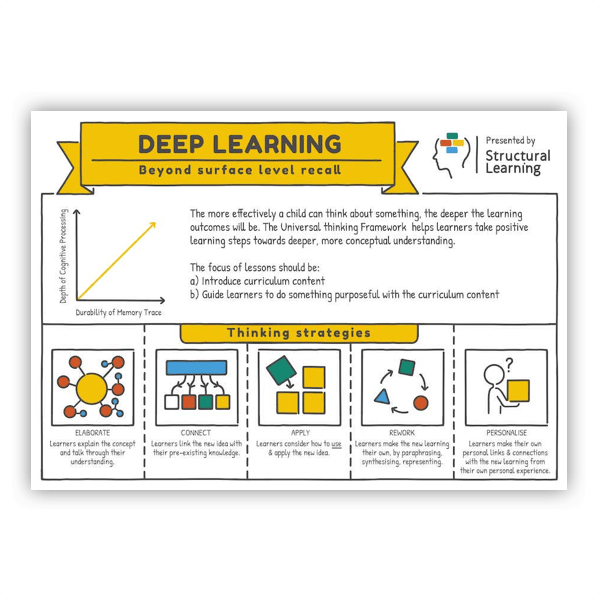
Deeper learning refers to the quality of cognitive processing students engage in, not simply the quantity of time spent studying. When students process information deeply, they create stronger, more durable memory traces and more flexible knowledge that can be applied in new situations.
Daniel Willingham's observation that " memory is the residue of thought" captures this principle. Students remember what they actively think about, not what they passively encounter. Techniques such as dialogic teaching ensure students engage cognitively with content rather than consuming it passively. A lesson where students spend most of their mental effort on colouring a poster will produce memories of colouring, not of the content the poster represents.
Deeper learning outcomes are characterised by understanding that goes beyond surface features to gra sp underlying principles, connections between ideas, and conditions under which knowledge applies. This type of learning takes longer to develop but proves far more useful thanpassive learning, which has implications for measuring progress in educational settings.
Surface processing involves memorising facts or procedures without understanding their meaning or connections, while deep processing requires students to analyse relationships, extract principles, and connect new information to existing knowledge. Surface learning produces fragile knowledge that students can only reproduce in familiar contexts, whereas deep processing creates flexible understanding that transfers to new situations. The key distinction lies in whether students engage with meaning and patterns rather than just memorising isolated information.
Cognitive psychologists distinguish between shallow and deep levels of processing. Shallow processing focuses on surface features: the appearance of words, their sound, or rote repetition. Deep processing involves meaning: how new information connects to what you already know (including students' cultural capitaland social learning experiences), what it implies, and why it matters.
Research by Craik and Lockhart demonstrated that deeper processing at encoding leads to better retrieval later. Students who thought about the meaning of words remembered them better than those who focussed on their appearance or sound, even when study time was identical.
In classroom terms, activities such as dialogic teaching that require students to explain, compare, analyse, or apply concepts promote deeper processing than those requiring only recognition or reproduction. The challenge is designing taskswhere deep processing is the natural response, not an optional extra for motivated st udents.
Bloom's taxonomy provides a hierarchy of cognitive processes from remembering at the base through understanding, applying, analysing, evaluating, to creating at the top. While the hierarchy is not absolute (sometimes analysis requires remembering specific facts), it provides a useful audit tool for lesson activities.
Many lessons cluster at the lower levels: students recall facts, define terms, or describe processes. Moving up the taxonomy requires activities that demand comparison (how are these similar and different?), evaluation (which approach is better and why?), or synthesis (how would you combine these ideas to solve this problem?).
The Structure of Observed Learning Outcomes (SOLO taxonomy) describes increasing complexity in student responses. At the prestructural level, students miss the point entirely. Unistructural responses identify one relevant aspect. Multistructural responses identify several aspects but do not connect them. Relational responses integrate multiple aspects into a coherent understanding. Extended abstract responses apply understanding to new contexts or generate new principles.
SOLO provides particularly useful language for feedback, helping students understand not just that their answer needs improvement but how it needs to improve. Moving from listing facts to explaining connections represents genuine cognitive advancement.
Asking "why" and "how" questions forces students to generate explanations rather than passively accept information. Research shows that students who generate their own explanations for why facts are true remember them better than those who simply study the facts. This works because generating explanations requires connecting new information to existing knowledge.
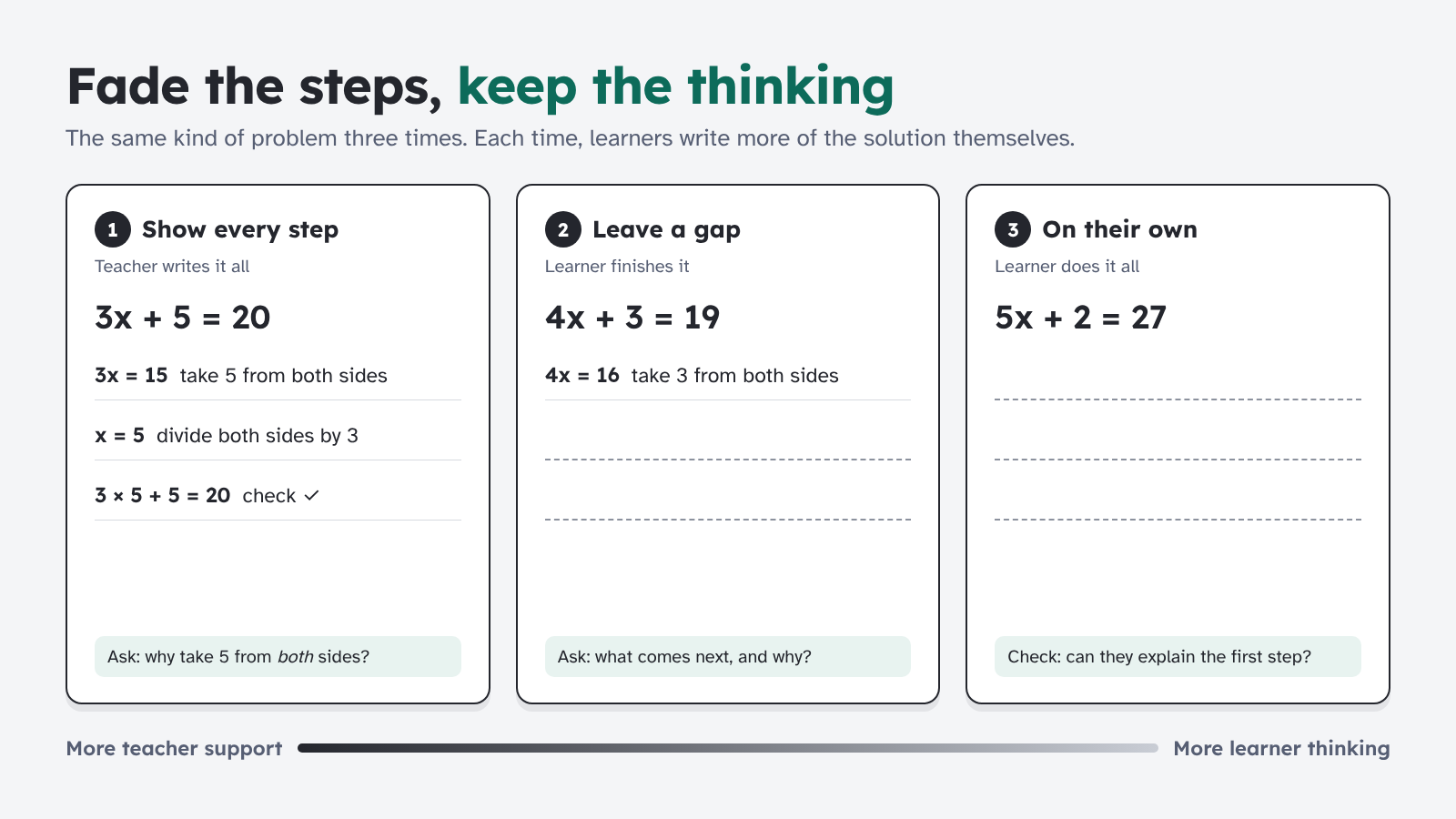
When students explain their reasoning aloud or in writing, they often discover gaps in their understanding. The act of articulating thinking makes implicit assumptions explicit, allowing them to be examined and corrected. Worked examples become more effective when students explain each step to themselves rather than passively reading through.
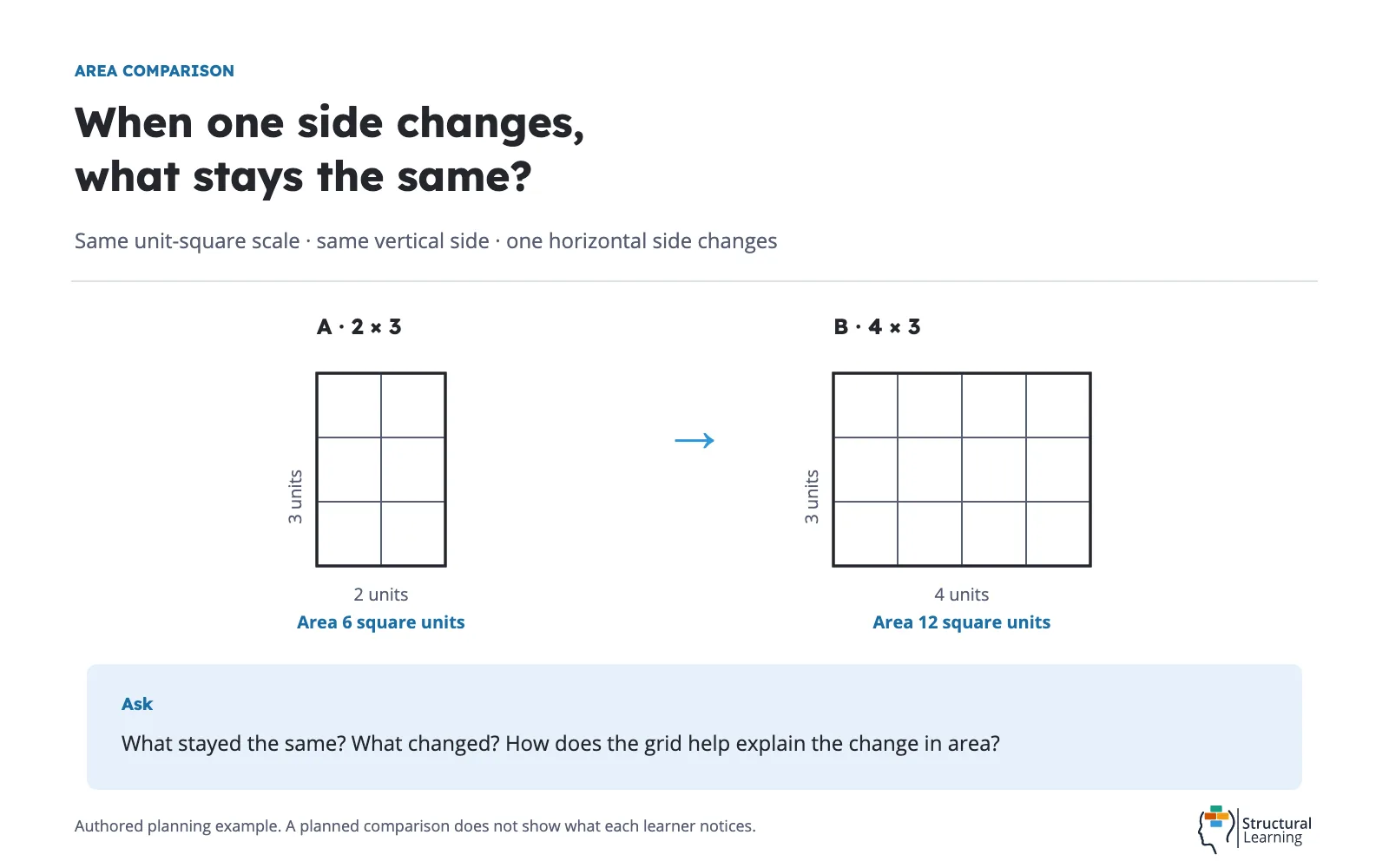
Comparing similar but different concepts forces attention to distinctive features that might otherwise be overlooked. Students who compare mitosis and meiosis develop clearer understanding of each than those who study them separately. Comparison requires abstraction: identifying which features matter and which are incidental.
Surface knowledge allows recognition of familiar problems but fails when the same concept appears in unfamiliar contexts. Providing varied examples and requiring students to apply concepts to new situations forces the deeper processing that enables transfer. This approach promotes higher-order thinking skills and is more demanding than practising the same problem type repeatedly but produces more robust understanding. Effective scaffolding can support students as they work through increasingly complex problems. Teachers can also use explicit instruction to model thinking strategies that support this deeper processing, helping students develop both critical thinking skills and domain-specific knowledge.concepts. Effective scaffolding can support students as they work through increasingly complex problems. Teachers can also use explicit instruction to model thinking strategies that support this deeper processing, helping students develop both critical thinking skills and domain-specific knowledge.
The most significant barrier to implementing deeper learning approaches often stems from time constraints and assessment pressures that dominate classroom practice. Research demonstrates that teachers frequently abandon inquiry-based methods when faced with curriculum coverage demands, yet this creates a false dichotomy. Dylan Wiliam's formative assessment research shows that deeper learning strategies actually accelerate content mast ery by strengthening conceptual understanding, making subsequent learning more efficient.
Large class sizes present another common challenge, but effective strategies can transform this obstacle into an opportunity. Structured peer collaboration, drawing from the broader knowledge-building research tradition, enables learners to engage in meaningful discourse whilst reducing individual teacher demands. Think-pair-share protocols and rotating group investigations allow educators to facilitate deeper learning experiences even with thirty or more students, as peer explanation strengthens understanding for both speaker and listener.
Successful implementation requires starting small and building systematically. Begin with one subject area or lesson per week, gradually expanding as confidence grows. Create simple rubrics that assess thinking processes alongside content knowledge, and use exit tickets to capture student reflection. These modest changes, supported by John Hattie's meta-analyses on effective teaching practices, demonstrate immediate impact whilst building sustainable deeper learning habits in your classroom. See also: Questioning in teaching.
In a Year 8 science classroom, students investigating energy transfer don't simply memorise the law of conservation of energy. Instead, they design and build marble runs, collecting data on height, speed, and distance whilst explaining energy transformations at each stage. This approach exemplifies how deeper learning outcomes emerge when students apply scientific principles to solve authentic problems. Research demonstrates that such hands-on investigations, rooted in Kolb's experiential learning theory, enhance both conceptual understanding and retention compared to traditional textbook exercises.
Primary mathematics offers equally compelling examples of deeper learning in practice. Rather than drilling times tables in isolation, Year 4 students might plan a school garden, calculating areas for different vegetable plots, determining seed quantities, and creating scaled drawings. This authentic context allows children to see mathematical relationships in action whilst developing critical thinking and problem-solving skills. Educational practice that connects abstract concepts to real-world applications helps students understand how to perform calculations and when and why mathematical thinking matters.
These classroom examples share common characteristics: students engage with meaningful problems, make connections between disciplines, and develop both content knowledge and transferable skills. Effective strategies for implementing such approaches include starting with compelling questions, encouraging student voice in learning design, and providing multiple opportunities for reflection and peer collaboration. See also: Thinking hard strategies.
Technology's potential to enhance deeper learning outcomes hinges on how thoughtfully educators integrate digital tools into their pedagogical practice. Research demonstrates that technology becomes truly transformative when it serves as a cognitive amplifier rather than merely a content delivery system. Richard Mayer's multimedia learning principles show that effective digital learning experiences combine visual and auditory channels strategically, reducing extraneous cognitive load while supporting students in constructing meaningful connections between concepts.
The most powerful technological applications for deeper learning focus on enabling students to create, analyse, and synthesise rather than passively consume information. Digital platforms that support collaborative inquiry, data visualisation, and authentic problem-solving help students engage with complex real-world challenges. When students use technology to model scientific phenomena, create multimedia presentations of their research, or collaborate with peers across geographical boundaries, they develop the critical thinking and communication skills central to deeper learning outcomes.
Successful classroom implementation requires educators to maintain focus on learning objectives rather than technological novelty. Start by identifying where students struggle with conceptual understanding, then select digital tools that specifically address these challenges. Consider how technology can make thinking visible, facilitate peer feedback, or provide multiple representations of complex ideas. This purposeful approach ensures that educational practice remains student-centred whilst harnessing technology's capacity to support meaningful learning experiences.
Effective monitoring of deeper learning outcomes requires a fundamental shift from traditional assessment practices towards more comprehensive evaluation methods. Research demonstrates that deeper learning competencies, such as critical thinking and collaborative problem-solving, cannot be adequately captured through standardised testing alone. Instead, educators must employ multiple assessment strategies that provide ongoing insights into student progress, including performance-based assessments, digital portfolios, and structured peer evaluations.
Dylan Wiliam's formative assessment research highlights the importance of real-time feedback loops in supporting student growth. Practical classroom strategies include implementing regular reflection protocols where students articulate their thinking processes, using rubrics that explicitly define deeper learning criteria, and creating opportunities for students to demonstrate understanding through varied modalities. Learning analytics tools can also support this process by tracking student engagement patterns and collaborative contributions over time.
The key to successful monitoring lies in making student thinking visible through structured documentation and regular check-ins. Teachers can establish learning journals, conduct brief individual conferences, and use exit tickets that probe beyond surface-level comprehension. This approach enables educators to adjust instruction responsively, ensuring that all students receive appropriate support in developing these crucial twenty-first-century competencies.
Deeper learning is not about doing more; it's about thinking more. By focusing on the quality of cognitive engagement, teachers can help students develop robust, flexible knowledge that transfers to new contexts. Explicitly teaching thinking strategies, using frameworks like Bloom's and SOLO taxonomies, and designing tasks that demand deep processing are crucial steps in developing deeper learning outcomes.
Ultimately, the goal is to cultivate a classroom environment where students are active thinkers, constantly questioning, connecting, and applying their knowledge. This approach not only enhances academic achievement but also prepares students for the challenges of a complex and rapidly changing world. By prioritising depth over coverage, we can helps students to become lifelong learners and effective problem-solvers. See also: Learner journey.
To begin your deeper learning journey, start by identifying one existing lesson or unit where you can introduce elements of inquiry, collaboration, or real-world application. Consider partnering with a colleague to observe each other's classroom implementation and provide constructive feedback on student engagement and understanding. Professional learning communities focussed on deeper learning outcomes can provide ongoing support and shared problem-solving as you navigate this pedagogical shift.
The long-term benefits of this educational practice extend far beyond improved test scores. Students who experience consistent deeper learning develop greater confidence in their ability to tackle complex challenges, demonstrate increased motivation for learning, and show enhanced capacity for transfer of knowledge across subjects. Research demonstrates that these learning experiences prepare students for academic success and for meaningful participation in democratic society and future careers that demand adaptability, critical analysis, and effective thinking. The investment in deeper learning transforms both teaching practice and student potential in ways that resonate throughout their educational journey and beyond.
Deeper learning refers to the quality of cognitive processing students use to understand underlying principles rather than just surface facts. It happens when students actively think about meaning and create strong, flexible memory traces. This approach ensures that knowledge is durable and can be applied in new situations.
Surface processing involves memorising facts or procedures without understanding their connections, while deep processing requires students to analyse relationships and extract principles. Surface knowledge is often fragile and fails under pressure. Deep understanding creates flexible knowledge that transfers effectively to different contexts.
Teachers can use strategies like elaborative interrogation, where students explain why certain facts are true. Encouraging self-explanation and comparing similar concepts also forces students to focus on meaning rather than surface features. These activities make thinking deeply about the content unavoidable during the lesson.
Research shows that deeper processing at the point of learning leads to better memory retrieval later. Daniel Willingham notes that memory is the residue of thought, meaning students remember what they have actively thought about. This cognitive engagement creates more durable understanding than passive repetition or rote memorisation.
A common mistake is assuming that busy students are always thinking deeply, even though tasks like colouring often keep students busy without challenging their cognition. Teachers might also focus on covering a large quantity of content at the expense of developing a thorough understanding. Designing activities where deep thought is an optional extra rather than a requirement is another frequent pitfall.
Bloom's taxonomy and SOLO taxonomy are two useful tools for auditing the cognitive demand of classroom activities. Bloom's provides a hierarchy from basic recall to complex creation, while SOLO describes the increasing complexity of student responses. These frameworks help teachers provide specific feedback and move students from listing facts to explaining connections.