Oracy strategies A-Z: classroom talk routines by purpose
|
November 1, 2026
Explore 29 oracy strategies from A to Z. Choose talk routines by purpose, compare exploratory and explanatory talk, and follow links to practical guides.
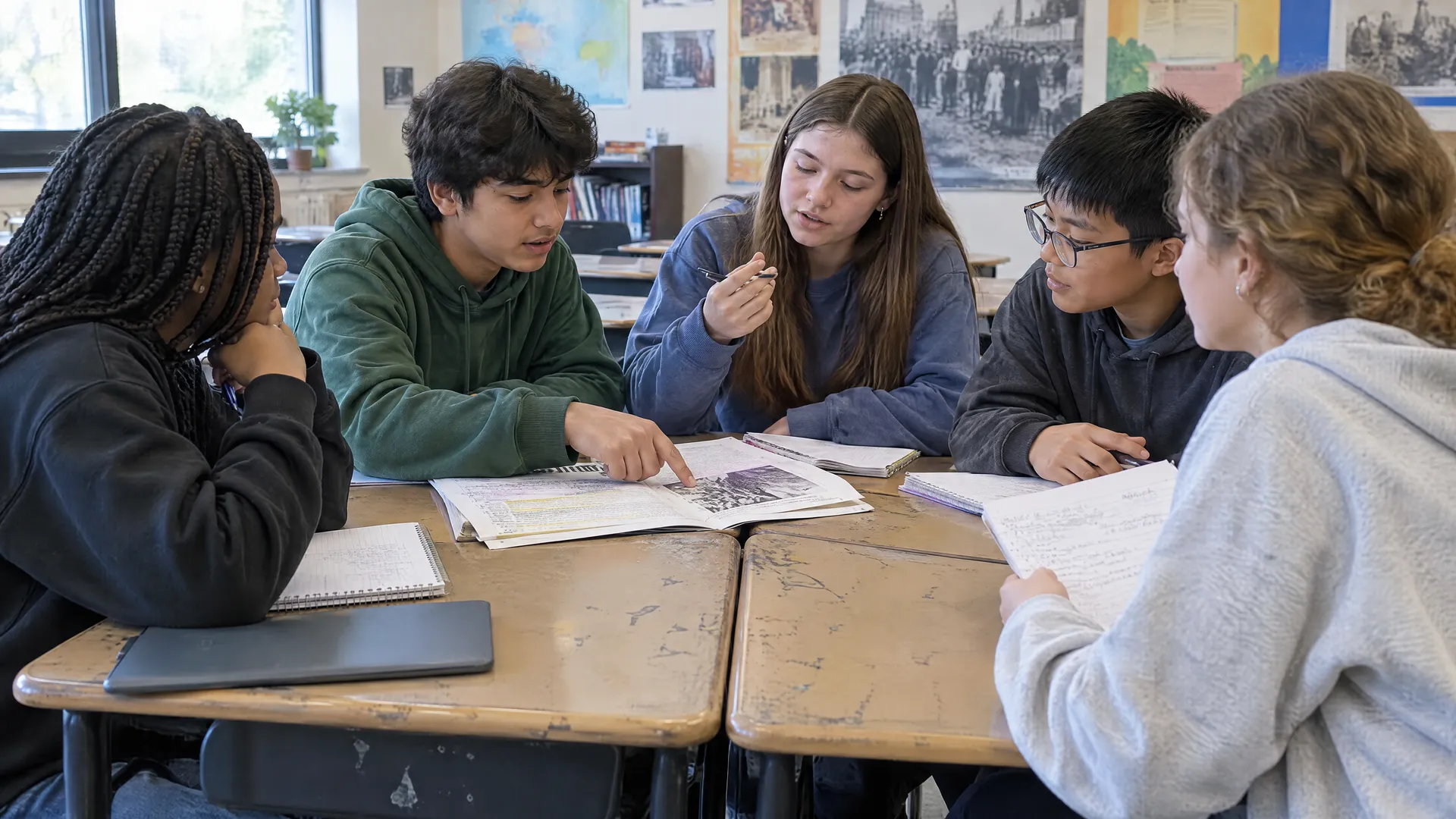
This directory sorts classroom talk routines by purpose, so you can pick one for your next lesson in minutes and build stronger oracy in schools without reading a theory chapter first. Each entry gives a one-line description, its main purpose, a realistic time range, the grouping and a link to a fuller guide where one is live.
The techniques sit in two families, exploratory talk and explanatory talk. Within each family they are grouped under six umbrella purposes. These purposes are an editorial way of organising the list. They are not a fixed set of product cards, and many techniques can serve more than one purpose.
Start with the talk demand, then choose a family.
Exploratory talk: generate, test and revise ideas. Try Think-Pair-Share or Turn and Talk.
Explanatory talk: explain, justify and check with evidence. Try Accountable talk or Socratic questioning.
The full A-Z list below holds 29 editorial named techniques; the approved app catalogue has 16 routines and 2 shared scaffolds.Source: Structural Learning 2026, www.structural-learning.com/post/oracy-strategies-a-z
Exploratory talk: generate, test and revise ideas. Try Think-Pair-Share.
How do I choose a classroom talk routine?
Start with the purpose, then check four practical constraints. Choose an exploratory routine when learners need to think, test ideas or work something out together. Choose an explanatory routine when learners need to justify, question, teach or reflect on what they already understand.
Purpose: Do you want learners to generate and test ideas (exploratory) or articulate and defend them (explanatory)?
Time: A two-minute Turn and Talk fits a lesson transition. A Socratic seminar needs a full lesson and prior reading.
Grouping: Pairs give every learner airtime. Trios add an observer. Whole-class formats build shared standards but leave some learners quiet.
Preparation: Some routines need only a good question. Others need statements, cards, roles or a source text prepared in advance.
Listener job: Decide what listeners must do, for example summarise, build on, challenge or ask a question. A routine without a listener job often becomes turn-taking rather than talk.
If you know your purpose and topic, you can make this for my lesson in the Structural Learning app.
Which talk family fits your lesson?
Instruction: choose the talk demand you have right now. A family and one guide appear below. Use arrow keys to move between options.
No choice made yet. Pick one demand to see a family and a guide.
Exploratory talk
Give individual thinking time, then pair talk to widen the pool of ideas before sharing.
Exploratory talk is tentative, collaborative talk where learners reason aloud, try out half-formed ideas and change their minds. Our guide to exploratory talk in the classroom explains the thinking behind it. The routines below are grouped under three umbrella purposes: Talk roles, Thinking Out Loud and Group-based discussion.
Umbrella purposes in this family
Talk roles (including Talk Tactics): give each learner a defined job so that participation and listening are structured.
Thinking Out Loud: make reasoning audible, often in pairs, before ideas are polished.
Group-Based Discussion: build ideas across a group, with movement, positions or shared stimuli.
Exploratory directory entries (A to Z)
ABC feedback: Learners respond to a peer by choosing to Agree with, Build on or Challenge what was said, and explain why. Family: Exploratory talk, Talk roles. Time: 5 to 15 minutes. Grouping: whole class or small groups. Make this for my lesson
Always Sometimes Never: Learners decide whether a statement is always, sometimes or never true and find examples to prove it. Family: Exploratory talk, Talk roles. Time: 10 to 20 minutes. Grouping: pairs or small groups. Make this for my lesson
Concept cartoons: Learners discuss a cartoon in which characters voice competing ideas about a concept and decide who they agree with. Family: Exploratory talk, Talk roles. Time: 10 to 20 minutes. Grouping: pairs or small groups. Make this for my lesson
Conscience Alley: Two lines of learners voice opposing arguments as a character walks between them towards a decision. Family: Exploratory talk, Group-based discussion. Time: 10 to 15 minutes. Grouping: whole class. Make this for my lesson
Fishbowl: An inner circle discusses while an outer circle observes and evaluates, then groups swap. Family: Exploratory talk, Group-based discussion. Time: 20 to 40 minutes. Grouping: whole class in two circles. Make this for my lesson
Four Corners: Learners move to a corner that matches their view, discuss reasons with others there, then share across corners. Family: Exploratory talk, Talk roles. Time: 10 to 15 minutes. Grouping: whole class in four groups. Make this for my lesson
Harkness discussion: Learners lead a seated, text-based discussion while the teacher mostly observes and tracks contributions. Family: Exploratory talk, Group-based discussion. Time: 30 to 50 minutes. Grouping: whole class or a large group around a table. Make this for my lesson
Inside-Outside Circle: Two concentric circles face each other, discuss a prompt, then rotate to a new partner. Family: Exploratory talk, Talk roles. Time: 10 to 15 minutes. Grouping: whole class in rotating pairs. Make this for my lesson
Jigsaw: Each learner becomes the expert on one part of a topic and teaches it to a home group. Family: Exploratory talk, Thinking Out Loud. Time: 30 to 50 minutes. Grouping: small groups of three to five. Make this for my lesson
Mantle of the Expert: Learners take on the role of a team of experts commissioned to solve a realistic problem. Family: Exploratory talk, Thinking Out Loud. Time: one lesson to several weeks. Grouping: whole class as an expert team. Make this for my lesson
Odd One Out: Learners pick which of three or four items is the odd one out and justify the choice, knowing several answers can work. Family: Exploratory talk, Talk roles. Time: 5 to 15 minutes. Grouping: pairs or small groups. Make this for my lesson
Philosophy for Children: A community of enquiry responds to a stimulus, chooses a philosophical question and explores it together. Family: Exploratory talk, Group-based discussion. Time: 40 to 60 minutes. Grouping: whole class in a circle. Make this for my lesson
Snowball (1-2-4-All): Learners think alone, refine in pairs, combine into fours, then share the strongest idea with the class. Family: Exploratory talk, Talk roles. Time: 10 to 20 minutes. Grouping: individual, pairs, fours, whole class. Make this for my lesson
Socratic seminar: Learners prepare a text, then discuss open questions about it, citing evidence and responding to one another. Family: Exploratory talk, Group-based discussion. Time: 40 to 60 minutes plus preparation. Grouping: whole class or large group. Make this for my lesson
Speed debating: Pairs argue opposite sides of a motion for a minute or two, then rotate to a new opponent. Family: Exploratory talk, Group-based discussion. Time: 10 to 20 minutes. Grouping: rotating pairs. Make this for my lesson
Structured debate: Teams prepare and deliver arguments and rebuttals on a motion following set speaking roles and timings. Family: Exploratory talk, Group-based discussion. Time: 40 to 60 minutes plus preparation. Grouping: two teams with an audience. Make this for my lesson
Talk partners: Learners have a regular, planned partner for quick discussion throughout lessons. Family: Exploratory talk, Talk roles. Time: 1 to 5 minutes per use. Grouping: pairs. Make this for my lesson
Talk tokens: Each learner spends a token when they speak, which balances airtime and prompts quieter voices in. Family: Exploratory talk, Talk roles. Time: 10 to 20 minutes. Grouping: small groups. Make this for my lesson
Talk trios (Listening triads): Learners rotate through speaker, questioner and observer roles, with the observer summarising what they heard. Family: Exploratory talk, Talk roles. Time: 15 to 25 minutes. Grouping: threes. Make this for my lesson
Talking points: Groups discuss a set of provocative statements, agreeing, disagreeing or staying unsure, and give reasons. Family: Exploratory talk, Talk roles. Time: 15 to 25 minutes. Grouping: small groups of three or four. Make this for my lesson
Think Aloud: The teacher, or a learner, narrates their thinking while solving a problem so others can hear the reasoning steps. Family: Exploratory talk, Thinking Out Loud. Time: 3 to 10 minutes. Grouping: whole class or pairs. Make this for my lesson
Think-Pair-Share: Learners think silently, discuss with a partner, then share selected ideas with the class. Family: Exploratory talk, Talk roles. Time: 5 to 10 minutes. Grouping: individual, pairs, whole class. Make this for my lesson
Turn and Talk: Learners turn to a neighbour and discuss a focused prompt for a short, timed burst. Family: Exploratory talk, Talk roles. Time: 1 to 3 minutes. Grouping: pairs. Make this for my lesson
Explanatory talk routines
Explanatory talk is more presentational. Learners organise what they know, justify a position, answer questions and evaluate their own or others' thinking. Our overview of talk-based learning strategies and the guide to habits of discussion add more detail on building these norms.
Umbrella purposes in this family
Questioning: learners ask and answer probing questions to test ideas and sources.
Explaining My Thinking: learners justify, argue or teach an idea clearly to others.
Reflection: learners evaluate a discussion, an answer or their own understanding.
Explanatory directory entries (A to Z)
Accountable talk: Shared norms hold learners accountable to the community, to accurate knowledge and to sound reasoning during discussion. Family: Explanatory talk, Questioning. Time: ongoing, used across lessons. Grouping: any. Make this for my lesson
Hot Seating: A learner in role as a character or figure answers questions from the class. Family: Explanatory talk, Questioning. Time: 10 to 20 minutes. Grouping: whole class or small groups. Make this for my lesson
Sentence stems: Starter phrases such as "I agree because..." or "Building on that..." help learners frame contributions. This is a scaffold to pair with a routine, not a complete routine. Family: Explanatory talk, Explaining My Thinking. Time: no extra time once taught. Grouping: any. Make this for my lesson
Socratic questioning: The teacher or learners use probing questions about assumptions, evidence and implications to deepen reasoning. Family: Explanatory talk, Questioning. Time: 5 to 20 minutes. Grouping: whole class or small groups. Make this for my lesson
Talk detectives: One or two learners observe a discussion and report back on how the group talked, for example who built on ideas or asked questions. This is a role to add to another routine, not a complete routine. Family: Explanatory talk, Reflection. Time: adds 3 to 5 minutes of feedback. Grouping: observer within a small group or whole class. Make this for my lesson
Teach Back: Learners explain a concept they have just learned to a partner, who checks it against a model or criteria. Family: Explanatory talk, Explaining My Thinking. Time: 3 to 10 minutes. Grouping: pairs. Make this for my lesson
One technique, more than one purpose
Each technique appears once under its most common purpose, but the boundaries are flexible. Hot Seating can be exploratory if the class is still working out a character's motives. Think-Pair-Share becomes explanatory when the share step requires a justified answer. Talk trios work well for reflection when the observer gives structured feedback. Sentence stems and Talk detectives can be added to almost any routine in either family.
Subject examples
Maths: Use Always Sometimes Never with "Multiplying makes a number bigger" so learners hunt for counterexamples such as fractions. For fluency-focused talk, see our number talks examples.
Science: Use Concept cartoons on why a coat keeps you warm, then Teach Back the correct explanation of insulation.
English: Use Hot Seating with a learner as a character from the class novel, with questioners required to quote the text.
History: Use Four Corners on the main cause of an event, then a short Structured debate between the two largest corners.
Geography: Use Jigsaw for a case study, with expert groups on economic, social and environmental impacts reporting to home groups.
A quick decision example
A Year 8 science teacher has 15 minutes, pairs already seated, nothing prepared beyond a question, and wants learners to surface misconceptions about forces before teaching. The purpose is exploratory, so she looks at Thinking Out Loud. Concept cartoons would need a cartoon, so she chooses Think-Pair-Share with the prompt "Does a moving ball need a force to keep it moving?" The listener job is to repeat their partner's reason before adding their own. Next lesson, once the concept is taught, she switches to Teach Back for explanatory practice.
Accessibility notes for SEND and EAL learners
Give thinking time before any talk, and share the question visually as well as aloud.
Offer sentence stems, word banks and visual prompts, especially for learners new to English.
Pair learners who are new to English with a supportive partner, and allow a shared home language for the first rehearsal where that helps.
Use predictable routines and clear roles, which can reduce uncertainty for learners who find unstructured group talk difficult.
Allow alternative ways to contribute, such as pointing to a card, writing first, or reporting through a partner, and avoid forcing anyone to speak to the whole class before they are ready.
For movement-based routines such as Four Corners or Inside-Outside Circle, check the space and offer seated alternatives.
Follow each learner's support plan and seek advice from your SENCo for individual needs.
Evidence and limits
The EEF Teaching and Learning Toolkit on oral language interventions reports an average of around six months' additional progress, but this is measured mainly on reading comprehension tests across a range of oral language approaches, not on any single named routine in this directory. The same summary notes that impacts in subjects such as maths and science are less clear. Treat the routines here as practical options to try, then judge them by the quality of talk and thinking you see in your own classroom. Implementation matters: clear purpose, modelling, a listener job and regular practice are likely to make more difference than the choice of routine alone.
Plan a talk routine around your topic
The Say It library is being built around 16 named routines and two shared scaffolds. Several other techniques here remain editorial entries. Choose a named routine, add your topic and year group, then make this for my lesson.
About the Author
Paul Main
Founder & Metacognition Researcher
Paul Main is an educator and metacognition researcher who founded Structural Learning in 2017. With a psychology degree from the University of Sunderland and a career spent helping schools embed thinking skills, he bridges the gap between educational research and classroom practice. Fellow of the RSA and Chartered College of Teaching, with 128+ Google Scholar citations. More at paulmain.com.