Coaching Conversations
Explore essential tips for enhancing coaching conversations in schools and fostering a collaborative community for all educators and leaders.

Explore essential tips for enhancing coaching conversations in schools and fostering a collaborative community for all educators and leaders.
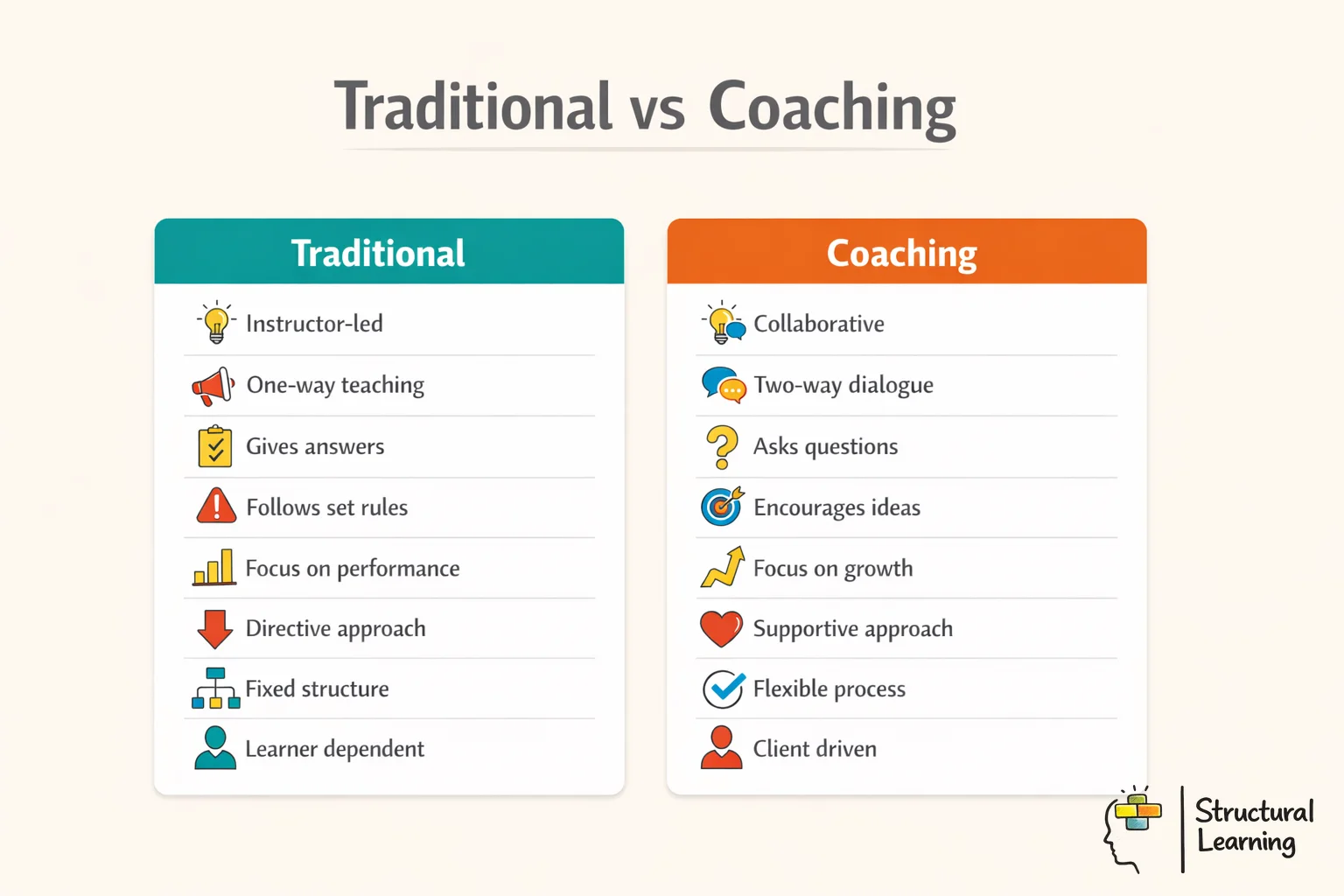
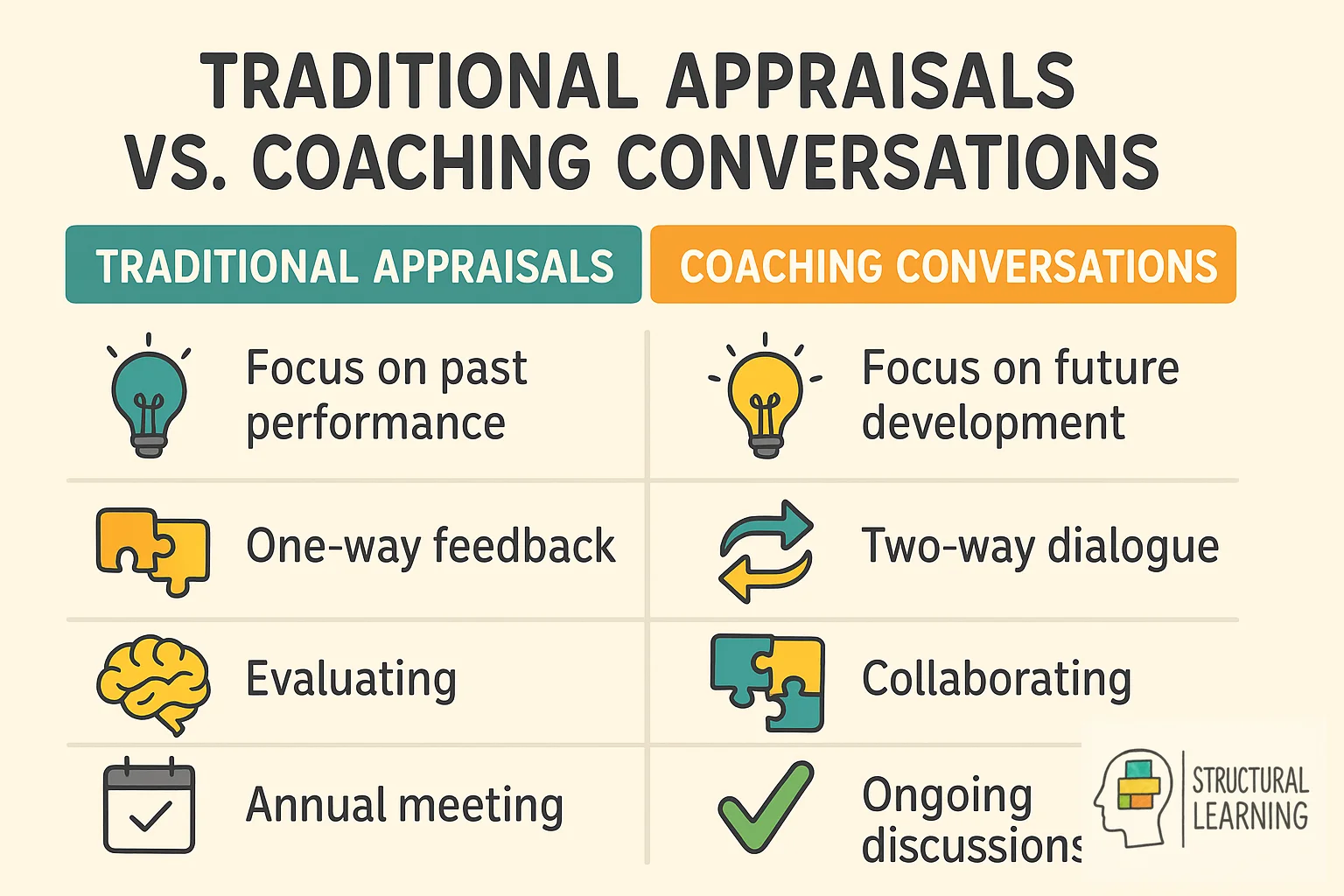
Many teams are moving away from the traditional appraisal/performance review structure that takes place once or twice a year coupled with the traditional lesson observation approach. These were always top-down, and therefore, the "buy-in" was not always so great. Staff felt "done too". The individuals whose appraisal it was did not have a great deal of control or autonomy over the targets. The whole process involved much telling, instructing, giving advice and feedback or making suggestions. Much of this was carried out whether requested or not. The skills required of the appraiser were telling.
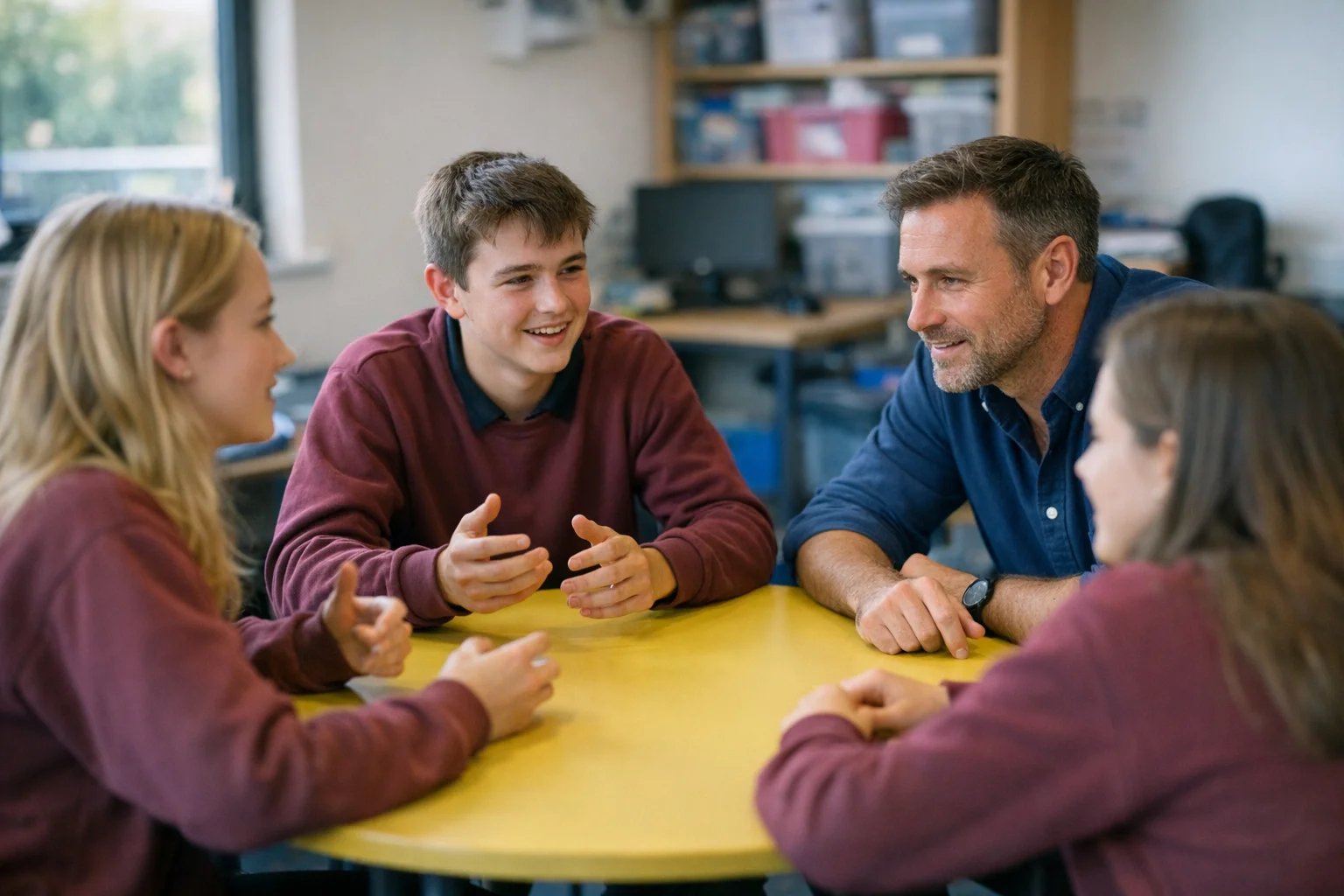
The move is towards an effective coaching conversation approach where the individual ( no longer the appraisee but the coachee) drives the conversation. In the book, The Human Behind the Coach, Claire Pedrick and Lucia Baldelli refer to this individual as the "thinker". It is them that do the thinking both before, during and afterwards. They decide what they want to focus their development on. They decide what their targets are. They decide what they want you to observe or focus on when observing them. This may be derived from teacher standards, or indeed from the needs of their current cohort.

It is a much more of a non-directive approach in which the coach (previously the appraiser) is using a different set of skills. These skills require the coach to be proficient in asking powerful questions within the coaching session that raise awareness, to be able and paraphrase without judgment as well as being able to reflect and listen to understand. In the same book they describe this as you being in the wings while the thinker is on the stage. I love this visual image.
What does this mean for the coach then?
Potentially these are new skills. Learning to step back and give the floor over to the person who may be their junior both in terms of status and experience. In reality as you learn or develop these skills you undertake transforming your leadership skills alongside helping others become more self aware, help them turn experiences into learning opportunities and improve their motivation.
I will look to review the coaching skills and behaviours now required and after that suggest a structure to the conversation that you might be able to adopt.
First and importantly having a strong understanding of coaching questions and being able to use open ended questions to raise awareness in the coachee is crucial. Asking questions is a key tool in the coaching toolbox and part of the coaching technique. Questions beginning with who, what, where, when and how are beneficial questions that generally help extend a conversation and bring about deeper thinking.
The "why" question whilst it can do as the above do, it can also cause the coachee to feel judged and they can begin to almost justify their answer or become defensive.
Extensions to these questions also can bring about more depth. And bring about more powerful coaching conversations. They help develop and grow the coaching relationship. Such extensions might include, tell me more or give me an example(s).
These questions are looking to assist the coachee reflect deeper and become more self aware. These questions will look to dig deeper into the ideas, feelings and/or actions of the coachee. What is the history leading to the viewpoint being made? What assumptions has the coachee made to reach this viewpoint? What are the consequences of these viewpoints? What is the bigger picture for the coachee?
For example a member of your staff says they cannot speak aloud at meetings because "everyone will talk about them after". As part of the coaching process, the coach can then ask a series of questions finding out more about this. This approach considers their emotional intelligence and helps develop engagement in professional development.
A history question : Have you dealt with this situation before?
A consequence question: What impact has this had on you?
An assumption question: To what extent is it everyone is going to talk about you? What reasons do you think lie beneath this?
A bigger picture question: How do you think you can change this situation? This type of sustained thinking process helps teachers reflect deeply on their practice.
Effective coaches will use various tools to provide feedback. Predominantly they are likely to use tools such as summarising and paraphrasing as part of their coaching practice. Many coaches also find the GROW Model helpful in structuring these conversations.
The coach must be able what they have heard as part of the productive coaching conversation. The ability to do this succinctly and well shows the coachee you have been listening ( more of that later). It also allows the coachee to hear back what they have said. This can be very powerful.
Paraphrasing, as with summarising, allows for recap and/ or clarification and can also be used to challenge any assumptions being made. This is particularly important when working with teachers who have special educational needs considerations or when incorporating social-emotional learning approaches. So for example as with the above case study, the coach might paraphrase " So what I am hearing is that you feel silenced in meetings because you believe colleagues will judge you negatively afterwards. Is that accurate?" This gives the coachee an opportunity to confirm, clarify or correct the coach's understanding.
The key difference between coaching feedback and traditional feedback is that coaching feedback is non-judgmental and focuses on raising awareness rather than providing solutions. The coach acts as a mirror, reflecting back what they observe without adding their own interpretations or recommendations.
Effective paraphrasing also involves checking for understanding. Phrases such as "What I'm hearing is.." or "It sounds like.." followed by "Have I understood that correctly?" ensure that the coach has accurately captured the coachee's perspective. This builds trust and demonstrates genuine listening, which are fundamental to successful coaching relationships.
Perhaps the most challenging skill for leaders transitioning to coaching is learning to listen without immediately jumping in with solutions or advice. Active listening in coaching conversations involves listening to understand rather than listening to respond. This requires the coach to be fully present and focused on what the coachee is saying, both verbally and non-verbally.
Silence is equally powerful. Many coaches struggle with comfortable silence, feeling the need to fill gaps in conversation. However, these pauses often provide the coachee with valuable thinking time. Some of the most profound insights emerge from these moments of reflection. Learning to sit with silence and resist the urge to rescue the coachee from their thinking process is a crucial coaching skill.
The quality of listening also extends to listening for what is not being said. What emotions are present? What assumptions might be limiting the coachee's thinking? What patterns are emerging? This deeper level of listening helps the coach ask more insightful questions and support the coachee's journey of discovery.
While coaching conversations should feel natural and flow organically, having a loose structure can help ensure productive outcomes. The conversation typically begins with the coachee setting the agenda. What would they like to focus on today? What specific challenge or opportunity do they want to explore?
The exploration phase involves the coach asking open questions to help the coachee examine their situation from different angles. This might include exploring what has been tried before, what assumptions are being made, and what different perspectives might exist. The coach's role is to facilitate this exploration without directing it towards a predetermined outcome.
As the conversation develops, the focus often shifts towards action and accountability. What insights has the coachee gained? What options do they see moving forward? What specific steps will they commit to taking? The key is that these actions emerge from the coachee's own thinking rather than being imposed by the coach.
Regular review and reflection are also important components of ongoing coaching relationships. How did the previous actions work out? What was learned from the experience? How might this learning be applied to new challenges? This creates a continuous cycle of growth and development.
The transition from traditional appraisal conversations to coaching conversations represents a fundamental shift in how we approach professional development in education. By moving away from top-down, directive approaches towards collaborative, coach-led conversations, we create opportunities for deeper learning and more sustainable change.
The skills required for effective coaching conversations - powerful questioning, active listening, summarising and paraphrasing - may feel unfamiliar to leaders accustomed to providing advice and solutions. However, developing these skills not only enhances the development of others but also transforms leadership practice more broadly. When leaders learn to step back and create space for others to think, they often discover that their staff are far more capable and insightful than they previously realised.
Ultimately, coaching conversations recognise that the expertise and wisdom needed for professional growth often lies within the individual teacher. By creating the right conditions for reflection, exploration and discovery, coaching conversations enable this potential and create more engaged, self-directed and effective educators. The journey from appraiser to coach requires patience, practice and a willingness to embrace a different way of leading, but the benefits for both individuals and organisations make this transformation worthwhile.
Coaching conversations research
Instructional coaching research
For those interested in exploring coaching conversations and teacher development further, the following research provides valuable insights:
Many teams are moving away from the traditional appraisal/performance review structure that takes place once or twice a year coupled with the traditional lesson observation approach. These were always top-down, and therefore, the "buy-in" was not always so great. Staff felt "done too". The individuals whose appraisal it was did not have a great deal of control or autonomy over the targets. The whole process involved much telling, instructing, giving advice and feedback or making suggestions. Much of this was carried out whether requested or not. The skills required of the appraiser were telling.
The move is towards an effective coaching conversation approach where the individual ( no longer the appraisee but the coachee) drives the conversation. In the book, The Human Behind the Coach, Claire Pedrick and Lucia Baldelli refer to this individual as the "thinker". It is them that do the thinking both before, during and afterwards. They decide what they want to focus their development on. They decide what their targets are. They decide what they want you to observe or focus on when observing them. This may be derived from teacher standards, or indeed from the needs of their current cohort.

It is a much more of a non-directive approach in which the coach (previously the appraiser) is using a different set of skills. These skills require the coach to be proficient in asking powerful questions within the coaching session that raise awareness, to be able and paraphrase without judgment as well as being able to reflect and listen to understand. In the same book they describe this as you being in the wings while the thinker is on the stage. I love this visual image.
What does this mean for the coach then?
Potentially these are new skills. Learning to step back and give the floor over to the person who may be their junior both in terms of status and experience. In reality as you learn or develop these skills you undertake transforming your leadership skills alongside helping others become more self aware, help them turn experiences into learning opportunities and improve their motivation.
I will look to review the coaching skills and behaviours now required and after that suggest a structure to the conversation that you might be able to adopt.
First and importantly having a strong understanding of coaching questions and being able to use open ended questions to raise awareness in the coachee is crucial. Asking questions is a key tool in the coaching toolbox and part of the coaching technique. Questions beginning with who, what, where, when and how are beneficial questions that generally help extend a conversation and bring about deeper thinking.
The "why" question whilst it can do as the above do, it can also cause the coachee to feel judged and they can begin to almost justify their answer or become defensive.
Extensions to these questions also can bring about more depth. And bring about more powerful coaching conversations. They help develop and grow the coaching relationship. Such extensions might include, tell me more or give me an example(s).

These questions are looking to assist the coachee reflect deeper and become more self aware. These questions will look to dig deeper into the ideas, feelings and/or actions of the coachee. What is the history leading to the viewpoint being made? What assumptions has the coachee made to reach this viewpoint? What are the consequences of these viewpoints? What is the bigger picture for the coachee?
For example a member of your staff says they cannot speak aloud at meetings because "everyone will talk about them after". As part of the coaching process, the coach can then ask a series of questions finding out more about this. This approach considers their emotional intelligence and helps develop engagement in professional development.
A history question : Have you dealt with this situation before?
A consequence question: What impact has this had on you?
An assumption question: To what extent is it everyone is going to talk about you? What reasons do you think lie beneath this?
A bigger picture question: How do you think you can change this situation? This type of sustained thinking process helps teachers reflect deeply on their practice.
Effective coaches will use various tools to provide feedback. Predominantly they are likely to use tools such as summarising and paraphrasing as part of their coaching practice. Many coaches also find the GROW Model helpful in structuring these conversations.
The coach must be able what they have heard as part of the productive coaching conversation. The ability to do this succinctly and well shows the coachee you have been listening ( more of that later). It also allows the coachee to hear back what they have said. This can be very powerful.
Paraphrasing, as with summarising, allows for recap and/ or clarification and can also be used to challenge any assumptions being made. This is particularly important when working with teachers who have special educational needs considerations or when incorporating social-emotional learning approaches. So for example as with the above case study, the coach might paraphrase " So what I am hearing is that you feel silenced in meetings because you believe colleagues will judge you negatively afterwards. Is that accurate?" This gives the coachee an opportunity to confirm, clarify or correct the coach's understanding.
The key difference between coaching feedback and traditional feedback is that coaching feedback is non-judgmental and focuses on raising awareness rather than providing solutions. The coach acts as a mirror, reflecting back what they observe without adding their own interpretations or recommendations.
Effective paraphrasing also involves checking for understanding. Phrases such as "What I'm hearing is.." or "It sounds like.." followed by "Have I understood that correctly?" ensure that the coach has accurately captured the coachee's perspective. This builds trust and demonstrates genuine listening, which are fundamental to successful coaching relationships.
Perhaps the most challenging skill for leaders transitioning to coaching is learning to listen without immediately jumping in with solutions or advice. Active listening in coaching conversations involves listening to understand rather than listening to respond. This requires the coach to be fully present and focused on what the coachee is saying, both verbally and non-verbally.
Silence is equally powerful. Many coaches struggle with comfortable silence, feeling the need to fill gaps in conversation. However, these pauses often provide the coachee with valuable thinking time. Some of the most profound insights emerge from these moments of reflection. Learning to sit with silence and resist the urge to rescue the coachee from their thinking process is a crucial coaching skill.
The quality of listening also extends to listening for what is not being said. What emotions are present? What assumptions might be limiting the coachee's thinking? What patterns are emerging? This deeper level of listening helps the coach ask more insightful questions and support the coachee's journey of discovery.
While coaching conversations should feel natural and flow organically, having a loose structure can help ensure productive outcomes. The conversation typically begins with the coachee setting the agenda. What would they like to focus on today? What specific challenge or opportunity do they want to explore?
The exploration phase involves the coach asking open questions to help the coachee examine their situation from different angles. This might include exploring what has been tried before, what assumptions are being made, and what different perspectives might exist. The coach's role is to facilitate this exploration without directing it towards a predetermined outcome.
As the conversation develops, the focus often shifts towards action and accountability. What insights has the coachee gained? What options do they see moving forward? What specific steps will they commit to taking? The key is that these actions emerge from the coachee's own thinking rather than being imposed by the coach.
Regular review and reflection are also important components of ongoing coaching relationships. How did the previous actions work out? What was learned from the experience? How might this learning be applied to new challenges? This creates a continuous cycle of growth and development.
The transition from traditional appraisal conversations to coaching conversations represents a fundamental shift in how we approach professional development in education. By moving away from top-down, directive approaches towards collaborative, coach-led conversations, we create opportunities for deeper learning and more sustainable change.
The skills required for effective coaching conversations - powerful questioning, active listening, summarising and paraphrasing - may feel unfamiliar to leaders accustomed to providing advice and solutions. However, developing these skills not only enhances the development of others but also transforms leadership practice more broadly. When leaders learn to step back and create space for others to think, they often discover that their staff are far more capable and insightful than they previously realised.
Ultimately, coaching conversations recognise that the expertise and wisdom needed for professional growth often lies within the individual teacher. By creating the right conditions for reflection, exploration and discovery, coaching conversations enable this potential and create more engaged, self-directed and effective educators. The journey from appraiser to coach requires patience, practice and a willingness to embrace a different way of leading, but the benefits for both individuals and organisations make this transformation worthwhile.
Coaching conversations research
Instructional coaching research
For those interested in exploring coaching conversations and teacher development further, the following research provides valuable insights:
{"@context":"https://schema.org","@graph":[{"@type":"Article","@id":"https://www.structural-learning.com/post/coaching-conversations#article","headline":"Coaching Conversations","description":"Explore essential tips for enhancing coaching conversations in schools and fostering a collaborative community for all educators and leaders.","datePublished":"2024-02-12T15:23:04.690Z","dateModified":"2026-01-26T10:09:32.212Z","author":{"@type":"Person","name":"Paul Main","url":"https://www.structural-learning.com/team/paulmain","jobTitle":"Founder & Educational Consultant"},"publisher":{"@type":"Organization","name":"Structural Learning","url":"https://www.structural-learning.com","logo":{"@type":"ImageObject","url":"https://cdn.prod.website-files.com/5b69a01ba2e409e5d5e055c6/6040bf0426cb415ba2fc7882_newlogoblue.svg"}},"mainEntityOfPage":{"@type":"WebPage","@id":"https://www.structural-learning.com/post/coaching-conversations"},"image":"https://cdn.prod.website-files.com/5b69a01ba2e409501de055d1/6950312a7ab2038b76a36467_3ua5u1.webp","wordCount":3267},{"@type":"BreadcrumbList","@id":"https://www.structural-learning.com/post/coaching-conversations#breadcrumb","itemListElement":[{"@type":"ListItem","position":1,"name":"Home","item":"https://www.structural-learning.com/"},{"@type":"ListItem","position":2,"name":"Blog","item":"https://www.structural-learning.com/blog"},{"@type":"ListItem","position":3,"name":"Coaching Conversations","item":"https://www.structural-learning.com/post/coaching-conversations"}]},{"@type":"FAQPage","@id":"https://www.structural-learning.com/post/coaching-conversations#faq","mainEntity":[{"@type":"Question","name":"What exactly are coaching conversations and how do they differ from traditional performance reviews?","acceptedAnswer":{"@type":"Answer","text":"Coaching conversations are a shift from top-down annual appraisals to teacher-led professional development discussions where the individual drives their own growth. Unlike traditional reviews where appraisers tell and instruct, coaching conversations use the teacher as the 'thinker' who decides what"}},{"@type":"Question","name":"What key skills do school leaders need to develop to become effective coaching conversation facilitators?","acceptedAnswer":{"@type":"Answer","text":"Leaders need to master asking powerful open-ended questions (using who, what, where, when, how), active listening without judgement, and techniques like summarising and paraphrasing. The most challenging skill is learning to step back and give teachers centre stage, moving from being the expert who "}},{"@type":"Question","name":"How can I ask better questions during coaching conversations to help teachers reflect more deeply?","acceptedAnswer":{"@type":"Answer","text":"Use open-ended questions starting with who, what, where, when, and how, whilst being cautious with 'why' questions that can make teachers feel defensive. Extend your questions with phrases like 'tell me more' or 'give me an example', and use different types such as history questions, consequence que"}},{"@type":"Question","name":"What does active listening look like in practice during a coaching conversation?","acceptedAnswer":{"@type":"Answer","text":"Active listening involves creating the right atmosphere with high trust and minimal interference, using pauses and silences effectively, and listening to evoke reflection rather than listening to reply. It includes skills like summarising main points, clarifying understanding, reflecting exact words"}},{"@type":"Question","name":"How do I overcome the challenge of stepping back when I'm used to giving direct feedback and advice?","acceptedAnswer":{"@type":"Answer","text":"Remember the visual of being 'in the wings whilst the thinker is on the stage' and focus on developing your questioning skills rather than telling skills. Practice using summarising and paraphrasing techniques instead of giving immediate solutions, and trust that teachers can find their own answers "}}]}]}