Updated on
September 24, 2026
Visual Timetable: Free Printable Pack and Classroom Guide
What a visual timetable is, how it supports classroom transitions and a free printable pack of cards, desk schedules and teacher checklists.

Updated on
September 24, 2026
What a visual timetable is, how it supports classroom transitions and a free printable pack of cards, desk schedules and teacher checklists.
A visual timetable is a picture, symbol or word schedule that shows the order of the school day. It helps learners see what is happening now, what comes next and when a change is likely, so teachers spend less time repeating instructions and more time moving the class calmly into learning.
Just One Norfolk and Leicestershire Partnership NHS both describe visual timetables as supports for helping children understand what is happening and what will happen next. That research-informed guidance matters in class because spoken instructions disappear quickly, while the timetable stays visible before, during and after a transition.
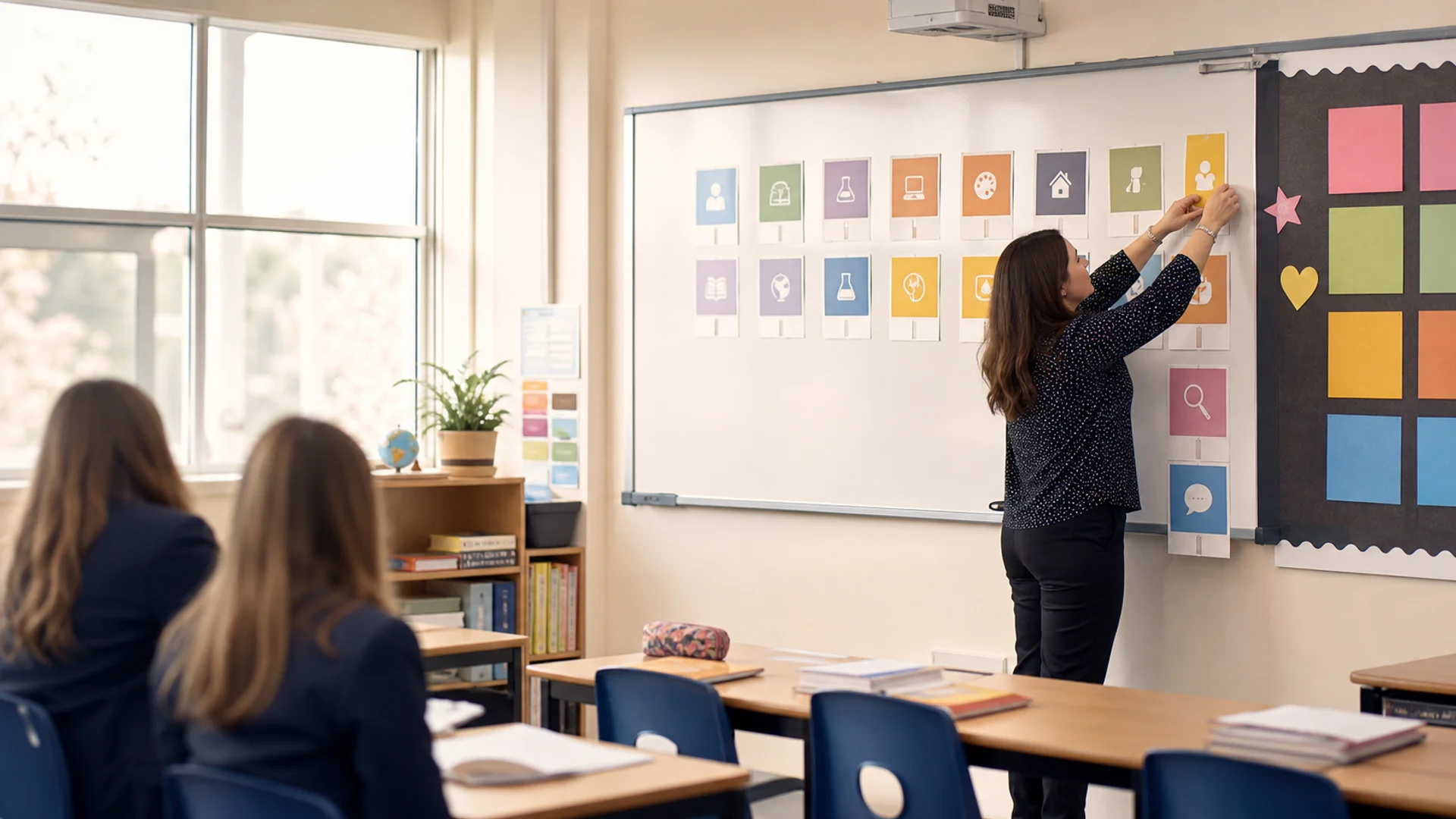
A visual timetable turns time into something learners can see, making it part of a wider visual learning approach. The display can use objects, photos, symbols, words or a mix of these. Younger learners may need picture cards they can move. Older learners may prefer a short written schedule, a desk strip or a digital checklist.
Just One Norfolk describes visual timetables as a way to help children know what is happening and what is coming next. Leicestershire Partnership NHS also shows how a timetable can support routine, choice and change. For schools, the key point is simple: the timetable must be seen, used and updated during the day.
Start with the real routine. Put the cards where learners can see them from their seats. Refer to the timetable before each change, not only when a learner is already unsettled.
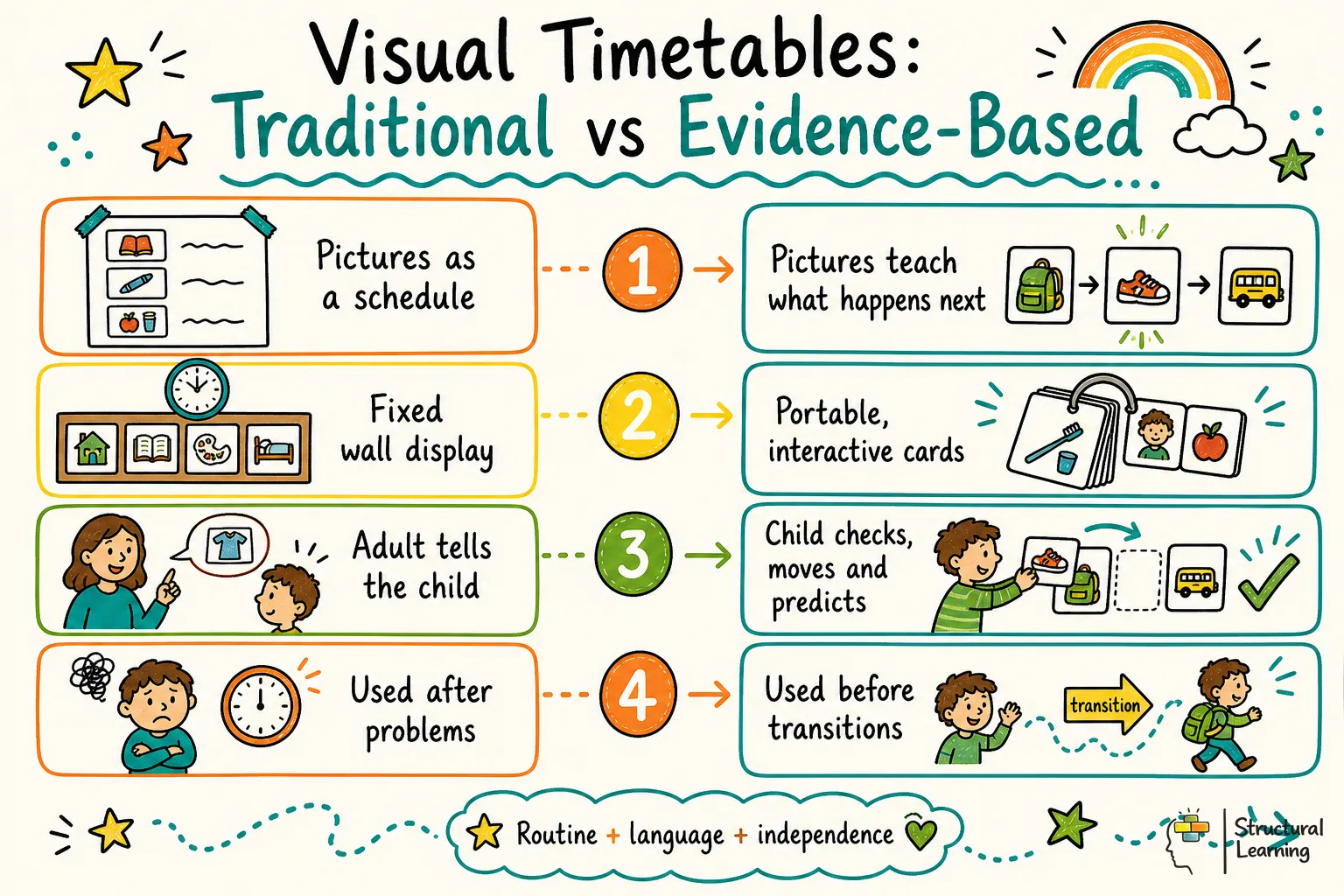
Many classroom transitions rely on memory, language and trust. A learner has to stop one task, remember the next task, move equipment and manage the feeling of change. A visual timetable reduces that mental load. The next step stays visible after the spoken instruction has gone.
Visual support is also useful for communication. The National Autistic Society notes that autistic people may communicate and understand information in different ways. A clear visual routine can make expectations less dependent on fast spoken language.
The SEND benefit is not limited to autistic learners. A whole-class timetable can help learners with ADHD, speech and language needs, anxiety, English as an additional language, working memory difficulties or a simple need for a calmer start to the lesson.
A visual timetable and a now and next board are related, but they solve different problems. A full visual timetable shows a longer sequence, often the whole morning or day. A now-and-next board shows only two steps: the current task and the next task.
Use a full-day timetable when the class needs a shared overview. Use a now-and-next board when one learner needs a smaller amount of information during a hard transition. Some learners need both: the class timetable for the day, plus a desk-based now-and-next board for the next few minutes.
| Tool | Primary Purpose | Best Used For | Classroom Example |
|---|---|---|---|
| Visual Timetable | Outlines sequence of events | Reducing transition anxiety | A whole-class daily schedule on the whiteboard |
| Token Economy | Reinforces specific behaviours | Motivation and compliance | Earning stars for staying seated during reading |
| Task Analysis | Breaks down one specific skill | Complex multi-step routines | A poster showing the six steps to wash hands |
| Now/Next Board | Focuses on immediate transition | High cognitive overload | "Now: Writing, Next: Break" on a desk |
A useful printable pack should be small, clear and easy to maintain. Too many cards make the system hard to use. Start with the core day: arrival, registration, phonics or reading, maths, break, lunch, assembly, tidy up and home time.
Add support cards for change. These can include surprise, visitor, fire drill, swap, finished and wait. A blank card is also useful because real school days rarely match the printed set exactly.
The free pack attached to this article is designed for practical classroom use. It includes a whole-class wall timetable, a personal desk schedule, a staff visual guide and a setup checklist.
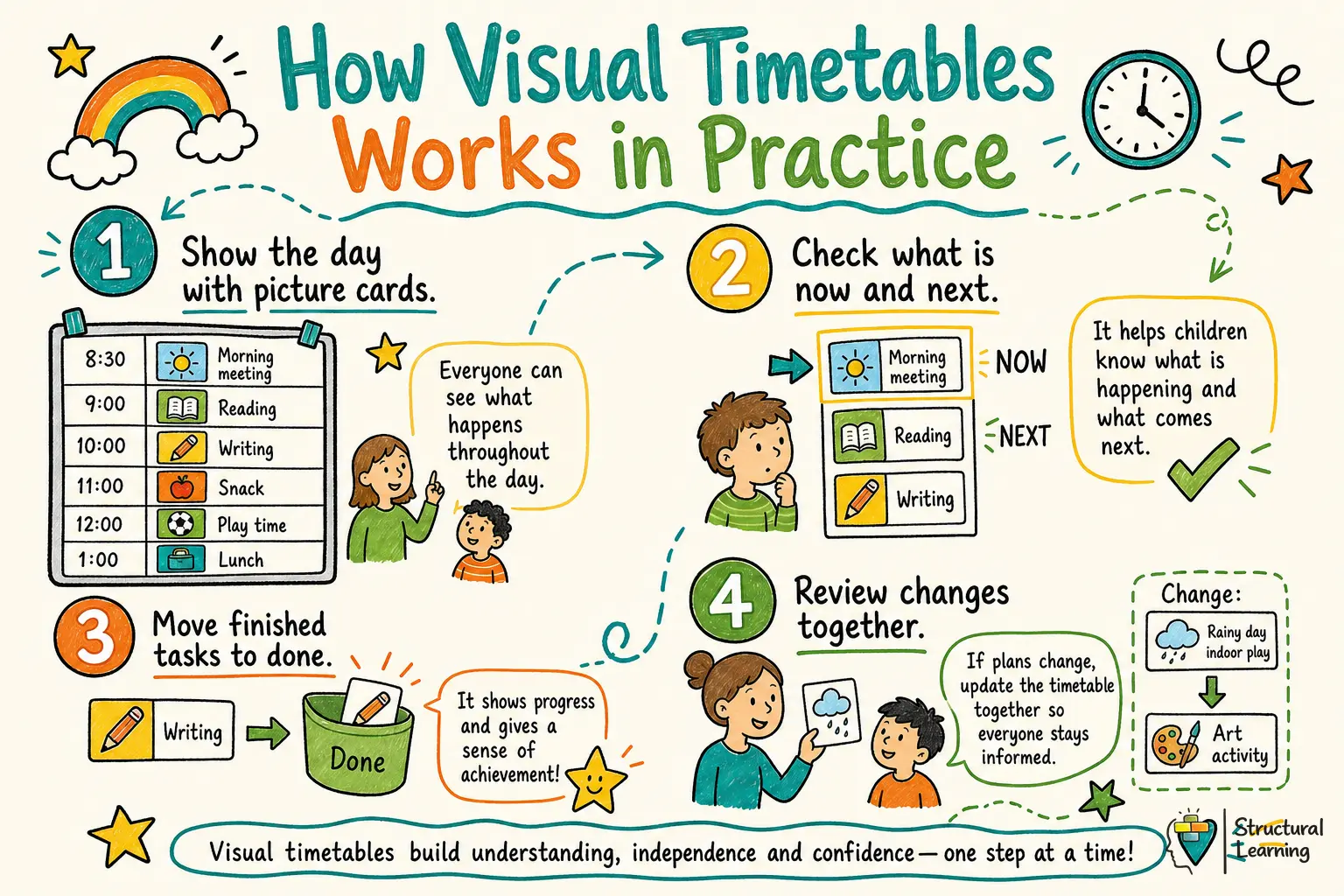
Introduce the timetable as a class routine, not as a behaviour tool for one learner. This protects dignity and makes the system easier for staff to sustain. Explain that everyone benefits from seeing the day clearly.
Model the routine for one week. At the start of the day, read the cards from left to right. Before a transition, point to the current card and the next card. After a task, move the finished card. Keep the language short: "Maths is finished. Next is break."
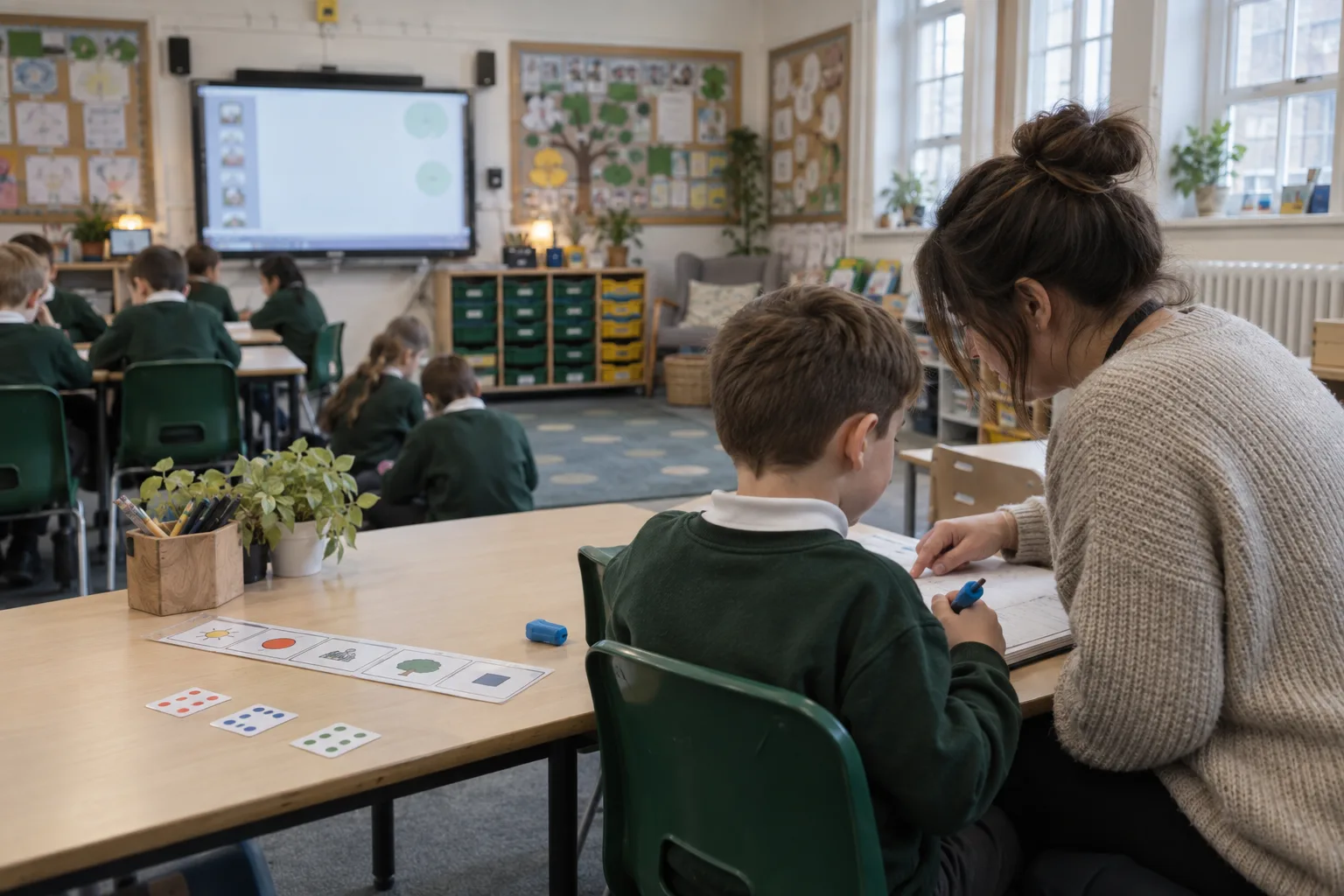
Printed timetables work well when learners need to touch, remove or carry the cards. They are also reliable when the projector is off. Digital timetables work well for whole-class display and quick edits, but they can be too far away for some learners.
A good rule is to match the format to the job. Use a wall display for the class. Use a desk strip for a learner who needs close support. Use a digital version when staff need to update the day quickly. Avoid decorative icons if they make the meaning less clear.
The most common mistake is creating a timetable and then forgetting to use it. A visual timetable only works when adults refer to it before transitions and update it when the day changes.
Another mistake is making it too childish for older learners. Secondary learners may prefer text cards, subject icons, colour coding or a checklist in a planner. The support can stay visual without looking like an early years display.
Finally, do not hide the change card. Learners need to practise safe, calm changes when the stakes are low. Use the change card for small changes first, then it will be more trusted when a bigger change happens.
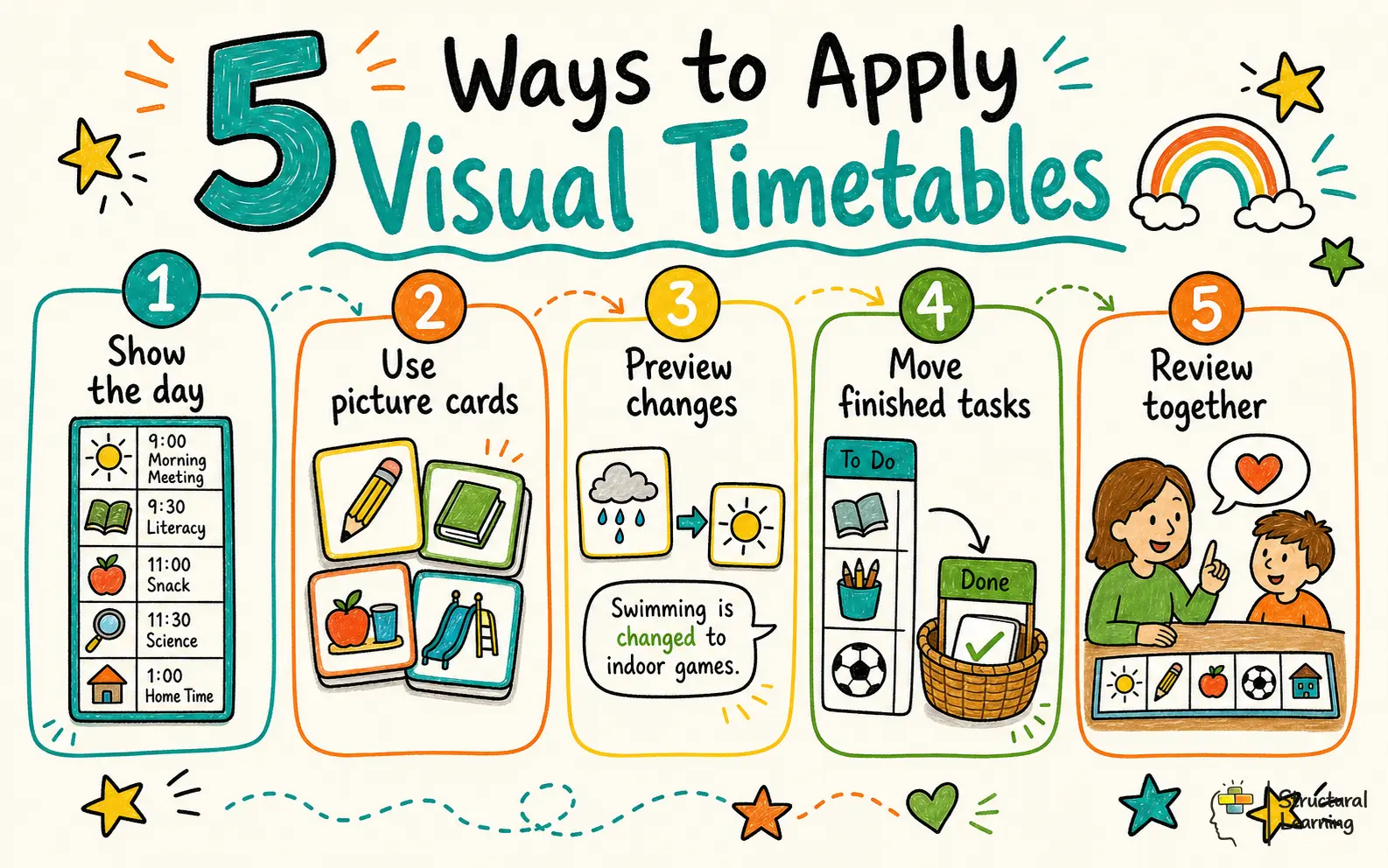
A visual timetable is a display of the day in pictures, symbols, objects or words. It helps learners see the order of lessons, routines and changes before they happen.
Include the main parts of the school day, a blank card, a change card, a finished pocket and a few routine cards such as assembly, break, lunch, tidy up and home time. Keep the card set small enough for staff to use every day.
No. Visual timetables are often helpful for autistic learners, but they can also support learners with ADHD, speech and language needs, anxiety, working memory difficulties or general uncertainty about the day.
A full visual timetable shows a larger sequence, often the whole morning or whole day. A now and next board shows only the current task and the next task, so it is best for a single transition or a learner who needs less visual information.
Use both if they serve different jobs. A printed timetable is easy for young learners to touch, move and revisit. A digital timetable is useful for a whole class display, but it should still be clear from the back of the room.