Trauma-Informed Teaching: A Practical Guide for SchoolsTrauma-Informed Teaching: A Practical Guide for Schools: practical strategies for teachers

Updated on  

March 18, 2026

Trauma-Informed Teaching: A Practical Guide for Schools

|

March 18, 2026

Trauma-informed teaching in UK schools: what ACEs are, how to spot trauma responses in the classroom, and practical strategies for whole-school practice.

SLUG: trauma-informed-teaching-schools-guide

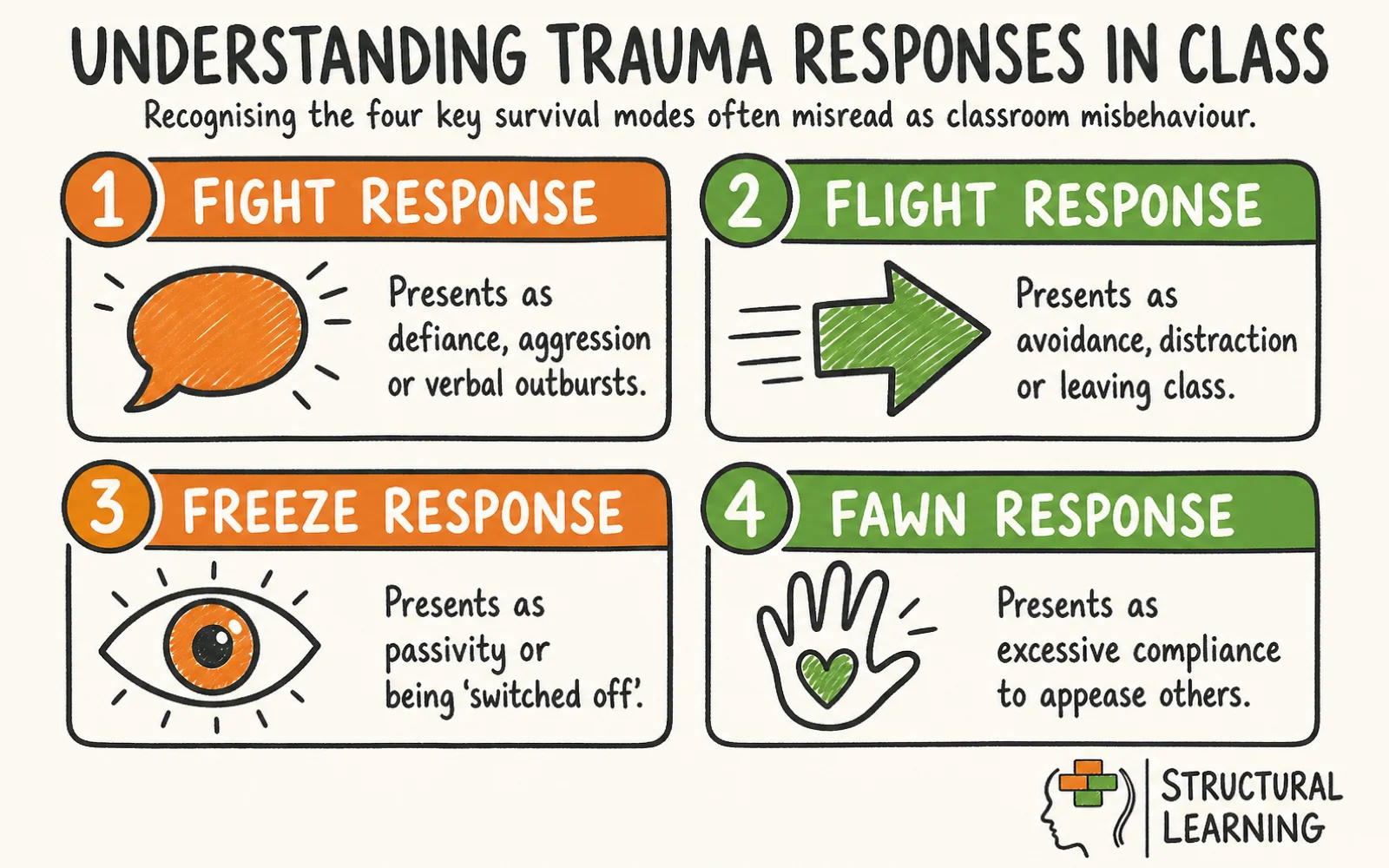
The 4 Trauma Responses <a href=in the Classroom: From Misreading to Understanding infographic for teachers" loading="lazy">
The 4 Trauma Responses in the Classroom: From Misreading to Understanding

Key Takeaways

  • Adverse Childhood Experiences (ACEs) affect brain development and directly impair a child's capacity to learn, regulate emotions, and form relationships at school (Felitti et al., 1998).
  • Trauma responses in the classroom — fight, flight, freeze, and fawn — are often misread as defiance or disengagement. Recognising them changes how you respond.
  • The SAMHSA six principles provide a research-backed framework for building a trauma-informed school: safety, trustworthiness, peer support, collaboration, empowerment, and cultural sensitivity.
  • Vicarious trauma is a real occupational hazard for school staff. A whole-school approach must protect teachers as well as pupils.
  • Trauma-informed practice is not a single programme. It is a set of values, policies, and daily habits that shift a school from asking "What is wrong with you?" to "What has happened to you?"

What Is Trauma-Informed Teaching?

Trauma-informed teaching is a pedagogical approach that recognises the impact of adverse childhood experiences on learning and behaviour. Rather than responding to difficult behaviour with punishment, a trauma-informed teacher asks what a child has experienced that might explain what they are doing right now.

The phrase was formalised after the landmark ACE Study (Felitti et al., 1998), which surveyed more than 17,000 adults and established a direct dose-response relationship between childhood adversity and poor health, educational, and social outcomes. That research, combined with advances in neuroscience showing how chronic stress rewires the developing brain (Perry, 2006), gave schools a scientific basis for rethinking behaviour management.

In the UK, Louise Bomber's work — particularly Inside I'm Hurting (Bomber, 2007) — translated these ideas into practical classroom guidance. Bomber argued that a pupil's relational behaviour at school often mirrors the insecure attachment patterns formed in early life, and that school staff can act as secondary attachment figures who help children regulate their emotions.

Trauma-informed teaching does not mean excusing poor behaviour or abandoning high expectations. It means understanding the neurological and emotional barriers that prevent some children from accessing learning, and then adjusting your practice to reduce those barriers while maintaining a safe, structured environment for everyone.

ACEs and Their Impact on Learning

Adverse Childhood Experiences are potentially traumatic events that occur before the age of 18. The original ACE Study identified three categories: abuse (physical, emotional, sexual), neglect (physical and emotional), and household dysfunction (domestic violence, parental substance misuse, parental mental illness, parental incarceration, divorce).

Felitti et al. (1998) found that ACEs are common: roughly two-thirds of participants reported at least one ACE, and one in eight reported four or more. The study established an ACE score — a count of distinct categories of adversity — and showed that the higher the score, the worse the outcomes across virtually every domain measured.

For schools, the most significant finding is neurological. Van der Kolk (2014) demonstrated that chronic early trauma physically alters the architecture of the developing brain, particularly the amygdala (which processes threat), the prefrontal cortex (which governs reasoning and impulse control), and the hippocampus (which consolidates memory). A child who has experienced repeated trauma literally has a brain that is wired for survival, not for learning.

In practical terms, this means a traumatised child may:

  • struggle to regulate emotions because the prefrontal cortex is underdeveloped relative to the threat-detection systems
  • have difficulty storing and retrieving information because chronic stress hormones suppress hippocampal function
  • misread neutral social cues as threatening because the amygdala is hypersensitive
  • find transitions, noise, and changes in routine disproportionately distressing
  • present with symptoms that overlap significantly with ADHD, autism, or emotional and behavioural difficulties

Perry's neurosequential model (Perry, 2006) adds that the brain develops from the bottom up: the brainstem (survival) develops before the limbic system (emotion), which develops before the cortex (reasoning). A child in a state of threat is operating from the lower brain. No amount of reasoning, consequence, or reward will reach the cortex until the lower brain is regulated first.

Recognising Trauma Responses in the Classroom

The four trauma responses — fight, flight, freeze, and fawn — are not choices. They are automatic, neurologically driven survival strategies. Misreading them as deliberate misbehaviour is one of the most common mistakes in behaviour management.

Fight responses present as aggression, defiance, verbal outbursts, or throwing objects. The child is not choosing to be difficult. Their nervous system has detected a threat and is mobilising for attack. Common triggers include perceived humiliation, unexpected changes, raised voices, or being singled out in front of peers.

Flight responses present as avoidance, leaving the room without permission, or persistent refusal. The child is attempting to escape the perceived threat. In quieter forms, flight looks like distraction, doodling, or disengagement from tasks they find overwhelming.

Freeze responses present as apparent passivity, blank expression, inability to respond to questions, or seeming 'switched off'. The child is neither fighting nor fleeing; their nervous system has shut down in the face of an overwhelming threat. Freeze is frequently misread as laziness, defiance, or low ability.

Fawn responses present as excessive people-pleasing, compulsive compliance, or an inability to express a preference. The child has learned that safety comes from appeasing others. Fawn responses are the hardest to spot because the child appears cooperative, but they may be masking significant distress.

Perry (2006) suggests a simple regulatory question when you observe these responses: "Is this child's brain currently in a state where learning is possible?" If the answer is no, the first task is co-regulation, not instruction. Bomb (Bomber, 2007) recommends what she calls 'settling activities': brief, predictable, low-demand tasks that signal safety and restore the child to a regulated state before academic work resumes.

The Six Principles of Trauma-Informed Practice

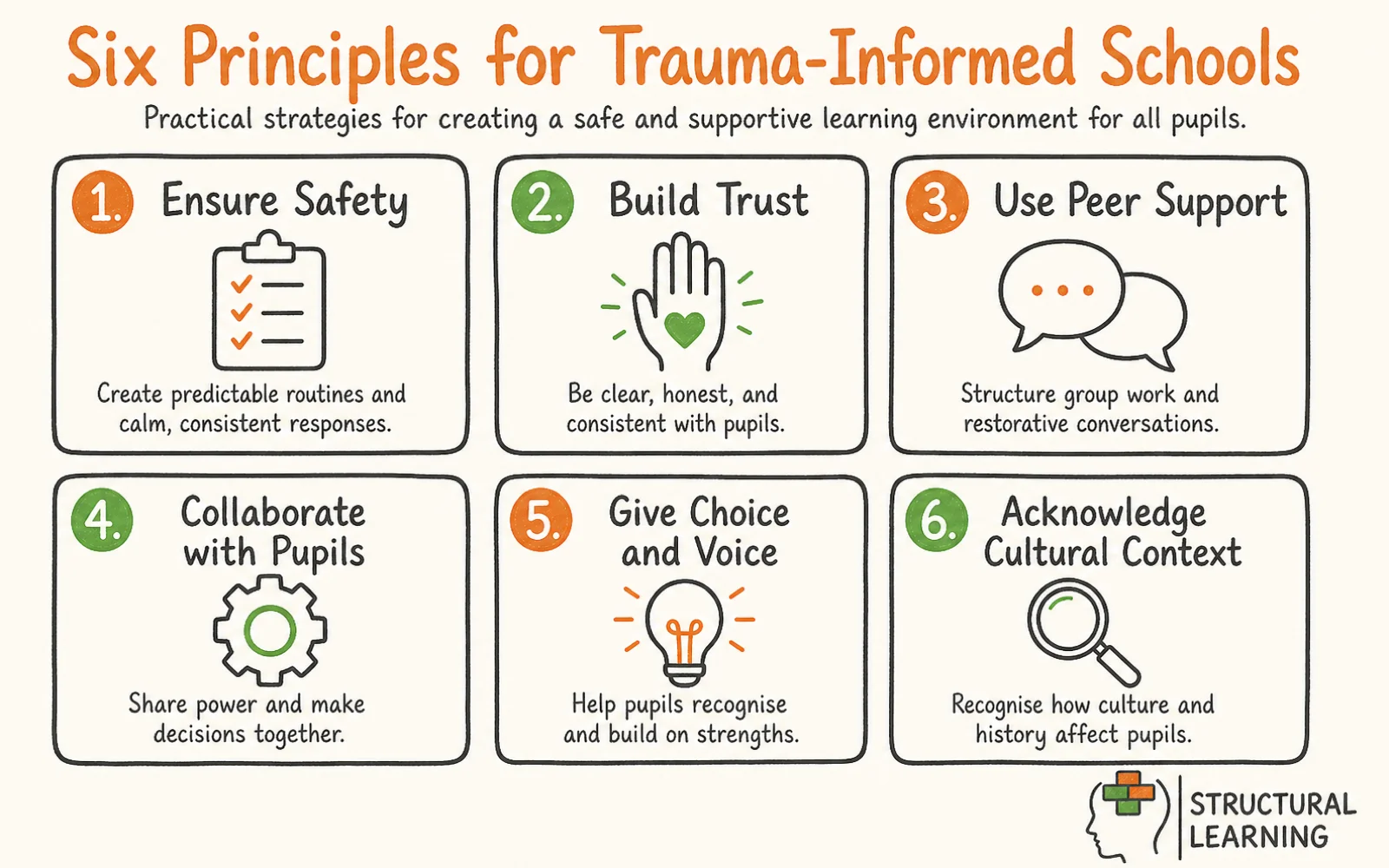
The Substance Abuse and Mental Health Services Administration (SAMHSA, 2014) identified six core principles that underpin trauma-informed organisations. These were developed for health settings but have been widely adopted in schools.

1. Safety. Staff and pupils feel physically and psychologically safe. Safety is signalled through consistent routines, clear expectations, and predictable adult behaviour. A teacher who is calm and consistent even when a pupil is dysregulated is a powerful safety signal.

2. Trustworthiness and transparency. Decisions are made transparently, with clarity about what is happening and why. For pupils with developmental trauma, unpredictability is itself threatening. Explaining changes in advance, following through on what you say, and being honest when things go wrong all build relational trust.

3. Peer support. Relationships among pupils are treated as a resource. Structured cooperative learning, restorative conversations, and explicit teaching of social skills all help children develop the relational capacity that trauma has disrupted.

4. Collaboration and mutuality. Power differentials between staff and pupils are acknowledged and minimised where appropriate. Pupils are given agency in their learning environment. This does not mean abandoning teacher authority. It means recognising that for some children, powerlessness is a core trauma, and giving them meaningful choice reduces that sense.

5. Empowerment, voice, and choice. Strengths are identified and built on. Pupils are helped to develop skills and recognise their own competence. Bomber (2007) argues that many traumatised children have an impaired sense of self-efficacy; small, structured opportunities to experience success can begin to repair this.

6. Cultural, historical, and gender issues. The organisation actively moves past cultural stereotypes and biases. Trauma disproportionately affects children from marginalised communities, and practice must account for the compounding impact of racism, poverty, and systemic disadvantage.

These six principles are not a checklist to complete once. They are ongoing commitments that need to be embedded in policy, staff training, behaviour management procedures, and day-to-day classroom practice.

The SAMHSA 6 Pillars: Building Your Trauma-Informed School infographic for teachers
The SAMHSA 6 Pillars: Building Your Trauma-Informed School

Practical Classroom Strategies for Trauma-Informed Teaching

Translating the principles into Monday-morning practice requires concrete strategies. The following are evidence-informed approaches drawn from Bomber (2007), Perry (2006), and SAMHSA (2014).

Build Predictable Routines

Traumatised children need the world to be predictable. Begin every lesson with the same brief settling activity: reading a short passage, completing a low-stakes retrieval task, or spending two minutes on a journal prompt. End lessons with a clear signal and a consistent farewell. Display a visual timetable so transitions are never a surprise. Even small deviations from routine can dysregulate a vulnerable child, so when changes are unavoidable, give as much advance warning as possible.

Use Regulation Before Instruction

Perry's neurosequential model (2006) tells us that a dysregulated child cannot access higher cognitive functions. Before attempting to teach a child who is visibly distressed, help them regulate. This might mean a brief walk to the water fountain, a quiet corner with a sensory resource, or simply sitting alongside them in silence for a minute before asking a low-demand question. Regulation is not a reward for poor behaviour. It is a prerequisite for learning.

Adopt Unconditional Positive Regard

Carl Rogers' concept of unconditional positive regard (Rogers, 1951) is particularly relevant here. A traumatised child expects adults to confirm their internalised belief that they are bad, unlovable, or stupid. When you maintain warmth and curiosity regardless of the child's behaviour, you challenge that belief. This does not mean accepting harmful behaviour. It means separating the child from the behaviour: "That action is not acceptable here. You are always welcome."

Teach Co-Regulation Explicitly

Co-regulation — the process by which a regulated adult helps a dysregulated child return to a calm state — is not only a clinical skill (Schore, 2001). It is something every teacher can practise. Lower your own voice when a child escalates. Slow your speech. Use open, non-threatening body language. Avoid direct eye contact if it reads as confrontational. When you demonstrate calm, you are providing a neurological model that the child's developing nervous system can begin to mirror.

Offer Choices Within Structure

Giving traumatised children meaningful choices reduces the neurological impact of powerlessness. "You can do this task sitting at your desk or on the floor with a clipboard. Which would you prefer?" is a small act. For a child whose life has been characterised by a lack of control, it is significant. Choices should always be real and limited: two or three options, not an open invitation.

Respond to the Attachment Need, Not the Behaviour

Bomber (2007) argues that many challenging behaviours in school are attachment-seeking behaviours. A child who repeatedly breaks rules to get your attention is communicating a relational need. Meeting that need proactively — through brief daily check-ins, a consistent named adult, and predictable positive attention — reduces the pressure behind the behaviour.

A Whole-School Approach to Trauma-Informed Practice

Individual classroom strategies are necessary but not sufficient. Sustainable trauma-informed practice requires systemic change at the level of the whole school.

A whole-school approach begins with a shared understanding. All staff, including those who do not teach, need a basic understanding of ACEs, trauma responses, and the rationale for responding with curiosity rather than punishment. This is not a one-day training exercise. It requires ongoing professional development, reflective supervision, and a culture where staff can speak honestly about difficult cases without fear of judgement.

Policy alignment is equally important. Behaviour policies should be scrutinised for practices that are known to escalate traumatised children: public shaming, exclusion from lessons as a routine consequence, rigid zero-tolerance approaches to responses that are neurologically driven. This does not mean no consequences. It means consequences that are proportionate, relational, and oriented toward repair rather than punishment.

Designated safe spaces within the school building provide regulated children with somewhere to go when overwhelmed. These spaces should be calm, predictable, and supervised by a consistent adult. They are not withdrawal rooms for bad behaviour. They are regulated environments that help children return to a state where learning is possible.

The designated safeguarding lead, SENCO, and senior leadership team need to work together to identify vulnerable pupils, track patterns, and ensure that support is proactive rather than crisis-driven. Referral pathways to external agencies, including child and adolescent mental health services (CAMHS), educational psychology, and social care, should be clear to all staff.

Staff Wellbeing and Vicarious Trauma

This section covers territory that most competitor guides ignore entirely. Supporting traumatised pupils is emotionally demanding work. Teachers and teaching assistants are regularly exposed to disclosures, witnessing distress, and managing extreme behaviour. Without adequate support, this exposure leads to vicarious trauma.

Vicarious trauma, also called secondary traumatic stress (Figley, 1995), occurs when a person is repeatedly exposed to the traumatic experiences of others. It is not the same as burnout, although the two often coexist. Vicarious trauma produces specific symptoms that mirror those of direct trauma: intrusive thoughts about a child's situation, hypervigilance in school, emotional numbing, difficulty separating professionally from cases, and disrupted sleep.

Schools have a duty of care to their staff as well as their pupils. The following structures reduce the risk of vicarious trauma and support staff who are already affected.

Supervision and case reflection. Regular structured opportunities for staff to discuss difficult cases with a trained colleague or line manager. This is distinct from performance management. It is a protected space for honest reflection.

Clear role boundaries. Staff should understand what their role requires them to do and what it does not. The teacher's role is to teach and to provide a safe, regulated classroom environment. It is not to act as a therapist. Clarity about this boundary protects staff from taking on more than they can sustain.

Compassion fatigue awareness. Whole-school CPD should include basic psychoeducation about vicarious trauma and compassion fatigue. Staff who can name what they are experiencing are better placed to seek help early.

Access to employee assistance. Schools should ensure that all staff are aware of and can access employee assistance programmes, counselling referrals, and occupational health support.

Leadership modelling. Senior leaders set the tone. If leaders speak openly about the emotional demands of the work, take rest seriously, and model self-care, they signal that wellbeing is valued. If they do not, staff will not seek help even when they need it.

The teacher wellbeing and workload crisis in the UK (DfE, 2019) is not unrelated to the demands of working with increasingly complex pupil needs. Addressing vicarious trauma is not a luxury. It is a workforce sustainability issue.

Working with External Agencies

No school can meet the full spectrum of need generated by childhood trauma alone. Effective trauma-informed practice includes building and maintaining relationships with the external agencies that can provide specialist support.

Child and Adolescent Mental Health Services (CAMHS) are the most commonly referenced referral pathway, but waiting lists are long and thresholds are high in most areas. Teachers need to understand what CAMHS can and cannot offer so that referrals are appropriate and expectations are managed.

Educational psychologists provide assessment, advice, and intervention planning. They can help schools distinguish between trauma responses and other presentations such as autism, ADHD, and specific learning difficulties, which can co-occur and compound.

Social care involvement, when present, requires schools to be active participants in child protection plans and team-around-the-child meetings. Good information sharing between school and social workers is not only a safeguarding requirement; it is part of a coordinated trauma-informed response.

Third-sector organisations such as Place2Be, Young Minds, and local mental health charities often provide therapeutic services in schools. Where funding allows, building a relationship with a school-based counsellor or therapist reduces the burden on teaching staff and ensures that children receive therapeutic support from appropriately trained professionals.

For children with Education, Health and Care Plans (EHCPs), the annual review process provides a formal opportunity to ensure that trauma-related needs are reflected in the plan and that provision is joined up across agencies.

Common Mistakes to Avoid

Even well-intentioned schools make predictable errors when implementing trauma-informed practice.

Confusing trauma-informed with trauma-specific. Trauma-informed teaching is universal: it changes the culture and the default responses of all staff with all children. Trauma-specific interventions (therapeutic work, EMDR, specialist counselling) are delivered by trained clinicians with specific children. Teachers are not therapists, and conflating these roles leads to burnout and poor boundaries.

Treating it as a programme with a start and end date. Schools sometimes commission a one-day training session and consider the job done. Trauma-informed practice requires ongoing embedding: in supervision, in policy review, in new staff induction, and in reflective practice conversations.

Abandoning structure in the name of nurture. Some teachers over-correct, removing all boundaries and expectations in an effort to be kind. Traumatised children need both warmth and structure. Boundaries, consistently applied with warmth, are themselves a safety signal. The absence of clear expectations is destabilising, not caring.

Failing to address staff wellbeing. A school cannot be trauma-informed for pupils if it is not also attentive to the wellbeing of its staff. Vicarious trauma that goes unaddressed damages staff and, ultimately, the quality of care they are able to provide.

Making it the SENCO's sole responsibility. Trauma does not sit only in the SEND register. It is a whole-school issue that requires whole-staff engagement. When trauma-informed practice becomes the responsibility of one specialist, it loses its systemic character.

Why Trauma-Informed Teaching Matters: The Impact on Students, Staff & Schools infographic for teachers
Why Trauma-Informed Teaching Matters: The Impact on Students, Staff & Schools

Key Takeaways

Trauma-informed teaching starts with a question: not "What is wrong with this child?" but "What has happened to them?" That shift in framing changes everything that follows: how you read behaviour, how you design routines, how you respond to distress, and how you support your colleagues.

The evidence base is clear. ACEs are common, their effects on brain development are real, and schools that build trauma-informed cultures see improvements in attendance, behaviour, and pupil wellbeing (Hughes et al., 2015). The challenge is that genuine implementation requires sustained commitment from leadership, investment in professional development, and a willingness to examine and revise longstanding behaviour policies.

Your next step: identify two trauma-informed principles from the SAMHSA framework that your school already does well, and one where practice is inconsistent. Bring that reflection to your next team meeting as the starting point for a structured conversation.

Further Reading: Key Research Papers

These peer-reviewed studies provide the evidence base for the strategies discussed above.

Lesson Study for Professional Development of English Language Teachers: Key Takeaways from International Practices View study ↗
27 citations

Uştuk et al. (2019)

This research examines lesson study as a collaborative professional development approach where teachers plan, observe, and reflect on lessons together. It highlights how traditional teacher training often fails to meet classroom needs, suggesting lesson study's peer-learning model offers more practical, context-specific professional growth for language teachers.

Why Did All the Residents Resign? Key Takeaways From the Junior Physicians' Mass Walkout in South Korea. View study ↗
21 citations

Park et al. (2024)

This study analyses the mass resignation of junior doctors in South Korea, examining workplace conditions and institutional pressures. Teachers can draw parallels about professional burnout, workplace stress, and the importance of supportive institutional structures in maintaining educator wellbeing and retention.

Cultivating connectedness and elevating educational experiences for international students in blended learning: reflections from the pandemic era and key takeaways View study ↗

He et al. (2024)

This research explores how videoconferencing technology in blended learning affects international student engagement and satisfaction during the pandemic. Teachers can apply these findings to better support vulnerable student populations, particularly those experiencing isolation or cultural disconnection, through thoughtful technology integration.

Who Benefits and under What Conditions from Developmental Education Reform? Key Takeaways from Florida’s Statewide Initiative View study ↗

Mokher et al. (2023)

This study evaluates Florida's developmental education reforms to understand which students benefit from different support interventions. Teachers working with struggling learners can use these insights to identify effective support strategies and understand how institutional changes impact student success outcomes.

Why are some students “not into” computational thinking activities embedded within high school science units? Key takeaways from a microethnographic discourse analysis study View study ↗

Aslan et al. (2024)

This microethnographic study investigates why some students disengage from computational thinking activities in science classes. Teachers can use these findings to recognise signs of student disengagement and adapt their approach to make STEM activities more inclusive and culturally responsive.

Free Resource Pack

Trauma-Informed Teaching Guide

Essential resources for creating a supportive and responsive school environment.

Trauma-Informed Teaching Guide — 4 resources
Trauma-Informed Practice Teacher CPD Classroom Management Wellbeing Strategies School Audit

Download your free bundle

Fill in your details below and we'll send the resource pack straight to your inbox.

Quick survey (helps us create better resources)

How confident are you in applying trauma-informed teaching strategies in your classroom?

Not at all confident
Slightly confident
Moderately confident
Very confident
Extremely confident

To what extent do you feel your school collectively prioritizes and supports trauma-informed practices?

Not at all
Slightly
Moderately
Significantly
Fully

How regularly do you currently integrate trauma-informed approaches into your daily teaching practices?

Never
Rarely
Sometimes
Often
Always

Your resource pack is ready

We've also sent a copy to your email. Check your inbox.

Loading audit...

SLUG: trauma-informed-teaching-schools-guide

The 4 Trauma Responses <a href=in the Classroom: From Misreading to Understanding infographic for teachers" loading="lazy">
The 4 Trauma Responses in the Classroom: From Misreading to Understanding

Key Takeaways

  • Adverse Childhood Experiences (ACEs) affect brain development and directly impair a child's capacity to learn, regulate emotions, and form relationships at school (Felitti et al., 1998).
  • Trauma responses in the classroom — fight, flight, freeze, and fawn — are often misread as defiance or disengagement. Recognising them changes how you respond.
  • The SAMHSA six principles provide a research-backed framework for building a trauma-informed school: safety, trustworthiness, peer support, collaboration, empowerment, and cultural sensitivity.
  • Vicarious trauma is a real occupational hazard for school staff. A whole-school approach must protect teachers as well as pupils.
  • Trauma-informed practice is not a single programme. It is a set of values, policies, and daily habits that shift a school from asking "What is wrong with you?" to "What has happened to you?"

What Is Trauma-Informed Teaching?

Trauma-informed teaching is a pedagogical approach that recognises the impact of adverse childhood experiences on learning and behaviour. Rather than responding to difficult behaviour with punishment, a trauma-informed teacher asks what a child has experienced that might explain what they are doing right now.

The phrase was formalised after the landmark ACE Study (Felitti et al., 1998), which surveyed more than 17,000 adults and established a direct dose-response relationship between childhood adversity and poor health, educational, and social outcomes. That research, combined with advances in neuroscience showing how chronic stress rewires the developing brain (Perry, 2006), gave schools a scientific basis for rethinking behaviour management.

In the UK, Louise Bomber's work — particularly Inside I'm Hurting (Bomber, 2007) — translated these ideas into practical classroom guidance. Bomber argued that a pupil's relational behaviour at school often mirrors the insecure attachment patterns formed in early life, and that school staff can act as secondary attachment figures who help children regulate their emotions.

Trauma-informed teaching does not mean excusing poor behaviour or abandoning high expectations. It means understanding the neurological and emotional barriers that prevent some children from accessing learning, and then adjusting your practice to reduce those barriers while maintaining a safe, structured environment for everyone.

ACEs and Their Impact on Learning

Adverse Childhood Experiences are potentially traumatic events that occur before the age of 18. The original ACE Study identified three categories: abuse (physical, emotional, sexual), neglect (physical and emotional), and household dysfunction (domestic violence, parental substance misuse, parental mental illness, parental incarceration, divorce).

Felitti et al. (1998) found that ACEs are common: roughly two-thirds of participants reported at least one ACE, and one in eight reported four or more. The study established an ACE score — a count of distinct categories of adversity — and showed that the higher the score, the worse the outcomes across virtually every domain measured.

For schools, the most significant finding is neurological. Van der Kolk (2014) demonstrated that chronic early trauma physically alters the architecture of the developing brain, particularly the amygdala (which processes threat), the prefrontal cortex (which governs reasoning and impulse control), and the hippocampus (which consolidates memory). A child who has experienced repeated trauma literally has a brain that is wired for survival, not for learning.

In practical terms, this means a traumatised child may:

  • struggle to regulate emotions because the prefrontal cortex is underdeveloped relative to the threat-detection systems
  • have difficulty storing and retrieving information because chronic stress hormones suppress hippocampal function
  • misread neutral social cues as threatening because the amygdala is hypersensitive
  • find transitions, noise, and changes in routine disproportionately distressing
  • present with symptoms that overlap significantly with ADHD, autism, or emotional and behavioural difficulties

Perry's neurosequential model (Perry, 2006) adds that the brain develops from the bottom up: the brainstem (survival) develops before the limbic system (emotion), which develops before the cortex (reasoning). A child in a state of threat is operating from the lower brain. No amount of reasoning, consequence, or reward will reach the cortex until the lower brain is regulated first.

Recognising Trauma Responses in the Classroom

The four trauma responses — fight, flight, freeze, and fawn — are not choices. They are automatic, neurologically driven survival strategies. Misreading them as deliberate misbehaviour is one of the most common mistakes in behaviour management.

Fight responses present as aggression, defiance, verbal outbursts, or throwing objects. The child is not choosing to be difficult. Their nervous system has detected a threat and is mobilising for attack. Common triggers include perceived humiliation, unexpected changes, raised voices, or being singled out in front of peers.

Flight responses present as avoidance, leaving the room without permission, or persistent refusal. The child is attempting to escape the perceived threat. In quieter forms, flight looks like distraction, doodling, or disengagement from tasks they find overwhelming.

Freeze responses present as apparent passivity, blank expression, inability to respond to questions, or seeming 'switched off'. The child is neither fighting nor fleeing; their nervous system has shut down in the face of an overwhelming threat. Freeze is frequently misread as laziness, defiance, or low ability.

Fawn responses present as excessive people-pleasing, compulsive compliance, or an inability to express a preference. The child has learned that safety comes from appeasing others. Fawn responses are the hardest to spot because the child appears cooperative, but they may be masking significant distress.

Perry (2006) suggests a simple regulatory question when you observe these responses: "Is this child's brain currently in a state where learning is possible?" If the answer is no, the first task is co-regulation, not instruction. Bomb (Bomber, 2007) recommends what she calls 'settling activities': brief, predictable, low-demand tasks that signal safety and restore the child to a regulated state before academic work resumes.

The Six Principles of Trauma-Informed Practice

The Substance Abuse and Mental Health Services Administration (SAMHSA, 2014) identified six core principles that underpin trauma-informed organisations. These were developed for health settings but have been widely adopted in schools.

1. Safety. Staff and pupils feel physically and psychologically safe. Safety is signalled through consistent routines, clear expectations, and predictable adult behaviour. A teacher who is calm and consistent even when a pupil is dysregulated is a powerful safety signal.

2. Trustworthiness and transparency. Decisions are made transparently, with clarity about what is happening and why. For pupils with developmental trauma, unpredictability is itself threatening. Explaining changes in advance, following through on what you say, and being honest when things go wrong all build relational trust.

3. Peer support. Relationships among pupils are treated as a resource. Structured cooperative learning, restorative conversations, and explicit teaching of social skills all help children develop the relational capacity that trauma has disrupted.

4. Collaboration and mutuality. Power differentials between staff and pupils are acknowledged and minimised where appropriate. Pupils are given agency in their learning environment. This does not mean abandoning teacher authority. It means recognising that for some children, powerlessness is a core trauma, and giving them meaningful choice reduces that sense.

5. Empowerment, voice, and choice. Strengths are identified and built on. Pupils are helped to develop skills and recognise their own competence. Bomber (2007) argues that many traumatised children have an impaired sense of self-efficacy; small, structured opportunities to experience success can begin to repair this.

6. Cultural, historical, and gender issues. The organisation actively moves past cultural stereotypes and biases. Trauma disproportionately affects children from marginalised communities, and practice must account for the compounding impact of racism, poverty, and systemic disadvantage.

These six principles are not a checklist to complete once. They are ongoing commitments that need to be embedded in policy, staff training, behaviour management procedures, and day-to-day classroom practice.

The SAMHSA 6 Pillars: Building Your Trauma-Informed School infographic for teachers
The SAMHSA 6 Pillars: Building Your Trauma-Informed School

Practical Classroom Strategies for Trauma-Informed Teaching

Translating the principles into Monday-morning practice requires concrete strategies. The following are evidence-informed approaches drawn from Bomber (2007), Perry (2006), and SAMHSA (2014).

Build Predictable Routines

Traumatised children need the world to be predictable. Begin every lesson with the same brief settling activity: reading a short passage, completing a low-stakes retrieval task, or spending two minutes on a journal prompt. End lessons with a clear signal and a consistent farewell. Display a visual timetable so transitions are never a surprise. Even small deviations from routine can dysregulate a vulnerable child, so when changes are unavoidable, give as much advance warning as possible.

Use Regulation Before Instruction

Perry's neurosequential model (2006) tells us that a dysregulated child cannot access higher cognitive functions. Before attempting to teach a child who is visibly distressed, help them regulate. This might mean a brief walk to the water fountain, a quiet corner with a sensory resource, or simply sitting alongside them in silence for a minute before asking a low-demand question. Regulation is not a reward for poor behaviour. It is a prerequisite for learning.

Adopt Unconditional Positive Regard

Carl Rogers' concept of unconditional positive regard (Rogers, 1951) is particularly relevant here. A traumatised child expects adults to confirm their internalised belief that they are bad, unlovable, or stupid. When you maintain warmth and curiosity regardless of the child's behaviour, you challenge that belief. This does not mean accepting harmful behaviour. It means separating the child from the behaviour: "That action is not acceptable here. You are always welcome."

Teach Co-Regulation Explicitly

Co-regulation — the process by which a regulated adult helps a dysregulated child return to a calm state — is not only a clinical skill (Schore, 2001). It is something every teacher can practise. Lower your own voice when a child escalates. Slow your speech. Use open, non-threatening body language. Avoid direct eye contact if it reads as confrontational. When you demonstrate calm, you are providing a neurological model that the child's developing nervous system can begin to mirror.

Offer Choices Within Structure

Giving traumatised children meaningful choices reduces the neurological impact of powerlessness. "You can do this task sitting at your desk or on the floor with a clipboard. Which would you prefer?" is a small act. For a child whose life has been characterised by a lack of control, it is significant. Choices should always be real and limited: two or three options, not an open invitation.

Respond to the Attachment Need, Not the Behaviour

Bomber (2007) argues that many challenging behaviours in school are attachment-seeking behaviours. A child who repeatedly breaks rules to get your attention is communicating a relational need. Meeting that need proactively — through brief daily check-ins, a consistent named adult, and predictable positive attention — reduces the pressure behind the behaviour.

A Whole-School Approach to Trauma-Informed Practice

Individual classroom strategies are necessary but not sufficient. Sustainable trauma-informed practice requires systemic change at the level of the whole school.

A whole-school approach begins with a shared understanding. All staff, including those who do not teach, need a basic understanding of ACEs, trauma responses, and the rationale for responding with curiosity rather than punishment. This is not a one-day training exercise. It requires ongoing professional development, reflective supervision, and a culture where staff can speak honestly about difficult cases without fear of judgement.

Policy alignment is equally important. Behaviour policies should be scrutinised for practices that are known to escalate traumatised children: public shaming, exclusion from lessons as a routine consequence, rigid zero-tolerance approaches to responses that are neurologically driven. This does not mean no consequences. It means consequences that are proportionate, relational, and oriented toward repair rather than punishment.

Designated safe spaces within the school building provide regulated children with somewhere to go when overwhelmed. These spaces should be calm, predictable, and supervised by a consistent adult. They are not withdrawal rooms for bad behaviour. They are regulated environments that help children return to a state where learning is possible.

The designated safeguarding lead, SENCO, and senior leadership team need to work together to identify vulnerable pupils, track patterns, and ensure that support is proactive rather than crisis-driven. Referral pathways to external agencies, including child and adolescent mental health services (CAMHS), educational psychology, and social care, should be clear to all staff.

Staff Wellbeing and Vicarious Trauma

This section covers territory that most competitor guides ignore entirely. Supporting traumatised pupils is emotionally demanding work. Teachers and teaching assistants are regularly exposed to disclosures, witnessing distress, and managing extreme behaviour. Without adequate support, this exposure leads to vicarious trauma.

Vicarious trauma, also called secondary traumatic stress (Figley, 1995), occurs when a person is repeatedly exposed to the traumatic experiences of others. It is not the same as burnout, although the two often coexist. Vicarious trauma produces specific symptoms that mirror those of direct trauma: intrusive thoughts about a child's situation, hypervigilance in school, emotional numbing, difficulty separating professionally from cases, and disrupted sleep.

Schools have a duty of care to their staff as well as their pupils. The following structures reduce the risk of vicarious trauma and support staff who are already affected.

Supervision and case reflection. Regular structured opportunities for staff to discuss difficult cases with a trained colleague or line manager. This is distinct from performance management. It is a protected space for honest reflection.

Clear role boundaries. Staff should understand what their role requires them to do and what it does not. The teacher's role is to teach and to provide a safe, regulated classroom environment. It is not to act as a therapist. Clarity about this boundary protects staff from taking on more than they can sustain.

Compassion fatigue awareness. Whole-school CPD should include basic psychoeducation about vicarious trauma and compassion fatigue. Staff who can name what they are experiencing are better placed to seek help early.

Access to employee assistance. Schools should ensure that all staff are aware of and can access employee assistance programmes, counselling referrals, and occupational health support.

Leadership modelling. Senior leaders set the tone. If leaders speak openly about the emotional demands of the work, take rest seriously, and model self-care, they signal that wellbeing is valued. If they do not, staff will not seek help even when they need it.

The teacher wellbeing and workload crisis in the UK (DfE, 2019) is not unrelated to the demands of working with increasingly complex pupil needs. Addressing vicarious trauma is not a luxury. It is a workforce sustainability issue.

Working with External Agencies

No school can meet the full spectrum of need generated by childhood trauma alone. Effective trauma-informed practice includes building and maintaining relationships with the external agencies that can provide specialist support.

Child and Adolescent Mental Health Services (CAMHS) are the most commonly referenced referral pathway, but waiting lists are long and thresholds are high in most areas. Teachers need to understand what CAMHS can and cannot offer so that referrals are appropriate and expectations are managed.

Educational psychologists provide assessment, advice, and intervention planning. They can help schools distinguish between trauma responses and other presentations such as autism, ADHD, and specific learning difficulties, which can co-occur and compound.

Social care involvement, when present, requires schools to be active participants in child protection plans and team-around-the-child meetings. Good information sharing between school and social workers is not only a safeguarding requirement; it is part of a coordinated trauma-informed response.

Third-sector organisations such as Place2Be, Young Minds, and local mental health charities often provide therapeutic services in schools. Where funding allows, building a relationship with a school-based counsellor or therapist reduces the burden on teaching staff and ensures that children receive therapeutic support from appropriately trained professionals.

For children with Education, Health and Care Plans (EHCPs), the annual review process provides a formal opportunity to ensure that trauma-related needs are reflected in the plan and that provision is joined up across agencies.

Common Mistakes to Avoid

Even well-intentioned schools make predictable errors when implementing trauma-informed practice.

Confusing trauma-informed with trauma-specific. Trauma-informed teaching is universal: it changes the culture and the default responses of all staff with all children. Trauma-specific interventions (therapeutic work, EMDR, specialist counselling) are delivered by trained clinicians with specific children. Teachers are not therapists, and conflating these roles leads to burnout and poor boundaries.

Treating it as a programme with a start and end date. Schools sometimes commission a one-day training session and consider the job done. Trauma-informed practice requires ongoing embedding: in supervision, in policy review, in new staff induction, and in reflective practice conversations.

Abandoning structure in the name of nurture. Some teachers over-correct, removing all boundaries and expectations in an effort to be kind. Traumatised children need both warmth and structure. Boundaries, consistently applied with warmth, are themselves a safety signal. The absence of clear expectations is destabilising, not caring.

Failing to address staff wellbeing. A school cannot be trauma-informed for pupils if it is not also attentive to the wellbeing of its staff. Vicarious trauma that goes unaddressed damages staff and, ultimately, the quality of care they are able to provide.

Making it the SENCO's sole responsibility. Trauma does not sit only in the SEND register. It is a whole-school issue that requires whole-staff engagement. When trauma-informed practice becomes the responsibility of one specialist, it loses its systemic character.

Why Trauma-Informed Teaching Matters: The Impact on Students, Staff & Schools infographic for teachers
Why Trauma-Informed Teaching Matters: The Impact on Students, Staff & Schools

Key Takeaways

Trauma-informed teaching starts with a question: not "What is wrong with this child?" but "What has happened to them?" That shift in framing changes everything that follows: how you read behaviour, how you design routines, how you respond to distress, and how you support your colleagues.

The evidence base is clear. ACEs are common, their effects on brain development are real, and schools that build trauma-informed cultures see improvements in attendance, behaviour, and pupil wellbeing (Hughes et al., 2015). The challenge is that genuine implementation requires sustained commitment from leadership, investment in professional development, and a willingness to examine and revise longstanding behaviour policies.

Your next step: identify two trauma-informed principles from the SAMHSA framework that your school already does well, and one where practice is inconsistent. Bring that reflection to your next team meeting as the starting point for a structured conversation.

Further Reading: Key Research Papers

These peer-reviewed studies provide the evidence base for the strategies discussed above.

Lesson Study for Professional Development of English Language Teachers: Key Takeaways from International Practices View study ↗
27 citations

Uştuk et al. (2019)

This research examines lesson study as a collaborative professional development approach where teachers plan, observe, and reflect on lessons together. It highlights how traditional teacher training often fails to meet classroom needs, suggesting lesson study's peer-learning model offers more practical, context-specific professional growth for language teachers.

Why Did All the Residents Resign? Key Takeaways From the Junior Physicians' Mass Walkout in South Korea. View study ↗
21 citations

Park et al. (2024)

This study analyses the mass resignation of junior doctors in South Korea, examining workplace conditions and institutional pressures. Teachers can draw parallels about professional burnout, workplace stress, and the importance of supportive institutional structures in maintaining educator wellbeing and retention.

Cultivating connectedness and elevating educational experiences for international students in blended learning: reflections from the pandemic era and key takeaways View study ↗

He et al. (2024)

This research explores how videoconferencing technology in blended learning affects international student engagement and satisfaction during the pandemic. Teachers can apply these findings to better support vulnerable student populations, particularly those experiencing isolation or cultural disconnection, through thoughtful technology integration.

Who Benefits and under What Conditions from Developmental Education Reform? Key Takeaways from Florida’s Statewide Initiative View study ↗

Mokher et al. (2023)

This study evaluates Florida's developmental education reforms to understand which students benefit from different support interventions. Teachers working with struggling learners can use these insights to identify effective support strategies and understand how institutional changes impact student success outcomes.

Why are some students “not into” computational thinking activities embedded within high school science units? Key takeaways from a microethnographic discourse analysis study View study ↗

Aslan et al. (2024)

This microethnographic study investigates why some students disengage from computational thinking activities in science classes. Teachers can use these findings to recognise signs of student disengagement and adapt their approach to make STEM activities more inclusive and culturally responsive.

Free Resource Pack

Trauma-Informed Teaching Guide

Essential resources for creating a supportive and responsive school environment.

Trauma-Informed Teaching Guide — 4 resources
Trauma-Informed Practice Teacher CPD Classroom Management Wellbeing Strategies School Audit

Download your free bundle

Fill in your details below and we'll send the resource pack straight to your inbox.

Quick survey (helps us create better resources)

How confident are you in applying trauma-informed teaching strategies in your classroom?

Not at all confident
Slightly confident
Moderately confident
Very confident
Extremely confident

To what extent do you feel your school collectively prioritizes and supports trauma-informed practices?

Not at all
Slightly
Moderately
Significantly
Fully

How regularly do you currently integrate trauma-informed approaches into your daily teaching practices?

Never
Rarely
Sometimes
Often
Always

Your resource pack is ready

We've also sent a copy to your email. Check your inbox.

Educational Technology

Back to Blog

{"@context":"https://schema.org","@graph":[{"@type":"Organization","@id":"https://www.structural-learning.com/#org","name":"Structural Learning","url":"https://www.structural-learning.com/","logo":{"@type":"ImageObject","url":"https://cdn.prod.website-files.com/5b69a01ba2e409501de055d1/5b69a01ba2e40996a5e055f4_structural-learning-logo.png"}},{"@type":"Person","@id":"https://www.structural-learning.com/team/paul-main/#person","name":"Paul Main","url":"https://www.structural-learning.com/team/paul-main","jobTitle":"Founder","affiliation":{"@id":"https://www.structural-learning.com/#org"}},{"@type":"BreadcrumbList","@id":"https://www.structural-learning.com/post/trauma-informed-teaching-practical-guide#breadcrumb","itemListElement":[{"@type":"ListItem","position":1,"name":"Home","item":"https://www.structural-learning.com/"},{"@type":"ListItem","position":2,"name":"Blog","item":"https://www.structural-learning.com/blog"},{"@type":"ListItem","position":3,"name":"Trauma-Informed Teaching: A Practical Guide for Schools","item":"https://www.structural-learning.com/post/trauma-informed-teaching-practical-guide"}]},{"@type":"BlogPosting","@id":"https://www.structural-learning.com/post/trauma-informed-teaching-practical-guide#article","headline":"Trauma-Informed Teaching: A Practical Guide for Schools","description":"Trauma-informed teaching in UK schools: what ACEs are, how to spot trauma responses in the classroom, and practical strategies for whole-school practice.","author":{"@id":"https://www.structural-learning.com/team/paul-main/#person"},"publisher":{"@id":"https://www.structural-learning.com/#org"},"datePublished":"2026-03-18","dateModified":"2026-03-18","inLanguage":"en-GB"}]}