Updated on
March 6, 2026
Response to Intervention (RTI): A Teacher's Guide
|
March 6, 2026
Response to Intervention (RTI) is a system that helps schools identify and support students who struggle academically before they fall significantly behind. Rather than waiting for a child to fail a standardized test or score below a certain threshold, RTI uses data from classroom assessments to catch problems early and provide targeted help. This guide explains how RTI works in practice, what your role is as a teacher, and how to avoid common implementation mistakes.
At its core, RTI is simple: teach everyone the same quality lessons, measure how students are learning, and give extra help to those who need it. The system combines universal screening, progress monitoring, and evidence-based interventions organised into three tiers of intensity. Schools implementing RTI report earlier identification of learning difficulties, better outcomes for struggling students, and reduced overidentification for special education (Fuchs & Fuchs, 2006).
Response to Intervention is a prevention and early intervention framework designed to help every student succeed academically. The name comes from the idea that schools respond to how well a student responds to classroom instruction. If a child responds well to normal teaching, they continue with the standard curriculum. If they do not respond as expected, the school provides intervention and monitors whether that helps.
The framework rests on three core beliefs. First, quality instruction matters more than student ability. Second, schools can measure how well students are learning in real time, not just at the end of the year. Third, struggling students benefit from evidence-based interventions delivered early, when gaps are still small enough to close quickly. Research by Fuchs and colleagues at Vanderbilt University shows that students in schools with well-implemented RTI show gains in reading and maths at nearly twice the rate of students in schools without RTI (Fuchs & Fuchs, 2006).
A typical RTI model involves universal screening for all students (usually three times per year), progress monitoring for students receiving intervention (weekly or fortnightly), and a decision-making process based on objective data. If a student's progress monitoring scores show they are not catching up despite intervention, the intervention is adjusted or intensified.
UK Educator? The UK equivalent of RTI is the Graduated Approach (Assess, Plan, Do, Review), set out in the SEND Code of Practice 2015.
See our guides: Special Educational Needs: A Teacher's Guide and Provision Maps for SEN.
RTI gained prominence after the Individuals with Disabilities Education Improvement Act (IDEA) was reauthorised in 2004. IDEA allowed schools to use RTI data as part of the process for identifying students with learning disabilities, instead of relying solely on the traditional "discrepancy model" (comparing IQ scores to achievement scores). This shift recognised that many students who appeared to have disabilities were simply never taught effectively.
In the United States, IDEA requires schools to identify students with disabilities and provide free, appropriate special education. By using RTI, schools can provide early intervention to many struggling students without formally identifying them as having a disability. For students who do not respond to intervention, schools can then use RTI data to support a special education referral. The result is fewer false positives (students mislabelled as disabled) and faster support for students who genuinely need it.
RTI is not a substitute for special education evaluation. Rather, it is a framework that helps schools use their resources more effectively and ensure that students are only identified as having disabilities if they truly have them and have not simply lacked adequate instruction.
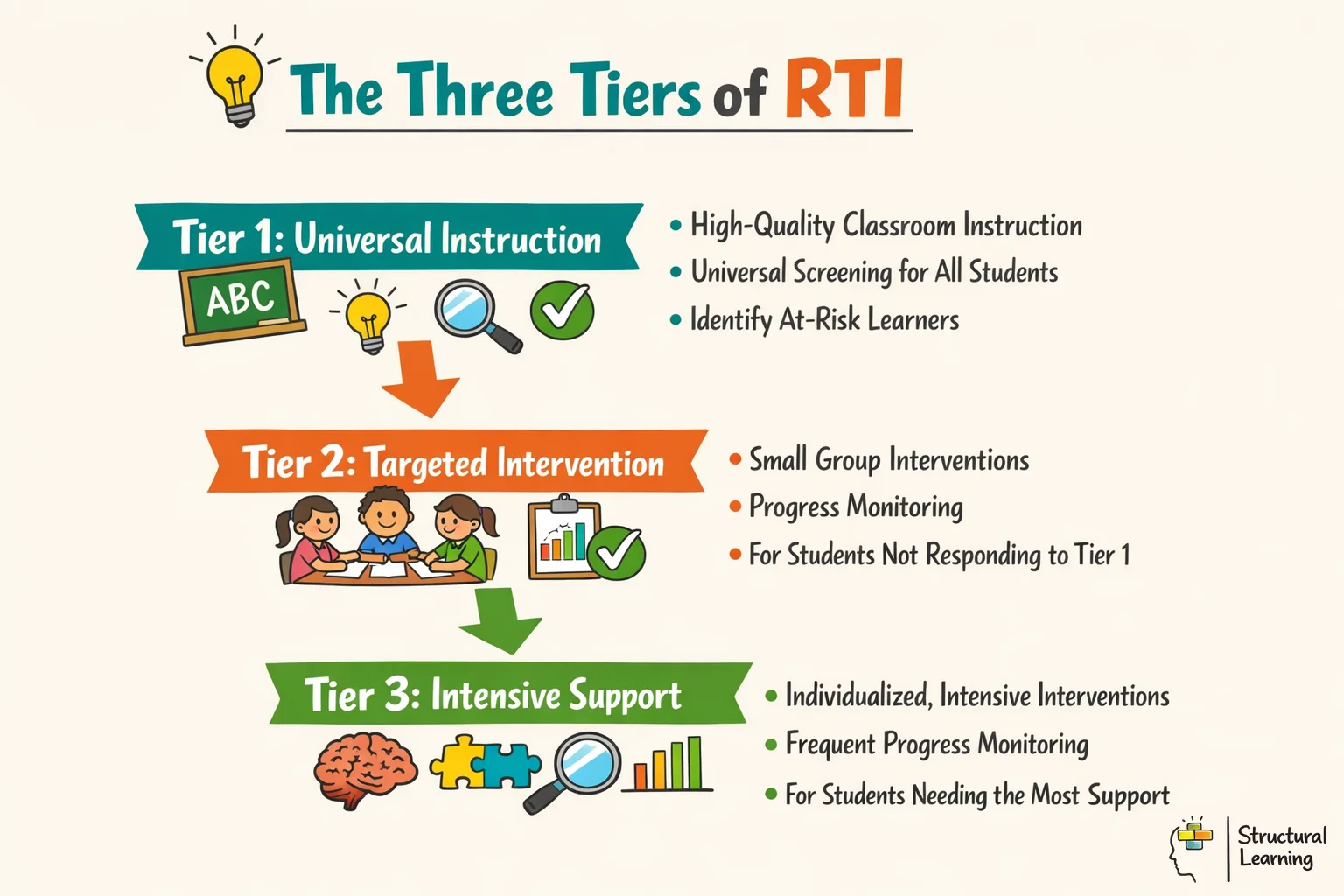
RTI is structured in three tiers, each representing a different level of intervention intensity. Think of it as a pyramid: most students are at the base (Tier 1), fewer students move to the middle level (Tier 2), and only a small number need the intensive help at the top (Tier 3).
Typically, 80 to 85 percent of students respond well to Tier 1 instruction and need no additional intervention. About 10 to 15 percent of students will need Tier 2 intervention. Only 3 to 5 percent of students will require Tier 3. If your school has more than 20 percent of students in Tier 2, it usually signals a problem with Tier 1 instruction, not a sudden surge in learning disabilities.
Each tier builds on the one below. Tier 2 students still receive Tier 1 instruction, but they also get small-group intervention. Tier 3 students get Tier 1, Tier 2-like support, and then additional intensive work. The goal is always to help students catch up to their peers and move back down the tiers, not to stay in intervention forever.
Tier 1 is the foundation of RTI: high-quality classroom teaching delivered to all students. Your Tier 1 responsibility is to teach using an evidence-based curriculum, deliver clear explicit instruction, and assess students regularly so you can spot gaps early. This is not remedial teaching or "dumbing down" content. It is rigorous, well-structured instruction that works for most learners.
Effective Tier 1 instruction includes several key elements. First, use a core curriculum with proven effectiveness. Second, teach the skills and concepts in a logical sequence. Third, provide lots of practice with immediate corrective feedback. Fourth, use active engagement strategies like partner reading, think-pair-share, and guided practice so students are not passive. Fifth, differentiate within your whole-class lesson by using flexible grouping, varying the difficulty of practice problems, and adjusting the pace for different learners. Scaffolding techniques and graphic organisers are particularly powerful at Tier 1 because they help more students access the core content.
Example in reading: You teach a lesson on inferencing to a mixed-ability Year 4 class. You use a think-aloud to show students how to combine clues in the text with background knowledge to make an inference. You then guide students through a shared text, asking them to infer together. Finally, students practise inferencing with a partner on a new text. Some pairs work on a simpler text, others on a more complex one, but all are practising the same skill. You monitor their work and give feedback. This is differentiated Tier 1 instruction.
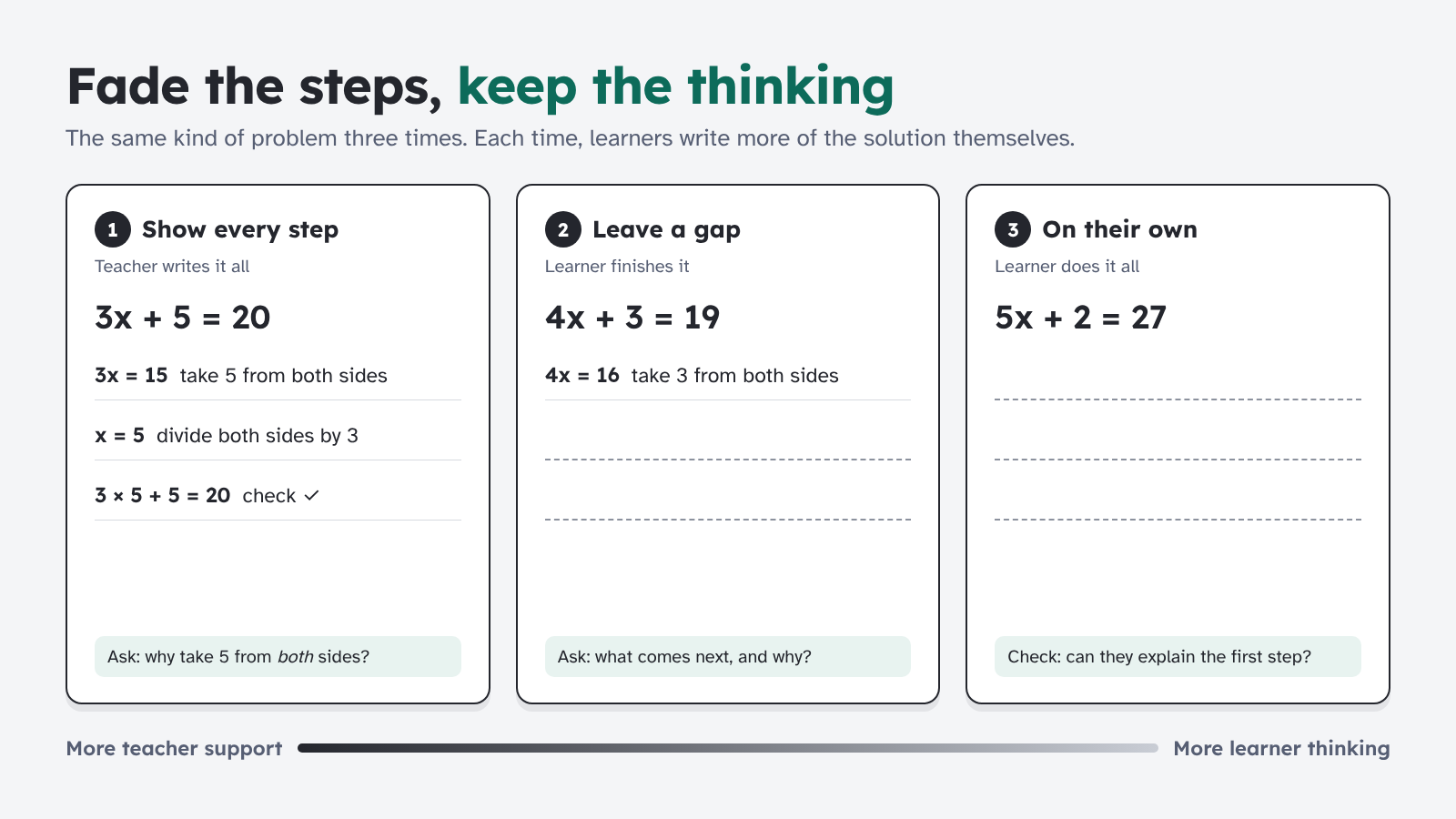
Example in maths: You teach Year 6 students how to add fractions with unlike denominators. You start with concrete materials (fraction strips), move to pictorial representations (diagrams), and then to abstract algorithms. You explicitly teach the steps. You provide lots of guided practice with you checking each student's work. For students who grasp it quickly, you give more complex problems (adding three fractions). For students who are struggling, you slow down and use the concrete materials longer. All students are learning the same concept, but at different speeds and with different levels of support.
Universal screening happens three times per year in Tier 1. You administer a benchmark assessment (often provided by your literacy or numeracy programme) to all students. This takes 10 to 15 minutes per child and tells you who is on track and who is at risk. Students who score below a certain cut point move into Tier 2 screening to determine if they need intervention.
Tier 2 intervention is for students who score below the benchmark on universal screening or who are not making adequate progress in Tier 1 despite good instruction. These students continue in Tier 1 lessons but receive 20 to 30 minutes of small-group intervention, usually three to five times per week. Tier 2 interventions are more targeted and systematic than general classroom instruction.
You or another member of staff (a teaching assistant, literacy specialist, or speech and language therapist) delivers Tier 2 intervention. The intervention should target the specific skill the student is struggling with, use a research-backed programme, and focus on the foundational skills that underlie grade-level content. For example, if a Year 3 student is struggling with reading fluency, the Tier 2 intervention focuses on phonics and sight words, not chapter books.
Tier 2 interventions are more repetitive and explicit than Tier 1. You teach fewer concepts, repeat them across multiple sessions, provide lots of guided practice, and use multiple examples. You also progress more slowly, making sure students fully understand each step before moving on.
Example in reading: You have a small group of Year 2 students who scored below benchmark on the universal screening for phonological awareness and phonics. Three times per week, a teaching assistant runs a 25-minute intervention focused on phoneme blending and CVC word decoding. The assistant uses a structured programme with a set sequence of phonemes, high-frequency words, and decodable texts. Each session follows the same format: review, teach a new phoneme or blend, guided practice reading words and short sentences, and independent practice. Students progress at their own pace through the programme.
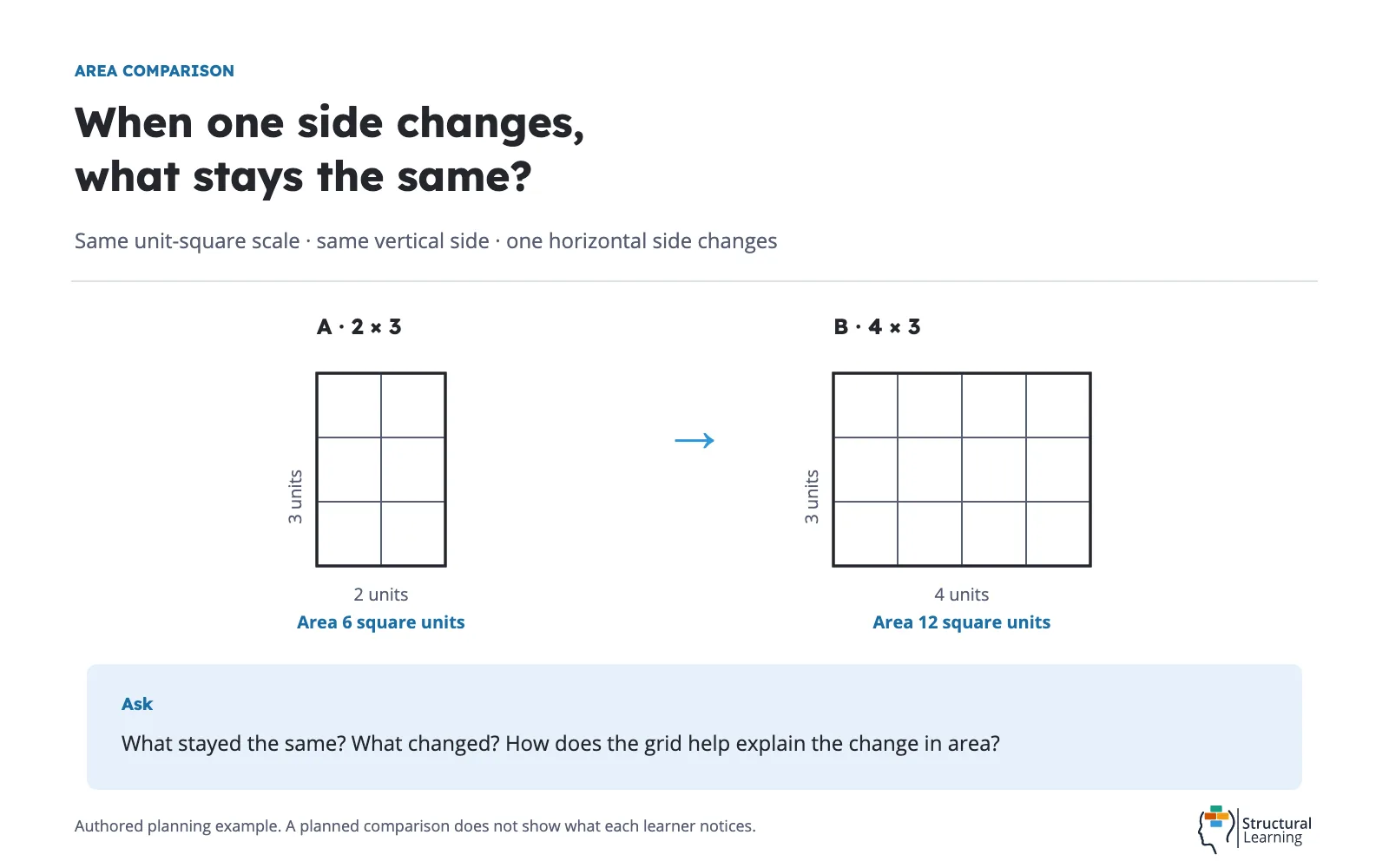
Example in maths: You have a small group of Year 4 students who do not yet understand place value. They continue in Tier 1 lessons but also receive 25 minutes of Tier 2 intervention twice a week. The intervention starts with concrete materials (base-ten blocks) to build understanding of ones, tens, and hundreds. The teaching assistant explicitly teaches students to represent numbers with the blocks, count by tens, and understand that 30 means "three tens". Once students grasp this, they move to pictorial representations (drawings and diagrams). Only after mastering the concrete and pictorial representations do they move to numbers. This layer-by-layer approach is typical of Tier 2 maths intervention.
You monitor progress in Tier 2 using progress monitoring assessments, usually every one or two weeks. These are short, frequent tests (often one to three minutes) of the specific skill being taught. CBM (curriculum-based measurement) is the most common approach. For reading, a student reads aloud for one minute and you count the number of words read correctly. For maths, a student completes a probe of basic facts or computation problems. The results are graphed and reviewed every three to five weeks. If the student is catching up and the trend line points towards the benchmark, Tier 2 is working and you continue. If the student is not catching up after five to eight weeks of intervention, you move to Tier 3 or adjust the intervention.
Tier 3 intervention is for students who do not respond adequately to Tier 2 intervention. These students have significant gaps compared to their peers and need more intense, individualised support. Tier 3 may involve 30 to 60 minutes of daily intervention, delivered one-to-one or in very small groups (two to three students). Tier 3 interventions are highly individualised, targeting the student's specific deficits.
At Tier 3, you work closely with specialists such as the special needs coordinator, special education teacher, or educational psychologist. Tier 3 often involves a combination of evidence-based interventions, accommodations, and sometimes assistive technology. The goal is to close the gap as much as possible, but Tier 3 is also the point at which special education evaluation becomes appropriate. If a student has had months of high-quality Tier 1 instruction and weeks of intensive Tier 2 and Tier 3 intervention but still has not caught up, they may have a learning disability requiring special education.
Example in reading: You have a Year 5 student who has received six weeks of Tier 2 phonics intervention and is still not fluent with consonant blends. At Tier 3, you work with the special needs coordinator to design an intensive intervention. The student receives 40 minutes of one-to-one intervention four times per week. The intervention uses a highly scripted, systematic phonics programme with multisensory techniques (saying sounds while writing letters, tracing in sand, etc.). You also assess the student for visual processing difficulties or other underlying issues. Progress is monitored weekly. If after eight weeks there is still minimal progress, the school initiates a special education evaluation.
Example in maths: A Year 3 student struggles with basic number facts (2+3, 5+4, etc.) despite six weeks of Tier 2 intervention practising facts daily. At Tier 3, the student receives 30 minutes of daily one-to-one intervention using concrete materials and counting strategies to build number sense. The teaching focuses on subitizing (recognising quantities without counting), ten-frames, and counting on strategies rather than rote memorization. You use explicit, repetitive teaching and celebrate small wins. Progress is checked twice per week using single-skill probes. If the student is still significantly behind after four to eight weeks, the school evaluates for dyscalculia or working memory difficulties.
Universal screening is the first step in RTI. Three times per year (usually autumn, winter, and spring), all students take a brief screening assessment in reading and maths. The screening typically takes 10 to 15 minutes per student and measures the foundational skills for that grade level. For early primary, screening focuses on phonological awareness and phonics. For later primary, it focuses on fluency and comprehension. For secondary, screening often focuses on reading fluency and comprehension or numeracy basics.
Common screening tools include DIBELS (Dynamic Indicators of Basic Early Literacy Skills), AIMSweb, easyCBM, and FAST (Florida Assessment of Student Thinking). Your school chooses a screening tool aligned with your curriculum. The screening is not a test of overall intelligence or worth. It is a quick check of whether each student has the foundational skills expected at that point in the year. A student who scores below the benchmark is flagged for Tier 2 consideration.
Screening decisions use cut points, which are specific scores that separate students into categories. For example, a Year 1 reading screening might have a benchmark of 20 words correct in one minute. Students scoring 20 or above are considered on track. Students scoring 10 to 19 are at some risk and may be monitored more closely. Students scoring below 10 are at high risk and typically move into Tier 2 intervention immediately.
Example: In autumn, you give all your Year 2 class the DIBELS nonsense word fluency screening. The benchmark for Year 2 is 24 letter sounds correct per minute. Most students score between 25 and 40. Three students score 15, 18, and 12. These three students are flagged as at-risk and their parents are contacted. The school begins progress monitoring in a Tier 2 intervention within two weeks. By winter, two of the three students have made good progress and no longer need Tier 2. The third student is still below benchmark and moves into Tier 3. The screening data is then used to track outcomes across the school. If 40 percent of students are at-risk in autumn, that signals a problem with Tier 1 instruction, not a surge in disabilities.
While universal screening happens three times per year, progress monitoring happens much more frequently and is the backbone of RTI. Students in Tier 2 or Tier 3 are progress monitored weekly or fortnightly using brief assessments of the specific skill being taught. The idea is to get real-time data on whether the intervention is working.
Progress monitoring typically uses CBM (curriculum-based measurement), which involves short probes of specific skills. For reading, a one-minute fluency probe is common (student reads aloud from a grade-level passage and errors are counted). For maths, a one to three-minute probe of basic facts or computation is common (student solves 10 to 20 problems and you count how many are correct). Progress monitoring takes only a few minutes per student and can often be done by teaching assistants.
Progress monitoring data is graphed and reviewed every three to five weeks. The graph shows the student's baseline score when they entered the intervention, their scores each week, and a trend line showing whether they are improving. A good progress monitoring graph answers a simple question: is the student catching up? If the trend line slopes upward and the student is moving towards the benchmark, the intervention is working. If the trend line is flat or downward, the intervention is not working and needs to be adjusted or intensified.
Example: A Year 3 student enters Tier 2 reading intervention with a baseline fluency score of 45 words correct per minute (below the benchmark of 80). Over five weeks, their scores are 47, 49, 52, 54, 57. The trend line slopes upward. The student is gaining about 2 to 3 words per week. At this rate, they will reach the benchmark in about 10 weeks. The intervention is working, so you continue.
Contrast this with another student who enters at 42 words per minute and after five weeks scores 43, 42, 44, 41, 43. There is no trend. The student is not improving. At week five, you would typically adjust the intervention (perhaps the passage level is too hard, or the strategy being taught is not the right match, or the student needs a different time of day), intensify it (more frequency or longer sessions), or move to Tier 3.
Here is how to set up simple progress progress monitoring in your classroom. Choose a brief, reliable assessment that measures the skill being taught. Administer it at the same time each week (consistency matters). Graph the results immediately so you can see trends. Review data every three to five weeks in a meeting with your team. Make a data-based decision: keep going, adjust, intensify, or move tiers.
The heart of RTI is using data, not hunches, to make decisions. Instead of debating whether a student "has" a learning disability based on subjective impressions, RTI teams use objective data: screening scores, progress monitoring trends, classroom grades, and observations. These data points are reviewed together to answer specific questions.
At each RTI meeting (typically every three to five weeks for Tier 2 students, more frequently for Tier 3), the team reviews three types of data. First, progress monitoring data shows whether the student is catching up. Is the trend line moving in the right direction? Is the student's rate of improvement fast enough that they will reach grade level within a reasonable time? Second, classroom data shows how the student is performing in Tier 1 instruction. Is the student keeping up in reading lessons, maths lessons, and other subjects? Third, fidelity data checks whether the intervention is being delivered correctly. Is the teaching assistant following the protocol? Is the student attending all sessions?
Based on these data, the team makes one of four decisions. First, continue the current intervention because the student is making good progress. Second, adjust the intervention because it is not working or not being delivered with sufficient fidelity. Third, intensify the intervention by increasing frequency, duration, or intensity. Fourth, move to the next tier (from Tier 1 to Tier 2, or from Tier 2 to Tier 3).
Data-based decision making removes the subjectivity and politics from these conversations. Instead of arguing about whether a student "looks" smart, you ask whether the data shows improvement. Instead of saying "some students are just slow learners," you ask whether high-quality intervention is being delivered with fidelity. This shifts the conversation from "what's wrong with the student" to "what are we doing, and is it working?"
Example of data-based decision making: A Year 4 class team meets to discuss a student in Tier 2 maths intervention. The progress monitoring data shows four weeks of flat scores (no improvement). The classroom data shows the student is also not keeping up in Tier 1 maths lessons. The fidelity checklist shows the intervention is being delivered three times per week as planned, but only 60 percent of the planned content was covered each session (the teaching assistant reported "running out of time"). The team decides to adjust the intervention by focusing on just one concept per week instead of two, so all content can be covered with fidelity. They also add a fifth observation to the schedule to monitor fidelity more closely. In two weeks, they will review progress again.
RTI and MTSS are related frameworks that are sometimes used interchangeably, but they are not identical. RTI stands for Response to Intervention. MTSS stands for Multi-Tiered System of Supports. Understanding the difference helps you navigate school conversations about these frameworks.
RTI is a prevention and intervention framework focused specifically on academics. It was developed for reading and maths and uses the three-tier approach described above. The goal is to identify students with academic difficulties early and provide intervention before they fall far behind.
MTSS is a broader framework that includes both academic and behavioural support. An MTSS model includes RTI for academics but also adds Positive Behavioural Interventions and Supports (PBIS) (PBIS) for behaviour and often social-emotional learning support as well. In an MTSS system, a student might be in Tier 1 academically but Tier 2 behaviourally, receiving small-group support for both.
| Feature | RTI | MTSS |
|---|---|---|
| Focus | Academic intervention (reading, maths) | Academic + behavioural + social-emotional |
| Scope | Early identification and intervention for academic failure | Whole-child support system across academics, behaviour, and wellbeing |
| Measurement | Universal screening and progress monitoring for academics | Screening and monitoring for academics, behaviour, and social-emotional domains |
| Tiers | Three tiers: universal, small-group, intensive | Three tiers: universal, targeted, intensive (across multiple domains) |
| Data | Reading and maths screening and progress monitoring | Behaviour data, social-emotional measures, and academic data |
| Special education link | RTI data used to identify students with learning disabilities | MTSS is broader; academic component can inform special education |
In practice, most US schools are moving towards MTSS because it addresses the whole child. However, the academic component of MTSS is RTI. If you work in a school that uses MTSS language, you are likely seeing RTI principles at work in reading and maths plus additional support for behaviour and social-emotional learning.
Your role in RTI is much larger than many teachers initially realise. You are not just teaching; you are monitoring, assessing, and collaborating with specialists to ensure every student gets the right level of support.
In Tier 1, your primary responsibility is to deliver high-quality instruction using evidence-based materials and methods. You assess students regularly through formative assessment, administer universal screening, and use the results to spot students who may be at-risk. You differentiate within your lessons using differentiation strategies, flexible grouping, and targeted feedback. You also use direct instruction and retrieval practice to build foundational skills.
In Tier 2, you may deliver interventions yourself, but more likely you manage or coordinate them. If a teaching assistant delivers Tier 2 intervention, you train them on the programme, provide them with fidelity checklists, observe occasionally, and review progress monitoring data regularly. You ensure the student still has access to high-quality Tier 1 instruction even while they are in intervention. You communicate with the student's family about the support and progress. You attend RTI team meetings and contribute data about the student's classroom performance.
In Tier 3, you work with specialists such as the special needs coordinator or special education teacher. You may deliver part of the intensive intervention or coordinate with others who do. You provide frequent classroom observations and share feedback about the student's progress in regular lessons. You assist with special education evaluation if it becomes necessary. You remain the primary teacher for most of the student's day.
Beyond direct work with students, you play a critical role in making RTI work schoolwide. This includes attending RTI meetings (usually every three to five weeks per student). You help gather data: administering universal screening, monitoring progress, and tracking fidelity. You advocate for students who need intervention. You communicate with families about their child's performance and the support being provided. You also apply RTI principles within your own classroom: using cognitive load theory to manage complexity, using questioning strategies to check understanding, and using graphic organisers to make thinking visible.
Many schools start RTI with good intentions but make implementation mistakes that undermine the framework. Here are the most common pitfalls and how to avoid them.
Mistake 1: Weak Tier 1 instruction. Schools sometimes assume RTI means "add Tier 2 and Tier 3 intervention." In reality, RTI starts with excellent Tier 1 instruction for all students. If your Tier 1 is weak (using an ineffective curriculum, inconsistent teaching, little differentiation), then 30 to 40 percent of students will need Tier 2, which is unsustainable. Fix: Invest in Tier 1 first. Choose evidence-based materials, provide professional development for teachers, and monitor the quality of instruction regularly. Many schools find that improving Tier 1 actually reduces the number of students who need Tier 2.
Mistake 2: Intervention without fidelity. Intervention only works if it is delivered as intended. Many schools deliver intervention haphazardly: sometimes weekly, sometimes twice a week, sometimes with different content than planned, sometimes by different staff members. This makes it impossible to know if the intervention is the problem or the delivery is. Fix: Use fidelity checklists. After each intervention session, staff mark whether the key components were delivered. Review fidelity data at RTI meetings. If fidelity is below 90 percent, focus on improving delivery before deciding the intervention is not working.
Mistake 3: Ignoring progress monitoring data. Some schools collect progress monitoring data but do not use it. Meetings happen and people discuss students in general terms ("How is he doing?") without actually looking at the graph. This is inefficient and means you may be delivering an ineffective intervention for weeks without realising it. Fix: Graph progress monitoring data in real time. Review the graph at every RTI meeting. Make decisions based on the trend, not your gut feeling. If the trend is flat, make a change within one to two weeks, not after six weeks.
Mistake 4: Tier 2 intervention that duplicates Tier 1 instruction. Some schools run Tier 2 intervention that is just a watered-down version of what happened in Tier 1. The student sits with the teacher again and goes through the same lesson, only more slowly. This does not address the root cause of the difficulty. Fix: Make Tier 2 intervention targeted and systematic. It should focus on the foundational skills the student is missing, use a different approach or materials than Tier 1, and include higher frequency or more intensive practice. A student who struggled with phonics in Tier 1 reading lessons needs structured phonics intervention in Tier 2, not just "more reading time".
Mistake 5: Lack of communication with families. Some schools implement RTI without regularly talking to parents. Families are surprised when their child is referred to special education evaluation after Tier 2 did not work, or they do not understand why their child is pulled out for intervention. Fix: Communicate early and often. Let families know when their child scores at-risk on universal screening. Explain what Tier 2 intervention will focus on. Share progress monitoring graphs every three to four weeks. Invite families to RTI meetings. Use language they understand (avoid jargon) and be honest about both progress and concerns.
Mistake 6: Assuming RTI is a replacement for special education. Some schools think RTI means "never identify students as having disabilities." In reality, RTI is a better way to identify real disabilities. Students who have received high-quality Tier 1 instruction and intensive Tier 2 and Tier 3 intervention but still have not caught up likely have a genuine disability and deserve formal evaluation and special education services. RTI does not eliminate special education; it refines the process. Fix: Move to special education evaluation if a student has not responded to multiple tiers of intervention. Use RTI data to write a thorough evaluation report. Tier 2 and Tier 3 data show that the student has had excellent opportunities to learn and still has not succeeded, which is evidence of a real disability.
Mistake 7: Not matching intervention intensity to student need. Some schools have only one Tier 2 intervention programme. All students who are at-risk get the same 20 minutes, three times per week, regardless of how far behind they are. A student who is only slightly below benchmark gets the same intervention as a student who is 20 percentile points behind. This means the student with a big gap moves to Tier 3 when they need it, but the student with a small gap stays in Tier 2 for months and does not catch up. Fix: Use screening data to estimate the severity of the gap. A student who is 10 percentile points below benchmark might need 20 minutes three times per week. A student who is 40 percentile points below benchmark needs daily intervention, either in Tier 2 or immediately in Tier 3. Match the intensity to the size of the gap.

Response to Intervention (RTI) is a system that helps schools identify and support students who struggle academically before they fall significantly behind. Rather than waiting for a child to fail a standardized test or score below a certain threshold, RTI uses data from classroom assessments to catch problems early and provide targeted help. This guide explains how RTI works in practice, what your role is as a teacher, and how to avoid common implementation mistakes.
At its core, RTI is simple: teach everyone the same quality lessons, measure how students are learning, and give extra help to those who need it. The system combines universal screening, progress monitoring, and evidence-based interventions organised into three tiers of intensity. Schools implementing RTI report earlier identification of learning difficulties, better outcomes for struggling students, and reduced overidentification for special education (Fuchs & Fuchs, 2006).
Response to Intervention is a prevention and early intervention framework designed to help every student succeed academically. The name comes from the idea that schools respond to how well a student responds to classroom instruction. If a child responds well to normal teaching, they continue with the standard curriculum. If they do not respond as expected, the school provides intervention and monitors whether that helps.
The framework rests on three core beliefs. First, quality instruction matters more than student ability. Second, schools can measure how well students are learning in real time, not just at the end of the year. Third, struggling students benefit from evidence-based interventions delivered early, when gaps are still small enough to close quickly. Research by Fuchs and colleagues at Vanderbilt University shows that students in schools with well-implemented RTI show gains in reading and maths at nearly twice the rate of students in schools without RTI (Fuchs & Fuchs, 2006).
A typical RTI model involves universal screening for all students (usually three times per year), progress monitoring for students receiving intervention (weekly or fortnightly), and a decision-making process based on objective data. If a student's progress monitoring scores show they are not catching up despite intervention, the intervention is adjusted or intensified.
UK Educator? The UK equivalent of RTI is the Graduated Approach (Assess, Plan, Do, Review), set out in the SEND Code of Practice 2015.
See our guides: Special Educational Needs: A Teacher's Guide and Provision Maps for SEN.
RTI gained prominence after the Individuals with Disabilities Education Improvement Act (IDEA) was reauthorised in 2004. IDEA allowed schools to use RTI data as part of the process for identifying students with learning disabilities, instead of relying solely on the traditional "discrepancy model" (comparing IQ scores to achievement scores). This shift recognised that many students who appeared to have disabilities were simply never taught effectively.
In the United States, IDEA requires schools to identify students with disabilities and provide free, appropriate special education. By using RTI, schools can provide early intervention to many struggling students without formally identifying them as having a disability. For students who do not respond to intervention, schools can then use RTI data to support a special education referral. The result is fewer false positives (students mislabelled as disabled) and faster support for students who genuinely need it.
RTI is not a substitute for special education evaluation. Rather, it is a framework that helps schools use their resources more effectively and ensure that students are only identified as having disabilities if they truly have them and have not simply lacked adequate instruction.
RTI is structured in three tiers, each representing a different level of intervention intensity. Think of it as a pyramid: most students are at the base (Tier 1), fewer students move to the middle level (Tier 2), and only a small number need the intensive help at the top (Tier 3).
Typically, 80 to 85 percent of students respond well to Tier 1 instruction and need no additional intervention. About 10 to 15 percent of students will need Tier 2 intervention. Only 3 to 5 percent of students will require Tier 3. If your school has more than 20 percent of students in Tier 2, it usually signals a problem with Tier 1 instruction, not a sudden surge in learning disabilities.
Each tier builds on the one below. Tier 2 students still receive Tier 1 instruction, but they also get small-group intervention. Tier 3 students get Tier 1, Tier 2-like support, and then additional intensive work. The goal is always to help students catch up to their peers and move back down the tiers, not to stay in intervention forever.
Tier 1 is the foundation of RTI: high-quality classroom teaching delivered to all students. Your Tier 1 responsibility is to teach using an evidence-based curriculum, deliver clear explicit instruction, and assess students regularly so you can spot gaps early. This is not remedial teaching or "dumbing down" content. It is rigorous, well-structured instruction that works for most learners.
Effective Tier 1 instruction includes several key elements. First, use a core curriculum with proven effectiveness. Second, teach the skills and concepts in a logical sequence. Third, provide lots of practice with immediate corrective feedback. Fourth, use active engagement strategies like partner reading, think-pair-share, and guided practice so students are not passive. Fifth, differentiate within your whole-class lesson by using flexible grouping, varying the difficulty of practice problems, and adjusting the pace for different learners. Scaffolding techniques and graphic organisers are particularly powerful at Tier 1 because they help more students access the core content.
Example in reading: You teach a lesson on inferencing to a mixed-ability Year 4 class. You use a think-aloud to show students how to combine clues in the text with background knowledge to make an inference. You then guide students through a shared text, asking them to infer together. Finally, students practise inferencing with a partner on a new text. Some pairs work on a simpler text, others on a more complex one, but all are practising the same skill. You monitor their work and give feedback. This is differentiated Tier 1 instruction.
Example in maths: You teach Year 6 students how to add fractions with unlike denominators. You start with concrete materials (fraction strips), move to pictorial representations (diagrams), and then to abstract algorithms. You explicitly teach the steps. You provide lots of guided practice with you checking each student's work. For students who grasp it quickly, you give more complex problems (adding three fractions). For students who are struggling, you slow down and use the concrete materials longer. All students are learning the same concept, but at different speeds and with different levels of support.
Universal screening happens three times per year in Tier 1. You administer a benchmark assessment (often provided by your literacy or numeracy programme) to all students. This takes 10 to 15 minutes per child and tells you who is on track and who is at risk. Students who score below a certain cut point move into Tier 2 screening to determine if they need intervention.
Tier 2 intervention is for students who score below the benchmark on universal screening or who are not making adequate progress in Tier 1 despite good instruction. These students continue in Tier 1 lessons but receive 20 to 30 minutes of small-group intervention, usually three to five times per week. Tier 2 interventions are more targeted and systematic than general classroom instruction.
You or another member of staff (a teaching assistant, literacy specialist, or speech and language therapist) delivers Tier 2 intervention. The intervention should target the specific skill the student is struggling with, use a research-backed programme, and focus on the foundational skills that underlie grade-level content. For example, if a Year 3 student is struggling with reading fluency, the Tier 2 intervention focuses on phonics and sight words, not chapter books.
Tier 2 interventions are more repetitive and explicit than Tier 1. You teach fewer concepts, repeat them across multiple sessions, provide lots of guided practice, and use multiple examples. You also progress more slowly, making sure students fully understand each step before moving on.
Example in reading: You have a small group of Year 2 students who scored below benchmark on the universal screening for phonological awareness and phonics. Three times per week, a teaching assistant runs a 25-minute intervention focused on phoneme blending and CVC word decoding. The assistant uses a structured programme with a set sequence of phonemes, high-frequency words, and decodable texts. Each session follows the same format: review, teach a new phoneme or blend, guided practice reading words and short sentences, and independent practice. Students progress at their own pace through the programme.
Example in maths: You have a small group of Year 4 students who do not yet understand place value. They continue in Tier 1 lessons but also receive 25 minutes of Tier 2 intervention twice a week. The intervention starts with concrete materials (base-ten blocks) to build understanding of ones, tens, and hundreds. The teaching assistant explicitly teaches students to represent numbers with the blocks, count by tens, and understand that 30 means "three tens". Once students grasp this, they move to pictorial representations (drawings and diagrams). Only after mastering the concrete and pictorial representations do they move to numbers. This layer-by-layer approach is typical of Tier 2 maths intervention.
You monitor progress in Tier 2 using progress monitoring assessments, usually every one or two weeks. These are short, frequent tests (often one to three minutes) of the specific skill being taught. CBM (curriculum-based measurement) is the most common approach. For reading, a student reads aloud for one minute and you count the number of words read correctly. For maths, a student completes a probe of basic facts or computation problems. The results are graphed and reviewed every three to five weeks. If the student is catching up and the trend line points towards the benchmark, Tier 2 is working and you continue. If the student is not catching up after five to eight weeks of intervention, you move to Tier 3 or adjust the intervention.
Tier 3 intervention is for students who do not respond adequately to Tier 2 intervention. These students have significant gaps compared to their peers and need more intense, individualised support. Tier 3 may involve 30 to 60 minutes of daily intervention, delivered one-to-one or in very small groups (two to three students). Tier 3 interventions are highly individualised, targeting the student's specific deficits.
At Tier 3, you work closely with specialists such as the special needs coordinator, special education teacher, or educational psychologist. Tier 3 often involves a combination of evidence-based interventions, accommodations, and sometimes assistive technology. The goal is to close the gap as much as possible, but Tier 3 is also the point at which special education evaluation becomes appropriate. If a student has had months of high-quality Tier 1 instruction and weeks of intensive Tier 2 and Tier 3 intervention but still has not caught up, they may have a learning disability requiring special education.
Example in reading: You have a Year 5 student who has received six weeks of Tier 2 phonics intervention and is still not fluent with consonant blends. At Tier 3, you work with the special needs coordinator to design an intensive intervention. The student receives 40 minutes of one-to-one intervention four times per week. The intervention uses a highly scripted, systematic phonics programme with multisensory techniques (saying sounds while writing letters, tracing in sand, etc.). You also assess the student for visual processing difficulties or other underlying issues. Progress is monitored weekly. If after eight weeks there is still minimal progress, the school initiates a special education evaluation.
Example in maths: A Year 3 student struggles with basic number facts (2+3, 5+4, etc.) despite six weeks of Tier 2 intervention practising facts daily. At Tier 3, the student receives 30 minutes of daily one-to-one intervention using concrete materials and counting strategies to build number sense. The teaching focuses on subitizing (recognising quantities without counting), ten-frames, and counting on strategies rather than rote memorization. You use explicit, repetitive teaching and celebrate small wins. Progress is checked twice per week using single-skill probes. If the student is still significantly behind after four to eight weeks, the school evaluates for dyscalculia or working memory difficulties.
Universal screening is the first step in RTI. Three times per year (usually autumn, winter, and spring), all students take a brief screening assessment in reading and maths. The screening typically takes 10 to 15 minutes per student and measures the foundational skills for that grade level. For early primary, screening focuses on phonological awareness and phonics. For later primary, it focuses on fluency and comprehension. For secondary, screening often focuses on reading fluency and comprehension or numeracy basics.
Common screening tools include DIBELS (Dynamic Indicators of Basic Early Literacy Skills), AIMSweb, easyCBM, and FAST (Florida Assessment of Student Thinking). Your school chooses a screening tool aligned with your curriculum. The screening is not a test of overall intelligence or worth. It is a quick check of whether each student has the foundational skills expected at that point in the year. A student who scores below the benchmark is flagged for Tier 2 consideration.
Screening decisions use cut points, which are specific scores that separate students into categories. For example, a Year 1 reading screening might have a benchmark of 20 words correct in one minute. Students scoring 20 or above are considered on track. Students scoring 10 to 19 are at some risk and may be monitored more closely. Students scoring below 10 are at high risk and typically move into Tier 2 intervention immediately.
Example: In autumn, you give all your Year 2 class the DIBELS nonsense word fluency screening. The benchmark for Year 2 is 24 letter sounds correct per minute. Most students score between 25 and 40. Three students score 15, 18, and 12. These three students are flagged as at-risk and their parents are contacted. The school begins progress monitoring in a Tier 2 intervention within two weeks. By winter, two of the three students have made good progress and no longer need Tier 2. The third student is still below benchmark and moves into Tier 3. The screening data is then used to track outcomes across the school. If 40 percent of students are at-risk in autumn, that signals a problem with Tier 1 instruction, not a surge in disabilities.
While universal screening happens three times per year, progress monitoring happens much more frequently and is the backbone of RTI. Students in Tier 2 or Tier 3 are progress monitored weekly or fortnightly using brief assessments of the specific skill being taught. The idea is to get real-time data on whether the intervention is working.
Progress monitoring typically uses CBM (curriculum-based measurement), which involves short probes of specific skills. For reading, a one-minute fluency probe is common (student reads aloud from a grade-level passage and errors are counted). For maths, a one to three-minute probe of basic facts or computation is common (student solves 10 to 20 problems and you count how many are correct). Progress monitoring takes only a few minutes per student and can often be done by teaching assistants.
Progress monitoring data is graphed and reviewed every three to five weeks. The graph shows the student's baseline score when they entered the intervention, their scores each week, and a trend line showing whether they are improving. A good progress monitoring graph answers a simple question: is the student catching up? If the trend line slopes upward and the student is moving towards the benchmark, the intervention is working. If the trend line is flat or downward, the intervention is not working and needs to be adjusted or intensified.
Example: A Year 3 student enters Tier 2 reading intervention with a baseline fluency score of 45 words correct per minute (below the benchmark of 80). Over five weeks, their scores are 47, 49, 52, 54, 57. The trend line slopes upward. The student is gaining about 2 to 3 words per week. At this rate, they will reach the benchmark in about 10 weeks. The intervention is working, so you continue.
Contrast this with another student who enters at 42 words per minute and after five weeks scores 43, 42, 44, 41, 43. There is no trend. The student is not improving. At week five, you would typically adjust the intervention (perhaps the passage level is too hard, or the strategy being taught is not the right match, or the student needs a different time of day), intensify it (more frequency or longer sessions), or move to Tier 3.
Here is how to set up simple progress progress monitoring in your classroom. Choose a brief, reliable assessment that measures the skill being taught. Administer it at the same time each week (consistency matters). Graph the results immediately so you can see trends. Review data every three to five weeks in a meeting with your team. Make a data-based decision: keep going, adjust, intensify, or move tiers.
The heart of RTI is using data, not hunches, to make decisions. Instead of debating whether a student "has" a learning disability based on subjective impressions, RTI teams use objective data: screening scores, progress monitoring trends, classroom grades, and observations. These data points are reviewed together to answer specific questions.
At each RTI meeting (typically every three to five weeks for Tier 2 students, more frequently for Tier 3), the team reviews three types of data. First, progress monitoring data shows whether the student is catching up. Is the trend line moving in the right direction? Is the student's rate of improvement fast enough that they will reach grade level within a reasonable time? Second, classroom data shows how the student is performing in Tier 1 instruction. Is the student keeping up in reading lessons, maths lessons, and other subjects? Third, fidelity data checks whether the intervention is being delivered correctly. Is the teaching assistant following the protocol? Is the student attending all sessions?
Based on these data, the team makes one of four decisions. First, continue the current intervention because the student is making good progress. Second, adjust the intervention because it is not working or not being delivered with sufficient fidelity. Third, intensify the intervention by increasing frequency, duration, or intensity. Fourth, move to the next tier (from Tier 1 to Tier 2, or from Tier 2 to Tier 3).
Data-based decision making removes the subjectivity and politics from these conversations. Instead of arguing about whether a student "looks" smart, you ask whether the data shows improvement. Instead of saying "some students are just slow learners," you ask whether high-quality intervention is being delivered with fidelity. This shifts the conversation from "what's wrong with the student" to "what are we doing, and is it working?"
Example of data-based decision making: A Year 4 class team meets to discuss a student in Tier 2 maths intervention. The progress monitoring data shows four weeks of flat scores (no improvement). The classroom data shows the student is also not keeping up in Tier 1 maths lessons. The fidelity checklist shows the intervention is being delivered three times per week as planned, but only 60 percent of the planned content was covered each session (the teaching assistant reported "running out of time"). The team decides to adjust the intervention by focusing on just one concept per week instead of two, so all content can be covered with fidelity. They also add a fifth observation to the schedule to monitor fidelity more closely. In two weeks, they will review progress again.
RTI and MTSS are related frameworks that are sometimes used interchangeably, but they are not identical. RTI stands for Response to Intervention. MTSS stands for Multi-Tiered System of Supports. Understanding the difference helps you navigate school conversations about these frameworks.
RTI is a prevention and intervention framework focused specifically on academics. It was developed for reading and maths and uses the three-tier approach described above. The goal is to identify students with academic difficulties early and provide intervention before they fall far behind.
MTSS is a broader framework that includes both academic and behavioural support. An MTSS model includes RTI for academics but also adds Positive Behavioural Interventions and Supports (PBIS) (PBIS) for behaviour and often social-emotional learning support as well. In an MTSS system, a student might be in Tier 1 academically but Tier 2 behaviourally, receiving small-group support for both.
| Feature | RTI | MTSS |
|---|---|---|
| Focus | Academic intervention (reading, maths) | Academic + behavioural + social-emotional |
| Scope | Early identification and intervention for academic failure | Whole-child support system across academics, behaviour, and wellbeing |
| Measurement | Universal screening and progress monitoring for academics | Screening and monitoring for academics, behaviour, and social-emotional domains |
| Tiers | Three tiers: universal, small-group, intensive | Three tiers: universal, targeted, intensive (across multiple domains) |
| Data | Reading and maths screening and progress monitoring | Behaviour data, social-emotional measures, and academic data |
| Special education link | RTI data used to identify students with learning disabilities | MTSS is broader; academic component can inform special education |
In practice, most US schools are moving towards MTSS because it addresses the whole child. However, the academic component of MTSS is RTI. If you work in a school that uses MTSS language, you are likely seeing RTI principles at work in reading and maths plus additional support for behaviour and social-emotional learning.
Your role in RTI is much larger than many teachers initially realise. You are not just teaching; you are monitoring, assessing, and collaborating with specialists to ensure every student gets the right level of support.
In Tier 1, your primary responsibility is to deliver high-quality instruction using evidence-based materials and methods. You assess students regularly through formative assessment, administer universal screening, and use the results to spot students who may be at-risk. You differentiate within your lessons using differentiation strategies, flexible grouping, and targeted feedback. You also use direct instruction and retrieval practice to build foundational skills.
In Tier 2, you may deliver interventions yourself, but more likely you manage or coordinate them. If a teaching assistant delivers Tier 2 intervention, you train them on the programme, provide them with fidelity checklists, observe occasionally, and review progress monitoring data regularly. You ensure the student still has access to high-quality Tier 1 instruction even while they are in intervention. You communicate with the student's family about the support and progress. You attend RTI team meetings and contribute data about the student's classroom performance.
In Tier 3, you work with specialists such as the special needs coordinator or special education teacher. You may deliver part of the intensive intervention or coordinate with others who do. You provide frequent classroom observations and share feedback about the student's progress in regular lessons. You assist with special education evaluation if it becomes necessary. You remain the primary teacher for most of the student's day.
Beyond direct work with students, you play a critical role in making RTI work schoolwide. This includes attending RTI meetings (usually every three to five weeks per student). You help gather data: administering universal screening, monitoring progress, and tracking fidelity. You advocate for students who need intervention. You communicate with families about their child's performance and the support being provided. You also apply RTI principles within your own classroom: using cognitive load theory to manage complexity, using questioning strategies to check understanding, and using graphic organisers to make thinking visible.
Many schools start RTI with good intentions but make implementation mistakes that undermine the framework. Here are the most common pitfalls and how to avoid them.
Mistake 1: Weak Tier 1 instruction. Schools sometimes assume RTI means "add Tier 2 and Tier 3 intervention." In reality, RTI starts with excellent Tier 1 instruction for all students. If your Tier 1 is weak (using an ineffective curriculum, inconsistent teaching, little differentiation), then 30 to 40 percent of students will need Tier 2, which is unsustainable. Fix: Invest in Tier 1 first. Choose evidence-based materials, provide professional development for teachers, and monitor the quality of instruction regularly. Many schools find that improving Tier 1 actually reduces the number of students who need Tier 2.
Mistake 2: Intervention without fidelity. Intervention only works if it is delivered as intended. Many schools deliver intervention haphazardly: sometimes weekly, sometimes twice a week, sometimes with different content than planned, sometimes by different staff members. This makes it impossible to know if the intervention is the problem or the delivery is. Fix: Use fidelity checklists. After each intervention session, staff mark whether the key components were delivered. Review fidelity data at RTI meetings. If fidelity is below 90 percent, focus on improving delivery before deciding the intervention is not working.
Mistake 3: Ignoring progress monitoring data. Some schools collect progress monitoring data but do not use it. Meetings happen and people discuss students in general terms ("How is he doing?") without actually looking at the graph. This is inefficient and means you may be delivering an ineffective intervention for weeks without realising it. Fix: Graph progress monitoring data in real time. Review the graph at every RTI meeting. Make decisions based on the trend, not your gut feeling. If the trend is flat, make a change within one to two weeks, not after six weeks.
Mistake 4: Tier 2 intervention that duplicates Tier 1 instruction. Some schools run Tier 2 intervention that is just a watered-down version of what happened in Tier 1. The student sits with the teacher again and goes through the same lesson, only more slowly. This does not address the root cause of the difficulty. Fix: Make Tier 2 intervention targeted and systematic. It should focus on the foundational skills the student is missing, use a different approach or materials than Tier 1, and include higher frequency or more intensive practice. A student who struggled with phonics in Tier 1 reading lessons needs structured phonics intervention in Tier 2, not just "more reading time".
Mistake 5: Lack of communication with families. Some schools implement RTI without regularly talking to parents. Families are surprised when their child is referred to special education evaluation after Tier 2 did not work, or they do not understand why their child is pulled out for intervention. Fix: Communicate early and often. Let families know when their child scores at-risk on universal screening. Explain what Tier 2 intervention will focus on. Share progress monitoring graphs every three to four weeks. Invite families to RTI meetings. Use language they understand (avoid jargon) and be honest about both progress and concerns.
Mistake 6: Assuming RTI is a replacement for special education. Some schools think RTI means "never identify students as having disabilities." In reality, RTI is a better way to identify real disabilities. Students who have received high-quality Tier 1 instruction and intensive Tier 2 and Tier 3 intervention but still have not caught up likely have a genuine disability and deserve formal evaluation and special education services. RTI does not eliminate special education; it refines the process. Fix: Move to special education evaluation if a student has not responded to multiple tiers of intervention. Use RTI data to write a thorough evaluation report. Tier 2 and Tier 3 data show that the student has had excellent opportunities to learn and still has not succeeded, which is evidence of a real disability.
Mistake 7: Not matching intervention intensity to student need. Some schools have only one Tier 2 intervention programme. All students who are at-risk get the same 20 minutes, three times per week, regardless of how far behind they are. A student who is only slightly below benchmark gets the same intervention as a student who is 20 percentile points behind. This means the student with a big gap moves to Tier 3 when they need it, but the student with a small gap stays in Tier 2 for months and does not catch up. Fix: Use screening data to estimate the severity of the gap. A student who is 10 percentile points below benchmark might need 20 minutes three times per week. A student who is 40 percentile points below benchmark needs daily intervention, either in Tier 2 or immediately in Tier 3. Match the intensity to the size of the gap.