Updated on
September 17, 2026
Place-Based Learning: Definition, Benefits and Examples
Place-based learning uses local history, culture and environment as the context for lessons. See its benefits, challenges and practical classroom examples.

Updated on
September 17, 2026
Place-based learning uses local history, culture and environment as the context for lessons. See its benefits, challenges and practical classroom examples.
Imagine a classroom without walls, where lessons unfold in vibrant parks, local museums, and community centres. This vision reflects the essence of Place-Based Education (PBE), an new approach that immerses students in their immediate environment to encourage meaningful classroom activities. PBE reconnects learners with their surroundings, using local history, culture, and ecology to cultivate a deeper understanding of the world.
Research supports the multiple benefits of PBE, revealing significant boosts in student engagement and community involvement. By stepping outside traditional learning spaces, students develop a kinship with their communities, ultimately strengthening local networks. Furthermore, PBE encourages a commitment to ecological stewardship, teaching students to appreciate and protect their natural environments.
However, this educational model faces challenges, especially in the wake of the COVID-19 pandemic, which has altered how and where learning occurs. As notions of place evolve, educators must adapt their methods to remain relevant and effective. This article explores into the principles, benefits, and challenges of Place-Based Education, alongside practical steps for implementation and inspiring success stories that highlight its significant potential.
This teaching method merges academic goals with community needs. Students tackle local issues, applying skills from several disciplines in real-world projects. This integration boosts engagement as learners see the tangible impact of their studies. Civic engagement plays a key role, with students practising leadership and democratic involvement. They learn to embrace various perspectives, making their education inclusive and relevant. This connection to local cultures and landscapes enriches their overall learning process.
Place-based education bridges the gap between classrooms and communities. By involving local citizens and organisations, the method creates civic engagement and strengthens community bonds. Students engage in projects that address community issues, enhancing both local vitality and environmental quality. This hands-on approach cultivates a deep understanding of the local history, culture, and economy. Students gain a sense of place, feeling more connected to their surroundings. Through these partnerships, students, teachers, and community members form stronger ties.
Students develop a deep appreciation for the natural world through place-based education. By engaging with local environments, learners cultivate a connection that supports ecological stewardship. Collaborative initiatives with organisations like the Horatio Colony Nature Preserve highlight this focus on sustainability. The Monadnock Region Place-based Education Committee exemplifies efforts to integrate outdoor learning and address environmental issues. By aligning community goals with curricular objectives, meaningful projects emerge that promote ecological integrity.
This approach encourages students to value and protect their environments, contributing to both personal growth and community sustainability.
Place-based education (PBE) faces several hurdles that impact its success. Key barriers include existing school policies and practices that may obstruct its integration. To effectively implement this approach, teachers often require ongoing professional development. Such training focuses on inquiry-based instruction and using community resources. Critics of PBE suggest it sometimes neglects global-local interrelationships, focusing too insistently on local contexts and missing broader systems. Another complexity involves perceiving certain spaces as disconnected from social ties, conflicting with PBE's goals. Financial constraints can also pose a challenge, leading to the need for clear benefits to justify expenses.
Here are some challenges faced by PBE:
The COVID-19 pandemic reshaped education methodologies, emphasising the role of PBE. This instructional strategy enhances learner participation, critical during pandemic-led disruptions. PBE connects real-world activities to academic achievement, becoming vital when traditional methods faltered. Professional development adapted teacher practices to meet evolving student needs. Positive outcomes of PBE, such as increased relevancy of learned concepts, mitigated numerous pandemic-related educational impacts. Furthermore, its community focus developed support networks critical for students and teachers navigating the new learning environments imposed by COVID-19.
Place-based education uses ecological, cultural, and economic perspectives to explore a place's history and future. It encourages social-emotional development and lifelong learning, enabling students to engage actively with their community. PBE is often supported by external organisations, which can create a disconnect from school staff who implement it.
This pedagogical method faces challenges in both practical implementation and theoretical clarity. Future research is necessary to expand understanding beyond English-speaking contexts and integrate PBE with other educational approaches like outdoor and environmental learning.
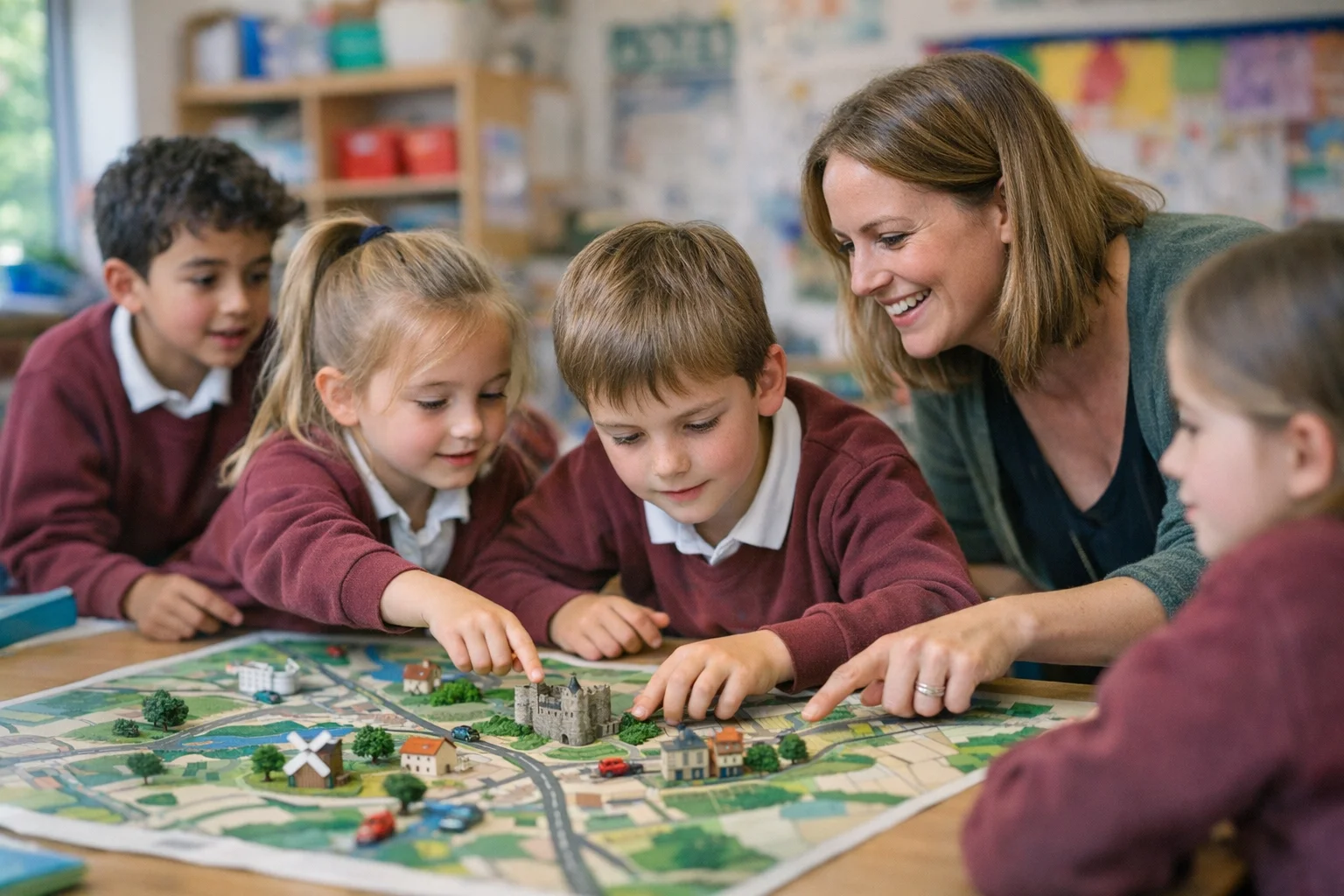
Systematic literature reviews consistently identify local environmental connections, community engagement, and interdisciplinary approaches as crucial research-backed elements that enhance student involvement in place-based education programmes.This teaching method begins locally, enabling students to connect deeply with their community before addressing global issues. Projects like mapmaking or exploring critical thinking through cultural history support active learning approaches. These initiatives help build resilience while accommodating diverse learning needs through differentiation strategies. Teachers find that students' motivation increases significantly when learning connects to their immediate environment and addresses diverse needs.
Studies demonstrate that place-based education programmes show measurable improvements in academic achievement, particularly in science and social studies. Students participating in PBE initiatives report higher levels of engagement and demonstrate increased environmental awareness compared to their peers in traditional classroom settings. Research also indicates that these programmes creates stronger community connections, with participating students showing greater civic engagement and local stewardship behaviours.
Evidence suggests that the interdisciplinary nature of place-based learning supports cross-curricular connections, enabling students to apply mathematical concepts to environmental monitoring, integrate historical research with current community challenges, and develop literacy skills through local storytelling projects. These authentic learning experiences create lasting educational impact that extends well beyond traditional assessment measures.
Begin by conducting a community audit to identify local resources, partners, and learning opportunities within walking distance of your school. Start small with single-lesson community connections before expanding to full project-based investigations. Engage local organisations, businesses, and cultural institutions early in the planning process to ensure sustainable partnerships that benefit both students and the community.
Develop relationships with community members who can serve as mentors, experts, and authentic audiences for student work. Consider creating a community advisory board to guide curriculum development and ensure that learning projects address genuine local needs while meeting academic standards.
Integrate place-based learning across multiple subjects by identifying common themes and shared learning objectives. Use local case studies to teach scientific concepts, incorporate community history into literacy instruction, and apply mathematical skills to real community data analysis. This approach ensures that place-based learning enhances rather than competes with existing curricular requirements.
Design assessment strategies that capture both academic learning and community impact. Include reflection opportunities that help students connect local learning to broader global contexts, addressing common criticisms of place-based education's potential insularity.
Place-based education represents a significant approach that reconnects learning with the immediate world students inhabit. By grounding education in local contexts, environments, and communities, this pedagogical method addresses the disconnect many students feel between their academic studies and real-world relevance. The evidence consistently demonstrates that when students engage with their local environment, they develop deeper understanding, stronger community connections, and enhanced environmental stewardship.
Despite the challenges posed by traditional school structures, funding constraints, and the recent disruptions of the COVID-19 pandemic, place-based education offers resilient pathways for meaningful learning. The key lies in thoughtful implementation that balances local focus with global awareness, ensuring students understand their place in both their immediate community and the broader world. As education continues to evolve in response to changing social and environmental needs, place-based learning provides a foundation for developing engaged, responsible citizens who are equipped to address the complex challenges of the 21st century.
For educators considering this approach, the process begins with a single step outside the classroom walls. By embracing the rich learning opportunities that exist within every community, teachers can transform their practice and provide students with the authentic, engaging education they deserve. The investment in place-based education yields returns not only in academic achievement but in the vital connections between schools, students, and the communities they serve.
Place-based learning is a teaching approach that uses the local community and environment as a starting point to teach concepts across the curriculum. Instead of relying solely on textbooks, teachers use local history, ecology, and culture to create practical lessons. This method helps students connect their academic studies to the real world right outside their school gates.
Teachers can start by identifying local issues or resources that align with their curriculum objectives. They might organise field trips to nearby parks to study biology or partner with local businesses for practical maths projects. The key is to design activities where students solve actual community problems, making the learning process highly relevant.
This approach significantly increases student engagement because children can see the direct impact of their work. It also builds strong civic awareness as learners practise democratic involvement and leadership within their own neighbourhoods. Furthermore, students develop a deep appreciation for ecological stewardship by interacting directly with their natural surroundings.
Studies indicate that place-based methods lead to measurable gains in academic achievement and better classroom behaviour. Research shows that connecting lessons to physical locations helps reduce cognitive load, making complex ideas easier to understand and remember. Additionally, outdoor learning environments have been proven to support social and emotional development.
A major challenge is that strict school policies and rigid timetables can restrict outdoor activities and community visits. Teachers also frequently lack the necessary professional development to confidently design inquiry-based lessons outside the classroom. Finally, educators sometimes focus too heavily on the local area and forget to connect these local examples to broader global systems.
The pandemic fundamentally altered how children learn, highlighting the need for resilient and adaptable teaching methods. Place-based education rebuilds vital community networks that were fractured during school closures. By focusing on local connections, schools can help students regain a sense of belonging and improve their overall wellbeing.
For further academic research on this topic:
For educators and researchers interested in exploring place-based education further, the following academic sources provide comprehensive insights into theory, practice, and implementation: