Showbie: A teacher's guide
Discover how Showbie transforms classroom management with paperless workflows, rich feedback tools, and seamless assignment distribution across all devices.


Discover how Showbie transforms classroom management with paperless workflows, rich feedback tools, and seamless assignment distribution across all devices.
Showbie is a digital assignment and feedback platform designed for education. It allows teachers to create classes, distribute assignments, collect student work, and provide rich feedback, all within a paperless workflow. Showbie works across multiple devices and operating systems including iPads, Chromebooks, Windows, and Mac computers.

The platform is particularly valued for its annotation and feedback tools. Teachers can mark directly on student work, add voice comments, and use a variety of teaching strategies to provide detailed feedback more quickly than traditional marking. Students can see feedback in context, making it easier to understand and act upon.
What sets Showbie apart is its foundation in established educational research, particularly around formative assessment and personalised feedback. The platform incorporates principles from John Hatti e's extensive meta-analyses on effective teaching practices, emphasising the critical importance of timely, specific feedback in driving student progress. This research-backed approach ensures that every feature serves a clear pedagogical purpose rather than simply adding technological complexity.
The platform's design philosophy recognises that successful educational technology must smoothly integrate into existing teaching practices rather than requiring educators to completely restructure their approaches. For instance, teachers can maintain their familiar workflow of collecting assignments, providing written feedback, and tracking progress, whilst benefiting from enhanced organisation and communication capabilities. This balance between innovation and familiarity proves particularly valuable during staff transitions or when introducing digital tools to less tech-confident colleagues.
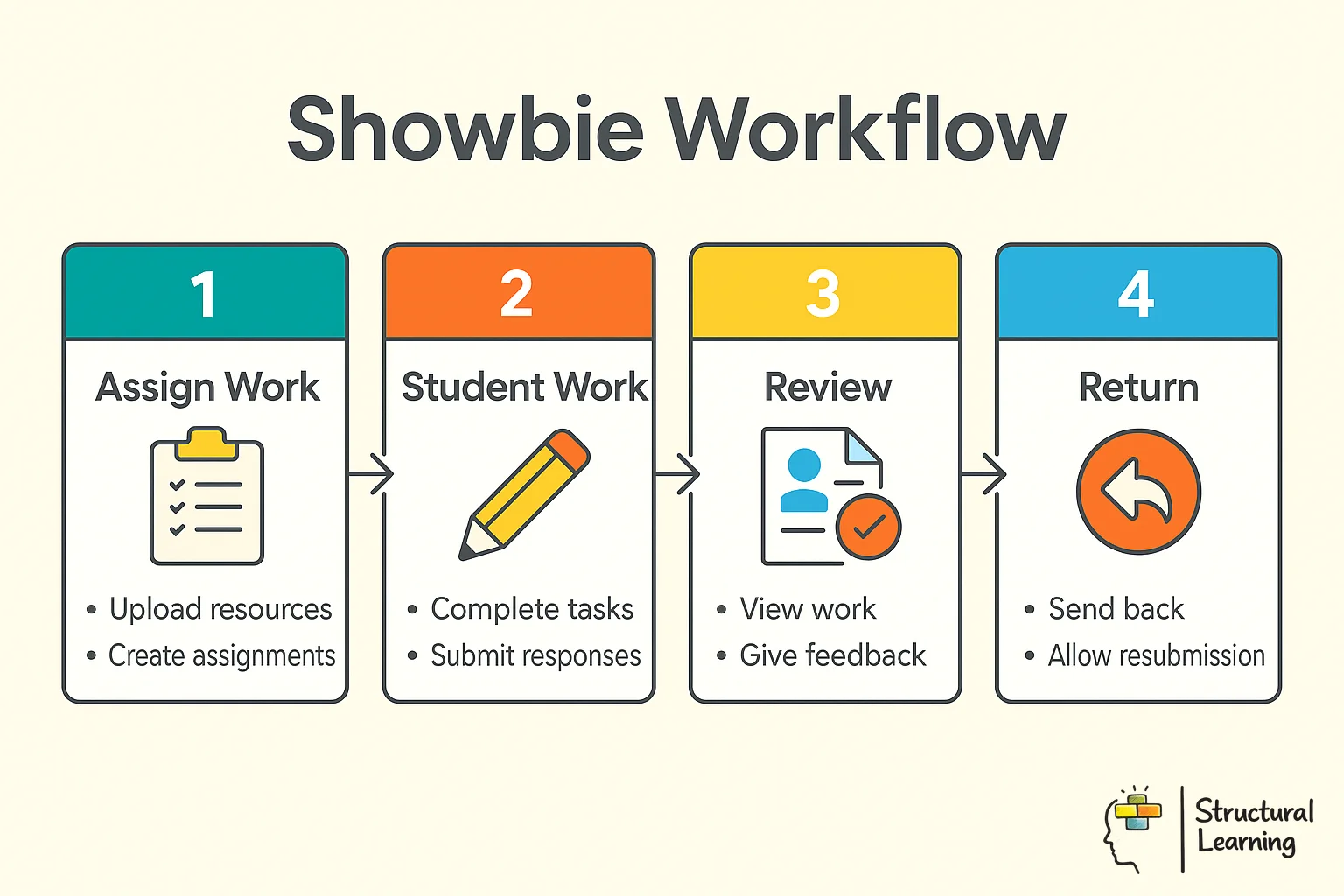
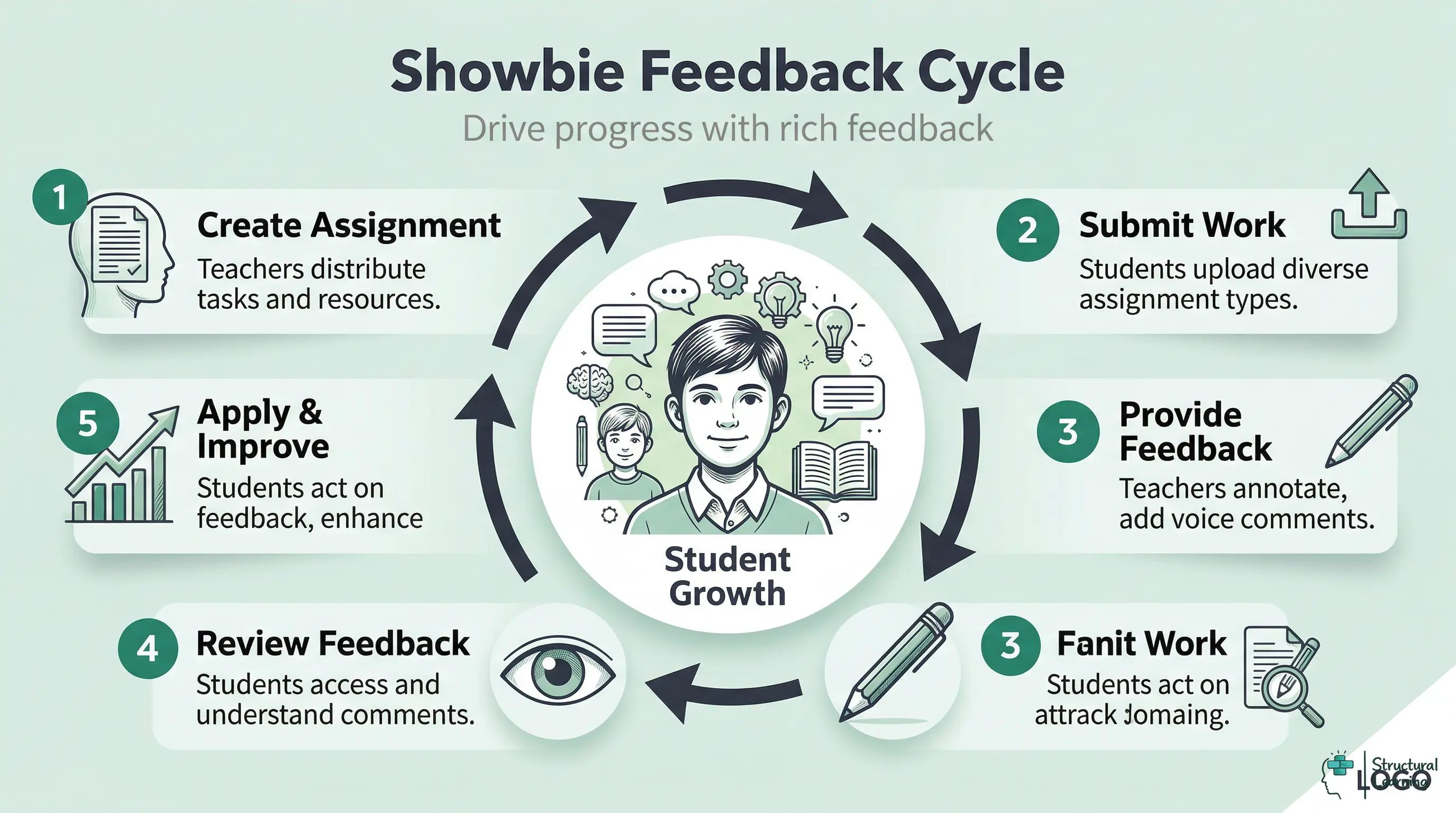
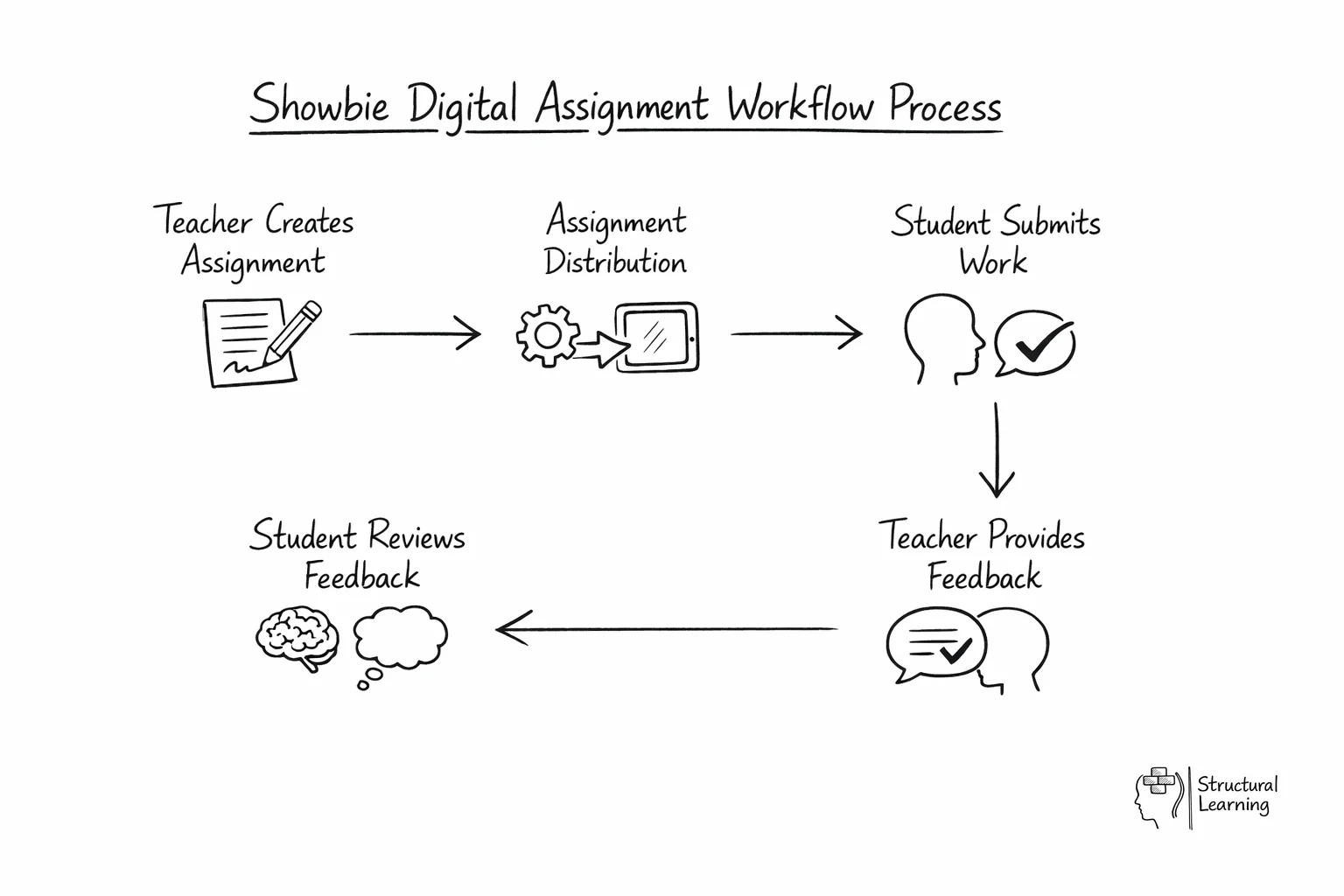
Teachers create assignments within class folders, attaching resources such as PDFs, images, or links. Students see assignments in their Showbie app and can access resources immediately. The ability to distribute resources digitally eliminates photocopying and ensures all students have access to materials that support different learning needs, including those with special educational needs.
Students submit work directly through Showbie. They can upload photos, PDFs, audio recordings, videos, or work created in other apps. This flexibility supports diverse task types and student preferences, enabling effective scaffolding student learning. Teachers see all submissions in one place, with clear indicators of who has submitted. Teachers can monitor submission status at a glance, tracking completion and engagement patterns across all classes.
Showbie's strength lies in its feedback tools. Teachers can annotate directly on student work using drawing tools, text comments, and stamps. Voice comments allow teachers to explain feedback verbally, which many students find clearer than written comments. This approach is particularly beneficial for students with dyslexia and supports effective differentiation strategies. All feedback appears on the student's work, making the connection between comment and content clear.
Each platform serves different needs. Google Classroom offers free, comprehensive integration with Google's environment. Seesaw excels at student portfolios and parent engagement, particularly for primary schools. Showbie leads in annotation and feedback tools for detailed marking. Your choice de pends on your priorities and existing technology infrastructure.
| Feature | Showbie | Seesaw | Google Classroom |
|---|---|---|---|
| Cost | Free basic; Pro from $179/year | Free basic; Plus from $120/year | Completely free |
| Best For | Detailed feedback and annotation | Digital portfolios, K-2 learners | Google Workspace schools |
| Annotation Tools | ★★★★★ Excellent | ★★★☆☆ Good | ★★★☆☆ Good |
| Voice Feedback | Yes (Pro feature) | Yes (built-in) | No (requires add-ons) |
| Parent App | Yes (view-only) | Yes (with built-in translation) | Yes (Guardian summaries) |
| Ideal Age Range | KS2 to KS5 (7-18) | EYFS to KS2 (3-11) | KS2 to KS5 (7-18) |
| Device Strength | iPad-improved | Cross-platform | Chromebook-improved |
Showbie offers a compelling solution for teachers seeking to streamline their workflow and provide richer feedback. Its strength lies in its annotation capabilities and device flexibility. However, schools should consider their budget and existing technology infrastructure. For schools heavily invested in the Google environment, Google Classroom may be the more logical choice. Schools prioritising parent engagement might find Seesaw more appealing, particularly in the younger years.
Successful platform adoption requires careful consideration of your school's unique context. Evaluate your current technology infrastructure, staff digital literacy levels, and student device availability. Research by educational change management experts emphasises that technology implementation succeeds when it aligns with existing school culture and teaching practices.
Consider conducting a small-scale pilot programme with willing staff members before school-wide adoption. This approach allows you to identify potential challenges, develop internal expertise, and create enthusiastic advocates who can support wider implementation. Pay particular attention to how the platform supports your school's assessment policies, communication protocols, and safeguarding requirements.
Plan for comprehensive professional development that goes beyond basic technical training. Staff need time to explore how digital workflow tools can enhance their existing teaching practice rather than replace it. Schedule regular review sessions to assess impact on student engagement and learning outcomes, adjusting implementation strategies based on real classroom feedback from both educators and pupils.
Beginning your journey with any new educational platform requires a systematic approach that prioritises both technical setup and pedagogical integration. Start by creating your educator account and familiarising yourself with the core navigation structure, taking time to explore the main dashboard areas before introducing the platform to your students. This initial exploration phase allows you to identify potential workflow improvements and anticipate student questions, ultimately reducing cognitive load during classroom implementation.
Once your account is established, create your first digital classroom by adding student profiles and organising your class structure to mirror your existing teaching practice. Focus on replicating one familiar assignment format initially, rather than attempting to digitise your entire curriculum simultaneously. Research by John Sweller demonstrates that managing cognitive load is crucial for effective learning, and this principle applies equally to teachers adopting new technology. Consider starting with a single subject or class group to build confidence and refine your digital workflow before expanding to other teaching contexts.
The key to successful platform adoption lies in gradual integration rather than wholesale replacement of existing practices. Begin by digitising assignments that naturally benefit from electronic submission, such as written work or project portfolios, whilst maintaining traditional approaches for activities that work well in their current format. This measured approach allows both you and your students to develop familiarity with the platform's features whilst preserving effective elements of your established teaching practice.
When evaluating educational platforms, understanding pricing structures is crucial for making informed decisions that align with your school's budget and pedagogical goals. Most digital classroom management solutions offer tiered pricing models, typically ranging from free basic versions with limited functionality to comprehensive premium packages that support advanced features like detailed analytics, enhanced storage, and administrative controls. Research by Dylan Wiliam on formative assessment emphasises that the quality of feedback mechanisms often correlates with platform sophistication, making investment in robust educational technology a strategic consideration rather than merely a budgetary one.
Free versions generally accommodate individual teachers or small classes but may lack essential features such as extensive file storage, parent communication tools, or integration capabilities with existing school management systems. Premium tiers usually offer enhanced collaboration features, priority support, and administrative dashboards that prove invaluable for whole-school implementation. Consider conducting a pilot programme with your chosen platform's trial version to assess how well it integrates with your current teaching practice and whether the additional features justify the investment for your specific educational context.
Effective digital classroom management requires a centralised platform that streamlines administrative tasks while maintaining clear visibility of student progress. Modern educational platforms excel at consolidating multiple classroom functions, from assignment distribution to real-time monitoring of student engagement. This integration reduces the cognitive overhead that teachers experience when juggling multiple systems, allowing for more focused attention on pedagogical decisions and student support.
The most valuable classroom management features include automated progress tracking, which provides instant insights into completion rates and submission quality without requiring manual monitoring. Assignment workflows that allow for differentiated instruction help teachers manage diverse learning needs efficiently, whilst built-in communication tools facilitate timely feedback loops between educators and students. These digital tools particularly benefit teachers managing large classes or multiple year groups, where individual student monitoring can become overwhelming.
Research by Dylan Wiliam on formative assessment emphasises the importance of frequent, low-stakes feedback in improving learning outcomes. Digital platforms that support this approach through quick annotation tools, voice comments, and peer review functions enable teachers to implement these evidence-based strategies without significantly increasing workload. The key is selecting features that enhance rather than complicate existing teaching practices, ensuring that technology serves pedagogical goals rather than dictating them.
Showbie's assessment and feedback tools transform the traditional marking process into a streamlined digital workflow that enhances both teacher efficiency and student learning outcomes. The platform's annotation features allow educators to provide detailed, multimedia feedback directly on student work, incorporating voice comments, text annotations, and even video explanations. This multimodal approach aligns with Richard Mayer's research on multimedia learning, which demonstrates that students process information more effectively when it's presented through multiple channels.
The rubric integration capabilities prove particularly valuable for maintaining consistent assessment standards across different assignments and year groups. Teachers can create customised marking criteria that automatically calculate grades whilst providing transparent feedback to students about their performance against specific learning objectives. This systematic approach supports both formative and summative assessment practices, enabling educators to track progress over time and identify areas requiring additional intervention.
Perhaps most significantly, the platform's feedback loop encourages genuine dialogue between teachers and students through its commenting system. Students can respond to feedback, ask clarifying questions, and demonstrate their understanding of suggested improvements. This interactive element transforms assessment from a one-way evaluation into a collaborative learning conversation, ultimately supporting deeper engagement with the learning process and promoting metacognitive development essential for independent learning.
When implementing digital classroom platforms, schools must navigate complex data protection requirements that govern how student information is collected, stored, and processed. Under GDPR legislation, educational institutions serve as data controllers, making them directly responsible for ensuring any third-party educational platform complies with strict privacy standards. This responsibility extends beyond simple password protection to encompass data minimisation principles, explicit consent mechanisms, and clear retention policies that align with your school's broader data governance framework.
The classroom implications of these requirements are significant for teaching practice. Before introducing any new digital workflow, educators must verify that student data remains within appropriate jurisdictional boundaries and that parents have been properly informed about data usage. Transparency becomes paramount: students and families should understand exactly what information is being collected, how long it will be retained, and who has access to their work and communications. This clarity not only ensures legal compliance but builds the trust necessary for effective student engagement with digital learning tools.
Practically speaking, schools should establish clear protocols for data audits, regular privacy impact assessments, and staff training on digital privacy responsibilities. Consider appointing a designated team member to oversee platform compliance and maintain documentation of your organisation's due diligence processes, ensuring your teaching practice remains both effective and legally sound.
Showbie is a powerful tool that can transform teaching and learning by facilitating efficient feedback and assignment management. Its intuitive interface and rich feature set make it a valuable asset for educators seeking to enhance student engagement and outcomes. While weigh its pros and cons against other platforms, Showbie stands out as a strong contender for schools seeking to embrace digital learning and provide impactful feedback.
Ultimately, the best choice depends on the specific needs and priorities of your school or classroom. However, if detailed annotation and efficient feedback are high on your list, Showbie is definitely worth considering.
When evaluating platforms, consider conducting a pilot programme with a small group of classes before making school-wide commitments. This approach allows you to assess how well the digital workflow integrates with your existing teaching practice and provides valuable feedback from both colleagues and pupils. Document specific challenges and successes during this trial period, particularly noting how the platform affects student engagement and your ability to provide timely, meaningful feedback.
Successful platform adoption also requires adequate training and ongoing support structures. Ensure your school leadership understands that implementing new educational technology is not simply a matter of purchasing licences, but rather an investment in professional development and cultural change. Establish peer mentoring systems where early adopters can support colleagues, and create clear protocols for technical issues that inevitably arise during classroom use.
Ultimately, the best educational platform is one that becomes invisible in daily practice, smoothly supporting learning objectives without drawing attention to itself. Focus on solutions that reduce administrative burden whilst enhancing meaningful interactions between you and your pupils, and always prioritise tools that strengthen rather than complicate your classroom management systems.
Showbie is a digital assignment and feedback platform designed for education. It allows teachers to create classes, distribute assignments, collect student work, and provide rich feedback, all within a paperless workflow. Showbie works across multiple devices and operating systems including iPads, Chromebooks, Windows, and Mac computers.

The platform is particularly valued for its annotation and feedback tools. Teachers can mark directly on student work, add voice comments, and use a variety of teaching strategies to provide detailed feedback more quickly than traditional marking. Students can see feedback in context, making it easier to understand and act upon.
What sets Showbie apart is its foundation in established educational research, particularly around formative assessment and personalised feedback. The platform incorporates principles from John Hatti e's extensive meta-analyses on effective teaching practices, emphasising the critical importance of timely, specific feedback in driving student progress. This research-backed approach ensures that every feature serves a clear pedagogical purpose rather than simply adding technological complexity.
The platform's design philosophy recognises that successful educational technology must smoothly integrate into existing teaching practices rather than requiring educators to completely restructure their approaches. For instance, teachers can maintain their familiar workflow of collecting assignments, providing written feedback, and tracking progress, whilst benefiting from enhanced organisation and communication capabilities. This balance between innovation and familiarity proves particularly valuable during staff transitions or when introducing digital tools to less tech-confident colleagues.
Teachers create assignments within class folders, attaching resources such as PDFs, images, or links. Students see assignments in their Showbie app and can access resources immediately. The ability to distribute resources digitally eliminates photocopying and ensures all students have access to materials that support different learning needs, including those with special educational needs.
Students submit work directly through Showbie. They can upload photos, PDFs, audio recordings, videos, or work created in other apps. This flexibility supports diverse task types and student preferences, enabling effective scaffolding student learning. Teachers see all submissions in one place, with clear indicators of who has submitted. Teachers can monitor submission status at a glance, tracking completion and engagement patterns across all classes.
Showbie's strength lies in its feedback tools. Teachers can annotate directly on student work using drawing tools, text comments, and stamps. Voice comments allow teachers to explain feedback verbally, which many students find clearer than written comments. This approach is particularly beneficial for students with dyslexia and supports effective differentiation strategies. All feedback appears on the student's work, making the connection between comment and content clear.
Each platform serves different needs. Google Classroom offers free, comprehensive integration with Google's environment. Seesaw excels at student portfolios and parent engagement, particularly for primary schools. Showbie leads in annotation and feedback tools for detailed marking. Your choice de pends on your priorities and existing technology infrastructure.
| Feature | Showbie | Seesaw | Google Classroom |
|---|---|---|---|
| Cost | Free basic; Pro from $179/year | Free basic; Plus from $120/year | Completely free |
| Best For | Detailed feedback and annotation | Digital portfolios, K-2 learners | Google Workspace schools |
| Annotation Tools | ★★★★★ Excellent | ★★★☆☆ Good | ★★★☆☆ Good |
| Voice Feedback | Yes (Pro feature) | Yes (built-in) | No (requires add-ons) |
| Parent App | Yes (view-only) | Yes (with built-in translation) | Yes (Guardian summaries) |
| Ideal Age Range | KS2 to KS5 (7-18) | EYFS to KS2 (3-11) | KS2 to KS5 (7-18) |
| Device Strength | iPad-improved | Cross-platform | Chromebook-improved |
Showbie offers a compelling solution for teachers seeking to streamline their workflow and provide richer feedback. Its strength lies in its annotation capabilities and device flexibility. However, schools should consider their budget and existing technology infrastructure. For schools heavily invested in the Google environment, Google Classroom may be the more logical choice. Schools prioritising parent engagement might find Seesaw more appealing, particularly in the younger years.
Successful platform adoption requires careful consideration of your school's unique context. Evaluate your current technology infrastructure, staff digital literacy levels, and student device availability. Research by educational change management experts emphasises that technology implementation succeeds when it aligns with existing school culture and teaching practices.
Consider conducting a small-scale pilot programme with willing staff members before school-wide adoption. This approach allows you to identify potential challenges, develop internal expertise, and create enthusiastic advocates who can support wider implementation. Pay particular attention to how the platform supports your school's assessment policies, communication protocols, and safeguarding requirements.
Plan for comprehensive professional development that goes beyond basic technical training. Staff need time to explore how digital workflow tools can enhance their existing teaching practice rather than replace it. Schedule regular review sessions to assess impact on student engagement and learning outcomes, adjusting implementation strategies based on real classroom feedback from both educators and pupils.
Beginning your journey with any new educational platform requires a systematic approach that prioritises both technical setup and pedagogical integration. Start by creating your educator account and familiarising yourself with the core navigation structure, taking time to explore the main dashboard areas before introducing the platform to your students. This initial exploration phase allows you to identify potential workflow improvements and anticipate student questions, ultimately reducing cognitive load during classroom implementation.
Once your account is established, create your first digital classroom by adding student profiles and organising your class structure to mirror your existing teaching practice. Focus on replicating one familiar assignment format initially, rather than attempting to digitise your entire curriculum simultaneously. Research by John Sweller demonstrates that managing cognitive load is crucial for effective learning, and this principle applies equally to teachers adopting new technology. Consider starting with a single subject or class group to build confidence and refine your digital workflow before expanding to other teaching contexts.
The key to successful platform adoption lies in gradual integration rather than wholesale replacement of existing practices. Begin by digitising assignments that naturally benefit from electronic submission, such as written work or project portfolios, whilst maintaining traditional approaches for activities that work well in their current format. This measured approach allows both you and your students to develop familiarity with the platform's features whilst preserving effective elements of your established teaching practice.
When evaluating educational platforms, understanding pricing structures is crucial for making informed decisions that align with your school's budget and pedagogical goals. Most digital classroom management solutions offer tiered pricing models, typically ranging from free basic versions with limited functionality to comprehensive premium packages that support advanced features like detailed analytics, enhanced storage, and administrative controls. Research by Dylan Wiliam on formative assessment emphasises that the quality of feedback mechanisms often correlates with platform sophistication, making investment in robust educational technology a strategic consideration rather than merely a budgetary one.
Free versions generally accommodate individual teachers or small classes but may lack essential features such as extensive file storage, parent communication tools, or integration capabilities with existing school management systems. Premium tiers usually offer enhanced collaboration features, priority support, and administrative dashboards that prove invaluable for whole-school implementation. Consider conducting a pilot programme with your chosen platform's trial version to assess how well it integrates with your current teaching practice and whether the additional features justify the investment for your specific educational context.
Effective digital classroom management requires a centralised platform that streamlines administrative tasks while maintaining clear visibility of student progress. Modern educational platforms excel at consolidating multiple classroom functions, from assignment distribution to real-time monitoring of student engagement. This integration reduces the cognitive overhead that teachers experience when juggling multiple systems, allowing for more focused attention on pedagogical decisions and student support.
The most valuable classroom management features include automated progress tracking, which provides instant insights into completion rates and submission quality without requiring manual monitoring. Assignment workflows that allow for differentiated instruction help teachers manage diverse learning needs efficiently, whilst built-in communication tools facilitate timely feedback loops between educators and students. These digital tools particularly benefit teachers managing large classes or multiple year groups, where individual student monitoring can become overwhelming.
Research by Dylan Wiliam on formative assessment emphasises the importance of frequent, low-stakes feedback in improving learning outcomes. Digital platforms that support this approach through quick annotation tools, voice comments, and peer review functions enable teachers to implement these evidence-based strategies without significantly increasing workload. The key is selecting features that enhance rather than complicate existing teaching practices, ensuring that technology serves pedagogical goals rather than dictating them.
Showbie's assessment and feedback tools transform the traditional marking process into a streamlined digital workflow that enhances both teacher efficiency and student learning outcomes. The platform's annotation features allow educators to provide detailed, multimedia feedback directly on student work, incorporating voice comments, text annotations, and even video explanations. This multimodal approach aligns with Richard Mayer's research on multimedia learning, which demonstrates that students process information more effectively when it's presented through multiple channels.
The rubric integration capabilities prove particularly valuable for maintaining consistent assessment standards across different assignments and year groups. Teachers can create customised marking criteria that automatically calculate grades whilst providing transparent feedback to students about their performance against specific learning objectives. This systematic approach supports both formative and summative assessment practices, enabling educators to track progress over time and identify areas requiring additional intervention.
Perhaps most significantly, the platform's feedback loop encourages genuine dialogue between teachers and students through its commenting system. Students can respond to feedback, ask clarifying questions, and demonstrate their understanding of suggested improvements. This interactive element transforms assessment from a one-way evaluation into a collaborative learning conversation, ultimately supporting deeper engagement with the learning process and promoting metacognitive development essential for independent learning.
When implementing digital classroom platforms, schools must navigate complex data protection requirements that govern how student information is collected, stored, and processed. Under GDPR legislation, educational institutions serve as data controllers, making them directly responsible for ensuring any third-party educational platform complies with strict privacy standards. This responsibility extends beyond simple password protection to encompass data minimisation principles, explicit consent mechanisms, and clear retention policies that align with your school's broader data governance framework.
The classroom implications of these requirements are significant for teaching practice. Before introducing any new digital workflow, educators must verify that student data remains within appropriate jurisdictional boundaries and that parents have been properly informed about data usage. Transparency becomes paramount: students and families should understand exactly what information is being collected, how long it will be retained, and who has access to their work and communications. This clarity not only ensures legal compliance but builds the trust necessary for effective student engagement with digital learning tools.
Practically speaking, schools should establish clear protocols for data audits, regular privacy impact assessments, and staff training on digital privacy responsibilities. Consider appointing a designated team member to oversee platform compliance and maintain documentation of your organisation's due diligence processes, ensuring your teaching practice remains both effective and legally sound.
Showbie is a powerful tool that can transform teaching and learning by facilitating efficient feedback and assignment management. Its intuitive interface and rich feature set make it a valuable asset for educators seeking to enhance student engagement and outcomes. While weigh its pros and cons against other platforms, Showbie stands out as a strong contender for schools seeking to embrace digital learning and provide impactful feedback.
Ultimately, the best choice depends on the specific needs and priorities of your school or classroom. However, if detailed annotation and efficient feedback are high on your list, Showbie is definitely worth considering.
When evaluating platforms, consider conducting a pilot programme with a small group of classes before making school-wide commitments. This approach allows you to assess how well the digital workflow integrates with your existing teaching practice and provides valuable feedback from both colleagues and pupils. Document specific challenges and successes during this trial period, particularly noting how the platform affects student engagement and your ability to provide timely, meaningful feedback.
Successful platform adoption also requires adequate training and ongoing support structures. Ensure your school leadership understands that implementing new educational technology is not simply a matter of purchasing licences, but rather an investment in professional development and cultural change. Establish peer mentoring systems where early adopters can support colleagues, and create clear protocols for technical issues that inevitably arise during classroom use.
Ultimately, the best educational platform is one that becomes invisible in daily practice, smoothly supporting learning objectives without drawing attention to itself. Focus on solutions that reduce administrative burden whilst enhancing meaningful interactions between you and your pupils, and always prioritise tools that strengthen rather than complicate your classroom management systems.
{"@context":"https://schema.org","@graph":[{"@type":"Article","@id":"https://www.structural-learning.com/post/showbie-a-teachers-guide#article","headline":"Showbie: A teacher's guide","description":"Discover how to use Showbie effectively to streamline feedback, boost engagement, and simplify classroom management.","datePublished":"2021-08-17T13:42:40.570Z","dateModified":"2026-01-26T10:09:32.212Z","author":{"@type":"Person","name":"Paul Main","url":"https://www.structural-learning.com/team/paulmain","jobTitle":"Founder & Educational Consultant"},"publisher":{"@type":"Organization","name":"Structural Learning","url":"https://www.structural-learning.com","logo":{"@type":"ImageObject","url":"https://cdn.prod.website-files.com/5b69a01ba2e409e5d5e055c6/6040bf0426cb415ba2fc7882_newlogoblue.svg"}},"mainEntityOfPage":{"@type":"WebPage","@id":"https://www.structural-learning.com/post/showbie-a-teachers-guide"},"image":"https://cdn.prod.website-files.com/5b69a01ba2e409501de055d1/696a166c2ba69b295f9c696b_696a166b9b239394b372ab9e_showbie-a-teachers-guide-infographic.webp","wordCount":1637},{"@type":"BreadcrumbList","@id":"https://www.structural-learning.com/post/showbie-a-teachers-guide#breadcrumb","itemListElement":[{"@type":"ListItem","position":1,"name":"Home","item":"https://www.structural-learning.com/"},{"@type":"ListItem","position":2,"name":"Blog","item":"https://www.structural-learning.com/blog"},{"@type":"ListItem","position":3,"name":"Showbie: A teacher's guide","item":"https://www.structural-learning.com/post/showbie-a-teachers-guide"}]},{"@type":"FAQPage","mainEntity":[{"@type":"Question","name":"What Is Showbie?","acceptedAnswer":{"@type":"Answer","text":"Showbie is a digital assignment and feedback platform designed for education. It allows teachers to create classes, distribute assignments, collect student work, and provide rich feedback, all within a paperless workflow. Showbie works across multiple devices and operating systems including iPads, Chromebooks, Windows, and Mac computers."}},{"@type":"Question","name":"Showbie vs Seesaw vs Google Classroom: Which Should You Choose?","acceptedAnswer":{"@type":"Answer","text":"Each platform serves different needs. Google Classroom offers free, comprehensive integration with Google's environment. Seesaw excels at student portfolios and parent engagement, particularly for primary schools. Showbie leads in annotation and feedback tools for detailed marking. Your choice de pends on your priorities and existing technology infrastructure."}},{"@type":"Question","name":"Is Showbie Right for Your School?","acceptedAnswer":{"@type":"Answer","text":"Showbie offers a compelling solution for teachers seeking to streamline their workflow and provide richer feedback. Its strength lies in its annotation capabilities and device flexibility. However, schools should consider their budget and existing technology infrastructure. For schools heavily invested in the Google environment, Google Classroom may be the more logical choice. Schools prioritising parent engagement might find Seesaw more appealing, particularly in the younger years."}}]}]}