Exploring adult learning theory
What are the major adult learning theories and principles? How can we apply these theories to promote better learning experiences?


Do adults learn differently from children? It is clear that knowledge acquisition plays an important part within the workplace and beyond. The amount of information that we all receive on a daily basis means that we could all do with learning more about how to develop a deep understanding of new knowledge and skills.
Whether you are facilitating a training session for your employees or you have an intrinsic motivation to take on a distance learning course, this article will hopefully outline some of the expertise needed to engage adults in various forms of learning and development.

Adults and children learn by developing cognitive skills through cognitive developmentand applying them to new situations. Adults can learn anything just as well as children, though sociocultural approaches suggest that adult learning contexts differ significantly from childhood environments. In fact, many adults do not even realise that they are using learning theory because they learned it as children.

For the most part, learning remains a hidden mental process inside our minds, though social learning theory shows us how observation and modelling play crucial roles in how adults acquire new behaviours and skills. The same barriers to student understanding apply to adults, and if we can embrace some all-important systems theoryprinciples, then we stand a better chance of being able to understand and remember new knowledge. This article explains why adults should learn theory and how to teach themselves. It also shows you how to apply in everyday life.
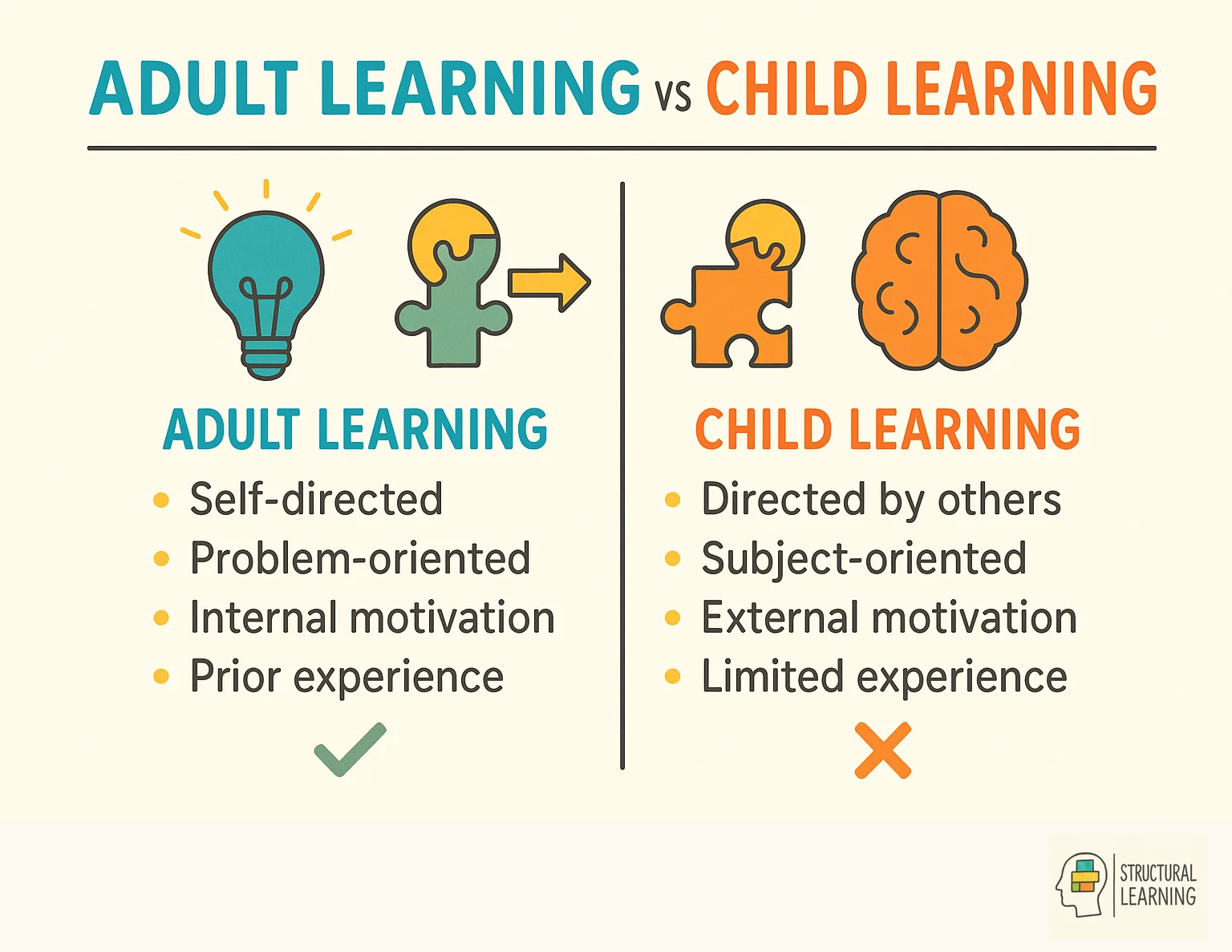
Adult learning is a process of adults seeking education in a formal setting, trade school, or apprenticeship. Adult learning may also occur for those adults who wish to pursue education to learn a specific skill. There are many theories, techniques and aspects of adult learning that guide how to educate adults. Adults and children learn in very different ways. Hence, to make the adult learning process more effective people need to use more effective study techniques.
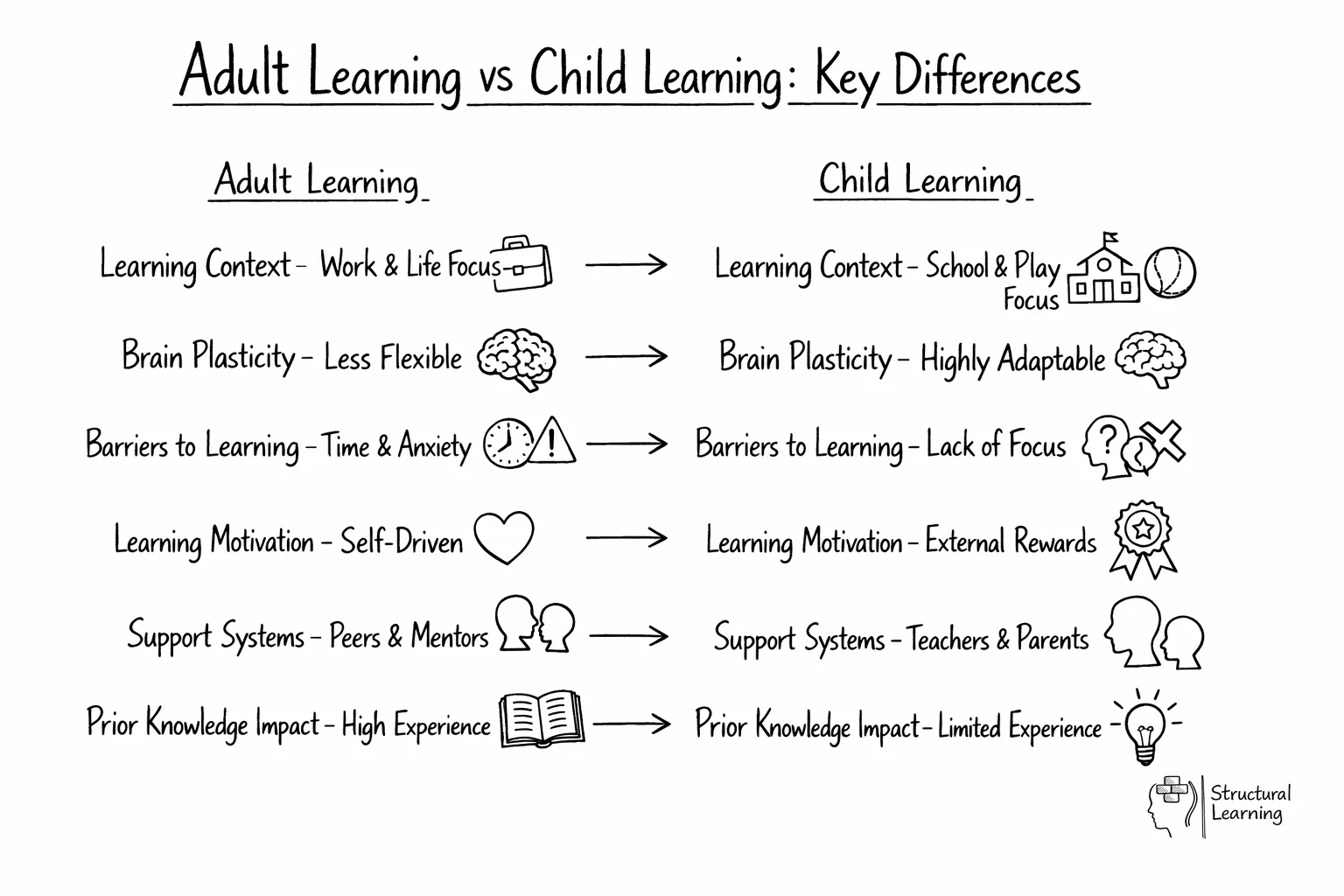
Learning in adults can be more difficult than for child learners for the following reasons:
Some adult learners often think they learn through trial and error. This means that they try things out until they get the desired result. However, most professions don't allow for these sorts of expensive mistakes and we have to take a closer look at how we provide learning experiences that enable adult learners to develop deep conceptual understanding.
For example, if someone wants experiences to learn how to play the guitar, he/she might start practising chords and strumming patterns until he/she gets the hang of it. If the learner was afforded the opportunity to understand some basic musical theory, this might provide them with a platform for more purposeful practice. Some learners prefer to watch others perform tasks before attempting them themselves. These types of learners tend to mimic other people's actions.

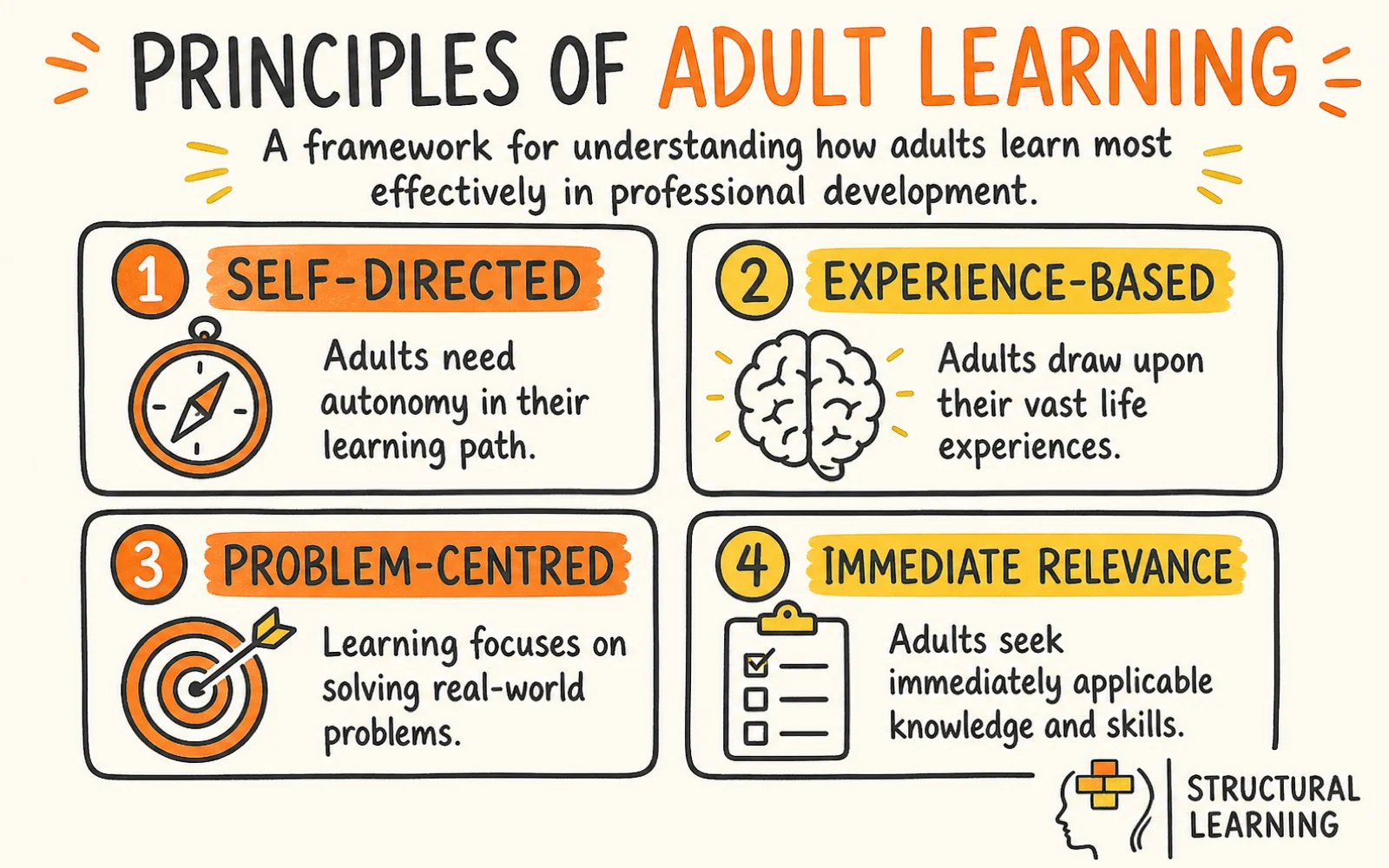
Andragogy is the method and practice of teaching adult learners, developed by Malcolm Knowles in the 1960s. Unlike pedagogy (child-focused teaching), andragogy assumes adults are self-directed learners who bring rich life experiences to their education. This approach emphasises problem-solving, immediate application of knowledge, and intrinsic motivation rather than external rewards.
The concept of andragogy was popularized by Malcolm Knowles in 1980. Andragogy demonstrates the art and science of learning to help adults learn and this concept was contrasted by Knowles M with pedagogy (art and science of learning to help children learn). The andragogy theory or Andragogy Model Of Adult Learningproposed that adult learners and young learners are different from one another in many ways. For example,
The main focus of Andragogy Model Of Adult Learning remains on providing students with the knowledge base of why they are learning a specific topic, intrinsic and extrinsic motivation major hands-on experiences, and very little instruction so they can control things themselves. Although, adults with Post-16 Learning find andragogy extremely helpful and accurate for deep understanding and continuing their learning some opponents of the andragogy adult learning theory claim that the andragogy adult learning theory does not consider other multicultural education well enough.
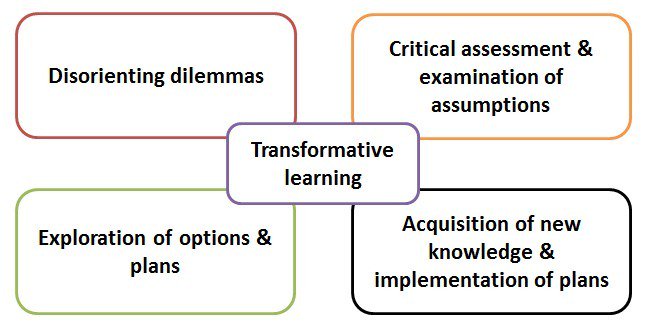
Transformative learning theory, developed by Jack Mezirow, describes how adults change their fundamental beliefs and worldviews through critical reflection on experiences. This process involves questioning assumptions, exploring new perspectives, and integrating new understanding into daily life. The theory explains why some professional development creates lasting change while other training is quickly forgotten.
Transformative learning theory or transformational Model Of Adult Learning was proposed by Jack Mezirow in the 1970s. The transformative learning theory (also called transformational learning theory) is concentrated on modifying how learners think about themselves and how they think about the world in their surroundings. For instance, those studying religious studies may gain new viewpoints about multicultural education and religions as they get more information about various religions.
Transformative learning theory focuses on helping students develop self-awareness and self-knowledge. This means that students must learn to understand their own strengths and weaknesses, and then use this knowledge to improve their performance. Students who are able to recognise their strengths and weaknesses are more likely to succeed in school and life.
Self-directed learning is a process where adults take primary responsibility for planning, implementing, and evaluating their own learning experiences. Learners identify their knowledge gaps, set learning goals, choose resources, and assess their progress independently. This approach works particularly well for adults because it builds on their natural problem-solving abilities and real-world experience.
Self-directed learning Model Of Adult Learning (also referred to as self-regulated learning) is a kind of learning in which a Self-Regulated Learner takes initiative in learning. In self-regulated learning Model Of Adult Learning a Self-Regulated Learner plans, performs and analyses his learning experiences without others' help. For deep understanding a self-regulated learner sets objectives, assesses his academic or training programs, applies a plan, and pays more attention to improve his Post-16 Learning and knowledge acquisition.
The main criticism of the self-regulated learning approach came from those opponents who feel that sometimes adult learners may need instructional designers for deep understanding because they may not have the understanding and confidence to carry out self-directed learning well. Some critics mentioned that for many adult learners, self-regulated learning Model Of Adult Learning takes place naturally with no one clarifying or recommending it.
Experiential learning theory, developed by David Kolb, describes how adults learn through a four-stage cycle: concrete experience, reflective observation, abstract conceptualization, and active experimentation. Adults process new information most effectively when they can connect it to their existing experiences and immediately apply it in practical situations. This theory explains why hands-on training and case studies are particularly effective for adult learners.
Experiential learning theory or Experiential model of adult learning has been championed by David Kolb based on the works of other theorists and psychologists in the 1970s. Experiential learning theory is based on the concept of learning theory with practice that a successful learner is made due to their experiences, and that the most promising learning processes occur when people can make sense of their deep understanding without seeking help from instructional designers or mentors.
Rather than memorizing things, experiential learning is a more critical reflection and hands-on learning style. Post-16 Learning can use this Model Of Adult Learning or Theoy with practice for critical reflection of learning by doing, rather than just reading or hearing about something. Some of the most significant examples of experiential learning strategies are role plays and Hands-on experiences etc.
Social learning theory also made several assumptions about adult learners that adult learners can gain information by incorporating their experiences with observations of the punishments and rewards that others receive for their efforts. However, Social learning theory may not serve the purpose well in absence of uniformity. Opponents of experiential learning mention that there are many advantages to non-experiential learning that can be ignored due to experiential learning theory.
Project-based learning for adults involves tackling real-world problems or challenges that directly relate to their professional or personal goals. Adults work through complex, authentic tasks that require them to apply new knowledge while drawing on their existing experience and expertise. This approach increases engagement and retention because adults can immediately see the practical value and relevance of their learning.
John Dewey was a big supporter of this model of adult learning by doing strategy. Project-based learning (also referred to as problem-based learning) is very much similar to experiential or action learning, where the basic idea is to practically do something to help students learn, rather than hearing or reading about it.
Problem-based learning helps develop a deeper understanding through reality-based scenarios. One major criticism of problem-based learning is that the findings aren’t verified. Still, many adult learners find this kind of learning helpful because they implement the learning material that they have learned in class.

The most effective adult learning techniques include collaborative learning, problem-based scenarios, and reflective practice that builds on prior experience. Adults respond well to methods that offer immediate practical application, such as case studies, peer discussions, and action learning sets. These techniques work because they respect adults' need for autonomy while providing opportunities to connect new knowledge to existing understanding.
The following are some of the most useful techniques that may help a successful learner to demonstrate deeper level of learning processes. These include:
Adult brains face difficulty in creating new pathways due to less plasticity. Therefore, to help create new pathways adult learners must make a habit of gaining deeper understanding and reviewing their learning material more often.
For deeper understanding and successful learning experience, an adult learner must get information about the theories, techniques and principles of Adult Learning and Understanding. Knowing different aspects of adult learning alongside their strengths, weaknesses and understanding their learning styles will help them become a successful adult learner.
Instructional designers might also want to consider individual personality differences when creating learning activities, Carl Jung's archetypes theory, whilst not without it's critics, offers us an interesting perspective.
Common questions include how adults learn differently from children, why traditional teaching methods often fail with adult learners, and which theories work best for workplace training. Adults also frequently ask about motivation, time management in learning, and how to overcome resistance to new ideas. Understanding these concerns helps trainers design more effective adult education programs.
What is knowledge acquisition?
Knowledge acquisition is the act of acquiring new knowledge. When we acquire new knowledge, we store it in our brains. We use this stored knowledge to solve problems and make decisions.
What is a schema?
A schema is a psychological theory about how we store information in a connected way. The idea explains how humans make connections between different ideas and this helps us understand and retrieve information.
What is Working Memory?
Working memory is the mental capacity that stores information temporarily and manipulates it accordi ng to instructions. It's responsible for holding information in mind until it's needed. People with high working memories tend to perform better academically and professionally. They're able to hold multiple pieces of information in mind simultaneously, and they're able to manipulate that information quickly and efficiently.
A study published in the Journal of Experimental Psychology found that students with high working memory scores performed better on tests measuring critical thinking skillsthan students with low working memory scores. Students with high working memory scores were also more likely to take advantage of technology to improve their performance.
What is Metacognition?
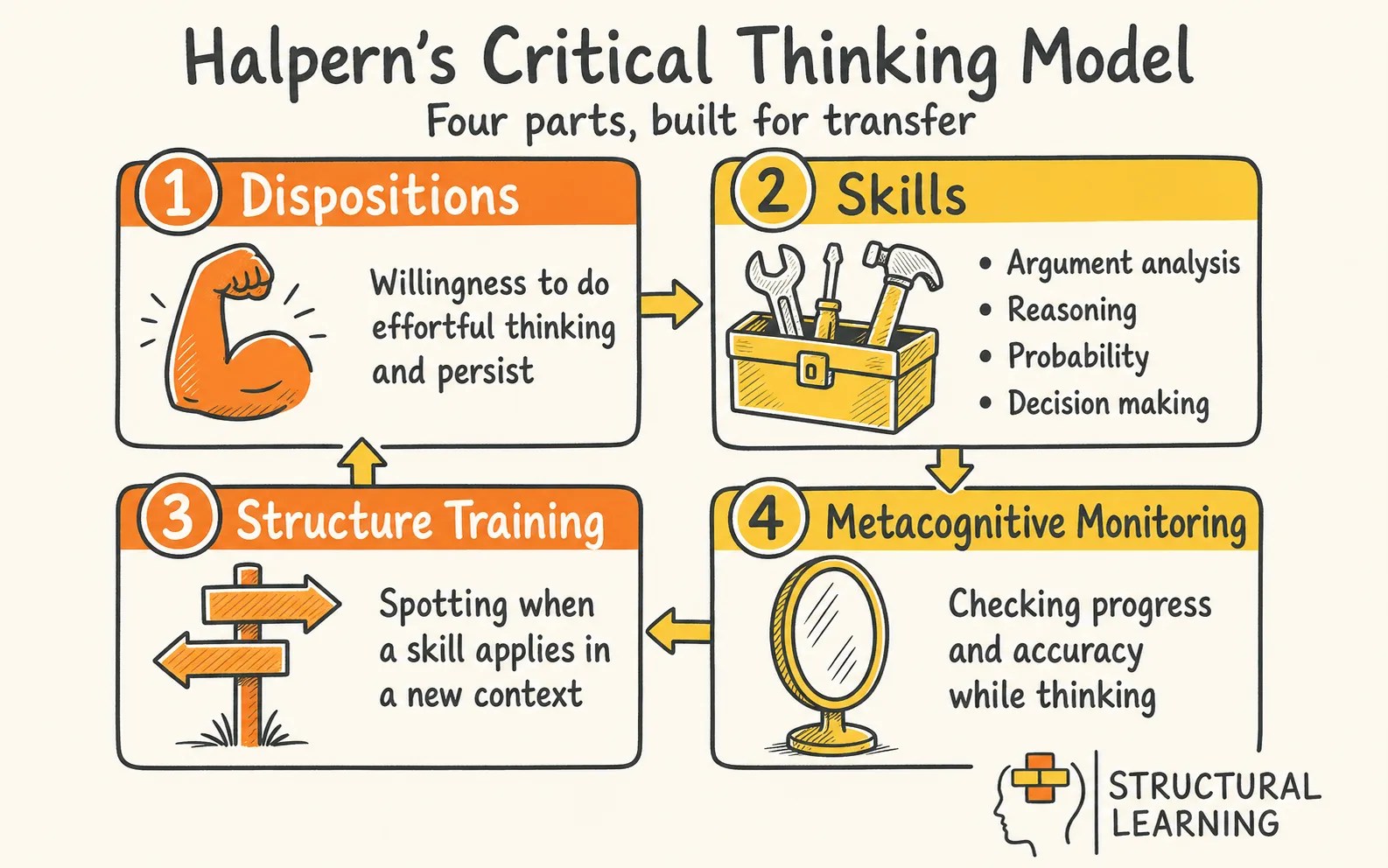
Metacognition refers to thinking about our own thoughts. We all do it constantly, but we rarely stop to consider why we're thinking the way we are. Metacognitive awareness involves understanding how our minds work, and how we can improve ourselves.
Metacognition is a skill that everyone should practice, particularly adult learners. Students tend to focus too much on memorizing facts without considering how they learned those facts. By practising metacognition, adult learners can understand how they learn best, and they can apply that knowledge to their studies. Metacognition skills include self-monitoring, goal setting, planning, evaluating, and reflecting.
What is a Self-Regulated Learner?
A self-regulated learner is someone who learns best when he or she sets his or her own pace and direction. They may also enjoy taking tests and quizzes to see how much they understand. However, these learners aren't always comfortable with traditional classroom settings.
Instead, they might like to learn in small groups, where they can ask questions and receive feedback from peers. Self-regulated learners tend to be independent thinkers, and they're motivated by challenges and rewards. They also tend to be good problem-solvers and critical thinkers.

Essential resources include Malcolm Knowles' foundational work on andragogy, Jack Mezirow's research on transformative learning, and David Kolb's experiential learning cycle. Academic journals like Adult Education Quarterly and Studies in Continuing Education provide current research findings. Professional development organisations also offer practical guides that translate theory into classroom and workplace applications.
The following studies provide comprehensive insights into how adults learn, the role of life experiences and internal motivation, and the implications for instructional design and practical application. They also explore the differences between adult and child learning, offering valuable perspectives for educators and policymakers.
1. McGuire, D. (2020). Adult Learning Theories. The SAGE Encyclopedia of Higher Education.
Summary: This study reviews three major theories of adult learning, Andragogy, Self-Directed Learning, and Transformational Learning. It highlights how understanding life experiences, internal motivation, and practical application are essential for effective instructional design and achieving desired learning outcomes in adult education.
2. Knowles, M. (1979). The adult learner: a neglected species. Educational Researcher, 8(20).
Summary: Knowles' work differentiates adult learning from children's learning, emphasising that adults bring rich life experiences and inherent traits that influence their learning. This foundational text outlines how adults' internal motivation and need for practical application shape their learning goals and outcomes.
3. Norman, G. (1999). The adult learner: a mythical species. Academic Medicine, 74(8), 886-889.
Summary: Norman critically examines the assumptions of adult learning theories, suggesting that differences between adult and child learning are often overstated. The study calls for a reevaluation of how life experiences and personality traits impact learning processes, questioning the traditional divide in instructional design for adults and children.
4. Merriam, S. (1987). Adult Learning and Theory Building: A Review. Adult Education Quarterly, 37, 187-198.
Summary: Merriam reviews the state of theory building in adult learning, categorising theories based on adult learner characteristics, life situations, and changes in consciousness. The study emphasises the importance of understanding the social context and internal motivations in developing effective adult learning theories.
5. Taylor, D. C. M., & Hamdy, H. (2013). Adult learning theories: Implications for learning and teaching in medical education: AMEE Guide No. 83. Medical Teacher, 35, e1561-e1572.
Summary: This guide synthesizes various adult learning theories and presents a model for integrating these theories into instructional design. It highlights the role of continuous learning, practical application, and internal motivation in achieving effective learning outcomes, particularly in medical education.
Andragogy is the method and practice of teaching adult learners, developed by Malcolm Knowles in the 1960s. Unlike pedagogy which focuses on child-centred teaching, andragogy assumes adults are self-directed learners who bring rich life experiences to their education and emphasises problem-solving, immediate application of knowledge, and intrinsic motivation rather than external rewards.
Due to neuroplasticity changes, adult brains become less flexible with age and more rigid about existing knowledge and beliefs compared to children's brains. This creates what's known as the 'Adult Learning Paradox' where your most experienced staff members may find it harder to accept new ideas and approaches, requiring different training methods that acknowledge their established neural pathways.
Key barriers include lack of time due to full-time employment and family responsibilities, financial constraints without parental support, self-doubt about being 'too old to learn', and lack of adequate support systems. Adults also face challenges from contradiction with prior knowledge and reduced brain plasticity, making it harder to integrate new concepts that conflict with established understanding.
Adults need to understand 'why' before they can learn 'how', so training must clearly explain the relevance and immediate application of new knowledge to their specific context. Focus on task-oriented learning that corresponds with their professional realities, and allow adults to take responsibility for their learning journey through self-directed approaches rather than traditional teacher-led methods.
Transformative learning theory explains that experienced educators have established neural pathways and deeply held beliefs about effective practice, making them naturally resistant to new approaches. The key to enabling genuine professional growth is to acknowledge their expertise whilst providing opportunities for them to see clear connections between new methods and improved outcomes in their specific teaching context.
Focus on problem-solving approaches that draw on participants' rich life experiences and prior knowledge base. Provide immediate opportunities for application, ensure learning is task-oriented and directly relevant to their work context, and support intrinsic motivation by clearly demonstrating how the learning will benefit them professionally.
Offer flexible online learning options that allow staff to study according to their availability and progress at their own pace. Consider providing financial support, scholarships, or embedding learning within working hours, and ensure adequate support systems are in place including mentorship and coverage for duties during training sessions.
These peer-reviewed studies provide deeper insights into exploring adult learning theory and its application in educational settings.
Andragogy and Self‐Directed Learning: Pillars of Adult Learning Theory 1577 citations
Merriam et al. (2001)
This foundational paper by Merriam examines andragogy and self-directed learning as core principles that distinguish adult learning from traditional pedagogical approaches. It provides teachers with essential theoretical frameworks for understanding how adults learn differently, emphasising learner autonomy and experience-based education that can inform more effective teaching strategies for adult students.
Transformative Learning as Discourse 1534 citations
Mezirow et al. (2003)
Mezirow's influential work explores transformative learning theory, which focuses on how adults critically examine and change their fundamental beliefs and worldviews through learning experiences. This theory is crucial for teachers working with adult learners as it explains how meaningful learning can lead to perspective shifts and personal transformation, helping educators design experiences that promote deeper, more impactful learning.
Transformative dimensions of lifelong learning: Mezirow, Rorty and COVID-19 69 citations
Eschenbacher et al. (2020)
This recent paper examines how the COVID-19 pandemic has created new challenges and opportunitiesfor lifelong learning, applying Mezirow's transformative learning theory to contemporary global disruptions. It offers teachers insights into how crisis situations can become powerful catalysts for adult learning and transformation, providing practical understanding of how major life events impact the learning process.
Advancing Leadership Education and Development: Integrating Adult Learning Theory 51 citations
Allen et al. (2021)
This study critiques traditional leadership education in business schools for over-relying on lecture-based cognitive training and advocates for integrating adult learning theory principles into leadership development programs. It provides valuable guidance for teachers in professional and leadership education contexts, showing how to move beyond traditional instructional methods to more effective adult-centered approaches.
Research on Vygotskian constructivism in differentiated primary education 64 citations (Author, Year) explores how social learning theory can be effectively implemented within diverse classroom settings to support individualised learning approaches and enhance educational outcomes for students with varying abilities and learning needs.
This research analyses Vygotsky's constructivist learning theory in the context of differentiated learning approaches in elementary education, focusing on how social interaction and scaffolding support individual learning needs. While primarily focused on younger learners, it offer s teachers valuable insights into constructivist principles and differentiated instruction techniques that can be adapted for adult learning environments.
Do adults learn differently from children? It is clear that knowledge acquisition plays an important part within the workplace and beyond. The amount of information that we all receive on a daily basis means that we could all do with learning more about how to develop a deep understanding of new knowledge and skills.
Whether you are facilitating a training session for your employees or you have an intrinsic motivation to take on a distance learning course, this article will hopefully outline some of the expertise needed to engage adults in various forms of learning and development.

Adults and children learn by developing cognitive skills through cognitive developmentand applying them to new situations. Adults can learn anything just as well as children, though sociocultural approaches suggest that adult learning contexts differ significantly from childhood environments. In fact, many adults do not even realise that they are using learning theory because they learned it as children.

For the most part, learning remains a hidden mental process inside our minds, though social learning theory shows us how observation and modelling play crucial roles in how adults acquire new behaviours and skills. The same barriers to student understanding apply to adults, and if we can embrace some all-important systems theoryprinciples, then we stand a better chance of being able to understand and remember new knowledge. This article explains why adults should learn theory and how to teach themselves. It also shows you how to apply in everyday life.
Adult learning is a process of adults seeking education in a formal setting, trade school, or apprenticeship. Adult learning may also occur for those adults who wish to pursue education to learn a specific skill. There are many theories, techniques and aspects of adult learning that guide how to educate adults. Adults and children learn in very different ways. Hence, to make the adult learning process more effective people need to use more effective study techniques.
Learning in adults can be more difficult than for child learners for the following reasons:
Some adult learners often think they learn through trial and error. This means that they try things out until they get the desired result. However, most professions don't allow for these sorts of expensive mistakes and we have to take a closer look at how we provide learning experiences that enable adult learners to develop deep conceptual understanding.
For example, if someone wants experiences to learn how to play the guitar, he/she might start practising chords and strumming patterns until he/she gets the hang of it. If the learner was afforded the opportunity to understand some basic musical theory, this might provide them with a platform for more purposeful practice. Some learners prefer to watch others perform tasks before attempting them themselves. These types of learners tend to mimic other people's actions.

Andragogy is the method and practice of teaching adult learners, developed by Malcolm Knowles in the 1960s. Unlike pedagogy (child-focused teaching), andragogy assumes adults are self-directed learners who bring rich life experiences to their education. This approach emphasises problem-solving, immediate application of knowledge, and intrinsic motivation rather than external rewards.
The concept of andragogy was popularized by Malcolm Knowles in 1980. Andragogy demonstrates the art and science of learning to help adults learn and this concept was contrasted by Knowles M with pedagogy (art and science of learning to help children learn). The andragogy theory or Andragogy Model Of Adult Learningproposed that adult learners and young learners are different from one another in many ways. For example,
The main focus of Andragogy Model Of Adult Learning remains on providing students with the knowledge base of why they are learning a specific topic, intrinsic and extrinsic motivation major hands-on experiences, and very little instruction so they can control things themselves. Although, adults with Post-16 Learning find andragogy extremely helpful and accurate for deep understanding and continuing their learning some opponents of the andragogy adult learning theory claim that the andragogy adult learning theory does not consider other multicultural education well enough.
Transformative learning theory, developed by Jack Mezirow, describes how adults change their fundamental beliefs and worldviews through critical reflection on experiences. This process involves questioning assumptions, exploring new perspectives, and integrating new understanding into daily life. The theory explains why some professional development creates lasting change while other training is quickly forgotten.
Transformative learning theory or transformational Model Of Adult Learning was proposed by Jack Mezirow in the 1970s. The transformative learning theory (also called transformational learning theory) is concentrated on modifying how learners think about themselves and how they think about the world in their surroundings. For instance, those studying religious studies may gain new viewpoints about multicultural education and religions as they get more information about various religions.
Transformative learning theory focuses on helping students develop self-awareness and self-knowledge. This means that students must learn to understand their own strengths and weaknesses, and then use this knowledge to improve their performance. Students who are able to recognise their strengths and weaknesses are more likely to succeed in school and life.

Self-directed learning is a process where adults take primary responsibility for planning, implementing, and evaluating their own learning experiences. Learners identify their knowledge gaps, set learning goals, choose resources, and assess their progress independently. This approach works particularly well for adults because it builds on their natural problem-solving abilities and real-world experience.
Self-directed learning Model Of Adult Learning (also referred to as self-regulated learning) is a kind of learning in which a Self-Regulated Learner takes initiative in learning. In self-regulated learning Model Of Adult Learning a Self-Regulated Learner plans, performs and analyses his learning experiences without others' help. For deep understanding a self-regulated learner sets objectives, assesses his academic or training programs, applies a plan, and pays more attention to improve his Post-16 Learning and knowledge acquisition.
The main criticism of the self-regulated learning approach came from those opponents who feel that sometimes adult learners may need instructional designers for deep understanding because they may not have the understanding and confidence to carry out self-directed learning well. Some critics mentioned that for many adult learners, self-regulated learning Model Of Adult Learning takes place naturally with no one clarifying or recommending it.
Experiential learning theory, developed by David Kolb, describes how adults learn through a four-stage cycle: concrete experience, reflective observation, abstract conceptualization, and active experimentation. Adults process new information most effectively when they can connect it to their existing experiences and immediately apply it in practical situations. This theory explains why hands-on training and case studies are particularly effective for adult learners.
Experiential learning theory or Experiential model of adult learning has been championed by David Kolb based on the works of other theorists and psychologists in the 1970s. Experiential learning theory is based on the concept of learning theory with practice that a successful learner is made due to their experiences, and that the most promising learning processes occur when people can make sense of their deep understanding without seeking help from instructional designers or mentors.
Rather than memorizing things, experiential learning is a more critical reflection and hands-on learning style. Post-16 Learning can use this Model Of Adult Learning or Theoy with practice for critical reflection of learning by doing, rather than just reading or hearing about something. Some of the most significant examples of experiential learning strategies are role plays and Hands-on experiences etc.
Social learning theory also made several assumptions about adult learners that adult learners can gain information by incorporating their experiences with observations of the punishments and rewards that others receive for their efforts. However, Social learning theory may not serve the purpose well in absence of uniformity. Opponents of experiential learning mention that there are many advantages to non-experiential learning that can be ignored due to experiential learning theory.
Project-based learning for adults involves tackling real-world problems or challenges that directly relate to their professional or personal goals. Adults work through complex, authentic tasks that require them to apply new knowledge while drawing on their existing experience and expertise. This approach increases engagement and retention because adults can immediately see the practical value and relevance of their learning.
John Dewey was a big supporter of this model of adult learning by doing strategy. Project-based learning (also referred to as problem-based learning) is very much similar to experiential or action learning, where the basic idea is to practically do something to help students learn, rather than hearing or reading about it.
Problem-based learning helps develop a deeper understanding through reality-based scenarios. One major criticism of problem-based learning is that the findings aren’t verified. Still, many adult learners find this kind of learning helpful because they implement the learning material that they have learned in class.

The most effective adult learning techniques include collaborative learning, problem-based scenarios, and reflective practice that builds on prior experience. Adults respond well to methods that offer immediate practical application, such as case studies, peer discussions, and action learning sets. These techniques work because they respect adults' need for autonomy while providing opportunities to connect new knowledge to existing understanding.
The following are some of the most useful techniques that may help a successful learner to demonstrate deeper level of learning processes. These include:
Adult brains face difficulty in creating new pathways due to less plasticity. Therefore, to help create new pathways adult learners must make a habit of gaining deeper understanding and reviewing their learning material more often.
For deeper understanding and successful learning experience, an adult learner must get information about the theories, techniques and principles of Adult Learning and Understanding. Knowing different aspects of adult learning alongside their strengths, weaknesses and understanding their learning styles will help them become a successful adult learner.
Instructional designers might also want to consider individual personality differences when creating learning activities, Carl Jung's archetypes theory, whilst not without it's critics, offers us an interesting perspective.
Common questions include how adults learn differently from children, why traditional teaching methods often fail with adult learners, and which theories work best for workplace training. Adults also frequently ask about motivation, time management in learning, and how to overcome resistance to new ideas. Understanding these concerns helps trainers design more effective adult education programs.
What is knowledge acquisition?
Knowledge acquisition is the act of acquiring new knowledge. When we acquire new knowledge, we store it in our brains. We use this stored knowledge to solve problems and make decisions.
What is a schema?
A schema is a psychological theory about how we store information in a connected way. The idea explains how humans make connections between different ideas and this helps us understand and retrieve information.
What is Working Memory?
Working memory is the mental capacity that stores information temporarily and manipulates it accordi ng to instructions. It's responsible for holding information in mind until it's needed. People with high working memories tend to perform better academically and professionally. They're able to hold multiple pieces of information in mind simultaneously, and they're able to manipulate that information quickly and efficiently.
A study published in the Journal of Experimental Psychology found that students with high working memory scores performed better on tests measuring critical thinking skillsthan students with low working memory scores. Students with high working memory scores were also more likely to take advantage of technology to improve their performance.
What is Metacognition?
Metacognition refers to thinking about our own thoughts. We all do it constantly, but we rarely stop to consider why we're thinking the way we are. Metacognitive awareness involves understanding how our minds work, and how we can improve ourselves.
Metacognition is a skill that everyone should practice, particularly adult learners. Students tend to focus too much on memorizing facts without considering how they learned those facts. By practising metacognition, adult learners can understand how they learn best, and they can apply that knowledge to their studies. Metacognition skills include self-monitoring, goal setting, planning, evaluating, and reflecting.
What is a Self-Regulated Learner?
A self-regulated learner is someone who learns best when he or she sets his or her own pace and direction. They may also enjoy taking tests and quizzes to see how much they understand. However, these learners aren't always comfortable with traditional classroom settings.
Instead, they might like to learn in small groups, where they can ask questions and receive feedback from peers. Self-regulated learners tend to be independent thinkers, and they're motivated by challenges and rewards. They also tend to be good problem-solvers and critical thinkers.

Essential resources include Malcolm Knowles' foundational work on andragogy, Jack Mezirow's research on transformative learning, and David Kolb's experiential learning cycle. Academic journals like Adult Education Quarterly and Studies in Continuing Education provide current research findings. Professional development organisations also offer practical guides that translate theory into classroom and workplace applications.
The following studies provide comprehensive insights into how adults learn, the role of life experiences and internal motivation, and the implications for instructional design and practical application. They also explore the differences between adult and child learning, offering valuable perspectives for educators and policymakers.
1. McGuire, D. (2020). Adult Learning Theories. The SAGE Encyclopedia of Higher Education.
Summary: This study reviews three major theories of adult learning, Andragogy, Self-Directed Learning, and Transformational Learning. It highlights how understanding life experiences, internal motivation, and practical application are essential for effective instructional design and achieving desired learning outcomes in adult education.
2. Knowles, M. (1979). The adult learner: a neglected species. Educational Researcher, 8(20).
Summary: Knowles' work differentiates adult learning from children's learning, emphasising that adults bring rich life experiences and inherent traits that influence their learning. This foundational text outlines how adults' internal motivation and need for practical application shape their learning goals and outcomes.
3. Norman, G. (1999). The adult learner: a mythical species. Academic Medicine, 74(8), 886-889.
Summary: Norman critically examines the assumptions of adult learning theories, suggesting that differences between adult and child learning are often overstated. The study calls for a reevaluation of how life experiences and personality traits impact learning processes, questioning the traditional divide in instructional design for adults and children.
4. Merriam, S. (1987). Adult Learning and Theory Building: A Review. Adult Education Quarterly, 37, 187-198.
Summary: Merriam reviews the state of theory building in adult learning, categorising theories based on adult learner characteristics, life situations, and changes in consciousness. The study emphasises the importance of understanding the social context and internal motivations in developing effective adult learning theories.
5. Taylor, D. C. M., & Hamdy, H. (2013). Adult learning theories: Implications for learning and teaching in medical education: AMEE Guide No. 83. Medical Teacher, 35, e1561-e1572.
Summary: This guide synthesizes various adult learning theories and presents a model for integrating these theories into instructional design. It highlights the role of continuous learning, practical application, and internal motivation in achieving effective learning outcomes, particularly in medical education.
Andragogy is the method and practice of teaching adult learners, developed by Malcolm Knowles in the 1960s. Unlike pedagogy which focuses on child-centred teaching, andragogy assumes adults are self-directed learners who bring rich life experiences to their education and emphasises problem-solving, immediate application of knowledge, and intrinsic motivation rather than external rewards.
Due to neuroplasticity changes, adult brains become less flexible with age and more rigid about existing knowledge and beliefs compared to children's brains. This creates what's known as the 'Adult Learning Paradox' where your most experienced staff members may find it harder to accept new ideas and approaches, requiring different training methods that acknowledge their established neural pathways.
Key barriers include lack of time due to full-time employment and family responsibilities, financial constraints without parental support, self-doubt about being 'too old to learn', and lack of adequate support systems. Adults also face challenges from contradiction with prior knowledge and reduced brain plasticity, making it harder to integrate new concepts that conflict with established understanding.
Adults need to understand 'why' before they can learn 'how', so training must clearly explain the relevance and immediate application of new knowledge to their specific context. Focus on task-oriented learning that corresponds with their professional realities, and allow adults to take responsibility for their learning journey through self-directed approaches rather than traditional teacher-led methods.
Transformative learning theory explains that experienced educators have established neural pathways and deeply held beliefs about effective practice, making them naturally resistant to new approaches. The key to enabling genuine professional growth is to acknowledge their expertise whilst providing opportunities for them to see clear connections between new methods and improved outcomes in their specific teaching context.
Focus on problem-solving approaches that draw on participants' rich life experiences and prior knowledge base. Provide immediate opportunities for application, ensure learning is task-oriented and directly relevant to their work context, and support intrinsic motivation by clearly demonstrating how the learning will benefit them professionally.
Offer flexible online learning options that allow staff to study according to their availability and progress at their own pace. Consider providing financial support, scholarships, or embedding learning within working hours, and ensure adequate support systems are in place including mentorship and coverage for duties during training sessions.
These peer-reviewed studies provide deeper insights into exploring adult learning theory and its application in educational settings.
Andragogy and Self‐Directed Learning: Pillars of Adult Learning Theory 1577 citations
Merriam et al. (2001)
This foundational paper by Merriam examines andragogy and self-directed learning as core principles that distinguish adult learning from traditional pedagogical approaches. It provides teachers with essential theoretical frameworks for understanding how adults learn differently, emphasising learner autonomy and experience-based education that can inform more effective teaching strategies for adult students.
Transformative Learning as Discourse 1534 citations
Mezirow et al. (2003)
Mezirow's influential work explores transformative learning theory, which focuses on how adults critically examine and change their fundamental beliefs and worldviews through learning experiences. This theory is crucial for teachers working with adult learners as it explains how meaningful learning can lead to perspective shifts and personal transformation, helping educators design experiences that promote deeper, more impactful learning.
Transformative dimensions of lifelong learning: Mezirow, Rorty and COVID-19 69 citations
Eschenbacher et al. (2020)
This recent paper examines how the COVID-19 pandemic has created new challenges and opportunitiesfor lifelong learning, applying Mezirow's transformative learning theory to contemporary global disruptions. It offers teachers insights into how crisis situations can become powerful catalysts for adult learning and transformation, providing practical understanding of how major life events impact the learning process.
Advancing Leadership Education and Development: Integrating Adult Learning Theory 51 citations
Allen et al. (2021)
This study critiques traditional leadership education in business schools for over-relying on lecture-based cognitive training and advocates for integrating adult learning theory principles into leadership development programs. It provides valuable guidance for teachers in professional and leadership education contexts, showing how to move beyond traditional instructional methods to more effective adult-centered approaches.
Research on Vygotskian constructivism in differentiated primary education 64 citations (Author, Year) explores how social learning theory can be effectively implemented within diverse classroom settings to support individualised learning approaches and enhance educational outcomes for students with varying abilities and learning needs.
This research analyses Vygotsky's constructivist learning theory in the context of differentiated learning approaches in elementary education, focusing on how social interaction and scaffolding support individual learning needs. While primarily focused on younger learners, it offer s teachers valuable insights into constructivist principles and differentiated instruction techniques that can be adapted for adult learning environments.
{"@context":"https://schema.org","@graph":[{"@type":"Article","@id":"https://www.structural-learning.com/post/adult-learning-theory#article","headline":"Exploring adult learning theory","description":"What are the major adult learning theories and principles? How can we apply these theories to promote better learning experiences?","datePublished":"2022-12-12T13:05:30.873Z","dateModified":"2026-01-26T10:09:32.212Z","author":{"@type":"Person","name":"Paul Main","url":"https://www.structural-learning.com/team/paulmain","jobTitle":"Founder & Educational Consultant"},"publisher":{"@type":"Organization","name":"Structural Learning","url":"https://www.structural-learning.com","logo":{"@type":"ImageObject","url":"https://cdn.prod.website-files.com/5b69a01ba2e409e5d5e055c6/6040bf0426cb415ba2fc7882_newlogoblue.svg"}},"mainEntityOfPage":{"@type":"WebPage","@id":"https://www.structural-learning.com/post/adult-learning-theory"},"image":"https://cdn.prod.website-files.com/5b69a01ba2e409501de055d1/69526188dca759cd1aabecd2_69526186556299ab427e95f4_adult-learning-theory-infographic.webp","wordCount":3833},{"@type":"BreadcrumbList","@id":"https://www.structural-learning.com/post/adult-learning-theory#breadcrumb","itemListElement":[{"@type":"ListItem","position":1,"name":"Home","item":"https://www.structural-learning.com/"},{"@type":"ListItem","position":2,"name":"Blog","item":"https://www.structural-learning.com/blog"},{"@type":"ListItem","position":3,"name":"Exploring adult learning theory","item":"https://www.structural-learning.com/post/adult-learning-theory"}]},{"@type":"FAQPage","@id":"https://www.structural-learning.com/post/adult-learning-theory#faq","mainEntity":[{"@type":"Question","name":"What is andragogy and how does it differ from traditional pedagogy used with children?","acceptedAnswer":{"@type":"Answer","text":"Andragogy is the method and practice of teaching adult learners, developed by Malcolm Knowles in the 1960s. Unlike pedagogy which focuses on child-centred teaching, andragogy assumes adults are self-directed learners who bring rich life experiences to their education and emphasises problem-solving, "}},{"@type":"Question","name":"Why do experienced staff members often struggle most with continuing professional development (CPD)?","acceptedAnswer":{"@type":"Answer","text":"Due to neuroplasticity changes, adult brains become less flexible with age and more rigid about existing knowledge and beliefs compared to children's brains. This creates what's known as the 'Adult Learning Paradox' where your most experienced staff members may find it harder to accept new ideas and"}},{"@type":"Question","name":"What are the main barriers that prevent adults from engaging effectively in learning programmes?","acceptedAnswer":{"@type":"Answer","text":"Key barriers include lack of time due to full-time employment and family responsibilities, financial constraints without parental support, self-doubt about being 'too old to learn', and lack of adequate support systems. Adults also face challenges from contradiction with prior knowledge and reduced "}},{"@type":"Question","name":"How can educators make INSET days and staff meetings more effective for adult learners?","acceptedAnswer":{"@type":"Answer","text":"Adults need to understand 'why' before they can learn 'how', so training must clearly explain the relevance and immediate application of new knowledge to their specific context. Focus on task-oriented learning that corresponds with their professional realities, and allow adults to take responsibilit"}},{"@type":"Question","name":"Why do veteran teachers often resist change, and how can this be addressed?","acceptedAnswer":{"@type":"Answer","text":"Transformative learning theory explains that experienced educators have established neural pathways and deeply held beliefs about effective practice, making them naturally resistant to new approaches. The key to unlocking genuine professional growth is to acknowledge their expertise whilst providing"}}]}]}