
secondary teachers
Early signal
✓ Citations verified
In one trainee teacher's Year 7 class of 31, a structured debate pulled all but five learners into speaking aloud and the class changed its collective vote on the motion, after she gave them personas, named roles and paired rehearsal. A hopeful signal about oracy and historical thinking, not a measured trial.
Low, K. (2024). To what extent can oracy education and student dialogue support historical thinking skills in Year 7? Journal of Classics Teaching, 26(51), 78-84. Cambridge University Press, on behalf of The Classical Association. Open access, CC BY 4.0.
Free to download and share. No sign-up needed.
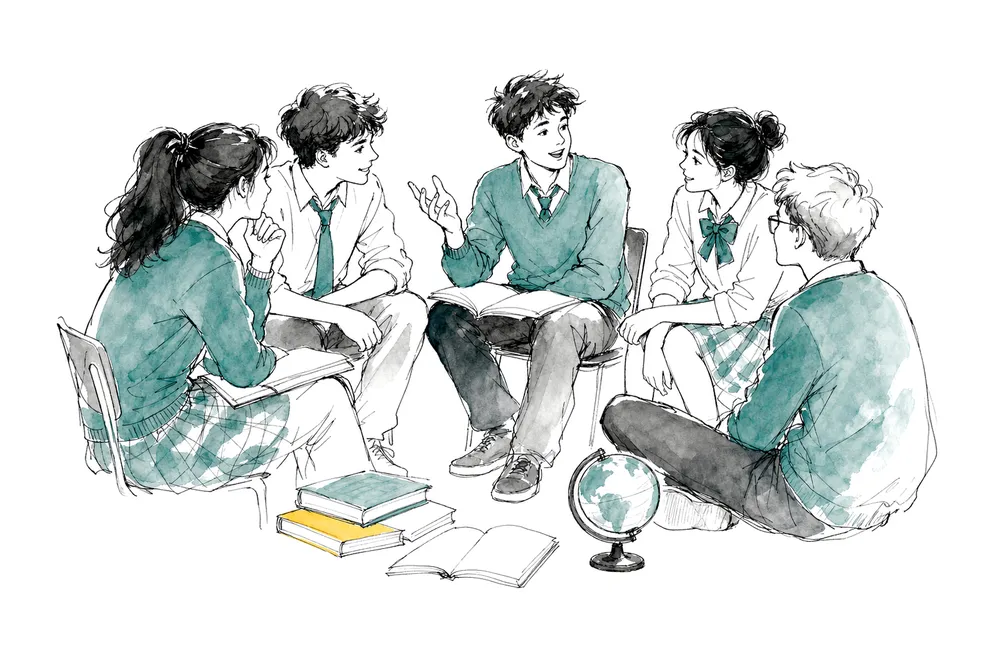
The gist. In one trainee teacher's Year 7 class of 31, a carefully structured debate pulled all but five learners into speaking aloud, and the class changed its collective vote on the motion after the discussion. It is a hopeful signal about what oracy can do for historical thinking, but it is one teacher's account of one class, not a measured trial.
Kitty Low, training at King's College London, set up a structured oral debate with a Year 7 class as a way into historical reasoning. Rather than launch straight into 'who is right?', she prepared the ground: learners were given personas to argue from, named roles in the discussion, and time for paired rehearsal before the whole-class debate.
The effect she describes is striking. Participation widened sharply: 26 of the 31 learners spoke in the debate, well above her sense of a typical lesson. And the quality of reasoning shifted, with learners weighing evidence against each other, so that the class's collective position on the motion actually moved by the end. Talk, structured well, became the route into thinking like a historian.
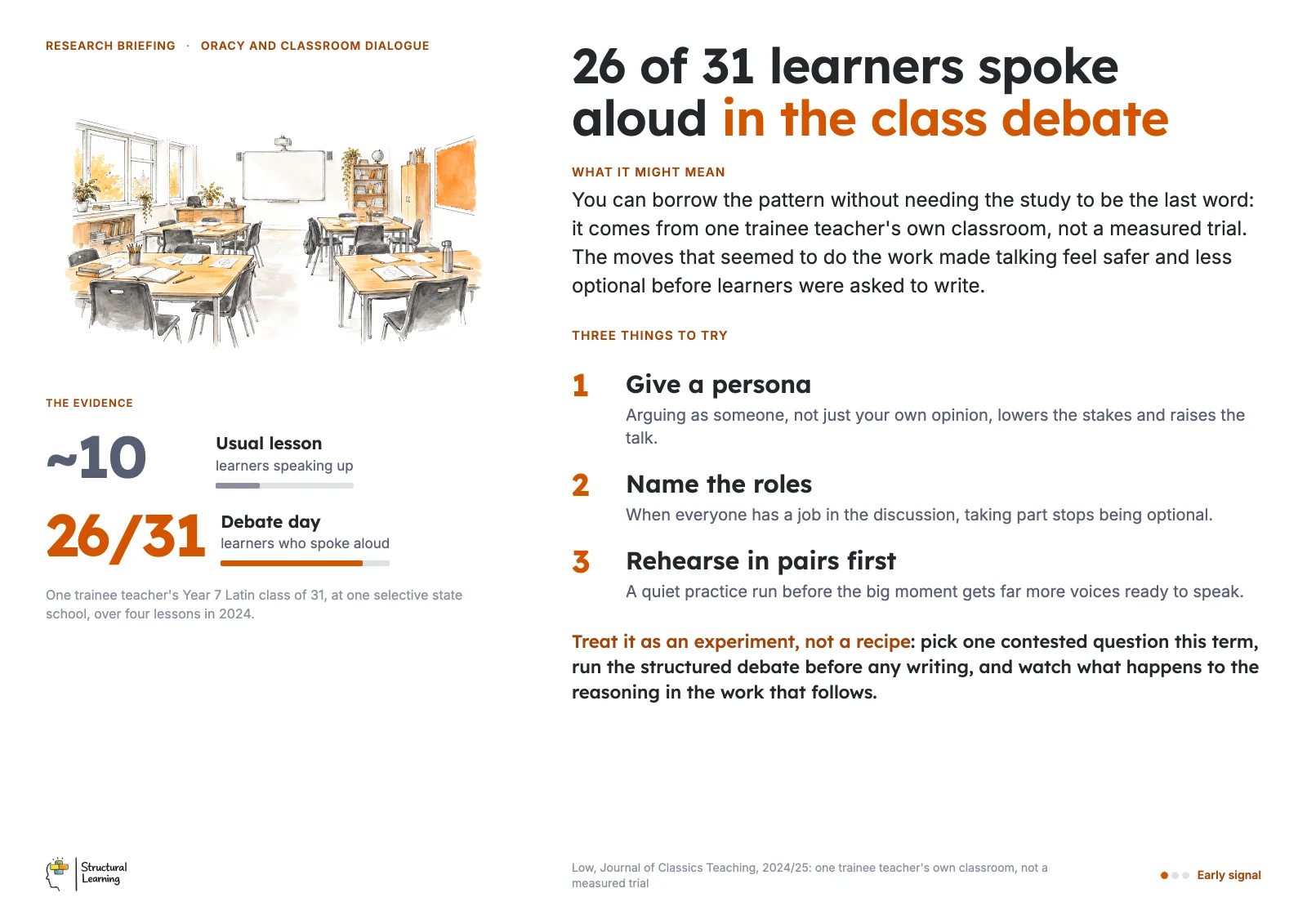
You can borrow the pattern without needing the study to be the last word. The three moves that seemed to do the work are simple:
Treat it as an experiment, not a recipe: pick one contested question this term, run the structured debate before any writing, and watch what happens to the reasoning in the work that follows.
This is graded an early signal, the most tentative grade we use, and deliberately so. It is a single trainee teacher's own account of one Year 7 class at one school. There was no comparison class, no systematic measurement, and the 'typical participation' it is measured against is the teacher's own recollection rather than a measured baseline. The shift in the class vote is reported by direction only, with no counts. So it is genuinely promising and genuinely worth trying, but it is a hypothesis to test in your own room, not proof of a method.
Low, K. (2024). To what extent can oracy education and student dialogue support historical thinking skills in Year 7? Journal of Classics Teaching, 26(51), 78-84. Cambridge University Press, on behalf of The Classical Association. Open access under CC BY 4.0.
Structural Learning helps teachers turn findings like this into planned, visible thinking in the classroom. Open a free account and try it with your next lesson.
Open a free account →Made by the Structural Learning Evidence Engine. Every claim is traced to the source above and independently verified. See more briefings →